Disclosure: As an Amazon Associate, kajuandouglas.com earns from qualifying purchases. Links on this page are affiliate links; they cost you nothing extra. Prices and availability change often, so check the current Amazon listing before you buy.
This zealpc switches deep dive guide covers the whole Zeal catalogue the way an owner actually meets it: family by family, colour by colour, with the sourcing reality stated plainly at the start. ZealPC designs its switches and has them manufactured by Gateron, and on Amazon those designs reach buyers through KPREPUBLIC listings whose titles say exactly that, Gateron Zealio V2, Gateron Tealio V2, Gateron Aqua Zilent V2. Three of the families have that verified Amazon route and get full linked reviews below. Two others, the Healio line and the Clickiez, had no confident Amazon match when the catalogue was checked for this guide, because ZealPC sells them through its own store; they are covered here in honest prose, with no substitute switches dressed up in their place. A deep dive that invents listings would not be a deep dive at all.
What follows is therefore both a buyer’s guide and a map of a small, deliberate catalogue. Zeal never chased the hundred-variant sprawl of the big factories. The catalogue is a handful of colours, each colour a promise: purple for the flagship tactile, teal for the flagship linear, aqua for silence, and beyond Amazon’s shelves, a silent linear and a clicky experiment that complete the designer’s range. Learn the colour language and you have learned most of Zeal; the rest of this guide teaches the remainder, weights, generations, compatibility, modding behaviour, and which family deserves which desk.
Zealpc Switches Deep Dive Guide: The Catalogue at a Glance
Zeal’s naming system rewards a minute of study. The suffixes carry the meaning: Zealio is the tactile, Tealio the linear, Zilent the silent line, Healio the silent linear sold direct, and Clickiez the clicky design also sold direct. The V2 attached to the Amazon families marks the second generation of each design, the revision that tightened tolerances and refined the factory state over the originals that built the brand’s reputation in group-buy era builds. Weights recur across families in a familiar ladder, most commonly 62g, 65g and 67g with the Zealio extending to a 78g heavyweight, so a typist who learns their preferred Zeal weight in one family can carry that knowledge sideways into another.
Key Takeaways
- Amazon’s Zeal switches are the Gateron-manufactured Zealio V2, Tealio V2 and Aqua Zilent V2, sold via KPREPUBLIC, and the listing titles state that lineage openly.
- Zealio V2 is the tactile flagship, Tealio V2 the smooth linear flagship, and the Zilent line the silent branch of the family tree.
- Healios and Clickiez had no confident Amazon match for this guide; ZealPC sells them direct, so they are treated in prose with no substitutes linked.
- Zeal weights cluster around 62g, 65g and 67g, with the Zealio also offering a deliberate 78g for heavy typists.
- All three Amazon families are 5-pin, MX-stem, SMD RGB compatible designs that suit hot-swap and soldered builds alike.
In this guide
How was this deep dive researched?
Each linked family below was verified against the target catalogue data for this site: the exact listing title, the weight variants it names, the pack configuration, and the official product image that appears before each review heading. Where a family could not be verified that way, the guide says so and keeps it prose-only, which is why Healio and Clickiez appear without links. Specifications in the mini spec boxes stick to what the verified titles state or what the category universally establishes, pin count, stem standard, switch type, and where a figure is a matter of feel rather than fact, the text describes it as feel. Prices are never printed, per this site’s standing rule; every pick points you to check the live listing instead.
The Zeal colour language, explained
Colour is Zeal’s filing system. Purple housings mean Zealio, the tactile. Teal housings mean Tealio, the linear, and the similar aqua-cyan of the Zilent line signals the silent branch, a shade close enough to teal that buyers should read the family name rather than trusting the tint alone. This matters practically at resale, in spare-switch drawers, and in build photos where a board’s switch choice is identified at a glance. It also matters at purchase: the KPREPUBLIC listings organise the catalogue by these families, and selecting the wrong colourway is the Zeal equivalent of ordering the wrong switch entirely. Read the family name, confirm the weight, and let the colour be the confirmation rather than the decision.
zealios vs boba u4t tactile switch compared

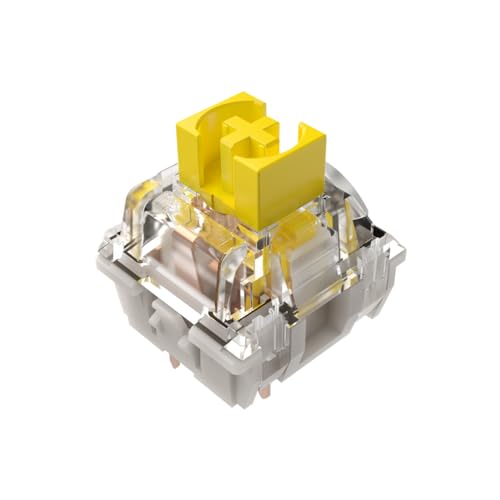
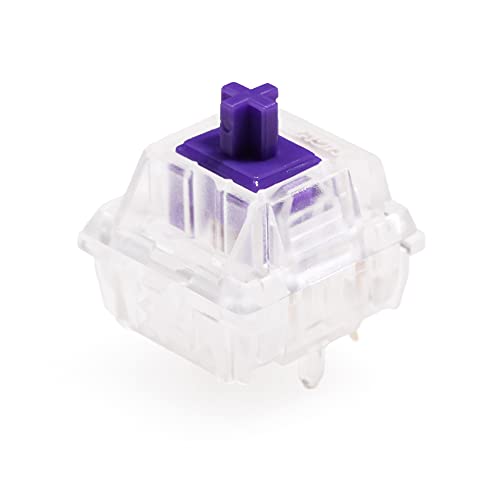
Zealio V2 — the purple flagship tactile
Badge: The defining Zeal switch; the tactile the brand was built on.
- Type: tactile, 5-pin, MX stem
- Weights on the listing: 62g, 65g, 67g and 78g variants
- Colourway: purple housing, SMD RGB compatible
- Lineage: ZealPC design, Gateron-manufactured, KPREPUBLIC listing
- Pack configuration on the verified listing: 70 pieces, 62g shown
The Zealio’s bump is the most discussed tactile event in the premium tier, and a slow press shows why the discussion never dies. Resistance arrives almost immediately, large and rounded, so the switch communicates registration before the stroke has properly begun. The shape is often drawn as a D: a decisive climb, a smooth crest, a calmer descent. In fast typing that profile becomes rhythm, each keystroke confirming itself early enough for the finger to leave for the next key, and across long documents the effect compounds into a feeling of the keyboard keeping up with thought rather than trailing it.
Generation two refined the supporting cast around that famous bump. Tolerances tightened, the housing’s composure improved, and the factory state reached a level where installing the switches unopened stopped being a compromise and became a legitimate school of thought. The four-step weight ladder remains the Zealio’s quiet superpower: 62g for speed, 65g and 67g for typists who like authority without punishment, and 78g for the deliberate heavy hand that wants every press to feel like a decision. No other family in this guide spans that range, and it is why the Zealio, alone among Zeal’s lines, can be recommended to almost any tactile lover once the weight is matched to the hands.
Strengths
- Benchmark tactile bump, early and rounded, that defines its category
- Four weight variants cover the widest range of typing styles in the catalogue
- Refined second-generation tolerances and a satisfying stock state
Trade-offs
- Premium positioning makes full-size boards a serious outlay
- Voice is clean rather than deep, which sound-first builders may find restrained
- The 78g variant is fatiguing for anyone who chooses it casually
Best for: touch typists and tactile purists who want the reference bump. Not suited for: silent-desk requirements or strict-budget full-size builds.

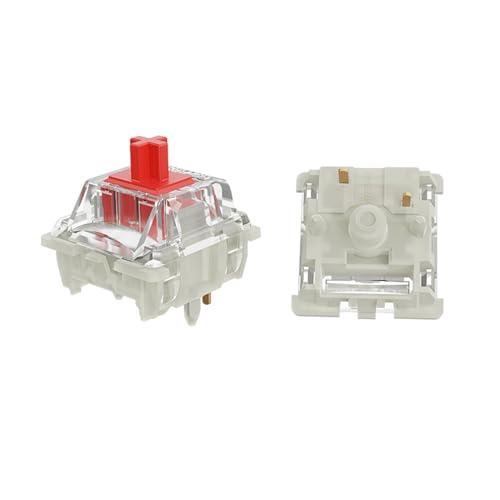
Tealio V2 — the teal flagship linear
Badge: Zeal’s answer for linear lovers who want the premium tier’s polish.
- Type: linear, 5-pin, MX stem
- Weights on the listing: 62g and 67g variants
- Colourway: cyan-teal housing, SMD RGB compatible
- Lineage: ZealPC design, Gateron-manufactured, KPREPUBLIC listing
- Pack configuration on the verified listing: 70 pieces, 67g shown
Where the Zealio performs, the Tealio glides. A linear switch has no bump to hide behind, so its quality is exposed in the raw mechanics of the stroke: the smoothness of the stem’s travel, the absence of scratch, the composure of the spring, the sound of a clean descent and return. The Tealio V2 was Zeal’s bid to make a linear with the same flagship seriousness as its tactile, and its reputation rests on exactly those unglamorous virtues executed at a high level. The stroke feels polished rather than merely slippery, the spring behaves without the ping that haunts lesser linears, and the housing’s tightness keeps tall keycaps from turning the glide into a wobble.
The two-weight offering is a deliberate narrowing compared with the Zealio’s ladder. At 62g the Tealio is the mixed-use choice, light enough for gaming sessions and substantial enough for typing days. At 67g it becomes a typist’s linear, the extra resistance buying control and a firmer return that many writers prefer once they have felt it. Gamers chasing the lightest possible actuation will find Zeal’s ladder starts higher than the speed-focused brands, and that is consistent with the brand’s identity: Tealios are linears for people who type on their linears, voiced and weighted accordingly, with a bottom-out sound that leans deep and tidy in a good case.
Strengths
- Polished, scratch-free stroke that justifies the flagship linear label
- Well-behaved spring with none of the cheap-linear ping
- Two well-chosen weights cover gaming-typing crossover and pure typing
Trade-offs
- No featherweight variant for players who want the lightest press available
- Premium pricing applies here just as it does to the tactile line
- Teal and aqua colourways are easy to confuse at a glance, so read the family name
Best for: linear fans who type heavily and want flagship smoothness. Not suited for: ultra-light actuation seekers or buyers who need a silent switch.

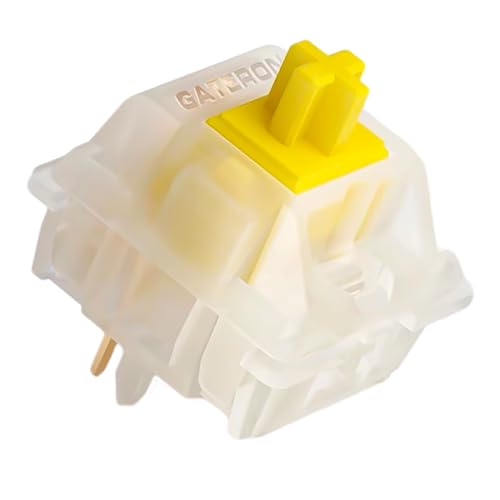
Aqua Zilent V2 — the silent branch of the family
Badge: Zeal tactility translated for shared rooms and quiet hours.
- Type: silent line, 5-pin, MX stem
- Weights on the listing: 62g and 67g variants
- Colourway: cyan blue Aqua housing, SMD RGB compatible
- Lineage: ZealPC design, Gateron-manufactured, KPREPUBLIC listing
- Pack configuration on the verified listing: 90 pieces, 67g shown
Silence changes a switch’s job description. The Zilent line exists for the desks where a keyboard’s voice is a liability, the open office, the shared flat, the late-night nursery-adjacent study, and Zeal’s approach was to carry as much of the family feel as possible into a muted package. The verified listing files the Aqua Zilent V2 under the brand’s silent line, and its design softens both ends of the stroke, the descent and the return, so the board’s overall noise floor drops to the level of keycap and case rather than switch. What survives the muting is a recognisably Zeal-shaped tactility, gentler than the Zealio’s headline bump but far more present than the vague mush that gives cheap silent switches their reputation.
Choosing between the 62g and 67g Zilents mirrors the family logic elsewhere: lighter for long typing days and smaller hands, firmer for typists who bottom out hard and want the switch to absorb some of that authority. Silent switches also reward a system view, because once the switch stops being the loudest component, keycap material, desk surface and case hollowness become the audible frontier, and owners chasing true quiet usually end up addressing those next. The Zilent gets you most of the way there in a single purchase, which is its real value proposition.
Strengths
- Genuine noise reduction while keeping a Zeal-flavoured tactile identity
- Lets premium tactility into offices and shared homes where loud boards cannot go
- Two sensible weights mirror the rest of the catalogue’s logic
Trade-offs
- Muting inevitably softens the crispness that makes the Zealio famous
- Cannot satisfy builders who type partly to hear the board
- Full quiet may still require attention to caps, case and desk afterwards
Best for: office typists, shared-space households and night workers. Not suited for: sound-first hobbyists or anyone whose desk is gloriously private.
The direct-only families: Healio and Clickiez, honestly
A complete map of Zeal has to mark the territories this guide cannot sell you. The Healio is Zeal’s silent linear, the natural partner to the Zilent in the quiet catalogue: where the Zilent mutes a tactile, the Healio mutes a smooth stroke, aimed at the same shared-space desks with a linear feel. The Clickiez is the catalogue’s extrovert, Zeal’s clicky design, built around a deliberately audible, tactile event for typists who regard keyboard noise as the point. Both are real Zeal designs with real followings. Neither produced a confident Amazon match across the checks behind this guide, because ZealPC sells them through its own store rather than through the KPREPUBLIC Amazon route the other families use.
So this guide does the only honest thing available: it names them, describes their place in the family, and links nothing. No generic silent linear is dressed up as a Healio and no substitute clicky wears the Clickiez name, because a reader who bought a substitute under a Zeal label would have been misled in exactly the way a deep dive exists to prevent. If either design is the one your build needs, the manufacturer’s own store is the route, with the usual direct-store considerations of shipping and stock cycles. If your build can be served by the three Amazon families, the verified listings above are the cleaner path, and the rest of this guide treats them as the catalogue’s working core.
Zealio, Tealio or Zilent: which family fits your desk?
Start with your room, not your fingers. A private desk with tolerant housemates frees you to choose purely on feel; a shared or professional space promotes the Zilent from option to answer before tactility is even discussed. Within the feel-led choice, the Zealio versus Tealio fork is the oldest in the hobby: feedback or flow. Typists who read their keystrokes through their fingertips, who notice a missed letter by feel before sight, belong to the tactile church and will find the Zealio’s bump a daily pleasure. Typists and gamers who experience a bump as an interruption, who want the key to simply go down smoothly and come back, belong to the linear church, and the Tealio serves them at the same tier of polish.
Hybrids exist and the catalogue accommodates them gracefully. Many owners run Zealios on the alphas and Tealios on the gaming cluster or the modifiers, a mixed board that sounds like heresy until you type on one and realise the hand does not demand uniformity, only quality. The weight ladder’s consistency across families makes such mixing unusually coherent in the Zeal world: a 67g Zealio alpha set and 67g Tealio modifiers feel like relatives rather than strangers. If you are building one board to learn the brand, though, choose a single family, live with it for a month, and let the second family’s audition happen with educated fingers.
How do Zeal switches handle modding?
The Zeal modding conversation starts from an unusual place: the stock switches are good enough that modification is a preference, not a rescue. Lubrication is the main fork. Zealio owners who lube tend to use restraint, a light treatment on the rails and springs that preserves the bump’s definition, because heavy-handed lubricant rounds off exactly the tactile edge the switch is bought for. Tealio owners lube more freely, since a linear has no bump to protect and the treatment deepens the glide and the voice. Zilent owners lube least of all in many cases, partly because opening a silent switch invites dust into a design whose whole purpose is composure, and partly because the factory state already serves the quiet brief.
Films follow the same philosophy of optional refinement. A film tightens the housing interface and can subtly deepen a switch’s sound, and second-generation Zeal housings are tight enough that many owners skip films entirely without feeling a gap. Spring swaps are the third tool, letting a 62g owner borrow the return character of a heavier variant without changing families, and the shared weight language across the catalogue makes those experiments easy to reason about. The standing advice for all three families is sequence: type stock for a week, change one variable, type again. Zeal switches reward that patience because their stock baseline is high enough to be a real reference point.
What should you verify before ordering a Zeal switch?
Read the listing title as a specification, because in the KPREPUBLIC catalogue it is one: family, generation, weight options, pin count and pack configuration are all stated there. Confirm the family name rather than the colour in the photo, since teal and aqua sit close on the spectrum. Confirm the weight variant in the selector, since one listing carries several. Count your board’s sockets and add spares for bent pins and the occasional outlier. Check whether your plate accepts 5-pin switches or whether you will clip legs, and if your board is a soldered build, budget the evening accordingly. None of this is Zeal-specific bureaucracy; it is the standard diligence that premium parts deserve, applied to a catalogue whose naming makes it unusually easy to get right.
How to install Zeal switches and get the factory feel you paid for
Installation discipline matters more with premium switches because their whole value lives in fine mechanical detail that rough handling can erase. Inspect each switch as it leaves the pack, straighten travel-bent pins with tweezers before they meet a socket, and seat switches by the housing with even pressure. Test the board after the first row, not after the last, so any systematic issue, a socket that resists 5-pin legs, a batch quirk, surfaces while the fix is still small. Resist opening switches for lubricant on day one; live with the factory state for a full week of real work so that any later modification is a measured improvement against a known baseline rather than a guess stacked on a guess.
Keycaps and case complete the instrument. Zeal switches voice themselves through whatever they are mounted in, so a hollow case will thin a Tealio’s descent and a well-damped gasket build will flatter a Zealio’s bump. If a finished build feels different from your expectations, change the cheap variables first, caps, desk mat, case foam, before concluding the switches misled you. In the overwhelming majority of builds they have not; they are simply honest enough to reveal the rest of the system.
Common mistakes Zeal buyers make
Choosing by colour photograph instead of family name is the catalogue’s signature error, landing Tealios in a tactile lover’s basket or Zilents in a sound chaser’s. Choosing the heaviest weight as a status symbol is the second, and the 78g Zealio has humbled many confident shoppers by week two. Over-lubricating a Zealio until its bump dissolves is the third, a modding own-goal that restraint prevents. Expecting the Healio or Clickiez to appear on Amazon because the other families do is the fourth, a sourcing misunderstanding this guide has tried to retire. And filling a full-size board before sampling a single row is the evergreen fifth, expensive in every switch family and doubly so at Zeal’s tier.
How does Zeal sit within the wider premium switch market?
Zeal’s historical role is larger than its catalogue. When the Zealio arrived, it helped prove that a designer-led switch, manufactured by a major factory to a boutique specification, could command flagship money and keep commanding it, a template much of the modern premium market now follows. Its contemporaries and rivals each carved a territory: some chased sound, some chased speed, some chased novelty materials. Zeal’s territory remained feel, defined first by the tactile and extended carefully to the linear and silent branches without diluting the name. That restraint is why a deep dive into this catalogue can be complete in a way that a deep dive into a hundred-variant factory line cannot: there is simply less, deliberately, and each piece of the less is load-bearing.
For the buyer, the practical consequence is confidence. A Zeal switch bought today is a known quantity with years of community documentation behind every variant, every weight and every common modification. In a hobby increasingly driven by weekly drops and limited runs, that documented steadiness is itself a feature, and for many typists it is the deciding one.
Final recommendation: entering the Zeal catalogue
Enter through the family that matches your room and your feel, at the weight that matches your hands, in the smallest quantity that gives the switch a fair trial. For most readers that means Zealio 62g or 67g for tactile typing, Tealio 62g for crossover linear use or 67g for typing-first linears, and the Aqua Zilent V2 wherever the room votes for quiet. Treat the Healio and Clickiez as direct-store destinations if their specific designs call to you, and never let a substitute wear their names. Do that, and the Zeal catalogue delivers exactly what its reputation promises: a small set of switches, each engineered around a clear idea, each worth the money to the typist whose desk it fits.
what is the best switch for typing
gateron switch guide budget friendly and smooth
Reading a Zeal force curve like an owner
Premium switch listings and community reviews lean on force curves, and Zeal’s families reward learning to read them because the drawings predict the feel with unusual fidelity. A force curve plots resistance against travel, and the Zealio’s chart shows its personality at a glance: the line climbs steeply almost immediately, crests in a smooth hill, then relaxes into the descent. That early hill is the whole product. When a reviewer says a tactile feels immediate or eager, they are describing a hill that starts near the origin, and when they call a bump vague, the hill on the chart is usually a low, late swell. Compare the Tealio’s chart and the hill vanishes entirely; the line rises in a clean, nearly straight ramp from spring pressure alone, and the quality questions become about the line’s smoothness rather than its shape, whether it wavers with scratch or runs true.
The Zilent’s curve tells the silence story in geometry: the same family tactility, with the ends of travel cushioned so the abrupt stops that generate noise never quite happen. Learning this literacy pays beyond Zeal, because every switch you ever audition afterwards can be pre-read on paper, its bump position, its spring character and its likely voice sketched before a single sample is ordered. Owners who read curves buy fewer mistakes, and in a catalogue priced like Zeal’s, fewer mistakes is real money.
The Zealio weight ladder, rung by rung
Because the Zealio offers four weights where its siblings offer two, its ladder deserves a slow climb. The 62g rung is the diplomat: full bump character, friendly return, suitable for the widest range of hands and the longest documents, and the variant this guide hands to any undecided reader without hesitation. The 65g rung is the connoisseur’s half-step, firmer in a way that reads as quality to experienced fingers and as effort to tired ones; it suits typists who rest their hands heavily and want the switch to hold them up. The 67g rung is where the Zealio becomes assertive, the bump backed by enough spring to make the whole event feel carved, and many endgame typing boards live exactly here. The 78g rung is the specialist: a heavy, deliberate stroke that converts the keyboard into something closer to a manual typewriter’s ceremony, magnificent for short, considered writing and punishing across an eight-hour spreadsheet day. Choose the rung by your calendar, not your ego, and the Zealio will feel custom-built.
The Tealio’s two rungs split a different decision. Its 62g is the crossover, the linear for people whose boards serve games and documents in equal measure, while its 67g is the writer’s linear, buying control and a more authoritative return at the cost of a little speed. The Zilent’s pair mirrors the tactile logic at lower stakes: 62g for shared-office endurance, 67g for heavy-handed typists who want their quiet switch to still feel substantial. Across all three families, the pattern to notice is that Zeal’s weights run honest; a Zeal 67g feels like a commitment, not a rounding error, so first-time buyers should enter one rung lower than bravado suggests.
Sound profiles: what each family does to a room
Zeal switches voice themselves distinctly, and a deep dive should describe the voices as carefully as the feels. The Zealio speaks in a clean midrange: the bump makes a soft tactile announcement, the bottom-out is tidy, and the return is composed, so the board sounds expensive without sounding loud. In a damped case that voice turns refined; in a hollow case it turns exposed, which is why Zealio owners talk about case foam with unusual passion. The Tealio’s voice is smoother and lower in character, a glide with a soft landing, and it flatters recordings and quiet rooms alike while never approaching silence. The Zilent changes the subject entirely: what remains audible is mostly keycap and case, a faint, padded percussion that a microphone in the next seat would struggle to feature.
These voices interact with keycap choice predictably once you know the families. Thick, tall caps deepen all three, thin caps brighten all three, and shine-through caps tend to come with the thinner walls that brighten. A Zealio build that sounds thinner than expected is usually a keycap story, not a switch story, and the fix is cheaper than a new pack of switches. Treat the switch as the engine and the rest of the board as the exhaust system, and the catalogue’s sound behaviour stops being mysterious.
Zeal on different boards: size, mount and material
A 60 percent board in a heavy aluminium case is the Zealio’s ancestral home, the configuration the brand grew up in, and the combination still flatters it: short travel distances between keys, a dense case to voice the bump, a typist who chose the layout for writing. The Tealio spreads happily onto gaming boards, where its glide and its composed spring serve rapid movement, and onto full-size boards where a linear’s uniformity across a hundred keys is a virtue in itself. The Zilent owns the professional deployments, the 75 percent on the office desk, the board in the video-call background whose silence is a courtesy to everyone on the call.
Mounting style tunes each family at the margins. Gasket mounts soften bottom-out, which deepens Tealio satisfaction and rounds the Zealio’s landing, while stiff tray mounts keep every event crisper and slightly louder. None of these combinations is wrong, and Zeal’s tolerances are consistent enough that the switch is rarely the limiting factor in any of them. The limiting factor is usually the buyer’s clarity about which board the switches are actually for, which is why this guide keeps returning to the room, the layout and the calendar as the real selectors.
Ownership over years: consistency, spares and the second board
Premium switches are bought for years, and Zeal’s long presence in the market makes its ageing behaviour unusually well documented by the community. The consistent report across families is stability: bumps that stay honest, springs that keep their character, housings that stay tight through repeated hot-swap cycles handled with reasonable care. That stability changes the economics of the purchase. A switch that feels identical in year three to how it felt in week three is a different product from one that drifts, and the drift-free reputation is a large part of what the premium buys. Keep spares from your original pack, because a single damaged switch replaced from the same production run preserves that uniformity in a way a later small purchase may not perfectly match.
The second-board effect is the catalogue’s quiet trap and delight. Owners who build one Zeal board tend to build another, because the first board recalibrates their expectations of every other switch they touch. The catalogue’s small size becomes an asset here: the second build is usually a deliberate exploration of a different family rather than a repeat, the Tealio gaming board answering the Zealio writing board, or the Zilent office board answering both. Budget for that gravitational pull honestly, or at least do not be surprised by it.
How to sample the Zeal catalogue without overspending
Sampling discipline at this tier is simple: one small pack per candidate family, installed on the home row and the spacebar’s neighbourhood, typed on for real work across at least three days. Resist judging any Zeal switch in the first hour, because all three families reveal themselves across sessions rather than auditions; the Zealio’s bump goes from interesting to indispensable, or from assertive to tiring, only across documents. The Tealio’s glide similarly separates itself from cheaper linears over time, in the absence of annoyances rather than the presence of fireworks. Keep notes like a scientist: hand fatigue, error patterns, how often you noticed the keyboard at all. The family that disappears under your work is usually the right one, and the notes will tell you its name even when your first impressions argued otherwise.
If sampling all three families strains the budget, sample the two your room allows. A shared-space typist can skip the loud audition entirely and compare Zealio-in-miniature against the Zilent’s reality, while a private-desk gamer can go straight to the Tealio and one tactile challenger. The catalogue is small enough that a two-family sample genuinely covers the decision space for most desks, which is the final practical dividend of Zeal’s restraint.
Zeal for gaming, honestly assessed
Gaming marketing would love every premium switch to be an esports weapon, but a deep dive owes readers the plainer truth: Zeal’s catalogue was designed typist-first, and its gaming virtues are the by-products of good engineering rather than the purpose of it. The Tealio is the family’s natural gaming citizen, its smooth stroke and mid-range weights serving movement keys and rapid presses without the bump interference that tactile players either love or cannot forgive. The Zealio serves the large population of gamers who type more than they compete and who prefer their feedback unmistakable in strategy games, MMOs and everyday play. What Zeal does not offer is the speed-specialist territory, ultra-light springs, ultra-short travel, or the analogue rapid-trigger behaviour of magnetic designs, and players whose games genuinely reward those tools should shop those categories without guilt. Everyone else will find that a Tealio board games exactly as well as it types, which for most desks is the actual requirement.
Troubleshooting a Zeal build that feels off
When a Zeal build disappoints, the fault tree is short and worth memorising. A single scratchy switch almost always means a single contaminated or damaged unit; swap it for a pack spare before touching anything else. A whole board that feels heavier than expected usually means the weight variant in the basket was not the weight variant in the plan, which is why this guide repeats the variant check like a mantra. A board that sounds thin is usually a case and keycap story, solvable with foam, a desk mat and thicker caps. A board with one dead key after installation is almost always a bent pin, visible the moment the switch is pulled and correctable with tweezers and thirty seconds of patience. Genuine family-wide defects are rare enough in this catalogue that they should be the last hypothesis, not the first, and the community documentation behind these switches means any real issue you meet has almost certainly been met, named and solved by someone before you.
The generations question: what V2 changed and why it matters
Every Amazon family in this guide carries the V2 suffix, and buyers reasonably ask what they are getting over the first-generation switches that built the brand. The honest summary is refinement in the directions owners requested: tighter stem and housing tolerances that reduce wobble, a factory state clean enough to make stock use respectable, and consistency across a pack that narrowed the gap between the best switch in a box and the worst. None of that photographs well, and all of it is felt within the first document typed on a V2 board. The bump shape and glide character that made the families famous were preserved rather than redesigned, which tells you the designer’s own assessment of the originals: the ideas were right, the execution simply grew up. For buyers choosing between old stock and V2 listings, the V2 is the one this guide’s verified catalogue describes, and its refinements are the safer default for any new build.
There is also a quieter benefit to a mature second generation: documentation depth. Every common question about a V2 Zeal switch, every lubricant pairing, spring swap and board combination, has been asked and answered in public by owners over years. A new platform’s early adopters pay for novelty with uncertainty; a V2 Zeal buyer pays for maturity with nothing at all. In a hobby that loves the new, that trade deserves one clear sentence of appreciation, and this is it.
Pairing Zeal switches with keycaps and stabilisers
A switch never performs alone, and Zeal builds reward attention to their two closest partners. Keycaps first: tall, thick profiles amplify the Zealio’s bump perception by lengthening the lever, deepen the Tealio’s landing, and give the Zilent’s muted stroke a slightly more defined outline, while low, thin profiles make all three families feel quicker and sound brighter. Neither direction is a correction; both are tuning, and owners with a favourite family often own a favourite profile for it. Stabilisers second: the large keys, spacebar above all, are where a premium switch build most often betrays itself with rattle that no switch can out-quality. A Zealio under a rattling spacebar is a sports car on a gravel road. Budget the modest effort to tune stabilisers on any Zeal build, clipped, lubricated and balanced, because the big keys are pressed thousands of times a day and the families in this guide deserve a stage that does not wobble beneath them.
A buyer’s walkthrough: three Zeal builds from basket to desk
Build one is the writer’s 65 percent. The basket holds a single Zealio pack at 67g, chosen after a sample week at 62g revealed a taste for more authority, plus nothing else, because the board’s stabilisers were tuned at the factory and the keycaps were already owned. The lesson of build one is subtraction: at Zeal’s tier, the switches complete a good board rather than rescuing a weak one, and the owner’s money went exactly where fingers could audit it. Six months on, the owner’s only switch-related purchase has been a small Zilent sample, bought out of curiosity for a future office board, which is the catalogue working as designed.
Build two is the crossover gaming desk. A Tealio pack at 62g fills a hot-swap 75 percent, and the build’s deliberation went into the variables around the switches: a gasket case to deepen the landing, mid-height caps to keep movement keys quick, a desk mat to civilise the room’s echo. The lesson of build two is that a linear’s quality is partly outsourced to its environment, and the Tealio rewards an owner who spends a little of the budget on that environment instead of all of it on the switches themselves. Build three is the professional deployment, an Aqua Zilent V2 board at 62g for a desk that hosts calls all day. Its owner reports the strangest premium-switch outcome of the three: nobody notices the keyboard at all, which, for that desk, is the entire point and the full return on the investment.
Notice what none of the three builds contains: regret about the family chosen, because each began with the room and the calendar rather than with a ranking. That is the deep dive’s whole argument in miniature. Zeal’s catalogue is small enough to understand completely and consistent enough to trust, and the buyer’s remaining job is self-knowledge, which no listing can sell and no guide can fake.
What Zeal teaches the rest of your switch shopping
Spend time inside this catalogue and your standards for every other switch quietly change. You start asking whether a new tactile’s bump has a position and a shape, or merely a presence. You start listening for spring behaviour in linears that marketing describes only by colour. You start treating pack consistency as a specification rather than a hope. Those habits are the deep dive’s real export, worth more than any single pack, because they transfer to every future purchase at every tier. Zeal’s families will not be the last switches you buy, the hobby does not work that way, but they are an unusually good education in what a switch can be when a designer decides that feel is a discipline. Buy one family for the board in front of you, and keep the education for every board after it.
Keeping a Zeal board at its best, year after year
Long-term care for a Zeal board is refreshingly undemanding. Keep dust out of the housings with a cover or regular air, because grit is the one enemy that can genuinely degrade a glide or a bump over time. If a switch develops chatter or an inconsistent event, replace that single unit from your spares before suspecting the board, the cable or the family. Store spare switches sealed and labelled by family and weight, since the colourways are close enough that an unlabelled drawer becomes a guessing game within a year. And revisit your weight choice once, deliberately, after the first month: many owners discover their true rung only after the novelty fades, and a one-time spring or pack adjustment at that point settles the board for years. Premium switches ask for stewardship rather than maintenance, and Zeal’s stability means the stewardship is mostly a matter of not letting the environment undo what the factory did well.
The catalogue in one paragraph, for the reader in a hurry
Zealio V2 if you type for feedback, in purple, across four weights up to a deliberate 78g. Tealio V2 if you type for flow, in teal, at 62g for crossover desks or 67g for writers. Aqua Zilent V2 if your room votes before your fingers do, in aqua, at the weight your hands prefer. Healio and Clickiez if the silent-linear or clicky designs are your destination, bought direct from the maker because Amazon’s shelves do not carry them. That is the whole catalogue, and its completeness in a single paragraph is not a limitation of this guide; it is the design philosophy of the brand, stated as plainly as the brand itself would state it.
One last word on expectations. A Zeal board will not transform weak typing technique, rescue a rattling case, or make a layout you dislike feel right, and this guide has tried to keep those boundaries visible because premium parts attract magical thinking. What a Zeal board does is remove the switch from your list of compromises, permanently, so that whatever remains imperfect about your setup is honestly attributable to something else. For a component you will touch more than almost any other object you own, that removal is the whole luxury, and it is why this small catalogue continues to anchor so many final builds.
And if, after all of this, you remain torn between two families, take comfort in the catalogue’s final kindness: there is no trapdoor choice in it. Every family in this guide has anchored thousands of satisfied boards, and the difference between the right Zeal and the almost-right Zeal is a nuance you can correct on the next build rather than a mistake you must mourn on this one. Sample bravely, decide honestly, and type on.
Finally, remember that this catalogue rewards the reader who buys once and buys deliberately. Zeal switches are not consumables, they are infrastructure, the layer of your desk that every sentence, every match and every late-night edit passes through. Choose the family the way you would choose infrastructure: by fit, by evidence, and by the confidence that you will not need to think about it again for years.
Frequently asked questions
Are Zeal switches made by Gateron?
The Amazon families are: ZealPC designs the switches and Gateron manufactures them, and the KPREPUBLIC listing titles state that relationship directly, naming the products as Gateron Zealio V2, Gateron Tealio V2 and Gateron Aqua Zilent V2. It is a designer-and-factory partnership of the kind that defines much of the premium switch market.
Why are Healios and Clickiez not linked in this guide?
Because neither produced a confident Amazon match when the catalogue was verified for this guide; ZealPC sells those designs through its own store. Rather than substitute unrelated switches under their names, the guide covers them in prose and points direct-store shoppers to the manufacturer.
What is the difference between Tealio and Zilent colourways?
They are genuinely close in tint, teal for the Tealio linear and a cyan-blue aqua for the Zilent silent line, which is exactly why the guide insists on reading the family name in the listing title instead of ordering by the colour in the photograph.
Which Zeal weight is best for a first purchase?
The 62g variants are the safest entry across families, delivering each design’s full character without demanding strong fingers. Typists who already know they like firm switches can start at 67g, and the Zealio’s 78g should be sampled before any full-board commitment.
Do Zeal switches work in hot-swap keyboards?
Yes. All three Amazon families use the standard MX stem and a 5-pin footprint that suits the great majority of hot-swap boards, with the usual note that 3-pin-only plates require clipping the two extra legs. They are equally at home in soldered builds for owners who prefer a permanent installation.
Should I lube Zeal switches before using them?
The factory state is good enough that the guide recommends a week of stock typing first. After that, Zealios take a light rail treatment, Tealios accept fuller lubrication, and Zilents are most often left as they arrive. Modifying against a known baseline always beats modifying on day one.