Disclosure: As an Amazon Associate, kajuandouglas.com earns from qualifying purchases. Links on this page are affiliate links; they cost you nothing extra. Prices and availability change often, so check the current Amazon listing before you buy.
Anyone shopping the top shelf of tactiles eventually lands on the same fork in the road, and this zealios vs boba u4t tactile switch compared guide exists to walk you down both paths honestly. On one side sits the Zealio V2, the purple-stemmed flagship from ZealPC, manufactured by Gateron and sold on Amazon through KPREPUBLIC, a switch famous for a big, rounded bump that arrives early in the press and a price that assumes you already know you want it. On the other side sits the Gazzew Boba U4T, a community-designed thock machine with a long-pole stem, a famously deep bottom-out voice, and a loyal following that treats its sound signature almost like a personality trait. Both are excellent. They are excellent in opposite directions, and that is exactly why the choice confuses people.
The short verdict, before the detail: pick the Zealio V2 if you type all day, value a clean and immediate tactile event, and want the more refined, more versatile switch of the two. Pick the Boba U4T if sound is half the reason you own a mechanical keyboard, if you build boards around a deep and muted bottom-out, and if a slightly heavier, more deliberate press suits your hands. Everything below unpacks that verdict criterion by criterion, with the verified listings for both switches, the silent Zilent relative that completes the Zeal family picture, and a decision framework you can apply to your own board, your own keycaps, and your own desk.
Zealios Vs Boba U4t Tactile Switch Compared: The Quick Verdict
Zealio V2 and Boba U4T disagree about what a tactile switch is for. The Zealio treats tactility as information: its bump is the product, engineered to be felt clearly at the top of the stroke so your finger knows the keystroke registered before the switch bottoms out. The Boba U4T treats tactility as one ingredient in a sensory package whose headline act is acoustic. Its bump is strong, certainly, but owners talk first about the thock, the long-pole stem striking the housing floor with a low, rounded note that lighter, shorter-stemmed switches simply cannot reproduce. Neither philosophy is wrong. They simply reward different priorities, and most regret purchases in this tier come from buying the other person’s priority.
Key Takeaways
- Zealio V2 leads on bump clarity and typing feel; its tactile event starts almost immediately and stays clean through the stroke.
- Boba U4T leads on sound; the long-pole stem and housing design produce the deeper bottom-out that thock-focused builders chase.
- Both switches are 5-pin, MX-stem, hot-swap friendly designs sold in multiple spring weights, so board compatibility is rarely the deciding factor.
- The Boba family listing combines the silent U4 and the thocky U4T under one page, so confirm the U4T variant and weight before ordering.
- Zeal’s silent counterpart, the Aqua Zilent V2, belongs in the conversation only if quiet operation matters more than either headline switch’s character.
In this guide
How were these two switches compared?
A fair comparison of premium tactiles has to separate the things a specification sheet can tell you from the things only a keystroke can. The sheet gives us spring weights, pin counts, stem and housing descriptions, and pack sizes, and those facts anchor the spec boxes below. Beyond the sheet, this comparison weighs the criteria experienced buyers actually argue about: where the bump sits in the travel, how large and how rounded it feels, what the switch sounds like on the way down and on the return, how much stem wobble each design tolerates, how the factory lubrication holds up, and how each switch behaves across a whole board rather than under one testing finger. Price is deliberately handled the way this site handles every listing, as a live figure to check on Amazon rather than a number printed here, because premium switch pricing moves with stock and seller.
One sourcing note matters for the Boba side. The verified Gazzew listing is a combined family page covering the Boba Black U4 and U4T in several weights, and the U4 is a different switch from the U4T: the U4 is the silent sibling, built around dampened, quiet travel, while the U4T is the thocky, non-silent tactile this article compares against the Zealio. Throughout this guide, every claim about Boba feel and sound refers to the U4T variant specifically. If you order through the family listing, select the U4T option and your chosen weight deliberately, because landing on the silent U4 by accident would give you a fine switch that is nonetheless not the switch this comparison recommends for sound chasers.
The contenders at a glance
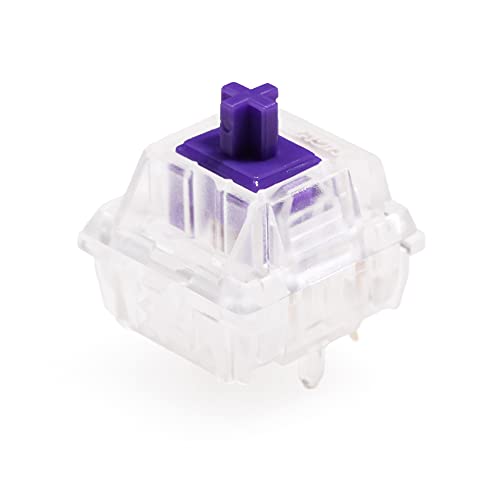
- Zealio V2 (KPREPUBLIC, Gateron-manufactured): the Zeal flagship tactile, purple colourway, offered in 62g, 65g, 67g and 78g variants, 5-pin, SMD RGB compatible housing.
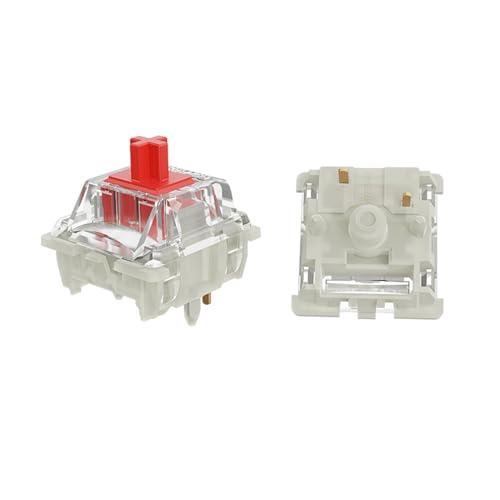
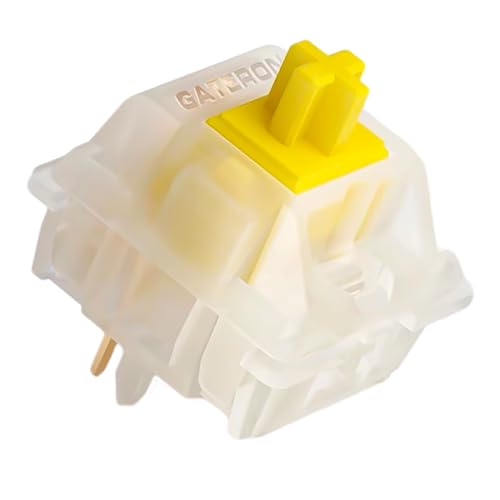
- Gazzew Boba U4T 62g: the thocky tactile from the combined Boba Black U4 / U4T family listing, 5-pin, sold here in a 70-piece U4T 62g configuration.
- PAKJEL Gazzew U4T RGB 65g: a second verified U4T route, 65g, RGB-friendly housing, 90-piece pack, useful if the first listing’s weight or count does not fit.
- Aqua Zilent V2: Zeal’s silent line in its Aqua colourway, included as context for readers whose real priority turns out to be quiet.
zealpc switches deep dive guide

Zealio V2 — the bump-first flagship tactile
Badge: Best for typists who want the tactile event itself to be the headline.
- Type: tactile, 5-pin, MX stem
- Weights on the listing: 62g, 65g, 67g and 78g variants
- Housing: purple colourway, SMD RGB compatible
- Maker: designed by ZealPC, manufactured by Gateron, sold via KPREPUBLIC
- Pack configuration on the verified listing: 70 pieces, Zealio 62g shown
Press a Zealio V2 slowly and the design intent announces itself within the first fraction of travel. The bump does not build gradually the way it does on milder tactiles; it is simply there, large and rounded, occupying the top of the stroke so completely that the switch feels almost eager to tell you the keystroke happened. Enthusiasts describe the profile as a D-shaped curve, and the metaphor holds up in use: a decisive rise, a smooth crest, and then a comparatively calm descent to bottom-out. For touch typists the practical payoff is confidence at speed. Your fingers receive confirmation early enough to move on, which is why Zealios have anchored so many endgame typing boards over the years.
The supporting details match the flagship billing. Stem wobble is tightly controlled for a switch of its generation, the housings feel dense rather than hollow, and the factory state is good enough that many owners install them unopened and never feel short-changed, though the modding community still likes a whisper of added lubricant on the rails. Sound is the one area where the Zealio plays second fiddle in this comparison: it produces a clean, mid-pitched tactility noise and a tidy bottom-out, perfectly pleasant, but it does not chase depth. It was voiced for feel first, and it sounds like it.
Strengths
- Large, early, rounded bump that gives typists unmistakable per-keystroke confirmation
- Four weight options let you tune the same feel from light to firmly heavy
- Tight tolerances and a dense housing feel worthy of the premium tier
Trade-offs
- Sits in the premium price bracket, so a full-size board multiplies the commitment
- Bottom-out sound is tidy rather than deep; thock seekers will find it restrained
- The strongest weights will fatigue lighter typists over long sessions
Best for: touch typists, writers and programmers who feel their way across the board and want maximum feedback per press. Not suited for: builders whose primary goal is the deepest possible sound, or anyone outfitting a large board on a strict budget.

Gazzew Boba U4T 62g — the thock-first community favourite
Badge: Best for sound-led builds that still demand a serious tactile bump.
- Type: tactile, non-silent, 5-pin, MX stem
- Variant to select: U4T 62g within the combined Boba Black U4 / U4T family listing
- Defining hardware: long-pole stem design
- Pack configuration on the verified listing: 70 pieces
- Sibling on the same page: the silent Boba U4, a different switch
The Boba U4T built its reputation in sound tests, and one press explains why. The long-pole stem reaches the housing floor earlier and more decisively than a standard stem, so bottom-out arrives with a low, rounded thock that seems to come from inside the case rather than from the keycap. Layered under that note is a tactile bump with genuine authority, less surgical than the Zealio’s but broader, the kind of resistance your whole fingertip registers. The combined effect is a keystroke that feels upholstered: firm, quiet in its higher frequencies, and deeply satisfying to people who type as much for the listening as for the words.
Ownership details deserve the same care as the feel. Because the verified listing families the U4T together with the silent U4, the single most common Boba buying mistake is receiving the wrong sibling, so treat variant selection as part of the purchase, not an afterthought. Gazzew switches also have a long modding tradition around them; the community films and lightly lubricates Bobas to fine-tune the bump, and the housings reward that attention. Out of the box they are already coherent, with a factory state most buyers keep. On a gasket-mounted board with the right plate, a U4T build becomes the keyboard equivalent of a well-damped car door.
Strengths
- Deep, low bottom-out voice that defines the thock category for many builders
- Strong, broad tactile bump that never feels vague or apologetic
- Long-pole character pairs beautifully with gasket mounts and softer plates
Trade-offs
- Family listing demands careful variant selection so the silent U4 is not ordered by mistake
- The heavy, deliberate press will not suit players who want the lightest possible actuation
- Its sound advantage shrinks on stiff, tray-mounted boards that cannot let it resonate
Best for: sound-focused builders, gasket-mount owners, and anyone whose dream board is judged with eyes closed. Not suited for: shoppers who want a feather-light press, or buyers unwilling to double-check a variant menu at checkout.

PAKJEL Gazzew U4T RGB 65g — the alternate U4T route
Badge: Best for U4T buyers who want the 65g weight or the larger pack.
- Type: tactile, non-silent, 5-pin, MX stem
- Weight: 65g configuration
- Housing: RGB-friendly variant
- Pack configuration on the verified listing: 90 pieces
This second verified U4T listing exists in the guide for a practical reason: switch buying is full of almost-right options, and the difference between the right Boba and the almost-right one is usually weight or count. The PAKJEL route offers the U4T at 65g in a 90-piece pack with an RGB-friendly housing, which suits full-size and 1800-layout builders who would otherwise buy two smaller packs of the 62g. The switch underneath the listing differences is the same Gazzew design, the same long-pole thock and the same broad bump, so the decision between the two U4T listings is logistics, not philosophy. Choose by the weight your fingers prefer and the number of sockets your board actually has.
The 65g weight deserves a sentence of its own, because three grams at the spring sounds trivial and feels anything but. In the U4T it firms up the return, makes the bump read slightly more assertive, and gives heavy-handed typists a margin against accidental bottom-out slamming. If your typing style is gentle and precise, the 62g will feel livelier; if you strike keys like you mean it, the 65g meets you halfway. Either way, verify the variant on the page says U4T before the pack goes in the basket.
Strengths
- Same celebrated U4T character in a firmer 65g tuning
- Larger pack suits full-size boards in a single purchase
- RGB-friendly housing keeps backlighting builds on the table
Trade-offs
- Firmer spring will feel sluggish to the lightest typists
- Still a family-style listing page, so variant discipline applies here too
- Overlaps the first U4T listing, so most buyers need only one of the two
Best for: heavy-handed U4T fans and full-size builders who want one pack to finish the board. Not suited for: light typists, or anyone who already holds the 62g listing in the basket and does not need the extra count.

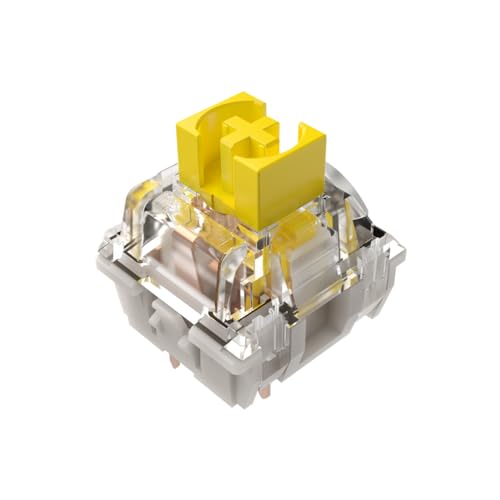
Aqua Zilent V2 — the silent Zeal relative, for context
Badge: Best for readers who realise mid-comparison that quiet matters most.
- Type: silent line from Zeal, 5-pin, MX stem
- Weights on the listing: 62g and 67g variants
- Colourway: cyan blue Aqua housing
- Maker: Zeal design, Gateron-manufactured, sold via KPREPUBLIC
- Pack configuration on the verified listing: 90 pieces, 67g shown
Every Zealio versus Boba debate eventually attracts a third voice asking why nobody is talking about noise at work, in a shared flat, or beside a sleeping partner. The Aqua Zilent V2 is that conversation’s answer within the Zeal catalogue. A small precision matters here: the verified listing’s own title files the Aqua Zilent V2 under Zeal’s silent line, and its job is to keep a Zeal-flavoured tactile experience while muting the downstroke and return that make both headline switches in this comparison audible pleasures. You trade the Zealio’s crisp voice and the Boba’s thock for discretion, and the bump, while softened by the silencing design, remains more present than the mushy reputation silent switches carry from cheaper implementations.
Treat the Zilent as a fork, not a compromise candidate. If your environment punishes keyboard noise, it is not a lesser Zealio; it is the correct Zeal. If your environment is your own room and your own desk, its muting solves a problem you do not have, and either headliner will make you happier. The guide includes it so that decision gets made consciously rather than discovered after a purchase.
Strengths
- Zeal-family tactility in a genuinely quiet-leaning package
- Two sensible weights cover most typing styles
- Lets shared-space users stay in the premium tactile tier
Trade-offs
- Silencing softens the very feedback sharpness Zealio buyers pay for
- Cannot reproduce the Boba U4T’s signature bottom-out note
- Premium-tier positioning, like the rest of the Zeal catalogue
Best for: office and shared-space typists who want Zeal tactility without the soundtrack. Not suited for: sound chasers, or anyone whose desk is private and whose budget is not.
Which tactile bump actually feels better?
Strip away brand loyalty and the bump question becomes a question about timing. The Zealio’s resistance peaks almost as soon as the press begins, which produces a sensation of the switch answering your finger rather than the other way round. Typists who hover and strike quickly tend to love this, because the confirmation lands early enough to rhythmically pace the next keystroke. The Boba U4T’s bump reads broader and slightly deeper into the press, wrapped around that long-pole bottom-out, so the whole event feels like one continuous, cushioned motion rather than a signal followed by travel. Neither curve is objectively superior; they map onto typing styles. Precise, fast, fingertip-led typists gravitate to Zeal. Heavier, whole-finger typists who bottom out most strokes gravitate to Gazzew, because the Boba rewards the full press they were going to make anyway.
Weight selection amplifies or softens those personalities. A 62g Zealio is crisp without being demanding, the 67g is the connoisseur’s middle, and the 78g is a deliberate, almost typewriter-like commitment that should be chosen on purpose, never by default. The U4T at 62g already feels substantial thanks to its bump shape, and at 65g it becomes a switch you notice in the best way for the first hour and in the tiring way by the eighth if your hands are light. When in doubt between two weights in either family, the lighter one is the safer long-session choice.
Which switch sounds better on a real desk?
Sound is where the Boba U4T earns its fame, but desk reality adds variables the sound-test videos flatten. Case material, plate stiffness, mounting style, keycap profile and even desk surface all re-voice a switch. The U4T’s advantage is that its low bottom-out note survives most of those variables; it stays deep in aluminium and in plastic, on gasket mounts especially, but also on humbler boards. The Zealio’s voice is more board-dependent: in a soft, well-damped case it sounds refined and expensive, while in a hollow tray-mount case its mid-pitched tactility noise can read thinner than owners expect. If your board is a budget plastic shell you do not plan to mod, the Boba is the more forgiving acoustic choice. If your board is already a damped, gasket-mounted instrument, the Zealio’s cleaner voice integrates beautifully.
How do they compare on wobble, smoothness and modding?
Both switches arrive from factories that understand the enthusiast checklist. Stem wobble on the Zealio V2 is minimal in the north-south direction and well controlled east-west, which keeps tall keycaps composed. The Boba’s tolerances are similarly respectable, and its modding ecosystem is arguably the deeper of the two: films, spring swaps and careful lubrication are practically a Gazzew rite of passage, with a large community knowledge base behind every combination. The Zealio needs less intervention to feel finished, which suits buyers who want to install and type. The Boba rewards intervention more visibly, which suits builders who consider a switch a starting point. Lubrication preferences differ subtly: Zealios are commonly left stock or given the lightest rail treatment to preserve bump purity, while Bobas are often filmed to tighten the housing and deepen the voice further.
What should you check before ordering either switch?
Confirm your board is hot-swappable or that you are genuinely willing to solder, and check whether its sockets accept 5-pin switches or whether you will be clipping the two extra legs on every switch, a tedious but harmless rite on 3-pin plates. Count your sockets honestly, including a few spares for the inevitable bent pin. On the Boba family listing, re-read the selected variant until it says U4T and the weight you intended. On the Zealio listing, pick the weight variant deliberately for the same reason. Finally, if your board uses south-facing sockets with thick keycaps, remember that long-pole and interference conversations belong to specific keycap profiles; a single test switch in the board answers more than an evening of forum reading.
How to test tactiles properly before committing to a full board
The cheapest insurance in this hobby is a small sample. Order the smallest sensible quantity of each finalist, install them under the keys your fingers know best, home row first, and type real work for two full days rather than performing five-minute auditions. Alternate boards if you can, or alternate halves of one board. Type something fast, something careful, and something boring, because tactility that thrills in a sprint can grate across a spreadsheet marathon. Listen at your normal hour, in your normal room, since a switch auditioned at midnight in silence will always sound deeper than it does at noon. Only then scale up to the full-board purchase; both of these switches are too considered, and too priced, to buy on a hunch.
Common mistakes when choosing between premium tactiles
The first mistake is buying a sound instead of a feel, ordering the switch from a beautifully recorded video and discovering that your case, plate and desk produce a different instrument. The second is weight bravado: choosing the heaviest variant as a badge of seriousness and meeting finger fatigue by Thursday. The third is the Boba variant slip, landing on the silent U4 when the thocky U4T was the goal, or the reverse. The fourth is filling an entire board before living with a sample row. And the fifth is assuming premium means maintenance-free forever; even these switches appreciate a dust-free case and the occasional inspection of a scratchy outlier.
Final recommendation: which one deserves your board?
If your keyboard exists primarily to get words and code out of your head comfortably for years, the Zealio V2 is the safer endgame: the clearest bump, the broadest weight ladder, the least dependence on the rest of the build. If your keyboard exists partly as an object of pleasure whose sound you savour, the Boba U4T is the more characterful instrument, and on the right board it is not close. Many long-time hobbyists end up owning both across different boards, which tells you the honest truth about this comparison: it is a choice between two kinds of right. Decide by what you will notice ten thousand keystrokes from now, your fingers’ feedback or your ears’ pleasure, and order a sample first either way.
One more honest observation belongs in the verdict: the longer owners live with either switch, the less they describe it in the vocabulary of this comparison and the more they describe it as simply how their keyboard feels, full stop. That is the destination both products are selling, the moment the hardware leaves your attention and the work takes its place. The Zealio gets most typists there through clarity, the Boba gets most builders there through pleasure, and the only genuinely wrong outcome in this entire head-to-head is buying the one whose virtues you will never personally notice.
what is the best switch for typing
top tactile switches for your mechanical keyboard
Where did these two switches come from?
Context sharpens comparisons, and these two products arrived from opposite ends of the hobby. ZealPC built its name as a boutique designer of premium switches at a time when the enthusiast market was still proving that people would pay flagship money for a keystroke, and the Zealio line, manufactured by Gateron to Zeal’s specifications, became one of the reference tactiles against which newcomers were judged. The purple housing turned into a visual shorthand for serious typing boards, and the V2 revision refined an already established formula rather than reinventing it, tightening the details that owners of the first generation had catalogued. When you buy a Zealio through the KPREPUBLIC listing, you are buying into that lineage: a designer-led, factory-executed switch whose reputation was earned across years of group buys, restocks and endgame builds.
Gazzew’s Boba line grew from the community side of the fence, designed around direct feedback from builders who cared intensely about sound and who were modifying existing switches to chase a deeper voice. The Boba name, borrowed from the chewy pearls in bubble tea, signals the design’s playful seriousness about texture, and the U4T’s long-pole architecture answered a specific community desire: a tactile that thocked from the switch itself rather than depending on an expensive case to manufacture the note. That origin shows in the ownership culture. Boba owners film, spring-swap and document their switches like a folk tradition, while Zealio owners more often describe a finished purchase. Understanding which culture you want to join is a legitimate part of choosing between the products, because a switch is also, quietly, a community membership.
The two philosophies also explain the listings themselves. Zeal’s Amazon presence through KPREPUBLIC is a tidy catalogue of the designed families, Zealio beside Tealio beside Zilent, each in its colourway and weight ladder. Gazzew’s presence is a family listing where siblings share a page and the buyer navigates variants, which mirrors a community vendor’s catalogue more than a corporation’s. Neither structure is a quality signal. Both simply ask you to read the variant line carefully, which this guide has now asked of you often enough that it should be reflex by checkout time.
How does spring weight change each switch across a full day of typing?
Spring weight is the most underestimated variable in this comparison because a switch auditioned for ninety seconds tells you almost nothing about hour six. The Zealio’s bump sits high in the travel, so its spring mostly governs how the key returns and how the bottom of the stroke feels. At 62g the return is brisk and the whole event feels light on its feet, which is why that variant suits high-volume typists who measure their output in thousands of words per day. At 67g the same geometry gains authority; accidental presses from resting fingers largely disappear, and the switch starts to feel like a tool rather than a toy. At 78g the Zealio becomes a deliberate instrument that rewards committed strikes and punishes tentative ones, and the honest advice is that nobody should discover their feelings about 78g with a full board already purchased.
The Boba U4T interacts with weight differently because its bump and its long-pole bottom-out are both substantial events. At 62g the switch feels balanced, the bump assertive but escapable, the thock arriving as punctuation rather than as a wall. At 65g the whole stroke firms into something more monolithic, and typists with a heavy landing style often prefer it precisely because it refuses to feel overwhelmed by their force. What neither Boba weight does is feel light, and that is a feature of the design rather than a flaw in the tuning. If your favourite switches historically live at the featherweight end of the market, the U4T will ask your fingers to recalibrate for a week, and you should decide in advance whether that recalibration sounds like fun or like friction.
What do the housings and stems contribute beyond the bump?
It is tempting to reduce a tactile switch to its force curve, but the curve is only the skeleton. The Zealio’s purple housing became iconic partly because it signalled the switch instantly in a hobby that loves visual identity, yet the housing’s real work is structural: it holds the stem’s tolerances, shapes the sound on the return stroke, and determines how cleanly backlighting passes for boards that use it. The verified listing’s SMD RGB compatibility matters to shine-through builds, and owners running north-facing backlighting with opaque keycaps will care less about the housing’s light manners and more about its density, which on the Zealio is genuinely good for its class.
The Boba’s hardware story is dominated by the long-pole stem, and understanding it explains the entire switch. A standard stem ends its travel when the stem’s base meets the housing floor; a long-pole stem extends that contact point, so the collision happens sooner, harder and with a more focused resonance. That single geometry choice produces the U4T’s signature note, firms up the perceived bottom-out, and slightly shortens the effective travel in a way most users experience as responsiveness rather than loss. It also explains why the U4T’s character survives transplantation between boards better than many rivals: the sound is generated by the switch’s own collision, not borrowed from the case.
Three boards, three different answers
Consider a compact 65 percent board used for writing on a wooden desk in a quiet flat. Here the Zealio at 62g is the natural citizen: the board is carried, typed on in varied places, and judged mostly by how invisible the tool becomes across a long draft. The bump’s early confirmation keeps a fast writer’s rhythm unbroken, and the modest sound footprint respects the room. Now consider a heavy gasket-mounted 75 percent board that lives permanently on a desk mat in a home office, built slowly and deliberately as a hobby centrepiece. That board is the Boba U4T’s natural habitat, where every design decision around it, the mount, the plate, the keycaps, conspires to showcase the deep bottom-out the switch was born to make.
Finally, consider the shared family computer or the open-plan office desk, where the keyboard is heard by people who did not choose it. On that desk both headliners are arguably the wrong answer, and the honest recommendation swings to the silent branches of each family, the Aqua Zilent V2 on the Zeal side or the silent U4 on the Gazzew side. Naming that scenario inside a head-to-head comparison matters, because a meaningful share of premium tactile regret is really environment regret wearing a switch costume. Match the room first, the bump second, and the badge last, and either family will treat you well.
How does each switch age over a year of ownership?
Switches are mechanical objects, and the first week is not the whole marriage. Zealios have a long track record in the community, and their ageing pattern is benign: the bump stays honest, the housings stay tight, and any factory scratch that exists tends to announce itself immediately rather than developing later. Owners who lube them report the treatment lasting well, partly because the switch does not demand much lubricant to begin with. The main long-term Zealio complaint is not mechanical at all; it is that some owners’ tastes migrate toward deeper sounds as their builds evolve, and the switch gets retired for fashion rather than failure.
Bobas age with a different accent. The long-pole bottom-out that defines them also means the signature collision happens on every keystroke, and while the design is built for exactly that duty, the switch’s voice can mellow subtly as films settle and lubricant distributes itself through the first months. Most owners describe that mellowing as the switch breaking in rather than wearing out. The Gazzew ecosystem also encourages tinkering across the ownership arc, spring swaps in month three, a filming session in month six, so a Boba board tends to evolve with its owner instead of sitting frozen at its purchase-day specification. Neither pattern is better; they suit owners who want a finished product and owners who want a living project, respectively.
What does value mean at the premium end of the tactile market?
Both switches ask premium money per unit, and a full-size board multiplies that ask past the price of entire respectable keyboards, so the value question deserves a straight answer rather than embarrassment. What the money buys in the Zealio is refinement density: tolerances, bump shaping and consistency across a pack, the absence of the little lotteries that haunt cheaper tactiles where three switches in ninety feel like cousins rather than siblings. What it buys in the Boba is design specificity, a switch engineered around one man’s exacting idea of how a tactile should sound and feel, produced to that idea rather than to a market average. In both cases the per-switch cost should be weighed against the years a keyboard spends under your hands; amortised across a board’s working life, the difference between a premium pack and a mid-tier pack is one of the cheapest upgrades in the entire setup, which is precisely why this tier exists.
The value calculation changes for very large boards and for collectors. A 104-key board in 78g Zealios is a statement and a bill in equal measure, and builders of such boards often mix strategies, premium switches on the alphas where fingers live, something thriftier under the function row and numpad. There is no purity rule against that. The switches cannot tell which row they are in, and your wallet is a legitimate design constraint.
A worked decision: three readers, three outcomes
Reader one is a novelist with a gasket-mounted board, a private room, and a self-confessed obsession with how the keyboard sounds in the quiet hour before work. The Boba U4T at 62g is her switch, because the quality she will notice most, ten thousand keystrokes from now, is the low note at the bottom of every press, and the Zealio’s virtues, however real, are pointed at a different sense. Reader two is a programmer who touch-types at speed, shares an office twice a week, and has been burned before by a mushy tactile that made long sessions feel like walking in sand. His answer is the Zealio at 67g for the home board, firm, early and unambiguous, with the honest footnote that the office days might eventually justify a second, silent board built around the Zilent line.
Reader three is a student outfitting a first hot-swap board, curious about both legends and unwilling to guess wrong with a full pack. Her correct purchase is neither headliner’s full set; it is a small sample of each, a week of alternating rows, and then a decision made by her own fingers. This guide’s comparisons exist to narrow the field to finalists worth sampling, and at the premium tier the sample is not indecision. It is the method.
How to install and set up your chosen switch properly
Whichever side of this comparison wins your money, the installation hour decides how much of the switch’s design you actually get to experience. Begin with the board unplugged and the keycaps removed, and inspect every incoming switch before it meets a socket: straighten any pin that travelled bent, using tweezers and patience, because a pin folded during insertion is the single most common cause of a dead key on a fresh build. Seat each switch by pressing the housing body, never by leaning on the stem, and listen for the small, definite engagement of the pins rather than forcing depth that the socket has not offered.
Work in a deliberate order, alphas first, because those sockets will judge your work for years, then modifiers, then the keys your fingers visit least. After the first full row, plug the board in and test before continuing; discovering a systematic problem, a socket that dislikes 5-pin legs, a batch of pins that all lean the same way, is cheap at switch ten and expensive at switch eighty. With Zealios, resist the urge to open every switch for lubricant before you have typed on the stock board for a week; the factory state is part of what you paid for, and you cannot un-ring the bell of an over-lubricated bump. With Bobas, decide about filming before installation rather than after, since filming means handling every switch twice, and the community consensus that films deepen the U4T’s voice is strong enough that intending builders should simply build that way from the start.
Keycap choice finishes the setup. Taller profiles lengthen the lever on the stem and can make both switches’ bumps feel marginally more pronounced, while low profiles tighten the whole event. Thick-walled keycaps deepen the acoustic picture, which flatters the Boba particularly, and thin shine-through caps brighten it, which can push the Zealio’s mid-pitched voice toward thinness in a hollow case. If a finished build sounds or feels different from your sample row, suspect the caps and the case before you suspect the switches; the sample was honest, but it was auditioned in different company.
How should you maintain premium tactiles over the years?
Maintenance for switches of this class is mostly environmental. Keep the board covered or blown out on a schedule that matches your room’s dust reality, because grit that migrates into a housing turns a smooth stroke scratchy in a way no lubricant can fully reverse. If a single switch develops a fault, a scratch, a chatter, an inconsistent bump, swap that one unit for a spare from the pack before troubleshooting the whole board; packs are sold with counts that quietly assume a few spares, and using them is the system working as intended. Store removed switches in a closed container rather than loose in a drawer, since stems collect dust and pins bend in captivity. Treated that way, either headliner in this comparison will outlast several generations of the computer it is plugged into, which is the final, quiet argument for buying the switch you actually want the first time.
The side-by-side summary, criterion by criterion
For readers who decide from summaries, here is the whole comparison compressed without caricature. On bump clarity, the Zealio wins: earlier, cleaner, more legible at speed. On bump size, the two are closer than brand loyalists admit, with the Boba’s broader shape compensating for its later peak. On sound depth, the Boba wins outright, and on sound refinement in a good case, the Zealio closes much of that gap while never quite erasing it. On stock readiness, the Zealio asks less of its owner; on modding headroom and community knowledge, the Boba offers more. On weight range, the Zealio’s four-step ladder out-flexes the U4T’s common configurations. On price of entry per switch, both live in the premium bracket and should be compared live on their listings rather than from memory. On forgiveness, the Boba tolerates a mediocre case acoustically, while the Zealio tolerates a mediocre modding effort mechanically. Add your own weightings to those rows and the arithmetic of this comparison usually resolves itself.
One final scenario deserves air, because it decides real purchases every week: the mixed household board, typed on by one person and gamed on by another. Neither headliner is a poor gaming switch, but the Zealio’s lighter variants travel better between the two duties, while a 65g U4T board can feel like a compromise to a player who strafes on the same keys all evening. Households in that position often end up with the Zealio on the shared board and the Boba reserved for the dedicated typing build, a division of labour that respects both designs instead of forcing either to be something it is not.
What about resale, spares and second boards?
A practical footnote for a hobby where boards multiply: both switches hold their appeal on the second-hand and spare-parts circuit because both are named, known quantities. A leftover half-pack of Zealios or Bobas is easy to gift, trade or redeploy into a macropad or a numpad, and that residual usefulness softens the premium outlay in a way that obscure switches cannot match. It also means the sample-first strategy carries almost no waste: the switches that lose your personal comparison still have a future on a smaller board, in a tester, or in a friend’s first build. Buy the finalists, keep the spares, and let the comparison pay rent long after the verdict lands.
That same recognisability protects you if your tastes migrate. The hobby’s tastes do migrate, usually from feel toward sound or from sound toward speed, and owning one of these two benchmarks gives you a reference point that makes every future switch description legible. When a new tactile claims a bump like a Zealio or a voice like a Boba, you will know exactly what is being promised, because the originals are sitting in a drawer or under your fingers. Benchmarks earn their keep that way, long after the buying decision itself is forgotten.
A note on trusting your own fingers over any guide
Every comparison, this one included, is written in a vocabulary the hobby agreed on because the real experience refuses to travel through text. Bump, thock, scratch and wobble are approximations, useful for narrowing a field and useless for making a final call between two finalists this accomplished. That is why the sampling advice in this guide is not boilerplate caution; it is the actual conclusion, with the preceding pages serving as the reasoning that earns it. If your sample week contradicts this guide’s characterisations on your board, in your room, with your caps, believe your sample. The switches will be in your life longer than the article will, and both manufacturers built their reputations on people trusting exactly that kind of first-hand verdict.
Frequently asked questions
Is the Boba U4 the same switch as the Boba U4T?
No, and the distinction drives most ordering mistakes. The U4 is Gazzew’s silent tactile, designed to mute the keystroke, while the U4T is the non-silent, thock-focused tactile compared in this guide. They share a family listing on Amazon, so the variant name on your selected option must read U4T if the deep bottom-out sound is what you are buying.
Which Zealio V2 weight should a first-time buyer choose?
The 62g variant is the friendliest entry point, delivering the full Zealio bump character without demanding strong fingers, while 67g suits typists who already know they like a firmer press. The 78g is a specialist choice for deliberately heavy typing and is best sampled before a full-board commitment.
Do Zealio and Boba switches fit any hot-swap keyboard?
Both use the standard MX-style stem and a 5-pin footprint, so they fit the great majority of hot-swap boards. Boards with 3-pin-only plates require the two extra plastic legs to be clipped, which does not affect performance. As with any switch, check your board’s socket orientation and keycap clearance if you run tall profiles.
Which of the two is better for gaming?
Neither is a gaming switch by design, and both work perfectly well in games. Players who also type heavily usually prefer the Zealio’s early, decisive bump for mixed use, while the Boba’s heavier, cushioned press can feel slower in rapid repeated inputs. Dedicated competitive players typically look at linear or rapid-trigger options instead, and this comparison’s two headliners are really typist-first designs.
Should I lube or film either switch before installing it?
Both are genuinely usable from the factory, so treat modding as seasoning rather than rescue. Zealios are most often installed stock or given an extremely light rail treatment to protect the bump’s clarity. Bobas respond noticeably to filming, which tightens the housing and deepens the voice, and many owners consider it part of the Gazzew ritual. Sample first, mod second.
What if I need a quiet switch for a shared office?
Then neither headliner is the right purchase, because both are designed to be heard. Within the Zeal catalogue the Aqua Zilent V2 covered above is the quiet route, and within the Gazzew family the silent U4 sibling on the same listing serves the same purpose. Choosing the silent variant deliberately beats buying a loud switch and trying to apologise for it later.