Disclosure: As an Amazon Associate, kajuandouglas.com earns from qualifying purchases. Links on this page are affiliate links; they cost you nothing extra. Prices and availability change often, so check the current Amazon listing before you buy.
Ask a room of keyboard owners what is the best switch for typing and you will start an argument that outlasts the evening — not because the question has no answer, but because it has several, and each is correct for a different pair of hands. Typing is the most sustained thing fingers do at a keyboard: thousands of keystrokes a day, at speed, for years. The switch that serves it best is the one your fingers can operate accurately at hour six without fatigue, with enough feedback to type by feel rather than by watching, and with manners appropriate to the room the typing happens in. For most typists that points at tactiles — a bump at actuation that confirms the keystroke — in a middle band of weights. For some it points at a smooth linear they have calibrated to, or a clicky switch whose audible confirmation they type by ear with. This guide gives the argument a structure: what typing actually demands, six verified switches reviewed against those demands, a decision framework by typist type, the fitting and technique layer, and the mistakes that lead typists to buy a gaming answer to a typing question.
Every linked pick was verified against its exact Amazon listing for this site and is shown with its official product image. The shortlist is deliberately tactile-heavy, because that is where the evidence of typist satisfaction concentrates, with a clicky representative for the typists who swear by audible confirmation and a silent tactile for the ones whose office swears at noise.
Key Takeaways
- For most typists, a tactile switch in the middle weights is the best answer: the bump confirms actuation, so fingers can type by feel and lift earlier, reducing fatigue.
- Zealio V2 and Boba U4T lead the strong-tactile end; Cherry MX Brown and Akko Lavender Purple Pro serve gentler tastes and tighter budgets.
- TTC Bluish White V2 brings tactile feedback in a silent form for shared rooms; Kailh Box White serves typists who type by ear and can be loud.
- Spring weight and bump shape matter more to typing than any brand loyalty — sample on your most-used keys before filling a board.
- Technique is half the result: the best typing switch rewards a lighter touch that rides the bump instead of hammering through it.
What does typing actually demand from a switch?
Typing makes three demands that gaming does not. The first is confirmation: a touch typist’s fingers move faster than conscious monitoring, and they steer by feedback — the tactile bump that says the key has actuated, arriving early enough in the travel that the finger can already be leaving for the next key. That early departure is not a nicety; it is the mechanism by which good typing switches reduce fatigue, because a finger that lifts at the bump never pays the full price of bottoming out, thousands of times a day. The second demand is sustainability: the switch’s weight and bump must be operable at hour six, which eliminates both the very heavy switches that feel magnificent for a paragraph and the very light ones whose accidental actuations multiply as tired fingers rest on the home row. The third demand is social: typing happens in offices, homes, and calls, and a switch whose sound delights its owner and persecutes a partner or a meeting is, in the practical sense, a bad typing switch for that typist.
Against those demands, the families sort themselves. Tactiles answer the first demand by design. Linears answer it by familiarity — a practised linear typist calibrates to travel depth and types beautifully, which is why linear devotees are sincere in their advocacy — but the calibration costs the beginner months that a bump provides on day one. Clickies answer confirmation twice, in feel and in sound, and fail the social demand in most modern settings. Silent switches answer the social demand completely and the confirmation demand in proportion to how much of their bump survives the damping. The reviews below score each pick against all three demands, because a typing recommendation that ignores any of them is a third of a recommendation.
In this guide
Quick Picks: six verified switches for typing
- Gateron Zealio V2 — the refined strong tactile for typists who want an unmistakable bump.
- Gazzew Boba U4T — the deep, round tactile with a devoted typing following.
- Cherry MX2A Brown — the gentle classic tactile, mild bump, universal manners.
- Kailh Box White — the clicky for typists who confirm by ear and may be loud.
- TTC Bluish White V2 — the silent tactile for shared rooms and night desks.
- Akko V3 Lavender Purple Pro — the friendly-budget tactile with a clear, pleasant bump.
How these were chosen: each pick had to be verified against its exact listing with an official image; the set had to span the tactile spectrum from gentle to strong, include the silent and clicky positions honestly, and cover more than one price temperament — because the best switch for typing is the one a specific typist will still love in year two, and that typist’s budget and room are part of the specification.
Detailed reviews: the typing shortlist

Gateron Zealio V2 — the refined strong tactile
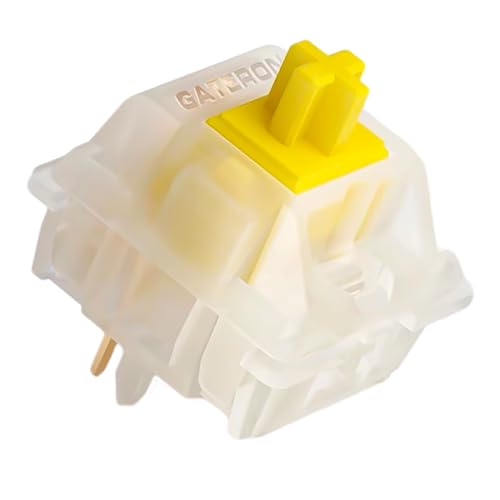
Badge: Best for bump devotees. The Zealio V2 is the tactile as connoisseur’s object: a pronounced, clean bump placed high in the travel, so the keystroke’s story is told early — press, bump, actuation, and the finger is free to go. Manufactured by Gateron to ZealPC’s design, it pairs that bump with smooth travel and a choice of spring weights, letting the typist tune the effort around the event. For a typist whose complaint about lesser tactiles is vagueness — a bump they must hunt for — the Zealio is the switch that ends the hunt.
- Type: Tactile, 5-pin, SMD RGB compatible
- Weights: 62g class in this listing; other weights exist in the line
- Housing: purple colourway (per listing)
- Pack: 70 pieces (per listing)
Strengths
- Large, early, unmistakable bump for confident touch typing
- Smooth travel around the bump, with no scratch to distract
- Weight options let typists match effort to their hands
Trade-offs
- Premium temperament in the range — a considered purchase
- Strong bump is too much event for typists who prefer gentleness
- Sound is present and characterful; not a silent-room choice
Best for: experienced typists who know they want a decisive bump and early actuation feedback. / Not suited for: gentle-touch typists, silent offices, or first-time buyers unsure of their bump preference.

Gazzew Boba U4T — the deep, round tactile
Badge: Best sound-and-feel tactile. The Boba U4T’s bump is famous for its shape: round and full rather than sharp, arriving with a sense of rolling over a smooth hill, and paired with a deep, muted sound that typists describe with the vocabulary of weather and fruit. It is the tactile for owners who experience typing as a sensory practice and want the board to feel composed — no sharp edges in the bump, no harsh notes in the sound, a spring weight in the low sixties that keeps long sessions honest. Its sibling, the silent U4, shares the bump with damping added, and is covered in this site’s silent coverage for the typists who need it.
- Type: Tactile, 5-pin
- Weight: 62g class in this listing
- Character: round bump, deep sound (per listing’s thocky designation)
- Pack: 70 pieces (per listing)
Strengths
- Round, full bump that confirms without jarring
- Deep, composed sound flatters long typing sessions
- Strong community knowledge base for tuning and pairing
Trade-offs
- Roundness reads as softness to sharp-bump loyalists
- Weight may tire the lightest-touch typists over marathons
- Characterful enough that sampling first is genuinely important
Best for: typists who want a substantial, rounded bump and a deep sound signature. / Not suited for: fans of a sharp, snappy tactile event or the very lightest springs.

Cherry MX2A Brown — the gentle classic
Badge: Safest gentle tactile. The Brown is the tactile the industry was built on: a mild bump, a moderate spring, no click, and manners for any room. The MX2A generation refreshes the classic with the line’s updated moulds and lubrication, smoothing the travel that earlier Browns were criticised for. Its bump will not thrill a bump devotee — it is a suggestion rather than an announcement — but for the typist who wants confirmation without ceremony, and a switch whose behaviour is known to every keyboard maker on earth, the Brown remains the conservative, correct answer it has been for decades.
- Type: Tactile, no click
- Generation: MX2A (per listing)
- Pack: 36 switches kit (per listing)
- Fit: DIY, hot-swap, custom and gaming boards (per listing)
Strengths
- Gentle bump suits the widest range of typists
- Quiet, office-safe character
- MX2A refinements smooth the classic travel
Trade-offs
- Bump is subtle enough that strong-tactile fans dismiss it
- Kit sizing means full boards need multiple packs
- Character is neutrality itself — little to fall in love with
Best for: typists wanting mild, reliable feedback and universal manners. / Not suited for: anyone shopping specifically for a pronounced tactile event.

Kailh Box White — the clicky typist’s choice
Badge: Best audible confirmation. Some typists type by ear, and for them the Box White is the honest pick: a click bar design that produces a crisp, deliberate click at actuation, paired with a light-to-middle spring and the Box family’s dust-and-water-resistant housing architecture. The click is information — an audible receipt for every keystroke — and typists raised on it find silent boards oddly untrustworthy, as if the words might not have landed. The social cost is stated without apology: this switch is loud, proudly, and its correct habitats are private rooms and tolerant households.
- Type: Clicky, 3-pin
- Operating force: around 45gf (per listing)
- Housing: Box design, waterproof-rated construction (per listing)
- Pack: 108 pieces (per listing)
Strengths
- Crisp click gives unmistakable actuation confirmation
- Box housing design resists dust and splashes
- Light spring keeps long sessions effortless
Trade-offs
- Loud — unsuitable for shared rooms, calls, or night typing
- Click character is a love-it-or-hate-it proposition for households
- 3-pin format needs the usual socket check
Best for: typists in private spaces who confirm keystrokes by ear. / Not suited for: offices, shared homes, or anyone whose calls include an open microphone.

TTC Bluish White V2 — the silent tactile
Badge: Best for shared rooms. The Bluish White V2 answers typing’s hardest combined demand: a real tactile bump, delivered silently. Its damping mutes the bottom-out and return that make ordinary tactiles audible across a room, while the bump survives in a softened, cushioned form that still lets fingers type by feel. Pre-lubed from the factory, it is the switch for the typist whose board lives in a shared office, a bedroom desk, or a home where the typing continues after others sleep — the social demand met without surrendering the confirmation demand entirely.
- Type: Silent tactile, pre-lubed
- Pack: 90 pieces (per listing)
- Maker line: TTC, via Metrickeys (per listing)
- Use: mechanical keyboards for quiet environments
Strengths
- Genuine bump with genuinely quiet travel
- Factory lube keeps the damped travel smooth
- Lets touch typing continue in rooms where noise is the constraint
Trade-offs
- Damping softens the bump’s edge — sharp-bump fans feel the compromise
- Silent switches cost more than their loud equivalents
- The cushioned bottom-out feel divides typists who like a firm landing
Best for: typists in shared or quiet spaces who refuse to give up tactile feedback. / Not suited for: bump purists who want the event undamped and unapologetic.

Akko V3 Lavender Purple Pro — the friendly-budget tactile
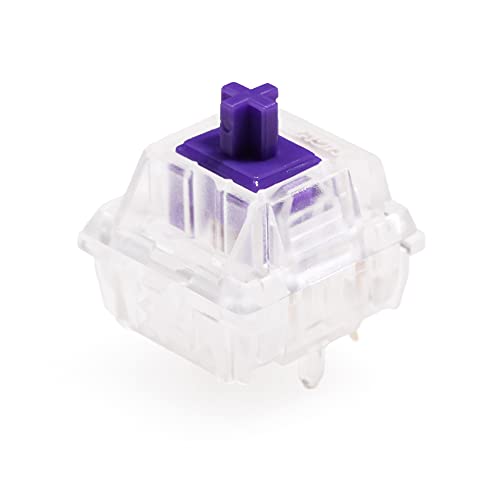
Badge: Best value tactile. Akko’s Pro line has made a habit of delivering enthusiast-shaped bumps at friendly prices, and the Lavender Purple Pro is its typing argument: a clear, well-defined tactile bump, a dustproof stem for stability, factory pre-lubrication, and a weight that sits comfortably for long documents. It is the pick for the typist who has read about Zealios and Bobas, wants that species of feedback, and would like to discover whether a strong bump suits them before spending like it does — though many who start here simply stay, because the switch is genuinely good rather than merely introductory.
- Type: Tactile, 5-pin, pre-lubed
- Stem: dustproof design (per listing)
- Pack: 45 pieces (per listing)
- Line: Akko V3 Pro generation
Strengths
- Clear, defined bump at a friendly point in the range
- Dustproof stem keeps travel stable and consistent
- Pre-lubed and ready for a full board without bench work
Trade-offs
- Pack size means full-size boards need several packs
- Bump character is its own — sample against your current switch
- Less aftermarket lore and tuning documentation than the famous names
Best for: typists who want a real tactile event discovered at a sensible cost. / Not suited for: owners who want the most documented, most tuneable premium tactile ecosystem.
zealios vs boba u4t — tactile switches compared
How do you choose by typist type?
Match the switch to the typist you actually are, in the room you actually type in. The professional writer or programmer in a private room should start at the strong end — Zealio or U4T on the most-used keys for a week — because their volume rewards decisive feedback and their room forgives characterful sound. The same professional in a shared office should start with the Bluish White or the Brown, because a switch abandoned for its noise helps no manuscript. The newcomer from a laptop keyboard should start gentle — Brown or Lavender Purple — because their fingers have not yet learned to ride a bump, and a strong tactile can feel like an obstacle course for the first fortnight before it feels like a gift. The returning clicky typist, raised on audible confirmation, should be honest about the household before ordering Box Whites, and should know that the tactile shortlist’s stronger members are where most former clicky typists land when the house votes for quiet.
Whatever your type, run the sample protocol this site’s guides keep recommending because it keeps working: candidate switches on the home row and the most-struck keys, your real work for real days, and a note about accuracy and fatigue at the end of each day rather than impressions at the end of each hour. Typing switches reveal themselves across days, not minutes, because the variable being tested is endurance, and endurance cannot be hurried.
How do technique and setup change the result?
The best switch for typing is partly a technique. Tactile switches reward the typist who learns to press to the bump and release — letting actuation, not the housing floor, end the keystroke — and that technique, once learned, reduces both fatigue and noise on any switch in this guide. It is learned fastest on a strong, early bump, which is a genuine argument for sampling the Zealio even if you eventually settle somewhere gentler: it teaches the hands what they are listening for. Setup matters alongside technique. A board angled so the wrists stay neutral, keycaps whose profile suits your fingers’ travel, and a desk height that keeps shoulders down will do more for a typist’s sixth hour than any switch — the switch is the last ten percent of ergonomics, and this guide’s honesty requires saying so in a guide that sells switches.
Give a new switch a fair trial in your records: a week of real work, accuracy and comfort noted, before the verdict. Switches, like shoes, have a breaking-in that is mostly the wearer adapting, and the typist who judges in an afternoon will own a drawer of almost-right switches and a settled opinion about none of them.
flat vs angled keyboard for typing
What mistakes do typists make when choosing?
The first is buying a gaming answer — the lightest linear, marketed on speed — for a typing life, and discovering across a month of typos that speed was never the constraint. The second is the opposite romance: buying the heaviest, strongest tactile as a statement of seriousness and meeting fatigue by the third day. The third is choosing by sound alone from videos, when typing is a sport of fingers, not ears, and the sound is the board’s contribution as much as the switch’s. The fourth is filling a board unsampled, the hobby’s eternal tax. The fifth is ignoring the room: the perfect switch in the wrong acoustic environment gets replaced, and the replacement gets blamed on the switch rather than on the floor plan.
How do linears and silent linears fit the typing picture?
An honest typing guide must give linears their full hearing, because a substantial minority of excellent typists swear by them and their testimony is not confusion. The linear typist’s method is calibration: without a bump, the fingers learn the actuation depth itself, and with practice the keystroke becomes a single fluid motion with no event in the middle to manage. Devotees describe a smoothness that tactiles interrupt, and for fast, light typists the description is credible — their error rates are low, their bottom-outs are soft, and the absence of a bump is the absence of a thing they never used. Where linears lose the general argument is in the learning and in the fatigue profile of the average typist: the bump is free information, delivered at the exact moment it is useful, and most fingers type more accurately and lift earlier with it than without it, especially in the sixth hour. The guide’s recommendation stands for the majority, with respect for the minority — and with the practical note that a typist curious about linears should sample a good middle-weight one, such as the Yellows covered in this site’s Gateron guides, on real work before converting a board or a belief.
Silent linears occupy the final niche: typists in the quietest environments — a sleeping household, a recording space, a library-grade office — who either prefer linear travel or whose bump needs are minimal. They trade the last of the feedback for the last of the silence, and for their owners the trade is not a compromise but the entire point. The typing landscape, fully mapped, is thus a set of honest positions rather than a ladder: strong tactile, gentle tactile, silent tactile, linear, silent linear, and clicky, each the best switch for typing for the hands and the room that match it. The guide’s shortlist covers the positions where most typists land; this section exists so the others are chosen deliberately rather than by default.
What role do keycaps, board, and sound play in typing satisfaction?
Typists evaluating a switch often credit or blame it for the whole instrument’s behaviour, so the supporting cast deserves its paragraph. Keycap profile changes the finger’s geometry: tall profiles present a deeper target and a longer perceived journey, low profiles a quicker, flatter one, and sculpted sets guide the fingers row by row in a way flat sets do not. A typist who dislikes a switch under one profile should, where possible, hear it under another before sentencing it. The board’s angle and the desk’s height set the wrist posture that dominates long-session comfort, and its case and plate set the sound’s body, which feeds back into perceived quality more than purists admit — a switch that sounds cheap is typed on with less pleasure even when its travel is identical, because human beings experience their tools with all their senses at once.
Sound, specifically, is typing’s morale. A board whose voice the typist enjoys — deep, crisp, muted, or clicking, according to taste — is a board the typist reaches for, and the writer’s oldest superstition, that the right instrument invites the work, has a mundane mechanism underneath it. This is why the sound-test methodology in this cluster’s recording guide belongs in a typing article’s reading list: choosing a typing switch by ear, honestly and under your own conditions, is not vanity. It is part of choosing the tool you will spend your working years touching.
How does the answer change across a typist’s life with a board?
The best switch for typing is not a permanent title, because the typist changes. Beginners need the bump’s tuition and benefit from gentleness while their technique forms; a year in, the same fingers often graduate to a stronger, earlier bump, because they have learned to ride it and now want its information delivered sooner. Heavy-volume years — the book, the codebase, the degree — reward the sustainable middle and punish experiments, and typists in those years are wisest to keep the board they trust and sample novelties on a tester strip rather than in the manuscript. Quieter life chapters change the social equation: a new baby, a new office, a new partner working nights, and the silent tactile that was a compromise becomes the entire answer. Even the hands themselves change across decades, and a spring weight that was invisible at thirty can be a negotiation at sixty, which the middle-weight defaults in this guide anticipate by being easy to leave in either direction.
The practical wisdom is to buy switches as a wardrobe rather than as a tattoo: a board you love, switches you sampled, spares in a labelled container, and the knowledge that a change of switch is an evening’s pleasant work rather than a new keyboard. Typists who hold their equipment that lightly keep their typing equipment longer, paradoxically, because the board evolves with them instead of being replaced by them — and the question this guide’s title asks gets re-answered, calmly, at each stage, from a position of knowledge rather than of hope.
How do programmers, writers, and data-heavy typists differ?
Typing is not one job, and the switch that serves its dialects best varies in instructive ways. The programmer’s typing is bursty and symbol-dense: brackets, operators, and modifiers struck in clusters, long pauses for thought, then a flurry. Programmers consistently value a bump they can trust during the flurries and a spring that does not punish the pauses’ resting fingers, and they are the typists most likely to report that a strong tactile’s early actuation changed their accuracy on symbol keys specifically, because those keys are struck by the weakest fingers at the keyboard’s edges, where feedback matters most. The writer’s typing is the marathon this guide has centred: sustained prose at conversational speed, where the governing variables are fatigue and morale, and where the switch’s sound — the board’s voice across a working day — carries a weight no programmer’s bursty use ever asks it to bear. Writers should weight the sound-and-feel tactiles, the U4T above all, more heavily than any specification suggests.
The data-heavy typist — the accountant, the transcriber, the number-pad professional — types in a third pattern: rhythmic, repetitive, often at the edge of conscious attention, where consistency is the entire virtue and any switch whose behaviour varies across the board or across the day is an enemy. These typists should prize manufacturing consistency and a moderate, repeatable bump over character, sample across the whole board rather than a test row — because their work uses the whole board — and be suspicious of any switch whose charm depends on novelty. Three dialects, three weightings of the same criteria: confirmation, sustainability, and manners, scored by the work itself. The shortlist in this guide serves all three, but it serves them in different orders, and the typist who knows their dialect can read the reviews in the order their work dictates.
What is the honest role of price in the typing decision?
A typing switch is bought by the boardful and used by the million keystrokes, and its price should be thought about in those units. The difference between a friendly switch and a premium one, multiplied across a board, is a real sum of money; divided across the years and the millions of presses it will serve, it is among the cheapest quality available anywhere in a working life. That arithmetic argues for buying the switch your sampled fingers chose, without flinching at the premium tier, when the choice is genuine. But the same arithmetic argues the opposite when the choice is not genuine — when the premium was bought unsampled, on reputation, for a bump your fingers never voted on — because then the sum buys a drawer of regret at board scale. Price in typing switches is therefore neither the point nor beside it: it is the multiplier on a decision, and it multiplies wisdom and folly with perfect impartiality. Sample first, and let price be the last thing considered and the least thing regretted.
How do you run the definitive home trial between two finalists?
When the shortlist has narrowed to two — as it should, after the reviews and the dialect analysis — the trial that settles it deserves to be run like the experiment it is. Split the board if it is large enough: one candidate under the left hand’s most-used keys, the other under the right’s, is a tempting shortcut and a flawed one, because hands differ and the comparison becomes hand-versus-hand. Instead, give each candidate the whole board for a block of real days — three working days is a fair minimum, a week is better — and keep a two-line diary at each day’s end: accuracy as you experienced it, and fatigue as your hands report it, each in a sentence rather than a score, because sentences remember what scores forget. Work the same kinds of tasks in both blocks; a candidate tested on a quiet email week has not met the same examination as one tested on a deadline.
At the trial’s end, add the test nobody schedules and everybody should: return to your previous switch for a day. The homecoming is the most honest measurement in the whole process, because it reveals, by contrast, what the candidates actually changed — the typist who returns to the old switch with relief has their answer, and so does the typist who returns and finds it suddenly vague, light, or loud. Buy the full set only after the homecoming, keep the losing candidate’s samples as the board’s spares or its next experiment, and write the verdict and its reasons into the board’s log. A typing decision made this way tends to stay made, which — across the years a keyboard serves — is worth more than the difference between any two switches in this guide.
How do you read typing switch reviews and specifications critically?
Typing switch reviews are written by typists, which makes them more useful and more biased than most product writing: useful because the reviewer has genuinely lived with the switch, biased because their hands, technique, and room are baked into every adjective. Read them for the dimensions that transfer — where the bump sits in the travel, how the spring’s weight builds, whether the sound is present or absent in an ordinary room — and discount the verdicts, which transfer least of all. A review that says a bump is “too strong” is reporting a pairing between that bump and those fingers; your fingers’ report may differ, and the review’s value is in telling you which variable to sample, not which conclusion to adopt. Specifications deserve the same treatment: actuation and bottom-out forces sort switches into neighbourhoods, bump descriptions in makers’ materials are honest about shape in a way marketing names are not, and the single most decision-relevant specification — how the switch behaves at hour six under your hands — appears in no table ever printed, which is why this guide’s sampling refrain is not a ritual but the only available instrument for the variable that matters.
Beware, in particular, the review conducted in an afternoon. Typing switches reveal themselves across days, and a verdict delivered after an hour of novelty is a verdict about first impressions wearing the costume of experience. The reviewers worth trusting say how long they typed, on what board, in what room, and what they typed before — the same methodology disclosure this cluster’s sound guide demands of recordings — and their conclusions, even when your sampling later disagrees with them, will have taught you the shape of the question. That is all any review can honestly do, and the typist who reads them that way will buy well even when buying differently.
What is the typing verdict, in one place?
For the reader who has scrolled to the end for the answer, here it is with its conditions attached, because the conditions are the answer’s honesty. If you type for a living in a private room and want the most informative keystroke available, start with the Zealio V2 or the Boba U4T and let a week’s sampling choose between their bump shapes. If you want the same feedback gentler, or your budget is real, the Akko Lavender Purple Pro and the Cherry MX2A Brown are the two doors into tactile typing, one characterful and one classic. If your room is shared, the TTC Bluish White V2 is the typing switch that respects it without surrendering the bump. If you type by ear and your space allows it, the Kailh Box White is unapologetic and superb. And if none of those sentences describes you — if your fingers are linear loyalists with the calibration to prove it — the Gateron Yellow family in this site’s guides is your shortlist, and this guide’s blessing goes with you. Every road begins with samples on your most-used keys and real days of real work. That is the whole secret, and it was never really about the switch.
How do you maintain a typing board so the answer stays true?
A typing switch chosen well can be made to feel wrong by neglect, and the maintenance that protects the choice is brief. Keep grit out of the travel with a brush and a cover, because scratch is accumulated insult and a typist feels it across thousands of strokes before they can name it. Keep the keycaps clean, since a typist’s fingers read the caps’ surface as part of the keystroke, and a polished, slippery home row quietly changes accuracy. Attend to the board’s one developing fault at a time — the stabiliser that begins to rattle, the switch that begins to chatter — using this cluster’s diagnosis guide while the faults are small, because a typing board’s quality is not a state but a practice, and the practice is mostly attention paid early. And revisit the switch question itself only when something real changes: your volume, your room, your hands, your work. Taste drift is not a change; it is the hobby’s weather, and the typist who rebuilds at every front will own many boards and finish few manuscripts. The best switch for typing, maintained and left alone to do its work, disappears — and in its disappearance, the words appear. That is the only verdict that has ever mattered.
How do you know when you have found it?
The signs are quieter than the search suggests. You stop reading switch reviews with intent, the way a happily settled person stops reading the property pages. Your error rate, which you may never have counted, stops being a subject of thought, because the fingers and the feedback have reached their understanding and the understanding no longer needs supervising. The board survives a house move, a job change, a new desk, without its switches being re-litigated, because their case was settled on evidence rather than on fashion. And when a colleague or a friend asks the question this guide’s title asks, you find yourself answering with the method instead of with a model name — sample these, on your real work, for real days — because the method is what actually found yours. That is the found switch: not the one with the loudest advocates, but the one whose advocacy you no longer need. Keep its spares labelled, keep its log current, and go and type the things the typing was always for.
How do the six picks rank against each other, head to head?
Rankings among finalists are less useful than matchups, so here are the matchups typists actually deliberate. Zealio against U4T is the connoisseur’s coin toss: the Zealio’s bump is the sharper and earlier event, the U4T’s the rounder and deeper-voiced one, and the choice is made by fingers that prefer their information crisp or their information cushioned — sample both, because no adjective in this guide can make that decision and an evening with each will. U4T against Bluish White is the same family of question with the volume turned down: the TTC keeps a genuine bump under its damping and wins every shared room, while the Boba wins every private one where its sound is allowed to be part of the pleasure. Brown against Lavender Purple is the gentle-versus-defined contest: the Brown’s bump whispers where the Akko’s speaks, and typists graduating from laptop keyboards divide between them by whether they want their first mechanical board to feel familiar or to feel new. Box White stands apart from all five, not ranked but categorised — the only pick whose first question is not about fingers at all but about the household’s treaty on noise — and within its category it has no rival in this shortlist, because none was entered.
Across all six, one pattern holds that is worth more than any ranking: every pick is a switch its owners keep. None is a novelty, a placeholder, or a compromise entered to fill a slot in a table. A typist who samples honestly among these six will land on a switch with years of service in it, whichever it is — and that, more than the differences this section has just drawn with such care, is what the shortlist was built to guarantee.
How do you adapt when only one hand, or one finger, does the typing?
Typing is not always ten-fingered, and a complete guide should say what changes when it is not. The one-handed typist, the typist with a hand difference, and the typist recovering from an injury all type with a fraction of the usual workforce doing all of the work, and for them the sustainability demand in this guide multiplies: every keystroke’s cost is paid by fewer fingers, more often. Their switch answer shifts accordingly — toward the lighter end of the tactile range, where the bump’s information is preserved but its price is minimised, and toward boards and layouts that shorten travel between keys, because distance is a cost in the same currency as force. The gentle members of this shortlist, the Brown above all and the lighter Zealio weights, are where such typists most often land, and their testimony carries a lesson for every typist: the best switch is the one whose cost your particular hands can pay ten thousand times, and hands differ in their budgets as surely as they differ in their sizes. Sample with your own hands, at your own volume, and let no general guide — this one included — overrule the arithmetic your own fingers report.
What do you tell a friend who asks you, flatly, which switch to buy?
The short version, as you would give it across a desk — and the honest end of this entire guide: if you type for a living and your room is your own, buy samples of a strong tactile and a gentle one, put them under your most-used keys, and give each a week of real work; the board your fingers stop noticing is the answer, and it will be one of the switches in this guide. If your room is shared, start with the silent tactile and only look further if its bump leaves you hungry. If you type by ear and the house allows it, the clicky is yours and no apology is required. And whichever road you take, buy the full set only after the samples have served their week, keep the spares labelled, and then stop shopping — because the best switch for typing is not ultimately the one with the finest bump or the deepest voice, but the one that lets the typing become invisible, so that the words, the code, and the work get the attention the switch was only ever meant to serve.
What is the guide’s last word on settling?
There is a moment in every typist’s search when the remaining differences between the finalists are smaller than the cost of continuing to deliberate, and wisdom is recognising that moment rather than overshooting it into a drawer of samples and a manuscript unwritten. The switches in this guide’s shortlist are close enough, at the level of a working life, that the choice among them matters less than the choice to choose — to sample honestly, commit fully, maintain the board, and redirect the attention the search consumed toward the work the keyboard exists for. Perfection, in typing equipment, is not a switch. It is the state of no longer shopping for one. Reach it by the method, keep it by the maintenance, and let the question this guide’s title asks be one you answer for other people, from the calm side of having settled it yourself.
What Is The Best Switch For Typing — Frequently Asked Questions
Are tactile switches really better for typing than linear switches?
For most typists, yes, especially when learning or when accuracy matters: the bump confirms actuation early, so fingers can lift sooner, type by feel, and bottom out less. Practised linear typists type excellently by calibrating to travel depth, so “better” is about the average typist’s learning curve and fatigue, not a law — but the tactile advantage for the majority is real and is why this shortlist leans tactile.
What switch weight is best for long typing sessions?
The middle band suits most hands across long sessions: firm enough to prevent accidental presses from resting fingers, light enough that thousands of keystrokes do not accumulate into fatigue. Very light and very heavy switches both have devoted typists, but they are specialist choices to grow into deliberately, not defaults to start from.
Are clicky switches good for typing?
For the typist, often excellent — the click is precise, audible confirmation that many typists steer by. For the typist’s environment, often impossible: shared rooms, calls, and sleeping households veto them regardless of merit. The Box White in this guide is the honest representative: superb feedback, unapologetic volume.
Can a silent switch still give tactile feedback?
Yes. Silent tactiles like the TTC Bluish White V2 damp the travel’s ends — muting bottom-out and return — while preserving a bump, softened at its edges by the damping. Typists who need quiet and confirmation together no longer have to choose, though bump purists will feel the compromise and should sample before committing.
How many switches should I sample before choosing?
Two or three candidates, a handful of each, on your most-used keys, for at least a few full working days apiece. Typing quality is endurance, and endurance only shows across real days of real work. The cost of sampling is small; the cost of filling a board with the wrong switch is the board’s price in money and morale.
Does the keyboard itself matter, or only the switch?
Both. The switch provides the feedback your fingers steer by, but the board’s angle, the keycap profile, and your desk setup decide the posture those fingers work in, and posture dominates fatigue over long sessions. Choose the switch for feedback and the setup for ergonomics, and judge each on its own job.
What is the best switch for typing? The one whose feedback your fingers can steer by at hour six, in the room where the typing happens, at a weight your hands forget they are carrying. For most typists that is a middle-weight tactile — Zealio or Boba for the decisive, Brown or Lavender Purple for the gentle, Bluish White for the quiet rooms, Box White for the typists who steer by ear. Sample like a professional, give each candidate real days, and the argument this guide opened with resolves the only way it ever honestly can: under your own fingers.