Affiliate disclosure: this article contains affiliate links. If you buy through a link on kajuandouglas.com, the site may earn a commission at no extra cost to you.
This leopold keyboards guide is about the quietest reputation in the mechanical keyboard world: a Korean maker whose boards are bought by people who have stopped being excited by features and started being excited by correctness. Leopold does not chase the era’s checklist — no screens, no gasket theatrics marketed by the syllable, no rapid-trigger headlines. What it makes, in the FC series above all, are keyboards of unusual finish discipline: thick PBT keycaps with legends done properly, cases that do not creak, stabilisers that arrive tuned, switches from the established makers seated in boards that sound composed before any modification. In a market of specification auctions, Leopold is the answer owners give when asked what they bought after they finished experimenting.
The guide maps the range — the FC660 family in its switch variants, the FC750R and FC900R full traditional line, the FC980 series that compresses a pad into a near-TKL footprint — and explains the house’s doctrine of stock excellence: why its keycaps are a benchmark, why its sound needs no aftermarket, and what it deliberately omits (hot-swap on many models, wireless on most, configurators in the modern sense) and what those omissions cost and buy. Verified representatives are reviewed in the middle. The closing sections give a buying method for a brand whose listings require variant literacy, the mistakes made by shoppers importing flagship-era expectations, and the questions Leopold owners are asked by the curious at their desks.
Key takeaways
Leopold’s proposition is stock excellence: the best factory PBT keycaps in the mainstream, tuned stabilisers, composed sound, sober design — bought finished, not as a project. Lines: FC660 (compact, MX or Topre ‘C’ variants), FC750R (TKL), FC900R (full-size), FC980 (96% with pad, MX or Topre). Trade-offs accepted knowingly: many models are soldered (no hot-swap), most are wired, remapping is minimal. Buy Leopold when you want the board to be done on arrival.
In this guide
The Doctrine: Finished, Not Customisable
Every brand in this cluster sells a philosophy, and Leopold’s is the most contrarian in the current era: the keyboard should arrive finished. The doctrine shows in the details other makers leave to owners — keycaps that are thick, textured PBT with legends moulded or sublimated to survive the board’s life; stabilisers clipped, lubricated and balanced at the factory so the spacebar’s first press is its final behaviour; case foam and construction that give the board its composed voice without a modding evening. The keyboard sound thock clack guide in this cluster maps registers; Leopold’s stock voicing sits in the governed middle-deep, achieved not by fashionable components but by tolerances — things fitting as they should, so nothing rattles, ticks or rings that was not invited.
The doctrine’s other face is omission, and the guide must state it as plainly as the praise: many Leopold models are soldered, so switch changes are iron work; most are wired; backlighting is minimal or absent on the classic lines; and the remapping story is DIP switches and operating-system tools rather than a configurator’s layers. In 2026’s market these are not oversights but positions — the board as appliance-grade instrument, configured by choosing the right variant at purchase rather than by software afterwards. Buyers formed by the QMK era will feel the absence; buyers exhausted by it will feel the relief. Leopold’s market is the second group, and it is larger and more loyal than the feature charts suggest.
The doctrine explains the brand’s peculiar reputation shape: Leopold rarely wins a specification comparison and routinely wins the ‘what should I buy if I never want to think about this again’ question — including against this site’s own usual recommendations, which optimise for adjustability. The ducky vs leopold vs varmilo keyboards compared piece already live on this site stages the doctrine against its closest rivals. This guide’s job is the brand itself: its lines, its variants, and the literacy a buyer needs to purchase the correct one, because a finished board bought in the wrong variant is finished wrongly, and the range’s naming — dense with letters and numbers — is where its buyers most often stumble.
The Lines: FC660, FC750R, FC900R, FC980
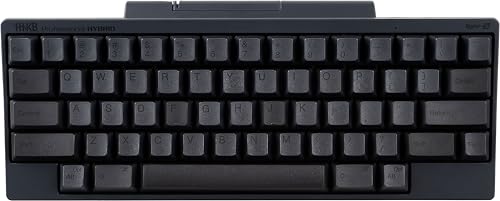
The FC660 is the compact flagship of the doctrine: a 65–66 percent board that keeps dedicated arrows and a small nav column, in a footprint barely larger than a 60. It exists in two switch worlds — the FC660M with Cherry MX switches, and the FC660C with Topre electro-capacitive switches, the latter carrying the HHKB Topre keyboards deep dive‘s switch technology into a layout with far fewer demands. The 660’s keycaps and build made it the connoisseur’s travel board for a decade, and its C variant remains one of the gentlest doors into Topre ownership, as this cluster’s earlier guides have noted from the switch side.
The FC750R and FC900R are the traditional line: tenkeyless and full-size respectively, MX-switched, wired, backlit minimally or not at all depending on variant, and built to the doctrine without flourish. They are the boards of offices that type — the comparison class for anyone asking what a serious, sober, finished keyboard is. The FC980 series is the line’s clever compression: 98–104 keys with a full pad in a footprint near the 750’s, in MX (980M) and Topre (980C) forms — the keyboard sizes catalogue’s 96 percent family with Leopold’s finish applied, and for pad professionals who share the doctrine, close to a perfect object. Across all lines, the naming grammar is consistent once learned: FC, the size’s number, then M for MX or C for capacitive, then the generation and edition letters — and the variant letters after that (keycap editions, switch options) are where listings must be read character by character.
Switch options within the MX lines follow the established makers’ catalogues — Cherry’s families principally, in their standard weights and types — chosen at purchase with the permanence the soldered doctrine implies. This is the purchase Leopold asks its buyers to make slowly: the switch decision that hot-swap boards defer forever must here be made once, correctly, ideally by fingers that have met the candidates — the keyboard accessories guide‘s switch tester earns its drawer space in this brand’s showroom more than any other’s. The Topre variants simplify the same decision to the doctrine’s own answer, uniform weighting and all, which is part of their quiet appeal to the decision-fatigued.
Stock Excellence, Itemised: Keycaps, Stabilisers, Sound
The keycaps deserve the first item because they are the doctrine’s most measurable claim: Leopold’s PBT sets are thick-walled, finely textured, and legended by dye-sublimation or double-shot processes at a standard that the aftermarket charges flagship prices to match — the keycap profiles explained families in their mainstream sculpted forms, executed without a visible flaw. Owners routinely report that a Leopold’s stock caps retire their keycap curiosity entirely, which, in a hobby where caps are a subscription, is a financial feature disguised as a manufacturing one. The ABS vs PBT keycaps whats the difference comparison on this site explains the material case; Leopold is its Exhibit A in production form.
Stabilisers are the second item, and the one that converts skeptics at first touch: the spacebar and its wide siblings arrive without the rattle and tick that the rest of the market treats as the owner’s homework. In the sound guides’ vocabulary, Leopold’s boards are clean before they are anything else — the attack organised, the worst key disciplined — and since owners grade boards by their worst key, the factory’s stabiliser labour is worth more than several headline features it replaces. Sound overall follows: composed, mid-deep, unremarkable in the way that lets a board be typed on for a decade without its voice ever becoming a topic. That is the doctrine’s endgame — a keyboard that exits its owner’s attention — and it is achieved by tolerances and tuning rather than by any component a rival could simply specify.
The omissions get the final item, priced honestly. Soldered switches mean the board’s feel is chosen at purchase and repaired, when a switch eventually tires, with an iron or a technician — the keyboard chattering double typing fix ladder’s top rung is this brand’s only rung for that fault. Wired-only models forgo the tri-mode desk. Minimal remapping means the layout is the layout. Each omission buys the doctrine’s coherence — fewer subsystems, fewer failure modes, nothing to configure badly — and costs the flexibility the modern market defaults to. The guide’s verdict form is therefore conditional by design: Leopold is the right answer to a specific question, and the decision section exists to help the reader learn whether it is theirs.
Leopold Keyboards: The Shortlist
Verified representatives across the lines: the FC660C for the compact Topre door, the FC980M for the compressed pad board, the FC750R for the traditional TKL, and the Realforce R3 as the Topre comparison the FC980C invites. Every Leopold below was matched to a confirmed listing in the site’s verified Amazon catalogue records.
Leopold FC660C
The compact Topre door
- Topre electro-capacitive switches
- Compact layout, dedicated arrows
- Wired
- Benchmark PBT keycaps
The FC660C is the doctrine at its most concentrated: Topre’s dome feel in a compact board that keeps its arrows, wearing the best stock keycaps in the business, tuned and finished to a standard that makes modification feel like vandalism. For the Topre-curious it remains the gentlest serious door — no HHKB layout pilgrimage, no full-size commitment — and for compact-board buyers generally it is the reference against which ‘stock excellence’ claims are measured. Its sound is the doctrine’s signature: quiet, composed, deep enough, with a spacebar that should be exhibited in museums of stabiliser tuning.
Its debits are the doctrine’s debits in concentrated form: wired, soldered by nature (Topre boards are not switch-swappable in the MX sense), premium-priced, and available through channels whose stock fluctuates by region — the listing discipline this guide preaches applies at full strength. For the buyer whose question it answers, none of that outweighs the first evening’s typing, which tends to end the search that brought them here.
Strengths
- Topre feel without layout austerity
- The stock keycap and stabiliser benchmark
- Compact with arrows kept
Trade-offs
- Wired only
- Premium price, fluctuating availability
- No switch customisation path
Best for: Topre-curious typists and finished-board seekers.
Not suited for: Hot-swap experimenters and wireless desks.

Leopold FC980M
The compressed pad board
- Cherry MX switches (variant options)
- 96–98 percent layout with full pad
- Wired
- PBT keycaps, tuned stabilisers
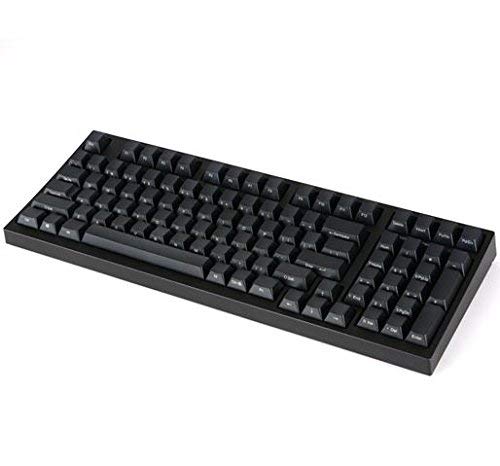
The FC980M applies the doctrine to the size catalogue’s cleverest compression: a full number pad and near-complete census in a footprint close to tenkeyless, finished to Leopold’s standard. For the data professional who shares the doctrine — who wants the pad, the finish and the silence about equipment for a decade — it is close to an endgame object, and its MX switch options at purchase are the one decision the buyer must make with a tester’s care, since the board will keep the answer. The 980C Topre sibling exists for the same desk in the other switch world, and choosing between them is the brand’s purest form of its only real question.
Variant literacy is the purchase’s tax: the 980 line spans switch types, editions and keycap collaborations whose names differ by letters, and the verified listing in the sources file is the authority for the configuration described. Availability, again, fluctuates — this brand is bought when found, by buyers who have done the reading in advance, which is the posture this entire guide is written to produce.
Strengths
- Pad completeness at near-TKL footprint
- Doctrine-grade finish and tuning
- A decade-shaped purchase
Trade-offs
- Soldered switches — choose once, correctly
- Wired only
- Availability and variant complexity
Best for: Data professionals of the finished-board faith.
Not suited for: Compact desks and switch experimenters.
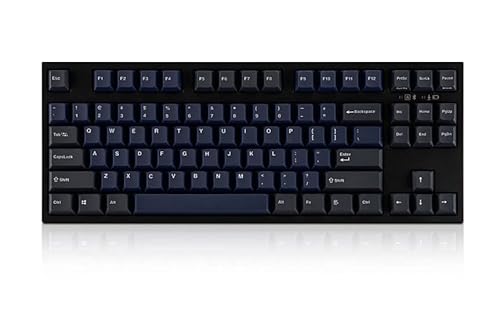
Leopold FC750R (FC750RBT Bluetooth variant)
The traditional TKL
- Cherry MX switches (variant options)
- Tenkeyless layout
- Bluetooth and wired connection on the FC750RBT variant
- PBT keycaps
The FC750R is the doctrine with nothing to prove: a tenkeyless board of sober design and exemplary finish, the comparison object for every ‘serious keyboard’ claim in its class. It offers no feature the era can headline and commits no fault the era can forgive — its caps, stabilisers, case and sound are simply correct, in a way that makes feature-list shopping feel faintly embarrassing beside it. Offices and writers who buy it tend to disappear from the keyboard market for years at a time, which is the brand’s whole commercial tragedy and its owners’ whole point.
Buyers must bring the variant literacy: switch choice at purchase is permanent in the practical sense, editions vary in caps and details, and the absence of hot-swap should be a decision rather than a discovery. For the reader whose brief is a finished TKL, it remains — after all the era’s inventions — a board that the inventions have not made obsolete, because correctness does not date the way features do.
Strengths
- Correctness in every detail
- The finished TKL reference
- Caps and stabilisers beyond its price
Trade-offs
- No hot-swap and minimal remapping
- Switch choice is a commitment
- Sober to a fault for design-led buyers
Best for: Typists and offices buying once, for years.
Not suited for: Experimenters and feature shoppers.

Topre Realforce R3
The Topre alternative
- Topre switches, weighting options
- Full-size and TKL formats
- Bluetooth/USB-C on R3 models
- Actuation adjustment features
The R3 stands in this guide as the FC980C’s natural cross-shop and the doctrine’s friendly rival: Topre’s own line, offering the same switch technology with the features Leopold omits — wireless, actuation adjustment, weighting choices — in a comparably serious build. The comparison between them is the Topre world’s version of this cluster’s recurring question: finished simplicity against governed flexibility. Leopold answers with finish and silence; Realforce answers with options and its own formidable tolerances. Neither answer is wrong, and Topre buyers should handle both doctrines’ representatives before the money decides.
Its debits relative to Leopold are the keycaps’ crown (Realforce’s are excellent; Leopold’s are the benchmark) and a design language even more austere. Its credits are the modern conveniences Leopold declines. The verified listing fixes the variant described; the Topre-curious reader is directed to this cluster’s 6 best Topre keyboards roundup for the full field, of which these two houses are the twin poles.
Strengths
- Topre with modern features
- Weighting and actuation choices
- Serious build in its own right
Trade-offs
- Keycaps a step behind Leopold’s
- Premium pricing
- Austere design
Best for: Topre buyers who want wireless and options.
Not suited for: Finish absolutists — Leopold holds that crown.
Buying a Leopold: Variant Literacy as a Skill
Leopold’s range rewards a specific literacy, and this section is its primer. Read a model name as a sentence: FC (the family), the number (the size’s census), M or C (the switch world), then the generation and edition suffixes that carry keycap sets, switch options and regional variants. Read the listing’s switch line twice, because on a soldered board it is the one irreversible line in the purchase. Read the keycap line for the edition’s material and legend process, since collaborations and special editions vary it. And read the channel: Leopold’s distribution outside Korea runs through specialist retailers whose stock is episodic, so the prepared buyer — decided on model, switch and edition in advance — buys in the window when the right variant appears, rather than researching during it and watching it close.
Second-hand Leopolds deserve the primer’s final paragraph, because the doctrine makes them unusually good used purchases: a board built to be finished ages into a board that is merely finished and older, with keycaps that resist shine and stabilisers that hold their tune. The used buyer’s checks are the standard ones — switch feel consistency across the board, the spacebar’s behaviour, cable and case condition — plus the variant verification this section teaches, since a used listing’s suffix letters carry the same irreversible information as a new one’s. In a market of depreciating features, Leopold’s depreciation curve is the doctrine’s last proof: correctness holds its value because it was never renting it from novelty.
Who Leopold Is Not For, Stated as a Service
The guide’s exclusions, gathered: the switch experimenter, whose pleasure is the swap — Leopold’s soldered permanence is their prison, and the kit world of the how to build a keyboard guide is their country. The configurator native, whose layout is a living document — Leopold’s DIP-switch minimalism will feel like a locked door, and the QMK houses exist for them. The wireless desk, the RGB showcase, the rapid-trigger player — each has a guide in this cluster and none of them is this one. And the bargain hunter at the entry tier: Leopold’s floor is the mainstream’s middle, because the doctrine’s tolerances cannot be manufactured at the floor’s prices, and a buyer whose budget is the floor should buy the value lines’ honest compromises rather than a stretched doctrine.
What remains, when the exclusions are honoured, is the brand’s true constituency, and it is not small: professionals and writers whose keyboard is infrastructure, owners cured of experimentation by experience, Topre seekers who want the switch without the pilgrimage, and anyone whose highest praise for a tool is that they stopped thinking about it years ago. Leopold serves them the way a great appliance serves a kitchen — by being correct, daily, without ceremony. In an era of keyboards as hobbies, that is a radical product, and its buyers’ loyalty is the least mysterious thing in this entire cluster of guides.
The Korean Context: Where Leopold’s Doctrine Comes From
Leopold is a Korean company, and its doctrine — the finished board, the tolerances, the sobriety — reads differently once its home market is understood, because South Korea’s keyboard culture is the most demanding typist culture on earth. Korea’s working life is keyboard-dense to a degree few markets match: a highly wired society, an office culture of long documented days, a gaming culture that treats peripherals as professional equipment, and a domestic enthusiast scene with exacting standards and long memories. A brand that sells finished, unflashy boards into that market for decades has passed an examination that export marketing cannot simulate. The doctrine is not a pose adopted for export; it is the local definition of a serious keyboard, and Leopold is its local incumbent — the board Korean offices buy the way other markets buy their own incumbents, on the accumulated evidence of colleagues’ desks.
The context also explains the brand’s distribution shape abroad: a company whose home market sustains it has never needed to chase export volume at the cost of its terms, so its foreign presence runs through specialist retailers who share its standards, in quantities that reflect a sideline rather than a conquest. The episodic stock that frustrates foreign buyers is the shadow of a healthy home business — Leopold makes boards for Korea first, and the world’s specialists import the surplus of its attention. Understanding this reframes the purchase: the foreign buyer is not the brand’s target customer being served badly, but a guest at a domestic table, welcome exactly insofar as they accept the house’s customs — the variants, the waits, the absence of courtship. Guests who accept the customs eat very well.
And the Korean context supplies the doctrine’s final credential: longevity under scrutiny. Keyboard fashions have swept Korea as they have everywhere — the custom scene, the gasket era, the rapid-trigger frontier — and through each, the finished-board doctrine has retained its constituency at home, among the typists best placed to judge it against every alternative at first hand. A product philosophy that survives its home market’s fashions is not a niche; it is a settled answer to a permanent question. Leopold’s foreign devotees are simply the question’s other askers, finding the answer across an ocean, at the price of the patience this guide has itemised.
Filco, Leopold and the Japanese-Korean Axis of Serious Boards
Leopold does not stand alone in its philosophy, and placing it among its peers sharpens what is distinctive about it. The natural comparison is Filco — Japan’s Majestouch line — the other great incumbent of the finished-board school: sober, wired, Cherry-switched, built to tolerances, with keycaps a clear step below Leopold’s and a distribution a step more established in the West. The two brands are the axis on which the pre-custom era’s quality turned, and their rivalry is a connoisseur’s: Filco’s partisans cite its switch feel’s consistency and its cases’ composure; Leopold’s cite the keycaps, the stabilisers and the Topre line that Filco does not answer. The ducky vs leopold vs varmilo keyboards compared piece on this site stages Leopold against the value-enthusiast school; the Filco comparison is the sterner test, doctrine against doctrine, and it ends — as such comparisons should — in a draw decided by the keycaps’ crown and the buyer’s region.
The axis has a third point in Topre’s own Realforce, and the three together define a category the modern market has no name for: the professional incumbents, boards bought by institutions and lifers, specified by their absence of faults rather than their presence of features. Their shared traits are a fingerprint — wired-first, sober, switch choices from the established makers, keycaps and stabilisers treated as first-order engineering, marketing that reads like documentation. A buyer who recognises the fingerprint can shop the category across its brands and its decades, including its used market, where the incumbents’ boards circulate with the calm liquidity of professional tools everywhere. Leopold is the category’s keycap king and its compact line’s champion; the category is its context, and within the category it has no superior — only peers, which is the highest station the keyboard world offers.
And the axis explains the modern custom scene’s debt: the scene’s standards for stabiliser tuning, for keycap quality, for the governed voice, were set by watching what the incumbents shipped as ordinary. Every foam stack in a modern flagship is an attempt to buy, by assembly, what Leopold’s tolerances achieved by manufacture. The doctrine’s students surpassed it in customisation and never in finish — a sentence the custom scene’s honest members will confirm — and the buyer choosing between the scene and the doctrine is choosing, in the end, between making a board and receiving one. Both are honourable. They are not the same hobby, and Leopold is the receiving hobby’s finest address.
The Keycaps, Revisited as an Economic Argument
The main guide praises Leopold’s keycaps as a benchmark; this expansion prices them, because the praise becomes a purchase argument only when the numbers are attached. A keycap set of Leopold’s standard — thick PBT, immaculate legends, the sculpt executed without a visible flaw — bought separately in the aftermarket costs a substantial fraction of the board’s whole price; owners of lesser boards routinely spend it, in the how to remove replace keyboard keys guide’s economy, to bring their caps to the level Leopold ships as standard. The board’s premium over its feature-led rivals is therefore partly an accounting illusion: the rival plus its necessary keycap upgrade meets or exceeds the Leopold’s price, while remaining, in stabilisers and tolerances, the lesser object. The doctrine’s economics are the five-year arithmetic of the buyers’ guides, applied at the component level: the finished board is the cheap board, for the buyer who would otherwise finish it themselves at retail.
The caps’ second economic property is their service life’s effect on the board’s total cost: a set that resists shine and legend wear for a decade removes the replacement line from the board’s ledger entirely — no second set, no subscription to the keycap market’s seasons — while the standard board’s caps are a recurring expense its owner has usually not budgeted. And the third property is the caps’ effect on resale: a used Leopold with its stock caps unworn presents as a nearly new board, because the caps are the surface the buyer reads for age, and their immunity to the usual evidence is worth a measurable premium in the used listings. Finish, it turns out, is not a luxury tax on the doctrine’s buyers. It is the doctrine’s discount, collected at purchase, at resale and at every year between, by owners who mostly never itemise it because the board simply never presented them with the bills.
There is a corollary for buyers of other brands, and this guide offers it freely: whatever board you buy, price its keycaps as a component with a replacement schedule, and let the schedule enter the comparison. The market’s pricing hides the caps’ cost by bundling it; Leopold’s transparency — its caps visibly worth their share of the price — is the bundle itemised by quality. A buyer who learns to see keycaps as a priced component will shop every brand more shrewdly, including this one, whose advantage under that light is not diminished but explained.
Topre Through Leopold: The FC660C and FC980C as a Pair
Leopold’s Topre offerings deserve a joint portrait, because together they make the brand’s strongest argument to the switch’s curious. The FC660C is the compact door — Topre’s feel in a layout that asks nothing — and the FC980C is the full-service door: the switch in a complete, pad-bearing board for the professional whose census is the FC980M’s but whose switch is the dome. Between them they cover the Topre market’s two main shapes without the HHKB’s layout pilgrimage or Realforce’s feature premium, wearing the doctrine’s keycaps — which, on Topre boards, are an even greater distinction, since the Topre keycap market is the narrowest in the hobby and a board whose stock caps are excellent has solved its owner’s decade in advance. The hhkb topre keyboards deep dive in this cluster maps the switch’s world; Leopold’s corner of it is the one where the switch meets the finish, and for many typists that meeting is the end of the search.
The pair also exposes the doctrine’s Topre-specific terms, which the buyer should hold clearly. The weighting is the line’s standard uniform feel — the connoisseur’s variable weightings live in Realforce’s catalogue, and Leopold’s answer is the doctrine’s usual one: a single, well-chosen specification, finished completely. The silencing question follows the same pattern. And the boards’ availability, through the specialist channels, is the pair’s practical tax, paid in patience by both models’ buyers with the prepared-buyer discipline this guide teaches. None of these terms is hidden; all of them are the doctrine’s; and the typist who accepts them receives, in exchange, the Topre experience with the fewest asterisks the switch’s market offers.
And the pair has a succession logic for the household: the 660C bought as the door becomes, when the doctrine converts its owner, the travel and second-desk board beside the 980C’s main station — the two-board pattern this cluster blesses in every domain, here arising naturally from one brand’s line. Owners describe the progression with the calm of people whose equipment stopped being a topic. That calm is the doctrine’s true product, and the Topre pair is its most concentrated dose: two boards, one switch, one finish, and a decade in which the keyboard is simply, finally, not a subject anymore.
Buying Leopold Outside Korea: The Specialist Channels, Mapped
The main guide’s prepared-buyer doctrine deserves its map of the actual channels, because Leopold’s foreign distribution has a geography that rewards knowing. The brand reaches most Western buyers through a small set of specialist keyboard retailers — the enthusiast shops whose catalogues mix the custom scene’s brands with the professional incumbents — supplemented by the large marketplaces’ import sellers and, for the patient, direct purchase from Korean retailers through the forwarding services that the import hobby maintains. Each channel prices the same board differently, and the differences are not noise: the specialist’s price buys the variant’s certainty, a returns path and a warranty administered in your region; the importer’s price buys the board alone, with its paperwork in Korean and its remedies across an ocean; the direct route buys the home market’s price and its full variant range, at the cost of the forwarding chain’s fees and the buyer’s own diligence as the only quality control. The prepared buyer’s choice among them is a risk allocation, made knowingly, and the guide’s counsel is to pay the specialist’s premium on a first Leopold — the variant literacy is being learned, and the channel is the tutor — and to consider the other routes only with the literacy established.
Timing is the channels’ second dimension. The specialists restock in waves that their newsletters and the community’s channels announce; the prepared buyer, decided in advance, treats the announcement as a starting gun for a purchase already made in every respect but the payment. The indecisive buyer treats it as the beginning of research, and watches the wave pass — the category’s recurring small tragedy, which this guide’s whole structure exists to prevent. Decide in the calm; buy in the window; and let the board’s arrival be the end of a process rather than the start of one. The doctrine’s boards reward the doctrine’s buying method, which is not a coincidence: both are the same patience, applied at different desks.
And the used market, mapped in the main guide, completes the channels with its own discipline: verify the variant by its suffixes, grade the caps by their photographs (they will be honest — the caps do not hide their age, because they barely take any), and price the board against the specialist’s new price with the doctrine’s depreciation — shallow — in mind. A used Leopold at a suspicious discount is either a variant misdescribed or a bargain in a thin market; the literacy distinguishes them, and the literacy, by now, is yours.
The Doctrine’s Verdict: Who Leopold Is For, Finally
The doctrine has now been circled from its market, its peers, its economics and its channels; the closing section renders the verdict in the form the cluster’s guides save for last — the reader, sorted. Leopold is for the typist whose keyboard is infrastructure: the professional whose board must be correct at 9 a.m. for a decade, the writer whose attention is the scarcest resource in their economy and who will not spend it on equipment, the owner cured by experience of the customisation appetite and honest enough to say so. It is for the Topre-curious who want the switch without the pilgrimage, and for the pad professional whose census and conscience align on the 980. It is for the buyer whose highest compliment to a tool is that they forgot it, and whose second-highest is that it made them forget every other tool in its category too.
It is not for the experimenter, the configurator native, the wireless desk or the bargain floor — the main guide’s exclusions, unamended — and its not-for list is not a criticism but a border, drawn by the brand itself and respected by this guide because borders honestly drawn are how buyers find their countries. The keyboard market’s tragedy is not that wrong boards exist but that right boards are bought by the wrong readers, on other guides’ enthusiasms. Leopold’s readers, correctly sorted, are the most satisfied owners in this cluster’s entire survey — not because their boards top the specifications, but because their expectations and their boards were written by the same doctrine, and met, and kept meeting, every morning, without ceremony.
So the guide ends with the doctrine’s own instruction, which is also its epitaph and its advertisement in one: decide slowly — size, switch world, variant — buy exactly the board the decisions name, and then let the board disappear. A decade from now, the measure of this purchase will not be anything you can say about the keyboard. It will be everything you wrote on it, in the years when it never once asked to be thought about. Correctness, kept daily, is the loudest claim any product in this cluster makes — and Leopold makes it in a whisper, which is how you can tell it is true.
Choosing Your Leopold in Four Decisions
The doctrine asks for slow shopping and then no shopping; these are the four decisions it actually requires.
- Choose the size by the census method of this cluster’s size guides: FC660 for the compact with arrows, FC750R for tenkeyless, FC900R for the reference full-size, FC980 for the pad in a compressed footprint. The size is the board’s permanent geography; deliberate accordingly.
- Choose the switch world: M for the MX catalogue (with its weights and types to be decided by tester or by long familiarity), C for Topre’s uniform answer. This is the purchase’s one irreversible technical decision on the MX lines, and it deserves the fortnight’s thought the doctrine’s permanence implies.
- Choose the exact variant — switch option, edition, keycap set — from the maker’s specification, and confirm it character-by-character in the retailer’s listing. Set a stock alert with the specialist channels if the variant is out of stock rather than substituting a near-miss.
- On arrival, do the doctrine’s only homework: type. No tuning queue, no mod list, no configurator pilgrimage. If the board is correct — and the three decisions above exist to make it so — the correct next step is a decade of not reading keyboard guides, this one included.
Leopold Shopping Mistakes
Buying the switch variant by description alone.
On a hot-swap board a wrong switch is a twenty-minute correction; on a Leopold it is the board’s permanent accent. Descriptions of switch feel are the least transferable prose in the hobby, and this brand — uniquely — makes the choice stick. Meet the candidates on a tester or a friend’s board, or choose the Topre variants’ uniform answer with open eyes about its own character.
Importing flagship-era expectations.
The buyer who unboxes a Leopold looking for the screen, the gasket marketing and the configurator will file a disappointed review of a board that never promised them — while its actual virtues (caps, stabilisers, tolerances) go unmeasured because no instrument in their review kit detects them. Judge the doctrine by the doctrine: worst key, tenth hour, hundredth day.
Substituting a near-miss variant because the right one was out of stock.
Episodic stock tempts compromise — the wrong switch, the wrong edition — on the one brand whose purchases are meant to be permanent. The prepared buyer’s discipline is to wait for the variant or to choose a different board entirely; a decade-long object bought as a near-miss is a daily small regret with excellent keycaps.
Planning to mod it into a modern board.
Hot-swap conversions, configurator hacks and lighting retrofits on a Leopold are effort spent fighting the doctrine with the doctrine’s own money. If the project is the pleasure, buy the platform the project wants. Leopold’s value is precisely that it is not a platform, and converting it destroys the asset to acquire a worse version of a cheaper thing.
Overlooking the FC980 when the pad is the requirement.
Pad professionals default to full-size and inherit the mouse-distance tax the size guides document, unaware the doctrine has a compressed answer. The 980 line exists for exactly their desk; buyers whose census includes the pad should shortlist it before the reference full-size, and let the footprint argument be heard.
Treating Leopold’s plain listings as a lack of information.
The doctrine’s listings state the variant, the switch and the caps and stop — because the board’s virtues are in its tolerances, which listings cannot photograph. Buyers who read the brevity as poverty buy the louder listing and spend the following year discovering which virtues cannot be listed. Read the brand’s record and the owners’ decade-old reports; they are the specification the listing is too honest to shout.
Frequently asked questions
Are Leopold keyboards worth the premium?
For their constituency, demonstrably: the premium buys keycaps and stabiliser tuning that the aftermarket would charge comparably to replicate, in a board whose service life is measured in decades and whose resale reflects it. For buyers who value customisation, the same premium buys features they will not use and omits ones they will — the worth is doctrine-shaped, and this guide’s decision section exists to test the fit before the money tests it for you.
Does Leopold make hot-swap keyboards?
The classic lines that built the brand are predominantly soldered, and buyers should assume soldered unless the exact model’s specification states otherwise — the brand has moved with the market in places, and the variant check is, as ever, the authority. If hot-swap is a requirement rather than a preference, the honest answer is that other houses in this cluster serve it better, and Leopold’s doctrine should be admired from their side of the fence.
Leopold or Realforce for Topre?
The Topre world’s twin poles: Leopold for finish — the keycaps, the compact forms, the doctrine’s silence — Realforce for features, with wireless and actuation options Leopold declines. Handle both if the money allows the research; read the roundup of Topre boards on this site for the full field. The switch is shared, so the decision is about everything around it, which is why it is genuinely difficult and genuinely personal.
Why do Leopold keyboards have no backlighting?
Most classic models reflect the doctrine’s priorities: legends are made to be read in room light (and are, superbly), lighting subsystems are cost and complexity spent where the constituency does not look, and the boards’ habitats — offices, studies — are lit rooms. Variants with lighting exist in the range’s modern edges; the classic lines’ darkness under the caps is a position, and their owners defend it with the tranquillity of people whose spacebars do not rattle.
Where can I buy Leopold keyboards?
Through specialist keyboard retailers in most regions — the brand’s distribution is narrower than the mainstream’s, stock is episodic, and prices vary by channel and import path. The prepared-buyer posture this guide teaches (model, switch and edition decided in advance, alerts set) is the practical answer. Avoid listings whose variant information is incomplete; on this brand, the suffix letters are the product, and a seller who cannot state them cannot sell you the right board.
How long will a Leopold last?
The doctrine’s design life is the honest answer: switches rated in the tens of millions of presses, keycaps that resist a decade of shine, cases and stabilisers built to tolerances that age slowly. Decade-old Leopolds in daily service are unremarkable in the brand’s community, and the used market prices that expectation in. The board’s realistic retirement causes are interface changes and its owner’s curiosity — the same forces that retire every keyboard in this cluster, arriving, in Leopold’s case, unusually late.
Is Leopold better than Filco?
They are the professional-incumbent school’s twin answers, and the honest comparison is a draw decided by details: Leopold holds the keycap crown and fields the Topre line; Filco’s Western distribution is broader and its devotees swear by its consistency. A buyer choosing between them should handle both if the opportunity exists, weight the keycaps (Leopold) against availability (Filco), and know that either purchase lands in the same doctrine — the finished board, bought once. The school’s other comparisons on this site stage Leopold against the value-enthusiast brands, where the argument is about philosophy rather than finish.
Do Leopold keyboards work with Mac?
The boards type on Mac without ceremony — they are standard USB keyboards, and the modifier arrangement can be set in the operating system’s keyboard settings, as with any board of their class. What they do not offer is the Mac-specific apparatus of the modern catalogue — the printed Mac legends on the main lines, the mode switches — because the doctrine’s boards predate that expectation and serve the typist’s hands rather than the operating system’s branding. Mac typists who value finish over apparatus are among the brand’s quietest constituencies.
Are Leopold keyboards good for gaming?
They are excellent keyboards that are not gaming keyboards: their switches are the standard mechanical families with standard response, their polling is the standard rate, and nothing about their finish impedes play in any genre that does not spend the analog frontier’s milliseconds. The competitive margin — rapid trigger, high polling, the gaming software apparatus — lives in other catalogues, several of them in this cluster. The casual and even serious amateur player will find a Leopold entirely sufficient; the ranked competitor should shop the gaming guides and keep the Leopold, if they own one, for the writing desk it was always meant for.
Leopold is the keyboard market’s argument that finishing is a feature — that keycaps moulded properly, stabilisers tuned at the factory, cases that fit and a sound composed by tolerances are worth more, to a certain buyer, than every headline the era has invented since. That buyer is not a niche of cranks; they are the professionals and writers for whom a keyboard is infrastructure, and their loyalty, sustained across decades of louder launches, is the doctrine’s market proof. In a cluster of guides devoted to choosing, tuning and governing keyboards, Leopold stands as the reminder that the highest form of all three can be a purchase made once, correctly, and then forgotten.
So decide slowly — size, switch world, variant — buy exactly the board the decisions name, and then accept the doctrine’s gift: a decade of not thinking about your keyboard. If, years from now, you find yourself unable to remember when you bought it, only that it has always typed like this, the brand will have kept its promise in full. Correctness, it turns out, is the most durable feature of all.