The best drones for photography with mirrorless cameras are the ones that earn a place in a camera bag, not just in a toy box. A mirrorless photographer already owns a serious camera for ground-level work, so the drone has to add something the mirrorless body cannot do: a stable aerial perspective, a capable sensor, and footage that cuts cleanly with mirrorless stills and video. The six drones below were chosen because each one delivers real photographic quality, not just a camera that happens to fly.
Image quality is the first test. A large sensor, a stabilized gimbal, and true 4K video matter far more than gimmicks, because the drone footage has to sit next to mirrorless files in the same edit. Flight time is the second test: a drone that lands after twenty minutes forces rushed shots, while a drone with three batteries and an hour of total flight time lets the photographer wait for the light. Weight is the third test, since every drone here sits under 249 grams, which keeps travel and registration simple in most places.
This guide covers the DJI Mini line, which dominates the sub-250-gram category for good reason, plus a GPS drone with a built-in screen controller for buyers who want a different approach. Every pick here is light enough to travel in a camera bag and capable enough to produce work worth editing. Read the comparison table first, then the detailed reviews, and use the buying guide to match sensor size, flight time, and controller style to the way the drone will actually be used.
In this guide
Quick picks: best drones for photography with mirrorless cameras
| # | Product | Where to buy |
|---|---|---|
| 1 | DJI Mini 5 Pro Fly More Combo | Check on Amazon |
| 2 | DJI Mini 4 Pro | Check on Amazon |
| 3 | DJI Mini 4 Pro Fly More Combo | Check on Amazon |
| 4 | DJI Mini 4K Combo | Check on Amazon |
| 5 | DJI Mini 3 Fly More Combo | Check on Amazon |
| 6 | GPS Drone with 4K Camera | Check on Amazon |
How the Picks Were Chosen
Every pick was checked against the same photographic standard: a stabilized camera, true 4K video, and a sensor that produces files worth editing. Drones with toy-grade cameras were excluded, no matter how many features the listing claimed. A drone that cannot produce clean stills and smooth video is not a photography tool, and this guide does not include any.
Flight time and batteries were the second filter. A single battery is rarely enough for a real shoot, so Fly More combos with three batteries score highly here: they turn a 34-minute drone into a hundred-minute shooting session. The total flight time across all batteries matters more than any single-battery number, and the picks are judged on that total.
Weight, controller, and obstacle sensing were the final filters. Every pick here is under 249 grams, which simplifies travel and keeps the drone in the lightest regulatory class. Controllers with built-in screens save the photographer from draining a phone in the field, and omnidirectional obstacle sensing protects an expensive drone when the pilot is focused on the shot rather than the surroundings. Each pick below earns its place on those practical grounds.
Quick Comparison
| Drone | Camera | Flight Time | Weight | Standout Feature |
|---|---|---|---|---|
| DJI Mini 5 Pro Fly More Combo | 1-inch CMOS, 4K | Fly More Combo | Under 249 g class | 1-inch sensor with obstacle sensing |
| DJI Mini 4 Pro | 4K camera | 34 mins | Under 249 g | RC 2 controller with screen |
| DJI Mini 4 Pro Fly More Combo | 4K camera | 3 batteries | Under 249 g | Three batteries for long sessions |
| DJI Mini 4K Combo | 4K UHD camera | Under 249 g | Under 249 g | 3-axis gimbal at the entry tier |
| DJI Mini 3 Fly More Combo | 4K HDR video | 3 batteries, 114-min total | Lightweight | 114 minutes of total flight time |
| GPS Drone with 4K Camera | 4K camera | 2 batteries, 60-min total | GPS drone | Built-in screen controller, 60-min total |

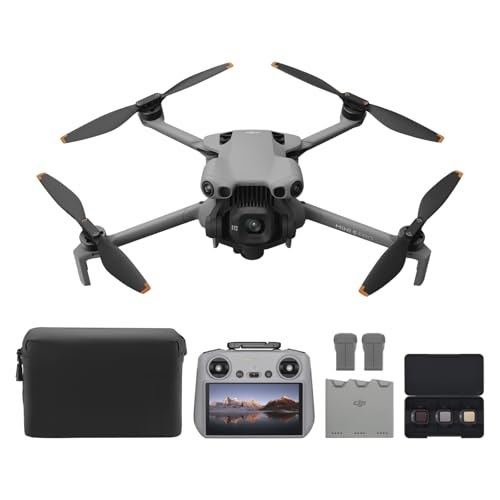
1. DJI Mini 5 Pro Fly More Combo
The DJI Mini 5 Pro Fly More Combo is the image-quality leader of this guide, and the reason is the 1-inch CMOS sensor. A 1-inch sensor gathers far more light than the smaller sensors in most sub-250-gram drones, which shows up as cleaner shadows, better dynamic range, and less noise in low light. For a mirrorless photographer who judges images critically, that sensor is the difference between drone footage that cuts with mirrorless files and footage that looks like it came from a different camera entirely.
The Fly More Combo adds the batteries and charging hub that turn a good drone into a practical shooting tool. With multiple batteries, the photographer can fly a full session, wait for the light to change, and reshoot a composition without rationing minutes. Omnidirectional obstacle sensing adds safety while the pilot is focused on framing, and the RC 2 controller puts the live view on a built-in screen instead of a phone.
For photographers who already own a mirrorless body, the Mini 5 Pro is the aerial camera that matches their standards. It is the most capable photographic drone in this guide, and the 1-inch sensor is the feature that justifies choosing it over the cheaper Mini models.
Key specifications: DJI Mini 5 Pro Fly More Combo with DJI RC 2; 1-inch CMOS camera; 4K video; omnidirectional obstacle sensing; under 249 g class.
Strengths:
- 1-inch CMOS sensor delivers the cleanest images and best low-light performance in this guide.
- Fly More Combo with extra batteries supports long shooting sessions without rationing flight time.
- Omnidirectional obstacle sensing protects the drone while the pilot focuses on framing.
Trade-offs:
- The most capable drone here is also the most expensive pick in the guide.
- The Fly More Combo adds bulk to the kit, so the case is bigger than a single-drone package.
- A 1-inch sensor still cannot match a full mirrorless body for stills, so expectations should stay realistic.
This drone fits mirrorless photographers who want the best aerial image quality available under 249 grams and who shoot seriously enough to need multiple batteries.
Best for: serious aerial photography and video alongside a mirrorless kit / Not suited for: casual flyers who want the cheapest drone that takes decent pictures
The Mini 5 Pro also suits photographers who sell their work or shoot for clients. The larger sensor produces files that hold up to editing and grading, and the obstacle sensing reduces the risk of losing the drone on a paid shoot. For professional use, the reliability of the platform matters as much as the image quality, and the Mini 5 Pro delivers both in a package that travels in a camera bag.
Check price on Amazon: DJI Mini 5 Pro Fly More Combo

2. DJI Mini 4 Pro with DJI RC 2
The DJI Mini 4 Pro with the DJI RC 2 controller is the sweet spot of this guide. It records 4K video, weighs under 249 grams, flies for 34 minutes per battery, and transmits video up to 20 kilometers. The RC 2 controller has a built-in screen, so the photographer does not need to mount a phone, drain its battery, or struggle with glare on a small display. That controller alone makes the flying experience calmer and the framing more accurate.
The 34-minute flight time is generous for a drone this size, and it is enough for most photographic missions: a few orbits, a reveal shot, and a second pass if the light changes. The sub-250-gram weight keeps the drone in the lightest class for travel and registration, which matters for photographers who fly in different places and do not want paperwork to decide where they can shoot.
For mirrorless photographers who want a capable aerial camera without paying for the 1-inch sensor, the Mini 4 Pro is the right balance. It produces clean 4K footage, flies long enough for real work, and carries easily in a camera bag next to a mirrorless body.
Key specifications: DJI Mini 4 Pro with DJI RC 2; 4K camera; under 0.549 lbs / 249 g; 34 mins flight time; 20 km max video transmission.
Strengths:
- Built-in screen controller means no phone mount and no drained phone battery in the field.
- 34-minute flight time covers most photographic missions on a single battery.
- Under 249 grams keeps travel and registration simple in most places.
Trade-offs:
- The smaller sensor cannot match the Mini 5 Pro 1-inch CMOS in low light.
- A single battery limits long sessions unless extra batteries are added.
- The 20 km transmission range exceeds what most photographers legally need, so it is not a deciding factor.
This drone fits photographers who want the best balance of image quality, flight time, and portability, with a screen controller that simplifies field work.
Best for: travel photography and everyday aerial stills and video / Not suited for: low-light specialists who need the largest sensor available
The Mini 4 Pro also works well as a first serious drone. The controls are approachable, the safety features are strong, and the image quality is good enough that the photographer will not outgrow it quickly. Beginners who buy cheap toy drones often replace them within months, while the Mini 4 Pro is a machine that stays useful as skills improve.
Check price on Amazon: DJI Mini 4 Pro

3. DJI Mini 4 Pro Fly More Combo
The DJI Mini 4 Pro Fly More Combo takes the same drone as the previous pick and adds the two things photographers actually need: more batteries and a charging hub. With three batteries, total flight time stretches past a hundred minutes, which changes how a shoot works. Instead of rushing each shot before the battery warning, the photographer can wait for the light, reshoot a composition, and fly a second location without returning to the car to recharge.
The RC 2 controller with its built-in screen carries over, so the flying experience is identical to the single-drone version. The difference is purely practical: the Fly More Combo is the version for photographers who shoot for hours, travel to remote locations, or work on assignments where a dead battery means a missed shot. The extra batteries and the hub cost more, but they cost less than a second trip to the same location.
For anyone who plans to use the drone regularly rather than occasionally, the Fly More Combo is the version to buy. The drone is the same, but the shooting experience is completely different when battery anxiety disappears.
Key specifications: DJI Mini 4 Pro Fly More Combo with DJI RC 2; 4K camera; under 0.549 lbs / 249 g; 34 mins flight time; 3 batteries.
Strengths:
- Three batteries turn a 34-minute drone into a full shooting session.
- Charging hub keeps batteries ready and organized between flights.
- Same 4K camera and RC 2 screen controller as the standard Mini 4 Pro.
Trade-offs:
- The combo costs more than the single-drone version for the same aircraft.
- The larger case takes more room in a camera bag.
- Three batteries mean more charging time and more weight to carry.
This drone fits photographers who shoot for hours, travel to remote locations, or work on assignments where running out of battery means missing the shot.
Best for: long sessions, travel shoots, and assignment work / Not suited for: occasional flyers who use a drone a few times a year
The Fly More Combo also makes sense for photographers who fly in cold weather, where batteries drain faster and flight times shrink. Having three batteries means the cold costs the photographer minutes, not the whole shoot. That insurance is worth the extra cost for anyone who shoots in winter or at altitude, where conditions are hardest on batteries.
Check price on Amazon: DJI Mini 4 Pro Fly More Combo

4. DJI Mini 4K Camera Drone Combo
The DJI Mini 4K Camera Drone Combo is the entry point to serious DJI photography, and it proves that a low cost does not have to mean a shaky camera. It records 4K UHD video, weighs under 249 grams, and carries a 3-axis gimbal that keeps the footage smooth while the drone moves. The gimbal is the critical feature: a drone without stabilization produces footage that is unusable for anything but casual viewing, while a 3-axis gimbal produces the smooth, professional movement that photographers expect.
The 10-kilometer video transmission range is more than enough for photographic work, where the drone stays within sight and the subject is nearby. The combo includes the accessories needed to start flying, and the drone itself is light enough to slip into a camera bag pocket. For photographers who want to add aerial shots to their work without a large investment, the Mini 4K is the most affordable way into the DJI system.
The trade-off is image quality in difficult light. The smaller sensor and simpler processing cannot match the Mini 4 Pro or Mini 5 Pro at dawn or dusk, but in good daylight the footage is clean and the stills are sharp. For buyers who shoot mostly in daylight, that trade is easy to accept.
Key specifications: DJI Mini 4K Camera Drone Combo; 4K UHD camera; under 249 g; 3-axis gimbal stabilization; 10 km video transmission.
Strengths:
- 3-axis gimbal delivers smooth stabilized footage at the lowest cost in this guide.
- 4K UHD video and a sub-250-gram body make it a genuine photography tool, not a toy.
- Light and compact enough to carry in a camera bag pocket.
Trade-offs:
- Image quality in low light cannot match the larger-sensor Mini models.
- The entry-tier camera and processing show their limits in demanding conditions.
- Fewer advanced features than the Mini 4 Pro, such as obstacle sensing and the screen controller.
This drone fits photographers who want to add aerial shots on a budget, and beginners who want a real DJI camera drone as a first machine.
Best for: daylight aerial photography on a budget and first camera drones / Not suited for: low-light work or photographers who need the best sensor available
The Mini 4K also suits photographers who are unsure how much they will use a drone. It is affordable enough to buy as an experiment, capable enough to produce usable work, and easy to resell or hand down if aerial photography does not become a habit. That low-risk entry is valuable for a tool that not every photographer ends up using weekly.
Check price on Amazon: DJI Mini 4K Combo

5. DJI Mini 3 Fly More Combo
The DJI Mini 3 Fly More Combo is the endurance pick of this guide, with three batteries that add up to 114 minutes of total flight time. That is the longest total in the guide, and it matters for photographers who plan a full day of flying: a sunrise session, a midday location, and a golden-hour return, all without recharging. The 4K HDR video handles high-contrast scenes well, which is exactly the situation at sunrise and sunset when the sky is bright and the ground is dark.
The DJI RC controller with its built-in screen keeps the setup simple, and the lightweight body travels easily. The Mini 3 does not have the newest sensor or the most advanced obstacle sensing, but it has the flight time that photographers actually run out of first. A better sensor is useless when the battery is dead, and the Mini 3 solves the problem that ends shoots.
HDR video deserves a note for photographers. High dynamic range recording preserves detail in bright skies and dark shadows in the same frame, which is the hardest problem in aerial video. For landscape work at the edges of the day, that capability matters more than a slightly larger sensor.
Key specifications: DJI Mini 3 Fly More Combo with DJI RC; 3 batteries; lightweight camera drone; 4K HDR video; 114-min total flight time.
Strengths:
- 114 minutes of total flight time across three batteries is the longest in this guide.
- 4K HDR video preserves detail in bright skies and dark shadows.
- DJI RC controller with a built-in screen keeps the field setup simple.
Trade-offs:
- The older sensor and processing cannot match the Mini 4 Pro or Mini 5 Pro.
- Obstacle sensing is less comprehensive than on the newer Mini models.
- The Mini 3 is a previous generation, so future software support may end sooner.
This drone fits landscape photographers who need long total flight time for sunrise-to-sunset shooting and who value HDR video for high-contrast scenes.
Best for: long landscape sessions and golden-hour aerial video / Not suited for: buyers who want the newest sensor and the latest obstacle sensing
The Mini 3 Fly More Combo also suits travelers who fly in places without reliable power. Three batteries mean a full day of flying without finding an outlet, and the lightweight body keeps the kit portable. For remote locations, that self-sufficiency is more valuable than any single specification, and it is why the Mini 3 remains a smart buy even as newer models arrive.
Check price on Amazon: DJI Mini 3 Fly More Combo

6. GPS Drone with 4K Camera and Screen Controller
The GPS Drone with 4K Camera is the alternative pick of this guide, and it exists for buyers who want a screen controller and GPS features without the DJI price. It records 4K video, carries a GPS system with auto return, and ships with a controller that has a 4.5-inch screen built in, so no phone is needed. Two batteries add up to 60 minutes of total flight time, which is enough for a real photographic session.
The GPS features deserve attention for photographers. Auto return brings the drone home if the signal drops or the battery runs low, follow-me modes keep the camera on a moving subject, and waypoint flying lets the photographer plan a route and focus on the shot. Those are the same kinds of features that make the DJI drones easy to fly, and they matter most for photographers whose attention is on composition rather than piloting.
The trade-off is image quality and refinement. The camera and stabilization cannot match the DJI Mini line, and the footage needs more care in editing. For buyers on a tight budget who want GPS features and a screen controller, that trade is acceptable, but photographers who judge images critically should prefer the DJI picks above.
Key specifications: GPS Drone with 4K Camera for Adults; 4.5-inch screen on controller; 2 batteries for 60-min total flight time; FPV RC drone with GPS.
Strengths:
- Built-in 4.5-inch screen controller means no phone is needed to fly.
- GPS auto return, follow-me, and waypoint modes help photographers focus on the shot.
- Two batteries and 60 minutes of total flight time cover a real session.
Trade-offs:
- Camera quality and stabilization cannot match the DJI Mini drones in this guide.
- Build quality and software polish are below the DJI standard.
- Resale value and long-term support are weaker than for established brands.
This drone fits budget buyers who want GPS features and a screen controller, and beginners who want to learn aerial photography without a large investment.
Best for: budget GPS drone flying with a built-in screen / Not suited for: photographers who need the best image quality for professional work
This GPS drone also works as a learning tool. The GPS modes teach the fundamentals of waypoint flying and follow-me shots, and the low cost means mistakes are less expensive. Pilots who learn on this drone and later move to a DJI Mini will already understand the flight modes, the framing, and the battery discipline that serious aerial photography requires.
Check price on Amazon: GPS Drone with 4K Camera
How a Drone Complements a Mirrorless Camera
A mirrorless camera and a drone do different jobs, and the best results come from using each where it is strongest. The mirrorless body wins for portraits, low-light work, and shallow depth of field, because its larger sensor and interchangeable lenses cannot be matched by a drone. The drone wins for establishing shots, landscapes, and perspectives that are impossible from the ground. A guide that treats the drone as a replacement for the mirrorless camera misunderstands both tools.
The practical workflow matters more than the specifications. Shoot the ground-level work on the mirrorless body, then fly the drone for the wide establishing shots and the aerial sequences that open and close a video. Match the color settings between the two cameras so the footage cuts cleanly, and shoot the drone footage in the flattest color profile available so it can be graded to match. Photographers who plan the two cameras as a team get far better results than those who treat the drone as an afterthought.
Weight and regulations shape the choice more than most buyers expect. Every drone in this guide sits under 249 grams, which keeps it in the lightest regulatory class in most places and makes travel simple. Heavier drones need registration, and in some places they need permits that a traveler cannot arrange quickly. For a photographer who flies in different locations, the sub-250-gram class is not a minor detail; it is the difference between flying and leaving the drone at home.
Flight time is the resource that runs out first, and it should drive the purchase decision more than the camera specification. A drone with a better sensor but one battery produces less usable footage than a drone with a good sensor and three batteries. That is why the Fly More combos score so well in this guide: they solve the real constraint, which is time in the air, rather than the theoretical constraint of sensor size.
Buying Guide: Choosing a Drone for Photography
Start with the sensor, because it decides image quality. A 1-inch sensor, as in the Mini 5 Pro, gathers more light and produces cleaner files than the smaller sensors in the rest of the guide. For photographers who shoot at dawn and dusk, the sensor is the most important specification. For daylight shooters, the smaller sensors are fine, and flight time matters more.
Next, count the batteries. A single battery gives roughly half an hour of flying, which is enough for a quick session but not for a real shoot. Three batteries give more than an hour and a half, which covers waiting for light and reshooting compositions. Buyers who plan to shoot seriously should choose a Fly More combo or budget for extra batteries at the same time as the drone.
Check the controller next. A controller with a built-in screen is easier to use in bright sunlight and does not drain a phone, while a phone-based controller is cheaper and more compact. Photographers who fly in bright conditions will appreciate the built-in screen every time they fly. Finally, check obstacle sensing: omnidirectional sensing protects the drone when the pilot is focused on framing, which is exactly when collisions happen.
Consider weight and travel last, but do not skip it. Sub-250-gram drones travel easily and face the lightest regulations, while heavier drones need registration and sometimes permits. For photographers who travel, the weight class can matter more than any camera specification, and every pick in this guide is in the lightest class for that reason.
Finally, think about the kit as a whole rather than the drone alone. A spare set of propellers, a lens cloth, a landing pad, and a bag that holds the drone beside the mirrorless body are small purchases that make field work smoother. The drone is one part of a camera system, and the accessories that support it are what turn a good drone into a reliable part of a photographic workflow.
How to Use and Care for a Photography Drone
Before every flight, check the batteries, the propellers, and the gimbal. Batteries should be charged and free of swelling, propellers should be undamaged, and the gimbal should move freely. Calibrate the compass when the drone asks, and always wait for a strong GPS lock before takeoff. Those two minutes of checks prevent most of the accidents that destroy drones.
Fly with the light, not against it. The best aerial photography happens in the hour after sunrise and the hour before sunset, when the light is low and warm. Midday sun produces flat, harsh images from the air, and the drone footage will look worse than the mirrorless stills shot at the same time. Plan flights around the light, and use the waiting time to scout compositions from the ground.
Store batteries at partial charge when the drone will not fly for weeks, and keep them in a cool, dry place. Lithium batteries age fastest when stored full or empty, and a battery stored correctly lasts far longer. Clean the camera lens before every flight with a soft cloth, since a fingerprint on a small drone lens ruins every image in the session, and store the drone in its case with the gimbal protected.
Common Mistakes to Avoid
The most common mistake is flying without checking the regulations for the location. Rules differ by country and by place, and flying in a restricted area can mean fines or a confiscated drone. Check before traveling, not after arriving. The second mistake is flying with a single battery and no plan: the battery runs out just as the light gets good, and the shoot ends early.
The third mistake is ignoring the wind. Small drones struggle in strong wind, and the footage becomes shaky while the battery drains faster. Check the forecast, fly in the morning when the air is calm, and land early if the wind rises. The fourth mistake is filming everything and editing nothing: aerial footage is most effective in short sequences, and hours of unedited drone video bore viewers faster than any other kind of footage.
The final mistake is forgetting that the drone is a camera, not just a flying machine. Photographers who plan shots, wait for light, and compose carefully produce far better aerial work than pilots who simply fly high and record. The same discipline that makes mirrorless photography good applies in the air, and it matters more there because flight time is limited.
Final Recommendation
For most mirrorless photographers, the DJI Mini 4 Pro with the RC 2 controller is the best all-round pick: clean 4K video, 34 minutes of flight, and a screen controller in a sub-250-gram body. Photographers who want the best image quality should choose the Mini 5 Pro Fly More Combo for its 1-inch sensor, and photographers who need maximum flight time should choose the Mini 3 Fly More Combo with its 114 minutes of total flying.
Budget buyers should start with the DJI Mini 4K Combo, which delivers stabilized 4K footage at the lowest cost here, and the GPS drone with a screen controller is the alternative for buyers who want GPS features without the DJI price. Either way, buy the batteries first and the accessories second, because time in the air is what turns a drone into a camera. Whichever pick fits, the principle is the same: buy the sensor for the light, the batteries for the session, and the weight class for the travel.
Frequently Asked Questions
Do I need a drone if I already own a mirrorless camera?
A drone adds aerial perspectives that a mirrorless camera cannot produce: establishing shots, landscapes from above, and reveal sequences. The two cameras complement each other rather than replacing each other, and the best results come from using both.
What does under 249 grams mean for a drone?
Drones under 249 grams sit in the lightest regulatory class in most places, which simplifies registration and travel. Heavier drones often need registration and sometimes permits, so the sub-250-gram class is a practical advantage for traveling photographers.
How many batteries do I need for a photo shoot?
Three batteries give more than an hour and a half of total flight time, which covers waiting for light and reshooting compositions. A single battery gives about half an hour, which is enough for a quick session but not for serious work.
Is a 1-inch sensor worth it on a drone?
Yes, for photographers who shoot in low light or judge images critically. A 1-inch sensor gathers more light, produces cleaner shadows, and holds up better to editing than the smaller sensors in most sub-250-gram drones.
What is a Fly More Combo?
A Fly More Combo is a bundle that adds extra batteries, a charging hub, and spare propellers to the standard drone package. It costs more than the single-drone version but gives the flight time that serious photographers need.
Can drone footage match mirrorless video?
It can cut cleanly with mirrorless footage when the color settings are matched and the drone shoots in a flat profile for grading. The drone will not match a mirrorless body for low light or shallow depth of field, but for wide aerial shots it is an excellent complement.
Do I need a license to fly a drone for photography?
It depends on the country and on whether the work is recreational or commercial. Sub-250-gram drones face the lightest rules in most places, but commercial work often needs registration or a certificate even for small drones. Check the rules for each location before traveling.
What is the best time of day for drone photography?
The hour after sunrise and the hour before sunset give low, warm light and long shadows that make aerial images dramatic. Midday sun produces flat, harsh light from the air, so plan flights around the golden hours and use the middle of the day for scouting.
Related reading on Kajuandouglas: Best Weather Sealed Mirrorless Cameras, Best Mirrorless Cameras for Streaming Video, and Best Night Vision Security Cameras.