A security camera is only as good as its worst hour, and for most homes that hour is 2 a.m. Daylight footage is easy — every modern camera handles it. Night is where cameras separate: cheap sensors go grainy and dark, infrared illumination washes out faces, and motion alerts fire at every passing cat. The cameras below are chosen for how they perform after dark, because that is when a security camera actually earns its keep.
Night vision comes in two forms, and understanding them is the key to this whole category. Traditional infrared night vision records in black and white, using invisible IR light to illuminate the scene — it is reliable, works in total darkness, and is what most cameras use. Color night vision uses a larger sensor and a small spotlight to record in color at night, which makes it much easier to identify clothing, cars, and faces. The best cameras here offer one or the other, and a few offer both, switching to color when their spotlight can help and falling back to infrared when it cannot.
Beyond night vision, the practical questions are power and placement. Battery and solar cameras go anywhere without wiring, which makes them ideal for driveways, gates, and rental properties. Wired cameras never need charging and record continuously, which suits a permanent home setup. Indoor cameras are smaller, cheaper, and plug into a wall outlet. This roundup covers all three, so whether you need one camera over the front door or a full system around the house, there is a pick that fits.
Finally, a note on expectations. No camera prevents a break-in on its own — what it does is record evidence, deter opportunistic intruders, and let you see what happened. The most valuable footage is often mundane: a delivery left at the door, a pet’s movements, a car passing at night. Choose a camera that records reliably and that you will actually check, rather than the one with the longest specification sheet, and it will serve you far better than a more impressive camera that is never maintained.
In this guide
Quick picks: best night vision security cameras
| # | Product | Where to buy |
|---|---|---|
| 1 | AlkiVision Solar Security Camera | Check on Amazon |
| 2 | 2K Wireless Outdoor Security Camera (Battery Powered) | Check on Amazon |
| 3 | ANNKE 3K Lite Wired Security Camera System | Check on Amazon |
| 4 | GMK 4 Pack Security Camera System | Check on Amazon |
| 5 | Blink Mini 2K+ (Newest Model) | Check on Amazon |
| 6 | SEHMUA 2K Solar Security Camera (2-Pack) | Check on Amazon |
| 7 | GNCC Solar Security Camera | Check on Amazon |
| 8 | Tapo C100 Indoor Security Camera | Check on Amazon |
Quick Comparison
| Product | Key spec | Best for |
|---|---|---|
| AlkiVision Solar Security Camera | 2K, solar, color night vision | Best solar outdoor camera |
| 2K Wireless Outdoor Security Camera (Battery Powered) | 2K, battery, color night vision | Best flexible wireless camera |
| ANNKE 3K Lite Wired Security Camera System | 8x 2MP cameras, 1 TB HDD, 8-channel | Best whole-house wired system |
| GMK 4 Pack Security Camera System | 4-pack, 2K, wireless, color night vision | Best multi-camera wireless set |
| Blink Mini 2K+ (Newest Model) | 2K, plug-in, indoor, night vision | Best indoor camera |
| SEHMUA 2K Solar Security Camera (2-Pack) | 2-pack, 360-degree pan/tilt, solar, color night vision | Best pan-and-tilt coverage |
| GNCC Solar Security Camera | Solar and battery, 360-degree, color night vision | Best off-grid camera |
| Tapo C100 Indoor Security Camera | 1080p, wired, motion detection, two-way audio | Best budget indoor camera |
Color night vision needs at least a little ambient light or its own spotlight to work. In a pitch-black yard with no lights at all, infrared is the technology that still sees — so a camera that offers both modes covers every situation.
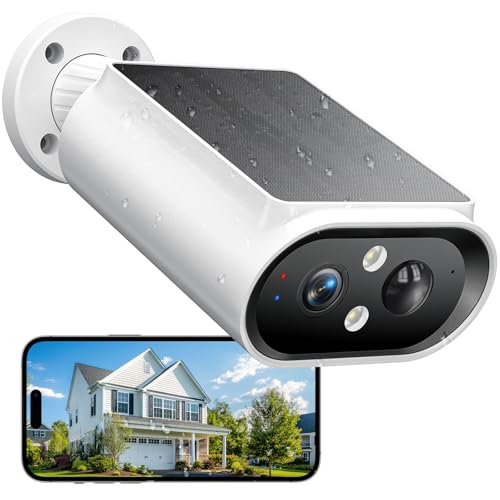
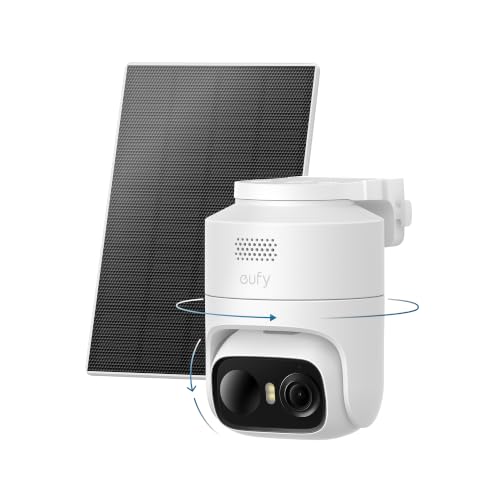
1. AlkiVision Solar Security Camera
The AlkiVision solar security camera is the set-and-forget outdoor option: a 2K wireless camera with color night vision, AI motion detection, and a solar panel that keeps its battery topped up. Mount it once on a wall or fence, and it looks after itself — no wiring, no regular charging, no ladder trips every few weeks.
Solar power changes the economics of outdoor cameras. Without it, a battery camera needs charging every few weeks or months, which means the cameras in the hardest-to-reach spots are the ones that go flat first. The AlkiVision’s panel trickle-charges the battery in daylight, so in a sunny spot it can run indefinitely. The 2K resolution keeps faces and license plates readable, and the color night vision — backed by AI motion detection that distinguishes people from passing animals — keeps alerts meaningful rather than constant.
What stands out:
- Solar powered: the panel keeps the battery charged in daylight, removing the regular charging chore that battery cameras otherwise demand.
- 2K color night vision: sharper footage than 1080p cameras, with color at night for easier identification of people and vehicles.
- AI motion detection: smarter alerts that focus on people and real movement instead of every shadow and stray animal.
Trade-offs to weigh: Solar charging depends on sunlight, so a camera mounted under a deep eave or on a north-facing wall in a cloudy climate will still need occasional manual charging. It is also a single-camera purchase, so covering a whole house means buying several and managing them as a group rather than as one system.
Who it fits: Homeowners who want an outdoor camera over a door, driveway, or gate without running wires. Best in a spot that gets direct sun for part of the day.
Wi-Fi signal is the hidden requirement for every wireless camera here. A camera mounted at the far end of a garden or on a detached garage may show a weak signal even when the phone works fine indoors, because walls and distance eat signal strength. Test the signal at the mounting spot with your phone before installing, and plan for a range extender or a mesh node if the signal is marginal — a camera that cannot stay connected records nothing.
Compared with the 2K Wireless Outdoor Security Camera (Battery Powered) elsewhere in this roundup, the AlkiVision Solar Security Camera takes a different approach: where the 2K Wireless Outdoor Security Camera (Battery Powered) emphasizes 2K, battery, color night vision, this one leans on 2K, solar, color night vision. Neither approach is better in the abstract — the right choice depends on whether best solar outdoor camera matters more to you than best flexible wireless camera. If you are torn between the two, start with the one whose strength matches the thing you do most often, since that is the difference you will notice every single day.
Check price on Amazon: AlkiVision Solar Security Camera

2. 2K Wireless Outdoor Security Camera (Battery Powered)
This 2K wireless outdoor security camera is the flexible all-rounder: battery powered, usable indoors or outdoors, with AI motion detection and color night vision. It is the camera to buy when you are not sure where it will end up — on a porch today, in a garage tomorrow, watching a nursery next month.
Battery power is the whole point here. Without a wire to a socket or a solar panel to aim, the camera can be mounted anywhere with a view, moved in minutes, and taken down for charging without tools. The 2K resolution and color night vision keep nighttime footage useful rather than decorative, and the AI motion detection reduces the false alerts that make people ignore their cameras entirely. It works indoors too, which makes it a practical choice for renters who cannot drill holes for wiring.
What stands out:
- Battery powered, wire-free: mounts anywhere with no wiring and no socket nearby — ideal for renters and tricky spots.
- Indoor and outdoor use: one camera that works on a porch, in a garage, or inside the house, so it adapts as needs change.
- Color night vision with AI detection: color footage at night plus smarter alerts that prioritize real movement.
Trade-offs to weigh: Battery cameras need recharging, and how often depends on how busy the location is — a camera watching a busy street will drain far faster than one watching a quiet yard. It is also sold as a single unit, so a whole-house setup means buying and managing several cameras individually.
Who it fits: Renters, first-time camera buyers, and anyone who wants a camera that can be moved without an electrician. Keep a charging routine in mind for busy locations.
Think about what the camera will record besides intruders. A camera over a front door records visitors, deliveries, and neighbors passing by, and a camera in a garden records the neighbors’ garden too. Angle cameras to cover your own property, avoid pointing them directly at neighboring windows, and tell household members and regular visitors that cameras are in use. Good placement avoids disputes as well as blind spots.
It is worth comparing the 2K Wireless Outdoor Security Camera (Battery Powered) with the rest of this roundup before deciding, because the differences are in the details rather than the headline specifications. The 2K, battery, color night vision here suits best flexible wireless camera, while other picks in this list trade that strength for different priorities — a lower price, a different size, or a different feature set. Read the trade-offs for two or three finalists side by side, and the right choice usually becomes obvious: it is the one whose weaknesses you care about least.
Check price on Amazon: 2K Wireless Outdoor Security Camera (Battery Powered)

3. ANNKE 3K Lite Wired Security Camera System
The ANNKE 3K Lite system is the only full system in this roundup: eight wired cameras, an eight-channel recorder, and a 1 TB hard drive, with AI human and vehicle detection. It is the choice for a whole house rather than a single doorway — the permanent, always-recording answer to home security.
Wired systems have one decisive advantage over wireless cameras: they record continuously, 24 hours a day, without worrying about batteries, Wi-Fi dropouts, or cloud subscriptions. The 1 TB drive stores weeks of footage locally, the eight cameras cover every approach to a house, and the AI detection distinguishes people and vehicles from animals and weather. Installation takes more effort — cables must be run — but once it is done, the system runs itself for years.
What stands out:
- Eight cameras, one system: complete coverage of a house from a single coordinated system instead of eight separate cameras to manage.
- Local 1 TB storage: weeks of continuous recording stored on-site, with no monthly cloud fee and no dependence on an internet connection.
- AI human and vehicle detection: alerts that focus on people and cars, cutting the false alarms that plague simpler systems.
Trade-offs to weigh: Installation is a real project: running cables to eight camera positions takes time, tools, and often a ladder, and renters generally cannot install it at all. The cameras are 2 MP each, so per-camera detail is lower than the 2K wireless cameras here — the system trades individual sharpness for coverage and continuous recording.
Who it fits: Homeowners who want permanent, whole-house coverage with continuous recording and local storage. Best for people who own their home and plan to stay.
Subscriptions deserve a careful read. Many cameras offer free live viewing and motion alerts but charge for cloud recording, longer clip history, or smarter detection. Add up the monthly cost over the camera’s lifetime before buying — a cheap camera with an expensive subscription can cost more than a pricier camera with free local storage. Local SD or recorder storage avoids the fee entirely.
One way to judge the ANNKE 3K Lite Wired Security Camera System is to ask what you would miss if you chose the cheapest option in this roundup instead. The answer is usually the 8x 2MP cameras, 1 TB HDD, 8-channel and the best whole-house wired system that define this model. If those matter for how you use it, the step up is worth it; if they do not, the budget pick will serve you just as well. That test — what would I actually miss — is the most reliable way to avoid both overspending and regret.
Check price on Amazon: ANNKE 3K Lite Wired Security Camera System

4. GMK 4 Pack Security Camera System
The GMK 4-pack is the middle ground between a single wireless camera and a full wired system: four wireless outdoor cameras with 2K video, motion detection, and color night vision, working together as one set. It covers the front door, the driveway, the back yard, and the side gate in a single purchase.
Buying cameras as a set has practical advantages: one app, one setup process, and consistent footage quality across every angle. The GMK cameras are wireless, so they mount without cables, and the 2K resolution with color night vision keeps nighttime footage identifiable. Four cameras is the right number for most single-family homes — enough to cover every approach without the complexity of an eight-camera wired install.
What stands out:
- Four cameras, one system: whole-house coverage from a single purchase, with one app managing every camera.
- Wireless installation: no cables to run — each camera mounts where it is needed and connects over Wi-Fi.
- 2K with color night vision: sharp, color footage at night from every angle, not just the front door.
Trade-offs to weigh: Four battery-powered cameras mean four batteries to keep charged, and a busy location can drain them faster than expected. Wireless cameras also depend on a strong Wi-Fi signal at each mounting point, so homes with weak outdoor coverage may need a range extender to keep the far cameras connected.
Who it fits: Homeowners who want to cover every side of the house without running cables. Ideal when the Wi-Fi signal reaches the yard reliably.
Wi-Fi signal is the hidden requirement for every wireless camera here. A camera mounted at the far end of a garden or on a detached garage may show a weak signal even when the phone works fine indoors, because walls and distance eat signal strength. Test the signal at the mounting spot with your phone before installing, and plan for a range extender or a mesh node if the signal is marginal — a camera that cannot stay connected records nothing.
Compared with the Blink Mini 2K+ (Newest Model) elsewhere in this roundup, the GMK 4 Pack Security Camera System takes a different approach: where the Blink Mini 2K+ (Newest Model) emphasizes 2K, plug-in, indoor, night vision, this one leans on 4-pack, 2K, wireless, color night vision. Neither approach is better in the abstract — the right choice depends on whether best multi-camera wireless set matters more to you than best indoor camera. If you are torn between the two, start with the one whose strength matches the thing you do most often, since that is the difference you will notice every single day.
Check price on Amazon: GMK 4 Pack Security Camera System
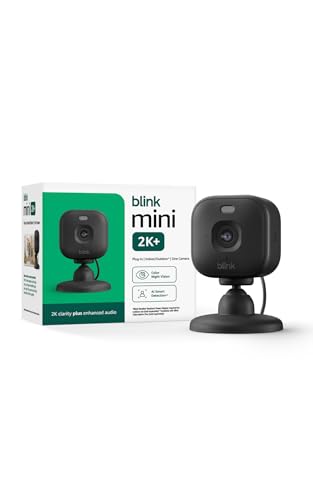
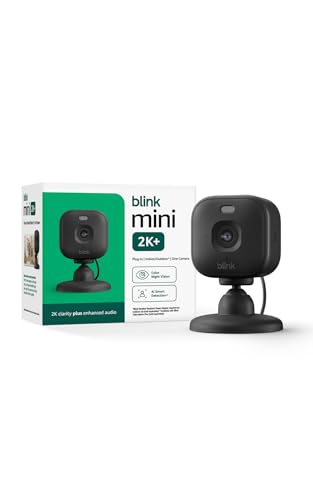
5. Blink Mini 2K+ (Newest Model)
The Blink Mini 2K+ is the indoor specialist: a small plug-in camera with 2K video resolution, night vision, and enhanced motion detection, designed to sit on a shelf or mount in a corner and watch a room. It is the camera for pets, kids, and the inside of the front door — the places an outdoor camera cannot see.
Indoor cameras have a different job from outdoor ones. They watch for movement inside the house, check on pets during the day, and record who comes through the front door. The Blink Mini 2K+ is built for exactly that: it plugs into a wall outlet, so it never needs charging; its 2K resolution keeps faces clear; and its night vision handles dark rooms without a spotlight. It is also small and inexpensive enough to buy several — one per room that matters.
What stands out:
- Plug-in power: never needs charging — it runs continuously from a wall outlet, so it is always ready.
- 2K indoor resolution: sharp footage for identifying people and pets inside the house.
- Compact and affordable: small enough to place anywhere and cheap enough to cover several rooms.
Trade-offs to weigh: It is an indoor camera, so it is not weatherproof and cannot be mounted outside. It also relies on a subscription for some cloud features, and its field of view is narrower than the pan-and-tilt outdoor cameras here — it watches one room, not a whole yard.
Who it fits: Pet owners, parents, and anyone who wants to watch the inside of the house — living room, hallway, nursery, or home office. Pair it with an outdoor camera for complete coverage.
Think about what the camera will record besides intruders. A camera over a front door records visitors, deliveries, and neighbors passing by, and a camera in a garden records the neighbors’ garden too. Angle cameras to cover your own property, avoid pointing them directly at neighboring windows, and tell household members and regular visitors that cameras are in use. Good placement avoids disputes as well as blind spots.
It is worth comparing the Blink Mini 2K+ (Newest Model) with the rest of this roundup before deciding, because the differences are in the details rather than the headline specifications. The 2K, plug-in, indoor, night vision here suits best indoor camera, while other picks in this list trade that strength for different priorities — a lower price, a different size, or a different feature set. Read the trade-offs for two or three finalists side by side, and the right choice usually becomes obvious: it is the one whose weaknesses you care about least.
Check price on Amazon: Blink Mini 2K+ (Newest Model)

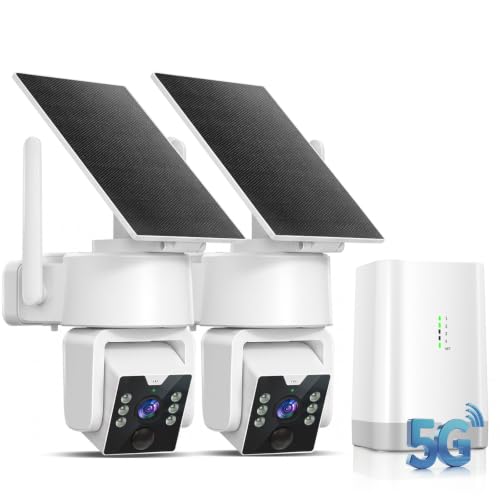
6. SEHMUA 2K Solar Security Camera (2-Pack)
The SEHMUA 2-pack adds something none of the fixed cameras here offer: 360-degree pan-and-tilt coverage. Each camera rotates to follow movement and sweep a whole yard, so two cameras can watch an area that would need four fixed ones. Add solar charging and color night vision, and it is the most capable outdoor pair in this roundup.
A fixed camera watches one slice of a yard. A pan-and-tilt camera watches the whole yard, rotating to track a person walking across it and returning to a home position afterward. That makes the SEHMUA pair particularly good for large gardens, driveways, and properties where a single fixed view leaves blind spots. The solar panels keep the batteries charged, the 2K resolution keeps detail sharp, and buying two at once means the front and back of a house can be covered in one order.
What stands out:
- 360-degree pan and tilt: each camera sweeps a whole area instead of watching one fixed slice, removing blind spots.
- Solar powered, two-pack: two cameras with solar charging cover front and back in a single purchase, with no charging routine.
- Color night vision: color footage at night for identifying people, clothing, and vehicles.
Trade-offs to weigh: Pan-and-tilt cameras have moving parts, which means more that can wear out over years of outdoor use than a fixed camera has. They also need a clear view to rotate freely — mounting one in a tight corner limits the benefit. And as with any solar camera, shaded mounting spots will still need manual charging.
Who it fits: Large yards, driveways, and properties with blind spots that fixed cameras cannot cover. The best choice when two cameras need to watch a lot of ground.
Subscriptions deserve a careful read. Many cameras offer free live viewing and motion alerts but charge for cloud recording, longer clip history, or smarter detection. Add up the monthly cost over the camera’s lifetime before buying — a cheap camera with an expensive subscription can cost more than a pricier camera with free local storage. Local SD or recorder storage avoids the fee entirely.
One way to judge the SEHMUA 2K Solar Security Camera (2-Pack) is to ask what you would miss if you chose the cheapest option in this roundup instead. The answer is usually the 2-pack, 360-degree pan/tilt, solar, color night vision and the best pan-and-tilt coverage that define this model. If those matter for how you use it, the step up is worth it; if they do not, the budget pick will serve you just as well. That test — what would I actually miss — is the most reliable way to avoid both overspending and regret.
Check price on Amazon: SEHMUA 2K Solar Security Camera (2-Pack)
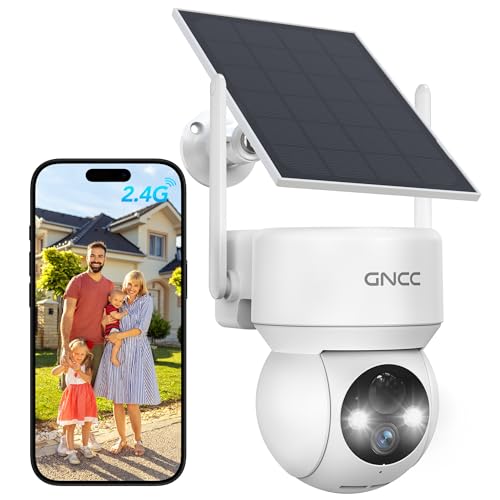
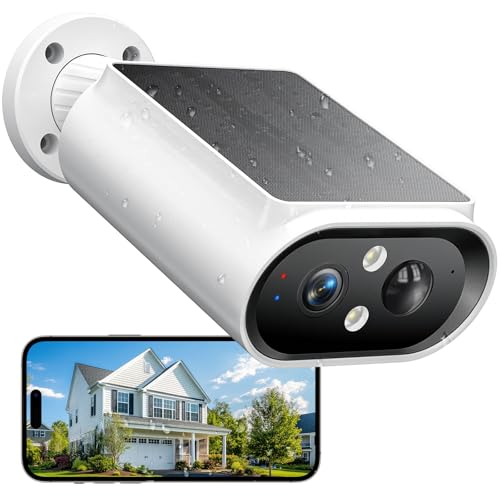
7. GNCC Solar Security Camera
The GNCC solar security camera is built for places without convenient power: a solar and battery camera with 360-degree coverage, color night vision, and a choice of SD card or cloud storage. It is the camera for gates, sheds, barns, and the far end of a large property — anywhere a wire cannot reach.
The GNCC’s strength is independence. Solar charging plus a battery means it runs without mains power, Wi-Fi is its only connection to the house, and local SD storage means it keeps recording even if the internet drops. The 360-degree view covers a wide area from a single mounting point, and color night vision keeps nighttime footage identifiable. For outbuildings, farms, and large properties, that independence matters more than any single specification.
What stands out:
- Solar plus battery power: runs indefinitely in a sunny spot with no mains power and no charging routine.
- 360-degree coverage: a wide rotating view from a single camera, covering large areas without blind spots.
- SD or cloud storage: local storage keeps recording during internet outages, with cloud as an option for backup.
Trade-offs to weigh: It uses 2.4 GHz Wi-Fi only, which is the right choice for range but means it cannot use a 5 GHz network, and the far end of a large property may need a Wi-Fi extender to stay connected. Solar performance also depends on the mounting spot getting direct sun.
Who it fits: Gates, sheds, barns, and large properties where power is far away. The camera for the places other cameras cannot reach.
Wi-Fi signal is the hidden requirement for every wireless camera here. A camera mounted at the far end of a garden or on a detached garage may show a weak signal even when the phone works fine indoors, because walls and distance eat signal strength. Test the signal at the mounting spot with your phone before installing, and plan for a range extender or a mesh node if the signal is marginal — a camera that cannot stay connected records nothing.
Compared with the Tapo C100 Indoor Security Camera elsewhere in this roundup, the GNCC Solar Security Camera takes a different approach: where the Tapo C100 Indoor Security Camera emphasizes 1080p, wired, motion detection, two-way audio, this one leans on Solar and battery, 360-degree, color night vision. Neither approach is better in the abstract — the right choice depends on whether best off-grid camera matters more to you than best budget indoor camera. If you are torn between the two, start with the one whose strength matches the thing you do most often, since that is the difference you will notice every single day.
Check price on Amazon: GNCC Solar Security Camera

8. Tapo C100 Indoor Security Camera
The Tapo C100 is the budget indoor camera that does the basics well: 1080p video, motion detection, two-way audio, a siren, and night vision, in a small wired camera that costs less than a takeaway dinner. It is the camera for a baby’s room, a dog’s room, or a hallway — the simple, reliable indoor eye.
The C100’s appeal is its honesty about what it is. It does not pretend to be a 2K outdoor system; it is a solid 1080p indoor camera with the features that matter inside a house — two-way audio to talk to whoever is in the room, a siren to scare off an intruder, and night vision for dark rooms. It is wired, so it never needs charging, and it works as a baby monitor or pet camera as naturally as it works as a security camera.
What stands out:
- Two-way audio and siren: talk through the camera or sound an alarm — useful for pets, kids, and deterring intruders.
- Wired and reliable: plugs in and stays on, with no battery to charge and no solar panel to aim.
- Very affordable: the cheapest camera here, so covering several rooms costs little.
Trade-offs to weigh: 1080p resolution is a step behind the 2K cameras in this roundup, so fine detail at distance is weaker. It is indoor-only and has a fixed view, so it suits one room rather than a whole house or yard.
Who it fits: Baby rooms, pet rooms, hallways, and first-time camera buyers on a tight budget. The simple camera that covers the inside while an outdoor camera covers the rest.
Think about what the camera will record besides intruders. A camera over a front door records visitors, deliveries, and neighbors passing by, and a camera in a garden records the neighbors’ garden too. Angle cameras to cover your own property, avoid pointing them directly at neighboring windows, and tell household members and regular visitors that cameras are in use. Good placement avoids disputes as well as blind spots.
Check price on Amazon: Tapo C100 Indoor Security Camera
Buying Guide
Color night vision or infrared: which do you need?
Color night vision gives footage that is far easier to use as evidence: clothing colors, car colors, and facial details that black-and-white infrared loses. But it needs light — either ambient light from street lamps and porch lights, or the camera’s own spotlight. Infrared works in total darkness and reaches further, but everything is monochrome. The practical answer for most homes is a camera that offers both: color when there is light to work with, infrared when there is not. If your yard is pitch dark, prioritize infrared range; if it has some lighting, color night vision is the bigger upgrade.
Power: solar, battery, or wired
Solar cameras are the lowest-maintenance option for sunny spots, battery cameras are the most flexible, and wired cameras are the most reliable. The trade-off is simple: wireless cameras can be placed anywhere but need charging or sun, while wired cameras need installation effort but then run forever. For a single camera over a door, wireless is usually the right call. For whole-house coverage, a wired system earns its installation effort back in reliability.
Resolution: 1080p, 2K, or higher
Resolution determines how far away a face or license plate stays readable. 1080p is enough for a small room or a doorway. 2K is the sweet spot for outdoor cameras, giving noticeably more detail without the storage and bandwidth demands of 4K. Higher resolutions help most when the camera watches a large area — a driveway or a yard — where the subject is far from the lens. Match the resolution to the distance, not to the marketing.
Storage: local or cloud
Local storage — an SD card or a recorder’s hard drive — keeps footage in your house, works during internet outages, and has no monthly fee. Cloud storage keeps footage safe even if the camera is stolen or damaged, and makes it easy to check from anywhere. Many cameras offer both, and that combination is the safest: local recording for reliability, cloud backup for the footage that matters most. Check whether cloud features need a subscription before buying.
Placement and the law
Mount cameras to cover entry points — doors, ground-floor windows, driveways, and gates — and angle them slightly downward so faces are visible rather than the tops of heads. Avoid pointing cameras directly at a neighbor’s windows or garden, and check local rules about recording audio and about cameras in shared spaces. A camera that respects privacy is also a camera that will not cause a dispute with the neighbors.
Maintenance: the part everyone forgets
Cameras need occasional maintenance to keep working well. Clean the lens every few months — dust, rain spots, and spider webs degrade night vision faster than any hardware fault. Check solar panels for leaves and snow, recharge battery cameras before they go flat rather than after, and test motion alerts seasonally. A camera that is maintained records clearly; a neglected one records a blurry spider web at 2 a.m.
Frequently Asked Questions
Do night vision cameras record in color at night?
It depends on the camera. Traditional infrared night vision records in black and white. Cameras with color night vision use a larger sensor and a spotlight to record in color, but they need at least some light to work. Many modern cameras offer both and switch automatically.
How far can a night vision camera see?
Infrared night vision typically reaches 20 to 30 feet clearly, with some cameras reaching further. Color night vision has a shorter effective range because it depends on available light. Mounting height and angle matter as much as the specification — a camera mounted too high sees the tops of heads, not faces.
Do solar security cameras work in winter?
They work, but they charge more slowly on short, cloudy days. In winter, a solar camera in a shaded spot may need occasional manual charging. Mounting the panel where it gets the most direct sun, and keeping it clean of snow and leaves, makes the biggest difference.
Do I need a subscription for a security camera?
Not necessarily. Cameras with local storage — SD cards or a recorder’s hard drive — work without any subscription. Subscriptions typically add cloud storage, longer clip history, and smarter alerts. Check what is included free before buying, and whether the features you want need a plan.
Can I use an indoor camera outside?
No. Indoor cameras are not weatherproof, and rain or condensation will damage them. Use an outdoor-rated camera for any exterior mounting, even under a porch roof, since humidity and temperature swings alone can cause problems.
Can security cameras work without Wi-Fi?
Some can. Wired systems like the ANNKE record to a local hard drive without any internet connection, and cameras with SD card storage keep recording during outages. Wireless cameras need Wi-Fi to send alerts and to be viewed remotely, but many still record locally to a card when the connection drops. If your internet is unreliable, prioritize local storage.
Conclusion
The best night vision security camera depends on where it goes. For a single outdoor spot, the AlkiVision solar camera is the easiest choice — mount it, and it looks after itself. For whole-house coverage, the GMK four-pack covers every angle without cables, while the ANNKE wired system is the permanent, always-recording answer for homeowners who want it all. Pan-and-tilt fans should look at the SEHMUA pair, and for indoors, the Blink Mini 2K+ and the budget Tapo C100 cover rooms and pets. Whatever you buy, prioritize the night performance over the daytime specs — a camera proves itself at 2 a.m., not at noon.
A final reminder that a camera system is only as good as its weakest link: the camera that is never charged, the lens that is never cleaned, or the app whose alerts were switched off after too many false alarms. Choose the setup you will actually maintain — for most people that means solar or wired power, local storage, and alerts tuned to people rather than every movement. Set it up once, check it monthly, and it will be there on the night it matters.