Weather sealing is the most loosely used phrase in camera marketing. Two bodies can sit side by side on a shelf, both described as weather-sealed on the box, and differ enormously in what their makers actually did to keep water and dust out: one may carry a published ingress rating and gaskets at every seam, the other may have a rubber ring at the lens mount and a hopeful tone in the brochure. The photographs, meanwhile, do not care about brochures. Rain arrives halfway up a ridge, sea spray drifts across a harbour wall, dust works into everything at a desert festival, and the camera either keeps shooting or it goes into the bag — and the trip gets documented on a phone instead.
As an Amazon Associate, kajuandouglas.com may earn an affiliate commission from qualifying purchases made through links on this page. This guide is researched from manufacturer documentation, published specifications and maker product literature. Where a sealing claim appears below, it is the maker’s own claim in the maker’s own terms, and where a maker publishes no standardised rating, this guide says so plainly rather than filling the gap with an estimate. The six picks are ranked by the credibility and completeness of their sealing as documented, balanced against the camera each body is to live with afterwards.
The honest headline is this: only one camera in this guide carries a published IP rating, and it is the smallest and most affordable body here. Every other maker uses its own vocabulary — dust and drip resistance, splash resistance, dust and moisture resistance — and none of those phrases is a guarantee, a standard, or a promise that water damage will be covered. What sealing buys is not invincibility. It buys time and confidence: the ability to finish the shot, walk back to shelter, and keep working through weather that would send an unsealed body under a jacket. Judged that way, sealing is a real feature with real differences between models, and it deserves the same sceptical reading as any sensor specification.
In this guide
Quick picks: best weather sealed mirrorless cameras
| # | Product | Where to buy |
|---|---|---|
| 1 | OM System OM-5 | Check on Amazon |
| 2 | Fujifilm X-T5 | Check on Amazon |
| 3 | Sony a7 IV (ILCE-7M4) | Check on Amazon |
| 4 | Panasonic Lumix S5 II (DC-S5M2) | Check on Amazon |
| 5 | Nikon Z6 III | Check on Amazon |
| 6 | Canon EOS R5 | Check on Amazon |
What weather sealing actually is, and what it is not
A weather-sealed body is a body whose openings have been defended. The lens mount gets a rubber gasket that compresses against the lens. The battery door and card door close against seals rather than bare plastic. Buttons and dials sit in collars or behind membranes. Port covers — microphone, headphone, USB, HDMI, flash sync — fit tightly enough to shed water rather than invite it. The seams between the body’s shells are lapped or gasketed so that water running down the outside tends to keep running instead of turning inward. Nothing in that list involves making the camera waterproof; it involves making the easy paths for water and grit as difficult as engineering and price allow.
The vocabulary matters because only one vocabulary is standardised. The IP code — IPX1, IPX3 and so on — describes tested resistance to defined water exposure, and in this guide only OM System publishes one for its cameras. Canon speaks of dust and drip resistance. Nikon speaks of dust and drip resistance too, and describes the care taken at each opening. Sony describes a dust- and moisture-resistant design and is explicit that it is not a guarantee of complete dust and water proofing. Fujifilm describes a weather-resistant structure. Panasonic describes dust and splash resistance. These phrases are not interchangeable, none of them has been measured against the others, and any guide that converts them into a tidy league table of scores is inventing precision the makers themselves declined to publish.
It helps to know how each maker arrived at its vocabulary, because the words encode different engineering cultures. The Japanese makers who built their reputations on professional press and sports bodies — Canon and Nikon — treat sealing as part of a professional body’s basic construction and describe it in the restrained language of dust and drip resistance, assuming the buyer understands it as a working tolerance rather than a consumer feature. Sony, building its system in public over a shorter history, describes the construction in more detail and hedges it more explicitly. Fujifilm and Panasonic use the vocabulary of resistance — weather resistant, splash resistant — that their travel and field audiences meet across the rest of their product lines. OM System, heir to a line of cameras famous for being washed under taps in advertisements its lawyers would not approve today, is the maker that chose the laboratory route and printed a rating. None of these cultures is dishonest; they simply report the same engineering in different dialects, and the buyer’s job is translation, not suspicion.
What sealing is not bears repeating, because it is where owners get hurt. A sealed body is not submersible, and none of the six cameras here can be rinsed under a tap as a routine or taken swimming. Sealing degrades: gaskets age, port covers get lost, a knock that shifts a shell seam by a fraction can open a path that was closed at the factory. And sealing covers the body only in partnership with what is attached to it — a point important enough that it gets its own section below. Finally, maker warranties in this industry do not, as a rule, cover liquid damage, sealed or not. The seal is there to protect the photograph, not to transfer the risk to the manufacturer.
What to look for in a weather-sealed mirrorless camera
Six questions separate a sealing claim worth paying for from one worth ignoring. They are ordered by how much damage each one can do to a trip when it is answered wrongly.
Does the maker publish a rating, or only a phrase?
Start with the evidence standard. A published IP rating means the maker submitted the design to a defined test and is willing to print the result; it also defines its own limit honestly, because IPX1 — protection against vertically falling drops of water — is a modest claim, and a maker who prints it is telling you exactly where the tested boundary sits. A phrase like splash resistant describes an intention rather than a measurement. Neither is useless, but they should not be priced the same, and the body with the modest published rating may well be the more trustworthy tool in rain than the body with the grander adjective. When a maker’s documentation lists sealing point by point — mount, doors, dials, seams — that specificity is itself evidence; vague documentation usually means vague engineering.
The lens completes the system, or breaks it
A camera body is only as sealed as the weakest opening, and the largest opening is the lens mount. Every body in this guide expects to be paired with a lens that is itself weather-sealed: the mount gaskets on body and lens compress against each other, and the lens’s own internal seals keep water from travelling through the barrel and arriving at the mount from inside the system. Attach an unsealed lens and the system’s real rating becomes that lens’s rating, which is none. This has a budget consequence buyers routinely miss: the sealed body is the beginning of the purchase, not the end of it. A sealed standard zoom is the natural first partner, and in every system represented here the maker’s sealed lenses are identifiable in its documentation — look for the same weather vocabulary in the lens description before assuming a lens qualifies.
Doors, covers and the openings owners forget
The failures that reach repair benches rarely come through the mount. They come through the small doors: a battery door closed on a gritty seal, a port cover left dangling after a microphone was unplugged, a hot shoe left uncovered, a card slot opened in blowing dust because the shot mattered more than the wait. When comparing bodies, look at how the small defences are executed. Are the port covers attached so they cannot be lost, or loose caps in a bag? Does the hot shoe have a cover, and does the maker seal the shoe contacts themselves? Do the battery and card doors close with a positive latch against a visible gasket? These are unglamorous details that no headline specification mentions, and they are where sealing succeeds or fails in the field.
Temperature range and the cold-weather half of sealing
Sealing documentation usually travels with an operating temperature range, and the two belong together. Several bodies here are documented for use down to minus ten degrees Celsius, which is as much a sealing statement as a battery statement: lubricants, gasket materials and shell tolerances that behave at that temperature are the same engineering that keeps seams closed in rain. Cold brings its own water problem, condensation, which no gasket can prevent — a cold camera brought into a warm room fogs inside and out regardless of sealing, and the correct defence is the photographer’s routine of bagging the camera before coming indoors, not anything the maker can build. Read the published temperature range as part of the sealing story, and treat a body documented for colder use as the more thoroughly engineered of two otherwise equal claims.
Size, weight and the system you will actually carry
Sealing correlates with build, and build correlates with weight. The most thoroughly sealed bodies tend to be magnesium-shelled, densely assembled machines, and the system around them — sealed lenses especially — adds its own grams. That trade is worth making deliberately. A sealed full-frame body with a sealed standard zoom is a serious carry on a long mountain day, and the photographer who leaves it at the hotel has, in effect, no sealing at all. The smallest body in this guide is also the most explicitly rated one, which is not a coincidence: its maker designed for travel and trekking first. Match the sealed system to the trips it will genuinely join, because the best-sealed camera is the one that is present when the weather turns.
Buying used: the specification that ages in private
Every other specification on a used camera’s listing can be verified — shutter count can be read, sensor condition can be photographed, autofocus either works or complains audibly. Sealing cannot. A five-year-old body’s gaskets may be supple or may be hardening; its port covers may all be present or replaced by a gap; a past knock may have opened a seam that only rain will ever audit. The used buyer of a sealed body is therefore buying a probability, and the sensible response is to price it as one: a used sealed body is a sound purchase for the weather tolerance it probably retains, and a poor one for any assignment where sealing failure would be catastrophic. Sellers who can document careful ownership — covers present, no corrosion at the mount or in the battery bay, dials that turn without grit — are offering the only verification this specification accepts, and it is worth more than a marginal difference in shutter count.
The hot shoe, the sync port and flash work
Photographers who use flash outdoors meet sealing at its least discussed opening. The hot shoe is an electrical contact array sitting on top of the body, exposed by design, and the makers treat it differently: some fit sealing covers and gasket the shoe’s surround, others leave the shoe as an opening the owner is expected to manage. A flash unit mounted in rain creates its own junction problem, because the flash’s foot and the body’s shoe seal only as well as the flash was designed to — and several professional flash units carry their own weather resistance claims for exactly this reason. Event and wedding photographers who work with on-camera flash in wet conditions should check both halves of that junction in the makers’ documentation, and everyone should note whether the body ships with a shoe cover and whether the cover is the kind that stays attached or the kind that vanishes into a bag by the second assignment.
Care routines that keep sealing true
Sealing is maintained, not owned outright. Salt spray is the sharpest example: it should be wiped from the body with a cloth dampened in fresh water as soon as practical, because dried salt is abrasive, hygroscopic and corrosive, and it works at exactly the seams and dials the gaskets defend. Sand deserves a brush and patience rather than a cloth, which grinds it. Gaskets and port covers deserve a glance whenever the doors are opened anyway; a seal visibly nicked or a cover that no longer sits flush is a repair conversation to have before the next wet trip, not after it. None of this is burdensome — it is minutes per trip — but it is the difference between a body whose sealing at year four resembles its sealing at year one and a body whose brochure claim quietly expired.
The six weather-sealed mirrorless cameras to shortlist
The six bodies below are the sealed options that define the current market across systems: the one maker that publishes an IP rating, the two great APS-C travel systems, and the full-frame bodies from the four makers who document sealing seriously. Each entry states the sealing claim in the maker’s own terms and at the maker’s own strength — read the differences in vocabulary as information, not as a formatting inconsistency. Sensor size, mount and photographic character are covered because a camera is bought for decades of photographs, not for one storm; but the ranking question throughout is the one this guide’s title asks: how well is it defended, and how honestly is that defence described?
One reading note before the picks. Kit configurations matter more than usual in this category, because the lens in the box decides whether the system is sealed on day one. Where a body is commonly sold with an unsealed kit lens, the entry says so, and the buyer’s arithmetic should include the sealed standard zoom the body actually needs. Body-only prices and kit prices are left in words rather than figures throughout, because the relationships between these systems matter more than numbers that would be stale on arrival.

1. OM System OM-5 — the only published IP rating in the guide
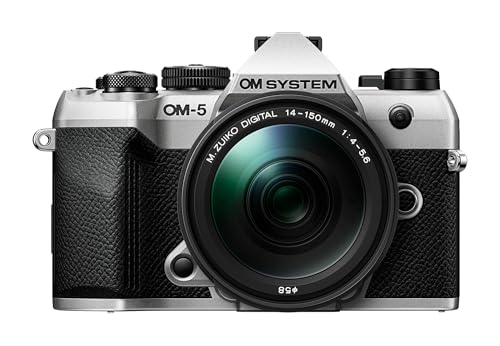
The OM-5 is the camera this category’s marketing should be measured against, because OM System does the thing no other maker here does: it publishes a rating. The body is documented to IPX1, the same class of ingress protection the maker attaches to its flagship line, alongside dust and freeze resistance documented to minus ten degrees Celsius. IPX1 is not a heroic number — it certifies resistance to vertically dripping water, the laboratory equivalent of light rain rather than a storm — and that modesty is precisely the point. The maker tested the body, printed the result, and let buyers calibrate their trust to a defined boundary instead of an adjective.
Around that rating sits a body engineered for exactly the trips where sealing earns its keep. The Micro Four Thirds format keeps the body small and light — around four hundred grams in the hand — and keeps its sealed lenses small and light with it, so the complete defended system travels in a jacket-friendly bag rather than demanding a dedicated pack. The sensor is a 20-megapixel unit behind five-axis in-body stabilisation, the autofocus and computational features are inherited from the maker’s flagship, and the whole package is aimed at walkers, travellers and climbers who need the camera present at the summit rather than safe at the trailhead. OM System’s sealed lens line is deep for the format, including compact zooms that keep the system’s size advantage intact.
The honest limits deserve their sentences. The rating is IPX1, not immersion, and the maker’s documentation frames the body as splash and dust resistant rather than waterproof; driving rain at an angle is beyond the tested claim and should be treated with the same respect as in any other body here. The Micro Four Thirds sensor gives up the low-light and shallow-depth headroom of the full-frame picks below, and the body’s control layout and menu system reward commitment more than casual borrowing. None of that dents the central fact: this is the only body in the guide whose maker put a number where the others put a phrase.
Strengths
- Published IPX1 ingress rating — the only standardised sealing claim among the six.
- Documented freeze resistance to minus ten degrees, matching its trekking brief.
- The lightest complete sealed system here; sealed lenses stay compact too.
- Deep line of weather-sealed lenses in its mount, including small travel zooms.
Trade-offs
- IPX1 covers dripping water, not storms or immersion — the rating defines a modest limit.
- Smaller sensor than the full-frame picks, with the low-light trade that implies.
- Common kit zooms are not all sealed; the sealed standard zoom may be a separate purchase.
Who it suits: trekkers, travellers and climbers who carry a camera through weather rather than around it, and who would rather trust a published rating than a promise. If the sealed system has to earn its place in a small bag on a long trail, this is where the shortlist starts, so check price on Amazon.
Check price on Amazon: OM System OM-5

2. Fujifilm X-T5 — the sealed APS-C stills camera
Fujifilm describes the X-T5 as a weather-resistant body, with sealing applied across its structure — at the dials, the buttons, the doors and the mount — to keep dust and moisture out during outdoor work. No IP rating is published, and the guide treats the claim accordingly: this is a maker’s documented intention, executed thoroughly, rather than a tested certification. Within those terms the execution is convincing. The X-T5 is a dense, magnesium-feeling machine whose controls sit in the traditional Fujifilm arrangement of dedicated dials, and each of those dials is a penetration of the shell that has to be defended; Fujifilm’s documentation treats the sealing of that control set as a designed feature of the body, not an afterthought.
Photographically this is the strongest APS-C stills body in the guide. A 40-megapixel sensor — the highest resolution here relative to format — sits behind in-body stabilisation, and the film simulations that define the Fujifilm experience are all present. The system argument is equally strong: Fujifilm’s XF lens line includes a wide range of weather-resistant lenses, marked WR in the lens names, from compact primes to the standard zooms, so building a fully sealed outfit around this body is straightforward and comparatively affordable next to full-frame equivalents. For the landscape and travel photographer who works on foot in changeable climates, the sealed X-T5 with a sealed standard zoom is a complete answer in a bag that stays carryable all day.
The caveats are the category’s usual ones, plus one of Fujifilm’s own. The weather-resistant claim is a phrase, not a rating, and Fujifilm does not promise the body against driven rain or immersion; treat it as protection for showers, spray and dust, with shelter still the plan for a storm. The very dials that make the body a pleasure also multiply its seams, which is why the discipline of the doors-and-covers section matters here. And the popular compact primes in the system are not all WR designs — a sealed body behind an unsealed prime is an unsealed system, so lens choice has to be made with the same care as body choice.
Strengths
- Sealing documented across the full control set, doors and mount.
- 40-megapixel APS-C sensor and in-body stabilisation for serious stills work.
- Deep WR lens line makes a complete sealed system achievable at sane cost.
- Traditional dial layout suits deliberate, gloves-on outdoor shooting.
Trade-offs
- No published IP rating — the claim is the maker’s phrase, thoroughly executed.
- Several favourite compact primes in the system are unsealed designs.
- Video specification is capable rather than class-leading at this level.
Who it suits: stills-first travel and landscape photographers who want a sealed system that stays light enough for long days on foot, and who value resolution and handling over full-frame bragging rights. Paired with a WR zoom, it is the most complete APS-C answer here, so check price on Amazon.
Check price on Amazon: Fujifilm X-T5

3. Sony a7 IV — the sealed full-frame all-rounder
Sony’s language for the a7 IV is the most carefully hedged in this guide: the body has a dust- and moisture-resistant design, with sealing applied at the buttons, dials, doors and lens mount, and Sony states plainly that the design does not guarantee complete protection against dust and water in every condition. That honesty is worth more than it might appear. It tells the buyer exactly how to treat the camera — as a body built to keep working through spray, drizzle and dusty environments with reasonable care, not as a body licensed for neglect — and Sony’s sealing execution in this generation is thorough, including a mount gasket and tight-fitting covers across the body’s openings.
As a camera, the a7 IV is the default full-frame recommendation of its generation for good reason: a 33-megapixel sensor, in-body stabilisation, autofocus that tracks subjects with genuine tenacity, and video credentials strong enough for hybrid work. The system around it is the largest in this guide. Sony’s own lens catalogue includes sealed designs across every focal range a traveller or professional needs, and the third-party lens support for the mount is unmatched, with sealed options from several makers at several price levels. For a buyer building one system to do everything, in weather included, no other mount offers as many sealed combinations to choose from.
The limits are written into Sony’s own description. Without a published rating, the a7 IV’s sealing is a design claim, and owners who work in serious rain should treat covers and shelter as part of the kit rather than trusting the body alone; the gap between its documented claim and the OM-5’s published rating is a real difference in evidence, even if the physical engineering is substantial. The body is also the middleweight option in every sense — larger and heavier than the APS-C and Micro Four Thirds picks, smaller in resolution than the Canon below — and its menu system, though improved in this generation, remains the one new owners most often complain about while learning.
Strengths
- Sealing at mount, controls and doors, described with unusual candour by the maker.
- 33-megapixel full-frame sensor with strong stabilisation and autofocus.
- The largest sealed lens ecosystem of any mount in this guide.
- Genuine hybrid credentials for stills and video in one body.
Trade-offs
- Maker publishes no rating and explicitly stops short of a waterproofing guarantee.
- Heavier system than the smaller-format picks once sealed lenses are fitted.
- Some third-party lenses for the mount are unsealed; system discipline is required.
Who it suits: the one-system photographer who wants full-frame quality, the deepest sealed lens catalogue available, and a body that shrugs off ordinary bad weather on assignment. If the lens collection matters as much as the body, this is the practical centre of the guide, so check price on Amazon.
Check price on Amazon: Sony a7 IV (ILCE-7M4)

4. Panasonic Lumix S5 II — the sealed hybrid for video-leaning work
Panasonic describes the S5 II as dust and splash resistant, with a magnesium alloy body built to be carried into the field without ceremony, and the description matches the camera’s character: this is the workhorse pick, engineered around sustained use. The detail that tells the story is the cooling fan built into the body — a feature aimed at long video takes — which Panasonic integrated while keeping the dust and splash resistance claim intact. Moving air through a sealed body is an engineering contradiction that the design resolves with a separated airflow path, and its presence signals how seriously the body takes continuous outdoor work.
The photographic package is a 24-megapixel full-frame sensor with in-body stabilisation and, new in this generation, phase-detection autofocus that removed the old objection to Panasonic bodies for moving subjects. The video specification is the deepest in this guide relative to the body’s tier: high-quality recording modes, strong stabilisation for handheld footage, and the thermal headroom to keep recording when other bodies stop. The L-mount alliance gives the system sealed lenses from Panasonic itself and from its alliance partners, so a sealed outfit can be assembled at several price points, even if the catalogue is younger than Sony’s or Canon’s.
The sealing claim itself is a phrase rather than a rating, and Panasonic’s wording — splash resistant — should be taken at face value: showers and spray, not storms or immersion. The fan that enables the video endurance is also a reminder that this body breathes by design, and owners should be correspondingly careful in blowing sand, the environment where any airflow path is a liability. The body is not small, the lens line, while growing, still lacks some of the sealed specialist options the older mounts offer, and stills photographers who never shoot video are paying for thermal engineering they will never use.
Strengths
- Dust and splash resistance maintained despite a built-in cooling fan.
- Deepest video capability in the guide, with thermal headroom for long takes.
- Phase-detection autofocus and strong stabilisation for hybrid work.
- L-mount alliance offers sealed lenses at several price levels.
Trade-offs
- Splash resistance is a modest claim, published without a standardised rating.
- Airflow path argues for extra care in blowing sand and fine dust.
- Sealed lens catalogue is younger and thinner than Sony’s or Canon’s.
Who it suits: hybrid shooters whose work leans toward video — documentary, events, travel films — and who need a body that keeps recording outdoors without a rain cover for every shower. For sustained field production on a sane budget, it earns its place, so check price on Amazon.
Check price on Amazon: Panasonic Lumix S5 II (DC-S5M2)

5. Nikon Z6 III — the sealed body built for speed
Nikon documents the Z6 III with the vocabulary of its professional line: dust and drip resistance executed across the body’s seams, doors and mount, in a magnesium alloy shell designed for an operating range that reaches minus ten degrees Celsius. Nikon does not publish an IP rating, but its documentation describes sealing intended to keep the body working in the conditions its professional users actually face — rain at events, spray at the coast, dust at the track — and the Z6 III inherits the build philosophy of the maker’s flagship Z bodies in a smaller, more accessible frame. The physical impression supports the paperwork: this is a densely assembled camera whose doors latch positively and whose mount gasket is substantial.
The photographic brief is speed. The partially stacked sensor reads out fast enough to give the body an unusually capable electronic shutter, the burst rates and subject-detection autofocus are aimed at action, and the video specification reaches into territory that embarrasses bodies a tier above. In-body stabilisation is present and effective, and the electronic viewfinder is among the brightest fitted to any camera here — a detail that matters outdoors, where a viewfinder that stays readable in harsh light is its own kind of weather equipment. Nikon’s Z lens line includes sealed designs across the working ranges, with the maker’s S-line lenses carrying the dust and drip resistance vocabulary as a stated feature.
The cautions are familiar in kind. Drip resistance is the maker’s term for protection against falling moisture, not a licence for immersion or pressure washing, and no rating exists to convert into a harder promise. The body’s speed features assume fast cards and the lenses to match, so the sealed system price climbs quickly once the S-line zooms the body deserves are added. And for all its professional inheritance, the Z6 III is a body whose sealing story is told in Nikon’s own words — thorough, credible and unstandardised, like every full-frame claim in this guide except the smallest camera’s.
Strengths
- Professional-line dust and drip resistance in a magnesium shell.
- Documented operating range to minus ten degrees for cold-weather work.
- Fast sensor readout, deep burst ability and a notably bright viewfinder.
- Sealed S-line lenses cover the standard working ranges.
Trade-offs
- No published IP rating; the claim rests on the maker’s documentation.
- The sealed system cost rises quickly with the lenses the body deserves.
- Resolution is the middle path — neither the Canon’s detail nor a smaller file size story.
Who it suits: action, event and wildlife photographers who work outdoors on a schedule the weather does not consult, and who want flagship handling and sealing discipline at a step below flagship cost. If the assignment happens rain or shine, this body is built for that contract, so check price on Amazon.
Check price on Amazon: Nikon Z6 III
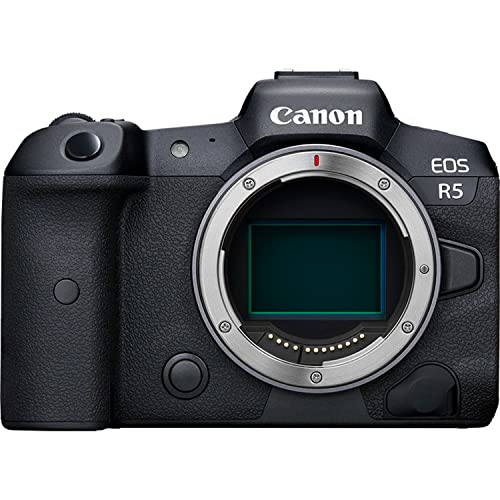
6. Canon EOS R5 — the sealed high-resolution flagship
Canon’s description of the EOS R5 uses its professional vocabulary: dust and drip resistance, executed to a standard Canon has associated with its professional EOS bodies, with sealing at the mount, the doors, the dials and the shell seams of a magnesium alloy chassis. No IP rating is published. What is published, and what owners can verify in the hand, is the completeness of the execution — this is a body built for professionals who invoice for photographs taken in weather, and its sealing is specified with the same seriousness as the rest of its considerable specification. It is the most photographically powerful camera in this guide, and its sealing claim, while unstandardised, comes from the maker whose professional bodies have the longest field history in this company.
The specification needs little introduction: a 45-megapixel full-frame sensor, in-body stabilisation that coordinates with stabilised lenses, autofocus that finds eyes — human and animal — with unsettling reliability, and video modes that reach 8K recording. For the landscape photographer caught by weather at the viewpoint, the wedding photographer working through a wet afternoon, or the commercial shooter whose location is a coastline, the R5 pairs that output with a body documented to keep working through the conditions those assignments involve. Canon’s RF lens line includes sealed L-series lenses across the professional ranges, so the complete defended system is available entirely within the maker’s premium line.
The costs of that completeness are literal and physical. The sealed R5 system — body plus L-series glass — is the most expensive outfit in this guide by a wide margin, and among the heaviest to carry. The body’s sealing, for all its professional pedigree, remains a maker’s claim without a published rating, and Canon’s warranty position on liquid damage is the industry’s usual one, which is to say unsympathetic. Buyers should also note that the R5’s thermal limits in its highest video modes are a separate, well-documented constraint that weather cannot excuse. None of this diminishes the body; it defines the buyer for whom the arithmetic works.
Strengths
- Professional-grade dust and drip resistance in a magnesium chassis.
- 45-megapixel sensor — the highest resolution in this guide.
- Coordinated stabilisation with stabilised RF lenses for low-light field work.
- Complete sealed system available within Canon’s L-series lens line.
Trade-offs
- The most expensive sealed system here once L-series lenses are counted.
- No published IP rating behind the professional vocabulary.
- High video modes carry thermal limits unrelated to the sealing story.
Who it suits: professionals and uncompromising enthusiasts whose income or ambition justifies the flagship tier, and who need maximum resolution behind sealing they can defend to a client. When the photograph cannot be rescheduled and the detail cannot be compromised, this is the guide’s ceiling, so check price on Amazon.
Check price on Amazon: Canon EOS R5
Five weathers, five different demands
Sealing is usually discussed as one feature, but the field applies it in at least five distinct ways, and the six bodies divide differently across each. Coastal spray is the corrosive case: the water arrives as fine, wind-driven mist that finds seams the way rain cannot, and it carries salt that keeps working after the camera is home. Here the discipline of the fresh-water wipe matters as much as the body, and the OM-5’s published rating and the professional bodies’ thorough gasketing are the relevant defences, in that order of evidence. Mountain rain is the endurance case — hours of steady, moderate water rather than a single soaking — and it rewards the bodies whose doors and dials are sealed as a system, because the failure mode is slow ingress at a control that was operated fifty times with wet gloves.
Dust and sand invert the problem: the enemy is not liquid finding a path but particles defeating a seal’s surface, and the riskiest moments are lens changes and zoom lenses extending in gritty air. Every body here is documented against dust in its maker’s terms, and the photographer’s change discipline does more work than any gasket. Winter cold is the case where the published operating range earns its place in this guide — the bodies documented to minus ten degrees are making a claim about gasket materials and lubricants as much as about batteries — paired with condensation routines that no specification can replace. Event work is the social case: the rain is ordinary, but the camera cannot be sheltered, wiped or rested, because the schedule belongs to someone else; this is where the professional bodies’ sealing depth and the sealed flash junction stop being specifications and become the terms of employment.
Read against those five weathers, the shortlist sorts itself naturally. The trekker facing spray, dust and cold in one trip is the OM-5’s buyer, carrying the only rated body and the lightest kit. The event professional is Nikon’s or Canon’s buyer, paying for sealing depth and system completeness. The traveller in changeable climates splits between Fujifilm’s stills outfit and Sony’s everything outfit, and the video-led field worker is Panasonic’s. None of the five weathers rewards the unsealed alternative at any price, which is the quiet conclusion of the whole category: once the work is genuinely outdoors, sealing is not the premium feature on the list. It is the admission ticket, and the only real question is how honestly each maker describes the ticket it sells.
Building the first sealed outfit
Because the lens completes the system, the sensible first sealed outfit is a body plus one sealed standard zoom, bought as a pair and used as a unit until its habits are learned. Every system in this guide offers that zoom: a mid-range, constant- or variable-aperture standard zoom carrying the maker’s weather vocabulary in its own description. Buyers tempted by a body-only deal and an unsealed lens from the shelf below should run the arithmetic honestly — the discount is real, but it purchases an unsealed system wearing a sealed body’s badge, and the first wet trip will price the difference correctly. The second lens to add is the one the work actually needs, bought sealed from the start rather than upgraded later; in practice that is a fast prime for the stills photographers, a wide zoom for the landscape and travel buyers, and a telephoto for the action and wildlife work the Nikon and Canon bodies invite.
Two small accessories belong in the same first order, and both cost less than the memory cards they will sit beside. The first is a simple rain cover sized to the body and its longest lens, because the cover is what converts the sealed body from shower-proof to storm-capable, and it protects the unsealed parts of any real outfit — the photographer’s hands included. The second is a set of the humble consumables: a soft brush for grit, cloths reserved for the fresh-water wipe, and spare port and shoe covers matched to the body, bought while the originals are still present to be measured against. Owners who treat those items as part of the camera, rather than as accessories to it, are the ones whose sealing claims are still true in year four.
How the six compare
| Camera | Format | Sealing in the maker’s terms | Published rating | Best at |
|---|---|---|---|---|
| OM System OM-5 | Micro Four Thirds | Splash, dust and freeze resistant | IPX1, to minus ten degrees | Trekking and travel in real weather |
| Fujifilm X-T5 | APS-C | Weather-resistant structure | None published | High-resolution stills on foot |
| Sony a7 IV | Full frame | Dust and moisture resistant design | None published | One system for everything |
| Panasonic Lumix S5 II | Full frame | Dust and splash resistant | None published | Long outdoor video work |
| Nikon Z6 III | Full frame | Dust and drip resistance, professional line | None published | Speed, action and events |
| Canon EOS R5 | Full frame | Dust and drip resistance, professional grade | None published | Maximum resolution, paid work |
Read the rating column first, because it is the column the marketing would rather skip: one entry is a tested number and five are documented intentions, and the intentions differ in thoroughness rather than in kind. Read the format column second, because it decides the size of the sealed system that has to be carried. And let the best-at column close the argument, since sealing only matters on the days the camera is actually there.
Working in weather: the habits that matter more than the badge
Every repair technician who handles water-damaged cameras tells the same story: the bodies that survive wet assignments belong to photographers whose routines assume water is coming. The first routine is shelter discipline — the sealed body buys minutes, and those minutes are for finishing the sequence and reaching cover, not for standing in a downpour to prove a specification. A simple rain cover, even an inexpensive one, transforms any body in this guide in heavy rain, and professionals who shoot sport in winter use covers on flagship bodies as a matter of course; sealing and covering are partners, not rivals.
The second routine is change discipline. Lens changes in blowing dust or spray are the moment the system is most open, and the field answer is boring and effective: turn away from the wind, shield the mount with the body, have the next lens uncapped and ready, and treat the seconds of exposure as a cost to be minimised. Battery and card changes follow the same rule, under whatever shelter exists. The third routine is the drying routine: a wet body gets wiped before it goes in the bag, doors stay closed until the body is dry, and a camera that has worked in salt spray gets the fresh-water wipe described earlier before it is stored. Condensation gets its own habit — the camera goes into a sealed bag with the lens cap on before it crosses from cold air into a warm room, and it warms up inside that bag rather than in the open.
Storage after the trip is the routine owners most often skip, and it is the one that decides whether a damp day becomes a fungus claim next year. A body that has worked in rain should be dried before it is shelved: left in moving air with its doors closed until the exterior is fully dry, then stored somewhere ventilated rather than sealed into an airtight case with its moisture for company. Lenses deserve the same patience, extended toward the light and inspected at the rear element, because the sealed system that kept water out can also keep condensation in when it is packed away warm and wet. None of this requires equipment beyond a shelf, a cloth and the discipline to unpack on the day of return rather than the weekend after.
None of these habits requires the most expensive body in the guide,
and all of them protect the cheapest pick as effectively as the flagship. That is the mature way to read this category: sealing specifications describe the margin the maker built, and field habits decide how much of that margin the owner actually spends. The buyer choosing between two bodies here is really choosing between two margins — and should then protect whichever margin was bought with the same routines the professionals use on bodies that cost three times as much.
Frequently asked questions
Does weather-sealed mean I can shoot in any rain?
No. In this guide only the OM-5 carries a published rating, and that rating — IPX1 — certifies resistance to vertically dripping water, which corresponds to light rain. The other five makers publish resistance claims in their own terms, none of which covers driven rain, immersion or pressure. Sealing buys the confidence to keep working through showers, spray and dust while moving toward shelter; heavy, sustained rain still calls for a rain cover on any body here.
Do I need a weather-sealed lens as well?
Yes — the body and lens seal as a system. The body’s mount gasket is designed to compress against a sealed lens, and an unsealed lens leaves the mount and its own barrel open to the water and dust the body was built to exclude. When budgeting, treat a sealed standard zoom as part of the body’s price, and check the maker’s weather vocabulary in the lens description before assuming any particular lens qualifies.
Is water damage covered if a sealed camera fails?
Buyers should assume not. Camera warranties in this industry generally exclude liquid damage regardless of the sealing claim, because no maker in this guide sells its sealing as a waterproofing guarantee. The seal reduces the probability of damage; it does not transfer the cost of damage to the manufacturer. That asymmetry is exactly why the published rating on the OM-5 and the honest hedging in Sony’s description are valuable — they describe the protection without pretending to underwrite it.
What should I do after shooting near the sea?
Wipe the body down with a cloth lightly dampened with fresh water as soon as practical, paying attention to dials, seams, the mount and the door edges, then dry it thoroughly before opening any door or changing a lens. Salt left to dry on the body is abrasive and corrosive and works directly against the gaskets. Sand should be brushed away rather than wiped, and a body that has taken a real soaking in spray deserves a service-centre inspection if anything behaves unusually afterwards.
Which of these is the right choice for hiking and travel?
For carrying through weather over distance, the OM-5 is the natural answer: it is the lightest complete sealed system here and the only one with a published rating, and its lenses preserve the size advantage. The Fujifilm X-T5 is the alternative for travellers who prioritise stills resolution and are content with a maker’s documented claim instead of a rating. The full-frame bodies earn their weight when the trip is really an assignment — when resolution, speed or video depth, rather than the walk itself, is the point of carrying the camera.
The short answer
Buy the evidence before the adjective. The OM System OM-5 is the only camera here whose maker published a rating, and it pairs that honesty with the lightest sealed system in the guide; the Fujifilm X-T5 is the sealed APS-C stills machine; the Sony a7 IV and Panasonic S5 II cover the all-round and video-leaning full-frame briefs with thoroughly executed, carefully worded claims; the Nikon Z6 III brings professional sealing discipline to speed work; and the Canon EOS R5 puts the guide’s highest resolution behind professional-grade dust and drip resistance. Whichever body earns the place in the bag, pair it with a sealed lens, keep the doors-and-covers discipline, and treat the specification as a margin to be spent wisely rather than a wall to hide behind. The weather will do what it does; the right sealed camera simply refuses to let it have the last word.