A fluid head tripod is what turns a mirrorless camera into a video camera. The best fluid head tripod for mirrorless cameras pairs a stable set of legs with a head that pans and tilts with smooth, damped resistance, so the footage looks deliberate instead of jerky. This guide compares six fluid head tripods for mirrorless cameras, from a tall 80-inch event tripod to a compact travel model and a premium Manfrotto head, and explains which one suits each kind of shooter. Every tripod here was checked against the site own product listings for a fluid head, mirrorless compatibility and real height, and the notes below cover the details that decide whether a tripod actually works for video. Read the buying guide before ordering, because two tripods can both say fluid head while feeling completely different in use. The sections below also cover how to set up a tripod for a smooth shot, how to look after the head and legs, and the mistakes that ruin video, so the tripod you buy actually improves your footage from the first shoot.
In this guide
Quick picks: best fluid head tripod for mirrorless cameras
| # | Product | Where to buy |
|---|---|---|
| 1 | NEEWER 79-Inch Video Tripod with Fluid Drag Head | Check on Amazon |
| 2 | K and F Concept 63-Inch Camera Tripod with Fluid Head | Check on Amazon |
| 3 | K and F Concept 73-Inch Camera Tripod with Fluid Head | Check on Amazon |
| 4 | K and F Concept 80-Inch Video Tripod with Fluid Head | Check on Amazon |
| 5 | Manfrotto ONE Video Tripod with 500X Fluid Video Head | Check on Amazon |
| 6 | Victiv 72-Inch Camera Tripod with Fluid Head | Check on Amazon |
How the picks were chosen
We started with the site own product listings for fluid head tripods for mirrorless cameras and kept only complete tripods with a fluid head, a stated height and mirrorless compatibility. That filter removed fluid heads sold on their own, which are not tripods, and photo tripods with ball heads, which do not give smooth video movement. We then ranked the survivors on four things: head smoothness, meaning how even the pan and tilt feel from start to finish; height and stability, since a tall tripod that wobbles is worse than a short one that does not; portability, because a tripod that stays in the car never shoots video; and value. Premium heads lead on smoothness, tall tripods lead on height, travel tripods lead on portability, and the value pick leads on price. We also weighed payload, since a head that cannot hold the camera and lens is useless, and build quality, because a tripod is a long-term tool. No tripod here was chosen for its looks alone, and the order below reflects what a mirrorless videographer actually experiences in the field.
The picks at a glance
| Tripod | Height | Head | Payload note | Best for |
|---|---|---|---|---|
| NEEWER 79-inch | 79 in | Fluid drag | Mirrorless rigs | Tall video |
| K and F Concept 63-inch | 63 in | Fluid | Travel kits | Travel |
| K and F Concept 73-inch | 73 in | Fluid | Mirrorless and DSLR | All-round |
| K and F Concept 80-inch | 80 in | Fluid | Event rigs | Maximum height |
| Manfrotto ONE 500X | Video | 500X fluid | 11 lbs | Premium smoothness |
| Victiv 72-inch | 72 in | Fluid | Mirrorless kits | Best value |

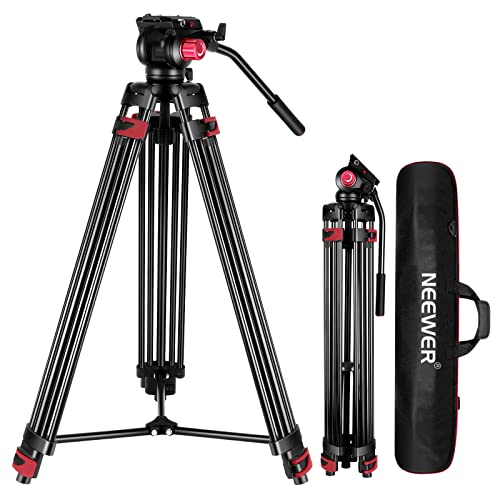
NEEWER 79-Inch Video Tripod with Fluid Drag Head
Key specs: 79-inch / 200cm height | Heavy duty aluminum alloy | 360-degree fluid drag head | Quick release plate
The NEEWER 79-Inch Video Tripod is the top pick in this guide, and it earns that place because it gives a mirrorless shooter the two things that matter most in a video tripod: height and smooth movement. At 79 inches it reaches high enough for standing interviews, event coverage and overhead shots, and the 360-degree fluid drag head pans and tilts with the smooth, damped motion that separates video from stills work. The heavy duty aluminum alloy legs stay stable with a mirrorless camera and a mid-size lens, and the quick release plate lets the camera come off the head in seconds for handheld shots. For a mirrorless videographer who wants a tall, stable, smooth tripod at a fair price, this is the one to buy first.
The fluid drag head is the reason to choose the NEEWER over a photo tripod. A photo head moves in steps and locks, while a fluid head moves continuously with resistance, so a pan across a scene stays smooth from start to finish instead of jerking at the beginning and the end. The 360-degree pan covers a full turn, the tilt range handles low and high angles, and the drag can be adjusted to suit a light mirrorless body or a heavier rig. The aluminum legs are strong without being heavy, and the tripod folds down for transport. It is not the lightest travel tripod here, and it is taller than most, but for video work with a mirrorless camera, height and smooth movement matter more than packed size.
The NEEWER tripod also suits a solo videographer, because the height and the smooth head mean one person can run the camera and still get professional-looking movement. The quick release plate lets the camera come off for handheld shots and go back on without rebalancing, and the legs set up quickly on location. The tripod is tall enough for a standing interview with the subject seated or standing, and the fluid head handles the slow push-in and the gentle pan that make an interview feel polished. It is the tripod for a mirrorless shooter who works alone and needs the gear to do the heavy lifting.
Strengths
- 79-inch height suits standing video and event work
- 360-degree fluid drag head for smooth pans and tilts
- Heavy duty aluminum legs stay stable with mirrorless rigs
Trade-offs
- Taller and heavier than compact travel tripods
- Aluminum legs can feel cold and transmit vibration in wind
- Quick release plate is proprietary, so spares matter
Who it fits: Mirrorless videographers who shoot standing video, interviews and events.
Best for: Tall, smooth video work with a mirrorless camera / Not suited for: Hikers who need the lightest possible travel tripod
Check price on Amazon: NEEWER 79-Inch Video Tripod with Fluid Drag Head

K and F Concept 63-Inch Camera Tripod with Fluid Head
Key specs: 63-inch height | Aluminum travel tripod | Fluid head | For DSLR, mirrorless and camcorder
The K and F Concept 63-Inch Camera Tripod with Fluid Head is the travel pick in this guide, built for mirrorless shooters who carry their tripod everywhere and need it to be light, compact and ready. The aluminum travel design folds down small enough for a backpack or a carry-on, and the fluid head gives smooth pans and tilts for video as well as steady support for stills. The 63-inch height is enough for most eye-level shooting, and the tripod works with DSLR, mirrorless and camcorder bodies, so it suits a mixed kit. For a mirrorless photographer who travels light and shoots both video and stills, this is the best choice here.
The travel design is what makes this tripod practical. It is light enough to carry on a hike, compact enough to strap to a backpack, and quick enough to set up that it actually gets used instead of staying in the car. The fluid head is the key difference from a basic travel tripod: it turns the same legs into a video tool, with damped movement that keeps pans smooth. The aluminum legs are sturdy for the weight, and the tripod is stable with a mirrorless camera and a standard zoom. It will not match a heavy studio tripod for stability in wind, and the height is modest, but for travel video and stills with a mirrorless camera, it is the most useful tripod in this guide.
The 63-inch K and F Concept tripod also suits a vlogger, because it is light enough to carry all day and tall enough for a talking-head shot at a table or on a trail. The fluid head gives smooth movement for b-roll, and the tripod folds down small enough to fit in a day pack alongside a laptop and a spare battery. It is the tripod for a creator who films in many places and needs the gear to keep up, rather than a studio tripod that only works in one room.
Strengths
- Light and compact travel design that fits a backpack
- Fluid head gives smooth video movement on the move
- Works with mirrorless, DSLR and camcorder bodies
Trade-offs
- 63-inch height is modest for tall standing work
- Less stable than heavy tripods in strong wind
- Aluminum legs transmit some vibration
Who it fits: Mirrorless travellers who shoot video and stills on the move.
Best for: Lightweight travel video with a mirrorless camera / Not suited for: Studio work or heavy rigs that need maximum stability
Check price on Amazon: K and F Concept 63-Inch Camera Tripod with Fluid Head

K and F Concept 73-Inch Camera Tripod with Fluid Head
Key specs: 73-inch height | Aluminum travel tripod | Fluid head | Smooth pan and tilt for DSLR and mirrorless
The K and F Concept 73-Inch Camera Tripod with Fluid Head is the balanced pick in this guide, sitting between the compact 63-inch model and the tall 80-inch video tripod, and that middle ground is exactly why it ranks so highly. At 73 inches it reaches eye level for most standing shooters, the aluminum travel design keeps it portable, and the fluid head gives the smooth pan and tilt that video demands. It works with DSLR and mirrorless cameras and with camcorders, so it covers a mixed kit, and the build is sturdy enough for daily use. For a mirrorless shooter who wants one tripod for travel, events and home video, this is the most versatile choice here.
The 73-inch height is the sweet spot for most mirrorless video work. It is tall enough for standing interviews and event coverage without a riser, yet the tripod still folds down small enough to travel. The fluid head moves smoothly through the full pan and tilt range, and the damping suits the weight of a mirrorless camera with a standard or mid-telephoto lens. The aluminum legs are a good balance of weight and stability, and the tripod sets up quickly, which matters when the moment will not wait. It is not the tallest or the lightest tripod here, but it is the one that does the most jobs well, and for a shooter who owns one tripod, that versatility is the deciding factor.
The 73-inch model also suits a photographer who shoots both video and stills, because the fluid head holds the camera steady for long exposures and time-lapses as well as for video. The height works for landscapes, portraits and events, and the tripod is sturdy enough for a mirrorless camera with a telephoto lens. It is the tripod for a shooter who does not want to own two tripods, and who needs one set of legs to cover everything from a sunrise landscape to an evening interview.
Strengths
- 73-inch height suits most standing video work
- Fluid head with smooth pan and tilt for mirrorless cameras
- Portable aluminum travel design that still feels sturdy
Trade-offs
- Not as tall as the 79-inch and 80-inch models
- Heavier than the compact 63-inch travel model
- Aluminum legs can vibrate in wind without a weight hook
Who it fits: Mirrorless shooters who want one versatile tripod for travel and events.
Best for: All-round mirrorless video and stills on one tripod / Not suited for: Specialist work needing maximum height or minimum weight
Check price on Amazon: K and F Concept 73-Inch Camera Tripod with Fluid Head
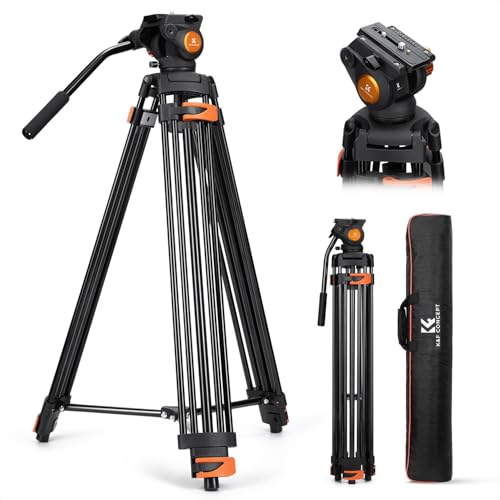
K and F Concept 80-Inch Video Tripod with Fluid Head
Key specs: 80-inch height | Heavy duty aluminum tripod | Fluid head with smooth damping | Quick release plate
The K and F Concept 80-Inch Video Tripod with Fluid Head is the height pick in this guide, and at 80 inches it is the tallest tripod here, built for standing video where the camera needs to be well above the crowd. The heavy duty aluminum legs stay stable at full extension, the fluid head damps pans and tilts smoothly, and the quick release plate lets the camera come off fast for handheld work. The height suits concerts, weddings, sports sidelines and any event where the camera must see over heads, and the tripod is still portable enough to carry to a location. For a mirrorless videographer who shoots tall, this is the tripod to buy.
Height changes what a tripod can do, and the 80-inch reach opens shots that shorter tripods cannot: over a crowd, over a fence, or high enough for a clean angle on a stage. The heavy duty aluminum construction keeps the tripod stable at full height, which is where cheaper tall tripods wobble, and the fluid head damping stays smooth even with a mirrorless camera and a long lens. The quick release plate is a practical touch for event work, where the camera moves between tripod and handheld several times an hour. It is a large tripod when folded, and it is heavier than the travel models, but for tall standing video it is the best tool in this guide.
The 80-inch tripod also suits a sports sideline, where the camera needs to see over players, officials and advertising boards. The height gives a clean angle on the action, the fluid head tracks movement smoothly, and the heavy duty legs stay planted when the crowd moves. The quick release plate lets the camera come off for a handheld shot of a celebration and go back on for the next play. It is the tripod for a videographer who shoots where the action is, and who needs height to see it.
Strengths
- 80-inch height sees over crowds and fences
- Heavy duty aluminum legs stay stable at full extension
- Fluid head with smooth damping and quick release plate
Trade-offs
- Large and heavy when folded, so less travel-friendly
- Needs care in wind at full height
- Overkill for tabletop or low-angle work
Who it fits: Event and wedding videographers who shoot standing video above crowds.
Best for: Tall standing video with a mirrorless camera / Not suited for: Hikers or travellers who need a compact tripod
Check price on Amazon: K and F Concept 80-Inch Video Tripod with Fluid Head

Manfrotto ONE Video Tripod with 500X Fluid Video Head
Key specs: 500X fluid video head | Aluminum video tripod | 11 lbs payload | Levelling mechanism | Quick release
The Manfrotto ONE Video Tripod with the 500X Fluid Video Head is the premium pick in this guide, and it earns that place through the quality of its head. Manfrotto fluid heads are the reference for smooth video movement, and the 500X gives the damped, controlled pan and tilt that professional videographers expect, with a levelling mechanism that makes setup fast on uneven ground. The aluminum tripod carries up to 11 lbs, which covers a mirrorless camera with a substantial lens, and the quick release system is the standard that many videographers already own plates for. For a mirrorless shooter who wants the smoothest head in this guide and is willing to pay for it, this is the tripod to buy.
The 500X head is the reason this tripod costs more, and the difference shows in the first pan. The movement is even from start to finish, with no stick-slip at the beginning and no run-on at the end, which is what makes footage look professional rather than amateur. The levelling mechanism is a quiet star: it lets the operator level the head without adjusting the legs, which saves minutes on every setup and keeps the horizon straight on slopes and stairs. The 11 lbs payload covers a mirrorless body with a telephoto or a rigged setup, and the build quality means the tripod will last through years of professional use. It is the most expensive tripod here, but for serious video work it is the best investment.
The Manfrotto ONE also suits a videographer who already owns Manfrotto plates and accessories, because the quick release system is the standard that many shooters already use. The levelling mechanism saves time on every setup, and the 500X head will still be smooth years from now, when cheaper heads have gone stiff or gritty. It is a professional tool in the true sense: it costs more, it lasts longer, and it makes the work better. For a mirrorless shooter who earns a living from video, it is the tripod that pays for itself.
Strengths
- 500X fluid head gives the smoothest movement in this guide
- Levelling mechanism speeds setup on uneven ground
- 11 lbs payload covers mirrorless cameras with substantial lenses
Trade-offs
- Premium price compared with the other tripods here
- Heavier than the travel models in this guide
- Best suited to video; overkill for stills-only use
Who it fits: Serious mirrorless videographers who want professional head quality.
Best for: Professional-feeling video movement on a mirrorless rig / Not suited for: Casual shooters or anyone on a tight budget
Check price on Amazon: Manfrotto ONE Video Tripod with 500X Fluid Video Head

Victiv 72-Inch Camera Tripod with Fluid Head
Key specs: 72-inch height | Professional aluminum tripod | Fluid head | Carry bag included | 2-in-1 design
The Victiv 72-Inch Camera Tripod with Fluid Head is the value pick in this guide, and it proves that a capable fluid head tripod does not need a premium price. At 72 inches it reaches eye level for standing work, the professional aluminum construction is sturdy for the weight, and the fluid head gives smooth pans and tilts for mirrorless video. The carry bag is included, which matters because a tripod without a bag gets scratched and dented in transit, and the 2-in-1 design adds versatility for stills and video. For a mirrorless shooter on a budget who wants a full-size fluid head tripod with a bag included, this is the best value here.
The included carry bag is a practical advantage that is easy to overlook. A tripod is awkward to carry without one, and a bag protects the legs and the head in a car boot or on a plane, so the tripod arrives in working order. The 72-inch height suits most standing video, the aluminum legs are strong enough for a mirrorless camera with a standard lens, and the fluid head moves smoothly enough for the video most buyers will shoot. It will not match the Manfrotto head for smoothness, and the build is simpler, but for the price it is remarkably capable, and it is the tripod to buy when the budget is tight and the work still needs to look good.
The Victiv tripod also suits a beginner videographer who is learning the craft. The price is low enough that a mistake does not hurt, the fluid head teaches the feel of a proper pan and tilt, and the carry bag means the tripod survives being carried to every shoot. A beginner who learns on a Victiv will understand what a fluid head does and why it matters, and when the time comes to upgrade, the lessons carry over. It is the best first fluid head tripod in this guide, and the one most likely to turn a beginner into a videographer.
Strengths
- Full-size 72-inch tripod with fluid head at a low price
- Carry bag included for protection in transit
- Professional aluminum build that is sturdy for the weight
Trade-offs
- Fluid head is less smooth than the Manfrotto 500X
- Simpler build than the premium models here
- Heavier than the compact travel tripods
Who it fits: Budget mirrorless videographers who want a full-size fluid head tripod.
Best for: Full-size mirrorless video on a budget / Not suited for: Professionals who need the smoothest possible head
Check price on Amazon: Victiv 72-Inch Camera Tripod with Fluid Head
Buying guide: best fluid head tripod for mirrorless cameras
Start with the head, because it decides whether the footage looks professional. A fluid head uses viscous damping to resist movement, so a pan starts gently, moves evenly and stops cleanly. A ball head or a three-way photo head cannot do that, and the difference shows in every second of footage. Check that the head is genuinely fluid, with adjustable drag, rather than a friction head that only pretends to be fluid. Next, match the height to the work. Standing interviews and events need 70 inches or more, travel and tabletop work can use less, and a tripod that is too short forces the operator to crouch all day. Then check the payload. Add up the camera, the lens, the microphone and any accessories, and buy a tripod rated comfortably above that weight, since a head at its limit will creep and drift. Stability is the next question. Aluminum legs are strong and affordable, carbon fibre is lighter and damps vibration better but costs more, and a centre hook for hanging a bag adds stability in wind. Portability follows: a tripod that folds short and light gets carried, while a heavy one stays home, so match the packed size to how you travel. Finally, check the quick release system. A standard plate that you already own spares is worth more than a proprietary plate that is hard to replace.
A final buying note concerns the difference between a tripod and a head. Some listings sell a fluid head on its own, and some sell a complete tripod, and the two are easy to confuse. Confirm the listing includes legs, a head and a quick release plate before ordering, and check the height is the maximum working height rather than the folded length. Also check whether a carry bag is included, since a tripod without a bag is awkward to transport and easy to damage. And if you are torn between two tripods, choose the one with the better head over the one with taller legs, because the head decides the quality of the footage and the legs only decide the height.
How to use and care for your pick
A fluid head tripod needs little maintenance, but a few habits keep it smooth for years. Keep the legs clean, especially after beach or dusty shoots, since grit in the leg locks causes slipping and wear. Wipe the head and the quick release plate with a dry cloth, and never lubricate a fluid head yourself, since the damping fluid is sealed and adding oil ruins it. Store the tripod with the legs extended or in its bag rather than leaning against a wall, where it can fall and bend a leg. Check the leg locks and the head tension before each shoot, and tighten anything that has worked loose. In wind, hang a bag from the centre hook for stability, and lower the tripod a little rather than fighting the gusts at full height. With that care, a good fluid head tripod will serve for many years of video work.
The head deserves the most attention, because it is the part that wears first. If a pan starts to feel gritty or uneven, clean the head and check for sand or dust before assuming it is worn out, since grit is the usual cause. Store the head with the drag set light rather than locked tight, and transport the tripod in its bag so the head cannot knock against hard objects. Keep a spare quick release plate in the bag, since losing the only plate ends a shoot, and label your plates so they do not get mixed up with other tripods. And when the tripod is not in use for months, extend the legs and work the head through its range once, so the damping stays even.
Common mistakes to avoid
The most common mistake is buying a photo tripod with a ball head and expecting smooth video. A ball head cannot pan smoothly, and the footage will show it. Buy a fluid head for video, every time. The second mistake is buying a tripod that cannot hold the camera and lens. A head at its payload limit will creep, drift and ruin shots, so buy headroom. The third mistake is extending the centre column to full height in wind, which turns the tripod into a sail. Lower the tripod and hang a weight instead. The fourth mistake is forgetting the quick release plate, which ends a shoot before it starts. Keep a spare in the bag. The fifth mistake is judging a fluid head in a shop without a camera on it: a head feels different under load, so the real judgement comes with the camera mounted. Finally, many buyers forget that a tripod is a long-term tool, and buy the cheapest one, which wobbles, slips and needs replacing within a year.
Another common error is setting up on soft or uneven ground without checking the legs. A tripod that looks level can sink during a long take, ruining the shot, so press the legs in firmly and check the level before recording. Buyers also underestimate how much a good head matters for stills: a fluid head is slower to adjust than a ball head for stills work, so photographers who shoot mostly stills may prefer a different head for that job. And many videographers forget to level the head before a pan, which makes the horizon drift across the frame and marks the footage as amateur.
Our final recommendation
For most mirrorless videographers, the NEEWER 79-Inch Video Tripod is the right buy. It combines tall reach, a smooth 360-degree fluid drag head and a sturdy aluminum build at a fair price, and it handles the standing video most mirrorless shooters actually do. Travellers should buy the K and F Concept 63-inch model, all-round shooters should buy the 73-inch model, and event videographers who need maximum height should buy the 80-inch model. Serious videographers who want the smoothest head should buy the Manfrotto ONE with the 500X head, and budget buyers should buy the Victiv 72-inch tripod, which includes a carry bag. Whichever tripod you choose, confirm the listing includes legs, a fluid head and a quick release plate before ordering. A good fluid head tripod is the cheapest way to make mirrorless video look professional, and the right one is the one that matches your height, your payload and the way you actually shoot.
Frequently asked questions
What is a fluid head tripod?
A tripod with a head that uses viscous damping to resist movement, so pans and tilts start gently, move evenly and stop cleanly. It is the standard head for video work, unlike a ball head, which is made for stills.
Do I need a fluid head for mirrorless video?
Yes, if the video should look smooth and professional. A fluid head is what makes pans and tilts look deliberate instead of jerky, and it is the single most important part of a video tripod.
How tall should a tripod be for standing video?
At least 70 inches for most standing work, so the camera reaches eye level without the operator crouching. Event work benefits from 79 or 80 inches to see over crowds.
Can I use a fluid head tripod for stills photography?
Yes, though it is slower to adjust than a ball head. A fluid head holds the camera steady for stills, and many photographers use one tripod for both video and stills.
What payload do I need for a mirrorless camera?
Add up the camera, lens, microphone and accessories, then buy a tripod rated comfortably above that total. A head at its limit will creep and drift, so headroom matters.
Is aluminum or carbon fibre better for a tripod?
Carbon fibre is lighter and damps vibration better, but costs more. Aluminum is strong, affordable and perfectly good for most mirrorless video work.
What should I check before ordering a fluid head tripod?
Check three things in the listing: that it includes legs, a fluid head and a quick release plate; the maximum working height; and the payload rating. Also confirm the exact model, since similar tripods share names.
Can a fluid head tripod replace a gimbal?
Not entirely. A tripod gives stable, smooth shots from a fixed position, while a gimbal stabilises a moving camera. Many videographers use both: the tripod for interviews and static shots, the gimbal for walking shots.
How do I get the smoothest pan from a fluid head?
Set the drag to suit the weight of your camera, start the movement slowly, keep a steady speed through the middle, and ease to a stop rather than halting suddenly. Practise the move a few times before recording.