Disclosure: As an Amazon Associate, kajuandouglas.com earns from qualifying purchases. Links on this page are affiliate links; they cost you nothing extra. Prices and availability change often, so check the current Amazon listing before you buy.
This durgod keyboards guide taurus hades series explained decodes one of the traditionalist tier’s best-value houses. Durgod built its reputation on a simple proposition: Cherry MX switches, doubleshot PBT keycaps, NKRO, USB-C and honest cases, in wired boards priced below the famous names — with the Taurus line (K310 full-size, K320 tenkeyless) as its backbone and the Hades line as its compact 65 percent expression. No RGB circus on the classics, no software empire, no editions calendar: just the fundamentals executed at prices that made a generation of typists ask why they would pay more. This guide explains the series, the naming, and reviews five verified Taurus listings that cover the line’s sizes and tempers.
Key takeaways: Taurus K320 is the TKL, K310 the full-size — the same formula at two footprints. Hades is the compact line (65 percent class) for small desks. All the classics are wired USB-C, Cherry MX, doubleshot PBT, NKRO, Windows and Mac friendly, with the Corona variants adding white backlighting. Switches are fixed, so the temper is a commitment. Durgod’s value is the story: traditionalist fundamentals at the tier’s friendliest prices.
Durgod Keyboards Guide Taurus Hades Series Explained: The Series, Explained: Taurus, Hades and the Naming Logic
Durgod’s catalogue reads like a star atlas because the lines carry celestial names, and the logic underneath is simple once stated. Taurus is the classic line: full-size K310 and tenkeyless K320 boards in the traditional mould — Cherry MX switches across the classic tempers, doubleshot PBT keycaps, a wired USB-C connection, full NKRO, programmability through the house’s software, and clean Windows and Mac manners. The Corona suffix marks the backlit variants, adding a white LED glow to the same boards. Hades is the compact line — 65 percent-class boards that carry the same fundamental formula into the small-footprint world, with the line extending into wireless variants in its later generations. Around those poles orbit smaller lines and collaborations, but a buyer who understands Taurus-versus-Hades and backlit-versus-not understands the catalogue’s map. What never changes across the map is the formula’s spine: real Cherry switches, real PBT, real rollover, honest prices. The reviews below take the Taurus line in its main sizes and tempers, because Taurus is where most Durgod ownership lives.
In this guide
Five Taurus Listings, Reviewed

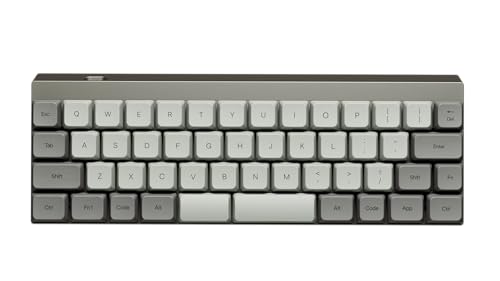
Durgod Taurus K320 (Cherry MX Brown, White) — the line’s centre
Badge: Best Durgod for most buyers
- Layout: tenkeyless, 87 keys
- Switches: Cherry MX Brown (listing), fixed
- Keycaps: doubleshot PBT
- Connection: USB-C wired, NKRO
- Compatibility: Windows and Mac
The K320 in Brown and white is the Durgod proposition at its purest: the tactile all-rounder switch, the classic TKL footprint, doubleshot PBT that will never shine or fade, and a price that embarrasses boards with worse fundamentals. It is the comparison-proof purchase — the board recommended to the typist who wants the traditionalist spec sheet without the traditionalist premium — and its white colourway keeps a bright desk honest. Fixed switches are the standing caveat; Brown is the temper least likely to be regretted.
- Strengths: the full traditionalist formula
- Strengths: doubleshot PBT at this price
- Strengths: clean Mac and Windows manners
- Trade-offs: fixed switches
- Trade-offs: no backlight on this variant
- Trade-offs: plain styling
Best for: typists and value traditionalists. Not suited for: switch swappers.

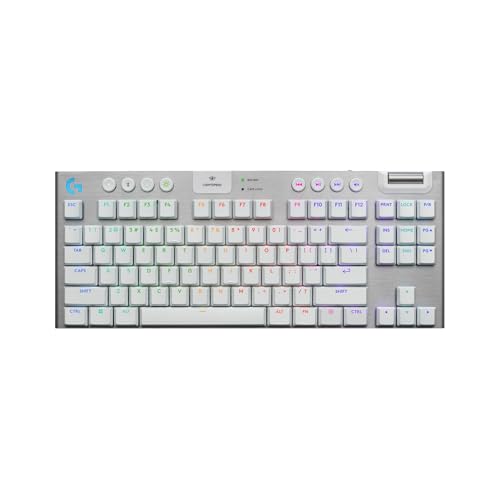
Durgod Taurus K320 (Cherry MX Red, Space Grey) — the linear variant
Badge: Best Durgod for gaming-leaning desks
- Layout: tenkeyless, 87 keys
- Switches: Cherry MX Red (listing), fixed
- Keycaps: doubleshot PBT
- Connection: USB-C wired, NKRO
- Colourway: Space Grey
The Red variant turns the same board toward play: linear switches for fast, bump-free actuation, the space grey dress for the darker desk, and the full NKRO the gaming claim requires. It is the Durgod for the mixed desk — office hours on doubleshot PBT, evenings on linears — and it demonstrates the line’s real flexibility, which lives in its switch menu rather than in any feature list.
- Strengths: linear gaming temper
- Strengths: same PBT and build quality
- Strengths: understated colourway
- Trade-offs: fixed switches
- Trade-offs: linears divide typists
- Trade-offs: no backlight on this variant
Best for: mixed work-and-play TKL desks. Not suited for: tactile loyalists.

Durgod Taurus K320 (Cherry Silent Red, White) — the quiet one
Badge: Best Durgod for shared rooms
- Layout: tenkeyless, 87 keys
- Switches: Cherry MX Silent Red (listing), fixed
- Keycaps: doubleshot PBT
- Connection: USB-C wired, NKRO
- Character: dampened, office-safe
The Silent Red K320 is the shared-room and open-office answer: Cherry’s dampened linears under the same doubleshot PBT, in the white dress, at the line’s usual honest price. It is one of the best-value quiet mechanical boards in the traditionalist tier — a claim this guide makes plainly, because the combination of genuine Cherry silents, real PBT and NKRO at Durgod pricing has few rivals — and it carries the household-diplomacy role for the whole line.
- Strengths: genuine quiet at a value price
- Strengths: full traditionalist specification
- Strengths: office and household safe
- Trade-offs: silent feel divides purists
- Trade-offs: fixed switches
- Trade-offs: no backlight on this variant
Best for: shared rooms and offices. Not suited for: click and tactility seekers.

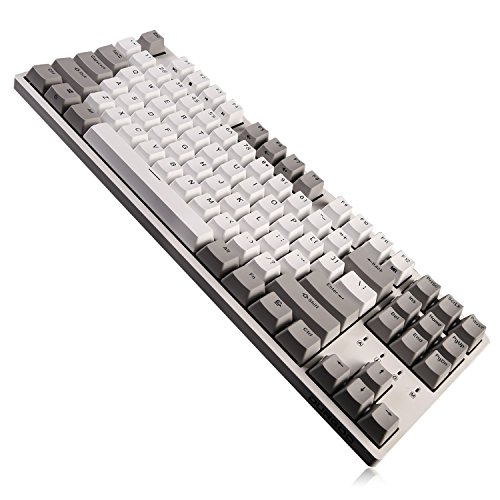
Durgod Taurus K310 (Cherry MX Brown, Grey) — the full-size
Badge: Best Durgod for numpad work
- Layout: full-size, 104 keys
- Switches: Cherry MX Brown (listing), fixed
- Keycaps: doubleshot PBT
- Connection: USB-C wired, NKRO
- Compatibility: Windows and Mac
The K310 is the Taurus formula at full size: the numpad restored, the same Cherry Browns, doubleshot PBT and wired reliability, in the grey dress. For the spreadsheet professional, the data-entry desk and the numpad-fluent typist, it is the line’s complete answer — and, like its TKL sibling, a standing argument that the traditionalist full-size board need not cost what the famous houses charge for it.
- Strengths: full-size completeness
- Strengths: same formula and value
- Strengths: professional grey dress
- Trade-offs: widest desk footprint
- Trade-offs: fixed switches
- Trade-offs: no backlight on this variant
Best for: numpad professionals. Not suited for: compact desks.

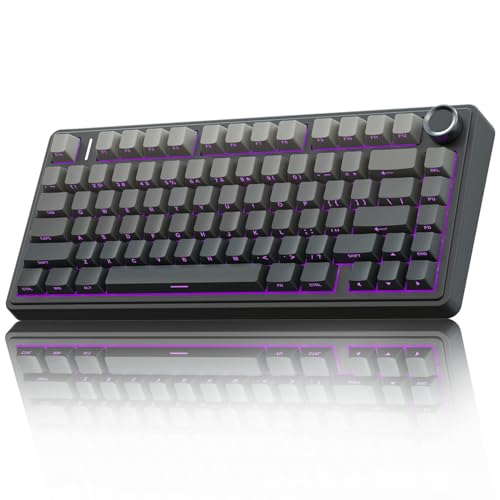
Durgod K310 Corona (Cherry MX Brown) — the backlit full-size
Badge: Best Durgod for dim rooms
- Layout: full-size, 104 keys
- Switches: Cherry MX Brown (listing), fixed
- Keycaps: doubleshot PBT
- Lighting: white backlight (Corona)
- Connection: USB-C wired, NKRO
The Corona variant answers the classic Taurus line’s one common request — light — with a white backlight across the full-size board, keeping every fundamental intact. White light is the traditionalist’s choice: legible at dusk, professional at noon, and free of the RGB theatre the house’s buyers generally decline. For the full-size desk that works into the evening, it is the line’s most complete classic configuration.
- Strengths: white backlight for dim rooms
- Strengths: full-size, full formula
- Strengths: professional presentation
- Trade-offs: fixed switches
- Trade-offs: white only, no RGB
- Trade-offs: largest footprint in the guide
Best for: evening-working full-size desks. Not suited for: RGB seekers.
The Hades Line: Durgod Goes Compact
The Taurus reviews cover the classic sizes, but the keyword’s second name deserves its full explanation. Hades is Durgod’s compact line — boards in the 65 percent class that compress the house formula into the small footprint the modern desk increasingly demands, keeping dedicated arrows in the layout philosophy and the PBT-and-Cherry spine where the models specify it, with later generations adding wireless freedom the Taurus classics decline. The Hades buyer is the Taurus buyer whose desk shrank: the same value traditionalism, the same suspicion of theatre, in a frame that leaves the mouse room to roam. A buyer choosing between the lines is really choosing a footprint — the guide’s standing skeleton decision — and can shop either line with the same confidence in the fundamentals. Where the Taurus is the house’s past and present, Hades is its concession to the compact era, executed without surrendering the formula that made the name.
Why the Fundamentals Formula Wins at This Price
Durgod’s value deserves an explanation rather than an assertion, because the market’s cheap boards usually save money in the places that matter. The formula’s economics run the other way: the house spends on the switch (genuine Cherry MX, with its rated lifespan and consistent feel), on the keycaps (doubleshot PBT, the expensive legend process, as the double shot vs dye sub keycaps comparison prices out), and on the electrical fundamentals (NKRO, USB-C), and saves on everything theatrical — no RGB systems on the classics, no aluminium, no software empire, no marketing calendar. The result is a board whose typing is a premium board’s typing and whose desk presence is deliberately plain. Buyers whose value lives under their fingers rather than in their photographs have recognised the trade for years, which is why the K320’s reputation was built by typists rather than by launches. It is the traditionalist tier’s clearest lesson in where keyboard money actually goes.
The Switch Menu: Choosing a Fixed Temper Well
Because the Taurus switches are soldered, the menu deserves the deliberation this guide keeps prescribing for fixed boards. Brown is the default and the reviewed centre: a tactile bump without a click, at home in every room and nearly every genre of work. Red is the linear for the gaming-leaning and the light-fingered, smooth and quiet-ish. Silent Red is the diplomat, dampened for the shared room and the open office, and this guide’s pick wherever other people’s ears share the purchase. Blue, where listed, is the clicky traditionalist’s choice for private rooms. Black and Silver serve their minorities — the heavy-handed and the speed-seeking respectively. The menu’s virtue is that every temper is Cherry’s known quantity, documented by a decade of community evidence; the menu’s demand is that the buyer consult their room, their hands and their history before choosing, because the Taurus will keep the choice for years. That permanence, priced honestly, is the line’s one real condition — and for the buyer who knows their temper, it is not a condition at all but a discount.
Durgod Against the Famous Traditionalists
The comparison every Durgod buyer is silently running deserves daylight: what, exactly, do the famous houses sell that this one does not? Against Leopold, Durgod concedes the last degree of case tuning — the Korean boards’ stock sound is a benchmark the Taurus approaches respectably without matching — and concedes nothing on switches or keycaps. Against Ducky, it concedes the design culture entire: no editions, no tripleshot, no charisma economy, and in the current generation, hot-swap. Against Filco, it concedes heritage and the Costar stabiliser tradition while matching the professional fundamentals. What it never concedes is the typing core — Cherry switches, doubleshot PBT, NKRO, honest cases — and its prices sit a clear tier below all three. The buyer who needs the conceded items should pay for them with this guide’s blessing; the buyer who does not is looking at the segment’s most rational purchase, and the K320’s decade of quiet standardisation on writers’ desks is the market’s agreement. Value, in the traditionalist tier, is not the absence of quality but the absence of everything else.
Sound and Feel: The Taurus Voice
The Taurus voice is the classic production voice, honestly rendered: the Cherry switch’s own sound, a case that contributes modest commentary rather than a tuned performance, and stabilisers that behave. It is not the deep, dampened voice of the gasket era, nor Leopold’s hushed benchmark — it is the sound mechanical keyboards made for thirty years, at a quality level that keeps it pleasant company across a working day. The Silent Red variant rewrites the voice entirely, trading the music for diplomacy. Feel follows the same honest pattern: a firm, direct plate-era keystroke with the PBT’s dry texture under the fingers, the combination that the traditionalist guides in this cluster — the Ducky vs Leopold vs Varmilo comparison among them — treat as the genre’s baseline. Buyers whose sound target is the modern creamy depth should shop the gasket guides; buyers who want the classic voice without the classic price are, once again, standing in Durgod’s showroom.
Programmability and Daily Use
The Taurus line’s programmability is the traditionalist middle path: the boards support remapping and macros through Durgod’s own software (the Zeus editor in the line’s ecosystem), stored and executed with the board’s usual lack of drama, without pretending to the open-firmware depth of the QMK world. For the working majority — a remapped Caps Lock, a few application macros, media on a layer — it is entirely sufficient, and its limits appear only for the deep customiser, who is shopping a different tier in any case. Daily use is where the line’s design intent fully declares itself: the boards wake instantly, type identically on every machine they meet, ask for no updates, and present the same doubleshot legends in year five as in week one. The ownership experience is an absence of events, which is the professional tool’s highest praise and the reason the Taurus keeps being bought by people whose previous keyboard was also a Taurus. Boredom, in a keyboard, is a feature with a decade’s evidence behind it.
Buying Durgod: The Variant Drill
Durgod’s catalogue is simpler than the famous houses’, and its drill is correspondingly short — but the two checks that matter are absolute. First, the switch: the Taurus listings differ primarily by temper and colourway, the photographs migrate between them, and the switch is fixed for the board’s life — read it in the specification block and treat it as the purchase. Second, the light: Corona in the name means white backlight present; its absence means the clean unlit classic, and a buyer who works at dusk should decide the question deliberately rather than discovering it. Size (K310 versus K320) and colourway complete the drill. Ninety seconds of specification reading is the whole tax, and it is the same tax — switch, light, size — that the traditionalist tier charges everywhere, at its lowest rate in this house. The used market adds the standard cautions of any wired classic: test every key, inspect the USB-C port, and confirm the cable, per the troubleshooting habits in this cluster’s fix keyboard not working troubleshooting guide.
Durgod at Work and at Play
The line’s double career mirrors its houses’ elders. At work, the Taurus is the self-purchase professional’s quiet standard: full-size for the numpad trades, TKL for the writing and coding desks, Silent Reds for the open plan, doubleshot legends that survive the years of coffee and deadlines, and Mac manners that spare the mixed fleet any translation. The best keyboards for accountants and finance professionals desk, in particular, is the K310’s natural habitat — full-size, tactile, permanent legends, priced like a tool rather than a trophy. At play, the boards bring the wired virtues — NKRO, zero battery anxiety, linear variants — without the esports frontier’s actuation science, which their buyers have generally decided they do not need. The honest summary is that Durgod serves the working week better than the ranked ladder, and says so by its catalogue’s shape. A tool that knows its shift is a tool that can be trusted on it.
Longevity, Care and the Second Desk
The Taurus ages the way its formula predicts: slowly, and mostly in the cable. The doubleshot PBT caps wash and return with legends and texture intact — the moulded legend cannot fade and PBT does not shine — the Cherry switches run their tens of millions of keystrokes, and the case’s plain finish forgives the years. The detachable USB-C cable is the designated consumable, replaceable in a minute when its connectors tire, which converts the classic captive-cable endgame into an errand. End-of-first-life, in this house, usually means promotion rather than disposal: the Taurus moves to the second desk, the workshop, the child’s first real keyboard, carrying its fundamentals with it. That second life is part of the value arithmetic the famous houses also enjoy and the disposable boards never do — a keyboard bought for a decade and demoted gracefully is cheaper, across its service, than a keyboard bought twice. Durgod’s plainness is what makes the demotion painless: nothing about the board was ever precious except its typing.
Who Should Not Buy a Durgod
The guide’s refusals, plainly. The switch explorer should not buy a Taurus — its switches are fixed, and curiosity is better served by any hot-swap platform in this cluster. The wireless household should look to the Hades line’s later generations or elsewhere entirely, because the classics are wired by conviction. The theatre seeker — RGB, screens, the current furniture of delight — is in the wrong showroom and will find the Taurus’s plainness a daily disappointment rather than a virtue. And the softest-sound hunter should buy gasket, per this cluster’s mount comparisons. Everyone else — the typist, the professional, the value traditionalist, the quiet-room negotiator, the buyer whose last board lasted a decade and whose next one should too — is in the house’s intended congregation, and will find the congregation’s satisfaction unusually free of buyer’s remorse, because the purchase never promised anything it did not deliver.
The Hades Decision in Detail: When Compact Is the Point
Because the Hades line shares this guide’s title, its buying logic deserves the same rigour as the Taurus reviews. The compact case rests on three facts: the mouse hand’s posture dividend, the small desk’s real estate, and the travel bag’s geometry — and Hades answers all three while keeping the house’s spine. The compact costs are the genre’s usual ones: the function row joins a layer, the navigation cluster compresses, and the buyer’s first fortnight includes the apprenticeship every compact demands. The Hades-specific questions are the variant ones — wired or wireless generation, switch family in the specific model — and they are answered, as everywhere in this guide, in the listing’s specification block rather than its photographs. A buyer whose desk has genuinely shrunk, or whose work has genuinely mobilised, will find Hades the line that lets them keep their traditionalism at the new size; a buyer merely flirting with compactness should keep the Taurus’s completeness and spend the flirtation on a wrist rest instead. Size decisions, in this cluster’s standing doctrine, are made by desks and weeks, not by photographs and moods.
Ergonomics: The Taurus on the Body
The bodily chapter is the standard traditionalist one, with the sizes doing the talking. The K320’s tenkeyless frame pulls the mouse a span closer than the K310’s full width — the compact dividend in its mildest, most universally beneficial form — while the K310’s numpad serves the data hand at the cost of the mouse hand’s reach, the accountant’s standing bargain. Both boards are standard-height instruments whose typing angle should be kept gentle, feet flat or minimally raised, and whose firm, full-travel keystrokes reward the floating hand over the planted palm. Neither is an ergonomic board in the split sense; both are honest rectangles whose comfort is decided by the size arithmetic and the desk’s discipline. The Silent Red variant adds the ears to the body’s ledger — a keyboard’s sound is an ergonomic fact for the room’s other occupants — and the guide notes that more shared-room purchases are decided by that line of the ledger than by any other in this entire comparison set.
The Price Argument, Made Precisely
Durgod’s prices sit in the traditionalist tier’s ground floor, and the guide should state precisely what the saved money was not spent on, because the list is the brand’s manifesto. Not spent: RGB systems, aluminium, wireless radios on the classics, software development beyond the sufficient, packaging theatre, marketing. Spent: Cherry switches at full menu breadth, doubleshot PBT across the line, NKRO electronics, USB-C, cases that do not flex. The comparison a buyer should run is not Durgod against the budget wave — where the fundamentals gap is obvious — but Durgod against the famous traditionalists line by line, where the gap narrows to tuning, heritage and theatre, each buyer-priced. The line’s owners, surveyed by a decade of forums, divide into those who later upgraded to the famous houses for those last degrees and those who concluded the last degrees were not worth a second purchase. Both conclusions are respectable; the Taurus serves the first group as an education and the second as a destination, and either way the first purchase was not wasted money. Few products in any category can say as much.
Troubleshooting and Support Realities
The Taurus fault list is the wired classic’s short one, and the guide records it with the remedies. A dead key on a fixed-switch board is a service event rather than a swap — the line’s known trade — mitigated by Cherry’s lifespan statistics and by the community’s repair documentation, and diagnosed by the substitution logic in this cluster’s troubleshooting guide (if the position is dead with a known-good switch path, the board needs hands, not settings). Connection dropouts indict the detachable cable first — substitute and see — which is precisely why the cable is detachable. Remapping confusion resolves in the editor’s reset, because the board’s programmability is modest enough to be fully documented. Support for the house runs through its retailers and a community archive thinner than the famous houses’ but adequate to the boards’ simplicity — a simplicity that is itself the support strategy. The buyer who values a decade of forum depth above all else is Leopold’s customer; the buyer whose board will simply work is, on the evidence, very often this one’s.
A Starter’s Path Through the Catalogue
The first-time Durgod buyer’s decision path is the shortest in the traditionalist tier, and the guide will walk it in four steps. Step one: size. K310 if the numpad earns its width, K320 if it does not, Hades if the desk has gone compact — measured by a week’s honest accounting of numpad use. Step two: light. Corona if the room dims while you work; the unlit classic if it does not. Step three: temper. Brown to default, Red for the linear-leaning, Silent Red for the shared room — chosen with the room’s occupants consulted, because the choice is soldered. Step four: colourway, the white for bright desks and the greys for dark ones, chosen last because it matters least to the hands. Four steps, no wrong turns available except an unconsulted room, and the catalogue’s celestial names resolve into a single board on a real desk. That navigability is itself one of the house’s virtues — a catalogue a newcomer can cross in an evening, in a tier whose famous houses demand a week’s study.
What a Durgod Teaches the Market
The guide’s last analysis is about the house’s effect on everyone else, because Durgod’s formula is an argument the whole tier has had to answer. By holding Cherry switches and doubleshot PBT at its prices for years, the house established a floor of decency below which a “traditionalist” board cannot fall without embarrassment — the reason the famous houses now compete on tuning, design and platform rather than on the fundamentals themselves. It also educated a buyer class: the typist who learned on a K320 knows exactly what a switch temper is, what PBT feels like in year three, and what a keyboard should cost when the theatre is itemised — and that buyer upgrades, when they upgrade, with a literacy the premium houses must respect. A brand that raises its market’s standards while underpricing it occupies a rare and honourable position, and it is the deepest reason this guide treats a value house with the same seriousness as the famous names. The Taurus and the Hades are good keyboards; the standard they set is a good deed.
The First Month With a Taurus: A Short Diary
Ownership texture, for the buyer who wants to know what the board feels like to live with rather than to unbox. Week one is the switch’s referendum: the temper chosen from the specification block meets the room, the hands and the workload, and either settles into invisibility — the fixed board’s happy outcome — or begins the education in why the drill mattered. Week two is the legends’ quiet pleasure: doubleshot PBT under working light, crisp at every angle, with the texture that makes other boards’ caps feel like placeholders. Week three is the absence audit: no software has asked for anything, no battery has been thought about, no connection has been re-paired, and the board has simply been the desk’s keyboard, which is the entire design brief fulfilling itself. Week four is the first wash of the caps or the first colleague’s question — the Taurus attracts the specific compliment of being asked about by people who type for a living. A month that ends in invisibility and one good question is a month the traditionalist tier exists to produce, and Durgod produces it at the tier’s friendliest price.
Durgod and the Office Fleet Buyer
One institutional buyer recurs in the house’s story and deserves a paragraph: the small-office purchaser equipping a room of desks. For that buyer the Taurus line’s virtues compound arithmetically — a per-desk price that survives a fleet budget, switches rated for the fleet’s collective decade, legends that will not wear into a support complaint, identical behaviour on every operating system in the building, and a spare-board strategy (buy one extra K320) that costs less than a single famous-house board. Fleets are where keyboards go to be judged purely as tools, and the Taurus’s fleet record is the value argument in its least sentimental form. The home buyer benefits from the same arithmetic at n=1, which is why this guide keeps returning to the word tool: Durgod builds the keyboard as the trades build a hammer — specified, priced and warranted as an instrument of work, with the pleasure of typing it treated as a consequence of correctness rather than as a marketing department.
The Guide’s Verdict, Compressed
The whole Durgod argument in its shortest honest form. The K320 in Brown is the value traditionalist’s default — the full formula, the safest temper, the TKL footprint most desks want. The Silent Red K320 is the shared room’s version of the same sentence. The Red K320 serves the play-leaning desk. The K310 restores the numpad for the professions that bill by it, and the Corona K310 lights the evening shift. Hades carries the same spine into the compact class for the desks that shrank. Every board in the family is wired, Cherry-switched, doubleshot-capped and NKRO-complete; every one asks the same single deliberation — the fixed switch — and repays it with the tier’s friendliest prices. A buyer who can name their size, their light and their temper can buy a Durgod in one sitting and type on it for a decade, which is more than most product categories at any price can promise.
A Note on the Celestial Names
Newcomers sometimes ask whether Taurus and Hades encode anything beyond flavour, and the honest answer is that the names are the house’s one indulgence — a star-atlas naming scheme across a catalogue that otherwise refuses decoration. Taurus the bull for the strong, classic line; Hades for the underworld-compact, smaller and moodier in presentation; Corona for the crown of light on the backlit variants. The names carry no specification, and the guide records them only so that a shopper meeting the catalogue for the first time can file the poetry correctly and get on with the specification blocks, which is where Durgod, characteristically, keeps everything that matters. A brand allowed exactly one flourish, and choosing names for it, tells you something reassuring about where its engineering budget goes.
Durgod in the Ecosystem: Caps, Cables and Company
The Taurus boards live standard lives in the wider ecosystem, which is a virtue worth itemising for the buyer planning beyond the board. The layouts are standard, so the entire MX keycap world fits — though the stock doubleshot set is good enough that most owners never test the fact. The detachable USB-C cable invites the custom cable culture documented in this cluster’s custom USB cables for your keyboard guide, and a Taurus in a coloured coiled cable is the value desk’s favourite small vanity. Wrist rests, desk mats and the rest of the furniture all apply without adaptation. And the board keeps company well: its plainness is a neutral citizen in a multi-device desk, neither demanding the setup be built around it nor apologising in the photographs. Ecosystem neutrality sounds like a small thing until a buyer has owned a board whose proprietary cable, odd layout or orphaned software made every neighbouring decision harder — the Taurus makes every neighbouring decision easier, which is the professional tool’s final courtesy.
The Resale and Hand-Down Ledger
Durgod’s second life follows its first: unglamorous and dependable. A used Taurus sells on its fundamentals — a buyer can verify switches, caps and cable in a minute’s inspection — at prices that respect the original purchase without entering the collectible register the edition houses command. The hand-down path is even more characteristic: the Taurus is the board experienced typists give — to the teenager whose laptop keyboard is failing them, to the colleague converting from membrane, to the home office’s second desk — because its fundamentals teach the right lessons and its price forgives the experiment. A product whose endgame is being given away as an education has a claim on the market’s respect that spec sheets cannot capture, and the guide records it as the last line of the value ledger: the Taurus is cheap to buy, cheap to keep, and valuable to give. Across a decade and two owners, its cost per year of good typing is among the lowest figures in this entire cluster.
Before the Questions: The Thirty-Second Durgod Method
The guide’s compression, for the reader whose evening is short. Size by numpad honesty: K320 for most, K310 for the spreadsheet-bound, Hades for the shrunken desk. Light by the room’s dusk: Corona if you work into it. Temper by the room’s ears and your own history: Brown by default, Silent Red by diplomacy, Red by inclination to play. Verify the switch in the specification block because it is soldered, and then stop shopping — the catalogue’s remaining differences are colourways. That is the complete method, and its brevity is the brand’s own compliment: Durgod is the traditionalist house a buyer can fully understand in thirty seconds, because it never hid its formula behind anything. The questions below answer what the compression raises; the typing, for the decade after, answers the rest.
The Taurus Among Its Own Kind: A Buyer’s Cross-Check
One last cross-check protects the purchase against its nearest neighbours, because the value-traditionalist shelf has other occupants and the guide should say why this one. Against the budget gaming boards, the Taurus wins on switches and keycaps so decisively that the comparison is really about whether typing matters to the buyer. Against the other value traditionalists, it wins on the completeness of the formula at the price — doubleshot rather than lesser legends, Cherry rather than clones, NKRO rather than partial rollover — and on a catalogue simple enough to buy correctly the first time. Against its own Hades line, it wins on completeness of layout and loses on footprint, which is not a contest but a measurement of the buyer’s desk. And against the famous houses, it wins on price and loses on the last degrees of tuning, design and platform — the standing trade this guide has priced from its first page. A buyer who has run those four comparisons and still stands in front of the Taurus is not compromising. They are concluding.
Postscript: The Quiet Majority
The keyboard internet is loud about editions, customs and frontier specifications, and quiet about the boards most serious typists actually use — a bias of attention this guide exists partly to correct. The Taurus line’s owners are that quiet majority in miniature: they bought the fundamentals once, typed for years, and had nothing to post about because nothing went wrong and nothing begged to be upgraded. Their silence in the forums is not absence; it is satisfaction’s native volume. A buyer reading the loud internet for a first serious board should weight the quiet majority’s evidence accordingly — the boards that generate the fewest threads per owner are, disproportionately, the boards that were bought correctly. Durgod’s whole catalogue is an argument that the correct purchase is a boring story, and this guide, having told it at length, is content to end on the brand’s own terms: the typing is the story, and it does not need narrating.
One More Practical Chapter: The Desk Setup Around a Taurus
The board’s plainness makes it a good citizen of a considered desk setup, and the guide’s last practical notes concern its neighbours. A wrist rest pairs naturally for palm-down typists, in the wood or foam the desk’s palette prefers, because the standard-height case rewards the pairing the comfort guides describe. The detachable cable routes cleanly to either side’s port geography, and a modest coiled replacement is the one vanity the value desk permits itself without breaking its own philosophy. The unlit classics ask for the desk’s lighting to be honest — a monitor light bar or a lamp that serves the legends at dusk — while the Corona variants carry their own. And the board’s weight and rubber keep it planted on the mat through the working day, so the setup’s geometry, once arranged, persists. None of this is specific to Durgod except in aggregate: a board that interferes with nothing composes with everything, and the Taurus’s decade of quiet presence on serious desks is substantially explained by that composability.
The Education a Taurus Provides
The guide closes where several of this cluster’s brand guides close — with the education — because a first Durgod teaches its owner the tier’s essential literacy at the tier’s lowest tuition. The hands learn what a genuine Cherry temper feels like and keep the reference for life. The eyes learn what a moulded legend’s crispness is, and never again accept a printed cap at a moulded price. The judgement learns the itemised difference between fundamentals and theatre, priced in a real purchase. Owners educated by a Taurus buy their second board — whatever house it comes from — as literate customers, and a striking number of them discover, mid-education, that the second board is unnecessary: the first one already types the way the lesson said a keyboard should. A brand whose product is also its market’s best introductory course has earned its guide, and its place in the constellation it named itself after — fixed, bright enough, and entirely dependable for navigation.
And the Name on the Box, One Last Time
A shopper who arrived by the keyword deserves the map restated at the door: Taurus is the classic line and K320 its tenkeyless heart, K310 its full-size form, Corona its lit variant, Hades its compact constellation. Everything else in the catalogue is a footnote to those four facts. Buy by them, verify the switch, and the celestial branding resolves into what it always was — a dependable board with a poetic name, priced by people who spent the poetry budget on the keycaps instead.
The Final Sanity Check Before Checkout
One paragraph of pure procedure, because the line’s simplicity deserves a matching close. Confirm the model number against the size you measured your desk for. Confirm Corona or its absence against your room’s light. Confirm the switch in the specification block — soldered, remember — against the room’s ears and your own temper history. Confirm the colourway last and least. Four confirmations, under a minute, and the board that arrives is the board this guide described. In a tier full of catalogues that punish haste, Durgod’s four-line checkout is the final expression of its philosophy: the fundamentals, including the buying, done properly and without decoration.
The Line’s Quiet Second Act: Living With One
Ownership reports for this house share a tone so consistent it amounts to a finding: nothing happens. The boards do not develop personalities, firmware dramas or fashionable regrets; they type, season after season, in the background of their owners’ working lives, which is precisely the service the line was designed to sell. The wear that does arrive is honest wear — a shine on the spacebar’s home row side after years, legends intact, switches unloosened — and the second-hand market prices the line accordingly, holding value the way tools do rather than the way toys do. For the buyer choosing between the Taurus patience and the Hades experiment, the ownership evidence reframes the question kindly: either board will likely serve longer than the fashion that produced the alternative you rejected, so choose by the desk in front of you rather than the trend behind you.
Nothing happening, reliably, for years — the questions below are for readers deciding whether that is the review they have been looking for.
Taurus or Hades, patience or experiment — the questions follow, in the house’s own unhurried order.
Frequently Asked Questions
What is the difference between the Durgod K310 and K320?
Size only. The K310 is the full-size 104-key board with a numpad; the K320 is the 87-key tenkeyless. Everything else in the Taurus formula — Cherry MX switches, doubleshot PBT, USB-C, NKRO, Mac and Windows support — is shared. Choose by your numpad habit and your desk width.
What is the Durgod Hades series?
Durgod’s compact line, in the 65 percent class: the house’s traditionalist formula — quality switches, PBT keycaps, honest cases — compressed into small footprints, with wireless variants in the later generations. It is the line for small desks and compact-layout buyers who still want the fundamentals done properly.
Are Durgod keyboards hot-swappable?
The Taurus classics in this guide are not — their Cherry switches are fixed, which is part of how the line holds its prices, and the switch temper should be chosen as a commitment. Some newer Durgod lines elsewhere in the catalogue do offer hot-swap; verify per model and listing, and default to the Taurus assumption of fixed switches unless a listing states otherwise.
Are Durgod keyboards good for typing?
They are one of the value tier’s reference answers: genuine Cherry MX switches in the classic tempers, doubleshot PBT that keeps its texture and legends for years, solid cases and full NKRO. Writers and programmers on budgets have standardised on the K320 for years precisely because the typing fundamentals are the famous houses’ fundamentals at a friendlier price.
Do Durgod keyboards work with Mac?
Yes — the Taurus line is explicitly Windows and Mac compatible, with the key behaviour Mac users need. As with all traditionalist boards, verify the specific model’s arrangement in its listing, and expect full manners without driver drama.
What does Corona mean in a Durgod name?
The backlit variant: Corona models add a white LED backlight to the same board. It is the line’s answer for dim rooms — legibility without RGB theatre — and it changes nothing about the switches, keycaps or build of the underlying Taurus model.
One house, two constellations: Taurus for the classic sizes, Hades for the compact desk, Corona where the light is wanted — and beneath all three names, the same unglamorous promise kept: the fundamentals, whole and honestly priced, for as long as the desk needs them. If this guide has a single sentence to leave behind, it is that the traditionalist fundamentals — Cherry switches, doubleshot PBT, full rollover, honest cases — are a formula, not a fortune, and Durgod is the house that proved it by selling the formula at its honest price for long enough that the market had to agree. The proof is sitting on a great many desks, typing.
Choose the footprint, choose the temper as the commitment it is, and Durgod will give you the traditionalist fundamentals at the tier’s friendliest prices — which was the whole idea.
A genuinely final word on expectations, because value boards attract a specific disappointment that this guide can prevent. A Taurus will not surprise you after month one — there is no hidden theatre to discover, no software feature to unlock, no edition to chase — and owners occasionally mistake that steadiness for plainness when it is, in fact, the product. The famous houses sell discovery; Durgod sells the absence of the need for it. Buy the Taurus for the decade of mornings on which the keyboard is simply, exactly and sufficiently there, and the steadiness becomes the most luxurious property a working tool can have. The typists who standardised on this line were not settling. They were finished shopping — which is the highest state a keyboard purchase can reach.