kajuandouglas.com is reader-supported. When you buy through links on our site, we may earn an affiliate commission.
Where to Buy a Camera for Filming Outside, Where Screens Go Blind and Wind Owns the Microphone
Outside is not a location; it is an opponent. The sun washes the screen into a mirror, the wind interviews itself through every microphone, the light changes its mind every time a cloud has an opinion, and the ground — sand, mud, wet rock — is patiently waiting for the camera to meet it. The best cameras for filming outside are the ones designed with that opponent in mind: readable in glare, sealed against weather, stabilised for ground that moves, and honest about sound in moving air.
Indoor reviews will not tell you any of this, because indoors none of it matters. A camera can be a studio champion and an outdoor amateur — its screen a rumour at noon, its autofocus hunting through heat shimmer, its battery surrendering to a cold morning on the mountain. This guide therefore judges by field criteria alone: what the six picks do at midday in a field, at dusk on a beach, and in the rain that the forecast swore was finished.
Where to buy: the linked names lead to each camera’s Amazon listing, and outdoor buyers should kit the order for the field in the same breath — the strap that survives a scramble, the case that floats or at least seals, the lens cloth that lives in the pocket it will actually be needed in. An outdoor camera bought without its field kit is a fair-weather purchase, and the weather has not agreed to anything.
The list divides by philosophy. Weather-sealed mirrorless bodies film outside with interchangeable-lens ambition; dedicated tough and action cameras film outside with indifference to consequence; and one beloved compact hybrid proves a careful owner can film anywhere. Your terrain will choose among them faster than your taste will — so read with your actual ground in mind: the touchline, the trail, the boat, the building site, the garden you are finally documenting properly.
One more honesty before the picks: filming outside is where technique repays fastest. The owner who learns to stand with the sun placed deliberately, to shield a microphone with a body and a hand, to expose for the sky they intend to keep, will out-film a flagship owner who treats the outdoors as a bigger room. These cameras reward that learning; none of them replace it.
Key Takeaways
Field notes first, for readers packing a bag while they read:
- Screen readability at noon is an outdoor camera’s first specification — every pick here can be framed with in full sun.
- The OM SYSTEM OM-5 Mark II leads for weather-sealed mirrorless filming on trails, touchlines, and travel.
- Action and tough picks — HERO13, Osmo Action 5 Pro, Tough TG-7 — film in rain, dust, and surf without a prayer.
- Wind, not image, is outdoor filming’s weakest link: plan the microphone’s shelter before the shot’s beauty.
- The Insta360 X4 solves the outdoor framing problem by recording every direction and choosing later.
In this guide
Quick Picks
Six ways to film under an open sky. Badges name the terrain each pick owns.
| Camera | Badge | Why it earns its place here |
|---|---|---|
| OM SYSTEM OM-5 Mark II | Best Weather-Sealed All-Rounder | Serious sealing, superb stabilisation, and a compact system built for trails and travel filming. |
| OM SYSTEM Tough TG-7 | Best Indestructible Filming Companion | Waterproof, crushproof, freezeproof — the camera that films where cameras are not supposed to go. |
| GoPro HERO13 Black | Best for Outdoor Action Filming | Mount it anywhere, film everything, in weather that cancels other plans. |
| DJI Osmo Action 5 Pro | Best Low-Light Action Filming | An action camera whose dusk and dawn manners extend the outdoor filming day at both ends. |
| Insta360 X4 | Best for Never Missing the Outdoor Moment | Records the whole sphere — the jump, the view, the reaction — and lets you aim in the edit. |
| Canon EOS R50 | Best Friendly Mirrorless for Outdoor Beginners | Interchangeable-lens filming with household manners — the garden, the match, the holiday, learned properly. |
How Did We Choose the Best Cameras for Filming Outside?
We weighted the field failures first. Screens were judged as framing instruments in direct sun, because a camera you cannot frame with is a radio with a lens. Weather sealing was judged as a system — body, lens, ports, and the owner’s ability to keep filming through the shower rather than sheltering the kit while the rainbow performs. Stabilisation was judged on real ground: walking, boats, touchlines, and the small earthquakes of handheld filming in a breeze.
Second came exposure manners in unruly light. Outdoor scenes hold the widest brightness ranges in ordinary filming — sky against shade, snow against faces, water against everything — so highlight discipline and honest metering mattered more than resolution. Third, sound in moving air: wind protection options, microphone placement, and how gracefully each body accepts an external microphone or a wind muff.
What we discounted: studio virtues. Tethered workflows, giant screens for a desk, and codecs whose natural home is a grading suite all matter less than a camera that is awake, framed, and recording in the eight seconds a heron gives you. Outside, readiness is resolution.
What Does the Outdoors Do to a Camera, Exactly?
Start with light, which outside arrives in quantities interiors never see and ratios no sensor fully holds. The sky can be ten times brighter than the face beneath it; snow and water conspire to lie to meters; golden hour — the outdoor filmmaker’s sacrament — lasts minutes and moves the whole time. Cameras for this work need highlight headroom, exposure tools readable at a glance, and colour that keeps a blue sky from becoming a special effect.
Then weather, which is light’s accomplice: rain that finds every unsealed seam, dust that treats a lens change as an invitation, cold that thickens battery chemistry into reluctance, and heat that bakes a black body on a tripod into thermal caution. Sealing ratings are the beginning of the conversation, not the end — the picks here were chosen for systems of sealing, including lenses and accessories that keep the promise the body makes.
Finally, motion and distance. Outside subjects rarely sit at portrait range under controlled light: they run touchlines, cross rivers, fly, sail, and vanish. Autofocus that tracks through clutter, stabilisation that forgives a walking operator, and — for the 360 pick — the abolition of aiming altogether are the three answers this list offers, one per philosophy of outdoor work.
How Do You Keep Outdoor Sound From Ruining Outdoor Film?
Wind is pressure, and a microphone cannot tell pressure from a voice. Every outdoor filmmaker learns the same liturgy: shield the microphone with mass and fur, place the camera’s body between the wind and the mic where the shot allows, turn the whole rig so the wind meets an edge rather than a diaphragm, and record a minute of pure location sound for the edit’s mercy. The picks here differ in how much of that liturgy they automate — wind reduction processing, accessory ecosystems, microphone inputs — and the differences matter more than any video specification on a blowy headland.
Distance is sound’s second enemy outside, because outdoor subjects stand where they stand: the coach across the pitch, the guide across the river, the vows across a garden that swallowed the PA budget. External microphone options — wireless systems, shotguns on the hot shoe — are the professional answer, and the mirrorless picks here accept them properly. The action and tough picks answer differently, with rugged built-in audio that survives the swim, the ride, and the downpour at the price of reach.
Plan sound per scene the way you plan light per scene. Interview on the headland: external mic, sheltered, close. Surf session: built-in, rugged, atmospheric. Garden ceremony: a recorder at the officiant and the camera’s track as the safety. Outdoor filming’s graduates all share one trait — they stopped asking one microphone to do every job the sky invents.
Which Cameras Film Best Under an Open Sky? The Six Picks in Detail

OM SYSTEM OM-5 Mark II — Best Weather-Sealed All-Rounder
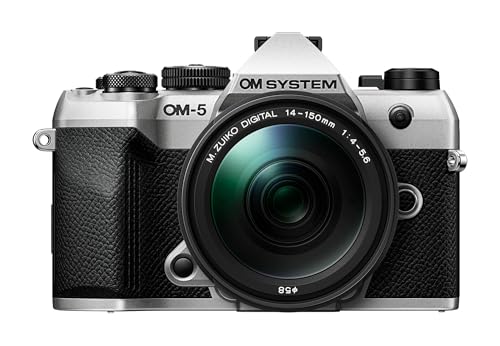
The OM-5 Mark II is the outdoor mirrorless idea executed by the manufacturer that has preached it longest: a compact body with weather sealing treated as a headline rather than a footnote, stabilisation strong enough to film walking footage that looks transported rather than carried, and a lens ecosystem of small, sealed glass that keeps the whole kit honest in rain. For the hiker-filmmaker, the touchline parent who also camps, and the travel documentarian, it is this guide’s anchor.
Its field manners reward the moving operator. The stabilisation forgives the walk-and-talk, the boat’s roll, and the touchline prowl; the autofocus tracks subjects through the clutter of real ground; and the body’s size means the camera is carried on the body — strap, hip, hand — rather than enthroned on a tripod at base camp. Outdoor footage is overwhelmingly filmed by people in motion, and this system was designed by people who appear to know it.
Choose it when your filming outside is a practice rather than an occasion: the weekly match, the seasonal trail series, the travel films that anchor a channel. Its smaller sensor asks for lens speed after dusk and gives back depth of field that keeps outdoor scenes — where everything matters at once — honestly sharp, a trade many outdoor filmmakers prefer once they have lived with both.
Pair it with its sealed lenses or the sealing story has a hole in it — the system’s discipline is end-to-end, body to glass to the photographer’s habits. Owners who respect that discipline film through weather that sends bigger systems under tarps, and the footage from the far side of a storm is the footage nobody else at the location has.
- Type: Micro Four Thirds mirrorless, sealed
- Signature: stabilisation for filming in motion
- System: compact sealed lenses available
- Carry: body-worn all day, happily
- Terrain: trail, touchline, travel, coast
Strengths
- Films through weather that stops rivals.
- Walking footage looks transported, not carried.
- Whole sealed system stays compact.
Trade-offs
- Dusk asks for fast glass.
- Smaller sensor, different depth signature.
- Sealing needs sealed lenses to be real.
Best for: hikers, touchline regulars, travel filmmakers, all-weather documentarians.
Not suited for: night-first shooters or studio-bound productions.

OM SYSTEM Tough TG-7 — Best Indestructible Filming Companion
The TG-7’s pitch is a list of survivals: it films underwater without a housing, shrugs off drops that would retire a mirrorless body, works in freezes that stall batteries elsewhere, and treats sand as a cleaning problem rather than a death sentence. For filming outside in the places outside is actually interesting — the surf line, the quarry, the ski slope, the building site, the toddler’s beach empire — it is less a camera than a permission slip.
Its filming manners are tuned for the unrepeatable outdoor moment: awake fast, framed through a screen built for glare, focused close enough for the tide-pool documentary and wide enough for the river crossing. The microscope-adjacent close focus that made its stills famous serves film too — the salamander, the frost crystal, the engine part — subjects outdoor films are full of and interchangeable lenses make expensive to reach.
Choose it as the expedition’s second camera, the family beach camera, the site engineer’s visual notebook, or the only camera for trips where gear anxiety would otherwise run the itinerary. It also makes a superb gift to the young outdoor filmmaker, because its curriculum is courage: film the wave, the storm, the cave — the camera can take it, so the student learns to.
Its limits are a fixed lens and a small sensor’s night manners, stated plainly. Within daylight and weather — most of the outdoors, most of the year — those limits rarely appear in the footage, while its freedoms appear in every scene the sealed mirrorless owner decided not to risk. Freedom is a specification too, and here it leads the list.
- Type: rugged compact, waterproof
- Signature: survives drops, depth, frost, dust
- Focus: remarkable close-up filming
- Carry: pocket to the surf line
- Terrain: beach, site, slope, river, pool
Strengths
- Films where other cameras cannot go.
- Awake and framed in seconds.
- Close-focus film subjects rivals miss.
Trade-offs
- Fixed lens, fixed perspective.
- Night files show the small sensor.
- No external microphone ambitions.
Best for: expeditions, beaches, worksites, young filmmakers, second cameras.
Not suited for: interchangeable-lens crafts or night-led work.

GoPro HERO13 Black — Best for Outdoor Action Filming
The HERO13 is the outdoors’ most fluent camera because it was raised there: waterproof in its skin, stabilised against terrain, and mountable to helmets, handlebars, boats, dogs, and finish-line posts with an accessory ecosystem that reads like a field guide to human recreation. Filming outside in motion — the ride, the run, the paddle, the descent — is its native sentence, and it speaks it without an operator’s continuous attention.
Its modern virtues suit the outdoor documentarian as much as the athlete. Long-interval and time-lapse modes turn it into a patient landscape witness; battery discipline built for cold mornings serves the dawn start; and its footage cuts as the wide, immersive angle beside a mirrorless main camera — the view from inside the activity that no touchline lens can buy. Outdoor productions increasingly treat it as a crew member rather than a toy, and the footage justifies the promotion.
Choose it when the filming is the activity: sport, expedition, worksite progress, wildlife approaches where a conspicuous rig would end the encounter. It is also the insurance camera of outdoor events — planted at the river crossing, the stage corner, the finish arch — recording the angle whose absence would be the edit’s only regret.
Its compromises are the family traits: a wide eye that keeps far subjects far, audio that loves atmosphere more than dialogue, and low light that belongs to the day shift. Cast it as the motion and witness camera, pair it with a voice-friendly body for interviews, and the outdoor kit is complete in the way expeditions mean the word.
- Type: action camera, waterproof
- Signature: mounts and stabilisation ecosystem
- Modes: time-lapse and long-interval depth
- Power: cold-morning battery discipline
- Terrain: anywhere a mount can go
Strengths
- Films the activity from inside it.
- Patient unattended landscape witness.
- Weather is a non-event to it.
Trade-offs
- Distant subjects stay distant.
- Dialogue audio is not its gift.
- Night belongs to other picks.
Best for: sport, expeditions, worksites, wildlife approaches, insurance angles.
Not suited for: interview-led outdoor films or telephoto subjects.

DJI Osmo Action 5 Pro — Best Low-Light Action Filming
Every outdoor filmmaker knows the day’s best light is its most dangerous: dawn and dusk, when the sky performs and small sensors traditionally surrender. The Osmo Action 5 Pro earns its badge by pushing that surrender later and earlier — low-light manners that keep evening rides, sunset surf, and fire-lit campsites filmable, in the same waterproof, mount-anywhere body the genre demands. It lengthens the outdoor day, which is a creative specification disguised as a technical one.
Its colour and dynamic range serve the sky specifically. Outdoor footage lives or dies by the gradient above the horizon, and this body’s files hold that gradient together through the hours when the light is changing fastest. Paired with its stabilisation — which keeps a walking shot civilised at shutter speeds dusk imposes — it produces evening footage that owners of earlier action generations will not believe came from the form factor.
Choose it when your outdoor filming keeps appointments with the ends of the day: the dawn patrol, the evening league, the night ride home through lit streets, the expedition that camps where it stops. It is also the action pick for creators whose audiences watch on televisions, where its cleaner files hold their dignity at living-room scale.
The family compromises apply — wide perspective, atmosphere-first audio — softened by an accessory ecosystem that now includes serious microphone options for the talking segments. Cast it as the day-extending action camera, and let the mirrorless picks handle the interviews it flies past.
- Type: action camera, waterproof
- Signature: dawn and dusk performance
- Sky: gradient-holding dynamic range
- Audio: accessory microphone options
- Terrain: rides, surf, camps, night streets
Strengths
- Extends filming into golden hours.
- Evening footage stays clean and stable.
- Sky gradients survive the grade.
Trade-offs
- Wide lens perspective is fixed.
- Dialogue still prefers a dedicated mic.
- Peak daylight rivals match it.
Best for: dawn and dusk sport, evening leagues, expeditions, night rides.
Not suited for: telephoto wildlife or studio interviews.

Insta360 X4 — Best for Never Missing the Outdoor Moment
Outdoors, the moment refuses to happen in the direction you are facing: the whale breaches behind the boat, the goal is scored while you film the crowd, the child’s first solo ride wobbles past your carefully framed emptiness. The X4’s answer is total: two lenses record everything, everywhere, all at once, and the framing decision moves to the edit, where it can be made with hindsight — the outdoor filmmaker’s scarcest resource, manufactured.
Raised on its pole above a trail, a boat, or a crowd, it becomes the drone shot that needs no drone — legal in the parks and venues where drones are banned, silent where they are resented, and present in weather that grounds aircraft. Its reframed footage intercuts with conventional cameras as the impossible angle: the orbit, the follow-through, the reveal that turns a good outdoor film into the one people send each other.
Choose it for expeditions, group adventures, wildlife encounters, and any outdoor filming where the party is spread around the compass and the action declines to be scheduled. Solo adventurers especially gain a crew: the X4 films the rider and the view in one pass, and the edit chooses which story each moment tells.
Its costs are workflow and care. Reframing is an editing stage with real minutes in it, and two exposed fisheye lenses demand a case and a conscience around sand and rock. Owners who accept both get the outdoors’ most forgiving camera; owners who resent editing should take the HERO13’s point-and-commit honesty instead.
- Type: 360 camera, dual lens
- Signature: aim later, miss nothing
- Viewpoint: pole-raised drone alternative
- Workflow: reframing stage in the edit
- Terrain: expeditions, boats, crowds, trails
Strengths
- Impossible to point the wrong way.
- Drone-style shots where drones cannot fly.
- One pass films subject and scenery.
Trade-offs
- Editing stage is mandatory.
- Exposed lenses fear sand and rock.
- Per-view resolution is shared.
Best for: group adventures, wildlife encounters, expeditions, solo travellers.
Not suited for: edit-averse owners or lens-care minimalists.

Canon EOS R50 — Best Friendly Mirrorless for Outdoor Beginners
Not every outdoor film needs a expedition-grade instrument; most need a friendly one that comes along. The R50 brings interchangeable-lens quality to the garden documentary, the school touchline, the holiday that deserves better than a phone — with autofocus that finds faces and animals obligingly, colour that flatters daylight skin, and a size that means the camera attends the picnic instead of presiding over it.
Its outdoor education is gentle but real. Owners learn exposure against real skies, focus against real motion, and the beginnings of lens choice — the wider lens for the landscape film, the longer one for the touchline — inside a system they can grow for years. For families whose filming outside is becoming a practice rather than a habit of the phone, it is the correct first serious step.
Choose it for the household’s outdoor life: sport days, garden projects filmed across seasons, travel where a real lens earns its luggage space. Add a weather-aware bag habit and a lens cloth that lives in the camera strap, and it will serve faithfully in the fair-to-mild weather where most family outdoor filming honestly happens.
Its boundaries deserve the same plainness as its virtues: it is not sealed like the OM-5, not armoured like the TG-7, and a downpour is a shelter decision, not a filming opportunity. Owners who accept the fair-weather brief get the friendliest outdoor mirrorless in this list; owners whose weather is a point of pride should start at the top of the page.
- Type: APS-C mirrorless, unsealed
- Signature: friendly autofocus and colour
- Growth: interchangeable lenses, real system
- Carry: attends the picnic, not presides
- Terrain: garden, touchline, holiday, park
Strengths
- Household manners, serious files.
- Teaches outdoor filming properly.
- Lens system grows with the family.
Trade-offs
- Rain means shelter, not filming.
- Dusk needs lens speed.
- Not expedition armour.
Best for: families, garden documentaries, school sport, first-system travellers.
Not suited for: storm chasers or expedition regulars.
How Do the Six Compare at a Glance?
Outdoor filming is terrain plus weather plus motion. The table casts each pick to its ground and names the compromise that comes with the territory.
| Camera | Form | Decisive edge | What you give up |
|---|---|---|---|
| OM SYSTEM OM-5 Mark II | Sealed mirrorless system | Weather plus stabilisation | Low-light headroom |
| OM SYSTEM Tough TG-7 | Rugged compact | Indestructibility | Lens flexibility |
| GoPro HERO13 Black | Action camera | Mount-anywhere motion | Reach and dialogue |
| DJI Osmo Action 5 Pro | Action camera | Low-light action range | Lens reach |
| Insta360 X4 | 360 camera | Total scene capture | Workflow and care |
| Canon EOS R50 | APS-C mirrorless | Friendly system filming | Weather sealing |
How Do You Expose for Sky and Face at the Same Time?
The outdoor exposure problem is a custody dispute between the sky and the subject, and it is settled by deciding — before recording — which one the scene is about. Expose for the face and the sky becomes a white affidavit that nothing was happening above; expose for the sky and the face becomes a silhouette with opinions. The professional habit is to position first: move the subject, or yourself, until the sky’s brightness and the subject’s can coexist — shade’s edge, the sun placed behind a shoulder, the background chosen darker than the sky it replaces.
Then use the camera’s honest tools: highlight-weighted metering where offered, zebras or histograms readable in glare, and the exposure compensation dial as a live instrument rather than a setting. The picks here were screened for tools that remain usable with the sun on the screen and gloves on the hands, because outdoor exposure is a field sport, not a menu study.
Golden hour forgives almost everything and should be scheduled like a crew member: the twenty minutes when sky and face sign their treaty unaided. Build outdoor filming days around that treaty when the subject allows — the match report can be filmed at noon, but the portrait film, the property tour, and the expedition’s closing piece will all be twice the film for being shot in the light that cooperates.
How Should an Outdoor Kit Be Packed and Carried?
Pack for the transitions, because outdoors the camera dies between shots more often than during them: the lens change in dust, the battery swap with wet hands, the tripod leg in the stream. A field kit is a choreography — cloth in the same pocket every time, batteries in a rotation your fingers know, the rain cover reachable before the rain is. The picks here reward rehearsed kits with their readiness; no camera can compensate for a bag that must be unpacked onto wet grass to reach a card.
Carry the camera on the body, not in the bag, during the active hours. A sling, a clip, a wrist loop for the compacts — the specific hardware matters less than the principle that the camera’s default state outdoors is deployed. Moments in the field are measured in seconds of animal patience and cloud cooperation; the bag is where footage goes to be missed.
End the day with the field liturgy: lenses wiped before the case closes, batteries counted into the charger, cards treated as evidence until duplicated, and one note — written, not remembered — about what the weather taught. Outdoor filming is a practice accumulated across seasons, and the note is how one season teaches the next.
What Does Rain Actually Require From a Filming Kit?
Rain filming is a system test disguised as weather. The sealed body is the headline, but the failures arrive at the edges: the unsealed lens, the port cover opened for a microphone, the viewfinder fogged by the operator’s own breath, the tripod head filling like a cup. Work the whole chain in a garden-hose rehearsal before the storm wedding or the regatta — which components weep, which wipe clean, which need a cover that still lets the controls breathe.
Technique changes in rain too. Drops on the front element become the footage’s texture within minutes, so the cloth ritual becomes a between-takes ceremony and the lens hood becomes rain gear rather than flare gear. Sound acquires the rain’s own voice, which editors can use or fight depending on whether the recording planned for it — another argument for the location-sound minute, recorded deliberately, in every outdoor session.
And know the exit criteria. Sealed systems film through showers that end conversations; none of the picks here is a submarine with ambitions, and lightning rewrites every plan without appeal. The outdoor filmmaker’s maturity is measured partly in footage taken in weather — and partly in the discipline to shelter the kit, and the crew, when the sky stops being a collaborator.
How Do You Film Wildlife Without Disturbing It?
Distance, patience, and the abolition of pursuit: the wildlife film is made by arriving before the animal, settling into invisibility, and letting behaviour come to the frame. That ethic favours particular tools — the unattended action camera placed at the waterhole’s edge hours early, the 360’s sphere forgiving the animal’s choice of direction, the mirrorless on a long lens from a hide — and disfavours the walk-up shot that records an animal leaving, which is most amateur wildlife footage’s entire content.
Sound discipline matters as much as visual: the camera’s noises, the operator’s clothing, the tripod’s small betrayals. Silent modes, pre-set focus, and a body configured before the encounter — rather than menu-lit during it — are the difference between a film of behaviour and a film of departure. The picks here were all assessed for how quietly and quickly they can be made ready, because wildlife readiness is measured in the seconds before the subject decides about you.
Leave the location richer in nothing but footage. No baiting beyond local ethics and law, no nest approached for the closer frame, no drone where drones are resented by wings. The outdoor film that costs an animal its afternoon has failed at the only quality gate that outranks the footage itself.
Which Outdoor Films Should Be Planned Around Light Rather Than Events?
Landscapes, properties, expeditions’ establishing chapters, and any film whose subject is a place rather than a performance: these should be scheduled by the sun’s diary, not the calendar’s. The same valley is three different films at dawn, noon, and dusk, and only one of them is the one you meant. Scout with a stills camera or a phone across a full day if the film matters; note where the light enters, where it dies, and which hour flatters the subject’s truth.
Weather becomes a co-author at that point, and the professional habit is to keep a standing readiness: the kit packed, the location list current, the sky watched like a fixture list — so that the morning the mist and the light conspire, the film gets made instead of admired from a window. Several picks here, the pocketable ones especially, exist in kits precisely for that conspiracy-readiness.
Event films invert the rule: the match, the ceremony, and the market happen when they happen, and the craft is exposure and position inside an unchosen sky. A complete outdoor practice holds both disciplines — the patience to wait for light when the subject allows it, and the technique to survive it when it does not — and the six picks divide those disciplines among themselves like a small, well-cast company.
How Does Cold Change Filming, and What Counters It?
Cold taxes batteries first — chemistry slows, capacities shrink, and the gauge lies optimistically until it doesn’t. The field answers are rotation and warmth: batteries carried against the body, swapped into the camera warm, the spent ones rewarmed for a second partial life. It taxes fingers second, which taxes controls — another reason the picks’ physical dials and generous buttons matter more at altitude than any menu elegance — and it taxes screens and lubricants last, in bodies not built for it.
Condensation is cold filming’s ambush, sprung indoors: the freezing camera brought into the warm lodge fogs inside and out, and wiping makes it worse. The discipline is the sealed bag before entering warmth, letting the kit acclimatise inside its own dry microclimate. Expeditions have followed that rule since film froze; digital bodies forgive much, but not moisture on the inside of the glass.
The rugged and action picks here were chosen partly as cold insurance — bodies whose operating briefs include the freeze, mounted where gloves and goggles make fine control fiction. Pair a cold-proof witness camera with the main body’s rotation discipline, and a winter day films end to end instead of ending at the first battery’s surrender.
What Should Beginners Film Outside First?
A place they love, across a season, at every hour they can steal. The garden, the dog’s walk, the local pitch, the river path: a familiar location removes every variable except light and weather, which are the curriculum. The beginner who films one place forty times learns exposure, wind, and patience faster than the beginner who films forty places once — and finishes with a film, the season of a beloved place, that no single expedition could buy.
Second, a moving subject with a forgiving nature: a dog, a cyclist friend, a train on a known schedule. Tracking, panning, and anticipation are outdoor filming’s grammar, and they are learned on subjects that repeat. The action and 360 picks lower the tuition — one by stabilising the attempt, the other by forgiving the aim — but the lesson is the operator’s either way.
Third, one deliberate weather film: the storm watched from shelter, the frost morning, the first snow. Weather is the outdoors’ special effect and its entrance examination; a beginner who has filmed through one honest downpour — kit managed, sound planned, exit criteria respected — has graduated from filming outside to being an outdoor filmmaker, which is the distinction this entire guide exists to teach.
How Do You Protect Footage Shot Far From Home?
The field archive rule is duplication before distance: the day’s cards copied to a separate device before the drive, the flight, or the river crossing home — because the journey back is statistically the most dangerous hour of any footage’s life. A pocket drive, a laptop, a tablet with honest capacity: the medium matters less than the separation, one copy on your person and one in a different bag, against the day a bag stays on a train.
Cloud upload is the third copy where bandwidth allows, prioritised ruthlessly — the irreplaceable scenes first, the landscapes when the connection is feeling generous. Expedition filmmakers have always triaged this way; the modern tools merely made the triage faster. What has not changed is the principle that footage existing in one place exists provisionally.
And keep the field log with the footage: locations, permissions, weather, the names of people filmed. Outdoor films are edited months later, often by a future self who was not on the mountain. The log is the bridge between the person who was there and the person who must finish the film — a courtesy every outdoor production owes its own future.
Why Do Outdoor Films Need a Different Edit?
Outdoor footage arrives with the weather in it — wind in the sound, light changing mid-shot, the camera’s small negotiations with terrain visible in the frame. The edit that honours the material keeps some of that weather as truth rather than polishing the outdoors into a studio with scenery. Audiences read a certain amount of field texture as authenticity, and the line between texture and sloppiness is the editor’s taste, exercised shot by shot.
Sound leads the outdoor edit even more than the indoor one: the location recordings, the wind managed rather than erased, the birdsong that places the film in its valley and season. Build the track from the day’s deliberate captures — the minute of pure place recorded at every session — and the film gains the dimension cameras cannot record: the air itself, remembered.
Finally, grade the sky with respect. Outdoor colour correction’s besetting sin is the nuclear sunset and the electric grass, footage pushed until the place becomes a screensaver. The files from these picks hold their gradients when treated gently; let the place look like itself on its best day, which is what the filming day was for.
How Will You Know an Outdoor Camera Suits You?
Take it to your worst ordinary weather, not your best: the drizzling touchline, the glaring beach at noon, the cold morning your breath fogs. A camera that serves there serves anywhere you actually film; a camera that only shines in the golden test hour will spend its life being left at home, which is the one specification that zeroes all the others. The field test is unglamorous and decisive, like most of outdoor craft.
Judge the trial by what came home: footage framed despite the glare, sound despite the wind, the moment caught despite the ground. Then judge it by what the trial did to you — whether the camera’s weight, sealing, and manners made you more willing to go out next weekend. Outdoor filming is a practice of attendance, and the right camera is the one that maximises yours.
The six here divide that attendance by temperament: the sealed system for the practitioner, the tough compact for the fearless, the action pair for the moving, the sphere for the surrounded, the friendly mirrorless for the household. Somewhere in that division is the camera that gets you outside — which is where, as this guide has argued from its first line, the filming actually is.
What Are the Most Common Mistakes When Filming Outside?
The first is trusting the screen at noon without a plan — framing by hope, reviewing by squint, and discovering the exposure at home. Shade the screen with your body, learn the histogram or zebras as a glare-proof language, and use a viewfinder-equipped body when the work is critical; the picks here were screened for exactly this readability.
The second is changing lenses, cards, or batteries in the weather’s teeth — dust on the sensor, rain in the port, the card in the grass. Field discipline says the kit is configured before exposure to the elements, serviced under shelter, and simplified until the number of outdoor operations approaches zero. Every veteran’s kit looks boring for this reason.
The third is forgetting that wind is a sound problem before it is a camera problem: the beautiful headland interview rendered unintelligible by a naked microphone. Fur, shelter, placement, and a location-sound minute cost almost nothing and rescue the half of the film the audience hears — plan them before the beauty, not after the disaster.
How Do You Film People Outside Without Squints and Shadows?
Faces outside are lit by a source too strong and too high, and the craft is mitigation: turn the subject until the light models rather than interrogates, use open shade — the shadow of a building, a tree’s edge — where the sky becomes a softbox of cathedral size, and expose for the face while letting the background be the day’s honest brightness. The picks’ highlight manners decide how much of that brightness can stay in frame before the sky becomes a distraction with a horizon.
Eyes are the tell: a squinting subject reads as discomfort however beautiful the light, so hats, timing, and the sun’s placement behind the camera’s shoulder — with the subject facing into softened directions — are directing tools, not comforts. Golden hour exists in every portrait tradition on earth for this reason; schedule people-films around it whenever the people are the point.
And keep sessions short in hard light. Outdoor portrait filming is a negotiation between the light’s schedule and the subject’s patience, and the professional finishes the essential material in the good minutes rather than perfecting the frame while the subject’s expression curdles. The footage of a relaxed face in decent light beats the masterpiece of a miserable one, in every edit, forever.
What Does a One-Person Outdoor Crew Need Most?
Forgiveness, engineered: stabilisation that replaces the second pair of hands, autofocus that holds the subject while the operator moves, and a camera whose controls can be run by feel at arm’s length. The solo outdoor filmmaker is director, operator, sound department, and weather service simultaneously, and the picks here were chosen to shrink the number of those jobs that can fail at once.
The solo kit’s second need is a tripod or mount strategy that doubles as a crew: the planted wide shot filming the scene the operator is inside, the action camera as the second angle, the 360 as the whole room’s witness. Solo does not have to mean single-perspective — it means the perspectives must be arranged before the action, by the only crew member, which is a planning discipline more than an equipment list.
Finally, safety is a solo specification: the camera that can be operated without looking at it on the cliff path, the kit light enough to descend with in the dark, the phone-and-plan habits that treat filming alone outside as the small expedition it is. The best solo outdoor camera is the one that lets its owner keep attention for the terrain — because the terrain, unlike the footage, cannot be re-shot.
Final Recommendation
Anchor an outdoor practice on the OM SYSTEM OM-5 Mark II if weather and motion define your filming; add the Tough TG-7 where consequence is the point, and choose between the HERO13’s proven action system and the Osmo Action 5 Pro’s longer day when movement leads. The Insta360 X4 forgives aim itself, and the Canon EOS R50 brings households into real outdoor filming gently.
Whichever you choose, rehearse it in your worst ordinary weather before the day that matters. Outside rewards the prepared with footage nobody else stayed to get — and staying, in the end, is the whole technique.
Related guides
- Best Digital Video Cameras for Rain: 6 Sealed Picks for Filming in Wet Weather
- Best Cameras for Shooting Outside: Weather-Ready Picks for Trails, Coasts and City Breaks
Frequently Asked Questions
Which camera is best for filming outside in the rain?
The sealed system and the armoured compacts divide the honour: the OM-5 Mark II with sealed lenses for serious filming through weather, the Tough TG-7 and the action pair for rain as a non-event at compact scale. What matters is the whole chain — lens, ports, covers — rehearsed before the storm, because rain finds the one unsealed link with professional reliability.
How do I see the screen in bright sunlight?
Shade it with your body or a hood, raise brightness deliberately for the session, and learn a glare-proof exposure language — histogram or zebras — so framing and exposure do not depend on judging the image itself. For critical work, a viewfinder body removes the problem; for the compacts here, a practiced shade-and-check rhythm serves surprisingly far.
What is the best camera for filming outdoor sports?
For filming from inside the sport, the action pair — HERO13 for its mounting universe, Osmo Action 5 Pro for longer days and evenings. For filming sport from the touchline, the OM-5 Mark II’s stabilisation and tracking, with the R50 as the household alternative. The 360 X4 owns the third job: the whole-field record where the play chooses its own direction.
How do I stop wind ruining my outdoor audio?
Shield, shelter, and separate: a proper wind muff on the microphone, the camera or your body breaking the wind’s path, and — for anything spoken that matters — an external microphone placed close to the speaker and out of the airflow. Record a minute of the location’s own sound at every session; the edit will thank you in the exact places the wind won.
Can I film outside with a regular mirrorless camera?
Yes — the R50 in this list does it happily in fair weather, and most family outdoor filming is fair-weather work. What the specialists buy is margin: sealing for the shower, armour for the drop, screens and stabilisation tuned for glare and motion. Buy the margin your actual weather and terrain demand, not the margin in someone else’s highlight reel.
What settings matter most for outdoor filming?
Highlight protection first: expose so the sky and bright surfaces keep their detail, using the camera’s metering aids rather than the sunlit screen’s impression. A shutter discipline that keeps motion natural, white balance set deliberately at scenes that matter, and stabilisation matched to whether you are planted or moving. The rest is positioning — the oldest outdoor setting of all.
Is a 360 camera practical for outdoor films?
For the right subjects, uniquely so: group adventures, wildlife encounters, expeditions — anywhere the action refuses a single direction. Its costs are an editing stage and lens care, both real. Owners who reframe happily gain the only camera that cannot be pointed wrong; owners who want finished footage from the card should choose the action pair instead.
How do I keep batteries alive on a cold filming day?
Rotate them through warmth: spares carried against the body, swapped in warm, the cold-spent ones rewarmed for a partial second life. Start the day with the camera acclimatised rather than shocked, simplify the shooting to reduce screen time, and let the cold-proof picks — the tough and action bodies — carry the unattended angles while the main camera’s batteries rest in the warm rotation.
Related Guides
Keep exploring the neighbouring outdoor and action questions: best cameras for adventure travel best action cameras for vacations best cameras for hiking with bluetooth


