kajuandouglas.com is reader-supported. When you buy through links on our site, we may earn an affiliate commission.
Where to Buy a Camera That Keeps Filming When Others Stop
A long video is a promise kept under stress. The lecture, the ceremony, the three-hour podcast, the full match: these do not forgive a camera that stops at a polite interval, overheats in the second act, or fills its card during the vows. The best cameras for filming long videos are therefore judged by a virtue other categories treat as boring — endurance — measured in uninterrupted hours, honest thermal behaviour, and power and media systems designed for marathons rather than moments.
The failure modes are worth naming because they are all humiliating in the same way: publicly, at the climax. A camera that ends a take by itself has not merely lost footage; it has broken the event’s trust, and no specification on the box will be remembered as fondly as that silence. The six picks below were screened first for the absence of that silence — recording behaviour that continues until the operator, the battery, or the card says otherwise, in that order of preference.
Where to buy: each linked name leads to the camera’s Amazon listing, and long-form buyers should read listings as endurance documents — the dummy-battery and USB-power options, the card capacities the body accepts, the fan or venting design the maker chose. Buy the power solution in the same order as the camera; a long-video body without its marathon power plan is a sprinter wearing a marathon number.
One clarification before the picks: long is not the same as livestreamed, though the two overlap. This guide serves recording first — the file on the card, complete and unbroken — and notes streaming manners where they matter. If your long videos are ceremonies, lessons, performances, or podcasts that must exist afterwards as whole files, you are in the right chapter.
Notice what experienced long-form shooters talk about, because it is never resolution: they talk about the battery that lasted, the hall that ran hot, the card that was somehow already full. This guide is written in their language on purpose. Image quality decides whether a long video is beautiful; endurance decides whether it exists — and existence, at an unrepeatable event, is the first beauty.
Key Takeaways
The endurance shortlist, compressed:
- Uninterrupted recording is the entry ticket — every pick here films until power or media ends, not until a timer does.
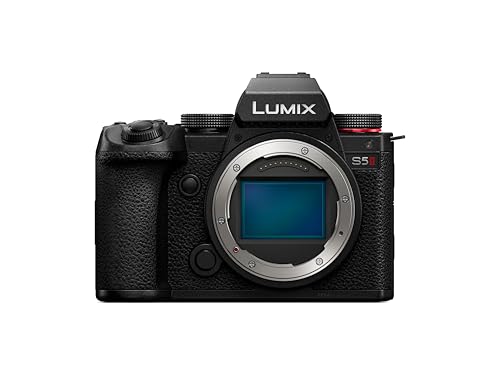
- The Panasonic LUMIX S5II leads on thermal honesty: active cooling thinking for sets that run all day.
- Power is a system, not a battery: dummy batteries, USB power, and big cards matter as much as the body.
- The DJI Osmo Pocket 3 is the long-form surprise — hours of stabilised recording from a pocket gimbal.
- Test your full event length at home, in a warm room, before the irreplaceable day does the testing.
In this guide
Quick Picks
Six endurance athletes with different events in mind. The badge names the marathon each one is built to finish.
| Camera | Badge | Why it earns its place here |
|---|---|---|
| Panasonic LUMIX S5II | Best for All-Day Sets | Cooling-conscious design and cinema manners for productions that record in long, serious takes. |
| Sony Alpha 7 IV | Best Long-Form Hybrid | Professional recording stamina with flagship stills — the wedding and event hybrid’s marathon body. |
| Canon EOS R6 Mark II | Best for Ceremonies and Performances | Face-loyal colour and stabilised handheld stamina for long, emotional, unrepeatable hours. |
| Nikon Z30 | Best Compact Long-Form Starter | A small creator body built around long talking-head sessions, lessons, and streams that become files. |
| DJI Osmo Pocket 3 | Best Pocket Marathon | Hours of gimbal-stabilised recording from a device that fits a jacket — walking tours, services, inspections. |
| GoPro HERO13 Black | Best for Long Outdoor Endurance | The all-day action marathon: races, rides, worksites, and wildlife watches that run from dawn. |
How Did We Choose Cameras for Filming Long Videos?
The first screen was absolute: any body whose ordinary recording behaviour imposes a short take limit in its main quality modes was excluded, however lovely its short clips are. The second screen was thermal — how the camera behaves in hour two and three, in a warm hall, under lights, because heat is the silent limit that replaced the old timer limits and is harder to shop for. Bodies with deliberate cooling design or proven long-take composure rose; bodies famous for warm-weather surrender fell.
Third, we audited the endurance ecosystem around each body: continuous power options that do not involve battery roulette, media capacities and costs at real event lengths, file behaviour across card-spanning takes, and recovery manners if power does fail mid-take — because a camera that loses the whole file when a battery dies fails the marathon even if it usually finishes it.
Finally, the operator’s endurance counted too. Long filming is monitoring work: screens that stay readable, audio metering that can be trusted at a glance, tally clarity from across a room, and controls that can be operated quietly mid-ceremony. A camera that exhausts its operator in hour one has an endurance problem no fan can fix.
What Actually Ends a Long Take?
Four horsemen end long recordings, and shopping should name them all. Heat is the modern one: sensors and processors working at high quality generate warmth that a sealed, weather-resistant body cannot shed, until protection circuits end the take or the owner learns to fear summer. Power is the oldest: a standard battery is an hour-scale device asked to do a three-hour job. Media is the arithmetic one: high-quality codecs consume cards at rates that surprise owners who budgeted by stills habits. And the file system itself — spanning, naming, recovery — is the quiet one that decides whether a three-hour take is one trustworthy file or a jigsaw.
Each horseman has a husbandry. Heat yields to cooling design, sensible quality settings, airflow, and shade. Power yields to continuous solutions — dummy batteries, USB power banks of honest capacity, mains adapters where the venue allows. Media yields to arithmetic done in advance and cards bought as a system. Files yield to cameras whose spanning and recovery behaviour you have tested before the event, not discovered during it.
The picks below were chosen because their horsemen are manageable — each body gives its owner a workable answer to all four. That, more than any image specification, is what ‘a camera for long videos’ means in practice.
How Long Is Long? Matching the Camera to the Event
An hour-long lesson, a two-hour ceremony-plus-reception, a four-hour conference day, and an all-day festival set are different sports wearing similar clothes. The first can be run on disciplined batteries; the second wants continuous power staged in advance; the third demands a media and power system closer to infrastructure; the fourth is a logistics exercise where the camera body is the least of the planning. Buy and prepare for your actual distance, and be honest about it — the owner who prepares for two hours and films four owns a two-hour camera and a story about the third hour.
Quality settings are the distance dial nobody touches. The codec and resolution that flatter a three-minute clip may halve your media endurance and double your heat at event length. Long-form craft is choosing the quality the delivery actually needs — the platform, the archive, the audience’s screens — and banking the saved heat and gigabytes as reliability. Every pick here offers quality tiers that respect that trade rather than punishing it.
Rehearse at distance. Film your empty room for your event’s full length, at your event’s settings, in your event’s warmth, and watch what the camera, the cards, and the power do. It is the dullest afternoon in filmmaking and the most valuable, because every surprise it surfaces is one the ceremony will now never meet.
Which Cameras Finish the Marathon? The Six Picks in Detail

Panasonic LUMIX S5II — Best for All-Day Sets
The S5II approaches long filming the way cinema cameras do: as the normal case rather than an abuse case. Its thermal design acknowledges that serious video happens in long takes under lights, and its recording behaviour, monitoring tools, and codec choices all assume a professional day rather than a hobbyist’s clip. For the podcast studio, the conference stage, and the narrative set alike, that assumption is the difference between planning around the camera and planning with it.
Across a long day its virtues compound quietly. The monitoring stays honest in hour six; the files span and organise themselves like a grown-up’s; the power options span the full menu from batteries to continuous solutions, so the same body serves the one-hour lesson and the all-day symposium with only its support gear changing. Crews standardise on bodies like this because standardisation is how reliability is actually bought.
Choose it as the long-form anchor of this guide: the camera to build a small studio, a teaching practice, or a documentary unit around. Its stills are a respectable second craft, its lens ecosystem is deep, and its long-take composure is the benchmark the rest of this list is measured against.
The honest cost is commitment: menus with real depth, a rig that grows toward professional weight, and a price tier — stated relatively — that belongs to working tools. Owners filming a weekly lesson will amortise it in reliability within a season; owners filming one ceremony a year should read on to the lighter picks with no shame at all.
- Type: full-frame mirrorless, video-led
- Endurance signature: cooling-conscious design
- Monitoring: professional, all-day honest
- Power: full menu of continuous options
- Event role: studio and all-day anchor
Strengths
- Long takes are its native habitat.
- Monitoring stays trustworthy for hours.
- Power and media systems scale to any event.
Trade-offs
- Depth of menus rewards setup time.
- Rig grows toward professional weight.
- Tier suits workers more than occasionals.
Best for: podcast studios, conferences, teaching practices, documentary units.
Not suited for: one-ceremony-a-year owners wanting pocket simplicity.

Sony Alpha 7 IV — Best Long-Form Hybrid
Event professionals live the long-video problem in its cruellest form: the ceremony cannot be repeated, the speeches run long, and the same camera must produce the day’s photographs too. The Alpha 7 IV answers with professional recording manners — dual media for safety, sensitivity for dark venues, focus that tracks a processional without an operator’s panic — in a body whose stills are nobody’s compromise. For the paid long-form hybrid, it is the list’s most complete single purchase.
Its endurance style is systemic rather than spectacular: no single heroic feature, but every link of the chain — power options, card discipline, file recovery manners, monitoring clarity — forged to working standard. Wedding filmmakers will recognise the value instantly, because their failures have never been about image quality; they have been about the chain’s weakest link at the worst moment, and this body has audited its links.
Choose it when long videos are revenue: weddings, corporate events, ticketed performances, the conference that pays. Its low-light stamina deserves emphasis — long events drift into evening and candlelight, and a camera whose files stay organised in the dark protects the hours no schedule can move back into daylight.
Manage its warmth honestly on the longest summer days: airflow, shade, and sensible quality tiers are part of its professional husbandry, as they are for every high-performing body without a cinema fan. Owners who build those habits report a non-event of a camera — and in long-form work, non-event is the highest praise a body can earn.
- Type: full-frame mirrorless hybrid
- Endurance signature: professional chain discipline
- Media: dual slots for event safety
- Sensitivity: evening-event stamina
- Event role: paid weddings and conferences
Strengths
- Ceremony-grade reliability culture.
- Stills and long film at one standard.
- Dark-venue files stay organised.
Trade-offs
- Warmth needs husbandry in summer.
- Professional tier, professional kit costs.
- Menus reward a configured setup day.
Best for: wedding filmmakers, event professionals, paid conference work.
Not suited for: casual recorders of occasional school plays.

Canon EOS R6 Mark II — Best for Ceremonies and Performances
Some long videos are lectures; the R6 Mark II’s long videos are feelings. Weddings, recitals, religious ceremonies, theatre: events where the camera must hold faces beautifully for hours, often handheld or on a monopod, in light chosen for mood rather than sensors. Its colour loyalty keeps skin believable across a whole ceremony’s changing light, and its stabilisation keeps the slow, respectful camera movements of such events looking deliberate rather than tired.
Its long-form temperament is calm. Focus behaves like a good usher — present, quiet, never drawing attention — and the controls can be run by feel during passages where looking down at the camera would break the operator’s own attention to the event. Long ceremonies are endurance tests for operators as much as bodies, and this one’s ergonomics respect the human half of the system.
Choose it when your long videos are ceremonies and performances rather than lectures and panels — when the deliverable is emotion preserved, and the audience will watch the whole thing because everyone they love is in it. Its stills strength makes it the second professional hybrid in this list, for photographers whose long-form work grows from their photography practice.
Its husbandry notes mirror the professional tier’s: continuous power staged for the longest events, quality tiers chosen for the delivery, warmth respected on summer afternoons outdoors. None of this is apology — it is the standard liturgy of long-form work, and this body rewards the liturgy with footage families will rewatch for decades.
- Type: full-frame mirrorless
- Endurance signature: calm ceremony manners
- Colour: skin-loyal across long light changes
- Stabilisation: monopod and handheld hours
- Event role: weddings, recitals, services
Strengths
- Faces stay beautiful for whole ceremonies.
- Operator ergonomics respect long attention.
- Stills make it a true event hybrid.
Trade-offs
- Continuous power must be staged.
- Summer heat asks for sensible tiers.
- Cinema monitoring trails the leader.
Best for: ceremonies, performances, and emotion-led long-form work.
Not suited for: all-day lecture capture on a minimal rig.

Nikon Z30 — Best Compact Long-Form Starter
The Z30 was designed by people who watched creators film themselves for hours and took notes. No viewfinder — because its owner films from in front, watching a screen. Controls and indicators arranged for the performer-operator. Recording manners aimed at the long talking session rather than the short clip. As a long-video starter for teachers, coaches, reviewers, and podcasters who appear in their own frames, it is the most purpose-fit body in this list.
Its long sessions at a desk are where it shines: a lesson series filmed across an afternoon, a course module recorded in honest takes, a video podcast whose host forgets the camera exists — which is the Z30’s design goal stated as a compliment. Paired with continuous USB power and a capacious card, it becomes a small studio’s fixed heart, and its files are clean enough that the course built on them will not need refilming when the channel grows.
Choose it to start a long-form practice cheaply and correctly: the educator’s first studio camera, the coach’s session recorder, the reviewer whose desk is a set. Its lens mount leaves a growth path, and its manners teach the right habits — power staged, media budgeted, sessions rehearsed — at a tier where mistakes are tuition rather than disaster.
Its boundaries are the compact tier’s: sensitivity and depth for dark or cinematic work are limited, and it will not anchor a paid multi-camera production. Within the desk-and-classroom kingdom it was built for, though, it may be the most rational long-video purchase on this page — endurance bought exactly where the owner’s hours actually happen.
- Type: APS-C mirrorless, creator-led
- Endurance signature: desk-session design
- Layout: built for performer-operators
- Power: USB continuous friendly
- Event role: lessons, courses, video podcasts
Strengths
- Long talking sessions are its home turf.
- Performer-facing design removes friction.
- Teaches marathon habits at starter tier.
Trade-offs
- Dark or cinematic work exceeds it.
- Not a multi-camera production anchor.
- Stills are a minor craft here.
Best for: teachers, coaches, reviewers, and solo podcasters.
Not suited for: paid event crews or low-light cinema ambitions.

DJI Osmo Pocket 3 — Best Pocket Marathon
The Pocket 3 breaks this guide’s assumptions productively: a camera the size of a chocolate bar, on its own gimbal, that records stabilised, genuinely good footage for session lengths that embarrass larger bodies — because its modest sensor sips power and sheds heat like a device designed by people who expected it to run. Walking tours, property inspections, conference roaming coverage, church services filmed from a pew-end: the long videos that happen on foot belong to it.
Its long-form magic is the combination of endurance and invisibility. A three-hour walking tour filmed on a conspicuous rig becomes a performance about a camera; filmed on the Pocket, it stays a walk. Subjects relax, crowds ignore it, and the stabilisation converts the operator’s footsteps into the gentle glide audiences now read as professional. For documentary long-form — the market, the festival, the pilgrimage route — that social invisibility is an image-quality feature no sensor can match.
Choose it when your long videos move: tours, inspections, processions, travel days, the roaming B-camera at events whose main camera is planted. Its creator-facing talents — face tracking, vertical modes — serve the solo long-former too, and its audio options have matured into respectability for speech-led work.
Respect its scale honestly: it is not the anchor for a lit studio production, its low-light files are a small sensor’s, and its fixed lens frames what it frames. But as the second camera in a long-form kit — or the only camera for the walking genres — it finishes marathons the big bodies cannot even enter, and it finishes them unnoticed.
- Type: gimbal camera, pocket format
- Endurance signature: sips power, sheds heat
- Stabilisation: mechanical gimbal glide
- Presence: socially invisible at events
- Event role: walking and roaming long-form
Strengths
- Hours of stabilised recording, pocket-sized.
- Invisible where rigs would intrude.
- Walking footage looks professionally glided.
Trade-offs
- Fixed lens frames what it frames.
- Small-sensor limits after dark.
- Not a studio production anchor.
Best for: walking tours, inspections, roaming event coverage, travel days.
Not suited for: lit studio anchors or night-cinema ambitions.

GoPro HERO13 Black — Best for Long Outdoor Endurance
Some long videos are long because the event is: the endurance race, the full day’s ride, the fishing charter, the construction time-lapse that becomes a record. The HERO13 is this list’s outdoor marathoner — waterproof, mountable anywhere, and built around the battery and media discipline of owners who film entire days in weather. Its long-form genre is not the lecture but the expedition, and within that genre it has no serious rival here.
Its endurance system is the most field-tested in this guide: swappable batteries designed for gloved hands, power options for fixed mounts, time-lapse and long-interval modes that stretch a card across a day, and a body that treats rain, dust, and vibration as working conditions rather than threats. Event crews use it as the unattended witness — the finish-line camera, the boat camera, the corner of the stage nobody has to operate — and unattended is long-form’s purest test.
Choose it when your long videos happen outdoors, in motion, or in places an operator cannot stand for six hours. It is also the set-and-forget second angle for ceremonies and conferences near water, dust, or weather — the camera whose footage insures the main camera’s day.
Its compromises are the action camera’s eternal ones: a wide lens that keeps distant subjects distant, audio that serves atmosphere better than speech, and low-light manners that prefer the day it was built for. Program it as the expedition and insurance camera, not the interview camera, and its marathon record will repay the clarity.
- Type: action camera, waterproof
- Endurance signature: field battery discipline
- Modes: long-interval and time-lapse depth
- Mounts: anywhere, unattended for hours
- Event role: races, rides, worksites, insurance angle
Strengths
- All-day outdoor recording, weatherproof.
- Unattended witness duty for any event.
- Battery system built for gloved reality.
Trade-offs
- Wide lens keeps subjects distant.
- Speech audio is not its craft.
- Night work is outside its brief.
Best for: endurance events, expeditions, worksites, and insurance angles.
Not suited for: lectures, interviews, or dialogue-led long-form.
How Do the Six Compare at a Glance?
Endurance wears six costumes here. The table names each pick’s event, its decisive stamina trait, and the compromise that comes with it.
| Camera | Form | Decisive edge | What you give up |
|---|---|---|---|
| Panasonic LUMIX S5II | Full-frame mirrorless | Thermal and system endurance | Simplicity and weight |
| Sony Alpha 7 IV | Full-frame mirrorless | Hybrid professional stamina | Warm-weather care |
| Canon EOS R6 Mark II | Full-frame mirrorless | Ceremony colour and calm | Studio monitoring depth |
| Nikon Z30 | APS-C compact mirrorless | Desk long-form fit | Production scale |
| DJI Osmo Pocket 3 | Gimbal compact | Moving endurance | Studio authority |
| GoPro HERO13 Black | Action camera | Outdoor all-day stamina | Speech and telephoto reach |
How Do You Power a Camera for a Four-Hour Event?
Work the problem in layers. The base layer is the body’s own battery, treated as a reserve rather than the plan. The working layer is continuous power matched to the venue: mains adapters where sockets and cable discipline allow, dummy batteries for studio and planted cameras, and high-capacity USB power banks for the roaming and remote positions — each tested at home for the full event length, because power banks have their own stamina lies to tell.
Cable discipline is the unphotogenic half of power craft. A cable across a walkway is a trip hazard, a yank risk, and an unplugged camera waiting for its moment; route along walls, tape crossings, strain-relieve every connector, and put the power where a guest’s chair leg cannot find it. The long-form professional’s rig looks boring from across the room, and boring is the aesthetic of reliability.
Finally, plan the failure you hope never happens: know what each camera does when power dies mid-take — whether the file closes safely, whether recording resumes on restoration, how the loss announces itself. Rehearse that too, once, at home. The ceremony will not schedule its crisis considerately, and the owner’s calm in that minute is bought entirely in advance.
How Much Card Does a Long Video Really Need?
Do the arithmetic in the only honest units: your codec’s data rate multiplied by your event’s hours, plus a third again for the overrun every event in history has produced. Then buy cards as a system — matched capacities, a rotation you can execute in the dark, and a hard rule that a card leaves the camera only into the labelled case that means recorded, never into a pocket, a bag’s abyss, or a hopeful pile.
Prefer fewer, larger, trustworthy cards to a drawer of small bargains for long-form work: every swap is a risk window, a missed minute, a chance to format the wrong card in hour five’s fatigue. The spanning behaviour of the picks here is graceful, but grace is a backup plan, not a strategy. Strategy is starting the ceremony with the whole event already fittable.
Offload like the footage is evidence, because for weddings and conferences it nearly is: two copies before any card returns to service, one copy leaving the venue in a different bag or pocket, and a checksum habit if the work is paid. Long videos are uniquely unrepeatable — there is no reshooting hour two — and their media discipline should read like it.
What Heat Really Does to a Long Take — and the Countermeasures
Heat is physics, not a defect to be shamed: high-quality video is computation, computation is warmth, and a sealed body in a warm hall has nowhere generous to put it. The countermeasures are a liturgy owners of every pick here share — airflow across the body, shade from stage lights and windows, screens dimmed or external monitors taking the display load, quality tiers chosen for the delivery rather than the brochure, and recording started after the body has acclimatised rather than straight from a hot car.
Venue scouting should include a thermal sentence: where does the sun fall at ceremony time, which wall radiates the afternoon, where does the hall’s air actually move? Ten minutes of that attention has saved more long takes than any firmware update. The camera positions that flatter the light often cook the body; the professional learns to want both and settles, deliberately, for the survivable compromise.
And know your body’s honest signals — its warnings are information, not insults. A camera that warns early and clearly, as the better picks here do, is a collaborator; plan around its truth-telling with a second angle or a quality step-down rehearsed in advance, so the decision at the warning is a procedure, not a panic.
How Should Audio Be Planned for Videos That Run for Hours?
Long-form audio fails differently from short-form: not in quality, but in continuity. Batteries in recorders die in hour three; a wireless channel that was clean at soundcheck meets interference when the hall fills with phones; the camera’s own meters get trusted past the moment a cable works loose. Plan audio as a redundant system — a primary recorder, the camera’s track as backup, fresh power staged at the interval — because a three-hour video with a twenty-minute hole in its sound is a broken promise with good pictures.
Monitor at intervals, not constantly. The long-form operator’s rhythm is glances: meters at every chapter change, a headphone check at every natural break, a recording-light confirmation from the seat during the vows. Constant headphone monitoring across four hours produces fatigue that misses the real fault; rhythmic verification catches faults while they are still small enough to forgive.
Speech intelligibility outranks every other audio virtue at length. Audiences forgive a modest room tone for hours; they abandon muddy speech in minutes. Place the microphone for the words — the lectern, the officiant, the panel table — and let the camera’s position serve the picture separately. Long videos are usually heard more than they are watched, and their budgets of attention should be spent accordingly.
Which Long Videos Should Be One Take, and Which Should Breathe?
Ceremonies, performances, and evidence-like records earn the single unbroken take: their value is continuity, and their audiences feel cuts as doubt. Lectures, courses, and conferences often serve their audiences better as chaptered recordings — planned breaks at natural joints, each chapter a file, each file a smaller risk and an easier edit. The mature long-former decides the structure before the event, from the audience’s chair, rather than defaulting to whatever the camera does.
Chaptering is also an endurance strategy: breaks are where batteries rotate, cards confirm, bodies cool, and operators drink water. Build the chapters into the event’s own rhythm — the interval, the module change, the hymn — and the production’s reliability stops depending on any single component lasting the whole distance. The picks here all chapter gracefully; the discipline is the owner’s.
Whichever structure you choose, slate it: a spoken or visible marker at each start, so the archive’s future self can navigate. Long files are where footage goes to be forgotten; the owner who chapters, slates, and names files at the event is buying back their own future hours at the cheapest rate they will ever be offered.
How Do You Monitor a Long Recording Without Going Mad?
Set the room up for peripheral trust: tally lights visible from your seat, meters large enough to read at a glance, the recording time where a look can find it. The goal is a system that can be verified in two seconds, six times an hour, without standing, fiddling, or breaking the event’s spell — because the operator who must hover will eventually hover wrong, casting a shadow, blocking a view, becoming part of the record.
Use the event’s own rhythm as the monitoring schedule. Vows, movements, modules, and matches all have joints; verify at the joints. Between them, be an audience member — which is not idleness but quality control of the highest order, because the operator who watches the event notices the unscheduled moment, the shifted microphone, the latecomer blocking the aisle camera, in time to matter.
And log as you go: times of chapters, incidents, applause peaks, the minute the light changed. A single page of notes converts a three-hour file from a swamp into an edited programme waiting to happen. Long-form’s real labour is navigation, and the log is the map drawn while the territory is still in front of you.
What Does the Archive Owe a Three-Hour File?
Storage arithmetic grows teeth at long-form scale: a season of weekly two-hour recordings is a library, not a folder. Budget drives as part of the camera system — the working copy, the backup, the cold archive — and name files so that a stranger could find the vows in ten seconds: date, event, chapter, camera. The picks here write honest metadata; the owner’s naming discipline is the other half of retrievability.
Keep the masters. Long-form’s temptation is to keep only the edit, but the unrepeatable event’s master file is the asset — storage is cheap and getting cheaper, while the ceremony’s second hour is literally priceless once the day has passed. Couples re-edit for anniversaries; institutions re-cut for histories; courses re-chapter for new platforms. All of those futures live or die in the archive you keep this year.
Review one old long recording a season. It teaches what your current self needs to hear: which camera position aged best, which audio choice you now regret, which quality tier was extravagance and which was insurance. Long-form craft compounds through exactly this retrospection, and the archive — properly kept — is the textbook.
How Do Multi-Camera Long Events Change the Choice?
In a multi-camera long event, no body works alone, and the virtues shift: matching colour across bodies, synchronised timecode or at least honest clocks, identical media discipline, and files an editor can marry without a weekend of correction. A matched pair of the mid-tier picks will out-produce a flagship and a stranger, because the edit’s unity is worth more than either camera’s peak.
Assign roles by stamina: the anchor angle on the most endurance-proven body with continuous power, the roaming angle on the body built for movement, the insurance angle on the camera that can be abandoned running in a corner. The six picks here were described with those roles in mind — read the badges as casting directions for a small company rather than rivals for a single crown.
And rehearse the company together: one full-length test with every body in its event position, every power solution live, every card at working capacity. Multi-camera failures are almost never single-camera failures — they are interfaces: the clock that drifted, the colour that would not match, the card rotation that collided. Interfaces are only visible when the whole system runs, so run it, once, before it matters.
What Does a Season of Long-Form Work Teach About Your Kit?
By the tenth long event, every owner has a private liturgy: the cable that always gets taped twice, the card case that lives in the left pocket, the two-minute verification walk at every interval. That liturgy — not the camera — is what clients and congregations are actually trusting, and it only forms around equipment consistent enough to build rituals on. The picks here earned their places partly by being ritual-worthy: predictable in behaviour, honest in reporting, boring in the ways that let a liturgy form.
The season also reprices everything. The body that seemed expensive in the shop becomes cheap across forty flawless events; the bargain that failed publicly once becomes the most expensive object you own. Long-form economics are reputational, and the arithmetic should be done in events survived rather than in features per tier — a lesson every working long-former learns exactly once, the expensive way, or vicariously here for free.
Finally, the season teaches which long videos mattered. Not the longest, not the most technically ambitious — the ceremony watched at anniversaries, the course that changed a hundred careers, the parent’s story recorded in the last year it could be. Keep the kit worthy of those, maintain the liturgy around them, and the rest of the archive is practice for the recordings that turn out to be treasures.
How Do You Choose Settings When the Event Cannot Be Scouted?
Some long videos happen in rooms you meet an hour before the event: the hired hall, the unfamiliar church, the conference centre’s third-best room. The professional’s answer is a conservative default carried like a creed — a quality tier with headroom to spare, exposure habits that protect highlights and faces, audio taken from the house system or the officiant’s position rather than from hope, and positions chosen for power access first and beauty second. Beauty can be found in most rooms; power and endurance cannot be improvised.
Arrive with the defaults loaded and the rehearsal behind you, and the unfamiliar room becomes a set of small adjustments rather than a research project conducted during the vows. That calm — visible to clients, congregations, and couples — is itself a professional product, and it is manufactured entirely from preparation done in rooms that did not matter.
What Are the Most Common Mistakes When Filming Long Videos?
The classic is testing at the wrong distance: ten beautiful test clips, zero full-length trials, and a camera whose hour-two behaviour is discovered by the wedding. Long-form purchases should be validated at the event’s actual duration, warmth, and settings — the dull home rehearsal is not optional diligence; it is the product being bought.
The second mistake is budgeting the body and improvising the system: no continuous power, cards bought by hope, audio entrusted to a single recorder’s battery. Long videos fail at joints and edges, so the system — power, media, audio redundancy, monitoring rhythm — deserves the majority of both budget and rehearsal.
The third is quality greed: recording the three-hour panel at the cinema tier because the camera offers it, then drowning in heat, media, and edit time for a delivery that needed half the data. Choose the tier the audience’s screens justify, and spend the savings on the reliability that long-form actually rewards.
How Do You Film a Wedding Ceremony That Cannot Be Repeated?
Arrive as infrastructure, not as a guest with a camera: positions scouted at the rehearsal, power staged and taped, the officiant’s microphone agreed, a second angle running unattended where the venue permits. The ceremony’s emotional weather is not your department; your department is that none of it is lost, and that the couple’s first viewing of the film feels like the day rather than like a report on equipment.
Film the whole arc, not the highlights: the seating, the waiting, the small chaos before the processional — because the couple missed all of it and the long film is their only ticket back. This is long-form’s unique gift among all camera work: not the peak, which photographs own, but the duration, which only an unbroken recording can return to its owners.
Deliver with navigation: chapters, a contents note, the log’s highlights marked. A three-hour file without a map is a gift that stays unwrapped; the same file, chaptered, gets watched at every anniversary. The ceremony ends in an afternoon; the film’s life is measured in decades, and its usability is decided by courtesies that cost the filmmaker one extra hour.
How Should Teachers and Coaches Structure All-Day Recording?
Chapter by module and rest between them like the students will: the breaks that structure learning also rotate batteries, cool bodies, and reset the teacher’s own performance energy. A course filmed in honest chapters edits faster, uploads cleaner, and survives a single chapter’s failure without losing the day — an insurance structure as much as a pedagogical one.
Fix the frame and forget it. The teaching camera’s virtue is constancy: same framing, same light, same audio chain across the whole course, so students navigate content rather than production changes. The desk-endurance picks here exist for exactly this constancy — set them once, verify at module joints, and let the teaching be the only variable in the room.
Keep a session log with the same seriousness as the recordings: module, take, incidents, the example that landed, the explanation to redo. Courses are re-filmed in pieces across their commercial lives, and the log is what makes a patch session in month six match the original’s framing, tone, and light. Long-form teaching is a series; series live on continuity notes.
Final Recommendation
Build your long-form choice around the anchor first: the Panasonic LUMIX S5II for studios and all-day sets, the Sony Alpha 7 IV for paid hybrid events, the Canon EOS R6 Mark II for ceremonies where faces carry the hours. The Nikon Z30 starts a desk-based practice correctly, the DJI Osmo Pocket 3 owns the walking marathons, and the GoPro HERO13 Black insures everything outdoors.
Then rehearse at full distance, power the system properly, and let the event be the only surprise on the day. Long videos are promises — these six cameras are how you keep them.
One rehearsal is worth repeating as this guide closes: film your empty room, at your settings, for your event’s full length, this week. Whatever the cameras, cards, and power banks confess during that dull afternoon is the difference between a long-form kit and a long-form hope — and every pick above was chosen to confess very little.
Related guides
- Best Cameras for Surveillancve: Home Surveillance Picks That Actually Record What Matters
- Best Cameras for Porch Pirates: Doorstep Picks That Deter, Identify and Record
- Best Cameras for Making HD Videos: Six Friendly Picks for Sharp, Simple Filming
- Best Cameras for Instagram Videos: 6 Picks for Reels That Look Intentional
- Best Cameras for Hour-Long Recordings: 6 Picks That Keep Rolling Past Sixty Minutes
Frequently Asked Questions
Which camera records the longest without stopping?
In practice, the limit is rarely the body among these six — it is power and media, which is why the guide treats endurance as a system. With continuous power and capacious cards, the S5II anchors the longest professional days, the Pocket 3 runs for remarkable hours on its own modest appetite, and the HERO13 stretches across outdoor days with battery rotations. Your rehearsal at full length will tell you your own system’s true number.
How do I stop a camera overheating during a long event?
Give it air, shade, and a sensible quality tier; take the display load onto an external monitor where the rig allows; let the body acclimatise before recording; and start from the body’s honest strengths — the picks here were screened for thermal composure. If warnings appear, the rehearsed response is a step down in tier or a chapter break at the event’s next natural joint, not a prayer.
What power solution is best for a three-hour ceremony?
Mains or dummy-battery power for the planted anchor camera, staged and taped before guests arrive; high-capacity USB power for secondary positions; the body’s own battery kept as the reserve that covers a failure or a move. Whatever the combination, it must have survived a full-length home rehearsal in the same configuration — ceremony day is not a test environment.
How much storage does a two-hour video need?
It depends entirely on the codec tier you choose, which is the point: do the arithmetic from your camera’s data rate at your chosen settings, multiply by the hours, and add a third for overrun. Long-form professionals buy cards and archive drives from that number, not from habit — and choose tiers their delivery justifies, which usually halves the naive estimate.
Can I use one of these as a webcam for long streams too?
Several serve happily as streaming sources through their clean output or USB modes — the desk-oriented picks especially, since lessons and podcasts live in both worlds. Treat streaming as a second job for the same endurance system: continuous power, verified thermals, and audio planned as a chain. The recording remains your archive even when the stream is the performance.
Is a camcorder better for long videos than these?
Dedicated camcorders remain honest tools for pure long-form video, and for a single-purpose lecture hall they can be the simple answer. The picks here win when the work is mixed — stills, cinema ambitions, lens choice, low light — or when one body must serve several genres of long day. Choose by the whole job description, not by the category label.
What should I check during the event itself?
A short liturgy at the event’s natural joints: recording indicators on every body, meters on the audio chain, power levels against the plan, card space against the arithmetic, and one headphone listen. Two minutes of verification per hour is the entire cost of sleeping well after an unrepeatable day — and of never writing the apology message no professional wants to send.
Why does my current camera stop recording after a while?
Usually one of three causes: a take limit in its design, thermal protection ending the recording, or media and file behaviour interrupting the take. The first is a shopping problem — solved by the picks here; the second is a husbandry problem — air, shade, tiers; the third is a system problem — cards and settings. Diagnose which horseman visited before spending, because the cures are entirely different.
Should I record long events in the highest quality available?
Almost never as a default. Choose the tier your delivery screens and archive justify, then bank the saved heat, media, and edit time as reliability. The exception is the genuinely archival commission — the historical record, the master performance — where future-proofing is the brief and the system is built, powered, and rehearsed around the top tier deliberately.
What is the best second camera for a long event?
The one whose failure modes differ from the anchor’s: a pocket or action body that sips power and ignores heat, planted where the main camera cannot see. The Pocket 3 and HERO13 in this list exist for exactly that insurance role — different appetite, different position, same event — so that no single horseman can take both angles in the same hour.
Related Guides
Long-form neighbours worth reading next: best cameras for filming youtube best cameras for hour long recordings best cameras for church live stream


