kajuandouglas.com is reader-supported. When you buy through links on our site, we may earn an affiliate commission.
Where to Buy a Camera for Hour-Long Recordings, Because the Second Half Is Where It Happens
The best cameras for hour-long recordings are chosen by a test most reviews never run: press record, and come back in sixty-one minutes. Whole categories of otherwise excellent cameras fail it — not with a flaw in their pictures, but with a limit in their stamina: a recording cap inherited from another era, a sensor that warms itself into self-protection, a battery that treats an hour as an expedition. The lecture, the ceremony, the concert set, the interview, the nest watch — life’s hour-shaped events — need a camera whose relationship with time is simply different: built to keep going.
Buyers deserve the three limits named plainly, because each has a different cure. The recording limit is a rule in the camera’s firmware — some models stop by design at a threshold just under the half hour, a legacy of old tax classifications — and no accessory repeals it; the model either records long or it does not. Heat is physics: high resolutions in small bodies generate warmth faster than air removes it, and the camera protects itself by stopping. Power and storage are logistics: an hour of high-quality video is a large file and a real battery load, solvable with big cards, wall power, and honest arithmetic. This list was chosen by running all three gauntlets.
Where to buy: each linked name below leads to that camera’s Amazon listing, and long-form buyers should order the endurance kit in the same breath — the largest fast card the camera accepts, the dummy battery or USB power solution that frees it from its internal cell, and the tripod that an hour of anybody’s arms will eventually beg for. An hour-long recording is a system of camera, power, and storage; buy the system.
The six divide by parish: a video-led full-frame body engineered to record indefinitely without thermal drama, a creator mirrorless whose long takes serve the interview and the lesson, three action and pocket instruments whose recording stamina is their native element — a whole game, a whole dive, a whole walk — and a full-frame hybrid for the event shooter whose ceremonies run long and whose stills must match the footage.
One honesty belongs at the front: “records for an hour” must be specified like a contract — at what resolution, in what temperature, on what power. Every pick here is recommended with its conditions stated in its section, because an hour in a cool hall and an hour in August sun are different examinations, and this guide refuses to let a headline answer sit for either.
Key Takeaways
The long take, briefed:
- Three limits decide long recording — firmware caps, heat, and power/storage — and each has a different cure.
- The Panasonic LUMIX S5II leads: active cooling and no practical cap make the hour a non-event.
- Check the model, not the brand: some beloved cameras stop just under thirty minutes by design.
- Power and cards are logistics you control — dummy batteries and big fast cards turn stamina into a solved problem.
- State your conditions: resolution, temperature, and power source decide whether “an hour” is a promise or a hope.
In this guide
Quick Picks
Six cameras that are still recording at minute sixty-one.
| Camera | Badge | Why it earns its place here |
|---|---|---|
| Panasonic LUMIX S5II | Best for Unlimited Takes | Active cooling and a video-first design — the hour, the afternoon, the whole event. |
| Sony ZV-E10 II | Best for Interviews and Lessons | Long creator takes with autofocus that minds the subject while you mind the conversation. |
| DJI Osmo Pocket 3 | Best Pocket Long-Take | A gimbal camera that records the whole walk, ceremony, or tour without breaking stride. |
| GoPro HERO13 Black | Best for Whole Games and Dives | Action stamina — the match, the descent, the trail — recorded end to end. |
| Sony Alpha 7 IV | Best Hybrid for Long Events | Full-frame footage and stills for ceremonies that run past the hour, on wall power’s terms. |
| DJI Osmo Action 5 Pro | Best for All-Day Recording in Bursts | Battery endurance and quick swaps for the event documented across a whole day. |
How Did We Choose the Best Cameras for Hour-Long Recordings?
The sixty-minute test came first and was applied without sentiment: continuous recording at the quality the buyer would actually use, in ordinary room conditions and in warmth, on internal battery and on wall power. Models with firmware caps below the hour were excluded from the lead roles whatever their other virtues, because a camera that stops at minute twenty-nine during the vows has not misunderstood the assignment — it has failed it.
Second, the supporting logistics: card capacities and file behaviour across the hour — one file or a chain of chapters, and whether the chain is seamless — heat behaviour at the resolutions that matter, and power options, from dummy batteries to USB running. Third, the operator’s hour: screens that stay informative, controls that can be checked at a glance from a distance, and recording indicators honest enough to trust from the back of a hall.
What we discounted: headline resolutions that halve the stamina, stills specifications, and any stamina claim quoted at a quality setting nobody would choose. The hour is the unit; this list graded in hours.
Why Do So Many Cameras Stop Before the Hour?
The oldest reason is a rule, not a limitation: for years, cameras that recorded beyond a threshold just under thirty minutes were classified — and taxed in some markets — as video cameras rather than stills cameras, and manufacturers built the cap into firmware worldwide. The rule has faded, but its fossils remain in model lines designed under it, which is why two cameras from the same brand, a year apart, can have entirely different relationships with the half hour. The buyer’s defence is to check the specific model’s continuous-recording specification, in writing, before the ceremony does it for them.
The second reason is heat, and it is honest physics. A sensor and processor working at high resolution are a small heater in a sealed box; mirrorless bodies shed that heat through their shells, and in a warm room, in sun, or at the highest quality settings, the interior temperature climbs until the camera protects its own electronics by stopping. Active cooling — a fan, as the S5II carries — changes the physics’ conclusion, which is why that body leads this list. Shade, airflow, and lower settings change it too, at a quality price the buyer must choose knowingly.
The third reason is the quietest: power and storage sized for a stills camera’s day. An hour of high-quality video can consume a small battery entirely and fill a modest card completely, and a camera that stops for either has not malfunctioned — it has been under-provisioned by its owner. That failure, alone among the three, is entirely curable with accessories, and the sections below treat its cure as part of the purchase.
What Actually Needs an Unbroken Hour?
More of life than the highlight economy admits. The lecture and the lesson, whose value is the argument’s whole arc; the ceremony — wedding, graduation, christening — whose unrepeatable minutes refuse to schedule themselves inside a recording cap; the concert set and the theatre act, which are built as single spans; the interview, whose best answer arrives at minute forty from a subject who needed thirty-nine to relax; the deposition, the service, the surgery training film, the bird’s nest at dawn. Hour-shaped events are the load-bearing walls of institutional and family memory alike.
There is also the watcher class: the camera left running at the process, the experiment, the construction site, the sleeping baby’s whole nap. These ask for stamina with humility — modest settings, endless patience — and the action picks serve them natively, because a camera designed to record a whole dive treats a whole afternoon as a shift rather than a stunt.
Knowing your event’s shape is the buyer’s first competence: the hour that must be unbroken (the ceremony), the hour that merely accumulates (the day’s documentary), and the hour that repeats (the weekly lesson) ask for different picks from this list, and each pick’s section says which shape it serves.
There is a fourth shape, easily forgotten: the hour that surprises — the meeting that becomes the announcement, the rehearsal that becomes the performance, the ordinary afternoon that history chooses. Institutions that keep a long-capable camera ready, as a matter of furniture rather than of planning, own those hours when they arrive; everyone else owns a story about a camera that was somewhere else, or that stopped.
Which Cameras Are Still Rolling at Minute Sixty-One? The Six Picks in Detail

Panasonic LUMIX S5II — Best for Unlimited Takes
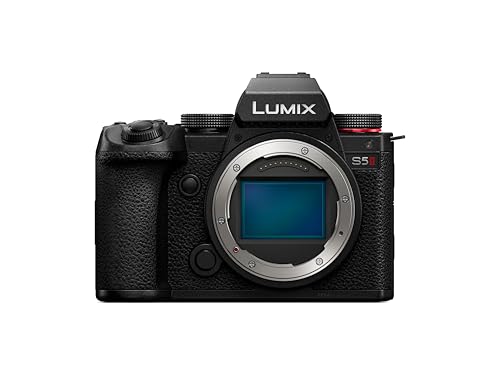
The S5II is the camera this category would invent if it did not exist: a video-led full-frame body with active cooling — a small fan that changes the thermal physics entirely — and a recording design that treats the long take as the default rather than the dare. Lectures, ceremonies, concerts, and conferences are its native parish, and it records them at high quality for as long as power and storage are provided, which is to say, for as long as the event itself lasts.
Its supporting cast is a long-form professional’s: monitoring tools that show exposure truthfully across the hour, file behaviour that handles long recordings gracefully, and power options that let it run from the wall like the studio instrument it is. Operators trust it unattended in a way few mirrorless bodies earn — set at the back of the hall, checked at the interval, still rolling at the applause — and that trust is the entire product this category sells.
Choose it whenever the hour is unbroken and the stakes are institutional: the university’s lecture series, the venue’s resident camera, the wedding filmmaker’s ceremony body. Its stills, a genuine second craft, mean the same body covers the day’s photographs without a second system.
The costs are a filmmaker’s vocabulary to learn and a system to furnish with lenses deliberately. For the buyer whose problem is time itself, those are trivialities: this is the list’s answer, and the remaining five are its excellent specialists.
- Type: full-frame video-led mirrorless
- Signature: active cooling, endless takes
- Monitoring: exposure truth across the hour
- Power: wall-running as a native mode
- Long-form role: the institution’s camera
Strengths
- The hour is a non-event, thermally.
- Trusted unattended, at distance.
- Stills serve the same event.
Trade-offs
- Filmmaker’s vocabulary to learn.
- Lenses are deliberate purchases.
- Video depth exceeds casual needs.
Best for: lectures, ceremonies, concerts, conferences.
Not suited for: pocket carry or stills-only buyers.

Sony ZV-E10 II — Best for Interviews and Lessons
The ZV-E10 II is the long take for the rest of us: a creator mirrorless that records extended sessions — the interview, the online lesson, the podcast’s video, the tutorial’s full build — with autofocus that minds the subject so the operator can mind the conversation. Its stamina at creator resolutions is a working day’s, provided the owner practises the small-camera disciplines this guide teaches: air around the body, a screen not run at maximum blaze, and power fed by USB or a dummy battery for the sessions that stretch.
Its creator design serves the hour’s content as well as its length: the flip screen for the solo teacher’s framing, the microphone input for the interview’s sound — which, at minute forty, is the whole value — and product-showcase focus tricks that translate, in the lesson parish, to keeping the demonstrated object sharp while hands move.
Schools, coaches, interviewers, and channels will find it the list’s most sympathetic long-form tool: professional results, a student’s learning curve, and a lens system that lets the same body grow from the desk setup to the field documentary.
Heat is its honest negotiation: in a hot room at its highest settings, it asks for the airflow and power courtesies above, and marathon sessions in summer sun belong to the S5II’s cooled parish. Within the indoor, creator-shaped hour, it is complete — and its price of admission in money and learning is the list’s gentlest for a system camera.
- Type: creator mirrorless, APS-C
- Signature: the interview’s long, calm take
- Focus: minds the subject for you
- Sound: microphone input as standard
- Long-form role: lessons, podcasts, tutorials
Strengths
- Sessions recorded without babysitting.
- Solo framing and sound are native.
- Gentlest system learning curve here.
Trade-offs
- Heat asks for airflow courtesies.
- Highest settings shorten stamina.
- Summer marathons are the S5II’s.
Best for: interviews, online teaching, podcast video.
Not suited for: unattended outdoor summer recording.

DJI Osmo Pocket 3 — Best Pocket Long-Take
The Pocket 3 records the hour by simply not noticing it: a gimbal camera whose whole design — small sensor, efficient processing, a body built to be held or set down and forgotten — treats the walking tour, the ceremony filmed from a guest’s seat, the market’s full wander, and the graduation’s whole span as one continuous, stabilised breath. Its footage’s smoothness across an hour is its signature: no fatigue shake at minute fifty, because there are no arms in its equation when it sits on its mini tripod.
Its long-form virtues are a pocket instrument’s: it starts instantly, frames discreetly, and its battery and media treat the hour as a reasonable request, with USB power extending it to the afternoon. For the traveller documenting a whole guided tour, the parent filming a whole school play from row nine, the inspector walking a whole site — it is the long take that fits in the coat the occasion already required.
The gimbal earns a special mention in hour service: ceremonies and tours involve slow pans and patient reframes, and the Pocket’s mechanical smoothness gives amateur footage a professional gait across durations where handheld work would have dissolved into tremor.
Its fixed wide lens is its parish boundary — the stage’s far end stays far — and its highest settings warm it like any small body. For the hour at arm’s-length distances, it is the most effortless recording instrument on this page.
- Type: pocket gimbal camera
- Signature: the hour, stabilised, unnoticed
- Stamina: battery and USB extension
- Framing: discreet, waist-height, calm
- Long-form role: tours, plays, walkthroughs
Strengths
- No fatigue shake at minute fifty.
- Starts instantly, records patiently.
- Whole ceremonies from a guest’s seat.
Trade-offs
- Distance defeats the fixed lens.
- Top settings warm a small body.
- Audio wants help for big rooms.
Best for: walking tours, school plays, site walkthroughs.
Not suited for: distant stages or audio-critical halls.

GoPro HERO13 Black — Best for Whole Games and Dives
The HERO13 Black’s relationship with the hour is an athlete’s: it was built to record the whole descent, the whole match, the whole trail, in weather and water that end other cameras’ participation entirely. Its stamina across an hour of high-quality recording — with the battery discipline and airflow its class expects — is proven in the only laboratory that matters, which is a million weekends of other people’s adventures.
Its long-form parish is the unbroken event with a body in it: the race filmed from the handlebars, the dive from the mask, the match from the post, the construction day from the corner. Chaptered files chain seamlessly, so the hour arrives home as a story rather than a puzzle, and its ecosystem of extended-power accessories — pass-through doors, larger batteries, USB running — stretches the take to the event’s true length.
Heat is the action camera’s known negotiation: still air and blazing sun at maximum settings will test it, while motion — the airflow of its native use — is its cooling system. Owners who respect that physics record days; owners who bake it on a dashboard learn the physics personally.
Stills and subtlety are other picks’ crafts. For the hour that moves, sweats, and gets wet, the HERO13 is the list’s most experienced long-take instrument by an enormous margin of other people’s footage.
- Type: waterproof action camera
- Signature: the whole event, end to end
- Files: chapters chain seamlessly
- Power: extended accessories ecosystem
- Long-form role: games, dives, trails, races
Strengths
- Records where others cannot attend.
- Stamina proven by a million weekends.
- Power options stretch to the day.
Trade-offs
- Still hot air tests its cooling.
- Wide view only, by design.
- Audio is the environment’s, unfiltered.
Best for: sport, water, trails, whole-event witness.
Not suited for: ceremonies of faces or quiet halls.

Sony Alpha 7 IV — Best Hybrid for Long Events
The Alpha 7 IV serves the event professional whose hour is a ceremony and whose deliverable is both film and stills: full-frame footage with the low-light grace that halls and churches demand, autofocus that holds the speaker and the couple, and recording that — on wall power, with sensible settings and air — covers the long event as a matter of professional routine. It is the hybrid’s answer: one body, the whole assignment, no second system to babysit.
Its long-form manners are a working photographer’s: dual media for the insurance copy, monitoring that keeps exposure honest across the service’s changing light, and files that cut against its own stills into a single wedding film, a single graduation record. The event world has standardised on this class of body for exactly the hour-shaped reasons this guide exists.
Heat discipline is the professional’s part of the bargain: the highest settings in a warm hall ask for the airflow and power courtesies the S5II’s fan makes automatic, and the wise operator tests the exact configuration — resolution, room, duration — before the unrepeatable day. Tested, it is utterly dependable; untested, it is a hope, and professionals do not sell hope.
Its tier and its menus are the flagship’s usual toll. For the hybrid event shooter, it remains the list’s most complete single instrument across the hour and the album alike.
- Type: full-frame hybrid mirrorless
- Signature: film and stills, one assignment
- Media: dual slots for insurance
- Focus: holds speakers and couples
- Long-form role: ceremonies and celebrations
Strengths
- Ceremony footage with stills to match.
- Low-light halls stay handsome.
- Professional reliability, tested daily.
Trade-offs
- Heat discipline is the operator’s job.
- Test your configuration before the day.
- Flagship tier, flagship menus.
Best for: weddings, graduations, hybrid event pros.
Not suited for: unattended all-day posts or casual takes.

DJI Osmo Action 5 Pro — Best for All-Day Recording in Bursts
The Action 5 Pro’s long-form gift is endurance across the day rather than within the single take: battery stamina that leads its class, quick swaps that cost seconds, and a toughness that lets it serve as the event’s roaming witness from the morning’s setup to the night’s last dance. For the documentary shape — the festival, the build, the tournament — where the hour is assembled from a hundred honest minutes, it is the list’s most tireless collector.
Its low-light strength extends its working day at both ends: the dawn start and the dusk finish that defeat lesser action cameras remain recordable, and its stabilisation keeps the hundredth clip as composed as the first. Paired with its app, the day’s take can be reviewed, trimmed, and backed toward the phone at the evening’s pause, so the archive is safe before the day is even over.
Single unbroken hours are within its powers at sensible settings, with airflow respected; its genius, though, is the long day’s rhythm — record, swap, record — sustained without a single thermal or battery drama becoming the story. Event documentarians and expedition crews will recognise the profile immediately: it is the camera that is never the reason the crew stopped.
Its parish is motion and environment; quiet halls and faces at distance belong to the mirrorless picks. As the day-long witness in a mixed kit — or the only camera of a fast, wet, vertical day — it is superbly complete.
- Type: waterproof action camera
- Signature: the whole day, burst by burst
- Battery: class-leading, seconds to swap
- Low light: dawns and dusks included
- Long-form role: festivals, builds, tournaments
Strengths
- Never the reason the crew stopped.
- Day’s footage backed up by evening.
- Toughness needs no negotiation.
Trade-offs
- Unbroken hours want sensible settings.
- Faces at distance are not its craft.
- App-centric review workflow.
Best for: day-long events, expeditions, roaming witness duty.
Not suited for: ceremony A-camera or quiet-hall audio.
How Do the Six Compare at a Glance?
Long recording divides by the hour’s shape — unbroken, accumulated, or athletic — so the table casts each pick to its shape and names its condition.
| Camera | Form | Decisive edge | What you give up |
|---|---|---|---|
| Panasonic LUMIX S5II | Full-frame video-led | Cooling and no cap | Pocketability |
| Sony ZV-E10 II | Creator mirrorless | Interview stamina | Summer-marathon cool |
| DJI Osmo Pocket 3 | Pocket gimbal | Effortless whole events | Reach |
| GoPro HERO13 Black | Action camera | Whole games and dives | Quiet-hall subtlety |
| Sony Alpha 7 IV | Full-frame hybrid | Film and stills together | Set-and-forget cool |
| DJI Osmo Action 5 Pro | Action camera | All-day endurance | Ceremony polish |
How Do You Power and Store an Hour Without Anxiety?
Do the arithmetic at the desk, where it is cheap: the recording’s data rate multiplied by the event’s length, plus a third again for the overrun every event in history has produced, equals the card you format the night before — the largest fast card the camera accepts, because an hour-shaped file on a small card is a countdown, not a recording. Then the power: internal batteries counted honestly at the settings you will use, and for anything past the second hour or the first sign of doubt, the wall — a dummy battery or USB power turns stamina from a resource into a utility.
Files deserve one decision in advance: whether the camera’s chaptering — its habit of splitting long recordings into seamless segments — suits your editor, and whether the archive keeps the chapters or the joined master. Either is honourable; discovering the question at midnight before a deadline is not. Test the whole chain on a dummy hour at home: record, transfer, open, play the join. The ceremony will then hold no technical surprises, which is the highest compliment a recording system can earn.
Finally, record the insurance where the event is unrepeatable: a second device — the Pocket in a bag, the phone on a shelf — capturing the hour at humbler quality. Professionals call it the B-record and treat its existence as non-negotiable, because the cost is trivial and the failure it insures against is total.
Keep the power chain as tidy as the signal chain: cables taped where feet will wander, the wall socket’s ownership agreed with the venue before the guests arrive, and the battery that stays in the camera even on wall power, as the uninterruptible reserve when somebody’s chair leg finds the plug. Long recordings fail at their edges — the first minute’s setup, the last minute’s power — far more often than in their middles, and edges are exactly what checklists exist to guard.
What Are the Most Common Mistakes in Long Recording?
The first is discovering the cap at the ceremony: the beloved camera, never tested past ten minutes, stopping politely during the vows. The second is heat by optimism — maximum settings, a sealed sunny position, no airflow — followed by surprise at physics. The third is the card that fills at minute fifty-two, its owner having done the arithmetic for the event they hoped for rather than the one that occurred.
Fourth is audio neglect across the hour: the microphone placed for the first five minutes’ geometry while the speaker wandered, the battery in the recorder dying unmonitored at the interval. Fifth is the untested chain — the file that will not open, the chapter join nobody rehearsed. Every one of these is a rehearsal failure wearing an event’s clothes, and the cure is this guide’s recurring liturgy: run the dummy hour, at home, at your real settings, before the real one is entrusted to the equipment.
How Do You Keep an Unattended Camera Honest for an Hour?
Position and preparation do the operating: the frame set wide enough that the event cannot wander out of it, exposure locked against the room’s changing light, focus fixed on the zone where the action lives rather than hunting across it, and a recording indicator the occasional glance from the door can verify. The unattended camera’s operator is its setup, and the setup deserves the same rehearsal as a crewed one — the dummy hour, watched at the intervals the real event will allow.
Power and storage, provisioned by the arithmetic of the previous section, remove the two silent failures; a small sign — recording in progress, with the institution’s name — handles the social one, because unattended cameras in public rooms are a courtesy question as much as a technical one. Venues, congregations, and families all accept the honest, announced camera and resent the discovered one, at any length of recording.
Check at the interval like a professional: thirty seconds to confirm the counter is counting, the card has room, and the frame still holds the event. The unattended hour is not an absence of operating; it is operating at the speed of trust, verified on schedule.
Leave the setup a note, literally: a card taped to the tripod with the start time, the expected end, and the operator’s phone number. Events are social places, and the note answers the curious, deters the helpful hand that might “tidy” the camera mid-vow, and tells the venue’s staff whom to fetch if the indicator ever stops meaning what it should. Thirty seconds of card and tape have saved more long recordings than any firmware ever written.
How Do Lectures, Lessons, and Talks Change the Long-Recording Brief?
The lecture is the hour in its purest institutional form: one speaker, one position, a slide deck committing arson against exposure every ninety seconds, and an audience — often a remote, paying, or examined one — for whom the recording is the course. The camera’s brief is therefore steadiness itself: exposure that rides the slides’ changes without seasickness, focus married to the lectern, and sound taken from the speaker’s own microphone or the room’s system, because a lecture recording is a voice with illustrations, and the voice is the course.
Position serves the slides and the speaker as joint subjects: far enough back that both live in one frame at a readable size, high enough that the audience’s heads become a border rather than a cast. The S5II and the ZV-E10 II divide this parish by budget and ambition, and both reward the operator who sets them at the term’s first lecture and changes nothing but the card for the remaining eleven.
The archive is the lecture series’ second product: name the files by date and topic on the day, back them with the same discipline as the recording itself, and the term accumulates into the institution’s memory — the guest lecture preserved, the retiring professor’s final series kept whole. Hour-shaped teaching deserves hour-shaped keeping.
How Do You Record a Whole Day, Not Just an Hour?
By changing the unit of planning from the take to the shift. The day-long event — the conference, the tournament, the build, the pilgrimage — is recorded as a relay: cameras and batteries rotating, cards retired full and labelled rather than reused in hope, and an operator’s log that notes, hourly, what was captured and where the files live. The Action 5 Pro’s burst endurance and the S5II’s wall-powered permanence are the relay’s two gaits, and most professional day coverage walks with one of each.
Rest is a recording specification too: the crew that eats, sits, and rotates keeps its frames composed at hour nine; the crew that heroically does not, films the day’s end through a fog of small errors. Build the day’s plan with the catering in it, unironically — stamina is the product, and stamina is catered.
At the day’s end, the transfer ritual closes the loop before sleep: every card copied twice, the log completed, the batteries on charge for a tomorrow that, at festivals and conferences, is usually another day exactly like it. The hour taught the discipline; the day is where the discipline becomes a profession.
What About Time-Lapse and the Very Long Watch?
Beyond the hour lies the watch: the construction’s month, the tide’s cycle, the garden’s season, recorded as time-lapse — the long take’s patient cousin, where the camera’s stamina is measured in weeks of intervals rather than minutes of footage. The picks here serve it in their dialects: the action cameras’ interval modes and weatherproof patience, the mirrorless systems’ intervalometers and wall power, all governed by the same arithmetic of power and storage, stretched over a longer denominator.
The watch’s craft is commitment: a position chosen for a month in a single visit, a frame composed for weather that has not happened yet, and protection — from sun, from theft, from the site manager’s tidiness — arranged with the site’s owners as partners. The footage, when it comes, compresses time into evidence and wonder in equal measure, and institutions that commission it once tend to commission it forever.
Begin with the hour, though. The watch is the hour’s discipline with a longer fuse, and every failure it punishes — power, storage, heat, the untested chain — is one the dummy hour at home teaches for free.
How Should Long Recordings Be Edited, Named, and Kept?
Edit the hour with respect for its shape: most long events want chaptering, not cutting — the ceremony’s movements, the lecture’s topics, the match’s halves — marked so a viewer can navigate without the footage being diced into the highlight economy’s confetti. Keep the master whole and unedited beneath every derived version, because the question the archive will be asked in ten years is never the one the editor anticipated.
Name by the archive’s future search: date, event, place, camera, in a pattern the institution writes down once and obeys forever. The long recording’s enemy is not decay but anonymity — the drive of unnamed hours that nobody dares delete and nobody can use. An hour named is an asset; an hour unnamed is a rumour with a file size.
Back up on the two-copy rule with one copy elsewhere, and verify by playing the joins and the final minute — the two places long files fail silently. Institutions that keep their hours this way own their history; those that do not are renting it from a hard drive’s mercy.
Why Does the Long Take Matter More Now Than It Used to?
Because the culture’s other camera — the phone, the clip, the story — has made the short fragment the default unit of memory, and the unbroken hour has become the scarce, evidentiary form: the lecture actually delivered, the ceremony actually witnessed, the interview’s answer in its full, unedited context. In an age of excerpts, the continuous recording is a kind of honesty that institutions and families increasingly commission on purpose.
The cameras in this list are that honesty’s instruments, priced from the pocketable to the professional. Whoever owns one, and has rehearsed its hour, owns the ability to say of an event that matters: here it is, all of it, as it happened. That sentence is worth the dummy hour, the big card, and the wall power — and it is the sentence this entire guide exists to make sayable.
How Do You Record Interviews That Run Long, Without the Subject Watching the Clock?
The long interview is a trust exercise with a red light: the subject must forget the recording for the answers at minute forty to exist, and the equipment’s behaviour is half the forgetting. A camera that needs no tending — no card anxiety, no battery theatre, no operator’s glance at a counter — disappears from the room’s consciousness within minutes, and the conversation becomes the event. This is the ZV-E10 II’s and the S5II’s shared party trick, and it is why interviewers standardise on bodies whose stamina they never have to mention.
Set the room for the hour’s comfort as deliberately as for its picture: water for the subject, a chair that does not squeak, the camera far enough that its presence is furniture, and the operator’s attention visibly on the person rather than the equipment. Start the recording before the formal beginning, with the subject’s knowledge, because the warm-up sentences are often the interview’s most honest — and an hour’s stamina means the warm-up costs nothing.
End with the same grace: let the last question land, let the silence after it breathe, and stop the recording after the thanks. The long take’s etiquette, observed at both ends, is what brings subjects back for the second interview — and what makes the first one’s final minutes, so often, its best.
How Do You Run the Dummy Hour, Exactly?
Like a dress rehearsal with a stopwatch’s honesty. Set the camera exactly as the event will find it — same resolution, same room temperature you expect, same power source, same card — place it where it will sit, frame what it will frame, and press record. Then leave it, checking at the intervals the real event will permit: the quarter hour, the half, the three-quarter mark, noting temperature warnings, battery truth, and the counter’s progress in the notebook the event will inherit.
At the hour, stop it yourself — do not let the test end by failure if it can end by success — and run the whole chain: transfer the file, open it, play the beginning, a chapter join, and the final minute, and time how long the transfer takes, because that number belongs in the event’s schedule too. Any failure the rehearsal produces is a gift delivered privately; fix its cause — airflow, settings, power, card — and rehearse again, because the second dummy hour is the one that certifies the system.
Write the certified configuration on the event’s checklist, verbatim, so the day itself is an execution rather than an improvisation. Professionals are not people whose equipment never fails; they are people whose failures all happened at rehearsals.
Keep the rehearsal’s footage, oddly enough: the dummy hour of an empty room is the control sample against which the event’s recording can be compared — its joins, its file behaviour, its counter’s honesty — and more than one archive has been saved by an editor who could prove, from the rehearsal, exactly when a failure began. Even the test, in long-form work, is evidence.
How Do Weddings and Ceremonies Test Long Recording Differently?
The ceremony is the hour with no second take and no interval: its tests are social as much as thermal. The camera must be positioned before the guests arrive, at a place the venue and the officiant have blessed; it must run without an operator’s fidgeting becoming part of the congregation’s memory; and its recording must survive the day’s emotional weather — the moved operator, the changed running order, the service that runs twenty minutes past its printed length, which is to say, every service ever held.
Provision for the printed length’s fiction: power and cards for half again the schedule, because ceremonies expand to fill the joy available. Run the B-record without being asked. And coordinate with the stills photographer — often, in the hybrid picks’ world, yourself an hour earlier — so the two crafts share the good positions like colleagues rather than competing for them like rivals at the aisle’s end.
How Do You Choose Between One Long Take and Several Shorter Ones?
By the event’s own grammar. Ceremonies, lectures, and matches are single sentences — their meaning lives in continuity, and cutting them at the recording stage merely exports the joining problem to the edit. Interviews, documentaries, and tours are paragraphs — natural pauses exist, cards and batteries can be serviced inside them, and the shorter take’s flexibility serves the final work. The mistake is grammatical illiteracy: fragmenting a sentence or forcing a paragraph into one breath. Read the event first, as this guide has preached throughout, and let its shape — not the camera’s convenience and not the operator’s anxiety — choose the take’s length.
Final Recommendation
Take the Panasonic LUMIX S5II whenever the hour is unbroken and the stakes are real, the Sony ZV-E10 II for interviews and lessons, and the DJI Osmo Pocket 3 for the effortless whole event. Choose the GoPro HERO13 Black for the game and the dive, the Sony Alpha 7 IV for the hybrid ceremony, and the DJI Osmo Action 5 Pro for the day that never stops.
Whichever camera takes the long take, run the dummy hour first — your settings, your room, your full chain — and provision power and storage by arithmetic rather than hope. The second half is where it happens; be recording when it does.
Frequently Asked Questions
Why did my camera stop recording after about half an hour?
One of three reasons: a firmware recording cap designed into that model, heat protection at your settings and conditions, or power and storage exhausted. The cap is a specification to check before buying — several picks here have none. Heat yields to airflow, shade, and sensible settings; power and storage yield to the arithmetic in this guide.
Can I record for an hour on battery alone?
With the action and pocket picks, yes, at sensible settings — that stamina is their native element. System cameras vary: plan on a spare battery, a swap at the interval, or wall power via a dummy battery or USB for anything institutional. The honest answer is always conditional on resolution and temperature, which is why this guide states conditions rather than slogans.
What memory card does an hour of recording need?
Compute it from your settings’ data rate: multiply by the event’s length, add a third for overrun, and buy the largest fast card the camera accepts within that answer. High-quality video is hungry in proportion to its quality; the card is the cheapest insurance in the whole system, and the wrong time to discover its size is minute fifty-two.
Does recording for an hour damage a camera?
No — cameras protect themselves thermally long before damage, which is precisely why they stop. Long recording within a model’s design, with airflow respected, is ordinary work for the picks here. What wears equipment is heat abuse repeated carelessly and batteries deep-cycled without thought; the dummy hour’s discipline prevents both.
How do I record a long event with good sound?
Treat audio as its own long-form problem: a microphone placed for the whole event’s geometry — the lectern, the stage’s centre, the hall’s own feed where offered — with its own power provisioned past the event’s length, and levels checked at the interval. The camera’s microphone, at hall distances, records the room; the event deserves a microphone of its own.
What settings give the best stamina without ruining quality?
The honest middle: the resolution your delivery actually needs rather than the camera’s maximum, frame rates matched to the subject rather than to the brochure, and screens dimmed to working brightness. Most events are watched at ordinary sizes on ordinary screens, where the middle settings are indistinguishable from the maximum — while their stamina is measurably, sometimes dramatically, longer. Test your middle in the dummy hour and let the evidence, not the spec sheet, set the event’s configuration.
Is it legal to record an hour-long event?
That depends on the event, the venue, and the jurisdiction — ceremonies and performances carry rights and rules that vary, and institutions have their own policies. The professional habit is simple: permission first, announced recording, and the venue’s terms treated as part of the setup checklist. This guide’s cameras will record the hour; the right to record it is the operator’s to secure.
How can I confirm, mid-event, that recording is still running without becoming part of the show?
Assign that worry to one person before the doors open, with checks agreed at natural pauses rather than constant hovering beside the tripod. A tally lamp visible from the side aisle, a quiet glance at elapsed time during applause, or a remote monitor checked from a seat are each enough, provided the checker knows what a healthy display looked like during rehearsal. Never tap the camera, open its screen or whisper beside a live microphone just to soothe your own nerves. Write the expected finishing time on the run sheet, so a display reading forty-one minutes is instantly recognised as reassuring or alarming, depending on when the performance was supposed to begin and how its first half actually unfolded. Agree a discreet signal in advance for the one circumstance that does justify intervention, such as a raised programme from the front row, so the operator is never guessing whether a wave means encouragement or emergency. Everything else waits for the interval. That restraint protects not only the performance but also the recording, since a hurried adjustment made in darkness, at the wrong moment, can spoil focus, framing or sound for the remainder of an otherwise flawless hour.
What belongs in the minutes immediately before and after the main recording?
Start rolling early enough to capture the room settling, latecomers finding seats and the hush that tells later viewers how the occasion felt from inside it, then keep going through applause, embraces and the first conversations in the aisle, because those edges often become the footage families treasure most. Speak a plain introduction into the microphone naming the date, place and event, which will rescue an archivist decades from now. Afterwards, resist the urge to review everything on the camera’s little screen. Copy the file twice, verify that one copy plays from beginning to end, and only then clear the card, ideally the following morning, when nobody is tired, emotional or being hurried out of a hall that needs locking. Label the copies before sleep, with names a stranger could interpret, and note anything unusual that a future editor should know: the microphone borrowed from the choir, the applause that ran long, the reading delivered twice after a coughing fit. Those few lines, written while the evening remains vivid, can save hours of puzzled listening later and preserve details that the footage alone, for all its length, does not actually explain to anyone.
Related Guides
Long-form neighbours in this series: best cameras for filming long videos best cameras for live streaming best cameras for concerts


