kajuandouglas.com is reader-supported. When you buy through links on our site, we may earn an affiliate commission.
Where to Buy
The best cameras for dark filming are judged in the places light forgot: the unlit lane where the documentary’s night scene lives, the club whose rig is three coloured bulbs and a haze machine, the forest floor at dusk, the wedding’s last dance under a string of festoons. Darkness is not one condition but a spectrum of insults — too few photons, filthy mixed colour, subjects who move through both — and the cameras that serve it combine large, sensitive sensors with lenses that gather rather than sip, autofocus that can still see, and noise that degrades like film grain rather than digital static.
This guide separates the two honest dark-filming disciplines. The considered discipline — narrative, documentary, weddings — belongs to the full-frame hybrids whose high-ISO files remain gradeable. The kinetic discipline — night sport, urban exploration, the action camera’s world — belongs to bodies built to be mounted, soaked and shaken in the dark. Buy through the Amazon listings linked below, and remember the dark filmmaker’s first law: no sensor rescues a scene with no light at all, so the budget always keeps a candle’s worth of money for one small, good light.
Key Takeaways
- Sony’s Alpha 7 IV is the dark-filming all-rounder — clean high-ISO video and autofocus that keeps working as the light dies.
- Panasonic’s LUMIX S5II is the night production’s choice, with low-light focus and cooling for long dark takes.
- Canon’s EOS R6 Mark II gives night faces the most flattering rendering in this guide.
- The Insta360 Ace Pro 2 is the action world’s low-light specialist, with a large sensor for its class.
- The GoPro HERO13 Black remains the mount-anywhere night option, within an action camera’s honest limits.
- Sony’s a7S III is the darkness benchmark itself — prose-only here, the camera night shooters measure all others by.
In this guide
Quick Picks
| Pick | Badge | Why it earns its place |
|---|---|---|
| Sony Alpha 7 IV | Best dark all-rounder | Clean high-ISO files, autofocus that sees in the dark, and the deepest fast-lens shelf here. |
| Panasonic LUMIX S5II | Best night production body | Low-light focus, a grader’s log profile and cooling for the long night take. |
| Canon EOS R6 Mark II | Best night faces | Canon’s rendering keeps skin human in the worst light a wedding or a club can offer. |
| Insta360 Ace Pro 2 | Best action low-light | A large sensor for the action class and processing tuned for night streets and trails. |
| GoPro HERO13 Black | Best mount-anywhere night | The toughest night option — with honest limits its maker never hid and neither do we. |
| Sony a7S III | The darkness benchmark | The low-light legend against which every pick here is measured — prose-only in this guide. |
How Did We Judge Cameras in the Dark?
We scored the whole low-light chain rather than a single ISO number. Sensor behaviour came first: how the files hold colour and detail as sensitivity climbs, and whether the noise that arrives reads as texture or as damage. Autofocus in darkness followed — the point at which each system stops hunting and starts guessing is the real limit of most night shoots, and it arrives earlier than the exposure limit. We weighed lens ecosystems by their fast glass, because in the dark the aperture is the budget: a system with affordable fast primes films a stop darker than a system without them. Finally, we scored honesty — how each camera’s footage looks after the grade’s noise reduction has done its legitimate work, since that, and not the camera’s screen at midnight, is what the audience will see.
Why Does Noise Look Different on Different Cameras?
Because noise is not one substance. At the fine end it is grain — a tight, dancing texture the eye forgives the way it forgives film’s, especially when it stays consistent across the frame and the colour channels age together. At the coarse end it is chroma blotching and banding: coloured stains that crawl in the shadows, skies that step visibly between tones, a digital signature no audience mistakes for atmosphere. Sensor size, pixel design and the camera’s internal processing decide which substance a dark scene becomes, and it is why this guide weighs the character of high-ISO footage rather than its mere usability — a frame can be technically exposed and aesthetically ruined. The grade offers partial mercy: modern noise reduction is genuinely remarkable on honest files, at the price of detail that must be spent wisely. Judge dark cameras by finished footage of faces in bad light, never by a specification, and prefer the camera whose noise you would be willing to sign.

Sony Alpha 7 IV — Best dark all-rounder
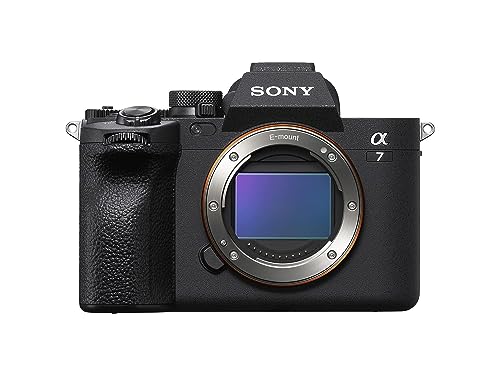
The Alpha 7 IV leads this guide because darkness is where balance pays: its sensor holds colour and detail deep into the sensitivities night work demands, its autofocus continues to find and hold faces at light levels where the operator is guessing, and the E mount beneath it offers fast glass at every price from the student’s prime to the cinema shelf. A wedding’s last hour, a documentary’s night exterior, a club set — it films them all with the same unpanicked competence, and its files accept the grade’s noise reduction like a professional medium rather than a rescue case.
Its low-light crown is contested by specialists — the benchmark below sees darker still — but as the one camera for a filmmaker whose nights vary, it has no peer here. Buy it with one fast prime before any other accessory; in the dark, that pairing, and not the body alone, is the actual product this guide is recommending.
- Format: full-frame mirrorless, E mount
- Sensor: clean files at high sensitivity
- Autofocus: face detection in near-darkness
- Lenses: deepest fast-glass shelf here
- Role: the night all-rounder
Strengths
- Colour survives where light does not.
- Autofocus works past the eye’s limits.
- Fast primes at every budget.
Trade-offs
- Specialists see darker still.
- Fast glass is the real budget.
- Menus reward a setup evening.
Best for: documentary, wedding and narrative night work. Not suited for: mounted action filming.

Panasonic LUMIX S5II — Best night production body
Night productions run long, and the S5II is built for the duration: active cooling that lets a two-hour club set or a night exterior’s repeated takes proceed without thermal negotiation, a log profile whose shadows grade with more grace than most, and low-light autofocus substantially wiser than its predecessor’s reputation. Its real-time LUT preview earns a special mention after dark, because judging exposure in a flat log image on a night set is how night footage gets ruined — the preview shows the finished darkness while the sensor records the flexible one.
The L mount’s fast-glass shelf is younger than Sony’s, which is the honest cost, and stills play their supporting role. For the filmmaker whose darkness is a workplace — concerts, night shoots, the long documentary evening — this is the body engineered like it believes you, and its footage in the grade has the composed, inky quality that night cinema is supposed to have.
- Sensor: full-frame, L-mount system
- Colour: V-Log, previewed through LUTs
- Cooling: fan-assisted for long night takes
- Focus: much-improved low-light AF
- Role: night production anchor
Strengths
- Long dark takes without heat drama.
- LUT preview prevents night exposure errors.
- Shadows grade with real grace.
Trade-offs
- Fast-glass shelf still growing.
- Stills are the supporting act.
- A production body, priced like one.
Best for: concert, club and narrative night productions. Not suited for: the casual evening shooter.

Canon EOS R6 Mark II — Best night faces
Dark filming is usually filming people — the dance floor, the night portrait, the actor in the doorway’s spill — and the R6 Mark II renders people in bad light with a kindness that is almost a specialism. Its sensor’s high-ISO files hold skin’s colour separation when other systems collapse faces into a single waxy tone, its autofocus finds eyes in gloom with the deep-learning assurance Canon’s owners praise, and its standard colour needs so little rescue that fast-turnaround night work can be delivered nearly as shot.
It concedes the outright darkness crown to the specialists and the long-take crown to the Panasonic, and its lens shelf prices like the professional system it is. For the filmmaker whose nights are weddings, events and faces — which is most paid night work — it is the body whose footage will be forgiven least because it needs forgiving least, and that is the highest compliment the dark can pay.
- Format: full-frame mirrorless, RF mount
- Sensor: flattering high-ISO rendering
- Autofocus: eye detection in low light
- Colour: deliverable night skin tones
- Role: people-first night camera
Strengths
- Faces stay human in bad light.
- Fast-turnaround night colour.
- Autofocus trusted at events.
Trade-offs
- Not the outright darkness champion.
- Long takes need thermal planning.
- RF fast glass is an investment.
Best for: weddings, events and night portraiture on film. Not suited for: extreme-darkness specialists.

Insta360 Ace Pro 2 — Best action low-light
Action cameras were darkness’s worst citizens for a decade — tiny sensors smearing night into watercolour — and the Ace Pro 2 is the class’s apology and answer. Its sensor is large by action-camera standards, its processing is tuned with a dedicated low-light mode that treats night footage as a discipline rather than an accident, and the results — night rides, city runs, the trail at dusk — hold together with a coherence the class has never previously managed. It mounts anywhere, shrugs off weather, and its flip screen serves the solo night creator.
It remains an action camera: the full-frame bodies above operate in another league of darkness, and its footage will not intercut with theirs at midnight. Within its own world — the mounted, moving, soaked night — it is the current champion, and the gap it has opened on the class’s old guard is the most interesting story in this guide.
- Type: action camera, large sensor for class
- Modes: dedicated low-light processing
- Build: waterproof, mount-anywhere
- Screen: flip, solo-creator friendly
- Role: night action and urban movement
Strengths
- Night footage the class could not make before.
- Mounts and survives anywhere.
- Low-light mode is a real discipline.
Trade-offs
- Not a full-frame rival, ever.
- Small-sensor ceiling in true dark.
- Battery life on night shoots.
Best for: night riders, runners and urban explorers. Not suited for: narrative night cinema.

GoPro HERO13 Black — Best mount-anywhere night
The HERO13’s place in a dark-filming guide is a study in honesty. Its sensor is small, its night footage is the class’s traditional compromise — and it remains, for a real slice of night work, the right camera: the helmet on the night descent, the chest mount in the rainy city, the body that will definitely be recording, unbroken and unworried, at the end of a night that would hospitalise a mirrorless camera. Its stabilisation after dark is remarkable, turning night movement into smooth, watchable footage whose grain reads as the night’s own texture.
Buy it for the nights defined by motion and weather, not for the nights defined by faces and dialogue. Its maker has always sold it as the camera of record for action, and in the dark that contract holds: it records the night you had, at a fidelity the more delicate instruments cannot survive to attempt. Paired with the Ace Pro above as the class’s quality option, it completes an honest pair — one for how the night looked, one for the fact that you were there at all.
- Type: action camera, ultra-wide
- Stabilisation: advanced, night-capable
- Build: waterproof, crash-tolerant
- Mounting: the deepest accessory world
- Role: the night’s survivor
Strengths
- Records nights other cameras cannot survive.
- Stabilisation turns night motion smooth.
- Mounts literally anywhere.
Trade-offs
- Small-sensor night quality ceiling.
- Faces and dialogue are not its parish.
- Wide view only, forever.
Best for: night action where survival is the brief. Not suited for: low-light image quality as the priority.
Sony a7S III — The darkness benchmark
The a7S III is included without a link as this category’s north star: the camera whose name night shooters use as a unit of measure. Its sensor was designed around sensitivity rather than resolution, and the result — clean, gradeable footage at light levels where other cameras produce archaeology — redefined what a night production could schedule. Documentaries have filmed by moonlight and candlelight on it; wedding filmmakers treat its second native sensitivity as a second sunset, a point where the files suddenly clean up just as the evening deepens.
Its trade is explicit: stills resolution modest by modern standards, and a price that buys specialisation. It belongs in this guide as the honest horizon — the camera for the filmmaker whose work is darkness, full-time, and the standard that lets you judge the all-rounders above fairly. Most night shooters should buy the Alpha 7 IV and one fast prime; the ones who should buy this know exactly who they are, because their last three shoots ended in light the rest of us call night.
- Format: full-frame mirrorless, E mount, prose-only
- Sensor: sensitivity-first design
- Reputation: the low-light reference
- Stills: modest resolution by design
- Role: the category benchmark
Strengths
- Films where others excavate.
- Second sensitivity sweet spot for evenings.
- A decade of night craft built on it.
Trade-offs
- Resolution traded for sensitivity.
- Specialist price.
- Overkill for occasional darkness.
Best for: full-time night and low-light filmmakers. Not suited for: generalists and stills-led buyers.
What Does a Fast Lens Actually Buy in the Dark?
Time and cleanliness, in the only currencies darkness accepts. Each stop of aperture doubles the light, which the filmmaker can spend as a lower ISO — cleaner files, truer colour — or as a faster shutter, freezing the gesture the scene exists for. This is why the dark filmmaker’s lens shelf inverts the daylight one: the fast prime, a portrait photographer’s luxury, becomes the night’s working tool, and the versatile zoom stays home for its slowness. The ecosystems in this guide were partly ranked on this shelf — the depth and affordability of their fast glass decides how dark their owners can film, more than any difference between their sensors. There is a second, aesthetic dividend: wide apertures in the dark separate the subject from a background that has dissolved into coloured glow, the night cinema look itself. Buy the body for its sensor and the system for its glass, and when the budget forces a choice, choose the system — sensors are replaced, shelves are inherited.
How Do You Focus When the Camera Can Barely See?
By changing the contract between you and the autofocus. Modern systems focus in light the eye calls darkness, using contrast and subject intelligence that shame the photographer’s own pupils — the Sony and Canon picks here will lock onto a face in a candlelit room with unnerving calm. Their limits arrive with movement and with featureless subjects, and the night craft answers with older disciplines: pre-focus on the lit landmark the subject will cross, use focus peaking and magnification for the considered shot, and let the follow-focus of a narrative scene be a rehearsed human act rather than a system’s hope. Light, smuggled in, is the other answer — an infrared assist for the truly dark documentary work, a practical lamp motivated in frame for the narrative scene. The honest hierarchy is: autofocus while it can, manual craft when it cannot, and a small light before either fails. The filmmaker who practises the transitions in a dark garden at home will not meet them for the first time on the night that matters.
How Do You Expose for a Scene Lit Only by Practicals?
Practicals — the lamps, candles, screens and streetlights inside the frame — are night cinema’s native lighting, and exposing for them is an exercise in choosing what the darkness is allowed to eat. The method is to expose for the lit subject the practical creates: the face beside the lamp, the hands in the candle’s pool, letting the room beyond fall to the black it honestly is. Protect the practical itself from blowing to a featureless white blob, since its visible filament or flame is the scene’s alibi for light existing at all. The full-frame picks here earn their keep exactly in this exposure’s margins, holding the lit face’s colour while the shadows stay clean enough to grade. Resist the instinct to lift the whole scene toward visibility; night footage dies of evenness, and the audience’s eye wants a pool of light with a world implied around it. Test the exposure on the brightest practical and the darkest face together — that ratio is the scene, and the camera that holds both ends of it is the camera this guide has been describing.
What Is the Second Native Sensitivity, and Why Do Night Shooters Plan Around It?
Many modern sensors change their character at a second, higher sensitivity point — a step in the ISO range where the camera’s processing switches to a mode optimised for low light, and the files suddenly clean up as if a different camera had been handed to you. Night shooters learn their camera’s point the way pilots learn their aircraft’s numbers, and plan exposures to land on it: the wedding filmmaker who knows the evening’s dance floor sits exactly at that sensitivity owns a cleaner film than the one who hovers just below it. The a7S benchmark in this guide built its legend partly on a famously generous second stage. Finding yours costs one evening: film the same dim face across the ISO range, grade each honestly, and note where the noise’s character changes. That number, written into your night checklist, is worth more than a stop of lens speed you have not bought yet — it is the camera’s own confession of where it likes to work after dark.
How Should Night Footage Be Graded Without Destroying It?
Gently, and in the right order. First, set the exposure’s truth: night footage is usually graded down from a generously exposed file, and the darkening should happen before any contrast is sculpted, so the noise settles into the shadows where it reads as grain. Second, discipline the colour — night scenes accumulate casts from every source, and the grade’s job is to choose the scene’s dominant truth and let the rest be accents, rather than neutralising the night into a grey noon. Third, apply noise reduction as a local decision, strongest in the flat shadows that show it, lightest on the faces whose texture is the scene. Finally, add back what the process cost: a whisper of grain to reunify the frame, the blacks set by eye on a screen in a dark room, because a grade judged in a bright office will play as fog in a cinema. The cameras here were ranked on how their files survive this sequence; the sequence itself, practised on your own worst night scene, is the cheapest cinematography education in this guide.
How Do You Film Night Exteriors in a City?
By treating the city as a lighting rig you did not have to hire. Every street is a location scout’s puzzle of existing pools — the shopfront’s spill, the sodium corner, the LED sign’s coloured weather — and the night filmmaker composes by moving the subject through the city’s light rather than adding their own. Scout at the hour you will shoot, because the city’s rig changes as shops close and offices darken; the corner that glowed at nine is a cave at midnight. Expose for the pools and let the streets between them go, which is both the city’s truth and its cinema grammar. Watch the flicker of cheap signage, the mixed temperatures arguing across a face, and the wet pavement that doubles every light for free on the nights the weather cooperates. The Alpha 7 IV and S5II in this guide are the city night’s current instruments, their autofocus still working in the pools’ edges where the drama lives. A city at night is the largest free film set in the world; the camera’s job is merely to be worthy of it.
Why Do Night Shoots Need More Time, Not Less?
Because darkness taxes every operation the day makes free. Focus is slower to confirm, exposure is a judgement rather than a reading, the crew’s own movement around a dark set is a safety discipline, and the monitor’s small bright rectangle lies with a confidence that must be cross-examined by histogram and experience. Productions that schedule night work at daylight pace return with footage that documents their haste. The professional pattern is the reverse: fewer setups, each given its full ceremony — the focus marks taped by torchlight, the exposure tested and graded on the spot, the take reviewed at magnification before the set is struck. The cameras’ cooling, sensitivity and monitoring in this guide all serve that ceremony’s pace. Budget the night in hours per shot rather than shots per hour, feed the crew like a wedding, and let the darkness set the tempo; it will anyway, and the film is better for having agreed in advance.
How Do You Keep Night Footage Sharp When Everything Moves?
By deciding what sharpness is for. A night scene’s subject moving through darkness will smear at cinematic shutter speeds, and the craft is choosing where the smear lives: the background’s lights streaking past a face the autofocus holds, the dancer’s dress blurring around a sharp, laughing face. The tools are the tracking autofocus of the Sony and Canon picks, a shutter held at the cinematic discipline rather than panicked upward, and the willingness to raise ISO until the file’s grain pays for the subject’s clarity — the trade this guide has preached throughout. Where the subject is the movement itself — the ride, the run, the descent — the action cameras’ stabilisation redefines sharpness as smoothness, and their footage should be judged by that grammar. Practise on traffic and dancers, the night’s free tutors, until the hierarchy is instinct: face first, gesture second, world third, and let everything else be weather.
What Safety and Legal Notes Belong to Night Filming?
The unglamorous ones that keep a night shoot a story rather than an incident. Locations after dark carry permissions that daylight forgives — the park, the car park, the industrial estate each have owners and hours, and the professional asks in advance and carries the answer. Crew safety is a lighting problem too: the set’s working light, kept off camera, that lets people move without falling over the cables the darkness hides. Lone night filming deserves its own sentence — tell someone the plan, keep the kit minimal and the exits known, and let the footage be the only risk taken. None of this appears in a camera’s specification, and all of it decides whether the night’s work is repeatable. The cameras in this guide will survive the night; the production’s job is to make sure everyone else does, with their dignity and their permission slips intact.
How Should a Beginner Practise Dark Filming?
In a garden, a kitchen and a street, with one face and a candle. The candle teaches exposure’s truth faster than any tutorial: film the face at every ISO your camera offers, grade the results honestly, and learn where your sensor’s character changes and where your own tolerance for grain actually sits. The kitchen teaches practicals — the under-cupboard strip, the fridge’s spill — and how to place a subject inside light that already exists. The street teaches the city’s pools, flicker and mixed colour, with traffic as the free moving subject. One evening per location, a notebook kept like a lab book, and the beginner owns a personal low-light manual no review can write for them, because it is calibrated to their camera, their grade and their taste. Repeat the candle test with every new lens; fast glass rewrites the results, and the night filmmaker’s real education is the growing map of what their own kit does in the dark.
What Is the Night Filmmaker’s Minimal Kit?
A body from this guide, one fast prime, one small light, and the discipline to leave the rest at home. The fast prime is the night’s true camera — the body’s partner in every exposure — chosen at the focal length your subjects live at. The small light is not for illuminating scenes but for rescuing them: a face’s fill in a cave of a location, an eye-light that keeps a portrait alive, a practical’s accomplice placed just out of frame. Around those two, the kit is batteries for the cold, a headtorch with a red mode that preserves the crew’s night vision, and gaffer tape, which at night becomes a safety material as much as a grip one. Everything else — the second body, the zoom, the rig — is the day kit visiting. Night filming rewards the traveller who packs like the darkness matters, because the footage is graded, in the end, on exactly that respect.
How Do You Shoot a Wedding’s Evening Without Ruining Its Mood?
By joining the conspiracy of the light rather than declaring war on it. The evening reception’s atmosphere is the couple’s purchase — candles, festoons, the room’s deliberate dimness — and the filmmaker who floods it with a panel has documented an event that no longer exists. The craft is to ride the existing light with the fast glass and sensitive bodies in this guide, adding only an eye-light’s whisper where a face would otherwise be lost, and letting the room’s darkness frame the pools where the dancing and the speeches live. Position for the light’s geography: the dance floor’s edge where the DJ’s rig spills, the top table’s candle-glow, the doorway’s spill for the couple’s exit. Communicate with the couple in advance about what the evening’s film will honestly look like — grain, glow and all — because the wedding film that surprises its owners has failed regardless of its craft. The R6 Mark II’s flattery and the Alpha 7 IV’s composure divide this work between them in most professionals’ bags, and both honour the same law: the mood is the client, and the camera is its guest.
How Do Concert and Club Filmmakers Survive the House Rig?
By treating the lighting designer as an uncredited collaborator and scouting their score. A club rig’s habits — the strobing chorus, the blackout verse, the follow spot’s mercy — repeat across the night and across the tour, so the first set is research: where the light pools, which colours saturate the sensor into paint, when the white light arrives for the frames that need detail. Expose for the follow spot and let the rig’s chaos become the background’s weather; ride the ISO bravely through the saturated passages, knowing their frames are atmosphere rather than evidence. The S5II’s stamina serves the long club night, and its LUT preview prevents the exposure optimism that ruins club footage in the edit. Protect the gear from the room’s other weather — haze fluid, drink, the crowd’s enthusiasm — with the unglamorous kit of covers and distance. And credit the designer when the footage publishes; the club world’s courtesies are small, remembered, and repaid in access, which is the night filmmaker’s true currency.
What Is Infrared Filming, and Who Is It For?
Infrared is the darkness’s own documentary dialect: light the eye cannot see, recorded as a monochrome world of glowing eyes and ghostly foliage, used by natural-history filmmakers to observe nocturnal life undisturbed and by documentarians where visible light would end the access. It is a specialism with its own cameras and converted bodies rather than a mode of this guide’s picks, and it is included here to mark the boundary of the keyword honestly — most ‘dark filming’ is low-light filming, a negotiation with scarce photons, while infrared abolishes the negotiation by changing the light itself. The natural-history reader should know the door exists and that it opens onto a dedicated craft of hides, IR illuminators and patience measured in weeks. For everyone else, the visible-dark arts of this guide — fast glass, sensitive sensors, disciplined exposure — remain the working territory, and they reach further into the night than any generation before them managed. Knowing where your craft ends and another begins is not a limitation; it is how a filmmaker rents, hires or learns the right tool instead of apologising for the wrong one.
How Do You Maintain Focus Discipline on a Night Narrative Set?
With the first assistant’s ancient liturgy, adapted to the hybrid age. Marks are taped by torchlight, distances are measured or laser-read and logged, and the focus puller — or the solo operator wearing that hat — rehearses each move at the speed the take will demand, because a pull that arrives late at night is not a soft shot but a missing one. Autofocus, where the production trusts it, is supervised like a talented apprentice: given the right subject, watched on a monitor large enough to confess its doubts, and overridden without sentiment when the scene’s geography exceeds its judgement. The monitor itself is dimmed to the set’s darkness, because a bright screen destroys the crew’s night vision and lies about exposure in the same gesture. These disciplines cost minutes per setup and save scenes per night, which is the night schedule’s true arithmetic. The cameras in this guide support both religions — Sony’s and Canon’s autofocus faith, Panasonic’s manual-focus tooling — and the production that chooses its religion in prep, rather than per setup at 2 a.m., is the one whose night footage is sharp where it swore to be.
How Does Cold Change a Night Shoot?
Cold is darkness’s accomplice: batteries surrender their charge early, screens slow, fingers lose the fine motor religion that focus and exposure require, and condensation waits at the warm car like a debt collector. The night kit adapts — batteries kept against the body and rotated, the camera acclimatised in a sealed bag before it meets warm air, gloves chosen for the compromise between warmth and dial-feel that every night shooter eventually sews or buys their way to. The action cameras in this guide, indifferent to cold that would pension a mirrorless body’s battery, earn their keep on the winter mountain and the frozen lake precisely here. Schedule the cold night like the dark one — shorter rotations, warm restarts, the crew’s welfare as a production value — and the footage will show a steadiness that has nothing to do with stabilisation. Winter night footage has a clarity the summer cannot buy, the air itself scrubbed clean; the price is paid in logistics, and it is worth paying deliberately rather than discovering at midnight.
What Should a Night Filmmaker’s Insurance and Backup Ritual Be?
The same liturgy, performed in the dark, by headtorch, without exception — because night shoots concentrate value into hours that cannot be rescheduled around a lost card. The two-copy rule applies before the location is struck, not at the hotel; the cards that hold a night’s only take of the aurora, the performance, the once-a-year darkness are treated as the production’s crown jewels, separated across bags and bodies for the journey home. Insurance deserves its plain sentence: night work happens in the world’s less supervised hours and places, and the kit’s value, the public liability and the personal cover should be arranged in daylight, in an office, before the season. None of this is cinematic, and all of it is the difference between a night practice and a night anecdote. The filmmakers who shoot darkness for decades are recognisable by their rituals’ dullness — the checklist recited, the copies verified, the kit insured — because the night forgives nothing, and they have arranged to need no forgiveness.
How Do You Tell a Story When the Audience Can Barely See?
By remembering that cinema in the dark is an art of suggestion the audience completes. The frame that shows a face half-lit and a world implied teaches the viewer’s imagination to build the room, and the imagination builds it more richly than any budget. Sound carries the unseen — the night scene’s other half is its soundscape, the room tone, the distant city, the creature in the hedge — recorded with the same care as the image and often remembered longer. Pacing slows; the dark asks the audience to lean in, and the edit that respects that lean, holding a shot past the daylight instinct, creates the intimacy night stories live on. The cameras in this guide serve suggestion by gathering enough — a face’s truth, a gesture’s outline, a location’s glow — and the filmmaker’s discipline is to stop there, resisting the gain-hungry urge to make night look like evening. Darkness, honoured, is not the absence of the image. It is the image’s oldest style, older than film, and the projector’s audiences have never once asked it to apologise.
What Is the Dark Filmmaker’s Relationship With the Moon?
A scheduling one. The moon is the night location’s key light, free and unbiddable, and productions that need its help plan around its calendar the way sailors plan around tides: the full moon’s silvered landscape for the wide night exterior, the new moon’s true black for the stars and the Milky Way’s season, the quarter phases for the compromise of modelling plus darkness. Its light is harder and cooler than romance suggests, and exposure for a moonlit scene is its own discipline of long takes and patient sensitivities — the full-frame bodies here film a moonlit face as a real, delicate possibility their ancestors would have called witchcraft. Scout the location under the phase you will shoot, because a landscape’s moonlit geography differs entirely from its noon. And keep the almanac beside the call sheet; the night filmmaker who knows the moon’s rising the way a farmer does owns a lighting rig no rental house can match, at the price of the oldest currency in the craft: patience.
How Do You Film Fire, Candles and Practical Flames?
By exposing for the faces the flame lights and letting the flame itself be the frame’s jewel. A candle’s flame will clip to white if you let the meter average the room; expose so the faces hold and the flame keeps a core of colour, and the shot acquires the oldest lighting design in human history. Multiple flames multiply the exposure’s mercy — a table of candles is a lighting rig — and the full-frame bodies here hold the scene’s ratio between glow and darkness with a grace their ancestors envied. Movement is the flame’s gift and its hazard: it makes the light alive and the exposure restless, so lock the exposure manually once it is right, because an auto system chasing a flicker will breathe the whole scene in and out like a bellows. Keep real flames and real safety in the same thought, always. Filmed well, firelight is the dark filmmaker’s easiest beauty — the light that flatters every face it has ever touched, asking only that the camera be worthy of it.
What Does High Dynamic Range Mean After Dark?
It means the night scene can hold its two truths at once: the lit window and the street it lights, the stage’s blast and the audience’s darkness, without sacrificing either to the other’s exposure. After dark, scenes are ratios — small bright sources in large dark worlds — and a camera’s dynamic range is its ability to keep both ends of that ratio honest in one frame. The log profiles in this guide exist to stretch that ability, recording the ratio flatly so the grade can decide how the audience’s eye will travel it. Judge a dark camera by its hardest ratio, not its average scene: the face beside the bare bulb, the performer against the LED wall. Where the ratio exceeds the camera, the filmmaker becomes the range — shaping the light, gelling the practical, moving the subject — which is why cinematographers speak of lighting to the sensor’s strengths. Range is a partnership between the camera’s physics and the crew’s craft, and the projector, or the phone, merely reports the marriage’s health.
How Should a Night Filmmaker Scout a Location in Daylight?
By imagining the light’s skeleton under the day’s flesh. Note where the practicals will live after dark — the signs, the windows, the streetlights’ pools and their colour — and where the darkness will be absolute, because a location’s night geography is drawn by its sources, not its architecture. Photograph the scout at dusk if the schedule allows, the honest rehearsal hour when the location shows both its faces. Check the power, the permissions and the neighbours in daylight, when such conversations are easy, and log the flicker risks: the cheap signage, the LED retrofit, the generator’s hum that the microphones will meet later. Mark the camera positions whose backgrounds contain the location’s best glow, because night composition is background composition — the foreground subject can be lit anywhere, but the bokeh’d city behind them exists only from one spot. The scout’s notebook, kept like the church team’s checklist, converts the night from an expedition into an appointment, and the footage shows the difference in every frame.
What Mistakes Do Dark Filmmakers Make?
Chasing exposure with shutter speed until movement smears is the first: the night’s shutter discipline — hold the cinematic rate, spend aperture and ISO, accept grain — exists because audiences read smear as incompetence and grain as atmosphere. Second is trusting the camera’s bright little screen in a dark room, which makes every exposure look ample until the edit’s honest monitor delivers the verdict; judge by the histogram and the LUT preview, not by midnight optimism. Third is mixing colour temperatures carelessly and calling it mood — a face half tungsten, half moonlight-blue is not atmosphere, it is an accident, and the grade can only partially forgive it. Fourth is forgetting that darkness eats autofocus before it eats exposure, and arriving without the manual-focus craft the night eventually demands. Finally, dark filmmakers underexpose to ‘protect’ an image that has no highlights worth protecting, starving the shadows into noise; in the dark, expose generously, because the file you bring home bright can be darkened with grace, and the file you bring home starved cannot be fed.
Comparison Table
| Camera | Dark strength | Best night role | Watch out for |
|---|---|---|---|
| Sony Alpha 7 IV | Clean high-ISO, seeing AF | All-round night work | Specialists go darker |
| Panasonic LUMIX S5II | Grading shadows, cooling | Long night productions | Lens shelf growing |
| Canon EOS R6 Mark II | Flattering night faces | Weddings and events | Thermal planning |
| Insta360 Ace Pro 2 | Large-sensor action class | Night movement | Not cinema-grade |
| GoPro HERO13 Black | Survival and stabilisation | Nights of motion | Quality ceiling |
| Sony a7S III | The reference sensitivity | Full-time darkness | Resolution traded away |
Final Recommendation
Most dark filmmakers should buy the Alpha 7 IV and spend the change on fast glass — that pairing films more kinds of night than any other in this guide. Production nights belong to the S5II, faces after dark to the R6 Mark II, and moving nights to the Ace Pro 2 or the HERO13 according to whether quality or survival leads. The a7S III waits at the category’s edge for the filmmaker darkness employs full-time. Whatever you choose, keep one small light in the bag and the shutter discipline in your head: the dark rewards the prepared out of all proportion to its reputation.
Related guides
- Best Digital Video Cameras for Rain: 6 Sealed Picks for Filming in Wet Weather
- Best Cameras for Wedding Reception Filming: Low-Light Picks for Speeches, Dances and Candid Moments
- Best Cameras for Shooting Concerts: Silent, Low-Light Picks for Pits, Clubs and Arenas
- Best Cameras for Shooting Indoors: Low-Light Picks for Homes, Halls and Small Rooms
- Best Cameras for Good Concert Footage: 6 Picks for Low Light, Sound and Long Sets
- Best Cameras for Hiking: 6 Light, Weatherproof Picks for the Trail
- Best Cameras for Filming Skating: 6 Picks for Lines, Parks and Follow Shots
Frequently Asked Questions
What ISO can I actually use for video at night?
Higher than folklore says, if the file is honest and the grade is competent — the full-frame bodies here remain genuinely usable deep into five figures, especially when the footage is exposed generously and noise reduction is applied with restraint. The usable ceiling is set by your tolerance for texture and your delivery size; test your own camera at a candlelit face before the paid night, because your ceiling is a taste, not a specification.
Is a bigger sensor always better in the dark?
Generally, for the physics of gathering light — but the system around it votes too. A full-frame body with only slow lenses can be out-filmed after dark by a smaller system wearing fast glass, which is why this guide ranks ecosystems, not just sensors. The action cameras invert the question entirely: their darkness is survived rather than illuminated, and there the small sensor’s toughness is the feature.
How do I stop night footage looking green or orange?
Set the white balance deliberately instead of letting the camera guess per shot. Sodium street light, LED practicals and moonlight each want their own decision, and a balance locked for the scene’s dominant light keeps faces consistent across cuts. A grey reference filmed under the location’s light gives the grade its anchor — the night filmmaker’s ten-second habit that saves the colourist’s first hour.
Can I film in complete darkness?
Only by bringing a light the camera can see and the eye cannot — infrared — which is a specialist documentary tool with its own monochrome aesthetic, or by accepting that ‘complete darkness’ is a sound brief, not a picture one. Every other darkness in this guide’s world contains some light, and the craft is gathering it: fast glass, sensitive sensors, and the small motivated light that turns a void into a location.
Why does my night footage flicker?
Because much artificial light pulses with the mains, and shutter speeds that ignore the pulse record it as flicker or rolling bands. The cures are the standard ones: shutter speeds matched to your region’s mains rhythm, the camera’s flicker-reduction settings where offered, and suspicion toward cheap LED practicals, whose pulsing no setting fully tames. Test the location’s light before the take that matters.
Should I use noise reduction in camera or in the edit?
In the edit, where it can be judged on a real screen and applied per scene — in-camera reduction is a decision baked into the only copy of your footage. Shoot the cleanest file the exposure allows, keep the camera’s heavy-handed smoothing off, and let post-production’s modern tools, which improve yearly, work on an honest negative. Your future software will thank your present restraint.
Related Guides
Keep exploring: best cameras for low light street photography, best action cameras for low light concernts, and best cameras for nightclub.


