kajuandouglas.com is reader-supported. When you buy through links on our site, we may earn an affiliate commission.
Where to Buy an Enthusiast Camera, and Why This Tribe Chooses Differently
Enthusiasts are photography’s most demanding customers, and the easiest to misunderstand. The best cameras for photography enthusiasts are not beginner bodies with training wheels removed, nor professional tools at a discount. They are instruments for people who shoot several times a week for no client but curiosity — who join clubs, enter competitions, print for the wall, and read lens diagrams the way other people read transfer news.
That profile inverts the usual buying logic. An enthusiast does not need a camera to be simple; they need it to be deep — customisable down to the behaviour of a dial in a specific mode, honest in its manual controls, and attached to a lens culture rich enough to sustain a decade of birthdays. Automation is welcome precisely insofar as it can be configured, overridden and eventually forgotten.
The six bodies below were chosen as long-term companions for that life. A full-frame all-rounder for the enthusiast whose interests rotate seasonally. A dial-drenched APS-C body for the tactile school. A high-resolution full-frame-adjacent option for the printer and the landscape specialist. A compact system for the walker. A fixed-lens instrument for the purist. And a creator body for the enthusiast whose club now runs a film night too.
Money is discussed differently here than in beginner guides. Enthusiasts amortise: a body kept for six years and shot weekly costs less per outing than a phone contract, and lenses are treated as the collection itself, with the body as its current curator. The reviews keep that arithmetic in view and flag where a system’s glass will reward loyalty.
One warning before the names, offered in friendship: enthusiasm’s failure mode is acquisition. The guide closes with mistakes that include buying a second system instead of a first exhibition, because the tribe’s real currency is a body of work, and every pick below was chosen to serve the work rather than the shelf.
Consider this guide a letter to one specific reader: the person whose camera roll is full, whose shelf holds two photography books bought this year, and who feels the pleasant itch of wanting a tool that takes the hobby as seriously as they now do. That itch is the tribe’s initiation. Choose well below, and it becomes a decade.
Key Takeaways
- Enthusiasts buy depth: customisation, honest dials and a lens culture to grow old with.
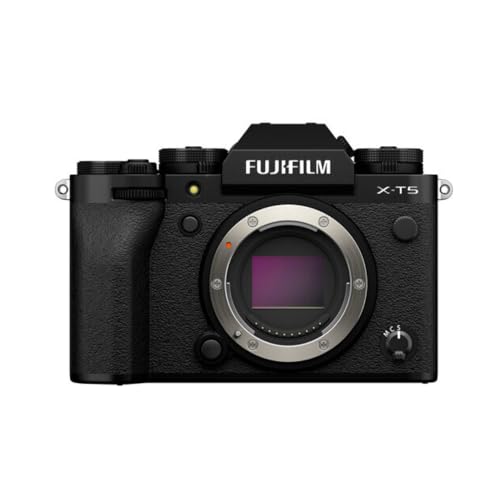
- The Fujifilm X-T5 is the tactile benchmark — aperture rings, shutter dials, colour for days.
- The Sony Alpha 7 IV serves the enthusiast whose genre changes with the seasons.
- The Panasonic LUMIX S5II gives full-frame files and video at a club-friendly budget.
- The OM SYSTEM OM-5 Mark II keeps the whole hobby walkable, weatherproof and affordable.
- Judge a system by its fifth lens, not its first: that is the one your hobby will actually buy.
In this guide
Quick Picks
| Camera | Badge | Why it made the list |
|---|---|---|
| Fujifilm X-T5 | Best enthusiast camera overall | Tactile dials, film-rooted colour, high resolution and a prime-lens culture built for hobbyists. |
| Sony Alpha 7 IV | Best for rotating interests | A full-frame hybrid whose autofocus, resolution and lens bench follow an enthusiast through every new obsession. |
| Panasonic LUMIX S5II | Best full-frame value for clubs | Full-frame files, serious video and an alliance lens mount that spreads cost across three brands. |
| OM SYSTEM OM-5 Mark II | Best for the walking enthusiast | A sealed Micro Four Thirds system whose tiny lenses make a complete hobby kit genuinely portable. |
| Fujifilm X100VI | Best for the purist | A fixed-lens instrument that strips photography to framing, timing and colour — and enthusiasts adore it for exactly that. |
| Sony ZV-E10 II | Best for the filmmaking enthusiast | A creator body that gives hobbyist filmmakers autofocus, colour and lens choice their stills cameras cannot match. |
How Did We Judge Cameras for People Who Shoot for Love?
We began with control depth. Every candidate was interrogated for the things enthusiasts actually configure: custom button assignment, multiple saved setups, exposure tools like zebras and histograms that behave honestly, and manual-focus aids worthy of adapted vintage glass. Bodies that treat their owner as a passenger were cut early.
Lens culture formed the second sieve. An enthusiast system must offer a growth story at enthusiast prices — fast primes that do not require a remortgage, interesting third-party and vintage-adapted options, and a second-hand market liquid enough that experimentation is affordable. The picks’ ecosystems were audited with a five-year hobby in mind.
Output ambition was the third test. Enthusiasts print, project at club nights and increasingly publish books of their own projects, so files were weighed for printing headroom, colour that survives grading, and the resolution to crop a competition frame without apology.
Finally, we weighted delight — deliberately and unapologetically. A hobby competes with every other claim on an adult’s evenings, and the camera that feels like an instrument rather than an appliance wins those evenings. Several technically superior bodies were left off this list because nobody in the tribe would love them.
Which Cameras Will Still Excite You in Year Five?

Fujifilm X-T5 — Best enthusiast camera overall
If one body currently embodies the enthusiast ideal, it is this one, and the reason is philosophical before it is technical. The X-T5 returns exposure to the photographer’s fingers — shutter speed on a dial, ISO on a collar, aperture on the lens itself — so settings become a physical practice rather than a menu negotiation. Enthusiasts do not find that old-fashioned; they find it honest, and they shoot more because of it.
The film simulations deserve their reputation among this tribe specifically. A club photographer can develop a personal recipe — a tweaked simulation with grain, colour and tone choices — and shoot a whole project in a signature look straight from the camera. That is darkroom culture reborn as dial culture, and it gives hobbyists an authorial voice that editing presets applied later rarely match.
Now attend a camera club competition night, the second theatre of this review. The X-T5’s high-resolution files project and print at the sizes club judging rewards, its colour needs little rescue under mixed hall lighting, and its owner arrives with a bag of small, fast primes that cover the evening’s portrait round without a hernia. The whole system feels designed by people who attend such evenings, because it was.
The lens culture is the long game. Fujifilm’s prime line-up is the enthusiast’s sweet shop: compact, optically serious, priced for mortals, and extensive enough that a five-year collection covers street, portrait, landscape and macro without a single lens the owner is embarrassed to carry.
Video is present and respectable rather than headline, and the autofocus, while fully modern, will not out-duel the Sony below at a greyhound meet. The enthusiast who needs those crowns knows where they live; the majority, shooting the world at human speed, will never miss them.
Ownership completes the case: firmware support with genuine feature additions, a community that shares recipes and photowalks, and resale values buoyed by devotion. Buy the X-T5 and you are not purchasing a product cycle; you are joining a going concern.
There is a mentorship economy around this body worth naming. Because its controls make exposure visible and physical, experienced members can teach a newcomer across a café table in minutes — try that with a menu-driven rival. Cameras that teach easily become club standards, and club standards accumulate shared knowledge fastest.
Keep it for a decade and its dials will show the polish of your thumbs, which owners display the way guitarists display fret wear. Instruments record their players; that visible history is part of why this tribe resists upgrading, and part of why the hobby feels like a craft rather than a subscription.
A closing practical note: insure it, maintain it, and learn its service network before you need it, because a beloved instrument deserves professional care. The tribe’s elders all have a repair story; the wise ones have a repair contact saved in their phone before the story begins.
One more tribe ritual suits it perfectly: the one-lens month, where members shoot a single prime for thirty days and compare scars at the next meeting. On this body the exercise feels like a homecoming rather than a hair shirt, because its whole design has been arguing for deliberate constraint since the first dial.
Sentiment aside, its shutter and dials are also rated for the long haul in a way owners verify anecdotally every season: bodies with six-figure counts still teaching newcomers at club nights. Longevity is the enthusiast specification that launch coverage never measures and ownership always does.
- Type: APS-C mirrorless, retro dials
- Strength in brief: control as a physical craft
- Workflow fit: clubs, projects, printing
- Lens note: the enthusiast prime sweet shop
Strengths
- Exposure control under the fingers
- Colour recipes that become a signature
- Resolution for prints and competition crops
Trade-offs
- Tracking autofocus not the tribe’s fastest
- Video respectable rather than remarkable
- Dial layout demands commitment to learn
Best for: Enthusiasts who shoot weekly and print proudly.
Not suited for: Action specialists living at the trackside.

Sony Alpha 7 IV — Best for rotating interests
Enthusiasm is fickle in the best way: this year’s landscape devotee is next year’s bird photographer and the following year’s short-film maker. The Alpha 7 IV is the body for that itinerary, because no genre door closes behind it. Full-frame stills with cropping headroom, video that satisfies a serious hobbyist filmmaker, autofocus that handles the grandchildren and the greyhounds — the camera refuses to be the reason a new interest stalls.
Its customisation depth suits the tribe’s tinkerers. Buttons, dials, menus and saved modes can be sculpted until the body behaves like a personal instrument, and the enthusiast who enjoys configuring a camera as much as using one will find months of legitimate pleasure in its settings architecture alone.
Take it to a landscape workshop weekend, the second scene in its portrait. Dawn files hold shadow detail for the big print the workshop exists to produce; by afternoon the same body is filming the tutor’s demonstration; by evening it is tethered to a laptop for the critique session. Companions with specialised bodies keep borrowing capabilities from each other. The Sony owner lends.
The lens bench is the deepest in this guide, spanning Sony’s own range and a competitive third-party market that keeps enthusiast experimentation affordable. A macro this spring, a fast portrait prime for autumn, a long zoom when the birds arrive — each is a birthday-sized purchase rather than a financial event.
Size is the honest cost: with enthusiast glass mounted, this is a committed carry, and the walker should read the OM SYSTEM case below carefully. Full-frame rewards are real, and so is full-frame weight, and the tribe divides along exactly that line.
For the enthusiast who wants one system to mature inside for a decade, this is the safest pair of hands in the guide. It will not be the most characterful camera you own. It will be the one that never says no.
Its second-hand market deserves an enthusiast’s paragraph. Because professionals cycle these bodies, excellent used examples reach hobbyists at prices that embarrass the new market, complete with a service history culture. The tribe’s savvy wing buys its flagships exactly this way, a season late and a fortune ahead.
Its final enthusiast virtue is headroom as insurance. Whatever the hobby becomes — a book, a business, a specialism — the body is unlikely to be the obstacle, and knowing that removes the background anxiety that fuels churn. Peace of mind is an unlisted specification, and this camera is full of it.
If a single sentence must carry its case to a sceptical enthusiast, let it be this: it is the camera least likely to be the reason a photograph did not happen, across the widest range of photographs a hobbyist will ever attempt. For a rotating, deepening, decade-long enthusiasm, that is the crown.
Workshop tutors quietly prefer teaching on it for a structural reason: whatever genre the course covers next, the body in the student’s hands is already adequate, so tuition goes to seeing rather than to equipment apologies. A camera that never interrupts a lesson is a tutor’s silent partner.
Consider its role at the family level, too: it is the body a household’s serious photographer grows into without abandoning the family archive to a ‘work camera’ mentality. The same files hold the holiday, the exhibition print and the cousin’s wedding, and that unity of archive is worth more than any single specification.
- Type: full-frame mirrorless
- Strength in brief: no genre door closes
- Workflow fit: rotating projects and workshops
- Lens note: deepest bench, competitive third parties
Strengths
- Every hobby phase served at full quality
- Customisation depth for serious tinkerers
- Lens market keeps experiments affordable
Trade-offs
- Weight accumulates with serious glass
- Character is competence, not charm
- Menus take a season to master
Best for: Enthusiasts whose interests rotate and deepen.
Not suited for: Walkers who measure kit in grams and joy.

Panasonic LUMIX S5II — Best full-frame value for clubs
Club treasurers and self-funding hobbyists share a constraint: the hobby budget is real. The S5II answers with full-frame image quality and genuinely serious video at a price that leaves room in the same year for a lens — the purchase order every experienced enthusiast recommends and every marketing department discourages.
The L-Mount alliance is its structural charm. Three manufacturers’ lenses fit one body, competing on price and character, and the second-hand shelves are filling accordingly. An enthusiast can assemble a distinctive kit — a Sigma prime here, a Panasonic zoom there — that reflects taste rather than a single brand’s catalogue discipline.
Watch it at a club studio night, the second scene of its case. Its colour and skin tones behave under modelling lights, its video records the evening’s demonstration for absent members, and its stabilisation forgives the handheld candids between set-ups. The member who brought it becomes quietly indispensable, which is a social return on investment no chart captures.
Stills files carry the dynamic range landscape members crave for dawn shoots, and the body’s weather resistance suits the club’s insistence on photographing in whatever the weekend delivers. It is a workhorse with manners, priced like an invitation.
Autofocus, transformed in this generation, is now a strength rather than the family’s old apology, though the Sony’s tracking still edges it for chaos subjects. For the ninety percent of enthusiast shooting that is deliberate, the difference is a footnote.
Buy it if full-frame is the ambition and the budget is a committee of one. It is the thinking hobbyist’s route to the big sensor, with change left over for the lens that will define the year.
A word for its stills colour in club conditions: mixed hall lighting defeats many cameras’ auto white balance across a single evening, while this body’s files grade consistently enough that a member can batch-correct a whole competition set. Unglamorous consistency is what club photographers actually pray for.
For the enthusiast keeping a household ledger, it also holds value calmly: not a speculative object, not a depreciating toy, but a tool whose used price tracks its usefulness. Boring financial behaviour is a compliment in a hobby famous for the opposite.
Its owners tend to become the club’s pragmatists — the members whose galleries are full and whose bank statements are calm. Every tribe needs that example on the wall, proving the hobby’s joys are not rationed by budget.
There is a rental dividend as well: because working videographers hire this body constantly, a hobbyist can rent the exact camera for a big weekend before committing, then hire its specialist lenses for single projects. Try-before-you-buy at professional depth is a luxury the alliance’s popularity funds.
A final club-level observation: members who buy it tend to spend the savings visibly — on the lighting course, the exhibition frames, the trip — and their work improves in public, which does more for the tribe’s collective wisdom than any purchase. Frugality, demonstrated, is contagious.
- Type: full-frame mirrorless, L-Mount
- Strength in brief: full-frame with budget left for glass
- Workflow fit: club nights, landscapes, hobby film
- Lens note: three brands, one mount, real competition
Strengths
- Full-frame files without flagship invoices
- Video strong enough for club film nights
- Lens alliance rewards patient bargain hunting
Trade-offs
- Tracking a step behind the Sony for chaos
- Smaller tribe means fewer local mentors
- Heavier than the APS-C picks here
Best for: Budget-conscious enthusiasts wanting full-frame and film.
Not suited for: Minimalists building the lightest possible kit.

OM SYSTEM OM-5 Mark II — Best for the walking enthusiast
Some enthusiasts measure their hobby in miles. The OM-5 Mark II system is built for them: a weather-sealed body and a full range of lenses — wide, portrait, macro, serious telephoto — at a total weight that lets the whole collection ride in a small bag on a day’s hill walk. Every genre remains available; none of them requires a vehicle.
Computational photography is this system’s party piece, and enthusiasts are its natural audience. Handheld high-resolution captures for landscape detail, in-camera focus stacking for the macro devotee, neutral-density simulation for silky water without a filter kit — these are toys in the best sense, experiments built into the body that a curious hobbyist will actually play with for years.
Picture the camera on a coastal path project, the second portrait in this review. A member documenting every lighthouse and harbour on a regional trail needs sealing against spray, lenses for architecture and seabirds in one bag, and files consistent across a hundred outings. The little OM system delivers that trilogy without once making the walk about the equipment.
Its smaller sensor is the known trade: ultimate low-light and background-blur bragging rights live elsewhere in this guide. The walking enthusiast has usually made peace with that arithmetic in exchange for presence — the system that is carried photographs more genres in a year than the system admired at home.
Battery frugality and cheap spare cells suit the expedition pattern, and the system’s long Olympus heritage means adapted and used lenses circulate at prices that invite experimentation. A hobby lives on experiments; this ecosystem prices them kindly.
Buy it if your enthusiasm is measured in horizons. It is the connoisseur’s lightweight answer, and its owners are evangelists for reasons a single wet weekend will explain completely.
Its macro ecosystem is a hobby within the hobby: stacking rails, small flashes and a devoted community of invertebrate photographers who meet at dawn in damp woods. Buying this body can accidentally acquire its owner an entire second social world, which is either a warning or a promise depending on the calendar.
And when the walking years eventually slow, the same little system becomes the lightweight kit that keeps an older enthusiast shooting daily — a continuity across a whole photographic life that heavier systems, sold off in frustration, never provide. Plan for the photographer you will be at seventy; this system already has.
Judge it, finally, by attendance: the dawns it made portable, the weathers it made irrelevant, the trails it made photographic. A hobby measured in attended mornings is a hobby that lasts, and no body in this guide attends more mornings per gram.
Field naturalists add a footnote the spec sheets miss: its quiet shutter and small profile disturb wildlife less at the garden and reserve distances most enthusiasts actually shoot, so the walking kit doubles as a respectable nature kit without a single additional purchase.
Travel insurers and baggage handlers between them make its closing argument: the entire system insures for less and packs into hand luggage that heavier rivals must check or leave. A hobby that survives airline logistics intact is a hobby that gets practised on every trip, not just the driving holidays.
- Type: Micro Four Thirds mirrorless
- Strength in brief: the complete hobby, walkable
- Workflow fit: trails, travel, macro play
- Lens note: tiny lenses across every genre
Strengths
- Full system weight of a rival’s single zoom
- Computational features reward curiosity for years
- Sealing invites weather other clubs cancel for
Trade-offs
- Sensor size caps the darkest work
- Blur bragging rights belong elsewhere
- Small controls in winter gloves
Best for: Walking, travelling and macro-curious enthusiasts.
Not suited for: Enthusiasts whose first love is night portraiture.

Fujifilm X100VI — Best for the purist
Every tribe has its purists, and the X100VI is their current altar. One lens, one focal length, aperture ring and shutter dial, a hybrid viewfinder that can show the world optically or electronically — it is a camera reduced to the elements enthusiasts argue about in pubs, and using it feels like a position statement about what photography is.
The discipline it imposes is its gift. With no zoom and no lens decision, the photographer’s whole mind goes to position and moment, and a season with this camera visibly improves the work its owner later makes with any other body. Clubs recognise the type: the member whose compositions leap ahead in the year they shot nothing else.
See it on a city break, the second scene of its case. It hangs unnoticed at a café table, rides in a coat pocket through museums that ban bags, and produces a travel set with a coherence — one focal length, one colour signature — that mixed-kit albums never achieve. The resulting photo book looks authored, because it was.
Its film simulations and quiet leaf shutter suit the social side of enthusiasm: photowalks where discretion matters, family events where the hobbyist is also a guest, street projects where a flagship would change the weather of every scene it entered.
Scarcity and pricing are the honest thorns, and this guide will not launder them. At sensible money it is a decade-long companion; at speculative money it is a test of the tribe’s discipline — the very discipline the camera itself teaches. The irony is noted by everyone, including its devotees.
Buy it as the second camera that becomes the favourite, or as the only camera of a photographer who has finished experimenting with everything except seeing. Both are honourable enthusiast careers.
Ownership changes photowalk dynamics in a way worth anticipating: strangers ask about it, fellow enthusiasts nod at it, and subjects relax around it. The camera functions socially as a classic car does — an object that starts conversations — and for documentary-minded hobbyists those conversations are access.
It is also, quietly, the camera most likely to be handed down. Fixed-lens classics pass to children and grandchildren as working heirlooms in a way that obsolete system bodies do not, and there are households where three generations have now shot the same streets on the same family of camera.
The purist’s last word is about attention. In a hobby increasingly mediated by automation, this camera returns the photographer’s mind to the two decisions that were always the art: where to stand, and when. Everything else, it gently insists, was always machinery.
Clubs have begun running entire outings themed around it — one camera, one focal length, one afternoon — and the resulting exhibitions are reliably among the year’s strongest. Constraint, administered socially, turns out to be the tribe’s favourite teacher.
And notice the photographs it produces at family scale across years: the same focal length and colour signature turn a decade of gatherings into a visually unified chronicle, as if one thoughtful relative had art-directed the family’s memory. That coherence is this camera’s quiet masterpiece.
- Type: fixed-lens premium compact
- Strength in brief: photography reduced to essence
- Workflow fit: street, travel, photowalks
- Lens note: one prime, mastered completely
Strengths
- Constraints that visibly improve composition
- Discretion that keeps scenes natural
- A travel set with an author’s coherence
Trade-offs
- One focal length for every subject, forever
- Demand makes sane pricing a hunt
- No system to expand into
Best for: Purists, street photographers and photowalk regulars.
Not suited for: Enthusiasts whose joy is collecting lenses.

Sony ZV-E10 II — Best for the filmmaking enthusiast
Enthusiasm has a moving wing now: the club film night, the hobbyist short, the travel documentary cut for friends. The ZV-E10 II is the enthusiast body for that wing — a stills-capable camera whose soul is motion, with autofocus that lets a one-person crew act, present and operate simultaneously.
Its appeal to the tribe is the lens bench behind it. Hobbyist filmmakers graduate quickly from kit zooms to character glass — a fast prime for interviews, a wide for interiors — and Sony’s mount offers that graduation at every price, shared with the stills system many enthusiasts already own. One collection of lenses, two arts.
Watch it serve a railway preservation society, the second portrait in this review. A member films the restoration documentary, photographs the open day, and livestreams the first steam-up to members abroad, all on one body the society’s budget approved without a special meeting. Enthusiasm increasingly looks like that: one person, one camera, a whole media operation.
Stills quality keeps it honest in this company: publication-grade files, Sony colour that matches bigger siblings in a mixed kit, and handling that a stills-first owner can learn in an afternoon. It is a video-led camera, not a video-only one.
The purist’s objections are real — screen-centric controls, no traditional viewfinder experience, a design language aimed at creators rather than craftsmen. Enthusiasts whose love is the still image’s ritual should choose the Fujifilm above and never look back.
Buy it if your projects increasingly end in a timeline rather than a frame. It is the hobby’s future arriving early, at a price the present can afford.
Club film nights have a technical gatekeeper problem — codecs, frame rates, audio levels — and this body’s forgiving automation lowers that gate for stills photographers crossing over. Several clubs report their film sections doubling once a body this approachable became the de facto recommendation.
Measure it in finished films rather than in features. The enthusiast who actually completes a short each season — because the tool never became the obstacle — is this body’s entire argument, and club film nights are filling with its evidence.
And for the generation of enthusiasts arriving now — raised on motion, fluent in editing timelines — this is not the compromise pick. It is the native instrument, and the stills tradition it joins is richer for the new blood it brings through the door.
Its audio pathway deserves the enthusiast’s attention: with a proper microphone input and headphone monitoring through the ecosystem’s accessories, a hobbyist production can sound genuinely professional. Sound is where amateur films confess themselves, and this body lets its owner stop confessing.
Its last word belongs to the societies and clubs themselves, which increasingly archive their histories in film as much as in prints. The member who can shoot both becomes the institution’s memory-keeper — a role of genuine honour in any tribe, and one this body makes accessible to a beginner in the craft of motion.
- Type: APS-C mirrorless, creator line
- Strength in brief: solo filmmaking with real glass
- Workflow fit: club film nights, documentaries, streams
- Lens note: shares Sony’s deep bench
Strengths
- Autofocus that crews a one-person production
- One lens collection serves stills and film
- Livestreaming built into the hobbyist brief
Trade-offs
- Controls speak creator, not craftsman
- Viewfinder tradition absent
- Stills ritual less satisfying than rivals
Best for: Enthusiasts whose projects move and speak.
Not suited for: Stills purists devoted to the viewfinder ritual.
How Do the Six Enthusiast Picks Compare on a Club Night?
Enthusiast value hides in fifth-year questions: lens benches, repair networks, the joy of a Tuesday evening. The grid compresses; the sections below expand on what ownership actually feels like.
| Camera | Badge | Standout trait | Watch out for |
|---|---|---|---|
| Fujifilm X-T5 | Best enthusiast camera overall | The instrument the tribe asked for | Learn the dials before the photowalk |
| Sony Alpha 7 IV | Best for rotating interests | The decade-long all-rounder | Price the second lens before the body |
| Panasonic LUMIX S5II | Best full-frame value for clubs | Full-frame sense, club-night manners | Hunt the alliance’s used shelves |
| OM SYSTEM OM-5 Mark II | Best for the walking enthusiast | A whole hobby in a daypack | Try the macro modes in week one |
| Fujifilm X100VI | Best for the purist | The beautiful constraint | Refuse speculative pricing on principle |
| Sony ZV-E10 II | Best for the filmmaking enthusiast | The hobby, in motion | Budget a microphone with the body |
Why Does the Fifth Lens Matter More Than the First?
Starter kits are designed to please; fifth lenses are chosen from experience. By the fifth purchase an enthusiast knows their true genres, their carrying habits and their tolerance for weight, and the systems in this guide diverge sharply in how richly they reward that knowledge — depth of primes, macro and telephoto specialities, third-party character glass.
Price the fifth lens of each system before buying the first body. If the lenses your future self will crave are affordable and plentiful used, the system will sustain the hobby; if every step up is a financial event, enthusiasm quietly starves. The tribes around each pick in this guide formed exactly where the glass stayed reachable.
Adapted vintage lenses add a wild card the tribe adores. Every mount here adapts old glass with varying grace, and the enthusiast who discovers a forty-year-old prime’s rendering has found the hobby’s cheapest thrill. Bodies with strong manual-focus aids — several picks excel — turn that thrill into a practice.
How Do Enthusiasts Actually Use Customisation?
Not as decoration. The working enthusiast builds the camera around recurring situations: a photowalk setup with zone focus and a chosen simulation, a club-night setup with flash behaviour and a different dial logic, a landscape setup with bracketing and a two-second timer. Saved modes turn one body into three rehearsed instruments.
Button reassignment follows the same logic of removing friction from the photographer’s actual habits — back-button focus for movers, a dedicated ISO control for the manual shooter, depth-of-field preview where the landscape member lives. The picks with the deepest customisation reward this sculpting for years.
There is a social layer too: club members trade settings files and recipes the way cooks trade sauces. Owning a body with a sharing culture multiplies its manual by the whole tribe’s experience, which is an unadvertised feature of the Fujifilm and Sony picks especially.
What Does Printing Teach That Screens Never Will?
Size exposes everything. A file that glows on a phone may fall apart at exhibition dimensions, and enthusiasts who print learn their cameras’ true resolution, their lenses’ true corners and their own technique’s true level faster than any screen-bound shooter. Several picks here were chosen for files that survive that enlargement with dignity.
Printing also edits the photographer. Choosing twelve frames from a project for paper is a discipline that improves the next shoot more than any tutorial, because the wall is a stricter editor than the feed. Clubs with print competitions are, for this reason, finishing schools disguised as social evenings.
Budget for the printer or the lab as part of the camera decision. An enthusiast system whose files you cannot afford to print is a story half told, and more than one member of the tribe has traded down a body to fund the output side — and never regretted it.
How Should an Enthusiast Split a Budget Across a Whole Year?
The tribe’s seasoned answer runs in seasons: body when the old one limits, lens when the archive asks, light when portraits begin, output when the wall calls. A year that buys one of each produces a visibly better photographer than a year that buys one flagship and nothing else, because growth in this hobby is balanced or it is brief.
Second-hand discipline funds the whole pattern. Enthusiast glass circulates in excellent condition through club sales and reputable dealers, and the member who buys last year’s lens at half price photographs identically to the member who queued at launch. Patience is the hobby’s highest-yield investment.
Keep a small reserve for the unplanned: the workshop place that opens, the trip that appears, the broken strap before the big weekend. Experiences are equipment too, and the reserve is what lets an enthusiast say yes while the opportunity is still warm.
Why Do Enthusiasts Keep Returning to Manual Focus and Old Glass?
Because automation, for all its gifts, removes a pleasure the tribe specifically seeks: the tactile negotiation with focus, aperture and light that makes a photograph feel made rather than captured. Manual lenses slow the hand, and slowness, for a hobbyist, is not inefficiency — it is the product itself.
Old glass also renders differently, with flare, softness and character that modern correction removes. Enthusiasts are connoisseurs of such signatures the way musicians are of vintage instruments, and a body with excellent focus peaking and magnification — the Fujifilm and OM SYSTEM picks shine here — becomes a stage for a rotating cast of classics.
None of this is nostalgia cosplay. It is a reminder that a hobby’s value is measured in engaged hours, and any tool that manufactures those hours honestly has earned its place in the bag.
What Separates a Project From a Pile of Photographs?
A subject that narrows, a period that bounds, and an output that concludes. Enthusiasts who finish projects — the year of the local river, the portraits of every stallholder at the market, the harbour in all weathers — improve at a rate that random shooting never matches, because the project forces editing, sequencing and honesty about weak frames.
Cameras serve projects differently than they serve outings. Consistency of colour across a year, reliability in the project’s weather, and a lens that becomes the project’s signature all matter more than peak specifications — which is why long-project photographers appear throughout this guide’s picks, from the Fujifilm’s simulations to the OM system’s sealing.
Finish in public. A club exhibition, a self-published book, a library display: the deadline and the audience complete the education. Every camera in this guide has carried members of the tribe to that wall, and the wall, not the shelf, is the hobby’s destination.
How Do You Keep Enthusiasm Alive Across a Decade?
Rotate the stimulus, not the system. New genres inside one mount, new constraints inside one project, new companions inside one club — these refresh the eye without restarting the bank account. The photographers still shooting joyfully at year ten are almost never the ones who changed systems at every launch.
Teach. Nothing consolidates an enthusiast’s craft like explaining it to a beginner, and clubs run on members who take the new intake out for their first dawn. The teacher’s eye sharpens fastest, and the tribe’s continuity is a gift economy of exactly such mornings.
Finally, protect the play. The moment the hobby becomes a second job of metrics and monetisation, its engine stalls. Keep one camera, one lens or one project that exists purely for pleasure — several picks in this guide are bought for precisely that protected role.
How Does an Enthusiast Choose Between Two Systems They Love?
By borrowing both into their real life for a fortnight each — not a shop counter for ten minutes. Carry the finalist on the photowalk, shoot the club night with it, edit its files on your own sofa, and notice which camera’s compromises you forgive without thinking. Forgiveness, in a five-year tool, is the true compatibility test.
Price the five-year basket, not the body: the lenses your projects will demand, the flash, the bag that fits the system, the second body you will eventually crave. Enthusiasts consistently discover that the ‘expensive’ body belonged to the cheaper system, or the reverse, and the basket arithmetic is the only honest comparison.
Then commit completely for a full project before judging. Every system feels foreign for a month and fluent by a season, and the tribe’s churn statistics are mostly people who judged during the foreign month. Give the chosen body its season; it will give you back a craft.
What Role Does Video Play in a Modern Enthusiast’s Life?
A supporting one that keeps auditioning for the lead. The stills-first enthusiast films the process behind a project, the club’s exhibition build, the family’s year in motion — and discovers that editing video teaches pacing and sequencing that feed straight back into stronger stills series. The two crafts are not rivals inside a hobby; they are cross-training.
Choose the body’s video depth by honesty about that role. Occasional clips ask little; a club film section or a documentary project asks for the S5II’s or ZV-E10 II’s seriousness. The mistake is buying flagship video for footage that will never be shot, while starving the lens budget that stills actually spend.
Audio is the dividing line hobbyists cross last and regret most. The first time an enthusiast records an interview or a soundscape properly — with a real microphone, monitored — the hobby gains a dimension. Several picks here make that crossing painless, and the guide flags it wherever it appears.
Which Enthusiast Mistakes Does Every Club Secretary Recognise?
System churn is the classic: three mounts in four years, mastery of none, and a shelf of nearly-new regrets funding the experiment. The picks above are all decade-capable; choose the one whose glass and handling fit your hands, then let the launches pass like weather.
Lens hoarding without a project runs second. A collection is a means; a body of work is the end. The enthusiast who buys the fifth lens before finishing the first exhibition has mistaken the hobby’s shop for the hobby, and every club has a cupboard of such good intentions.
The third mistake is measuring the hobby by other people’s feeds. Your club wall, your printed book, your river in all weathers — those are the metrics of a photographic life. Buy for them, shoot for them, and let the internet’s launch calendar entertain somebody else.
A fourth, quieter error deserves the final word: hiding the work. Enthusiasm that never reaches a wall, a club night or a friend’s hands slowly starves, because feedback and audience are the hobby’s oxygen. Every camera above is capable of exhibition-standard files; the only remaining requirement is the owner’s courage to show them.
Final Recommendation
For the tribe’s centre of gravity — weekly shooting, club life, printing, a lens collection growing like a garden — the Fujifilm X-T5 is this guide’s wholehearted first recommendation. The Sony Alpha 7 IV serves the rotating obsessive, the Panasonic LUMIX S5II the full-frame economist, the OM SYSTEM OM-5 Mark II the walker, the Fujifilm X100VI the purist, and the Sony ZV-E10 II the filmmaker the hobby keeps producing.
Whichever you choose, choose it as a five-year companion and hold it to a five-year standard: not what it wins this month, but what it teaches, carries and survives across the seasons of a real hobby. Enthusiasm is a long game, and these are long-game cameras.
One practical benediction to close: whatever body you bring home, photograph something with it this week, print one frame from the outing, and put the print where you will see it daily. That small ritual converts a purchase into a practice faster than any feature list — and practice, in the end, is the only enthusiast specification that has ever mattered.
Related guides
- Best Digital Cameras for Sports Photography: Six Fast Bodies for Fields, Courts and Coastlines
- Best Digital Cameras for Photography Enthusiasts: 6 Systems That Reward Getting Better
Frequently Asked Questions
What makes a camera an enthusiast camera rather than a beginner one?
Depth and honesty of control: full manual command without menu exile, deep customisation, saved setups, serious manual-focus aids and a lens ecosystem with room to grow. Beginner bodies guide; enthusiast bodies obey — and the picks above were chosen on exactly that distinction.
Is full-frame necessary for an enthusiast?
No, and this guide’s first recommendation is APS-C. Full-frame buys low-light and blur headroom that specific genres — night, portrait, large-print landscape — genuinely use. Enthusiasts in other genres are better served by the smaller systems’ lenses, weight and price, as the X-T5 and OM-5 cases argue.
How many lenses should an enthusiast own?
Fewer than desire suggests and more than minimalism allows: typically a standard zoom or prime for daily work, one fast prime for low light and portraits, and one specialist — telephoto, macro or ultra-wide — matched to the project. The fifth lens question in the guide sections explains how to judge a system’s room for that growth.
Should I join a camera club before or after buying?
Before, if one is local. A single evening borrowing members’ cameras and hearing honest ownership stories is worth a month of reviews, and clubs often run sales tables where enthusiast glass changes hands at friendly prices. Buy informed by the tribe you are joining.
What is the best pick here for landscape projects?
The Sony Alpha 7 IV for maximum file headroom and the Fujifilm X-T5 for colour and carry, with the OM SYSTEM OM-5 Mark II as the long-distance walker’s answer. All three print beautifully; the choice is weight, colour philosophy and lens bench.
Can an enthusiast camera be too much camera?
Yes — when its size keeps it home, its menus keep it slow, or its price keeps the lens budget empty. A camera that intimidates its owner out of casual shooting has failed the hobby’s first test, whatever its specifications. Several picks here exist precisely at the tribe’s carrying weight.
Is the X100VI sensible as an only camera for an enthusiast?
For the enthusiast whose genres are street, travel, family and the observed life, entirely sensible — and its constraints will sharpen them. For anyone whose projects need telephoto reach, macro or interchangeable versatility, it is the beloved second camera rather than the only one.
How long should an enthusiast body last?
Five to seven years of weekly shooting is a fair expectation for every pick here, with lenses lasting far longer. Judge cost across that span and the tribe’s arithmetic — serious body, growing glass, protected play — resolves itself.
Should an enthusiast buy new or used?
Used, from reputable dealers, for lenses almost always — enthusiast glass is durable and the savings fund the next focal length. Bodies reward a hybrid approach: one generation behind, professionally checked, is the tribe’s classic value play, while a beloved new body bought to keep for seven years is equally rational. Churn is the enemy, not the second-hand market.
Related Guides
Enthusiasm deepens along predictable paths, and these guides walk three of them: our guide to building a prime lens collection on a hobby budget a printing and exhibition primer for club photographers the manual-focus and vintage lens handbook for mirrorless owners


