kajuandouglas.com is reader-supported. When you buy through links on our site, we may earn an affiliate commission.
Where to Buy
The best digital cameras for photography enthusiast readers share one quality that spec sheets barely mention: they reward the person holding them for getting better. An enthusiast is a specific kind of photographer — not a beginner buying a first real camera, not a professional billing clients, but the serious hobbyist in between, the one who shoots every weekend, prints for the hallway wall, joins the camera club, enters the local exhibition, and thinks about light while doing the washing up. That reader has outgrown automation. What they need now is a camera that teaches: real controls under the fingers, a lens system with somewhere to grow, and files honest enough to show them exactly what their technique did.
This guide judges six cameras by that educational standard. A body that buries its aperture inside a touchscreen may take fine photographs, but it trains its owner to remain a passenger; a body with dials, a proper viewfinder, and manual everything trains its owner to drive. Over a year of weekends, that difference compounds into entirely different photographers. The enthusiast’s camera is therefore a long purchase — the system you will still be growing into three bodies of skill from now — and the picks below are ranked by how well they serve the second and third year of ownership, not merely the first delighted month.
All six are interchangeable-lens cameras from our verified pool, spread across four mounts and three sensor sizes, because the enthusiast’s real decision is never a camera: it is a system, a shelf of lenses that will outlast several bodies, and a handling philosophy your hands will memorise. Read the reviews with your own next three years in mind — the genres you are drifting toward, the prints you want on the wall, the weight your shoulder will forgive — and the right system will identify itself. If it helps, read with a pen in hand and your last season’s photographs open beside you; the archive will keep every claim in this guide honest, because it knows exactly which subjects you truly chase and which you merely admire in other people’s portfolios from a wistful distance.
Key Takeaways
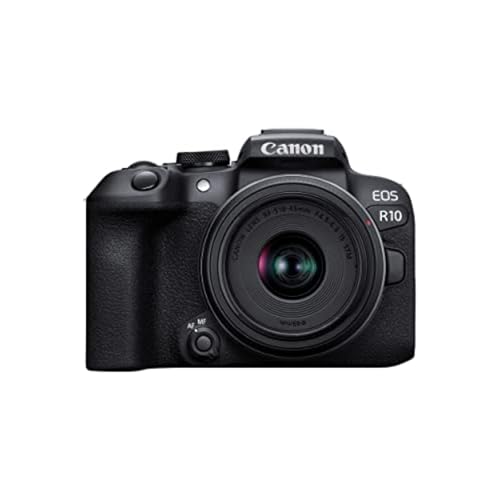
- The Canon EOS R10 is the enthusiast sweet spot for action-leaning shooters: fast, grippy, and backed by a lens mount with every rung of the ladder.
- The Fujifilm X-T5 teaches fastest, because its dials put shutter, ISO, and compensation under your fingers instead of inside menus.
- Nikon’s Z50 II is the considered photographer’s crop body, with handling that feels borrowed from professional cameras.
- The OM SYSTEM OM-5 Mark II suits enthusiasts whose photography happens on walks, climbs, and journeys rather than in studios.
- The Canon EOS R50 is the lightest honest step into a serious system for enthusiasts upgrading from a phone.
- Sony’s ZV-E10 II serves the enthusiast whose practice is becoming a channel as much as a portfolio.
One warning before the table, offered in friendship. Enthusiast photography has a famous failure mode — the gear phase, in which every plateau in skill is misdiagnosed as a deficiency in equipment. The cameras here are all capable of work far beyond most owners’ current portfolios, deliberately so: the point of buying at this level is to remove the equipment excuse permanently, so that every disappointing frame afterwards can be correctly blamed on the only variable left, and the only one that improves with practice.
In this guide
Quick Picks
| Badge | Pick | Why it stands out |
|---|---|---|
| Best Enthusiast All-Rounder | Canon EOS R10 | Speed, handling, and a lens ladder with every rung present. |
| Best for Learning the Craft | Fujifilm X-T5 | Dials that teach exposure by touch, and simulations that teach taste. |
| Best Considered Photographer’s Body | Nikon Z50 II | Professional manners in a crop-format body that travels light. |
| Best for Outdoor Enthusiasts | OM SYSTEM OM-5 Mark II | Sealed, small, and computational in ways walkers actually use. |
| Best Lightweight System Entry | Canon EOS R50 | The gentlest honest doorway into a full interchangeable-lens system. |
| Best for the Video-Leaning Enthusiast | Sony ZV-E10 II | A creator’s toolkit that still respects stills photography. |
The table’s spread is the guide’s argument in miniature: there is no single enthusiast, so there is no single enthusiast camera. It is also worth saying aloud that all six bodies will, on a specification chart, look beaten by some professional flagship — and that this is irrelevant to the reader addressed here, whose limiting factor for the next several years is practice, not machinery, and whose money works harder in lenses, printing, and time than in a body whose talents would wait unused. There is the action shooter, the craft student, the walker, the filmmaker — and the reviews below are written to those readers individually, with the trade-offs stated where each will feel them.
How We Chose These Picks
Evaluation for this guide began with the hands. Each candidate was assessed for control layout as a teaching instrument: can aperture, shutter, and ISO be changed without leaving the viewfinder; does the body offer custom modes that let an enthusiast save a landscape setup, an action setup, and a street setup as distinct instruments; and does the grip support a full day’s shooting with the mid-weight lenses enthusiasts actually buy second and third. Cameras that demanded menu-diving for core exposure decisions were marked down regardless of their sensors.
Second came the system audit, because an enthusiast buys a mount, not a body. We mapped each mount’s ladder: the affordable fast primes an enthusiast adds in year one, the serious zooms of year two, the specialist glass — macro, long telephoto, fast portrait — that a deepening practice eventually craves, and the used market’s depth behind it all. A brilliant body on a mount with missing rungs is a cul-de-sac, and this guide refuses to recommend cul-de-sacs to readers making a five-year commitment.
Files and focusing formed the third axis: raw files with enough flexibility to survive an enthusiast’s increasingly ambitious editing, and autofocus that tracks the subjects hobbyists actually chase — children, dogs, club-level sport, garden birds — without demanding professional technique to operate. Finally, we weighed the intangibles of ownership: whether the maker publishes firmware that improves the camera after purchase, whether a community of fellow owners exists to learn from, and whether the body simply feels like an instrument rather than an appliance. Enthusiasts live with their cameras for years; the relationship matters.
What Separates an Enthusiast Camera From a Beginner Camera?
The beginner camera’s design philosophy is forgiveness: it assumes the owner does not yet know what a setting does, so it automates, simplifies, and hides. The enthusiast camera’s philosophy is access: it assumes the owner is learning what every setting does and wants each one reachable, visible, and reversible. That is why the two categories can share a sensor and still be different instruments. Put the same silicon behind a mode dial of scenes and it teaches nothing; put it behind dials, custom banks, and a viewfinder that shows the exposure’s consequences live, and it becomes a tutor you carry.
The second separation is the viewfinder’s seriousness. Enthusiasts compose through the eye, not the screen, because the eye-level finder shuts out the world’s distractions and shows the frame as the print will hold it. Bodies in this guide were required to have finders worth that discipline — bright, honest, and quick. The third separation is build: the enthusiast’s camera goes out weekly for years, in weather, in crowds, on the bike, and its dials, doors, and mount must be specified for that service rather than for the occasional holiday.
None of this is about price as such. It is about intent — whether the maker designed the camera to be grown out of or grown into. Every pick below is the second kind, and the reviews will keep returning to the same test: what will this body teach you in year two that it spared you in month one, and does its system have a year five worth wanting.

Canon EOS R10 — Best Enthusiast All-Rounder
The R10 is what happens when a maker takes its professional line’s handling and autofocus intelligence and removes only the things an enthusiast was never going to pay for anyway. The grip fills the hand like a camera you can shoot one-handed at a school sports day; the autofocus inherits the subject-recognition brain of far pricier Canons, so the dog, the cyclist, and the grandchild’s face are tracked with an assurance that lets the photographer think about composition instead of focus points; and the burst speed opens genres — birds in flight, club athletics, festival dancers — that slower bodies politely close.
For the enthusiast specifically, the R10’s virtue is that it never becomes the bottleneck. Its raw files are flexible, its high-ISO behaviour is honest APS-C — good, not magical — and its control layout includes the joystick and dials that mark a photographer’s camera. You can shoot it in full manual all winter, run it as an action machine all summer, and hand it to a visiting relative in auto at Christmas without apologising for it. Cameras that flex across a whole life like that are rarer than the spec wars suggest.
The system’s ladder completes the case. Canon’s RF mount offers the enthusiast a genuine staircase: the kit zooms to learn on, the affordable fast primes that transform low-light confidence, the serious L glass waiting at the top, and a thriving used shelf behind every rung. The body’s compromises are the known APS-C ones — no in-body stabilisation, so stabilised lenses matter, and a battery sized for a day rather than a weekend — but they are compromises inside a system with a future, which is the only kind an enthusiast should accept.
- Sensor: APS-C with flexible raw files and honest high-ISO reach
- Focus: subject-recognition autofocus inherited from pricier Canons
- Speed: fast bursts open sport and wildlife genres
- Controls: joystick, twin dials, and a deep, real grip
- System: RF mount ladder from learner primes to L glass
Strengths
- Autofocus that lets you think about pictures, not focus
- Handling that rewards a full manual-control apprenticeship
- A mount with every future lens already waiting
Trade-offs
- No in-body stabilisation; lens choice must compensate
- Battery is a one-day companion, so carry a spare
- Crop sensor asks more of lenses for shallow depth of field
Best for: enthusiasts whose subjects move — family, sport, wildlife, events. Not suited for: landscape perfectionists who want full-frame files above all.

Fujifilm X-T5 — Best for Learning the Craft
If the R10 is the enthusiast’s athlete, the X-T5 is the enthusiast’s schoolmaster — and for the reader whose goal is mastery itself, it is this guide’s most wholehearted recommendation. Its top plate carries dedicated dials for shutter speed, ISO, and exposure compensation, with aperture on the lens ring where a century of photographers put it, so the exposure triangle stops being a theory and becomes a tactile fact your fingers learn. Students on this body stop asking what aperture does, because they have felt it change under their thumb a thousand times while watching the viewfinder respond.
Fujifilm’s film simulations supply the second half of the education: taste. Each simulation is a considered rendering with a heritage — the soft contrast of a portrait film, the punch of a slide stock, the grain-structured honesty of Acros for black and white — and shooting through them teaches the enthusiast to pre-visualise a finished photograph rather than a neutral capture awaiting rescue. The sensor behind them is the highest-resolution crop sensor in this guide, with files that sustain cropping, large prints, and ambitious editing, and the body is weather-resistant enough for the British hillside where so much of this learning happens.
The trade-offs are a slower, more deliberate temperament — its bursts and tracking trail the Canon for frantic action — and a lens ecosystem that, while superb in primes, prices its finest glass like the heirloom it intends to be. For the enthusiast whose photography is a craft practice — street, landscape, portraiture, documentary — those are the right compromises, chosen by a maker that plainly believes photography is a discipline worth dressing properly for.
- Sensor: the highest-resolution APS-C files in this guide
- Controls: full dial set for shutter, ISO, compensation, aperture
- Rendering: film simulations that teach pre-visualisation
- Build: weather-resistant, traditional, and compact
- System: a prime-rich lens culture with strong used shelves
Strengths
- The fastest route from knowing settings to feeling them
- JPEGs with a finished character that rewards shooting discipline
- Resolution that keeps landscapes and prints ambitious
Trade-offs
- Action shooters will find the Canon’s tracking stronger
- Top Fujifilm lenses are priced as long-term possessions
- Deliberate handling will frustrate the purely spontaneous
Best for: craft-focused enthusiasts in street, landscape, portrait, and documentary work. Not suited for: high-speed sports specialists who need tracking above all.

Nikon Z50 II — Best Considered Photographer’s Body
Nikon’s enthusiast body speaks to the photographer who reads manuals, plans shoots, and distrusts fuss. The Z50 II’s handling is its manifesto: a proper grip, a control layout descended from Nikon’s professional Z bodies rather than invented for the price point, and a viewfinder that presents the scene with a calm clarity veterans of the brand will recognise instantly. Where some rivals chase the creator market’s features, this camera concentrates on being a stills instrument of unusual completeness for its class — and adds competent video as a courtesy rather than a headline.
The enthusiast-specific pleasures are in the details of growth. Picture controls give the JPEG shooter a rendering discipline to explore; the raw files carry Nikon’s long-standing colour science that portraitists in particular defend passionately; and the autofocus, refreshed for this generation, handles the family-and-travel subjects that fill an enthusiast’s actual archive with new certainty. Battery life and ergonomics suit the planned day out — the landscape dawn, the city walk, the club shoot — better than bodies designed around a vlogger’s half-hour.
Its system’s ladder is the honest caveat. Nikon’s Z mount is glorious at the top and increasingly good in the middle, but the dedicated crop-format lens shelf remains the slimmest here, so many Z50 II owners sensibly build around one or two excellent full-frame Z lenses that a future body will inherit. Read that not as a flaw but as a strategy: buy glass for the photographer you are becoming. For the considered enthusiast, few bodies feel this much like the start of a long, serious conversation with a grand old marque.
- Sensor: APS-C with Nikon’s respected colour science
- Handling: professional-descended controls and a calm finder
- Stills focus: a genuine stills-first design philosophy
- Growth path: full-frame Z lenses inherit into future bodies
- Temperament: built for planned, deliberate photography days
Strengths
- Feels like a photographer’s instrument from the first hour
- Colour rendering that portrait enthusiasts defend fiercely
- Ergonomics and battery suit full days of deliberate work
Trade-offs
- Dedicated crop lens shelf is the narrowest in this guide
- Video features trail the creator-focused Sony pick
- Fewer computational tricks than the OM SYSTEM offers
Best for: deliberate enthusiasts in portrait, landscape, and travel who value handling. Not suited for: content creators whose stills are secondary to the channel.

OM SYSTEM OM-5 Mark II — Best for Outdoor Enthusiasts
Some enthusiasts’ photography is inseparable from the outdoors: the camera rides in the hill pack, crosses rivers on stepping stones, and shoots dawn from a tent door. The OM-5 Mark II is built for that life with a completeness no rival here matches — sealing rated to a genuinely serious standard, a body and lens kit so compact that the whole system weighs what a full-frame zoom weighs alone, and computational features that were designed by people who clearly shoot landscapes themselves. Live ND turns a waterfall silky without a filter wallet; high-resolution tripod modes multiply detail for the print; starry-sky autofocus handles the campsite Milky Way.
The educational value for this reader is access. A camera that is never the reason you stayed home teaches more than a superior camera left in the hallway, and the OM SYSTEM’s size means it attends the school run, the commute, and the unplanned evening walk as readily as the expedition. Its menu of computational modes also teaches technique backwards in the best way: shoot the long-exposure effect in camera, understand what it did, and the underlying craft — filtration, exposure blending, focus stacking — becomes legible rather than mystical.
The format’s physics remain the honest limit. Micro Four Thirds files ask more care at high sensitivities and deliver less shallow depth of field for portrait isolation, though the system’s fast primes compensate more than forum arguments admit. For the enthusiast whose portfolio is mountains, coasts, forests, and the journeys between them, the trade is not merely acceptable; it is the entire point. This is the camera for the photographer whose first question is never what it weighs in the hand, but whether it will be there at the summit.
- Sensor: Micro Four Thirds with strong computational modes
- Sealing: class-leading weather resistance for hill and coast
- Computation: Live ND, high-res modes, starry-sky focus
- System weight: a full kit lighter than rivals’ single zooms
- Stabilisation: excellent in-body system for handheld dusk
Strengths
- Attends every outing because carrying it costs nothing
- Computational tools teach real technique enjoyably
- Weather sealing invites the conditions others wait out
Trade-offs
- High-ISO files trail the larger sensors in this guide
- Portrait isolation needs the system’s fastest primes
- Smaller grip will suit the largest hands less well
Best for: outdoor, travel, and walking enthusiasts who shoot in all weathers. Not suited for: low-light event shooters who live at extreme sensitivities.

Canon EOS R50 — Best Lightweight System Entry
The R50 exists for a precise and honourable moment: the phone photographer who has hit the ceiling of computational photography — the smeared night shot, the fake blur, the zoom that dissolves — and wants a real camera without being handed a professional’s learning curve or a professional’s invoice. Canon designed it as a doorway rather than a destination, and doorways matter: more future enthusiasts are made or lost at this exact step than at any other in photography.
What makes it an enthusiast pick rather than a beginner’s toy is that the doorway opens into the full RF system with nothing fenced off. The sensor is a genuine APS-C instrument with raw files that reward learning to edit; the autofocus, borrowed from the same generation as the R10’s, tracks eyes and animals with an assurance that lets a newcomer produce keepers from the first weekend; and the controls, while simplified, include the dial and the customisable buttons from which manual habits grow. Shoot it on auto in month one and in full manual by month six — the camera supports the whole journey without once making its owner feel scolded.
The simplifications are real and should be bought knowingly: a smaller viewfinder than the R10’s, no weather sealing worth trusting in a downpour, and handling that smaller hands will love more than large ones do. But the R50’s role in an enthusiast’s story is often as the beloved first body — the one that taught the craft, travelled everywhere, and eventually became the second camera or the gift that starts someone else’s obsession. Judged as that instrument, it has no rival in this guide for value per unit of photographic awakening.
- Sensor: genuine APS-C with raw files that reward editing
- Focus: eye and animal tracking far beyond its price class
- Size: the lightest full system entry in this guide
- Controls: simplified but with real manual growth room
- System: unrestricted access to the entire RF ladder
Strengths
- The kindest serious upgrade a phone photographer can buy
- Keepers from the first weekend build the habit fast
- Every future RF lens fits the photographer’s next body too
Trade-offs
- Finder and build are a class below the R10
- Weather sealing is minimal; respect the rain
- Serious growers may upgrade the body within two years
Best for: new enthusiasts stepping up from phones into a real system. Not suited for: experienced shooters who already need pro-grade handling.

Sony ZV-E10 II — Best for the Video-Leaning Enthusiast
The modern enthusiast’s practice often has an audience. The ZV-E10 II is built for the photographer whose stills now share the week with a growing channel — the workshop vlog, the travel film, the review hobby that became a small community — and who refuses to carry two cameras to serve both. Sony designed it creator-first: a vari-angle screen, product-showcase focusing that snaps to whatever you hold up, background-defocus made simple, and video specifications that embarrass stills cameras costing far more. Yet the stills heart is a thoroughly modern APS-C sensor with Sony’s formidable autofocus, so the portfolio does not starve while the channel feeds.
For the enthusiast as learner, this body’s lesson is fluency in the hybrid era. Stills and motion now share one visual language — the same lenses, the same colour decisions, the same eye for light — and a camera that moves between them without friction teaches that language as a single subject. Sony’s E mount, shared with a vast full-frame future and the deepest third-party lens shelf in this guide, means the system bought for a hobby channel can grow into professional glass without a mount change or a fire sale.
The stills-first enthusiast should note the deliberate omissions: no electronic viewfinder, which changes the shooting posture fundamentally, and controls weighted toward the screen. Photographers who compose through an eye-level finder as a matter of religion should choose elsewhere in this guide. But for the enthusiast whose religion is the published piece — photograph or film, whichever the story needs — the ZV-E10 II is the most contemporary answer here, and its stills are far too good to be called a compromise.
- Sensor: modern APS-C shared with a serious stills line
- Video: creator tools and specifications beyond its class
- Focus: Sony subject tracking across stills and motion
- Screen: full vari-angle for self-shot and low-angle work
- System: E mount with the deepest third-party lens shelf
Strengths
- One body serves the portfolio and the channel equally
- Lens ecosystem offers every growth path imaginable
- Autofocus confidence frees attention for storytelling
Trade-offs
- No viewfinder — a deal-breaker for eye-level purists
- Screen-led controls slow traditional stills handling
- Rolling-shutter character in fast-panning video needs care
Best for: hybrid enthusiasts building an audience alongside a portfolio. Not suited for: viewfinder traditionalists who never shoot video.
Comparison Table
| Pick | Format | Teaching strength | Choose it when |
|---|---|---|---|
| Canon EOS R10 | APS-C | Action fluency and handling | Your subjects refuse to sit still |
| Fujifilm X-T5 | APS-C | Exposure craft by touch | Mastery itself is the hobby’s point |
| Nikon Z50 II | APS-C | Deliberate, considered seeing | You plan shoots and print portraits |
| OM SYSTEM OM-5 Mark II | Micro Four Thirds | Fieldcraft and computation | Photography rides along on outdoor life |
| Canon EOS R50 | APS-C | Gentle, complete apprenticeship | You are upgrading from a phone this year |
| Sony ZV-E10 II | APS-C | Hybrid stills-and-film fluency | An audience is part of the practice now |
What Mistakes Do Enthusiasts Make When Choosing a Camera?
The most expensive is buying the body the internet argued about instead of the system the next five years need. Bodies depreciate and are replaced; lenses accumulate, and the mount chosen in an afternoon of comparison videos will still be shaping the photography in a decade. The second mistake is its mirror image: buying the flagship body and having nothing left for glass, then spending two years photographing through the kit zoom and wondering why the expensive camera’s pictures look ordinary. The veteran’s allocation — a mid body and one excellent fast prime — has outperformed the flagship-and-kit-zoom allocation in every portfolio review ever held.
Third comes neglecting the hands. Enthusiasts read charts in the evening and forget that the camera will be operated at dawn, in gloves, in rain, one-handed while the other hand holds a dog lead. A body whose dials your fingers cannot find blind will be shot in auto by February regardless of its owner’s intentions. Fourth, and quietly fatal, is buying for the photographer you fantasise about being — the war-zone kit for the gardener, the studio system for the hiker — instead of the one whose archive you actually own. Audit the archive; it has never once lied about who you are.
The final mistake is treating the purchase as the project. The camera is the beginning of the work, not the work, and the enthusiasts who flourish set the gear question down after buying and pick up the harder ones: the series, the printing habit, the club critique, the year of photographing one subject properly. Every body in this guide is good enough to disappear into that work, which is the highest compliment equipment can earn.
How Should an Enthusiast Build a Lens Kit Over Three Years?
Year one belongs to the fast prime. Whatever mount you choose, its affordable bright standard or short-telephoto prime is the single most educational purchase in photography: it forces composition by walking, opens the low-light world the kit zoom hides, and teaches depth of field as a creative decision rather than an accident. Pair it with the kit zoom for reach and convenience, and shoot the pair until their limitations — not the internet’s — tell you what is missing.
Year two fills the gap your archive identifies. The landscape devotee discovers it is width; the portraitist, a longer fast prime; the wildlife watcher, telephoto reach; the street shooter, a discreet wider prime that changes the working distance and therefore the pictures. This is the year the used market becomes the enthusiast’s friend, because lenses hold their quality and their value in a way bodies never do, and a previous owner’s careful telephoto costs a fraction of its new price.
Year three is for the specialist joy: the macro lens that opens the garden’s second world, the tilt of architecture corrected properly, the truly long glass for the estuary at dawn. By now the kit reflects a photographer, not a catalogue, and the body bought at the start has either grown with the practice — the test this guide applied to every pick — or been honourably replaced within the same mount, its lenses inheriting forward. That inheritance is the whole strategy; protect it from the first purchase onward.
Why Does Printing Change an Enthusiast Faster Than Any Upgrade?
Because the screen forgives and the print cross-examines. On a monitor, a photograph is backlit, small, and gone in a scroll; on paper, at a size the wall can judge, every lazy habit is published — the missed focus, the cluttered edge, the horizon a degree adrift, the shadows blocked into soot by an edit that looked moody at midnight. Enthusiasts who begin printing monthly routinely describe the same shock: half their celebrated frames fail, and two quiet ones they had scrolled past turn out to be the year’s best work. That recalibration of taste is worth more than any sensor generation.
Printing also restores sequence and patience to a practice that the infinite card encourages to sprawl. Choosing twelve frames for a small exhibition, or one for the hallway, forces the editing judgement that separates photographers from camera operators. The cameras in this guide all bank files worthy of the process — that was a selection criterion, not a coincidence — and the reader who pairs any of them with a modest printer and a ruthless monthly edit will improve faster than a rival who buys the next body instead. The darkroom’s old lesson survives every technology change: the print is the photograph; everything before it is preparation.
How Do You Know When You Have Outgrown Your Camera?
Almost never when you first think you have. The honest test is a list: write down the last ten photographs your camera genuinely prevented — not made harder, prevented. The action frame lost to burst limits counts; the portrait that felt insufficiently creamy does not. Most enthusiasts who perform the audit discover the list is short and specific, which is wonderful news, because a specific limitation can be solved with a lens, a technique, or occasionally a body, while a vague dissatisfaction can only be solved by spending, repeatedly, forever.
There are legitimate graduations. The enthusiast whose club work becomes paid portraiture may truly need the professional’s file depth and dual slots; the bird photographer may truly need the flagship’s tracking and a sensor that crops further. Those graduations announce themselves through the work’s demands, not through launch events, and they usually point within the same mount — which is why this guide weighted systems so heavily. When the day comes, your lenses walk across to the new body like staff following a promoted manager, and the old body becomes the second camera it was always destined to be.
Until that day, the growth that matters is embarrassingly unphotogenic: the dawn alarm, the returned-to location, the contact sheet studied honestly, the print pinned up and lived with. Cameras do not outgrow photographers nearly as often as photographers outgrow their excuses, and the six bodies above were chosen to leave you with none.
Final Recommendation
Match the body to the enthusiast you demonstrably are. Action and family life point to the Canon EOS R10; the craft apprenticeship points to the Fujifilm X-T5, this guide’s choice if forced to keep exactly one; deliberate portraitists and travellers should take the Nikon Z50 II; the outdoor life belongs to the OM SYSTEM OM-5 Mark II; the phone graduate’s best first step is the Canon EOS R50; and the hybrid creator’s is the Sony ZV-E10 II. Every one of them will still be teaching you things in year three, which is the entire definition of the category.
Then close the comparison tabs and go out with whichever body you chose, because the enthusiast’s real curriculum is not in this article or any other: it is the hundred weekends of light ahead of you, the prints that fail and the few that sing, the slow discovery of the subjects that are yours. The right camera simply makes sure that when you look back at those weekends, the equipment was never the reason a photograph is missing — only ever the reason it exists, sharp, honest, and waiting on the wall for the person you are becoming to catch up with it.
Why Do Camera Clubs Still Matter in the Age of the Feed?
Because the feed lies kindly and the club tells the truth in person. An online audience rewards the already-liked; a club critique night, with your print on an easel and twenty experienced eyes upon it, rewards only the photograph. Enthusiasts who join one consistently describe the same acceleration: the monthly deadline that forces finishing, the competition judge whose indifference to your intentions is the most educational sound in photography, and the older members whose thirty years of mistakes are available for the price of listening. Every camera in this guide will produce club-worthy work; the club is what turns camera output into photography at the pace a solitary shooter rarely manages.
Clubs also solve the enthusiast’s access problems. The studio evening with proper lights, the model night, the borrowed backdrop, the trip to the location no individual would drive to alone — the collective calendar manufactures opportunities that gear cannot. And there is a quieter benefit: watching a master printer coax a frame out of an ordinary file recalibrates a room’s sense of where quality lives. It lives, the club teaches monthly, in seeing and finishing far more than in shopping — a lesson this guide endorses even at the cost of a few sales.
Choose the club by its critique culture rather than its trophy shelf. The right room is honest without cruelty, specific without pedantry, and full of people still visibly improving in their seventies. Bring prints, not files; accept the first brutal evening as tuition; and within a season the camera you bought from this guide will have acquired the only accessory that reliably matters — witnesses.
Which Genres Should an Enthusiast Sample Before Specialising?
All of them, briefly, on a deliberate rota — because the genre you are meant for rarely announces itself in advance, and the skills transfer in surprising directions. A season of macro teaches focus discipline that transforms portraiture; a winter of street work builds the reflexes that make family photography effortless; landscape’s patience cures the snapshot habit everywhere. The cameras in this guide were partly chosen for genre range — bursts for the action sampler, computational modes for the landscape experimenter, simulations for the monochrome curious — so the sampling costs nothing but weekends.
Keep a simple rule during the sampling year: finish something in each genre. Not a folder of attempts but a small, closed set — ten prints, one sequence, a tiny exhibition on the hallway wall. Finishing is where genre reveals its true price: the bird photographer’s dawns, the studio portraitist’s people skills, the documentarian’s patience with access. Many enthusiasts discover their genre not by what they enjoyed shooting but by what they enjoyed finishing, which is a different and more reliable signal.
When a genre does claim you, the kit implications arrive honestly and late — the long lens, the lighting kit, the second body — and by then you will buy them the way this guide has preached throughout: against demonstrated need, inside the mount you chose, from a position of knowledge. Specialisation chosen after sampling is a vocation; specialisation assumed before it is usually just a purchase.
How Should You Care for a Camera You Intend to Keep for Years?
Treat it as the long companion this guide assumes it will be. The sensor gets cleaned when spots appear in skies, by the blower first and the swab only with a steady hand; the mount contacts stay dry and ungreased; firmware updates get installed because makers genuinely improve these cameras after sale, and the enthusiast who skips them owns a slightly worse camera than the one reviewed. A strap you trust, a bag that fits the life the camera actually leads, and a silica habit in damp climates will together prevent most of the tragedies that fill repair-shop counters.
Batteries deserve their own small liturgy: rotate them, store them neither full nor empty for months, and replace the one that swells or fades without nostalgia, because a tired battery is the commonest cause of the missed dawn. Cards get formatted in camera, never merely emptied on a computer, and a card that has ever errored gets retired to non-critical duty — the enthusiast’s archive is worth more than any card’s remaining pride.
Finally, insure and document the kit once it grows past trivial value, and record serial numbers somewhere that is not the camera bag. It takes an evening across a whole ownership and converts the worst day — the theft, the drop, the flood — from a catastrophe into a claim. The enthusiast’s relationship with a camera is measured in years and in thousands of frames; a little administration is simply what respect looks like in practice.
How Do You Decide Between Two Systems When Both Seem Right?
Rent, borrow, or at minimum handle both for longer than a shop’s patience usually allows — an afternoon, not a demonstration. The deciding evidence is ergonomic and emotional rather than technical: which body’s dials your fingers find unaided after an hour, which viewfinder your eye relaxes into, which menu you can navigate while walking. Photographers consistently underestimate how much of a camera’s quality is this fit, because it cannot be charted; yet the body that fits gets carried, and the carried body produces the portfolio. Between technical equals, fit is not a soft factor — it is the factor.
Then interrogate the used shelves and the local reality. Which mount do your club-mates shoot, whose lenses can you borrow for a weekend’s experiment, which system does the one good local shop actually stock and service? Photography is quietly social infrastructure, and the enthusiast embedded in a living ecosystem of lenders, mentors, and second-hand glass learns faster than the exile with the theoretically superior mount. The best system is very often the one your photographic neighbourhood speaks.
Finally, give yourself a deadline and honour it. The comparison phase has a half-life: beyond a month of research, additional certainty is not accumulating, only the season is shortening. Every body in this guide clears the capability bar with room to spare, which means the cost of choosing either finalist is near zero and the cost of choosing neither — another spring unphotographed — is the only real loss on the table.
What Does a Year of Deliberate Enthusiast Practice Look Like?
It has a shape, and the shape is projects rather than outings. Quarter one might belong to a single location revisited until it yields a set of twelve; quarter two to a technique — long exposure, flash, monochrome — pursued until it stops being a technique and becomes a voice; the year’s second half to people, the hardest and most rewarding subject, approached through the club’s model nights and the family’s negotiated patience. Woven through it all, one non-negotiable rhythm: the monthly edit and the monthly print, because unreviewed shooting is practice the way unmarked homework is education.
The year’s equipment story, if this guide’s advice held, is boring — and boring is the goal. The same body throughout, one lens added against demonstrated need, perhaps a tripod upgraded when the old one’s wobble finally cost a frame that mattered. The year’s photographic story, by contrast, should be anything but: a visible arc from competent to personal, an archive that begins to contain a recognisable eye. Judges at club exhibitions can date an enthusiast’s deliberate year from across the room; it looks like intention.
Set the year’s goals in writing each January, modestly and specifically — twelve prints, one finished set, one new genre honestly attempted — and review them each December with the prints on a table rather than the files on a screen. The cameras above will keep their side of the bargain for many such years. The practice is the part only the reader can supply, and it is, in the end, the actual subject of every enthusiast buying guide ever written, including this one.
How Should an Enthusiast Handle the Editing Half of the Craft?
With the same seriousness as the shooting half, and in the same spirit: the edit is a second exposure, made slowly. Build the desk practice around restraint and consistency — one editing application learned properly rather than four sampled, a personal starting preset that reflects your taste rather than a downloaded stranger’s, and the discipline of walking away from a finished file overnight before judging it, because midnight eyes are the least reliable critics in photography. The raw files from every pick in this guide were chosen to survive this process gracefully, with highlight and shadow room that rewards a light hand.
Learn the global moves before the local ones: exposure, white balance, the tonal curve, and honest cropping will carry ninety percent of an enthusiast’s archive to a standard that plug-in theatrics never reach. Then study the masters of your chosen genre at the level of their editing decisions, which modern books and exhibitions increasingly reveal — the contact sheet, the rejected frames, the print annotations. Seeing how a great photographer edited is the fastest known cure for the belief that great photographs are merely found.
Above all, edit toward the print and the set, not toward the single image’s applause. A frame that shouts alone often bullies its neighbours in a sequence, and the enthusiast’s mature work is judged in sequences — the exhibition, the book, the portfolio. The camera supplies candidates; the desk elects the government. Enthusiasts who grasp that division of labour stop asking their equipment for miracles and start producing them on schedule.
Frequently Asked Questions
Should an enthusiast buy full-frame or crop sensor?
Buy the system, not the sensor size. Crop systems in this guide offer smaller lenses, lower cost per capability, and files that print beautifully at enthusiast sizes; full-frame offers its advantages at a weight and price the hobby must justify. Most enthusiasts are better served by a crop body plus excellent glass than by a full-frame body plus compromise glass — and mounts chosen well let you change your mind later without starting over.
How many lenses does an enthusiast actually need?
Two cover the overwhelming majority of serious hobby work: the kit zoom for convenience and a fast prime for learning and low light. A third, chosen after a year of shooting identifies your genre, completes most kits for years. Beyond that, lenses should be bought by projects, not by possibility — each addition answering a limitation your archive can demonstrate.
Is it worth buying a used camera body?
Often, yes: enthusiast bodies are typically well kept, and the saving funds the fast prime this guide keeps recommending. Buy from sellers who can state the shutter count, inspect the sensor and mount, and favour the previous generation’s enthusiast model over a new beginner body at the same money — the handling and controls will teach you more. Lenses, even more than bodies, are the used market’s gift.
Do I need to shoot raw as an enthusiast?
Raw is where the second half of the craft lives, and every pick here rewards it with flexible, forgiving files. A sensible apprenticeship shoots raw plus JPEG: the JPEG teaches you to get it right in camera, the raw teaches you what the data can become at the desk. Photographers who skip raw entirely leave half their camera’s capability — and half their education — unclaimed.
How important is weather sealing for a hobby camera?
It matters in proportion to how much of your photography happens outdoors in real climates, which for most enthusiasts is more than they predict in the shop. Sealing is not waterproofing — it is permission to keep shooting through drizzle, spray, and dust rather than packing away, and over years those extra sessions compound into whole portfolios. If your life is largely indoors, spend the money on glass instead.
Related Guides
Enthusiasts charting their next steps should read our best digital cameras for professional photography to see where the road leads, the best digital cameras for raw file workflows for the editing half of the craft, and the best digital cameras for monochrome photography for the discipline that sharpens every eye.


