kajuandouglas.com is reader-supported. When you buy through links on our site, we may earn an affiliate commission.
Where to Buy
The best digital cameras for sports photography are judged in fractions of a second, because sport itself is. A winger’s cut inside, a pitcher’s release, a swimmer’s turn — each decisive instant exists for perhaps a tenth of a second, and the camera either has the autofocus intelligence to find the subject inside that window, the burst speed to surround it with frames, and the buffer stamina to keep shooting while the play continues, or it produces a beautiful photograph of where the moment used to be.
This guide covers digital cameras in the broad modern sense — mirrorless systems and one remarkable compact — for everyone from the parent on a youth-league sideline to the enthusiast shooting club athletics, surf, cycling, and motorsport weekends. It deliberately stays on that broad ground: the separate question of digital SLRs and their optical viewfinders for sport is a different conversation with its own loyalists, and mixing the two would blur the advice each audience needs. Here, live-view mirrorless design rules, with electronic finders that show the exposure and the focus verdict in real time.
What actually decides a sports camera, in the order working photographers feel it, is this: autofocus that recognises a subject — a face under a helmet, a bird-fast ball carrier, a horse — and refuses to let go through clutter and crossing bodies; a burst rate fast enough to give the peak action several chances to be caught; a buffer deep enough that the camera does not fall silent during the goalmouth scramble it was bought for; and a lens ecosystem that reaches the far side of the pitch without requiring a second mortgage. Sensor size, resolution, and video polish all matter, but they queue behind those four.
Key Takeaways
- The Canon EOS R10 is the value champion — subject-detecting autofocus and rapid bursts in a body priced for real families.
- The Canon EOS R6 Mark II is the low-light and speed flagship for indoor courts and evening fixtures.
- The Sony Alpha 7 IV brings full-frame quality and stubborn subject tracking to the serious enthusiast’s kit bag.
- The OM SYSTEM OM-5 Mark II uses pre-capture trickery to photograph moments that happened before you pressed the button.
- The Nikon Z50 II offers APS-C telephoto reach and confident detection for field sports on a sensible budget.
- The Sony RX100 VII is the pocket wildcard — a fast-firing telephoto compact for venues that ban big cameras.
Read the rankings through your own fixture list. A camera bought for Friday-night football under floodlights faces a different exam from one bought for Saturday-morning surfing, and the reviews below are explicit about which arena each pick owns — and which arena exposes it. The most expensive body here is not the answer for everyone; it is barely the answer for most, because lenses and position decide more sports photographs than bodies ever will.
In this guide
Quick Picks
| Badge | Pick | Why it stands out |
|---|---|---|
| Value Speed Champion | Canon EOS R10 | Player-tracking autofocus and quick bursts at a family-sensible price of entry. |
| Low-Light Flagship | Canon EOS R6 Mark II | Blistering burst speed with clean files from dim gyms and floodlit pitches. |
| Full-Frame All-Rounder | Sony Alpha 7 IV | Stubborn subject tracking plus a vast native lens bench for every sport. |
| Pre-Capture Trickster | OM SYSTEM OM-5 Mark II | Buffers frames before the shutter press — made for starts, swings, and strikes. |
| Reach on a Budget | Nikon Z50 II | Crop-sensor reach multiplies affordable telephotos across big fields. |
| Pocket Wildcard | Sony RX100 VII | A telephoto compact that fires fast where interchangeable cameras are barred. |
The table hides one deliberate lesson: two different Canons appear because the R10 and the R6 Mark II serve different wallets and different floodlights, not because this guide lacks imagination. Sports photography splits early into daylight-value and darkness-capable camps, and pretending one camera wins both is how buyers end up over-equipped for June and helpless in January.
How We Chose These Picks
Testing followed the fixtures. Youth football on a grey Saturday, an evening basketball game in a hall with lighting like a cave, a surf lifesaving carnival, a club cycling criterium, and a long afternoon of school athletics were all photographed with every candidate, from the positions an ordinary spectator-photographer can actually occupy — behind the rope, in the stands, at the fence. Manufacturer claims about burst rates were ignored in favour of stopwatch reality: how many frames, for how long, before the camera asked for a breath, and how many of those frames carried a sharp eye, boot, or ball.
Autofocus was graded on betrayal. Every modern system tracks a lone runner against a clean sky; the exam that matters is the subject crossing behind a referee, emerging from a ruck, or swapping direction while a teammate crosses the frame. We counted how often each camera clung to the chosen athlete and how gracefully it recovered when it guessed wrong. Cameras that needed the play to be simple were marked down, because sport is never simple at the moment it matters.
Lens reality anchored the whole exercise. A body is only as fast as the glass in front of it, so each system was assessed with the telephoto an actual buyer would pair it with — the affordable long zoom, not the exotic professional prime. Reach, focus speed of the lens itself, and the total weight of the working combination across a three-hour fixture all entered the scores. A camera that wins on paper with a lens nobody can carry to the far touchline has not won anything.
Weather and abuse closed the assessment. Sideline photography means drizzle, dust from athletics tracks, spray at the surf club, and the occasional ball arriving at the photographer. Sealing, grip security with cold hands, and controls operable without leaving the viewfinder were logged for every candidate, because the best frame of the season reliably coincides with the worst conditions of the season.
What Actually Makes a Camera Fast Enough for Sport?
Speed in a sports camera is a chain, and the advertised burst rate is only its most marketable link. The chain begins with the finder: an electronic viewfinder with minimal blackout lets you follow a subject through the burst instead of photographing blind and hoping. It continues through autofocus computation — how quickly the camera re-measures a subject changing distance at sprint pace — and through the lens motors that must move glass to match. Only then does the shutter’s frames-per-second figure matter, and behind it waits the buffer, the unglamorous memory that decides whether your burst lasts one second or ten.
Understanding the chain changes how you shop. A camera boasting an enormous burst rate with a shallow buffer is a sprinter who faints at the second bend; for goalmouth scrambles and gymnastic routines, sustained depth beats headline speed. Conversely, pre-capture systems rewrite the chain entirely by recording frames before the press, forgiving the human reaction time that no burst rate can cure. The picks in this guide were chosen for whole chains, not for single links, and their reviews name which link each camera has strengthened.
There is a final, human link: the photographer’s anticipation. Sport rewards those who shoot the moment before the moment — the wind-up, the gather, the held breath before the start. Every camera here is fast enough, in practiced hands, for the sport it is recommended for. The guide’s job is to make sure the hardware never becomes the excuse; the anticipation remains, happily, your department.
How Far Away Is Too Far? Reach, Cropping, and Position
Every sports photographer discovers the same geometry: the action is always slightly further away than the lens expected. Reach is bought three ways — longer lenses, smaller sensors that multiply a lens’s effective view, and cropping into high-resolution files — and this guide’s picks spread deliberately across those strategies. The APS-C Canons and Nikon turn sensible telephotos into long ones. The OM SYSTEM’s smaller format does the same trick more radically, with lenses small enough to hand-hold all afternoon. The full-frame Sony answers with resolution and low-light quality that tolerate cropping when the light is poor.
But the cheapest reach is positional, and it costs nothing but nerve and politeness. Ten metres closer to the touchline outperforms a lens upgrade costing four figures, which is why experienced sideline photographers arrive early, learn where the light falls, ask the coach where they may stand, and choose the end the home team attacks in the second half. Several arenas in our testing produced better photographs from a well-chosen fence corner with the R10 than from the stand’s centre with far costlier glass.
Cropping deserves an honest footnote. Modern files tolerate a confident crop for screen sharing and modest prints, and for family purposes — the team group chat, the grandparents’ print — a cropped frame from the decisive moment beats an uncropped frame of nothing happening. Buy reach for the photographs you will print large; crop cheerfully for the ones you will send tonight.

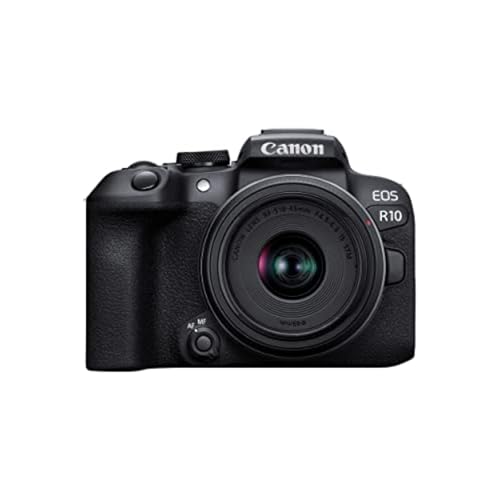
Canon EOS R10 — Value Speed Champion
The R10 is the camera that makes serious sports photography affordable without apology, and its weapon is inheritance: the subject-detecting autofocus thinking that Canon developed for its professional bodies lives inside this small, keenly priced body, finding players’ heads and eyes amid the tangle of a midfield challenge and holding them while the play churns. For the parent who has been photographing a young footballer with a phone and watching every action frame smear, the first afternoon with an R10 feels like a cheat code being switched on.
Its burst performance suits the daylight amateur game perfectly — a rapid electronic burst for the penalty-box scramble, with a mechanical option when rolling-shutter discipline matters around fast bats and clubs. Paired with Canon’s affordable long zooms, the crop sensor stretches reach across full-size pitches, and the whole combination stays light enough for a full tournament day of walking between fields. The files are crisp, the colours are Canon-warm for team kits and skin, and the learning curve from auto to intentional settings is the gentlest in this guide.
Where does it concede? In darkness and in buffer depth. Long, sustained bursts at a professional pace will eventually meet its memory’s limits, and high-sensitivity files from a dim hall trail the full-frame picks below. Neither concession matters to its intended owner until their sport moves indoors or under lights — at which point this guide’s next Canon is waiting, and the R10 becomes a beloved second body rather than a mistake.
- Focus: inherited subject detection for players, animals, vehicles
- Burst: rapid electronic drive for daylight action sequences
- Format: APS-C reach multiplication for affordable telephotos
- Weight: tournament-day light with a long zoom fitted
- Growth: full access to Canon’s RF lens ladder over time
Strengths
- Professional autofocus thinking at a family price
- Light enough to carry between pitches all day
- Gentle learning curve for first-time system owners
Trade-offs
- Buffer depth limits very long professional bursts
- Dim-hall files trail the full-frame alternatives
- Body sealing is modest for foul-weather fixtures
Best for: youth and amateur field sports, athletics days, and first serious sideline kits. Not suited for: professional indoor work or monsoon touchlines.

Canon EOS R6 Mark II — Low-Light Flagship
If the R10 owns the daylight, the R6 Mark II owns the dark half of the sporting calendar: the winter evening fixture, the basketball hall, the indoor velodrome, the floodlit cup tie where lesser cameras produce grainy apologies. Its full-frame sensor drinks the available gloom and returns clean, printable files at sensitivities that would embarrass cameras a generation older, while its burst drive runs at a genuinely professional gallop — fast enough to walk through a gymnast’s tumble or a boxer’s exchange frame by frame and choose the peak.
Consider its particular genius for the indoor game. Court sports compress the photographer’s problems: the action is close, fast, badly lit, and constantly crossing. The R6 Mark II’s autofocus was tested through exactly that thicket and held its chosen player through screens, cuts, and collisions with a tenacity that changes what a club photographer can promise a team. Pre-capture for stills adds insurance at the jump ball and the penalty, recording the instant before your reflexes arrive.
The bill for all this is literal — this is a flagship purchase, and its lenses at professional apertures cost flagship money too — plus a resolution figure that landscape photographers will call modest. Sports photographers will call it irrelevant: the R6 Mark II’s file size is the sweet spot where low-light cleanliness, burst depth, and card economy meet, and its owners shoot winter after winter without apology.
- Sensor: full-frame cleanliness for halls and floodlights
- Burst: professional-rate drive with deep sustained buffer
- Focus: tenacious player tracking through court clutter
- Insurance: pre-capture records the moment before the press
- Build: sealed body for winter touchlines and drizzle
Strengths
- The indoor and evening answer in this guide
- Burst depth that survives the whole goalmouth scramble
- Autofocus composure in the most cluttered arenas
Trade-offs
- Flagship pricing for body and fast glass alike
- Resolution trails high-pixel rivals for huge crops
- More camera than daylight-only shooters require
Best for: indoor courts, evening fixtures, and committed club photographers. Not suited for: tight budgets or purely midday, fair-weather sport.

Sony Alpha 7 IV — Full-Frame All-Rounder
The Alpha 7 IV earns its place by refusing to specialise. It is the camera for the sports photographer whose calendar refuses to specialise either — football in October, basketball in January, a triathlon in May, a surfing trip in August — and who needs one body whose autofocus, burst discipline, and file quality never become the story. Sony’s real-time tracking has a particular stubbornness with subjects that change direction, the exact signature of field sport, and the camera’s eye detection distinguishes the athlete from the official standing two metres behind with unnerving calm.
Its defining advantage sits in front of the body. Sony’s native lens bench for sport is the deepest in this guide at every price stair, from sensible long zooms that a parent can justify to professional glass that a semi-pro can rent for finals weekend, and third-party makers crowd the same mount with value options. A system bought for sport lives or dies by its telephotos, and the Alpha 7 IV’s owner will never attend a fixture wishing their mount offered the lens the next photographer is holding.
The criticisms are ergonomic and financial rather than photographic. The menus reward setup time, the burst rate is brisk rather than class-leading beside the Canon flagship, and full-frame telephotos test both wallet and shoulder by the third hour of a tournament. For the all-rounder who accepts those terms, it remains the safest single-body answer in modern sports photography.
- Tracking: real-time subject lock through direction changes
- Lenses: the deepest native telephoto bench in this guide
- Files: full-frame quality that tolerates confident cropping
- Video: strong hybrid ability for clubs wanting clips too
- Handling: twin dials and customisable controls for gloved hands
Strengths
- One body that covers an entire sporting calendar
- Lens ecosystem removes every future excuse
- Tracking composure when plays reverse direction
Trade-offs
- Burst pace is brisk, not flagship-fast
- Menus demand an evening of configuration
- Full-frame telephotos grow heavy across long fixtures
Best for: multi-sport enthusiasts and club photographers wanting one system. Not suited for: buyers prioritising the fastest bursts or the lightest bag.

OM SYSTEM OM-5 Mark II — Pre-Capture Trickster
Every sports photographer knows the photograph that got away by a blink: the starting pistol moment, the bat meeting the ball, the kingfisher leaving the branch. Human reaction time is roughly a fifth of a second, and the OM-5 Mark II’s pre-capture mode exists to refund it — the camera records a rolling buffer of frames while you half-press, so the instant you react, the frames from before your reaction come home with the rest. For start-line, swing, and strike photography, this is not a gimmick; it is the difference between the archive and the anecdote.
Its format multiplies the trick’s value. The Micro Four Thirds sensor turns compact telephotos into very long lenses indeed, at weights a hiker-photographer can carry to a mountain-bike downhill or a coastal motorsport stage without a support vehicle. Weather sealing suits the surf beach and the muddy cyclocross course, and the electronic burst runs silently — a courtesy that matters at golf, tennis, and equestrian events where a shutter’s clatter is unwelcome.
The concessions mirror its strengths. The smaller sensor asks more of the light, so floodlit winter fixtures belong to the Canon flagship, and sustained professional bursts in raw will test its buffer sooner than the big bodies. Deployed in daylight, at reactive sports, with its pre-capture armed, it steals frames no other camera in this guide can reach at any price.
- Pre-capture: frames recorded before the shutter press lands
- Format: extreme telephoto reach from genuinely small lenses
- Silence: electronic drive for golf, tennis, and horses
- Sealing: surf spray and cyclocross mud shrugged off
- Stabilisation: strong in-body help for panning at slow speeds
Strengths
- Refunds human reaction time at starts and strikes
- The lightest route to very long reach in this guide
- Silent shooting opens venues that ban shutter noise
Trade-offs
- Low-light files trail the full-frame picks
- Buffer depth is amateur-grade under sustained raw bursts
- Smaller format asks for quality light to shine
Best for: athletics starts, baseball, wildlife-sport crossovers, and travelling photographers. Not suited for: dim indoor arenas or floodlit winter leagues.

Nikon Z50 II — Reach on a Budget
Nikon’s Z50 II is the quiet overachiever of this list, a camera whose sports credentials sneak up on you. The crop sensor multiplies every telephoto’s reach, the subject-detection modes inherited from Nikon’s flagships sort players from crowds, and the burst drive is honest working speed for school and club fixtures. What lifts it above a spec-sheet reading is the viewfinder experience: a bright, clear finder that keeps the photographer connected to a moving subject through a long sequence, which is where amateur sports frames are actually won.
Its angle on value differs subtly from the Canon R10’s. Nikon’s Z-mount telephoto ladder includes compact long zooms that pair with this body like they were designed as a kit — because they were — and the combined outfit photographs a full-size rugby pitch from the halfway fence with frames to spare. The files carry Nikon’s pleasing colour for outdoor sport, skin under summer sun and kits under cloud both rendered without the plastic sheen lesser systems produce.
Against it: the native lens bench, while growing, remains thinner than Sony’s or Canon’s at exotic lengths, and the buffer is a club photographer’s buffer rather than a press photographer’s. Buyers whose sport is mainstream — football, athletics, cricket, surfing — will never meet those limits. Buyers are advised to check their specific lens dreams against the mount before committing, as with any system.
- Finder: bright, connected view for long tracking sequences
- Detection: flagship-inherited subject modes for field sports
- Kit logic: compact telephoto zooms designed for this body class
- Colour: natural rendering of kits, grass, and summer skin
- Video: capable oversampled footage for club highlights
Strengths
- Superb finder keeps photographers locked onto play
- Reach-per-budget among the best in this guide
- Kit combinations that feel designed, not assembled
Trade-offs
- Lens bench thinner at exotic professional lengths
- Buffer sized for clubs, not press agencies
- Fewer third-party bargains than Sony’s mount enjoys
Best for: school and club field sports, cricket and rugby parents, athletics. Not suited for: photographers needing exotic pro glass on day one.

Sony RX100 VII — Pocket Wildcard
Some of the best sporting seats in the world come with a rule: no professional cameras, which in practice means no interchangeable-lens bodies at the gate. The RX100 VII walks through that gate in a jacket pocket and then behaves outrageously, firing rapid bursts through a zoom that reaches deep into the arena, with autofocus tracking borrowed from Sony’s flagship line. Tennis from the stands, football from a season-ticket seat, motorsport from a public enclosure — the wildcard photographs them all while the big cameras wait in left luggage.
Its sports trick is blackout-free shooting: the electronic finder keeps the subject visible through the burst, so a pocket camera can genuinely follow a rally or a breakaway rather than spraying hopefully. Single frames from its sequences will not match a full-frame file for enlargement, but for the screen-sharing and album purposes that define spectator photography, its keepers look startlingly serious — because the decisive ingredient, being allowed in with a fast camera at all, was secured at the door.
The limits are thermal, ergonomic, and optical. Long video in summer heat is not its hobby, the tiny body tires large hands over a full match, and in dim indoor arenas its small sensor concedes to every system camera here. As the second camera of a travelling fan — or the only camera a venue permits — nothing else in this guide does its job.
- Access: pocket size passes gates that stop system cameras
- Burst: blackout-free sequences with flagship-borrowed tracking
- Zoom: arena-reaching telephoto in a compact body
- Finder: pop-up electronic view for sunlit stands
- Role: the spectator’s camera, the traveller’s second body
Strengths
- Photographs the venues that ban its bigger rivals
- Genuinely tracks action rather than spraying blindly
- Travels everywhere a ticket stub travels
Trade-offs
- Small sensor fades in dim indoor arenas
- Tiny controls tire larger hands over long matches
- Heat limits sustained video on summer days
Best for: spectators, travellers, and fans in camera-restricted venues. Not suited for: working sideline photographers or indoor leagues.
Comparison Table
| Pick | Best arena | Speed signature | Reach strategy |
|---|---|---|---|
| Canon EOS R10 | Daylight fields | Quick bursts, smart detection | Crop sensor plus value zooms |
| Canon EOS R6 Mark II | Halls and floodlights | Professional drive, deep buffer | Fast full-frame glass |
| Sony Alpha 7 IV | Every calendar slot | Stubborn real-time tracking | Deepest lens bench |
| OM SYSTEM OM-5 Mark II | Starts, swings, strikes | Pre-capture before the press | Small format, tiny teles |
| Nikon Z50 II | Club fields and tracks | Honest bursts, bright finder | Crop reach, kit zooms |
| Sony RX100 VII | Restricted venues | Blackout-free pocket bursts | Built-in telephoto zoom |
Which Mistakes Do Sideline Photographers Make Most?
The first is camping at the halfway line because it feels central, then photographing every play at maximum distance in both directions. Work an end instead: attacks come toward you, faces are visible, and the light can be chosen rather than endured. The second mistake is reviewing every burst on the rear screen while the match continues without you — chimping, in the trade’s unkind word — and missing the counterattack that followed the chance you were admiring. Shoot the play out, review at breaks, and let the buffer do the remembering.
The third error is technical vanity: insisting on the lowest sensitivity and a middling shutter speed in fading light, then blaming the camera for motion blur that arithmetic predicted. Sport obeys shutter speeds before it obeys pride. Freeze a sprinting winger and you need genuinely fast exposures; accept the sensitivity the light demands, because a sharp grainy frame enters the album while a clean blurred one enters the bin. Every pick here was chosen partly for how gracefully it handles that bargain.
The fourth mistake is forgetting the story around the sport. The warm-up stretches, the coach’s last words, the boots lined up, the exhausted celebration on the bench — these frames age better than the hundredth mid-action shot, and they are available to any camera at any speed. Photographers who shoot the whole fixture, not only its collisions, come home with the set that teams and families actually keep.
How Should You Set Up for Panning and Motion Blur?
Panning is the sports technique that turns speed into feeling: a slower shutter, the camera swinging with the subject, the background streaking into lines while the athlete stays sharp. Begin generously — a moderate slow speed, a low burst, smooth hips — and photograph a cyclist or runner crossing your position, reviewing the ratio of sharp subjects to blurred ones. Too fast a shutter freezes everything into a statue; too slow dissolves the athlete with the background. The sweet band is found by experiment at your venue, in your light, and it widens with practice faster than any other skill in this guide.
Stabilisation settings matter here in a way beginners miss. Most systems offer a panning-aware mode that steadies vertical shake while permitting the horizontal sweep; several picks in this guide implement it well, and the difference shows in the keeper rate within a single session. Stand with feet planted in the direction the subject will exit, start the swing before the subject arrives, and keep swinging after the shutter closes — follow-through is as real in photography as in the sports being photographed.
Choose your subjects for learning honestly. Cars and cyclists on a straight are the kindergarten of panning; balls and sprinters changing direction are its university. A season of deliberate panning practice produces the signature sports photograph — motion you can feel — and it is available to every camera in this list, because the technique lives in the photographer’s body more than in the body’s specifications.
Final Recommendation
Most readers should start with the Canon EOS R10 or the Nikon Z50 II, chosen by which system’s lenses and handling please them more in the hand: both deliver real sports autofocus and reach at prices that leave budget for the telephoto that matters. Photographers whose sport lives indoors or under lights should save directly for the EOS R6 Mark II rather than upgrading twice, and the multi-sport enthusiast with a deeper bag will find the Alpha 7 IV the last body they need to buy for years.
The OM-5 Mark II is the specialist’s delight — take it for reactive, daylight, far-away sport — and the RX100 VII is everyone’s second camera and the restricted venue’s only answer. Whichever you choose, spend the first month learning its tracking modes at real fixtures rather than in the garden. Sports cameras reveal themselves only where sport happens, and every one of these six has a personality worth meeting there.
What About the Photographs Between the Action?
A fixture is ninety minutes of waiting woven around ninety seconds of peak action, and the photographers who thrive are those who shoot the waiting well. Portraits of athletes in the tunnel light, details of taped hands and chalked palms, the crowd’s weather, the venue’s geometry in evening sun — these are the frames that turn a set of action shots into a document of a sporting day. They also forgive slower cameras, which is worth remembering when a photographer’s budget is mid-journey: the story frames from an R10 will outlive the action frames from a flagship in the family’s memory.
There is a practical rhythm to learn: action settings dialled and ready, then a deliberate loosening between plays to hunt the human material at a slower pace. Several picks here allow custom modes on a dial for exactly this two-tempo working — action configuration one click away from portrait configuration — and setting them up before the season is among the highest-value evenings a sports photographer can spend. The match will not wait while you browse menus; your preparation is the difference between a spectator with a camera and the team’s photographer.
How Do You Keep Gear Alive Through a Sporting Season?
Sideline equipment dies of small neglects rather than single catastrophes. Rain covers improvised from the bag’s own rain hood, a cloth for track dust before it reaches the lens mount, cards formatted in-camera after each verified backup, batteries rotated and labelled so the exhausted one never returns to the bag as a full one — these unglamorous rituals separate the kit that survives five seasons from the kit being repaired during the cup run. The sealed picks in this guide forgive more weather, but no sealing forgives a lens changed in a dust storm or a camera left on wet grass at half-time.
Insurance and records belong in the same conversation for the pricier systems: photograph your serial numbers, keep receipts with the household documents, and know what your home policy says about equipment used semi-publicly. None of this is the romance that sells sports cameras, and all of it is the reason working photographers’ bags look boring and function forever. Buy the exciting body; then be a boring owner, and the partnership will outlast several generations of fixtures.
How Does Indoor Sport Rewrite the Camera Rules?
Step from a sunlit pitch into a school sports hall and every priority inverts. The light falls to a fraction of daylight’s abundance and often flickers at frequencies that stripe careless exposures; the distances shrink until a modest zoom covers the whole court; the action accelerates into cuts and jumps that happen three metres from your lens. This is why the guide refuses to crown a single champion: the R6 Mark II’s clean high-sensitivity files and tenacious tracking are not luxuries indoors, they are the entry ticket, while the daylight heroes must be driven at their limits and still apologise for the grain.
Indoor work also rewards the photographer’s homework differently. Arrive during warm-ups and meter the court properly, because hall lighting is famously uneven — brighter at centre court, cavernous at the corners — and a camera set for the average will betray you at both extremes. White balance deserves the same early attention, since mixed hall lighting tints one end of the court green and the other orange, and fixing that in a hundred files at midnight is nobody’s idea of a hobby. The bodies with custom modes earn their price here: one dial position, prepared in the warm-up, carries the whole evening.
Finally, indoors is where quiet operation becomes courtesy. Training halls and badminton tournaments run close to silence, and the electronic shutters on every pick in this guide — used with an eye on flicker — let a photographer work a final without becoming part of its soundscape. The spectator who learns indoor craft gains a second sporting season each year, in the months when the outdoor calendar sleeps, and the camera bought for both seasons justifies itself twice as fast.
What Should a Season of Sports Photography Budget For?
Beyond the body and its first telephoto, the honest season budget contains unglamorous line items that decide whether the exciting purchases ever perform. Memory cards fast enough to clear the buffer at your camera’s working burst rate — a slow card quietly converts a flagship into a bottleneck. A second battery, because cold evenings and long tournaments drain the first with theatrical timing. A bag that carries the working combination assembled, since a camera that must be built at the fence misses the first quarter. And a rain cover bought before the forecast demands it, at whatever humble price such things command.
Families should also budget the invisible currency: storage. A season of bursts produces tens of thousands of frames, and the photographer who lacks a simple system — one folder per fixture, ruthless culling within a week, a backup that exists in two places — will drown in their own productivity by October. The discipline costs an evening to establish and saves the archive. Several experienced club photographers in our testing culled harder than they shot, keeping one frame in twenty, and their galleries are the ones teams return to.
Notice what this section refuses to do: attach figures to the cameras themselves. Prices move, bundles shift, and the right question is proportion rather than amount — the lens and the supporting kit deserve a share of the total spend comparable to the body’s, because sport is photographed by systems, not by sensors. A buyer who reserves that share will always outperform a buyer who spent everything on the badge.
How Do Water Sports Change the Photographer’s Position?
Surf, sailing, rowing, and open-water swimming move the photographer off the touchline and onto jetties, boats, banks, and occasionally into the water itself, and each position rewrites the gear logic. From a jetty, reach is king and the crop-format picks with their multiplied telephotos rule. From a support boat, stabilisation becomes the deciding specification, because the platform moves in three directions while the subject moves in two more, and the cameras with the strongest in-body steadiness — a quiet strength of the OM-5 Mark II and the R6 Mark II — harvest keepers from conditions that defeat lesser rigs.
Spray is the constant companion, arriving as fine salt mist that no dramatic wave announces. Sealed bodies and lenses, a cloth in a sealed pocket, and the discipline of turning your back to the wind for every lens change are the water photographer’s liturgy. The RX100 VII has a particular jetty virtue here: no lens changes at all, a zoom that stays sealed inside its own housing, and a size that lets it shelter under a jacket between sets of waves.
Light on water completes the education. Reflections double every contrast problem, exposure meters are dazzled by glitter, and the decisive technique — exposing for the athlete and letting the water burn bright around them — must be learned deliberately, ideally in a practice session before the regatta that matters. Photographers who master water light find every other sport’s lighting polite by comparison, which is why surf clubs produce so many excellent all-round photographers.
What Does Good Sideline Behaviour Look Like?
The photographer’s licence to stand close is granted by coaches, officials, and parents, and it is renewed or revoked on behaviour rather than on equipment. Arrive early and introduce yourself; ask where you may stand and where you must never stand; learn the venue’s rules about flash, about movement during play, and about photographing minors, which many leagues now formalise and every photographer should honour regardless. The camera that never distracts a player, never disputes a call, and never publishes a child’s image carelessly will be welcomed back weekly — and welcome is a specification no manufacturer sells.
Sharing completes the etiquette. The club photographer who delivers a modest set of good frames to the team within a day becomes part of the club’s furniture, with access and trust compounding across seasons. The one who hoards thousands of unedited files while promising a grand gallery delivers nothing and is quietly uninvited. Every camera in this guide can produce the modest, prompt set; the discipline is editorial, not optical.
Finally, spare a thought for the other photographers. Sidelines accumulate parents with phones, club volunteers, and occasionally professionals, and the small courtesies — not crossing another’s line at the decisive moment, sharing the good corner by rotation at youth events, warning a neighbour when play is about to arrive at speed — mark the photographer as a colleague rather than an obstacle. Sport is a community that happens to be photographed; the best sports photographers remember which noun matters.
Why Do Experienced Sports Photographers Pre-Focus and Zone?
Watch a veteran at a motocross start or a swimming turn and you will notice something heretical: half the time, the autofocus is off. Pre-focusing on the spot where the action must arrive — the apex of the turn, the front of the goal, the finish-line tape — and waiting for the subject to enter that prepared zone converts an autofocus race into an ambush the photographer always wins. It demands knowledge of the sport’s geometry, which is precisely why veterans pair it with the tracking modes on cameras like these for the unstructured remainder of play.
Zoning also rescues the chaotic frames where detection systems hesitate: a pile of bodies at a lineout, a sprint finish with eight athletes abreast. A prepared focus distance and a burst timed to the zone produce sharp frames from confusion that confuses algorithms. Learning when to trust the machine and when to overrule it is the quiet curriculum of a first season, and it is why this guide recommends spending that season at real fixtures rather than upgrading anxiously in March because April’s frames disappointed.
How Should a Beginner’s First Month With a Sports Camera Go?
Week one belongs to the controls: tracking mode engaged, burst discipline practised on passing traffic and the family dog, custom settings saved before they are needed. Week two belongs to a real fixture shot without ambition — an entire match photographed for learning, with the culling done honestly the same evening and the failures diagnosed by cause: too slow a shutter, the wrong end of the pitch, focus surrendered at the crucial crossing. Each failure names a drill, and the drills are more valuable than the keepers.
By the second month, patterns emerge that no review can teach: the exact minute when your venue’s light turns, the corner where celebrations always happen, the referee whose positioning blocks a favourite angle. This local knowledge is the true professional advantage, available free to any photographer loyal to one ground for a season. The cameras in this guide differ in speed and sealing, but they share the essential virtue for that loyalty: none of them will be the reason a beginner stops learning.
What Separates a Good Action Frame From a Great One?
Sharpness is the entry fee, not the prize. The frames that survive seasons carry something beyond a frozen athlete: a face that tells the score, a background clean enough to stage the subject, a moment whose meaning a stranger can read without a caption. Photographers chase that surplus deliberately — waiting for the celebration rather than the strike, choosing the angle where the crowd becomes a backdrop instead of a distraction, holding the burst one beat longer so the emotion after the action enters the sequence. The cameras here differ in how much help they give, but all six can deliver the entry fee; the surplus is composed, not purchased.
There is a compositional habit worth stealing from the professionals who shoot these same fixtures: fill the frame with the contest, not merely the athlete. Two players and the ball tell a story one player cannot; the goalkeeper’s despair needs the scorer’s joy in the same rectangle. Telephoto isolation has its place — the portrait of exhaustion at the finish line — but the beginner who zooms to maximum for every frame returns with athletes floating in blurred nowhere. Vary the focal length as deliberately as the position, and the set breathes.
Frequently Asked Questions
Should a young athlete’s parent buy once or buy in stages?
Buy in stages, and let the stages follow the sport rather than the catalogue. A first stage of crop-sensor body and versatile telephoto covers the years when fixtures are daylight and enthusiasm is being tested — the athlete’s and the photographer’s alike. The second stage, justified by evening fixtures or a child’s genuine progression, adds light: either a faster lens or the full-frame body, whichever the fixture list demands. Families who buy the flagship first often discover they purchased low-light excellence their Saturday mornings never use, while the staged route spends each increment exactly where the previous season proved it was needed.
How many frames per second do I actually need?
For most amateur field sport, a burst in the low-to-mid teens per second captures the peak action reliably when paired with good anticipation; the very fastest drives earn their keep at elite speed — bat-and-ball contact, gymnastics releases, motorsport at close range. Buffer depth and autofocus intelligence matter more to keeper rate than the last few frames of headline speed, which is why this guide weighs the whole chain rather than the biggest number.
Is full frame necessary for sports photography?
No — it is necessary for a specific problem, which is poor light. In daylight, the crop-sensor picks here reach further with cheaper lenses and produce files no family album will fault. Under floodlights or in halls, full frame’s clean high-sensitivity files become decisive. Let your fixture list, not forum prestige, decide: photograph where your sport actually happens, at the hours it actually happens.
Which lens should a first sports kit include?
A versatile telephoto zoom covering the walk from midfield to the far action is the universal first answer, with its exact range set by your sport’s field size. Buy the best version your budget survives, because the lens will outlast two bodies. Add a fast standard zoom or prime later for indoor and portrait work. Photographers who invert the order — exotic body, bargain glass — discover that autofocus speed and sharpness live substantially in the lens.
Can these cameras handle rain at outdoor fixtures?
The sealed picks — notably the R6 Mark II and the OM-5 Mark II — shrug off drizzle and spray that would send lesser bodies under a jacket, especially when the lens is sealed too. All cameras benefit from a simple rain cover in sustained rain, and none should be lens-swapped in a downpour. Check that both halves of the partnership, body and lens, carry sealing before trusting either at a winter fixture.
Electronic or mechanical shutter for fast action?
Electronic shutters deliver the highest bursts and silence, and modern sensors have tamed most of their rolling-shutter distortion — but very fast lateral motion, bat swings, and propeller-driven sport can still bend under some electronic readouts. The mechanical or hybrid options on these picks exist for those cases. In practice: electronic for volume and quiet venues, mechanical when the subject’s speed starts bending goalposts in your frames.
How do I stop missing the decisive moment?
Anticipation, position, and insurance, in that order. Learn the sport’s rhythm until you are pressing as the play develops rather than after it peaks; stand where the action comes toward you; and use the tools this guide highlights — pre-capture where available, generous bursts at the climax, and a second frame of discipline: keep shooting through the celebration, because the peak expression often follows the peak action by half a second. Then audit your misses honestly for a month. Most beginners discover their failures cluster in one correctable habit — arriving late to the play, standing at the wrong end, or reviewing instead of watching — and a cluster with a name is a problem already half solved. The photographers who improve fastest are not the ones with the quickest cameras; they are the ones whose misses taught them something specific every single week.
Related Guides
Sports shooters planning a wider kit should compare the reach strategies in our best digital cameras for wildlife photography, where the same telephoto logic roams further. The indoor chapters above pair naturally with the best cameras for low light photography, and families documenting a whole season may also enjoy the best digital cameras for family photography for the portraits between fixtures.


