kajuandouglas.com is reader-supported. When you buy through links on our site, we may earn an affiliate commission.
Where to Buy a Camera for Good Concert Footage, Where the Light Is a Rumour and the Bass Is a Weather System
The best cameras for good concert footage are forged in the worst conditions photography offers: light that changes colour and intensity ten times a song, a stage thirty metres from the barrier, a performer who treats stillness as a rumour, and a crowd whose joy expresses itself through your elbows. Concert footage fails in predictable ways — smeared faces, hunting focus, blown highlights where the follow spot lands, audio like a cement mixer — and the cameras below were chosen because they refuse each of those failures in turn.
Good concert footage is really three crafts wearing one coat. It is low-light video, where sensitivity and stabilisation decide whether the singer’s face exists. It is audio, because a concert clip with ruined sound is a screensaver, whatever the picture does. And it is diplomacy: venues, artists, and fellow fans all have rules about cameras, and the footage that survives the evening is the footage nobody objected to. The picks span the pit photographer’s full-frame tool, the fan’s pocket solution, and the small cameras that venues wave through without a second look.
Where to buy: each linked name leads to that camera’s Amazon listing, and concert shooters should order like a crew of one — the camera, a fast card that will not stutter mid-set, a spare battery for the encore you did not plan to stay for, and the small audio recorder or microphone that rescues the sound when the camera’s position is wrong for its own microphones. Footage is a chain; the listing page is where its weakest link gets replaced.
The range is deliberate. Two full-frame hybrids anchor the serious end, where promoters’ photo pits and commissioned work live. A video-first compact and a pocket gimbal camera serve the fan who films from the crowd with the venue’s blessing. An action camera with a wide, forgiving eye covers the front-row chaos and the festival field. Between them sits a creator-focused mirrorless body for the musician filming other musicians — the rehearsal-room and small-venue shooter who is this genre’s quiet majority.
A word about permission before a word about pixels: many venues ban interchangeable-lens cameras at the door while welcoming compacts, and many artists ban filming entirely. This guide assumes you shoot where shooting is allowed — with a pass, at camera-friendly shows, or of your own scene’s bands who want the footage. The best concert camera is partly a technical choice and partly the one that gets through the door.
Key Takeaways
The set list, before the house lights drop:
- Concert footage is low-light video plus audio plus permission — a camera must serve all three.
- The Sony Alpha 7 IV leads for serious work: sensitivity, stabilisation, and focus that keeps a singer’s face.
- Audio decides whether a clip is watchable; plan the sound as deliberately as the picture.
- Small cameras get through doors that stop big ones — venue rules shape the shortlist as much as sensors do.
- Lock exposure manually; a stage’s lighting rig will drive any automatic system into seasickness.
In this guide
Quick Picks
Six cameras for the pit, the crowd, and the rehearsal room.
| Camera | Badge | Why it earns its place here |
|---|---|---|
| Sony Alpha 7 IV | Best for Serious Concert Work | Low-light video, face-holding focus, and stabilisation for the pit and the commission. |
| Panasonic LUMIX S5II | Best for Long Sets | Heat-calm recording and video tools for filming whole shows without anxiety. |
| Canon EOS R6 Mark II | Best for Crowd Energy | Stabilisation and low-light grace for handheld filming inside the moving crowd. |
| Sony ZV-E10 II | Best for Musicians Filming Musicians | Creator-first video in a small body that small venues barely notice. |
| DJI Osmo Pocket 3 | Best Pocket Concert Camera | A gimbal in a coat pocket — smooth footage from the crowd, invisible at the door. |
| Insta360 Ace Pro 2 | Best for Front Rows and Festivals | Wide, tough, and stabilised for the barrier, the mosh edge, and the muddy field. |
How Did We Choose the Best Cameras for Good Concert Footage?
Low-light video character came first: how the sensor behaves when the stage is lit like a cave and then, without warning, like a supernova. We weighed clean sensitivity, highlight manners under follow spots, and autofocus that treats a moving singer’s face as a contract rather than a suggestion. Cameras whose focus breathes or hunts under coloured light were cut, however fine their daylight reels.
Second, the long-set virtues: stabilisation that survives a handheld hour, recording stamina without heat drama, and batteries and media that treat a two-set evening as one job. Third, the sound path — microphone inputs, headphone monitoring where offered, and wind and handling manners — because the genre’s audience forgives a soft frame sooner than distorted audio.
What we discounted: stills burst rates, daylight colour contests, and any feature that requires the lighting rig’s cooperation. A concert camera performs in somebody else’s weather, and this list respects the forecast.
Why Is Concert Footage So Much Harder Than It Looks?
Because the stage is lit for the audience’s eyes, not for sensors. Human vision adapts across an enormous range and forgives colour that a camera must commit to: the magenta wash that looks atmospheric from row twelve records as a chemical spill, and the follow spot that seems merely bright is, to a sensor, a small sun with a singer attached. Add strobes, haze that eats contrast, and a drummer at the back in what appears to be a coal mine, and the dynamic range of a single frame spans most of what photography knows.
Motion compounds it. The performer moves, the crowd moves, you move, and the camera’s stabilisation and shutter choices must arbitrate between them all while the light changes its mind. Footage shot on automatic exposure pulses with every lighting cue, because the camera keeps re-deciding what the scene is; concert shooters learn to lock their exposure and let the rig’s drama play across a stable picture, which is why manual control is this genre’s first commandment.
And then there is the sound, arriving at concert volume through microphones designed for conversation. The camera that cannot take an external microphone, a recorder’s feed, or at least a sensible gain setting will hand you a picture of a concert and the audio of an accident. The picks below each offer a workable sound path; the sections after them explain how to walk it.
What Do Venues and Artists Actually Allow You to Film With?
The door policy is the genre’s hidden specification sheet. Arena and theatre shows commonly prohibit interchangeable-lens cameras for ordinary ticket holders, whatever the camera’s quality, while compacts and pocket devices pass as personal electronics. Clubs and grassroots venues invert the logic: the scene wants documentation, the bands ask for footage, and a mirrorless body at the front is a familiar, welcome sight. Know which world your evening belongs to before choosing what to carry.
Photo passes change the arithmetic entirely — three songs from the pit, no flash, house rules signed — and the serious picks here are built for exactly that discipline: fast, quiet, reliable under a time limit that forgives no menu-diving. If you shoot your local scene regularly, the pass economy runs on trust: deliver the footage, credit the venue, never be the person security remembers.
Artists’ wishes sit above every policy. Some ban filming and mean it; some plant their own crew and prohibit duplicates; many simply ask that phones and cameras stay low during the quiet songs. The footage-maker’s etiquette — screen dimmed, camera below head height, neighbours unblocked — is not decoration. It is the licence the whole hobby renews nightly, and the small picks in this list exist partly as etiquette you can hold.
Which Cameras Keep the Singer in Focus? The Six Picks in Detail

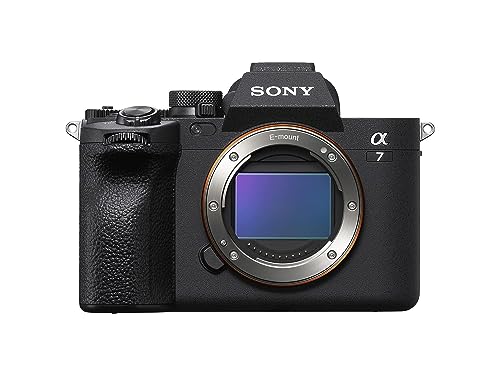
Sony Alpha 7 IV — Best for Serious Concert Work
The Alpha 7 IV is the camera the pit reaches for when the footage is commissioned and the light is hostile. Its sensor keeps faces legible in the wash between cues, its autofocus treats a singer’s eyes as a standing appointment, and its stabilisation steadies the long-lens framing from the barrier that lesser systems turn to soup. In a three-song pass window, that combination is not a luxury; it is the difference between a delivered set and an apology.
Its hybrid depth serves the whole assignment: stills for the gallery between video passes, a microphone input and monitoring for a workable sound chain, and files that grade kindly when the lighting designer has painted the stage a colour not found in nature. Promoters’ photographers build their muscle memory around bodies like this because the body repays it — controls where the dark expects them, reliability that survives the tour’s third week.
Choose it if concert footage is work, or the ambition is work: the portfolio body, the one whose footage a venue can put on its own channels without a wince. It also moonlights honourably across the rest of a photographer’s life, which matters when one camera must justify itself all year.
The costs are professional-tier costs — the body, the fast glass it deserves, the size that door policies notice. At camera-friendly shows and on passes, none of that counts against it; at a strict arena door, it simply will not be the camera in your hand, and this list’s smaller picks exist for that evening instead.
- Type: full-frame hybrid mirrorless
- Signature: face-holding focus in bad light
- Sound: microphone input and monitoring
- Stamina: built for commissioned sets
- Concert role: the pit professional
Strengths
- Faces survive the lighting rig.
- Focus keeps its promises mid-song.
- Stills and video share one mastery.
Trade-offs
- Door policies notice its size.
- Fast glass is a second investment.
- Menus reward a studied owner.
Best for: pass holders, promoters’ shooters, portfolio builders.
Not suited for: strict-door arenas as a ticket holder.

Panasonic LUMIX S5II — Best for Long Sets
Some concert footage is not three songs but the whole show: the jazz residency filmed for the band’s archive, the classical evening, the theatre production, the livestreamed set from the back of the hall. The S5II is this list’s long-set specialist — a video-led full-frame body engineered to record at length without the heat anxiety that haunts the genre, with stabilisation that makes a rear-of-hall tripod optional rather than mandatory.
Its video toolkit reads like a concert brief: waveform and monitoring aids for exposure discipline under changing light, a sound path fit for a feed from the desk where the venue allows it, and colour that treats stage magenta with unusual diplomacy. Bands who film themselves choose it because it behaves like a crew member — set it, trust it, check it at the interval.
In the crowd, its stabilisation and low-light manners hold their own against the list’s leaders, and its stills are far better than its video-first reputation suggests. The shooter who films entire evenings, rather than highlights, will find its calm stamina the feature that matters at minute eighty.
Its autofocus story is a generation’s conversation — much improved, occasionally still outshone by the Sony’s face-tracking tenacity on a weaving vocalist — and its ecosystem asks for deliberate lens choices. For the long-set brief, those are footnotes; endurance is the headline, and endurance is what it sells.
- Type: full-frame video-led mirrorless
- Signature: records whole shows calmly
- Tools: monitoring aids for wild light
- Sound: ready for a desk feed
- Concert role: the archive and livestream body
Strengths
- Minute eighty looks like minute one.
- Exposure tools tame lighting rigs.
- Stabilisation frees the tripod question.
Trade-offs
- Face tracking a step behind Sony.
- Lens cupboard needs planning.
- Video depth intimidates beginners.
Best for: full-show archives, livestreams, resident bands.
Not suited for: three-song sprint specialists wanting the fastest focus.

Canon EOS R6 Mark II — Best for Crowd Energy
The R6 Mark II is the camera for filming from inside the event rather than at it: handheld in a moving crowd, passed overhead for the chorus, steady enough at arm’s length to keep the stage framed while the floor bounces. Its stabilisation is the list’s most forgiving, its low-light files stay handsome under coloured wash, and its autofocus finds the performer through a forest of raised hands with a persistence that feels like local knowledge.
Canon’s colour loyalty, praised wherever faces matter, matters doubly at concerts, where skin under stage light is the first casualty of lesser pipelines. Singers look like themselves in its footage — lit theatrically, certainly, but recognisably human — and the crowd shots share the same kindness, which is why fan-made films from this body feel warm rather than forensic.
Choose it as the one-camera concert life: the festival weekend, the club circuit, the wedding band’s second career. It shoots the stills, films the sets, and survives the schedule without demanding a crew’s logistics, and its owner’s footage tends to have the genre’s rarest quality — energy that survived the trip home.
Long static recordings from a fixed position are the S5II’s parish rather than its own, and its professional tier prices the ticket. As a moving, handheld, crowd-level instrument it is the list’s most joyful camera, and concerts, at crowd level, are supposed to be joy.
- Type: full-frame mirrorless
- Signature: stabilisation for moving crowds
- Colour: faces stay human under wash
- Focus: persists through raised hands
- Concert role: the energy camera
Strengths
- Handheld footage stays composed.
- Skin survives the lighting designer.
- One body, whole festival weekend.
Trade-offs
- Long fixed recordings trail the S5II.
- Professional tier investment.
- Size draws the door’s attention.
Best for: festival crowds, club circuits, fan filmmakers.
Not suited for: unattended all-night recording posts.

Sony ZV-E10 II — Best for Musicians Filming Musicians
Most concert footage in the world is not made by professionals; it is made by the support band filming the headliners, the drummer’s partner at the rehearsal-room gig, the scene’s documentarian with a camera bag and a day job. The ZV-E10 II is built for that majority: a video-first mirrorless small enough to be unremarkable at a club door, with creator-grade autofocus, a proper microphone input, and product-showcase cleverness that translates, in this parish, to keeping a moving guitarist framed and audible.
Its smallness is a working method. It mounts on a tiny tripod at the mixing desk, rides a clamp on the lighting bar where the venue allows, and slips into the kit bag beside the cables. Lenses are an ecosystem’s worth, so the same body takes a fast prime for the dark club and a zoom for the outdoor stage, growing with the scene it documents.
Footage quality punches at the full-frame pair’s heels in club light, and its colour and focus aids forgive the operator who is also selling merch between sets. For the musician whose filming is an act of scene citizenship, it is the list’s most sympathetic tool.
It lacks the big bodies’ stabilisation depth and weather indifference, and long sets ask the same heat-and-battery management as any small camera. Within the club circuit’s real distances and durations, those limits stay politely in the background, which is where this camera prefers everything except its subject.
- Type: creator mirrorless, APS-C
- Signature: video-first, door-friendly size
- Sound: microphone input as standard
- Lenses: a growing ecosystem
- Concert role: the scene documentarian
Strengths
- Small enough to be welcome anywhere.
- Focus and sound serve beginners kindly.
- Lens choices grow with the scene.
Trade-offs
- Stabilisation trails the full-frame pair.
- Long sets need battery management.
- No weather sealing for festival rain.
Best for: local scenes, rehearsal gigs, support bands.
Not suited for: commissioned pit work or monsoon festivals.

DJI Osmo Pocket 3 — Best Pocket Concert Camera
The Pocket 3 solves the arena problem by being beneath notice: a gimbal camera the size of a chocolate bar that door staff classify, correctly, as a personal gadget, and that then films with a smoothness no handheld body can match. From a seat or the standing floor, its stabilised eye floats over the crowd’s motion, its screen frames discreetly at waist height, and its footage has the eerie calm of a camera that has never heard of elbows.
Its sensor is a serious one for its size, and its low-light behaviour embarrasses many larger compacts; the follow spot’s drama and the acoustic set’s gloom both survive. Battery and media treat a full show as a reasonable request, and the whole instrument vanishes into a coat when the encore ends, which is the etiquette endgame: footage taken, presence unobtrusive, neighbours unannoyed.
Choose it as the fan’s concert camera of record — the one that attends the shows the big bodies cannot enter, films the tours you follow for love, and doubles as the travel camera for the trip around the gig. Fan archives built on it look startlingly professional, because smoothness reads as production value all by itself.
Zoom is its honest poverty: from the back of an arena, the stage is a postcard unless your seat is kind, and no gimbal fixes geography. Its audio, while willing, wants an external microphone for serious sound. Buy it for the shows your seat serves, and it will not disappoint you; ask it to defeat distance, and geography wins.
- Type: pocket gimbal camera
- Signature: impossible smoothness, tiny presence
- Low light: embarrasses bigger compacts
- Etiquette: waist-height, screen discreet
- Concert role: the fan’s camera of record
Strengths
- Gets in where bodies are banned.
- Smoothness reads as production value.
- Full shows on one charge’s manners.
Trade-offs
- Distance defeats its fixed lens.
- Serious sound wants a microphone.
- Small controls, dark venue, patience.
Best for: arena fans, tour followers, discreet filming.
Not suited for: back-of-hall stages or audio purists unaided.

Insta360 Ace Pro 2 — Best for Front Rows and Festivals
The Ace Pro 2 is the camera for the concert as physical event: the barrier at a metal show, the front row in the rain, the festival field where the camera will be jostled, sprayed, and possibly dropped in something unspeakable. It is waterproof, stabilised, wide-eyed, and unbothered — an action camera whose low-light processing has grown up enough to hold a stage together from the front rows where its wide view belongs.
Its footage style is immersion: the singer looming, the crowd’s hands in frame, the confetti arriving like weather. Mounted on a chest strap or held high on a short grip, it records the concert the audience experienced rather than the one the pit framed, and for fan films, tour diaries, and the band’s own social cuts, that perspective is often the more valuable document.
Low light is where this generation of action cameras stopped apologising: the Ace Pro 2’s processing keeps stage colour coherent and faces readable at distances its lens is meant for. It will not isolate a distant vocalist — nothing this wide can — but within its native range, the barrier and the first ten rows, it is a legitimate concert instrument.
Battery swaps at a festival are a pocket-management exercise, and its audio shares the action camera’s need for help in serious work. As the tough camera of the kit — the one that films where the expensive bodies stay zipped — it earns its place in bags that already own a flagship.
- Type: rugged action camera
- Signature: wide, waterproof, immersive
- Low light: grown-up processing
- Mounting: chest, grip, barrier rail
- Concert role: the front-row witness
Strengths
- Films where flagships stay zipped.
- Immersion no long lens can fake.
- Rain and jostling are non-events.
Trade-offs
- Wide lens cannot isolate distance.
- Audio wants external help.
- Battery swaps need pocket discipline.
Best for: barriers, festivals, band social cuts.
Not suited for: distant-stage detail or quiet acoustic nuance.
How Do the Six Compare at a Glance?
Concerts divide by access before they divide by quality, so the table casts each pick to its kind of show and names its limit.
| Camera | Form | Decisive edge | What you give up |
|---|---|---|---|
| Sony Alpha 7 IV | Full-frame hybrid | Serious low-light work | Door invisibility |
| Panasonic LUMIX S5II | Full-frame video-led | Whole-show stamina | Fastest face tracking |
| Canon EOS R6 Mark II | Full-frame mirrorless | Crowd-level stability | Fixed-post endurance |
| Sony ZV-E10 II | Creator mirrorless | Scene-friendly size | Sealing and stabilisation depth |
| DJI Osmo Pocket 3 | Pocket gimbal | Access and smoothness | Zoom reach |
| Insta360 Ace Pro 2 | Action camera | Tough immersion | Distant detail |
How Do You Get Concert Audio That Does Not Sound Like a Car Crash?
Accept the physics first: at concert volume, a camera’s built-in microphones are listening to an explosion from inside it, and position beats equipment — the sound at the mixing desk is balanced because the engineer balanced it there, while the sound at the barrier is a wall of stage volume and crowd. Where the venue allows, a small recorder at the desk position, or a feed from the desk itself, transforms a film; where it does not, film from nearer the desk than the stage and let the picture’s zoom do the travelling.
Set levels like an engineer, not a tourist: manual gain, conservative headroom, and the limiter as a safety net rather than a strategy. Distortion recorded is distortion forever, while a quiet recording can be raised in the edit; the bravest-looking meter is the one that never quite peaks. Headphone monitoring, where the camera offers it, is the difference between discovering the problem at the show and discovering it at home.
Sync is the craft’s quiet half: a handclap, a visible drum hit, or the camera’s own scratch audio gives the edit its alignment point, and the habit of recording thirty seconds more than the song at both ends gives the editor handles. Concert films are made in the edit from materials the show provided; audio gathered with these manners is the material that makes the cut feel professional.
What Exposure Discipline Keeps Stage Light From Ruining Footage?
Lock it. Manual exposure, set for the performer’s lit face rather than the scene’s average, lets the lighting rig’s drama play across a stable canvas: backgrounds may plunge and flare as designed, but the singer’s exposure stays the singer’s, and the audience’s eyes — which adapt exactly this way — accept the picture as truthful. Auto-exposure, re-deciding with every cue, produces the seasick pulsing that marks amateur footage at a glance.
Choose the shutter for motion honesty: the conventional cinema cadence flatters movement and keeps strobes from turning into venetian blinds, while faster shutters sharpen dancers at the cost of a staccato look some editors love for electronic sets. White balance deserves the same commitment — a fixed setting chosen for the dominant wash, because a camera left to guess will repaint the singer’s face a new colour at every cue change.
Protect the highlights with humility. The follow spot will clip something; let it be the backdrop’s brightest edge rather than the vocalist’s forehead. Expose a shade darker than instinct suggests, lean on the sensor’s shadow manners in the grade, and the footage keeps the one thing no edit can restore: a face with detail in it.
How Do You Film a Whole Set Without Running Out of Anything?
Do the arithmetic at home, not at the barrier: data rate times set length, plus the encore’s margin, equals the card you format before leaving; battery minutes under recording load, honestly discounted, equals the spares in the bag. Concerts punish optimism with a specific cruelty — the failure always lands in the song the evening existed for — and the professional’s boring preparation is what luck looks like from the outside.
Heat is the third resource: small cameras recording long and hot will protect themselves by stopping, so give them air, shade from stage lights where possible, and the screen brightness they need rather than the maximum they offer. The S5II’s engineering exists because this failure is real; every other pick asks its owner to be its cooling strategy on long sets.
Finally, decide the filming shape in advance: whole songs or fragments, the full set or the three songs that matter. A camera raised for ninety unbroken minutes is an evening not watched; a plan — film the openers, pocket the camera for the deep cuts, film the finale — returns the concert to its owner while keeping the footage worth having.
What Are the Most Common Mistakes in Concert Footage?
The first is filming on full automatic and letting the rig conduct the camera: exposure pulsing, focus wandering to the brightest light, white balance repainting faces. The second is standing at the barrier for the sound — the worst seat in the house for audio — and then blaming the microphones. The third is the raised, bright screen held for an hour: the neighbours’ evening traded for footage that the filmer, watching the screen rather than the show, did not truly see either.
Fourth comes the zoom’s overuse: constant reframing that no edit can calm, where the disciplined shooter picks a frame per song and lets the performer move inside it. Fifth, the archive failure — one card, no backup, the tour’s footage living in a jacket pocket through the wash. Each mistake is a habit rather than an accident, and each has the same cure: decide before the house lights drop, because the show itself allows no committee meetings.
How Do You Film Quiet, Acoustic, and Classical Shows Differently?
Quiet shows invert the genre: the light is steadier and dimmer, the audience’s silence is part of the recording, and the camera’s own noises — a fan, a button, a stabiliser’s faint industry — join the performance if the equipment is careless. Choose the quiet-running picks, work from farther back with a longer frame, and let the stillness be the footage’s atmosphere rather than fighting it with movement.
Audio becomes the entire craft: the dynamic range between a whispered verse and a string section’s swell defeats casual gain settings, so record conservatively, monitor honestly, and position for the room’s natural balance — often farther back than the picture wants, which is why classical filming is traditionally two crafts, a camera position and a separate audio position, married in the edit.
Etiquette reaches its strictest form here: some halls permit no filming at all, others only from the rear, and a glowing screen in a dark auditorium is a small act of vandalism. Dim everything, tape nothing that rattles, and remember that at a quiet show the audience can hear your camera bag’s zip — the footage is worthless if the evening remembers its making.
How Do You Film a Multi-Camera Concert With a Crew of One?
The solo multi-camera shoot is the genre’s quiet growth industry: one operated camera for the living frame, one or two fixed cameras planted where the venue allows — at the desk, on a balcony rail, at the stage’s edge — and the edit marrying them into coverage no single position could give. The fixed cameras should be the stamina picks, set conservatively: a wide frame that cannot go wrong, exposure locked for the stage’s average drama, media and power sized for the whole show plus the margin nobody admits needing.
Sync discipline is the whole craft. Start every camera within the same minute, capture a shared reference — the house lights dropping, a drum hit, a handclap in front of each lens where reachable — and let the audio waveforms in the edit do the fine alignment. Colour, matched approximately at the shoot by fixed white balances, saves the grade from becoming a negotiation between three different magenta opinions of the same singer.
Permissions multiply with cameras: a venue that waves one fan camera through may view three planted devices as a production, because it is one. Ask, describe the footprint honestly, and accept the answer. The solo crew’s reputation is its real equipment, and it is carried between venues by exactly the people who said yes last time.
What Changes at Outdoor Festivals, Where the Stage Competes With the Sky?
Daylight sets forgive everything concerts usually punish — and then the sun sets mid-headliner and the forgiveness ends in one song. Festival filming is therefore two crafts in one day: bright-stage work where exposure is easy and heat, dust, and crowd density are the enemies, and the dusk transition where the light falls through the camera’s comfort in real time. The disciplined shooter plans the transition like a lighting cue: sensitivity and exposure adjusted between songs, never during the one the crowd came for.
Weather writes the second half of the brief. Rain at a festival is not a risk but a schedule, and the camera’s sealing — or its rain cover, practised at home rather than invented in a field — decides whether the headline set gets filmed at all. The rugged action pick earns its bag space here as the camera that keeps rolling when the mirrorless bodies go under plastic, and its footage of a rain-soaked finale often becomes the day’s defining clip precisely because everything else stopped.
Logistics finish the lesson: stages are far apart, charging is a rumour, and the bag is carried for twelve hours. Festival kits should be built by the kilo, with the pocket and action picks doing the walking sets and the serious body reserved, fresh, for the headliner it was carried for.
How Do You Turn Concert Footage Into a Portfolio That Wins Passes?
Passes are granted to evidence, not enthusiasm: a tight reel of finished clips, each credited with band and venue, showing the three things promoters buy — faces held in bad light, sound that respects the music, and an edit that serves the song rather than the filmer. Ninety seconds of excellence opens more doors than a hard drive of raw sets, because the person granting the pass is imagining their own show in your hands.
The portfolio’s second half is reliability made visible: delivered galleries sent the morning after, footage shared with the band before it is posted anywhere, credits and tags handled exactly as agreed. Scenes are small and memories are long; the filmer who treats a club night’s footage as a professional delivery, at club night scale, is the filmer the arena’s promoter hears about.
Start where permission is free: your own scene, bands who need footage more than they fear it, venues building their channels. The ZV-E10 II class of camera is the traditional instrument of that apprenticeship, and the reel it builds is the application the full-frame picks later cash in. Nobody begins in the pit; everybody in the pit began at the barrier with a small camera and good manners.
How Do You Protect Gear and Footage in a Crowd That Is Dancing?
The crowd is not careless; it is joyful at scale, and equipment must be dressed for joy: straps short and cross-body, the camera held inside the elbows’ guard, bags zipped against both jostling and the opportunism that big rooms attract. A drink will be spilled on your kit exactly once per career if you are lucky and once per month if the camera rides low and unguarded near the bar side of the floor.
Footage protection is the evening’s second insurance: cards rotated at the interval so no single pocket holds the whole show, the irreplaceable set copied to a second device before the night bus, and the bag’s contents photographed — serial numbers included — long before any of it is at risk. None of this is paranoia; it is the standard practice of people whose footage is their portfolio, and it takes less time than the encore.
Finally, insure the kit when the kit becomes work, and register it where schemes exist. The concert world’s losses are mundane — a fall, a flood of beer, a taxi — rather than dramatic, and mundane losses are precisely the ones preparation retires.
How Should Concert Footage Be Edited So the Night Survives?
Edit for the song’s shape, not the camera’s pride: the verse’s patience, the chorus’s release, the solo’s single held frame. Cuts belong on musical events — the downbeat, the lighting change, the singer’s move — and a cut that lands nowhere in the music reads as an accident even to viewers who cannot name why. The wide shot is the edit’s grammar of honesty; return to it often enough that the close frames read as emphasis rather than as the whole truth.
Colour grading at concerts is an act of memory: restore the face to a human the audience recognises, let the rig’s colours be as theatrical as they were, and resist the urge to neutralise the magenta into office light. The audience’s memory is the client; footage that looks like the night felt will be shared, and footage graded into a showroom will be admired by nobody who was there.
Archive the project like a professional: raw cards copied twice before formatting, the edit’s project file kept with its media, and the finished piece exported with band, venue, and date in its name. Concert footage appreciates with age — bands reunite, venues close, scenes become history — and the filmer whose archive survives becomes, accidentally, the scene’s historian.
How Do You Film the Drummer, the Back of the Stage, and Other Forgotten Citizens?
Every concert film’s secret injustice is geographic: the singer gets the light, the guitarist gets the moves, and the drummer performs the show’s athletic peak inside a cage of cymbals at the darkest address on stage. Filming the back line well is a specialism: a longer frame held patiently until the kit’s gaps align, exposure opened for the shadows the rig forgot, and the discipline to keep filming through the verses so the edit owns the fill, the solo, and the stick-toss when they finally come.
Bassists and keyboard players ask for rhythm rather than reach: film them in the groove’s long takes, where a four-bar unbroken frame of hands and face tells the musician’s story better than a montage. Horns and backing singers, when the production has them, are the colour frames — the cutaways that let an edit breathe — and the shooter who banks a song’s worth of them early owns the edit’s easiest riches.
Bands notice who filmed the whole band. The footage that gets a filmer rehired is rarely the singer’s close-up, which anyone in the pit captured, but the drummer’s one clean minute and the keyboard player’s hands in the bridge — evidence that the camera was watching the music, not the spotlight.
What Should You Film Before and After the Music Starts?
The concert around the concert: the queue’s weather, the room filling, the support band’s hopeful twenty minutes, the moment the house lights drop and ten thousand small sounds become one. These frames are the edit’s opening and its emotional plumbing, and they cost nothing but arriving early with the camera already disciplined — dim screen, locked settings, manners on.
After the encore, film the room emptying and the stage being unbuilt: the crew’s ballet, the setlist taped to the floor, the singer at the barrier signing the night’s last autographs. Tour films and band documentaries live on exactly this connective tissue, and the fan filmer who banks it owns footage the pit’s three songs can never supply.
Keep the camera’s role honest in these margins: people are unguarded before and after the show in a way they are not during it, and consent matters more, not less, when the performance ends. Film the room and the ritual freely; film a stranger’s private moment and you have stopped documenting a concert and started borrowing a life.
The margins also teach the camera’s owner their own stamina honestly: the filmer who arrives for the queue and stays for the load-out has worked a full shift inside somebody else’s celebration, and pacing — water, a seat between sets, the discipline to pocket the camera for one whole song per show — is what keeps the tenth concert of a tour as sharp as the first.
How Do You Practise Concert Filming When There Is No Concert?
The genre’s skills are rehearsable in any dim room with moving light: a television playing a concert film is a lighting rig that never tires, and an evening spent filming the screen — locking exposure against its changes, holding faces through its zooms, setting audio levels against its swells — teaches the hands the exact discipline the barrier will demand. It feels absurd for ten minutes and educational for the rest of the evening, which is the shape of most useful practice.
Street musicians and open-mic nights are the apprenticeship’s live fire: real performers, real bad light, permission easily asked and usually gladly given, and an audience of eleven who will forgive a learner’s reframing. A month of open mics builds the muscle memory — where the exposure lives, how the focus behaves, when to stop adjusting — that no manual supplies, and it builds the filmer’s first reel from musicians who become, often, the first bands to ask for footage by name.
Review your own footage like an examiner: watch with the sound off to judge the picture’s discipline, then listen with the screen dark to judge the audio’s honesty. The two viewings separate the crafts cleanly, and the failings each reveals — the pulsing exposure, the distorted chorus — are the precise syllabus for the next show. Concert filming is a loop of show, review, and adjustment, and the loop, not the camera, is what improves.
How Do You Film an Encore, When the Whole Night Has Been Building to It?
The encore is the concert’s thesis statement and its worst filming conditions combined: the crowd at maximum motion, the rig at maximum theatre, the filmer at minimum battery, card, and composure. Prepare for it during the main set’s quiet song — swap the card, seat the fresh battery, decide the encore’s frame in advance — because the ninety seconds between the band leaving and returning is the only production meeting the night will offer.
Then film it whole, from the first returning step to the house lights, and resist reframing: the encore’s power is cumulative, and an edit of it wants unbroken time more than clever angles. When the lights come up, keep the camera low and let the room’s roar close the film; the night has written your ending, and the professional’s last skill is not improving it.
Final Recommendation
Take the Sony Alpha 7 IV for commissioned and pit work, the Panasonic LUMIX S5II for whole-show recording, and the Canon EOS R6 Mark II for filming from inside the crowd. Choose the Sony ZV-E10 II to document your own scene, the DJI Osmo Pocket 3 for the shows only a pocket can enter, and the Insta360 Ace Pro 2 where the front row gets physical.
Whichever camera rides to the venue, arrive with the discipline: exposure locked, sound planned, permissions known, screen dimmed. Concerts are generous subjects — light, motion, faces, joy — and they reward the prepared filmer with footage that still sounds like the night it happened.
Related guides
- Best Cameras for Wedding Reception Filming: Low-Light Picks for Speeches, Dances and Candid Moments
- Best Cameras for Taking Concert Poctures: Low-Light Picks for Real Gig Photos
- Best Cameras for Shooting Concerts: Silent, Low-Light Picks for Pits, Clubs and Arenas
- Best Cameras for Shooting Indoors: Low-Light Picks for Homes, Halls and Small Rooms
- Best Cameras for Quadcopter Flying: Footage Per Gram, Ranked for the Air
- Best Cameras for Landscape Photos: Six Picks for Dawn Light, Big Prints and Long Walks
Frequently Asked Questions
Can I film a concert with the camera I already own?
If it offers manual exposure, a microphone input or a workable gain control, and low-light video you find acceptable in a dark room test, yes — film one camera-friendly show with full discipline before upgrading. The evidence will name the precise failure worth money: focus, sound, or stamina, and this list can then be read as targeted cures.
Why does my concert footage pulse brighter and darker?
Automatic exposure re-deciding at every lighting cue. Lock the exposure manually for the performer’s lit face and let the rig’s changes play across the background as drama rather than error. The same fix, applied to white balance, stops faces changing colour mid-song.
Where is the best place to stand for concert footage?
For sound, near the mixing desk, where the engineer has balanced the room; for picture, wherever your lens’s reach turns that position into a frame. The barrier is the best seat for immersion and the worst for audio — choose per project, or split the difference at the desk’s forward edge.
How do I film at a venue that bans big cameras?
Respect the ban and change instruments, not ethics: the pocket gimbal and the small creator body in this list exist for exactly that door. Filming where filming is prohibited risks the footage, the camera, and every other fan’s future permission — the genre runs on venues trusting audiences.
What settings should I start with for concert video?
Manual exposure set on a lit face, a shutter cadence that flatters motion, fixed white balance chosen for the dominant wash, focus locked onto the performer’s position or set to track faces where the camera does it well, and audio gain manual with headroom. Then stop adjusting and let the show happen inside the frame.
How loud is too loud for a camera’s microphones?
When the recording distorts, the damage is already permanent: clipping cannot be edited away, only disguised. If the venue’s peaks live near your meter’s ceiling at soundcheck volumes, lower the gain and accept a quieter file — a clean recording can be raised in the edit, while a distorted one is a souvenir of a concert nobody can listen to. Earplugs for the filmer, incidentally, protect both hearing and judgement: levels assessed through protected ears at a long show stay honest longer.
Is it better to film whole songs or short clips?
Whole songs, fewer of them. A complete performance is an archive and a gift a band can use; forty fragments are neither. Film the openers and the finale whole, pocket the camera between, and be an audience member for the rest — the allocation every experienced concert filmer eventually adopts.
Related Guides
Stage and creator neighbours in this series: best cameras for live streaming best cameras for music videos best cameras for low light


