kajuandouglas.com is reader-supported. When you buy through links on our site, we may earn an affiliate commission.
Where to Buy
First, the spelling: best cameras for taking concert poctures is a hurried thumb’s version of concert pictures, and this guide answers it as exactly that — which cameras genuinely work when the house lights die, the stage erupts, and you have ninety seconds of a chorus to come home with something worth keeping. Concert photography punishes equipment in a specific cocktail of ways: darkness that moves, light that changes colour mid-bar, subjects who never hold still, and venues whose camera rules were written by somebody who has never met your lens collection. The six picks below were chosen to survive that cocktail in different rooms, at different distances, under different rules.
Distance writes the first draft of every concert photograph. From the pit, a singer fills the frame with a moderate lens and the problem is purely light. From row twenty, the same singer is a rumour, and the problem becomes reach, steadiness and the honesty to crop bravely. From a club floor, wedged between a pillar and somebody’s taller friend, the problem is discretion: the camera that gets carried in, tolerated and raised without ceremony wins photographs the confiscated flagship never takes. Read this guide by your real distance, not your aspirational one, and the rankings will sort themselves.
Light at a gig behaves like weather over an ocean — fronts of magenta, squalls of strobe, long calm passages of a single amber wash while a ballad breathes. Cameras cope through three virtues: sensors that stay clean as sensitivity climbs, autofocus that can find an eye in theatrical gloom, and metering that does not panic when a follow spot swings across the frame. Every pick below was assessed on those virtues in that order, because a concert frame fails through noise, blur or a blown highlight far more often than through any shortage of resolution.
Audio people learned long ago that the room is part of the instrument, and concert photographers learn the parallel lesson: the crowd is part of the picture. Hands, silhouettes, the glow of a thousand wristbands — a frame that admits the room tells the truth about the night in a way a sterile telephoto extraction never does. Several picks earn their place partly for wide, fast behaviour that lets a photographer include the room deliberately rather than apologise for it in the edit afterwards.
Etiquette is equipment too. A shutter’s clatter during a quiet acoustic passage, a rear screen glowing through a seated hall, a flash fired against every rule of the house — these end a photographer’s welcome faster than any technical failure. The quieter, dimmer, more considerate cameras in this list are not compromises; in the rooms where music is listened to rather than merely attended, they are the professional choice, and this guide scores them accordingly.
One promise before the rankings: nobody here will tell you a camera defeats a venue’s rules. Policies on detachable lenses, recording and even compact cameras vary from hall to hall and tour to tour, and the only reliable instrument is the venue’s own page checked on the day. What this guide can do is match each kind of night — pit, club, theatre, arena seat, festival field — to the camera that makes the most of the access you actually have.
Key Takeaways
- Concert photography is a low-light negotiation between shutter speed, noise and whatever the lighting desk feels like doing.
- Sony RX100 VII wins the pocketable brief, slipping into venues that wave goodbye to interchangeable-lens bodies.
- Canon PowerShot G7 X Mark III trades reach for speed and discretion in small rooms and club sets.
- Sony Alpha 7 IV and Canon EOS R6 Mark II own the accredited pit, where fast glass and clean high sensitivity rule.
- Fujifilm X100VI brings a fixed-lens, leaf-shutter quietness that suits acoustic rooms and seated halls.
- Panasonic LUMIX S5II covers the filming fan, holding a whole set together in video without thermal drama.
In this guide
Quick Picks
| Badge | Pick | Why it stands out |
|---|---|---|
| Best Pocket Reach | Sony RX100 VII | A long zoom and fast bursts in a jacket pocket that doors rarely question. |
| Best for Clubs and Small Rooms | Canon PowerShot G7 X Mark III | A fast lens and small footprint for intimate venues where discretion is everything. |
| Best Pit All-Rounder | Sony Alpha 7 IV | Clean high-sensitivity files and eye autofocus trusted by working gig photographers. |
| Best for Drama and Colour | Canon EOS R6 Mark II | Canon skin tones and subject tracking for theatrical light and expressive performers. |
| Best for Acoustic and Seated Halls | Fujifilm X100VI | Fixed-lens discretion, a near-silent shutter and filmic colour for listening rooms. |
| Best for Filming Whole Sets | Panasonic LUMIX S5II | Fan-cooled video endurance and dependable focus for fans who film the performance. |
How We Chose These Concert Picks
Judging happened in the dark, because that is where concerts live. Each candidate was considered against a standard set of miserable conditions: a dim club stage lit by two coloured washes, a theatre production with a single follow spot, a loud room where sensitivity had to climb and stay climbed, and an arena seat far enough back that honesty about cropping mattered. Cameras whose files fell apart into smearing and chroma noise as sensitivity rose were marked down harder than cameras with modest paper specifications and graceful real files.
Handling under excitement formed the second filter. Concert moments arrive in bursts separated by verses of nothing, and a camera earns its keep by waking instantly, focusing without a hunting tour of the stage, and putting its important controls under fingers that are not looking down. Screens that tilt for a held-high shot over a crowd, dials that change exposure compensation by feel, and burst behaviour that does not lock the photographer out while a buffer clears — these decided several close contests below.
The final filter was welcome. Weight, size, shutter manners and the simple question of whether security at a typical door would wave the camera through shaped the list as much as any laboratory measure. A guide that only ranked pit cameras would serve a few hundred accredited photographers and abandon the millions who photograph music from the audience, where most concert pictures — and nearly all the joyful ones — are actually made.
Why Do Concert Photos Come Home Blurry, Purple or Empty?
Blur at gigs wears three disguises that demand different cures. Motion blur arrives when the shutter lingers while a guitarist does what guitarists do, and its cure is a faster shutter bought with wider apertures and braver sensitivity settings. Focus blur arrives when autofocus, starved of contrast in theatrical gloom, settles politely on a microphone stand instead of the face behind it. Camera shake arrives last, in the held-high shot from row twenty, where a long lens magnifies every heartbeat. The picks below differ mainly in which disguise each fights best, and matching your commonest failure to the right fighter is the real shopping skill this guide teaches.
Purple deserves its own diagnosis because it frightens beginners out of perfectly good photographs. Stage lighting is deliberately saturated, mixed from sources that no white balance preset has ever met, and sensors render those magentas and cyans more intensely than eyes remember them. Shooting raw files, where the format allows, turns the colour argument into a decision made calmly at home rather than a verdict delivered by the camera mid-chorus. Several picks below were favoured for files that tolerate that home negotiation gracefully, skin surviving under light that was designed for drama rather than portraiture.
Empty frames — the beautifully exposed photograph of the exact second between expressions — are a timing failure that equipment can only soften. Short blackout, responsive shutters and buffers that keep up with a chorus all help a photographer stay present through a whole phrase instead of rationing frames. Yet the deeper cure is positional and musical: photographers who know the songs anticipate the leap, the harmony stack and the drummer’s flourish a bar early. The cameras here were chosen to waste none of that anticipation when it arrives.
How Close Is Close Enough at a Gig?
Every concert seat can be translated into a lens question, and the translation is less forgiving than beginners hope. In a club, a fast moderate lens covers the stage from most of the floor, and the compact picks flourish. In a theatre, the stalls reward a short telephoto while the balcony begins to punish anything without genuine reach. Arena distances turn even serious zooms into wide shots with ambitions, which is why the RX100 VII’s long pocket zoom earns its ranking: it is frequently the only real reach a non-accredited fan is allowed to carry through the door.
Cropping is the honest second lens nobody lists in a specification table. A clean, high-resolution file shot slightly wide and cropped with conviction beats a noisy full-frame grab at the lens’s desperate extreme, because noise, not pixel count, is what collapses first under stage light. This is one reason the full-frame picks justify themselves even for photographers who rarely print: their files leave room to reframe the shot the seat denied them, and that room is a form of reach money can legitimately buy.
Position inside the room matters as much as the seat’s raw distance. The lighting desk’s axis, the edge of a follow spot’s pool, the gap between a pillar and the speaker stack — experienced gig photographers scout these the way anglers read a river. A camera with a tilting screen and quiet manners exploits a strange vantage without disturbing neighbours, and several verdicts below turn on exactly that flexibility rather than on any headline figure.
What Settings Survive a Whole Set?
Veterans of the pit converge on a working posture that beginners can borrow wholesale. Manual exposure, set for the lit performer rather than the dark room, stops the metering from yo-yoing with every lighting change. Autofocus stays continuous, centred on a modest zone the photographer steers rather than a full-frame democracy that elects the brightest cymbal. Sensitivity is treated as a budget to be spent deliberately: high enough to freeze the moment, no higher than the file can gracefully afford, reviewed at the first quiet song rather than the last encore.
White balance is the setting that saves the edit. Fixing it to a single value — many photographers park it near the warmth of tungsten and argue later in raw — stops a set of photographs from arriving home as a patchwork of unrelated colour climates. The picks below differ in how gracefully they let a photographer lock the whole posture down: the mirrorless bodies offer the deepest control, while the compacts reward the owner who learns which of their automatic instincts to overrule and which to trust.
Battery and card discipline close the posture, because a concert offers no interval in which to discover an empty spare. Two cards, two batteries, and a pocket routine that survives excitement are worth more than a marginally faster burst rate. Cameras were scored here partly on how honestly their remaining-capacity warnings behave under burst load, a small virtue that has saved more final encores than any exotic focus mode ever invented.
When Does Video Beat Stills at a Concert?
Some nights ask to be remembered in motion: the first hometown show, the farewell tour, the friend on stage for exactly one song in a support slot. Modern hybrid cameras shoot video that would have shamed broadcast equipment within living memory, and the S5II’s place in this list exists for the fan or filmmaker whose souvenir is a whole performance rather than a frame of one. Video also forgives distance differently, since a steady wide shot of a full stage reads as atmosphere where a still from the same seat reads as absence.
Rules tighten around video faster than around stills, and courtesy tightens faster still. A held-up camera recording an entire set becomes a glowing obstruction in somebody else’s evening, which is why this guide’s video advice leans toward short, chosen passages, screens dimmed, and the phone-call test: if the people behind you are watching your screen instead of the stage, the shot has lasted long enough. The best concert videographers are remembered by their neighbours as barely being there, and the equipment below was favoured partly for serving that invisibility.
Hybrid shooting — stills for the archive, clips for the feeling — is where the current generation quietly excels. Bodies that switch modes without a menu expedition, stabilisation that calms a held-high clip, and audio inputs for the rare accredited recording all appear in the detailed reviews. Choose your primary medium before choosing the camera, though, because a stills-first photographer and a video-first one will rank this same six in almost opposite orders, and both will be right.
How Do You Photograph a Festival Differently From a Club Night?
Daylight changes the contract entirely. A festival stage at four in the afternoon is a sports event wearing glitter: fast shutters are free, sensitivity can stay low, and the photographer’s problems become position, dust and the long walk between stages with everything they own. The mirrorless picks cruise in these conditions, while the compacts reveal their second talent — surviving in a bumbag through a day when a camera bag would have been abandoned at the tent by noon. Festival archives are built from stamina and sunscreen as much as from glass.
Weather at festivals deserves the respect clubs never demand. A sealed body shrugs at the shower that sends compact shooters under ponchos, and that shower — rainbow behind it, crowd steaming gently in returning sun — reliably produces the weekend’s defining frame. Photographers who plan for one soaking per festival, with a dry bag, a lens cloth that lives in a pocket rather than the bag, and batteries kept warm against the evening, come home with the pictures that make the ticket feel cheap.
Sets at festivals also reward the sampler’s discipline. With six stages and one body, the winning method is twenty committed minutes per stage rather than a whole day drifting at the back of one field: arrive during the previous act, work forward as the crowd breathes, shoot the new act’s first three songs with total attention, then move while the headliner’s crowd is still arriving elsewhere. Every camera in this guide supports that rhythm; the ones with fast wake-up and honest battery gauges support it without arithmetic anxiety.
What Should a Beginner Photograph at Their First Ten Gigs?
Beginners should shoot the support acts like headliners, because support acts are where a portfolio’s tuition is cheapest. The light is worse, the crowd is thinner, the singer is closer, and every mistake costs nothing while teaching everything — how the room’s colour behaves, where the follow spot pools, which of the camera’s instincts need overruling. A beginner who serves that apprenticeship arrives at their first headline set with a configured camera and a calm pulse, and their tenth gig looks like somebody else’s fiftieth.
The drummer is the beginner’s second curriculum. Ignored by most lenses, drummers teach timing, anticipation and the long-lens isolation shot, and they hold still in the musical sense even while moving violently in every other. Photograph the kit’s geography during loud passages, the cymbal work during choruses, and the sticks-raised half-second before a fill — a moment the whole room can feel coming. Cameras with responsive shutters and buffers that forgive enthusiasm, several of which anchor this guide, turn that curriculum into keepers quickly.
Finally, beginners should photograph the room itself once per gig: the queue, the merch table, the regulars’ corner, the bar staff dancing during the song everybody waits for. Those frames age best. Bands change line-ups, venues close, and the photograph that reduces a grown adult to tears in twenty years is rarely the perfect singer close-up — it is the wide, grainy truth of the place where their youth happened. Every pick here, even the humblest compact, is fully qualified for that assignment.
How Do You Get Sharper Photos From the Back of a Hall?
Sharpness from distance is a chain, and every link is mundane. Brace against the seat, the wall or your own raised knees; let stabilisation settle for a breath before the chorus lands; choose the shutter speed for the performer’s movement rather than for your optimism, and spend sensitivity before you spend steadiness. The RX100 VII’s reach and the mirrorless pair’s clean high-sensitivity files exist to keep that chain unbroken at the distances halls impose, but no link in it is purchasable outright — it is assembled, per song, by a photographer who treats the back row as a discipline rather than a disadvantage.
Timing is the back row’s secret aperture. From distance, the photographable moments are the big ones — the leap, the arms-wide chorus, the silhouette against the backlight — and they arrive on musical schedule, a bar after the verse’s turn. A distant photographer who shoots the song’s architecture instead of chasing its details comes home with frames that look intentional, while the telephoto sniper fighting for facial close-ups the seat cannot support comes home with almosts. Match the frame’s ambition to the seat’s physics and the back of the hall becomes a viewpoint, not an exile.
Posture completes the method. A camera held high on a tilting screen sways like a flag; the same camera rested at chest height, elbows tucked into the body’s own tripod, holds steady through a whole chorus. Neighbours forgive the second posture entirely and the first not at all, which makes steadiness a social feature as well as an optical one. The compact picks reward exactly this tucked, unobtrusive craft, and their owners’ sharp frames from terrible seats are technique’s advertisement, not luck’s.
Seat by Seat: Which of the Best Cameras for Taking Concert Poctures Fits Yours?

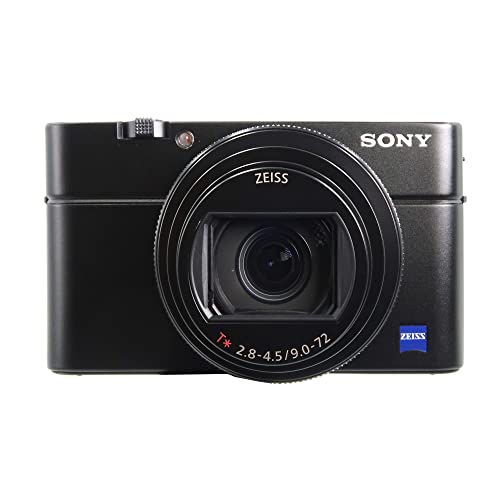
Sony RX100 VII — Best Pocket Reach
Start with the camera most likely to be inside the venue at all. The RX100 VII packs a genuinely long zoom range into a body that disappears into a jacket, and at concerts that combination rewrites what a fan can bring home: the singer framed from row twenty, the drummer isolated during a solo, the wide establishing shot of a stage in full eruption, all from one seat and one pocket. Its burst shooting and subject tracking were designed for action far less forgiving than a headline set, and under stage light that speed translates into keepers during the exact choruses when expressions peak.
Files from its one-inch sensor ask for honesty about the bargain. Sensitivity climbs gracefully to a point, then noise arrives as it must in any small sensor working a dark room, and the photographer who exposes carefully, shoots raw and crops with restraint will be astonished, while the one who treats it like a full-frame body will be disappointed by physics rather than by Sony. Within its physics, the little camera is superbly equipped: a tilting screen for the held-high shot, an electronic viewfinder for bright festival afternoons, and controls that reward the owner who configures them before the support act finishes.
Regard this as the connoisseur’s fan camera rather than a toy. It suits the season-ticket holder, the parent filming a school-hall recital from the back row, the traveller catching a famous room in a foreign city — anyone whose seat is fixed, whose pockets are the camera bag, and whose venue would confiscate ambition in a larger shape. Photographers with pit access should read further down the list, but they should also notice how often working professionals quietly carry one of these on their nights off.
Seasoned fan photographers develop a ritual with this Sony: configure the custom button for exposure compensation before doors, shoot the first song a stop cautious, and trust the tracking thereafter. Its pocketability creates one more opportunity the bigger bodies never see — the photograph from inside the moment rather than at it, friends mid-chorus, the stage beyond them, the whole night in one frame. Archives of a musical life need those frames as much as the singer close-ups, and the RX100 VII is the only pick here equally fluent in both dialects.
- Role: premium compact for seated and standing audiences
- Zoom: long built-in range for distant stages
- Shooting: rapid bursts with subject tracking
- Viewfinder: pop-up electronic finder plus tilting screen
- Carry: jacket-pocket body, venue-friendly profile
Strengths
- Real reach that survives most door policies
- Burst speed that catches peak expressions
- A complete kit that fits in a coat
Trade-offs
- Small sensor sets a ceiling in true darkness
- Serious money for a fixed-lens camera
- Tiny controls reward prior configuration
Best for: fans in fixed seats, travellers and recital parents who need reach without a camera bag. Not suited for: accredited pit work or photographers who change lenses by song.

Canon PowerShot G7 X Mark III — Best for Clubs and Small Rooms
Small rooms reward a different arithmetic from arenas. When the stage is six feet away and the lighting is two lamps and a neon sign, the G7 X Mark III’s fast lens gathers the available glow hungrily, its compact body raises no eyebrows at the door or the bar, and its images carry the grainy immediacy that suits a club set better than clinical perfection ever could. Canon’s colour rendering flatters skin under the mixed practical light of small venues, where faces pass through bar neon, stage wash and somebody’s phone torch within a single song.
Handling suits the environment it serves. The tilting screen flips for the over-the-crowd frame and the discreet waist-level one alike, controls fall to hand without a menu expedition, and the whole camera operates one-handed while the other hand keeps hold of a drink, a rail or a friend’s shoulder in a surging crowd. Its video manners extend the brief gracefully to the fan who wants one full song filmed properly rather than an album of frames, and its microphone input — rare at this size — lets a small-room recordist pair it with a decent external microphone on the nights that matter.
Know its borders before the arena tour tempts you. Reach is modest, so distant stages stay distant; the lens that drinks light in a club cannot manufacture a close-up from the balcony. Battery stamina is an evening’s, not a festival’s, and a spare in the pocket is part of the kit rather than an accessory. Judged in its native habitat — the grassroots venue, the jazz cellar, the singer-songwriter room where next year’s headliners are currently playing to forty people — the G7 X Mark III is not the budget option in this list. It is the correct one.
Club photographers learn to love this Canon’s screen discipline: brightness low, flipped for the overhead surge shot, folded away entirely for the quiet song photographed by viewfinder-less instinct and a raised prayer. Its files carry a particular small-room honesty — faces lit by practical bulbs, backgrounds falling into warm dark — that suits the documentary truth of grassroots music. Owners often report the same biography: bought for one tour, kept for a decade of cellars, because the rooms it serves are where music actually lives most nights of the year.
- Role: compact for clubs, cellars and intimate stages
- Lens: fast aperture for dim practical light
- Screen: tilting, including overhead crowd shots
- Audio: external microphone input for filming songs
- Carry: pocketable, discreet at the door
Strengths
- Drinks in small-room light beautifully
- One-handed handling in a packed crowd
- Films a song as happily as it frames one
Trade-offs
- Limited reach for theatre balconies
- One battery per long evening, spares advised
- Fixed lens sets the creative terms
Best for: club regulars, jazz and acoustic rooms, and anyone photographing music up close. Not suited for: arena seats or any brief built on distant close-ups.

Sony Alpha 7 IV — Best Pit All-Rounder
Hand this Sony to a working music photographer and the compliments arrive in a predictable order: the eye autofocus finds the singer through microphone, hair and theatrical gloom; the files stay composed as sensitivity climbs into the ranges where club sets actually live; the body keeps shooting while lesser buffers are still clearing the last chorus. The Alpha 7 IV has become a default pit camera by surviving thousands of real assignments, and defaults in professional niches are earned the slow way — by not being the reason a frame was missed.
Lens choice writes the rest of its concert story. E-mount’s catalogue contains the fast primes and constant-aperture zooms that pit work runs on, from the wide lens that swallows a whole stage from the barrier to the short telephoto that isolates a vocalist against a wall of light. The body’s stabilisation steadies the slower shutter speeds that atmospheric songs invite, and its video specification is strong enough that many owners shoot the label’s content and the fan’s souvenir with the same body on the same night.
The taxes are professional ones rather than flaws. The finest glass costs what professional glass costs, menus reward the photographer who configures custom buttons before doors open, and three songs in a hot pit will test any camera’s thermal patience at the most demanding video settings. For the accredited shooter, the semi-pro covering local venues, or the enthusiast whose band photography is becoming a portfolio, the Alpha 7 IV remains the safest pair of hands in this guide — the camera other cameras are compared against when the lights go down.
Working photographers pair this Sony with a second body and divide the night between them: the wide stage geography on one, the singer’s close work on the Alpha 7 IV, no lens changes in a dark pit while the three-song rule burns down. That professional pattern explains its specification better than any single feature — it is built to be the dependable half of a working system, the body whose files the picture desk trusts at deadline. Amateurs stepping up should read its ranking as exactly that compliment, and budget for the pairing it invites.
- Role: full-frame mirrorless for pit and venue work
- Focus: eye autofocus through stage clutter
- Files: graceful high-sensitivity raw output
- Mount: E-mount fast primes and pro zooms
- Video: strong hybrid specification for content work
Strengths
- Focus that finds faces in theatrical gloom
- Files that survive a dark club’s settings
- Glass available for every stage distance
Trade-offs
- Professional lenses dominate the real budget
- Menus reward preparation, punish improvisation
- Peak video settings need thermal awareness
Best for: accredited photographers, venue regulars and bands’ own content shooters. Not suited for: door-policy venues or fans who travel with one pocket.

Canon EOS R6 Mark II — Best for Drama and Colour
Some performers are photographed; the ones this Canon is for are dramatised. The R6 Mark II renders skin under theatrical light with the warmth and forgiveness that has kept Canon in show business for decades, and its subject tracking follows a singer the way a good lighting operator does — anticipating the move to the stage edge, holding through the hair-whipping chorus, releasing and reacquiring without a visible argument. In rooms where the light design is half the show, that partnership between colour and tracking produces frames that look like posters while the song is still playing.
Speed underwrites the romance. Rapid bursts, a shutter that can fall silent for the acoustic passage, and low-light sensitivity that treats a single follow spot as abundance let the photographer work a whole set’s emotional range: the whispered verse shot wide and slow, the finale shot fast and tight. RF glass completes the argument, particularly the fast portrait-length primes that turn a barrier position into a front-row intimacy no seat in the house can buy.
Respect its working limits as you would a performer’s. Very long takes at maximum video settings in a hot room ask for the thermal planning the Panasonic below was built to forgive, and Canon’s finest concert lenses are investments that assume the photography is serious. For the photographer whose portfolio lives on expressive faces in dramatic light — theatre productions, dance-adjacent pop shows, the charismatic front-person whose expressions are the set — the R6 Mark II is the most flattering witness in this guide, and flattery, in concert photography, is a professional skill rather than a cheat.
Theatre photographers, a stricter guild than rock shooters, quietly adopted this Canon for a reason outsiders miss: its colour under mixed theatrical sources needs the least correction at deadline, when a production’s images must reach a programme, a review and a sponsor before the house empties. Skin stays skin whether the scene is lit by candlelight gels or a cold window wash, and directors who see the contact sheet become repeat clients. Drama, in every sense, is this body’s home turf.
- Role: full-frame mirrorless for expressive stage work
- Colour: Canon skin rendering under theatrical light
- Tracking: subject detection that follows performers
- Shutter: silent option for quiet passages
- Mount: RF fast primes for barrier intimacy
Strengths
- Faces look magnificent under mixed stage light
- Tracking behaves like a discreet assistant
- Silent shooting for acoustic and theatre work
Trade-offs
- Long hot video takes need planning
- RF concert glass is a serious investment
- Fan-cooled rivals win pure video endurance
Best for: theatre, showcase and front-person photography where expression is the story. Not suited for: casual fans or marathon video recording in hot rooms.

Fujifilm X100VI — Best for Acoustic and Seated Halls
A listening room changes what a camera is allowed to be. In the acoustic hall, the folk club and the jazz room where glasses stop clinking during a solo, the X100VI’s near-silent leaf shutter and unobtrusive rangefinder silhouette let photography happen inside the music rather than alongside it. Its fixed wide lens sounds like a limitation until the room teaches its lesson: at these distances, with these audiences, the honest frame includes the stage, the hush and the heads in silhouette, and Fujifilm’s film simulations render that frame with a nostalgia the audience will swear they remember seeing at the time.
Commitment is the camera’s creative engine. One focal length means the photographer moves, chooses and composes before the song rather than zooming through it, and the resulting sets have a coherence that multi-lens coverage rarely achieves — a single viewpoint, honestly held, becoming the night’s visual signature. The hybrid viewfinder serves both temperaments: optical for the purist who wants to watch the room unmediated, electronic for the pragmatist checking exposure against a lighting plot that changes by the bar.
Accept the boundaries with both eyes open. There is no reach for the distant soloist, no lens swap when the room turns out bigger than expected, and demand for this camera has made it a considered purchase rather than an impulse. What the owner receives is the most welcome camera in this guide — the one ushers smile at, neighbours ignore and performers forget is present. In the rooms where being forgotten is the whole assignment, the X100VI has no serious rival here.
Owners of the X100VI describe a side effect no specification predicts: other photographers leave them alone. At a gig, the little rangefinder reads as a fan’s affectation rather than a professional’s tool, so its owner wanders, chats, and shoots from inside the audience’s own experience instead of the press pen’s. The resulting photographs have a guest’s intimacy — the view from the third row of friends, not the barrier’s authority — and for personal archives that intimacy outranks access. It is the camera as a ticket rather than a pass.
- Role: fixed-lens compact for listening rooms
- Shutter: leaf design, near-silent operation
- Lens: single wide focal length, photographer’s viewpoint
- Viewfinder: hybrid optical and electronic options
- Colour: film simulations with a nostalgic register
Strengths
- Quiet enough for a pin-drop solo
- Renders atmosphere like a memory
- Welcome in rooms that banish bigger cameras
Trade-offs
- No zoom and no lens changes, ever
- Distant performers stay distant
- A considered purchase, not a casual one
Best for: acoustic, folk and jazz rooms, plus photographers who love one honest viewpoint. Not suited for: arena reach or multi-distance festival coverage.

Panasonic LUMIX S5II — Best for Filming Whole Sets
Every list like this one contains a pick for the person who reads ‘pictures’ as moving ones, and the S5II holds that seat with authority. Its fan-cooled body records long performances at demanding settings without the thermal negotiations that end other cameras’ evenings mid-encore, and its phase-detect autofocus — the upgrade that transformed this line’s reputation — holds a performer through the leans, turns and stage-crossing walks that a whole-set recording consists of. For the fan filming a hometown hero’s full show, or the videographer a venue hires to document it, endurance is not a specification. It is the entire product.
Stills photographers are not being handed a consolation prize, either. The same body shoots a more than respectable still, its stabilisation steadies the walk-in and walk-out footage that gives a concert film its shape, and L-mount glass includes the fast wides that stage filming loves. Monitoring tools show exposure truthfully rather than optimistically, which matters when the lighting desk’s idea of a ballad is one candlepower above darkness and the encore arrives in full strobe.
Size and ecosystem mark the honest costs. This is a working camera that announces itself as one, subject to the door policies that greet all interchangeable-lens bodies, and its lens catalogue, while growing, is younger than Sony’s shelf. Choose the S5II when the deliverable is the performance itself — the filmed set, the streamed showcase, the archive recording — and its stamina will feel less like a feature than like the absence of every failure you have previously accepted as normal.
Videographers who live with the S5II praise a behaviour that sounds dull until a tour depends on it: the camera’s relationship with external power and media is utterly grown-up. Long sets recorded to generous media, power solutions that do not involve mid-show battery funerals, files that arrive in the edit exactly as the monitoring promised — this is infrastructure, and infrastructure is what separates a filmed archive from a folder of interrupted clips. Fans filming one beloved band for a whole tour could ask for nothing more relevant.
- Role: full-frame hybrid for filming performances
- Cooling: fan design for long continuous recording
- Focus: phase-detect tracking across a set
- Monitoring: exposure tools that tell the truth
- Mount: L-mount alliance fast wides and primes
Strengths
- Films a whole set without thermal drama
- Focus a moving performer can rely on
- Stills remain a genuine second talent
Trade-offs
- A working camera’s size at strict doors
- Lens shelf younger than Sony’s
- Stills specialists may prefer rivals’ ecosystems
Best for: filming full sets, streamed showcases and venue documentation work. Not suited for: pocket-only fans or stills-only photographers on a lens budget.
Six Ways to Photograph a Gig: The Line-Up Compared
| Pick | Type | Standout trait | Watch out for |
|---|---|---|---|
| Sony RX100 VII | Premium compact | Pocket reach and burst speed | Small-sensor ceiling in darkness |
| Canon PowerShot G7 X Mark III | Compact | Fast lens, club discretion | Modest reach, evening battery |
| Sony Alpha 7 IV | Full-frame mirrorless | Pit autofocus and clean files | Pro glass dominates budget |
| Canon EOS R6 Mark II | Full-frame mirrorless | Colour and dramatic tracking | Thermal care on long video |
| Fujifilm X100VI | Fixed-lens compact | Silence and atmosphere | One focal length only |
| Panasonic LUMIX S5II | Full-frame hybrid | Whole-set video stamina | Size and door policies |
Sort the table by permission before sorting it by quality, because permission decides which quality you are allowed to use. The two compacts and the Fujifilm travel through doors that stop the mirrorless trio, and they divide the audience’s world among themselves: reach for the Sony, intimacy for the Canon, atmosphere for the Fujifilm. The mirrorless trio divides the professional world: all-round pit trust for the Alpha 7 IV, dramatic colour for the R6 Mark II, and filmed endurance for the S5II. A photographer who owns one from each half owns every legal version of a concert night.
Budget follows the same split in a way beginners find surprising. The compacts finish their spending at purchase, while each mirrorless body’s true price includes at least one fast lens chosen for a working distance — the wide for the barrier, the telephoto for the balcony. Price the system you will actually carry, not the body in the advertisement, and several apparent bargains in this table politely rearrange themselves.
Ownership patterns across the table converge on one lesson: photographers rarely sell their concert camera for a better one; they add a second for the rooms the first cannot enter. The compact stays for the strict doors and the pocket nights, the mirrorless arrives for the accredited work and the filming, and the pair together cover a musical life more completely than any single flagship. Budget with that biography in mind and the first purchase — whichever row of this table it occupies — stops needing to be perfect and starts needing to be present.
Which Concert Photography Mistakes Ruin More Frames Than Bad Cameras?
Flashing the room leads the charge, and not only because venues forbid it. A direct flash at a gig flattens theatrical light into a passport photo, announces the photographer to every security steward present, and buys a worse picture than the stage lighting was already offering for free. The cameras in this guide were chosen partly for how little they need rescuing: fast lenses, graceful high sensitivity and screens bright enough to work by. Leave the flash off, spend the sensitivity, and let the lighting designer — who has thought about this longer than you have — do their job.
Chimping through the chorus runs second. Every second spent reviewing the last frame at full magnification is a second in which the singer does the thing the whole night will be remembered for, unphotographed. Settle exposure during the support act, trust the posture described earlier in this guide, and review in the quiet songs if you must review at all. Concerts are unrepeatable in the strictest sense; the archive you build is the one your attention was present for.
Finally, ignoring the door policy until the door. Photographers lose more pictures to a confiscated bag check than to any sensor limitation, and the loss is entirely preventable: read the venue’s camera rules when buying the ticket, choose from this list the camera those rules welcome, and carry it like you mean to be waved through. The finest concert photograph in this guide’s whole argument is the one taken by the camera that was allowed to be there.
Final Recommendation
Decide by reconstructing your last three gigs honestly. Where did you stand, what did the light do, which frames did you lose and to which failure — blur, noise, distance or the door? The camera in this list whose strengths answer that specific loss is your camera, and the exercise works because concert photography is a repeated game: the same rooms, the same distances, the same beloved chaos, season after season.
For most fans the answer lands on the RX100 VII’s pocket reach or the G7 X Mark III’s club-bred speed, and there is no consolation prize in either — they are the picks that will actually attend your musical life. For photographers stepping into accredited or portfolio work, the Alpha 7 IV is the industry’s handshake, the R6 Mark II the dramatist’s instrument, the X100VI the quiet room’s confidant and the S5II the filmer’s endurance champion. Buy for the nights you truly have, and the pictures — poctures, however typed — will start coming home.
One last encouragement belongs to the fan reading this with a ticket already booked and a camera decision still open: the show will not wait for the perfect purchase, and it does not need to. Take the pick whose compromises your seat forgives, arrive early enough to learn the room during the support act, and spend the headline set photographing like the night matters — because in twenty years, when the venue is flats and the band is a reunion rumour, your imperfect, present, honestly-made frames will be the ones that mattered all along.
Related guides
Frequently Asked Questions
Are compact cameras really allowed at concerts?
Often, yes, which is precisely why two compacts and a fixed-lens camera anchor this guide — but ‘often’ is doing heavy lifting, and policies vary by venue, tour and even the night. Check the specific venue’s camera policy before every show, favour cameras without detachable lenses where rules are strict, and never argue a door decision you can lose along with the evening.
What is the best single setting change for better gig photos?
Taking exposure off fully automatic judgement and setting it for the performer rather than the room. A fixed, deliberate exposure stops the camera brightening every dark passage into noise and blowing every follow spot into white. Pair it with continuous autofocus on a modest central zone and most beginners’ keeper rate transforms within one set.
How do photographers avoid disturbing seated audiences?
Silence and darkness, practised as disciplines: electronic or leaf shutters where the camera offers them, rear screens dimmed or switched off, bursts reserved for loud passages, and no reviewing marathons while a neighbour is trying to listen. The X100VI’s whole ranking rests on this courtesy, and in seated halls it is a technical specification in everything but name.
Is it better to shoot raw at concerts?
Where the camera allows it and the cards can carry it, yes — stage colour is extreme, mixed and frequently unrepeatable, and raw files let white balance and highlight recovery be decided calmly at home. The mirrorless picks reward raw discipline most; compact shooters should weigh buffer speed during choruses, since a camera still writing files is a camera missing the next verse.
Which pick suits a school or community concert?
The RX100 VII, for most parents and volunteers: its reach covers the back of a hall, its tracking handles an excited young performer, and it raises no policy questions at a school door. Where the hall is small and the light is kind, the G7 X Mark III’s speed and simplicity serve beautifully, and both leave the full-frame bodies to the professionals they were built for.
Can I record a whole concert on these cameras?
Technically the S5II was chosen precisely because it can sustain long recording, but permission is a separate question from capability: many venues and artists restrict recording regardless of equipment. Film where filming is welcomed, keep clips short and screens dim where it is merely tolerated, and remember the neighbours behind you bought tickets to a stage, not to your viewfinder.
Should I shoot concerts on automatic mode?
Automatic exposure is a reasonable tutor for a first gig and a poor companion thereafter, because stage lighting is designed to deceive meters — dark rooms, brilliant subjects, sudden blackouts between songs. Graduating to a fixed exposure set for the performer, with automatic focus and sensitivity free to assist, is the single step that separates most beginners’ second gig from their first. The mirrorless picks reward that graduation most deeply, but every camera here allows some version of it.
Related Guides
Keep the music theme going with our neighbouring guides on best cameras for shooting concerts best cameras for live concert photography best cameras for recording music soloists.


