kajuandouglas.com is reader-supported. When you buy through links on our site, we may earn an affiliate commission.
Where to Buy a Documentary Camera, and What This Guide Values
The best cameras for documentary photography share a quality no spec sheet prints: they disappear. Documentary work is the photography of trust — of kitchens and workshops, protests and christenings, places where a camera is tolerated only as long as it behaves like a guest. The bodies below were chosen by that standard first. Each one can be carried all day without announcing itself, worked quietly without startling a room, and trusted to focus in the light that actually exists where life happens, which is rarely the light brochures are photographed in.
This is not a guide to the most powerful cameras. It is a guide to the most welcome ones that remain powerful enough. A documentary frame fails in ways a landscape never does: the moment closes, the subject notices, the expression that took an hour of patience to earn evaporates because a shutter clattered or a photographer fumbled a menu. So the judging below weighs silence, size, low-light manners, and the speed of the controls as heavily as resolution — and treats the photographer’s invisibility as a technical specification in its own right.
Where to buy: the linked names lead to Amazon listings for each body, and documentary buyers should weigh listings like editors weigh assignments — by the working kit they create. A second battery, a fast prime in the 35mm-equivalent neighbourhood, and a strap that does not advertise the camera’s value matter more to a documentary kit than any bundle extra. Buy the body with its working lens in mind, break the combination in on unimportant days, and never let a new camera meet an important subject untested.
A note on honesty: documentary photography carries an ethical weight other genres borrow only lightly. These cameras record real people’s unposed lives, and the guide’s advice on discretion — small bodies, quiet shutters, no flash ambushes — serves the subjects’ dignity as much as the photographer’s access. The camera that gets invited back is the camera that behaved.
One more framing note: documentary photography is the rare genre where the photographer’s development outruns the equipment’s. A season of weekly visits with any body in this guide will teach more than a decade of occasional brilliance with a flagship, and the reviews below are written for the photographer those visits will produce — the one who needs reliability, discretion, and honesty from a tool, in that order, every single day.
Read the verdict lines first if time is short. Each assigns a body to a kind of documentary life in one sentence, and the long reviews defend those sentences with the compromises printed as plainly as the praise, because a documentary camera chosen wrongly does not merely disappoint — it closes doors that took months to open.
Key Takeaways
- In documentary work, being unnoticed is a specification — size, silence, and plain looks earn access.
- Fast primes and clean high-ISO files matter more than resolution when the light is whatever the room offers.
- A fixed-lens camera removes decisions and suspicion alike; a system body buys adaptability across a long project.
- Controls you can work without lowering the camera keep the conversation — and the moment — alive.
- Weather sealing and dual slots protect a project that cannot be restaged.
- The right documentary camera is the one your subjects forget within five minutes.
In this guide
Quick Picks
Six bodies for six documentary temperaments: the invisible fixed-lens classic, the low-light professional, the hybrid storyteller, the discreet crop value, the dial-driven purist, and the expedition-proof witness.
| Pick | Badge | Why It Earns Its Place |
|---|---|---|
| Fujifilm X100VI | Best for Invisible Street Documentary | A leaf-quiet fixed-lens camera that looks like a keepsake and works like a professional’s notebook. |
| Canon EOS R6 Mark II | Best for Low-Light Documentary | When the story happens in available darkness, its autofocus and clean files keep witnessing after others stop. |
| Sony Alpha 7 IV | Best Hybrid Photo-Video Documentary | One body that shoots the still essay and films the accompanying piece without a second kit. |
| Nikon Z50 II | Best Discreet Value for New Documentarians | Small, capable, and priced so a long project can afford a backup body and better access instead. |
| Fujifilm X-T5 | Best for Long-Form Print Projects | Forty megapixels and dial-driven calm for essays destined for the wall and the book. |
| OM SYSTEM OM-5 Mark II | Best for Documentary in Hard Places | Sealed, tiny, and stabilized — the witness that survives monsoons, dust, and the back of a motorbike. |
How Did We Choose the Best Cameras for Documentary Photography?
We judged by the doorway test: walk into a room where something real is happening — a family kitchen at full argument-and-laughter volume, a night-shift workshop, a village meeting — and ask what the camera does to the room. Bodies that changed the weather lost marks however fine their sensors. Bodies that let the room forget them within minutes, and then delivered the frame when the moment peaked, rose. That single test eliminated most of the market before specifications were even consulted.
Light came second, because documentary light is found, not made. Every pick here focuses confidently in dim interiors, produces files at high sensitivity that an editor will accept, and pairs with fast prime lenses — or, in the fixed-lens case, carries one permanently. We weighted silent shooting heavily: a truly quiet shutter, or a silent electronic one without crippling trade-offs, is the difference between photographing a prayer and interrupting one.
Endurance formed the third test. Documentary projects run on buses, in rain, across months. Weather sealing, battery honesty, card redundancy, and a lens catalogue deep in compact primes all counted. So did the economics of access: a body priced so the photographer can also afford the train tickets, the translator, and the return visits will produce a deeper project than a flagship that consumed the budget. The verdicts below name what each body asks of a project, not merely what it offers one.
Finally, we required each pick to serve a distinct documentary temperament. Six versions of the same camera would be a disservice; the street photographer, the multimedia journalist, the expedition witness, and the slow print essayist need different instruments, and this guide treats those as separate crafts sharing an ethic.
Why Do Documentary Photographers Obsess Over a 35mm Lens?
Because it is the focal length of being there. A 35mm-equivalent lens sees roughly as a participant sees — wide enough for the room and its context, tight enough for the face that matters — and the genre’s masters built its visual language at that distance. Longer lenses spectate; wider lenses distort and demand a closeness that can feel like intrusion. The 35 keeps the photographer inside the event at conversational range, which is precisely where documentary truth lives.
The practical consequence shapes this whole guide. Fixed-lens picks carry that field of view permanently. System picks earn their place partly by the quality of their compact 35mm-class primes and how the body balances with one mounted. A documentary kit that needs a zoom’s versatility can have it, but the prime remains the genre’s home address — the lens the camera wears between moments, ready before the photographer consciously decides.
There is a discipline hidden in the focal length too. Working at one distance teaches a photographer to move — to earn proximity rather than simulate it — and movement is the genre’s real technique. Every pick below was judged partly on how it behaves at that working distance: quiet, quick to focus, and unembarrassing to raise in company.
Which Cameras Earn a Room’s Trust? The Six Picks in Detail

Fujifilm X100VI — Best for Invisible Street Documentary
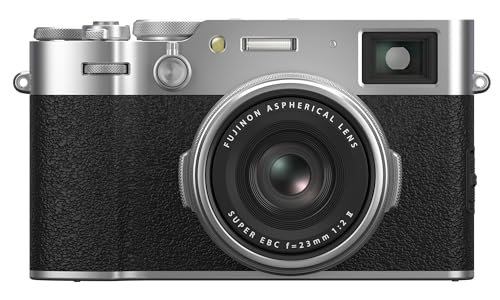
The X100VI is the documentary camera as social camouflage. It looks like an inherited keepsake — all dials and silver restraint — and rooms read it as a hobbyist’s toy while it quietly records with a 40-megapixel sensor, in-body stabilization, and a leaf shutter so hushed that subjects have asked whether it was on. The fixed 23mm lens, a 35mm equivalent, is the genre’s home focal length made permanent, and the built-in flash and neutral-density filter extend its manners from noon glare to candlelit interiors.
Its documentary virtues compound. The hybrid viewfinder lets the photographer watch the world optically with an electronic conscience, or frame electronically in darkness. Film simulations give projects a coherent look straight from the camera, which matters to photographers publishing daily from the field. The resolution, startling in so small a body, permits cropping when the fixed lens cannot step closer — the one honest answer to the fixed-lens objection.
The objections remain real. One focal length is a discipline some assignments cannot accept, battery life is a two-battery day, and weather sealing requires an adapter and filter to complete. Availability has also made it a camera people queue for. But for street documentary, daily-life essays, and any work where being underestimated is the whole method, nothing in this guide disappears more gracefully.
- Format: APS-C, roughly 40 megapixels, fixed lens
- Lens: 23mm (35mm equivalent), leaf shutter, built-in ND
- Stabilization: in-body system
- Finder: hybrid optical/electronic
- Character: near-silent, retro, unthreatening
Strengths
- Leaf-shutter silence that preserves a room’s trust.
- Fixed 35mm-equivalent lens removes hesitation entirely.
- Resolution that forgives the steps you could not take.
Trade-offs
- One focal length, forever — assignments must fit it.
- Battery life demands spares on full days.
- Full weather sealing needs an accessory filter setup.
Best for: street documentarians and daily-life essayists whose method is being overlooked.
Not suited for: assignments needing several focal lengths or fast telephoto work.

Canon EOS R6 Mark II — Best for Low-Light Documentary
Documentary stories keep happening after the light gives up — in bars and barns, night markets and overnight wards — and the R6 Mark II is the body that keeps witnessing. Its full-frame sensor holds files together at sensitivities that would shred smaller formats, and its autofocus detects faces and eyes in gloom that reads to the photographer as near-darkness. For the documentarian, that combination is not a luxury specification; it is the difference between covering the night shift and going home at dusk.
The professional courtesies surround the sensor: dual card slots for a project that cannot be re-shot, weather sealing for the walk between venues, a silent shooting mode that respects ceremonies, and in-body stabilization that makes fast primes usable at reckless shutter speeds. Canon’s RF catalogue of bright primes is deep, and the body balances with them like an instrument rather than a rig.
Its costs are presence and price. It looks like what it is — a professional camera — and some rooms will read it as press, with access consequences the photographer must manage socially rather than technically. The 24-megapixel resolution is ample for editorial work but offers less cropping mercy than the Fujifilm picks. Choose it when the story’s hours are dark and its stakes are unrepeatable.
- Format: full frame, roughly 24 megapixels
- Focus: deep subject detection in very low light
- Storage: dual card slots
- Stabilization: in-body, cooperating with RF lenses
- Build: sealed professional body
Strengths
- Night-shift autofocus and files that survive darkness.
- Dual slots protect unrepeatable assignments.
- Silent mode suits ceremonies and vigils.
Trade-offs
- Professional appearance can read as press intrusion.
- Moderate resolution limits heavy cropping.
- System cost is the guide’s highest tier.
Best for: photojournalists and documentarians whose stories run after dark.
Not suited for: undercover-style street work or tight project budgets.

Sony Alpha 7 IV — Best Hybrid Photo-Video Documentary
Modern documentary rarely ships as photographs alone. The funder wants a short film, the publication wants clips, the archive wants interviews — and the Alpha 7 IV is the body that answers all three without a second kit. Its 33-megapixel stills satisfy print, its 4K video is oversampled and serious, and the switch between the two is a dial’s turn rather than a bag’s excavation. For the one-person documentary unit, that fluency is the feature.
Sony’s autofocus is the silent partner in the hybrid bargain: eye tracking that holds a speaking subject while the photographer listens like a journalist instead of monitoring like a technician. Breathing compensation and a deep E-mount catalogue — including small primes that keep the rig documentary-sized — complete the argument. Dual slots, good stabilization, and menus finally organized for humans protect the work.
The compromises are documentary-flavoured. The body is efficient rather than lovable, its electronic shutter has rolling-shutter limits in fast action, and video at the highest quality crops the frame. None of these trouble an interview-and-essay workflow. Choose it when the deliverable is a story in two media and the crew is you.
- Format: full frame, roughly 33 megapixels
- Video: oversampled 4K with focus-breathing compensation
- Focus: real-time eye tracking for stills and film
- Storage: dual card slots
- Mount: the deepest hybrid lens catalogue here
Strengths
- Stills and film of publishable quality in one body.
- Interview-friendly autofocus that frees the listener.
- Lens catalogue for every documentary budget tier.
Trade-offs
- Electronic shutter distorts under fast motion.
- Top video mode applies a frame crop.
- Handling is capable rather than characterful.
Best for: multimedia documentarians and grant-funded one-person crews.
Not suited for: stills-only purists or silent-shutter specialists.

Nikon Z50 II — Best Discreet Value for New Documentarians
Every documentary tradition begins with a camera the photographer could actually afford to take everywhere, and the Z50 II is this generation’s. It is small enough to pass as a tourist’s camera, priced so the project’s money can go to travel and time instead, and — the surprise — equipped with subject-detection autofocus descended from Nikon’s flagships, including the people and animal recognition that documentary work leans on daily.
The crop sensor pairs with compact Z primes to make a kit that rides in a jacket’s orbit, and the files hold up beautifully in the daylight and interior light where most beginning documentary work happens. Video is competent for the hybrid-curious. The bright viewfinder and sensible controls teach good habits: this is a camera a photographer grows with rather than out of, at least for the first long project.
Its limits mark the boundary of its price. One card slot asks for nightly backup discipline, high-ISO files grain sooner than the full-frame picks, and the body sealing is modest. None of that prevents serious work; all of it defines the working method. For a first documentary project — the neighbourhood, the family trade, the local team — it may be the wisest money in this guide.
- Format: APS-C, roughly 21 megapixels
- Focus: subject detection inherited from flagship line
- Storage: single card slot
- Build: compact, lightly sealed
- Kit logic: small primes, traveller’s total weight
Strengths
- Flagship-flavoured focus at a project-friendly price.
- Tourist camouflage with professional manners.
- Lets the budget fund access, travel, and time.
Trade-offs
- Single slot demands backup discipline.
- Low-light ceiling below the full-frame picks.
- Modest sealing for harsh assignments.
Best for: first long projects and documentarians funding access over equipment.
Not suited for: unrepeatable professional assignments needing redundancy.

Fujifilm X-T5 — Best for Long-Form Print Projects
Some documentary work is aimed at the wall and the book rather than the feed, and the X-T5 is built for that slower contract. Forty megapixels resolve the texture of a life — the workshop’s wall of tools, the embroidery of a ceremonial garment — at a scale that rewards large printing, while the dial-driven body slows the photographer into the genre’s older, deliberate rhythm. Exposure compensation under the thumb, aperture on the lens, shutter on a wheel: the camera keeps the photographer’s eyes on the room.
As a system it answers the fixed-lens X100VI’s one limitation: Fujifilm’s compact prime range lets the essayist work at several classic distances while staying documentary-sized, and the film simulations give a multi-year project a unified palette that editors quietly love. In-body stabilization steadies interior work, and the files’ colour survives mixed lighting — the documentary condition — with unusual grace.
Tracking autofocus for chaotic motion is a step behind the Canon and Sony picks, and the dense sensor punishes sloppy technique and mediocre glass. This is the considered essayist’s instrument: less suited to the riot, perfectly suited to the long portrait of a place, made across seasons, printed large, and meant to outlast the news cycle.
- Format: APS-C, roughly 40 megapixels
- Controls: dedicated dials for the exposure triangle
- Stabilization: in-body system
- Colour: film simulations for project-wide consistency
- System: deep bench of compact primes
Strengths
- Print-scale resolution for book and exhibition work.
- Dials keep attention on subjects, not menus.
- Consistent colour across a long project’s seasons.
Trade-offs
- Tracking trails the leaders in chaotic scenes.
- Dense sensor exposes weak lenses and technique.
- Files are large across a multi-year archive.
Best for: long-form essayists printing books and exhibitions.
Not suited for: fast-breaking news or action-heavy assignments.

OM SYSTEM OM-5 Mark II — Best for Documentary in Hard Places
Documentary geography is not always gentle. The fishing fleet in February, the high-altitude harvest, the protest in the rain — the OM-5 Mark II is the witness built for where weather and terrain end other assignments. Its sealing is rated with unusual seriousness, its stabilization is the best in this guide, and the whole system — body plus small primes — weighs less than some competitors’ bodies alone, which on a ten-hour day in the mountains is not comfort but capability.
Micro Four Thirds brings documentary side-effects worth having: deeper depth of field at a given aperture keeps a room’s context sharp, which the genre often prefers to creamy isolation, and the tiny lenses attract no attention at all. Computational features — neutral-density simulation for motion-blurred crowd scenes, high-resolution modes for static documentation of places and artefacts — serve the record-keeping side of documentary practice surprisingly well.
The sensor is the smallest here, and night interiors will test it: pair it with the system’s fast primes and lean on the stabilization rather than the ISO dial. Autofocus subject detection is competent, not class-leading. Within those terms, for the documentarian whose map is the story, it is the pick that simply never has to stay behind.
- Format: Micro Four Thirds, roughly 20 megapixels
- Build: serious weather sealing, expedition weight
- Stabilization: class-leading in-body system
- Depth of field: naturally deep, context-friendly
- Extras: computational ND and high-resolution modes
Strengths
- Survives weather that cancels other cameras’ days.
- Featherweight system for mountain and travel projects.
- Deep focus keeps documentary context legible.
Trade-offs
- Smallest sensor; night interiors demand fast primes.
- Subject detection is capable, not leading.
- Shallow-focus portrait looks are harder to achieve.
Best for: expedition, rural, and weather-exposed documentary work.
Not suited for: candlelit interiors or creamy-isolation portrait essays.
How Do the Six Compare at a Glance?
| Pick | Presence | Low-Light Manners | Project It Serves |
|---|---|---|---|
| Fujifilm X100VI | Nearly invisible | Strong for its size | Street and daily-life essays |
| Canon EOS R6 Mark II | Clearly professional | The guide’s best | Night and news documentary |
| Sony Alpha 7 IV | Working journalist | Excellent | Hybrid stills-and-film stories |
| Nikon Z50 II | Tourist-small | Good in honest light | First long projects |
| Fujifilm X-T5 | Classic, calm | Good with fast primes | Print books and exhibitions |
| OM SYSTEM OM-5 Mark II | Expedition-tiny | Stabilization-assisted | Weather and wilderness stories |
How Should You Behave with a Documentary Camera? Craft and Consent
Technique in documentary work is half social. Arrive before you photograph; let the room metabolize your presence, camera down, conversation first. Shoot in short, quiet sequences rather than machine-gun volleys, and learn the chimping discipline — reviewing the screen breaks the spell for everyone, including you. The photographers who return with the deepest frames are usually the ones who spent the first visit making almost none.
Consent is a practice, not a form. Laws vary by place and purpose, but the genre’s working ethic is older than its statutes: explain the project honestly, accept refusal without negotiation, and be doubly careful with children, grief, illness, and poverty — the subjects least able to weigh your request. Many documentarians share contact details and copies of the photographs as a matter of course; the exchange keeps the work a collaboration rather than an extraction, and it is also, not coincidentally, how the second visit gets welcomed.
In the field, protect the work like evidence. Back up nightly to two places, keep metadata honest — captions written the same day, names spelled with the subjects’ help — and resist the edit that improves a story by lying about it. Documentary’s entire value rests on the viewer’s belief; the camera choices in this guide serve that belief by making the witnessing quieter, not the pictures prettier.
What Are the Most Common Mistakes When Choosing a Documentary Camera?
The flagship mistake, literally: buying the biggest professional body and discovering that its presence negotiates against you in every room. Second is the zoom trap — a slow kit zoom that forces high ISOs and flash in interiors, where a fast prime would have kept the light honest. Third is neglecting sound and silence alike: a clattering shutter in a place of worship, or video ambitions with no microphone plan.
Others follow from project-blindness. Buying resolution for a project destined for phone screens while starving the travel budget. Choosing a single-slot body for an unrepeatable assignment without a backup ritual. And the subtlest error: selecting a camera whose handling you dislike, because documentary photography is thousands of small raises of the camera across months, and friction compounds into frames never attempted. The right body disappears twice — from the room’s attention, and from your own.
How Should a Documentary Project Be Structured Around One Camera?
Professionals talk about bodies and lenses; projects succeed or fail on structure. A documentary project built around a single camera — as most in this guide will be — begins with a promise about access: who will let you in, how often, and for how long. The camera choice follows from that promise. A project visiting a family weekly for a year wants the body the family stops noticing, which is an argument for the X100VI or the Z50 II that no resolution chart can make. A project shadowing a night-shift ambulance crew wants the R6 Mark II’s darkness manners and dual slots, because the story’s decisive frames will happen at 3 a.m. and cannot be requested again.
Structure also means deciding the deliverable before the first frame. A book project shoots differently from a daily-published diary: the book tolerates — rewards — slowness, medium-format patience, and the X-T5’s print resolution; the diary needs the camera that produces a coherent, publishable look without an evening of editing, which is where Fujifilm’s in-camera colour and the Sony’s hybrid fluency argue their cases. Photographers who skip this decision end up serving two masters with one archive and satisfying neither.
Then there is the rhythm of return. Documentary depth is a function of visits, not frames: the tenth visit produces what the first cannot, because trust compounds. Budget the project so the camera is the smaller expense — travel, time, prints given back to subjects, and the occasional meal shared are the real production costs. This is the unglamorous reason the Z50 II appears in this guide beside bodies three times its price: a project funded for twenty visits with a modest camera will bury a project funded for three visits with a flagship, in depth, in truth, and eventually in reputation.
Finally, structure the archive from day one. Name files by date and place, caption while memory is warm, keep consent notes with the frames they cover, and back up as if the project matters — because by the fifth visit it will, to the subjects as much as to you. The camera is the project’s smallest component; it is simply the one this guide can help you choose.
What Settings and Field Workflow Serve Documentary Work Best?
Documentary settings are a philosophy of readiness. The working configuration most veterans converge on is aperture priority with auto-ISO bounded at the body’s honest ceiling, a minimum shutter floor matched to the room’s motion, and exposure compensation living on the dial your thumb already touches. The aim is a camera that asks nothing at the decisive second: focus point or eye detection active, drive quiet, review image off or instant — because the chimping glance is the genre’s tell, the movement that reminds a room it is being photographed.
Autofocus deserves one decision made at home: single-point or zone for composed, deliberate work in crowds where detection may choose the wrong face; full eye-detection for conversation and movement, where the subject’s face is unambiguously the story. Learn both paths until switching is reflex. Metering follows a similar pragmatism — evaluative for general rooms, a compensation habit for backlit windows and dark interiors, which documentary life supplies in endless variety.
File discipline separates projects from piles. Shoot raw if the project will be printed or graded; consider raw-plus-jpeg with a film simulation when publishing daily, so the jpeg is the field draft and the raw the archive. Write captions the same evening — who, where, what changed today — in a notebook or the file metadata, because a documentary frame without its caption is a rumour with good resolution. And keep a field log of permissions: who agreed, to what, and what was promised in return. The log feels bureaucratic on day one and priceless on day ninety, when an editor, a subject, or your own memory asks what was agreed.
Carry completes the workflow. The documentary bag is famously small: body, one or two primes, batteries, cards, a notebook, and nothing that rattles, glitters, or advertises value. Every pick in this guide was weighed with that bag in mind — which is why compact primes and honest battery life appear in these reviews as headline virtues rather than footnotes.
Can Documentary Work Be Done Well on a Tight Budget?
It not only can; historically, it usually has been. The genre’s canon was shot on equipment that today’s entry level embarrasses, by photographers whose real capital was time inside a community. The budget documentarian’s correct spending order inverts the hobbyist’s: access first — the bus fares, the repeat visits, the prints returned to subjects — then a fast prime, then the body, then everything else. Of the picks here, the Z50 II exists precisely to honour that order, and the used market multiplies it: a previous-generation body with a fast 35mm-equivalent prime is a complete documentary instrument by any honest historical standard.
What budget cannot excuse is unreliability on an unrepeatable day. Spend the savings partly on redundancy of the cheap kind: spare cards, a second battery, a nightly backup to two destinations, and a phone that can pinch-hit for record shots if the body fails. The professional’s dual slots are one solution; the disciplined amateur’s rituals are another, and for most personal projects they suffice.
There is also a creative dividend to constraint worth naming. One body and one prime — the budget kit — is the exact discipline this guide praised in the X100VI at several times the price. Photographers who learn documentary on a fixed, modest kit develop the movement, anticipation, and social craft that expensive versatility can postpone for years. Buy the constraint proudly, spend the difference on being there, and let the project’s depth make the argument.
How Do Documentary Photographers Handle the Light That Actually Exists?
Documentary light is a negotiation with reality: tungsten kitchens, fluorescent workshops, the green gloom of a bus at night, a courtyard blown white at noon. The first skill is acceptance — photographing the light the place actually has, because that light is part of the truth of the place. A workshop lit by one swinging bulb should look like one, and the cameras in this guide were chosen partly for how gracefully they render such honesty: sensors that hold colour at high sensitivity, white balance that can be trusted or easily set, and files with enough latitude to rescue the shadows where half the story stands.
Mixed colour is the daily condition, and each system here answers it differently. Fujifilm’s simulations lean into warmth and render mixed rooms as memory does — kindly. Sony’s colour is the journalist’s neutral, built for matching across a hybrid shoot. Canon’s skin tones have carried editorial work for decades. None is correct; each is a dialect, and the wise documentarian picks the dialect their project speaks and stays consistent across its whole length, because a project whose colour wanders reads as several projects stapled together.
Practically: learn to expose for the face and let the room fall where it falls. Use the fastest prime the kit holds before reaching for the ISO ceiling, and reach for the ceiling before reaching for flash — flash is a lighting decision that rewrites the room’s truth and announces the photographer in the same instant. When flash truly is the only answer, bounce it, soften it, and admit in the caption of your own conscience that the picture is a portrait sitting, not a witnessed moment. The genre survives on such distinctions.
Window light deserves its own paragraph because it is the documentarian’s studio: free, beautiful, and always available somewhere in the building. Position subjects by it without appearing to — the conversation that drifts toward the kitchen window, the workbench already beside one. Cameras with good highlight handling and honest metering, as all six here have, turn that drift into the project’s signature look, and no lighting kit in any catalogue improves on it.
What Separates a Documentary Archive from a Pile of Photographs?
Editing — in the photographer’s sense of selecting and sequencing — is where documentary work is actually made, and it begins long before the final selection. The archive discipline starts in the field: shoot less than instinct demands, because every frame is a future minute at the light table, and the photographer returning with three hundred considered frames edits better than the one returning with three thousand hopeful ones. The picks in this guide support that discipline in small ways — clear file numbering, ratings applicable in-camera, and handling that encourages deliberation — but the discipline itself is the photographer’s.
Sequencing is the genre’s grammar. A documentary essay argues in order: the establishing place, the working hands, the face at rest, the detail that stands for the whole, the moment the subject forgets the camera entirely. When reviewing a project’s frames, veterans look for those grammatical roles before they look for beauty, because a sequence of beautiful frames that never establishes place or earns intimacy is a portfolio, not a document. This is also where a camera’s consistency pays its final dividend — frames from one body, one lens, one colour dialect interlock; frames from a wandering kit argue with each other on every page.
The archive’s last duty is survival. Keep the masters unedited, the edits versioned, the captions attached, and the whole in three places with one off-site. Documentary photographs appreciate with time in a way few images do — the workshop closes, the neighbourhood is rebuilt, the child in the frame turns forty — and the archive kept properly becomes the record a community consults. Choose the camera that will be carried daily, caption like a historian, and store like an insurer: that unglamorous triad is the real professional standard this guide has been circling all along.
Which Pick Fits Which Assignment? Notes from the Field
The neighbourhood essay. A year on one street, shot in fragments between other work. The camera lives by the door and goes out at dog-walking hours, which argues for the X100VI’s grab-and-go completeness or the Z50 II with a small prime — both are cameras that ask for no preparation ritual, and preparation rituals are where neighbourhood essays quietly die. Resolution matters less than presence; the street will provide the moments if the camera is simply always along.
The institutional story. A hospital ward, a fire station, a night shelter — places with gatekeepers, sensitivities, and light like a cave. Here the R6 Mark II’s combination of darkness competence, silent manners, and dual-slot professionalism answers both the photography and the politics: institutions grant access to photographers whose equipment and behaviour read as accountable. Bring releases, patience, and the camera that will not fail at 3 a.m.; bring nothing that beeps.
The multimedia commission. A foundation funds a story told in photographs, a twelve-minute film, and interview audio. The Alpha 7 IV is the only honest answer in this guide: one body, one lens mount, one battery system across both media, and autofocus that lets a solo operator conduct an interview while the camera minds the face. The hybrid brief is where specialist stills cameras stop being charming and start being a second mortgage in extra kit.
The disappearing trade. The last blacksmith, the final ferry route, a craft one retirement from extinction. These projects print — in books, in exhibitions, in the subject’s own hall — and they unfold slowly enough for the X-T5’s deliberation to become a virtue. Forty megapixels of the workshop’s wall, the master’s hands, the tools laid out like a portrait: the archive is the deliverable, and resolution is respect.
The hard journey. A story that travels by motorbike, boat, and foot through weather. The OM-5 Mark II, full stop — the sealed system that treats the journey as scenery. Documentary history is full of masterpieces nearly made by cameras that stayed in the dry bag; the expedition pick exists so that yours is not among them.
How Should You Test a Documentary Camera Before Committing a Project?
Rent or borrow for one ordinary day — ordinariness is the point. Carry the candidate through a market, a bus ride, a family meal, and an evening interior, and afterwards interrogate the day rather than the files. Did strangers glance at the camera or through it? Did the shutter’s voice enter any conversation? Could the controls be worked while talking, walking, holding a door? Documentary cameras are social instruments, and the test that matters is social: the files will be fine from any body in this guide, but the day will tell you which one rooms accept.
Then test the darkness honestly. Photograph a companion across a dim café table at the sensitivities the evening demands, print or view the results at the size your project targets, and judge skin, shadow, and colour by your project’s standards rather than the internet’s. Follow with the endurance audit: a full day’s shooting on the battery count you actually intend to carry, cards handled with cold or gloved hands, and the backup ritual performed once, timed, in real conditions.
Finally, test the marriage, not the date: live with the camera for a week of daily carrying before the project starts. Documentary photography is a habit before it is an art, and the body that integrates into your daily orbit — pocketable, unpretentious, ready in one motion — will gather more truth in a month than a superior body that waits at home for occasions. Every pick in this guide can pass these tests for someone; the tests exist to discover for whom.
Why Does the Documentary Camera Look the Way It Does? A Short, Useful History
The documentary camera’s shape was settled by the 1930s, and every pick in this guide is an argument with that inheritance. When small rangefinder cameras first let photographers work unobtrusively with fast lenses and quiet shutters, the modern documentary style was born in the space of a decade: available light, unposed subjects, the decisive arrangement of a real moment. The genre’s masters were not using the most powerful cameras of their day — plate cameras resolved far more — they were using the most permissible ones, and the lesson has never expired. Power that cannot enter the room is not power.
The twentieth century added two refinements the modern buyer still feels. The first was the fast prime’s normalization: as lenses gathered more light, documentary work moved indoors and into the night, and the genre’s centre of gravity shifted from the street at noon to the kitchen at midnight — which is why this guide weighs low-light manners as a headline virtue rather than a footnote. The second was the photographer’s professionalization: dual slots, sealing, and reliability engineering arrived because assignments became unrepeatable by contract, and a missed frame stopped being a private regret and became a professional failure.
Digital added the third refinement, and the most double-edged: silence and review. The silent electronic shutter completed the rangefinder’s old promise — a camera that can witness a whisper — while the rear screen tempted photographers into chimping, negotiation, and the slow conversion of witnessed moments into directed ones. The mature documentary tools in this guide manage that tension deliberately: quiet when quiet matters, tactile and immediate in the controls, and honest in the file. Understanding that your camera sits at the end of this ninety-year argument clarifies the purchase. You are not buying specifications; you are choosing which side of the genre’s oldest trade — presence against power — your project will live on.
It also explains the guide’s otherwise curious inclusions. A fixed-lens retro compact beside full-frame professionals looks like a category error until the history is consulted, at which point it reads as the purest expression of the documentary idea currently manufactured. The expedition Micro Four Thirds body extends the same logic to geography. The hybrids answer the newest chapter, in which the document is expected to move and speak. Six cameras, one ethic, ninety years of evidence about what the ethic requires — the rest of this guide has simply been the working out.
One Body or Two? The Documentary Backup Question
Working documentarians divide quietly into two churches. The first carries two bodies — one wide, one long — and never changes a lens in the field, arguing that dust, delay, and the missed moment all enter through the lens mount. The second carries one body and one prime, arguing that the genre’s history was written by the unencumbered and that a second body is a second presence in every room. Both churches produce masters; the choice is temperamental and assignment-shaped rather than moral.
The economics deserve honesty, though. A second body in the same system — the Z50 II beside a flagship Nikon, an R10-class Canon beside the R6 Mark II — costs less than most fast primes and insures the unrepeatable day completely: failure, theft, and the soaked camera all stop being project-ending events. For commissioned work, that insurance is close to an obligation. For personal projects, the backup ritual — nightly offloads, careful handling, a phone that can witness in an emergency — remains a defensible substitute, provided it is actually practised rather than merely intended.
Whichever church you join, standardize the invisible things: one battery family, one card format, one menu logic learned to reflex. In the field, at the moment, the camera you can operate half-asleep and half-frozen is the professional tool; everything else is specification.
Final Recommendation
Choose by the rooms your project lives in. For street work and daily-life essays where invisibility is the method, the Fujifilm X100VI is the genre’s current classic. When the story runs at night or the assignment cannot fail, the Canon EOS R6 Mark II earns its professional presence. The Sony Alpha 7 IV serves the storyteller who must deliver film and stills from one bag, the Nikon Z50 II funds a first project wisely, the Fujifilm X-T5 prints a long essay beautifully, and the OM-5 Mark II witnesses where weather forbids the rest. Documentary photography is finally about being trusted with real life; any of these six, carried with patience and consent, will honour that trust.
Related guides
- Best Digita Cameras Under 100: 6 Honest Budget Picks That Earn Their Keep
- Best Cameras to Take High Definition for Travel: 6 Picks That Earn Their Pocket Space
- Best Cameras for a Hobbyist: 6 Picks That Reward a Decade of Photography
Frequently Asked Questions
Is a fixed-lens camera really enough for documentary work?
For a great deal of the genre’s history, yes — many canonical essays were shot at one focal length. The constraint disciplines approach and composition. Assignments needing varied distances, from ceremonies to sport-adjacent stories, still justify a system body.
Do I need full frame for documentary photography?
No. Full frame buys low-light headroom and shallow focus; crop formats buy size, price, and discretion. More published documentary work comes from smaller formats than spec-sheet debates suggest — access and patience outrank sensor area.
How important is a silent shutter?
In quiet rooms — ceremonies, performances, vigils, sleeping children — it is the difference between working and being asked to stop. Every pick here offers a genuinely quiet option; learn its limits with fast motion before the assignment that matters.
Should a documentary camera shoot video too?
Increasingly, funders and publications ask. If your project might, the hybrid picks protect you; if your practice is stills-only by conviction, the Fujifilm pair will serve you without compromise. Decide by the deliverable, not by fashion.
How many frames should a documentary day produce?
Fewer than instinct suggests. Veterans returning with a few hundred considered frames consistently out-edit those returning with thousands, because selection is where essays are made and volume is its tax. Shoot the moment fully when it peaks; otherwise, watch more than you fire — the watching is where the next frame comes from.
Is it acceptable to direct documentary subjects?
The genre’s working line separates arranging from witnessing. Asking someone to stand by the window or repeat a gesture for the light is an old, disclosed practice; staging events that never happened and presenting them as found is the betrayal. When in doubt, the caption should be able to describe honestly how the picture came to be.
What lens should a system body start with?
A fast prime near 35mm equivalent, for the reasons this guide’s focal-length section explains. Add a moderate telephoto for ceremonies and portraits when the project asks, and let the work — not the catalogue — order the rest.
Related Guides
Deepen the practice with our companion reading: street photography etiquette and the law in plain language, the documentary photographer’s complete captioning workflow, and fast prime lenses compared for available-light work.


