kajuandouglas.com is reader-supported. When you buy through links on our site, we may earn an affiliate commission.
Where to Buy and How This Guide Is Organized
The small world is unforgiving about equipment. A portrait forgives a soft eyelash; a photograph of a watch movement, a coin’s mint mark, a bee’s wing, or the stitching on a handmade bag forgives nothing, because the detail is the subject. Shoppers hunting for the best affordable cameras for close detailed picture work usually arrive with a scar: a phone photograph that looked sharp on the screen and dissolved into watercolor at full size, or a kit lens that refused to focus until they backed away from the very detail they came for.
Here is the liberating secret this whole guide is built on: close detail is the one genre where money matters least and technique-friendly features matter most. The subject sits still. The light can be arranged. The camera can rest on a table, a beanbag, a stack of books. What the photographer actually needs is a lens that focuses genuinely close, a sensor honest enough to hold fine texture, focus aids that make precision easy, and — for the tiniest subjects — focus stacking or bracketing that merges several planes of sharpness into one impossible depth.
Where to buy: each linked pick below leads to its Amazon listing, and for close-up work the bundle deserves unusual attention. Several of these cameras appear in kits with a standard zoom, and a standard zoom is not a macro tool; if a listing offers a body with a macro or close-focusing lens instead, that pairing serves this genre far better even when the headline price looks less exciting. Check what glass is actually in the box before comparing listings against each other.
Affordable, in this guide, means the honest middle shelf: cameras a serious hobbyist, a marketplace seller, a naturalist, or a craftsperson can justify without professional income from them. One premium compact appears as a deliberate stretch pick, flagged as such, for readers whose close work is also their travel photography. Everything else sits where value lives.
A last framing note. Close detailed pictures come in two families — handheld captures of flowers, food, products, and textures in the wild, and deliberate tabletop work with coins, jewelry, miniatures, and collectibles. The six picks divide across those families, and the verdicts say plainly which family each camera belongs to.
If you read nothing else, read the verdict lines under each pick. They are written as assignments — this camera to this kind of close work — because in a genre defined by still subjects and deliberate method, matching tool to task is nine-tenths of the result, and the remaining tenth is light.
Key Takeaways
- Close focus distance and a real macro lens path matter more than megapixels for detail work.
- Focus stacking or bracketing is the single most valuable feature for the tiniest subjects.
- Micro Four Thirds sensors crop tighter and stretch depth of field — a genuine advantage up close.
- A standard kit zoom is not a macro lens; budget for the close-focusing glass, not just the body.
- Still subjects mean cheap light and a steady table beat an expensive sensor every time.
- Compacts with close minimum focus are the fastest route to good product and food detail.
In this guide
Quick Picks
Six affordable routes into the small world, from a stacking-equipped mirrorless body to two pocketsize compacts that focus closer than they have any right to.
| Pick | Badge | Why It Earns Its Place |
|---|---|---|
| OM SYSTEM OM-5 Mark II | Best Overall for Close Detail | Micro Four Thirds reach, in-camera focus stacking, and a macro lens shelf that hobbyists can actually afford. |
| Canon EOS R50 | Best Budget Entry Into Detail Work | Canon’s friendliest mirrorless body, with focus bracketing aboard and an RF lens path that grows toward real macro. |
| Sony ZV-E10 II | Best for Close-Up Product Video | Product Showcase autofocus glides to whatever you hold up — the close-up video tool for sellers and reviewers. |
| Nikon Z30 | Best Compact Body for Tabletop Creators | A small, screen-first Nikon that lives happily on a desk tripod and focuses close with the right Z glass. |
| Canon PowerShot G7 X Mark III | Best Pocket Camera for Close Detail | A one-inch-sensor compact that focuses close, rides in a pocket, and doubles as a streaming-friendly video camera. |
| Sony RX100 VII | Best Premium Compact — the Stretch Pick | A flagship pocket camera with a long zoom, serious autofocus, and close focus at the wide end — bought once, carried for years. |
How Did We Choose the Best Affordable Cameras for Close Detailed Picture Work?
We began by disqualifying on focusing behaviour rather than resolution. A camera earns consideration here only if its system offers a believable path to true close work: a dedicated macro lens in the mount, an unusually close-focusing standard lens, or a compact whose lens genuinely focuses at near-touching distances. Marketing phrases about digital zoom were ignored entirely; cropping a distant file is not close-up photography, and readers selling crafts or cataloguing collections can smell the difference in the final image.
Focus assistance formed the second sieve. Manual focus peaking, magnification of the focus point, and — at the top of the wish list — automatic focus bracketing or in-camera stacking separate cameras that make detail easy from cameras that make it a wrestling match. Up close, depth of field shrinks to millimetres, and the photographer who can merge a bracketed sequence owns a superpower the merely sharp-lensed photographer does not. Bodies offering that path scored heavily.
Sensor format was judged with fresh eyes, because close work inverts the usual hierarchy. Smaller sensors crop the lens’s image circle tighter and return deeper focus at a given framing, which is why the Micro Four Thirds pick leads this list rather than apologizing on it. Larger sensors still win for shallow, dreamy product shots and high-ISO flexibility, and the list keeps both philosophies represented so the reader can choose by subject rather than by fashion.
Finally, every model had to be a verified pool camera for this site, linked under its exact verified name. Lens recommendations inside the reviews are given as categories — the macro prime for the mount, the close-focusing zoom — because the body is the purchase this guide can stand behind, and the glass pairing is a specification to shop rather than a second endorsement.
We also considered the second-hand horizon, because affordable in this genre often means a system whose lenses circulate used at friendly prices. Every mount represented here has that circulation, which quietly lowers the true cost of the macro prime that completes the outfit. A camera whose essential lens can only be bought new at full price was marked down for it, however fine the body.
Longevity of relevance closed the selection. Close-up subjects do not chase fashion, and a camera that serves them well does not expire when a new model launches; we favoured bodies with mature lens ecosystems and proven firmware over novelty, because the affordable purchase is the one that does not need repeating.
Why Does Close Detail Reward Different Features Than Ordinary Photography?
Distance changes the physics of sharpness. At portrait range, a focusing error of a centimetre disappears inside depth of field; at macro range, the same error erases the subject, because the zone of acceptable sharpness can be thinner than the insect is long. This is why the genre’s essential tools are not exotic lenses but precision aids: a magnified view for manual focus, peaking that outlines what is truly sharp, and a tripod or table that removes the photographer’s pulse from the equation. Cameras that surface these aids generously make beginners look talented.
Light behaves differently too. A subject three centimetres wide can be lit beautifully by a window, a desk lamp, and a sheet of white card — which is why this genre is the cheapest in photography to practise well. What the camera must contribute is honest colour and exposure control at close range, plus a flash or continuous-light path that does not terrify. Several picks below are loved by marketplace sellers precisely because their close-up flash behaviour and product modes were designed for objects on tables.
Then there is the magnification ladder, and knowing your rung saves real money. Casual close-ups of flowers and food need a lens that focuses within a hand’s span. Product and collectible work wants reproduction that fills the frame with a coin or a ring. True macro — frame-filling insects, snowflakes, watch gears — wants a dedicated macro lens and probably focus stacking. The six cameras below are annotated by rung, and buying one rung above your honest need is the genre’s standard overspend.
Video deserves a mention, because close detailed work increasingly moves: the turning of a restored watch, the pouring of resin into a mould, the unboxing of a collectible. Cameras with a product-showcase style autofocus — which shifts focus gracefully to an object held toward the lens — turn a stills camera into a close-up video tool, and two picks below were chosen with exactly that double life in mind.
One more comfort for the budget-conscious: close-up equipment ages slowly. Macro lenses from a decade ago remain superb, camera bodies hold their value in this niche, and the skills compound. The affordable camera bought for detail work this year is not a stepping stone to be discarded; properly paired with one good close-focusing lens, it is a five-year instrument.
Reproduction ratio, the genre’s one unavoidable term, simply asks how large the subject appears on the sensor compared with life. True macro means life-size or larger; most kit lenses manage a quarter of that. The number matters because it predicts the frame before you buy: a coin at life-size fills a small sensor’s frame majestically and sits modestly in a large sensor’s, which is yet another reason the crop formats punch above their price in this particular art.
Consider, too, the social scale of the genre. Close detail is the photography of makers, keepers, and examiners — the jeweller, the entomologist, the restorer, the baker — and its audience reads images the way editors read prose, looking for the truth of the thing. Cameras for this work are judged by that readership eventually, whatever the spec sheet promised, which is why this guide keeps returning to texture, honesty of colour, and focus you can trust.
Which Six Affordable Cameras Resolve the Most Detail?
Each review names the rung of the magnification ladder the camera truly serves, the lens path that unlocks it, and the subjects it should be kept away from.

OM SYSTEM OM-5 Mark II — Best Overall for Close Detail
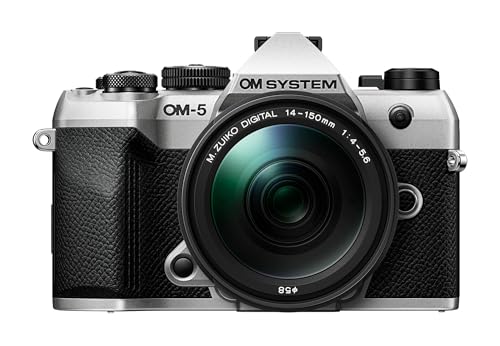
If this guide had to be one camera, the argument would end here. The OM-5 Mark II sits in the Micro Four Thirds system, whose two-times crop turns macro lenses into longer, tighter instruments and whose depth of field at close range is usefully deeper than larger formats manage at the same framing. For a photographer filling the frame with a beetle or a brooch, that is not a compromise to excuse — it is the home-field advantage. Add the system’s famously deep bench of compact macro primes, several of them genuinely affordable on the used shelf, and the total cost of a serious close-up outfit undercuts every larger format.
The decisive feature is computational: the body offers focus bracketing and in-camera focus stacking, firing a sequence of frames at shifting focus planes and merging them into a single image whose sharpness runs from the front of a flower to its back. Handheld stacking for suitable subjects borders on the miraculous, and even tripod-based stacking removes the genre’s most tedious post-processing chore. Beginners discover within a weekend that their keeper rate has tripled, because the camera forgives the millimetre errors that ruin single frames.
Weather sealing and a compact, travel-ready body extend the genre outdoors, where the best small subjects — fungi after rain, frost feathers, tide-line shells — refuse to come to a studio. The camera’s nature heritage shows in small mercies: a flip screen for ground-level work, computational modes for long-exposure effects without filters, and menus that surface the macro tools rather than burying them.
Honesty requires the standing caveat: the smaller sensor gathers less light, so dim interiors ask for added light or patience, and portrait photographers chasing the thinnest possible background blur should look at the larger-sensor picks below. For close detail itself, those are other genres’ problems. In this genre, the OM-5 Mark II is the most capability per unit of money on the page.
A field note from the genre’s front line: fungi photographers, who work at dawn in wet forests at ground level, are this camera’s most loyal constituency, and their reasoning is instructive — sealing against the weather, stacking against the shallow focus, and a body light enough to carry to where the small world actually lives.
And when the stacking habit forms, it migrates: the same photographer starts bracketing landscapes and group portraits, and the small camera ends up improving the whole practice, not just the macro shelf of it.
- Format: Micro Four Thirds — tighter crop, deeper close-range focus
- Key tool: focus bracketing plus in-camera focus stacking
- Build: weather-sealed, compact travel-friendly body
- Lens path: deep shelf of affordable macro primes
- Best subjects: insects, fungi, jewellery, collectibles
Strengths
- Stacking turns millimetre focus errors into keepers
- Macro lens ecosystem is the deepest value in the genre
- Sealed body follows small subjects into real weather
Trade-offs
- Smaller sensor wants deliberate lighting indoors
- Background blur is deeper and less dreamy than full-frame
- Menu depth rewards an afternoon of setup
Best for: naturalists, collectors, and hobbyists who want true macro without professional spending.
Not suited for: portraitists chasing maximum background melt, or shooters who refuse menus.

Canon EOS R50 — Best Budget Entry Into Detail Work
The EOS R50 is the camera we hand to the craft seller, the coin collector, and the returning hobbyist who asks what detail photography costs to enter honestly. Canon built it to be unintimidating — guided interfaces that explain themselves, autofocus that finds eyes and objects without supervision — and then, quietly, included focus bracketing, the feature this genre cares about most. An entry body that brackets is a gift: stack the frames in software later, and the R50 produces tabletop detail that embarrasses cameras from a price tier above.
The RF mount’s lens story needs a clear head. The kit zoom focuses respectably close for flowers, food, and product shots, and that suffices for the first rung of the ladder. True macro arrives with the mount’s dedicated macro prime, which is sensibly priced as these things go and doubles as a portrait lens, or with close-up accessories that shorten any lens’s minimum focus for the price of a pizza night. The R50’s virtue is that none of these steps requires replacing the body; the same camera that shoots the family also runs the lightbox.
Video is a genuine second talent. Marketplace sellers filming their hands at work — pouring, stitching, restoring — get clean 4K-class footage and autofocus that behaves around objects, and the vari-angle screen frames overhead tabletop shots without a monitor. Several small businesses effectively run their product photography and their video channel on this one small body, which is the definition of affordable in working terms.
Its limits are the honest limits of its tier: a modest buffer, a single card slot, and a body that prioritizes lightness over heft. For still, lit, deliberate subjects — this genre’s entire population — none of those limits is ever reached. The R50 is proof that in close-up work, the photographer’s patience outranks the camera’s price.
Sellers report a workflow worth copying: a fixed lightbox corner, the R50 on a small tripod, custom settings saved so the camera wakes already configured for the bench. Session setup drops to a minute, and consistency across hundreds of listings — the thing buyers read as professionalism — arrives almost free.
That growth path is also a resale kindness: Canon’s entry bodies hold a ready second-hand audience of beginners, so the R50 bought today is unusually easy to pass on if the hobby outgrows it.
- Format: APS-C mirrorless, Canon RF mount
- Key tool: focus bracketing for stacked tabletop detail
- Screen: vari-angle touchscreen for overhead framing
- Lens path: kit zoom for rung one, RF macro prime beyond
- Best subjects: crafts, coins, products, food, flowers
Strengths
- Friendliest learning curve in the roundup
- Bracketing unlocks stacked detail from day one
- Lens path grows without replacing the body
Trade-offs
- Kit lens alone will not do true macro
- Single card slot and modest buffer
- Compact body balances best with smaller lenses
Best for: beginners, sellers, and collectors entering close-up work on a sane budget.
Not suited for: event shooters needing dual slots, or anyone expecting macro from the kit zoom alone.

Sony ZV-E10 II — Best for Close-Up Product Video
Hold a handmade soap, a restored lens, a miniature — hold anything — up to the ZV-E10 II, and its Product Showcase mode performs the small miracle this camera was built around: focus leaves your face, settles on the object with a smoothness that looks rehearsed, and returns when the object lowers. For sellers, reviewers, and teachers whose close detailed picture work increasingly means close detailed video, that single behaviour replaces a second camera operator and a shelf of focus-pulling practice. It is the most commercially useful autofocus trick in this roundup.
Stills shooters are served better than the video branding suggests. The APS-C sensor is a known, capable performer, Sony’s E mount holds macro options at every budget from close-focusing zooms to true macro primes, and focus peaking plus magnification make manual precision work pleasant on the bright tilting screen. The camera’s small, grip-friendly body suits the tabletop tripod and the handheld flower walk equally, and its microphone provisions acknowledge that close-up video usually talks.
The design compromises are visible and, for this audience, acceptable: no electronic viewfinder, so bright midday sun means shading the screen with a hand, and controls lean toward video shooters in their layout. Buyers whose close work is ninety percent stills under a forest canopy should take the OM-5 above. Buyers whose close work demonstrates, unboxes, reviews, and sells — the ZV-E10 II was drawn on a whiteboard for you.
Battery life and accessory support round out the working picture: the camera sips power in the manner of its line, runs from USB power for long studio sessions, and sits happily in the enormous E-mount accessory world. As an affordable single purchase that photographs products on Monday and films them on Tuesday, it has the strongest claim on a small business’s money in this entire guide.
One more use case deserves naming: education. Teachers and workshop leaders filming their hands at close range — calligraphy, electronics repair, fly tying — find the showcase focus removes the genre’s traditional second person, the focus assistant, from the budget entirely.
Streamers and course creators add a footnote: the same showcase behaviour that sells soap also teaches beautifully, gliding to the component, the stitch, or the brushstroke exactly as a student’s eye would ask it to.
- Format: APS-C mirrorless, Sony E mount
- Key tool: Product Showcase autofocus for held objects
- Screen: tilting touchscreen, no viewfinder
- Audio: provisions for serious on-camera microphones
- Best subjects: product demos, reviews, crafts on video and stills
Strengths
- Showcase focus makes close-up video look professionally crewed
- Deep E-mount lens shelf at every budget
- USB power suits long tabletop sessions
Trade-offs
- No viewfinder for bright-sun stills work
- Controls favour video shooters in layout
- Macro still requires the right lens, as everywhere
Best for: sellers, reviewers, and teachers filming and photographing products up close.
Not suited for: viewfinder traditionalists, or pure stills shooters in harsh sunlight.

Nikon Z30 — Best Compact Body for Tabletop Creators
The Z30 is Nikon’s argument that a close-up camera for creators should look like the top of a desk tripod, not like a shrunken professional body. There is no viewfinder hump, the screen flips fully for self-framing and overhead angles, and the whole camera is small enough to live permanently beside the lightbox, the workbench, or the seed-starting shelf where a gardener documents germination in daily close-ups. Presence is a feature in this genre: the camera that is already set up gets used, and the Z30 is engineered to already be set up.
Nikon’s Z-mount lens shelf supplies the close work honestly. The compact kit zoom focuses usefully near for food, plants, and product stills, and the system’s macro prime — a favourite among detail shooters for its rendering — turns the little body into a serious instrument for coins, stamps, miniatures, and insects that cooperate. Focus peaking and magnification are present for the manual precision work, and Nikon’s colour science gives skin, wood, and fabric a pleasing honesty that sellers appreciate in unedited files.
Video is the second desk job: clean, long-running recording for tutorials and demonstrations, with the flip screen doing monitor duty and reliable autofocus tracking hands and objects around a workspace. The absence of in-body stabilization matters less at a desk than anywhere in photography — the tripod is the stabilization — and the camera’s modest heat behaviour suits the long, lit sessions that tabletop filming involves.
Buyers must accept the two headline omissions knowingly: no viewfinder, and stabilization delegated to lenses and tripods. Handheld field macro in wind will favour the OM-5. But for the enormous population whose close detailed pictures happen at a bench, a counter, or a studio table, the Z30’s simplicity is not a stripped-down compromise — it is the correct shape of the tool.
Gardeners form this camera’s quiet fan club: a Z30 on a mini tripod at the seed tray, recording germination and photographing seedlings closely across a season, produces a garden diary of genuine scientific charm with almost no daily effort.
Its stills deserve one more sentence: for the desk creator, a camera already framed, already lit, and already charged removes the activation energy that kills more photo habits than any technical limit.
- Format: APS-C mirrorless, Nikon Z mount
- Key tool: flip screen plus focus peaking for tabletop precision
- Build: compact, viewfinder-free creator body
- Lens path: close-focusing kit zoom, Z macro prime beyond
- Best subjects: bench crafts, tutorials, plants, products, miniatures
Strengths
- Lives on the desk, always ready for the next close-up
- Nikon colour flatters materials and skin in straight files
- Long, calm video for demonstrations and tutorials
Trade-offs
- No viewfinder for field work in bright light
- No in-body stabilization — tripod or lens must provide it
- Macro prime is a planned second purchase
Best for: desk-based creators, crafters, gardeners, and tutorial makers.
Not suited for: handheld field macro specialists, or viewfinder-dependent shooters.

Canon PowerShot G7 X Mark III — Best Pocket Camera for Close Detail
Not every close detailed picture justifies a system camera, and the G7 X Mark III is the standing proof. Its one-inch sensor is large enough to hold genuine texture — the grain of leather, the crumb of a cake, the machining on a pen — and its lens focuses closely enough at the wide end to fill the frame with subjects a phone would render as mush. It does all this from a coat pocket, which reorders the genre’s priorities: the best close-up camera for a market stroll, a bakery visit, or a flea-market find is the one that is present.
Handling rewards the close worker specifically. The tilting screen flips up for self-framing and down for the low angles that tabletop and ground-level subjects demand, the control ring around the lens gives a fingertip command that can be assigned to focus or exposure, and Canon’s colour and flash behaviour at close range are famously forgiving of beginners. Food bloggers built a genre on this camera family for a reason: the close, bright, appetizing frame is its home address.
Video and connectivity extend the pocket proposition — the camera records capable footage, streams and transfers like a modern creator tool, and its microphone input acknowledges the reviewing and demonstrating crowd. A seller who photographs stock at the market in the morning and films a close look at it in the afternoon can do both with this single pocketable object, no bag, no lens decisions, no setup theatre.
The fixed lens is both the freedom and the fence. There is no upgrade to true macro magnification, no interchangeable anything, and the zoom’s far end serves portraits rather than detail. Buyers whose ambitions end at beautiful close-ups of the everyday world will never touch the fence. Buyers dreaming of frame-filling ant portraits should buy the OM-5 and accept the bag it requires.
Café culture is the G7 X’s natural habitat for a reason beyond food: its close focus and forgiving flash flatter interiors, hands, notebooks, and the small merchandise of independent shops, which is why so many small retailers quietly run their social photography on one.
There is a discipline the G7 X teaches that system owners envy: with nothing to swap and nothing to upgrade, its owners spend their money on travel and their attention on light, and their close-ups improve at an embarrassing rate.
- Format: 1-inch sensor premium compact
- Lens: fixed zoom focusing close at the wide end
- Screen: tilts up for selfies, down for low angles
- Extras: microphone input, streaming-friendly connectivity
- Best subjects: food, markets, products, travel detail
Strengths
- Real texture and close focus from a coat pocket
- Beginner-proof colour and close-range flash
- Films and streams as happily as it photographs
Trade-offs
- No path to true macro magnification
- Fixed lens means the system never grows
- Small body, small battery — spares advised
Best for: food and travel bloggers, market sellers, and pocket-first photographers.
Not suited for: true macro ambitions, or anyone who wants interchangeable lenses later.

Sony RX100 VII — Best Premium Compact — the Stretch Pick
Every affordable guide deserves one honest stretch, and the RX100 VII is ours: the pocket camera for the reader whose close detailed pictures share a life with travel, family, and street photography, and who would rather buy one superb compact than a modest compact plus a system body. Its zoom reaches genuinely far — school stages, wildlife at respectful distances, architectural detail across a square — and at its wide end it focuses closely enough for flowers, food, and found textures, making it the only camera here that treats detail as one stop on a full photographic day rather than the whole itinerary.
The autofocus is the flagship argument. Tracking that holds a moving subject, eye focus that finds people and animals, and burst speeds that belong to sports cameras give the RX100 VII a second life at events where the other compacts in this guide would watch politely. For the naturalist who photographs a butterfly closely and then a hawk distantly on the same walk, that breadth is not luxury; it is the whole point of carrying one camera.
Detail workers should calibrate expectations precisely. The close focus serves the first rung of the ladder beautifully — blossoms, dishes, crafts, textures — while true macro magnification belongs to the interchangeable-lens picks, full stop. What the Sony adds instead is refinement: a pop-up viewfinder for bright days, a tilting screen, microphone input, and files from its one-inch sensor that hold texture with a maturity the cheaper compacts approach but do not match.
Price is the standing objection, and it is fair — this camera costs what a mirrorless body costs, which is why it is the stretch pick and not the headline. The defence is arithmetic over years: one camera, no lens purchases, no bag upgrade, carried daily because it fits the pocket it was designed for. Cost per photograph, the only honest metric, can make this the cheapest camera on the page for the right owner.
Event parents make a parallel case: the same pocket camera that photographs a child’s science-fair exhibit in fine close detail at noon tracks the afternoon’s football match with its burst and tracking — a breadth no other compact here attempts.
Treat its menus as a one-time tax: configure the custom modes for close work and for action once, and the camera thereafter behaves like two specialists that happen to share a pocket.
- Format: 1-inch sensor flagship compact
- Lens: long-range fixed zoom, close focus at wide end
- Viewfinder: pop-up electronic finder plus tilting screen
- Autofocus: flagship tracking and eye focus, fast bursts
- Best subjects: travel detail, nature walks, family, street
Strengths
- One pocket camera covers close-ups and distant subjects
- Autofocus and bursts belong to a higher class entirely
- Pop-up viewfinder rescues bright-day composition
Trade-offs
- Premium price rivals mirrorless bodies
- True macro still belongs to system cameras
- Dense menus reward an evening of configuration
Best for: one-camera travelers and naturalists who want detail plus everything else.
Not suited for: budget-first buyers, or dedicated macro specialists.
How Do the Six Compare for Close-Up Work?
The comparison that matters in this genre is not sensor against sensor; it is the magnification ladder. The table sorts the six by the rung each truly serves, so you can buy your rung and no other.
| Pick | Type | Standout Trait | Watch Out For |
|---|---|---|---|
| OM SYSTEM OM-5 Mark II | Micro Four Thirds mirrorless | Focus stacking and bracketing built into the body | Smaller sensor asks for good light at base settings |
| Canon EOS R50 | APS-C mirrorless (Canon RF) | Focus bracketing in an entry body with guided menus | Kit zoom is not a macro lens — plan the glass |
| Sony ZV-E10 II | APS-C mirrorless, video-leaning (Sony E) | Product Showcase focus mode for held-up objects | No viewfinder; stills ergonomics are secondary |
| Nikon Z30 | APS-C mirrorless (Nikon Z) | Compact creator body with clean tabletop video and stills | No viewfinder and no in-body stabilization |
| Canon PowerShot G7 X Mark III | Premium compact, 1-inch sensor | Close minimum focus from a pocketable fixed zoom | Fixed lens — no path to true macro magnification |
| Sony RX100 VII | Premium compact, 1-inch sensor | Long-range zoom plus flagship autofocus in a pocket body | Premium pricing; menu depth is real |
Two philosophies divide the table. The system cameras — OM, Canon, Sony, Nikon — sell a body plus a growth path, and their close-up greatness is partly in a lens you may buy later. The compacts sell completeness: nothing to add, nothing to upgrade, a ceiling you accept in exchange for a pocket. Neither philosophy is the honest one for everybody, and the most common buying error in this genre is purchasing a growth path for a hobby that only ever needed completeness, or completeness for a hobby already dreaming of ant portraits.
Notice also where the money hides. In system cameras the body is the smaller half of a macro outfit; the lens, the light, and the tripod complete it. Shoppers comparing body prices alone will misjudge the OM-5 and R50, whose ecosystems contain genuinely affordable macro glass, against systems where the macro prime costs like a holiday. Total outfit cost, rung by rung, is the comparison this guide has quietly been making all along.
A practical tiebreaker when two rows both fit: choose the camera whose screen and controls suit your working posture. Tabletop shooters live on tilted screens and touch focus; field shooters live on viewfinders and gloves-friendly dials. Posture sounds trivial across a single session and decisive across a year of them.
How Do You Get Sharper Close-Ups From Any of These Cameras?
Stabilize before you optimize. Up close, the photographer’s body is the largest source of blur in the system — heartbeat, breath, the sway of standing — and the cheapest sharpness upgrade in the genre is contact: elbows on the table, camera on a beanbag, subject on a surface that does not move. Use the self-timer or a remote release so your finger leaves the camera before the exposure, and let the screen, tilted, do the composing while you sit comfortably enough to be still.
Focus like a surveyor. Choose the exact plane that must be sharp — the insect’s eye, the hallmark on the ring, the front stitch of the seam — focus there, and let the rest fall where it may. When the subject has depth the frame needs, that is the moment for the bracketing and stacking tools the mirrorless picks provide: shoot the sequence, merge it, and present a depth no single frame could hold. Manual focus with magnification, tedious for one frame, becomes pleasant when the camera is on a tripod and the subject is patient.
Light small subjects with big, soft sources. A window with a sheer curtain, a lamp behind a shower curtain, a white card bouncing flash — small subjects make large lights cheap, and soft light is what reveals texture instead of glare. Watch for the twin enemies of close work: specular highlights blowing out on glossy subjects, solved by moving the light rather than the camera, and mixed colour from room lights, solved by choosing one light source and letting the camera’s white balance commit to it.
Finally, work the subject, not just the settings. Rotate the coin to rake light across its relief. Mist the flower. Put the dark velvet under the pale shell. Close-up photography is the most directable genre in the medium — the entire world of the frame fits on a tray — and the photographers whose detail work stands out are usually distinguished by arrangement and patience long before they are distinguished by equipment.
Keep a field kit the size of a sandwich box: a white card, a black card, a small spray bottle, a blower, and a microfiber cloth. Dust that is invisible at normal distances becomes boulders at macro magnification, and a ten-second cleaning ritual before the session saves an hour of retouching after it. The blower, in particular, is the highest-value accessory in all of close-up photography.
End every session with the unglamorous step that separates archives from heaps: name and file the close work while the subject is still on the table. A coin’s variety, a plant’s cultivar, a product’s batch — the metadata of detail photography lives in the maker’s head for about a day. The camera cannot record what only you know, and future you is a stranger who will be grateful for the caption.
And when a session fails — soft files, cruel glare, a subject that will not sit — diagnose in the genre’s order: support, focus plane, light, settings. Nine failures in ten live in the first three, and all three are free to fix, which is the most encouraging sentence in this entire guide.
What Mistakes Ruin Affordable Close-Up Purchases?
Buying megapixels for a focusing problem is the genre’s founding error. A high-resolution sensor behind a lens that cannot focus closely produces enormous, beautifully detailed photographs of things from too far away. Shoppers do this constantly because resolution is printed on the box and minimum focus distance is not. The order of operations is fixed: first the close-focusing path, then the focus aids, then the sensor, and anyone who reverses it buys the same camera twice.
The second mistake is expecting the kit zoom to be the macro lens. Kit zooms focus respectably near and advertise the fact warmly, and many a beginner concludes macro is disappointing when the truth is they were sold a rung-one tool for a rung-three ambition. The picks above are explicit about which rung each configuration serves; believe them, and budget the macro prime or the close-up accessory into the system cameras from the start rather than as a rescue purchase.
Third: shooting handheld at macro distances in available gloom and blaming the camera. At high magnification, shutter speeds that feel fast are slow, and small sensors get blamed for noise that stillness and a lamp would have prevented. The genre’s veterans sound like broken records on this point because it remains true: light and support first, ISO last, and the affordable camera suddenly performs like the expensive one in the only comparison that matters — the printed or posted result.
A quieter fourth mistake is neglecting the background at close range. A three-centimetre subject still has a world behind it, and clutter at macro distances reads as loudly as it does at any other scale. The masters of the small world carry black and white cards the way portraitists carry reflectors, placing the void or the glow deliberately behind the subject. It costs almost nothing, which is precisely why it is forgotten in equipment-led shopping.
Finally, beware the tripod that is almost sturdy. Close work magnifies vibration exactly as it magnifies subjects, and a spindly tripod that behaves at portrait distances trembles visibly at macro range. A beanbag on a table outperforms a cheap tall tripod for most tabletop subjects, and the money difference buys the light that actually improves the photographs.
One more, because it is expensive: insuring the outfit with a second body before owning the first lens. Close-up outfits fail at the lens, the light, and the tripod — never at the absence of a backup body. Sequence the purchases by failure point and the affordable outfit assembles itself in the right order.
Final Recommendation
A word about ambition: the photographers who stay in this genre longest are the ones who let the subjects set the budget. A garden, a workshop, a collection, a market stall — each generates its own list of small wonders, and the camera that serves the list you already have will be used until it wears out.
Start where your subjects live. Tabletop and field naturalists should take the OM SYSTEM OM-5 Mark II and its stacking without a backward glance; it is the most genre capability affordable money buys. Newcomers and sellers should take the Canon EOS R50 for its kindness and growth path, video-led sellers the Sony ZV-E10 II for that showcase focus glide, desk creators the Nikon Z30, and the pocket-first should choose between the G7 X Mark III’s value and the RX100 VII’s breadth with a clear head about the stretch.
Whichever you choose, spend the savings the way this genre rewards: on the close-focusing lens, the small light, the beanbag, and the time. Close detailed photography is the rare field where the affordable camera, properly supported, is not the compromise version of the art. It is the art, at its most democratic.
Buy the rung you stand on, light it well, keep it still, and the small world will do the rest — it has been waiting, in extraordinary detail, about three centimetres from your lens.
Related guides
- Best Cameras for Amazing Photos: Image Quality, Colour, and the Picks That Deliver
- Best Cameras for Ad Making: 6 Picks for Product Stories That Sell Honestly
- Best Bullet Cameras for Day and Night: Outdoor Picks That See Clearly Around the Clock
- Best Affordable DSLR-Style Cameras for Close Detailed Pictures: 6 Bodies That Resolve the Small World
Frequently Asked Questions
Can a phone replace these cameras for close-up detail?
For casual close-ups shared at screen size, a good phone is respectable. The moment you crop, print, sell, or catalogue — the moment the detail itself is the product — the phone files soften, its close focus fights you, and its lighting control runs out. These cameras exist for exactly that moment.
Do I really need a macro lens, or is the kit lens enough?
Enough for flowers, food, and product shots at modest sizes — the first rung. For coins filling the frame, insects, jewellery hallmarks, or anything you would describe as examination rather than illustration, a macro lens or close-up accessory stops being optional.
What is focus stacking and why do two picks emphasize it?
Stacking merges a sequence of frames focused at slightly different depths into one image sharp from front to back. At macro distances, where a single frame may hold only millimetres in focus, it is the difference between suggesting a subject and presenting it entire.
Which of these is best for selling handmade goods online?
The Canon EOS R50 for stills-led shops, thanks to its guided ease and lens growth; the Sony ZV-E10 II if your listings and social posts lean on demonstration video, where its product focus behaviour saves retakes daily.
Are smaller sensors really better for macro?
They offer deeper focus at a given framing and tighter crops from the same lens, which many macro shooters experience as better for their subjects. Larger sensors answer with shallower, dreamier rendering and low-light ease. It is a genuine trade, not a hierarchy.
What else should I budget for besides the camera?
A sturdy small tripod or beanbag, a simple continuous light or a window you control, and — for system cameras — the close-focusing lens that completes the outfit. Together these routinely matter more than the difference between any two bodies in this guide.
How close is close enough for product listings?
Fill the frame with the product and let one detail shot — a stitch, a clasp, a grain — sit alongside the full view. If the camera and lens can do that at arm’s length on a table, they are close enough for commerce, whatever the ratio printed in the brochure.
Why do close-up pictures look soft even when the camera focuses correctly?
At close distances the depth of field shrinks to a sheet of paper, so a photograph can be perfectly focused and still mostly blurred — the plane of sharpness is simply thinner than the subject. A coin photographed at an angle keeps one edge crisp and loses the other; a flower’s nearest petal is sharp while the centre you cared about drifts. Three habits separate the close-up shooters who get keepers. First, they align the camera’s sensor parallel to the subject’s important plane, because at macro distances geometry matters more than aperture. Second, they stop down further than instinct suggests and accept the slower shutter that follows, bracing the camera or the subject rather than raising sensitivity into noise. Third, they focus on the point that must be sharp — an insect’s eye, a hallmark stamp, the texture break — and let the rest fall where it falls, instead of trusting autofocus to guess. Light helps more than gear here: a close subject lit from a low side angle reveals surface detail that flat frontal light erases, which is why a cheap desk lamp repositioned beats a lens upgrade for most product and nature close-ups. Master the geometry and the light, and the cameras in this guide will show you detail you walked past for years.
Related Guides
Continue with our companion guides to macro lenses on a budget, building a tabletop lightbox for product photography, and focus stacking explained step by step: Budget Macro Lenses Compared for Canon, Sony, Nikon, and Micro Four Thirds How to Build a Tabletop Lightbox for Product and Collectible Photography Focus Stacking Explained: A Beginner Workflow for Impossible Depth