kajuandouglas.com is reader-supported. When you buy through links on our site, we may earn an affiliate commission.
Where to Buy a Camera for a Hobbyist, Where the Hobby Is the Whole Point
The best cameras for a hobbyist are chosen by a different logic than every other camera purchase: not for a job, not for a trip, not for the family’s archive, but for the pleasure of the craft itself — the Saturday morning spent on purpose in hard light, the lens bought because its rendering is beautiful, the photograph that exists because making it was the recreation. A hobbyist camera succeeds when it is reached for, learned deeply, and loved irrationally in the specific ways that keep a hobby alive for decades.
That logic inverts the usual advice. The professional buys reliability; the family buys ease; the hobbyist buys character and growth — controls that reward mastery, a lens system deep enough to explore for years, files rich enough that the editing craft has something to chew on, and a community of fellow devotees whose forums, clubs, and second-hand markets keep the hobby social and supplied. A camera that is merely adequate is, for a hobbyist, the one true failure: hobbies die of adequacy.
Where to buy: each linked name below leads to that camera’s Amazon listing, and hobbyists should order like the long-term devotees they intend to become — the body, the one fast prime that teaches more than any zoom, the strap that makes the camera daily clothing, and the notebook. The second lens can wait for the season’s evidence; the prime cannot, because it is the hobby’s first teacher.
The six divide by hobbyist temperament: two system all-rounders that can grow in any direction the interest wanders, a colourist’s dial-led instrument for the aesthete, a video-capable creator body for the hobbyist whose craft is moving, a compact for the daily-carry purist, and a full-frame classic for the devotee ready to build the hobby’s cathedral. Between them, every serious hobby’s first decade is covered.
One honesty belongs at the front: the hobby’s enemy is not the wrong camera but the unfinished learning — the body traded before its dials became reflexes, the system abandoned at the exact depth where mastery was about to compound. This guide will recommend, repeatedly, buying the camera you will still be learning from in three years, and then keeping it for five.
Key Takeaways
The clubhouse briefing:
- A hobbyist buys character and growth, not adequacy — the camera must reward mastery for years.
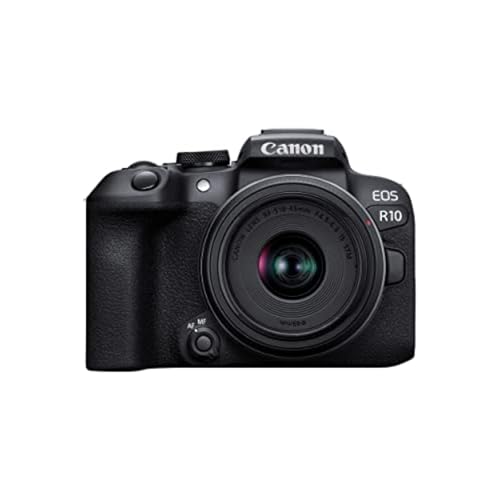
- The Canon EOS R10 leads for most hobbyists: a system deep enough for a decade, priced for a mortal.
- One fast prime teaches more than any zoom; buy it with the body, not after it.
- Every pick here anchors a real community — clubs, forums, and used markets that keep the hobby supplied.
- Keep the camera three years minimum; mastery compounds where gear-churn merely spends.
In this guide
Quick Picks
Six cameras for the craft’s own sake, cast by temperament.
| Camera | Badge | Why it earns its place here |
|---|---|---|
| Canon EOS R10 | Best for Most Hobbyists | A deep, friendly system that grows from first prime to serious glass without a body change. |
| Nikon Z50 II | Best for the Craft Traditionalist | Files and handling that reward deliberate technique, in a system with a photographer’s accent. |
| Fujifilm X-T5 | Best for the Aesthete | Dials, film colour, and resolution — the hobby as a beautiful object, daily. |
| Sony ZV-E10 II | Best for the Moving-Image Hobbyist | Video craft with a lens system, for the hobbyist whose films are the point. |
| Fujifilm X100VI | Best for the Daily-Carry Purist | One lens, one camera, every day — the hobby distilled to a discipline. |
| Sony Alpha 7 IV | Best for the Devotee’s Cathedral | Full-frame depth for the hobbyist building the serious, lasting system. |
How Did We Choose the Best Cameras for a Hobbyist?
Growth headroom came first: each system was judged as a five-year habitat — the lenses that exist to grow into, the used market that supplies them affordably, the body’s own ceiling high enough that the hobbyist’s improving craft, not the camera, remains the limiting factor for years. Cameras that a keen hobbyist would outgrow in eighteen months were cut, however charming their first impressions.
Second, the tactile curriculum: controls that teach — dials with detents, menus that explain themselves in the brand’s dialect, manual modes that feel like an instrument rather than a punishment. Third, the community test: clubs that welcome the badge, forums with a decade of answers, repair and resale ecosystems that treat the hobbyist’s gear as a citizen. A hobby is a society as much as a solitude, and the camera is its membership card.
What we discounted: professional overkill whose weight and cost would tax the pleasure, toy-grade ease whose ceiling arrives by Christmas, and any system whose lens roadmap is a rumour. The hobbyist’s camera is a long marriage; this list played matchmaker accordingly.
What Does a Hobbyist Actually Do With a Camera All Year?
Projects, mostly — the hobby’s unit of meaning. The year of street photography in one neighbourhood; the garden documented through its seasons; the portrait of every member of the club; the railway stations, the night buses, the moths. A hobbyist camera must serve the project habit: reliable enough for the weekly outing, characterful enough that its rendering becomes the project’s signature, and supported by a system whose lenses let each new obsession be equipped without a new body.
Then there is the practice itself, which outsiders mistake for inefficiency: the same bridge photographed forty times, the exposure exercises, the printing experiments, the evening spent editing one frame three ways. The hobbyist’s camera is a practice instrument, like a musician’s, and its virtues are a practice instrument’s — it must make repetition pleasurable, because repetition is where the craft is hiding.
And the society: the club night, the photo walk, the forum’s monthly theme, the print swapped with a stranger whose X100 diary inspired your own. The picks here were all chosen as citizens of that society — cameras whose owners find each other, whose used lenses circulate like library books, and whose quirks are a shared language rather than a private frustration.
Why Does the First Prime Lens Matter More Than the Body?
Because the prime is where the hobby actually starts. A kit zoom teaches framing by convenience; a fast prime teaches seeing — the feet learn the focal length, the eye learns to pre-visualise the frame across a room, and the wide aperture opens the low-light world where a hobbyist’s favourite photographs live: the evening street, the window portrait, the café’s pool of light. Every experienced hobbyist’s origin story contains the same chapter, and it is never about a zoom.
The prime also disciplines the budget into the hobby’s correct order: glass before bodies, always, because lenses are the system’s long-term citizens while bodies are its mayors — celebrated, replaced, and survived by the glass they governed. The systems in this list were chosen partly for their prime ecosystems: affordable fast classics that a hobbyist can collect across birthdays, each one a new dialect for the same camera to speak.
Buy the prime with the body, learn the pair as one instrument for a full season, and let the second lens be chosen by the photographs you kept almost taking — the too-distant bird, the too-wide interior. Evidence-based collecting is the hobby’s financial wisdom, and the prime is its first exhibit.
Which Cameras Reward a Decade of Sundays? The Six Picks in Detail

Canon EOS R10 — Best for Most Hobbyists
The R10 is the hobbyist’s sweet spot made metal: a body light enough for the daily walk and serious enough for the club’s exhibition, inside Canon’s vast lens commonwealth where every obsession — macro, portrait, sport, the night sky — has glass waiting at every budget. Its autofocus is a generous teacher, holding subjects while the beginner’s attention is on composition, and its controls grow with the owner from guided modes to full manual without a change of instrument.
The system’s depth is the long argument: today’s kit zoom, next year’s fast prime, the telephoto when the birding project arrives, the macro when the garden year begins — all on one body, all available used in a market deep enough to be a hobby in itself. Canon’s colour, kind to faces and honest to landscapes, gives the growing archive a consistent accent across the years.
For the hobbyist whose interests have not yet declared themselves — which is most hobbyists, honestly, in year one — the R10 is the list’s safest cathedral to start building in: no direction is closed, no ceiling is near, and the community of owners is large enough that every question has been answered somewhere by somebody patient.
Its limits are the class’s: no weather sealing for the storm project, a sensor that concedes the extremes to the full-frame devotee’s pick. Within the hobby’s real distribution of Sundays, those are footnotes; the headline is a decade of growth on one honest body.
- Type: APS-C mirrorless system
- Signature: every direction open
- Lenses: a commonwealth, new and used
- Focus: a generous teacher
- Hobby role: the default cathedral
Strengths
- Grows from first prime to serious glass.
- Community answers every question.
- Light enough for the daily walk.
Trade-offs
- Storm projects want sealing.
- Extremes concede to full frame.
- Kit zoom is a first chapter only.
Best for: new and growing hobbyists, project shooters, club members.
Not suited for: weather extremists or full-frame absolutists.

Nikon Z50 II — Best for the Craft Traditionalist
The Z50 II speaks to the hobbyist who believes photography is a craft of decisions: its handling rewards deliberation, its files carry the range and detail that careful exposure makes and careless exposure cannot fake, and its rendering has the photographer’s accent — colour with a spine. Owners describe a camera that makes them better by expecting more, which is a teacher’s highest compliment in any discipline.
Nikon’s system around it is a traditionalist’s library: superb primes, travel zooms that respect the walk, and an adapting heritage that welcomes a century of classic glass onto the modern body — a hobby within the hobby that has kept generations of Nikonians happily occupied. The club world’s respect for the badge is not nostalgia; it is the accumulated testimony of files that print beautifully.
Choose it if your projects lean toward the considered — landscape, portraiture, the documented place — and your pleasure is in the exposure made correctly rather than rescued later. Its video serves the occasional film honourably, and its stills serve the exhibition wall as a matter of course.
The ecosystem asks for deliberate lens choices beside Canon’s abundance, and its video-first rivals out-charm it for the moving hobbyist. For the stills traditionalist, it is the list’s most serious instrument per gram, and seriousness — the pleasurable kind — is its whole appeal.
- Type: enthusiast APS-C mirrorless
- Signature: rewards deliberate technique
- Files: range that careful exposure earns
- Heritage: classic glass welcomed
- Hobby role: the craftsman’s bench
Strengths
- Makes its owner more careful, happily.
- Prints beautifully, year after year.
- Classic lenses extend the hobby.
Trade-offs
- Lens choices need deliberation.
- Video is the second craft.
- Expects a learning investment.
Best for: landscape and portrait traditionalists, print makers.
Not suited for: video-first hobbyists or zero-learning buyers.

Fujifilm X-T5 — Best for the Aesthete
The X-T5 is the hobby as a beautiful daily object: shutter and aperture as physical dials under the fingers, film simulations that render the world in the colours of beloved emulsions, and a high-resolution sensor that gives the landscape and architecture projects their detail. Its owners do not merely take photographs; they operate an instrument whose operation is itself the recreation, and they will explain this at length, happily, to anyone at the club.
The aesthetic argument is practical, not precious: because the camera’s colour is finished at the moment of exposure, the hobbyist’s evenings return from the editing desk to the field, and the archive accumulates in a single, recognisable voice. The film-simulation discipline — choose the emulsion, commit, shoot — teaches the same decisiveness the prime lens teaches, in the dimension of colour.
Its system is the aesthete’s garden: small, gorgeous primes; zooms that keep the faith; a community whose aesthetic standards are a curriculum in themselves. Projects in travel, street, and landscape flourish here, and the printed results have the gallery’s accent rather than the catalogue’s.
The smaller sensor concedes the night extremes, and the dial-led interface asks its owner to enjoy deliberation — which its owners do, definitionally. For the hobbyist whose pleasure is as much in the instrument as in the image, nothing else on this page is really a competitor.
- Type: APS-C mirrorless, dial-led
- Signature: the operation is the recreation
- Colour: film emulsions as dials
- Resolution: detail for big subjects
- Hobby role: the aesthete’s instrument
Strengths
- Finished colour at the shutter.
- Dials teach decisiveness.
- Archive speaks in one voice.
Trade-offs
- Night extremes trail full frame.
- Deliberation is the price of admission.
- Video supports rather than stars.
Best for: street, travel, and landscape aesthetes.
Not suited for: speed-first or video-led hobbyists.

Sony ZV-E10 II — Best for the Moving-Image Hobbyist
Some hobbyists’ craft is cinema at kitchen-table scale: the short film, the family documentary, the club’s video night, the channel kept for love. The ZV-E10 II is their instrument — a video-first mirrorless with a lens system deep enough for a decade of projects, autofocus that directs attention so the hobbyist can direct everything else, and a microphone path that respects the truth that films are heard before they are seen.
Its hobby virtues are a filmmaker’s: settings that expose the craft’s grammar — frame rates, profiles, focus transitions — as learnable dials rather than hidden menus, and a size that lets a one-person crew shoot the whole project without a production’s logistics. Stills, when the project needs them, are a real camera’s stills, so the hobby’s two dialects share one body and one lens bag.
The community here is the creator world: tutorials in abundance, accessories like a small industry, and an audience pipeline for the hobbyist ready to publish. For the film-leaning beginner, no other pick shortens the distance from first project to finished piece as honestly.
It concedes the stills traditionalist’s dials and the full-frame night, and its richest life is lived with a microphone and a tripod nearby. Within the moving hobby, it is the list’s clear first door — and its lens system means it need never be the last.
- Type: creator mirrorless, APS-C
- Signature: cinema at kitchen-table scale
- Focus: directs attention for you
- Sound: a real microphone path
- Hobby role: the filmmaker’s first studio
Strengths
- Finished films from a one-person crew.
- Craft grammar is learnable here.
- Lens system grows with projects.
Trade-offs
- Stills dials are a dialect away.
- Microphone is a needed companion.
- Weather courtesy required.
Best for: short films, family documentaries, channels of love.
Not suited for: stills purists or storm shooters.

Fujifilm X100VI — Best for the Daily-Carry Purist
The X100VI is the hobby reduced to its essence and then perfected: one camera, one fixed lens, carried every day, until the seeing becomes a reflex and the diary becomes a life’s work. Its owners are the hobby’s monks — and its waiting lists are the hobby’s standing joke — because the constraint it imposes is the one serious photographers keep recommending to each other: master one frame, completely, and the photographs will follow.
The instrument rewards the vow beautifully: a superb lens married to a high-resolution sensor, film colour for the diary’s voice, a hybrid viewfinder that teaches both the rangefinder’s anticipation and the screen’s certainty, and handling so quiet and considered that the camera disappears into the day’s clothing. The daily project — the street, the family, the commute’s theatre — is its native epic.
Choose it as the purist’s only camera, or as the system owner’s daily companion that keeps the craft warm between expeditions. Either way, its scarcity and price make it a deliberate acquisition, and its owners tend to describe the deliberation as part of the pleasure.
Its boundaries are the vow’s: no zoom for the distant subject, no system to grow into, and a popularity that makes it the hardest pick here to actually buy. For the hobbyist whose project is the day itself, those boundaries are not the camera’s limits but its teaching plan.
- Type: fixed-lens premium compact
- Signature: one frame, mastered completely
- Viewfinder: two schools in one eye
- Colour: the diary’s film voice
- Hobby role: the monk’s instrument
Strengths
- Carried daily, therefore used daily.
- Constraint teaches seeing fastest.
- Files and colour are exhibition grade.
Trade-offs
- No reach, no system, by vow.
- Hard to buy, deliberately priced.
- One focal length must fit the life.
Best for: daily diarists, street purists, system owners’ companions.
Not suited for: wildlife, sport, or the undecided.

Sony Alpha 7 IV — Best for the Devotee’s Cathedral
The Alpha 7 IV is for the hobbyist who has stopped pretending it is casual: full-frame files with the range and low-light grace that the serious projects demand, a lens commonwealth that includes the finest glass the hobby can buy, and a body whose ceiling sits so high that a decade of improving craft will not find it. This is the cathedral build — bought once, built on for years, and justified, in the hobbyist’s honest accounting, by joy rather than by invoices.
Its hybrid depth suits the mature hobby’s breadth: the landscape portfolio and the grandchild’s portrait, the club’s exhibition and the occasional paid commission that the hobby, at this level, starts attracting whether it wants them or not. The files reward the editing craft richly — shadows with somewhere to go, highlights with manners — and the system’s used market lets the cathedral be furnished gradually, one beloved lens per year.
Choose it when the hobby is a life’s central recreation and the budget is a life’s honest allocation: fewer, better things, kept longer. Its owners tend to be the club’s anchors — the ones whose prints set the standard the rest of this list’s owners cheerfully chase.
The costs are the tier’s: weight that must be carried on purpose, glass priced like the heirlooms it becomes, and a sophistication that asks the hobbyist to be a student for the first season. For the devotee, those are not costs but the hobby’s substance, purchased deliberately.
- Type: full-frame hybrid mirrorless
- Signature: a ceiling a decade cannot find
- Files: the editing craft’s rich diet
- System: the finest glass, gradually
- Hobby role: the cathedral
Strengths
- Serious projects fully served.
- Files reward mastery for years.
- Glass becomes heirlooms.
Trade-offs
- Weight is carried on purpose.
- Tier pricing throughout the system.
- A student’s first season required.
Best for: devotees, exhibition shooters, portfolio builders.
Not suited for: casual carriers or first-month beginners.
How Do the Six Compare at a Glance?
Hobbies divide by temperament before they divide by budget, so the table casts each pick to its devotee and names the vow it asks.
| Camera | Form | Decisive edge | What you give up |
|---|---|---|---|
| Canon EOS R10 | APS-C system | Growth in all directions | Sealing and extremes |
| Nikon Z50 II | APS-C system | Craft and files | Video specialisation |
| Fujifilm X-T5 | APS-C dial-led | Aesthetic daily joy | Night extremes |
| Sony ZV-E10 II | Creator mirrorless | Moving-image craft | Stills tradition |
| Fujifilm X100VI | Fixed-lens compact | Daily discipline | Flexibility |
| Sony Alpha 7 IV | Full-frame system | Depth and ceiling | Lightness and thrift |
How Do You Build a Hobby That Lasts, Rather Than a Shopping Habit?
By projects and by patience. The project gives the camera its orders — this season’s subject, this year’s book, the exhibition’s theme — and orders are what separate a hobby from a browse. Set the project before the purchase and let it choose the system: the street diarist and the bird photographer are both hobbyists, but they are not shopping in the same aisle, and the project is the only honest map of which aisle is yours.
Patience is the budget’s form of the same virtue: one body, learned to reflex; one prime, learned to instinct; the second lens bought from evidence; the upgrade bought when the photographs — not the forums — name the limitation. The hobby’s graveyard is full of three-month cameras, each abandoned at the exact depth where its dials were about to become transparent and the seeing was about to start.
And join the society early: the club, the walk, the forum’s monthly theme. Hobbies are kept alive by witnesses — people who expect your photographs, notice your progress, and lend you the lens that decides your next purchase better than any review. The camera is the membership card; the membership is the hobby’s pension plan.
Budget the hobby like the long recreation it is: a modest annual line — a lens in a good year, printing and club dues in every year, a body only when the evidence demands — outlasts the heroic splurge followed by a decade of guilt. The hobbyists still shooting at seventy are rarely the ones who spent most in year one; they are the ones whose spending paced their learning, so that every purchase arrived as a reward the photographs had earned.
What Are the Most Common Mistakes New Hobbyists Make?
The first is buying the professional’s burden: the flagship body and the fast zoom whose combined weight ensures the camera attends only occasions, while the hobby — which lives on Tuesdays — starves. The second is the opposite: the toy bought to “see if I like it,” whose dreadful files answer the question falsely. The hobby deserves a real instrument at a mortal tier, which is precisely the shape of this list’s first three picks.
The third is collecting lenses like stamps before the first one is learned: three focal lengths at a novice’s depth teach less than one at a master’s. The fourth is editing before seeing — hours at the desk rescuing photographs that a minute’s patience at the scene would have made honestly. And the fifth is comparing archives with the internet’s highlight reels, a sport in which everyone’s ordinary Tuesdays lose. The club’s print night, where real hobbyists show real work, is the antidote to all five.
How Do You Learn a Camera Deeply, in One Season?
By curriculum, self-imposed and cheerful: the first month on one lens and one mode until the dials are reflexes; the second on exposure itself — the same scene at every aperture, printed and compared, until depth of field is a language rather than a lottery; the third on the project’s first real body of work, shot to a brief and edited to a sequence. Photographers who serve this season describe the same discovery at its end: the camera has become transparent, and the photographs have started.
Print throughout, small and often. The screen forgives everything and teaches nothing; the print is the hobby’s honest examiner, revealing the missed focus, the lazy exposure, the colour that only glowed because the monitor did. A season’s worth of small prints, pinned in sequence, is a progress chart no follower count can counterfeit.
Keep the notebook the season deserves: settings that worked, light that taught, the frame numbers of the keepers and one sentence on why. The hobbyist’s notebook becomes, within a year, the most valuable photography book they own — because it is the only one written about their own seeing.
End the season with a reckoning that is also a celebration: the year’s dozen printed and sequenced, the notebook’s lessons copied fair, and the next season’s project named while the current one’s evidence is on the wall. Hobbyists who close their seasons this way rarely drift out of the craft, because the reckoning keeps showing them, in prints, exactly how far the seeing has come — and how interesting the next distance looks.
How Do You Choose a Project That Will Carry a Whole Year?
Choose by affection and by access: a subject you already love, available on an ordinary Tuesday, with enough depth to change across the seasons. The home neighbourhood is the classic first project because it passes all three tests and one more — it cannot be completed, so the hobbyist learns the deepest lesson early, that a project is not finished but ripened. The garden, the commute, the club’s members, the river through the town: each has carried a thousand hobbyists’ first years, and each will carry yours differently, because the seeing is the variable.
Give the project a form from the start — a sequence of prints, a small book, the club’s exhibition slot — because form is what turns outings into a body of work. Photograph to the form’s demands: the opener, the detail, the portrait, the night frame. Hobbyists who shoot to a form finish things, and finishing is the hobby’s rarest pleasure and its strongest glue.
Let the camera choice confess the project: the street year wants the purist’s compact or the aesthete’s dials; the landscape year wants the traditionalist’s files or the cathedral’s range; the family-epic year wants the all-rounder that never misses. When project and camera agree, the equipment arguments go quiet for a year at a time, which is how the hobby’s money gets spent on printing instead.
What Does Printing Do to a Hobby That Screens Cannot?
It makes it honest and it makes it social. The print cannot be pinched larger, does not glow, and shows the photograph exactly as the craft made it — focus, exposure, colour, patience — at a size where excuses end. Hobbyists who print monthly improve at a rate their screen-only peers find suspicious, because every print is a small examination with the results pinned to the wall.
Prints also give the hobby its currency: the swapped print at the club, the framed gift that outperforms anything bought, the shoebox that becomes the family’s treasury. A hobby that produces objects accumulates a past; a hobby that produces only files accumulates a hard drive. The cameras here were chosen partly for files that print with dignity — the hobby’s endgame is paper, and it always has been.
Start printing before you feel ready, at modest sizes, from the files you already love. The first print’s disappointments are the curriculum’s cheapest lessons, and its satisfactions — the frame that holds, the colour that sings in daylight — are the hobby’s pay arriving in its most convincing form.
How Do You Photograph Family and Friends Without Becoming the Unpaid Professional?
By keeping the hobby’s terms visible: you photograph your people because you love it, on the occasions you choose, and the camera’s presence at family events is a gift you bring rather than a service you owe. The hobbyist who becomes the default wedding photographer has traded a recreation for an obligation, and the resentment that follows has ended more hobbies than any equipment failure. Learn the kind sentence early — the recommendation of a real professional, offered warmly — and protect the Sundays.
Within those terms, family is the hobby’s finest subject: access no professional can buy, decades of trust, and subjects whose changes are the archive’s plot. The portrait project — every member of the family, yearly, same light — is a hobbyist classic precisely because its value compounds in a currency money cannot hurry.
Bring the camera as a guest and the photographs stay joyful; bring it as a contractor and both the party and the pictures stiffen. The distinction sounds social and is, in fact, the whole photographic difference.
How Should a Hobbyist Organise Ten Years of Photographs?
By project and by year, in names a stranger could follow — because the stranger is you, in ten years, with a failing memory and a full drive. Keep the originals untouched in their dated folders, the edits in the project’s folder, and the keepers — the hobby’s true archive, perhaps five percent of the whole — in a best-of collection backed up like the family silver it is becoming.
Cull with a year’s delay and a kind heart: the frame that failed technically may be the only record of the day, and storage is cheaper than regret. But rate ruthlessly, because an archive where everything is kept is an archive where nothing can be found, and the hobbyist’s winter pleasure — the retrospective evening, the year’s book — depends on the keepers being findable in minutes.
Back up in two places, one of them elsewhere, on a schedule the hobby’s calendar owns — the season’s end, the project’s completion. Photographers lose archives to drives and floods with a regularity that suggests the lesson must be printed, so here it is, in the guide, in the imperative: the hobby’s memory deserves the same care as its lenses.
Why Do Some Hobbies Die, and How Do These Cameras Prevent It?
Hobbies die of friction, of ceilings, and of loneliness — and the three causes map exactly onto this guide’s three screens. Friction: the camera too heavy to carry, too complex to enjoy, too fragile to trust; every pick here was weighed for daily willingness. Ceilings: the toy outgrown, the system with nowhere to grow; every pick here has a decade of headroom. Loneliness: the craft practised without witnesses; every pick here anchors a society that will notice your photographs and lend you its lenses.
The fourth cause is subtler: the hobby that becomes a performance for an audience of strangers, graded in likes, until the seeing serves the metric and the metric, fickle as weather, withdraws its applause. The club, the print, and the project are the old inoculations — audiences of dozens who know your work’s context, forms that finish, subjects that matter. Choose the camera that serves those, and the hobby will be standing, cameras in hand, decades from now.
How Do You Shoot Your First Exhibition, Club Competition, or Portfolio Review?
Select for the wall, not the screen: a dozen frames that survive at print size, sequenced so each makes the next more interesting, unified by the project’s voice rather than by a tour of your tricks. Judges and audiences reward coherence the way readers reward a consistent narrator — the set that argues one thing beautifully beats the set that demonstrates twelve things adequately, every time, in every club in the world.
Print early and live with the candidates: pin the twenty to a wall for a fortnight and let the weak ones confess themselves at breakfast. The fortnight is the cheapest portfolio review in photography, and the frames that survive it — still interesting on the fourteenth morning — are the exhibition. Hobbyists who skip the wall submit the screen’s favourites and learn the difference in public, once.
Take the verdict, whatever it is, as tuition rather than judgement: the competition’s function in a hobby is calibration, a measurement of where the seeing stands against the society’s standard. The camera’s part in all of this is only to have been present, learned, and honest — which returns the whole question, as this guide keeps doing, to the carrying and the keeping.
What Accessories Actually Matter to a Hobbyist, and Which Are Shelf-Warmers?
The strap matters — the one that makes the camera clothing — and so do the spare battery, the fast card, the small bag that fits the camera and one lens and nothing else’s ambitions, and the printing budget, which is not an accessory but behaves like the most important one. A tripod matters when the project says so — landscape, night, the documented place — and is a shelf-warmer with excellent reviews when bought on spec.
Filters follow the same law: the polariser earns its pouch in landscape hands, the rest wait for evidence. The hobby’s shops are full of solutions auditioning for problems; the project’s notebook is the only casting director whose judgement compounds. Buy after the photographs complain, in the order they complain, and the kit bag stays light enough to be carried — which, the reader will by now recite, is where photographs come from.
How Do You Keep the Hobby Alive Through the Busy Years?
By shrinking it honestly rather than abandoning it grandly. The busy years — careers, children, the whole weather system of middle life — will not host the expedition project, and the hobbyist who insists on it shelves the camera entirely, while the one who shrinks the project to the daily walk, the family’s year, the garden’s seasons, keeps the craft’s pilot light burning at a wattage the life can afford. The X100’s entire philosophy exists for these years, and the systems’ owners perform the same shrink by leaving the big bag and carrying the body with one prime.
Protect one ritual: the club night, the Saturday hour, the print a month. Rituals survive schedules that intentions cannot, because they are appointments rather than aspirations. And keep the camera visible at home — on the shelf by the door, not in the cupboard’s dark — because hobbies are cued by their instruments, and the visible camera asks its question every day: shall we? Some days the answer is no, and the hobby survives those too, provided the question keeps being asked.
How Do You Mentor a Newer Hobbyist, When Your Turn Comes?
Lend the prime, not the opinion. The newer hobbyist’s questions — which body, which lens, which system — are best answered by a weekend with your spare lens on their camera and a walk with both of you shooting, because the craft transmits through the hands faster than through any verdict. Teach the season’s curriculum in the order you learned it: seeing before settings, printing before pixels, the project before the purchase.
And give the gift this guide has preached throughout, in its most portable form: permission to keep one camera for years. The hobby’s elders perform no greater service than modelling contentment with a learned instrument — the ten-year body, the beloved lens, the archive in one voice — in a culture whose every signal says upgrade. Mentorship, in the end, is the hobby reproducing itself, and it is how the society this list keeps invoking actually gets built: one lent prime at a time.
The mentee’s success, when it comes — the first print on the club’s wall, the first project finished — repays the lending with interest no shop can match: a witness for your own work, a companion for the walks, and proof, renewable annually, that the hobby you chose at the start of this guide is still choosing people worth knowing.
How Do You Photograph the Night, the Hobby’s Final Frontier?
Every hobbyist’s road bends eventually toward the dark: the city’s neon grammar, the stars over the home hills, the fairground’s long exposures. Night is where systems show their depth — the fast prime bought in year one becomes the night’s passport, the sensor’s manners at its extremes become the archive’s quality, and the tripod, patiently carried, becomes the price of the finest hours. The picks divide here by their ceilings, honestly: the cathedral and the traditionalist own the deepest night, the aesthete and the all-rounder own its civilised hours, and all of them own more night than the hobby’s first year will ask for.
Learn the night as a season’s project rather than an evening’s gamble: the same street at dusk across a month, the exposure diary kept like a lab book, the prints compared. Night photography punishes improvisation and rewards the notebook with an almost scientific fidelity, which is why so many hobbyists name it, decades in, as the project that made them photographers.
How Do You Start, This Weekend, With Whatever You Have?
With a walk, a single subject, and twenty frames made deliberately — because the hobby’s first lesson is that it begins at the door, not at the delivery. Take the camera you own, or the one that arrives first from this list, to the place you know best, and photograph it as if for a stranger: the sign, the corner, the light at the hour you never visit. Print the best three, however modest the printer, and pin them where the next weekend can see them. The hobby has begun, the archive has its first page, and every subsequent purchase in this guide can now be judged by the only court that matters — the photographs you are actually making.
Final Recommendation
Take the Canon EOS R10 as the default hobbyist’s system, the Nikon Z50 II for the craft traditionalist, and the Fujifilm X-T5 for the aesthete. Choose the Sony ZV-E10 II when the hobby moves, the Fujifilm X100VI for the daily vow, and the Sony Alpha 7 IV when the hobby is ready for its cathedral.
Whichever camera begins the hobby, buy the prime with it, join the society, and give the pair three years before judging either. A hobby is not the camera; it is what the camera makes you notice — and noticing, practised for a decade, is a life enriched at exactly the points where the photographs happen to be.
Related guides
- Best Digital Cameras for Photography Enthusiasts: 6 Systems That Reward Getting Better
- Best Cameras for Photography Enthusiasts: Six Bodies That Reward Obsession
Frequently Asked Questions
How much should a hobbyist spend on a first serious camera?
In tier terms: the mortal middle, where the R10 and Z50 II live — a real system with a real future, plus the fast prime that teaches the craft. Spending less buys a ceiling that arrives by Christmas; spending flagship money buys weight and complexity the first year cannot use. The hobby’s budget should be spread across years and lenses, not detonated on day one.
Is full frame necessary for a serious hobby?
No — it is a direction, not a rank. The APS-C systems here produce exhibition work in their owners’ hands daily, and their weight advantage means they attend more of the hobby’s actual occasions. Full frame earns its tier when the projects demand its low-light and file depth — the devotee’s cathedral is a destination some hobbyists reach and others, happily, never need.
Should a hobbyist buy new or used?
Bodies new enough to trust, lenses used without hesitation: the used market in mature systems is the hobby’s treasury, supplying the primes and zooms of five years ago at prices that let a collection grow by evidence. Buy used from reputable dealers with returns, inspect like a jeweller, and let the savings fund the printing the hobby actually runs on.
How do I know which kind of hobbyist I am?
Audit your phone’s camera roll and your last year of envies: the subjects you already chase — people, places, the garden, the game, the street — are the project’s first draft. Buy for the photographer your evidence describes, not the one the advertisements propose, and let the first season’s keepers correct the diagnosis.
Can one camera serve photography and video hobbies?
The hybrid picks here — the ZV-E10 II leaning to film, the Alpha 7 IV and R10 balancing both — serve a two-dialect hobby honourably. Purists of either craft will eventually specialise, but the hobbyist whose projects alternate between the still and the moving frame is well served by one body and a growing lens bag.
Is it worth joining a camera club in the internet age?
Emphatically — the club supplies what the feed cannot: prints on a wall, criticism from people who have seen your work across years, lenses lent between friends, and the monthly deadline that finishes projects. The internet is the hobby’s library; the club is its society, and societies are what keep hobbies — and hobbyists — going for decades.
When should a hobbyist upgrade?
When the photographs name the limitation in writing: the recurring missed frame, the print that fails for the sensor’s reason, the project the body cannot serve. An upgrade bought from evidence feels like a promotion; one bought from restlessness feels, within a month, like the same hobby in a heavier bag.
Is aperture priority a better teacher than full manual for a first year?
For most beginners, yes, because it isolates one decision at a time. Choosing the aperture yourself teaches what depth of field actually does to a street scene, a dog’s portrait or a woodland interior, while the camera quietly handles the exposure arithmetic and lets you keep shooting. Move to manual in situations where the light is steady and the subject forgiving, such as a still life by a window, and compare what you set with what the meter suggested afterwards. The goal is not ideological purity about dials. It is building enough understanding that, when automation is fooled by snow, stage lighting or a black cat on a dark sofa, you recognise the failure and know which control will correct it. Keep a small notebook, paper or digital, of settings that worked in places you revisit: the chapel’s dim aisle, the allotment at dawn, the railway platform after rain. Patterns emerge surprisingly quickly, and guessing gives way to intention. That record is also quietly encouraging during a plateau, because it shows decisions becoming faster and more deliberate even when the resulting pictures still feel frustratingly ordinary to their maker.
How should a hobbyist protect a decade of photographs without turning backup into a second hobby?
Adopt a routine plain enough to survive tired evenings: one copy on the computer, another on an external drive that lives in a different room, and a third held away from the house through a cloud service or a drive stored with family. Run the copying on a fixed day, check a few older files actually open each time, and keep folder names by year and place so future software is not required to interpret a private catalogue. Drives fail quietly and laptops get stolen loudly, yet collections are most often lost through simple postponement. Fifteen unglamorous minutes after each significant shoot is the entire price of still owning those pictures when a grandchild asks. Include the unglamorous material as well as the masterpieces. Contact sheets, family gatherings, half-finished projects and pictures of streets that have since changed often gain value precisely because nobody thought them important. Decide in advance what happens to the archive if you move house or replace a computer, and tell one other person where the drives live, since a collection nobody can find is only marginally safer than one nobody backed up at all.
Related Guides
Craft neighbours in this series: best cameras for beginners best cameras for photography enthusiasts best cameras for learning photography


