kajuandouglas.com is reader-supported. When you buy through links on our site, we may earn an affiliate commission.
Where to Buy
High definition means something different once you are three trains from home with a dying phone and a sunset that will not wait. The best cameras to take high definition for travel are not simply the sharpest bodies on a test chart; they are the cameras that still deliver crisp, detailed pictures and video after a day in a jacket pocket, a dusty bus ride, and a dinner where nobody wants a flash. This guide judges travel HD by what survives the trip: weight you will actually carry, lenses that do not demand a separate bag, batteries that forgive a forgotten charger, and files that look clean on a television back home, not just on the small screen in your hand.
That framing separates this page from our broader travel-blogging coverage. Blogging rewards a presenter’s workflow; pure travel rewards disappearance. The ideal travel HD camera vanishes until the moment matters, then resolves a cathedral ceiling, a night-market sign, and a grandchild’s expression across a plaza with the same calm competence. Every pick below was weighed on that vanishing act first and on specifications second.
Carry is a picture-quality feature. A heavy kit left in the hotel safe produces no definition at all, however high its resolution, while a modest compact that rode in a coat pocket captures the alley, the ferry, and the unplanned viewpoint. Read the six choices as six answers to a single packing question: how much camera can you bring before the bringing itself starts costing you pictures?
Key Takeaways
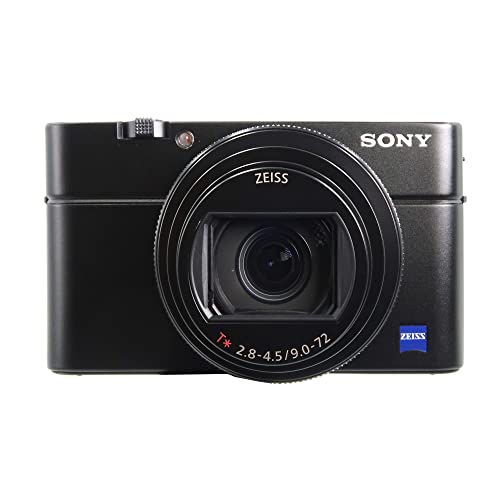
Sony RX100 VII earns the top travel slot because its zoom range covers a whole itinerary without a lens change.
Canon PowerShot G7 X Mark III suits travellers who film themselves as much as the places they visit.
DJI Osmo Pocket 3 turns walking footage into smooth, detailed sequences no handheld compact can match.
GoPro HERO13 Black handles rain, spray, and rough handling while keeping video detail high.
Fujifilm X100VI rewards slow travellers who prefer one superb fixed lens and film-like colour.
OM SYSTEM Tough TG-7 goes swimming, hiking, and caving without a protective housing.
Built to swim and shrug off drops while still recording detailed macro.
How We Chose These Picks
Selection began with a suitcase test. Each candidate had to justify its volume against clothing, chargers, and the souvenirs that accumulate by day four. Bodies needing multiple lenses were admitted only when their image quality repaid the space many times over, and most did not survive that arithmetic. What remains is a list dominated by fixed-lens and self-contained designs, which reflects how experienced travellers actually pack once the fantasy kit meets a carry-on limit.
Definition was judged in travel conditions rather than studio conditions. That meant shadowed interiors where flash would be rude, backlit viewpoints at noon, mixed artificial light at dinner, and moving subjects shot one-handed while the other hand held a rail, a map, or a child. Cameras that held detail and colour through that mixture ranked above cameras with higher headline resolution and fussier behaviour.
Finally, we scored the return home. Travel pictures live or die in the sharing: quick transfers for the family chat, files that need no heroic editing, and video that plays cleanly on an ordinary television. A camera that demands a colour-grading apprenticeship before the holiday looks good was marked down, however impressive its ceiling.
What Does High Definition Actually Mean When You Are Travelling?
On a trip, definition is a chain, and the weakest link is rarely the sensor. A trembling hand on a boat, a smudged lens after a beach lunch, a subject placed against glaring sky — each quietly erases more detail than any specification difference between the cameras here. Choosing for travel HD therefore means choosing stabilisation, sensible automation, and a lens you can keep clean and ready, before it means chasing the largest file.
Resolution still matters at the two moments travellers care about most. The first is cropping: the distant tower, the bird over the harbour, the detail of a fresco you could not approach. A healthy pixel count lets a pocket camera behave as though it carried a longer lens. The second is the big screen at home, where soft corners and smeared foliage become obvious in a way the camera’s own display never warned you about.
Light is the third leg. Travel days run from dawn markets to lamplit streets, and the camera must hold definition as the light falls without turning every evening into noise or blur. Larger sensors and brighter lenses help here, but so does honest exposure automation that protects highlights at noon and lifts shadows gently at dusk. The picks below balance those three legs differently, and the right balance depends on whether your trips lean toward landscapes, streets, family, or water.
There is also a social definition of quality worth naming. Fellow travellers, guides, and strangers asked to take your picture all interact with the camera you hand them. A discreet compact invites cooperation and candid results; an imposing rig changes the room. Several picks earn their place partly by being easy to hand over, quick to trust, and unlikely to intimidate the person in front of the lens.
How Much Camera Will You Honestly Carry Every Day?
Answer with your feet, not your intentions. Think of the longest walking day of your last trip — the transfers, the stairs, the museum queue — and imagine adding each candidate to what you already carried. The camera that survives that honest rehearsal is the largest camera you should buy. Everything bigger becomes a special-occasion instrument, and special occasions are a small fraction of any itinerary.
Pocketability changes behaviour in ways specifications cannot. A camera in a pocket gets used at breakfast, on the bus, and during the unplanned detour; a camera in a bag gets used at viewpoints. Travel memory is mostly made between viewpoints, which is why three of the six picks are genuinely pocketable and a fourth, the Pocket 3, redefines the category entirely. Their definition is available at the moments definition matters.
Charging discipline belongs in the same conversation. A camera that sips power and tops up from the same USB cable as your phone simplifies the nightly routine in a small hotel room with two sockets. Several picks support convenient USB charging, and all reward the simple habit of a spare battery in the day bag. The best travel camera is the one that is charged, present, and awake — a humble sentence that eliminates more famous cameras than any image test.
Which of the Best Cameras to Take High Definition for Travel Fits Your Trip?
Picture a single day that runs from a wide harbour panorama at breakfast to a heron picking through reeds two hundred metres away by lunch, then into a lamplit old town after dark. Most travellers would need two cameras for that day. The RX100 VII covers it with one pocketable body, because its zoom reaches from broad scenes to genuine telephoto while its one-inch sensor keeps the files detailed enough to crop, print, and project. That breadth, carried without thought, is why it leads this guide.
Autofocus is the quiet hero of the package. Faces and eyes lock on quickly, subjects stay tracked while they move through a crowd, and the camera rarely forces a second attempt at a moment that will not repeat. Travel photography is full of unrepeatable seconds — a glance, a gesture, a break in the clouds — and a focusing system that treats them casually is worth more than a marginal gain in resolution.
Video travellers get a similarly complete answer. The footage holds fine detail in daylight, the microphone socket welcomes a small external mic for windy viewpoints, and the tilting screen supports both self-filming and awkward high or low angles at crowded sites. Held steadily or braced against a railing, it produces clips that intercut happily with far larger cameras.
Evenings reveal the honest boundary. The small sensor works harder as light falls, and the lens is brightest at its wide end, so night streets reward stepping closer and zooming with your feet. Within that understanding, results stay pleasingly clean, and the camera’s size means it is present for evenings when larger kits stayed behind — which, again, is the whole argument.
Sensor: 1-inch stacked design
Lens: versatile zoom from wide to telephoto
Focus: fast face and eye tracking
Screen: tilts for self-filming and low angles
Carry: true jacket-pocket dimensions
Strengths
One camera covers an entire itinerary’s focal lengths
Autofocus rarely misses an unrepeatable moment
Detailed video with an external microphone option
Trade-offs
Evening zoom work pushes the small sensor
Menus take an evening to learn properly
Small body means a small battery
Best for: travellers who want one pocket camera for landscapes, family, and distant details alike. Not suited for: photographers planning large low-light prints as the trip’s main purpose.
Solo travellers face a particular problem: the story needs a narrator, and the narrator is holding the camera. The G7 X Mark III answers with a screen that flips up for self-framing, colour that flatters a face in unflattering transit light, and handling simple enough to operate while walking a market lane and talking at the same time. Its travel HD is therefore a presenter’s HD — the place sharp behind you, your expression clear in front of it.
Canon’s colour science does heavy lifting here. Skin looks like skin under airport fluorescence, café tungsten, and overcast northern light, often within the same afternoon, and the files need so little correction that a traveller can edit on a train table and publish before arrival. For anyone documenting a journey as it happens, that immediacy is a form of quality no laboratory measure captures.
Still photographers are not short-changed. The bright lens gathers generous light at its wide end, the sensor renders detailed landscapes and interiors, and burst shooting helps with street moments and wildlife glimpses. The zoom range is shorter than the Sony’s, so distant subjects stay distant; in exchange, the low-light and background-separation character at wide angles is lovelier.
Carry a spare battery and treat the camera kindly in rain, because it asks for the same courtesies as most premium compacts. Do that, and it becomes the companion a solo creator actually keeps charged and close — a camera whose best specification might be how rarely its owner considers leaving it behind.
Sensor: 1-inch with bright wide lens
Screen: flips upward for self-filming
Colour: flattering skin tones across mixed light
Workflow: quick editing and sharing on the move
Audio: microphone input for clearer narration
Strengths
The friendliest solo filming experience here
Faces look right with almost no editing
Bright lens flatters interiors and evenings
Trade-offs
Shorter zoom reach than the Sony rival
No weather sealing for wet itineraries
Battery life rewards carrying a spare
Best for: solo travellers who narrate their journeys on camera. Not suited for: wildlife-heavy trips needing long telephoto reach.
Walk through a medina at golden hour with any ordinary camera and the footage will bounce with every step, however detailed each frame may be. Carry the Pocket 3 through the same lane and the scene glides, faces stay framed by its tracking, and the detail reads as calm, deliberate cinematography rather than a souvenir of your stride. For travellers whose memories are fundamentally moving — streets, hikes, markets, coast paths — that steadiness is high definition in its most visible form.
The rotating screen deserves more credit than it usually receives. Turn it and the device wakes ready for horizontal filming; turn it vertical and the short clips for family back home are framed properly without menu diving. On a fast-moving trip, interfaces that match the moment keep the camera in the hand and the phone in the pocket, which is where the good footage comes from.
Photographers should understand its priorities honestly. It takes perfectly pleasant stills, but its heart is video: the gimbal, the tracking, the direct pairing with DJI wireless microphones for a clear voice over a moving scene. A traveller who returns with forty beautiful clips and a handful of stills will love it; a traveller who returns with four hundred stills should choose elsewhere in this list.
Protection is the price of the magic. The gimbal head is a precision instrument that dislikes drops, sand, and being tossed loose into a beach bag, so the small case becomes part of the ritual. Travellers who accept that one habit gain a production smoothness that used to require a rig, a crew, and a very patient travelling companion.
Stabilisation: three-axis mechanical gimbal
Screen: rotates between horizontal and vertical
Tracking: follows faces through crowds and turns
Audio: pairs directly with DJI wireless microphones
Carry: pocketable with its protective case
Strengths
Walking footage looks professionally steadied
Face tracking frees the solo traveller
Instant readiness for fleeting street moments
Trade-offs
Stills play second fiddle to video
Gimbal needs protection from knocks and sand
Fixed framing limits distant subjects
Best for: travellers whose trips are best remembered in motion. Not suited for: stills-first photographers or long-zoom wildlife work.
Some itineraries would destroy the other cameras on this page before lunch: surf lessons, mountain-bike descents, monsoon hikes, a small boat in a big swell. The HERO13 Black was built for precisely those days, waterproof without a housing and small enough to mount on a helmet, a chest strap, a paddle, or the bow of a kayak. Its HD is the HD of participation — the wave from inside, the descent from the rider’s eyes.
Stabilisation in software does remarkable work here, smoothing trails and chop into watchable, detailed footage while the wide field of view forgives imperfect aiming. When you cannot look at a screen because you are busy doing the thing being filmed, that forgiveness is the difference between a record and a blur. Voice control and simple presets extend the same hands-busy logic.
Use it as a stills camera with realistic expectations. Grabbed frames and wide scenic shots serve the trip album well, but its lens and handling are tuned for moving scenes in bright places. Evenings and interiors belong to the compacts in this guide; the GoPro earns its suitcase space on the wet, fast, and high days when nothing else dares to come along.
Battery planning matters on expedition days. Cold, altitude, and long recordings all shorten runtime, so spares in a warm pocket are standard practice among its devotees. Accept that ritual and the camera repays it with footage from places and moments no other pick here can safely reach.
Body: waterproof action design, mountable widely
View: very wide field for immersive scenes
Stabilisation: strong electronic smoothing
Control: voice commands for hands-busy moments
Role: participant’s-eye record of active days
Strengths
Survives water, spray, and rough handling
Immersive wide footage of sports and adventure
Mounts almost anywhere a traveller can imagine
Trade-offs
Low-light scenes are not its home ground
Stills are serviceable rather than superb
Long cold days demand several batteries
Best for: adventure travellers filming the activity itself. Not suited for: city breaks centred on evening photography.
There is a kind of traveller who plans a morning around one street, one café, and the changing light across a single square. The X100VI is their camera: a fixed prime lens of classic reportage character, an APS-C sensor with generous detail, in-body stabilisation for handheld dusk work, and Fujifilm’s film simulations turning travel colour into something closer to memory than to measurement. It does not cover every situation, and that refusal is its philosophy.
Working with one focal length changes how a trip is seen. Instead of zooming from a viewpoint, you walk into the scene, find the frame with your feet, and become a participant rather than a spectator. Many photographers find their travel pictures improve under that discipline — fewer postcards, more moments — and the camera’s quiet, discreet presence helps strangers relax in a way a large rig rarely permits.
Definition, when the light is right, is the finest for stills in this guide. Fine architectural detail, fabric texture, and foliage hold together under enlargement, and the lens stays sharp across the frame. Video is capable and detailed, though the fixed framing and stills-first ergonomics make it a supporting role rather than the headline act.
Availability and patience are part of ownership; demand for this line famously outruns supply, and its single lens will frustrate travellers who want telephoto reach. Buy it knowingly, as a commitment to a slower way of travelling, and it returns images with a character none of the zooms here can imitate.
Sensor: APS-C with in-body stabilisation
Lens: fixed prime of classic street character
Colour: celebrated film simulation palette
Handling: dials and a discreet, quiet presence
Stills: the strongest enlargement quality here
Strengths
Travel stills with distinctive, film-like colour
Discreet handling earns candid cooperation
Stabilisation extends handheld dusk photography
Trade-offs
One focal length, with no zoom escape
Video plays a supporting role
Demand can make it hard to obtain
Best for: slow travellers and street photographers who value character. Not suited for: travellers needing zoom range or action video.
The TG-7 answers the traveller’s oldest anxiety directly: what happens when the camera gets wet, dropped, frozen, or handed to a child at the edge of a rock pool? Its answer is to keep working. Sealed and shock-resistant construction lets it snorkel, kayak, and hike through weather that sends other cameras into dry bags, and its macro abilities turn tide pools, alpine flowers, and market spices into detailed close studies.
Underwater, its colour and focus modes show long experience with the genre. Scenes that defeat ordinary compacts — a turtle over sand, coral in shifting light — come back recognisable and lively, and the camera can log depth and location for travellers who enjoy mapping their swims. Above water, the same toughness makes it the family camera nobody has to supervise.
Compromise lives in the sensor, which is smaller than the premium compacts’ and shows it in dim interiors and large enlargements. Judge the TG-7 by the pictures only it can take — submerged, frozen, dropped, and still shooting — rather than by a studio comparison it was never designed to win. On a beach-and-mountains itinerary, its album will contain scenes the sharper cameras never attempted.
Handling rewards gloves and wet hands, with controls that remain usable when conditions turn hostile. Pair it with a float strap near deep water, rinse it after salt exposure as the manual advises, and it will likely outlast several of the trips you bought it for.
Best for: beach, snorkelling, hiking, and family adventure trips. Not suited for: travellers prioritising evening city image quality.
Travel Companions Compared: Size, Strength, and Speciality
Pick
Carry style
Strongest scene
Watch out for
Sony RX100 VII
Jacket pocket
Mixed days needing zoom range
Evening telephoto work
Canon PowerShot G7 X Mark III
Small bag or pocket
Solo narration and faces
Rain exposure
DJI Osmo Pocket 3
Pocket, in its case
Walking tours and street video
Knocks to the gimbal
GoPro HERO13 Black
Mounted or pocketed
Water and action days
Dim interiors
Fujifilm X100VI
Neck strap, small bag
Slow street photography
Fixed focal length
OM SYSTEM Tough TG-7
Anywhere, unprotected
Swimming and macro
Low-light enlargements
Read the carry column before the scene column. Travellers consistently overbuy scene capability and underbuy carry comfort, then spend the trip negotiating with their own bag. The right row is the one whose carry style matches your days and whose strongest scene matches your itinerary’s centre of gravity — not its single most exotic hour.
Notice also how naturally these cameras pair. A premium compact plus the TG-7 covers city and sea; the Pocket 3 plus the X100VI covers motion and stillness. Two-pick combinations are not required, but travellers with one bucket-list trip planned often find a borrowed or rented second body, chosen from a different row, completes the kit better than one costlier camera from a single row.
How Should You Pack and Protect a Camera Across a Long Trip?
Pack for the worst hour of the itinerary, not the average day. A padded wrap inside the day bag handles most knocks; a simple sealed bag handles boat spray, desert dust, and the sudden downpour between the station and the hotel. Silica gel sachets earn their grams in humid climates, where a camera moved from air conditioning into tropical air fogs instantly and needs time, not wiping, to clear.
Cards and backups deserve the same forethought as lenses. Two smaller cards rotated daily beat one enormous card holding the whole trip, and a nightly copy to a phone, tablet, or small drive turns a lost camera from a lost holiday into an insurance claim. Travellers who adopt that ten-minute evening ritual return with both their pictures and their peace of mind intact.
Straps are safety equipment. A wrist strap on a compact, a cross-body strap on the Fujifilm, and a float strap on anything near deep water prevent the three classic travel losses: the fumble, the snatch, and the slow sink. None costs much, each weighs almost nothing, and together they protect more definition than any filter ever sold.
What Settings Keep Travel Footage Crisp Without Constant Fiddling?
Start from the camera’s intelligent automatic mode without embarrassment; modern metering handles the chaotic light of travel — arcades, tunnels, noon squares — faster than most owners can. Where you intervene, intervene once: set a sensible maximum sensitivity so evenings stay clean, enable stabilisation for handheld work, and let face detection take priority whenever people enter the frame.
For video, consistency beats cleverness. One frame rate for the whole trip keeps editing simple and motion character uniform, and a slightly conservative exposure protects skies and whitewashed walls that define so many destinations. Travellers who lock those two decisions on day one spend the rest of the trip composing instead of configuring, and their albums show it.
Clean the lens every morning. Travel lenses collect sunscreen, sea mist, fingerprints, and dust, each quietly taxing definition more than any setting. A microfibre cloth in the same pocket as the camera turns maintenance into a habit rather than a project, and the morning wipe becomes as automatic as checking for the room key.
How Do You Photograph People Respectfully While Travelling?
Ask when the photograph is a portrait; observe quietly when it is a scene. That distinction, honoured consistently, produces both better manners and better pictures, because a person who has agreed to be photographed gives the camera a relaxed, direct presence no telephoto ambush can replicate. Learn the phrase for asking in the local language, accept refusals with a smile, and offer to share the result — several picks make that sharing instant.
Children, ceremonies, and places of worship deserve extra restraint, and some sites forbid photography entirely. A discreet camera helps here precisely because it can stay lowered without ceremony when the moment is not yours to keep. The album loses nothing; the traveller’s conscience and welcome remain intact, and both matter more than one more frame.
When strangers take your picture, hand over the simplest camera you own, show them the shutter button, and ask for several frames. The premium compacts and the Pocket 3 excel in this handover test, focusing reliably on faces while a kind volunteer concentrates on composition. Brief the volunteer to step closer rather than zoom, and your group shots will improve immediately.
What Mistakes Do Travellers Make When Choosing an HD Camera?
Shopping by specification table leads the list. Travellers compare resolution figures measured in laboratories, then discover their real limits were weight, weather, and battery discipline — none of which appear in the table. The correction is to shop by itinerary: list your trip’s ten most likely scenes, and choose the camera that serves eight of them brilliantly rather than all ten adequately.
Leaving the new camera in its box until departure runs a close second. Every body here rewards one practice weekend at home, where menus, charging, and transfers become familiar before they must be performed in a foreign hotel room. Travellers who rehearse return with better pictures from humbler cameras than travellers who debut a flagship at the airport.
The third error is carrying one camera for two incompatible trips. A surf expedition and a gallery weekend ask opposite questions, and forcing a single body to answer both usually satisfies neither. The honest options are a genuine all-rounder like the RX100 VII, a deliberate pairing, or renting the specialist for the exceptional trip — all cheaper than the regret of the wrong tool in the right place.
How Should You Handle Files, Charging, and Sharing on the Road?
Build the evening routine on day one, while energy is high, and let habit carry it through tired later days: charge everything that moved, copy the day’s cards, glance through the results to catch a smudged lens or a wrong setting before it costs a second day, and select three favourites to send home. That last step is not vanity; it is morale, for you and for the people following the trip.
Power geography varies more than travellers expect. A compact universal adapter with USB outlets covers most hotel rooms, while a small power bank rescues long train and bus days for the USB-charging picks. Keep cables in the day bag rather than the suitcase, because the moment a battery fades is never the moment the suitcase is nearby.
Sharing quality deserves a decision in advance. Send the lively, slightly compressed copies during the trip and save full-resolution files for the home album and prints; conflating the two either clogs a weak hotel connection or disappoints the television audience later. The cameras here all separate those workflows gracefully when the owner sets them up once, early.
Final Recommendation
For most travellers, the Sony RX100 VII is the answer this guide exists to give: genuine high definition across an entire itinerary, from one pocket, with autofocus that protects unrepeatable moments. Choose the Canon PowerShot G7 X Mark III instead when your face and voice narrate the journey, and the DJI Osmo Pocket 3 when the journey itself is motion and the stills can follow behind.
Match the specialists proudly rather than apologetically. The GoPro HERO13 Black owns the wet and fast days, the Fujifilm X100VI owns the slow and beautiful ones, and the OM SYSTEM Tough TG-7 owns everywhere water, children, and weather conspire against delicate equipment. Whichever you carry, rehearse it at home, clean its lens each morning, and back up each evening — definition preserved is definition earned, and the trip, not the test chart, is the judge.
Is a premium compact really sharper than a good phone for travel?
For distant subjects, evening scenes, and anything destined for a television or print, yes, clearly: the larger sensor, real zoom, and brighter lens hold detail a phone’s computation cannot invent. For a bright midday snapshot shared to a chat, the difference narrows — which is why this guide judges cameras by the hard scenes, not the easy ones.
How much zoom does a travel camera actually need?
Enough to isolate a tower detail, a performer across a square, or wildlife at a respectful distance. The RX100 VII’s range covers those cases from a pocket; beyond them, you are planning a specialist trip and should rent a long-lens system rather than burden every journey with one.
Can one camera handle both swimming and city evenings?
Only by compromise. The TG-7 swims brilliantly and manages evenings modestly; the premium compacts reverse that balance. Travellers whose itineraries genuinely split between reef and old town often carry one of each, and the combined weight still undercuts a single interchangeable-lens kit.
What is the best way to keep travel video steady without a tripod?
Choose stabilisation suited to your movement: the Pocket 3’s gimbal for walking, electronic smoothing in the GoPro for action, and braced two-handed technique with the compacts for standing scenes. Add the habit of planting your elbows, leaning on railings, and filming shorter clips, and steadiness improves before any accessory is bought.
Should I shoot my trip in the highest quality setting throughout?
For your keeper scenes, yes; for every casual clip, balance quality against card space and battery. A practical pattern is top quality for landscapes, people, and anything you might print, and a step down for long ambient recordings. Decide the pattern before departure so the trip is not punctuated by settings debates.
How do I protect my pictures if the camera is lost?
Back up nightly to a second device, keep that device in a different bag, and enable whatever automatic upload your connections allow. No camera choice can substitute for that routine; with it, losing the camera loses a day at most, and usually only the hardware.
How Do Different Trip Styles Change the Definition You Need?
A city break compresses its subjects. Architecture crowds the frame, museums forbid flash, evenings arrive early in narrow streets, and the distance between a wide establishing shot and a carved detail above a doorway is a matter of metres. City travellers therefore benefit from bright lenses, strong low-light behaviour, and a zoom that works indoors without drama. The Canon and Sony compacts were practically designed for this compression, and the Fujifilm rewards the city walker who lingers.
A landscape journey stretches everything the city compresses. Horizons run for miles, weather becomes a subject in its own right, and the defining moments happen at the edges of the day when light is beautiful and scarce. Here, dynamic range and lens sharpness across the frame matter more than burst speed, tripod-free stabilisation buys extra dawn and dusk handheld work, and weather resistance stops being a luxury. Travellers heading for coasts and mountains should weight those virtues heavily and forgive a camera almost anything else.
Family travel rewrites the brief again. Subjects move without warning, refuse direction, and produce their best expressions between the poses. Autofocus speed, a screen a grandparent can understand, and a body that survives juice, sand, and being set down on a picnic blanket all outrank ultimate resolution. Many families discover the TG-7 or the RX100 VII serves them better than a technically superior camera that makes every photograph feel like a production.
Adventure itineraries add participation to the list. When the photographer is also climbing, paddling, or riding, the camera must work one-handed, survive the environment outright, and frame forgivingly because nobody can check a screen mid-descent. That is the GoPro’s native country, with the TG-7 as the stills-leaning alternative, and it is why adventure travellers should resist judging either by the standards of a studio review.
Most real trips, of course, blend all four styles across a fortnight. The blending is exactly why the all-round compact leads this guide, and why specialists are presented as honest alternatives rather than runners-up. Name your trip’s dominant style, choose for it first, and let the camera’s secondary talents cover the blended days as gracefully as they can.
Why Do Travel Photographs Look Soft at Home When They Looked Sharp on the Trip?
The camera’s small display flatters everything. It hides missed focus, motion blur, and the haze of a dirty lens behind a bright, forgiving screen, and the traveller returns home to discover the deception on a monitor or television. The defence is a nightly review habit at full magnification on a phone or tablet: two minutes spent zooming into the day’s best frames reveals whether focus, steadiness, or lens cleanliness needs attention tomorrow.
Heat shimmer and atmospheric haze account for another family of disappointments, especially in distant landscape and telephoto work. Early mornings, shorter distances, and a polarising filter where appropriate all help, but the deeper lesson is editorial: the crispest travel albums favour subjects within the light’s honest reach over heroic zooms across a valley of warm air. Several picks make that honesty easier by being ready at dawn, when the air is clear and the crowds are not.
Compression is the quiet third culprit. Pictures forwarded through messaging apps, uploaded over throttled hotel connections, or saved repeatedly at small sizes shed detail at every step. Keep the originals untouched on the card and the backup, treat shared copies as disposable, and assemble the home album only from the masters. Travellers who observe that single discipline preserve more definition than any equipment upgrade could add.
Finally, printing exposes what screens forgive. A file destined for a wall needs steadier technique, cleaner light, and more deliberate composition than a file destined for a feed, so decide which of the trip’s photographs are print candidates while you can still reshoot the scene. The X100VI and RX100 VII reward that ambition most directly, though every pick here can produce a respectable print from a well-made frame.
How Should You Plan a Day of Shooting Around Batteries and Weather?
Begin with the forecast and the light, in that order. Rain at noon and gold at seven suggests a museum morning, a charged camera, and an evening walk as the day’s main event; a dawn storm clearing by nine suggests the opposite choreography. Travellers who plan one photographic priority per day — rather than demanding every hour perform — return with stronger albums and better holidays, because the camera serves the trip instead of annexing it.
Battery arithmetic should be settled before departure, not discovered at a viewpoint. Note how many frames and clips a charge yields on a practice day at home, divide your expected shooting by that figure, and carry the resulting number of spares plus one. Cold weather shortens every battery’s day, so mountain and winter travellers keep the spare warm in an inside pocket and rotate without resentment.
Weather protection scales with the forecast’s honesty. A shower cap or sealed bag covers a compact through a downpour; a dry bag covers the boat day; the TG-7 and GoPro need nothing at all. What matters is deciding the protection before the weather arrives, because improvising covers from shopping bags while rain spots the lens is how definition, and occasionally cameras, are lost.
End the day as the earlier sections advised: charge, copy, review, select. Add one weather-specific step — dry the kit slowly at room temperature after wet or freezing use, with the battery door open and no direct heat. Cameras returned to their cases dry and charged are cameras that greet the next morning ready, and readiness, repeated across a fortnight, is the true source of a sharp travel album.
What Should You Learn at Home Before the Trip Begins?
Spend one ordinary weekend treating your neighbourhood like a foreign city. Photograph its market in the morning, its oldest building at noon, its river or main street at dusk, and one meal indoors under ugly light. That small rehearsal teaches the camera’s menus, its battery appetite, its transfer routine, and its low-light manners while mistakes still cost nothing, and it produces a baseline album against which the real trip’s pictures can be judged honestly.
Learn three operations until they are reflexes: switching between stills and video without hunting, reviewing a frame at full magnification to confirm focus, and changing the card and battery in the dark or with cold fingers. Travel moments rarely wait for a settings search, and the traveller whose hands know the camera keeps eyes on the scene, where the expressions and the light actually live.
Decide your file routine during the rehearsal too. Confirm that copies land where you expect, that the phone or tablet you will carry can open the files, and that the sharing method you promised family back home works from an unfamiliar network. A backup system tested once at home is a system; a backup system assembled in a hotel lobby is a hope.
Finally, practise handing the camera to a stranger. Set the mode you trust, note how long the explanation takes, and check whether the returned frames focus where you intended. Simplify until a kind volunteer succeeds twice in a row. That small social test predicts the quality of every group photograph on the trip more reliably than any specification.
Bring the same rehearsal spirit to packing. Lay the camera kit beside the clothes it will displace and make the trade consciously, pocket by pocket. Travellers who pack deliberately carry their cameras daily; travellers who pack hopefully leave them in the room. Definition follows the daily carriers, as this guide has argued from its first page, and the rehearsal is where that carrying habit is built.
How Do Prints and Home Screens Change What You Should Value?
A traveller who only ever views pictures on a phone can forgive almost any camera in this guide, because small screens hide softness, noise, and imperfect colour with cheerful efficiency. The traveller who books a wall print, edits a family yearbook, or gathers everyone around a television in December needs a stricter standard, and that standard should be named before the purchase rather than discovered after the return flight.
Prints reward clean edges and honest colour transitions. Skies should grade without banding, faces should hold texture without waxy smoothing, and shadowed foliage should separate into leaves rather than mud. The Fujifilm and the two one-inch compacts handle those demands most convincingly here, provided the original frame was steady and the lens was clean. Technique, once again, gates the equipment’s ceiling.
Television viewing rewards a different discipline in video: stable exposure, consistent colour between clips, and sound that does not force the audience to ride the volume control. A traveller filming for the family screening should favour the camera whose automatic behaviour is calmest across a whole day, even if another body wins individual frames. Judged that way, the compacts and the Pocket 3 separate themselves from the action and tough specialists, whose clips shine brightest in shorter, punchier sequences.
Archiving is the final, unglamorous test. Save the originals with dates and places attached while memory is fresh, keep two copies in different places, and resist renaming files into clever systems nobody can maintain. A sharp photograph that cannot be found in five years has failed its purpose as surely as a blurred one, and the cameras here all support orderly files when their owners set the clock, the folder habit, and the backup routine correctly at the start.
Sharing with fellow travellers deserves the same foresight. Agree early whether the group wants a shared album, individual copies, or a printed book, because that agreement decides how much resolution to preserve in transfers and whose camera becomes the group’s unofficial recorder at shared moments. Rotating that honour spreads both the battery burden and the perspectives, and the resulting album feels like a journey several people took together.
When Should a Traveller Rent Instead of Buy?
Rental makes sense when the trip is exceptional and the camera it demands would be a burden on every ordinary journey afterwards. A safari, a northern-lights expedition, or a once-in-a-decade trek can justify a specialist body and lens for a fortnight without committing the owner to years of carrying, insuring, and maintaining equipment bought for a single landscape. Renting also functions as the most honest test drive available, because a week of real travel exposes handling truths no shop visit can.
Buying wins when the camera will serve the texture of ordinary life as faithfully as the holiday: school events, garden seasons, visiting relatives, and the small journeys that fill the years between grand tours. The picks in this guide were chosen with that double duty in mind, which is why none demands a dedicated bag, a second mortgage in lenses, or a handling course before it earns its keep at home.
Whichever route you choose, insure the outcome rather than the object. Backups, spares, and a rehearsed routine protect the album; a receipt alone protects only the hardware. Travellers who internalise that ordering stop asking which camera is toughest in the abstract and start building the small, resilient system that brings sharp pictures home from the trips they actually take.
One last packing note belongs here because it decides more albums than any lens choice: leave a little empty space in the day bag. A camera buried under purchases, layers, and snacks stays buried, while a camera riding in an accessible pocket with room around it comes out for the unplanned mural, the sudden procession, and the light breaking over a river you had not meant to cross. Accessibility is a photographic virtue, and the traveller who protects it will use whichever pick they chose far more often.
Carry that thought into the first morning abroad. Set the camera by the door with the day bag, charged and wiped, before breakfast rearranges your intentions. The trips that produce the sharpest albums rarely announce themselves in advance; they accumulate from ordinary mornings when the camera was simply there, ready, and unremarkable to carry. Build that ordinariness deliberately and definition stops being a specification you purchased and becomes a habit you practised from the first day to the last evening of the journey.