Disclosure: As an Amazon Associate, kajuandouglas.com earns from qualifying purchases. Links on this page are affiliate links; they cost you nothing extra. Prices and availability change often, so check the current Amazon listing before you buy.
Hunting the best budget tactile switches used to mean accepting a faint, scratchy suggestion of a bump and calling it character. That era is over. The six switches in this guide deliver tactile feedback you can actually feel, factory lubrication you do not immediately need to fix, and pack sizes that respect how many sockets a real keyboard has, all in the tier where value is the entire point. Budget here never means careless: every pick below is a verified listing with its official image, chosen because it earns its place on a board you will type on daily, not because it merely costs less than the premium shelf.
The roundup is organised the way budget buyers actually decide. First the quick picks, then a full review of each switch with its strengths, trade-offs and honest verdict, then the buying guide that teaches you to judge the next budget tactile that crosses your feed, the common mistakes that waste money in this tier, and a FAQ that answers the questions budget shoppers ask most. Prices are never printed, because they move; each pick links you to check the live figure on Amazon, and the value judgements in this guide are framed in tiers and pack economics rather than in numbers that would expire.
In this guide
Best Budget Tactile Switches: The Quick Picks
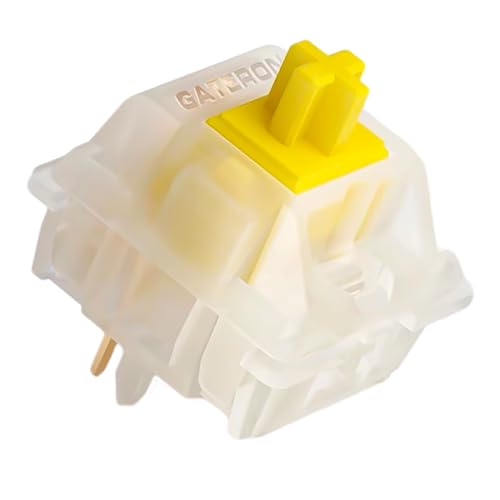
- Gateron G Pro 3.0 Brown: the name-brand budget tactile, pre-lubed, pin-enhanced, in a generous 108-piece pack.
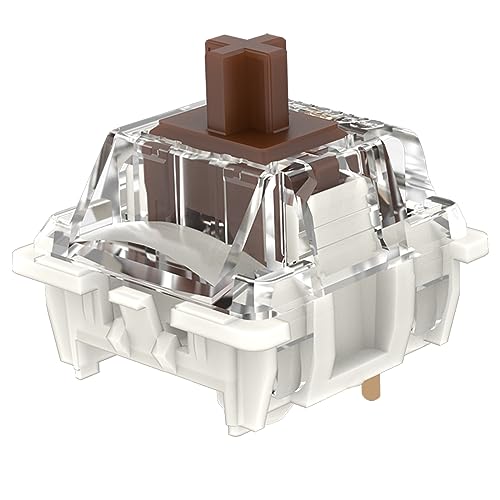
- Outemu Brown: the value workhorse, dustproof design, a 109-piece pack built for full-size boards.
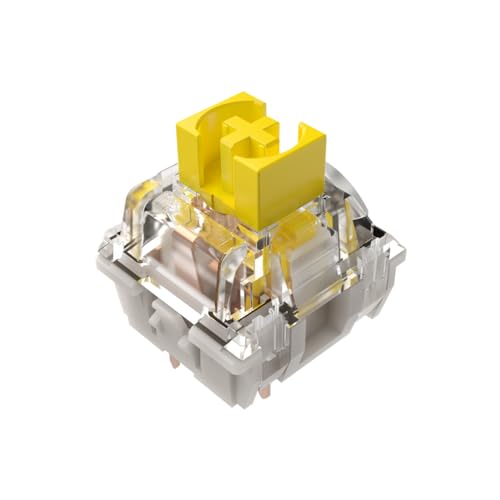
- Akko V3 Lavender Purple Pro: the enthusiast-flavoured budget pick, dustproof stem, pre-lubed, 45 pieces.
- Akko V3 Creamy Blue Pro: its sibling, a lighter 45gf tactile for gentler hands.
- Kailh Box Brown (Glorious pack): the durability pick, box stem, IP56 dust and water resistance, 120 pieces.
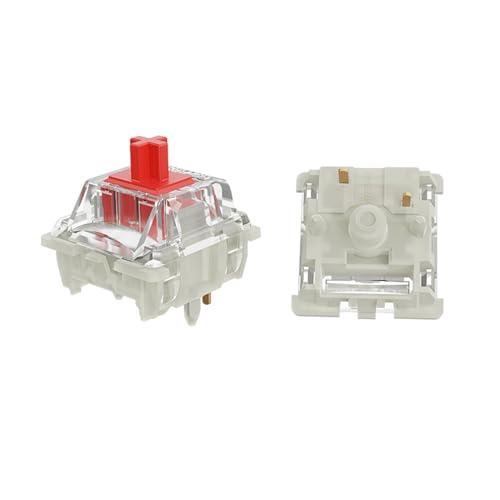
- CHERRY MX2A Brown kit: the original tactile bloodline in its modern generation, a 36-switch kit for smaller boards and sampling.
Key Takeaways
- Modern budget tactiles offer real, legible bumps; the compromise has moved to refinement, not basic feel.
- Pack count is a budget feature in itself: 108 to 120-piece packs outfit full-size boards in one purchase.
- Factory pre-lubrication now appears across this tier, led by the Gateron and Akko picks.
- Box-stem and dustproof designs bring durability features down from the premium shelf.
- Choose the bump size honestly: the CHERRY-style bump is subtle, the Akko Lavender’s is assertive, and your fingers will know the difference daily.
How were these budget tactiles chosen?
Selection started from verified listings only, then filtered for the qualities that separate a budget bargain from a budget regret: a bump you can feel without concentrating, tolerances that keep keycaps composed, a factory state that does not demand immediate surgery, and pack economics that make sense for the board sizes people actually own. Switches that were merely cheap were excluded; every pick here is one the guide would install on its own boards without an apology paragraph. The six survivors split naturally into roles, name-brand all-rounder, bulk value, enthusiast flavour, light-touch option, durability specialist and heritage kit, so most readers will find their answer by matching the role to their desk.

Gateron G Pro 3.0 Brown — the name-brand budget standard
Badge: Best all-round budget tactile for most buyers.
- Type: tactile, pre-lubed, 3-pin on the verified listing
- Weight: 55gf class tactile feel
- Design notes: pin-enhanced construction
- Pack: 108 pieces
Gateron’s G Pro line is where the budget tier grew up, and the 3.0 Brown is its tactile ambassador. The bump follows the classic brown philosophy, present and legible without hijacking the stroke, but the execution around it is thoroughly modern: factory lubrication that smooths the travel, pin enhancements that speak to durability, and a pack count that treats full-size boards as the default rather than an upsell. For a first custom build or a workhorse office board, this is the switch that requires the least explanation and produces the fewest surprises, which at this tier is the highest praise available.
Strengths
- Balanced, familiar bump that suits typing and gaming alike
- Factory lubrication good enough for stock installation
- Large pack covers big boards with spares left over
Trade-offs
- Bump is moderate; bump-maximalists should look at the Lavender Purple
- 3-pin format may need attention on some plate designs
- Safe character will not excite hobbyists chasing a signature feel
Best for: first builds, office boards and anyone who wants the proven default. Not suited for: shoppers who want the strongest tactile event in the tier.

Outemu Brown — the bulk value workhorse
Badge: Best for outfitting large boards on a strict budget.
- Type: tactile, 3-pin, dustproof design
- Compatibility: Cherry MX-style fit
- Pack: 109 pieces
- Extras: RGB-friendly housing design
Outemu built its reputation by making the mechanical keyboard accessible, and its Brown is the switch that filled a generation of affordable boards. The dustproof housing design is a genuinely useful feature at this price tier, slowing the grit ingress that ages budget switches fastest, and the 109-count pack is sized by someone who has actually counted a full-size board’s sockets. The tactile event is honest, a clear brown-style bump, and while the refinement ceiling sits below the Gateron’s, the floor, the worst switch in the pack, the scratchiest unit, is respectable in a way that earlier budget generations never managed.
Strengths
- Outstanding pack economics for full-size and 1800 builds
- Dustproof design protects the switches’ working life
- Approachable bump that new mechanical users learn quickly
Trade-offs
- Refinement and smoothness trail the Gateron and Akko picks
- Sound is functional rather than characterful
- Enthusiasts will eventually upgrade from it, which is also its role
Best for: big boards, tight budgets, schools, offices and first mechanical experiences. Not suited for: hobbyists building a long-term endgame board.

Akko V3 Lavender Purple Pro — the enthusiast’s budget tactile
Badge: Best bump in the budget tier.
- Type: tactile, pre-lubed, 5-pin
- Design notes: dustproof stem
- Pack: 45 pieces
- Character: assertive tactile event for its class
Akko’s V3 Pro generation is the moment the company’s switches started appearing in enthusiast conversations, and the Lavender Purple Pro is why. Its tactile bump is the most deliberate in this roundup, a proper event rather than a suggestion, delivered through a dustproof stem design that also steadies the keystroke. The factory lubrication is applied like the company expects to be judged on it. In a blind line-up against switches from the tier above, the Lavender is the budget pick most likely to embarrass its elders, and for typists who believe tactility is the point of a tactile, it is the first name on this page to sample.
Strengths
- Strongest, most satisfying bump in this roundup
- Polished factory state with credible pre-lubrication
- Dustproof stem adds stability and longevity
Trade-offs
- 45-piece pack means full-size boards need two packs
- Assertive bump will be too much for light-touch typists
- Popularity can make specific counts sell through
Best for: tactile lovers, typists and 65 to 75 percent builds. Not suited for: feather-light typing styles or one-pack full-size budgets.

Akko V3 Creamy Blue Pro — the lighter Akko tactile
Badge: Best for gentler hands that still want feedback.
- Type: tactile, pre-lubed, 5-pin
- Weight: 45gf class
- Design notes: dustproof stem
- Pack: 45 pieces
Do not let the colour mislead you: despite the blue name, this Akko is a tactile, not a clicky, and its personality is the Lavender’s gentler sibling. At a 45gf class weight it delivers its feedback with a lighter touch, which makes it the roundup’s answer for smaller hands, long typing days, and players who want tactility on the movement keys without resistance slowing the strafe. The same V3 Pro polish applies, dustproof stem, factory lubrication, tidy tolerances, so choosing between the two Akkos is purely a question of how much switch you want under your fingers.
Strengths
- Light weight keeps long sessions fatigue-free
- Same refined V3 Pro platform as the Lavender
- Good crossover feel for typing and gaming
Trade-offs
- Heavy-handed typists may blow through the bump unnoticed
- Smaller pack count, like its sibling
- Name invites confusion with clicky blue switches; it is not one
Best for: light typists, mixed gaming desks and smaller hands. Not suited for: heavy strikers who need resistance to feel in control.

Kailh Box Brown — the durability specialist
Badge: Best for dusty rooms, heavy use and long service.
- Type: tactile, box stem design, 3-pin
- Protection: IP56 dust and water resistance
- Feel class: medium actuation
- Pack: 120 pieces, Glorious kit
The Box Brown’s party trick is structural. Kailh’s box design encloses the stem’s working area, and the verified Glorious pack carries an IP56 dust and water resistance designation that no standard-stem switch in this roundup can match. In a workshop-adjacent desk, a pet-rich household, or any board that lives a hard life, that protection is not a gimmick; it is the difference between a switch that ages gracefully and one that turns scratchy by spring. The tactile feel is a composed medium, and the box stem’s stability gives keycaps a planted feel that wobble-haters appreciate immediately.
Strengths
- Sealed box design with IP56 resistance for harsh environments
- Stable, planted keystroke feel
- Largest pack in the roundup for big boards and spares
Trade-offs
- Box stems have their own keycap compatibility history worth checking on older cap sets
- Feel is dependable rather than thrilling
- Sound profile is box-distinct and not to every ear
Best for: harsh environments, shared machines and longevity-first buyers. Not suited for: vintage keycap collectors or sound-profile perfectionists.

CHERRY MX2A Brown kit — the heritage tactile, modernised
Badge: Best for purists and samplers who want the original bloodline.
- Type: tactile, no click, MX2A generation
- Character per the listing: focused and noticeable
- Format: 36-switch kit, RGB variant
- Use: DIY, hot-swap, custom and gaming boards
Every brown switch in this roundup exists because CHERRY’s brown defined the category, and the MX2A generation is that definition updated: the modernised internals, the smoother brief, the same philosophy of a tactile that informs without interrupting. The kit format makes it the roundup’s natural sampler and its small-board solution, thirty-six switches being exactly a compact build or a generous trial. Buy it to learn what the reference feels like, or because your typing style genuinely prefers the subtle end of tactility, a preference this guide respects even while pointing bump-lovers toward Akko.
Strengths
- The original tactile lineage with modern-generation refinement
- Kit size is perfect for compact boards and honest sampling
- Subtle bump suits fast typists who dislike resistance drama
Trade-offs
- Full-size boards need multiple kits, changing the value maths
- Bump subtlety disappoints buyers expecting a strong event
- Heritage alone does not out-polish the best modern rivals
Best for: purists, samplers and compact builds. Not suited for: one-purchase full-size outfitting or maximum-bump seekers.
How to choose a budget tactile: the criteria that matter
Judge a budget tactile on five things, in this order. First, bump legibility: can you feel the event at typing speed without concentrating, because a bump that vanishes at speed is decoration. Second, bump placement: budget tactiles increasingly offer earlier, rounder bumps in the enthusiast style, and the difference between that and a mid-stroke nudge is the difference between the Akko Lavender and the classic browns. Third, factory state: pre-lubrication and tidy tolerances decide whether the switch is finished or a project. Fourth, pack economics: divide nothing in print here, but compare counts against your socket count before comparing anything else. Fifth, durability design: dustproof stems and box enclosures are cheap insurance in real rooms. A switch that wins three of the five for your desk is your switch, whatever its brand.
zealios vs boba u4t tactile switch compared
How to install budget tactiles and set them up well
Budget switches reward careful installation exactly as much as premium ones. Inspect pins before insertion, since a bent pin is the budget tier’s most common dead-key cause and the easiest to prevent. Seat switches by the housing, test the first row before filling the board, and keep the pack’s spares labelled; budget packs are generous precisely so that a damaged or outlier switch can be swapped without a reorder. If your board is a 3-pin plate and your switches are 5-pin, clip the extra legs cleanly rather than forcing them. Give any new set a week of stock typing before deciding it needs lubricant or films, because several picks in this roundup arrive finished enough that modification is seasoning, and seasoning an unjudged dish is how good switches get ruined on a budget.
Common budget tactile mistakes
Buying by unit-price arithmetic alone is the classic error, landing a scratchy pack whose per-switch saving is repaid in daily annoyance. Ignoring pack count is the second: a cheap 35-pack for a 104-key board is not cheap. Expecting a subtle brown bump to feel like an enthusiast tactile is the third, a mismatch of categories rather than a defect. Skipping the sample stage on a full-size purchase is the fourth. And assuming budget means disposable is the fifth; the picks in this guide are built to serve for years, and treating them as temporary is how buyers end up spending premium money twice.
Final recommendation
Most buyers should start with the Gateron G Pro 3.0 Brown for its balance of bump, polish and pack size, or the Akko V3 Lavender Purple Pro if the bump is the reason for the purchase. Outfit a big board cheaply with the Outemu, protect a hard-worked board with the Kailh Box Brown, lighten the touch with the Creamy Blue Pro, and sample the heritage line with the CHERRY kit. Every one of those is a defensible, verified choice, which is the real headline: the budget tactile tier has become a place where the careful shopper simply does not have to lose.
cherry mx brown vs red switch compared
The six picks, compared head to head
Compressed into one view, the roundup splits along two axes: bump character and pack logic. On bump character, the Akko Lavender Purple Pro stands alone at the assertive end, the Creamy Blue Pro trades authority for lightness, and the three brown-philosophy switches, Gateron, Outemu and CHERRY, cluster at the legible-but-subtle end with the Kailh Box Brown beside them for entirely different, structural reasons. On pack logic, the Outemu, Gateron and Kailh packs are full-board purchases, the Akko packs are compact-board purchases, and the CHERRY kit is a sampler that happens to complete small builds. A buyer who locates their board on the second axis and their fingers on the first has effectively chosen, and the reviews above then serve as confirmation rather than discovery.
Sound follows the same map. The Akkos voice themselves with the most character, the Lavender deeper and the Creamy Blue brighter, the Gateron sits in the composed middle, the Outemu is the plainest speaker, the Box Brown has its own enclosed resonance, and the CHERRY kit sounds like the reference recordings your ears learned the category from. None of these voices is a defect; each is a personality, and the budget tier’s achievement is that personalities now exist at this level at all, rather than one generic scratch wearing six brand names.
Budget tactiles for typing, gaming and office work
For pure typing volume, the Gateron G Pro 3.0 Brown and the CHERRY MX2A kit represent the sustainable choices, bumps that inform across eight hours without nagging, while the Lavender Purple rewards shorter, more deliberate writing sessions where each keystroke is savoured. Typists with any history of finger fatigue should weight the Creamy Blue Pro heavily in their sampling, because its lighter class is the roundup’s built-in ergonomic answer and costs nothing in feedback clarity at moderate speeds.
For gaming, tactiles are a preference rather than a prescription, and the budget tier serves that preference honestly. The Creamy Blue’s lighter press suits movement-heavy play, the Gateron’s balance suits the mixed desk, and the Box Brown’s planted stability suits players who strike hard and hate wobble. Competitive players chasing pure speed should read this site’s linear coverage as well, because no tactile at any price out-runs a purpose-built linear on its own track; what these tactiles offer gamers is feedback and versatility, and for the majority of players who also write essays, code and messages on the same board, that trade is the correct one.
For offices, the calculus adds an audience. None of these six is a loud switch, tactiles without click mechanisms being presentable in most workplaces, but the subtler browns remain the diplomatic choices, and the shared-desk buyer should also weigh how the board sounds through a desk into a room, where the Gateron’s composed voice travels least. The Outemu’s pack economics make it the facilities-manager favourite for outfitting several desks at once, a use case this guide endorses without embarrassment: a fleet of honest tactile boards beats a fleet of membrane keyboards on every axis that matters to the people typing on them.
How far can you mod a budget tactile?
Budget switches respond to the same modification grammar as premium ones, with one governing rule: the cheaper the switch, the more the modification should target a named annoyance rather than a general hope. A light lubricant film on the rails civilises an Outemu that feels dry, films tighten a housing that feels loose, and a spring swap rescues a switch whose weight was chosen optimistically. What budget modding should not do is chase a premium switch’s exact character through hours of labour, because the arithmetic collapses: the Gateron and Akko picks in this roundup exist precisely at the point where factory polish became cheaper than hobbyist time. Mod for pleasure or for a specific fix, and buy the factory-polished pick when neither applies.
The Lavender Purple deserves a specific note, because its assertive bump is the easiest in the roundup to ruin with enthusiasm. Heavy lubricant rounds a bump the way water rounds a stone, and owners who lube Lavenders should use the lightest hand in their repertoire, rails only, bump leaf untouched. The browns tolerate a fuller treatment, and the Box Brown’s enclosed design should be opened only by owners confident in reassembling it, since its protection depends on the enclosure they are dismantling.
Why the budget tactile tier improved so fast
Understanding the market explains the roundup’s quality. Three forces converged on this tier. Hot-swap boards multiplied the number of people buying switches directly, which multiplied the number of buyers who could compare brands and punish mediocrity. Factory lubrication matured from a premium ritual into a production-line step, collapsing the smoothness gap that once justified flagship money. And a handful of makers, Gateron and Akko most visibly in this guide, discovered that enthusiast credibility at the budget tier sells volume at every tier, so they began shipping their good ideas downward instead of reserving them. The result is the shelf this article surveys: switches whose flaws are matters of taste rather than matters of fact. The buyer’s job changed accordingly, from avoiding disaster to matching personality, which is a far more pleasant job and the one the rest of this guide is written for.
Longevity: how long will a budget tactile actually serve?
The honest answer is years, with environment as the main variable. A budget tactile on a clean desk, blown out occasionally and kept away from spills, will outlast the computer it serves; the same switch in a dusty workshop without a dustproof or box design will scratch its way into retirement far sooner, which is why this guide treats protective designs as longevity features rather than marketing garnish. Contact behaviour ages gracefully in all six picks, and the most common end-of-life story in this tier is not failure but promotion: the owner upgrades to a premium board and the budget switches retire to a second desk, a family member’s build, or a testing board, still working. Buyers should therefore choose budget tactiles they would be content to keep, because in practice they will keep them, somewhere, for a long time.
Spares discipline extends that service further. Every pack in this roundup includes more switches than a compact board needs, and even the full-board packs leave a margin. Keep those spares sealed and labelled, and a single damaged switch, the one casualty every long-lived board eventually suffers, becomes a two-minute swap instead of a mismatch hunt through later production runs.
Three sample baskets for three real budgets of attention
Basket one belongs to a student with a tenkeyless board and a semester of essays ahead: the Gateron G Pro 3.0 Brown, one pack, installed stock, done. The decision took minutes and will not be revisited for years, which is exactly the relationship a student should have with a switch purchase. Basket two belongs to a hobbyist with a 65 percent board and strong opinions forming: an Akko Lavender Purple Pro pack for the alphas’ assertive bump, sampled first against a CHERRY kit that now lives on a macropad, teaching the owner’s fingers the category’s range for the cost of a trial. Basket three belongs to a parent outfitting two home-office desks in a house with a large, shedding dog: Box Browns on both boards, chosen for the sealed design, with Outemu packs as the spare-and-future-board reserve. Three desks, three correct answers, none of them the most expensive option on the page, which is the budget tier’s entire thesis demonstrated.
A tactile taxonomy for budget shoppers
Budget listings describe their bumps in adjectives, so this guide offers a working taxonomy you can apply to any listing, including the six above. The classic brown bump is a mid-stroke nudge, small, quick and polite, designed historically to signal actuation without slowing the typist; three of this roundup’s picks descend from it, and it remains the right answer for speed typists who want information without theatre. The enthusiast bump, represented here by the Lavender Purple, starts earlier and stands taller, converting more of the stroke into the tactile event; it is the right answer for deliberate typists and the wrong one for anyone who types by skimming. The light tactile, the Creamy Blue’s category, keeps the event but lowers the force around it, serving endurance. And the protected tactile, the Box Brown’s category, is defined less by its bump shape than by its enclosure, a reminder that in real rooms the best bump is the one still working in year three.
Two listing habits deserve a shopper’s scepticism. The first is bump vocabulary inflation, where every switch is described as crisp and pronounced regardless of its geometry; the defence is to compare within a maker’s own range, since a brand’s lightest and strongest tactiles calibrate its adjectives for you. The second is weight ambiguity, where a headline figure may describe actuation, bottom-out or simply the spring’s nominal class depending on the seller. The defence there is consistency: choose a maker’s ladder and stay inside it while you learn your preference, which is another reason this roundup leans on established lines whose numbers mean the same thing from pack to pack.
A second look at each pick, one scenario at a time
Picture the Gateron G Pro 3.0 Brown on a hybrid worker’s desk, half documents, half evening games, in a tenkeyless board that travels between home and office in a sleeve. Its virtues compound quietly in that life: the bump never argues with either activity, the lubrication shrugs off the travel, and the pack’s spares have already replaced one switch that met a coffee-adjacent accident. Now picture the Outemu Brown fleet-purchased for a small training room, where the buyer’s triumph is not any single keystroke but the fact that twenty identical, honest tactile boards exist where membrane keyboards used to discourage practice. Different desks crown different winners, and a roundup that pretends otherwise is selling something.
Picture the Lavender Purple Pro under a poet’s fingers on a 65 percent board at midnight, every bump a small confirmation that the line landed, and then picture the same switch under a data-entry clerk’s ten-thousandth keystroke of the day, where that same assertiveness has become a toll. The switch did not change; the shift did. That is why this guide pairs every pick with its session length as much as its bump shape. Beside it, the Creamy Blue Pro is the clerk’s correct Akko, and the fact that one brand sells both answers in the same generation, at the same tier, is the budget market’s maturity in a single anecdote.
Picture the Box Brown in a garage workshop’s corner desk, where the air carries fine dust that has killed lesser peripherals, still typing cleanly because its enclosure treats the environment as a design input rather than an insult. And picture the CHERRY MX2A kit on a sampler’s desk, thirty-six switches arranged as an education, half in a compact board and half in a tester, quietly defining the reference against which every future purchase will be judged. Each picture is a purchase someone should make, and none of them requires leaving the budget tier, which is the conclusion this entire guide has been walking toward.
How to sample budget tactiles without wasting the savings
The budget tier’s paradox is that sampling can cost more than choosing, if it is done carelessly. The disciplined method uses the tier’s own economics: buy the smallest pack of your leading candidate, install it across the home row and the spacebar’s neighbours, and type real work for three days before judging. If a second candidate genuinely remains in contention, the CHERRY kit in this roundup doubles as the category’s reference sample, letting you calibrate every other bump against the original. Resist the five-way sample platter; at budget prices the temptation is real, but five half-tried switches teach less than two fully lived-with ones, and the leftover singles from a disciplined trial still serve on macropads and testers for years.
Judge the sample on the metrics that survive novelty: whether your error rate moved, whether your hands noticed the board at hour three, whether the sound pleased you at the hour you actually type most, and whether you stopped thinking about the switches at all. That last metric is the budget tier’s secret success criterion. A premium switch may aim to be noticed and admired; a budget switch has done its job perfectly when it disappears under the work, and several picks in this roundup disappear beautifully.
Budget tactiles and the boards they live in
One final system note: a budget switch in a good board outperforms a premium switch in a poor one often enough that board context belongs in a switch guide. A rigid, hollow case will amplify every flaw these picks have and mute every virtue, while a modest gasket board with decent stabilisers will let even the Outemu punch at the weight its fans claim for it. If your current board is a rattling shell, the highest-value budget move may be foam, a desk mat and stabiliser tuning around a mid-roundup pick like the Gateron, rather than a premium pack dropped into an unflattering room. Switches are the engine of a keyboard, but engines are judged in cars, and this guide’s picks all deserve a fair chassis.
Weights and hands: fitting a budget tactile to your typing
Weight is the budget shopper’s most consequential dial, because it is the one specification that interacts with your body. Light tactiles in the Creamy Blue’s class ask little of the fingers and repay it across marathon sessions, but they ask the typist to supply the control that resistance would otherwise provide, so heavy-handed strikers bottom out hard and lose the bump in the noise of their own force. Mid-weight tactiles, the browns’ homeland, split the difference and remain the correct default for unknown hands, shared boards and first purchases. Assertive tactiles like the Lavender add bump authority that reads as weight even beyond the spring’s number, a reminder that in tactile shopping the bump is a force too, and the total event, spring plus bump, is what your hands will vote on.
Hand size and typing posture tune the answer further. Small hands on a compact board often prefer the lighter classes because their strikes land with less momentum, while large hands that hover high tend to generate force that a mid-weight bump absorbs gracefully. Touch typists who rest their fingers on the home row should avoid the lightest end of any ladder, where resting weight alone can flirt with actuation on sensitive boards. None of these are rules; they are starting hypotheses for your sample week, and the budget tier’s gift is that testing a hypothesis here costs a pack, not a mortgage.
Where budget tactiles lead: the honest upgrade path
Most owners of the switches in this guide will eventually buy a premium tactile, and this guide regards that not as a failure of the budget tier but as its function in the hobby’s ecology. A year on a Gateron Brown teaches a typist their weight, their bump preference and their sound taste with an authority no review can confer, and the premium purchase that follows that education is almost never wasted, because it is aimed. The budget board itself rarely dies in that story; it becomes the travel board, the office board, the board a younger sibling inherits, still typing honestly. Judged across that full arc, the best budget tactile is not the one that pretends to be premium, but the one that teaches you exactly which premium switch, if any, your hands are actually asking for. On that criterion the Lavender Purple, the roundup’s most opinionated teacher, and the CHERRY kit, its most historical one, may be the most valuable purchases on this page.
Troubleshooting a budget tactile build
When a budget build feels wrong, work the fault tree before blaming the tier. One scratchy key is one switch: swap it from the pack’s spares and move on. A whole row that feels inconsistent is usually seating, switches pressed at slight angles into a forgiving plate, and reseating the row by the housings cures it. A board that sounds harsher than the sample did is almost always the case and caps talking, and a desk mat plus case foam is a cheaper fix than a different pack. A key that repeats or misses is a pin or a socket until proven otherwise, inspected in seconds with the switch pulled. The budget switches in this guide are consistent enough that systemic disappointment almost always traces to installation or environment, and the buyer who learns that tree once will never again pay premium money to solve a five-minute problem.
There is one genuine tier-level fault worth naming: the occasional outlier switch whose bump or scratch differs from its packmates. Every maker in this roundup has tightened that lottery enormously, and the correct response is the spares discipline this guide keeps recommending. Keep the extras, label them, and the outlier becomes a story rather than a grievance.
Budget tactiles for shared, family and classroom desks
Shared desks impose a specification no solo buyer considers: the switch must suit hands that did not choose it. That requirement quietly crowns the mid-weight browns, whose bump offends nobody and instructs everybody, and it is why the Gateron and Outemu packs anchor so many family computers and classroom sets. Assertive tactiles polarise a shared desk, light tactiles confuse heavy-handed relatives, and the brown middle simply works at every skill level from hunt-and-peck to touch typing. Durability joins the brief here too, since shared boards eat spills, crumbs and curiosity at rates solo boards never see, which returns the Box Brown to the conversation whenever the shared desk is also a kitchen-adjacent one. Choose for the least experienced regular user, keep spares in the drawer the whole household knows about, and a budget tactile fleet will serve a family longer than the computers it outlives.
The sound of saving money: budget tactile acoustics
Budget tactiles were once acoustically anonymous, and the most pleasant surprise in this roundup is how distinct the six voices have become. The Lavender Purple speaks with a rounded, confident note that flatters damped cases, the Creamy Blue answers a pitch higher and friendlier, the Gateron keeps a composed middle register that disappears into an office’s ambient hum, the Outemu is content to be unremarkable, the Box Brown encloses its voice into something slightly hollow and entirely its own, and the CHERRY kit sounds like the category’s reference recording. A buyer choosing on sound alone could justify almost any of the six, which is a sentence that could not have been written about this tier five years ago. The remaining acoustic advice is environmental: every one of these voices improves more from a desk mat and a foam-filled case than from stepping up a tier, so spend the small money there before spending the large money anywhere.
What to do with the switches these replace
A budget tactile purchase usually evicts an existing set, and the evicted deserve a plan better than a drawer of guilt. Stock switches from a decent board make excellent tester and macropad citizens, where their job is education rather than daily service. A full removed set can rehabilitate a family member’s membrane-era desk at zero marginal cost, which is how the budget tier quietly upgrades households beyond its buyer. Even a tired set has diagnostic value, serving as known-good swaps when a future board develops a suspect key. The only wrong destination is the bin, because in a hot-swap ecosystem every working switch is a spare part, a teaching aid or a gift in waiting, and the budget buyer’s ecosystem grows richer with every generation they retire gracefully.
A note on expectations at this tier
Calibrate what the savings mean and the tier will never disappoint you. A budget tactile will not deliver the tolerance density of a flagship pack, where ninety switches feel machined from one thought, nor the exotic materials and limited-run stories of the boutique shelf. What it delivers, in the six cases documented here, is the complete functional experience of a modern tactile, bump, glide, voice and durability, at a level where the remaining differences are seasoning. Buyers who understand that exchange buy once and type happily for years. Buyers who expect flagship density at fleet prices will be disappointed by every pack in this guide and, honestly, by most packs above it too, because the expectation rather than the switch is the defect. Choose the personality that fits your desk, install it carefully, and let the savings fund the rest of the setup, where they will do more good than a marginal tolerance ever could.
Budget tactiles across keyboard sizes
Board size quietly rewrites this roundup’s rankings, so let the guide be explicit. On compact boards, where forty-five switches finish the job, the Akko pair dominate the value conversation because their per-switch polish is the highest in the guide and the pack count stops being a limitation. On tenkeyless boards, the Gateron’s pack covers the layout with spares and its balance suits the mixed use those boards usually serve. On full-size and 1800 layouts, pack arithmetic takes command: the Outemu and Kailh packs finish the board in one purchase, and any per-switch refinement argument must first survive the two-pack alternative’s cost. None of this is a defect in any pick; it is the arithmetic of sockets, and the shopper who counts sockets before reading reviews will always beat the shopper who does the reverse.
Reading budget listings like a regular
Finally, a literacy note that will save money on every future switch purchase. Budget listings compete on adjectives because adjectives are free, so translate them into checkable facts wherever the listing allows: pin count, pack count, lubrication claims, stem design, protection designations and the maker’s own position of the switch within its range. A switch whose listing gives you those six facts plainly, as the six in this roundup do, is a switch whose maker expects scrutiny, and that expectation is itself a quality signal at this tier. A listing that offers only superlatives is asking you to fund its adjectives. The budget tier rewards the reader who counts, confirms and then commits, and it punishes, gently but reliably, the reader who vibes. Be the first kind, and the six switches above are unlikely to be your last good decision in this market.
One closing observation from the whole exercise: the six switches in this guide were chosen from a tier crowded with competent rivals, and a near-miss at this level is still a good switch. That abundance is the shopper’s real protection. When every major maker ships a respectable budget tactile, no single stock shortage, price wobble or discontinued pack can strand a build, and the category’s floor keeps rising under competitive pressure. Buy the pick that fits your desk today, keep the spares, and know that the tier you bought from is the healthiest it has ever been.
If you take one habit from this guide, let it be the sample week. Every other piece of advice here, about bumps, weights, packs and protection, is a way of narrowing the field to two finalists; the sample week is how the winner gets chosen without regret. The budget tier makes that habit affordable, and a buyer who pairs this roundup’s shortlist with one honest week of typing will end up with a board that feels chosen rather than merely purchased.
And spare a thought for the gift and gateway dimension of this tier, because budget tactiles are how most enthusiasts are made. A pack from this page turns a membrane-typing friend into a mechanical convert, equips a teenager’s first build without a frightening invoice, and lets a workplace Secret Santa deliver something genuinely delightful instead of disposable. The premium shelf cannot do that work; its prices forbid generosity. The budget shelf can, and the six switches above were chosen partly with that ambassadorial role in mind: each one represents the hobby well enough to recruit for it, which may be the most demanding quality standard of all.
To put the whole roundup in a single sentence for the reader who scrolled: buy the Gateron for balance, the Lavender for the bump, the Creamy Blue for light hands, the Outemu for the fleet, the Box Brown for the hard life, and the CHERRY kit for the education, and you will have spent budget money with premium judgement.
Your fingers will deliver the final review of whichever pick you choose, somewhere around the second week, when novelty has burned off and only the daily truth remains. The switches in this guide were selected to still be earning that review long after it is written, in classrooms, workshops, offices and bedrooms where the keyboard is a tool first and a hobby second. That is the budget tier at its best, and it is genuinely good enough to build a typing life on.
Choose with confidence, then, and spend the money you saved on the parts of the setup your hands and eyes will thank you for next: a board that does the switches justice, caps that fit your fingers, and a desk that lets the whole instrument sound and feel like the sum of its parts.
Frequently asked questions
Are budget tactile switches good enough for daily typing?
Yes, and the picks in this guide are the evidence. Modern budget tactiles deliver legible bumps, credible factory lubrication and pack consistency that earlier generations could not. What the premium tier adds is refinement density, not basic competence, so a well-chosen budget set serves a daily typist for years.
Which budget tactile has the strongest bump?
The Akko V3 Lavender Purple Pro carries the most assertive tactile event in this roundup. The classic browns from Gateron, Outemu and CHERRY are deliberately subtler, and the Creamy Blue Pro trades bump authority for a lighter touch.
How many switches does my keyboard need?
Count the sockets: compact boards need roughly the mid-thirties to sixty, tenkeyless boards the high eighties, and full-size boards just over a hundred. Buy the pack size that covers your count with a few spares, which is why the 108 to 120-piece packs in this guide suit big boards in a single purchase.
Do I need to lube budget tactile switches?
Not immediately, and in several cases here not at all. The Gateron and Akko picks arrive pre-lubed to a standard most users keep. Type stock for a week first; if a specific annoyance remains, a light, bump-respecting treatment is the fix, not a full teardown on day one.
Are 3-pin switches a problem for hot-swap boards?
Generally no. Three-pin switches fit the vast majority of hot-swap boards, and 5-pin switches can be adapted to 3-pin plates by clipping the two extra legs. Check your board’s plate specification if you are unsure, and never force a switch that resists seating.
What is the difference between the two Akko picks?
Weight and intent. The Lavender Purple Pro is the assertive tactile for bump lovers, while the Creamy Blue Pro is a lighter 45gf-class tactile for gentler hands and crossover gaming. Both share the V3 Pro platform’s dustproof stem and factory lubrication.
Related guides worth your time
the top tactile switches roundup for mechanical keyboards
what is the best switch for typing