The smartphone vs compact camera question used to answer itself: phones were for snapshots and cameras were for photography. Modern phones, with large sensors, multiple lenses and computational processing, have demolished the cheap compact camera market — yet dedicated compacts survive and even thrive at the premium end, which tells you they still offer things a phone cannot.
This comparison works through image quality, zoom, handling, video, sharing and cost, and it is honest about both directions: the phone in your pocket wins on convenience and connectivity, while a good compact wins on optics, controls and the simple fact of being a camera first.
Disclosure: As an Amazon Associate, kajuandouglas.com earns from qualifying purchases. Links to Amazon on this page are affiliate links; they cost you nothing extra. Listing details such as price and availability change often, so check the current Amazon listing before you buy.
The Short Answer
For everyday photos, travel snapshots and instant sharing, your smartphone is the better tool and the compact adds little. Choose a dedicated compact camera if you want real optical zoom, better handling and controls, stronger flash, longer battery life for shooting, or the larger-sensor image quality of premium compacts for low light and printing. Many keen photographers end up carrying both: phone for life, compact for deliberate photography.
In this guide
Gear for This Guide
A premium compact with a one-inch sensor is the strongest case for the dedicated camera; the flagship phone is what it has to beat.

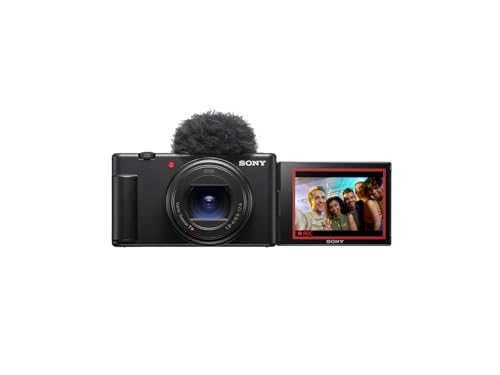
Sony ZV-1 II Premium Compact Digital Camera 4K Video – Black — A premium compact camera with a one-inch sensor and a versatile zoom lens, built for creators who want camera quality without interchangeable lenses. Check price on Amazon.
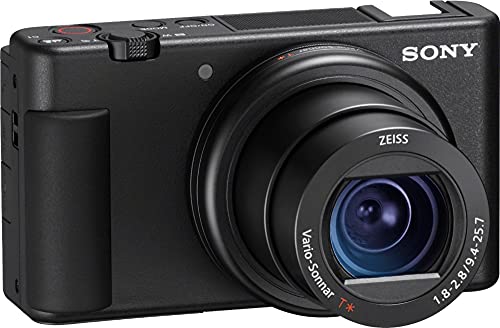
Sony ZV-1 Digital Camera for Content Creators, Vlogging and YouTube with Flip Screen… — A creator-focused compact with a flip screen and strong video features, the kind of compact that survives because phones cannot match its handling. Check price on Amazon.

Samsung Galaxy S24 Ultra Cell Phone, 256GB AI Smartphone, Unlocked Android, 200MP, 100x… — A flagship phone whose multi-lens system and processing represent the smartphone side of this comparison at its best. Check price on Amazon.
Smartphone vs Compact Camera at a Glance
Where each tool genuinely leads.
| Criterion | Smartphone | Compact Camera |
|---|---|---|
| Always with you | Yes — it is your phone, so it is already in your pocket | Only when you decide to carry it |
| Sensor and optics | Small sensors, fixed lenses, heavy computational help | Larger sensors on premium models, real optical zoom lenses |
| Zoom | Good on flagships with telephoto lenses; digital crop otherwise | True optical zoom across the range, often much longer reach |
| Low light | Excellent processing; night modes produce bright, shareable photos | Larger sensors gather more real light; cleaner files for editing |
| Sharing | Instant — edit and post from the same device | Transfer to phone or computer first, though Wi-Fi helps |
| Battery for shooting | Shared with everything else the phone does | Dedicated battery, hundreds of shots per charge, swappable |
| Controls | Touchscreen, automatic by default | Dials, buttons and manual control designed for photography |
Image Quality: Sensors, Lenses and Processing
A compact camera’s core advantage is physics. Premium compacts use sensors several times larger than a phone’s main sensor, paired with a real zoom lens whose glass elements actually change focal length. More sensor area means more light captured, cleaner images at high sensitivity, shallower depth of field for portraits, and files that tolerate serious editing and large prints.
The phone’s counter-argument is computation. Modern phones merge multiple frames for every shot, lifting shadows, taming highlights and sharpening detail automatically. For a photo viewed on a screen or shared online, a flagship phone’s processed image often looks better straight away than a compact’s unedited file, especially in tricky light. The compact pulls ahead when you edit its files yourself or print large.
Zoom deserves its own mention because it is where phones are weakest. Even flagship telephoto lenses reach modest optical ranges, and beyond them the phone crops and upscales. A travel compact’s optical zoom can frame wildlife, architecture details and candid portraits from distances where a phone produces a smudge. If your photography involves subjects you cannot walk up to, the compact’s lens settles the debate.
Handling, Speed and the Shooting Experience
A camera is shaped for one job. It has a grip, a shutter button under your finger, dials for exposure settings, and a screen or viewfinder positioned for shooting. That sounds like a small thing until you spend a day photographing: changing settings by feel, shooting one-handed securely, and using a viewfinder in bright sun are experiences a slab of glass cannot reproduce.
Phones win on the screen itself — bigger, brighter, and superb for reviewing and editing on the spot — and on automation. A phone makes a hundred small decisions per photo and gets most of them right, which is why phone photos from beginners often beat camera photos from beginners. The compact rewards skill and punishes autopilot habits; its automatic modes are usually less clever than a phone’s.
Battery behaviour differs too. A compact sips power while shooting and its battery swaps in seconds. A phone used heavily as a camera competes with navigation, messaging and everything else for the same battery, and a day of travel photography can leave you choosing between photos and a working phone for the journey home.
Video, Sharing and Everyday Life
For video, flagship phones are formidable: stabilisation, multiple lenses and instant editing and upload make them the default tool for creators. Premium compacts answer with better microphones options, flip screens for presenting, no overheating interruptions on long recordings in many models, and cleaner footage in low light from their larger sensors. The choice depends on whether you value workflow speed or recording quality and endurance.
Sharing is the phone’s home turf. A photo can be edited, captioned and posted before a compact has finished transferring its files. Modern compacts have Wi-Fi and Bluetooth transfer to your phone, which narrows the gap to a few extra steps, but those steps are exactly why compact photos so often sit unshared on a memory card.
And the deepest point in the phone’s favour remains the oldest one: it is already with you. The compact only takes better photos on the days you carry it. Many photographers solve this by carrying the compact deliberately — for trips, events and photo walks — and letting the phone cover everything else.
Cost and Who Each Option Suits
The economics are unusual because you already own the phone. The compact’s cost is entirely additional, so it must justify itself purely as a camera. At the premium end, where one-inch-sensor compacts live, that justification is image quality, zoom and handling for people who photograph often. Cheap compacts, by contrast, are hard to justify at all now, because a mid-range phone matches or beats them in most situations.
Choose the compact if you photograph deliberately and often, want optical zoom reach, shoot in low light, print your work, or simply enjoy the act of using a camera. Choose the phone alone if your photography is spontaneous and social, if you would rarely carry a second device, or if your budget is better spent upgrading the phone itself, whose camera improves with the handset.
Parents, travellers and event-goers sit in the middle: a compact earns its place at weddings, safaris, concerts where permitted and once-in-a-lifetime trips, while the phone handles school runs and birthdays. Owning both is not duplication; it is matching the tool to the occasion.
Worked Scenarios: Three Photographers Decide
A parent photographing two children — school plays, weekend sport, birthday parties in dim halls — tests both tools hard. The phone wins the everyday ninety percent: it is present, fast and shares instantly with grandparents. The compact earns its place at the performances and matches, where its optical zoom reaches the stage and field from a parent’s seat and its sensor handles hall lighting without the phone’s processing strain. This photographer buys the compact for events and stops expecting one device to be best at everything.
A traveller walking cities with a small bag faces the carry question in its purest form. The phone alone keeps the kit weightless and the workflow instant, and modern flagship results from trips are genuinely beautiful. The compact joins the bag only if the traveller’s style involves deliberate photo walks, distant architecture and prints for the wall afterwards. The deciding evidence is their last trip’s photo library: if the phone’s results already delight them, the compact would have added weight, not quality.
A small-business owner photographing products splits differently again. Controlled light and a tripod neutralise the phone’s weaknesses, and its instant workflow suits listings and social posts, making the phone the rational tool. The compact becomes worth it when the products demand detail at distance or in poor light, or when the owner simply produces better work with a camera in hand. In all three scenarios the pattern repeats: the tools divide by occasion and habit, not by abstract superiority.
The Costs Nobody Mentions
Owning a compact carries small recurring costs beyond its price: a case, spare battery, memory cards, and the time tax of transferring and backing up a second library. None is large, but together they explain why compacts fall out of use — the friction compounds. Budget for the accessories at purchase, set the transfer routine up once and properly, and the friction stays low enough for the quality advantage to survive contact with real life.
The phone’s hidden cost is subtler: using it as your only camera concentrates risk. A lost or broken phone on a trip takes the camera, the photos not yet backed up, the maps and the communications in a single event. Photographers who rely on a phone alone should treat automatic backup as non-negotiable camera equipment, and travellers might note that a compact quietly provides redundancy — two devices that can each take photographs if the other fails.
Neither cost decides the comparison alone, but both belong in an honest decision. The compact asks for money and a little discipline; the phone asks for backup diligence. Buyers who acknowledge the true price of each option rarely regret either choice.
Learning Photography: Which Tool Teaches Better?
An under-discussed difference between the tools is what they teach. The phone’s automation delivers good results immediately, which encourages beginners — but it can also conceal the craft, because the phone makes exposure, focus and processing decisions invisibly and the photographer learns to trust rather than to see. Many phone photographers plateau at competent snapshots, not because the tool limits them, but because it never asks anything of them.
The compact, with its dials and its less forgiving nature, teaches by consequence. Aperture, shutter speed and sensitivity are physical controls with visible results; a badly exposed frame is feedback, not a mystery. Photographers who learn on a camera develop an understanding of light that transfers to every device they will ever use, including back to their phone, whose pro mode suddenly makes sense to hands that have turned real dials.
This suggests a progression many enthusiasts follow naturally: begin on the phone, where success is easy and the library grows; add the compact when curiosity about control appears; discover that the compact’s lessons improve the phone photography too. The tools are not rivals in a learning journey — they are stages of it, and the photographer’s eye is the only component that upgrades permanently.
For a parent buying for a teenager with a genuine interest, this teaching argument may outweigh every specification in the comparison: a modest premium compact with manual controls is an education, while a flagship phone is an appliance. For everyone else, the honest question remains the one this comparison began with — not which tool is better, but which photographs you actually intend to make.
Whichever you choose, commit to learning its controls properly for one month before judging it. Phones hide depth in their pro modes and settings; compacts hide quality behind their menus. The tool you understand will out-photograph the tool you merely own, every single time.
Common Mistakes to Avoid
- Buying a cheap compact expecting it to beat your phone. Budget compacts have small sensors and slow lenses that modern phones outclass. The compact case only holds at the premium, larger-sensor end.
- Judging cameras by unedited files on a tiny screen. Zoom in, view on a monitor, or print. Compact advantages in detail and editing flexibility are invisible in thumbnails.
- Forgetting the carry problem. The best compact is worthless at home. If you know you will not carry a second device, invest in the phone instead.
Pro Tips
- If you buy a compact, set up its phone transfer app on day one; frictionless sharing decides whether the camera gets used.
- A compact with a one-inch sensor is the meaningful step up from a phone; smaller-sensor compacts rarely justify themselves now.
- Carry the compact on a wrist strap for day trips — security and readiness both improve versus a bag.
Image Quality in the Situations That Actually Defeat Phones
In good light, a modern phone and a compact camera produce results most viewers cannot separate on a screen. The compact camera earns its keep when conditions turn hostile. Its larger sensor gathers more light, so indoor photos at a family dinner stay clean where a phone begins to smear detail with noise reduction. Its real optical zoom keeps quality at distances where a phone is cropping and inventing detail. Its lens opens wider, separating a subject from its background with genuine optical softness rather than a portrait-mode simulation that occasionally eats hair, glasses and chair edges.
Movement is the second battlefield. Children, pets and sports punish slow autofocus and heavy processing. A good compact tracks a subject with dedicated hardware, fires bursts without the phone’s processing pauses, and lets you pre-set exposure so a dark hall or a bright beach does not fool the metering at the crucial second. Phones counter with computational tricks that are genuinely brilliant for static scenes, stacking frames to recover shadows and skies, but a stack cannot freeze a toddler mid-leap the way a fast shutter and a bright lens can.
None of this makes the compact automatically better for you. Its advantages appear at the edges: low light, distance, motion, and large prints. If your photography lives in daylight, at arm’s length to a few metres, destined for screens and small prints, those edges may never matter in your life. Judge by your last hundred photos, not by the safari you might take one day. Count how many were indoors, distant, moving or disappointing, and you have the honest size of the compact camera’s opportunity in your hands.
Handling, Speed and the Pleasure of a Dedicated Tool
A compact camera is shaped for one job. It has a grip, a shutter button with a half-press for focus, dials that change settings by feel, and a screen or viewfinder positioned for photography rather than for a touchscreen interface borrowed from apps. That physicality changes behaviour: you compose more deliberately, you miss fewer moments fumbling through modes, and you can shoot one-handed securely while a phone demands two hands and a prayer over hard ground. For people who photograph often, that handling is not nostalgia; it is a measurable reduction in missed and ruined shots.
Start-up and readiness matter on the street and at family events. A compact kept in a coat pocket wakes to shooting almost instantly and stays a camera until you switch it off. A phone wakes to notifications, a lock screen, an app choice, and the temptation to check a message mid-moment. Many photographers describe the compact as protecting their attention as much as their image quality: it cannot receive email, so an afternoon of photography stays an afternoon of photography, and the photos are the only thing you bring home.
The costs of the dedicated tool are equally real. It is another device to charge, carry, insure and keep dry. Its photos live on a card until you transfer them, which delays sharing by minutes or hours compared with a phone’s instant upload. Its video, while often excellent, involves more decisions about settings and files. And it does nothing else: no maps, no messages, no boarding passes. The comparison is therefore not camera against camera but workflow against workflow, and the right answer depends on whether photography in your life is an event worth packing for or a reflex that must fit in a jeans pocket.
What to check on a compact before judging it against your phone
- Sensor size and lens brightness at both ends of the zoom, not just the zoom range headline.
- Whether the zoom is genuinely optical across the range you will use at family events.
- Autofocus tracking for faces and eyes, and how it copes in indoor light.
- Stabilisation for handheld video and for slower shutter speeds at dusk.
- How photos move to your phone or computer, and whether that fits your patience.
Cost, Longevity and Building a Two-Device System
A compact camera looks expensive beside a phone you already own, until you compare like with like. The phone’s camera is part of a device replaced every few years; a good compact can serve for a decade, because camera progress is slower and because its job never expands. Spread over that life, a compact bought for family milestones, travel and a growing photography hobby can cost less per year than repeatedly buying flagship phones partly for their cameras. The second-hand market strengthens the case: capable compacts from a few years ago are plentiful, and a camera has no battery-gated software expiry in the way a phone does, though its physical battery will eventually need replacing.
The two devices also cover each other’s weaknesses in a system many enthusiasts settle into. The phone handles the everyday, the unexpected and everything that must be shared instantly. The compact handles the planned: holidays, performances, portraits, wildlife at the zoo, and the low-light celebrations where phones struggle. Carrying both sounds like duplication until you notice that each is used in the situations where it is strongest, and neither is asked to be heroic outside them. A small belt pouch or jacket pocket makes the compact genuinely portable, and a phone remains the backup camera if the compact’s battery dies.
Whichever way you decide, protect the photos themselves. Camera cards fail, phones are lost, and a decade of family history deserves the same backup discipline whichever device captured it. Import promptly, keep copies in two places, and print the best each year. The finest camera decision in the world is worthless if the images do not survive, and the humble phone album that is backed up and printed beats the masterpiece that lived and died on a single memory card.
Verdicts by Photographer: Finding Your Own Answer
If you photograph your life as it happens and share immediately, the phone wins and it is not close. If you photograph deliberately, print large, shoot indoors and at distance, or feel the itch to learn exposure, focus and composition as skills, the compact rewards that interest every time you pick it up. Parents split interestingly: the phone wins the daily hundred small moments, while the compact wins the recital, the match and the birthday in a dim restaurant, which is why so many families end up owning both and using each without conflict.
Travellers should weigh bulk against ambition. A compact with a versatile zoom replaces the wish for several lenses and covers cathedrals, street scenes and distant details in one pocketable tool, at the price of carrying and guarding a second device in crowds. Content creators should test audio and video workflows specifically, because a compact’s video quality advantage can be undone by awkward file handling or weak microphone options for their particular publishing routine.
The deciding experiment costs nothing: borrow or rent a compact for one real weekend of your actual life, shoot the same events with both, and compare the results on the screen or print size you actually use. Count the shots each device made possible and the ones each made painful. That evidence, drawn from your subjects and your habits, will settle a question that a hundred specification comparisons cannot.
Image Quality in the Situations That Actually Defeat Phones
In good light, a modern phone and a compact camera produce results most viewers cannot separate on a screen. The compact camera earns its keep when conditions turn hostile to small sensors and thin bodies. Its larger sensor gathers more light, so indoor photos at a family dinner stay clean where a phone begins to smear detail with aggressive noise reduction. Its real optical zoom keeps quality at distances where a phone is cropping and inventing detail. Its lens opens wider, separating a subject from its background with genuine optical softness rather than a portrait-mode simulation that occasionally eats hair, glasses, foliage and chair edges in its enthusiasm.
Movement is the second battlefield. Children, pets and sports punish slow autofocus and heavy processing pipelines, and they punish them at exactly the moments families care about most. A good compact tracks a subject with dedicated hardware, fires bursts without the phone’s processing pauses, and lets you pre-set exposure so a dark hall or a bright beach does not fool the metering at the crucial second. Phones counter with computational tricks that are genuinely brilliant for static scenes, stacking frames to recover shadows and skies, but a stack cannot freeze a toddler mid-leap the way a fast shutter, a bright lens and a photographer who was ready can.
None of this makes the compact automatically better for you. Its advantages appear at the edges: low light, distance, motion, and large prints. If your photography lives in daylight, at arm’s length to a few metres, destined for screens and small prints, those edges may never matter in your actual life, however impressive they are in a comparison gallery. Judge by your last hundred photos, not by the safari you might take one day. Count how many were indoors, distant, moving or disappointing, and you have measured the honest size of the compact camera’s opportunity in your hands, in your light, with your subjects.
Handling, Speed and the Pleasure of a Dedicated Tool
A compact camera is shaped for one job. It has a grip, a shutter button with a half-press for focus, dials that change settings by feel, and a screen or viewfinder positioned for photography rather than borrowed from a touchscreen interface designed for apps. That physicality changes behaviour measurably: you compose more deliberately, you miss fewer moments fumbling through modes, and you can shoot one-handed securely while a phone demands two hands and a prayer over hard ground. For people who photograph often, that handling is not nostalgia; it is a reduction in missed and ruined shots that shows up in every album, and it is the reason experienced photographers reach for a camera even when a phone is in the same pocket.
Start-up and readiness matter on the street and at family events more than any specification. A compact kept in a coat pocket wakes to shooting almost instantly and stays a camera until you switch it off. A phone wakes to notifications, a lock screen, an app choice, and the temptation to check a message mid-moment, by which time the moment has frequently left. Many photographers describe the compact as protecting their attention as much as their image quality: it cannot receive email, so an afternoon of photography stays an afternoon of photography, and the pictures are the only thing you bring home besides the memory of having been present for them.
The costs of the dedicated tool are equally real and should be carried openly. It is another device to charge, carry, insure and keep dry. Its photos live on a card until you transfer them, which delays sharing by minutes or hours compared with a phone’s instant upload, and its files ask more of your storage and backup discipline. It does nothing else: no maps, no messages, no boarding passes, no torch at midnight. The comparison is therefore not camera against camera but workflow against workflow, and the right answer depends on whether photography in your life is an event worth packing for or a reflex that must fit, unconsidered, in a jeans pocket.
What to check on a compact before judging it against your phone
- Sensor size and lens brightness at both ends of the zoom, not just the zoom range headline.
- Whether the zoom is genuinely optical across the range you will use at family events.
- Autofocus tracking for faces and eyes, and how it copes in indoor light.
- Stabilisation for handheld video and for slower shutter speeds at dusk.
- How photos move to your phone or computer, and whether that fits your patience.
Video, Audio and the Creator’s Full Workflow
Video narrows this contest in interesting ways. Phones have become astonishing video tools, with stabilisation that forgives walking, automatic exposure that handles mixed light gracefully, and microphones tuned for voices in ordinary rooms. They also upload, edit and publish from the same device, which for creators working to a schedule is not a convenience but the entire business model. A compact camera counters with better lenses, cleaner low-light video, proper manual control, and on many models a microphone input that transforms audio quality with a modest external microphone, because audiences forgive soft pictures far more readily than they forgive bad sound echoing in a hall.
The deciding questions are about your finished work, not your capture specifications. Where does your video live: vertical social clips made and posted within the hour, or longer pieces edited on a computer and watched on televisions? How long do you record at a stretch, and in what heat, because phones throttle and sometimes stop in conditions a dedicated camera absorbs without complaint? Do you need to keep recording while your phone remains a phone, reachable for calls and messages? Creators who answer these honestly usually find the devices stop competing and start specialising, with the compact owning the planned productions and the phone owning everything spontaneous, urgent and unrepeatable.
Audio deserves its own sentence in every creator’s notebook: budget for sound before resolution. A compact with a microphone socket and a small external microphone will produce more professional-feeling work than any resolution upgrade on either device, and a phone with a plug-in microphone closes much of the gap for interviews and pieces to camera. Whichever camera you choose, its microphone plan matters more than its maximum video mode, and testing it in a windy street and an echoing hall will teach you more in an afternoon than a month of specification reading in the evening.
Travel, Weather and the Logistics of Carrying a Second Device
Travel is where the compact camera’s case is strongest and its costs are most concrete, so weigh them together rather than in separate moods. In its favour: one small device with a versatile zoom covers cathedrals, street life, landscapes and distant details without lens changes, its battery commonly lasts days of shooting, and it frees your phone to be your map, translator, wallet and lifeline rather than dying as a camera by lunchtime. Against it: another charger or battery system, another item for the hotel safe and the insurance list, another thing to protect from rain, sand and the opportunistic hand in a crowd that knows exactly what a camera bag means.
Weather separates the pair in the field more honestly than any laboratory. Many compacts tolerate a shower poorly or not at all, while flagship phones shrug off rain that ends a camera’s day unless it lives in a waterproof housing. Dust and sand threaten the compact’s extending lens mechanism in a way a sealed phone simply does not experience. Travellers to wet, wild or sandy places should price protection for the camera as part of its cost, or accept the partnership most travelling photographers eventually adopt: the phone as the bad-weather camera, the compact as the fair-weather artist, each covering the other’s weakness without resentment.
The final travel test is weight against regret. Nobody regrets carrying a compact on the day it captures the eagle, the eruption or the grandchild’s face across a stadium. Everybody regrets carrying it on the day it never leaves the bag. Honest travellers count their past trips: how many days did photography lead the itinerary, and how many was it merely incidental to a holiday about other things? Let that ratio, not a reviewer’s enthusiasm, decide what goes in the bag this time. And whichever device stays home, back up its replacement’s photos every night of the trip, because travel is also where devices are lost, dropped and soaked, usually on the day the pictures were best.
Cost, Longevity and Building a Two-Device System
A compact camera looks expensive beside a phone you already own, until you compare like with like across time. The phone’s camera is part of a device replaced every few years at full device prices; a good compact can serve for a decade, because camera progress is slower and because its job never expands to include banking, messaging and maps. Spread over that life, a compact bought for family milestones, travel and a growing photography hobby can cost less per year than repeatedly buying flagship phones partly for their cameras. The second-hand market strengthens the case: capable compacts from a few years ago are plentiful and honest, and a camera has no software expiry date in the way a phone does, though its physical battery will eventually need replacing like any other.
The two devices also cover each other’s weaknesses in a system many enthusiasts settle into after years of arguing with themselves. The phone handles the everyday, the unexpected and everything that must be shared instantly. The compact handles the planned: holidays, performances, portraits, wildlife at the zoo, and the low-light celebrations where phones struggle most. Carrying both sounds like duplication until you notice that each is used in the situations where it is strongest, and neither is asked to be heroic outside them. A small belt pouch or jacket pocket makes the compact genuinely portable, and the phone remains the backup camera on the day the compact’s battery or card lets you down.
Learning Photography: Which Device Teaches You More
For someone who wants to learn photography rather than merely collect photographs, the compact camera is the better teacher, and the reason is feedback you can feel in your fingers. Its dials make aperture, shutter speed and sensitivity physical and visible, so cause and effect connect in your hands: this setting froze the footballer, that one blurred the waterfall, this one made the night street clean and that one made it grainy with atmosphere. A phone teaches composition beautifully, because it is always with you, but its automation hides the mechanics, solving problems before you knew they existed and leaving you helpless in the situations where automation fails and the moment matters.
The phone’s counter-argument is volume and immediacy. Learning needs practice, and the camera you carry daily generates ten times the practice of the camera you fetch for occasions, while its instant review, editing and sharing close the feedback loop in minutes. Many photographers learn fastest with both teachers in sequence: the phone for daily seeing, the compact for deliberate technique, each exposing the other’s lessons in turn. Whichever you learn on, print your work, because printing reveals focus, exposure and resolution truths that screens flatter, and a wall of your own prints will settle this guide’s central question for your household more honestly than any verdict written here.
A Word on Borrowing, Renting and the Weekend Test
If this comparison remains unresolved after all the evidence, borrow the decision instead of buying it. Rent or borrow a compact for one real weekend of your actual life, a family visit, a match, a walk you love, and shoot it alongside your phone at the same moments. Compare the results where you will actually view them, count the shots each device made possible and the ones each made painful, and notice which device you reached for when a moment mattered. That weekend, honestly reviewed, is worth a shelf of comparison articles, including this one, because it measures your hands, your light and your subjects rather than anyone else’s.
Related Guides
- best smartphones for photography
- best smartphones for video
- best smartphones for pictures
- best smartphones for photos
- best smartphones under 500
- smartphone camera megapixels explained
- camera phone vs compact camera
- how to choose a camera phone
Frequently Asked Questions
Do compact cameras take better photos than phones?
Premium compacts with larger sensors take technically better photos: cleaner low-light files, real optical zoom, more editing headroom and better large prints. Phones often produce more pleasing photos instantly thanks to computational processing, especially in mixed light, and for screen viewing the difference can vanish. The compact’s advantage is real but shows in demanding conditions and larger outputs, not in every snapshot.
Why do compact cameras still exist if phones are so good?
Because phones cannot change physics: their thin bodies limit sensor size and lens reach. Compacts survive where those limits matter — long optical zoom, larger sensors, dedicated controls, swappable batteries and no interruptions from calls and notifications. The market shrank to enthusiasts, travellers and creators, but for those users the advantages are decisive rather than nostalgic.
Is a compact camera worth it for travel?
For travellers who photograph seriously, yes: optical zoom for wildlife and architecture, better low-light results in museums and evenings, and a dedicated battery that does not compete with maps and boarding passes. For travellers who mainly share snapshots, a good phone plus perhaps a small tripod is lighter and simpler. The honest test is how many photos you took on your last trip and what frustrated you about them.
Can a compact camera replace my phone camera entirely?
Only for deliberate photography. You will still reach for the phone for spontaneous moments, documents, quick shares and anything where the camera is not the point of the outing. Most compact owners use both, with the compact reserved for outings where photography is a purpose. Expecting the compact to cover everyday life usually ends with it left at home.
What should I look for in a compact camera as a phone user?
Prioritise a larger sensor — one-inch class is the sweet spot — a useful optical zoom range, image stabilisation, a screen that tilts for low and high angles, and painless Wi-Fi transfer to your phone. USB charging is a genuine convenience for travellers. Ignore digital zoom figures and megapixel counts beyond the sensor’s natural resolution; lens and sensor decide quality.
Are phone photos good enough to print?
Yes, within limits. Flagship phone photos print beautifully at small and medium sizes, and computational processing produces sharp, vivid results. Large prints reveal the small sensor’s limits in fine detail and shadow quality, where a larger-sensor compact pulls ahead. For albums, gifts and typical wall sizes, phone photos are entirely respectable; for exhibition-size prints, the dedicated camera earns its place.
Can a compact camera send photos to my phone for sharing?
Yes, most modern compacts can transfer images to a phone over a wireless connection using the maker’s app, and some can send automatically or let you pick images on the camera and push them across in seconds. The process is slower and more deliberate than a phone’s native sharing, which is the honest trade at the heart of this whole comparison, but for the planned photographs a compact exists to take, a minute of transfer at the cafe table is a small toll. Test the app before a big trip, because app quality varies more than camera quality does.
Which is better for photographing children and pets?
It depends on the moment. For the hundred spontaneous moments of an ordinary week, the phone wins because it is present, awake and forgiving. For the moments that defeat it, the running child indoors, the dog at dusk, the school performance across a hall, a compact with fast autofocus tracking, a bright lens and real zoom produces keepers where the phone produces evidence. Many families conclude that the honest answer is both, used in their seasons, and that the compact earns its place on exactly the occasions they most want to remember.
Do I need to learn manual settings to benefit from a compact camera?
No. A good compact on its automatic and scene modes already benefits from its larger sensor, better lens and real zoom, and will outperform a phone in difficult light while asking nothing of you. Manual control is there when curiosity arrives, and learning it gradually, one setting at a time on real subjects, is one of the pleasures of owning the tool. Buy the compact for the photographs you want today, on automatic, and let the dials wait patiently for the photographer you may become.