The camera phone vs compact camera comparison has flipped in a decade. Once, the compact was the obvious photographic tool and the phone a toy. Now the flagship camera phone carries multiple lenses, a large main sensor and processing that merges a dozen frames per shot, while the compact camera market has retreated to premium models that justify themselves on optics and handling alone.
This comparison is written for the buyer deciding whether a dedicated compact still earns its place and its cost alongside a good phone. It covers image quality, zoom, low light, video, handling and sharing, and it is candid that the answer depends entirely on the photography you actually do.
Disclosure: As an Amazon Associate, kajuandouglas.com earns from qualifying purchases. Links to Amazon on this page are affiliate links; they cost you nothing extra. Listing details such as price and availability change often, so check the current Amazon listing before you buy.
The Short Answer
A flagship camera phone wins for everyday photography, instant sharing, video convenience and night modes that make low light easy. A premium compact camera wins for true optical zoom, larger-sensor quality for editing and printing, dedicated controls and battery endurance on shooting days. Budget compacts no longer beat phones at all — the compact only makes sense at the larger-sensor premium end, bought by people who photograph deliberately.
In this guide
Gear for This Guide
The premium compact below is the strongest form of the dedicated-camera argument; the flagship phone is the benchmark it must beat.

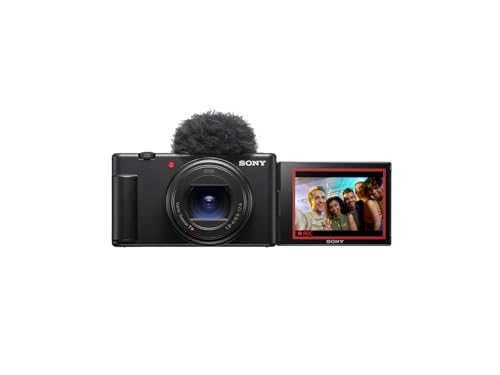
Sony ZV-1 II Premium Compact Digital Camera 4K Video – Black — A premium compact with a one-inch sensor and zoom lens, designed for creators who want camera quality in a pocketable body. Check price on Amazon.
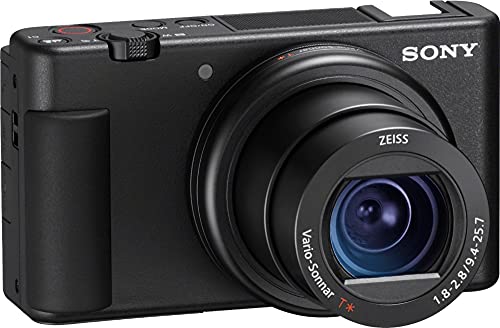
Sony ZV-1 Digital Camera for Content Creators, Vlogging and YouTube with Flip Screen… — A creator compact with a flip screen and strong video tools, the type that thrives alongside phones rather than against them. Check price on Amazon.

Samsung Galaxy S24 Ultra Cell Phone, 256GB AI Smartphone, Unlocked Android, 200MP, 100x… — A flagship camera phone with a multi-lens system and long zoom, representing the phone side at its most capable. Check price on Amazon.
Camera Phone vs Compact Camera at a Glance
The honest scorecard for the modern versions of both.
| Criterion | Camera Phone | Compact Camera |
|---|---|---|
| Sensor | Small main sensor, computational help | Larger sensor on premium models, cleaner files |
| Zoom | Optical on flagship telephotos, limited range | Real optical zoom, often far longer reach |
| Low light | Night modes produce bright, easy results | Cleaner natural files, better for editing |
| Video | Excellent stabilisation, instant sharing | Better audio options, longer continuous recording |
| Handling | Touchscreen, thin slab | Grip, dials, shutter button, viewfinder on some |
| Sharing | Immediate, from the same device | Transfer step required |
| Cost logic | Already owned; camera improves with the phone | Entirely additional cost, purely for photography |
Image Quality and the Sensor Question
Premium compacts use sensors several times the area of a phone’s main sensor, behind lenses designed solely for photography. The physics shows in clean high-sensitivity files, gentle natural background blur, and images that survive serious editing and large prints. For a photographer who processes their work, the compact’s files are simply better raw material.
The phone answers with computation. Its night modes and multi-frame merging produce finished photographs that, viewed on screens, often look superior to a compact’s unedited output — brighter, sharper-seeming and instantly pleasing. The compact’s advantage is potential; the phone’s advantage is the photograph you actually get with no effort. Which matters depends on whether you edit.
In bright daylight both are excellent and the practical gap narrows to taste. The compact pulls ahead as conditions worsen and as output size grows; the phone pulls ahead whenever speed, automation and sharing define the assignment.
Zoom, Lenses and Reach
Zoom is the compact’s clearest victory. Its lens physically extends and retracts through a true optical range, and travel compacts reach magnifications no phone approaches. Even flagship phones with excellent telephoto lenses cover a modest range before reverting to digital cropping, which discards detail exactly when the subject is small and distant.
The phone’s lens set is wider at the other end: ultrawide lenses for interiors and landscapes are standard on good camera phones, while many compacts start at a moderate wide angle. For travel, the phone often covers the wide scenes better and the compact the distant ones — one more reason keen photographers carry both.
For portraits, the compact’s larger sensor and longer lens produce natural background separation, while the phone simulates blur computationally. Simulation has become convincing but still stumbles on hair, glasses and complex edges. If portraits are your main subject, handle both and compare this specific test.
Handling, Battery and the Shooting Day
A compact is shaped like a tool: a grip your fingers close around, a shutter button with a half-press for focus, dials that change settings by touch, and on some models a viewfinder that works in glaring sun where screens wash out. Over a day of deliberate photography these ergonomics are not nostalgia; they are speed and reliability.
Battery tells the same story. A compact shoots hundreds of photographs on a charge and swaps batteries in seconds. A camera phone shares its battery with navigation, messages and everything else, and a heavy shooting day can strand both your camera and your phone. Photographers who shoot events or travel days on a phone learn to carry a power bank as standard.
The phone’s handling advantage is that it is already in your hand, awake, connected and backed by your editing apps. The compact demands a decision to carry it, which is precisely why its superior quality so often goes unused. Be honest about your carrying habits before spending.
Who Each Option Suits
Stay with the camera phone if your photography is spontaneous, social and shared, if you shoot a lot of video for platforms, or if you know a second device would stay at home. Spend the money on the best camera phone tier instead, plus a tripod and backup storage, and you have a complete system.
Add the compact if you photograph deliberately — travel days, nature, family events you want to print — if you need real zoom, or if you edit your photographs and want files that reward it. Buy at the premium, larger-sensor end; a budget compact duplicates your phone’s quality while adding none of its convenience.
Creators increasingly choose a specific hybrid: a creator-focused compact for planned content, with its flip screen and microphone options, and the phone for everything spontaneous. That pairing acknowledges what this whole comparison concludes — the tools overlap less than the marketing of either admits.
The Middle Path: Premium Phones and Creator Compacts
The market has quietly produced a synthesis worth naming. At one end, flagship camera phones now include pro modes, raw capture and lens sets that satisfy many former compact owners entirely. At the other, creator compacts have absorbed phone lessons — flip touchscreens, one-tap product modes, direct streaming and painless phone transfer — becoming companions to the phone rather than replacements for it. The buyer is no longer choosing between philosophies so much as choosing where the second device earns its keep.
This is why the most common professional answer to the comparison is a pairing: the phone as the always-present camera and communications hub, the compact as the deliberate instrument for planned work. The pairing costs less than it appears, because each device is bought for its strengths without demanding the other be something it is not — the phone need not chase optical zoom it cannot house, and the compact need not pretend to be a communications device.
If budget forces a single choice, let your photo library vote. Scroll your last year of photographs and count how many were spontaneous and shared within the hour against how many were deliberate, edited or printed. The majority is your answer, and it will be right more often than any reviewer’s verdict, because it measures the photographer you are rather than the one the marketing imagines.
Resale, Longevity and the Total Picture
Ownership length tilts the economics in a way worth calculating. A compact camera bought today will still be an excellent camera in six years, because dedicated cameras age slowly and their makers support them with firmware rather than annual replacements. A camera phone rides the phone’s replacement cycle — two to four years for most people — so its camera cost is really paid repeatedly, folded into each upgrade. Spread over six years, the compact’s single purchase can undercut the camera portion of two flagship upgrades.
The counterweight is that the phone upgrade buys far more than a camera: processor, screen, battery and network improvements arrive with it, so allocating its whole price to photography is unfair. The honest comparison charges the compact only against the difference between the phone you would buy for its camera and the cheaper phone you would happily buy if the compact handled photography — a difference that, for many buyers, covers much of the compact’s price.
Resale values complete the picture: quality compacts hold value respectably among enthusiasts, while phones depreciate on schedule. None of this arithmetic overturns the comparison’s real drivers — zoom, sensor, handling, sharing — but for the buyer torn between the two, the long view often whispers that the dedicated camera is less extravagant than its sticker suggests.
Environmental and Practical Considerations
The comparison changes at the edges of ordinary life, where environments vote. In rain, dust and cold, a compact with weather sealing and physical buttons that work through gloves keeps shooting while a touchscreen phone sulks under droplets and demands bare fingers. Mountaineers, sailors and site workers who photograph as part of the job often choose the compact for reasons that never appear in image-quality comparisons: it works when the weather does not care about their photography.
In heat the vote can reverse: phones throttle and dim their screens in strong sun, and a compact with a viewfinder remains composable when its screen washes out — but a phone in shade recovers instantly and uploads the evidence before the compact’s owner reaches a computer. At concerts and venues, policy votes too: phones are admitted everywhere, while cameras with detachable or long lenses may be refused at the door, and the best camera is unfailingly the one they let you carry in.
Battery logistics in remote places favour the compact’s swappable cells and modest appetite, while the phone counters with universal charging — every vehicle, café and power bank in the world speaks its language. Travellers far from infrastructure learn to value whichever system their journey can feed, and the answer differs between a road trip and a trek.
Insurance and loss complete the practical ledger. A compact is a single-purpose loss: painful, bounded, replaceable. A phone lost mid-trip is camera, map, wallet, key and lifeline in one event, which argues either for the compact as redundancy or for the phone backed up so completely that its loss is merely financial. Both arguments are sound; choose consciously rather than by default.
These edges rarely decide for the everyday photographer, but for the photographer whose life includes edges — weather, travel, work — they can outweigh every laboratory measurement in this comparison.
Common Mistakes to Avoid
- Buying a budget compact to upgrade from a phone. Small-sensor compacts no longer beat modern phones. The upgrade exists only at the premium, larger-sensor end of the compact market.
- Judging the compact by its automatic mode alone. Compacts reward control and editing. If you will only ever shoot fully automatic and share instantly, the phone is your camera.
- Ignoring the transfer workflow. If moving photos from camera to phone annoys you, the compact will gather dust. Set up and test the transfer app before committing.
Pro Tips
- Rent or borrow a premium compact for one trip before buying; a week of real use settles the question better than any review.
- If you buy the compact, shoot the same scenes with both for a month — you will quickly learn which subjects belong to which tool.
- A compact with USB charging and a good phone-transfer app removes most of the friction that kills compact usage.
The Image Quality Conversation, Taken Slowly
Sensor size is the compact’s founding argument, and it is real: a larger sensor gathers more light per photograph, which shows as cleaner shadows, gentler highlight roll-off and less reliance on computational rescue. But the phone’s counter-argument is also real: it takes many frames and merges them, effectively borrowing time to compensate for area. In good light, the two approaches converge so closely that subject, composition and timing decide the better photograph. In genuinely difficult light — a dim hall, a fast subject, a scene needing both darkness and detail — physics reasserts itself, and the compact’s single honest exposure, well made, pulls ahead of the phone’s clever arithmetic.
Colour, rendering and the look of the file
Beyond measurable quality sits rendering: how a device interprets colour, contrast and skin. Phones render decisively, aiming for a finished, shareable look; compacts render conservatively, offering files that reward editing and punish neglect. Neither is superior in the abstract. A photographer who never edits should weight the phone’s rendering heavily, because its photographs are finished at the moment of capture. A photographer who edits happily will find the compact’s neutral files a broader canvas, and may actively dislike the phone’s insistence on its own taste.
Print the comparison if prints are your destination. At album and moderate wall sizes, a good phone photograph and a good compact photograph sit comfortably side by side. As size grows, the compact’s cleaner files and true optical detail separate, especially in textured subjects like landscapes and fabric. The honest test is your own wall and your own viewing distance, not a laboratory chart; buy for the output you actually produce, which for most households is a screen, occasionally a book, rarely a gallery.
Handling as a Photographic Feature
A compact camera is shaped for one job: a grip, dials that fall under fingers, a shutter button with a half-press, and controls that can be operated by touch while the eye stays on the scene. A phone is shaped for every job, which means its camera controls are glass, its grip is a compromise, and its other lives — messages, calls, notifications — interrupt the photography. For deliberate photography, the compact’s single-mindedness is a genuine feature that produces more considered photographs, because the device itself teaches deliberation.
Speed, in both directions
Yet the phone is faster where life is faster: it is already in your hand or pocket, awake in a second, and its photograph is shared before a compact’s has been imported. The compact is faster where photography is deliberate: settings changed without menus, bursts sustained without overheating, a viewfinder usable in glare. Each device wins the speed contest the other was not designed for, which is why the choice tracks the photographer’s temperament so reliably. Spontaneous documenters and deliberate photographers are both right; they are simply not the same person.
Battery behaviour completes the handling story. A compact shoots all day on a small battery and carries a spare in a coin pocket; a phone spends its battery on being a phone, and heavy photography competes with navigation, communication and entertainment for the same charge. Travellers who photograph seriously feel this daily. The phone answers with universal charging and power banks, the compact with indifference to chargers altogether, and a long trip is where that difference stops being theoretical.
Cost of Ownership Over Years, Counted Honestly
The compact’s price is visible and singular; the phone’s camera cost hides inside a device bought anyway. Counted over years, the compact often looks better than expected: it is not replaced on a two-year cycle, its batteries and cards are inexpensive, and a good one serves a decade. The phone’s camera improves only when the phone is replaced, and its photographs live inside an ecosystem of storage plans and backups that carry their own quiet costs. Neither arithmetic is damning; both deserve to be done with real numbers from your own habits rather than with the devices’ shelf prices alone.
Resale, repair and the risk ledger
Quality compacts hold value unusually well because the good ones are scarce and photographers seek them. Phones depreciate on a schedule everyone knows. Repair tells a similar story: a compact’s failure is a camera repair; a phone’s failure is a life-admin emergency that happens to include a camera, and its photographs are hostage until it is fixed or replaced. Risk, finally, differs: losing a phone loses far more than photographs, while a compact can be insured, carried and, in the worst case, replaced without touching your correspondence, banking or identity. For some photographers, that separation alone justifies the second device.
Environmental arithmetic follows the same lines. Keeping a compact for a decade while replacing phones less often for camera reasons is a defensible footprint choice, as is the opposite argument that one converged device replaces several. The honest position is that both devices earn their existence when used fully, and the wasteful purchase is whichever one sits in a drawer — which returns the decision, as always, to a truthful account of your own habits.
Hybrid Lives: When Owning Both Is the Answer
Many serious photographers settle into a division of labour: the phone for the everyday, the unexpected and the shareable; the compact for the deliberate — trips taken for photography, family events where quality will be revisited for decades, hobbies like birding or street photography where the compact’s lens and handling transform the experience. The compact earns its drawer space by being taken on the occasions that matter most, and the phone’s excellence the rest of the time is precisely what frees the compact from having to be carried daily.
Choosing a compact that complements rather than duplicates
If you own both, buy the compact for the phone’s weaknesses, not its strengths. That usually means a larger sensor, a genuinely useful zoom range or low-light lens, and controls that reward deliberation. A compact that merely replicates the phone’s main lens in a separate body will stay home, because the phone is always closer. Complementarity is the test: hold the compact’s specification against your phone’s failure list, and buy only where the lists differ.
Workflow between the two rewards a little setup: a consistent way of importing compact photographs into the same library as the phone’s, so the family’s archive is one collection rather than two rival ones. Modern compacts transfer wirelessly to the phone itself, which makes the phone the compact’s darkroom and publisher — a partnership that plays to both devices’ strengths and explains why, for enthusiasts, the duel framing of this comparison dissolves into cooperation.
A Decision Framework in Four Questions
Ask what you photograph, how you finish photographs, what you carry willingly, and what you print. Subjects that move fast, sit far away or live in dim light argue for the compact; subjects that are near, social and immediate argue for the phone. Finishing habits split the same way: editors lean compact, sharers lean phone. Carrying truthfully — not aspirationally — predicts use better than any specification. And printing large, repeatedly, remains the compact’s clearest mandate.
The trial that respects both
Borrow or rent the compact you favour for one real occasion — a trip, a family event — and shoot it alongside your phone without forcing a winner. Afterwards, count: how many of the day’s keepers came from each, how each felt at hour six, and which files you preferred unedited. That evidence, from your own life, outranks every comparison including this one, because the right answer to this particular duel was never a device. It was a description of a photographer, and only your own shooting can write it accurately.
Video, Revisited as a Tiebreaker
Many buyers decide this duel on stills and live with the video consequences, which is a pity, because video separates the devices in ways stills do not. A compact offers consistent quality over long recordings, real optical zoom during filming, and microphones and inputs on models aimed at creators; a phone offers stabilisation that can border on gimbal-like, instant editing and publishing, and a camera that is already charged, connected and present. For a parent filming a school concert, the compact’s zoom and endurance argue strongly; for a small business filming products daily for social channels, the phone’s speed from idea to published clip is a commercial advantage no specification of the compact answers.
Heat, duration and the long take
Long takes expose the phone’s thermal limits and the compact’s design intent. A phone juggling radios, screen and processing may shorten high-quality clips on a warm day; a compact built for video records until its card or battery ends. Test durations in your own likely conditions if long-form video matters, because this is a specification written in behaviour rather than numbers, and it decides real events — ceremonies, matches, performances — where a missed ending cannot be reshot and an overheated device is a story you will tell with feeling for years.
Audio completes the tiebreak. Audiences abandon poor sound faster than poor picture, and the device whose microphones, wind handling and monitoring options suit your filming will produce the videos people actually finish. Judge sample footage with your eyes closed for ten seconds; the device that survives that test has a claim on your money that no stills comparison can overrule.
The Learning Curve and the Joy Factor
Equipment shapes behaviour, and behaviour shapes archives. A compact invites deliberation: it is carried on purpose, its dials teach exposure by touch, and its photographs arrive in batches to be reviewed, which builds editing judgement. A phone invites ubiquity: photography woven through the day, experiments without cost, sharing that keeps distant family inside your life. Photographers grow differently on each — the compact’s student learns craft, the phone’s learns seeing and volume — and both educations are real. The question is which student you currently are, and which you would enjoy becoming.
Boredom, novelty and the second-year test
Apply the second-year test to both. In year two, the phone is a familiar appliance whose camera is opened without thought a dozen times a day; the compact is either a beloved ritual object or a beautiful resident of a drawer, and the difference was decided by whether its occasions — the trips, events and projects it was bought for — actually recur in your life. Inventory those occasions honestly across a real calendar year before buying the compact, and inventory your spontaneous photography honestly before dismissing it. The calendar, consulted truthfully, predicts the drawer better than any review.
Joy is a legitimate criterion and not a soft one, because joy predicts use and use predicts photographs. If handling a compact delights you — its weight, its shutter, its separateness from the messaging machine — that delight will manufacture occasions. If it feels like homework, its superior files will be theoretical. Buy the device whose use you anticipate with pleasure, and be suspicious of any argument, including this guide’s, that talks you out of a pleasure you can verify in your own hands in a shop.
Specialist Cases: Where the Answer Is Not Close
Some photographers should not deliberate long. Wildlife and sports at distance belong to real zoom lenses and fast, sustained operation: the compact with genuine reach, or a larger camera still, wins outright. Underwater and rugged use splits between tough compacts built for immersion and phones in rated housings, with the compact’s physical controls usually prevailing in gloves and water. Astro and long-exposure hobbyists need manual control and stability that compacts offer natively and phones approximate computationally, to results each camp finds characteristic. Concerts from the crowd invert the verdict: the phone is admitted everywhere, shoots quietly and sees in the dark with its night modes, while many venues restrict separate cameras entirely.
Professional and semi-professional uses
For work — products, property, journalism’s first draft, a tradesperson’s evidence — the deciding factors shift to reliability, file handling and how clients receive the results. Phones win on immediacy and integration with the apps work runs on; compacts win where a client, an insurer or an archive expects files of a certain provenance and quality, and where a dedicated device keeps personal and professional photography hygienically separate. Many professionals carry both and bill neither an apology: the phone for speed, the compact for the record, each used where its virtues are the ones the job is paying for.
The Verdict Framework, Compressed
Compress everything to four sentences you can say in a shop. If your photography is spontaneous, social and shared instantly, the phone is your camera and a compact is a hobby you may or may not sustain. If your photography is deliberate, printed, zoom-hungry or light-starved, the compact earns its place and the phone becomes its companion. If both descriptions fit different halves of your life, own both without guilt and let each do what it does best. And if neither device will be used weekly, buy neither upgrade yet — the camera you already own, used with attention, outperforms the drawer-bound masterpiece in every archive that matters.
Sound, Silence and Being Welcome With a Camera
Photography happens in social space, and the two devices carry different social licences. A phone is invisible as a camera: nobody objects to one at a table, a ceremony or a street corner, and its silence and discretion let life proceed unposed around it. A compact announces itself as photography, which changes rooms — sometimes for the better, because people rise to a real camera and grant it occasions; sometimes for the worse, because formality follows it and candid life retreats. Venues formalise the difference: many theatres, concerts and museums admit phones and restrict cameras, a policy that has quietly decided this comparison for entire genres of memory.
The photographer’s presence as a variable
Skilled photographers think about their own effect on the scene as carefully as their settings, and device choice is part of that craft. The parent who wants the family’s unselfconscious life chooses the device the family ignores. The portraitist who wants a sitter’s best, most deliberate self chooses the device that signals occasion. Neither is hiding or performing; both are directing, with the camera as one of the tools of direction. This is why the duel cannot be settled by files alone: the devices do not merely record the same moments differently, they cause different moments to exist.
Children make the point perfectly. A generation raised inside phone photography barely notices a phone, and performs instantly for a distinct camera — or, in some families, the reverse, where the compact is grandfather’s familiar toy and the phone means a parent disappearing into messages. Know your subjects, including the small ones, and let their behaviour in front of each device count as evidence, because it will be written across every photograph either device takes of them.
Reliability and the Photograph That Must Not Fail
Some photographs are unrepeatable in the strong sense — a wedding, a birth, a reunion of the far-flung — and reliability becomes the first specification. A compact offers a simple, single-purpose reliability: charged battery, empty card, a device that does nothing else and therefore does nothing else wrong. A phone offers redundancy of a different kind: instant backup to the cloud the moment a photograph is taken, so the file survives even if the device does not survive the evening. Professionals insuring an unrepeatable event use both logics at once, shooting on a dedicated camera and backing up relentlessly, and amateurs facing their own unrepeatable days can borrow the principle at any scale: two devices, two copies, no single point of failure.
Weather, travel and the hostile world
Outside the studio of ordinary life, the devices meet weather, dust, knocks and theft with different resources. A rugged compact shrugs off rain and sand that would send a phone into a protective pocket at exactly the photographic moment. A phone, by contrast, is tracked, lockable and backed up if stolen, while a compact and its card can vanish with the day’s photographs entire. Travellers in gentle climates with good connectivity may weight the phone’s resilience-by-backup highest; travellers heading for beaches, boats and building sites may weight the compact’s resilience-by-construction. The hostile world does not grade on intention, and the right choice is the one whose failure modes your particular journey can afford.
What Each Device Teaches the Archive
Archives have characters, and devices imprint them. A phone-built archive is dense, chronological, geotagged and searchable, rich in the ordinary — the archive of a life as it was lived hour by hour. A compact-built archive is sparser and more deliberate, rich in occasions — the archive of a life as it was celebrated. Families need both kinds of memory and rarely notice they are choosing between them when they choose a camera. The healthiest archives, like the healthiest photographers, usually contain both densities: the phone’s continuous testimony and the compact’s considered chapters, interleaved in one library, telling the whole story between them.
The inheritance test
Apply, finally, the inheritance test: imagine your photographs viewed in thirty years by people who love you. They will not ask which device took what; they will ask whether the people are there, clearly, often, in the places and the light of their lives. Both devices pass that test when used with love and regularity, and both fail it when left in drawers awaiting perfection. Choose the device — or the partnership of devices — that your real life will actually use weekly for decades, and the archive, which is the only verdict that outlives the argument, will be grateful.
Learning Curves Revisited: What a Year of Each Does to a Photographer
Live with a compact for a year and its discipline accumulates: you pre-visualise because the camera must be fetched and set, you edit because the files invite it, and your keeper rate rises even as your frame count falls. Live with only a phone for a year and a different muscle grows: availability, speed, the documentary instinct that photographs first and appraises later, building an archive of ordinary life no deliberate practice matches. Neither photographer is the other’s superior; they have simply been trained by their tools, as photographers always have been. The wisest buyers choose their trainer deliberately, asking not only what photographs they want this month but what photographer they would enjoy becoming — and then they let the chosen device get on with its quiet, daily instruction.
The Rental Test and Other Low-Risk Experiments
Uncertainty between these devices is unusually testable, and buyers should exploit that before committing. Rent or borrow the compact for a genuine weekend — not a demonstration afternoon, a weekend with a real occasion in it — and shoot it beside your phone exactly as you would if you owned it. Count the keepers by device, note which camera you reached for unthinkingly, and examine which files you preferred before any editing. Then reverse the experiment’s spirit: spend a weekend shooting only your phone, deliberately, including the subjects you assumed needed the compact, and inspect what the phone actually delivered. Two weekends of evidence, costing little, will settle a question that months of reading comparisons cannot, because the answer was always about your hands, your subjects and your Saturdays.
A Word About Renting Your Decision From the Future
Whichever device you choose, choose it as a tenant of your future self: the photographer you will be in three years, with subjects you cannot yet foresee — a new child, a new hobby, a new city. Devices that grow with a photographer, through honest controls, durable construction and files that reward deepening skill, repay that tenancy. Devices bought for a single season’s fashion rarely do. Hold the candidate up against the longest horizon you can imagine for it, and if it still looks like a companion rather than a gadget, the duel has probably just settled itself.
The Simplest Summary Either Camp Can Accept
Strip away a decade of marketing and the duel rests on one exchange: the phone trades ultimate capability for total presence, and the compact trades presence for capability, control and calm. Every argument in this guide is a footnote to that exchange, and every buyer’s answer is a judgement about which side of it their photography lives on. Make the judgement from your own archive and your own calendar, make it without apology to either camp, and then go and take photographs — because the archive, in the end, is the only comparison that will still matter when both devices are antiques.
Related Guides
- best camera phones for photography
- best phones for camera and video
- best camera phones under 500
- best phones for camera and battery life
- best smartphones for photography
- smartphone vs compact camera
- how to choose a camera phone
- what is computational photography
Frequently Asked Questions
Is a compact camera still worth buying in the phone era?
Yes, in a narrower role than before. A premium compact with a larger sensor earns its cost for photographers who want optical zoom, cleaner files for editing and printing, and proper controls on deliberate shooting days. It no longer makes sense as a casual snapshot camera, because phones do that job better and are already carried. The question is not whether compacts are good, but whether your photography is deliberate enough to use one.
Which takes better night photos, a camera phone or a compact?
They win differently. A camera phone’s night mode produces a bright, finished, shareable photo with no skill required, and for most people that is the better night photograph. A compact’s larger sensor captures a cleaner, more natural file with real detail that rewards editing and printing. For social sharing choose the phone’s result; for considered photography choose the compact’s file.
Can a compact camera match a phone for video?
Creator-focused compacts offer flip screens, better microphone options and clean footage from larger sensors, and they record long sessions without phone interruptions. Phones counter with superb stabilisation, multiple lenses and instant editing and upload. For planned, presented content the compact has real advantages; for spontaneous and social video the phone remains unbeatable. Many creators use the compact as their main camera and the phone as their second angle.
Why are premium compacts so expensive compared with phones?
Because they are low-volume specialist products whose cost sits in precision optics and larger sensors, sold only as cameras. A phone spreads its development cost across an enormous market and subsidises its camera with the rest of the device. The compact’s price buys you the lens and sensor without compromise, but it must justify itself purely through photography, which is why the decision deserves the honesty this comparison asks for.
What zoom can a compact offer that a phone cannot?
Travel compacts provide long optical zoom ranges that frame distant wildlife, architecture and candid subjects with real detail, where a phone is cropping a small sensor’s image and upscaling the result. Even the best phone telephotos cover a fraction of that reach. If your photography regularly involves subjects you cannot approach — safaris, concerts, sport from the stands — the compact’s lens is the single strongest argument in this entire comparison.
Should parents buy a compact for family photography?
For everyday family life, a good camera phone is the right tool: instant, always present, easy to share with family, and its processing flatters indoor and mixed-light moments. A compact earns a place for milestones — performances, holidays, portraits you intend to print — where its zoom and sensor quality show. Many families find the phone covers ninety percent and borrow or buy the compact for the occasions that make up the other ten.
Can a compact camera connect and share as easily as a phone?
Modern compacts transfer photographs to a phone wirelessly, after which sharing is identical, but the extra step is real and some transfers are slower or fussier than owners expect. If instant sharing from the moment itself is central to your photography, the phone’s directness remains a genuine advantage; if sharing can wait an hour, the compact’s workflow is entirely workable.
Which is better for learning photography seriously?
A compact with manual controls teaches the fundamentals — aperture, shutter speed, sensitivity and their trade-offs — through physical dials and honest single exposures, and those lessons transfer to any camera. A phone teaches composition and seeing, which matter more, while hiding the mechanics. Ideally, learn seeing with the phone you own and mechanics with a compact when curiosity demands them.
Do compact cameras still make sense for travel?
For travellers whose trips are partly about photography, yes: a compact offers a day of shooting on a small battery, real zoom for distant detail, and files that honour once-only places. For travellers who photograph incidentally, the phone’s zero additional weight and instant sharing win. The deciding question is whether photography is one of the trip’s purposes or one of its by-products.