Asking what is computational photography is asking how a phone with a tiny lens and sensor produces photographs that rival dedicated cameras. The answer is that the phone cheats — honourably. Instead of capturing one exposure and accepting its limits, the phone captures many frames, aligns and merges them with algorithms, and builds a photograph that no single exposure from its hardware could have produced.
This explainer covers the main techniques — multi-frame merging, HDR, night modes, portrait simulation and intelligent scene handling — with worked examples of what each does to a real photograph. It also covers the honest limits of computation, and why larger hardware still matters in a computational age.
Disclosure: As an Amazon Associate, kajuandouglas.com earns from qualifying purchases. Links to Amazon on this page are affiliate links; they cost you nothing extra. Listing details such as price and availability change often, so check the current Amazon listing before you buy.
The Short Answer
Computational photography uses software to overcome hardware limits: the phone takes multiple frames of every scene and merges them to reduce noise, extend dynamic range, sharpen detail and even simulate the blurred backgrounds of large cameras. Night modes, HDR and portrait modes are all computational photography. It is why phone photos look so good so easily — and why they sometimes look over-processed, because the same algorithms make aesthetic decisions on your behalf.
In this guide
Gear for This Guide
These flagships are showcases of computational photography — modest optics lifted by the most advanced processing in the industry.

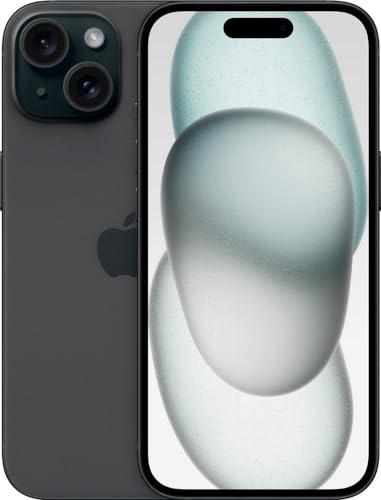
Apple iPhone 15, 128GB, Black – Unlocked (Renewed Premium) — An iPhone whose photographic reputation rests heavily on its processing pipeline: merging, tone mapping and colour decisions made per scene. Check price on Amazon.

Samsung Galaxy S24 Ultra Cell Phone, 256GB AI Smartphone, Unlocked Android, 200MP, 100x… — A flagship pairing large sensors with deep computational features, including high-resolution modes and advanced night processing. Check price on Amazon.
What Is Computational Photography: The Core Idea — Many Frames, One Photograph
A traditional camera exposes its sensor once per photograph, and that single capture must contain everything: the bright sky and the shadowed face, stillness in a moving scene. A phone instead begins capturing the moment you open the camera, buffering frames continuously. When you press the shutter, it already holds images from before the press, and it combines the best of many frames into your photograph.
Merging frames buys real physics. Averaging multiple captures cancels random noise while keeping true detail, so shadow areas clean up. Different exposures within the burst capture highlight and shadow detail no single exposure could hold. Slight hand movements between frames, normally a flaw, become data the software uses to reconstruct finer detail than one frame contains.
This is why phone photography improved so quickly in a decade while phone lenses barely changed: the gains came from processors and algorithms. It is also why two phones with similar hardware produce different photographs — their computational recipes, tuned by different teams with different tastes, diverge.
HDR and Dynamic Range
High dynamic range processing is the most familiar computational technique. A scene with bright sky and dark foreground exceeds what one exposure can record: expose for the sky and the foreground turns black; expose for the foreground and the sky burns white. The phone instead captures the scene at several exposures and merges them, keeping detail at both ends.
Done well, HDR is invisible — the photo simply looks like what your eyes saw, because your eyes also adapt across a scene. Done heavily, it produces the flat, over-brightened look people call the HDR effect, where shadows glow unnaturally and contrast dies. Modern phones tune this scene by scene, and their restraint has improved enormously; the best current pipelines are judged by how rarely you notice them.
Faces complicate HDR because skin must stay natural while the background balances. Phone pipelines now segment the scene — recognising sky, faces, foliage — and process each region according to its own rules. That semantic understanding, more than raw merging, is the frontier of computational photography today.
Night Modes: Computation’s Showpiece
Night mode is multi-frame merging pushed to its limit. In darkness a single phone exposure would be a noisy, blurred mess, because the small sensor gathers little light and a slow shutter invites hand shake. Instead the phone captures a rapid sequence of short exposures over one to several seconds, aligns them to cancel your hand movement, and averages them into a photograph with dramatically less noise and far more light than any single frame held.
The results rewrote expectations: handheld night photos that once required a tripod and a real camera now emerge from a phone in seconds. The technique has honest limits — moving subjects blur or ghost because they occupy different positions across the merged frames, and extremely dark scenes still defeat it — but within those limits it is the most impressive trick in modern photography.
Tripods still help: a mounted phone detects the stability and extends its capture, gathering even more light for cleaner results. Night mode also demonstrates computation’s dependency on hardware: a larger sensor and stabilisation give the algorithms better raw material, which is why flagship night photos outclass budget ones despite similar software ideas.
Portrait Mode and Simulated Depth
Large cameras blur backgrounds naturally because their big sensors and bright lenses produce shallow depth of field. A phone’s small sensor keeps almost everything in focus, so portrait mode simulates the effect: it builds a depth map of the scene — using multiple lenses, focus pixels or machine-learned estimation — then blurs the background progressively according to distance while keeping the subject sharp.
The simulation’s quality is a software contest. Hair, glasses, bicycle spokes and complex edges expose depth errors, and each generation handles them better. The advantage over the optical original is control: the blur amount can be adjusted after the photograph is taken, because the depth map is stored with the image — something no traditional camera can offer.
The same depth understanding powers relighting features, background replacement and focus adjustment after the shot. Whether these are photography or image-making is a genuine debate, but they flow from the same computational foundation: the phone records a scene model, not just a picture.
Common Misconceptions and Honest Limits
The first misconception is that computational photography is fakery that hardware purists should scorn. In truth, all digital photography involves processing; phones simply do more of it, more cleverly. A merged night photo records real light from the real scene, combined honestly. The techniques become questionable only when software invents detail that was never there, which is why zoom enhancement claims deserve scrutiny.
The second misconception is that computation makes hardware irrelevant. Algorithms cannot recover light that was never captured: a larger sensor’s frames contain more signal for the software to work with, better lenses deliver sharper input, and stabilisation steadies the burst. The best results come from strong hardware and strong software together, which is why flagship cameras pair both.
The real cost of computation is taste. Pipelines sharpen, saturate and smooth according to their makers’ preferences, occasionally producing waxy skin or crunchy detail. Photographers who dislike the house style can shoot raw on most capable phones, bypassing most processing — at the price of doing the developing work themselves, exactly as camera photographers always have.
Worked Example: One Night Street, Two Photographs
Stand on a lit street at night and take the same photograph twice: once in a raw or pro mode with minimal processing, once in the standard mode with night processing engaged. The raw frame shows what the hardware alone saw — dim, noisy in the shadows, the brightest signs blown to white, honest and rather discouraging. The processed photograph shows the street as you remember it: faces visible, signs readable, shadows full of detail, the scene’s mood intact.
Between those two images lies the entire computational pipeline at work. The phone captured a burst of frames at several exposures, aligned them against your hand’s movement, averaged them to cancel noise, merged the exposure range so signs and shadows both survived, recognised faces and protected their tones, identified the sky and kept it dark rather than grey, then applied sharpening and colour decisions tuned by its makers’ taste. Nothing in the final image was invented; everything in it was selected, combined and judged by software.
Repeat the experiment with a moving subject — a friend walking through the same street — and the limits appear in the same frame: the walker ghosts or softens where the merging could not reconcile their positions across the burst. One scene, two photographs, and you have seen both the power and the boundary of computational photography more clearly than any definition could teach them.
Computational Photography Beyond the Camera App
The same techniques have escaped the camera and colonised the rest of the phone’s imaging. Video calls clean and relight your face in real time. Document scanners detect page edges, correct perspective and boost contrast until a photographed page reads like a scan. Photo libraries search by content — finding every picture of a dog, a beach, a document — because the same scene-understanding models that guide capture also index the results.
Editing has been transformed most quietly. The adjustments that once required skill — selecting a sky to darken it, removing a photobomber, relighting a portrait — are becoming single taps powered by depth maps and segmentation created at capture time or computed afterwards. The photograph is turning into a scene description from which many renderings can be produced, and the argument about where photography ends and image-making begins will run for years.
For the everyday photographer the practical takeaway is simpler: learn what your phone’s pipeline does well, feed it good raw material — clean lens, steady hands, decent light where you can arrange it — and reach for raw capture when its taste disagrees with yours. Computation is a collaborator with strong opinions. The photographers who get the best from it are the ones who know when to let it drive and when to take the wheel.
The Ethics and Aesthetics of the Computed Image
Computational photography raises a question worth sitting with: when software merges a dozen frames, relights a face and decides the sky’s exact darkness, whose photograph is it? The practical answer — yours, made with a powerful tool — satisfies most people most of the time, and it should; photographers have always chosen lenses, films and developers that shaped their images, and the pipeline is simply the modern darkroom with stronger opinions.
The honest discomfort begins where computation crosses from combining what was captured to inventing what was not: enhancement that hallucinates detail in a zoomed crop, moon modes that raised public debate about how much of the famous photograph was the phone’s memory rather than its optics. The line that matters is disclosure and degree. Processing that selects and balances real captured light is photography’s oldest practice accelerated; synthesis that pastes in detail the scene never offered is image-making wearing photography’s clothes.
For everyday purposes the distinction rarely bites — family albums are not evidence — but it is worth knowing which side of it your phone’s features live on, especially for photographs that document: property condition, accidents, work completed, items sold. In those contexts, shoot with standard modes, keep the original files, and let the record stay a record.
Aesthetically, the computed look is becoming this era’s visual signature, as recognisable as the film grains and colour casts of previous decades. Future viewers will date our photographs by their merged dynamic range and perfect skies the way we date older ones by their flash falloff. There is no shame in the signature; every generation’s tools leave one.
Use the computation gratefully, understand it clearly, and keep the raw mode in your pocket for the photographs where you want the decisions — all of them — to be yours.
Common Mistakes to Avoid
- Believing night mode photos are single exposures. They are merged sequences. That is why moving subjects ghost in night shots and why a tripod improves them further.
- Assuming more processing always means better photos. Over-processing produces waxy skin and artificial sharpening. The best pipelines are the ones you do not notice.
- Thinking software makes sensor size pointless. Computation multiplies what hardware captures; it cannot invent light. Large sensors still win because their input frames are cleaner.
Pro Tips
- If a phone photo looks over-processed, try its raw or pro mode for important shots and develop the file yourself.
- For night mode, brace the phone against something solid even handheld — steadier frames merge into cleaner photographs.
- Portrait mode works best with separation between subject and background and a plain backdrop behind the head; help the depth map and it rewards you.
A Short History: How Computation Ate the Camera
Computational photography did not arrive with a manifesto; it accumulated. Early digital cameras already demosaiced colour and applied noise reduction, but the phone era changed the scale: sensors small enough to need help, processors powerful enough to give it, and a generation of researchers who treated the photograph as something computed from many measurements rather than captured in one. Each landmark feature — panoramic stitching, then high-dynamic-range merging, then portrait depth, then night modes — taught the industry that software could repeal constraints photographers had accepted for a century, and each success funded the next ambition.
Why phones, not cameras, led the revolution
Dedicated cameras had better sensors and less need, and their makers sold lenses and bodies to photographers who valued optical purity. Phones had weak hardware, vast sales, app ecosystems and annual processor leaps, so computation was simultaneously necessary and affordable. The result is a genuine inversion: the cheapest cameras in most homes now perform processing that flagship dedicated cameras only partially imitate, and the techniques are migrating upward into professional tools, where merging, subject recognition and computational raw formats appear in forms their makers would have dismissed a decade ago.
Understanding this history protects buyers from two errors: dismissing computational results as cheating, when every era of photography has manipulated its materials, from film choice to darkroom technique; and crediting computation with magic, when its limits — fine texture, transparent objects, truthful detail at distance — remain visible to anyone who looks closely. The mature view is that computation is a photographic material, like film stock or lens glass, with a character to learn and exploit rather than a trick to expose or a god to worship.
Inside the Pipeline: From Photons to the Photograph You See
Follow one ordinary photograph. Before you press the shutter, the camera is already capturing a rolling buffer of frames, so the moment you choose can reach slightly into the past. At capture, it records multiple exposures at different brightnesses and durations, aligns them despite your hand’s movement, merges them to extend dynamic range and suppress noise, identifies the scene and its subjects, applies colour and tone decisions informed by that recognition, sharpens selectively — faces differently from foliage, skies differently from stone — and presents a finished image within a second. Every stage is a decision, and different makers decide differently, which is why the same scene from two phones is two interpretations, not two accuracies.
Alignment, merging and the war on noise
Alignment is the unsung hero: frames must be registered to sub-pixel precision despite movement, or merging produces ghosts. Modern systems align in tiles, discard regions that moved too far — a passing pedestrian, wind-blown leaves — and fall back gracefully to fewer frames where the scene refuses to hold still. Noise reduction then operates with knowledge film never had: it knows which pixels came from which exposure, how the sensor behaves at this sensitivity, and what the scene probably contains, so it can clean shadows while preserving the texture that tells stone from plastic.
Sharpening and detail synthesis are where honesty gets interesting. Some texture in a phone photograph is reconstructed — plausibly inferred from multiple frames and learned patterns — rather than directly recorded. At ordinary sizes the distinction is invisible and the result delightful. At large enlargement, reconstructed texture can look waxy, repeated or painterly, which is why phone photographs reward being judged at their intended size. Knowing this is not disillusionment; it is literacy about the medium you are using, the same literacy film photographers had about grain.
When Computation Fails: A Field Guide to Artefacts
Learn the failure catalogue and you will diagnose your own photographs like a technician. Halos around buildings against bright skies betray local contrast pushed too far. Watercolour foliage and smeared fine text reveal noise reduction and reconstruction meeting detail they cannot resolve. Portrait edges that eat hair, glasses or chair backs show depth estimation guessing wrongly. Faces that look airbrushed under flat light are skin processing mistaking texture for blemish. Each artefact names its stage in the pipeline, and many can be avoided: reframe to exclude the extreme contrast, move closer instead of zooming, switch portrait mode off for complicated edges, or capture in raw when the scene is precious.
Motion, the eternal enemy
Multi-frame techniques assume a mostly stable world, and motion taxes them. A night mode asked to merge seconds of frames will render a walking subject as a ghost, a smear or a strangely sharp figure with blurred surroundings, depending on the system’s choices. The countermeasures are photographic, not technical: brace, choose the shorter night setting where offered, raise light if you can, or accept a single noisy frame with honest motion over a merged frame with dishonest stillness. Computation has moved the boundary of the possible; it has not abolished the photographer’s judgement about where the boundary currently sits.
Video multiplies every difficulty by thirty or sixty frames a second, which is why computational video lags computational stills: merging, depth and relighting must happen in real time, at full resolution, without overheating. The features that exist — stabilisation that borders on the uncanny, night video that sees in near darkness — are triumphs of that constraint, and their artefacts, when they come, arrive as warping horizons and breathing backgrounds that stills photographers never meet.
The Photographer’s New Craft: Shooting With the Pipeline
Skilled phone photographers do not fight the pipeline; they brief it. They hold still a breath longer than feels necessary, because the system rewards stability with cleaner merges. They expose for the subject they care about, knowing the merge will protect the highlights they sacrifice. They shoot a second frame when the first looks over-processed, because processing varies with the buffer’s contents. And they learn their particular phone’s taste — its skies, its skin, its night behaviour — the way film photographers learned a film stock, through volume and attention rather than through specifications.
Editing a computed photograph
Editing expectations change too. A computed photograph arrives finished, its dynamic range already spent wisely, so heavy editing finds less headroom than a raw file offers and can break the careful balances the pipeline struck. Gentle edits — a crop, a slight warmth shift, a modest contrast choice — respect the material. When a scene matters enough to demand full editing latitude, capture it in raw or a computational raw format where offered, accepting the file size and the work, and keep the finished computational version as insurance; professionals have always bracketed, and formats are just the modern bracket.
Archiving raises a quiet question: keep the version the phone computed, the raw data, or both? Storage argues for the finished files alone; posterity argues that future algorithms could re-compute your raw captures better than today’s did, an argument with genuine force given how fast the field moves. The pragmatic settlement most photographers reach: keep everything from the occasions that matter most, keep the finished files from the everyday, and revisit the decision when storage, not sentiment, forces it.
Truth, Memory and the Computed Family Album
The deepest questions computational photography raises are not technical. When a phone removes a passer-by, brightens a face, or reconstructs a moon’s detail from learned patterns, the photograph drifts from record towards illustration, and family albums — our evidence of how things were — drift with it. There is no single right line: removing a stranger from a holiday snap is a courtesy, while the same tools applied to journalism or evidence cross into deception. The line lives in the use, not the tool, and photographers serve their future selves by knowing which side of it any given photograph is meant to stand on.
Practical honesty for ordinary photographers
For personal photography, a workable ethic is simple: enhancements that restore what the eye saw are innocent; alterations that change what happened deserve a second thought and, when shared as records, a caption’s honesty. Keep originals of the photographs that document rather than decorate. Teach children, who will inherit both the albums and the tools, that a photograph is now an interpretation by default — not to make them cynical, but to make them literate, the way an earlier generation learned that darkrooms, too, could lie.
None of this diminishes the achievement. Computational photography has put low-light, high-range, portrait-capable cameras into billions of pockets and preserved moments that would simply not exist as photographs in any earlier era. The mature response is neither suspicion nor worship but understanding: know what your camera did to the light it saw, and you will make better photographs, keep honester records, and enjoy the small miracle of the thing with your eyes open.
Faces, Pets and the Recognition Layer
Modern pipelines do not merely process scenes; they recognise them. Face detection has matured into face understanding — eyes, skin, expression, even individual identity where the owner permits it — and the processing follows the recognition: exposure weighted to the face, focus locked to the eye, skin rendered by rules that differ from those applied to a wall. Pet and subject recognition extend the courtesy beyond humans. This is computation as attention, and it explains a modern miracle so routine it goes unremarked: a phone handed to a stranger produces a photograph in which the people are correctly exposed and focused, a result that required a skilled photographer for most of the medium’s history.
When recognition misreads the scene
Recognition fails characteristically, and the failures are worth learning. A face-like pattern in a poster or a crowd can steal exposure from your actual subject. Skin processing tuned for one complexion can misjudge another, a bias the industry has had to confront and correct with broader training and testing, with progress that is real and unfinished. A scene misclassified — food read as landscape, a document read as a portrait — receives the wrong recipe and looks subtly wrong in ways owners feel before they can name. The photographer’s countermeasure is the oldest one: look at the result, and when the machine’s interpretation disagrees with your eyes, override it — tap the subject, adjust the exposure, retake — because the recognition layer is an assistant with excellent averages and no knowledge of your intent.
Privacy lives in this layer too. Recognition that happens on the device stays in the home; recognition that travels to a server deserves a question. Modern phones increasingly process on-device precisely so that your library’s understanding of your family’s faces never leaves your pocket, and buyers who care should verify that their phone’s cleverness is local, because the most sophisticated computation is the kind that never phones home.
Light Itself, Recomputed: Flash, Screens and Relighting
Computation has begun to redesign illumination after the fact. Portrait lighting features re-light a face computationally, moving apparent light around the subject in ways that range from flattering to theatrical. Screen-based fill light brightens a selfie by turning the display into a soft source whose colour adapts to the scene. Flash photographs are balanced against ambient light by algorithms that decide, per region, how much of each source the final image should honour. Each technique trades physical truth for photographic intent, and each succeeds exactly when the photographer understands it as lighting — a creative decision — rather than as a filter applied by habit to every face.
The moon, the stars and the limits of synthesis
No feature has debated computation’s honesty more than enhanced moon and astro modes, which can synthesise detail the sensor barely recorded. The photographs are beautiful, the technique is genuinely clever, and the question they pose is the essential one of this entire subject: at what point does reconstruction stop describing the scene and start illustrating it? Reasonable photographers draw the line in different places — for a holiday album, anywhere pleasing; for a record, at the boundary of what the sensor saw. What matters is that the photographer knows a line exists and chooses where theirs runs, rather than discovering, years later, that their archive’s most striking images were partly imagined by a phone they no longer own.
Astro modes deserve their due within the debate: by aligning and stacking many long frames, they record real photons patiently and produce skies no single exposure from a phone could hold. That is computation as endurance, firmly on the record side of the line, and it exemplifies the technology at its best — not inventing the scene, but giving a small sensor the time a large one would not have needed.
What Computation Means for the Future Photographer
Skills migrate as tools change. The computational era devalues certain hard-won crafts — manual exposure for ordinary scenes is now mostly a creative preference — and raises the value of others: seeing light, anticipating moments, directing subjects, and curating ruthlessly from abundance. A generation learning photography now will think in sequences and selections where their grandparents thought in single frames, and their best work will exploit the medium’s nature rather than apologise for it. Teachers serve them best by teaching both literacies: what the camera did, and what the photographer must still do, because the second list remains gloriously long.
Advice for the sceptic and the enthusiast alike
To the sceptic who suspects the whole enterprise is trickery: shoot a difficult scene — a face in a dark room, a sunset street — on the best purely optical small camera you can borrow, then on a current phone, and compare the photographs as photographs. The phone’s image will likely serve the memory better, and photography has always ultimately been judged by that service. To the enthusiast who trusts the phone entirely: enlarge your best work, study its textures, learn where the pipeline invents, and shoot the precious scenes in raw as insurance. Between those two disciplines — respect for the result, literacy about the method — lies the mature computational photographer, which is to say, the modern one.
A Glossary for the Computational Age
Alignment: the registration of multiple frames to a common geometry so they can be merged without ghosting. Bracketing: capturing the same scene at several exposures or settings, the ancestor of all merging. Demosaicing: reconstructing full colour from the partial colour information each pixel records. Depth map: the machine’s estimate of distance for every part of a scene, the foundation of portrait blur and relighting. Dynamic range: the span of brightness a capture can hold, extended computationally beyond the sensor’s native span. Semantic processing: applying different rules to different recognised subjects — sky, skin, foliage — within one photograph.
More terms worth owning
Noise: random variation in a capture, worst in darkness, which merging and modelling suppress. Pixel binning: combining neighbouring pixels into larger effective ones, trading resolution for cleaner, brighter output. Raw: the minimally processed sensor data, preserved for the photographer’s own processing rather than the phone’s. Stacking: merging many frames of the same scene, used for night, astro and high-range work. Tone mapping: the art and algorithm of fitting a scene’s brightness range into a displayable photograph, where much of a phone’s house style lives. Own these words and the industry’s announcements become readable as engineering rather than incantation — which is, in the end, what understanding computational photography means.
Computational Photography and the Moving Image’s Future
The frontier has moved to video and to the live view itself. Phones now preview computationally — the screen shows not the sensor’s raw glimpse but a processed promise of the photograph — which changes the photographer’s relationship with the scene: you compose with the finished image already in view, for better and worse. Better, because what you see is honestly what you will get; worse, because the preview’s confidence can hide how much reconstruction stands between the light and the file. Cinematic modes, real-time depth and relighting in video, and merging that operates at frame rates are all early chapters of the same story: the still photograph’s revolution, rerun at thirty frames a second, against thermal and power limits that stills never faced.
What to watch, and what to ignore
Watch for improvements in the honest categories: truer texture, better handling of glass, water and other transparent subjects, consistency between the lenses of one phone, and processing that asks the photographer’s intent instead of assuming it. Ignore, as ever, the escalating counts and the staged demonstrations in impossible light that no scene in your life resembles. The technology’s trajectory is towards invisibility — computation so reliable it disappears from the photographer’s attention entirely — and the measure of each generation is not what it announces but what it stops making you think about. When night, range and portraits all simply work, the revolution will be complete, and photographers will be free to argue about photographs again, which was always the better argument.
Teaching With Computational Photography: What Beginners Should Still Learn
Educators face a genuine puzzle: beginners whose phones rescue nearly every exposure may never learn why photographs fail, until they meet the scene the rescue cannot save. The curriculum that serves them teaches the old fundamentals as literacy rather than as manual labour — light and its direction, the trade-offs inside every capture, the reading of a scene’s brightness range — and then teaches the pipeline as the powerful, fallible interpreter it is. A beginner who understands both can direct the phone when it matters and relax when it does not, which is precisely the skill set of the mature photographer in any era: knowing which decisions the machine may keep, and which ones are still, gloriously, yours.
An exercise in seeing the computation
Set yourself one instructive hour: photograph a single difficult scene — a face against a bright window, a night street — in every mode your phone offers, including raw if it can, and compare the results slowly, at size. Note what each mode assumed, what it sacrificed, what it invented. That hour teaches more about your camera’s character than a year of casual shooting, because it isolates the interpreter’s habits from the scene’s variety. Repeat it whenever a major update changes your phone’s processing, and you will never be surprised by your own camera at a moment that matters.
The Invitation Inside the Technology
End with the opportunity rather than the caveat. Computational photography has quietly handed every phone owner a darkroom staffed by tireless experts, working in the second after every shutter press, asking nothing but that you point the camera at things that matter. The photographers who flourish in this era will be those who accept the staff’s help with gratitude and supervision in equal measure — who shoot more, fear less, check the results with literate eyes, and spend the time the machines saved them on the irreducibly human work: being present, seeing clearly, and choosing the moments worth keeping. The computation will keep improving. So, if you let it teach you, will the eye behind it.
One Photograph, Revisited
Return, finally, to the night street from earlier in this guide: one scene, two photographs, the single honest frame and the computed one, each with its truth and its inventions. A decade ago only one of those photographs could exist. That both exist now, in a pocket, for everyone, is the real headline of computational photography — not that machines learned to see, but that seeing, in difficult light and impossible contrast, stopped being a privilege of expensive equipment and patient expertise. What you do with that inheritance is the part no algorithm can compute, and it is, fortunately, the part that was always the photography.
Related Guides
- best camera phones for photography
- best phones for camera and video
- best camera phones under 500
- best smartphones for photography
- smartphone camera megapixels explained
- phone camera sensor size explained
- how to set up for photography a camera phone
- how to fix blurry phone photos
Frequently Asked Questions
Is computational photography used in every phone photo?
Essentially yes, on modern phones. Even a basic snapshot involves merging frames for dynamic range, noise reduction and sharpening, plus scene recognition adjusting the recipe. The amount varies: a bright daylight photo needs little help, while night and portrait modes are computation at full stretch. Shooting in a raw mode reduces the processing to near the minimum, which is why raw files look flat until you develop them.
Why do phone photos sometimes look over-processed?
Because the pipeline’s taste is set by its maker and applied automatically: sharpening to make detail pop on small screens, saturation for vibrancy, smoothing for flattering skin. In difficult scenes the algorithms can push too far, producing crunchy textures or waxy faces. Each generation tunes this more subtly, and phones increasingly offer photographic styles so you can choose a gentler rendering as your default.
Can computational photography match a real camera?
For many scenes and screen-sized viewing, it already does or exceeds what a camera produces without editing, because the camera’s single exposure plays by stricter rules. The camera pulls ahead where physics dominates: very low light with movement, long optical zoom, large prints, and shallow depth of field that is optically real. Computation narrows the hardware gap brilliantly but does not repeal it.
What is the difference between HDR and night mode?
Both merge multiple frames, but they solve different problems. HDR merges different exposures to fit a scene’s bright and dark extremes into one image, and works in any light. Night mode merges many similar short exposures over seconds to gather more total light and cancel noise in darkness. A night scene with bright signs may use both ideas together, which is why modern pipelines blend techniques rather than running them as separate features.
Does computational photography work for video too?
Increasingly, yes. Phones apply per-frame processing to video — stabilisation combining optical and electronic methods, HDR video merging exposure information, noise reduction and subject tracking — all in real time, which is computationally far harder than stills. Cinematic modes simulate depth blur in video using the same depth mapping as portrait photos. Video is where the next computational battles are being fought, and a major reason flagship processors matter.
Can I turn computational photography off?
Mostly, by shooting in raw or pro modes, which save minimally processed files you develop yourself in an editing app. You cannot remove every trace — the sensor data itself passes through basic conversion — but raw shooting hands you the unseasoned ingredients. Many photographers compromise: processed photos for everyday life, raw for the scenes that matter, letting each method do what it does best.
Do professional cameras use computational photography too?
Increasingly, yes, though more conservatively. Subject-detecting autofocus, in-camera merging for dynamic range, computational raw formats and sophisticated noise reduction have all crossed from phones into professional bodies. The difference is one of degree and philosophy: professional tools tend to offer the photographer more control over, and more ability to bypass, the computation, reflecting their users’ demand for predictable files.
Why do my phone photos sometimes look different a moment after taking them?
Because you are watching the pipeline finish. The first image shown is a quick preview from the capture buffer; the phone then completes its merging and processing and replaces it with the finished photograph, which may differ in brightness, detail and colour. On some phones you can watch night and portrait shots visibly settle. It is not a fault — it is the computation, briefly visible at work.
Will computational photography keep improving at the same pace?
The easy victories — night modes, dynamic range, basic portrait depth — are won, so progress now comes in harder territory: truthful fine detail, transparent and reflective subjects, consistent video computation and processing that respects the photographer’s intent. Expect steadier, subtler gains rather than another single leap, and expect your own technique to matter more, not less, as the tools equalise.