kajuandouglas.com is reader-supported. When you buy through links on our site, we may earn an affiliate commission.
Where to Buy
Yes, the word is misspelled — and that turns out to be the most honest thing about this search. People type “youube” when they are at the very beginning: no channel yet, no niche chosen, just a half-formed intention and a phone in one hand. So this guide answers the beginner’s actual question — what are the best cameras for youube when you have not decided anything else yet? — rather than the specialist’s. The picks below are ranked for the undecided: cameras that serve several kinds of first channel gracefully, forgive the experiments of the first six months, and stay useful once the experiments reveal what the channel actually is.
That framing matters because this site already carries narrower guides: one about launching a channel as a creative practice, one about gameplay capture chains, one about music video production. This one is the front door. It assumes no format, no crew, no studio, and no certainty beyond the wish to start — and it treats that uncertainty as a design brief rather than a deficiency. A camera for the undecided must be a good guest in many rooms: the desk, the kitchen, the street, the borrowed corner of a friend’s flat.
The six picks divide into three temperaments. Two are pocketable companions that go where the beginner’s life already goes. Two are mirrorless bodies that quietly contain several future channels inside one purchase. One is a fixed-lens simplifier for the beginner whose real enemy is decision fatigue. And one is a patient long-form body for the beginner who already suspects their videos will be conversations rather than spectacles. Between them, every plausible first channel has a home.
The judging standard was the beginner’s real first season: filming in unrenovated rooms, learning exposure and editing simultaneously, publishing to an audience of eleven people, and deciding — somewhere around video fifteen — whether this is a hobby, a habit, or the beginning of a livelihood. Cameras that carry a person kindly through that season outrank cameras that merely impress in a showroom.
Key Takeaways
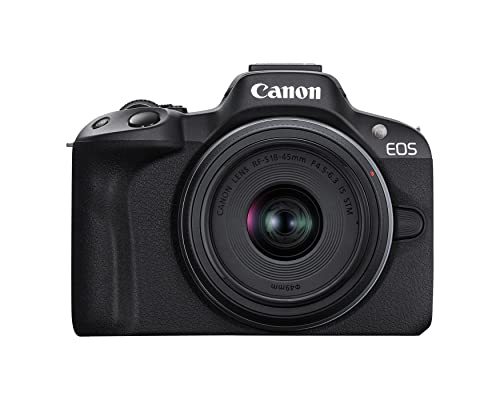
- The Canon EOS R50 is the safest first answer: kind colour, guided menus, and a lens mount that hides several future channels.
- The DJI Osmo Pocket 3 suits beginners whose lives move — its gimbal makes everyday footage look deliberate from day one.
- The Sony ZV-1F removes decisions entirely; the beginner who dreads settings should start here and simply film.
- The Sony ZV-E10 II is the choice when the beginner already suspects products, reviews, or tutorials are coming.
- The Canon PowerShot G7 X Mark III is the pocket stills-and-video companion for a life documented as it happens.
- The Nikon Z30 serves the talkers: podcasts, lessons, and long conversations filmed calmly at a desk.
In this guide
Quick Picks
| Badge | Pick | Why it stands out |
|---|---|---|
| Best All-Round First Camera | Canon EOS R50 | Forgiving colour and guidance, with a mount that grows into any niche. |
| Best for Life in Motion | DJI Osmo Pocket 3 | Gimbal-smooth everyday footage from a device that is always in the pocket. |
| Best No-Decisions Starter | Sony ZV-1F | A fixed wide lens and automatic care — filming starts the day it arrives. |
| Best for Future Reviewers | Sony ZV-E10 II | Product focus and a vast lens shelf for the channel that starts showing things. |
| Best Pocket Companion | Canon PowerShot G7 X Mark III | A pocketable camera that shoots the day and films it, too. |
| Best for Talkers | Nikon Z30 | Calm long-recording manners for podcasts, lessons, and conversations. |
How We Chose These Picks
Beginner guides usually rank cameras by ceiling — the finest image the body can produce in expert hands. This one ranked by floor: the worst footage each camera produces in a beginner’s hands, in a beginner’s room, on a beginner’s third tired evening of filming. The floor is what a new channel actually publishes for its first fifty videos, and the picks below are the ones whose floors are highest: automatic modes that behave, colour that flatters without grading, focus that forgives.
The second criterion was reversibility. A beginner’s first camera should not punish the discovery that the channel is something else. Bodies with lens mounts reverse gracefully — the travel body becomes the desk body with a different lens — and the fixed-purpose picks were chosen to retire into honourable second roles rather than into a drawer. Every pick here has a plausible job in year two, which is more than most first purchases can claim.
The third criterion was teaching. Some cameras instruct their owners as a side effect of use: menus that explain, modes that demonstrate, results that show cause and effect clearly enough for the beginner to learn from. Others conceal everything behind automation until the day the automation fails and the owner knows nothing. A first camera is also a first teacher, and this guide hired teachers.
What Does a Beginner Actually Need Before Choosing a Niche?
Footage of their own life, in quantity, with minimal friction. The niche is rarely chosen at a desk; it is discovered in the edit, when the beginner notices which filming days felt like play and which felt like homework. A camera for the undecided phase must therefore be present for ordinary days — small enough to carry, quick enough to start, tolerant enough of bad light and worse planning to return something usable from an unplanned afternoon. The picks were weighed on their presence in a life before their performance in a studio.
Quantity has a quality of its own at this stage. The beginner who films forty short experiments learns their on-camera self — voice, face, pace, the topics that light them up — faster than the beginner who produces four polished attempts. Cameras that lower the cost per experiment, in setup time and in post-production, accelerate the discovery that the whole first season exists to make. This is why simple and pocketable picks stand beside mirrorless bodies here without any sense of hierarchy.
There is also a social reality to honour: most beginners film around jobs, families, and roommates. The camera must work in stolen hours, in shared rooms, at volumes and light levels that respect a household. Compact, quiet, quick equipment respects the life around the channel — and a channel that respects the life around it tends to be allowed to continue, which is the first season’s only real success criterion.
How Much Should a First Camera Ask You to Learn?
Exactly one layer at a time. The healthy sequence is: framing and starting/stopping first; light second; focus and exposure third; lenses, colour, and the deeper craft last, as the channel’s questions demand them. A good beginner camera exposes that sequence gracefully — automatic everything on day one, one manual control revealed at a time, no punishment for staying in the shallows while the channel finds its feet. The picks below were partly ranked on the kindness of that staircase.
Beware the two failure shapes. The first is the camera that teaches nothing because it permits nothing: the beginner stays a passenger, and the day the format needs a deliberate choice — a dark room, a product close-up, a second person in frame — the passenger is stranded. The second is the camera that demands everything immediately, converting the first month into a course the beginner never enrolled in. Between those shapes sits the honest beginner instrument, and this guide’s mirrorless picks were chosen for sitting there.
Learning also happens between cameras, which is a reason to value the platforms. Skills compound when the second lens, the microphone, and the light all attach to habits the first body taught. A beginner choosing a mount is choosing a curriculum — the sequence of future purchases that will teach the next lessons in the right order. Read the picks below as curricula wearing camera names, and the right one will feel less like shopping and more like enrolling.
Which of the Best Cameras for Youube Fits a Beginner Who Has Not Chosen Yet?

Canon EOS R50 — Best All-Round First Camera
Ask a room of working creators what a beginner should buy and the R50 is the answer that starts arguments least — not because it is the finest camera here, but because it is the hardest to regret. Its guided menus translate the body’s settings into plain intentions; its colour renders a beginner’s face kindly in the unflattering light of real rooms; its autofocus minds the subject while the beginner minds the far harder problem of being interesting on camera for the first time. Regret-proofing is a genuine feature at this stage, because the beginner’s scarcest resource is confidence, and buyer’s remorse spends it.
What the R50 quietly contains is optionality. The RF mount means the same body is a desk camera with one lens, a travel camera with another, a low-light evening camera with a fast prime — the beginner buys one body and several possible channels, then lets the first season reveal which channel is real. That containment is why it leads this guide: the undecided buyer is not purchasing a camera so much as purchasing the right to decide later, with evidence.
Picture the third month. The beginner has filmed cooking attempts, a desk essay, two walks, and a product unboxing, and one of those formats made the filming day feel short. Whatever it was, the R50 is already adequate to it — and the next purchase, a lens or a microphone aimed at that format, lands on a body that will not need replacing. The camera absorbed the uncertainty so the creator did not have to.
Its limits are the familiar class compromises, honestly stated: plan on a spare battery for long days, expect the kit lens to teach rather than dazzle, and know that handheld walking footage leans on technique. None of these touches the beginner’s core experience, which is why the R50 is the default recommendation this guide gives to anyone who asks the question in its misspelled, undecided, entirely human form.
- Sensor: APS-C behind Canon’s RF lens mount
- Handling: guided menus written for first-time owners
- Colour: warm, flattering skin tones in home light
- Focus: face and eye detection while you present
- Live use: webcam behaviour for streams and calls
Strengths
- The hardest first purchase to regret
- Several future channels inside one body
- Teaches as it goes, in plain language
Trade-offs
- Spare battery belongs in the first order
- Kit lens is a starting point, not a destination
- Walking footage needs a steady hand
Best for: beginners who want one safe body while the niche reveals itself. Not suited for: creators who already know they need deep specialist tools on day one.

DJI Osmo Pocket 3 — Best for Life in Motion
Some beginners do not have a room to film in; they have a life that happens outdoors, between places, in motion. For them the Pocket 3 is not a gadget but the enabling condition: a mechanical gimbal in a pocket, waking instantly, smoothing the walk to the market and the climb to the viewpoint into footage that looks intentional. The beginner’s early enemy is footage so shaky it feels accidental; the gimbal deletes that enemy from the first day, and what remains is the beginner’s actual eye, which is the thing worth developing.
Face tracking deserves its mention for the solo reality of beginner production. There is no crew, no one to hold the frame while the creator walks and talks — so the camera does it, keeping the presenter centred through the ordinary choreography of a day out. Set it on a café table and it becomes a patient tripod operator for the talking segment; pick it up and it is walking beside you again. That dual citizenship, tripod and companion, is rare at any price.
Its rotating screen quietly serves the platform’s two shapes — the horizontal main video and the vertical short — from the same walk, which matters because a beginner’s discovery often happens in the shorts first. One outing, two formats, no rebuild: the Pocket 3 respects the economics of a one-person channel’s afternoon better than any body in this guide.
The boundaries are physical and should be respected rather than resented: a fixed lens with one framing personality, a small sensor that concedes the darkest interiors, and a gimbal mechanism that asks not to be dropped on stone. A beginner whose life is mostly a desk should look at the desk picks; a beginner whose life is a route should start walking with this one.
- Stabilisation: three-axis mechanical gimbal
- Tracking: follows a solo presenter’s face
- Screen: rotates for horizontal and vertical work
- Audio: pairs directly with DJI wireless microphones
- Carry: pocketable, wakes instantly, all-day light
Strengths
- Everyday footage looks deliberate immediately
- A one-person crew for walks and trips
- Two platform shapes from a single outing
Trade-offs
- One lens, one framing personality
- Dark interiors exceed the small sensor
- The gimbal wants basic physical care
Best for: beginners whose material is movement, travel, and daily life. Not suited for: desk-bound formats needing lenses and controlled depth.

Sony ZV-1F — Best No-Decisions Starter
There is a beginner this guide thinks about often: the one who has watched camera comparisons for a month and filmed nothing. The ZV-1F is prescribed for that condition. Its lens is fixed and wide, its focus care is automatic, its screen faces the speaker, and its entire interface asks almost nothing. The therapeutic logic is sound — when the equipment stops offering decisions, the only remaining variable is the video itself, and many a stalled channel has been cured by discovering that the idea was ready all along.
The wide lens is composed for the geography beginners actually inhabit: a face at arm’s length with a life visible behind it. Bedrooms, kitchens, market stalls, the passenger seat — the frame takes the context in rather than cropping it out, and context is what early audiences bond with. Product-showcase focus handles the held-up object of a first haul or review, and the files come out bright and finished-looking, sparing a beginner the grading step they have not learned yet.
The small socket on its side is the camera’s promise of a future: a microphone input. Sound is the first upgrade every channel needs, and the ZV-1F accepts it without demanding a new body — the beginner’s second purchase plugs into their first. Few starter cameras think that far ahead; this one was clearly designed by people who wanted it to be a beginning rather than a cul-de-sac.
Its ceiling should be bought with open eyes: no lens will ever attach, evenings are handled willingly rather than brilliantly, and a channel that discovers cinematic ambitions will outgrow it. It then retires into the second-camera and everyday-carry roles it remains genuinely good at. As a first step for the decision-weary, it has no equal in this list.
- Lens: fixed and wide, composed for arm’s length
- Handling: automatic focus care, minimal menus
- Audio: microphone input for the essential upgrade
- Files: bright, finished-looking, grade-free
- Role: the cure for comparison paralysis
Strengths
- Filming begins the day it arrives
- Context-rich framing for real rooms
- An audio future in a simple body
Trade-offs
- No lens growth, by design
- Low light is willing, not brilliant
- Ambitious formats will outgrow it
Best for: beginners paralysed by choice who need to film this week. Not suited for: creators planning lenses, monitoring, and production growth now.

Sony ZV-E10 II — Best for Future Reviewers
Some beginners are undecided about everything except one suspicion: that objects will be involved. The haul, the unboxing, the tutorial with parts held to the lens, the review channel in embryo. The ZV-E10 II is built for that suspicion. Its signature behaviour — holding focus on a face, then gliding smoothly to a product raised toward the camera, then returning — is the native grammar of showing things on video, and a beginner whose ideas keep involving their hands will feel the body agreeing with them from the first session.
Beneath the trick sits the deepest platform in this guide. Sony’s E-mount shelf holds a lens for every format the beginner might discover, and the body’s audio pathway — microphone input, headphone monitoring, a digital shoe for cable-free microphones — matures through every stage of a channel’s sound education. Buying it is buying the second year in advance, at the cost of a slightly steeper first month.
That first month deserves an honest sentence: the menus reward study, the grip is compact, and there is no in-body stabilisation to forgive a walking shot. A beginner who wants the gentlest possible landing should take the R50 above. A beginner willing to trade a weekend of learning for years of headroom — the kind who reads manuals for pleasure — will find this the most future-proof seat in the guide.
Judge the trade by trajectory rather than by day one. The ZV-E10 II is rarely the easiest camera a beginner owns; it is very often the camera they are still using, grown into and grown fond of, when the channel turns professional. For the future reviewer, that is the whole argument.
- Sensor: APS-C, interchangeable E-mount lenses
- Focus: face tracking with product-showcase shifts
- Audio: input, monitoring, and digital shoe
- Screen: fully articulating for solo filming
- Catalogue: the deepest lens shelf in this guide
Strengths
- Showing things is its home grammar
- Years of growth without a body change
- Audio pathway matures with the channel
Trade-offs
- Menus reward an evening’s study
- Walking footage needs technique or support
- Compact grip for larger hands
Best for: beginners who suspect reviews, tutorials, and products are coming. Not suited for: beginners who want the softest possible first month.

Canon PowerShot G7 X Mark III — Best Pocket Companion
The G7 X Mark III belongs to an older, wiser idea of a beginner camera: the one that is simply there. It rides in a jacket pocket, shoots the photograph and the video with equal citizenship, and asks so little ceremony that filming a moment feels like noticing it. Beginners underestimate how much of a first channel is made of noticed moments — the market, the meal, the friend’s joke, the light on a street — and a camera that converts noticing into footage without a production meeting is a genuine creative instrument.
Its zoom lens is the quiet teacher in the design. Where fixed-lens picks compose with the feet, the G7 X lets a beginner discover framing from where they stand: wide for the room, tight for the detail, the whole vocabulary of shots available to someone who has not yet learned to move like a camera operator. Many creators’ visual instincts were formed on exactly this kind of lens, and the instincts transfer to every bigger camera that follows.
Live and vertical duties extend its usefulness into the platform’s modern shapes: it streams, it shoots the short format, it handles the community update filmed on a whim. A beginner’s channel is a small media operation with many small jobs, and the G7 X’s talent is being adequate-to-charming at nearly all of them while fitting in a coat.
Name the limits plainly: the pocket format concedes low-light reach and lens growth to the mirrorless picks, and long formal recording sessions are not its design centre. It is a companion, not a studio. Beginners whose channel will be lived before it is produced will find it the most natural camera in this guide to actually own.
- Lens: pocketable zoom for framing from where you stand
- Citizenship: stills and video in equal measure
- Live use: streaming and vertical formats supported
- Carry: jacket-pocket size, ceremony-free start
- Colour: Canon’s flattering rendering of faces
Strengths
- Present for the moments that make a channel
- Zoom teaches framing to a stationary beginner
- Many small channel jobs in one pocket
Trade-offs
- No lens mount to grow on
- Low light concedes to bigger sensors
- Long formal sessions are not its centre
Best for: beginners documenting a life as it happens, stills and video together. Not suited for: studio formats or channels planning a lens collection.

Nikon Z30 — Best for Talkers
Every beginner population contains the talkers: the ones whose video ideas arrive as conversations — the podcast with a friend, the lesson taught to camera, the commentary that thinks aloud for an hour. The Z30 was designed with their sessions in its brief. A tally lamp that confirms recording at a glance, a screen that flips to face the speaker, webcam fluency for the live versions of the same shows, and recording manners calm enough for the two-hour conversation — the body behaves like it was briefed by people who record talk for a living.
Nikon’s colour is part of the talker’s case. Long conversations are watched on faces, and the Z30 renders faces naturally and patiently, without the restless exposure behaviour that makes an hour of talk tiring to watch. Paired with the microphone input — talk channels live and die by voice — it forms the complete desk instrument for the genre at a cost that leaves the budget where talk channels need it: on the microphone, the light, and the chair.
Its value arithmetic deserves emphasis because beginners in this genre routinely invert it, buying a cinematic body and a hopeless microphone. The Z30’s honest pricing is a form of guidance: it refuses to consume the audio budget, and a talk channel built on that refusal will sound professional months before it looks expensive — which is the correct order, since talk audiences forgive an ordinary image on a clear voice indefinitely.
The trade-offs are the platform’s known ones: a narrower lens shelf than its Sony and Canon rivals, stabilisation that leans on the lens, and no ambitions toward action or cinema. For the beginner whose channel is a voice and a face in honest conversation, those are not compromises but correct priorities, factory-fitted.
- Sensor: APS-C behind Nikon’s Z mount
- Design: tally lamp, flip screen, creator layout
- Recording: patient manners for long conversations
- Audio: microphone input for the essential upgrade
- Value: leaves the budget for sound and light
Strengths
- Long talk sessions handled calmly
- Natural faces across an hour of conversation
- Honest pricing that protects the audio budget
Trade-offs
- Narrower lens shelf than its rivals
- Stabilisation is lens-dependent
- Not built for motion or cinema formats
Best for: beginner podcasters, teachers, and long-form talkers. Not suited for: travel, action, or visually ambitious formats.
Beginner Cameras Compared: The Table
| Pick | Beginner’s situation | Growth path | Defining virtue |
|---|---|---|---|
| Canon EOS R50 | Undecided, wants safety | RF lens staircase | Regret-proof versatility |
| DJI Osmo Pocket 3 | Life happens outdoors | DJI audio ecosystem | Movement made smooth |
| Sony ZV-1F | Paralysed by choices | Microphone first | Zero decisions |
| Sony ZV-E10 II | Suspects products are coming | E-mount and audio depth | Future-proof headroom |
| Canon PowerShot G7 X Mark III | Documents life as it happens | Accessories and habit | Always in the pocket |
| Nikon Z30 | Ideas arrive as conversations | Z mount value | Calm endurance |
Read the middle column as a personality test rather than a specification sheet. Each row names a beginner, not a camera: the cautious, the mobile, the overwhelmed, the ambitious, the observant, the talkative. The correct purchase is the row whose description made you nod before you checked its features — because at the beginner stage, fit to temperament outproduces fit to specification every single time.
The growth column then referees between close calls. Prefer the pick whose next purchase is obvious and small — a microphone, a lens, a light — because a beginner’s channel grows by a staircase of small certainties, and a platform that makes the next step legible keeps the creator climbing instead of re-shopping.
How Should a Beginner Divide a First Budget Between Camera, Sound, and Light?
In the order the audience perceives them: the voice is met first, the light shapes the face they watch, and the camera’s refinements arrive a distant third in a viewer’s actual experience. A practical division for a modest first budget is to let the camera take roughly half, reserve a serious share for the microphone, and keep a remainder for one soft light and the unglamorous consumables — cards, a spare battery, a small tripod. Beginners who invert this, spending everything on the body, produce the classic first-channel sound: a beautiful image narrated from inside a cave.
Sequence matters as much as division. Buy the camera and microphone together, because they define the product; add the light when the first month’s footage names its absence — it will, usually in the form of evening shoots that look tired; add lenses only against a repeated frustration that has earned a diagnosis. Each purchase then answers a question the channel has actually asked, and the resulting kit fits the channel like a biography rather than a catalogue.
Keep a small reserve untouched. The first season always presents an unbudgeted necessity — the mount for the awkward room, the longer cable, the second card the day the first one fills mid-session. A reserve converts those moments from crises into errands, and a beginner’s morale, which is the channel’s true capital, survives errands far better than crises.
What Should the First Ten Videos Teach You?
They are not content; they are reconnaissance. The first ten exist to teach the beginner their on-camera self — which topics make them talk faster, which formats make the filming day feel short, which editing tasks they secretly enjoy. A camera’s job across those ten is to stay out of the lesson: start fast, behave identically, return files that need no rescue. Every pick in this guide was chosen to be forgettable in exactly that way.
Deliberately vary the ten. A desk piece, a walk, a conversation, a demonstration, a story told to the lens — the variety is the curriculum, because the niche is hiding inside it. Beginners who film ten versions of the same guess learn only whether the guess was right; beginners who film ten different guesses learn what they are. The cameras here were picked to make variety cheap: several serve two or three of those formats natively, and the pocketable ones make the outdoor experiments nearly free.
Judge the ten by completion, not performance. Views at this stage measure the platform’s indifference, not the creator’s worth; the metrics that matter are whether filming got easier, whether the setup ritual shrank, and whether video ten was started with less dread than video one. A beginner whose answers trend the right way owns a channel in embryo, whatever the view counts say — and owns, in the picks above, a camera that will not be the reason it stalls.
What Mistakes Do Beginners Make When Buying Their First Camera?
Buying for the channel they fantasise about, rather than the one they will film this month, leads the list. The fantasy channel has a studio, a crew, and cinematic patience; the real one has a bedroom, a lunch break, and a phone’s worth of free storage. Equipment bought for the fantasy gathers dust in exact proportion to its ambition, while the humble camera that serves the real month gets used daily. Buy for the month; let the channel’s earnings buy for the fantasy later, aimed by experience.
The second mistake is comparison as a substitute for filming. Specifications are legible and filming is frightening, so the beginner researches for a season and publishes nothing, arriving at the purchase exhausted and no more certain. The antidote is a deadline: choose from a shortlist — this guide is one — within a week, then let the first ten videos, not the eleventh comparison video, deliver the verdict. A camera in hand teaches more in an afternoon than a spreadsheet teaches in a month.
The third is neglecting the unglamorous half of the kit: the microphone deferred, the light postponed, the tripod borrowed from a stack of books until it falls mid-take. Beginners forgive themselves these economies because the camera feels like the purchase; audiences do not forgive them, because the audience experiences the economies directly as bad sound and tired light. Split the budget the way the earlier section prescribes, and the first channel will sound older than it is — the cheapest form of credibility available.
How Do You Know When the Beginner Camera Has Done Its Job?
When its limitations start arriving as sentences with subjects. Not “my videos look bad” but “my evening interviews need a lens that drinks more light”; not “I should upgrade” but “the second angle my demonstrations now require cannot be this body.” Named limitations are diagnoses, and a camera that has carried a channel to the point of articulate diagnoses has done everything a first camera exists to do.
There is a quieter milestone worth naming, too: the first video in which the beginner stops performing for the camera and starts talking through it. Equipment cannot schedule that moment, but the right equipment refuses to delay it — no settings anxiety interrupting the thought, no focus drama stealing the sentence, no ritual so elaborate that the creator arrives at the lens already tired. Every pick in this guide was auditioned against that milestone, and the ones that made it arrive earliest are the ones ranked highest here.
The graduation is usually an addition before it is a replacement. The beginner body becomes the second angle, the everyday carry, the webcam for live sessions — the layered kit grows around it. This is the final test the picks in this guide were set: each had to have a plausible second career, because a first camera that becomes worthless at graduation was a rental, not an investment, and beginners deserve investments.
How Do the Main Beginner Formats Map Onto These Cameras?
A format is a promise repeated weekly, and each beginner format has a natural instrument in this guide. The desk essay and the tutorial live on the mirrorless bodies or, for the talkers, the Z30 — formats of a seated face, a controlled frame, and an hour of material at a time. The daily-life and travel formats live on the Pocket 3 and the G7 X, where the camera’s presence in a pocket matters more than its performance on a tripod. The review and unboxing formats gravitate to the ZV-E10 II’s product grammar. Mapping honestly — choosing the format you will actually repeat, then the row that serves it — prevents the classic beginner purchase: a superb camera aimed at a format its owner abandons by March.
Hybrid beginners, whose ideas straddle two formats, should buy for the format with the higher filming frequency and borrow the other’s virtues. The desk-heavy creator who walks once a month is better served by the R50 and a steady hand than by a gimbal that idles; the walker who talks to camera weekly is better served by the Pocket 3’s table mode than by a mirrorless body that stays home. Frequency is the tiebreaker because equipment earns its keep per use, and the beginner’s budget cannot afford passengers.
Formats also migrate, and the migration should be planned rather than feared. The desk channel discovers its audience loves the outdoor episodes; the travel channel settles into studio essays. Platforms with lens mounts absorb migration inside one purchase, while the fixed picks retire into second roles with grace. A beginner who buys with one eye on the migration owns a kit that compounds; a beginner who buys a monument to the first guess owns a very good camera for a channel that no longer exists.
What Does Filming in a Real Home Do to Camera Choice?
Real homes are the beginner’s studio, and they impose a specific physics: mixed light from windows and ceiling bulbs, rooms too small for the textbook camera distance, backgrounds that cannot be renovated for a hobby, and other people whose lives continue off-camera. Cameras that forgive that physics — wide lenses for small rooms, colour that survives mixed light, autofocus that finds a face without a lighting rig — are not merely convenient; they are the difference between a channel that films in the home it has and a channel postponed until a home it may never rent.
Small rooms deserve their own sentence, because they eliminate more beginner plans than any specification. A lens that frames a face and a life from a metre away turns a box room into a set; a lens that needs three metres turns it into an apology. The wide-leaning picks in this guide — the fixed lens of the ZV-1F, the kit zooms at their wide ends, the pocket cameras — were partly chosen as small-room instruments, and beginners filming between a bed and a bookshelf should weight that heavily.
Household diplomacy is the third physics. A camera that sets up in four minutes and packs away in two respects the people who share the home; a production that annexes the kitchen for a weekend does not. Beginners consistently underestimate how much a channel’s survival depends on the goodwill of the people off-camera, and compact, quick, quiet equipment is diplomacy in physical form.
How Should a Beginner Think About Vertical Video and Shorts?
As a second front door, not as a lesser format. Shorts are where many beginner channels meet their first strangers, and the camera’s relationship to vertical framing therefore matters earlier than beginners expect. Rotating screens, vertical-friendly bodies, and pocket cameras that shoot both shapes from one outing all lower the cost of feeding the short front door from the same material as the long one — which is the only sustainable way a one-person channel feeds two formats at all.
The craft point is to film with both crops in mind rather than to crop in desperation later. A subject centred with headroom survives the vertical cut; a wide cinematic composition dies by it. Beginners who frame a little more centrally and a little less tightly than instinct suggests will find their sessions yield both a video and its trailer, and the trailer is what recruits the video’s audience.
None of this requires a second camera, and buying one for shorts alone is a beginner extravagance this guide does not endorse. It requires a first camera chosen with the second shape in view — which is precisely how the picks above were screened, and why the rotating screens and dual-citizenship bodies rank where they do.
What Habits Make Any Beginner Camera Look Better?
Face the light instead of fighting it: a beginner who turns their chair toward the window has upgraded every camera in this guide simultaneously, for free. Clean the lens — the pocket cameras especially live among lint and fingerprints, and a weekly wipe is the cheapest image-quality intervention in all of video. Raise the camera to eye level on books or a shelf, because the angle of a laptop on a desk flatters no one and teaches the audience to feel looked-down-upon. None of these habits costs money, and together they are worth more than the price difference between any two rows of the table above.
The second habit is sameness. Film in the same place, with the same frame, at similar hours, until the setup is furniture — then spend the freed attention on the only thing the audience actually came for, which is what you say and how you say it. Beginners believe variety of backdrop signals effort; audiences experience sameness of frame as professionalism, because it lets the face become familiar, and familiarity is the raw material of subscription.
A fourth habit completes the set: protect the footage. Copy the card the same evening, keep the masters in two places, and name files so that a tired future self can find the good take without archaeology. Beginners lose more good material to housekeeping than to any camera limitation, and the loss is always discovered at the worst moment — the edit of the video that was going to be the channel’s best. Two copies, plain names, same-evening copying: it is the least glamorous advice in this guide and the advice its readers will be most grateful for in month six.
The third habit is review. Watch each video once as a stranger would — sound up, phone in hand, thumb hovering — and write down the single most fixable flaw. Fix flaws in the order the audience meets them: sound, light, framing, and only then the camera’s own refinements. A beginner with these three habits will out-film a beginner with a flagship and none of them, which is why this guide ranks cameras by how kindly they support the habits rather than by how heroically they compensate for their absence.
How Does a Beginner Channel’s Second Year Change the Brief?
The second year rarely replaces the first camera; it promotes it. The launch body becomes the main chair while a second angle arrives, or steps down to second-angle duty while a grown-up flagship takes the desk — and in either direction, the beginner purchase keeps working. This is why the picks above were screened for second careers: the pocket cameras become the everyday carry of a channel whose main body lives in a studio, the R50 becomes the interview B-camera, the Z30 becomes the dedicated live-session body. A kit that grows by promotion rather than replacement is the financial signature of a well-bought first year.
What genuinely changes in year two is the shopping list’s centre of gravity: audio deepens first — the second microphone for guests, the treated corner of the room — then light, then the lens that answers the format’s settled frustration. The camera body is usually the last thing revisited, because by then the channel knows exactly which limitation it is paying to remove. Beginners who find that sequence surprising have it backwards in the healthy direction: the body was the beginning of the education, and the education is what year two spends on.
How Should a Beginner Practise Before the First Upload?
With the camera treated as a notebook rather than a stage. Film a two-minute explanation of something you know well, addressed to one specific friend; film the same explanation a week later and compare nothing but your own ease. Walk a familiar route with the camera running and narrate what you pass. Record a conversation’s first five minutes and watch how the frame holds two people. These exercises cost nothing, publish nothing, and burn off the beginner’s self-consciousness in private, where it belongs, instead of in the first uploads, where the audience can see it.
Practice also calibrates the purchase. A beginner who has filmed twenty practice pieces knows — in their hands, not in a reviewer’s prose — whether they crave a wider lens, a steadier frame, or a quieter room, and the camera bought after practice answers a felt need rather than an imagined one. If the camera is already bought, practice is how its settings become habits before the habits matter. Either way, the channel that eventually launches has a creator who has already been on camera fifty times, and it shows in the best possible way: nothing about the first upload looks like a first attempt at being filmed, only a first attempt at a channel.
Final Recommendation
If the question is still spelled “youube” in your head — no niche, no format, just the intention — start with the Canon EOS R50 and let the first season decide what you are. Take the DJI Osmo Pocket 3 if your material is your moving life, the Sony ZV-1F if decisions themselves are the obstacle, and the Canon PowerShot G7 X Mark III if you want a pocket companion that shoots the day and films it too.
Choose the Sony ZV-E10 II when the suspicion of products and reviews is already there, and the Nikon Z30 when your ideas arrive as conversations. Whichever seat you take, split the budget with the microphone and the light, film the varied first ten, and let evidence — not comparison videos — choose your second purchase. The misspelling is not an embarrassment; it is the sound of a channel that has not started yet, and starting is the entire curriculum.
Related guides
Frequently Asked Questions
Is “youube” a different platform from YouTube?
No — it is the world’s most common way of typing YouTube in a hurry, and searches spelled that way almost always come from people at the very start of the journey. This guide took the hint and wrote for true beginners rather than for specialists, which is why the picks favour forgiveness and flexibility over peak performance.
Can I just start with my phone instead of buying a camera?
Yes, and many channels do — film the first few videos on the phone and let the friction you meet write the shopping list. When light, focus control, interruptions, and the audio path start costing you ideas rather than merely annoying you, the ladder in this guide is the answer, entered at the rung your format names.
What matters more for a beginner: the camera or the microphone?
The microphone, in the audience’s experience — viewers forgive an ordinary image on a clear voice far longer than they forgive a fine image with echoing sound. Buy them together if you can; if the budget forces an order, a modest camera with a real microphone out-publishes a flagship with a hollow voice.
How long will a beginner camera last me?
Every pick here is designed to remain useful after graduation — as a second angle, an everyday carry, or a live-session camera — so “lasting” is measured in years of service across roles rather than months as the main body. A first camera that retires into a second job has paid for itself twice.
Should a beginner buy new or used?
Used bodies from reputable sellers can stretch a budget, but a beginner gains real value from a warranty and an honest returns window — film your first videos inside that window and judge by them. Whichever route you take, budget for the microphone and light as well; a bargain body that consumes the whole fund is not a bargain.
Do I need to choose a niche before choosing a camera?
No — that is the premise of this guide. Choose a camera that serves several plausible niches, film a varied first ten videos, and let the niche announce itself in the footage you enjoyed making. The picks above were ranked on exactly that reversibility.
Related Guides
When the intention sharpens, the companion reading sharpens with it: best cameras for youtube creating for the launch as a creative practice, best cameras for youtube videos gameplay if the experiments point toward gaming, and best cameras to get for beginners for the first-purchase decision in its purest form.


