kajuandouglas.com is reader-supported. When you buy through links on our site, we may earn an affiliate commission.
Where to Buy
This guide to the best dslr cameras for a beginner is written for exactly one person: you, standing at the start, choosing the first real camera you will ever own. That singular focus is deliberate, and it separates this page from its companions on this site. Our guide to DSLR cameras for beginners, plural, compares the format’s teaching features across a whole class of newcomers. Our earlier guide to beginner cameras in general ranges over every format a new photographer might pick. This page does something more personal. It walks one beginner — with one budget, one pair of hands, and one first year of learning ahead — through one decision, made once and made well: which first DSLR, in which starter kit, bought in which way, will still feel like the right companion when the beginner is no longer one?
Framing the choice that way changes what counts as a good answer. A first camera is not a trophy specification; it is a year’s worth of mornings carried, evenings practised, and mistakes survived. The right first DSLR is the one whose controls your fingers learn without resentment, whose weight never argues with an outing, and whose limitations arrive in the order your growing skill can use them. Everything below is organised around that first year as a lived experience: the unboxing week, the first hundred photographs, the month the exposure triangle clicks, the day a printed portrait makes a relative go quiet.
Because the classic DSLR lines have finished their production runs, the four genuine DSLR recommendations here are prose-only buying briefs rather than product links. A first camera in 2026 is very often a carefully chosen used or new-old-stock body, and the briefs tell you exactly what to look for, what to test in the shop, and what should send you politely to the next listing. Two linked mirrorless cameras appear at the end, labelled plainly as alternatives and not DSLRs, because some beginners reading this page will honestly conclude that their first camera should be a modern one — and they deserve to see that door marked clearly rather than hidden.
One promise before the picks: this guide will not spend your money twice. The starter kit it recommends is complete on day one and deliberately incomplete by design — built so that your second purchase, months later, is chosen by the photographer you have become rather than by the shopper you were. Read it in order, and by the final recommendation you will know not only which camera to buy but in what sequence everything else should follow.
Key Takeaways
- This guide serves one beginner choosing one first camera — a personal decision — unlike our plural guide to DSLR features for beginners as a group.
- Buy the starter kit, not a collection: one body, its matched kit zoom, a card, a spare battery, and a strap you actually like wearing.
- A graded used DSLR from a dealer who states the shutter count is the safest bargain in photography for a first-time buyer.
- Your first year runs on a simple sequence — automatic, then aperture priority, then shutter priority, then manual — and the right body makes each step feel natural.
- The fast prime lens is a month-four reward chosen by experience, never a day-one bundle item sold by a persuasive shop.
- The guide closes with two linked mirrorless cameras, labelled as not DSLRs, for the beginner whose honest answer points to a modern first camera.
Keep one image in mind while you read: the photographer you will be in twelve months, holding this same camera without thinking about it, seeing photographs in ordinary streets on the way to buy bread. Every pick and check below exists to deliver that person. A first camera succeeds when it disappears into a habit, and habits are built from comfort, sequence, and small early wins — all of which can be chosen deliberately, today, by someone who has never owned a camera before.
In this guide
Quick Picks
| Badge | Pick | Why it stands out |
|---|---|---|
| Start Here | Entry-Level DSLR Starter Kit with 18–55mm Zoom (prose-only) | The complete, honest first purchase — body, kit zoom, and nothing you must unlearn. |
| The Safe Bargain | Graded Used DSLR from a Reputable Dealer (prose-only) | A better body for the same money, with the dealer’s warranty standing behind a beginner’s eye. |
| The Friendly Teacher | DSLR with Guided On-Screen Help and a Clear Menu (prose-only) | Built-in explanations that answer a lone beginner’s midnight questions. |
| The Month-Four Reward | Your First DSLR Plus a Fast 50mm Prime, Bought Later (prose-only) | The second purchase that turns aperture from a number into a feeling. |
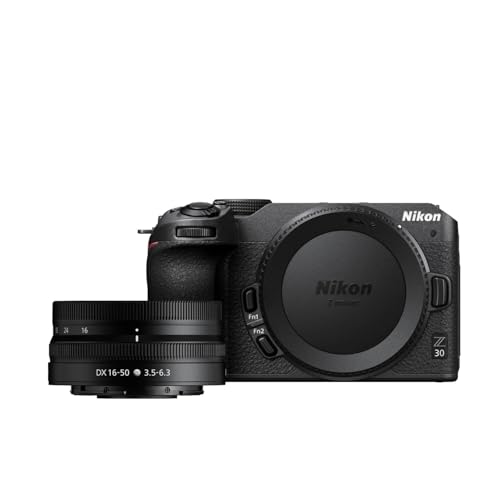
| Mirrorless Alternative — Not a DSLR | Nikon Z30 | A small, simple modern first camera, labelled as the mirrorless route it is. |
| Mirrorless Alternative — Not a DSLR | Canon EOS R50 | The viewfinder-equipped modern alternative, again plainly not a DSLR. |
Most readers should simply take the first pick and begin. Choose the second instead if your budget is firm and your temperament is careful — the used route rewards patience with a finer instrument. The third suits the beginner learning entirely alone, without a club, a course, or a photographic friend to interrogate. The fourth is not an alternative start but the destination every starter should plan toward, and the final two rows mark the modern exit for readers whose year ahead is half video, or whose hands have already voted against the mirror’s weight.
How We Chose These Picks
Judging a first camera demands a different test from judging a camera. We therefore evaluated each candidate the way a lone beginner actually meets it: unboxed without help, carried on ordinary errands for a week, operated in a dim kitchen at midnight, and forgiven — or not — for the confusion of its first menu dive. Bodies that explained themselves earned marks no specification can confer. Bodies that hid the sensitivity setting three layers deep, or punished a wrong button press with a lost photograph, lost marks in exactly the currency a beginner pays.
We weighted the first ninety days more heavily than the third year, reversing the usual review habit, because a first camera’s real risk is abandonment in month two rather than inadequacy in year three. Weight on a real shoulder, a strap that does not saw at a real neck, a battery that survives a real weekend — these decided more rankings than any sensor measurement. A beginner who is still shooting in month four will outgrow almost any body gracefully; a beginner who quit in February outgrows nothing at all.
The buying routes received the same scrutiny as the hardware. For each pick we asked what a first-time buyer, unable yet to diagnose a tired shutter or a drifting focus, can actually verify before money changes hands — and we wrote the briefs so the verification is a checklist, not a talent. Where a route’s safety depends on a dealer’s grading and warranty, the guide says so in plain words and prices that dependence honestly against the new-old-stock alternative.
What Does Your First Year with a DSLR Actually Look Like?
Picture the first week honestly, because guides that skip it sell fantasies. The camera arrives; the battery charges with agonising slowness; the first photographs are of the room, the cat, the view from the window, each reviewed with a delight out of all proportion to their merit. Somewhere in those days you will produce one frame — a face in window light, usually — that is visibly better than anything your phone ever made, and that frame is the hook the whole year hangs on. The right first camera makes that week easy: charged without fuss, forgiving in its automatic mode, quick to show you what it captured.
Months two and three are the apprenticeship proper, and they have a texture no review mentions: repetition with slowly rising standards. You photograph the same street at different hours and begin, almost accidentally, to wait for light instead of merely accepting it. Aperture priority becomes home. The kit zoom’s ceiling announces itself in a dim restaurant or a portrait whose background refuses to melt, and instead of frustration you feel something new — a specific, nameable want. That want is the curriculum working. Photographers are made by wanting particular capabilities in a particular order, and a well-chosen first kit arranges the order beautifully.
The middle months bring the social transformation. Family events quietly reassign themselves to you. A friend asks you to photograph a small wedding, and you learn the professional’s first lesson — that reliability is a courtesy — by checking batteries the night before like a pilot. Manual mode, once a dare, becomes the setting for deliberate work. By the year’s end the camera has stopped being equipment and become biography: its scuffs are your trips, its shutter count is your education, and the beginner who bought it no longer exists. The picks below were chosen to be worthy of that transformation — sturdy enough to survive it, honest enough to cause it.
How Much Should a Beginner Spend — and Where Does the Money Matter?
Spend first on the body-and-kit-zoom combination as a matched whole, because that pairing is ninety percent of your first year’s photography. The temptation to redistribute — a grander body with a borrowed lens, a humble body with a glamorous one — misunderstands how beginners actually shoot. You will live at every focal length the kit zoom offers, in every light your life contains, and the matched kit is engineered, priced, and balanced as a single instrument. Buy it as one, from a seller whose grading or warranty you can lean on, and let that be the year’s major transaction.
The supporting cast deserves a small, fixed, unglamorous budget of its own: one reputable memory card and a spare, a second battery, a strap that suits your shoulder, a simple bag or padded insert, and a cleaning cloth that lives in it. Beginners chronically underbuy this cast and overbuy lenses, then lose photographs to a failed bargain card or abandon outings to a strap that hurts. None of these items photographs anything; together they decide whether the camera is present, powered, and carrying space when the photograph appears. Presence is the whole game in year one.
Reserve the remainder — and let there be a remainder — for time and teaching. A local evening class, a photo walk with a working photographer, a train ticket to a photogenic town, a dozen prints made properly: each returns more skill per coin than any accessory. This is not piety but arithmetic observed across generations of beginners. The ones who spent on experiences own albums; the ones who spent on equipment own cupboards. Your first year’s budget should buy a camera, its humble support cast, and then as much photographed life as it can possibly fund.
Entry-Level DSLR Starter Kit with 18–55mm Zoom — Start Here
If this guide had to be one sentence long, it would recommend this: the current entry-level DSLR from either of the two great camera houses, bought as its manufacturer’s starter kit with the 18–55mm zoom, one good memory card, and a spare battery. Generations of refinement stand behind that sentence. The entry bodies were designed, across many model cycles, for exactly your situation — a person who has never set an aperture, holding a camera that must be welcoming on the first morning and still instructive on the three-hundredth. They are light enough to take everywhere, simple enough to shoot in full automatic while confidence gathers, and complete enough that nothing in your first year’s curriculum is missing from their dials.
Setting it up well takes one unhurried evening, and the evening is worth describing because beginners rush it. Charge both batteries fully. Format the card inside the camera, not a computer, and set the date correctly so your archive stays honest. Switch the image quality to its finest JPEG setting — raw files are a later semester’s pleasure, and hard drives fill with good intentions. Then walk the house photographing one patient subject at every setting the mode dial offers, reviewing as you go, so the dial’s geography enters your fingers before it is ever needed in earnest.
The months ahead with this kit follow the rhythm the earlier section promised. The kit zoom covers the family’s gatherings, the town’s streets, and the holiday’s landscapes; its modest appetite for light teaches you, gently, to hunt for better light rather than merely complain about darkness — the single most valuable instinct a first year can install. When its ceiling finally presses, around the portraits and the dim rooms, the fourth pick in this guide will be waiting, and you will buy it as a photographer rather than as a shopper. That is the whole design: a start so well-matched to a beginner that its limitations arrive as lessons, in order, each one affordable.
- Configuration: entry DSLR body and matched 18–55mm kit zoom, bought as a kit
- Day-one extras: one quality card plus a spare, a second battery, a comfortable strap
- First-evening setup: format in camera, finest JPEG, date set, dial explored at home
- Learning shape: automatic first, then the semi-automatic modes in sequence
- Buying: new-old-stock with warranty, or graded used from a named dealer
Strengths
- The most forgiving complete start the DSLR world offers
- Light enough that taking it along becomes a reflex
- Every first-year lesson is present and reachable on its dials
Trade-offs
- One control dial makes later manual work a touch slower
- The kit zoom struggles politely in genuinely dim rooms
- Its viewfinder is smaller than the enthusiast bodies’ windows
Best for: the true first-time buyer who wants the standard, proven beginning. Not suited for: beginners arriving with serious video ambitions, who should weigh the labelled alternatives below.
Graded Used DSLR from a Reputable Dealer — The Safe Bargain
Your budget is real, and this pick respects it without gambling with it. The used market now holds a generation of excellent DSLRs — including bodies a full tier above the entry kit — at prices a careful beginner can reach. Bought properly, a graded used body is not a compromise but an upgrade: a larger viewfinder, hardier construction, and controls that will still suit you in year three, for the money a new entry kit commands. Bought carelessly, the same market is a lottery whose tickets are priced just low enough to tempt. The entire difference lies in how the purchase is made, which is why this pick is a method wearing a camera’s clothes.
The method has four rules, and none is optional. Buy from a dealer who grades condition in writing and offers a warranty measured in months, not days. Insist on a stated shutter count, and prefer the low-count, one-owner example over the anonymous bargain beneath it. Test before you commit — shutter fired across its speeds, a plain bright surface photographed at a narrow aperture to reveal sensor dust, every dial turned, the kit lens focused near and far — using the fuller checklist in this guide’s later section. And keep the paperwork, because a documented body is easier to insure, easier to service, and easier to sell onward when your education eventually points elsewhere.
What this route quietly teaches, beyond photography, is how to be a camera owner. You will learn your local dealer’s name, and they will learn yours; you will discover that the used shelves hold your future lenses at student prices; you will join the economy that kept photography democratic for a century. Many lifelong photographers began exactly here, with a warranted second-hand body and a dealer’s patience, and remember the purchase with more affection than any later flagship. A bargain with a safety net is not settling. For a beginner, it is often the wisest money in the whole guide.
- Configuration: graded used DSLR body, ideally a tier above entry level
- Non-negotiables: written grade, stated shutter count, real warranty, return window
- Testing: shutter range, sensor-dust frame, dials, focus near and far
- Hidden dividend: entry into a local used market for future lenses
- Paperwork: receipt and grading kept with the camera’s records
Strengths
- A finer instrument for the same money as a new entry kit
- The dealer’s warranty substitutes for experience you have not built yet
- Teaches ownership — dealers, servicing, the used lens shelves
Trade-offs
- Demands an afternoon of methodical checking before purchase
- Battery and accessories may need buying separately
- The very cheapest listings must be refused, however tempting
Best for: the budget-firm beginner with the patience to buy carefully once. Not suited for: buyers who need the camera tomorrow morning with zero homework, who should take the new kit above.
DSLR with Guided On-Screen Help and a Clear Menu — The Friendly Teacher
Not every beginner has a teacher. If your first year will be spent learning alone — no club, no course, no photographic uncle — then the camera itself must answer the questions that arise at midnight, and a particular family of DSLRs was built to do exactly that. These are the bodies whose manufacturers invested in guidance: mode dials that explain themselves on screen, feature guides that describe what a setting changes before you commit to it, and menus written in sentences rather than abbreviations. In a shop they can look less serious than their sterner siblings. Across a solitary first year, that friendliness is a serious feature indeed.
Judge the guidance by using it, because implementations differ in honesty. Good guidance shows cause and effect — a graphic that deepens background blur as the aperture number falls, a shutter illustration that freezes or streaks a moving subject — and then steps aside, letting the same settings be reached directly as skill grows. Poor guidance is a prettified automatic mode that keeps its secrets. The test in the shop is simple: pick up the body, find how to change the sensitivity and the focus point using only what the camera itself tells you, and time your confusion. The body that teaches fastest in five minutes will teach best across fifty weeks.
There is no shame tax on this pick, whatever forum culture mutters. The guided body contains the same sensor class, the same mount, and the same manual mode as its siblings; its explanations are scaffolding, and scaffolding is judged by the building it leaves behind. Beginners who learn alone with a teaching body reach the semi-automatic modes sooner and abandon them later than beginners wrestling an opaque one, because every midnight question got an answer while the question was still warm. If your first year is a solo expedition, choose the companion that talks.
- Configuration: DSLR body with on-screen feature guides and plain-language menus
- Shop test: find sensitivity and focus-point settings using only the camera’s help
- Guidance standard: shows cause and effect, then steps aside as skill grows
- Underneath: the same manual mode and lens mount as sterner siblings
- Audience: the self-taught beginner learning without a club or mentor
Strengths
- Answers a lone beginner’s questions at the moment they arise
- Builds the exposure triangle through visible cause and effect
- Nothing is sacrificed — full manual control waits underneath
Trade-offs
- Guidance screens can feel slow once the lessons are learned
- Usually paired with entry-tier viewfinder and single dial
- Purists may tease; the photographs will answer them
Best for: the solo learner whose only teacher, at first, is the camera itself. Not suited for: beginners joining a class or club whose human teachers make the guidance redundant.
Your First DSLR Plus a Fast 50mm Prime, Bought Later — The Month-Four Reward
Read this pick’s timing before its contents: later. The fast 50mm prime — the inexpensive, optically glorious fixed lens both DSLR houses sold for decades — belongs in every beginner’s bag eventually and in no beginner’s first purchase. Bought on day one, it would narrow your first month’s seeing to a single framing and hide the kit zoom’s great lesson, which is how focal length itself shapes a photograph. Bought in month four, when the kit zoom’s ceiling has begun to press against your evenings and your portraits, it lands like a door opening in a familiar house.
What it teaches, it teaches physically. With no zoom to turn, your feet become the framing control, and composition turns into walking, crouching, and circling — habits that permanently improve every photograph you take afterward, with any lens. Its wide aperture hands you the background blur the kit zoom only hinted at, and suddenly aperture is no longer a number in a menu but a substance you can pour into a portrait until a face floats free of a cluttered room. A month of evenings shot only on this lens is the closest thing photography has to a rite of passage, and beginners emerge from it visibly changed.
Buying it is the used market’s easiest examination. The model sold in enormous numbers, so graded examples crowd every dealer’s shelf; check that the aperture blades snap crisply, the focus ring turns evenly, and the glass is clear held up to the light, and you have performed the whole inspection. Keep the receipt with your body’s paperwork, mount the lens for that dedicated month rather than swapping by mood, and let the kit zoom rest without guilt. It taught you to see widely. This one is teaching you to see deeply, and a first year that contains both lessons in that order is a first year done properly.
- Configuration: any body above, joined later by a fast 50mm prime lens
- Timing: month four onward, when the kit zoom’s limits are personally felt
- Discipline: one full month of evenings shot on the prime alone
- Buying: graded used, blades and focus ring checked in the shop
- Lesson: aperture as a visible substance; feet as the zoom control
Strengths
- Transforms portraits and dim-room photography overnight
- Makes composition a physical habit that outlasts the lens
- Among the least expensive serious optics ever sold, used or new
Trade-offs
- A single focal length frustrates briefly before it educates
- Bought too early, it would stunt the kit zoom’s wider lessons
- Wide apertures expose sloppy focusing without any mercy
Best for: every beginner in this guide, as the planned second purchase of the first year. Not suited for: day-one buying — its gifts need the kit zoom’s foundation beneath them.

Nikon Z30 — Mirrorless Alternative, Not a DSLR
The label comes first, as it does for both modern picks in this guide: the Z30 is a mirrorless camera, not a DSLR. There is no mirror inside it and no optical viewfinder — in fact no viewfinder at all, composing being done on its screen. It earns its place here because a recognisable kind of beginner, having read this far, will know themselves in a particular description: the first camera is wanted small, simple, and as much for filming a life as for photographing one. For that beginner, the Z30 is the honest modern answer — compact, unintimidating, with autofocus that tracks faces and eyes for the video diaries and family films that fill a modern first year.
Understand what its design gives and withholds. Without a viewfinder, bright sunlight becomes the screen’s opponent, and the deliberate, eye-to-the-camera posture that teaches DSLR students to shut out the world is unavailable; composing becomes a more casual, arm’s-length act, wonderful for filming yourself and less wonderful for disappearing into a scene. Its battery economy follows the mirrorless pattern — an evening of heavy use rather than a weekend of it — so its owner builds the nightly charging habit from the start. None of this is failure. It is a camera optimised for a different first year than the one this guide describes, and the beginner whose year looks like that should choose it without a flicker of apology.
Choose it, though, as a fork in the road rather than as a shortcut. The DSLR route above teaches exposure through consequence and an optical window; the Z30 teaches through assistance, preview, and video fluency. Graduates of the two schools both become photographers, but they become different kinds, and a beginner choosing a first camera is really choosing which kind to become first. If the screen-first, film-friendly, carry-it-everywhere life is yours, this small camera will serve it beautifully — bought knowingly, under its correct name, which is not DSLR.
- Category: mirrorless, with no mirror and no viewfinder — the alternative route
- Finder: none; composing is done on the rear screen
- Character: compact, simple, and strongly oriented toward video
- Autofocus: face and eye tracking for filming and family life
- Battery habit: nightly charging, as with electronic-screen cameras
Strengths
- Small and friendly enough to be carried without negotiation
- Video and vlogging manners no DSLR in this guide approaches
- Assisted autofocus produces early wins that keep beginners shooting
Trade-offs
- Not a DSLR — no mirror, no optical viewfinder, no viewfinder at all
- Screen composing struggles against bright midday sun
- The assisted route can postpone learning manual exposure indefinitely
Best for: the beginner whose first year is half video and wholly portable. Not suited for: the beginner who came for the optical-finder education the four DSLR picks provide.

Canon EOS R50 — Mirrorless Alternative, Not a DSLR
The second labelled alternative keeps what the first one surrendered: a viewfinder. The EOS R50 is a mirrorless camera — not a DSLR, with no mirror and no optical window — but its electronic finder restores the eye-to-the-camera posture, showing the exposure as it will be recorded and shutting out the world’s distractions while it does so. For the beginner who wants the modern school’s assistance without giving up the photographer’s crouch, it is the natural first camera of the current era: light, capable, backed by a living lens system, and unusually kind to newcomers in its menus and its autofocus alike.
Its teaching temperament deserves the same clear-eyed description given to the DSLR picks. Where a DSLR lets a beginner make an exposure mistake and learn from the evidence, the R50’s preview corrects the mistake before the shutter fires — results arrive sooner, and the underlying lesson can arrive later, or occasionally not at all, unless the student deliberately practises in manual mode against the camera’s helpfulness. Its eye-detection autofocus performs a similar kindness for focusing. A wise beginner treats that assistance the way a wise student treats a calculator: gratefully, and with regular unaided practice, so the skill lives in the photographer rather than in the equipment.
Set against the starter kit at this guide’s head, the exchange is plain. The R50 offers a current system, modern video, and assisted speed; the DSLR kit offers the optical education, days of battery, and a used market where your next three lenses cost less than one of its new ones. Either choice, made with those terms understood, is a good first camera. What this guide exists to prevent is only the uninformed choice — the beginner who buys a mirrorless camera believing they bought a DSLR, or who buys a DSLR expecting a modern video machine. You, having read to the final pick, are in no danger of either error.
- Class: mirrorless body — not a DSLR — presented as the modern alternative
- Finder: electronic, with live exposure preview
- System: a current, growing lens mount bought at new prices
- Autofocus: subject and eye detection of the modern standard
- Audience: the beginner who wants the modern school with a viewfinder
Strengths
- Exposure preview and modern autofocus shorten the road to good results
- A living system with warranty, support, and new lenses ahead
- Light body that still rewards a proper eye-to-finder posture
Trade-offs
- Not a DSLR — the mirror’s consequential teaching is absent
- Assistance can quietly replace the skills it was meant to support
- Lens costs are today’s; there is no used endowment to raid
Best for: the beginner who wants modern results, video, and a viewfinder in one light body. Not suited for: the beginner specifically seeking the DSLR apprenticeship described by the first four picks.
Comparison Table
| Pick | Class | Buying route | Best understood as |
|---|---|---|---|
| Entry DSLR Starter Kit (prose-only) | DSLR | New-old-stock or graded kit | The standard beginning |
| Graded Used DSLR (prose-only) | DSLR | Dealer-graded used | The safe bargain |
| Guided-Help DSLR (prose-only) | DSLR | Kit with teaching body | The solo learner’s teacher |
| DSLR + Fast 50mm, Later (prose-only) | DSLR | Second purchase, month four | The planned reward |
| Nikon Z30 | Mirrorless — not a DSLR | New | The video-first start |
| Canon EOS R50 | Mirrorless — not a DSLR | New | The modern viewfinder start |
Which First-Week Mistakes Do Beginners Regret Most?
Buying the bundle tops the list, and it is always sold as kindness. A shop — or a well-meaning relative — assembles body, two extra lenses, a flash, a gadget bag, and a tripod of mysterious purpose, and the beginner comes home owning a shop window instead of a start. The extras do not merely cost money; they cost sequence. Every untried lens in the bag whispers that the current photograph’s failure might be equipment rather than inexperience, and that whisper is poison in a first year, whose whole curriculum is learning that the failure is almost always inexperience — gloriously curable inexperience. Refuse the bundle. The starter kit, the support cast, and a clear diary beat it at every distance.
Neglecting the boring setup runs second. Beginners who skip the first-evening ritual — card formatted in camera, date set, battery routine learned, strap fitted properly — pay for the omission in small humiliations for months: files named by a camera that thinks it is 2019, a strap that slides at the crucial moment, a card error on the one morning that mattered. None of these is dramatic. All of them are friction, and friction is what quietly ends first years. The unglamorous half hour at the kitchen table is not preparation for the hobby; it is the hobby’s foundation course, and it cannot be retaken later at the same price.
The third regret is hiding the camera. Beginners keep a first DSLR in its box between outings, carry it only on declared photographic expeditions, and wonder why their eye develops so slowly. The photographers who improve fastest treat the camera as clothing: it hangs by the door, rides to the shops, attends the ordinary walk. Most first-year growth is not technique at all but noticing — and noticing cannot be scheduled for Sundays. Whatever pick you choose, its most important accessory is a hook by the door and a household that expects to see it on your shoulder.
How Can a Beginner Tell a Good Used DSLR from a Tired One?
Work through the body as its previous life left it, outside first. Honest wear — bright corners, a polished grip — tells of use; damage tells of events. A dented prism housing, a cracked screen surround, or a mount that shows galling speaks of drops and forced lenses, and any one of them ends the inspection politely. Dials and buttons should click and turn like mechanisms, not like memories of mechanisms. The battery door, card door, and terminal covers — the parts beginners forget to check — should all close with the same crispness, because the one that does not is the one that will admit the rain.
Then power it and make it work. Fire the shutter at its slowest and fastest settings: the slow speeds should sound deliberate and even, the fast ones a clean snap without hesitation. Photograph a plain, bright, evenly lit surface at a narrow aperture and examine the frame — marks repeating in identical positions are dust or worse, and on a dealer’s graded body they are the dealer’s problem to clean or price, never yours to discover at home. Focus the kit lens on something near, then something distant, and listen for grinding or hunting that does not settle. Check the screen for dead patches and the viewfinder for fungus shadows at its edges.
Close with questions whose answers should already be written down. What is the shutter count, and does the grade on the ticket match the body in your hands? How long is the warranty, what does it cover, and how many days do you have to change your mind? Is a battery included, does it hold a charge through your testing, and is the charger the correct one? A reputable dealer expects this examination and makes room for it; a seller who hurries you has answered the only question that matters. Walk away slowly, and let the next listing be the bargain instead.
What Should Your First Month of Practice Actually Contain?
Give the month a shape simple enough to survive real life: the camera carried daily, one deliberate session a week, and a review every Sunday. Daily carrying builds the noticing muscle described earlier — the ten frames grabbed between errands that teach your eye what it finds interesting, which is information no course can give you. The weekly session is where technique lives: an hour with one intention, whether that is portraits of a patient household member, the same building in changing light, or a deliberate walk shot entirely in aperture priority with the results compared stop by stop.
The Sunday review is the month’s engine, and it has rules. Look at the week’s photographs with their settings visible, and for every frame you like, name the decision that made it — the aperture, the position, the waiting. For every frame that failed, name the decision that unmade it, without flinching and without theatre. Delete the hopeless third without ceremony, because an archive of everything teaches nothing, and mark the handful that would survive printing. Beginners who keep this audit improve at a rate that startles them by month three; beginners who shoot without reviewing merely accumulate, and accumulation is not a curriculum.
End the month by printing one photograph properly — not the technically finest, but the one that feels most like the photographer you are becoming. Put it where you will see it daily. That print does three jobs no screen can: it proves the camera’s quality in the physical world, it gives the household a reason to support the habit, and it sets the standard the second month must beat. A first year is a long apprenticeship, and it runs on evidence of progress. Manufacture that evidence early, honestly, and in print.
Canon or Nikon — Does the Brand Matter for Your First Camera?
Beginners agonise over this question in shops, so it deserves a calm answer rather than a wink. Within the DSLR world, the two great houses built remarkably parallel systems: an entry body, a guided body, a mid-range body, a kit zoom, a fast 50mm, and used markets of similar depth in most cities. A beginner who chooses either house’s version of this guide’s starter kit has chosen well, and the differences that remain — the direction a dial turns, the flavour of a menu, the exact grip under a particular hand — are matters of ergonomics rather than destiny. Hold both in the shop if you can. The one your hand forgets it is holding is the right one, and that test outperforms a month of forum reading.
Two practical considerations occasionally break the tie honestly. The first is inheritance: if a parent, partner, or close friend already owns lenses for one mount and is willing to lend, that generosity outweighs any specification, because borrowed glass accelerates a first year more than any purchase. The second is local: if your town’s reputable used dealer stocks one house’s shelves three deep and the other’s barely at all, buy into the deep shelves. Your future lenses, servicing, and advice all live there. Beyond those two considerations, choose quickly and photograph the time you saved — the rivalry between the houses has consumed more beginner hours than any camera fault in history, and every one of those hours was owed to a shutter instead.
What Should a Beginner Do When the First Photographs Disappoint?
Expect the disappointment, because it is scheduled. Somewhere around week three, the early delight fades and a harder eye arrives: the portraits look ordinary, the landscapes look flat, the camera that seemed magical now seems to be withholding something. Beginners read this moment as evidence of a wrong purchase. It is actually the first reliable evidence of progress — your eye has outgrown your hands, which is the precise condition education exists to cure. Photographers who quit here were not defeated by their camera. They were defeated by a misunderstanding of what the dip means.
The cure is diagnostic rather than financial. Take the week’s most disappointing frame and interrogate it in order. Was the light wrong — flat, overhead, or behind the subject? Was the position wrong — too far, too central, too hurried? Was the setting wrong — a focus point that chose the background, an aperture that kept a distracting street sharp? Nearly every disappointing beginner frame fails one of those three examinations, and all three are curable by attention rather than expenditure. Write the diagnosis in a notebook, shoot the same subject again within days, and watch the frame improve for reasons you can name. Named reasons are the whole curriculum.
Hold, through the dip, to the sequence this guide laid down: carry daily, practise weekly, review on Sundays, print monthly. The dip is where that unglamorous structure earns its keep, because structure does not require motivation — it merely requires Tuesday. Beginners who keep the rhythm emerge from the dip with a skill their early enthusiasm never promised them: they can look at any photograph, including their own, and say exactly why it works or fails. From that moment the camera stops being the variable. You are the variable, improving on schedule, and the first year has begun in earnest.
Final Recommendation
For the beginner this page was written for — one person, one first camera, one year of learning ahead — the answer is the starter kit: an entry-level DSLR with its matched zoom, a quality card and spare, a second battery, and a strap you enjoy wearing. Buy it new-old-stock if the warranty comforts you, or graded used from a named dealer if the bargain tempts you, applying the inspection in this guide either way. Learn alone and proud? Take the guided body instead. Budget firm and temperament careful? The used route will reward you with a finer instrument. Every one of those roads then leads, in month four, to the fast prime — bought by the photographer the kit created.
The two mirrorless alternatives remain standing, labelled and respected, for the beginner whose year is honestly half video or whose shoulders have voted against the mirror. Choosing either knowingly is a good outcome of this guide. What matters is that the choice be yours — made from your life, your hands, and your intentions — rather than a bundle’s, a forum’s, or a fashion’s. Buy once, buy in sequence, carry the camera daily, review every Sunday, and print the evidence. Do those unglamorous things and the beginner in this guide’s title will, within a year, need a different word entirely.
Frequently Asked Questions
How is this guide different from your guide to DSLR cameras for beginners?
That companion guide addresses beginners as a group and compares the DSLR’s teaching features across the whole class of newcomers — which controls, finders, and modes serve learning best in general. This page addresses one beginner making one purchase: your budget, your hands, your first year, your buying route, and the sequence your purchases should follow. Read the companion for the format’s theory; read this one when the money is real and the decision is yours alone.
Should a beginner’s first DSLR be bought new or used?
Either, with discipline. New-old-stock buys certainty and a warranty at a shrinking premium as stock thins. Graded used — written grade, stated shutter count, months of warranty, a return window — buys a better body for the same money and is, for a careful beginner, the safest bargain in photography. The route to refuse is the ungraded private bargain at any price: a first-time buyer cannot yet diagnose what a suspiciously cheap body is hiding.
What else must a beginner buy on the first day?
Less than the shop hopes. One reputable memory card and a spare, a second battery, a strap that fits your shoulder, a simple bag or padded insert, and a cleaning cloth. That support cast, plus the kit itself, is a complete first purchase. Everything else — the prime lens, the tripod, the flash — is a later purchase chosen by experience, and the guide’s fourth pick explains exactly when the first of them should arrive.
How long before a beginner outgrows an entry-level DSLR?
Longer than marketing suggests. The starter kit honestly serves the first year and most of the second; what you outgrow first is the kit zoom’s aperture, answered by the month-four prime, and then the absence of some focal length your own photographs have proven you need. Bodies are replaced by ambition eventually, but beginners who follow this guide’s sequence usually discover their ambitions were lens-shaped all along.
Can a beginner learn photography on a DSLR and still shoot family video?
Yes, within honest limits. Late-generation DSLRs record perfectly serviceable family video, and the guided and mid-range bodies with articulated screens handle it most gracefully. Their focusing during recording, though, belongs to an earlier era than the labelled mirrorless alternatives, which is why this guide asks every beginner to weigh their year’s true proportions. A beginner whose ambitions are half film should take the alternatives seriously rather than apologetically.
What is the best first exercise for a brand-new DSLR owner?
One subject at every aperture, in the first week — a chair by a window, a patient sitter, a garden corner — photographed across the full range and reviewed in order with the settings showing. No exercise teaches more per hour: depth of field stops being vocabulary and becomes a dial your hands understand. Repeat it in the twelfth week with the same subject, print the best frame from each session, and hang them side by side. That pair of prints is your first year’s report card, written by you.
Related Guides
Beginners comparing the whole field before committing should start with our best cameras to get for beginners, then return here for the DSLR decision in depth. When the month-four prime arrives, the portrait craft it unlocks is explored in our best cameras for beginner child photographers, and the stills-first path continues in the best cameras for beginners for stills.


