kajuandouglas.com is reader-supported. When you buy through links on our site, we may earn an affiliate commission.
Where to Buy a Production Camera, and What “Production” Demands Beyond a Good Picture
The best cameras for production are not simply the cameras with the prettiest footage — they are the cameras a working day cannot break. Production means schedules: an interview that must be in the can by eleven, a product film shot against a client’s flight home, a wedding where the ceremony happens once. On those days the camera is judged by endurance, by monitoring, by media discipline, by whether its files drop into an edit without a conversion ritual, and by whether it is still awake and cool at hour six. This guide ranks six bodies by that professional standard, from solo-creator productions to small-crew work.
Notice what production excludes. It excludes the camera that overheats during the keynote, the codec that turns the edit suite into a transcoding farm, the single card slot standing between a client and a lost day. It also excludes pure cinema rigs that need a crew of three to move — the productions most readers of this guide actually run are one to four people, a car full of kit, and a call sheet. The six below live in that real world: mirrorless bodies with production manners, chosen because working videographers keep choosing them when the invoice depends on it.
Budgets in production are systems, not bodies. A camera earns its place inside an economy of lenses, media, batteries, audio and lights, and the wise buyer prices the whole rig before falling for any single sensor. This guide therefore talks about ecosystems as much as cameras: which lens shelves rent well, which media is cheap enough to treat as expendable, which bodies a second shooter can match in the grade. A production camera is a hiring decision; hire the one whose whole department works.
Who should read on? The corporate videographer, the wedding filmmaker going full-time, the agency shooter standardising a kit, the creator whose channel has become a production company with a payroll of one. If your camera’s failure would cost someone money — yours or a client’s — the ranking below is ordered by the only question that matters on the day: what can go wrong, and has this body already answered it?
Key Takeaways
- Production readiness means endurance, monitoring and media discipline — not just image quality.
- The Panasonic LUMIX S5II leads for video tooling and handheld freedom on real shoots.
- The Sony Alpha 7 IV is the safest standard body: huge lens shelf, rental depth, no surprises.
- The Canon EOS R6 Mark II brings colour clients love and detection that protects interviews.
- The Fujifilm X-T5 serves boutique productions selling a film look straight from camera.
- The DJI Osmo Pocket 3 and Sony ZV-E10 II cover B-camera and solo-creator production roles.
In this guide
Quick Picks
| Camera | Badge | Why productions hire it |
|---|---|---|
| Panasonic LUMIX S5II | Best production-first body | Deep video tooling, serious stabilisation and formats editors welcome. |
| Sony Alpha 7 IV | Best standard workhorse | The industry’s default hybrid: lens shelf, reliability and matching B-cameras everywhere. |
| Canon EOS R6 Mark II | Best client-pleasing colour | Footage that flatters people, with detection that guards one-take interviews. |
| Fujifilm X-T5 | Best boutique film look | Film simulations that deliver a graded look on the day, at APS-C running costs. |
| DJI Osmo Pocket 3 | Best B-camera and gimbal shot | A stabilised second angle that fits in a jacket and never needs a crew. |
| Sony ZV-E10 II | Best solo-studio body | Creator productions — courses, podcasts, product films — at a starter rig cost. |
How Did We Choose These Cameras for Production Work?
We started with the failure list. Every production camera here was interrogated against the ways shoots actually die: thermal shutdowns mid-ceremony, focus that hunts during the one unrepeatable answer, a card error with no backup, a battery that fades before the speeches end. Bodies with dual slots, proven heat manners, dependable autofocus and honest battery ecosystems scored; bodies that merely demo beautifully did not.
Monitoring and assist tools formed the second filter, because production is a team sport even when the team is one person and a tripod. Waveform and exposure aids, focus peaking that can be trusted, zebra patterns, a screen that articulates for the low angle and the high one, clean output to an external monitor — these decide whether the shooter knows the shot is good while there is still time to fix it, which is the entire economic point of monitoring.
Files were judged in the edit, where production budgets quietly bleed. Codecs that edit natively on ordinary machines, colour profiles that grade without breaking, timecode and matching behaviour across bodies of the same brand — the unglamorous plumbing of post — all carried weight. A camera that saves an hour of transcoding per project pays for its accessories across a year.
Finally, the ecosystem audit: lenses that rent in every city, third-party glass that stretches a budget, B-cameras that match in colour so a two-camera interview grades as one. Production is a standardising business. The six below each anchor a defensible standard for a different scale of operation, and the reviews say plainly which scale each one serves.
What Does a Production Day Actually Ask of a Camera?
It asks for the morning’s certainty. Batteries charged in a rotation the assistant can run half-asleep, media formatted and labelled, settings stored as modes so the camera wakes in the day’s discipline rather than yesterday’s. The bodies in this guide support that professionalism — custom modes, user settings banks, menus that can be customised into a personal dashboard — and the shooter who invests an evening in setup buys calm on every subsequent call sheet.
It asks for audio respect. Production sound is half the deliverable, and the camera’s role is to accept good microphones gracefully: clean preamps for the class, a proper input, headphone monitoring so the hiss is heard at the shoot and not in the edit. Every body here takes external audio seriously; the productions that sound expensive are usually the ones where someone monitored with headphones and moved a microphone thirty centimetres.
It asks for light discipline more than light sensitivity. Modern sensors all see in the dark adequately; what separates production footage is controlled light — a key, a practical, a background separated by a stop. Cameras were therefore judged partly on how their colour and dynamic range behave under deliberate lighting: skin under a softbox, a product’s highlight rolling off, a mixed-temperature room tamed. The picks below hold highlights and skin like professionals because that is where they will spend their lives.
And it asks for the second camera’s humility. Most productions in this class run two bodies: the hero on the tripod and the witness on the angle. Colour that matches across the pair, media the same assistant can manage, batteries that interchange — these system manners decide whether the edit is a pleasure. Several picks below are explicitly paired in their reviews, because production buying is pair buying.
How Should a Small Production Build Its Kit Around One Body?
Sequence the purchases by what kills shoots. After the body: audio first — a microphone and headphones protect more deliverables than any lens. Then light: one good key light with modifiers teaches more cinematography than a second body ever will. Then the lens pair the work actually uses — a standard zoom for coverage and a fast prime for interviews is the classic production couplet. Media and batteries in working multiples come next, bought boring and identical.
Standardise ruthlessly. One lens mount across bodies, one battery family, one media type, one colour profile as the house look. Standardisation is what turns a pile of gear into a production company: any shooter can pick up any body, any card fits any reader, and the grade matches because the pipeline was designed rather than accumulated. The ecosystems below were partly ranked on how gracefully they let a small operation standardise.
Rent the exceptional, own the everyday. The exotic lens for the annual hero film, the third body for the one big wedding — rental houses exist so that capital does not. Owning the core kit that works forty weeks a year and renting the garnish is the financial shape of every durable small production outfit, and it argues for bodies in deep rental ecosystems, where your owned B-camera matches the rented A-camera’s colour without a fight.
Finally, rehearse the failure drills. Swap a card mid-shoot, run a body to thermal warning in a warm room before the client does it for you, record the interview with one microphone deliberately unplugged and learn what the backup sounds like. Production professionalism is mostly this: the disasters already met in rehearsal, priced, and planned around. The cameras below have known behaviours under stress — learn yours before the call sheet depends on it.

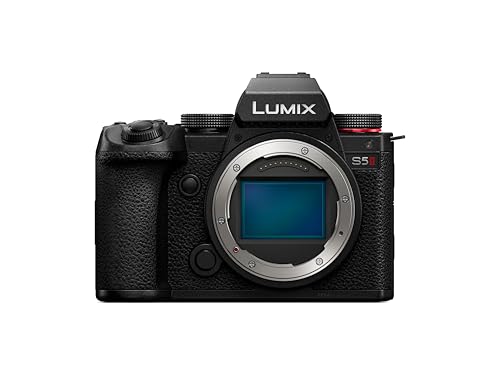
Panasonic LUMIX S5II — Best production-first body
The LUMIX S5II is what happens when a manufacturer designs for the shoot day instead of the showroom. Its video tooling runs deepest in this guide — monitoring aids, professional recording options, and an in-body stabilisation system that changes the economics of movement: walk-and-talks, venue tours and gimbal-free event coverage come out of one person’s hands. Its phase-detect autofocus, the feature whose absence once defined the brand, now holds subjects with the confidence production requires.
Heat and endurance manners suit it to the long record: interviews, ceremonies, stage work where the camera rolls while events unfold rather than in curated bursts. The L-mount gives it an alliance lens shelf — Panasonic, Sigma and Leica sharing one mount — so the production couplet of standard zoom plus fast prime can be built at several budget levels, and Sigma’s cinema-leaning glass gives the kit a growth path.
Its stills are fully professional, which matters for the hybrid productions that deliver frames alongside films, though its burst-and-tracking ceiling sits below the sports specialists. The lens catalogue, while growing and high-quality, still trails Sony’s for exotic rentals in smaller cities. Colour is clean and modern — editors like it precisely because it does not argue.
For the one-to-four-person production whose deliverable is film — corporate, wedding, documentary, commercial — the S5II is the body that treats your actual job as its design brief. It leads this guide because production is a video-first word, and no body here is more video-first without leaving the hybrid world behind.
- Stabilisation: class-leading in-body system
- Tooling: professional monitoring and formats
- Mount: L-mount alliance lenses
- Stills: full professional hybrid ability
Strengths
- Handheld production footage without a gimbal crew.
- Video features the stills-led rivals do not offer.
- Long-record manners for ceremonies and stage work.
Trade-offs
- Rental depth for exotic lenses trails Sony.
- Action stills ceiling below the specialists.
- Menu depth rewards a setup evening.
Best for: video-first small productions and wedding filmmakers. Not suited for: sports-led hybrid work.

Sony Alpha 7 IV — Best standard workhorse
There is a reason the Alpha 7 IV became the default body of the working hybrid world: it is the camera whose answers are all known. Its autofocus is the reference implementation — eyes found and held through movement, low light and partial occlusion. Its lens shelf is the deepest in the business, owned and rented everywhere. Its B-camera matches are legion, its colour pipeline is understood by every editor alive, and its stills satisfy clients who never learn it was also the video camera.
Production value hides in that familiarity. A second shooter hired on Friday already knows the body. The rental house stocks its lenses. The tutorial for the obscure setting exists. When a production standardises on the A7 IV it is buying an industry, not a camera — and industries are what schedules are built on.
The caveats are the known ones, which is itself the point: rolling shutter asks for calm pans in its punchiest modes, the menus are a database to be organised once rather than a joy to browse, and the body is a generation into its life, so its successors gossip about features it lacks. None of these has ever cancelled a shoot. All of them are priced into the second-hand market, where production kits quietly get built.
Choose it when the work is varied, the clients are strangers, and the kit must never be the story. Corporate one week, wedding the next, a product film between — the A7 IV’s genius is that the camera disappears and the production remains. In a guide about production, disappearance is the highest praise available.
- Autofocus: the industry’s reference eye tracking
- System: deepest lens and rental ecosystem
- Media: dual slots for protected work
- Colour: understood by every editor and grader
Strengths
- Zero-surprise reliability across every genre.
- Matches B-cameras and rentals anywhere.
- Stills and video both fully client-grade.
Trade-offs
- Fast pans need care in top modes.
- Menus reward organisation, not browsing.
- A mature model — successors tempt on paper.
Best for: general production houses standardising a fleet. Not suited for: buyers who want the newest sensor headline.

Canon EOS R6 Mark II — Best client-pleasing colour
Clients do not review waveforms; they review faces. The EOS R6 Mark II is the production body for sellers of faces — executives who must look trustworthy, brides who must look luminous, founders who must look like the future. Canon’s colour science renders skin the way clients hope they look, and its subject detection guards the one-take interview with a vigilance that lets the operator watch the conversation instead of the focus ring.
Its production manners run deeper than colour. In-body stabilisation steadies the handheld B-roll that pads every corporate film; burst and tracking serve the event work that shares its calendar; and Canon’s RF lenses include the fast primes that make an interviewee’s background melt into expensive-looking colour. Dual-slot recording protects the unrepeatable, which in client work is most of it.
Heat asks respect in the longest top-quality takes — build the standard interview breaks into the schedule, as good directors do anyway for the subject’s sake. The RF shelf’s finest glass is priced for professionals, which production budgets accept and hobby budgets should notice. Resolution serves video and ordinary print beautifully while leaving the giant-crop work to higher-megapixel bodies.
For people-businesses — weddings, corporate communications, personal brands — the R6 Mark II converts directly into client satisfaction, which is the only metric that renews contracts. It is the camera in this guide most likely to be complimented by the person who paid for the film, and that compliment is a production feature.
- Colour: skin rendering clients love
- Detection: heads, faces, eyes, held firmly
- Stabilisation: in-body for handheld B-roll
- Media: dual slots for protected takes
Strengths
- Faces that need the least rescue in the grade.
- Detection that frees the operator to direct.
- A complete wedding-and-corporate pedigree.
Trade-offs
- Longest top-tier takes need heat awareness.
- Finest RF primes are professional-priced.
- Resolution not aimed at heavy cropping.
Best for: weddings, corporate and personal-brand production. Not suited for: long-form stage recording in hot rooms without breaks.

Fujifilm X-T5 — Best boutique film look
Some productions sell a look, and the Fujifilm X-T5 is the look as a business model. Its film simulations deliver graded, characterful footage on the day — the wedding film that feels like cinema at the viewing, the brand story whose palette is its signature — without a colourist’s invoice between the shoot and the delivery. For boutique studios whose clients buy taste, that in-camera finish is not a filter; it is the product.
The body supports the boutique model with real production bones: a high-resolution sensor that gives stills genuine gallery weight, in-body stabilisation, and dials that make deliberate shooting tactile. APS-C running costs — lenses, media, second bodies — run below the full-frame fleet, which matters to a two-person studio pricing its day rate against its kit.
The boundaries are the format’s and the brand’s. Low-light ceiling and depth-of-field extremes belong to full-frame; the video tooling, while respectable, is shallower than the Panasonic’s production depth; autofocus for chaotic action trails the Sony and Canon. A boutique shooting controlled, lit, deliberate work will rarely meet those boundaries; a run-and-gun news outfit lives on them.
Choose the X-T5 when the studio’s signature is visible in every frame and the clients come for exactly that. It turns the grade from a post-production cost into a shooting decision, and for the right production that inversion is worth more than any specification in this guide.
- Colour: film simulations as a house look
- Sensor: high-resolution APS-C stills
- Handling: dials for deliberate shooting
- Costs: APS-C lenses and bodies for the fleet
Strengths
- A finished look delivered on the day.
- Stills with real print and gallery weight.
- Running costs kind to small studios.
Trade-offs
- Low-light and depth ceilings below full-frame.
- Video tooling shallower than Panasonic’s.
- Chaotic-action autofocus a step behind.
Best for: boutique wedding and brand studios selling a look. Not suited for: low-light run-and-gun or broadcast-style work.

DJI Osmo Pocket 3 — Best B-camera and gimbal shot
Every production has shots the main body cannot practically make: the walk-through of the venue, the product gliding across the table, the second angle on the interview that a locked-off wide cannot give. The DJI Osmo Pocket 3 is those shots in a jacket pocket — a mechanically stabilised camera whose footage moves like it was shot by a crew, from a device one person can carry as an afterthought and deploy in ten seconds.
Its production discipline surprises people who meet it as a vlogging toy. Face and subject tracking hold an interviewee while the operator adjusts lights; its low-light sensor keeps evening events cinematic; its audio arrangements — including wireless microphone pairing in its ecosystem — respect dialogue. As a B-camera it intercuts honestly with the full-frame bodies above when each is set with a moment’s care, and its gimbal shots give edits the movement that separates production from documentation.
The limits are scale and stamina: it is a single fixed lens, so its angle is its angle; its internal battery wants a power plan across a long day; and it is nobody’s A-camera for a ceremony — no dual slots, no lens changes, no pretending. Productions that respect those limits get a secret weapon; productions that lean on it as a main body get a lesson.
Budget-wise it may be the highest-value line in a small kit: the shots it adds — movement, intimacy, the impossible angle in the tight room — are the shots clients notice and remember. If the A-camera is the production’s salary, the Pocket 3 is its style, and style is what gets rehired.
- Stabilisation: true 3-axis gimbal
- Tracking: face and subject follow
- Form: pocket-sized, deploys in seconds
- Audio: wireless mic ecosystem support
Strengths
- Movement shots no tripod body can match.
- A second angle that needs no second crew member.
- Evening events stay cinematic.
Trade-offs
- Fixed lens, fixed perspective family.
- Internal battery needs a power plan.
- Not a protected-media A-camera.
Best for: B-camera angles, walk-throughs and product movement. Not suited for: serving as the only camera on a paid ceremony.

Sony ZV-E10 II — Best solo-studio body
A whole economy of production happens in one room with one person: the online course, the video podcast, the product channel, the consultancy that films its expertise. The Sony ZV-E10 II is that economy’s natural body — creator-shaped, with a flip screen for the presenter-operator, autofocus inherited from Sony’s professional line, and product-showcase manners that keep a demonstrated object sharp while hands move around it.
Its production logic is total-cost logic. The body, a fast prime and a standard zoom, a microphone and a key light: a complete studio for less than a flagship body alone, drawing on the E-mount shelf shared with the A7 IV above — so the solo studio’s lenses graduate to the fleet body when the business does. Its files match its bigger sibling’s colour closely enough that the upgrade path does not orphan an archive.
The compromises trace the price: no in-body stabilisation, which a tripod-based studio never misses; no viewfinder, irrelevant at a desk; battery and heat manners sized for sessions and episodes rather than ceremonies. It is a specialist in the controlled environment, and the controlled environment is where its owners make their living.
For the creator becoming a company, it is the correct first production body: professional where the audience looks — focus, colour, audio — and economical where they never will. Buy it, light the room properly, and the production value arrives out of proportion to the spend.
- Design: flip screen, presenter-first layout
- Autofocus: professional eye tracking inherited
- System: E-mount path up to the fleet bodies
- Role: courses, podcasts, product films
Strengths
- A complete studio anchor at starter cost.
- Focus and colour the audience reads as pro.
- Lenses carry forward as the business grows.
Trade-offs
- No in-body stabilisation for handheld work.
- Session-length stamina, not ceremony-length.
- No viewfinder for location stills.
Best for: solo studios and creator production companies. Not suited for: events, ceremonies or handheld location days.
How Do You Choose Between These Ecosystems for the Long Term?
Strip the badges away and the decision among these six is a decision about which compromises you would rather live with for five years. Sony offers breadth: every lens, every rental shelf, every second shooter already fluent — at the price of menus you must organise and a look you must make your own. Canon offers warmth: colour that pleases clients before the grade begins — at the price of its finest glass. Panasonic offers depth for the film-first: tooling and stabilisation the others chase — inside a younger, smaller lens alliance. Fujifilm offers identity: a look that is a brand — inside an APS-C ceiling. None of those sentences contains a loser, which is why production buying is temperament matching dressed as shopping.
The honest test is a weekend, not a spreadsheet. Rent or borrow the two finalists, shoot the same interview and the same portrait session on both, and grade the files side by side while your hands still remember the handling. Notice which camera you reached for without thinking, which menus you stopped noticing by Sunday, which colour you would rather sign. Productions are built out of thousands of such reaches; the body that wins the weekend wins them.
Also price the exit before you enter. Ecosystems differ in how gracefully they let you leave — the resale depth of the popular standards means a change of heart in year two costs a fraction of what an exotic commitment costs. That liquidity is a professional feature: it converts a five-year marriage into a renewable contract, and it is one more reason the fleet picks in this guide cluster where the market is deepest. Buy the system you can leave, and you will probably never want to.
Whichever standard you choose, write the choice down as house policy — this mount, this profile, this media, this battery family — and let every future purchase answer to it. The policy is what turns a camera into a production. The six bodies here are six good beginnings; the discipline you wrap around one of them is the actual company.
How Should a Production Handle Files After the Shoot?
The shoot ends; the production’s most dangerous hour begins. More client work is lost to file handling than to any camera failure — the card wiped in a tired moment, the single copy on a laptop that meets a coffee, the folder named “final” that was not. The discipline that prevents it is dull and absolute: nothing is erased until two copies exist in two places, and one of those places is not the building the shoot happened in. Every body in this guide records to mainstream media precisely so that readers, laptops and cloud uploads can all join that chain without exotic hardware.
Ingest is a ritual, not a chore: cards into the reader in shooting order, folders named by date and job before a single file is previewed, checksums or at minimum a file-count and duration sanity check against the day’s log. The production that ingests ritually discovers its problems — the clip that stopped early, the audio track that is missing — while the people who can fix them still remember the day. The production that ingests casually discovers them in the edit, where discovery is spelled differently.
Colour and matching belong to the same evening. Pull one frame and one clip from each body, lay them against the house profile, and confirm the pair agrees before the set is struck from memory. If a body drifted — a white balance left in the wrong discipline, a profile mismatched — the note goes into the job folder where the editor will find it, not into a message thread that scrolls away. Productions are remembered by their edits; edits are made of exactly these small fidelities.
Archiving closes the loop and prices the future. Client work kept in a findable, backed-up archive becomes re-licensable, re-editable and referable — the wedding couple’s anniversary film, the company’s recruitment cut from last year’s footage. The cameras’ mainstream codecs and profiles keep that archive editable years later without archaeology. A production’s library is its pension; the file discipline of a tired Tuesday night is how the pension gets funded.
What Separates a Production Look From a Hobby Look?
Watch two films of the same event — one from a production in this guide’s sense, one from a talented hobbyist — and the difference rarely sits where beginners expect. It is not sharpness. It is steadiness of exposure across a scene, sound that never makes a listener lean in, cuts that land on completed thoughts, and a colour signature that holds from the first shot to the last. In short, it is consistency, and consistency is a property of systems: matched bodies, stored settings, monitored audio, lit faces.
The cameras here were chosen because their consistency is achievable by small teams. Stored custom modes mean the camera wakes in the day’s discipline. Profiles shared across a brand’s bodies mean the B-angle grades with the A. Autofocus that can be trusted means the operator watches the performance instead of the focus ring, and performances are where production value actually lives. None of that appears on a spec sheet’s front page, and all of it appears on the client’s screen.
Lighting is the other half of the look, and it flatters these cameras particularly: a single soft key, a practical in the background, a stop of separation between subject and wall. Modern sensors reward that modest rig with footage clients describe as expensive, because the eye reads controlled light as intention and intention as professionalism. The production that buys one good light before a second body has understood the look’s true recipe — a lesson this guide repeats because the footage keeps proving it.
The hobby look, fairly understood, is not a failure of talent; it is a failure of the system around the talent. Which is the hopeful reading of this whole guide: the gap between the two looks is mostly purchasable discipline — a matched pair of bodies, an audio habit, a light, a file ritual — and the six cameras ranked here are the ones that let a small team buy it in the right order.
How Does a Production Shoot an Interview, Step by Step?
The interview is the production genre that pays for everything else, so walk it once with these cameras. Arrival: the room is read for its window and its noise before a case is opened, because light direction and sound floor choose the seating, not furniture habit. The A-camera — S5II, A7 IV or R6 Mark II by house standard — goes on the tripod at the subject’s eye height, close enough for the fast prime’s intimacy, with the subject seated where the window models their face rather than flattening it.
The B-angle is placed before the subject sits, because nothing cools an interview like watching a crew rearrange furniture around a seated guest. The Pocket 3 on its small stand takes the wide that establishes the room; a second body, where the production runs one, takes the profile. Audio is rigged next and checked with headphones on the actual subject’s voice — a sentence of small talk is the sound test, recorded and played back, because the interview that sounds wrong is discovered in the edit by everyone who skips this minute.
Settings are locked into the day’s discipline: frame rate and shutter sacred, white balance set from a grey card or a deliberate Kelvin choice rather than left to wander between the window’s moods, exposure zebras watching the forehead’s highlight. Focus is given to the eye-detection and then — the professional’s paradox — watched anyway, because the one drift that matters will choose the one sentence that matters. Batteries and media are rotated at the natural break, not at the camera’s complaint.
The wrap is part of the shoot: room tone recorded for the edit’s silences, the subject thanked with a playback of one beautiful moment, cards labelled before they leave the room and backed up before anyone sleeps. Every body in this guide supports that workflow without fighting it, which is the real content of the phrase “production camera” — not a sensor size, but a day that flows.
What About Weddings, Stage and Other Long-Form Days?
Long-form work reorders the virtues. The ceremony, the conference keynote, the school play: these are productions where the camera’s stamina and manners outrank its peak quality, because the deliverable is the whole event, unbroken, with its audio intact. Bodies earn their place here on heat behaviour across hours, media that can be swapped without stopping the record’s twin, and power arrangements — dummy batteries, USB power, battery grips — that turn a camera into a fixture for the day.
The working pattern is a pairing again: one body locked on the wide that must never fail, manned by the day’s most patient operator or by nobody at all, and one body roaming for the faces and details the edit will cut to. The locked body’s virtues are boredom-proof ones — it starts when told, records until told, and its footage is where the roaming body’s every gap is healed. Several picks here serve the locked role beautifully precisely because their automation is trustworthy; the roaming role belongs to whichever A-camera the house standardised on.
Audio on long days is a system, not a microphone: a recorder at the lectern or the celebrant, the camera’s own track as the sync reference and emergency, and a human whose only job in the crucial twenty minutes is watching levels. Productions learn this after exactly one disaster, and the lesson’s tuition is why this guide keeps returning to sound. The cameras accept professional audio gracefully; the discipline to feed it is the production’s own.
Finally, long-form days are where the second card slot stops being a specification and becomes the difference between a business and a story about a business. If your calendar holds ceremonies, standardise on the dual-slot bodies for the locked and roaming leads alike, and let the single-slot picks serve the studio and the B-angles where a retake exists. Matching the media discipline to the day’s repeatability is the quiet core of production professionalism.
How Do You Price a Production Camera Honestly?
The body’s ticket is the smallest honest number in the purchase, and productions that budget by it go back to the shop four times. Price the working rig instead: the body, the two lenses the work uses weekly, media in rotation with a card reader that matches, batteries in a labelled fleet with their chargers, the microphone and its headphones, one light with its stand and modifier, and the bag that carries it all as one lift. That figure — not the body’s — is the investment the work must repay, and comparing ecosystems at that level changes rankings: a slightly dearer body inside a cheaper lens and media economy often wins the year.
Depreciation is a production cost too, and it argues for the mainstream. Bodies in deep ecosystems hold value because second shooters, rental houses and upgraders all want them; the fleet camera you sell in three years funds its successor at a rate exotic bodies cannot match. Small productions that standardise on the popular standards are not being unimaginative — they are running a treasury policy, and it is one reason the workhorse picks in this guide hold their places year after year.
Insurance and maintenance belong in the same honest ledger. A production body works in rain risk, travel risk and crowd risk; insuring the kit and servicing the sensor on schedule costs less than one cancelled shoot. Buy the extended protection when the body is the business’s only A-camera, and skip it when a matched B-camera already provides the redundancy — redundancy and insurance are two currencies for the same risk, and a small outfit should hold one of them deliberately rather than both by accident.
Finally, price the learning. A new ecosystem costs a week of fluency; a familiar one costs nothing. When two bodies tie on merit — as several here honestly do — the one your hands already know is the cheaper professional tool, because production pays for hesitation in missed moments. This guide ranks cameras; your ledger should rank systems, including the one between your ears.
What Does the Second Shooter Change?
Most productions in this guide’s world grow the same way: the work doubles before the budget does, and a second shooter appears — a spouse, a freelancer, a former assistant with a Saturday free. That arrival quietly rewrites the camera requirements. Bodies must match in colour without a grading marathon, media and batteries must interchange without a briefing, and the B-camera’s operator must be able to run it after a ten-minute handover rather than a training day.
This is where the fleet logic of the Sony and Canon picks earns its premium, and where the Pocket 3 plays its cleverest role: as the second angle that needs no second expert. A locked-off or gimbal-carried Pocket covers the wide, the walk-through, the reaction angle, while the experienced hands stay on the A-camera. Productions that assign the second angle to the simplest reliable tool make fewer apologies in the edit than those that hand a stranger the complicated body.
Communication is the second shooter’s real equipment. A shared shot list, agreed signals for the ceremony’s unrepeatable beats, and a rule about who owns which moment prevent the classic two-camera failure — both bodies filming the same face while the other face goes unrecorded. The cameras in this guide all support the technical half of that discipline with matching profiles and dependable autofocus; the human half is a five-minute conversation before the guests arrive, and it is worth more than any accessory either body can wear.
When the second shooter becomes permanent, the kit decision inverts: buy the second body before upgrading the first. Two matched mid-tier bodies out-produce one flagship and a prayer on every real call sheet this guide has considered — coverage beats brilliance when the moment happens once. That inversion is the surest sign a hobby has become a production, and the ecosystems ranked here are ranked partly by how gracefully they let you make it.
How Do the Six Compare Side by Side?
| Camera | Production role | Sensor | Signature strength |
|---|---|---|---|
| Panasonic LUMIX S5II | A-camera, video-first | Full-frame | Tooling and stabilisation |
| Sony Alpha 7 IV | A-camera, general fleet | Full-frame | Ecosystem and certainty |
| Canon EOS R6 Mark II | A-camera, people work | Full-frame | Colour and detection |
| Fujifilm X-T5 | A-camera, boutique | APS-C | In-camera film look |
| DJI Osmo Pocket 3 | B-camera, movement | Compact | Gimbal shots anywhere |
| Sony ZV-E10 II | Studio body, solo | APS-C | Total-cost studio value |
How Does a Production Maintain Its Cameras Across a Working Year?
Working bodies age in specific places, and a production that maintains them on schedule buys years of service for the price of weekends. Sensors gather the dust of every location; a blower habit after outdoor days and a professional clean before the season’s flagship job keep spots out of the grade. Mounts loosen, hot shoes wear, card doors soften — the quarterly once-over with a small screwdriver and a honest eye catches the failures while they are still embarrassments rather than mid-ceremony events.
Firmware is the maintenance nobody photographs. Manufacturers spend a body’s commercial life improving its autofocus, its heat manners and its codec manners, and productions that update deliberately — after a shoot, never before one, with the changelog read — harvest improvements the launch reviews never saw. Several bodies in this guide are meaningfully better cameras now than the ones first reviewed, which is a quiet argument for ecosystems whose makers keep faith with working owners.
Keep a logbook, paper or digital, per body: hours, jobs, incidents, services. It reads like pedantry until the day a fault needs a warranty conversation, a resale needs a history, or a fault pattern needs proving across a fleet. Productions are businesses, and businesses keep records; the camera that earns its living deserves the same paperwork as the van. That logbook, incidentally, is also where the replacement decision eventually writes itself — in hours and repairs, not in launch-day temptation.
What Mistakes Do Production Buyers Make?
Buying the sensor and starving the system is the founding error: a flagship body recording through a bargain microphone under a bare bulb produces expensive-looking disappointment. Production value is a chain — light, sound, lens, body — and it breaks at its cheapest link. The sequencing advice in this guide (audio, light, lenses, then body upgrades) exists because the footage insists on it.
The second mistake is skipping the endurance rehearsal. Every body has a personality under heat, duration and media pressure, and the shoot day is the wrong classroom. Run your exact production format for twice your longest expected take, in a warm room, before a client watches you learn. The cameras here are proven; your configuration of them is not, until you prove it.
The third mistake is building a two-brand kit by accident — a body here, a bargain there — and paying for it in every grade, every battery rotation, every lens swap for the life of the business. Choose the ecosystem as deliberately as the body. Production is a long marriage; the courtship deserves the seriousness this guide’s comparisons are built to support.
The Call Sheet Test: A Final Way to Decide
Write next month’s real call sheet — the actual jobs, rooms, hours and people — and lay it across the finalists. The interview in the glass office argues for detection and colour; the evening ceremony argues for stamina and dual slots; the product day argues for monitoring and tethering manners; the studio course argues for the quiet economy of the solo body. Whichever camera the call sheet keeps choosing is the production camera, whatever the internet’s rankings say — including, when they disagree, this one. Production is a local business conducted on specific Tuesdays. Buy for your Tuesdays.
Final Recommendation
Standardise by the work you actually sell. Video-first small production: the LUMIX S5II, with the Pocket 3 as its movement B-camera. Mixed client work with strangers and deadlines: the Alpha 7 IV fleet, the ZV-E10 II running the studio room. People-businesses: the R6 Mark II and its flattering colour. A studio selling taste: the X-T5 and its finished-on-the-day look.
Then spend the next money where production value actually lives — microphones, one great light, the lens pair, media in boring multiples — and rehearse the failures before the call sheet does. A production camera is not the one with the finest footage on a test chart. It is the one still rolling, cool and certain, when the moment that cannot be repeated finally happens. All six here have earned that description in somebody’s working week; choose the one whose week looks like yours.
Frequently Asked Questions
What separates a production camera from a hobby camera?
Behaviour under obligation: dual media for the unrepeatable, heat manners for the long take, monitoring tools that prove the shot on the day, files that edit without friction, and an ecosystem of lenses and matches. Image quality is table stakes now; production is everything around it.
How many bodies does a small production need?
Two angles cover most professional work: an A-camera for the main frame and a B-camera for the cutaway or movement shot. Several pairings in this guide — S5II with Pocket 3, A7 IV with ZV-E10 II — are chosen to match in colour and workflow.
Is full-frame necessary for client video?
No. The APS-C bodies here deliver client-grade production daily, especially in lit, controlled work. Full-frame buys low-light grace and the shallowest depth for interviews; whether clients notice depends on your genres, and weddings and evening events notice most.
What should I buy after the body?
In order: a microphone and headphones, one quality key light with modifiers, the standard-zoom and fast-prime lens pair, then media and batteries in identical multiples. That sequence protects deliverables in the order they actually fail.
How do I test a camera for production before committing?
Rehearse your worst day: your longest take, your warmest room, your real format and media, with a card swap and a battery change mid-run. A body that finishes that rehearsal calmly will finish your call sheets the same way.
Can these cameras handle live streaming for clients?
Most modern hybrid bodies stream over USB or HDMI with respectable quality, and the creator-shaped picks here are designed with exactly that duty in mind. For broadcast-grade streaming productions, dedicated switching and capture hardware still earns its place around the camera.
How long should a production body serve before replacement?
Three to five years is the healthy professional rhythm: long enough for the ecosystem investment to repay itself, short enough to sell while the body still holds value and before its successor’s autofocus generation makes yours feel slow on set. Productions that standardise find the rotation painless, because lenses, media and batteries carry across.
Should a production own or rent its A-camera?
Own the camera that works monthly; rent the one that works twice a year. Ownership buys fluency and availability — the body is set up, known and insured — while rental buys access to tiers the calendar cannot justify. Most durable small productions own a matched pair from this guide’s ecosystems and rent everything above them.
Related Guides
Build the rest of the call sheet: the best cameras for professional movie making, interview lighting kits for small crews, and the best cameras for wedding films.


