kajuandouglas.com is reader-supported. When you buy through links on our site, we may earn an affiliate commission.
Where to Buy
The best cameras for amateur filmmaking are not the cheapest cameras that shoot video, and they are not the professional bodies you cannot afford lenses for. They occupy the productive middle: cameras with real manual control, honest low-light ability, a microphone input, and a lens mount that lets your kit grow at the speed of your ambition. Every pick below is available through the Amazon listings linked in this guide — verify the model name on the listing matches the pick, and resist the bundle with twelve accessories you will never open; a filmmaker’s money belongs in lenses, light, and sound.
Amateur filmmaking has a specific shape that should drive the choice. You will shoot in available light more than you plan to. Your actors are friends, your locations are borrowed, your crew is whoever showed up, and your camera must be forgiving of all of it while still rewarding you when everything aligns. Autofocus that can be trusted with a moving actor — or that gets out of the way cleanly for manual focus — matters more than a resolution figure. So does a screen you can actually see outdoors, and recording stamina that survives a scene’s fifteenth take.
Budget honesty matters here more than in any other guide we write. The body is the beginning of the spend, not the end: a lens or two, a microphone, a tripod or gimbal, cards, batteries, and eventually lights will follow it home over the first year. The picks below were chosen as foundations for that system — each one a camera you can make a first short film on this month and a fifth short film on in three years without the body becoming the ceiling.
Key Takeaways
- The Panasonic LUMIX S5II is the most complete amateur filmmaking tool here: full-frame image, superb stabilisation, and video features that punch far above its class.
- The Sony ZV-E10 II is the budget-smart start — creator-focused controls, excellent autofocus, and Sony’s lens ecosystem behind it.
- The Canon EOS R50 suits the true beginner who wants guided help now and a real filmmaking camera as skills arrive.
- The DJI Osmo Pocket 3 is the second camera every amateur should consider: a gimbal-stabilised pocket tool that makes moving shots look professional on day one.
- The Sony Alpha 7 IV is the aspirational step — the camera your shorts grow into when festivals and paid work enter the conversation.
- The Nikon Z30 is the overlooked value: clean video, simple handling, and Nikon’s colour, in a body priced for beginners.
- Audio decides amateur films more than resolution does; every pick here accepts an external microphone, and you should budget for one from the start.
In this guide
Quick Picks
| Badge | Pick | Why it stands out |
|---|---|---|
| Best Overall for Amateur Filmmakers | Panasonic LUMIX S5II | Full-frame video with class-leading stabilisation and features borrowed from professional cinema lines. |
| Best Budget Filmmaking Start | Sony ZV-E10 II | Creator-first design, autofocus you can trust with actors, and a huge affordable lens range. |
| Best for True Beginners | Canon EOS R50 | Guided modes that teach as you shoot, Canon colour, and a gentle path into manual filmmaking. |
| Best Pocket Second Camera | DJI Osmo Pocket 3 | A motorised gimbal and large sensor in your pocket — moving shots that look budgeted, instantly. |
| Best Step-Up Body | Sony Alpha 7 IV | The full-frame hybrid professionals respect, for amateurs whose films are getting serious. |
| Best Simple Value | Nikon Z30 | Clean, simple, reliable video in a compact body that never intimidates a small crew. |
How We Chose These Picks
We judged these cameras on a film set of one: the amateur’s reality. Criteria began with the image under imperfect conditions — available light, mixed colour temperatures, actors who hit marks approximately — because that is where amateur footage lives and where lesser cameras fall apart into noise and hunting focus. Stabilisation mattered because amateur sets rarely own the right support gear. Audio inputs were non-negotiable: a camera without a microphone jack was excluded outright, however pretty its picture, because audiences forgive soft images and never forgive bad sound.
Growth formed the second filter. A first camera should accept the lenses, monitors, cages, and rigs of a developing filmmaker without adapters stacked like crockery. We favoured mounts with deep, affordable lens ecosystems and bodies with the ports — microphone, headphone, full-size or reliable video output — that separate a filmmaking tool from a stills camera that happens to record. Recording limits, overheating behaviour on long takes, and battery practicality were weighed as production realities, not spec-sheet trivia.
Finally, we respected the amateur’s actual genres: the short film, the sketch, the music video for a friend’s band, the documentary about a grandfather, the travel film, the wedding shot as a favour that turns into a side income. Each pick below is matched to the filmmakers it serves best, and the reviews say plainly where each body’s ceiling sits — because the right camera is the one whose ceiling you will not meet for years, bought at the price your first films can justify.
What Actually Makes Footage Look Cinematic, and What Is Marketing?
The honest hierarchy surprises beginners: light first, lenses second, camera third, resolution a distant fourth. A scene lit with intention — one soft source, a practical lamp in frame, a window used rather than fought — looks cinematic on any camera in this guide. A scene lit by ceiling bulbs looks like a home video on a cinema camera. When a pick below is praised for its low-light ability, understand what that buys: cleaner shadows and more usable available light, not exemption from lighting altogether.
What cameras genuinely contribute is motion and texture. The 24-frames-per-second cadence with a natural shutter gives footage its filmic movement; stabilisation — in-body, in-lens, or the Pocket 3’s gimbal — gives moves their intention rather than their wobble; and a sensor with gentle highlight roll-off keeps skies and windows from clipping into white holes. Depth of field, the blurred background every beginner craves, is mostly the lens and the distance, which is why fast prime lenses appear in the advice throughout this guide more often than body upgrades do.
Marketing, by contrast, sells resolution numbers and frame-rate figures that amateur distribution never displays. Your short will be watched on phones and laptops, projected at small festivals, streamed at compressed quality. A clean, well-lit, well-focused 4K image from any pick here will out-screen a noisy 8K image from a camera you could not afford to light for. Choose for light, lenses, sound, and handling; the cinema follows.
Should an Amateur Start With Full-Frame or APS-C?
APS-C is the rational start for most amateurs, and the three APS-C picks in this guide are not consolation prizes. The sensors are excellent in the light most scenes are shot in, the lenses are smaller and cheaper — which means you will own the fast prime that transforms your footage sooner — and the bodies leave budget for the microphone and lights that will improve your films more than a larger sensor would. The ZV-E10 II and R50 have shot a great many genuinely good-looking short films between them in the wild.
Full-frame answers specific hungers. Night exteriors and available-light interiors stay cleaner. The depth-of-field look is easier to reach. And the professional ecosystem — lenses you can rent anywhere, bodies that match on multi-camera shoots — opens as your ambitions professionalise. The S5II is the value route into that world and the Alpha 7 IV the established one; both are cameras an amateur can buy once and grow through, which is the only circumstance in which starting full-frame makes financial sense.
The mistake is buying by anxiety — full-frame because a forum said anything less is not serious, or a flagship APS-C body whose price would have bought a lesser body and the lens, light, and microphone kit entire. Your first film’s audience will judge its story, its sound, and its light. Spend accordingly, and let the sensor size be the last decision, not the first.

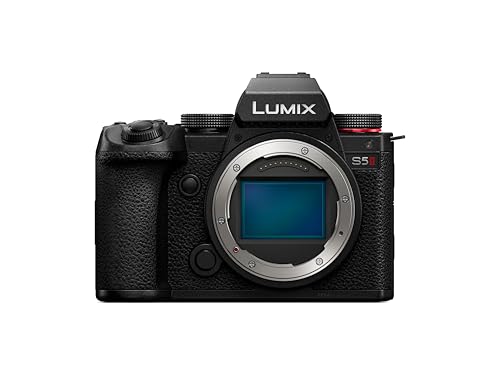
Panasonic LUMIX S5II — Best Overall for Amateur Filmmakers
The S5II is the camera amateur filmmakers graduate to in their heads long before they can justify it — and unusually, the reality matches the fantasy. Its full-frame sensor produces clean, rich footage in the available light of real locations; its in-body stabilisation is the best in this guide, turning handheld walk-and-talks into smooth, intentional moves; and its video toolset — waveforms, shutter-angle thinking, serious recording formats — reads like it was specified by people who shoot for a living, because it was.
What makes it the amateur’s champion rather than merely a professional’s spare body is the autofocus story. Panasonic’s older contrast-based system was the one hesitation filmmakers had; the S5II’s phase-detect autofocus removed it, tracking faces and eyes with the reliability scenes demand. Add recording stamina that respects long takes, a lens mount shared with a multi-brand alliance, and stills quality that covers your production photography and posters, and you have the single-camera answer for a one-person film department.
- Sensor: full-frame with clean high-sensitivity video
- Stabilisation: class-leading in-body system for handheld work
- Tools: professional video assists, strong recording formats, no-nonsense stamina
- Audio: microphone and headphone ports for monitored sound
Strengths
- Handheld footage that looks supported — the single biggest visual upgrade for amateur sets.
- Available-light image quality that forgives borrowed locations and small lighting kits.
- A feature set you grow into for years rather than out of in a season.
Trade-offs
- The largest and heaviest direction here once rigged; plan support accordingly.
- Full-frame lenses cost more, so the kit builds slower than the APS-C paths.
- Its stills burst abilities are modest beside the Sony — irrelevant for film, noted for hybrid shooters.
Best for: serious amateurs making shorts, music videos, and documentaries with festival or client ambitions.
Not suited for: absolute beginners who would be better served learning on a simpler, cheaper body first.

Sony ZV-E10 II — Best Budget Filmmaking Start
The ZV-E10 II understands the modern amateur: you are the director, the camera operator, and usually the actor. Built for creators, it puts video first — a dedicated video-forward interface, autofocus that clings to eyes and can be trusted when you step in front of your own lens, and product-and-face focus behaviours that translate directly to scene work. Its APS-C sensor is clean, its 4K is detailed, and Sony’s E-mount gives it the deepest shelf of affordable fast primes in this guide, which is where cinematic footage actually comes from.
Compromises are the honest price of its class. There is no in-body stabilisation, so handheld work leans on stabilised lenses or a gimbal; there is no viewfinder, which matters less to filmmakers than to photographers; and heavy rigs will dwarf its small body. None of that prevents serious work — it prevents only the fantasy that one purchase ends the spending. As a first filmmaking camera bought alongside a fast prime and a microphone, it is the smartest money in this guide.
- Sensor: APS-C with detailed, clean 4K video
- Autofocus: excellent face and eye tracking for solo filmmakers
- Handling: video-first controls, fully articulating touchscreen
- Lenses: Sony E-mount — the widest affordable choice here
Strengths
- Autofocus reliable enough to act in your own scenes without a focus puller.
- Small and light on gimbals, tripods, and improvised amateur rigs.
- Lens ecosystem lets the kit grow one affordable prime at a time.
Trade-offs
- No in-body stabilisation; plan on stabilised lenses or support.
- Screen-only operation can wash out in harsh midday sun.
- Rolling shutter shows in fast pans if you whip the camera carelessly.
Best for: solo filmmakers, YouTube-to-short-film creators, and budget-conscious beginners who want real growth room.
Not suited for: handheld purists who refuse gimbals, or shooters needing a viewfinder for bright locations.

Canon EOS R50 — Best for True Beginners
The R50 is the friendliest door into filmmaking in this guide. Canon’s guided interface explains what settings do in plain words on the screen itself, the colours — especially skin tones, the thing amateur footage most often gets wrong — are kind straight out of camera, and the autofocus is inherited from bodies far above its station. A beginner can shoot a presentable short on automatic assistance in week one and be learning manual exposure, focus, and frame rates on the same body in month three, which is exactly the arc a first camera should offer.
Its ceilings are real and worth knowing. The RF lens range at amateur prices is still the youngest here, though it grows monthly and adapts older Canon glass well. Recording in the highest quality modes asks more of batteries and cards than casual shooting does. And the body is small in large hands. But as a learning instrument that also produces genuinely good footage — and as the camera least likely to sit in a bag because its owner felt defeated by it — the R50 earns its place with ease.
- Sensor: APS-C with pleasing Canon colour for skin tones
- Interface: guided on-screen help for filmmakers learning the craft
- Autofocus: strong subject and eye detection for the class
- Video: clean 4K and simple controls for first productions
Strengths
- Teaches while it shoots — the beginner’s learning curve is built in.
- Skin tones and colour that flatter amateur actors under imperfect light.
- Compact and unintimidating on small, friendly sets.
Trade-offs
- Affordable native lens range is still developing compared with Sony’s.
- No in-body stabilisation, so movement needs a steady hand or support.
- Advanced video tools are thinner than the Panasonic’s or Sony’s.
Best for: first-time filmmakers who want to learn properly without being punished for being new.
Not suited for: amateurs already fluent in manual cinema technique, who will want the S5II’s depth.

DJI Osmo Pocket 3 — Best Pocket Second Camera
The Pocket 3 is not a main camera, and recommending it as one would be a disservice — it is the camera that makes every other camera in this guide look better. A one-inch-type sensor on a motorised three-axis gimbal, small enough for a jacket pocket, it produces gliding tracking shots, reveals, and walk-throughs that would otherwise require a gimbal rig costing multiples of its price and an operator with practised hands. Amateur films are transformed by movement that looks intentional, and nothing delivers that transformation cheaper or faster.
Its filmmaking manners are surprisingly grown-up: a flat colour profile for grading, good microphones built in with easy connection to DJI’s wireless mic system, subject tracking that follows an actor through a scene, and vertical shooting for the clips that promote the film. Battery life is finite, the fixed lens sees the world one wide way, and low light is good rather than magical. Every amateur set we know that owns one uses it constantly — for the establishing glide, the insert, the behind-the-scenes, the shot the main camera was too big to get.
- Type: gimbal-stabilised pocket camera with large sensor
- Movement: motorised three-axis stabilisation for professional-looking motion
- Audio: quality built-in mics plus wireless microphone pairing
- Modes: subject tracking, flat profile for grading, vertical video
Strengths
- Cinematic camera movement with zero rigging, balancing, or practice.
- Small enough to be present for shots no other camera would attend.
- Tracking and audio make it a genuine solo filmmaking tool, not a toy.
Trade-offs
- Fixed wide lens only — no telephoto, no shallow-depth portrait looks.
- Battery is internal; long shoot days need a charging plan.
- Not a stills camera in any serious sense, and not a main unit for dialogue scenes.
Best for: every amateur as a second camera, and solo creators as a run-and-gun main for movement-led pieces.
Not suited for: being your only camera for narrative work with dialogue and varied lenses.

Sony Alpha 7 IV — Best Step-Up Body
There comes a short film — the one with the real location, the committed cast, the festival deadline — where an amateur stops wanting a beginner’s camera and starts wanting a professional’s. The Alpha 7 IV is that camera in this guide: a full-frame hybrid with a formidable reputation among working filmmakers, offering beautiful, gradable footage, autofocus of genuine production reliability, and the deepest lens and accessory ecosystem in the business. It is the body your work grows into and then stays with.
The honest cautions are about fit, not quality. It rewards filmmakers who light deliberately and grade their footage; shot casually on automatic, it will not flatter you more than the cheaper picks, and its price — body and full-frame lenses — consumes budget that a developing filmmaker might spread further elsewhere. Its video is excellent rather than class-leading in every specification against the Panasonic. But as the destination camera for the amateur turning semi-professional, nothing here is a safer long-term home for your lens investments.
- Sensor: full-frame, high resolution, superb stills and video
- Autofocus: production-grade face and eye tracking
- Colour: flexible profiles for serious grading workflows
- Ecosystem: the deepest lens and accessory range available
Strengths
- A professional tool that ends body upgrades for years.
- Footage with the latitude and cleanliness grading workflows love.
- Stills quality that covers posters, production photos, and a photography sideline.
Trade-offs
- The most expensive system path in this guide once lenses are counted.
- Less forgiving of casual technique than the beginner picks.
- Stabilisation is good, but the Panasonic’s is better for handheld purists.
Best for: advanced amateurs and semi-professionals whose films are entering festivals and paid work.
Not suited for: beginners, whose money works harder split across a cheaper body and the rest of the kit.

Nikon Z30 — Best Simple Value
The Z30 is the quiet achiever of this list: a small, simple, video-minded Nikon that asks little and delivers clean, well-coloured footage with the minimum of fuss. There is no viewfinder and no pretension — a flip screen, clear menus, long recording tolerance for its class, and a tally-friendly design that suits talking pieces, behind-the-scenes, and straightforward narrative coverage. Nikon’s colour science gives skin a natural rendering that more expensive cameras are praised for.
Its limitations mirror its simplicity. No in-body stabilisation, a lens range that is capable but narrower than Sony’s, and fewer filmmaker-specific tools than the Panasonic offers. But there is a kind of amateur — the writer-director who cares about the scene and wants the camera to disappear — for whom the Z30’s refusal to complicate anything is the entire point. Paired with Nikon’s compact standard zoom or a fast prime, it makes films, not excuses, and leaves budget and attention for the story.
- Sensor: APS-C with clean, natural-coloured video
- Handling: simple menus, flip screen, beginner-proof layout
- Recording: generous take lengths for interviews and scenes
- Size: compact body that suits small crews and travel shoots
Strengths
- The least intimidating serious video camera here — set it, shoot the scene.
- Natural colour that treats amateur actors kindly.
- Value that leaves real budget for audio and light.
Trade-offs
- No in-body stabilisation and no viewfinder.
- Fewer advanced video assists than the Panasonic or Sony picks.
- Lens ecosystem is solid but the smallest of the mirrorless mounts here.
Best for: storytellers who want the camera to vanish, and Nikon households adding a video body.
Not suited for: spec-driven filmmakers who want deep video toolsets and stabilisation in-body.
The Six Filmmaking Picks, Compared Head to Head
| Pick | Sensor | Stabilisation | Best filmmaking job | Main limit |
|---|---|---|---|---|
| Panasonic LUMIX S5II | Full-frame | Best in-body here | Serious shorts and docs | Size and lens prices |
| Sony ZV-E10 II | APS-C | Lens-based | Solo and creator filmmaking | No in-body stabilisation |
| Canon EOS R50 | APS-C | Lens-based | Learning the craft | Young lens range |
| DJI Osmo Pocket 3 | 1-inch type, gimbal | Motorised gimbal | Movement and second angles | Fixed lens, not a main camera |
| Sony Alpha 7 IV | Full-frame | In-body, good | Festival and client work | System cost |
| Nikon Z30 | APS-C | Lens-based | Simple, story-first shooting | Thin video toolset |
What Else Should an Amateur Budget for Beyond the Camera?
Sound, first and always. A modest shotgun microphone for on-camera work and a wireless lavalier set for dialogue will improve your films more than any lens, because audiences read bad audio as bad filmmaking instantly and unconsciously. Every body in this guide accepts external microphones; the Pocket 3 pairs natively with DJI’s wireless system. Add headphones — monitoring is not optional — and your sound kit is honestly begun.
Light comes second: one decent LED panel with diffusion and a stand teaches more cinematography in a weekend than a semester of reading, because it forces the question every shot asks — where is the light, and what is it doing to the face? Support third: a video tripod with a fluid head for pans that do not judder, and only then a gimbal, which beginners over-buy and the Pocket 3 often makes unnecessary. Then the unglamorous consumables: fast cards in pairs, batteries in threes, a bag that holds the kit assembled. A camera surrounded by this ecosystem makes films; a camera alone makes test footage.
What Mistakes Do Beginning Filmmakers Make Choosing a Camera?
The flagship mistake is buying resolution instead of a system — the most expensive body the budget stretches to, leaving nothing for the microphone, lens, and light that the audience will actually perceive. The second is ignoring audio inputs entirely and discovering on the first dialogue scene that the camera cannot hear the film. The third is chasing shallow depth of field as a synonym for cinema, shooting everything wide open, and producing footage where nothing is in focus — a look that reads as amateur faster than any other.
Fourth, beginners underrate stabilisation and overrate their own steadiness; the S5II and the Pocket 3 exist in this guide largely to forgive that. Fifth, they buy for the filmmaker they fantasise about becoming rather than the one shooting this month — the beginner who needs the R50’s guidance buys the Alpha 7 IV and stalls, while the advancing filmmaker who needs the Panasonic’s tools buys a toy and chafes. Match the camera to the next two films, not the tenth, and the upgrade path in this list will be waiting when the tenth film arrives.
How Should an Amateur Shoot a First Short Film With One of These Cameras?
Keep the first film small enough to finish: two actors, one location, one day, a story that fits in five minutes. The camera work that serves such a film is mostly discipline — a tripod for the dialogue, the camera at the actors’ eye height, close-ups saved for the moments that matter so they land when they arrive. Every body in this guide can execute that plan beautifully; the ones with strong autofocus let a tiny crew keep takes usable, and the S5II’s stabilisation rescues the day the tripod is forgotten.
Sound on the first film deserves a plan equal to the picture’s: microphone as close to the actors as the frame allows, a quiet location chosen for its acoustics as much as its looks, room tone recorded, and every take monitored on headphones by someone whose only job in that moment is listening. Amateur films fail in post-production on sound recorded carelessly in production; they almost never fail on a camera’s resolution. Direct your limited attention accordingly and the footage from any pick here will cut together into something you are proud to screen.
Finally, finish. Edit the film within a fortnight while the shoot’s lessons are fresh, screen it for honest friends, and write down the three things the next film will do differently. That loop — shoot, finish, review — is the actual curriculum of amateur filmmaking, and the camera that gets you around it most often is the right camera, whatever its sensor size. This is the deeper reason the beginner picks in this guide are so gentle: they keep the loop spinning.
Which Genres Does Each Pick Suit Best?
Narrative shorts belong to the S5II and the Alpha 7 IV, whose image, autofocus, and grading latitude carry faces and stories. Sketches and comedy — speed, improvisation, solo performers — belong to the ZV-E10 II and the Z30, which set up in seconds and forgive chaos. Music videos reward the Pocket 3’s movement and the Panasonic’s slow-motion-capable, stabilised handheld work. Documentary splits by style: observational filmmakers who cannot ask life to repeat itself want the Sony autofocus and the S5II’s stamina, while interview-led pieces thrive on any body here, locked on a tripod, with the budget spent on the microphone.
Travel and wedding work — the amateur’s two great side incomes — favour reliability and discretion: the ZV-E10 II and R50 as second bodies, the Alpha 7 IV as the main, the Pocket 3 for the moving details nobody else caught. None of these genre matches is exclusive; a determined filmmaker bends any tool to any story. But matching the body’s temperament to the genre’s demands removes friction from every shoot day, and amateur filmmaking, done in stolen weekends, survives on removed friction.
How Do You Grade and Finish Amateur Footage Without Making It Worse?
Start from the camera’s kindest profile while you learn. The flat profiles in the Panasonic, Sony, and Pocket 3 hold the most information for grading, but they demand a gentle hand: lift the shadows a little, restore contrast in an S-curve, warm or cool the white balance to the scene’s intention, and stop. The amateur grading failure is enthusiasm — saturation and contrast pushed until skin goes orange and skies go electric. Compare against the ungraded frame constantly, and prefer the version that looks like the day felt.
Shoot a grey card or simply set white balance deliberately per location, and your footage will match between angles without a fight in the edit. Keep exposure honest — highlights protected, because clipped windows never come back — using the zebras and histograms these cameras provide. The finishing skill that matters most, though, is restraint with the timeline: cut the scene that does not serve the story however beautiful its footage, and your amateur film becomes the thing professionals recognise — a film, not a showreel. The cameras here give you images worth that discipline.
What Frame Rates and Settings Should an Amateur Actually Use?
Less exotic than the menus suggest. The backbone of filmmaking is 24 frames per second with a shutter near the classic 180-degree relationship, which produces the motion blur audiences read as “film.” Every pick here handles that baseline beautifully. Slow motion — shooting at higher frame rates to play back at 24 — is a spice: the impact shot, the dance phrase, the product splash. Use it deliberately and it elevates a scene; use it everywhere and it becomes a screensaver.
Resolution discipline: capture in 4K for the reframing freedom described in the FAQ, set white balance manually per location rather than trusting auto under mixed light, and expose for the highlights. Record in the camera’s better codec when cards allow, but never let codec anxiety delay a shoot — the difference between these cameras’ good and best formats is visible to editors, not audiences. The settings that will actually mark your footage as considered are boring ones: consistent frame rate, consistent white balance, consistent exposure philosophy across a whole film.
How Does a One-Person Crew Run a Shoot Day Without Chaos?
The solo filmmaker’s enemy is not image quality; it is logistics. The kit that wins is the kit that fits one bag and sets up in minutes: body, two lenses, microphone, small light, tripod — the configuration every pick in this guide supports, with the Pocket 3 riding along for movement. Shoot in story order when locations allow, keep a paper shot list and mark it physically, and build the day around the light you cannot control: exteriors in the kind hours, interiors when the sun is hostile.
Data discipline is the invisible craft. Cards labelled, footage offloaded and backed up the same night, batteries on charge before dinner — these habits are why some amateurs have archives and others have anecdotes. The cameras here all help with dual file naming, relay recording behaviours, or simple USB transfer; the habit itself is yours to build. A one-person crew that runs a tidy day makes films that look crewed, which is the amateur’s whole magic trick.
When Should an Amateur Upgrade, and What Should Come First?
Upgrade when a limitation has cost you the same shot three times — not when a new model launches. The usual honest sequence: the fast prime lens first, because it changes the image most; the microphone upgrade second, because audiences feel it most; light third; support fourth; and the body last, when the current one’s ceiling — low light, autofocus, stabilisation — is demonstrably the thing holding finished films back. Followed honestly, that sequence walks a filmmaker from the R50 or ZV-E10 II start to the S5II or Alpha 7 IV exactly when the work justifies it, with a lens collection that carries across.
Notice what that sequence implies about this list: it is a ladder, not a leaderboard. The beginner picks are not failed versions of the flagship picks; they are the right tools for the films being made at that rung, priced to leave budget for the rest of the ladder. Buy the rung you are standing on, climb by finishing films, and let each upgrade be a receipt for work done.
What About Filming Performances, Events, and Family Milestones Alongside Shorts?
Amateur cameras earn their keep between films. The school play, the band’s first gig, the grandmother’s ninetieth — these are long, dim, unrepeatable, and shot from wherever you are standing. The qualities that serve them are the unglamorous ones threaded through this guide: clean high-sensitivity footage, autofocus that finds a face in a crowd and stays, recording stamina without drama, and stabilisation for the handheld reality of a seat in row nine. The S5II and Alpha 7 IV are the naturals here; the Z30’s relaxed long recording and simple ways make it the sleeper pick for events; the Pocket 3 films the party from inside it like nothing else.
These sideline shoots are also where the amateur’s reputation — and eventually income — quietly forms. The friend whose wedding you filmed as a favour recommends you to the couple who pay. Treat the milestones with the same sound and light discipline as the shorts, deliver promptly, and the camera you bought for art starts paying rent. Several picks here were chosen with exactly that double life in mind.
How Do You Keep Amateur Footage Safe Across a Whole Project?
A short film exists as files before it exists as a film, and files are fragile in ways film never was. The working rule is three copies, two kinds of storage, one off-site — scaled to amateur reality: the card, the computer, and a portable drive or cloud folder that does not live in the same bag. Offload every shoot day without exception; format cards only after two copies verify; name folders by date and scene so future-you can find the take at midnight in the edit.
The cameras in this guide support the habit with fast USB transfer and, in the larger bodies, recording behaviours that add resilience. But the system is behavioural, not technological. The amateur who backs up religiously can survive a stolen bag with the film intact; the amateur who does not can lose a finished short to a dropped drive. Of all the unglamorous advice in this guide, this is the paragraph that will matter most on the worst day of your filmmaking life.
Should an Amateur Buy New or Used Filmmaking Gear?
Bodies are the riskiest used purchase and lenses the safest, and that asymmetry should shape the budget. A used lens from a reputable listing — glass clean, focus smooth — delivers its full value for decades; a used body carries unknown shutter and sensor history and no warranty on the shoot day that matters. The pragmatic amateur pattern is a new body from the middle of this guide — the ZV-E10 II or R50 class — surrounded by carefully bought used lenses, a used fluid-head tripod, and new audio, because microphones suffer invisible abuse and their cost is small.
Buying through the linked Amazon listings also brings the returns window, which for a beginner is a feature: a camera whose handling you dislike in week one is a camera you will not shoot films with in month six, and exchanging early is cheaper than resenting long. Whichever route you take, buy the system as a planned kit list rather than an accumulation of impulses — the list in this guide’s budget section is the shape of that plan.
What Does a Sensible First-Year Filmmaking Kit Look Like, Assembled?
Assembled around the ZV-E10 II, it reads: the body, its kit zoom for range, one fast prime for beauty, a shotgun microphone, wireless lavaliers when dialogue becomes central, a fluid-head tripod, a small LED panel with diffusion, three batteries, four fast cards, headphones, and a bag that swallows it assembled. Around the S5II the same list stands, with full-frame prices on the lenses and a heavier tripod beneath. Around the R50, swap the prime for Canon’s affordable standard and keep the change for the light.
Notice that in every assembly the camera body is roughly a third of the working kit’s value. That proportion is the single most reliable sign of a well-bought amateur system — and its inversion, a flagship body with nothing around it, is the signature of test footage that never became a film. Buy the third, then go and shoot the film the kit was for.
How Should You Practise Before the First Real Shoot?
Give the camera a fortnight of low-stakes work before it meets a cast. Film a walk around the block at the settings you intend to use and watch it on the biggest screen you own: the shake, the focus hunting, the exposure pumping will all be there, and each is a lesson with no audience. Film a friend reading a page of dialogue across a room, microphone first on the camera, then close — the difference, heard once, permanently reorganises a beginner’s budget priorities. Film the same interior at noon, dusk, and under lamps to learn what your light actually does.
Learn the three controls until they are reflexes: exposure compensation or manual exposure, focus mode switching, and white balance. On a shoot day, with actors waiting and light fading, there is no time to consult a menu’s third page; the filmmakers whose footage looks calm are the ones whose hands already knew. Every pick in this guide can be operated to that standard within the fortnight, and the beginner models are designed to shorten exactly this apprenticeship.
And is a gimbal necessary? No — and for many beginners it is a distraction bought before its time. A tripod, a slider’s worth of careful pans, and the stabilisation in bodies like the S5II cover most narrative movement, while the Pocket 3 delivers genuine gimbal shots for less than most gimbals cost. Add a full gimbal when your films’ language genuinely demands long choreographed moves and your current tools have demonstrably failed to deliver them — by then you will also have the operating skill to make it sing.
What Separates the Amateur Who Finishes Films From the One Who Collects Gear?
Having watched the pattern across many beginners, we will risk the observation this whole guide bends toward: the finishers treat the camera as a means and schedule shoots; the collectors treat it as an end and schedule purchases. The finishers’ cameras in this list are often the humbler ones — an R50 with a prime and a microphone, a Z30 and a tripod — because their money and attention went to scripts, locations, and the discipline of a monthly shoot. Their footage improves at the speed of finished work, which is the fastest speed there is.
If you recognise the collector’s pull in yourself, the kindest purchase is the one that removes excuses: the camera that is simple enough to use this weekend, on the project already in your head, with the microphone included in the same order. Momentum is the amateur’s real equipment. Buy for the film you will shoot on Saturday, and let Saturday’s footage argue for whatever comes next.
Final Recommendation
Start where you are. True beginner: the Canon EOS R50, and learn the craft on a camera that teaches. Budget-conscious creator: the Sony ZV-E10 II with a fast prime and a microphone, the strongest first kit in this guide. Story-first minimalist: the Nikon Z30. Serious amateur ready to commit: the Panasonic LUMIX S5II, the most complete filmmaking tool here. Turning professional: the Sony Alpha 7 IV. And whatever body you choose, add the DJI Osmo Pocket 3 when you can — it is the cheapest revolution in how your footage moves.
Above all, finish a film with the camera you buy. A completed short on the humblest pick in this guide teaches more, screens better, and opens more doors than an abandoned epic planned around a flagship. The best camera for amateur filmmaking is the one whose limitations you learn by shooting straight through them.
Frequently Asked Questions
Do I need 4K for amateur filmmaking, or is 1080p enough?
1080p delivered well still screens fine almost everywhere amateur films are shown, but 4K capture earns its keep in the edit: you can reframe, stabilise, and crop into a 1080p master with room to spare, which rescues compositions constantly. Every pick here shoots strong 4K, so shoot 4K and deliver at the resolution your venue wants.
What is the first lens a filmmaking beginner should buy?
A fast standard prime — the affordable “nifty fifty” class lens in your mount, or its APS-C equivalent — because it teaches composition by forcing you to move, opens up for low light and shallow depth, and costs less than almost any other upgrade. Kit zooms are for learning range; the prime is for making images. This is why the depth of each mount’s affordable prime range threads through the reviews above.
How important is in-body stabilisation for filmmaking?
For handheld and gimbal-free movement, it is the difference between usable and unusable footage, which is why the S5II leads this guide and why the Pocket 3’s gimbal earns its place. On a tripod — where much narrative work lives — it matters far less. Judge it by how your films actually move, not by the spec’s prestige.
Can these cameras record a whole short film without overheating or stopping?
Amateur scenes are shot in takes of seconds to a few minutes with resets between, and every pick here handles that rhythm comfortably. Long continuous recording — events, interviews, theatre — is the sterner test; the Z30 and S5II are notably relaxed about it, and sensible practice (airflow, screen brightness discipline, mains power where possible) keeps any of these bodies rolling through a production day.
Should I learn manual focus or rely on autofocus?
Both, in that order of daily use. Modern autofocus in the Sony, Canon, and Panasonic picks is reliable enough to carry most amateur scenes and all solo work. Manual focus remains the craft skill for deliberate rack focuses, low-light precision, and lenses adapted from other systems — and learning it on a camera with good focus assists, as these have, is how the skill becomes pleasure rather than chore.
Which of these cameras is best if I mostly shoot alone?
The ZV-E10 II, with the Pocket 3 as its accomplice. Sony’s autofocus and flip screen were designed around the solo operator: set the camera, step into frame, and trust the eye tracking while you perform. The Pocket 3 extends that independence to movement — tracking shots of yourself walking, talking, and working that no static camera can give a crew of one. Solo filmmakers should also weight the headphone jack and simple audio workflow heavily, because there is no second pair of ears on set; every body recommended here was checked for exactly that.
Can an amateur camera handle a feature-length project?
Yes — features have been shot on less than the humblest body in this guide, and the limiting factors at feature length are stamina, storage discipline, and the production’s organisation rather than the sensor. The S5II and Alpha 7 IV are the comfortable choices for a feature’s long schedule; the APS-C picks can absolutely serve as main or second cameras with the backup and battery routines described earlier. What a feature cannot survive is an unfinished one, so choose the body your budget can fully equip.
How do I stop my footage looking like a home video?
Three changes, in order of impact. First, control the light: turn off the ceiling lights, put your subject near a window or your one LED, and let the background fall darker than the face. Second, get the microphone off the camera and near the actor — echoey, distant sound is the home-video signature audiences notice first. Third, lock the camera down or move it with intention: a tripod shot and a deliberate gimbal glide read as filmmaking, while constant handheld wandering reads as a holiday. Every camera in this guide supports all three changes today, with the equipment you already own plus a microphone.
How should I back up and organise footage during a shoot day when I am working alone?
Working alone removes the safety net of a second person watching the cards, so build a routine that runs even when you are tired. Shoot onto cards in order, never erase a card in camera, and turn each filled card face down in a separate pouch so its status is visible at a glance. At lunch and again at wrap, copy every card to a laptop or portable drive, then make a second copy to a different drive before anything gets formatted, checking that file sizes and clip counts match on both copies. Keep the two drives in different bags on the journey home. Rename folders by scene and date rather than relying on camera file numbers, and add a short text note about which takes felt strongest while the memory is fresh. Back at base, leave the cards untouched until the edit has a rough assembly, so the originals remain your third copy. This unglamorous discipline protects a small production far more reliably than any recovery software, and it costs nothing except attention at the two moments in the day when attention is easiest to lose.
Related Guides
Rounding out the amateur kit? See our guides to cameras for short-form video creators moving into filmmaking, gimbal cameras and pocket stabilised cameras compared, and full-frame cameras for video at every budget level.