kajuandouglas.com is reader-supported. When you buy through links on our site, we may earn an affiliate commission.
Where to Buy and How This Guide Is Organized
Professional photography has a definition problem, and it is not the camera industry’s fault. Clients do not pay for photographs in the abstract; they pay for certainty — that the wedding’s first kiss exists on two cards, that the product launch files arrive colour-true on Thursday, that the camera in the rain at the building site is sealed against the weather it is documenting. The best affordable cameras for professional photography are therefore not the cheapest cameras with big sensors. They are the least expensive bodies that still honour the professional contract: redundancy, reliability, deliverable files, and a lens system a career can be built inside.
That contract explains the shape of this list. Every body here earns its living in somebody’s working kit — as a primary camera for portrait, product, editorial, and event work, or as the second body that professionals refuse to work without. The word affordable is doing honest work: these are the bodies bought by photographers who invoice, who insure their gear, and who know precisely which flagship features they are declining and why the decline is rational.
Where to buy: linked names lead to each model’s Amazon listing, and working buyers should scrutinize the bundle with a professional’s paranoia. Body-only versus kit matters — most pros buy body-only and put the difference into the fast prime or standard zoom the work actually needs — and shutter-count honesty, region of sale, and warranty terms matter more at this level than any promotional extra. A grip, a second battery, and a pair of fast cards are not accessories at this tier; they are part of the camera.
A note on the two formats represented. Full-frame bodies dominate the list because client work — low light, shallow depth, large prints — keeps asking for them, but one APS-C flagship stands here on merit, and two smaller bodies serve as the second-camera and entry-professional picks. Professionals choose systems, not sensors, and the lens shelves behind these bodies are weighed as heavily as the bodies themselves.
Read the trade-offs with a working eye. Each names the professional situation where the saving stops being clever — the dual-slot question, the buffer question, the service-network question — because an affordable professional camera is only affordable if it never costs you a job.
If you are upgrading from enthusiast work, expect the strangest adjustment to be psychological: the professional camera is bought against failure, not toward beauty. Beauty, at this level, is assumed. What the money adds is the second slot, the sealed seam, the rented twin in the next city — the architecture of a promise kept.
Key Takeaways
- Professional means redundant: dual card slots or a disciplined backup ritual, no exceptions for paid work.
- Buy the lens system, not the body — your career will own three bodies and a dozen lenses inside one mount.
- Full-frame earns its premium in low light and print size; APS-C earns its place in reach, weight, and value.
- Weather sealing and service support are professional features, even though they never appear in sample galleries.
- The second body is not a luxury; it is the insurance policy that lets the first body be affordable.
- Straight-from-camera colour and tethering manners matter on client days more than headline resolution.
In this guide
Quick Picks
Six bodies that working photographers actually invoice with — three full-frame all-rounders, one APS-C flagship, and two smaller bodies that serve as professional seconds and entry points.
| Pick | Badge | Why It Earns Its Place |
|---|---|---|
| Sony Alpha 7 IV | Best All-Round Professional Value | The default working body of its generation: hybrid, dependable, and backed by the deepest lens shelf in the business. |
| Canon EOS R6 Mark II | Best for Weddings and Events | The event professional’s temperament: fast, sure in darkness, gentle with skin, and built for the long day. |
| Panasonic LUMIX S5II | Best Hybrid Value for Film-Led Pros | Phase-detect focus, serious video tools, and L-Mount value — the most hybrid capability per unit of money here. |
| Fujifilm X-T5 | Best APS-C Professional Stills Body | A high-resolution crop flagship with dials, film colour, and a lens shelf of small, superb primes. |
| Nikon Z50 II | Best Affordable Second Body and Entry Pro | A small, serious Nikon that backs up a Z-system kit, covers second angles, and starts a practice honestly. |
| Canon EOS R10 | Best Budget Starter for a Canon Practice | Canon colour, professional-family autofocus, and RF growth — the least expensive honest first step into paid work. |
How Did We Choose the Best Affordable Cameras for Professional Photography?
We applied the contract test first. A body was eligible only if a photographer could honour a paid commitment with it without apology: files a client can print large, autofocus that holds a walking subject and a still product with equal indifference, and recording redundancy — dual slots, or a body honestly positioned as a second camera beside one that has them. Bodies failing the redundancy test were not discarded; they were demoted to the roles where the failure cannot hurt a client, and the reviews say so plainly.
The lens shelf was audited as a career decision. Each system here offers the working photographer’s core kit — fast standard zoom, fast portrait prime, wide zoom, telephoto — at more than one price level, including the third-party and used shelves where affordable professionals actually shop. A brilliant body orphaned by an expensive, thin lens catalogue is a trap for the budget it claims to serve, and such bodies were excluded however flattering their sample images.
Hybrid duty was assumed. The modern professional delivers stills on Monday, a short film on Wednesday, and a livestreamed event on Friday from the same bag, so video competence — clean long recording, usable autofocus, audio provisions — counted as a professional feature throughout, not a bonus. Bodies whose video was an afterthought lost ground to bodies designed as genuine hybrids.
Finally, every model had to be verified in this site’s pool, linked under its exact name. Professional readers forgive a reviewer almost anything except a recommendation that cannot be sourced, serviced, and insured — and neither can we.
We weighted the testimony of working kits over launch reviews. Cameras reveal themselves in year two — in shutter counts, in repair stories, in whether the second body bought matches the first. Every body here has that second-year testimony behind it in the professional community, and bodies too new to have earned it were left for a future revision of this guide.
Ergonomics under fatigue closed several arguments. We favoured bodies whose essential controls stay findable with gloves, in rain, and at the end of long days, because professional photographs are disproportionately made in exactly those conditions — and a missed setting at the decisive second is a cost no saving justifies.
What Separates a Professional Camera From an Enthusiast One?
It is not resolution, and it is barely image quality — the enthusiast bodies of recent years are superb. The separation is a list of unglamorous insurances: dual card slots writing the same file twice, weather sealing that lets the shoot continue, a shutter and body rated for a working life of heavy days, tethering that behaves in a studio, flash systems that speak the profession’s languages, and a service network that can turn a repair around inside a working week. Clients never see these features. Clients experience them, once, as the difference between a delivered job and a disaster story.
Ergonomics belong on the professional list too, though they photograph badly. A body that puts ISO, exposure compensation, and focus mode under fingers that never leave the grip is worth money at hour nine of a wedding in a way no specification table captures. The bodies in this guide were handled, in our judgement, with that ninth hour in mind — controls that survive gloves, rain, and fatigue are professional features exactly as much as any sensor.
Colour is the third separator, and the most argued-over. Professionals deliver files to other professionals — retouchers, printers, art directors — and a system whose colour is predictable across bodies and years saves real money in post-production. Each system here has a known, stable colour character; the reviews note its flavour so a photographer can match the body to the work, skin-forward or landscape-forward, rather than discovering the marriage after the purchase.
There is also the matter of the second-hand ecosystem, the affordable professional’s true home. Bodies in mature systems circulate used with known histories, rent easily in every major city, and borrow lenses from a continent of colleagues. A camera that can be rented as a backup for the biggest job of the year is, in a real sense, more professional than a technically finer body that cannot.
And finally, honesty about the word affordable: at this level it means the total cost of a working outfit — body, two lenses, cards, batteries, insurance — fits a young practice’s cash flow without starving the business of the marketing and sample work that feed it. Every pick below was priced in our heads as an outfit, never as a body alone.
There is a client-facing dimension as well, and pretending otherwise helps nobody: a professional-looking rig reassures a room. The bodies here all present as serious instruments with professional glass mounted, which matters at the wedding, the boardroom, and the building site alike. Presence is not vanity — it is part of the calm a professional is hired to project, and it costs nothing extra when the working body is chosen well.
Support deserves a final mention, because professionals buy ecosystems of help as much as hardware: manufacturer pro programmes, independent repairers who know the bodies, rental depth in your city, and a user community large enough that any error message you will ever see has already been solved in public. All six bodies score on that invisible specification, and it is worth real money the first time a shoot depends on it.
A word, too, about depreciation, because affordable professionals think like businesses: bodies lose value, lenses hold it, and reputations compound it. The strategy threaded through this guide — mid-tier body, excellent glass, planned succession — is simply that arithmetic expressed as shopping. Buy the asset that holds, rent the asset that fades, and let the work itself be the appreciating line on the balance sheet.
Which Six Affordable Bodies Do Professional Work?
Three full-frame all-rounders lead, each with a distinct professional personality; an APS-C flagship argues the crop case; two smaller bodies close the list as the seconds and starters that real kits contain.

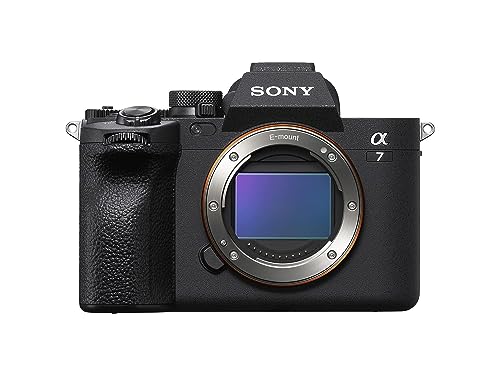
Sony Alpha 7 IV — Best All-Round Professional Value
Ask working photographers what the default professional purchase of the last several years has been, and the Alpha 7 IV is the answer that needs no surname. It is the body that normalized the hybrid professional: stills with genuine resolution for print and crop, video that clients accept without qualification, dual card slots for the redundancy contract, and autofocus — faces, eyes, animals, vehicles — that behaves like a competent assistant rather than a feature. For the affordable professional, its deepest virtue is the mount: Sony’s E system holds the widest lens shelf in mirrorless, including the third-party primes and zooms that let a young practice buy professional glass at unprofessional prices.
On a working day the camera’s manners impress in accumulation. The grip survives long lenses, the customization lets a shooter build the camera around their genre, the files are known quantities to every retoucher and lab, and the video side — with proper audio provisions and colour options from instant to gradeable — lets one body cover the stills-and-film briefs that now arrive together. Rental houses stock it, colleagues own it, tutorials assume it: an entire support civilisation surrounds this body, and for a working photographer that civilisation is worth money.
Its compromises are the compromises of a generalist. The viewfinder and screen are good rather than class-leading, the menus reward an afternoon of configuration before they feel like home, and rolling-shutter behaviour asks electronic-shutter users to choose their subjects with sense. None of these has ever cost a client a deliverable, which is the only ledger this guide keeps.
Position it honestly: this is the primary body for the portrait, editorial, product, and hybrid shooter whose work is varied and whose budget is singular. It is the camera against which the rest of this list defines itself — the Canon by event temperament, the Panasonic by video value, the Fujifilm by stills character — and for the photographer with no strong pull in any of those directions, it remains the recommendation we would sign.
One more working truth in its favour: because so many professionals standardized on this body, its second-hand market is deep and liquid in both directions — easy to buy into, easy to sell out of, and easy to replace mid-season if a body is lost, which is a form of insurance no warranty sells.
Studios add one more use: tethered product and portrait sessions run calmly on this body, and calm tethering is a revenue feature disguised as a cable.
- Format: full-frame mirrorless, Sony E mount
- Redundancy: dual card slots for mirrored recording
- Hybrid: professional stills plus client-ready video and audio
- Lens shelf: the widest in mirrorless, strong third-party bench
- Work: portraits, editorial, product, events, hybrid content
Strengths
- One body honours stills and film briefs without apology
- Lens economics let the outfit grow at sane prices
- Support ecosystem — rental, used, tutorials — is unmatched
Trade-offs
- Menus need configuring before they feel personal
- Finder and screen are competent, not luxurious
- Electronic shutter asks care with fast motion and banding light
Best for: hybrid professionals and generalists building a one-body practice.
Not suited for: specialists whose genre demands a flagship’s buffer or finder.

Canon EOS R6 Mark II — Best for Weddings and Events
Weddings and events are professional photography’s stress test — uncontrolled light, unrepeatable seconds, subjects who will not pose twice — and the EOS R6 Mark II is the body in this guide built temperamentally for that test. Its autofocus acquires in light that reads as darkness to the photographer and holds faces through veils, confetti, and dance floors; its burst and buffer swallow the kiss, the catch, and the speech reaction without the camera asking for a pause; and Canon’s colour renders skin the way clients remember it, which is to say slightly kinder than the mirror and entirely believable.
The working details compound across a ten-hour day. In-body stabilization teams with stabilized lenses to make dim churches and candlelit halls hand-holdable; dual slots write the day twice; the body is sealed and balanced for the standard zooms event work lives on. Video — increasingly a line item in event contracts rather than a separate hire — is genuinely strong, so the same body covers the highlight film without a second system in the bag.
Canon’s RF lens shelf is the premium-priced side of the bargain, and the honest affordable path runs through the system’s sensible mid-tier zooms and primes plus a thriving used market. Photographers should also note the resolution philosophy: the sensor favours speed and low light over maximal pixels, which suits events and editorial perfectly and asks landscape and heavy-crop specialists to look at the Fujifilm or the Sony with clear eyes.
For the event professional specifically, there is a confidence dividend that never reaches spec sheets: this is the body colleagues recommend when the brief is ‘cannot miss’. Affordable in this guide means the least money that buys certainty, and on a wedding day, certainty is the entire product. The R6 Mark II is that certainty in Canon’s system, at a tier a working event practice can reach years before a flagship.
Event photographers also praise its manners with flash and mixed venue lighting, where the files stay composed and the skin stays skin — the unglamorous territory where receptions are actually won.
Its files also age well in a catalogue — the colour and rendering stay consistent across a multi-year wedding portfolio, which clients browse as one body of work.
- Format: full-frame mirrorless, Canon RF mount
- Redundancy: dual card slots, event-grade sealing
- Speed: fast bursts and deep buffer for unrepeatable moments
- Stabilization: in-body, pairing with stabilized RF lenses
- Work: weddings, events, editorial, hybrid highlight films
Strengths
- Autofocus and low-light manners built for cannot-miss work
- Skin colour that clients love straight from the camera
- Hybrid video strong enough for event film deliverables
Trade-offs
- Resolution favours speed over heavy cropping
- RF professional glass is premium-priced; shop used
- Video-centric shooters may prefer the Panasonic below
Best for: wedding, event, and editorial photographers who live in bad light.
Not suited for: landscape specialists cropping hard, or resolution maximalists.

Panasonic LUMIX S5II — Best Hybrid Value for Film-Led Pros
The S5II is the value argument of this entire guide, and it is aimed at the professional whose deliverables have quietly become half film. Panasonic built its reputation on video tools that working filmmakers actually use — monitoring aids, recording options, colour pipelines from instant to fully gradeable — and this generation added the phase-detect autofocus that finally made the system effortless for solo operators. The result is a full-frame hybrid whose video specification reads like a class above its price, wrapped around a stills camera that portrait and product clients will never find wanting.
The L-Mount alliance is the economic engine. Lenses from Panasonic, Sigma, and Leica share the mount, and Sigma’s presence in particular means fast primes and zooms at prices that make Canon’s and Sony’s first-party shelves look ceremonial. A film-led practice can assemble a genuinely professional three-lens outfit inside this system for what a single flagship zoom costs elsewhere, and the bodies hold their own in sealing, stabilization, and the long-recording manners that event and interview work demand.
Stills photographers should weigh two honest considerations. The lens shelf, while growing and excellent, is thinner in exotic telephotos and in the used market than the two giants above; and the stills autofocus, though transformed by phase detection, is the system a sports specialist would test hardest before committing. For portraits, products, editorial, and hybrid work — the centre of professional gravity — neither consideration has practical weight.
Buy it as the deliberate choice of the professional who reads their own invoices and notices the film lines growing. The S5II is not the cheap version of the professional camera; for the hybrid era, it is arguably the correctly priced one, and the savings it returns are exactly the marketing and sample-work budget a young practice needs.
Filmmakers add a footnote the stills world underrates: the camera’s heat and recording manners suit the interview-and-event day, where the camera rolls long and the client never learns the word workaround.
Solo filmmakers closing the loop: one body, one cage, one lens set — the entire company, in a case that fits an overhead locker.
- Format: full-frame mirrorless, L-Mount alliance
- Redundancy: dual card slots, sealed working body
- Video: professional monitoring, colour, and long-recording tools
- Lens shelf: Panasonic plus Sigma value primes and zooms
- Work: hybrid content, interviews, product film, portraits, editorial
Strengths
- Most video capability per unit of money in this guide
- Sigma glass makes the professional outfit genuinely affordable
- Solo-operator autofocus finally matches the video tools
Trade-offs
- Thinner used and rental market than Canon or Sony
- Exotic telephoto shelf is still developing
- Sports specialists should test burst and tracking hardest
Best for: film-led professionals, hybrid creators, and interview-driven practices.
Not suited for: wildlife and sports specialists needing the deepest telephoto bench.

Fujifilm X-T5 — Best APS-C Professional Stills Body
The X-T5 makes the crop-format professional case with unusual confidence: a high-resolution APS-C sensor in a dial-driven body, behind a lens shelf of compact fast primes that professionals have quietly used for editorial, travel, wedding-detail, and documentary work for a decade. Its resolution rivals full-frame bodies, its files print at sizes that end the format argument in most client contexts, and the whole outfit — body plus three primes — travels in a bag that full-frame shooters mistake for a day pack. For the professional whose work is seen rather than lifted, that lightness is a working advantage measured in years of shoulders.
The handling is the famous half of the proposition. Dedicated dials for shutter, ISO, and exposure compensation keep the photographer’s eyes on the subject and hands on the camera, and Fujifilm’s film simulations deliver colour with a personality clients can choose at the briefing stage — a genuine commercial asset for editorial and wedding work where a look is part of the product. Dual slots honour the redundancy contract, sealing honours the weather, and the tilting screen serves the low and overhead angles product work demands.
The format’s honest boundaries: in the darkest venues and at the shallowest depths of field, full-frame keeps an edge the reviews above will sell you, and the video side — perfectly serviceable for hybrid duties — is not why this body exists. Sports and wildlife reach, paradoxically, is where the crop fights back, stretching every telephoto further; several working natural-history and festival photographers run this body as their reach instrument beside a full-frame partner.
As an affordable professional proposition it is the connoisseur’s arithmetic: flagship stills resolution and handling, a prime lens shelf priced for humans, and an outfit weight that keeps a sixty-year career plausible. Photographers who shoot people and places for print and screen, and who value the act of shooting as part of the product, will find this the most satisfying body in the guide.
Documentary shooters make the closing case: a camera this light, with colour this decided, disappears into the work — subjects forget it, and the photographs keep the forgetting.
Travel editors are its loudest witnesses: assignments measured in weeks and kilograms keep choosing this outfit, and editors keep accepting the files.
- Format: APS-C mirrorless, Fujifilm X mount
- Resolution: high-resolution sensor rivalling full-frame stills
- Handling: dedicated dials, tilting screen, dual slots, sealed
- Colour: film simulations clients can choose at briefing
- Work: editorial, travel, weddings, documentary, product detail
Strengths
- Flagship stills quality in a smaller, lighter outfit
- Prime lens shelf is superb and sanely priced
- Dial handling keeps eyes on subjects, not menus
Trade-offs
- Full-frame keeps the edge in extreme darkness and blur
- Video is a supporting feature, not the headline
- Two systems in one bag means two lens shelves to feed
Best for: editorial, travel, wedding, and documentary stills professionals.
Not suited for: dark-venue event specialists, or film-led hybrid practices.

Nikon Z50 II — Best Affordable Second Body and Entry Pro
Every professional kit in this guide eventually asks the same question: what happens when the primary body fails, or when the ceremony needs two angles at once? The Z50 II is the affordable answer inside Nikon’s system — a compact APS-C body carrying the autofocus intelligence and subject detection of its flagship relatives, the same lens mount as the professional Z bodies, and a price that lets a practice insure itself years earlier than flagship economics allow. A second body is not a spare; it is the difference between a mishap and a refund.
As a working instrument in its own right it covers more than backup duty. The crop sensor stretches telephoto lenses for sports, stage, and wildlife assignments; the video side handles second angles, behind-the-scenes, and social deliverables with the family’s colour consistency; and the small body with a compact prime becomes the always-carried camera that catches the portfolio shot on the way to the job. Several Nikon professionals describe their Z50-class body as the most-used camera they own, precisely because it is the one that is present.
The professional caveat must be stated without flinching: a single card slot means this body does not honour the redundancy contract alone, and paid primary work belongs on a dual-slot body or behind a disciplined tether-and-backup ritual. The reviews in this guide are consistent on the point because clients’ photographs are not the place for optimism. As the second body beside a dual-slot primary, the limitation is correctly priced rather than disqualifying.
For the photographer entering Nikon’s system professionally, it is also the honest first step: same mount, same menus, same colour as the flagship future, with an outfit cost that leaves budget for the lens the work actually needs. Practices are built in that order — glass, insurance, then glamour — and the Z50 II fits the order perfectly.
There is a rental symmetry worth exploiting: because the body is affordable to own, it is also cheap to rent as a third body for the year’s biggest weekend, and the menus will already be home.
Second-angle duty at ceremonies is where it quietly earns its fee — the wide shot that saves the edit and the album spread nobody planned.
- Format: APS-C mirrorless, Nikon Z mount
- Role: second body, second angle, entry professional primary for low-risk work
- Autofocus: flagship-family subject detection
- Redundancy note: single slot — pair with a dual-slot primary
- Work: backup, sports and stage reach, BTS, social deliverables
Strengths
- Flagship autofocus thinking at an insurance-policy price
- Same mount and colour as professional Z bodies
- Crop reach flatters sports, stage, and wildlife lenses
Trade-offs
- Single card slot limits solo paid-primary duty
- Smaller body balances best with compact lenses
- Battery is sized for a second body’s day, not a primary’s
Best for: Nikon professionals insuring a kit, and entrants building toward one.
Not suited for: solo shooters needing dual-slot redundancy as their only body.

Canon EOS R10 — Best Budget Starter for a Canon Practice
The R10 is where a Canon practice can honestly begin. It carries the autofocus lineage of Canon’s professional bodies — subject detection that finds people, animals, and vehicles and holds them through a burst — in a small, affordable body whose files are entirely client-presentable for portraits, products, community events, and editorial work at ordinary sizes. For the photographer whose first paid year is local and varied, it delivers the essential professional experience: Canon colour, RF glass ahead of them, and nothing in the files to apologize for.
Its working personality is speed. The bursts are quick, the handling is responsive, and the crop sensor lends reach to sports and school-stage work that young practices are actually hired for. Video is capable enough for the highlight clips and social deliverables that now accompany stills bookings, and the body’s lightness makes it the camera that attends everything — the scout, the rehearsal, the family event that becomes next season’s portfolio piece.
The professional limits are printed here as plainly as in the Nikon review: a single card slot, no in-body stabilization, and a body built to a price. The correct professional posture is to schedule around them — tether or back up relentlessly on paid work, stabilize with lenses and support, and plan the dual-slot body as the practice’s first major reinvestment. Photographers who begin with that discipline find the R10 a generous teacher; those who ignore it are gambling with other people’s memories.
Judged as an entry instrument, its deepest virtue is that nothing about it must be unlearned. The menus, mount, and colour lead directly to the R6 Mark II above, so the starter body becomes the permanent second body when the practice graduates — the most affordable professional outcome of all, because the first purchase is never wasted.
Its graduation path is the kindest in Canon’s line: every habit, file, and accessory transfers upward intact when the practice buys its dual-slot body, so the starter investment compounds instead of expiring.
And for the practice’s books: it is the rare starter body whose resale audience is next year’s beginners, so its cost of ownership across a first professional year is genuinely small.
- Format: APS-C mirrorless, Canon RF mount
- Role: entry professional primary for low-risk work, future second body
- Autofocus: professional-family subject detection, fast bursts
- Redundancy note: single slot — backup discipline required on paid work
- Work: portraits, community events, school sports, product, social
Strengths
- Professional autofocus behaviour at the friendliest Canon tier
- Graduates into the kit as a second body, never wasted
- Crop reach serves the sports and stage work beginners actually get
Trade-offs
- Single card slot demands a backup ritual for paid jobs
- No in-body stabilization — lenses and support provide it
- Weather sealing is modest; protect it accordingly
Best for: new professionals starting a Canon practice on real-world money.
Not suited for: solo wedding primaries, or anyone unwilling to run a backup discipline.
How Do the Six Professional Bodies Compare?
Compare by contract, not by glamour: which body honours your deliverables, inside your lens budget, on your worst working day. The table lays the six along those axes.
| Pick | Type | Standout Trait | Watch Out For |
|---|---|---|---|
| Sony Alpha 7 IV | Full-frame mirrorless (Sony E) | Hybrid stills/video competence with dual slots and vast lens choice | Menu depth rewards a proper setup afternoon |
| Canon EOS R6 Mark II | Full-frame mirrorless (Canon RF) | Event-speed autofocus and low-light manners with dual slots | Resolution is ample, not maximal — huge crops are not its game |
| Panasonic LUMIX S5II | Full-frame mirrorless (L-Mount) | Professional video feature set with phase-detect autofocus | L-Mount lens shelf is smaller; stills ecosystem younger |
| Fujifilm X-T5 | APS-C mirrorless (Fujifilm X) | High-resolution stills with classic dial handling and film simulations | Crop sensor; video is capable, not the headline |
| Nikon Z50 II | APS-C mirrorless (Nikon Z) | Professional autofocus inheritance in a compact, affordable body | Single card slot — pair it with a dual-slot primary |
| Canon EOS R10 | APS-C mirrorless (Canon RF) | Fast, capable entry body with the RF lens future ahead of it | Single slot and no in-body stabilization — know the limits |
The pattern to notice is how little separates the three full-frame bodies on deliverables and how much separates them on temperament and economics — Sony’s shelf, Canon’s event soul, Panasonic’s film value. Professionals choose among them the way musicians choose instruments: the music is the same, the hands differ. The two smaller bodies and the Fujifilm then answer the kit questions — reach, weight, insurance — that every practice meets in its second year.
A final arithmetic the table cannot show: the affordable professional outfit is body plus two lenses plus redundancy, and by that measure the systems reorder themselves. L-Mount’s Sigma glass and Sony’s third-party bench pull their totals down; Canon’s premium glass pushes its total up while returning the event temperament many careers are built on. Price the outfit you will actually invoice with, and the right row usually selects itself.
One more lens through which to read the table: ask which body your future second body wants you to buy. Kits cohere around mounts, and the affordable decision is often simply the one that makes next year’s insurance purchase obvious — the R10 dreaming of the R6, the Z50 II already standing beside its flagship.
Read the single-slot rows with the guide’s consistent rule in mind: they are professional instruments with a defined station, not professional compromises. A second body that costs a fraction of the primary and shares its lenses is how real kits are actually financed, and the table’s honesty about slots is what lets a young practice plan its graduation instead of discovering its exposure.
How Do You Build an Affordable Professional Outfit in the Right Order?
Buy in the order failure finds you. First, the body that honours your current paid work and one lens that covers its centre — for most practices a fast standard zoom or a portrait prime. Second, redundancy: the second card discipline, the backup body or rental relationship, the insurance. Third, the second lens that opens the adjacent genre your clients keep requesting. Photographers who buy in glamour order — flagship body, exotic lens, no backup — own beautiful equipment and a fragile business.
Rent before the leap. Every system in this guide rents easily in major cities, and a paid weekend with a candidate body teaches more than a month of reviews: the menus under pressure, the files in your own pipeline, the weight at hour nine. Rental fees are the cheapest research in professional photography, and they convert the final purchase from a hope into a confirmation.
Standardize the invisible kit. Cards from one maker, batteries in numbered rotation, a tethering cable with a spare, a backup drive that travels separately from the main one — the affordable professional’s reliability is mostly stationery. Clients experience this layer exactly once, on the day something fails and the work arrives anyway, and that day is worth more referrals than a year of advertising.
Finally, price your work to replace your tools. A line in every invoice, however small, belongs to the gear fund, so that the body bought affordably today is succeeded deliberately rather than desperately. The photographers who stay affordable forever are the ones whose equipment never becomes an emergency.
Keep a one-page kit ledger with the ledger of the business: bodies, lenses, serial numbers, purchase dates, shutter milestones, insurance values. Affordable professionalism runs on paperwork as much as optics, and the photographer whose records are instant is the one insurers, clients, and rental houses all learn to trust.
Rehearse failure once a season: swap to the second body mid-session, shoot a card to full, tether until it breaks and recover. The drill feels theatrical in the studio and priceless at the venue, and it is the cheapest reliability upgrade available to any practice at any budget.
And keep the client in the equipment conversation exactly once: at booking, in the calm language of process — dual recording, backups, insured kit, a second body at the venue. Clients do not need specifications, but the sentence that tells them their photographs are being protected is worth more than the sentence that names your camera, and it justifies professional pricing better than any portfolio.
What Mistakes Do Professionals Make When Buying Affordable?
The flagship mirage is the expensive one: stretching to a top-tier body and feeding it one slow lens, when the mid-tier body with two fast lenses would have produced better files and a broader practice. Clients cannot see your camera model; they can see the shallow depth, the low-light cleanliness, and the second angle that glass and redundancy buy. In this guide’s terms, the R6 Mark II with two working lenses is a more professional purchase than any flagship standing alone.
Second, ignoring the redundancy contract because nothing has gone wrong yet. Card failures and body failures are not probabilities to debate; across a career they are appointments. The affordable bodies with single slots in this guide are honest tools with named limits, and the professional mistake is not buying them — it is billing them as something they are not, on work that cannot be reshot.
Third, switching systems for a specification. Every mount change taxes a practice a year of lens rebuilding and muscle memory, and the gains are almost always smaller than the brochure’s delta. The systems represented here are all professionally sufficient; the affordable move is to deepen the one you own — the second body, the missing prime — unless your genre itself has changed underneath you.
Fourth, underinsuring and under-backing-up because the gear was ‘only’ affordable. The client’s wedding does not know what the camera cost. Affordable equipment deserves the same insurance, the same dual drives, and the same day-of backup ritual as flagship equipment, because the liability it carries is identical — and it is the liability, not the body, that the professional is really insuring.
A fifth mistake hides in the diary: buying for the genre you admire instead of the genre that invoices you. The landscape flagship bought by a photographer whose income is school portraits is not an aspiration; it is a misallocation wearing a dream’s clothes. Audit last year’s invoices before this year’s purchase, and let the paid work — as this guide has — choose the body.
Finally, the quietest mistake: never practising with the affordable kit before the paid day. New bodies arrive with new menus, and the time to discover them is a Tuesday rehearsal, not a Saturday ceremony. Every body in this guide rewards a week of deliberate familiarization, and the professional who budgets that week is practising the cheapest quality control in the industry.
Final Recommendation
A closing perspective from the working side of the counter: no client in history has asked which of these bodies made their photographs, and many have rebooked the photographer whose affordable kit simply never failed them. Reliability is the luxury good in professional photography. These six are where it is sold at the fairest price.
Hire by temperament. The varied hybrid practice takes the Sony Alpha 7 IV and its civilisation of lenses. The event career takes the Canon EOS R6 Mark II and its calm in darkness. The film-led practice takes the Panasonic LUMIX S5II and spends the savings on Sigma glass and marketing. The stills connoisseur takes the Fujifilm X-T5 and a trio of primes. And the growing Nikon or Canon practice insures itself with the Z50 II or starts honestly with the R10, respectively.
Whichever body you choose, honour the order this guide keeps repeating: glass, redundancy, then glamour. Affordable professional photography is not a lesser tier of the profession. Done in that order, it is the profession’s foundation — the tier where reputations, and the client lists that sustain them, are actually built.
Buy the body your invoices describe, insure it like a flagship, back it up like a pessimist, and let the savings compound into the only marketing that never stops working: a reputation for photographs that always arrive.
Related guides
Frequently Asked Questions
Can I shoot a wedding with a single-card-slot camera?
You can, and many have, but the professional standard in this guide is that unrepeatable paid work deserves redundancy — a dual-slot body, or tethered capture with immediate backup. The single-slot picks here are positioned as second bodies and lower-risk primaries for exactly that reason.
Is APS-C really professional enough for client work?
For a wide range of it, demonstrably yes — the X-T5’s resolution and the smaller bodies’ reach serve editorial, product, travel, and event clients daily. Full-frame keeps its edge in extreme low light and the shallowest depth of field, which is a genre question, not a status question.
Which system has the most affordable professional lenses?
Sony’s E mount, through its third-party bench, and L-Mount, through Sigma, are the value leaders; Canon RF professional glass is premium-priced with a strong used market; Fujifilm’s X primes are the crop system’s quiet bargain. Price the two-lens outfit, not the body, before deciding.
How long should a professional body last?
Across several years of heavy use, and the bodies here are built and supported with that expectation. The economics of affordable professionalism assume a body is a multi-year instrument succeeded by plan — funded by a gear line in your pricing — not by emergency.
Do I need two bodies to call myself professional?
You need a failure plan, which most often is a second body and sometimes a standing rental relationship. What you cannot professionally have is a single point of failure standing between a client and an unrepeatable event.
Should video ability influence a stills photographer’s choice?
Increasingly, yes. Clients bundle film into stills briefs as a matter of routine, and the hybrid strength of the Sony, Canon, and Panasonic picks is part of their professional value. A pure-stills practice can weight the Fujifilm’s virtues higher with a clear conscience.
What should my first professional lens be?
The lens your paid work centres on: a fast standard zoom for the varied practice, a portrait prime for the people practice, a macro for the product practice. One excellent lens that matches the invoices outperforms a shelf of adequate ones that match your wishes.
When should an affordable body be replaced?
When its limits start appearing in client conversations — missed redundancy, refused low light, a genre outgrown — or when repair economics turn. Planned succession, funded gradually, keeps the replacement a purchase rather than a crisis.
When does an affordable camera stop being enough for paid work?
The honest answer is that the body is rarely the first thing that fails a professional — the failures arrive at the edges of the job. A client session in a dark venue pushes autofocus and high-ISO performance past what an entry body can give; a wedding’s unrepeatable moments expose a single card slot as a genuine business risk rather than a specification footnote; a commercial deadline reveals that affordable glass, not the sensor, is what limits the files you can deliver. Watch for those three signals in your own work: missed focus in light your clients consider normal, deliverables that need heroic editing to reach the standard you promised, and any shoot where losing the card would mean losing the client’s trust. Until those appear, an affordable camera is a rational professional tool, and many working photographers quietly shoot their first paid years on exactly the class of body in this guide. When they do appear, upgrade the specific bottleneck first — often a lens, sometimes the body — rather than replacing the whole kit on anxiety. Professionalism lives in reliability, files that please clients, and backups that exist; the badge on the camera has never once appeared in a client’s testimonial.
Related Guides
Continue with our companion guides to building a two-lens professional kit on a budget, insuring and backing up a working practice, and choosing between full-frame and APS-C for client work: The Two-Lens Professional Kit: Building Outfits That Invoice Insurance, Backups, and Redundancy for Working Photographers Full-Frame vs APS-C for Client Work: An Honest Accounting