kajuandouglas.com is reader-supported. When you buy through links on our site, we may earn an affiliate commission.
Where to Buy a Hybrid Camera, and Why Two Crafts Now Share One Body
The hybrid photographer is no longer a compromise candidate; they are the industry’s central customer. The best cameras for photography video work must shoot a stills set a client can print from, then — without a bag change, a lens swap or a prayer — record video that same client can publish, sometimes within the same minute of the same event. That dual citizenship is a specific engineering discipline, and it is the discipline this guide judges.
Hybrid excellence has failure modes that neither pure craft knows. A body can shoot magnificent stills and overheat through a wedding’s speeches. It can record gorgeous video whose colour refuses to match its own photographs. It can bury the mode switch so deep that the moment needing video gets a photograph instead, forever. The picks below were interrogated on exactly those seams, because seams are where hybrids tear.
The shortlist spans the working spectrum: a full-frame Panasonic built by a video dynasty yet serious about stills, Sony’s great all-rounder, a creator-native APS-C body, Canon’s friendly hybrid starter, a gimbal camera that treats motion as its mother tongue, and a pocket stills camera whose video quietly rescues family archives. Each argues a different theory of how the two crafts should cohabit.
Audio receives unusual prominence in the reviews, because hybrid work exposes it mercilessly. A stills photographer can ignore sound for a career; the first video commission teaches that audiences forgive soft footage sooner than bad audio. Bodies were credited for microphone inputs, headphone monitoring and accessory ecosystems that respect that lesson.
Read the switching and colour sections even if you already own a hybrid body. Most hybrid disappointment is not equipment failure but workflow failure — mismatched profiles, unpractised mode changes, batteries budgeted for one craft and spent by the other — and those are curable by protocol rather than by purchase.
A final promise on method. Every claim in the reviews below about stamina, switching and colour was framed as a working scenario rather than a laboratory figure, because hybrid cameras are bought for days, not for benches. If a pick leads this guide, it leads on a wedding, a conference or a channel’s working week — the places your own hybrid life will actually be lived.
Key Takeaways
- Hybrid quality lives at the seams: mode-switch speed, matching colour, honest record limits.
- The Panasonic LUMIX S5II is the most balanced hybrid here for working shooters.
- The Sony Alpha 7 IV pairs flagship stills with video a client can publish untouched.
- The Sony ZV-E10 II serves creators who shoot stills in a video-first world.
- The DJI Osmo Pocket 3 makes motion the easiest it has ever been for stills photographers.
- Budget audio and batteries for two crafts, or the second craft will borrow from the first.
In this guide
Quick Picks
| Camera | Badge | Why it made the list |
|---|---|---|
| Panasonic LUMIX S5II | Best hybrid for working shooters | Video-dynasty engineering with full-frame stills, phase-detect focus and cooling that respects long ceremonies. |
| Sony Alpha 7 IV | Best stills-led hybrid | Flagship-grade stills and autofocus with video strong enough that most hybrids will never find its ceiling. |
| Sony ZV-E10 II | Best video-led hybrid for creators | Creator-native video with publication-grade stills, in the lens ecosystem a growing channel will never outgrow. |
| Canon EOS R50 | Best first hybrid | Guided stills, clean video and a flip screen in a starter body whose mount has a professional future. |
| DJI Osmo Pocket 3 | Best motion specialist for stills shooters | A gimbal camera whose stabilised video and large sensor give photographers a second craft in a coat pocket. |
| Canon PowerShot G7 X Mark III | Best pocket hybrid for family creators | A one-inch compact with real video credentials and stills that keep family hybrid work in one pocket. |
How Did We Judge Cameras That Must Change Crafts Mid-Assignment?
We scored the switch before the specs. Each candidate was imagined at the instant an event changes medium — the toast beginning during a stills set, the confetti run that must be both — and bodies earned their places partly on how few seconds and how little menu-diving that transition costs. Saved hybrid setups, mode dials with video positions and consistent button logic all counted.
Colour coherence formed the second test. A hybrid deliverable increasingly means stills and clips interleaved in one gallery or edit, so bodies whose picture profiles let photographs and footage share a look without a colourist’s weekend were favoured heavily. Where a pick demands profile discipline to achieve that match, the review says so.
Thermal honesty was the third sieve. Manufacturers’ record limits are laboratory numbers; the judging imagined a summer wedding, a warm studio and a long interview, and credited bodies whose real-world stamina and cooling behaviour have earned working trust rather than launch-day caveats.
Finally, the shared economics: one lens bench serving both crafts, one battery system, one set of cards and cases. A hybrid kit that secretly requires two of everything has failed its founding promise, and the picks below were audited for that duplication with a treasurer’s eye.
One more criterion quietly shaped the final order: how each body treats its owner at the editing desk at midnight. File organisation, colour that grades without a fight, and proxies or formats that a normal computer chews happily — these decide whether hybrid work is sustainable as a weekly practice or collapses into a backlog of unedited good intentions.
Which Hybrid Cameras Honestly Serve Both Crafts?

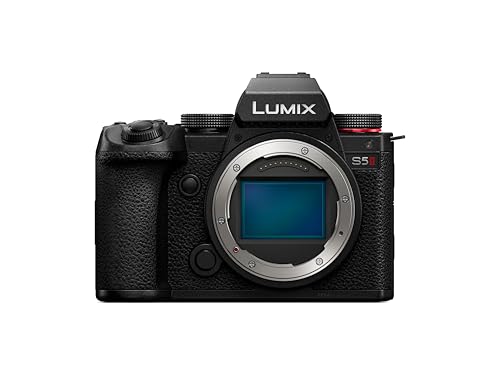
Panasonic LUMIX S5II — Best hybrid for working shooters
Panasonic built its reputation in video and then, with this generation, removed the asterisks from its stills. The S5II’s phase-detect autofocus ended the family’s old hesitation, leaving a body whose video pedigree — waveforms, shutter-angle thinking, professional colour options — now sits beside full-frame stills that satisfy a paying portrait or event client without apology.
The hybrid seam is where it shines brightest. Mode switching is swift, custom setups can hold a stills recipe and a video recipe as neighbours, and the colour science lets a photograph and a clip from the same minute sit together in a delivery gallery without an arranged marriage in post. Working hybrids notice that coherence in the first week and mention it for years.
Now run it through a wedding, the second theatre of this review and the hybrid’s hardest examination. Stills through the ceremony, video for the vows’ audio-critical moments, stills for the confetti, video for speeches that run long in a warm room — the S5II’s active cooling and stamina treat that schedule as a working day rather than a stress test, which is precisely what a professional is buying.
The L-Mount lens alliance keeps the dual-craft economics sane: one set of lenses, chosen from three competing makers, serves the portrait session and the film with equal legitimacy. A hybrid kit that needs no duplicate glass is a hybrid kit whose business case survives an accountant.
Stills purists will note the resolution is generous rather than lavish, and action specialists will find faster bodies elsewhere in this series. Within the hybrid brief — both crafts, professionally, all day — those are footnotes.
Buy it if your income or your ambition already mixes the crafts weekly. It is the most complete answer this guide can give a working hybrid, and its owners’ loyalty is the least surprising statistic in the category.
There is an institutional argument for it as well: rental houses stock it heavily for hybrid productions, so a working shooter can hire a matching second body for the biggest weekends and return it on Monday. Systems that can be temporarily doubled are systems a growing practice can trust with its reputation.
Firmware generosity has become part of its ownership story, with meaningful video and autofocus refinements arriving across its life. A hybrid practice is a multi-year investment, and a manufacturer that keeps improving the tool mid-contract earns the tribe’s long memory.
A closing word on confidence: professionals describe trusting this body the way they trust a good car — not by admiring it, but by ceasing to think about it during the work. In hybrid shooting, where attention is split by design, that absence of worry is the most expensive feature on any specification sheet.
Second shooters are easy to find for it, another unlisted professional asset: a deep bench of working hybrids already fluent in its ways means a busy practice can staff a big weekend without a training day. Ecosystems are labour markets as much as lens markets.
One last operational grace: its files from both crafts arrive with consistent naming and folder logic that a tired editor at midnight genuinely appreciates. Hybrid post-production is a flood, and the body that labels its own flood saves the practice an hour a week, every week, forever.
- Type: full-frame mirrorless, L-Mount
- Strength in brief: seams engineered, not improvised
- Workflow fit: weddings, events, client hybrids
- Lens note: one bench, three brands, both crafts
Strengths
- Cooling and stamina for long ceremonies
- Stills and video colour that cohabit
- Professional video tools beside real stills
Trade-offs
- Resolution generous rather than lavish
- Not the action specialist’s choice
- Video menus reward an initial study session
Best for: Working hybrids shooting weddings, events and client content.
Not suited for: Stills-only photographers who never record a clip.

Sony Alpha 7 IV — Best stills-led hybrid
Some hybrids are video cameras that learned photography; this one is a photographer’s camera that takes video seriously, and the distinction defines its ownership. The stills come first in its ergonomics and its file quality — high resolution, huge dynamic range, autofocus that leads this guide — while the video, though a half-step behind Panasonic’s tooling, is more than sufficient for the hybrid whose deliverables remain stills-led.
That ordering suits the largest hybrid population on earth: wedding, portrait, event and editorial photographers whose clients now request ‘some video too.’ For that brief, the Alpha 7 IV’s video is not a compromise at all — it is clean, well-coloured, reliably focused footage from the body already in the photographer’s hands, with the lens already mounted.
Follow it through a corporate conference, the second scene of its case. Keynote stills for the press release, a video vox-pop in the coffee break, portraits of the award winners, a highlights clip by evening — the Sony’s breadth turns a two-crew day into a one-photographer booking, and its files across both crafts grade together with minimal persuasion.
The lens bench is the hybrid economist’s favourite: Sony’s own glass and the third-party market together mean the fast zoom that shoots the ceremony also shoots the film, and the prime that makes the portraits makes the interview glow. Duplication is where hybrid budgets die; this ecosystem is where they live.
Heat management under long video is good rather than legendary, and the body asks its owner to learn two crafts’ worth of menus — a real investment the review will not minimise. Hybrid mastery is a curriculum, and this is its most rewarding textbook.
Buy it if stills pay your bills and video is becoming a serious second language. It will grow with both, and its resale market ensures the relationship can be renegotiated whenever your crafts rebalance.
Its community of working hybrids is an asset no rival should underestimate. Preset files for matched stills-video looks, wedding-day settings exchanges, second-shooter networks organised around the body — owning the popular professional tool plugs a photographer into an economy of shared solutions.
Judge its video by the deliverable rather than the datasheet and the verdict is simple: clients publish it, couples cry at it, and conferences license it. The hybrid whose stills are the headline and whose video is the beloved bonus will find no ceiling here in a normal working year.
And if the crafts rebalance — video becoming the headline act — its owner can promote within the same mount to a cinema-line sibling and keep every lens, battery habit and colour instinct. Hybrids buy futures as much as cameras, and this future is unusually well signposted.
Its stills also future-proof the hybrid archive in a way clients feel years later: when the couple returns for an anniversary print at exhibition size, the file is there, generous and printable. Video dates by format; great stills compound. A stills-led hybrid is buying the asset that appreciates.
There is also the matter of the second photographer’s bag: because this body is everywhere, a hired associate’s kit will match its colour and mount its lenses, and the delivery will cohere without a conversion project. Popularity, in professional ecosystems, is a technical specification.
- Type: full-frame mirrorless
- Strength in brief: stills first, video close behind
- Workflow fit: stills-led client hybrids
- Lens note: the deepest shared bench here
Strengths
- Stills quality that anchors a business
- Video ample for stills-led commissions
- One lens collection, two crafts, no duplication
Trade-offs
- Long-video stamina a step behind Panasonic
- Two crafts of menus to master
- Rolling shutter care on fast pans
Best for: Photographers whose clients now ask for video too.
Not suited for: Video-first creators wanting a filming native.

Sony ZV-E10 II — Best video-led hybrid for creators
Mirror the previous review and you have this one: a video native that treats stills with genuine respect. The ZV-E10 II was designed for creators whose primary output moves, yet its APS-C stills are strong enough for product photography, thumbnails that are actually photographs, press packs and the printed materials a growing channel eventually needs.
Its autofocus is the hybrid argument in miniature. Solo creators perform to it while it holds focus like a hired operator; then the same tracking serves a stills portrait session without a settings pilgrimage. For the one-person media company — the dominant new hybrid form — that delegation is not convenience but capacity.
Watch it run a small cookery channel, the second scene of its portrait. Recipe stills for the blog in the morning light, the filmed method at noon, a live question session in the evening, all through shared lenses and one colour language. The channel’s visual identity stays coherent across platforms because one camera authored all of it.
Product and thumbnail photography deserve their sentence: creators live or die by the still image that earns the click, and this body’s files, flash options and tethering manners treat that still as a first-class deliverable rather than a frame grab. Channels that upgrade their thumbnails feel it in their analytics within a month.
The trade-offs mirror its sibling’s in reverse: no traditional viewfinder craft, controls that speak to screen-first natives, and stills ergonomics that a wedding photographer would find foreign. It is a hybrid with a declared first language, and honesty about that is its integrity.
Buy it if video leads and stills support — the creator, the teacher, the small business whose shop window is a feed. Within that brief it is not the budget option; it is the correct one.
Analytics make its case in the creator economy: channels that unify their stills and video identity on one coherent system report the intangible but bankable asset of recognisability. Audiences learn a look; this body teaches one quickly and keeps it consistent across every upload.
Its growth ceiling deserves the final creator word: the channel that outgrows it promotes it to second angle and buys a bigger sibling on the same mount, lenses intact. Nothing is wasted, nothing is relearned, and the business’s visual identity survives its own success.
There is a final, unfashionable virtue to record: it is fun to run. The creator economy burns out its practitioners at industrial rates, and a tool that keeps the daily upload feeling like play rather than production is a mental-health feature wearing a product’s clothes.
Its thumbnail photography has an analytics afterlife worth one more sentence: creators who switched their channel’s stills to this body from frame grabs describe click-through improvements they attribute to nothing else changing. The still image is the video’s shop window, and this camera polishes shop windows.
For the solo business owner, it collapses a media department into a desk drawer: product photography, filmed demonstrations, live sales and staff training videos from one body and two lenses. Accountants have approved stranger capital requests with worse returns.
- Type: APS-C mirrorless, creator line
- Strength in brief: video native, stills respected
- Workflow fit: channels, courses, small brands
- Lens note: grows into Sony’s full bench
Strengths
- Focus delegation for solo production
- Thumbnails and product stills taken seriously
- One identity across every platform
Trade-offs
- Stills ergonomics are a second language
- No viewfinder tradition for purists
- Creator styling lacks discretion
Best for: Creators and teachers publishing moving-first content.
Not suited for: Stills-led professionals wanting a photographer’s body.

Canon EOS R50 — Best first hybrid
Every hybrid career starts with a first camera that must not punish the learning of two crafts at once. The R50’s gift is sequencing: guided stills modes that produce real photographs immediately, video that behaves without a cinematography course, and honest manual controls waiting underneath for the month when the owner is ready. It teaches both languages at a pace a beginner can survive.
The flip screen and presenter-friendly design acknowledge how hybrids actually begin now — filming oneself. A starter who can record a competent piece to camera in week one, then photograph the family in week two, owns a tool matched to the era’s actual first projects rather than to a syllabus from the film era.
See it in a further-education media course, the second scene of its case. Students shoot the photography module’s portfolio and the video module’s short on the same issued body, sharing lenses across the class set, and graduate fluent in a mount that professionals use. Institutions buy that continuity deliberately, and private beginners benefit from the same logic.
Canon’s colour is a quiet hybrid asset: skin tones that flatter in stills and footage alike, sparing the beginner the colour-matching education until they are ready for it. Early hybrid work fails on confidence more than quality, and files that simply look right keep confidence alive.
Its ceilings are the expected ones — no in-body stabilisation, stamina and low-light limits that ambitious work will find — and they function as a curriculum: the owner learns stabilisation technique, lighting and exposure discipline because the camera declines to hide those crafts. That is not a flaw in a teacher.
Buy it for the beginner whose ambitions already include motion, or as the family hybrid that a teenager and a parent can share without either being condescended to. First tools shape craftspeople; this one shapes bilingual ones.
Its classroom economics deserve the emphasis institutions give them: one issued body per student, lenses shared across a cohort, and a mount that the college’s own production kit uses. Skills learned on it transfer directly upward, which is the entire point of an educational standard.
For the household, its deepest virtue is shareability: a parent and a teenager can both be fluent in it, passing one camera between the school project and the family holiday without a settings war. Shared tools build shared archives, and shared archives are what families actually keep.
It will be outgrown, and that is its success rather than its failure. A first hybrid that leaves its owner fluent, confident and hungry for the system’s upper reaches has done exactly the job its price promised. Judge starter tools by the photographers they produce.
Parents buying for a media-studies teenager should note its social durability: it looks like a real camera in a classroom of real cameras, sparing its owner the beginner’s stigma while teaching at a beginner’s pace. Confidence is a learning technology, and this body dispenses it.
Schools keep reordering it for a reason administrators understand: breakage and loss rates on issued kit are survivable at its price, while its teaching quality is not a compromise. A standard that can be afforded is a standard that can be maintained, in education above all.
- Type: APS-C mirrorless, starter hybrid
- Strength in brief: two crafts taught gently
- Workflow fit: courses, families, first channels
- Lens note: RF mount with a pro future
Strengths
- Learns stills and video without overwhelm
- Presenter design for self-filming starters
- Colour that keeps beginners confident
Trade-offs
- No in-body stabilisation
- Stamina limits ambitious event work
- Controls will eventually feel few
Best for: Beginners and students starting in both crafts.
Not suited for: Working hybrids needing all-day stamina.

DJI Osmo Pocket 3 — Best motion specialist for stills shooters
The Pocket 3 proposes a heresy this guide endorses: perhaps the hybrid kit is two devices after all — the stills camera you love, plus a pocket gimbal that owns motion completely. Its mechanically stabilised footage has a floating quality that in-body stabilisation imitates and never matches, and for a stills photographer adding video, it removes the entire learning curve of movement in one purchase.
Its one-inch-class sensor keeps the footage respectable beside real cameras rather than apologetic beside phones, and its colour profiles can be coaxed into a working match with a main body’s stills for the walkthroughs, venue tours and behind-the-scenes clips that dominate photographers’ actual video needs.
Now place it in a wedding photographer’s waistcoat, the second portrait in this review. While the main bodies shoot stills, the Pocket glides the venue reveal at dawn, the couple’s walk through the confetti line, and a thirty-second teaser the couple shares before the gallery exists. It earns its pocket on services the stills kit could not have sold at all.
Stills from it are serviceable snapshots rather than a photographer’s deliverable, and this review will not pretend otherwise: the Pocket is a hybrid strategy, not a hybrid body. Its owner keeps a real camera for photographs and gains a motion department the size of a chocolate bar.
Battery and storage discipline are its operational footnotes — it sips compared with a mirrorless rig yet asks for a pocket power bank on long days, and its files deserve the same backup ritual as the main kit’s. Professionals who treat it as a department, not a toy, get department-level results.
Buy it if your stills system is settled and beloved, and motion is the missing service. It is the cheapest way in this guide to add a genuinely professional second craft.
Productions have quietly adopted it as the third angle: the gimbal that lives on a table for the wide room shot while the operator works the main cameras. A device bought as a toy by sceptics keeps being promoted by professionals, which is the most reliable review any product in this guide has earned.
It also teaches movement to photographers who feared it. A season of Pocket footage — learning to walk like a gimbal operator, to pan at walking pace, to think in reveals — transfers directly to the day a larger video body arrives. It is a training instrument disguised as a convenience.
Sceptics should borrow one for a single wedding or family weekend before arguing. The device has a conversion rate among stills photographers that marketing cannot buy, because its footage answers the only question that matters — why did we never film this before — in the first thirty seconds.
Insurance underwriters, once again, smile on it: an entire motion department that costs less to replace than one professional lens cap’s worth of flagship glass changes how freely a photographer deploys it — on the boat, at the poolside, in the crowd. Courage follows replaceability.
Its discreetness at ceremonies deserves a final mention — guests read it as a gadget rather than a production, so the couple’s film feels like a friend’s footage with a professional’s steadiness. In the hybrid economy, unobtrusiveness is a style clients increasingly request by name.
- Type: gimbal pocket camera
- Strength in brief: motion without a learning curve
- Workflow fit: teasers, tours, behind-the-scenes
- Lens note: fixed, stabilised, always ready
Strengths
- Stabilisation no body here can imitate
- Adds video services to any stills kit
- Footage that sits respectably beside real cameras
Trade-offs
- Stills are snapshots, not deliverables
- A second device to charge and back up
- Not a low-light ceremony tool
Best for: Established stills photographers adding motion services.
Not suited for: Anyone needing one device to do everything.

Canon PowerShot G7 X Mark III — Best pocket hybrid for family creators
Family life is the original hybrid assignment: the school play needs a photograph for the wall and a clip for the grandparents, in the same ten minutes, from the same seat. The G7 X Mark III was built for exactly that seat — a pocket compact whose stills satisfy a printing parent and whose video, including live-streaming manners, satisfies the family broadcast.
Its one-inch sensor is the quality floor that phone footage falls below in school halls and restaurants, and its zoom covers the stage-to-table range family events actually span. Parents who carry it describe the same revelation: the archive improves not because the camera is spectacular, but because it is present and capable in both crafts at once.
Watch it serve a family business, the second scene of its case. A café owner photographs the new menu, films the morning bake for social feeds, and streams the cookery evening — all on a camera that lives by the till and asks for no crew, no rig and no intimidating presence in front of customers. Small businesses run on such unpretentious competence.
Creator details are thoughtfully present: a microphone input rare in compacts, vertical-video awareness, and clean output for streaming. Canon understood that this camera’s owner publishes, and built the publishing into the body rather than the accessory catalogue.
Its limits are the compact’s eternal ones — battery appetite on video-heavy days, no lens future, low-light files that soften where a large sensor would hold. Within the family and small-business brief, those limits are the price of the pocket, and the pocket is the point.
Buy it as the household hybrid, the till-side business camera, the traveler’s only device. It will not anchor a professional practice; it will document a family’s decade in both crafts with a consistency phones promise and rarely deliver.
Its streaming manners have made it a quiet standard for a different institution — the local business running online classes and sales from a countertop. Equipment that lets a bakery behave like a broadcaster, without a broadcaster’s budget or crew, is doing democratic work.
Keep it by the door rather than in a drawer. Compacts live or die by readiness, and the household that mounts a small charging spot in the hallway finds its archive doubling within a season — the school run, the frost, the dog’s puppyhood — in both crafts, because the camera was simply there.
Grandparents close its case as they closed others in this series: handed this camera, they produce the stills and clips the family group chat actually celebrates, because it asks for enthusiasm rather than expertise. Tools that respect their users get used by them, at the moments that matter, for years.
Finally, it travels like a rumour rather than a kit — through airport security, into venues with camera policies, onto tables where a mirrorless body would announce an intention. For the documentary side of family and small-business life, that social invisibility is a working feature.
And its stills deserve the closing compliment its video usually steals: printed at family sizes, they carry a warmth and honesty that make relatives ask which camera took them. A compact that prompts that question at a christening has passed the only examination its category truly sets.
- Type: one-inch sensor compact
- Strength in brief: both crafts, one pocket
- Workflow fit: family events, small business content
- Lens note: versatile zoom, always attached
Strengths
- School-hall quality in stills and clips
- Microphone input unusual in a compact
- Streaming manners for family broadcasts
Trade-offs
- Video days drain its small battery
- No lens or system growth
- Dim venues soften its files
Best for: Families and small businesses publishing both crafts.
Not suited for: Professionals building a client hybrid practice.
How Do the Six Hybrid Picks Compare Across Both Crafts?
Hybrid buying is seam-buying. The grid names each pick’s seam quality in shorthand; the craft sections that follow are the operating manual for whichever you choose.
| Camera | Badge | Standout trait | Watch out for |
|---|---|---|---|
| Panasonic LUMIX S5II | Best hybrid for working shooters | The professional hybrid, complete | Build twin custom setups on day one |
| Sony Alpha 7 IV | Best stills-led hybrid | The photographer’s hybrid | Practise the mode switch before the event |
| Sony ZV-E10 II | Best video-led hybrid for creators | The creator’s hybrid, honestly ordered | Feed it a proper microphone first |
| Canon EOS R50 | Best first hybrid | The bilingual first camera | Add a stabilised lens early |
| DJI Osmo Pocket 3 | Best motion specialist for stills shooters | The second-craft specialist | Treat its files like the main kit’s |
| Canon PowerShot G7 X Mark III | Best pocket hybrid for family creators | The household hybrid | Carry two spare batteries for events |
How Fast Must a Hybrid Switch Crafts, and How Do You Practise It?
Measure your current changeover honestly: stills setup to video-ready, including frame rate, profile, audio check and a test glance at exposure. If it takes more than a few seconds and a prayer, events will outrun you — the toast does not repeat itself for a photographer lost in a menu. Every pick in this guide can be configured to switch in a breath; the configuration is the owner’s homework.
Build the twin-setup ritual: one saved mode for stills, one for video, differing only where the crafts genuinely differ, and rehearse the physical motion — dial, record check, audio glance — until it is a single gesture. Musicians practise scales for the same reason hybrids practise switches.
Audio is the step everyone skips and everyone regrets. The switch is not complete until the microphone is confirmed alive, because a silent clip of the vows is the hybrid era’s defining catastrophe. Professionals glance at levels the way pilots glance at fuel: every time, without exception, especially when rushed.
How Do You Make Photographs and Footage Match in One Delivery?
Decide the look before the event, in the profiles. Choose a stills profile and a video picture setting that share a colour philosophy — both gentle, both contrasty, both faithful — and shoot a test pairing in the venue’s light if the commission allows. The match is manufactured at capture or paid for in post, at professional hourly rates of frustration.
White balance is the match’s foundation. Lock it per scene in both crafts rather than letting two auto systems wander in different directions, and the gallery interleaves seamlessly. Skin tones are where audiences detect the seam, so expose and balance for faces first in both media.
Deliver interleaved, not segregated. A gallery that alternates still and clip in the event’s own order tells the story the client remembers; two separate folders tell the story of your file management. Hybrid craft is partly editorial, and the edit begins at the delivery, not the shoot.
What Audio Kit Does a Hybrid Actually Need to Carry?
Start with the microphone the camera deserved: a compact shotgun for events or a wireless set for interviews and ceremonies, chosen by the work you actually book. The built-in microphone is a note-taking device, and every hybrid in this guide improves audibly the moment a real microphone mounts it — the cheapest quality leap in either craft.
Monitoring is the second purchase, because unmonitored audio is a rumour. Bodies with headphone outputs earn their hybrid badge here; where a body lacks one, develop the discipline of test recordings and level-watching, and schedule the upgrade the first time a client pays for sound-critical work.
Wind protection is the third, cheapest and most skipped. Outdoor vows, vox-pops and walkthroughs live or die on a furry windshield that costs less than the memory card recording them. The hybrid who carries one looks like a videographer; the one who does not sounds like an amateur, whatever the camera cost.
How Should Batteries and Cards Be Budgeted for Two Crafts?
By the hungrier craft, with a margin. Video consumes batteries and card space at rates stills photographers find shocking, so the hybrid day is planned from the video schedule backwards: the speeches, the performances, the interviews set the power budget, and the stills live comfortably inside it.
Carry the second craft’s media as its own allocation rather than a shared pool. A card filled by an afternoon’s stills is not available for the evening’s ceremony film, and discovering that arithmetic mid-vows is a professional rite of passage best declined. Label, separate, and rotate with intent.
Heat and power are cousins: bodies working hard at video in warm rooms appreciate shade, airflow and battery rotation. The unglamorous kit — a small fan for a static interview setup, spare cells resting cool — is what ‘professional hybrid’ actually means at four in the afternoon in August.
Which Hybrid Settings Should Be Decided Before the Event Starts?
Frame rate, and with it the shutter discipline that keeps motion natural; resolution, matched to the delivery rather than to vanity, because storage and editing time are real costs; and the profile pair that guarantees the stills-footage match described above. Decided in calm, these three choices remove ninety percent of hybrid panic.
Focus behaviour per craft deserves its own decision. Stills may want single-point precision for portraits while video wants face tracking with a measured transition speed; bodies in this guide let those personalities coexist in saved setups, and building them is an evening’s work that pays for years.
Finally, the backup protocol: what gets copied at the first break, where the second copy sleeps, and which files the client sees tonight. Hybrid days generate twice the data and half the pauses, so the protocol must be a habit, not a hope.
How Do You Price and Present Hybrid Work Without Underselling It?
As one story in two media, not as photographs with free video. Clients value the interleaved gallery and the highlights clip as a single emotional product, and pricing that reflects the second craft’s shooting, audio, editing and delivery time keeps the hybrid sustainable rather than a slow route to resentment.
Show, do not describe. A sample delivery — stills and clips interleaved exactly as the client will receive them — sells hybrid work better than any equipment list, because clients buy the feeling of reliving the day, and the interleaved format is that feeling’s native shape.
Protect the stills’ primacy in writing where it matters: the album, the prints, the archival files are the commission’s permanent record, and the video is its living companion. Clients who understand that hierarchy value both correctly, and photographers who state it stop being asked for ‘just a quick video’ as an afterthought.
What Does a Sensible First Year of Hybrid Growth Look Like?
Quarter one belongs to the switch: twin setups, audio discipline, the delivery format rehearsed on unpaid work until it is boring. Quarter two adds the microphone and the lighting that serves both crafts, because hybrid light — continuous, flattering, quick — is its own small discipline distinct from flash.
By the second half of the year, the portfolio should show three complete hybrid deliveries, start to finish, because clients buy evidence. The gear list in that year matters less than the evidence list, and every pick in this guide is capable of producing it in competent hands.
Resist the second body until the work demands it — a backup for paid reliability — and when it comes, buy inside the same mount so the lens bench serves both. Hybrid economics reward coherence at every step, and coherence, practised for a year, becomes a style clients can recognise.
How Do You Light One Room for Both Crafts at Once?
Continuous light is the hybrid’s native sun. A single quality LED panel, bounced or diffused, flatters the video continuously and the stills adequately, and it never interrupts the event with flash recycling or a photographer’s strobe announcements. Hybrid events feel calmer under continuous light, and calm events produce better material in both crafts.
Place for the video, expose for the stills. Video cannot change its mind mid-clip, so position the key light where faces will live during speeches and interviews, then let stills — with their shutter-speed freedom — adapt around that anchor. The order of operations sounds trivial and prevents a day of compromises.
Carry one light, not a lighting department. The hybrid’s promise is mobility, and a single panel plus a small on-camera option for the darkest corners covers the honest majority of events. The rest is positioning, timing and the humility to use the venue’s own practical lights as part of the scene.
What Should a Hybrid Carry in One Bag, and What Stays Home?
The discipline of the single bag is the hybrid’s daily examination. One body, two lenses that between them cover the event’s geography, the microphone, one light, batteries budgeted by the hungrier craft, and media in two labelled pools — that is the working core, and everything else must argue its way in against the weight of a twelve-hour day.
What stays home is instructive: the third lens for a situation that has not occurred in three seasons, the flash system the continuous light replaced, the laptop that the venue’s schedule leaves no hour to open. Hybrids who pack by evidence rather than by anxiety move faster, switch crafts faster and come home with better material in both.
Review the bag after every commission and evict one thing. Kits, like sentences, improve by deletion, and the hybrid bag that has survived a season of evictions becomes a personal instrument as surely as any customised camera body.
Which Hybrid Mistakes Do Clients Notice Before Photographers Do?
The mismatched delivery is the signature failure: photographs in one colour world, footage in another, interleaved by an editor who hoped nobody would notice. Everybody notices. The seam is the craft, and the profile discipline in the guide sections is not pedantry — it is the product.
Audio neglect follows, because stills photographers are trained to think in silence. A hybrid who delivers beautiful footage of the speeches recorded through a built-in microphone has delivered a beautiful disappointment, and clients remember the disappointment’s flavour precisely. Microphone first, second lens later.
The third mistake is stamina optimism: planning the day on stills arithmetic and discovering video’s appetite during the ceremony. Batteries, cards and cooling are the hybrid’s logistics, and logistics, as every event professional learns exactly once the hard way, is destiny.
A fourth failure, quieter than the rest, is neglecting the second craft’s portfolio: the hybrid who shoots video only when asked, never for show, and then wonders why clients do not book the film. Evidence sells the seam. One self-commissioned hybrid piece per season — a venue film, a family documentary, a process story — keeps the second craft visible, practised and priced.
Final Recommendation
For a working hybrid practice, the Panasonic LUMIX S5II is the recommendation that survives weddings, conferences and August. Stills-led professionals should take the Sony Alpha 7 IV and never apologise for the ordering; creators, the Sony ZV-E10 II; beginners, the Canon EOS R50; stills purists adding motion, the DJI Osmo Pocket 3 beside their beloved body; and families, the Canon PowerShot G7 X Mark III in the pocket where the decade happens.
Whichever you choose, build the twin setups this week and rehearse the switch until it bores you. Hybrid mastery is not a specification on any box in this guide; it is the calm of a photographer whose equipment changes crafts as fast as the day does.
Related guides
Frequently Asked Questions
What is a hybrid camera, exactly?
A body designed to serve stills photography and video at a serious level in one system — shared lenses, coherent colour, fast mode switching and the stamina for both. Every pick here qualifies, though each declares a first language, and the reviews name those allegiances honestly.
Is one hybrid body really better than two specialists?
For most working photographers, yes: one lens bench, one colour language, one bag, and no missed moment while changing systems. Specialists win at the extremes — cinema production, pure sports stills — which is why the guide’s Pocket 3 entry argues the two-device case for photographers whose stills system is already settled.
How important is overheating in real hybrid work?
It is the specification that separates event hybrids from spec-sheet hybrids. Ceremonies, speeches and interviews run long in warm rooms, and bodies with active cooling or proven stamina — the S5II foremost here — earn their professional following on exactly that unglamorous ground.
Can I match my photos and videos without professional grading?
Yes, if the discipline happens at capture: paired profiles chosen for coherence, white balance locked per scene, exposure protected on faces. Shot that way, stills and clips from the picks here interleave convincingly with little more than gentle correction.
What should a stills photographer buy first for video?
A microphone, before any body upgrade. Audio is where stills photographers’ first films fail, and a proper microphone on a current body outperforms a new body through its built-in microphone on every audience test ever conducted informally at family screenings.
Which pick is best for wedding hybrids specifically?
The Panasonic LUMIX S5II for its stamina and seam engineering, with the Sony Alpha 7 IV the stills-led alternative whose photographs anchor the album. Both appear at real weddings weekly; the choice is which craft signs the work.
Do I need 4K video for hybrid client work?
For delivery flexibility and future-proofing, it is the sensible default, and every interchangeable-lens pick here provides it. What clients actually judge is steadiness, colour and sound — a clean, well-recorded lower-resolution clip beats a shaky, echoing higher-resolution one in every screening.
How do I practise hybrid switching without a real event?
Stage one: a family afternoon shot deliberately in both crafts, switching at every activity change, with the twin setups and audio checks performed for real. Review the interleaved result that evening. Three such rehearsals build the gesture memory that a real event will demand without asking permission.
Should a hybrid beginner learn stills or video first?
Stills, by a nose — composition, exposure and light learned one frame at a time transfer wholesale into video, while video-first learners often carry gaps in exactly those fundamentals. The exception is the creator whose audience already waits for motion; they should learn both in parallel, with stills discipline borrowed deliberately, as the ZV-E10 II section suggests.
Related Guides
Hybrid craft pulls in audio, lighting and business skills together, and these guides develop each: our guide to microphones for hybrid shooters a continuous-lighting primer for events and interviews the photographer’s guide to pricing hybrid packages


