kajuandouglas.com is reader-supported. When you buy through links on our site, we may earn an affiliate commission.
Where to Buy a Nightclub Camera, and Why the Club Is Photography’s Hardest Room
The best cameras for nightclub work are not the best cameras for any other kind of night, and the reasons are stacked in the doorway before you even reach the floor. A club is darkness that moves: strobe and blackout alternating, lasers rewriting the exposure ten times a second, a crowd in motion, drinks in the air, and — governing everything — a door policy and a crowd whose consent to be photographed is a live, social negotiation rather than a legal footnote. The camera that wins this room is small enough to be welcome, fast enough to focus in a blink of light, good enough with flash to use it as a style rather than an apology, and cheap enough — or tough enough — to survive the environment it works in. The six picks below were judged inside that room and no other.
Two kinds of reader share this keyword, and the guide serves both honestly — while noting that they frequently become each other. Tonight’s designated friend-photographer is next season’s paid venue shooter more often than the industry admits, because the portfolio that books the job is built at birthdays. Choose a camera with that promotion in mind if the ambition is even half-serious: the G7 X and RX100 VII galleries have launched more club careers than any flagship. The first is the working club photographer — the venue’s or promoter’s shooter, producing the galleries that fill the club’s social pages by morning. The second is the social photographer: the friend with the camera, documenting birthdays and big nights in a way phones keep failing to. Their needs overlap almost completely — small, fast, flash-literate, low-light honest — and diverge mainly on volume and budget, which the picks’ range reflects.
Permission deserves its paragraph before any product does, and its second paragraph in the etiquette section further down. Venues have policies; promoters have briefs; the working photographer arranges access before the night, wears the lanyard, and knows which areas and moments are off limits. The social photographer asks the group, respects the stranger who steps out of the frame, and remembers that a nightclub is a place people go partly to be unrecorded. Every camera here is capable of discretion; the photographer’s manners must supply the rest.
Technically, the club inverts normal low-light wisdom at almost every point where the two can be compared, which is why photographers arriving from weddings or landscapes need a recalibration evening before their work stops looking like a different genre’s outtakes. Elsewhere, flash is the last resort; here, direct flash is a genre aesthetic — the hard-lit, glossy, caught-in-the-moment look that defines club photography — and the cameras that do it well, with quick recycling and honest skin tones, earn their place. Elsewhere, you protect highlights; here, the highlights are strobes and the photograph is often the split second they fire. Judge the picks by club logic, not by landscape logic, and they will make sense.
Key Takeaways
- Club photography runs on small size, fast focus and flash used as a style, not an apology.
- The Canon PowerShot G7 X Mark III is the social shooter’s classic: bright lens, good flash, coat-pocket size.
- The Sony ZV-1F and RX100 VII cover the no-fuss and high-performance ends of pocket club work.
- For the connoisseur, the Fujifilm X100VI is the club camera — leaf-shutter flash sync and film colour.
- The DJI Osmo Pocket 3 owns the moving half of the night: smooth video on a packed floor.
- Sort permission before megapixels — venue policy and people’s consent govern everything else in the room.
In this guide
Quick Picks
| Camera | Badge | Why it works on the floor |
|---|---|---|
| Canon PowerShot G7 X Mark III | Best all-round nightclub camera | A bright zoom, capable built-in flash and warm colour in the classic club-compact shape. |
| Sony ZV-1F | Best for effortless social shots | Almost nothing to set, a wide lens for group shots and video that flatters the night. |
| Sony RX100 VII | Best performance in a pocket | Flagship autofocus and a real zoom for the working shooter who travels light. |
| Fujifilm X100VI | Best for flash stylists | Leaf shutter sync at any speed, built-in flash and film simulations made for skin and neon. |
| DJI Osmo Pocket 3 | Best for club video | Gimbal-smooth 4K through a moving crowd, with low-light quality that shames phones. |
| GoPro HERO13 Black | Best for rough and immersive nights | Waterproof, mountable and nearly indestructible — the camera for festivals and foam-adjacent work. |
How Did We Choose the Best Cameras for a Nightclub?
We also weighed the morning after, because club work is a delivery business disguised as a photography one. How fast do files move to a phone or a laptop at 4 a.m.? Do the in-camera colours survive without an editing session, for the social shooter whose gallery is a group chat rather than a client folder? Cameras whose pictures arrive finished — the Canon and Fujifilm colour, the DJI’s ready-to-post video — scored a real and underrated advantage in a genre whose audience wakes up before its photographer does.
We judged inside a simulated club brief: a crowded room, light swinging between near-black and strobe, subjects who move, laugh and turn away, and a client — promoter or birthday group — expecting a gallery by morning. Cameras were scored on the hit rate of keepers across such a night, not on studio tests, because the club’s whole challenge is that nothing in it holds still for measurement.
Autofocus speed in low light was the first gate, and it was brutal. Club focus is a half-second discipline: the moment assembles, the light flashes, the camera must already be locked. Eye and face detection that works under coloured, flickering light separated the serious picks from the tourists, and every camera here can find a face in light a phone gives up on.
Flash behaviour was judged as a creative tool: how fast it recycles between shots at a party’s pace, how honestly it renders skin at close range, whether its power can be tamed for fill rather than blast, and — on the X100VI — whether the shutter lets flash marry fast shutter speeds for the daylight-at-the-beach-party variant of the genre. A club camera without flash literacy is a camera for a different room.
Survivability closed the judging: size small enough for a pocket or a crossbody on a packed floor, a build that tolerates knocks and the occasional splash, battery for a full night, and a price — for the social shooters — that does not turn a dropped camera into a ruined month. The working photographer’s calculus differs, and the RX100 VII and X100VI answer it; the rest of the list answers everyone else.
What Makes Club Light So Difficult — and So Photogenic?
Club light is intermittent, and intermittency breaks cameras’ assumptions — including the assumption, baked into every automatic mode, that the scene will look the same in a tenth of a second as it does now. The photographer who understands that single fact stops fighting the room and starts sampling it, which is the whole technical transition this genre asks of a newcomer. Meters expect continuity; strobes deliver ambushes. The club photographer’s exposure craft is therefore partly timing — learning the lighting rig’s rhythm until the shutter fires inside the bright beats — and partly surrender: accepting that across a burst of frames, the light will grade your work for you, and the keeper will be the frame the strobe loved. Every pick here shoots fast enough bursts to play that lottery with good odds.
Colour in a club is not a problem to correct but the subject itself. The magenta wash, the green laser, the ultraviolet that makes white shirts glow — these are the night’s signature, and the cameras that render them with saturation and control, rather than correcting them toward daylight, produce the photographs that look like the memory. This is why film simulations and honest colour science rank so highly in this guide, and why heavy-handed automatic white balance is a club camera’s most damaging virtue.
Sound, strangely, shapes the photography too. A club’s volume forbids conversation, which means the photographer directs by gesture, expression and the camera itself — a raised camera and an inquiring look is the genre’s universal sentence, understood in every country. Small, familiar-looking cameras ask that question most politely, which is one more reason the compacts dominate this guide: the room answers them yes more often.
Motion completes the brief. Nobody in a club is still, including the floor. Shutter speeds live in the compromise zone — fast enough to hold a face, slow enough to let the background streak into energy — and the genre’s classic technique, dragging the shutter with flash, freezes the subject with the flash’s burst while the room smears around them. It is learnable in one night with any camera here that has a flash and a manual mode, and it is the technique that separates club galleries from party snaps.
And the crowd is the final variable: hundreds of people having the best part of their week, in a space where a camera can be a welcome chronicler or an intruder with a lens. The technical picks below all assume the photographer has solved the social half — brief agreed, lanyard worn or friends consenting, exits respected. No sensor compensates for a room that has decided against you.
How Should You Set Up for a Night on the Floor?
Arrive with the camera already configured, because the floor is no place for menu archaeology — and arrive, too, with your own state configured: fed, hydrated, and dressed for a room that will be ten degrees warmer than the street, because the photographer’s comfort is a gallery-quality variable by the third hour. Set face and eye detection on, choose a burst mode for the strobe lottery, set the flash to a starting power you have practised with, and pick the picture style whose colour you want the night remembered in. Working shooters standardise ruthlessly — same settings every night, adjusted by feel — because the night’s variables are the light and the crowd, and the camera should not be a third.
Carry for the environment: camera on a strap that keeps it against your body in the crush, the strap itself checked before the night the way a climber checks a rope, because a dropped camera on a club floor is usually a stepped-on camera within the minute, a cloth in a pocket for the lens that will inevitably be breathed on, splashed or touched, spare batteries warm and accessible, and cards enough that a full card never ends your night early. Leave the camera bag; the floor has no floor space, and everything you need should be on your person.
Work the room in circuits, the way the professionals do — and learn the room’s human geography as you go: where the regulars gather, which corner the shy groups choose, the exact spot where the light rig does its best work at the peak hour. That map, redrawn nightly, is worth more than any lens in the bag, and the cameras here are small enough that drawing it never feels like an expedition.: the entrance energy early, the floor at its peak, the quieter edges and the DJ’s theatre between, and the same groups revisited so the gallery tells the night’s story rather than a single moment’s. Check your exposures after the first circuit — club light punishes assumptions — and then trust the setup and shoot the night, not the settings.
Know the venue’s own rules before the first frame, because they outrank this guide and every habit in it: some rooms ban flash, some ban cameras beyond the foyer, some reserve photography to the house shooter entirely. The photographer who asks at the door — or better, in the afternoon’s message — is a professional; the one who argues at midnight is a story the venue tells about why it bans cameras. Your access is your capital. Spend none of it on a single frame. The club gallery’s value decays by the hour; promoters post at noon, friends share at breakfast. A ruthless, fast edit — the keepers are obvious at thumbnail size in this genre — and a clean delivery are part of the photographer’s craft, and the cameras here, with their phone connectivity and in-camera looks, are chosen partly to make that turnaround painless.

Canon PowerShot G7 X Mark III — Best all-round nightclub camera
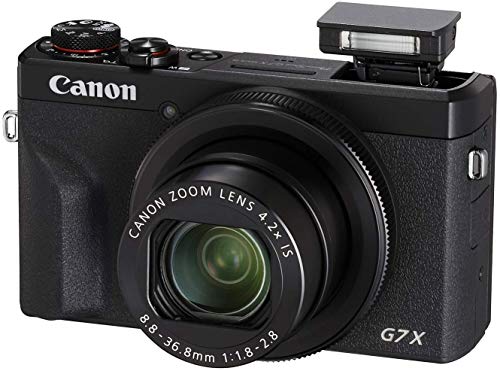
The Canon PowerShot G7 X Mark III is the club compact in its classic form, and its reign in this room rests on the oldest club truth: the lens is bright, the flash works, and the camera fits the coat you came in. That bright zoom is the foundation — it gathers the room’s scarce light generously, letting shutter speeds stay honest and sensitivities stay civilised — while Canon’s colour renders skin under mixed club light with the warmth that makes people love photographs of themselves, which is, in the end, the product being sold.
The built-in flash is a working tool rather than a specification: quick to recycle at party pace, adjustable enough to serve as fill or as the hard, glossy main light of the genre’s signature look. Autofocus finds faces in the gloom with a reliability that surprises photographers arriving from phones, and the tilting screen serves the over-the-crowd shot and the low floor-level angle that makes a gallery feel like it was everywhere at once.
Its limits are the compact format’s familiar ones — no viewfinder for the rare bright moment, battery life that wants a spare on a long night, a fixed lens that ends the growth story at technique. None of them has dethroned it, because the club brief is precisely the brief it was born for. For the social shooter, and for the working photographer who wants a second body that lives in a pocket, this remains the recommendation to beat.
It also carries the genre’s social camouflage better than any rival: it looks like a holiday camera, the least threatening object a stranger can be photographed by, and in a room where welcome is the photographer’s real credential, that ordinariness is a professional asset. Bigger cameras announce; this one mingles, and mingling is where the candid gallery lives.
- Lens: bright zoom for low club light
- Flash: built-in, quick recycling, adjustable
- Colour: warm Canon rendering for skin
- Screen: tilts for crowd and floor angles
Strengths
- The complete club toolkit in one coat pocket.
- Flash and colour that flatter the room’s people.
- Unthreatening presence that keeps candids candid.
Trade-offs
- Battery wants a spare across a full night.
- No viewfinder and a fixed lens ceiling.
- Autofocus trails the Sony pair in the darkest chaos.
Best for: social shooters and working photographers’ second body. Not suited for: those needing interchangeable lenses or an eyepiece.

Sony ZV-1F — Best for effortless social shots
The Sony ZV-1F is the nightclub camera for the friend group — the camera of the designated documenter who also intends to have a night. Its design philosophy is the removal of decisions: a fixed wide lens that fits the whole group and the room behind them, exposure and focus handled with a competence that makes its owner look talented, and a size that means it is actually present at 1 a.m. rather than theoretically owned. In club photography, presence plus competence is ninety percent of the portfolio.
The wide lens earns its keep in the geometry of clubs, where the photographer is always closer to the group than a portrait lens would like and the background — the lights, the crowd, the venue’s theatre — is half the photograph’s value. The one-inch sensor handles the room’s light honestly, the microphone and video serve the night’s moving memories, and the defocus switch delivers the dressed-up portrait look for the pre-club and interval shots where the group wants to look its best.
What it will not do is grow with a working photographer: no zoom for the stage from the back, no flash sophistication beyond its built-in unit, stabilisation for walking rather than for the floor’s extremes. Those are tomorrow’s problems. For tonight — the birthday, the reunion, the big night that deserves better than a phone’s noise — the ZV-1F is the easiest recommendation in this guide to act on, and its galleries will embarrass phone shooters all night long.
Its video deserves the last word, because club nights are increasingly remembered in motion. The ZV-1F’s footage — stabilised, clearly focused, with voices that survive the room — turns the walk between venues, the taxi singing and the dancefloor’s peak into a film the group will actually rewatch. A camera that owns both halves of the memory, at this size and simplicity, has no real rival for the social brief.
- Lens: fixed wide, group-and-room framing
- Sensor: 1-inch, honest in club light
- Video: strong, with voice-clear audio
- Controls: deliberately near-zero
Strengths
- The whole group, the whole room, no settings required.
- Present all night because it lives in a pocket.
- Video that carries the night’s second half.
Trade-offs
- No zoom for stages or distant subjects.
- Flash is basic beside the Canon and Fujifilm.
- A working shooter’s growth will outrun it.
Best for: friend groups and social documenters. Not suited for: paid venue work or stage photography.

Sony RX100 VII — Best performance in a pocket
Working club photographers who travel light have a patron saint, and it is the Sony RX100 VII. Inside a body smaller than the G7 X’s reputation, it packs autofocus inherited from Sony’s flagship line — the fastest face and eye acquisition in this guide — and a zoom that runs from the wide group shot to a genuine telephoto for the DJ, the performer and the far side of the floor. It is the camera that lets a professional leave the big bag at home without leaving the capability there.
That autofocus is the working argument. Club moments assemble in half-seconds, and the RX100 VII locks with a certainty that converts directly into keeper rate — the metric promoters actually pay for. Burst speeds play the strobe lottery with loaded dice, the pop-up viewfinder serves the rare bright interlude, and the files from its stacked sensor hold together under the editing a morning deadline demands.
The compromises are ergonomic and financial. The controls are small, the menus are Sony’s deep ones, the battery is a sprinter that wants spares on a long night, and the price is a professional’s rather than a partygoer’s. The built-in flash is present and useful, though the camera’s soul is available-light speed rather than flash style. For the shooter being paid — or the enthusiast who wants the pocket ceiling — none of that outweighs the hit rate.
There is a longevity argument too: this is the compact that working photographers keep for a decade, because nothing since has convincingly replaced its combination of size, zoom and focus speed. In a genre where gear is dropped, splashed and retired early, the RX100 VII’s owners report the opposite biography — bought for one season’s work, still in the pocket five seasons later, its galleries indistinguishable in quality from its first.
- Lens: 24-200mm equivalent zoom
- Autofocus: flagship-derived, fastest here
- Sensor: 1-inch stacked, fast readout
- Viewfinder: pop-up electronic
Strengths
- Keeper rate that promoters can bank on.
- Real zoom reach from a pocket body.
- Files that survive a deadline edit.
Trade-offs
- Professional price, small controls, deep menus.
- Battery life demands spares on long nights.
- Flash plays second to its available-light speed.
Best for: working club photographers travelling light. Not suited for: casual budgets or flash-style purists.

Fujifilm X100VI — Best for flash stylists
The Fujifilm X100VI is the aesthete’s club camera, and its argument is written in the genre’s history. Club photography’s signature look — hard flash, glossy skin, the room falling to black behind the subject — was built on film compacts, and the X100VI is their digital heir with two technical gifts those ancestors lacked. The first is its leaf shutter, which synchronises with flash at any shutter speed, letting the photographer balance strobe-lit subjects against bright backgrounds with a freedom focal-plane shutters cannot offer. The second is Fujifilm’s film simulations, whose rendering of skin and saturated colour is, for this room, less a feature than a house style.
The built-in flash sits close to the lens in the classic compact arrangement, producing exactly the direct, shadow-sharp look the genre prizes, and the camera’s high-ISO files give the available-light alternative when the flash rests. Handling is deliberate — aperture ring, shutter dial — which suits the photographer who works a room slowly and composes rather than sprays, and the fixed wide lens matches the club’s intimate geometry as if designed for it, which, across its lineage, it more or less was.
The costs are the fixed lens’s reach, a price in the professional tier, and autofocus that, while much improved in this generation, does not chase the Sony pair through the darkest chaos. Availability can also be a saga. But for the photographer whose club work is a style rather than a service — the gallery with a signature — the X100VI is less a tool than a statement of intent, and its photographs are recognisable across a crowded feed.
Day-club and beach-party work is its secret second venue, where the leaf shutter’s sync speeds turn harsh noon light and flash into the same glossy aesthetic under a blue sky. The photographer who covers the full arc of a party weekend — pool, sunset, club, afterparty — finds this one camera fluent at every hour, which no other pick here can honestly claim.
- Lens: fixed wide, leaf shutter
- Flash: built-in, sync at any shutter speed
- Colour: film simulations for skin and neon
- Sensor: high-resolution APS-C with stabilisation
Strengths
- Flash technique no rival here can replicate.
- A signature look straight out of the camera.
- One camera for the whole party weekend.
Trade-offs
- Fixed lens; the stage stays at its distance.
- Premium price and sometimes scarce supply.
- Autofocus a step behind the Sony pair in chaos.
Best for: stylists and signature-seeking club photographers. Not suited for: zoom-dependent stage work or tight budgets.

DJI Osmo Pocket 3 — Best for club video
The night’s second memory is motion, and the DJI Osmo Pocket 3 owns it outright. A gimbal-stabilised camera with a one-inch sensor, it moves through a packed floor producing footage of impossible smoothness — the push through the crowd, the circle around the DJ, the birthday table’s orbit — in low-light quality that makes phone video look like a rumour. For promoters, whose feeds now run on reels, and for social shooters whose group chats run on clips, this is increasingly the main camera of the night, with stills as its sideline.
Its low-light video is the technical headline: the large sensor and fast lens hold the room’s colour and motion together at sensitivities where phones smear, and the autofocus tracks a face through the crowd’s churn with a gimbal’s physical calm underneath it. The rotating screen flips between filming the room and filming yourselves in it, and the whole device starts in a second — the door moment, the drop, the surprise entrance are all capturable because the camera is awake before the moment finishes happening.
Stills are competent rather than the point, there is no flash, and the gimbal head asks for more care than a compact’s slab — though on a dancefloor it survives by being small, held and watched rather than dangling. Battery life covers a night’s filming with the usual spare discipline. For the reader whose club brief is video-first — and in this decade that is a majority of promoters — the Pocket 3 is not an alternative recommendation; it is the recommendation, with the stills picks here as its partners.
Pairing is genuinely its natural state: the working team of a Pocket 3 for the moving gallery and a G7 X or X100VI for the stills is how many venue galleries are actually produced now, by one photographer carrying less than a single old-style kit. The night has two memories, and this camera is the one that remembers it moving.
- Sensor: 1-inch, strong low-light video
- Stabilisation: three-axis mechanical gimbal
- Video: 4K with face tracking
- Form: pocketable, instant start
Strengths
- Movement through a crowd, rendered silk.
- Low-light video quality beyond phone reach.
- Awake and recording before moments end.
Trade-offs
- Stills are the sideline, flash is absent.
- Gimbal head needs gentler handling than a compact.
- Battery planning for a full night’s filming.
Best for: promoters, reel-makers and video-first social shooters. Not suited for: stills-only photographers or flash stylists.

GoPro HERO13 Black — Best for rough and immersive nights
Some nights are not clubs so much as weather systems: festivals, warehouse parties, boat nights, foam and paint events, the outdoor stages where the crowd and the elements merge. The GoPro HERO13 Black is the camera for those nights — waterproof without a housing, built to be knocked, mounted anywhere from a chest to a lighting rig, and possessed of a very wide lens that turns the photographer into a participant with a point of view rather than an observer with a frame.
Its club virtues are immersion and survival. The footage and stills it gathers from inside the crowd — not at it — have a participatory energy the compacts cannot imitate, and its stabilisation renders the floor’s bounce as flow rather than chaos. Voice control and simple operation matter when hands are otherwise employed, and the camera’s indifference to splashes removes the photographer’s flinch, which is itself a photographic quality: the shots happen because the camera was never withdrawn.
The compromises define its niche honestly. Low-light quality trails the larger-sensor picks, the fixed ultra-wide view is a style that must be wanted rather than a neutral default, and flash does not exist in its world. As a main club camera for a conventional venue it is the wrong tool; as the second camera, the festival camera, the one that goes where the night is wildest, it is irreplaceable — and its price makes that second-camera role an easy decision.
Promoters use it in a way worth copying: mounted, forgotten and gathering the night’s B-roll — the rig’s view of the floor, the entrance’s energy, the confetti moment from inside the confetti. Footage that no photographer was consciously shooting becomes, in the morning’s edit, the clips that make the gallery feel alive. A camera that works while nobody operates it is a crew member, and this one charges very little for the shift.
- Build: waterproof, rugged, mountable anywhere
- Lens: very wide, immersive point of view
- Stabilisation: advanced electronic
- Controls: voice and simple touch
Strengths
- Survives the nights that retire other cameras.
- Immersive, participatory footage and stills.
- Works mounted and unattended as a second eye.
Trade-offs
- Low-light quality behind the larger sensors.
- Ultra-wide look is a commitment, not a default.
- No flash, ever — available light or nothing.
Best for: festivals, rough venues and immersive second-camera work. Not suited for: conventional club stills as a main camera.
How Does a Working Club Night Actually Unfold for the Photographer?
The professional’s night starts before the doors — in the afternoon, really, with the unglamorous liturgy of charged batteries, formatted cards, a cleaned lens and a bag packed in the same order it is always packed, so that the night’s only surprises are the ones the room provides: a message to the promoter confirming the brief, the guest list and the night’s headline moments — the headliner’s set time, the birthday in the VIP area, the confetti cue. The camera bag is a pocket inventory, checked against a list that never changes, and the first photographs of the night are the venue itself: the room dressed and empty, the lights rehearsing, the calm that the gallery will contrast against the storm it becomes.
The early hours are the social photographer’s harvest and the professional’s warm-up — the light is kindest then, the room is emptiest, the groups are soberest and most willing, and the photographer who treats the first hour as a rehearsal wastes the night’s most forgiving classroom: arrivals, groups still composed, outfits at their intended geometry. This is when the portraits happen, because by midnight the same groups are mid-celebration and the photography turns documentary. The peak hours belong to the floor — the wide shots, the DJ’s theatre, the crowd’s weather — and the photographer’s craft shifts from arranging to witnessing, from the flash’s hard portraits to the room’s own light painting the scene.
The last hour is the professional’s secret shift, and the one the social shooter should steal wholesale, because the night’s most honest photographs — the exhaustion, the euphoria, the friends holding each other up — live in it exclusively: the night’s emotional summit, the final song’s communion, the staff’s exhale. Galleries that include it feel complete; galleries that clock off at the peak feel like evidence. And then the real deadline begins — the edit in the taxi, the upload before the photographer’s own bed — because a club gallery is a perishable good, and its value is measured in the hours between the last track and the first share.
How Do the Six Nightclub Cameras Compare on the Floor?
| Camera | Main craft | Flash | Carrying style | Night it owns |
|---|---|---|---|---|
| Canon PowerShot G7 X Mark III | Stills | Built-in, capable | Coat pocket | The classic club gallery |
| Sony ZV-1F | Stills and video | Built-in, basic | The friend group’s night | |
| Sony RX100 VII | Stills | Built-in, useful | Paid work, light travel | |
| Fujifilm X100VI | Stills | Built-in, any-speed sync | Crossbody | The signature style gallery |
| DJI Osmo Pocket 3 | Video | None | Hand or pocket | The moving gallery |
| GoPro HERO13 Black | Video and immersion | None | Mounted or worn | Festivals and wild nights |
One row the table cannot show is theft and loss, and the club is where cameras go missing with a regularity the industry politely ignores. The pocket cameras’ size is a security feature — a camera in a zipped pocket or on a wrist strap is a camera that goes home — and the working shooter’s habit of keeping the second body in the booth rather than the bag room is written by experience. Insure the kit, register the serials, and let the GoPro take the assignments where the risk is the point.
The table divides the night by memory type: stills across the top, motion below, flash as the stills craft’s dividing line. Most real club kits pair one from each half — a stills compact and a motion camera — and the pairings matter less than the coverage of both.
What Etiquette Separates the Welcome Club Photographer From the Problem?
Consent in a club is a practice, not a form — and it is also, handled well, a photographic asset rather than a constraint. The photographer who visibly asks, visibly accepts refusal and visibly deletes becomes, within an hour, the room’s trusted chronicler, and trusted chroniclers get the photographs that intruders never see: the unguarded, joyful, mid-celebration frames that are the entire point of the genre. Ethics, in this room, is a keeper-rate strategy. The working photographer is briefed, badged and known to security; the social photographer asks the group and accepts the no instantly and cheerfully. Both understand the room’s geography of privacy — the floor is public performance, the corners and the smoking area are semi-private conversation, and the camera’s welcome differs by zone. Photographers who read those zones well are invited back; the camera they carry has almost nothing to do with it.
The flash has manners too, and learning them takes exactly one night of paying attention to faces rather than to settings — the flinch teaches what no manual can phrase politely. A test blast into a stranger’s face at close range is an assault in miniature; the genre’s professionals warn, gesture, or angle, and they delete on request without negotiation, on the night, in front of the requester. That deletion ritual is not a weakness in the workflow — it is the workflow’s licence to operate, renewed nightly, and every camera here makes it a two-second act.
Finally, the gallery itself has ethics, and they are exercised at the least glamorous hour of the job — alone, at the edit, with nobody watching the watcher. That solitude is precisely why the habits must be built in advance: the delete-on-request reflex, the unflattering frame left behind, the stranger’s worst moment never published. A club photographer’s reputation is the sum of those unwitnessed decisions, and venues, which hear everything eventually, book accordingly. The morning’s edit is where the photographer’s judgement becomes permanent: the unflattering frame of a stranger, the moment that was funny in the room and cruel on a feed — the welcome photographer leaves them on the card. Clubs are licensed escapism, and the person who documents them holds a small power over other people’s reputations. The six cameras here are all capable of discretion; the seventh component, the photographer’s, is the one this guide cannot sell you.
What Should a Club Photographer Do About Red-Eye, Shine and Other Faces?
The club portrait’s enemies are cosmetic and conquerable, which is more than can be said for most of this genre’s problems, and beginners should take the encouragement personally: an hour spent practising flash distances on a willing friend, in a dim room, before the first real night, pays for itself in the first gallery. Red-eye, the flash’s oldest prank, is minimised by the room’s own brightness keeping pupils small, by the flash sitting as far from the lens axis as the camera allows, and by the modern in-camera corrections every pick here applies without being asked. The beginner’s real enemy is shine — foreheads and noses lit by flash on a warm, dancing crowd — and its cures are distance, a touch less flash power, and the photographer’s timing: shoot the group in the breath between dances, not at the exertion’s peak.
Skin tone honesty is the deeper craft, and the one by which the room will actually grade you, because nobody has ever been flattered by a photograph in which their friends look wonderful and they look embalmed. Club light lies about colour in both directions — the wash makes everyone magenta, the flash makes everyone porcelain — and the cameras’ colour science, Canon’s warmth and Fujifilm’s simulations especially, exists to find the person inside those lies. Review your first circuit’s portraits at full size for skin before anything else — before the stage shots, before the crowd scenes, before the clever angles; a gallery whose people look like themselves will be forgiven every other sin by the people in it, which is the only review panel that ultimately matters.
What Mistakes Do Nightclub Photographers Make Most Often?
Shooting the whole night on one setting is the beginner’s tax, levied in every currency the genre has: noise, blur, missed focus and the particular heartbreak of the perfect group moment exposed for the room’s darkest minute. The club’s light changes by the hour and by the metre, and the photographer who set up at the door and never re-checked is editing a gallery of near-misses by morning. The circuit discipline — check after the first pass, adjust once, then trust — exists precisely because the room will not hold still for your assumptions.
Fearing the flash runs second among stills shooters, usually imported from other genres where flash is vulgar — a prejudice that survives exactly one evening of trying to photograph a moving crowd by the light of a disco ball. In the club, available-light purity produces the noise and motion blur that clients mistake for incompetence, while the confident flash photograph — subject glossy and sharp, room falling away behind — is the look the venue’s own feed has trained its audience to expect. Learn the flash; it is this room’s daylight.
Neglecting the lens cloth is the smallest mistake with the largest blast radius, and the only one on this list whose cure costs less than the drink the photographer is probably holding. Club air is humidity, breath and airborne drink, and a front element filmed with all three turns every light into a halo and every face into a watercolour. The ten-second wipe, hourly, is the cheapest quality upgrade in this entire guide.
And delivering late — or delivering everything — closes the list, because the club photographer’s product was never really the photographs; it is the morning’s story of the night, told while the night is still news, and both lateness and excess bury the story under its own evidence. The gallery that arrives at noon, tight and sequenced, is a professional product; the same photographs arriving Thursday, all four hundred of them, are a burden. Edit like the night mattered, because to the people in the frames, it did.
Which Camera Should You Take Into the Club?
The G7 X Mark III for the classic stills gallery, social or semi-pro. The RX100 VII when the work is paid and the travel is light. The X100VI when the gallery is a signature. The ZV-1F when the night is yours and the camera is a guest at it. The Pocket 3 when the memory moves, and the GoPro when the night gets weather. Most serious club photographers will end up owning one from the stills half and one from the motion half — and will tell you the pairing cost less than the flagship they were originally saving for.
A final word on money for the working reader, because club photography is a business with thin margins and thick temptations. The kit in this guide — one stills compact, one motion camera, spares and cloths — is the whole professional requirement for most venues, and it costs less than a single flagship body that would do the same work worse: slower to the eye, heavier on the floor, more painful to lose. Spend the difference on the unphotogenic capital of the trade — reliability, turnaround speed and the reputation that gets the second booking — and the cameras will have been the cheapest part of the enterprise.
Whichever you carry, carry it like the room’s guest rather than its inspector: brief agreed, cloth in pocket, settings standardised, deletions cheerful. The club rewards the welcome with the photographs no specification can buy.
Related guides
Frequently Asked Questions
Do I need permission to photograph in a nightclub?
For working photography, yes — arrange it with the venue or promoter in advance, and expect a brief covering where you can shoot, what the gallery is for and any areas or acts that are off limits. Socially, your friends’ consent is the baseline and strangers deserve the courtesy of a gesture, a thumbs-up, and an instant deletion if they decline. House policies vary and door staff have the final word on the night; a photographer’s professionalism is measured by how gracefully they accept it.
Why do my club photos look noisy and smeared?
Usually a committee of causes: sensitivity pushed past the small sensor’s comfort because the lens is slow, shutter speeds below what a moving crowd needs, and no flash to freeze the subject. The cures are the genre’s basics — a bright lens as in the G7 X, flash used confidently so the subject is lit by a burst too fast to blur, and shutter speeds chosen for dancers rather than for statues. The cameras here were picked to make all three cures available in a pocket.
Is direct flash really the professional look in clubs?
For the dominant club aesthetic, yes — hard, direct flash with the background falling dark is the visual language of venue galleries worldwide, descended from film-compact party photography. It flatters skin at close range, freezes motion absolutely, and separates subjects from chaotic rooms. Softer approaches exist — bounced flash where ceilings allow, available light for atmosphere — and the skilled club photographer mixes all three across a night. But the beginner who masters direct flash first has learned the genre’s mother tongue.
Will my phone do the job in a nightclub?
For casual snaps, phones have improved enormously — but the club exposes their limits precisely: focus that hunts in strobe light, flash that is a torch in disguise, and files that dissolve when the venue crops them for a feed. The compacts here exist in the gap between a phone’s convenience and a system camera’s bulk, and the gap, in this one room, remains wide. If the night matters enough to document well, it matters enough for a real camera.
What settings should I start with in a club?
A sane starting recipe for the stills cameras: face detection on, a burst mode engaged, flash at a moderate starting power, sensitivity automatic with a ceiling your camera handles cleanly, and a shutter floor fast enough for dancers rather than statues. Shoot the first circuit, review faces at full magnification, and adjust exactly one variable — usually flash power or the sensitivity ceiling. Every venue’s rig rewrites the recipe slightly, which is why the review circuit, not the recipe, is the professional’s actual secret.
How do I photograph the DJ and stage from the floor?
Reach and timing. A zoom like the RX100 VII’s lets you frame the booth from the floor’s edge; failing that, the working photographer’s route is the arranged one — a word with security, two minutes at the booth’s side during a quiet passage. Time your frames to the lighting rig’s bright beats and the performer’s gestures toward the crowd, and expose for the stage’s highlights so the lasers draw rather than blow out. The crowd’s hands in the foreground, slightly blurred, are not an obstruction; they are the photograph’s proof of atmosphere.
Related Guides
Nightlife sits inside the wider night in our library, and the neighbouring guides continue from the club door outward — to the general craft that the club specialises, the long exposures that the club’s energy parodies, and the event work that pays many of the same photographers in daylight. Build the general craft with our guide to cameras for night photography beginners, take the long-exposure road in the best cameras for nightscapes, and compare the pocket options in our guide to compact cameras for events and parties.


