kajuandouglas.com is reader-supported. When you buy through links on our site, we may earn an affiliate commission.
Where to Buy Your Blogger Camera, and Why a Makeup Artist Films Two Businesses at Once
The best cameras for make up artist bloger work — and yes, we are keeping the searcher’s spelling honest in the title while writing the guide properly — have to serve two businesses sharing one face. A makeup artist blogger is selling artistry to clients who book weddings and shoots, and selling trust to followers who buy what she recommends. The camera must flatter skin in a close-up, track a face that leans in and out of frame, and make a small studio corner look like a brand. This guide is written for that double job.
Shopping for it: the linked names below open each camera’s Amazon listing, where kit options and creator bundles change often enough to be worth checking. Budget like a business, though. The camera is the visible purchase, but the unglamorous trio of a soft key light, a clean backdrop and a decent microphone is what followers actually perceive as ‘professional’ — many a talented artist has lost bookings to a rival with a lesser camera and better light.
Notice what this guide is not: it is not a tutorial filming manual. Our companion piece on makeup tutorials goes deep on close-up teaching technique. Here the lens is wider — the camera as the engine of a personal brand: client consultations filmed for content, behind-the-scenes reels from real jobs, product reviews that brands pay for, and the talking-head videos that turn a follower into a booking. The six picks below were chosen for that portfolio of work, and each review says plainly which part of the brand it serves best.
One more framing before the picks. Blogging rewards consistency more than spectacle: the artist who posts three good videos a week outgrows the artist who posts one masterpiece a month. So this guide weighs friction — how fast the camera is ready, how kindly it treats a solo operator, how little colour work the files demand — as heavily as image quality. A camera that slows you down is a camera that quietly cancels your content calendar.
A note on honesty before we begin: this guide will not pretend a camera creates artistry. Your hands book the clients; the camera merely decides how much of that artistry survives the journey to a stranger’s screen, and how much of your week the filming consumes. Choose the camera that taxes the artistry least and taxes your schedule even less, and the blog becomes what it should be — the shop window, never the job itself.
Key Takeaways
- A makeup artist blogger films a portfolio, not a genre: client proof, product reviews, behind-the-scenes and talking heads all land on one camera.
- Skin rendering and honest colour matter more than resolution, because followers judge artistry by how faces look, not by pixel counts.
- The Sony ZV-1F and Canon PowerShot G7 X Mark III are the low-friction picks — the ones most likely to be used daily.
- The DJI Osmo Pocket 3 is the behind-the-scenes specialist: gimbal-smooth footage from real jobs without a crew.
- The Sony ZV-E10 II is the growth pick, the camera a blogger upgrades into when brands start paying for reviews.
- Light and audio decide perceived quality more than bodies do — budget for them in the same purchase, not a later one.
In this guide
Quick Picks
| Camera | Badge | Why it suits a working MUA blogger |
|---|---|---|
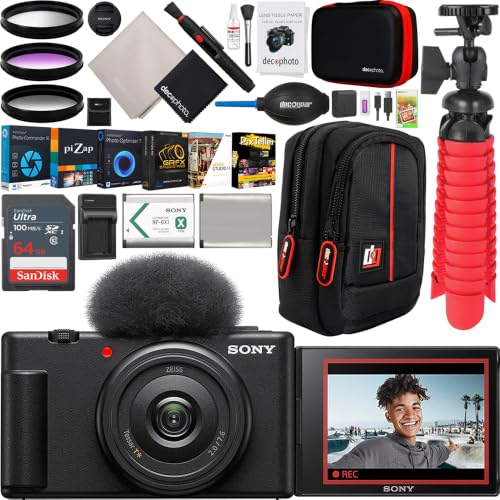
| Sony ZV-1F | Best pocket starter for daily posting | A fixed wide lens, face-first autofocus and a body that lives in a kit bag, ready for unplanned content. |
| Canon PowerShot G7 X Mark III | Best-loved compact for beauty vlogging | The compact beauty creators built their look on: flattering colour, a zoom for framing, and live-streaming built in. |
| DJI Osmo Pocket 3 | Best for behind-the-scenes at real jobs | A gimbal camera that glides around a bridal suite or a backstage corner and makes real work look like a film. |
| Sony ZV-E10 II | Best growth camera when brands come calling | Interchangeable lenses, polished autofocus and product-showcase smarts for sponsored reviews that must look expensive. |
| Canon EOS R50 | Best for the artist who also shoots her portfolio | Canon colour, a viewfinder for bright locations and stills strong enough to carry a booking portfolio. |
| Fujifilm X100VI | Best for an editorial, fashion-leaning brand | Film-simulation looks and a beautiful fixed-lens body for the artist whose brand is taste itself. |
How Did We Choose the Best Cameras for a Makeup Artist Blogger?
We mapped the actual week of a working artist who blogs. Monday is content: reviews and talking heads at the desk. Wednesday might be a bridal trial filmed for a reel. The weekend is a real wedding, where the camera must grab behind-the-scenes clips without slowing the job or annoying the client. Any camera that only served one of those days was marked down, however beautiful its footage, because a blogger’s camera is a business tool that has to clock in everywhere.
Skin was the image test that mattered. We looked at how each camera renders foundation shades across skin tones under typical ring-light and softbox setups, how it handles the shine on a finished face, and whether its colour needs a colourist or survives a quick phone-grade edit. A blogger posting at volume cannot grade like a film studio; the file that looks right nearly straight away is worth real money in hours returned.
Solo operation was scored just as hard. Flip screens you can read while seated, autofocus that finds an eye and keeps it through a lean-in, a microphone input or a good built-in array, and a start-up fast enough to catch an unscripted moment — these decide whether content happens on a tired Tuesday. Every pick below passed that test in a different style, from pocket compacts to one interchangeable-lens body for the artist whose channel has become a second income.
Finally we considered how each camera photographs the business itself. Clients book from stills as much as video: the finished bride, the flat-lay of a kit, the before-and-after pair. Cameras that shoot pleasing stills without a mode change earned credit, because a blogger’s grid and her portfolio are the same shop window.
Why Does a Blogger’s Camera Need to Flatter and Tell the Truth at Once?
Makeup content lives on a contradiction. The camera must flatter the artist — nobody books a tired-looking stranger — while telling the truth about the makeup, because a follower who buys a foundation on your word and finds a different shade at home unsubscribes with interest. Cameras resolve that tension in their colour science: how they separate skin tones from background, how they hold red in lips without bleeding it into cheeks, how they treat the shimmer in a highlighter as sparkle rather than noise.
That is why this guide talks about colour more than resolution. A softer, kinder file that represents shades honestly will sell more makeup and book more brides than a brutally sharp file that exaggerates every pore and shifts every pigment. When you read the pick reviews, watch for the colour notes — they are the commercial heart of each camera for this particular job, more than any burst rate or weather seal.
There is a lighting half to the same truth. A camera with forgiving dynamic range lets a blogger film beside a window without the daylight side of the face blowing out, which is how most home studios are actually lit. Forgiveness, in a blogger’s camera, is a revenue feature.
What Does a Personal Brand Ask of a Camera That a Hobby Does Not?
A hobbyist can wait for good light and reshoot next weekend. A brand cannot: the sponsored post is due Thursday, the bridal reel is expected while the wedding is still fresh, and the algorithm rewards the artist who shows up on schedule. Brand work therefore prizes reliability and recognisability. Followers should know your footage on sight — the same warmth, the same framing, the same clean sound — and that signature comes from a camera you know deeply, not from rotating rentals.
Brand work also changes hands. An assistant may film you; a brand’s editor may grade your files; a client may ask for the raw clip of her trial. Cameras with straightforward files, sensible menus and easy transfer to a phone lower the cost of every one of those handovers. The picks below were judged partly as colleagues: would you trust this camera in someone else’s hands, on your business, on a day you cannot redo?
Which Six Cameras Build a Beauty Brand? The Picks in Detail
Read each review against your own week: which of your working days does this camera serve, and which does it leave uncovered? The right answer is often two of these — a desk camera and a pocket camera — rather than one hero.

Sony ZV-1F — Best pocket starter for daily posting
The Sony ZV-1F understands the blogger’s first law: content you almost made does not count. It lives in a makeup kit or a handbag, wakes fast, frames a face generously with its wide fixed lens, and keeps that face in focus while you talk, gesture and lean towards the mirror. For the artist building a posting habit — morning routines, kit tours, quick reviews between clients — that absence of friction is worth more than any specification, because the channel grows on the days you would otherwise have skipped filming.
Its colour is tuned for exactly this work: skin rendered kindly, product shades kept honest, and a look that survives direct upload without a grading session. The wide lens flatters a small studio corner, making a desk and a backdrop feel like a set. What it will not do is grow with interchangeable lenses or produce creamy background blur at desk distances; the look is bright, clean and present rather than cinematic. For most beginning and mid-stage beauty blogs, bright-clean-present is precisely the house style followers trust.
Treat the ZV-1F as the always camera and it quietly becomes the brand’s backbone: the consultation filmed because the camera was simply there, the client’s reaction caught because starting took seconds. Artists who buy it as a stopgap often keep it for years after upgrading their main body, because no larger camera replaces a pocket one. Its ceiling is real, but its floor — the worst day it gives you — is higher than cameras costing far more, and blogging is a floor business.
- Lens: fixed wide-angle, ideal for desk framing in small rooms
- Autofocus: face and eye priority tuned for presenting to camera
- Audio: directional built-in microphone with wind muff included
- Size: pocketable, the smallest complete blogger kit here
Strengths
- Zero-friction daily filming builds the posting habit
- Skin-friendly colour that uploads nearly unedited
- Wide lens makes small studio corners look spacious
Trade-offs
- Fixed lens, no path to longer or faster glass
- Background blur is modest at desk distances
- Not the tool for cinematic client films
Best for: artists starting or sustaining a daily beauty blog from a home studio corner. Not suited for: bloggers who need interchangeable lenses for paid brand productions.

Canon PowerShot G7 X Mark III — Best-loved compact for beauty vlogging
Few cameras are as woven into beauty blogging’s history as Canon’s G7 X line, and the Mark III is the one that added the modern essentials: clean 4K, a microphone input and live-streaming support for the artist whose community gathers in real time. Canon’s colour remains the reference many followers unconsciously expect from beauty content — skin warm and clean, lip shades punchy — and the zoom lens lets you reframe from a wide desk shot to a closer product moment without moving the tripod or your chair.
For a working artist the G7 X III’s virtue is that it behaves like an appliance in the best sense: it sits on a small tripod all week, pointed at the same chair, producing the same trustworthy look, while you think about makeup instead of menus. It films a bridal morning discreetly, slips into a kit for travel jobs, and its stills serve the portfolio grid without fuss. Battery life and autofocus sophistication trail the newest rivals, and it can run warm on long streams, but as the beauty blog’s house camera it has earned its incumbency honestly.
There is also a community argument for this Canon: years of beauty creators have published their exact settings, lighting distances and workarounds for it, so a new blogger inherits a knowledge base no newer camera can match. When a setting confuses you at midnight before a sponsored post, someone has already filmed the answer using this very body. That ecosystem of shared craft is an invisible feature, and for a solo business it is worth real money.
- Lens: versatile zoom for desk, product and travel framing
- Colour: Canon skin rendering, the beauty niche reference look
- Streaming: live-stream support plus a microphone input
- Body: compact metal build that travels in a makeup kit
Strengths
- The established beauty-blog look, ready out of camera
- Zoom flexibility no fixed-lens rival here offers
- Huge community knowledge base for settings
Trade-offs
- Battery life asks for spares on wedding days
- Autofocus less tenacious than the newest Sonys
- Can warm up during very long streams
Best for: bloggers who want the classic beauty look with streaming for community sessions. Not suited for: creators filming long events on a single battery.

DJI Osmo Pocket 3 — Best for behind-the-scenes at real jobs
Every other pick in this guide films the studio; the DJI Osmo Pocket 3 films the job. Its gimbal keeps footage level and floating as you circle a bride’s final touches, track down a hotel corridor, or sweep across a finished table of products — the behind-the-scenes material that convinces clients you are a working artist rather than a person with a ring light. The rotating screen switches between filming yourself and filming the room in a flick, and its face tracking holds you centred while you work and narrate at once.
The image from its larger sensor is the surprise: low-light bridal suites and moody backstage corners come out cleaner than a pocket camera has any right to manage, and the colour flatters skin under mixed hotel lighting. It slips into an apron pocket between uses, which no other camera here can claim. Its limits are a fixed perspective that cannot zoom optically, a delicacy you must respect around sprays and powders, and stills that serve social posts rather than portfolio prints. As the second camera of a working artist’s brand, though, it has no rival in this list.
Consider what the Pocket 3 does to a wedding morning’s economics. The clips it gathers — calm, smooth, professional-looking — become next month’s booking reels, cut on the train home with the camera’s easy phone transfer. Artists consistently tell us the behind-the-scenes camera pays for itself faster than the studio camera, because clients book the artist they have watched working. If your blog’s weakness is proof rather than polish, start here and add a desk camera later.
- Stabilisation: mechanical gimbal, smooth walking and circling shots
- Sensor: large for its class, strong in dim bridal suites
- Screen: rotating, switches between selfie and scene framing
- Tracking: face tracking that follows while you work
Strengths
- Behind-the-scenes footage that books clients
- Pocket size means it is present at real jobs
- Low-light quality beyond its size
Trade-offs
- No optical zoom for distant ceremony moments
- Gimbal needs care around sprays and powders
- Stills suit social posts, not portfolio prints
Best for: working artists whose blog needs proof of real jobs, weddings and backstage craft. Not suited for: bloggers who mainly film seated tutorials at a desk.

Sony ZV-E10 II — Best growth camera when brands come calling
There is a moment in a beauty blog’s life when a brand’s brief lands with words like ‘deliverables’ and ‘usage rights’, and the pocket cameras start to feel thin. The Sony ZV-E10 II is the camera for that moment. Its autofocus performs the sponsored-review choreography flawlessly — face sharp while you talk, focus gliding to the product you raise, back to your eyes as you lower it — and the lens mount opens the road to fast primes that melt a bedroom background into the creamy blur followers read as ‘professional’.
Around that core, everything serves a growing business: clean files that a brand’s editor can grade, reliable long recording for live shopping sessions, and a body small enough to keep the home-studio feel that made the channel relatable. The investment it demands is real — lenses, and the learning curve of a true system camera — and it lacks in-body stabilisation, so the tripod stays central. But as the step from hobbyist documentation to paid production, it is the natural graduation in this guide, and the one that postpones the next upgrade the longest.
Plan the lens path before the body arrives. A fast standard prime is the beauty blogger’s first glass: it films the talking head, the product hero shot and the portfolio still with one look. A wider zoom follows for room tours and travel jobs. Bought in that order, the ZV-E10 II grows at the speed of the business rather than the speed of temptation — and each lens visibly changes the content, which is more than can be said for most body upgrades.
- Mount: Sony E, fast primes for blurred studio backgrounds
- Autofocus: product showcase behaviour for sponsored reviews
- Video: detailed 4K with profiles a brand editor can grade
- Body: articulating screen, microphone and headphone support
Strengths
- Sponsored reviews look a tier more expensive
- Lens road map grows with the business
- Autofocus choreography for face-to-product focus shifts
Trade-offs
- Needs a tripod — no in-body stabilisation
- System cost grows with each lens
- Learning curve steeper than the compacts
Best for: bloggers signing brand deals who need production polish at a desk. Not suited for: artists who want to film from a pocket with zero setup.

Canon EOS R50 — Best for the artist who also shoots her portfolio
Some makeup artists blog to fill a chair, and for them the portfolio is the point: the finished bride, the editorial look, the before-and-after that makes a client tap ‘book’. The Canon EOS R50 serves that artist best here, because it treats stills and video as equal citizens. Canon’s colour flatters every skin tone in the chair, the electronic viewfinder helps on bright location jobs where screens wash out, and the resulting images drop straight into a booking page without looking like video stills’ poorer cousins.
As a filming camera it is thoroughly modern: dependable face tracking for talking heads, an articulating screen for desk work, and 4K that downsamples to a crisp, clean image for tutorials and reviews. The RF mount is younger than Sony’s, so exotic lenses arrive later, but the core beauty kit — a fast prime, a standard zoom — is covered well and priced fairly. It asks a little more setup than the compacts and rewards it with the most complete stills-plus-video business record in this guide.
Think of the R50 as the camera of record for the business. The blog may be filmed on anything, but the portfolio — the asset that survives algorithm changes and platform fashions — deserves a real camera’s files. Artists who shoot their own portfolio also stop depending on photographers’ timelines for images, which quietly speeds up everything from website updates to award entries. For the artist whose bookings matter more than her view counts, that independence is the headline feature.
- Sensor: APS-C with strong stills and detailed 4K video
- Viewfinder: electronic, for bright on-location work
- Colour: Canon skin tones across a diverse clientele
- Mount: Canon RF, core beauty lenses covered
Strengths
- Portfolio-grade stills and video in one body
- Viewfinder for sunny location jobs
- Colour that flatters a whole client list
Trade-offs
- Lens shelf younger than Sony E
- More setup than a pocket compact
- Kit zoom is a starting point, not the destination
Best for: artists whose blog exists to fill the chair, with a portfolio to prove it. Not suited for: pure video creators who never shoot stills for clients.

Fujifilm X100VI — Best for an editorial, fashion-leaning brand
A certain kind of beauty brand sells taste before technique — the artist as editor, whose feed looks like a magazine and whose bookings come from clients who want that eye. The Fujifilm X100VI is that brand’s camera. Its film simulations give footage and stills a coherent, fashionable palette that followers recognise instantly, and the camera itself, all dials and silver edges, photographs beautifully in the flat-lays and desk shots that decorate a style-led feed. It is the only pick here that is also a prop.
The fixed lens is the discipline and the limit. It frames like a classic editorial photograph — wide enough for a portrait with context, tight enough for a finished look — and it will never zoom to a product on a shelf or swap to a macro for a lash close-up. Working artists therefore pair it with a phone or a compact for utility filming, and keep the X100VI for the signature content: the artist’s own face, her studio, her travels, her point of view. Its stills are superb, its video polished, its availability famously tight — a camera you plan a brand around, not an impulse buy.
Choose it with open eyes about the workflow it imposes. You will move your feet instead of a zoom ring, light more carefully because the lens is fixed, and accept that some shots belong to another camera. In exchange your feed gains the one thing money rarely buys: a look that is unmistakably yours, consistent across years because the tool never changes. For a brand built on taste, consistency of look is not an aesthetic nicety — it is the entire product.
- Sensor: high-resolution APS-C behind a fixed classic lens
- Colour: film simulations for a recognisable house look
- Design: dial-led metal body that stars in its own flat-lays
- Stills: portfolio quality with a distinctive palette
Strengths
- A signature look followers recognise instantly
- Superb stills for an editorial feed
- The camera itself strengthens style-led content
Trade-offs
- One focal length, permanently
- No zoom for products or distant details
- Availability has been very tight
Best for: style-led artists whose brand is an editorial eye and a consistent palette. Not suited for: bloggers needing one camera for every filming job.
How Do the Six Compare as Brand Tools?
| Camera | Best day of the week | Brand strength | Watch out for |
|---|---|---|---|
| Sony ZV-1F | Every day at the desk | Habit and reliability | No lens growth path |
| Canon PowerShot G7 X Mark III | Desk and travel days | The classic beauty look | Battery life on long days |
| DJI Osmo Pocket 3 | Wedding and job days | Proof of real work | Fixed perspective |
| Sony ZV-E10 II | Sponsored content days | Production polish | Needs lenses and a tripod |
| Canon EOS R50 | Portfolio days | Stills plus video record | Younger lens shelf |
| Fujifilm X100VI | Signature content days | A recognisable house style | One focal length only |
Match the camera to the day your business is missing. If content simply is not getting made, the Sony ZV-1F’s friction-free habit is the fix. If content gets made but does not book clients, the DJI’s proof or the Canon R50’s portfolio is the fix. If brands are arriving and the footage must rise to meet them, the ZV-E10 II is the fix, while the G7 X Mark III remains the beloved all-rounder and the X100VI the taste-maker’s signature. The expensive mistake is buying for the day you already serve well.
How Do You Film a Client Without Slowing the Job Down?
Consent and choreography come before cameras. Ask before the appointment, explain where clips will appear, and agree on the moments that are off-limits — a nervous bride’s first look at herself is hers, not content, unless she offers it. Position the camera before the client sits down, on a small tripod at the edge of your workspace, framed on the chair and your hands’ working area. A camera placed in advance films a session; a camera fussed over during it interrupts one.
Work in passes. Film the establishing moments — the kit laid out, the first brushes — then put the camera down and be an artist for the middle of the job, because clients can feel when they have become an audience. Return for the reveal, which the DJI Pocket 3 or a tracked compact captures beautifully in one slow orbit. Two minutes of honest footage, gathered without friction, outperforms a whole session of distracted filming in every metric a business cares about.
Edit with the client’s dignity as the brief. Flattering angles, no unflattering mid-blink frames, and a final check: would you book this artist, and would you want to be this client? Send the client the clip before posting when the relationship matters — the goodwill of that gesture has booked more repeat clients than any caption, and it protects the brand from the one unhappy share that travels further than fifty happy ones.
Which Content Formats Should a Makeup Artist Blogger Rotate?
A sustainable channel rotates four formats, and the picks above divide them naturally. The talking head builds trust — opinions, stories, advice — and belongs to whichever camera lives on your desk tripod. The review builds income, and deserves the ZV-E10 II’s product autofocus when brands are paying. The transformation builds reach, compressing a real job into thirty seconds of before-and-after. The behind-the-scenes builds bookings, and belongs to the Pocket 3’s gimbal glide.
Rotation protects the artist as much as the algorithm. Filming the same format daily burns out the creator and the audience together; a week that mixes a desk day, a job day and a review day keeps both sides interested and spreads the production effort across cameras and locations you already own. Batch the desk formats on one morning, when the light and your face are fresh, and let the job formats gather themselves during real work.
Measure formats by business result, not applause. A transformation reel may win views while a quiet consultation video wins the wedding booking worth a hundred reels. Track which format produces enquiries, saves and shares from your actual town and clientele, and let that ledger — not vanity metrics — decide next month’s rotation. The camera kit then organises itself: the format that books gets the best light, the best lens and your freshest energy.
How Should a Blogger Light a Face She Is Also Trying to Sell Makeup On?
Beauty lighting walks a line that product lighting does not: it must be soft enough to flatter and honest enough to show the work. A large, diffused key light at roughly forty-five degrees is the working standard — a softbox or an LED panel through diffusion, big relative to the face, placed close. Ring lights give the familiar catchlight and shadowless clarity for tutorials, but they can flatten the modelling that shows off contouring, so many artists keep both and choose per video.
Colour temperature discipline matters commercially. Mixed light — warm room bulbs against a cool window — shifts foundation shades on camera and invites the ‘it looked different in person’ complaint that quietly kills a review channel’s credibility. Pick one temperature, set the camera’s white balance to it manually, and light the whole frame with it. Your followers are, in effect, shade-matching by proxy through your camera; the camera’s honesty is your reputation.
Finally, light the background separately and dimmer. A face lit a stop brighter than its surroundings reads as professional on any camera in this guide, and a small practical lamp or a coloured accent behind you gives the frame depth that no lens blur fully imitates. Bloggers often chase blur with expensive glass when a ten-minute background-lighting fix would have delivered the same perceived production value.
How Do You Sound Like a Professional Before You Look Like One?
Audiences forgive soft focus and punish bad sound, because a blog is half radio. The voice that books clients and holds a review together arrives through the microphone, and every pick here either carries a good built-in array or accepts an external one. A small wireless microphone clipped at the collar transforms desk videos, job-day narration and consultation clips alike, and it costs less than the price gap between any two cameras in this guide.
Room sound is the hidden half. A bare-walled studio corner rings; soft furnishings, a rug and even the backdrop curtain itself calm the echo that makes expensive cameras sound cheap. Record thirty seconds of silence in your filming spot and listen back honestly — if the room sounds like a bathroom, no microphone will fully rescue it, and an afternoon of soft furnishings will do more than a gear upgrade.
Develop a sound signature as deliberately as a visual one: the same microphone, the same distance, the same gentle processing on every video. Followers who mostly listen — while commuting, cooking, getting ready themselves — recognise a creator by voice long before they recall her face. Consistency there is brand equity you can hear.
What Should a Blogger Post During the Weeks She Has No Big Job?
Every working artist hits quiet weeks, and the blog must not go quiet with the diary, because the algorithm and the audience both read silence as absence. Quiet-week content is a genre of its own: kit tours and honest product empties, a recreation of a famous look, a lesson drawn from an old job retold over stills, a consultation filmed with a friend as the model. The desk cameras in this guide exist for exactly these weeks — content that needs no client, no venue and no occasion beyond your own expertise.
Keep a running list of twenty quiet-week ideas in your phone, added whenever a client question or a product surprise suggests one. The list converts a blank Tuesday from a creative crisis into a production task: choose an idea, sit in the chair, film it on the camera that is already set up. Bloggers who survive quiet seasons are rarely more talented; they are simply the ones whose systems — list, set-up, habit — carry them through the weeks when inspiration does not.
Quiet weeks are also when the business behind the blog gets built: update the portfolio from the Canon’s stills, cut the wedding clips the DJI gathered into a fresh reel, write the captions and pin the posts that convert a curious follower into an enquiry. The camera kit earns its keep in those weeks as an archive, not just a capture device — one more reason to choose bodies whose files organise, transfer and edit without friction.
How Do You Film a Sponsored Review a Brand Will Approve First Time?
Brands reject footage for boring reasons: the product filmed out of focus, the shade name mispronounced, a competitor’s palette visible in the background, the logo turned away from camera. A blogger who films sponsored work on the ZV-E10 II’s product autofocus removes the first risk; a written checklist on the tripod removes the rest. Read the brief aloud to the camera before the take — it becomes your edit notes — and film a clean ten seconds of the product alone, label visible, before any artistry begins.
Deliver more than the brief asks, in the dimensions that cost you nothing: a vertical cut as well as the horizontal master, a version without music for the brand’s own edit, the raw clip of the single best application moment. Brands rebook the creator who makes their editor’s week easier, and they quietly drop the creator whose beautiful footage arrives unusable. The camera’s job in sponsored work is not to dazzle; it is to make approval effortless.
Keep the paperwork with the footage. Usage rights, exclusivity windows and posting dates agreed in messages should live in the same folder as the files, named so a stranger could understand the deal. A blog becomes a business at exactly the point where its archive can answer a brand’s question without the artist digging through a phone at midnight.
How Do You Turn One Wedding Into a Month of Content?
A single well-filmed wedding contains a month of posts if you shoot with the edit in mind. The kit flat-lay before you leave. The calm before the client arrives. Three detail clips — lashes, lips, the finished hair meeting the finished face. The reveal. A ten-second testimonial while the emotion is fresh, asked kindly and never insisted upon. The Pocket 3 gathers most of these in the margins of the job, in moments that cost the client nothing.
Back home, the same material cuts five ways: the transformation reel, the calm-luxury brand film, the tutorial retelling using stills and voiceover, the product post crediting what you used, and the quiet testimonial piece that does the actual booking. Stagger them across weeks rather than flooding one weekend; each post then advertises the business to a slightly different follower mood, and the wedding keeps working long after the album is delivered.
Protect the well. Never post a client more than the relationship comfortably allows, never let content hunger turn a wedding morning into a film set, and retire the material when the client relationship ends or the look leaves your portfolio’s direction. A archive mined with restraint stays an asset; mined greedily, it becomes the story clients warn each other about.
What Does Filming in a Client’s Home Demand From You and Your Camera?
Location work inverts the studio’s comforts: the light is whatever the windows give, the background is somebody’s life, and the schedule belongs to the household. Small cameras win here. A compact on a mini tripod reads as a guest’s accessory; a full rig reads as a production taking over the morning. Frame tightly to keep the frame kind — a chair, a window, a clean wall — and let the rest of the home stay private and unseen.
Sound needs diplomacy: kettles, children and doorbells are the soundtrack of real homes, and a close wireless microphone on the artist, recording her own calm narration, rides over most of it. Film the room tone for ten seconds before you start; editors bless the creator who brings it. And agree the posting plan before you pack up, while goodwill is warm — the conversation is easier at the door than by message a week later.
Leave the space and the client better than the content found them. Charge nothing in attention that the job did not already owe, share the flattering stills freely, and let the client see herself as you saw her: composed, celebrated, the heroine of the morning. That experience, repeated house by house, is the brand the camera was bought to build — the footage is merely its evidence.
How Should a Blogger Choose Between These Six in One Shopping Trip?
Stand in the shop with your own week in your hand, literally written down: the days you film, the places, the formats, the clients. Handle each candidate as its day demands — the compacts one-handed and fast, the Pocket 3 in a walking glide around the shop floor, the system cameras on an imaginary tripod at seated height. The camera that disappears into the gesture you actually make is worth more than the camera that wins a specification argument at the counter.
Then interrogate the files, not the bodies. Ask to film the same face — the assistant’s, yours in the mirror corner — under the shop’s mixed light on each candidate, and judge the skin and the shades, because that is the footage your business will sell. Shops light cameras to flatter cameras; a face under mixed light tells the truth a test chart hides.
Finally, price the system, not the sticker: the spare battery, the microphone, the light you will now need because the camera deserves it. A cheaper body that demands expensive rescue gear is not cheaper. The right purchase is the one whose total cost leaves the business with a camera, a light, a microphone and a posting schedule it can keep — which is, in the end, the only specification a blog has ever run on.
What Mistakes Do Makeup Artist Bloggers Make With Cameras?
The commonest mistake is buying the camera of a creator five years ahead. Her cinema rig serves a team, a colourist and a sponsor’s deadline; copied into a solo artist’s spare room it produces slower content, not better content, and the channel quietly dies of its own production values. Buy for your current week — the picks above are sequenced roughly by business stage for exactly this reason — and let revenue, not envy, schedule the upgrade.
The second mistake is filming the makeup honestly and the artist dishonestly: beauty filters and skin-smoothing modes left on until the camera’s version of the artist no longer matches the woman who arrives at the wedding. Followers forgive a real face; clients do not forgive a surprising one. Use the kindest honest settings your camera offers, keep smoothing off or minimal, and let light — not processing — do the flattering.
Third, neglecting the archive. Cards wiped without backup, footage scattered across phones and memory cards, no folder a brand could be sent twice. A blogger’s back catalogue is a business asset that compounds; treat it with the same care as the kit itself, because the day a clip is requested again is always the day after it was deleted.
Fourth, and quietly the most expensive: filming everything and publishing nothing because the footage ‘isn’t ready’. A blog grows on published weeks, not perfect ones. Set a deadline the business respects, cut the video to the standard the deadline allows, and post it — the audience you are building cannot subscribe to the masterpiece still sitting on a memory card.
Final Recommendation
If one camera must start the brand, make it the one that matches your missing day: the Sony ZV-1F for the posting habit, the Canon G7 X Mark III for the classic all-round beauty look, the DJI Osmo Pocket 3 when your work itself is the content, the Sony ZV-E10 II when brands begin paying, the Canon EOS R50 when the portfolio books the chair, and the Fujifilm X100VI when taste is the brand. Buy the light and the microphone in the same season, post on schedule, and let the business — not the gear pages — tell you when to climb. One last test before you spend: borrow or rent the finalist for one genuine working week, weddings and desk days included, and count not the compliments the footage earns but the sessions you actually completed. The camera that gets a tired artist through a full week of content without a single cancelled filming day is the camera this guide has been describing all along, whatever its badge — and it is almost always one of the six above, chosen by the week rather than by the wishlist. Treat the purchase as the business would: an investment that must return bookings, sponsorships and hours, and be honest in a year about whether it did.
Frequently Asked Questions
Is a phone enough for a makeup artist blogger?
A modern phone films respectably and many artists start there, but a dedicated camera buys consistency: the same look every session, better sound options, and files that hold up when a brand asks for more. Upgrade when the phone’s friction or look starts costing content.
Which matters more for beauty blogging, 4K or colour?
Colour, comfortably. Followers judge shade honesty and skin rendering; nobody has ever booked a makeup artist for her resolution. Every pick here shoots 4K anyway, so choose on colour and handling.
Do I need two cameras to blog as a working artist?
Eventually, most working artists settle on a desk camera plus a pocket or gimbal camera for jobs. Start with the one that covers your most frequent filming day and add the other when its absence starts costing you content.
How do I stop my foundation looking a different shade on camera?
Light and white balance, not the camera. Use one light temperature, set white balance manually to match it, and avoid mixing window daylight with warm room bulbs in the same frame.
Can I live-stream my makeup sessions with these cameras?
Yes — the Canon G7 X Mark III builds streaming in, and the others stream through USB or HDMI with varying ease. Check your platform’s requirements and favour a wired connection for paid sessions.
What is the best first lens for the ZV-E10 II or R50?
A fast standard prime. It films the talking head with a blurred background, shoots the portfolio still and heroes the product — the three shots a beauty business lives on — in one purchase.
Should I use skin-smoothing or beauty modes?
Minimally or not at all. Clients must recognise the artist who arrives; heavy smoothing also erases the makeup detail your content exists to show. Let soft light do the flattering instead.
How often should a makeup artist blogger post?
As often as she can sustain without the job suffering — for most, three solid videos a week beats a daily scramble. The camera that gets used is the one that supports that rhythm, which is why this guide weighs friction so heavily.
How do I film myself when I work alone?
Set the camera on a tripod at your seated eye height, frame wider than feels natural, and use face tracking on the compacts or the Pocket 3. Check the frame on the flip screen, then forget the camera and work — the best solo footage comes from sessions where the artist genuinely works rather than performs.
What backdrop suits a beauty blog filmed at home?
A plain, softly lit backdrop a step behind the chair — fabric or paper in a tone that flatters your own skin and separates you from the background. Distance from the backdrop matters more than its price: space kills shadows and wrinkles alike.
Related Guides
Grow the business side of the channel with best cameras for makeup tutorials, best cameras for beauty vlogging and best cameras for live streaming.


