kajuandouglas.com is reader-supported. When you buy through links on our site, we may earn an affiliate commission.
Where to Buy a Camera for HDR, Where the Sky Is Blown and the Foreground Is a Cave
The best cameras for HDR work are chosen at the scene that defeats ordinary cameras: the sunset whose sky burns white while the landscape below drowns in shadow, the bright window behind a dim interior portrait, the waterfall in full sun under black cliffs. HDR — high dynamic range — is photography’s answer to that insult: capturing detail at both ends of the brightness scale at once, whether by a sensor that simply holds more range in a single frame, by bracketing several exposures and marrying them, or by video formats that carry the range into moving pictures and modern screens.
Buyers deserve the vocabulary plainly. A sensor’s native dynamic range is the honest foundation — the more a single frame holds, the less rescue work later. Bracketing and in-camera HDR modes build range by construction, superbly for still subjects and treacherously for moving ones. HDR video — the formats that modern televisions and phones display with real highlights — is a third discipline entirely, with its own settings and its own disappointments when done carelessly. This list was chosen to cover all three, and to say which pick serves which.
Where to buy: each linked name below leads to that camera’s Amazon listing, and HDR buyers should think of the order as a highlight-protection kit — the camera, the fast card that bracketing devours, the tripod that multi-frame work demands, and the editing patience that no listing sells. HDR is a workflow wearing a camera’s clothes; buy the whole workflow or expect the clothes to fit badly.
The six divide by temperament: two full-frame stills champions whose single frames hold a scene’s whole argument, an APS-C colourist whose film-born rendering flatters HDR’s tendency to garishness, a video-led body whose HDR recording serves filmmakers, and two small adventurers — a 360 camera and an action flagship — that carry HDR into places where tripods and brackets fear to tread.
One honesty belongs at the front: HDR cannot rescue a scene photographed carelessly, and its failures — halos, ghosts, colours like a sweet shop fire — are uglier than plain underexposure. The sections below teach the restraint as thoroughly as the technique, because the best HDR photographs are the ones nobody identifies as HDR at all.
Key Takeaways
The range, compressed:
- Native sensor range is the foundation; bracketing builds on it, and HDR video is a separate craft with its own formats.
- The Sony Alpha 7 IV leads for single-frame HDR stills — its files hold skies and shadows in one honest exposure.
- Moving subjects punish multi-frame HDR; ghosting is the tax, and single-frame range is the exemption.
- The Panasonic LUMIX S5II carries HDR into video, for screens that can actually display it.
- Restraint is the master skill: the best HDR is invisible, protecting highlights and lifting shadows without theatre.
In this guide
Quick Picks
Six cameras for scenes too bright and too dark at once.
| Camera | Badge | Why it earns its place here |
|---|---|---|
| Sony Alpha 7 IV | Best for Single-Frame HDR Stills | A sensor whose range holds sunset skies and shadowed foregrounds in one exposure. |
| Fujifilm X-T5 | Best for Colour-Rich HDR | Resolution and film-born colour that keep bracketed blends believable. |
| Panasonic LUMIX S5II | Best for HDR Video | Video tools and range for footage that modern HDR screens reward. |
| Canon EOS R6 Mark II | Best for HDR in Motion | Single-frame range and stabilisation for HDR where tripods cannot go. |
| Insta360 X4 | Best for 360 HDR | Every direction at once, with HDR keeping the sun and the shade in one sphere. |
| GoPro HERO13 Black | Best Pocket HDR Video | HDR video in a waterproof fist — surf, snow, and noon sun included. |
How Did We Choose the Best Cameras for HDR?
Native range came first and was judged where it shows: a single frame shot into the light, its highlights interrogated for detail and its shadows lifted to see whether they resolve into texture or dissolve into noise and banding. Cameras whose shadows punish lifting were cut, however wide their brochure’s claims, because HDR stills work is mostly the art of the lifted shadow.
Second, the construction tools: exposure bracketing depth and speed, in-camera alignment and merging where offered, and the honesty of the camera’s HDR modes under a moving subject. Third, the video path — HDR formats supported, the monitoring to expose them correctly, and files that editing software greets without a fight.
What we discounted: HDR as a menu novelty, tone-mapped presets that pre-cook the garish look, and any range figure quoted without the shadow behaviour that gives it meaning. HDR is a promise made by shadows; this list audited the shadows.
What Is Dynamic Range, and Why Does the Sunset Keep Winning?
Dynamic range is the distance between the darkest and brightest things a camera can record with detail in the same frame. The human eye handles the sunset by adapting locally — pupil, attention, and a brain that stitches the scene’s brightnesses into one believable view. A sensor gets one exposure for the whole frame: expose for the sky and the foreground becomes silhouette; expose for the foreground and the sky becomes a white void with a sun-shaped hole. Every landscape photographer has a hard drive of both failures, filed under learning.
Modern sensors have widened the distance enormously — a good current frame holds detail across a range that film-era photographers would have called a rumour — and raw files store that range for the editor to distribute. HDR techniques exist for the scenes that still exceed it: the cave mouth framing a sunlit valley, the interior with one blazing window, the noon waterfall. The craft is knowing which tool the scene needs: a single wide-range frame, a bracketed construction, or simply the photographer’s feet, moving the problem out of the composition.
The sunset keeps winning because it is the extreme case wearing a pretty face: a light source in the frame, a sky spanning five brightnesses, and a foreground the photographer loves in shadow. This list’s stills leaders were chosen at exactly that scene — and the sections below teach the exposures that let them win it.
When Should You Bracket, and When Is One Frame Enough?
One frame is enough more often than the HDR industry admits: when the scene’s range fits the sensor’s — testable by exposing for the highlights and inspecting whether the shadows lift cleanly — the single raw file is faster, ghost-free, and honest. Landscapes at dawn and dusk, interiors without blazing windows, and every scene with movement in it belong, by default, to the single frame and the wide-range sensor.
Bracketing earns its complexity when the range truly exceeds one frame and the subject holds still: architecture, interiors with windows, landscapes in hard noon light, the cave mouth and the valley. The discipline is mechanical — tripod, a bracket series spanning the scene’s extremes, frames exposed for the sky, the middle, and the shadows — and its enemies are motion and impatience: leaves, water, people, and clouds all move between frames, and the merge will ghost them into double-exposure ghosts unless the software’s deghosting saves what the photographer’s timing should have.
The mature habit is diagnostic: read the scene’s range first — meter the sky, meter the shadow, count the distance — and let the arithmetic choose the method. HDR chosen by diagnosis looks like photography; HDR chosen by habit looks like HDR, which is the genre’s one unforgivable appearance.
Which Cameras Hold the Whole Scene? The Six Picks in Detail

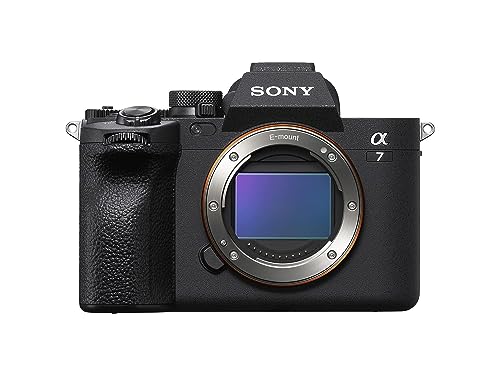
Sony Alpha 7 IV — Best for Single-Frame HDR Stills
The Alpha 7 IV’s HDR argument is its sensor’s manners at both ends of the scale: highlights that roll off with detail intact deep into the bright, and shadows that lift in the edit like a curtain rather than crumbling into noise. For the landscape and travel photographer, that means the sunset is one frame — expose for the sky, trust the foreground to the file, and walk away with a picture that needed no construction and therefore contains no ghosts.
Its bracketing, when construction is required, is quick and deep enough for architecture and interiors, and its files are the editing world’s most familiar currency — every raw processor knows exactly what to do with them. The body’s other virtues compound the HDR case: stabilisation for the dawn and dusk hours when range matters most, and autofocus that handles the foreground subject while the photographer’s attention is on the sky.
Choose it as the HDR stills anchor: the camera for the photographer who wants range as a property of every frame rather than a mode to remember. Its files forgive the exposure compromises that high-range scenes force, which is the practical definition of dynamic range in a working life.
Its video HDR path is serviceable rather than the list’s leader — the Panasonic wears that badge — and its sophistication asks the usual learning investment. For stills, which remain HDR’s homeland, it is the complete instrument: range, resolution, and an ecosystem of fast glass for the hours when the light argues.
- Type: full-frame mirrorless
- Signature: shadows that lift like a curtain
- Bracketing: quick, deep, tripod-ready
- Files: every editor’s first language
- HDR role: the single-frame champion
Strengths
- Sunsets in one honest frame.
- Shadows survive serious lifting.
- Bracketing there when needed.
Trade-offs
- HDR video trails the Panasonic.
- Learning investment is real.
- Professional tier, as ever.
Best for: landscape, travel, architecture stills.
Not suited for: HDR-video-first filmmakers.

Fujifilm X-T5 — Best for Colour-Rich HDR
HDR’s characteristic failure is not technical but aesthetic: blends that look like a brochure for a theme park, skies of implausible turquoise, shadows lit like a showroom. The X-T5 is this list’s antidote — a high-resolution sensor behind colour science descended from film, whose renderings keep bracketed scenes believable. Its files hold a wide range for an APS-C body, and its film simulations give the HDR editor a palette of finished, tasteful endpoints rather than a slider safari.
The resolution earns its keep in HDR’s favourite subjects: architecture whose cornices must survive the merge, landscapes whose shadow detail is texture — scree, foliage, water — rather than smooth tone. Its bracketing is thorough, its dials make the exposure series a tactile ritual, and its in-camera HDR options serve the photographer who wants the construction done before the walk home.
Choose it if your HDR lives in print and in colour: the framed landscape, the architectural portfolio, the travel book. Its files reward the careful editor with a quality HDR rarely achieves — drama that reads as memory rather than as effect.
The smaller sensor concedes the last measure of shadow-lifting to the full-frame leaders, and its video HDR is a supporting craft. Within stills — the genre’s heartland — its combination of resolution, colour, and honest range is the list’s most tasteful instrument.
- Type: APS-C mirrorless, high resolution
- Signature: film colour disciplines HDR
- Bracketing: thorough, dial-led
- Prints: detail survives the merge
- HDR role: the colourist’s HDR camera
Strengths
- Believable colour in bold scenes.
- Resolution serves architecture.
- Finished looks without slider safaris.
Trade-offs
- Shadow lifting trails full frame.
- Video HDR is the support act.
- Dials reward deliberate owners.
Best for: print landscapes, architecture, colour lovers.
Not suited for: extreme shadow rescue or video-led HDR.

Panasonic LUMIX S5II — Best for HDR Video
HDR video is where the range argument becomes a viewing experience: footage recorded with its highlights intact, displayed on the televisions and phones that now render real brightness, so the sunset scene glows as a sunset rather than as a photograph of one. The S5II is this list’s filmmaker for that world — a video-led full-frame body with the recording formats, monitoring tools, and stamina to shoot HDR footage deliberately rather than accidentally.
Its exposure tools are the craft’s core: waveforms and scopes that show the highlight’s true position while the scene is still in front of the camera, because HDR video forgives nothing in the edit that the exposure got wrong at the shoot. Its stabilisation keeps the golden-hour walk-and-talk composed, and its recording endurance treats the long event — the wedding’s sunset hour, the concert’s lighting drama — as one take rather than a series of thermal negotiations.
Stills are a genuine second craft here, with range that serves the hybrid shooter honourably; the photographer-filmmaker who delivers both will find the S5II the list’s most balanced instrument, even if the Sony edges it for stills alone.
The learning curve is a filmmaker’s: formats, profiles, and monitoring are a vocabulary to acquire, and HDR delivery — the right file for the right screen — is a discipline beyond the camera. For the shooter ready to work in HDR video properly, this is the body that respects the ambition.
- Type: full-frame video-led mirrorless
- Signature: HDR video with real monitoring
- Stamina: long takes without drama
- Stills: honourable second craft
- HDR role: the filmmaker’s range
Strengths
- Highlights placed by evidence.
- Footage modern screens reward.
- Endurance for event sunsets.
Trade-offs
- Format vocabulary to learn.
- Stills range a step behind Sony.
- Delivery discipline required.
Best for: filmmakers, hybrid event shooters, HDR delivery.
Not suited for: stills-only HDR purists.

Canon EOS R6 Mark II — Best for HDR in Motion
Much of life refuses the tripod: the festival at dusk, the street scene with the sun in it, the family at the bright window, the hike where the waterfall will not wait for a bracket series. The R6 Mark II is HDR for that world — a full-frame sensor with wide single-frame range, stabilisation that holds the frame steady at the slow shutter speeds dusk demands, and autofocus that keeps the moving subject while the exposure argues with the sky.
Its colour loyalty protects the HDR edit’s most fragile element — faces. Skin in high-range scenes is where aggressive processing goes to die, and the R6’s rendering keeps people believable while the sky and the shadows are negotiated around them. Event and wedding photographers, whose entire genre is backlit people, will recognise this as the HDR that matters professionally.
Choose it when the scenes move and the camera must move with them: handheld HDR stills with range to spare, video with highlights held, and a body that serves the whole assignment rather than one luminous corner of it.
Absolute shadow-lifting depth sits a half-step behind the Sony, and the longest static recordings belong to the Panasonic’s parish. As the moving world’s HDR instrument — the one that brings range to where life happens — it has no rival on this page.
- Type: full-frame mirrorless
- Signature: range at handheld speeds
- Colour: faces survive the negotiation
- Stabilisation: dusk shutter speeds held
- HDR role: HDR for moving life
Strengths
- Single-frame range, no tripod sermons.
- Skin stays human in hard light.
- Focus keeps moving subjects.
Trade-offs
- Shadow depth half a step behind.
- Static long takes are Panasonic’s.
- Professional tier investment.
Best for: events, weddings, street and travel in hard light.
Not suited for: tripod purists wanting ultimate stills range.

Insta360 X4 — Best for 360 HDR
The 360 camera faces HDR’s hardest version by definition: every direction at once, the sun in one hemisphere and the cave-dark foreground in the other, in a single stitched sphere with nowhere to hide a blown highlight. The X4’s HDR modes exist for exactly that geometry, holding the bright direction’s detail while the shadowed directions keep their texture — and its reframing workflow lets the editor choose the view after the fact, which converts HDR from a capture gamble into an editing decision.
Its parish is the immersive scene: the viewpoint, the summit, the old town square at noon, the boat at sunset — places whose story is the whole surroundings and whose range defeats any single pointing of a normal camera. Travel creators and virtual-tour makers will find its HDR the difference between a sphere that demonstrates the place and a sphere that merely proves the visit.
The workflow is the price of the sphere: files are married in software, the reframing is a second craft, and per-pixel sharpness within any one view trails the conventional picks. None of that argues with its role — it is the only camera here for whom HDR is not a feature but the price of existing at all, and it pays the price impressively.
Choose it when the scene is a place rather than a subject. For everything that fits in a frame, the other five are waiting; for everything that is a world, the X4 is the list’s one honest door.
- Type: 360 action camera
- Signature: HDR in every direction
- Workflow: reframe after the fact
- Scenes: places, not subjects
- HDR role: the whole-world camera
Strengths
- Sun and shade in one sphere.
- Views chosen in the edit.
- Tough, small, everywhere-able.
Trade-offs
- Software marriage required.
- Per-view sharpness trails convention.
- Reframing is a second craft.
Best for: virtual tours, viewpoints, immersive travel.
Not suited for: framed composition or print detail.

GoPro HERO13 Black — Best Pocket HDR Video
The action camera’s native scene is HDR’s torture chamber: noon surf with white water and black wetsuits, snowfields under a hard sun, the trail that runs from black forest to blown alpine glare in one corner. The HERO13 Black’s HDR video modes exist because its owners film there daily, and its processing holds the highlights on water and snow while keeping the shadowed subject legible — footage that older action cameras rendered as a choice between the sky and the story.
Its virtues are the action camera’s constitution: waterproof in its skin, stabilised against the mountain bike’s opinion, mountable anywhere a story happens, and small enough that HDR video becomes a pocket habit rather than an expedition. Skiers, surfers, riders, and travellers filming in brutal light will find its HDR the most-used version on this entire list, because it is the one that is there.
The small sensor’s limits govern the extremes: deep dusk defeats it sooner than the big bodies, and its HDR is a video craft — stills are records. Within daylight’s violence, which is its beat, it is superb, and its files drop into the same editors as the flagships’ without ceremony.
Choose it as the HDR camera of the outdoors kit — the one that films the summit’s glare and the river’s white water while the mirrorless stays safe in the pack — or as the only camera of a trip where light will be hard and space will not.
- Type: waterproof action camera
- Signature: HDR video in brutal light
- Mounting: anywhere a story happens
- Stabilisation: trails and water forgiven
- HDR role: the outdoors’ HDR habit
Strengths
- Highlights held on snow and surf.
- Waterproof, mountable, present.
- Pocket size, flagship manners.
Trade-offs
- Dusk defeats it earliest here.
- Stills are records, not art.
- HDR is video’s craft in this body.
Best for: snow, surf, trails, travel in hard light.
Not suited for: dusk stills or shadow-lifting contests.
How Do the Six Compare at a Glance?
HDR divides by method — single frame, construction, video, sphere — so the table casts each pick to its method and names its limit.
| Camera | Form | Decisive edge | What you give up |
|---|---|---|---|
| Sony Alpha 7 IV | Full-frame mirrorless | Single-frame range | HDR video leadership |
| Fujifilm X-T5 | APS-C mirrorless | Colour and resolution | Ultimate shadow lift |
| Panasonic LUMIX S5II | Full-frame video-led | HDR video craft | Stills-first simplicity |
| Canon EOS R6 Mark II | Full-frame mirrorless | Range in motion | Last half-step of depth |
| Insta360 X4 | 360 camera | Whole-scene HDR | Per-view detail |
| GoPro HERO13 Black | Action camera | Pocket HDR video | Dusk performance |
How Do You Expose for HDR Without Making It Look Like HDR?
Expose for the highlights and mean it: the bright sky, the window, the white water get the exposure’s protection, because clipped highlights are gone forever while shadows — on the wide-range picks — are merely waiting. Check the frame’s brightest citizen rather than its average, and let the histogram’s right edge, not the scene’s mood, set the shutter. Then, in the edit, lift with a budget: shadows raised until the scene reads as the eye remembers it, and not one stop further into the showroom.
Colour restraint is the second discipline. HDR processing’s saturation enthusiasm must be edited like a loud guest — welcomed for energy, seated before it dominates. Protect skin first, skies second, and let one colour in the scene be the loudest thing in it. The photographs that survive decades of taste are the ones whose HDR served the scene invisibly; the technique should be discoverable only by asking how the sky kept its detail.
Finally, print the test: HDR that sings on a backlit screen can curdle on paper, where the lifted shadows show their noise and the halos announce themselves. The print is HDR’s examiner, and the photographers whose work hangs are the ones who sat it early.
Keep a small liturgy of checks for every HDR session, in the notebook rather than in memory: the scene’s metered extremes, the method chosen and why, the frame numbers of the series, and one sentence about the light for the editor who will meet these files in a month — who is you, older by exactly the forgetting curve. HDR’s constructions are unusually dependent on the shooter’s notes, because the finished photograph conceals its own recipe by design.
What Are the Most Common HDR Mistakes?
The halo is the first: bright edges around dark objects against the sky, the signature of processing that pushed local contrast past the scene’s physics. The second is ghosting — the bracket series merged across a moving subject, producing citizens with transparent twins. The third is the grey, crunchy shadow: lifted past its information into a noise porridge that the eye reads as dirt.
Fourth is HDR as a rescue fantasy: the scene that needed recomposing, photographed badly at three exposures and processed hopefully. Fifth is the uniform look — every photograph from a trip processed through one HDR recipe until the desert and the cathedral share a complexion. Each mistake is the same mistake in costume: the technique leading, the scene following. Diagnose the range, choose the lightest tool that covers it, and stop when the photograph looks like the place.
How Does HDR Video Differ From HDR Photography?
Photography’s HDR is a stills negotiation conducted in the edit; video’s HDR is a delivery format with standards, screens, and a chain that must agree from sensor to television. The recording captures a wide range in a profile designed for it; the edit grades within that profile’s rules; the export declares itself correctly; and the display — an HDR-capable screen — renders highlights with actual brightness that ordinary screens cannot. Break any link and the footage arrives looking washed or garish, which is why HDR video has a reputation for difficulty that its stills cousin never earned.
Exposure discipline tightens accordingly: the highlight placement that a stills editor can renegotiate is, in video, a commitment made per shot, under monitoring that tells the truth — which is why the S5II’s scopes matter more than its slogans. Movement, meanwhile, forbids bracketing entirely: video HDR is single-capture range or nothing, and the sensor’s native width is the whole game.
The reward, on the right screen, is the most lifelike footage a consumer camera has ever made: sunsets that glow, windows that hold the garden beyond them, stage lights with body. The filmmakers who master the chain early are building the catalogue the next decade of screens will ask for.
Practise the chain end-to-end before the commission does: one scene, shot in HDR, edited in the profile, exported with its declarations correct, and viewed on the actual television or phone the audience owns. The chain’s weak links — a mislabelled export, a screen’s motion settings repainting the grade — are all discoverable in rehearsal and all unforgivable in premiere, and an afternoon’s rehearsal is the cheapest insurance in the whole HDR budget.
How Do You Shoot HDR Interiors and Real Estate Without the Showroom Look?
The interior is HDR’s workplace: a dim room, a window full of noon, and a client — a seller, a hotel, a family documenting a home — who needs both readable in one frame. The professional method is bracketing with manners: a series spanning the window’s brightness to the corner’s gloom, merged with the saturation held on a short rein and the verticals kept honest. The room should look like the room on its best morning, not like a render of itself.
Window discipline decides the result. Expose one frame for the view alone — the garden, the skyline — and let the merge seat it in the window like a picture in a frame; a window blown to white in an otherwise perfect interior reads as a mistake the viewer cannot name. Mixed lighting is the second trap: daylight from the window and tungsten from the lamps paint the room two colours, and the HDR editor must choose the room’s true complexion rather than averaging them into a third, fictional one.
Furniture stillness is the interior’s gift to bracketing — nothing moves but the light — so the tripod series can be unhurried and exact. The photographers who dominate this niche are not the ones with the widest sensors but the ones whose restraint a client can trust: the property, recognisably itself, on its best behaviour.
How Do Water, Foliage, and Crowds Behave in Bracketed HDR?
Water is the honest ghost: it moves between frames as its nature, and the merge must choose — a single frame’s water, silky or frozen, seated inside the bracketed scene by the editor’s hand. The mature workflow brackets the land and shoots the water separately, marrying them deliberately rather than letting the software improvise a three-headed river.
Foliage in wind is the same lesson at higher frequency: leaves occupy different air in every frame, and aggressive deghosting turns a tree into a watercolour of itself. Shoot foliage scenes in the calm of early morning where possible, prefer the single wide-range frame when the wind is up, and accept that some scenes are one-exposure scenes wearing HDR weather.
Crowds ghost into transparency — the famous HDR pavement where citizens fade to ghosts — which is either the picture’s ruin or its entire point, depending on whether the photographer chose it. The station concourse rendered as architecture with human weather is a legitimate, even noble, HDR subject; the family group with a translucent grandmother is a technique error. Consent of the subject, including the subject’s solidity, is part of the craft.
How Do You Build an HDR Editing Workflow That Stays Honest?
Order is the workflow’s morality. Begin with the single best frame — usually the highlight-protected exposure — and build the edit on it: shadows lifted to memory’s level, highlights seated, colour corrected to the scene’s truth. Bring the bracketed frames in as reinforcements only where the single frame genuinely fails — the window’s view, the cave’s mouth — and mask them like a restorer, invisibly, at the joins nobody will inspect because nothing announces them.
Keep a reference open: the middle frame, unprocessed, as the edit’s conscience. Every few minutes, look at it. Processing drifts by increments too small to notice and too large to defend, and the reference is the only crew member who will say so. The edit is finished when the processed frame looks like the reference with its problems solved — not when it looks impressive, which is a different and lesser finish line.
Archive the series whole: the bracket, the edit’s file, and the finished export, named so a stranger could rebuild the work. HDR files are among photography’s most re-editable assets — software improves yearly — and the photographer who kept the raw series owns photographs that get better while they sleep.
What Does HDR Mean for Phone-Era Photographers Moving to a Real Camera?
The phone has taught a generation that HDR is a look: vivid, lifted, unmistakable. The dedicated camera teaches the older truth — HDR is a range, and the look is a choice the photographer may decline. New owners of the picks here often go through a garish fortnight, drunk on shadows that lift forever, before taste reasserts itself; the fortnight is a recognised stage of the craft, best shortened by printing early and often.
The skills transfer in the photographer’s favour: phone HDR’s instinct — protect the sky, watch the shadows — is correct, and the camera simply gives that instinct honest materials. What must be unlearned is automation’s confidence: the camera will not always know which frame is the photograph, and the HDR modes that decide everything produce the phone look at higher resolution, which is not the promotion the buyer paid for.
The destination worth the fare is the photograph whose range serves its subject invisibly: the portrait at the bright window with both faces true, the landscape whose foreground and sky finally agree. That is what these six cameras, used with the restraint this guide preaches, actually sell.
How Will HDR Matter More, Not Less, in the Next Decade of Screens?
Displays are learning brightness faster than cameras are learning range: televisions, phones, and now ordinary laptops render highlights with real luminance, and audiences are quietly recalibrating what footage and photographs should look like. Archives shot with range — wide-range raw stills, HDR video masters — appreciate in that world, because they can be re-delivered to each new screen at its full ability, while narrow-range archives are finished forever at the brightness of their birth.
That is the long argument for the picks here, beyond any single sunset: they bank range. The stills leaders’ raw files and the video leaders’ HDR masters are assets denominated in a currency — captured brightness, honestly held — that the display industry is busy making more valuable. Photographers choosing a camera for HDR today are, whether they know it or not, choosing how their past will look on their grandchildren’s screens.
How Do You Photograph Sunrises and Sunsets, HDR’s Home Fixture?
The sunset rewards preparation in exact proportion to its brevity: arrive while the light is still ordinary, compose for the foreground the sky will soon be arguing with, and set the exposure strategy before the colour arrives — highlights protected, the series bracketed if the scene’s range demands it, the tripod planted where the photographer can work without hurrying. The ten minutes of the sun’s actual setting are for shooting, not for deciding.
The after-party is the professional’s secret: the twenty minutes after the sun leaves, when the sky’s colours deepen and the land’s brightness falls toward the sky’s, until the scene’s range fits a single frame and the light turns to velvet. Many of the sunset photographs that win wall space are twilight photographs wearing sunset colours, made by photographers who stayed. The wide-range picks turn that half hour into the day’s easiest HDR — one frame, honest colour, no construction.
Silhouette remains a legitimate answer, not a failure: when the foreground is a beloved shape — the pier, the tree, the couple — exposing for the sky alone and letting the land go black is composition, not defeat. HDR is a tool for the scenes that want both; the sunset photographer who can choose silhouette deliberately, and range deliberately, owns the whole fixture.
How Do You Practise HDR Before the Expensive Trip?
The home window at noon is a complete gymnasium: a dim room, a blazing rectangle, a still life on the sill. Practise the diagnosis there — meter the window, meter the room, count the distance — then the bracket, then the single frame, and compare the three religions’ results on the same unglamorous scene. The interior’s forgiveness makes it the perfect school: nothing moves, the light repeats daily, and the print examiner can be consulted by evening.
Graduate to the street at midday, where shop awnings divide black shade from white pavement and citizens ghost through brackets with opinions about it. A month of deliberate practice on these free scenes builds the two skills the trip will spend: reading a scene’s range at a glance, and choosing the lightest sufficient tool without a committee meeting. The photographers whose travel HDR looks invisible are, without exception, the ones who served this apprenticeship at home.
How Do You Keep HDR Portraits Human?
The backlit portrait is HDR’s most human test: a face the photographer loves, a window or a sunset doing its worst behind them, and a family that will judge the result by whether the person looks like themselves. The single-frame method is the portrait’s friend — expose for the face’s highlights, lift the face gently from the wide-range file, and let the background burn a little brighter than physics allowed the eye to see. Faces forgive brightness behind them; they do not forgive the crunchy, haloed texture of an aggressive merge across skin.
Fill is the older, better technology: a pale wall, a reflector, a companion’s white shirt conscripted as one — light returned to the face at the scene, so the camera’s range is spent on the background rather than on rescuing the subject. The R6 Mark II’s colour loyalty and the Sony’s range make them this section’s joint patrons, but the technique outranks the badge: portraits are lit first and ranged second, in that order, by everyone whose backlit faces hang on walls.
In the edit, skin is the reference colour of the whole frame: seat the sky, the room, and the landscape around the face’s truth, and stop processing the moment the person looks like the person. An HDR portrait that viewers call beautiful rather than impressive has passed the only examination that matters to its subject.
What Filters and Habits Still Help in the HDR Era?
The graduated filter — glass darkened at the top, clear at the bottom — was the film era’s HDR, and it survives as a legitimate shortcut where the scene divides neatly at a horizon: one exposure, no merge, no ghosts, the sky seated by glass rather than by software. Its modern heirs are the photographer’s feet and the polariser, which darkens skies and cuts the reflections that eat range on water and glass. None of these retire because software exists; they reduce the range problem at the scene, which is always the cheapest place to solve it.
Habits help more than filters: the lens hood worn against the stray light that fogs shadows, the exposure checked on the frame’s brightest citizen rather than its average, the raw file kept even when the camera’s own HDR tempts with a finished picture. And the oldest habit of all — waiting. Light’s range narrows and widens across the day like a tide, and the photographer who can wait twenty minutes often needs no technique at all, which is the deepest HDR wisdom this guide owns: the best range management is frequently a chair.
Clouds deserve their sentence too: a passing cloud is nature’s graduated filter, softening the sky’s end of the range while the land keeps its light, and the patient photographer treats cloud cover as a collaborator with a schedule. Many a noon scene that demanded five brackets at twelve o’clock has asked for one frame at twelve-oh-four, and the difference between the two photographs is not the camera — it is the four minutes.
How Do You Photograph Snow, Beaches, and Other White-on-Bright Scenes?
Bright scenes invert the beginner’s HDR instinct: the problem is not darkness but a world near the top of the scale, where the camera’s meter wants to render snow as grey and the detail lives in a narrow band of near-whites. Expose upward deliberately — brighter than the meter’s suggestion — while watching the highlights like a cashier, because the whites must keep their texture: snow’s sparkle, sand’s grain, the wave’s lace. The wide-range picks hold that band with room to spare, and their highlight roll-off is the difference between a beach that glows and a beach that is merely blank.
Shadows in bright scenes are the second act: the beach umbrella’s black interior, the snowboarder’s shaded side, the cave under the pier. A single frame exposed for the whites will ask its shadows to lift from very little, which is where the sensor’s quality tells its truth. Bracket where the subject allows stillness; where it does not — the skier, the surfer — the single frame and the honest sensor are the whole strategy, and the GoPro and the R6 earn their badges in exactly this weather.
How Do You Judge an HDR Photograph — Yours or Anyone’s?
Ask three questions in order. First: does the bright still hold detail where the scene had detail — the sky’s clouds, the window’s garden, the snow’s surface? Second: do the shadows read as shadow — dark, textured, honest — rather than as a lit room wearing a grey costume? Third, and decisive: does the photograph look like a place, or like a process? The first two are technique; the third is taste, and it outranks them, because a technically perfect HDR that looks processed has failed the only viewer who matters — the one who was never told how it was made and simply does not believe it.
Final Recommendation
Take the Sony Alpha 7 IV for single-frame HDR stills, the Fujifilm X-T5 for colour-rich constructions, and the Panasonic LUMIX S5II for HDR video done properly. Choose the Canon EOS R6 Mark II when the scene moves, the Insta360 X4 when the scene is a whole place, and the GoPro HERO13 Black for HDR in the surf and snow.
Whichever camera carries the range, expose for the highlights, lift the shadows on a budget, and let the scene — not the technique — be what the viewer remembers. HDR’s triumph is a photograph nobody calls HDR.
Related guides
- Best DSLR Cameras for Cinematic Video: 24p Cadence, Flat Profiles, Dynamic Range and the Classic Full-Frame Look
- Best Compact Cameras for Landscapes: Dynamic Range, Bracketing, and RAW Files That Edit Well
Frequently Asked Questions
Do I need HDR if my camera has good dynamic range?
Often the range is the HDR — a wide-range raw file, exposed for the highlights and lifted in the edit, achieves what bracketing once did, without ghosts. Reserve multi-frame HDR for scenes whose range measurably exceeds one frame: interiors with blazing windows, cave mouths, hard noon architecture. Diagnose first; construct second.
Why do my HDR photos have halos and strange colours?
Over-processing: local contrast and saturation pushed past the scene’s information. Rebuild the edit in order — exposure for highlights, shadows lifted modestly, colour last and least — and compare against the single middle frame. If the middle frame looks more truthful, the construction was serving itself, not the scene.
Can HDR work with moving subjects?
Single-frame HDR can — it is simply a wide-range photograph. Multi-frame bracketing cannot, reliably: anything that moves between frames ghosts in the merge. For people, water, and foliage in wind, choose the wide-range sensor, expose for the highlights, and let the shadows be lifted from one honest frame.
What is the difference between HDR and just brightening shadows?
Beyond a point, everything: brightening a narrow-range file lifts noise and banding along with the shadows, while a wide-range capture holds real detail to lift. HDR, in all its methods, is about capturing the range at the scene — the editing merely spends what the capture banked.
Do I need an HDR screen to benefit from HDR video?
To see its full effect, yes — the format’s highlights are literal brightness an ordinary screen cannot render. But the wide-range capture still grades beautifully down to ordinary delivery, so shooting HDR video today banks range for every screen the footage will meet across its life.
What settings should I start with for bracketed HDR?
Tripod planted, a bracket series that spans from the sky’s exposure to the shadows’ — commonly three to five frames — with the aperture fixed so depth of field cannot wander between frames, and a remote or timer so the camera is untouched during the series. Shoot one frame more at each end than the scene seems to need; storage is cheap, and the return trip to a cave mouth at the right light is not.
Is in-camera HDR as good as bracketing in software?
For convenience and moving light, the camera’s own HDR is a respectable sketch; for control — deghosting choices, highlight protection, colour discipline — the bracketed series edited deliberately remains the master craft. Use the camera’s mode for the record, and the full workflow for the photograph you intend to print.
Should I keep the separate bracketed frames once the merged file looks finished?
Yes, and treat that folder as the negative rather than as clutter. Merging software improves quickly, display standards keep shifting, and a merge that flatters this year’s screen may crush a delicate gradient when you revisit the scene for a large print. Retaining the original exposures also rescues you when one frame held a sharper expression, a cleaner wave, or a passer-by you later decide belongs in the picture. Store the set together, name the merged version clearly, and back the whole group up before culling anything. Storage is dull, but re-shooting a vanished evening in Patagonia, or a grandparent’s last visit to a childhood house, is not an available alternative.
Can an old single photograph become HDR years after it was taken?
Partly, provided the original file is raw and the highlights were not clipped beyond recovery at capture. A raw frame holds more brightness information than its first conversion showed, so you can develop several versions at different exposures and blend them, or let modern tone mapping draw the stored range out in one pass. What cannot be invented is detail that never reached the sensor: a sky recorded as pure white stays white, however patient the editing. Judge old favourites by their histograms, begin with scenes shot cautiously in flat light, and expect a modest widening of range rather than the full span a fresh five-frame bracket on a tripod would deliver today. Keep expectations tied to the subject as well. A misty harbour, a shaded woodland interior or an overcast street scene may gain real separation, because their brightness span was modest to begin with. A noon beach portrait, shot against glare with faces already underexposed, offers far less room, and forcing it tends to produce grey skin and chalky sand rather than recovered sunshine. Work on a copy, keep the untouched file beside your experiments, and stop as soon as the picture again resembles the day you remember, rather than the day a slider wishes had happened.
Related Guides
Light and landscape neighbours in this series: best cameras for sunsets best cameras for landscape photography best cameras for low light


