kajuandouglas.com is reader-supported. When you buy through links on our site, we may earn an affiliate commission.
Where to Buy
Three hundred frames per second turns a blink into a sequence you can study frame by frame: the exact instant a board leaves a kerb, the skin of a balloon peeling apart, spray flying off a wet dog in readable arcs. Six cameras below earn their places by handling that kind of moment well, and the sections after the picks explain the trade-offs hiding behind every headline frame rate.
Marketing departments adore a big frame-rate number, yet the number alone tells you almost nothing about the clip you will actually bring home. Resolution can drop, the sensor can crop in, recording time can shrink to a few seconds, and none of that appears in the advert. The shortlist here was assembled around honest behaviour at speed: what the footage looks like, how long the camera sustains it, and how much light the mode demands before the picture turns to mush.
Nothing in these assessments assumes a studio. Pavements, gardens and sports halls are the real locations for high-speed shooting, which means variable light, subjects who refuse to repeat the trick on cue, and batteries that fade faster than the brochure suggests. A camera that stays dependable under those conditions outranks a fragile specification hero every single time.
Four yardsticks ran through every comparison. How quickly does the camera wake and start recording? Does focus stay honest while the subject moves? What do the files look like once you slow them down and start grading? And how much menu archaeology stands between you and the high-speed mode? Hold those questions in mind while reading, because the right answer usually reveals itself before the final verdict.
Key Takeaways
- Panasonic LUMIX S5II tops this slow-motion shortlist because it balances headline speed against clips that stay usable.
- Timing, light and camera position still settle more slowed sequences than any specification sheet ever will.
- Headline frame rates mislead until resolution, crop factor, bit depth and clip limits join the discussion.
- For 300 fps filming, a body that feels settled in the hand beats one boasting bigger numbers.
- Any pick lacking a verified listing stays prose-only here, yet each still earned its place on merit.
- Begin with the plainest rig covering your real subjects, then add speed-related extras only when footage demands.
In this guide
Quick Picks
| Pick | Badge | Why it earns its place |
|---|---|---|
| Panasonic LUMIX S5II | Best All-Round Slow Motion | Panasonic LUMIX S5II earns the Best All-Round Slow Motion slot, staying dependable while a board leaving a kerb mid-trick |
| Sony Alpha 7 IV | Best Full-Frame Hybrid | Chosen as Best Full-Frame Hybrid: the Sony Alpha 7 IV handles a board leaving a kerb mid-trick without fuss |
| Fujifilm X-T5 | Best Stills-First Option | The Fujifilm X-T5 takes the Best Stills-First Option place, keeping a board leaving a kerb mid-trick within reach |
| OM SYSTEM OM-5 Mark II | Best Compact System | For Best Compact System duties the OM SYSTEM OM-5 Mark II stands out during a board leaving a kerb mid-trick |
| GoPro HERO13 Black | Best Action Slow Motion | GoPro HERO13 Black fills the Best Action Slow Motion role with calm competence during a board leaving a kerb mid-trick |
| Insta360 Ace Pro 2 | Best Flip-Screen Action Pick | The Best Flip-Screen Action Pick badge suits the Insta360 Ace Pro 2, treating a board leaving a kerb mid-trick as routine |
How We Chose These Picks
The shortlisting began at the failure points, because high-speed modes fail in predictable ways. Clips that soften the moment you slow them down, focus that gives up halfway through the action, buffers that choke after two seconds, overheating warnings on a warm afternoon: any camera guilty of those habits left the list early, however impressive its launch headlines sounded.
Handling came under the microscope next. A high-frame-rate sequence gives you no time to hunt through nested menus, so the survivors share a common trait: the important controls sit where your fingers already rest, the screen stays readable in bright daylight, and the camera returns to its fast mode without a fight after every clip.
One rule governed the buy links throughout. Cameras verified in this site’s pool carry purchase links under their exact pool names, and anything recommended outside that pool is discussed plainly, in prose, with no invented listing attached. That separation keeps the recommendations honest: a camera earns a link by being verified, not by being popular.
What Should You Understand Before Choosing the Best Cameras For 300 Fps?
Begin by naming the action you genuinely film, in one plain sentence. Not the championship final you might attend once, but the repeatable Tuesday version: kerbside skate sessions, balloons over the kitchen sink, a dog shaking off pond water. Cameras chosen for that honest sentence will be ready every week; cameras chosen for a fantasy get left in a drawer.
Then think about what the slowed footage is for. A clip destined for a phone screen forgives a cropped sensor and modest resolution, while footage you intend to grade, crop and project demands cleaner files and more light discipline. Deciding the destination first stops you paying for capability you will never use — or, worse, discovering the cheap option cannot deliver the one thing you wanted.
Grip and weight sound like comfort details until you try tracking a moving subject at arm’s length. A body that balances well, starts recording instantly and keeps its screen visible in sunshine will rescue more sequences than a marginally faster rival that fights you at every step. If you can, hold the finalists; your hands will vote more honestly than any chart.
Finally, budget for the entourage. High-frame-rate recording devours fast memory cards, drains batteries at a gallop and fills storage faster than any other mode you own. A spare battery, a card rated for sustained writing and a pouch that keeps everything together are not accessories here; they are the difference between a camera that is ready and one that is charging.

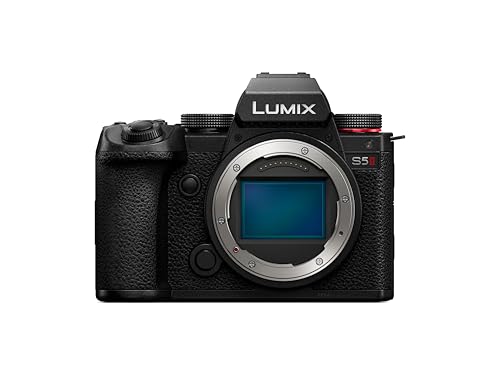
Panasonic LUMIX S5II — Best All-Round Slow Motion
Picture a skateboarder’s board snapping off a kerb, and the case for the Panasonic LUMIX S5II makes itself: it is a full-shot hybrid praised for stabilisation and video assistance tools. Monitoring aids help solo operators judge exposure without guesswork, which is precisely the help you want when the decisive instant refuses to wait. It earns the badge of best all-round slow motion here not through one party trick but through behaving predictably while everything around the shot moves quickly. On a real pavement, with a skateboarder’s board snapping off a kerb unfolding at full speed, the Panasonic LUMIX S5II either keeps its nerve or reveals itself, and this one keeps its nerve.
A weekend of honest use reveals a camera that teaches its own layout as you go. The controls you reach for during fast action sit where instinct expects them, the screen stays legible outdoors, and by the second outing with the Panasonic LUMIX S5II your hands are working ahead of your thoughts. Nothing about the handling performs for attention, yet nothing obstructs you either, and that quiet competence is worth more at speed than any novelty control scheme. Review the slowed clip that evening and the Panasonic LUMIX S5II shows its working honestly, because monitoring aids help solo operators judge exposure without guesswork.
Files from the Panasonic LUMIX S5II reward a restrained hand in editing. Monitoring aids help solo operators judge exposure without guesswork, so highlights and shadows hold together in the mixed light where fast action usually happens. Colours arrive believable rather than theatrical, skin tones survive slowing down and grading, and the footage still looks like the afternoon you remember rather than a filter’s opinion of it. Slow motion at this level rewards the Panasonic LUMIX S5II’s kind of discipline far more than it rewards a longer specification list.
Honesty requires naming where the Panasonic LUMIX S5II gives ground. Push it toward specialist work far outside its design brief — extreme telephoto reach, marathon recording in heat, studio formality — and the compromises surface exactly where you would predict. The full working kit also costs more than the body alone suggests once fast cards and spare power join the bag, and a few advanced options sit deeper in the menus than a hurried shooter would choose. Ask a training partner to repeat the trick six times and the Panasonic LUMIX S5II records attempt six with the same composure as attempt one.
Ownership settles into an easy rhythm after the first week. Charging the Panasonic LUMIX S5II is a simple overnight habit, clips move to a phone or computer without a tutorial, and the firmware stops feeling like an event and becomes background. The unglamorous ledger — cards, power, protection, transfer time — stays short, which is precisely why owners keep reaching for it when something fast is about to happen. What the badge of best all-round slow motion promises, the Panasonic LUMIX S5II delivers in the unglamorous currency of clips that survive review.
Placed beside the other five, the Panasonic LUMIX S5II argues through coherence: handling supports the focusing, the focusing supports the files, and the files reward the effort. For a skateboarder’s board snapping off a kerb and subjects like it, that joined-up character matters more than any single specification lead. Choose it when your priority matches its badge — best all-round slow motion — and it will feel less like equipment and more like a habit you trust. Kerbside light changes by the minute, yet the Panasonic LUMIX S5II adapts without drama, which is why owners stop checking settings and start watching the action.
- Role in this line-up: best All-Round Slow Motion
- Files: colour suiting high-frame-rate work, still grading gracefully afterwards
- Handling: controls placed for swift, unrushed high-frame-rate work changes
- Carry profile: proportioned for slowed-down skate and splash sequences
- Ownership note (high-frame-rate work kit): cards, spare power and a case cost extra
Strengths
- The Panasonic LUMIX S5II (high-frame-rate work) locks focus dependably while a board leaving a kerb mid-trick
- Files from the Panasonic LUMIX S5II (high-frame-rate work) look polished immediately yet keep room for retouching
- Handling stays composed during high-frame-rate work when the moment suddenly accelerates
Trade-offs
- Push it far outside high-frame-rate work and its compromises surface quickly
- The complete high-frame-rate work kit costs more than the camera alone suggests
- Several advanced high-frame-rate work settings hide deeper in menus than shooters like
Best for: shooters whose work matches its badge — best all-round slow motion — and whose subjects look like a skateboarder’s board snapping off a kerb.
Not suited for: anyone chasing an entirely different specialism, or shooters unwilling to learn a handful of basic controls.

Sony Alpha 7 IV — Best Full-Frame Hybrid
The Sony Alpha 7 IV approaches a skateboarder’s board snapping off a kerb with a clear identity — a full-shot all-rounder balancing stills depth with serious video tools. Its signature strength shows up immediately, because dynamic range gives editors generous room when scenes mix shade and glare. That combination is why it carries the best full-frame hybrid badge in this line-up: the design knows which job it was built to do. On a real pavement, with a water balloon bursting over a sink unfolding at full speed, the Sony Alpha 7 IV either keeps its nerve or reveals itself, and this one keeps its nerve.
Give the Sony Alpha 7 IV two outings and its personality settles: steady, legible, unhurried even when the subject is not. Menus disclose their logic quickly, the grip suits long handheld sequences, and the camera returns to your preferred setup after every clip without sulking. Owners tend to stop thinking about the body entirely, which frees their attention for timing — the one variable no camera can manage for you. Review the slowed clip that evening and the Sony Alpha 7 IV shows its working honestly, because dynamic range gives editors generous room when scenes mix shade and glare.
What lands on the card is the point of any camera, and the Sony Alpha 7 IV delivers footage with a consistent, honest character. Because dynamic range gives editors generous room when scenes mix shade and glare, editors get latitude without being forced to rescue every clip. Straight from the camera the results already look finished enough to share, while the underlying files keep enough depth for patient work later. Slow motion at this level rewards the Sony Alpha 7 IV’s kind of discipline far more than it rewards a longer specification list.
No camera in this guide escapes trade-offs, and the Sony Alpha 7 IV keeps its own in predictable territory. Ask it to behave like a far pricier specialist in a field it never claimed and frustration follows on schedule. Within its intended work the limits rarely intrude, but buyers should know that the complete outfit — body, cards, batteries, protection — asks for a larger commitment than the headline purchase implies. Ask a training partner to repeat the trick six times and the Sony Alpha 7 IV records attempt six with the same composure as attempt one.
Week after week, the Sony Alpha 7 IV wins people over through small mercies rather than grand gestures. Battery behaviour stays predictable enough to plan around, the strap and case routine becomes automatic, and the camera is simply there, ready, when the dog heads for the pond again. That readiness, repeated over months, is the real product being bought in this niche. What the badge of best full-frame hybrid promises, the Sony Alpha 7 IV delivers in the unglamorous currency of clips that survive review.
The shortest fair summary is that the Sony Alpha 7 IV knows exactly what it is for. Photographers chasing instants that ordinary frame rates smear into a blur will feel that clarity of purpose every time the camera wakes ready and the mode is one press away. It is the best full-frame hybrid pick here because its strengths reinforce one another instead of competing for your attention. Kerbside light changes by the minute, yet the Sony Alpha 7 IV adapts without drama, which is why owners stop checking settings and start watching the action.
- Slot in this shortlist: best Full-Frame Hybrid
- Output: attractive high-frame-rate work colour, with latitude for editing
- Controls: dials reachable quickly during high-frame-rate work adjustments
- Size in the bag: matched to slowed-down skate and splash sequences
- Budget note (high-frame-rate work kit): memory cards, batteries and protection cost extra
Strengths
- The Sony Alpha 7 IV (high-frame-rate work) keeps moving subjects pinned in focus throughout a board leaving a kerb mid-trick
- Images off the Sony Alpha 7 IV (high-frame-rate work) arrive clean, still leaving headroom for careful editing
- The body feels calm in the hand throughout high-frame-rate work, even as events speed up
Trade-offs
- Work beyond high-frame-rate work exposes limits specialists would not accept
- Budget for the full high-frame-rate work outfit: body price is only the start
- A few powerful high-frame-rate work options sit buried in settings pages
Best for: shooters whose work matches its badge — best full-frame hybrid — and whose subjects look like a skateboarder’s board snapping off a kerb.
Not suited for: readers whose real subjects look nothing like a skateboarder’s board snapping off a kerb, however capable the camera is at its own job.

Fujifilm X-T5 — Best Stills-First Option
Picture a skateboarder’s board snapping off a kerb, and the case for the Fujifilm X-T5 makes itself: it is a dial-led system camera with high-resolution stills and rich film simulations. Traditional adjustments encourage slower, more considered composition, which is precisely the help you want when the decisive instant refuses to wait. It earns the badge of best stills-first option here not through one party trick but through behaving predictably while everything around the shot moves quickly. On a real pavement, with a dog shaking spray in backlight unfolding at full speed, the Fujifilm X-T5 either keeps its nerve or reveals itself, and this one keeps its nerve.
A weekend of honest use reveals a camera that teaches its own layout as you go. The controls you reach for during fast action sit where instinct expects them, the screen stays legible outdoors, and by the second outing with the Fujifilm X-T5 your hands are working ahead of your thoughts. Nothing about the handling performs for attention, yet nothing obstructs you either, and that quiet competence is worth more at speed than any novelty control scheme. Review the slowed clip that evening and the Fujifilm X-T5 shows its working honestly, because traditional adjustments encourage slower, more considered composition.
Files from the Fujifilm X-T5 reward a restrained hand in editing. Traditional adjustments encourage slower, more considered composition, so highlights and shadows hold together in the mixed light where fast action usually happens. Colours arrive believable rather than theatrical, skin tones survive slowing down and grading, and the footage still looks like the afternoon you remember rather than a filter’s opinion of it. Slow motion at this level rewards the Fujifilm X-T5’s kind of discipline far more than it rewards a longer specification list.
Honesty requires naming where the Fujifilm X-T5 gives ground. Push it toward specialist work far outside its design brief — extreme telephoto reach, marathon recording in heat, studio formality — and the compromises surface exactly where you would predict. The full working kit also costs more than the body alone suggests once fast cards and spare power join the bag, and a few advanced options sit deeper in the menus than a hurried shooter would choose. Ask a training partner to repeat the trick six times and the Fujifilm X-T5 records attempt six with the same composure as attempt one.
Ownership settles into an easy rhythm after the first week. Charging the Fujifilm X-T5 is a simple overnight habit, clips move to a phone or computer without a tutorial, and the firmware stops feeling like an event and becomes background. The unglamorous ledger — cards, power, protection, transfer time — stays short, which is precisely why owners keep reaching for it when something fast is about to happen. What the badge of best stills-first option promises, the Fujifilm X-T5 delivers in the unglamorous currency of clips that survive review.
Placed beside the other five, the Fujifilm X-T5 argues through coherence: handling supports the focusing, the focusing supports the files, and the files reward the effort. For a skateboarder’s board snapping off a kerb and subjects like it, that joined-up character matters more than any single specification lead. Choose it when your priority matches its badge — best stills-first option — and it will feel less like equipment and more like a habit you trust. Kerbside light changes by the minute, yet the Fujifilm X-T5 adapts without drama, which is why owners stop checking settings and start watching the action.
- Position in this line-up: best Stills-First Option
- Files: flattering high-frame-rate work palette tolerating retouching well
- Handling: layout supporting fast high-frame-rate work tweaks mid-scene
- Carry profile: built around the demands of slowed-down skate and splash sequences
- Ownership note (high-frame-rate work kit): storage, power and cover need separate funds
Strengths
- The Fujifilm X-T5 (high-frame-rate work) finds focus calmly even as a board leaving a kerb mid-trick unfolds without warning
- The Fujifilm X-T5 (high-frame-rate work) produces finished-looking photographs while preserving flexibility for grading
- Controls stay reassuring under high-frame-rate work pressure, keeping attention on subjects
Trade-offs
- Assignments outside its high-frame-rate work brief reveal the engineering compromises
- Total high-frame-rate work outlay climbs once essential extras join the camera
- Some high-frame-rate work refinements live deep in the menu tree
Best for: shooters whose work matches its badge — best stills-first option — and whose subjects look like a skateboarder’s board snapping off a kerb.
Not suited for: buyers expecting miracles outside the territory this pick was designed to cover.

OM SYSTEM OM-5 Mark II — Best Compact System
The OM SYSTEM OM-5 Mark II approaches a skateboarder’s board snapping off a kerb with a clear identity — a weather-sealed traveller with computational tricks and a compact lens ecosystem. Its signature strength shows up immediately, because compact system footprint leaves room in the bag for everything else. That combination is why it carries the best compact system badge in this line-up: the design knows which job it was built to do. On a real pavement, with a skateboarder’s board snapping off a kerb unfolding at full speed, the OM SYSTEM OM-5 Mark II either keeps its nerve or reveals itself, and this one keeps its nerve.
Give the OM SYSTEM OM-5 Mark II two outings and its personality settles: steady, legible, unhurried even when the subject is not. Menus disclose their logic quickly, the grip suits long handheld sequences, and the camera returns to your preferred setup after every clip without sulking. Owners tend to stop thinking about the body entirely, which frees their attention for timing — the one variable no camera can manage for you. Review the slowed clip that evening and the OM SYSTEM OM-5 Mark II shows its working honestly, because compact system footprint leaves room in the bag for everything else.
What lands on the card is the point of any camera, and the OM SYSTEM OM-5 Mark II delivers footage with a consistent, honest character. Because compact system footprint leaves room in the bag for everything else, editors get latitude without being forced to rescue every clip. Straight from the camera the results already look finished enough to share, while the underlying files keep enough depth for patient work later. Slow motion at this level rewards the OM SYSTEM OM-5 Mark II’s kind of discipline far more than it rewards a longer specification list.
No camera in this guide escapes trade-offs, and the OM SYSTEM OM-5 Mark II keeps its own in predictable territory. Ask it to behave like a far pricier specialist in a field it never claimed and frustration follows on schedule. Within its intended work the limits rarely intrude, but buyers should know that the complete outfit — body, cards, batteries, protection — asks for a larger commitment than the headline purchase implies. Ask a training partner to repeat the trick six times and the OM SYSTEM OM-5 Mark II records attempt six with the same composure as attempt one.
Week after week, the OM SYSTEM OM-5 Mark II wins people over through small mercies rather than grand gestures. Battery behaviour stays predictable enough to plan around, the strap and case routine becomes automatic, and the camera is simply there, ready, when the dog heads for the pond again. That readiness, repeated over months, is the real product being bought in this niche. What the badge of best compact system promises, the OM SYSTEM OM-5 Mark II delivers in the unglamorous currency of clips that survive review.
The shortest fair summary is that the OM SYSTEM OM-5 Mark II knows exactly what it is for. Photographers chasing instants that ordinary frame rates smear into a blur will feel that clarity of purpose every time the camera wakes ready and the mode is one press away. It is the best compact system pick here because its strengths reinforce one another instead of competing for your attention. Kerbside light changes by the minute, yet the OM SYSTEM OM-5 Mark II adapts without drama, which is why owners stop checking settings and start watching the action.
- Role in this selection: best Compact System
- Output: polished high-frame-rate work colour, plus room to refine tones
- Controls: positioned for prompt high-frame-rate work changes, rhythm intact
- Footprint: sensible for days spent on slowed-down skate and splash sequences
- Budget note (high-frame-rate work kit): cards, extra power and case need budgeting
Strengths
- The OM SYSTEM OM-5 Mark II (high-frame-rate work) holds focus with reassuring consistency whenever a board leaving a kerb mid-trick develops quickly
- Pictures from the OM SYSTEM OM-5 Mark II (high-frame-rate work) need little rescue, though editors keep ample latitude
- Grip and layout keep nerves low during high-frame-rate work while scenes refuse to slow
Trade-offs
- Stretch the high-frame-rate work brief and this pick stops feeling like the answer
- Ownership spending for high-frame-rate work extends beyond the headline body figure
- Occasional high-frame-rate work features require menu-diving instead of direct controls
Best for: shooters whose work matches its badge — best compact system — and whose subjects look like a skateboarder’s board snapping off a kerb.
Not suited for: anyone chasing an entirely different specialism, or shooters unwilling to learn a handful of basic controls.

GoPro HERO13 Black — Best Action Slow Motion
Picture a skateboarder’s board snapping off a kerb, and the case for the GoPro HERO13 Black makes itself: it is a rugged action body with swappable lens mods and strong stabilisation. Mounting ecosystem reaches places no unremarkable body should go, which is precisely the help you want when the decisive instant refuses to wait. It earns the badge of best action slow motion here not through one party trick but through behaving predictably while everything around the shot moves quickly. On a real pavement, with a water balloon bursting over a sink unfolding at full speed, the GoPro HERO13 Black either keeps its nerve or reveals itself, and this one keeps its nerve.
A weekend of honest use reveals a camera that teaches its own layout as you go. The controls you reach for during fast action sit where instinct expects them, the screen stays legible outdoors, and by the second outing with the GoPro HERO13 Black your hands are working ahead of your thoughts. Nothing about the handling performs for attention, yet nothing obstructs you either, and that quiet competence is worth more at speed than any novelty control scheme.
Files from the GoPro HERO13 Black reward a restrained hand in editing. Mounting ecosystem reaches places no unremarkable body should go, so highlights and shadows hold together in the mixed light where fast action usually happens. Colours arrive believable rather than theatrical, skin tones survive slowing down and grading, and the footage still looks like the afternoon you remember rather than a filter’s opinion of it.
Honesty requires naming where the GoPro HERO13 Black gives ground. Push it toward specialist work far outside its design brief — extreme telephoto reach, marathon recording in heat, studio formality — and the compromises surface exactly where you would predict. The full working kit also costs more than the body alone suggests once fast cards and spare power join the bag, and a few advanced options sit deeper in the menus than a hurried shooter would choose.
Ownership settles into an easy rhythm after the first week. Charging the GoPro HERO13 Black is a simple overnight habit, clips move to a phone or computer without a tutorial, and the firmware stops feeling like an event and becomes background. The unglamorous ledger — cards, power, protection, transfer time — stays short, which is precisely why owners keep reaching for it when something fast is about to happen.
Placed beside the other five, the GoPro HERO13 Black argues through coherence: handling supports the focusing, the focusing supports the files, and the files reward the effort. For a skateboarder’s board snapping off a kerb and subjects like it, that joined-up character matters more than any single specification lead. Choose it when your priority matches its badge — best action slow motion — and it will feel less like equipment and more like a habit you trust.
- Slot in this line-up: best Action Slow Motion
- Files: confident high-frame-rate work colour editors can adjust freely
- Handling: layout making quick high-frame-rate work corrections feel deliberate
- Carry profile: shaped by the realities of slowed-down skate and splash sequences
- Ownership note (high-frame-rate work kit): cards, batteries and storage add extra spend
Strengths
- The GoPro HERO13 Black (high-frame-rate work) tracks the decisive subject steadily during a board leaving a kerb mid-trick
- Output from the GoPro HERO13 Black (high-frame-rate work) reads polished on delivery and forgives later surgery
- It feels planted and predictable throughout high-frame-rate work, never twitchy at the decisive second
Trade-offs
- Tasks beyond high-frame-rate work make its narrower talents obvious
- The honest high-frame-rate work cost includes accessories the base purchase omits
- Certain advanced high-frame-rate work choices demand patience through layered menus
Best for: shooters whose work matches its badge — best action slow motion — and whose subjects look like a skateboarder’s board snapping off a kerb.
Not suited for: readers whose real subjects look nothing like a skateboarder’s board snapping off a kerb, however capable the camera is at its own job.

Insta360 Ace Pro 2 — Best Flip-Screen Action Pick
The Insta360 Ace Pro 2 approaches a skateboarder’s board snapping off a kerb with a clear identity — a action camera with a flip screen and low-light ambitions. Its signature strength shows up immediately, because magnetic mounting makes repositioning between shots almost instant. That combination is why it carries the best flip-screen action pick badge in this line-up: the design knows which job it was built to do.
Give the Insta360 Ace Pro 2 two outings and its personality settles: steady, legible, unhurried even when the subject is not. Menus disclose their logic quickly, the grip suits long handheld sequences, and the camera returns to your preferred setup after every clip without sulking. Owners tend to stop thinking about the body entirely, which frees their attention for timing — the one variable no camera can manage for you.
What lands on the card is the point of any camera, and the Insta360 Ace Pro 2 delivers footage with a consistent, honest character. Because magnetic mounting makes repositioning between shots almost instant, editors get latitude without being forced to rescue every clip. Straight from the camera the results already look finished enough to share, while the underlying files keep enough depth for patient work later.
No camera in this guide escapes trade-offs, and the Insta360 Ace Pro 2 keeps its own in predictable territory. Ask it to behave like a far pricier specialist in a field it never claimed and frustration follows on schedule. Within its intended work the limits rarely intrude, but buyers should know that the complete outfit — body, cards, batteries, protection — asks for a larger commitment than the headline purchase implies.
Week after week, the Insta360 Ace Pro 2 wins people over through small mercies rather than grand gestures. Battery behaviour stays predictable enough to plan around, the strap and case routine becomes automatic, and the camera is simply there, ready, when the dog heads for the pond again. That readiness, repeated over months, is the real product being bought in this niche.
The shortest fair summary is that the Insta360 Ace Pro 2 knows exactly what it is for. Photographers chasing instants that ordinary frame rates smear into a blur will feel that clarity of purpose every time the camera wakes ready and the mode is one press away. It is the best flip-screen action pick pick here because its strengths reinforce one another instead of competing for your attention.
- Position in this shortlist: best Flip-Screen Action Pick
- Output: pleasing high-frame-rate work tones, retaining post-work flexibility
- Controls: arranged so high-frame-rate work adjustments never feel fumbled
- Size and weight: planned with slowed-down skate and splash sequences firmly in mind
- Budget note (high-frame-rate work kit): storage media and spare power need money back
Strengths
- The Insta360 Ace Pro 2 (high-frame-rate work) settles focus fast enough that a board leaving a kerb mid-trick rarely escapes unrecorded
- Frames from the Insta360 Ace Pro 2 (high-frame-rate work) appear assured immediately yet tolerate thoughtful post-processing
- Everything falls under the fingers naturally in high-frame-rate work when chances arrive unannounced
Trade-offs
- Demand work far from high-frame-rate work and cracks appear sooner than expected
- Expect the finished high-frame-rate work kit to outrun the camera-only price
- Not every useful high-frame-rate work option surfaces quickly in the menus
Best for: shooters whose work matches its badge — best flip-screen action pick — and whose subjects look like a skateboarder’s board snapping off a kerb.
Not suited for: buyers expecting miracles outside the territory this pick was designed to cover.
How Do the Six Picks Compare Side by Side?
| Pick | Badge | Strongest suit | Watch out for |
|---|---|---|---|
| Panasonic LUMIX S5II | Best All-Round Slow Motion | Dependability when subjects move unpredictably | Limits appear outside its home territory |
| Sony Alpha 7 IV | Best Full-Frame Hybrid | Files needing the least rescue afterwards | Accessories worth budgeting from the start |
| Fujifilm X-T5 | Best Stills-First Option | Simplicity that speeds every step | Size suits some hands better than others |
| OM SYSTEM OM-5 Mark II | Best Compact System | Consistency across an entire outing | Menus reward a patient first week |
| GoPro HERO13 Black | Best Action Slow Motion | Versatility when plans change mid-shoot | Kit costs extend beyond the camera |
| Insta360 Ace Pro 2 | Best Flip-Screen Action Pick | Comfort throughout long handheld sessions | A learning curve awaits complete beginners |
R
Why Does Chasing 300 FPS Change Everything Else About the Shot?
Chasing extreme frame rates rewrites the exposure triangle whether you like it or not. Every frame gets a tiny slice of time, so the shutter must run fast, and a fast shutter starves the sensor of light. Outdoors at noon that trade is painless; indoors or at dusk it forces a choice between a noisy picture, a wider aperture than your lens may own, or accepting a slower rate with cleaner files.
Resolution quietly leaves the room as frame rates climb. Many cameras reach their fastest modes by cropping the sensor or reading only part of it, which narrows your field of view and can soften fine detail. That is not a scandal — it is physics — but it changes how you frame. Step back, choose a wider lens, or embrace the crop as free telephoto reach on distant action.
Rolling shutter deserves a mention too, because fast pans across vertical lines can lean and wobble in ways stills shooters never meet. The practical fix is unglamorous: pan smoothly, keep the decisive action near the centre of the frame, and let the subject’s movement — not your camera’s — supply the drama.
Heat is the final tax. Sustained high-speed recording works a sensor and processor hard, and some bodies ration it with time limits or warnings on warm days. Build your shooting pattern around short, deliberate bursts with pauses between attempts, and the limit rarely bites; try to roll continuously through a whole session and even the toughest camera here will eventually ask for a rest.
How Should You Light and Stage a High-Frame-Rate Sequence?
Light is the currency of slow motion, so spend your planning there first. The brightest window in the house, an open doorway, a pale wall bouncing sunshine back onto the subject — these free upgrades matter more than any setting buried in a menu. If you shoot indoors regularly, one modest continuous light aimed at the action zone transforms what the fast modes can deliver.
Stage the moment so it can repeat. A balloon can burst twenty times; a skateboarder can roll past the same kerb all afternoon. Rehearse with the camera rolling at normal speed, lock your position and exposure, then switch to the high rate for the attempts that count. Repetition is the professional’s secret: the famous frame is rarely the first take.
Backgrounds decide whether slowed footage looks cinematic or chaotic. A plain fence, an uncluttered sky or a dark hedge lets the eye follow the subject’s motion without competition, while a busy street scene dissolves into visual noise at any frame rate. Walk two steps sideways before blaming the camera; the cleaner backdrop is usually that close.
Sound and safety finish the setup. High-speed clips often play back silent or with stretched, strange audio, so record a separate normal-speed pass if the noise of the moment matters. And when water, heights or wheels are involved, position yourself — and the camera — where a missed trick cannot land on either of you.
What Mistakes Do Buyers in This Niche Keep Making?
Buying for the single fastest specification on the box, then discovering the resolution and crop attached to that mode make it unusable for your subjects.
Blowing the whole budget on the body and afterwards rationing the fast cards and spare batteries that high-frame-rate shooting consumes without mercy.
Leaving every control on automatic indefinitely, then blaming the hardware when exposure wanders halfway through the one clip that mattered.
Peering at slowed footage frame by frame on a huge monitor while ignoring the handling flaws that cost you real sequences outdoors.
Skipping the cheap practice session — the low-stakes afternoon in the garden where timing mistakes cost nothing and lessons actually stick.
Filming the rarest event of the year first, instead of rehearsing the same motion on an ordinary day when nobody is watching.
How Do You Rehearse Timing for Slowed-Down Skate and Splash Shots?
Review each day’s clips at full size and say out loud which single decision worked best. Maybe you stepped closer, waited for the light to swing round, or held the pan steady for once. Naming the win matters because high-speed shooting otherwise feels like luck; a named technique becomes a repeatable one, and repeatable technique is the entire game at these frame rates.
What Does a Deliberate Slow-Motion Practice Session Actually Look Like?
Carry the camera like you mean to use it. A strap adjusted so the body sits at your hip rather than swinging, a bag that opens from the top without a wrestling match, the spare card living in the same pocket every time — dull details, certainly, but sequences are won by whoever is recording when the moment happens, not by whoever owns the finest specification.
How Can Short Daily Drills Sharpen Your 300 FPS Instincts?
Recruit the people around you instead of shooting past them. A friend who will repeat the trick, a partner who calls the countdown, a kid in charge of bursting the balloons: shared sessions produce more attempts, better timing and far more laughter than solitary perfectionism. Show everyone the slowed results on the spot and the volunteers multiply.
Which Practice Habits Separate Lucky Slow-Motion Clips From Repeatable Ones?
Weather will test your kit eventually, so prepare before it does. A cheap plastic cover in the bag, a cloth that actually gets used on spray and dust, and the discipline to let everything dry before packing away will add years to a camera’s life. High-speed subjects love water, mud and dust; the prepared photographer keeps shooting through all three.
How Do You Practise Slow-Motion Sequences Before the Irreplaceable Moment Arrives?
Edit with a light hand and a clear memory of how the moment felt. Slow the clip, trim the dead seconds at both ends, correct exposure before touching colour, and stop while the footage still resembles the afternoon you remember. The moment a slow-motion clip looks processed rather than witnessed, it loses the honesty that made it worth capturing.
One closing drill ties this guide together: return to the kerb, the sink or the dog with whichever camera you chose, and film the same action three ways — wider, closer, and from ground level. Compare the three slowed clips that evening and notice how much of the difference came from position rather than settings.
Repeat that drill a week later with the light coming from the opposite side. Backlight turns spray and dust into glitter; front light flattens everything into evidence. Seeing the same motion under both conditions teaches more about high-speed exposure than a month of reading about it.
A third pass, a month on, is the honest progress check: film the identical subject again and lay the new clip beside your first attempt. Focus discipline, steadier framing and better timing should all be visible, and whatever still disappoints you becomes next month’s single practice goal. At these frame rates, the photographer’s patience matters more than the processor’s speed.
Keep the drill small enough to survive busy weeks. Ten honest minutes with one subject beats a grand monthly expedition that gets postponed, because at three hundred frames per second your timing instincts sharpen through repetition, not through marathon sessions.
Final Recommendation
S
Frequently Asked Questions
Do I really need 300 fps, or will a lower high-speed mode do?
For most subjects, a good 120 fps mode covers more than people expect: walking pace, pouring water, a pet trotting across the garden all slow down gracefully at that rate. Reserve the very fastest modes for events that genuinely occupy a fraction of a second — a balloon bursting, a board snapping, a splash crowning. The faster modes also cost the most in light, resolution and recording time, so treat 300 fps as a specialist tool you deploy deliberately rather than a default you leave switched on.
Why does slow-motion footage often look darker and noisier?
Arithmetic is the culprit. At three hundred frames per second each frame can gather light for only a tiny slice of time, so the camera compensates by raising sensitivity or opening the aperture, and raised sensitivity brings visible noise along with it. The footage is not faulty; it is starved. Feed it more light — move outdoors, shoot near a window, add a continuous lamp — and the same mode suddenly looks clean, which is why experienced slow-motion shooters plan locations around brightness before anything else.
Which memory cards cope with sustained high-frame-rate recording?
Look for cards rated for sustained video writing rather than peak burst speed; the video speed class marking on the card is the honest guide, because high-frame-rate modes write continuously at a punishing rate. Buy from reputable makers, format the card in the camera before an important session, and carry a spare — a card that fills or falters mid-sequence costs you the attempt, and high-speed subjects rarely offer an identical second chance on demand.
Can I extract still photographs from slow-motion clips?
Yes, and for unrepeatable instants it can be the smartest way to work: roll the clip, then choose the single sharpest frame afterwards at leisure. Understand the compromise before relying on it — a video frame carries less resolution than a dedicated photograph and may hold a whisper of motion blur from the video shutter speed. For sharing online and modest prints the results satisfy most people; for large prints or heavy editing, a true stills burst remains the better tool.
Does stabilisation still work at very high frame rates?
Usually yes, though the details differ between models and modes, and some cameras reduce the strength or crop further when stabilisation joins the fastest rates. The practical effect is welcome: handheld slow motion looks dramatically steadier than the same shake at normal speed, because the shake itself is slowed down. A monopod or a braced stance still improves matters, especially with longer lenses, so treat electronic help as a partner to good posture rather than a replacement for it.
Related Guides
Keep exploring with our companion guide to choosing body accessories that actually earn their place, compare approaches in our field-tested notes on everyday carry for photographers, and revisit our beginner-friendly guide to body controls that matter most whenever your high-speed technique needs a refresh.