kajuandouglas.com is reader-supported. When you buy through links on our site, we may earn an affiliate commission.
Where to Buy
A blogger typing ‘best blog dslr cameras under 500’ into a search box in late 2026 is usually picturing something quite specific: a proper camera with a real lens mount, a screen they can turn toward themselves, and files that make a kitchen table, a hotel desk or a market stall look like a magazine spread rather than a phone snapshot. The honest complication is that the classic DSLR — mirror, optical viewfinder, chunky grip — has quietly left the budget end of the market. The cameras that actually serve a blog today, at the sort of money this keyword describes, are mostly mirrorless models that inherited the DSLR’s job and then added the two things bloggers needed most and DSLRs rarely offered: reliable face-tracking autofocus and screens that flip all the way around.
So this guide makes a deliberate editorial choice, and it makes it openly. Rather than steering you toward ageing second-hand DSLRs whose batteries, shutters and video modes belong to another decade, it rounds up the six current cameras that do the blogging job the old DSLRs were bought for — stills for posts, short video for embeds and social clips, and painless transfer to a phone or laptop — while keeping the whole starting kit inside the spirit of an under-500 budget once you shop the usual seasonal sales, kit bundles and refurbished channels. Where a model normally sits a little above that line on its own, we say so in its section instead of pretending otherwise.
One more framing note before the picks. A blog is a publishing rhythm, not a single photograph. The camera that wins here is the one that removes friction from a weekly routine: charge over USB while you draft, pull a vertical clip for social without re-framing your whole setup, get a clean JPEG straight out of camera on deadline days, and still reward you with a beautiful RAW file on the slow Sunday when you have time to edit properly. Every pick below was judged against that rhythm first and against specification sheets second.
Key Takeaways
- True new DSLRs have effectively left this budget; the blogging job they once owned now belongs to compact mirrorless cameras with flip screens and face-tracking focus.
- Budget for the publishing routine, not the body alone: a kit lens, a fast card and a small tripod matter more to a blog than a second lens bought too early.
- Fully articulating screens and dependable eye autofocus are the two features that most change a solo blogger’s working day.
- Cameras designed for creators — the ZV and Z30 lines — trade viewfinders and dials for video-first handling that suits desk and travel blogging.
- Straight-out-of-camera colour is a real workflow feature when you publish weekly; film simulations and picture profiles save genuine editing hours.
- Buy the system you can afford to grow: one good prime lens next year beats a drawer of cheap zooms bought this year.
In this guide
Quick Picks
| Pick | Badge | Why it earns its place |
|---|---|---|
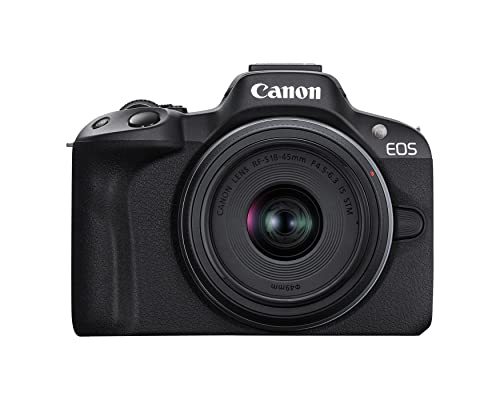
| Canon EOS R50 | Best Overall for Most Bloggers | A real RF-mount system camera whose friendly guidance modes and fully flipping screen make it the easiest serious start a blogger can buy. |
| Sony ZV-E10 II | Best for Video-Led Blogs | Sony built this one for creators first: strong video, a deep lens catalogue and product-showcase focus tricks made for review and tutorial blogs. |
| Nikon Z30 | Best Compact Desk-and-Travel Pick | A small, viewfinder-free Nikon that disappears into a day bag yet records long, clean talking-head sessions without fuss. |
| Canon PowerShot G7 X Mark III | Best Pocket Pick for Bloggers | No lenses, no decisions: a genuinely pocketable Canon with a flip-up screen, live-streaming ability and stills that shame a phone. |
| Sony ZV-1F | Best Simple Point-and-Post Pick | An ultra-wide fixed lens, one-button background blur and a design a complete beginner can master in an afternoon. |
| Fujifilm X100VI | Best Premium Splurge for Stills-Led Blogs | Technically above this budget and included deliberately: the film-simulation JPEGs and fixed-lens discipline behind a thousand beautiful blogs. |
How Did We Choose These Blogging Picks?
Each candidate had to pass a blogger’s desk test before any specification was compared. Could one person, alone in a room, frame themselves, trust the focus, record a clean piece to camera and have a publishable file on a laptop within minutes? Cameras that needed a second pair of hands, an external monitor just to see focus, or a menu expedition to change exposure were cut, however lovely their stills. That single filter explains why no traditional DSLR, new or used, survives onto this list: their video autofocus and fixed screens belong to an era when blogs were still photographs and text only.
The survivors were then scored on the four costs a blogger actually pays. Money, obviously, judged on the complete starting kit rather than a body-only headline. Time, measured in how much editing the files demand before they look like your brand. Weight, because a camera left at home during a trip produces no content at all. And growth, because a blog that succeeds will ask its camera for more in year two — a faster lens, a microphone, a second angle — and a dead-end system charges you twice. The six below are the models that balanced those four costs most convincingly for different kinds of blogs.

Canon EOS R50 — Best Overall for Most Bloggers
The R50 is what the entry-level DSLR grew up into, and a blogger comparing it with an old Rebel side by side feels the generational jump within one afternoon. The vari-angle screen swings out and turns to face you, the autofocus finds an eye and stays there while you talk with your hands, and Canon’s colour science delivers the warm, flattering skin tones that food, travel and lifestyle blogs have quietly relied on for years. Shooting stills for a post, it behaves like a proper camera: a real electronic viewfinder for bright days, a deep grip that balances a kit zoom, and RAW files with enough latitude to rescue a badly lit café interior.
What seals its place at the top of this list is how gently it treats beginners without capping them. The guided interface explains aperture in plain language with example pictures, yet the same body offers full manual control, 4K video oversampled from a higher-resolution capture, and access to the entire RF lens catalogue when the blog outgrows the kit zoom. A blogger who starts here rarely needs to change systems; they change lenses, which is exactly how a camera budget should compound.
Owners tend to describe the R50’s real gift as confidence at the moment of pressing record alone in a room. You frame yourself, glance at the eye-focus box sitting exactly where it should, and then forget the camera for twenty minutes while you actually talk. That forgetting is the whole product. Bloggers coming from phones notice a second gift over the first month: files that tolerate editing. A post shot too dark, a product photograph with a colour cast from mixed kitchen lighting — the RAW files forgive these in a way small-sensor files simply cannot, and forgiveness, across hundreds of posts, is a workflow feature as real as any dial.
- Sensor: APS-C CMOS, roughly twenty-four megapixels
- Screen: fully articulating touchscreen for self-framing
- Video: 4K recording plus Full HD at higher frame rates
- Mount: Canon RF, with EF lenses usable via adapter
- Connectivity: Wi-Fi and Bluetooth for phone transfer
- Charging: USB charging for desk and travel convenience
Strengths
- Eye-tracking autofocus that a solo blogger can genuinely trust
- Canon colour that flatters skin and food with minimal editing
- A growth path into RF lenses instead of a dead-end system
Trade-offs
- The kit zoom is the weak link for low-light interiors
- No in-body stabilisation, so handheld video needs a steady hand or support
- Rolling shutter shows in fast pans, so move the camera slowly
Best for: bloggers who want one camera for posts, product shots and talking-head video, and who expect their skills to grow over several years.
Not suited for: anyone needing weather sealing, dual card slots or a headphone socket for professional client video work.

Sony ZV-E10 II — Best for Video-Led Blogs
Some blogs are essays with photographs; others are really video channels that happen to live on a web page, and the ZV-E10 II is the pick tuned for the second kind. Sony aimed it squarely at solo creators: a side-opening flip screen, a product showcase mode that snaps focus from your face to an object you hold up, background-defocus control for people who have never heard the word aperture, and video quality that borrows heavily from Sony’s far pricier cinema-leaning bodies. A tutorial blogger demonstrating a gadget, a recipe step or a craft technique will feel these features working within the first recording session.
The trade it makes is equally clear-eyed. There is no viewfinder, because Sony assumes you will work from the screen, and stills photographers who compose at the eye may find that absence nags on bright travel days. But as a blogging tool in the modern sense — desk videos, embedded clips, vertical cuts for social, and perfectly good stills for thumbnails and posts — it is arguably the most purpose-built camera in this entire guide, and its E-mount lens range is the deepest any blogger could ask for.
Tutorial makers should linger on one practical detail: how the camera behaves when an object enters the frame. Hold a product toward the lens and focus walks to it smoothly, without the pulsing hunt that makes viewers seasick; lower it and your face is sharp again before you resume talking. That behaviour, repeated across a year of review posts, is why creator-designed bodies have displaced generalist cameras on so many desks. Pair it with a small shotgun microphone later — the input is waiting — and the same body that started the blog is still credible when sponsors arrive.
- Sensor: APS-C back-illuminated CMOS
- Screen: side-opening vari-angle touchscreen
- Video: high-quality 4K with high frame rate options
- Mount: Sony E, the largest mirrorless lens catalogue
- Audio: built-in multi-capsule microphone plus mic input
- Handling: creator modes including product showcase focus
Strengths
- Product showcase focus feels designed for review and tutorial blogs
- Outstanding video quality for the class, with room to grade footage
- E-mount lenses at every price level, new and used
Trade-offs
- No viewfinder for bright-day stills composition
- No in-body stabilisation; walking footage needs care or a gimbal
- Menus reward a learning investment before they feel fast
Best for: video-first bloggers, reviewers and tutorial makers who record themselves daily and want footage that needs little correction.
Not suited for: traditional stills photographers who compose through a viewfinder and rarely shoot moving images.

Nikon Z30 — Best Compact Desk-and-Travel Pick
The Z30 is the camera on this list most likely to actually be in your bag when a blog post happens. Nikon stripped away the viewfinder, shrank the body and kept the important parts: a large APS-C sensor, a flip-out screen, a proper microphone input and a tally lamp that tells you recording is really happening — a tiny feature that has saved more solo creators from silent, unrecorded brilliance than any specification headline. Its long continuous recording ability suits the interview, podcast-style and workshop formats that text blogs increasingly embed.
For stills, it is a quietly capable travel and lifestyle camera whose Z-mount lenses, though fewer than Sony’s, include some excellent compact options that match its carry-everywhere brief. Bloggers who write more than they film, but who want dependable video when a post calls for it, often find this balance more honest than a video-specialist body. It is the introvert of the group: fewer party tricks, almost no friction, and a size that respects the reality that most blogging happens between other obligations, in cafés, trains and spare half-hours.
The Z30’s party piece only reveals itself on a trip: it is the system camera you stop negotiating with yourself about carrying. No viewfinder hump, a kit zoom that collapses small, a body that rides in a coat-adjacent bag without announcing itself — and then, at the café table, a proper sensor producing files your phone cannot imitate. Travel bloggers who write long, photographic essays with occasional embedded video often find this is the only formula that survives real itineraries, where every gram competes with notebooks, chargers and the jumper the weather demanded.
- Sensor: APS-C CMOS of roughly twenty megapixels
- Screen: flip-out touchscreen for self-recording
- Video: 4K recording with long continuous takes
- Mount: Nikon Z, including compact DX zooms
- Audio: microphone input and clear recording indicator
- Size: among the smallest interchangeable-lens bodies here
Strengths
- Small enough to carry daily, which is where blog material lives
- Long recording sessions suit interviews and workshop videos
- Simple, calm handling that never fights a deadline
Trade-offs
- No viewfinder, so bright sunlight composition uses the screen
- Smaller lens catalogue than Canon or Sony systems
- No in-body stabilisation for handheld walking clips
Best for: writers and travel bloggers who film occasionally, value portability above all, and want a camera that vanishes until a post needs it.
Not suited for: creators planning fast-paced handheld vlogging as their main format.

Canon PowerShot G7 X Mark III — Best Pocket Pick for Bloggers
Every blogging camera list needs an answer for the person who will never, under any circumstances, carry a camera bag, and Canon’s G7 X Mark III remains the most convincing one. It slips into a jacket pocket, yet inside are a one-inch sensor far larger than a phone’s, a bright zoom lens that handles dim restaurants gracefully, and a screen that flips up for selfies and quick video diaries. It can even live-stream directly, which turns a hotel room into a broadcast studio with no capture card and no laptop full of adapters.
Because the lens is fixed, the entire decision load of photography disappears: you compose, you shoot, you publish. For travel, food and personal blogs — where the photograph’s job is to make readers feel present rather than to survive a gallery print — that simplicity is a feature money cannot add to a bigger camera. It will not grow with you the way a system camera does, and we flag that honestly below, but as a first dedicated blogging camera it has launched more consistent publishing habits than any interchangeable-lens body on this page, precisely because it is never left behind.
There is a discipline the G7 X teaches that bigger cameras can obscure: because nothing can be changed, everything depends on where you stand and when you press. Bloggers who spend a season with it often emerge with stronger eyes — they move closer, wait for the waiter to leave the frame, turn the subject toward the window. When they eventually add a system camera, those habits transfer intact, which is why we resist calling this pick a compromise. It is a complete photographic education disguised as a pocket camera, with video and streaming as graduation gifts.
- Sensor: one-inch stacked CMOS
- Lens: built-in bright zoom, no lens changes ever
- Screen: tilts up for selfies and video diaries
- Video: 4K plus direct live-streaming support
- Connectivity: Wi-Fi transfer and USB charging
- Size: jacket-pocket compact, ready in seconds
Strengths
- Truly pocketable, so it is present for unplanned material
- Live-streaming from the camera suits interactive blogs
- Bright lens copes with restaurants and evening streets
Trade-offs
- Fixed lens means no upgrade path as ambitions grow
- Battery life asks for a spare on heavy travel days
- Autofocus, while good, trails the newest system cameras
Best for: personal, food and travel bloggers who value presence over flexibility and want a camera that lives in a pocket, not a cupboard.
Not suited for: bloggers planning to build a lens collection or shoot commercial work for clients.

Sony ZV-1F — Best Simple Point-and-Post Pick
The ZV-1F exists for the blogger who looks at aperture dials the way most of us look at aircraft cockpits. Its fixed ultra-wide lens is chosen so that you, your desk and a slice of your world all fit in frame when the camera sits at arm’s length; its background-defocus button toggles between everything-sharp and a soft, professional blur without a single menu; and its whole control scheme assumes the operator is also the presenter, the editor and the audience’s first impression. For video diaries, reaction posts and casual travel blogging, that focus is liberating.
Stills photographers should read the trade-offs carefully: the lens does not zoom, the sensor is the one-inch type, and the camera’s heart is plainly in moving images. But a certain kind of blog — personality-led, frequent, informal, published from a phone on a train — is served better by this simplicity than by any system camera. It is also the gentlest-priced route in this guide into files that still look unmistakably like a real camera made them, which matters when a blog’s visual identity is its brand.
Think of the ZV-1F as the camera equivalent of a voice note: the lowest-friction way to get a thought out of your head and in front of readers with a real camera’s polish. Its ultra-wide view forgives imperfect framing, its microphone forgives imperfect rooms, and its automation forgives imperfect knowledge. The bloggers who thrive with it publish often — three, four times a week — because the distance between an idea and a finished post has shrunk to minutes. In an attention economy, that cadence is a strategy, and this little camera is its purest enabler.
- Sensor: one-inch CMOS behind a fixed ultra-wide lens
- Lens: fixed wide prime that fits a presenter and setting
- Screen: side-opening flip touchscreen
- Video: 4K recording with creator-friendly modes
- Audio: directional built-in microphone with windscreen
- Controls: one-touch background defocus and product focus
Strengths
- Arm-length framing without a tripod or wide add-on lens
- The simplest learning curve of any camera in this guide
- Directional microphone keeps voice clear in busy rooms
Trade-offs
- No zoom and no lens changes, ever
- Stills are a supporting act, not the main event
- Small battery suits short sessions better than long days
Best for: new and personality-led bloggers who publish frequent, informal video and stills and want zero technical ceremony.
Not suited for: photographers who zoom constantly or plan detailed stills work such as products and interiors.

Fujifilm X100VI — Best Premium Splurge for Stills-Led Blogs
Including the X100VI in an under-500 guide requires an honest paragraph, so here it is: this camera does not belong to the budget, and we are not pretending otherwise. It earns its place because an enormous number of bloggers searching this keyword are really asking a different question — what camera makes blog photographs look like that? — and the answer, across travel essays, café diaries and slow-living journals, is very often this one. Its film simulations produce finished, characterful JPEGs straight from the camera, its hybrid viewfinder and dial-led handling make photography feel deliberate, and its fixed lens quietly teaches composition better than any zoom.
Treat it as the aspiration pick and the used-market target: the model to watch for refurbished, to rent for a special trip, or to save toward when a blog starts earning. What it teaches the rest of this list is worth stating plainly — readers respond to a consistent visual voice more than to raw sharpness, and every cheaper pick above can be set up to pursue the same goal with a fixed picture style, a single favourite focal length and the discipline to publish the JPEG when it is already right.
The X100VI’s lesson for budget shoppers deserves one more pass, because it redirects money intelligently. Study what its owners actually love: a consistent focal length, finished colour, a camera that invites daily carrying. A blogger with an R50 and a small prime, one film-like picture profile and the will to carry the kit daily has reproduced ninety percent of that experience inside this guide’s budget. The remaining ten percent — the hybrid finder, the metal dials, the aura — is real but it is garnish. Buy the experience first; the garnish can wait for the blog’s first profitable year.
- Sensor: high-resolution APS-C with in-body stabilisation
- Lens: fixed wide-normal prime, the classic reportage view
- Colour: renowned film simulations for finished JPEGs
- Viewfinder: hybrid optical and electronic design
- Build: dial-led metal body made for deliberate shooting
- Video: capable recording, though stills are its soul
Strengths
- Film-simulation JPEGs can go straight into a post unedited
- Fixed lens builds a recognisable visual voice for a blog
- In-body stabilisation helps in dim interiors and evenings
Trade-offs
- Well above this guide’s budget in any honest accounting
- Fixed lens excludes telephoto subjects entirely
- Demand has made it genuinely hard to find at times
Best for: established bloggers whose stills carry the brand and who are ready to invest in a signature look, or patient hunters of refurbished stock.
Not suited for: anyone whose budget is firm, or who needs zoom range and interchangeable lenses for varied assignments.
How Do the Six Blogging Picks Compare Side by Side?
| Pick | Badge | Standout trait | Watch out for |
|---|---|---|---|
| Canon EOS R50 | Best Overall for Most Bloggers | Trustworthy eye autofocus with a screen that faces the author | Kit lens limits low-light work until a prime arrives |
| Sony ZV-E10 II | Best for Video-Led Blogs | Creator-first video with product showcase autofocus | Screen-only composition and no stabilisation in the body |
| Nikon Z30 | Best Compact Desk-and-Travel Pick | Pocketable system camera with marathon recording manners | Fewer native lenses and no viewfinder |
| Canon PowerShot G7 X Mark III | Best Pocket Pick for Bloggers | Pocket camera with streaming built in | A closed system with nowhere to grow |
| Sony ZV-1F | Best Simple Point-and-Post Pick | Wide fixed lens made for arm-length presenting | Video-first design with stills in support |
| Fujifilm X100VI | Best Premium Splurge for Stills-Led Blogs | The most imitated blog look in modern photography | A premium price in a budget guide, included transparently |
Why Did the Classic DSLR Disappear From Blogging?
Walk into the history briefly, because it explains the present list. The DSLR earned its blogging crown in the years when a blog post was text and photographs, and a second-hand Canon or Nikon with a fast prime delivered a look no phone could approach. Two shifts ended that reign. First, blogs became multimedia: embedded video, vertical clips and live sessions moved from garnish to main course, and the DSLR’s video implementation — contrast-detection focus that hunted, screens fixed flat to the body — could not follow. Second, mirrorless cameras absorbed everything the DSLR did well, then added silent shooting, eye autofocus and computational help the mirror mechanism physically prevented.
The second-hand DSLR market still tempts, and for pure stills on a shoestring it can serve. But a blogger buying used inherits used risks: shutter counts near their design life, batteries that no longer hold a morning, video modes capped at yesterday’s resolutions, and no warranty when the mirror mechanism tires. This guide’s position is not that old DSLRs are bad cameras — many are lovely — but that a publishing routine built on deadlines deserves tools whose failure modes are boring. A current mirrorless body under warranty, charging from the same cable as your phone, is the professional choice even when the older tool feels more romantic.
What Should a Blogger Actually Spend Money on First?
If the total budget is the figure in this keyword, spend it in an order that surprises most first-time buyers. The camera and kit lens come first, obviously, but the next purchase should be light, not glass: a modest LED panel or a commitment to shoot beside a window transforms more blog photographs than any lens upgrade. After light comes support — a small tripod that doubles as a desk stand and a travel companion — because sharp, well-composed frames at slow shutter speeds beat shaky frames from expensive bodies. Then sound, if video matters: audiences forgive soft pictures far sooner than echoing audio, and a simple microphone lifts a modest camera’s output disproportionately.
Only after light, support and sound should a second lens enter the plan, and when it does, make it a fast prime in the focal length your blog lives at: a wide prime for rooms and travel, a normal prime for products and portraits. Resist the telephoto zoom bought for a hypothetical safari. Blogs are built from the subjects in front of you weekly, and the lens that serves those subjects, opened wide in available light, is the one that will define your archive. The picks above were chosen partly for how gracefully each accepts this spending order.
How Do You Set Up a Camera for a Repeatable Blog Look?
Consistency is what turns photographs into a brand, and it is mostly a settings exercise performed once. Choose one picture style or film simulation and live in it for a season; set a custom white balance for your main room so the walls stop changing colour between posts; save your desk-video configuration — resolution, frame rate, focus mode, exposure compensation — into a custom mode or memory slot if your camera offers one. Then build the smallest possible shooting ritual: same tripod marks on the desk, same distance to the window, same three test frames before the real session.
File handling deserves the same one-time discipline. Name folders by date and post slug from the first week, keep a single ‘selects’ folder per article, and export web images at a consistent size and sharpening so the archive reads as one body of work. Bloggers who do this discover a compounding benefit: editing time per post collapses, because every decision has been pre-made on a calm day rather than re-litigated on deadline. The camera models above all support the custom profiles and connectivity this routine needs; the habit itself, happily, is free.
Can a Phone Still Beat These Cameras for Some Blog Work?
Honestly, yes, in specific corners, and pretending otherwise would insult your intelligence. For a quick vertical clip in good light, a story-format update, or a photograph destined to be seen at two inches wide, a current phone is fast, connected and entirely adequate. The dedicated camera earns its bag space where phones still strain: dim interiors where larger sensors hold detail instead of smearing it, shallow depth that separates a product from a cluttered desk without computational guesswork, long sessions where a phone becomes a hot, battery-anxious slab, and any photograph you may one day print, license or re-crop.
The healthiest blogging workflow uses both without ideology. The phone is the notebook — always present, instantly publishing, perfect for drafts of ideas. The camera is the byline — brought out when the post matters, when the light is hard, when the image must carry the article. Notice that every pick in this guide transfers files to a phone gracefully, because the manufacturers understand this partnership. Choose the camera that complements your phone’s strengths rather than duplicating them, and the under-500 question answers itself more easily.
What Does a Sensible First Month With a New Blog Camera Look Like?
Week one is for friction removal: charge everything, format cards in camera, set the date, connect the phone app, and shoot your actual desk, kitchen and street until the controls stop requiring thought. Publish nothing ambitious; the goal is muscle memory. Week two introduces one constraint — a single focal length, a single picture style — and a real post produced under deadline conditions, timed, so you learn where your routine leaks minutes. Most bloggers discover it is file transfer and selection, not shooting, that eats the evening.
By week four you should own a small, written kit list taped inside a cupboard door: what goes in the bag for a home post, a neighbourhood walk and an overnight trip, because decision fatigue is the silent killer of publishing schedules. You should also know your camera’s honest limits — the ISO where noise starts to bother you, the shutter speed your hands can hold — from your own files rather than forum arguments. A camera learned this way stops being equipment and becomes infrastructure, which is the moment a blog’s visual quality quietly jumps a level and stays there.
How Should a Blogger Light a Room Without a Studio?
Begin with the window you already own. A north-facing or softly overcast window is a portrait studio that charges no rent: place your desk so the light falls across your face at roughly forty-five degrees, turn off the ceiling light that paints everything yellow from above, and let the camera’s exposure compensation lift the shadows a touch. Bloggers are routinely astonished that this zero-cost arrangement outperforms the ring light they were about to buy, because large, soft, directional light flatters skin and products in a way small bright sources never do.
When evening posts demand artificial light, one modest LED panel with a softbox or shower-cap diffuser, placed where the window would be, continues the same look after dark — continuity your regular readers will feel without naming. Keep the background a stop darker than your face, add a small practical lamp behind you for depth, and resist the rainbow accent lighting that dates a blog’s archive within a year. Every camera in this guide has the manual controls and clean high-ISO performance to execute this recipe; the recipe itself is older than photography’s digital age and remains undefeated.
What File Settings Keep a Blog Archive Consistent for Years?
Choose RAW plus JPEG while you learn, then be honest about which file you actually publish. Many established bloggers discover their finished look lives in a camera JPEG profile with two personal tweaks — contrast softened, saturation nudged — and that the RAW is insurance rather than routine. Either path is respectable; drifting between them post by post is what makes an archive look like several different publications stitched together. Lock the choice for a season at a time, and write the settings down where a future tired version of you can find them at midnight.
Metadata is the unglamorous half of consistency. Set the camera’s copyright field, keep the clock honest when travelling, and rename files on import with date and post slug so that a photograph from three years ago can be found in under a minute when a sequel post needs it. Back the archive up in two places, one of them not in your house. None of this sells cameras, which is precisely why buying guides omit it — and why the bloggers who do it quietly out-publish everyone else. Your future self, updating a popular old post with fresh images, will be grateful the system was built when the archive was small.
How Do You Photograph Products and Food for a Post Without a Studio Crew?
Product and food photographs carry a disproportionate share of a blog’s commercial life — they are what sponsors screenshot, what Pinterest saves, what a reader remembers at the shop. The technique that serves all three is embarrassingly stable: one large window, one white foam board as a reflector, a background that belongs to the story rather than a catalogue, and the camera on a small tripod so your hands are free to arrange, sprinkle, pour and adjust. Every pick in this guide can execute that setup; the differences appear in autofocus when a hand enters the frame and in colour rendering when tomatoes, skin and packaging share a shot.
Shoot more frames than feels dignified, varying height more than anything else. The camera’s height relative to the subject — level for products with presence, forty-five degrees for tables, directly overhead for flat-lay storytelling — changes the photograph’s grammar completely, and reviewing a contact sheet of heights teaches the lesson faster than any tutorial. Bloggers also underrate the hero-plus-detail rhythm: one wide frame that establishes the scene, then two closer frames that reward attention. Posts built that way hold readers measurably longer, and they ask nothing of the camera except consistency, which is the theme of this entire guide.
When Should a Blogger Upgrade — and When Is It Just Restlessness?
Upgrade when a named, recurring frustration survives technique. If dim interiors still defeat you after you have added light, opened the aperture and learned your camera’s honest ISO ceiling, a faster lens or larger sensor is a tool purchase. If a sponsor’s brief demands a deliverable your camera cannot produce — a frame rate, a recording length, a tethered workflow — that is also a tool purchase, and the client is effectively paying for it. Keep a written list of these frictions for a month before spending; the list is usually shorter, and different, than the itch suggested.
Restlessness wears a disguise worth recognising: it spikes after watching launch videos, after a peer’s new-camera post, and during slow audience weeks when equipment feels like the only lever available. It never survives contact with your own archive — scroll your last twenty posts and ask which of them a new camera would actually have improved, and by how much a reader would care. Most bloggers find the honest answer funds a lens, a light or a course instead. The cameras in this guide were chosen to delay the upgrade question for years, but your publishing rhythm, not any product cycle, should set the date.
How Do You Record a Talking-Head Post That Readers Actually Finish?
Start before the camera: write the opening sentence of the post out loud, because the first ten seconds of embedded video decide whether the rest is watched, and a written-then-spoken opening is almost always tighter than an improvised ramble. Frame yourself slightly off-centre with headroom that suits the platform, place the camera at eye level — a stack of books under a tripod is a legitimate studio tool — and put a small marker on the wall behind the camera so your eyeline has somewhere kind to land when you are not looking into the lens itself.
During recording, work in complete thoughts rather than complete posts. Record one section, pause, breathe, begin the next; the edit points vanish because your energy resets match the article’s own paragraph breaks. Keep a glass of water in frame’s reach, silence the room’s small noises — fridge hum, notification chimes, a ticking clock the microphone loves more than you do — and record thirty seconds of pure room tone before you finish, a gift to your future edit that costs nothing. The autofocus and screens on the picks above exist to make this session a one-person job; the habits above are what make it a good one.
Afterwards, resist polishing the life out of the take. Blog readers reward the feeling of a person thinking in real time: keep the natural pauses, cut only the true derailments, and let captions carry accessibility rather than re-recording for perfection. Publish, note where viewers stopped watching, and adjust the next opening sentence accordingly. That loop — record, publish, observe, tighten — improves a blog’s video faster in three months than any camera upgrade improves it in a day, which is why this guide spends its budget advice on the routine and its camera advice on reliability.
What Should a Blogger Check Before Buying Any of These Cameras?
Run a hands-on checklist in the shop or during a return window, using your own subjects rather than the retailer’s display. Photograph a face in the worst light you regularly publish in — your kitchen at night, not the store’s bright aisle — and judge skin and noise at the size your blog actually displays. Record two minutes of your own voice at your own desk distance and listen on headphones; built-in microphones separate these cameras more honestly than any video sample shot by the manufacturer. Test the phone transfer with a real post’s worth of images, timed, because that workflow will happen hundreds of times.
Then interrogate the ownership costs with the same seriousness: the price of a second battery, the card speed your chosen video mode demands, the availability of the one prime lens you already know you want, and whether the maker’s refurbished channel serves your country. A camera is a five-year relationship with a system, and the bloggers who choose well are simply the ones who rehearsed the relationship — a real shoot, a real transfer, a real edit — before committing to it.
What Mistakes Do First-Time Blog Camera Buyers Make?
The commonest error is buying the body that consumes the entire budget and then blogging for a year through a slow kit zoom in dim rooms, blaming the camera for what is really a light problem. The second is chasing resolution: a blog displays images a couple of thousand pixels wide, so cropping flexibility and clean high-ISO files serve a publisher better than a megapixel headline. Third comes the accessory avalanche — straps, cages, filters and bags bought before the first post is written, each one a small tax on the only resource that matters, which is published articles.
Two quieter mistakes deserve mention. Bloggers often ignore the transfer step until deadline night, then discover an app pairing ritual standing between them and publication; test the whole chain, camera to published draft, in your first week. And many buy for the blog they fantasise about — the mountaineering epic, the studio portrait practice — instead of the blog they actually publish, which is shot within ten metres of their own kettle. Every pick and paragraph in this guide was chosen to defend against that second, sadder mistake.
Final Recommendation
If one recommendation must stand for the whole guide, it is the Canon EOS R50: the most complete answer to what a blogger actually does all week, with autofocus you can trust while presenting, colour that flatters without editing, and a lens system that grows as the audience does. Choose the Sony ZV-E10 II instead if your blog is really a video channel with a website attached, and the Nikon Z30 if portability decides what gets photographed in your life. The G7 X Mark III remains the pocket answer, the ZV-1F the simplicity answer, and the X100VI the honest splurge for when the blog starts paying you back.
Whichever you choose, hold the under-500 discipline where it matters: total kit, bought patiently, matched to the posts you truly publish. A camera that fits the routine will still be serving the blog in five years; a camera that fits a fantasy will be listed for sale by spring, usually described, accurately, as barely used.
A closing word on patience, because it is the cheapest performance upgrade in this entire guide. Prices on the models above move with seasons, bundles appear and vanish, and refurbished stock surfaces without warning. A blogger who sets a target kit, watches for a few weeks and buys the complete set in one calm decision almost always ends up with a better camera — and a spare battery and a faster card — than the blogger who panic-buys a body tonight and accessories it piecemeal for a year. The posts you publish while waiting will not suffer; the routine you build around the right kit will repay the wait every single week.
Related guides
Frequently Asked Questions
Is a DSLR still worth buying for a blog in 2026?
For stills-only blogs on a tight used budget, a well-kept DSLR can still produce beautiful posts. But its fixed screen, hunting video autofocus and ageing batteries fight the modern multimedia routine, which is why this guide recommends current mirrorless models that inherited the DSLR role.
Which of these cameras is easiest for a complete beginner?
The Sony ZV-1F removes the most decisions, while the Canon EOS R50 teaches real photography most gently through its guided interface. Choose the ZV-1F for instant simplicity, the R50 if you want to learn the craft as the blog grows.
Do I need 4K video for a blog?
Not strictly — most embedded blog video is watched at modest sizes — but 4K capture gives you cropping room for vertical clips and stills pulled from footage. All six picks record 4K, so treat it as future-proofing rather than a daily necessity.
Can these cameras transfer photos straight to my phone?
Yes. Every pick here offers Wi-Fi or Bluetooth transfer through its maker’s app, and several charge over USB as well. Set the pairing up in your first week and test the full path to a published draft before a real deadline depends on it.
What lens should a blogger buy after the kit lens?
A fast prime at the focal length your blog lives at — wide for rooms and travel, normal for products and portraits. It transforms dim interiors more dramatically than any other single purchase, and it teaches composition by making you move.
Why is a camera above the budget included in this guide?
The Fujifilm X100VI is labelled transparently as a splurge and used-market target because so many bloggers searching this keyword are really chasing its look. The other five picks carry the actual under-500 mission; the Fujifilm explains the aesthetic the rest can pursue through picture styles and discipline.
How long will a camera in this class realistically serve a growing blog?
Three to five years is a fair expectation before the blog outgrows the body rather than the body failing. What usually expires first is not image quality — these sensors will look good for a decade — but your own ambitions: a second angle, a faster lens, a recording format a sponsor requests. That is a healthy reason to upgrade, and because every system camera here keeps its lenses when you change bodies, the investment compounds instead of restarting. Buy once, buy into the system, and let the audience growth set the timetable.
Should a blogger shoot RAW or JPEG?
Shoot both while learning, then follow the evidence of your own deadlines: if your published images are almost always the camera JPEG with minor crops, simplify to JPEG with a considered picture style and keep RAW for difficult light and important posts. The wrong answer is the one that makes publishing slower without making it better.
Related Guides
Keep building the publishing kit with our companion reading on camera lighting for home creators, desk tripods and small supports and microphones for solo video.