kajuandouglas.com is reader-supported. When you buy through links on our site, we may earn an affiliate commission.
Where to Buy a Photojournalist’s Camera, and What the Job Actually Demands Now
Photojournalism has quietly become three jobs wearing one press pass. The best cameras for photojournalists must shoot the stills the front page needs, record the video the website leads with, and transmit both from a pavement, a stadium tunnel or a flooded street while an editor watches the wire. A body that excels at any two and fumbles the third is, in the modern newsroom’s arithmetic, a liability with a lens mount.
That arithmetic shapes this shortlist differently from a general photography guide. Reliability under deadline outranks ultimate image quality. Autofocus that can be trusted at a gallows-dark press conference outranks resolution. Dual card slots are not a luxury feature here; they are the difference between a career anecdote and a career ending. Every pick below was judged as professional infrastructure first and as a camera second.
The economics of the trade split the list in two. Staff photographers at agencies and newspapers are issued flagship systems and judged on never missing; freelancers and local-paper shooters buy their own tools and are judged on surviving — financially as well as photographically. Both populations are served here, because a guide that only respects the issued kit abandons the majority of the working press.
Regional and community journalism gets its own respect in these pages. The photographer covering council meetings, county sport and the high street’s slow transformation needs ninety percent of the flagship’s competence at a third of its weight and cost, and several picks below exist precisely for that backbone of the trade.
Safety and conduct run through the reviews as working facts rather than as an ethics lecture: cameras that operate silently at funerals and in courtrooms’ permitted corners, bodies that keep working in riot rain and protest dust, and files whose integrity can be defended when an image is challenged. The press photograph is evidence with an audience; the camera is where its credibility begins.
One methodological promise before the shortlist. Working photographers were the imagined jury throughout — not reviewers with a fortnight’s loan, but the staffer on her four-hundredth assignment and the freelancer whose mortgage is a lens payment. Where a pick leads this guide, it leads on their evidence: the shift survived, the deadline met, the frame defended.
Key Takeaways
- Modern photojournalism is stills, video and transmission in one body, on one deadline.
- The Canon EOS R6 Mark II is the working press benchmark for speed, gloom and trust.
- Dual card slots are professional due diligence, not a luxury, at this level.
- The Canon EOS R10 equips local and freelance shooters without career-risking debt.
- The Sony RX100 VII is the second camera every press photographer eventually understands.
- Buy the system your agency, bureau or local rental house already speaks.
In this guide
Quick Picks
| Camera | Badge | Why it made the list |
|---|---|---|
| Canon EOS R6 Mark II | Best press body overall | Blistering autofocus, clean high-ISO files, dual slots and the handling the wire services’ freelancers trust. |
| Sony Alpha 7 IV | Best hybrid newsroom body | High-resolution stills, serious video and a lens bench that covers the multimedia assignment sheet completely. |
| Canon EOS R10 | Best for local and freelance press | Wire-grade autofocus DNA and friendly economics for the reporters who carry a camera as a second trade. |
| Nikon Z50 II | Best compact Nikon for news | Subject detection, a crop that stretches lenses at demonstrations and sport, and Nikon’s handling in a small body. |
| Fujifilm X-T5 | Best for documentary and features | High-resolution files, discreet handling and colour that suits the long-form side of the trade. |
| Sony RX100 VII | Best pocket second camera | A viewfinder compact with real zoom and speed — the camera that is present when the main kit is not. |
How Did We Judge Cameras for the Modern Newsroom?
We began at the picture desk rather than the test bench. Editors were imagined asking the only questions that matter at deadline: did the file arrive, is it sharp where it counts, can it run large, and can we defend it? Bodies scored on the speed and certainty with which they answer yes — startup time, focus acquisition in bad light, write speeds that never lock the photographer out of the next moment.
Transmission was judged as part of the camera, because in 2026 it is. Wireless reliability, phone tethering that behaves in a crowd whose networks are saturated, and file formats an editor can publish without a conversion ritual all counted. A masterpiece stuck on a card in a tunnel is a rumour, not a photograph.
Durability evidence formed the third sieve: sealing against weather and worse, shutter and body life rated for six-figure annual counts, and service networks that can return a body to a working photographer in days rather than months. Press cameras are capital equipment and were audited like it.
Finally, the multimedia reality: every pick had to record broadcast-usable video and audio with the same lenses, because the modern assignment sheet asks for both before it asks for either. Bodies that treat video as a menu curiosity were cut, however beloved their stills.
Which Press Cameras Earn Their Keep on Deadline?

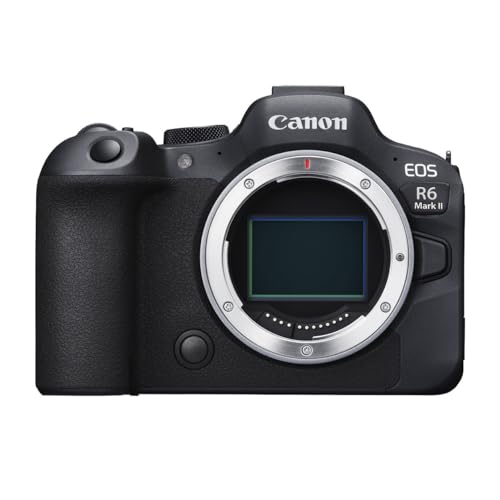
Canon EOS R6 Mark II — Best press body overall
The R6 Mark II leads this list because it behaves like a colleague who has done the job for years. Its autofocus acquires a face in the gloom of a village hall and holds it through a crowd’s churn; its high-ISO files let a photographer work available darkness without flash’s intrusions; its bursts are deep enough for the goalmouth and the verdict alike. Deadline trust is not a specification, and this body has accumulated more of it than any rival here.
Dual slots writing mirrored files are its professional signature. News photographs are unrepeatable by definition — the resignation expression, the trophy lift, the flood crest — and the photographer who loses them to a card failure loses more than data. Mirrored recording is the body’s promise that a hardware accident cannot become a career story, and picture desks price that promise correctly.
Now run it through a general election count, the second theatre of this review. Hours of tedium detonated by thirty seconds of history: the hall’s light is fluorescent soup, the candidate arrives through a scrum, the result lands at 3 a.m. The Canon’s battery discipline, silent shutter for the hall’s solemn moments and instant wireless filing turn that marathon into a sequence of handled problems. This is what buying a press camera actually purchases — handled problems.
Canon’s press ecosystem completes the case: service centres that understand deadline turnarounds, rental bodies in every capital, and a lens range whose long zooms are the wire photographer’s vernacular. A freelancer can build a career kit inside this mount without a single exotic purchase.
Its video is fully professional for news purposes — clean, well-coloured, reliably focused — which matters because the same count night now expects a sixty-second package by breakfast. One body, both deliverables, no second bag in the scrum.
Buy it if photography is your living and the living is news. It is not the cheapest tool in this guide; it is the cheapest way to never be the photographer who missed.
Agency photographers add a logistical footnote editors love: its files from a dozen different shooters interleave into one gallery without a colour argument, because the body’s rendering is a known quantity at every desk. Standardisation is invisible until you have edited a mixed-kit gallery at midnight; then it is the only thing you remember.
Keep it serviced on a professional rhythm and it will outlast several editors, two office moves and one change of government. Press cameras are judged in decades by the people who issue them, and this body’s build and support are pitched exactly at that horizon.
A final word on trust between photographer and desk: bodies become reputations. The shooter whose files always arrive sharp, captioned and early is a byline an editor builds pages around, and equipment that never supplies an excuse is how that reputation is physically constructed, assignment by assignment.
One more constituency testifies quietly: the court and council specialists, whose entire output is faces in bad light at respectful distances. For them this body’s combination of silence, sensitivity and focus certainty is not a feature list but a working environment, renewed every sitting day.
There is a final institutional comfort: when a bureau standardises on it, a photographer can be posted anywhere its service network reaches and find their muscle memory honoured by the local spare. Global trades run on such boring continuities, and this body is currently one of them.
- Type: full-frame mirrorless
- Strength in brief: deadline trust in bad light
- Workflow fit: agency, freelance and staff news
- Lens note: the press’s vernacular range
Strengths
- Focus that survives scrums and gloom
- Mirrored cards protect unrepeatable frames
- Silent operation for solemn assignments
Trade-offs
- Professional price for a professional tool
- Battery discipline needed on marathon days
- Full-frame glass adds travel weight
Best for: Working photojournalists on staff or freelance retainers.
Not suited for: Occasional shooters who never file under deadline.

Sony Alpha 7 IV — Best hybrid newsroom body
Newsrooms that reorganised around video ask a different first question, and the Alpha 7 IV is its answer. Its stills satisfy the print desk — resolution for crops when the photographer could not get closer, dynamic range for the courthouse steps at noon — while its video satisfies the digital desk in the same hour, from the same position, through the same lens.
Cropping headroom is a press feature disguised as a luxury. Access is the photojournalist’s eternal ration: the barrier, the police line, the back of the hall. Files that surrender a confident crop convert a distant frame into a publishable one, and editors feel that conversion in their page options every single day.
Take it to a protest march, the second assignment in its portrait. The Sony’s tracking holds a placard-carrier through shifting crowds, its sealing shrugs the weather that accompanies such days, and its compact primes let the photographer work close and unobtrusive when the story is a face rather than a multitude. Then the march becomes a press conference, and the same body records the statement for the website before the wires have filed.
Sony’s lens bench, including the third-party market, suits the multimedia freelancer’s economics: one fast standard zoom earns its keep across both crafts, and specialist glass can be added per contract rather than per hope. Agencies standardising on the system find second shooters and rental spares without a search.
Menu depth is the honest toll — this body rewards a setup day and a saved configuration per assignment type, and punishes the photographer who wings it. Press professionals build those configurations the way pilots build checklists, and once built, the body disappears into the work.
Buy it if your desk’s future is visibly multimedia and your stills cannot be the price of admission. It is the newsroom reorganisation, embodied in one camera.
Its resale strength protects the freelancer’s balance sheet in a way accountants appreciate: a body this liquid can be treated as a deposit on its successor rather than a sunk cost, which changes how a small practice plans its capital across a parliament’s lifetime.
Its stills archive appreciates in a way video never does: the frame cropped for today’s web story remains, in the vault, a full-resolution document for the anniversary, the inquiry and the history book. Desks that understand archives buy resolution before they need it.
For the hybrid freelancer, it also future-proofs the rate card: when a client asks for the 4K package, the stills in a larger crop, or the vertical cut for social, the answer is yes from the same bag. Versatility, invoiced properly, is the closest thing freelancing has to job security.
Conference and corporate-news shooters form its second parish: the body that photographs the keynote, films the interview and live-cuts the announcement without a crew change is the body that gets the retainer renewed. Multimedia competence, at this level, is simply called professionalism.
Its files also serve the long tail of news — the follow-up, the anniversary, the documentary that revisits the story — because resolution and colour archived today remain publishable in formats not yet invented. Buying for the archive is the senior photographer’s habit, and this body rewards it.
- Type: full-frame mirrorless
- Strength in brief: print stills and publishable video
- Workflow fit: multimedia desks and agencies
- Lens note: deepest bench, third-party value
Strengths
- Crop headroom rescues rationed access
- One kit answers print and digital desks
- Lens economics suit freelance multimedia
Trade-offs
- Demands a configuration day up front
- Rolling shutter care on fast pans
- Not the low-light value champion
Best for: Multimedia journalists and hybrid newsrooms.
Not suited for: Stills-only traditionalists on tight budgets.

Canon EOS R10 — Best for local and freelance press
Most photojournalism by volume is local: the county final, the planning inquiry, the shopkeeper’s fiftieth year, the flood on the estate. The R10 serves that backbone with autofocus inherited from bodies three times its price, a burst that handles grassroots sport honestly, and economics that let a freelancer insure it, replace it and sleep at night.
Its size is a professional feature in community settings. A compact body with a modest zoom does not turn a café interview into a media event, and local journalism lives on the trust that evaporates when equipment intimidates. Subjects talk to this camera; they perform for flagships.
Follow it through a Saturday in the life it was chosen for, the second portrait in this review. Morning: a junior football final in drizzle. Afternoon: a charity abseil down the hospital. Evening: a council by-election count in a sports hall. The R10’s battery, buffer and file quality cover all three without a drama, and its owner files from the car park between each — the local photographer’s actual workflow, honoured completely.
Canon’s colour flatters community photography’s subjects — real faces in real halls — with a kindness that editors at local titles value because their pages are faces. Files arrive publishable with minimal correction, which matters when the photographer is also the reporter, the driver and the person making tea for the interviewee.
Its limits are the tier’s: one card slot where the flagship has two, low-light files that ask for care, weather sealing that respects rain rather than defying it. The working answer is discipline — back up at every break, carry the body under a jacket in the worst of it — and generations of local photographers have built careers on exactly that discipline.
Buy it if you are the press in a place the agencies visit twice a year. It will make you look like a professional because, equipped with it and the craft in the guide sections, you are one.
Local titles have begun issuing it as the reporter’s standard for a structural reason: training a new starter takes an afternoon, the files match the title’s established look, and a damaged unit is a budget line rather than an insurance event. Institutions standardise on survivable economics.
There is a dignity argument for it that this guide will state plainly: the local photographer equipped with it is not a diminished version of the agency shooter. They are the same profession at its most democratic scale, and the tool respects that by refusing to condescend.
Its last virtue is teachability within a newsroom: the senior who hands it to a trainee for the Saturday round can explain its whole logic in the car. Professions reproduce through such handovers, and tools that welcome beginners keep the trade staffed.
Charity and NGO communications teams have adopted its class for the same economics: one body per field officer, files the head office can publish, and a price that survives a trustee meeting. The democratisation of competent imaging is a genuine shift in who gets to tell stories.
For the reporter-photographer hybrid that local news now breeds, it threads a needle rivals miss: serious enough that the pictures desk respects the files, simple enough that a writer can be taught it in a day. That dual citizenship is the local newsroom’s actual staffing model.
- Type: APS-C mirrorless
- Strength in brief: flagship focus DNA, local economics
- Workflow fit: local papers, freelancers, reporter-shooters
- Lens note: affordable RF wides and zooms
Strengths
- Subjects relax around its modest size
- Autofocus far above its price class
- Whole kit insurable on a freelance income
Trade-offs
- Single card slot demands backup discipline
- Sealing respects rain rather than defying it
- Dusk files need careful exposure
Best for: Local journalists, freelancers and community photographers.
Not suited for: War-zone or agency wire work in extreme conditions.

Nikon Z50 II — Best compact Nikon for news
Nikon’s press heritage runs from the film era’s battlefields to today’s mirrorless scrum, and the Z50 II carries that DNA in a body a stringer can afford. Its subject detection — people, animals, vehicles — serves the modern local assignment sheet, while the APS-C crop stretches a modest telephoto into demonstration-and-sport reach that full-frame budgets achieve at several times the price.
Handling is its quiet argument. Nikon shooters’ hands know where everything is, dials fall under fingers in the dark of a count hall, and a photographer migrating from the brand’s DSLRs finds the transition measured in hours. In press work, where the camera must vanish from conscious thought, inherited fluency is a genuine specification.
See it at a lower-league football ground, the second scene of its case. Floodlights of municipal generosity, rain arriving sideways, a crowd close enough to touch the photographer — the little Nikon’s crop reach frames the far touchline, its detection holds the winger, and its files satisfy the back page without the photographer ever becoming the story. Local sport is photojournalism’s apprenticeship, and this is a masterly apprentice’s tool.
Its video covers the website’s needs competently, and the Z mount’s growing lens range — plus the vast adapted heritage of Nikon glass — gives a young photographer a growth path that respects a stringer’s income. Start with the kit zoom, add the fast prime for council-chamber gloom, and the kit matures with the career.
Single-slot recording and APS-C low-light limits mark its tier honestly, answered by the same backup discipline the R10’s review prescribes. No camera in this price parish should be trusted with an unrepeatable frame and no copy; the craft, not the body, carries that responsibility here.
Buy it if your hands already speak Nikon or your subjects live at telephoto distance on a stringer’s budget. It is the compact press camera its maker’s history promised.
Its adapted-lens heritage has a press-specific charm: a stringer can mount decades of affordable Nikon telephotos while the native Z collection grows, so the kit’s reach can be assembled from the second-hand market at a pace a retainer allows. Heritage, in a young career, is a financing strategy.
Sports desks at regional titles have built their Saturday coverage around bodies of exactly this class, because the economics let three shooters cover three grounds where one flagship once covered one. Breadth of coverage is an editorial value, and affordable competence is how it is bought.
Judge it by the back pages it will fill across a local career — the finals, the fetes, the floods — an archive no flagship will ever make because no flagship will ever be sent. The history of most places is written by cameras of exactly this class.
Its crop reach has a democratic echo too: the young photographer at the non-league ground frames the same decisive moment as the agency shooter at the stadium, at a tenth of the glass budget. Talent spotted on such evidence is how the profession renews itself.
And its size keeps the young stringer welcome in the places local journalism lives — the clubhouse, the parish hall, the family kitchen of the interviewee — where a flagship’s bulk would reclassify the visit as an event. Access is the young photographer’s capital, and this body spends none of it.
- Type: APS-C mirrorless
- Strength in brief: detection plus crop reach
- Workflow fit: stringers, local sport, demonstrations
- Lens note: Z range plus adapted heritage glass
Strengths
- Crop reach for sport and marches
- Handling fluent for Nikon hands
- Growth path priced for stringers
Trade-offs
- Single card slot, backup discipline required
- Low-light ceiling below full-frame picks
- Native DX telephotos still maturing
Best for: Nikon-loyal stringers and local sport photographers.
Not suited for: Multimedia leads needing flagship video tooling.

Fujifilm X-T5 — Best for documentary and features
Not all photojournalism is breaking news. The features desk, the documentary commission, the six-month story of a closing factory or a reviving high street — these need a camera subjects can live beside, and the X-T5’s retro discretion and film-rooted colour have made it the documentary wing’s favourite instrument in this guide.
Its resolution serves the format features are published in: the magazine spread, the exhibition that follows the commission, the book. Files crop for composition months later in the edit, and Fujifilm’s colour gives long projects a coherent visual signature that editors increasingly commission by name — the look is part of the byline.
Live with it on a long project, the second portrait in this review. A photographer documenting a fishing community across a winter needs a camera the harbour café accepts as furniture. The X-T5’s dials invite the slow, deliberate exposures documentary work is made of, its sealing handles harbour weather, and its small primes keep the whole kit inside a fisherman’s-coat pocket range. Subjects forget it, which is documentary’s highest technical achievement.
Breaking-news virtues are present but not its crown: autofocus is modern and willing, yet the wire-speed specialists above out-duel it in chaos, and its video, while handsome, serves the feature film rather than the live hit. The documentary photographer accepts that trade with open eyes.
Its JPEGs deserve an editor’s footnote: for features on gentle deadlines, its in-camera colour can file publishable images with almost no processing, a gift when the photographer is also conducting the interviews and writing the captions. Time is the documentary budget’s scarcest line.
Buy it if your journalism is measured in months and printed in spreads. It is the camera the long story deserves, and its owners’ loyalty has the settled quality of people who have stopped shopping.
Features editors add a quieter commendation: its files need so little desk intervention that a photographer’s personal colour becomes a recognisable asset a desk can commission deliberately. In the features market, a look is a livelihood, and this body manufactures looks.
Long-project photographers also value its appetite: modest batteries and small files across a six-month commission keep the archive manageable and the field kit light. Documentary is a marathon of logistics disguised as art, and this body respects the logistics.
It closes its case with a craftsman’s argument: a camera whose controls slow the hand by half a second buys the eye a full second of thought, and documentary photography is purchased in exactly that currency. Deliberation is not the opposite of deadline craft; it is its senior branch.
Magazine commissions increasingly arrive with its look requested in the brief — a sentence that would have been absurd a decade ago and now reflects how thoroughly its colour has entered the features vocabulary. A camera that becomes an adjective has achieved something beyond specifications.
Its owners also report a professional side effect worth recording: subjects ask about the camera, conversations open, and the documentary interview begins before the recorder is switched on. An instrument that starts conversations is an access tool, whatever its specifications say.
- Type: APS-C mirrorless, retro dials
- Strength in brief: discretion with publication resolution
- Workflow fit: features, documentary, long projects
- Lens note: small primes for unobtrusive work
Strengths
- Subjects forget it is there
- Colour gives long projects a signature
- Files serve spreads, exhibitions and books
Trade-offs
- Chaos autofocus a step behind wire bodies
- Video serves features, not live hits
- Dial pace suits deliberation over reaction
Best for: Feature and documentary photojournalists.
Not suited for: Breaking-news shooters living on the wire’s clock.

Sony RX100 VII — Best pocket second camera
Every experienced photojournalist eventually learns the pocket camera’s doctrine: stories do not schedule themselves around your carrying the big kit. The RX100 VII is the doctrine’s finest current instrument — a zoom compact with a viewfinder, fast autofocus and files a desk can publish, living in the coat pocket of a photographer who is officially off duty.
Its zoom is the press argument. The off-duty story arrives at any distance — the accident across the square, the celebrity at the far table, the flood rising at the end of the street — and a fixed-lens pocket camera watches helplessly while this one frames, shoots and files. Range, in the pocket category, is the difference between a witness and a photographer.
See it at a breaking incident on a rest day, the second scene of its case and the entire reason it exists. The staff photographer at the market with family becomes, in ninety seconds, the only professional present at the fire on the high street: frames from behind the cordon with the zoom, video for the website, filed from the pavement while the office dispatches a crew to a story already illustrated. Desks remember the photographer who did that, at promotion time and at redundancy time alike.
Quality honesty: its one-inch sensor will not match the big bodies at midnight, and no editor should pretend otherwise. At daylight and reasonable dusk, its files run in print without apology, and a published photograph outranks an unpublished masterpiece in every newsroom on earth.
It also serves as the discreet primary for sensitive assignments where a flagship would end the access — the support group, the ward visit, the community meeting — provided editors and ethics agree the discretion serves the story rather than the photographer’s convenience. The guide’s ethics section addresses that line directly.
Buy it as the second camera, the off-duty insurance, the professional’s answer to the story that refuses an appointment. It is the cheapest career insurance in this entire guide.
It has also become the verification camera of the smartphone age: when a citizen’s clip of an incident circulates, the professional who was present with a real camera — even this small one — holds the frame the desk can defend. Presence plus provenance is the modern press photograph’s whole value.
And when the story is over, it returns to being a family camera of unusual quality — the photographer’s own life documented on the tool that documents everyone else’s. The profession’s elders recommend keeping one camera that serves home; many choose this one.
Keep it in the coat through every season. The story that makes a local reputation rarely announces itself as a story at the moment it happens, and the photographer carrying this camera is the one who comes home with it. That is the whole review, and the profession’s elders will nod.
Newsagents’ children aside, its most devoted owners may be retired staff photographers, who carry it to stay dangerous: still filing the occasional frame to their old desks, still incapable of walking past a story. Tools that keep professionals professionally alive in retirement earn a peculiar respect.
Close with the arithmetic of the coat pocket: a camera carried three hundred days a year at no burden will, across a career, be present for more history than a flagship carried on assignment days alone. Presence is the profession’s first statistic, and this little body maximises it.
- Type: one-inch sensor zoom compact
- Strength in brief: professional presence in a pocket
- Workflow fit: off-duty stories, discreet access
- Lens note: wide-to-tele zoom, always carried
Strengths
- Frames the story at any distance
- Publishes respectably in good light
- Present when the main kit is at home
Trade-offs
- Midnight files trail the big bodies
- Tiny controls under deadline pressure
- Premium price for a second camera
Best for: Every working photojournalist, as the pocket spare.
Not suited for: Anyone needing it as a low-light primary.
How Do the Six Press Picks Compare on Assignment?
Press value divides along three axes: deadline trust, multimedia depth and the economics of ownership. The grid compresses; the craft sections that follow carry the profession’s real curriculum.
| Camera | Badge | Standout trait | Watch out for |
|---|---|---|---|
| Canon EOS R6 Mark II | Best press body overall | The colleague you want at 3 a.m. | Mirror the cards, always |
| Sony Alpha 7 IV | Best hybrid newsroom body | The reorganisation in one body | Save a setup per assignment type |
| Canon EOS R10 | Best for local and freelance press | The backbone’s own camera | Back up at every break, religiously |
| Nikon Z50 II | Best compact Nikon for news | Heritage in a stringer’s bag | Learn detection modes before matchday |
| Fujifilm X-T5 | Best for documentary and features | The long story’s instrument | Let subjects habituate before shooting |
| Sony RX100 VII | Best pocket second camera | The story that refused an appointment | Keep it charged; stories do not warn |
How Does a Two-Body Press Kit Actually Work on Assignment?
One body wears the wide zoom, the other the long one, and the photographer changes cameras instead of lenses because moments do not pause for mount rotations in the rain. That is the whole doctrine, and everything else — matched systems, identical settings files, batteries pooled — exists to make the swap invisible to the photographer’s attention.
The second body is also the insurance policy: when a body fails at the unrepeatable moment, as bodies eventually do, the story continues on the other shoulder. Agencies issue pairs for this reason, and freelancers who buy one flagship and one honest workhorse from this list are applying the same logic at their own scale.
Colour and settings coherence between the pair is the unglamorous detail that editors bless. Two bodies whose files interleave without a colour argument halve the desk’s work, and a photographer whose deliveries are easy to publish gets booked again. Professionalism, at the desk end, looks exactly like that ease.
How Do You File From the Field Without Losing the Story?
Build the transmission habit before the deadline builds it for you: camera to phone or laptop in the first pause, a tight edit made with a picture editor’s ruthlessness, captions written while the scene is still in front of you because memory edits faster than software. The photographers desks trust are the ones whose workflow was rehearsed on quiet days.
Captions are journalism, not administration. Names spelled from the subject’s own lips, places verified against the sign behind them, context that survives the sub-editor’s questions — a photograph with a trustworthy caption is publishable; a masterpiece with a guessed one is a liability wearing a frame.
Networks fail exactly when news peaks, so carry the boring redundancies: a second network’s SIM, a power bank, the knowledge of which café near the courthouse has reliable Wi-Fi and a tolerant owner. Filing craft is logistics, and logistics is a learnable, unglamorous, career-length advantage.
What Conduct Keeps a Photojournalist Welcome and Legal?
Identification first: press credentials visible, intentions honest when asked, and the discipline to accept that some doors stay closed. The photographer’s long-term access to a community is worth more than any single frame extracted from it, and the trade’s elders guard that arithmetic fiercely.
Grief and vulnerability demand the profession’s deepest care. Photograph what the public genuinely needs to witness, approach the bereaved as a guest rather than a hunter, and be able to explain — to the subject, to an editor, to yourself at 3 a.m. — why this frame serves the story rather than the photographer’s portfolio. If the explanation fails, the shutter stays closed.
Know the local law of your ground: court precincts, hospitals, schools, military sites and private property each carry rules that vary by jurisdiction and change with circumstances. Ignorance is not a defence the profession accepts, and the photographers who last are the ones who study the boundaries before testing them.
How Should a Freelancer Build a Kit That Pays for Itself?
Sequence by booking, not by desire: the body and standard zoom that cover eighty percent of commissions, the long lens when sport or wildlife-adjacent work actually arrives, the second body when a failure would cost a client rather than a frame. Each purchase justified by a revenue line is a business; each justified by a launch video is a hobby wearing a tax deduction.
Insure and maintain like a business, because the kit is the factory. A service contract and a cleaning rhythm cost less than one lost commission, and a relationship with a rental house covers the catastrophic week. Freelancers who treat logistics as craft outlast more talented rivals with chaotic kit rooms.
Price the multimedia reality honestly. If the desk expects video, the rate conversation happens before the assignment, not during it — hybrid skill is a second trade, and the photographers who give it away discover that gifts become expectations with remarkable speed.
Why Does the Silent Shutter Matter Beyond Politeness?
Because sound changes behaviour, and behaviour is the subject. In courtrooms where photography is permitted, at funerals, in council chambers and during wildlife-adjacent rural stories, the silent shutter lets the scene continue being itself — which is the entire documentary proposition. Several picks here were credited for electronic shutters that a photographer can trust at those moments.
Silence also protects the photographer’s welcome. A hall that does not hear you is a hall that invites you back, and photojournalism is a career of return visits — to the same court, the same club, the same family across a long story. Reputation compounds in the currency of unobtrusiveness.
Know its limits with equal clarity: fast movement can skew, some artificial light bands, and flash — where permitted and appropriate — remains a legitimate tool rather than a failure of stealth. The professional chooses per scene, and the choosing is the craft.
How Do You Keep Files Defensible When an Image Is Challenged?
Preserve the originals untouched: RAW files archived unedited, edits made on copies, and a chain from card to publication that you can describe without embarrassment. In an era of synthetic imagery, the photojournalist’s archive discipline is becoming the profession’s central credential, and it begins with habits formed on ordinary assignments.
Caption accuracy is part of the same defence. A photograph whose caption overclaims — wrong place, wrong sequence, wrong implication — damages the true images around it, and desks increasingly audit for exactly that. Precision is not pedantry; it is the product.
Emerging content-credential tools deserve the working photographer’s attention rather than either hype or dismissal. Where your desk adopts them, learn the workflow early and completely; the photographers who can prove a frame’s provenance will hold an advantage that grows with every synthetic scandal.
What Does a Young Photojournalist’s First Year Really Require?
A camera from this list at the level the budget honestly reaches, one standard zoom, and a territory. The territory matters most: a patch — a town, a league, a community — photographed relentlessly until its people know your face and its rhythms are in your diary. Photojournalism is local knowledge with a camera attached, at every level of the profession.
File for anyone who will publish you, and treat every small commission as a rehearsal for the large one: captions perfect, delivery early, conduct impeccable. Picture desks promote reliability before brilliance because deadlines do, and the young photographer who internalises that ordering skips a queue of more gifted rivals.
Study the masters of the form with the images’ captions attached, because the craft is the marriage of the two. Then go out before dawn on a story nobody assigned, in weather nobody chose, and make the pictures anyway. That sentence, repeated for a year, is the profession’s only known entrance examination.
How Has the Smartphone Changed the Professional’s Job Rather Than Ended It?
By taking the easy photographs. The first picture of any incident now belongs to a witness’s phone, which frees — and obliges — the professional to make the photographs that require access, context, persistence and craft: the second day, the human consequence, the verified account. Desks no longer pay for presence alone; they pay for everything presence cannot do.
Verification has become a photographic discipline in its own right. The professional’s defended archive, exact captions and provable provenance are the counterweight to the flood of unverified imagery, and the cameras and habits in this guide were chosen partly as instruments of that credibility.
The smartphone is also, honestly, a tool in the kit: the filing device, the live position, the quick portrait for the social desk. The photographers who thrive treat it as the office in their pocket and the camera on their shoulder as the witness — a division of labour, not a rivalry.
Which Professional Mistakes End Photojournalism Careers Early?
Arriving as a tourist is the first: no research, no names, no idea which door the decision-makers use or which café the staff drink in. Photojournalism rewards the prepared obscenely, because the prepared are standing in the right place when the unscripted moment chooses its witness. Luck, in this trade, is a subscription service paid in homework.
Overclaiming is the second and the fatal one: the caption that tidies reality, the frame presented as spontaneous that was arranged, the sequence implied that never happened. The profession’s entire value is that its images can be believed, and the photographer who spends that belief for one front page discovers the account does not refill.
The third is neglecting the business until it neglects you: uninsured kit, unpriced video, unfiled taxes, a body of work with no archive discipline. Talent opens the door of this trade; administration, logistics and conduct are what furnish the room. The cameras above are tools. The career is the craft around them.
A fourth error completes the professional set: treating every assignment as a portfolio raid, lingering for the artistic frame while the news frame goes unfiled. The desk’s clock outranks the photographer’s vanity on every working day, and the photographers who internalise that ordering are the ones still working when the vanity has been laid off.
Final Recommendation
For the working centre of the profession, the Canon EOS R6 Mark II remains the recommendation that survives contact with a real assignment sheet: trusted focus, mirrored files, silence when it matters. Multimedia desks should build on the Sony Alpha 7 IV; local and freelance shooters will find the Canon EOS R10 and Nikon Z50 II priced like colleagues rather than obstacles; documentary photographers deserve the Fujifilm X-T5’s patience; and every one of them should carry the Sony RX100 VII against the story that refuses an appointment.
Then do the part no camera can: learn a territory, file early, caption honestly, and be standing in the right place when history walks past. The profession has always belonged to the photographers who were there. These are simply the best current tools for being there credibly.
A last word to the young photographer reading this on a night bus to an assignment nobody else wanted: the profession will test your conduct, your captions and your stamina long before it tests your camera. Choose any body above with confidence, then spend your real budget on being early, being honest and being there again tomorrow. That has always been the whole secret, and it still is.
Related guides
- Best Digital Cameras for Filmmaking: Six Bodies Built for Codecs, Log and Long Takes
- Best Cameras for Production: Bodies a Working Shoot Day Cannot Break
Frequently Asked Questions
What camera do most working photojournalists actually use?
Full-frame mirrorless systems from the major press ecosystems dominate agency and staff work, with the Canon and Sony bodies in this guide representing the current centre of gravity. Local and freelance practice spreads wider, and the R10 and Z50 II picks reflect that reality honestly.
Is one camera enough, or do I need two bodies?
For paid, unrepeatable work, two bodies are the professional standard — as much for failure insurance as for lens-swapping speed. Freelancers commonly pair a flagship with an honest workhorse from this list rather than doubling the flagship, which this guide’s R10 and Z50 II recommendations are designed to support.
How important is weather sealing for press work?
Close to decisive. News happens in rain, snow, dust and crowd-control spray, and a body that must be sheltered at the story’s peak is a body that misses the photograph. Every interchangeable-lens pick here carries sealing appropriate to its tier, and the reviews grade that honestly.
Should photojournalists shoot RAW or JPEG?
Both workflows are professional when chosen deliberately: JPEG for wire speed where the desk’s pipeline demands it, RAW where light is treacherous or the image’s afterlife in print and archive matters. Many working photographers record both simultaneously — one reason dual-slot bodies anchor this guide.
Can a compact camera really work for press photography?
As the always-carried second camera and for discreet access, yes — the RX100 VII’s section argues that case in full. As a primary in demanding light, no, and any desk that pretends otherwise is setting its photographer up to fail at midnight.
What lens kit covers most assignments?
The professional vernacular is a fast standard zoom and a fast telephoto zoom, supplemented by a wide or a fast prime as the patch demands. Bodies in this guide were partly judged on how completely their mounts serve that vernacular at every budget.
How do I break into photojournalism now?
Build a territory, publish anywhere that will have you, caption impeccably, deliver early, and let reliability compound into reputation. The first-year section of this guide lays out that path in full; the camera is the smallest part of it, which is why this list spans budgets without condescension.
Is video really mandatory for photojournalists now?
For most staff and agency roles, a working video competence is now assumed, and for freelancers it is a rateable second trade rather than a free extra. The hybrid-capable picks here were chosen so that one kit serves both expectations without punishing the stills that remain the profession’s heart.
Do photojournalists edit their photographs?
Within strict professional limits: cropping, exposure and colour correction that preserve the scene’s truth, with anything beyond that disclosed or forbidden outright by desk standards. The defensibility section of this guide explains why the original file is preserved untouched — the edit is a presentation, never a revision of the evidence.
Related Guides
The press craft extends into ethics, business and documentary practice, and these guides continue each thread: our guide to press ethics and photographing grief a freelancer’s handbook for pricing multimedia assignments the documentary photographer’s guide to long-term projects


