kajuandouglas.com is reader-supported. When you buy through links on our site, we may earn an affiliate commission.
Where to Buy a Micro Four Thirds Body, and Why the Lenses Came First in This System
The best cameras for micro four thirds lens collections are chosen backwards compared with every other system: here, the lenses are the treasure and the body is their current custodian. Micro Four Thirds owns the deepest catalogue of small, sharp, affordable glass in photography — tiny primes, long telezooms that fit a jacket pocket’s bigger cousin, and decades of Panasonic and Olympus lenses that all mount on every body in this guide. If you own that glass, or dream of travelling with it, these are the bodies that honour it.
Where to buy: one body below is linked to its Amazon listing; the others are described as prose-only picks because they sit outside our verified pool for this site — buy them from any reputable dealer, and spend the diligence you save on checking the used lens market, where this system’s glass circulates in wonderful condition at gentle prices. In Micro Four Thirds, the second-hand shelf is not a compromise; it is half the point of the mount.
Understand the system’s founding bargain before the reviews. The sensor is smaller than APS-C and full frame, and in exchange everything shrinks: bodies, lenses, tripods, the bag itself. What the format returns is depth of field, reach per gram, and a completeness of lens choice that larger systems envy. What it costs is low-light headroom and the shallowest background blur. Photographers who thrive here are the ones whose work values the first list — travel, wildlife, walking, everyday carrying — and the picks below are sequenced for them.
A note on honesty: this guide covers both families that make Micro Four Thirds bodies, OM SYSTEM (the former Olympus line) and Panasonic’s Lumix G range, because the mount’s glory is that the lenses cross freely between them. Choose the body for its handling, stabilisation and video; the glass will follow you across either badge.
If you arrive here owning lenses already, skip to the pick that matches your work and read its neighbours as the upgrade path. If you arrive owning nothing but curiosity, read the whole guide as a map of one ecosystem’s characters — because in this mount, more than any other in this series, you are not buying a camera. You are joining a collection that photographers have been tending, hand to hand and body to body, for well over a decade.
Key Takeaways
- In Micro Four Thirds the lenses are the asset: every body here mounts the whole shared catalogue, past and present.
- The OM SYSTEM OM-5 Mark II is our linked pick and the system’s best travel body — sealed, small and stabilised superbly.
- Panasonic’s G9 II and GH7 (prose-only) serve the system’s stills-action and video specialists respectively.
- The OM-1 Mark II (prose-only) is the flagship for bird and wildlife shooters who live by computational reach.
- Depth of field and reach-per-gram are the format’s native strengths; low light is where its owners learn to light, brace or accept grain.
- Buy glass used with confidence — this mount’s second-hand market is the richest in photography.
In this guide
Quick Picks
| Camera | Badge | Why it honours MFT glass |
|---|---|---|
| OM SYSTEM OM-5 Mark II | Best all-round MFT travel body | Sealed, tiny and stabilised like a flagship — the body that embodies the mount’s promise, and our linked pick. |
| Panasonic Lumix G9 II | Best MFT body for action stills (prose-only) | Phase-detect autofocus finally gives Panasonic’s flagship stills body the subject tracking the mount’s long lenses deserve. |
| OM SYSTEM OM-1 Mark II | Best MFT flagship for wildlife (prose-only) | Computational photography at full flagship strength — subject detection, high-speed capture and modes no rival mount attempts. |
| Panasonic Lumix GH7 | Best MFT body for video (prose-only) | The GH line is video royalty: professional recording options, cooling for long takes and the mount’s lenses serving filmmakers. |
| OM SYSTEM OM-3 | Best MFT body for style-led everyday shooting (prose-only) | A rangefinder-styled body with flagship-derived imaging and colour tools, made for the primes and the daily carry. |
| Panasonic Lumix G97 | Best budget MFT body for lens owners (prose-only) | An affordable, friendly body that lets a growing lens collection be used fully while the flagship fund accumulates. |
How Did We Choose the Best Cameras for Micro Four Thirds Lenses?
We started from lens boxes rather than bodies: the primes, zooms and long telephotos a Micro Four Thirds owner actually accumulates, and asked which bodies make that glass perform at its best. Stabilisation synergy mattered first — in-body systems that cooperate with lens stabilisation turn small, slow lenses into low-light tools. Autofocus drive came next, because the mount’s older glass deserves a body that focuses it briskly rather than nostalgically.
The two families’ philosophies were weighed fairly. OM SYSTEM bodies lean into computation — high-resolution modes, live neutral density, starry-sky focus — that multiplies what small lenses can do. Panasonic’s G bodies lean into video engineering and, in the G9 II, a phase-detect autofocus revolution for the line. A Micro Four Thirds owner is not choosing a sensor; they are choosing which of those philosophies will operate their lens collection for the next five years.
Size honesty was enforced throughout. A Micro Four Thirds body that grows to full-frame dimensions betrays the mount’s founding promise, so we favoured bodies that keep the system’s travel advantage, while noting where a larger grip genuinely serves long-lens work. The flagships earn their bulk with capability; the travellers earn their place by disappearing into a day bag.
Finally, longevity of the mount itself. Micro Four Thirds is the oldest mirrorless mount still in full production, with two manufacturers actively releasing glass — a stability that owners of orphaned systems would envy. Every body below plugs into that living catalogue, which is the deepest reassurance this guide can offer a lens collector.
Why Do Photographers Fall for the Small Mount and Stay?
The conversion story is usually a journey — literal or photographic. A traveller discovers that a full Micro Four Thirds kit weighs what one full-frame lens weighs, and that the photographs from the far valley, actually reached, outshine the theoretical photographs from the valley never visited. A wildlife walker discovers the reach arithmetic. A parent discovers the camera that comes to the park because it fits the bag that was coming anyway. The system wins on presence, and presence compounds across years into archives the bigger kits cannot match.
The glass itself seduces second. Small primes with jewel-like rendering, telezooms that telescope into a coat’s deep pocket, macro lenses that turn a garden into a safari — and all of it priced, especially used, like photography rather than jewellery. Owners describe the lens shelf the way gardeners describe a mature garden: accumulated, cross-pollinating, greater than any single purchase. Bodies come and go across that garden like seasons.
Staying is about the photographs’ sufficiency. In daylight, at base sensitivities, on screens and sensible prints, the format’s files answer every ordinary question beautifully — and most photography is ordinary questions. The photographers who leave are usually chasing the extraordinary edges: the darkest venues, the largest prints, the thinnest focus. This guide is written for the majority whose work lives in the sufficiency, and who would rather carry the camera than worship it.
What Does the Smaller Sensor Really Cost, and What Does It Pay?
The costs are physical and should be stated without flinching. In low light, the smaller sensor gathers less, so its files grain sooner and its shadows forgive less abuse in the edit. For a given framing, background blur is harder to achieve — the format’s portraits keep more of the world in focus, which portraitists must compose around rather than melt away. And at the extreme of print size, the larger formats’ files simply hold more.
The payments are equally physical. Depth of field at a given aperture runs deeper, which macro, landscape and street photographers spend like income. Reach doubles per focal length, which wildlife photographers experience as a lens budget halved. And the whole system’s size rewires behaviour: more carrying, more readiness, more photographs. The honest summary is that Micro Four Thirds trades the extremes of light and blur for the everyday virtues of presence and depth — a trade whose wisdom depends entirely on which photographs you actually make.
The modern bodies in this guide narrow the cost side yearly: stabilisation that buys back shutter speed, computational modes that build resolution and simulate filters, autofocus that finds birds in reeds. The gap that remains is real but specific, and a buyer who can name the specific scene where it would bite — the unlit venue, the metre-wide print — is a buyer who can choose this system, or decline it, with open eyes.
Which Six Bodies Serve Micro Four Thirds Glass Best? The Picks in Detail
One pick below is linked from our verified pool; the rest are prose-only recommendations described with the same care — in this system, availability through good dealers is wide, and the lens in your bag matters more than the badge on the body.

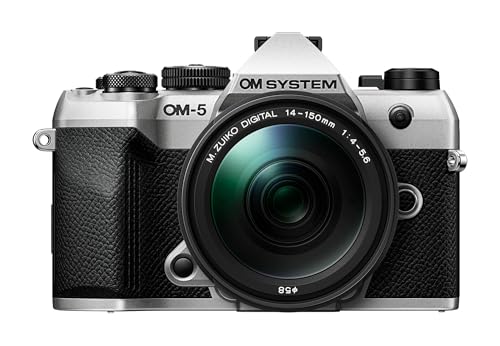
OM SYSTEM OM-5 Mark II — Best all-round MFT travel body
The OM-5 Mark II is the Micro Four Thirds idea made metal: a body small enough to forget, sealed well enough to shoot through the weather that makes photographs, and stabilised so effectively that its small lenses punch far above their apertures in low light. For a lens collection built on the mount’s little primes and compact zooms, it is the natural home — the camera that comes on the walk, the trip and the daily errand, which in this system is not a lifestyle slogan but the entire technical strategy.
Its computational toolkit multiplies the glass: high-resolution modes build print-sized files from the small sensor when the subject holds still, live neutral-density simulation turns waterfalls silky without a filter bag, and the autofocus handles the everyday world — faces, pets, street scenes — with modern confidence. Low light remains the format’s negotiation, and the menus reward an owner’s patience. But as the body a Micro Four Thirds collection lives on, rather than visits, it has no equal at its size in this guide.
Choose it as the system’s centre of gravity: the body the primes live on, the body that travels, the body whose files anchor the archive. Owners of bigger OM bodies often keep an OM-5 as the daily camera, which tells you its role precisely — it is not the system’s compromise but its distilled essence, and for a lens-first photographer it may be the only body the collection ever needs.
- Sensor: Micro Four Thirds with high-resolution computational modes
- Sealing: dust and splash resistance for real travel weather
- Stabilisation: powerful in-body system that empowers small lenses
- Size: the smallest complete system body in this guide
Strengths
- The mount’s promise in one small body
- Computation that multiplies modest glass
- Sealing for weather other systems shelter from
Trade-offs
- Low-light files show the format’s limits
- Menus take time to master
- Not the action flagship of the system
Best for: travellers and everyday carriers building a lens-first Micro Four Thirds kit. Not suited for: bird specialists needing flagship tracking and buffers.
Panasonic Lumix G9 II — Best MFT body for action stills (prose-only)
The G9 II matters to Micro Four Thirds lens owners because it removed the system’s oldest frustration: Panasonic’s contrast-only autofocus in action work. With phase detection, the G9 II tracks birds, athletes and wildlife with the decisiveness the mount’s superb long lenses always deserved, and its stills specification — speed, buffer, resolution modes — reads like a flagship’s because it is one. For the lens collector whose telezooms were waiting for a body that could hunt with them, this prose-only pick is the answer from the Panasonic side of the family.
It is a larger body than the OM-5, deliberately: the grip serves long glass, the controls serve gloved, hurried work, and the video specification is strong enough that hybrid shooters need not apologise for it. Its stabilisation cooperates with Panasonic’s lens systems beautifully. The costs are the size that dilutes the travel promise and a price that asks commitment — but for action stills within this mount, nothing else in this guide, linked or not, does what it does.
Consider it the body that keeps action shooters inside the system. For years, Micro Four Thirds wildlife photographers tolerated autofocus compromises for the reach; the G9 II ends the toleration, and lens collections that might have been sold stay mounted, growing and working. That retention effect — a body that saves a whole shelf of glass — is the highest service a camera can perform for a lens-first format.
- Autofocus: phase-detect with modern subject tracking
- Role: flagship stills body for action and wildlife
- Video: strong hybrid specification for a stills flagship
- Build: larger grip serving long telephoto lenses
Strengths
- Action autofocus the mount waited years for
- Flagship speed and buffer for wildlife
- Keeps long-lens collections fully competitive
Trade-offs
- Size dilutes the travel advantage
- Flagship price asks real commitment
- Prose-only here — buy through regular dealers
Best for: Micro Four Thirds action and wildlife shooters with serious telephoto glass. Not suited for: minimalist travellers counting every gram.
OM SYSTEM OM-1 Mark II — Best MFT flagship for wildlife (prose-only)
If the G9 II is Panasonic’s flagship argument, the OM-1 Mark II is OM SYSTEM’s: a body that treats computation as a photographic material. Its subject detection spans birds, animals, vehicles and more; its high-speed capture with pre-buffering catches the moment before the moment; and its graduated neutral-density and live composite modes perform in-camera what other systems do in software afterwards. For a Micro Four Thirds lens collection aimed at wildlife and weather, it is the most capable custodian available, and this guide names it prose-only with genuine respect.
The body is built like the tool it is — sealed to a serious standard, gripped for long glass, and priced like a flagship, which is the honest friction: it costs what full-frame flagships cost, and asks its owner to value the system’s size and computation above sensor dimensions. Those who do get a wildlife instrument of rare completeness, whose smaller lenses reach farther on the cliff and the marsh than any comparably priced rival system can follow.
It pairs interestingly with the OM-5 in real collections: the flagship for the expedition, the traveller for every day, one lens shelf serving both. That two-body harmony is a Micro Four Thirds speciality — the mount’s bodies span a wider range of sizes than any rival’s — and the OM-1 Mark II is the pole that makes the range worth spanning.
- Autofocus: broad subject detection with pre-capture buffering
- Computation: graduated ND, live composite, high-res modes
- Sealing: flagship-grade weather resistance
- Role: the system’s wildlife and expedition flagship
Strengths
- Computational tools no rival mount matches
- Wildlife capture speed and detection
- Flagship sealing for expedition weather
Trade-offs
- Flagship price within a small-sensor system
- Larger body than the travel picks
- Prose-only here — buy through regular dealers
Best for: committed MFT wildlife shooters wanting the system’s full capability. Not suited for: casual carriers who need the camera to disappear.
Panasonic Lumix GH7 — Best MFT body for video (prose-only)
The GH7 carries the most storied name in small-sensor filmmaking, and for Micro Four Thirds lens owners who shoot motion, it is the mount’s summit. Professional recording formats, internal options that rival dedicated cinema cameras, active cooling that lets a take run as long as the performance does, and stabilisation tuned for walking shots — the GH7 treats the little lenses in your bag as cinema glass, because in its hands they are. This guide lists it prose-only, and filmmakers should seek it through the usual professional dealers.
Its stills are thoroughly capable, but the body’s soul is motion: monitoring tools, audio options, and a workflow seriousness that productions build around. The size and price follow that seriousness upward, away from the travel ethos toward the rig. For the lens collector whose work is film — documentaries, events, commercial motion — that trade is the correct one, and the GH7’s existence is a large part of why Micro Four Thirds remains a living professional ecosystem rather than a hobbyist’s preserve.
There is a heritage effect worth noting: the GH line essentially created the mirrorless video era, and its user community’s accumulated knowledge — rigs, settings, lens adaptations — is an asset a buyer inherits free. A GH7 owner joins the deepest filmmaking knowledge base in the small-sensor world, which for a working videographer can matter as much as any specification in this review.
- Video: professional recording formats and options
- Cooling: active, for unlimited-length takes
- Audio and monitoring: production-grade tools
- Role: the mount’s cinema flagship for lens owners
Strengths
- Cinema capability from small, affordable glass
- Long-take reliability productions trust
- A legendary user knowledge base
Trade-offs
- Size and price leave the travel ethos
- Stills are second priority by design
- Prose-only here — buy through professional dealers
Best for: filmmakers whose Micro Four Thirds lenses serve paid motion work. Not suited for: stills-first travellers wanting the smallest body.
OM SYSTEM OM-3 — Best MFT body for style-led everyday shooting (prose-only)
The OM-3 answers a question the other bodies do not ask: what if the Micro Four Thirds camera were an object of desire as well as utility? Styled after classic rangefinders and built around creative colour control at a front dial, it courts the photographer whose lens collection is a set of small primes and whose practice is the daily walk, the café, the city at arm’s length. Its imaging derives from the flagship line, so the beauty is not a substitute for capability — it is capability, dressed for the street.
For lens owners, its charm is practical as well as aesthetic: a body this pleasurable to carry gets carried, and the primes get used, and the archive grows in the everyday grain that ages best. Its compromises are the style-led ones — no flagship grip for long glass, a price that includes its tailoring — and this guide lists it prose-only. But within a system whose founding virtue is presence, a body that maximises the desire to be present is making a serious technical argument in a beautiful accent.
Pair it in the imagination with the mount’s little fast primes and you see the intended photograph: unobtrusive, considered, made by someone who looks like a person with a camera rather than a production. Street and travel photographers in this system have waited for exactly this body, and lens collections heavy with primes will find in it their most sympathetic custodian.
- Design: rangefinder styling with front colour-profile dial
- Imaging: flagship-derived sensor and processing
- Role: everyday-carry body for prime lenses
- Build: metal, compact, made to be carried daily
Strengths
- Carrying pleasure that grows the archive
- Creative colour control at a physical dial
- Flagship-grade files in a street body
Trade-offs
- Grip not shaped for long telephotos
- Style is priced into the body
- Prose-only here — buy through regular dealers
Best for: street and everyday photographers with a prime-lens collection. Not suited for: long-lens wildlife work needing a deep grip.
Panasonic Lumix G97 — Best budget MFT body for lens owners (prose-only)
Every lens-first system needs its honest workhorse, and the G97 is Micro Four Thirds’: a body priced for reality that nonetheless mounts the entire catalogue, stabilises it in-body, and produces files that embarrass its price in daylight. For the photographer accumulating glass the sensible way — lens by lens, often used — the G97 is the body that lets the collection work today rather than after a flagship-priced someday. This guide’s prose-only budget pick carries that role proudly.
Its virtues are the unglamorous ones a growing collection needs: a vari-angle screen for the awkward angles, decent video for the hybrid curious, controls that teach the system’s grammar without intimidating. Its autofocus and low-light manners are a generation behind the flagships, and action shooters will outgrow it — which is precisely its place in the ecosystem: the body you learn the mount on, keep as the second body, and lend to the friend you are converting to the small system.
There is a financial elegance to starting here that this guide endorses explicitly. Money not spent on the body becomes the second and third lenses, and in Micro Four Thirds the lenses are where the photographs live. A G97 behind three good primes will out-photograph a flagship behind a kit zoom across almost any month of real shooting, and the owner can climb the body ladder later with the collection — the asset — already complete.
- Price: the most affordable full-featured body here
- Stabilisation: in-body, serving the whole lens shelf
- Screen: vari-angle for stills and video flexibility
- Role: learning body, second body, collection-builder
Strengths
- Lets the lens budget lead, as it should
- Full access to the shared catalogue
- Teaches the system without intimidation
Trade-offs
- Autofocus a generation behind flagships
- Low-light manners are modest
- Action shooters will outgrow it
Best for: new MFT owners building a lens collection on a budget. Not suited for: action specialists needing flagship tracking.
How Do the Six Compare as Custodians of Your Lenses?
| Camera | Body strength | Best owner | Watch out for |
|---|---|---|---|
| OM SYSTEM OM-5 Mark II | Travel and computation | Everyday lens-first shooter | Low-light ceiling |
| Panasonic Lumix G9 II | Action stills | Wildlife with long glass | Size and price |
| OM SYSTEM OM-1 Mark II | Flagship wildlife | Expedition MFT shooter | Flagship price |
| Panasonic Lumix GH7 | Cinema | Filmmaker with MFT glass | Rig-sized, video-first |
| OM SYSTEM OM-3 | Everyday style | Prime-lens street shooter | Grip for long glass |
| Panasonic Lumix G97 | Budget honesty | Collection builder | A generation behind |
Choose the custodian by the collection’s centre of gravity: long glass points to the G9 II or OM-1 Mark II, cinema glass to the GH7, primes to the OM-3 or OM-5 Mark II, and a growing shelf to the G97’s patience. The mount’s mercy is that the choice is reversible — sell the body, keep the lenses, and the collection loses nothing but a season’s familiarity. No other system in this series forgives a change of mind so completely.
How Should You Build a Micro Four Thirds Lens Collection From Scratch?
Start with the lens that matches your most-made photograph, not the most-admired one. For most, that is a fast standard prime — the system’s little jewels — which teaches the format’s character in a month: the depth, the rendering, the joy of a camera that vanishes. Add the wide or the long next according to the direction your archive is already leaning, and resist the zoom-everything temptation until your primes have told you which focal lengths your eye actually lives at.
Buy used without anxiety and with method. This mount’s glass is durable, plentiful and honestly priced second-hand; check the aperture blades, the mount contacts and the focus smoothness, and buy from dealers who warrant their stock. A used prime in this system often costs what a lens hood costs in another, which is how collections here grow to a completeness that larger-system owners only daydream about.
Complete the triangle before duplicating a corner: one wide, one standard, one long, each serving a real subject in your life. Only then does the specialist glass — the macro, the ultra-fast portrait prime, the serious telephoto — earn its place, because by then you know exactly which photographs it exists to make. Collections built in that order get used; collections built by enthusiasm become shelving.
How Do You Get the Most From Small Lenses in Low Light?
The format’s low-light craft is a trio of techniques rather than an apology. First, stabilisation: learn your own hand-holding limits with each lens and trust the in-body systems in these bodies to buy shutter speeds that larger formats cannot, keeping ISO down by time rather than sensitivity. Second, fast glass where it matters — the system’s little primes are bright, cheap and sharp wide open, which is a low-light strategy larger systems pay fortunes to imitate. Third, embrace the depth: at wide apertures this format keeps more of the scene sharp, so night street and venue photographs hold context that full-frame melts away.
Exposure discipline finishes the craft. Expose for the highlights the scene cannot lose, let the shadows be shadows, and resist the editor’s temptation to lift them into noise — a night photograph with honest blacks looks intentional, while a lifted one looks rescued. The modern bodies’ files, processed with that restraint, hold up far beyond the format’s reputation among those who have never actually shot it after dark.
And when the light is truly beyond the system, say so and light it: a small LED, a bounced flash, a subject moved two metres toward the window. Micro Four Thirds owners who treat light as a tool rather than a test produce low-light work that silences the format’s critics, because the criticism was never really about the sensor.
Why Does This Mount Adapt Other Systems’ Lenses So Happily?
A short flange distance and a modest sensor make Micro Four Thirds the natural retirement home for the twentieth century’s great glass: manual primes from every dead mount adapt with simple rings, gaining stabilisation from the body and a new life at double their marked focal length. Collections here often include a drawer of these elders — a fast fifty from the film era becoming a portrait lens of real character — and the bodies in this guide all serve them with focus peaking and magnification that make manual work a pleasure rather than a penance.
Speed-boosting adapters add a second life, concentrating a full-frame lens’s image onto the smaller sensor to win back a stop of light and soften the crop. For the lens-rich photographer migrating systems, that means the old shelf need not be sold at the border: it can be carried across, used, and gradually joined by native glass as the new system’s habits form. No mount transition in photography is gentler.
Native glass should still be the destination — autofocus, weather sealing and size are the system’s native virtues, and adapted elders offer none of the three — but as a bridge and as a toybox, the adaptability is a genuine ownership pleasure. It is one more way this mount treats lenses as the permanent collection and bodies as their changing custodians, which has been this guide’s thesis from its first paragraph.
How Does It Feel to Travel With a Complete System in a Small Bag?
It changes the trip’s physics. The whole kit — body, three lenses, the small tripod — rides in a bag that qualifies as a personal item, walks all day without negotiation, and enters museums, cafés and family homes without announcing a production. Photographs multiply accordingly: the dawn walk actually taken, the market actually wandered, the grandmother’s kitchen actually documented, because the camera was present for the trip as lived rather than as staged.
There is a security in modesty, too. A small, unremarkable kit draws less attention in the street, less concern at the border of someone’s privacy, and less grief if the worst happens to it. Travel photography’s best work has always come from blending, and this system blends by design. The travellers who convert rarely convert back, not because the files overwhelmed them, but because the trips did.
Plan the travel kit by the OM-5 pattern even if you own a flagship: the small body, the primes, one flexible zoom, and the discipline to leave the rest. The photographers whose travel archives shame the rest of us are not carrying more; they are carrying less, more often, into more of the day.
What Should an Owner of Another System Know Before Switching?
Audit your archive first, as this series keeps advising: if your favourite photographs live at base ISO in decent light, at apertures where depth is a virtue, the switch will feel like liberation. If they live in unlit venues at the edge of exposure, be honest that you are buying a different set of compromises, and consider keeping one fast prime and low expectations for those specific nights — or keeping a foot in both systems, which the modest prices here make unusually feasible.
Handle the bodies before selling anything. The format’s feel — the small grips, the dense little lenses, the computational menus — delights some photographers and irritates others in ways no review can adjudicate. A weekend rental with two primes is the cheapest truth in photography, and this system’s rental and used prices make the experiment nearly free of risk.
Finally, switch for the photographs you will make, not against the ones you have. The photographers who thrive after changing systems are pulled by a practice — walking, travelling, carrying daily — rather than pushed by dissatisfaction with files that were, on inspection, perfectly good. Micro Four Thirds rewards the pulled; it has little to offer the merely restless.
How Do the Two Families’ Stabilisation Systems Differ in Practice?
Both families stabilise superbly, and both cooperate with their own lenses’ stabilisation for a combined effect — but the cooperation is largely within each brand, which is the one place the shared mount shows a seam. An OM body with an OM lens, or a Panasonic body with a Panasonic lens, squeezes the maximum; cross-brand pairings still stabilise well through the body alone. For most owners this is a footnote; for the low-light specialist building a kit from zero, it is a reason to let the body choice gently steer the first lenses.
In the field, the practical difference is smaller than the specification war suggests. All six bodies here steady a walking shot, rescue a slow shutter at dusk, and smooth the little tremors that ruin small-sensor files first. The photographer’s technique — elbows, breath, the braced stance against a wall — remains the senior partner in every stabilisation system ever shipped, and this mount’s owners, who shoot slower lenses by choice, tend to develop that technique further than most.
Video walkers should test the specific pairing they intend to live with, because stabilisation character in motion — the float, the corner behaviour, the pan’s manners — is a taste as much as a measurement. The GH7’s reputation among walking filmmakers was earned in exactly that subjective territory, and no table of stops can overrule a test walk around the block.
What Does a Mature Micro Four Thirds Kit Look Like After Five Years?
It looks like a garden rather than a purchase: three or four primes that each own a subject, a flexible zoom for the unplannable days, one serious telephoto for the reach work, perhaps a macro for the garden safaris — and two bodies, the flagship or favourite and the small one, because this system makes the second body a modest decision rather than a second mortgage. Almost everything was bought patiently, much of it used, and the total weighs less than a single-system rival’s holiday subset.
The archive is the other half of the picture: five years of photographs made in more places, in more weather, at more hours, because the kit was carryable enough to be present. Mature Micro Four Thirds owners talk less about their equipment than any photographers we know, and show more photographs. That ratio is the format’s final argument, and it is the one this guide has been making in different words since its first page.
If that future attracts you, the entry is deliberately un-dramatic: one body from this guide, one prime, and the discipline to let the collection grow at the speed of your photographs rather than your browsing. The mount will meet you more than halfway — it has been practising hospitality to lens collectors for longer than any mirrorless system alive.
Which Subjects Flatter This Format Above All Others?
Travel reportage first: deep focus, small kit, everything in the frame testifying — the format’s native depth turns a street scene into a document rather than a portrait with the world melted off. Macro runs it close, for the same reason in miniature: depth is the macro photographer’s scarcest resource and this sensor manufactures it. Wildlife on foot follows, because reach that travels is reach that gets used, and the bird on the far marsh photographed beats the bird near the car park imagined.
Street photography has a special relationship with the mount: small bodies, silent shutters, lenses that render a scene’s whole geometry. The OM-3’s existence is the manufacturers’ acknowledgement of that marriage. And everyday family documentation — the genre with the largest archive of all — belongs to whichever camera is present, which this system’s size keeps arranging.
Name the subjects honestly and the format debate evaporates. A photographer whose loves are travel, macro, walking wildlife and the street is not compromising by choosing Micro Four Thirds; they are choosing the format those subjects would design for themselves. The compromise narrative only survives among photographers whose subjects are other people’s specifications.
How Do You Print From a Small Sensor Without Apology?
Print at the sizes your life actually hangs. At the dimensions of a home’s walls and a book’s pages, a well-made Micro Four Thirds file — sharp lens, base ISO, honest exposure — prints with a quality that silences the format argument in the only court that matters, the framed one. The computational high-resolution modes in the OM bodies extend that court further for the still subjects, landscapes and architecture, that dominate print sales anyway.
Technique is the print-maker’s lever: the format rewards the tripod, the careful exposure and the good lens more visibly than larger formats do, because there is less surplus to waste. Owners who print regularly describe a virtuous discipline — the small sensor makes them better photographers in the specific ways prints can detect, and their walls show it.
Choose papers kindly. Matte and textured stocks flatter the format’s rendering and forgive its grain at the day’s edges; glossy papers prosecute every pixel. The print, like the photograph, is a set of decisions — and a photographer who has chosen this system for its payments usually has the decision-making temperament to print from it beautifully.
What Myths About This Mount Should a Buyer Retire?
That it is a beginner’s system: the flagships in this guide are professional instruments with professional prices, and the professionals using them for wildlife and film are not confused about their needs. That it is dying: it is the oldest mirrorless mount in continuous production, with two makers releasing glass — a strange sort of death that involves this much new equipment. And that its files are fragile: they are specific, rewarding good exposure and punishing sloppy shadow-lifting, which describes every honest format ever made.
The subtler myth is that sensor size is a photographer’s rank. It is a variable, like focal length — chosen per practice, per subject, per life. The mount’s owners, who chose the variable that lets them carry the camera, tend to be past caring about rank, which may be the surest sign the choice was sound.
Retire, finally, the myth that you must choose forever. Lenses in this system sell as easily as they buy, bodies rotate, and many photographers run two systems for two kinds of days without the slightest crisis of identity. The mount asks for use, not vows.
How Should a Lens Owner Choose Between the OM and Panasonic Roads?
By the work’s centre and the hands’ preference. OM’s road runs through computation and weather — the modes, the sealing, the outdoor soul. Panasonic’s road runs through video engineering and, since the G9 II, action stills with phase detection. A wildlife-and-weather collection leans OM; a film-and-action collection leans Panasonic; a mixed collection can honestly choose by which body’s grip and menus feel like home, because the lenses — the asset — serve either road.
Rent the finalists with your own longest lens mounted. The pairing’s balance, the stabilisation’s character, the autofocus’s manners with your actual glass — these are the facts the decision needs, and they are only available in the hand. Both roads are well maintained; the wrong turn is the one taken from a spreadsheet.
And remember the mount’s mercy one last time: the body is the replaceable part. Choose the road that suits this season’s work, keep the lenses immaculate, and let the collection outgrow and outlast the decision. That is not indecision — it is the system’s design philosophy, working as intended.
Why Do Rental Shops and Teachers Keep Recommending This Mount to Beginners?
Because beginners quit systems that punish them, and this one mostly rewards them. The files forgive at the sizes beginners actually share; the depth of field hides the focus errors beginners actually make; the prices, especially used, forgive the budget errors beginners actually commit; and the cameras’ presence — small enough to carry while learning — builds the daily habit that is the only known cure for beginnerhood. A teacher recommending Micro Four Thirds is recommending the highest probability that the student is still photographing in three years.
The mount also teaches honestly. Its limits are specific and instructive — light, depth, the value of a tripod — rather than mysterious, so the beginner’s failures arrive with explanations attached. A student who learns exposure on a system that shows its working becomes a photographer; a student cushioned by a flagship’s surplus can remain a button-presser with beautiful files and no idea how they happened.
None of which makes it a learner’s mount to be discarded at graduation. The professionals in this guide’s upper picks are the counter-argument: the same lenses, carried further. A system a photographer can enter cheaply and never need to leave is a rare piece of industrial design, and it deserves to be recommended exactly as the rental shops recommend it — without embarrassment.
What Mistakes Do Micro Four Thirds Buyers Make?
The classic error is buying the system and then apologising with it — pixel-peeping at dusk, comparing shadows with a friend’s full-frame, defending the mount in forums instead of photographing with it. The format’s bargain was stated plainly in this guide; owners who accept it completely make serene, abundant work, while owners who litigate it make very little. Choose the system for its payments, spend its costs knowingly, and go out.
Second, neglecting the used market, which in this mount is not a compromise but a treasury. New-only buying in Micro Four Thirds pays a tax that the system’s own culture does not expect anyone to pay. Third, the giant-body error: assembling a ‘small system’ around the largest bodies and longest zooms until the travel advantage that justified the mount has quietly evaporated — at which point the owner owns the costs of both formats and the virtues of neither.
Fourth, selling the lenses in a moment of doubt. Bodies in this system are replaceable and improving; a mature lens collection, accumulated patiently and cheaply, is the asset that takes years to rebuild. Photographers who keep the glass through a change of heart almost always return to find it waiting, current and capable — which is the mount’s whole philosophy, experienced from the inside.
Final Recommendation
If your lenses — owned or dreamed of — are Micro Four Thirds, let the OM SYSTEM OM-5 Mark II carry them daily, and look to the prose-only specialists as your ambitions specify: the G9 II for action stills, the OM-1 Mark II for flagship wildlife, the GH7 for cinema, the OM-3 for the styled everyday, and the G97 while the collection is young. The mount rewards the photographer who thinks in decades of glass and seasons of bodies, and it returns that loyalty in the only currency that matters: photographs, made often, in more places, with less left at home.
Related guides
- Best Digital Cameras for Film Look: Six Bodies That Shoot Finished, Film-Flavoured JPEGs
- Best Cinema Cameras Under 00 With EF Mount: Native Bodies, Reducers, and the Adapter Routes That Work
- Best Canon Cameras for Filming: Narrative Bodies, Log Colour and Small Cinema Rigs
- Best Cameras for Sony A7RII Owners: Lenses That Complete It and Bodies That Partner It
- Best Cameras for Photojournalists: Six Bodies Built for the Working Press
Frequently Asked Questions
Can I use Olympus and Panasonic lenses on either brand’s body?
Yes — that is the mount’s founding promise. All Micro Four Thirds lenses fit all Micro Four Thirds bodies; only brand-specific extras like certain stabilisation pairings and aperture rings vary, and the core photography is fully shared.
Is Micro Four Thirds still worth buying into?
For travel, wildlife reach, everyday carrying and lens value, emphatically yes — two manufacturers actively support the mount with bodies and glass. For unlit-venue work and the largest prints, weigh the trade-offs this guide states plainly.
Which body here is best for bird photography?
The OM-1 Mark II and G9 II lead, with flagship detection and speed; the OM-5 Mark II serves the walking birder whose kit must stay light. All three multiply the mount’s long lenses into serious reach.
Do I lose much image quality versus APS-C or full frame?
In daylight and at sensible print sizes, remarkably little. The gaps appear in deep shadow recovery, high-ISO cleanliness and maximum background blur — real, specific, and irrelevant to a large share of real photography.
Are old Micro Four Thirds lenses still good on new bodies?
Generally yes, and often excellent — the mount’s back catalogue is deep and affordable. Newer bodies focus older glass briskly, and stabilisation in the body upgrades every lens you own at once.
What is the best first Micro Four Thirds lens?
A fast standard prime for most photographers: small, bright, sharp and characterful, it teaches the system’s virtues in a month. Add reach or width next, according to where your photographs lean.
Can Micro Four Thirds shoot professional work?
It does daily — the GH7’s filmmaking career and the wildlife work of the flagship bodies are professional by any definition. The format’s professionals choose it for reach, size and value, not despite them.
Should I buy the OM-5 Mark II or save for a flagship?
Buy the OM-5 if your photography is travel, walking and everyday life — it is the system’s essence. Save for a flagship only when you can name the action, wildlife or cinema work that demands it.
Will my Micro Four Thirds lenses hold their value?
The good ones hold it remarkably, precisely because the mount is old, shared and active — a lens that fits a decade of bodies has a deep pool of buyers. Buy the classics patiently and the collection is closer to a store of value than most camera gear manages.
Related Guides
Carry the small-system thinking further with best cameras for micro four thirds video, best cameras for travel photography and best cameras for wildlife on a budget.


