kajuandouglas.com is reader-supported. When you buy through links on our site, we may earn an affiliate commission.
Where to Buy a Serious Camera Without Breaching a $1,500 Ceiling
Start with the honest arithmetic: the best cameras for less than 1500.00 dollars are not cut-down toys anymore, and the budget is not really a budget for a camera — it is a budget for a camera, a lens, a card, a bag and the first year of actually using the thing. Spend every cent on a body and you own an impressive paperweight with no glass in front of it. This guide treats the $1,500 figure the way a sensible buyer should: as the ceiling for the whole starting kit, with the body chosen so that money remains for the lens that will decide your pictures far more than the sensor will.
Where to buy: each linked name below opens that camera’s Amazon listing, where kit configurations — body alone, or body with a starter zoom — can be compared side by side. Kit lenses are often the smartest money in this entire price class, because a bundled zoom bought with the body costs a fraction of the same lens bought later. Whatever you choose, hold back a reserve for a fast memory card, a second battery and a bag you will actually carry; a camera that stays home has the worst image quality of all.
Six cameras made the cut, and they split into two camps. Five are interchangeable-lens mirrorless bodies — two Canon, two Nikon, one Sony — that start a system you can grow for a decade. The sixth, Sony’s RX100 VII, argues the opposite case: a complete, pocketable camera with a built-in zoom, for buyers who know they will never swap a lens and would rather spend the difference on travel. Every pick sits within the ceiling in its sensible starter configuration, and the detailed reviews below are candid about what each one asks you to give up.
Key Takeaways
- Budget for the kit, not the body: lens, card, battery and bag belong inside the same $1,500 ceiling.
- The Canon EOS R10 is the strongest all-round starter here; the Nikon Z50 II runs it close with better handling for larger hands.
- Sony’s ZV-E10 II is the video-first pick — creators should start their shortlist there.
- The Canon EOS R50 and Nikon Z30 are the gentle introductions: smaller, simpler, and kinder to beginners.
- The Sony RX100 VII is the no-lens-swapping answer — a complete camera that fits in a jacket pocket.
- Every system here has an affordable upgrade path, so today’s ceiling does not become tomorrow’s dead end.
In this guide
Quick Picks
| Camera | Badge | Why it is here |
|---|---|---|
| Canon EOS R10 | Best all-round starter | Fast autofocus, a real viewfinder and grown-up controls at the heart of the budget. |
| Nikon Z50 II | Best handling in class | A deep grip, bright screen and Nikon’s colour in a body that feels a class above. |
| Sony ZV-E10 II | Best for video creators | Creator-focused controls, strong autofocus and the deepest lens catalogue to grow into. |
| Canon EOS R50 | Best first camera | Compact, friendly and forgiving — the gentlest route into interchangeable lenses. |
| Sony RX100 VII | Best pocket camera | A versatile zoom and a viewfinder in a camera that disappears into a coat pocket. |
| Nikon Z30 | Best for vloggers on a budget | Small, simple and video-confident, leaving the most headroom for a good lens. |
How Did We Choose the Best Cameras for Less Than 1500.00?
Our first filter was the ceiling itself, applied to the configuration a real person would buy: body with a usable starter lens, or the fixed-lens camera complete. Models that only squeeze under the line as a bare body with nothing to shoot through were excluded, because a budget guide that ignores the lens is a fiction. Prices drift with promotions and bundles, so we judged each camera by the tier it habitually occupies rather than a single day’s tag — check the listing for the current figure before you commit, and treat any saving as a lens fund, not a refund.
With the money settled, we scored what a first serious camera must do well. Autofocus came first, because beginners blame themselves for missed focus that the camera caused, and modern subject-detection systems quietly rescue family, pet and travel photography. Second came the upgrade path: a mount with affordable primes and zooms above the starter kit, so the system grows instead of stranding you. Third, the teaching quality of the camera itself — menus a newcomer can survive, controls that reward learning, and a viewfinder or screen that shows the picture honestly.
Video mattered more than it would have five years ago, because at this budget the camera is usually also the family camcorder and the creator’s first tool. We favoured bodies with clean 4K, a microphone input, and autofocus that tracks a face without hunting. Finally we weighed size honestly: the best camera in this guide is the one still being carried in month six, and every pick had to pass the coat-pocket or small-bag test in at least one configuration.
What Does a Starter Kit Actually Need Beyond the Body?
New buyers consistently under-budget the supporting cast, so let us itemise the invisible shopping list. A fast, reputable memory card is non-negotiable — a slow card throttles burst shooting and 4K video on every camera here. A second battery matters more than any filter: mirrorless cameras sip power through their screens, and a travel day outlasts a single cell. A bag that fits the camera with its lens mounted, rather than demanding disassembly, doubles how often the camera leaves the house. And a simple cleaning kit — blower, cloth, lens pen — protects the investment from the dust that interchangeable lenses inevitably invite.
Lenses deserve their own paragraph, because the starter zoom is a beginning, not a destination. The single most transformative second purchase at this level is a fast prime lens: it opens low-light photography, teaches composition by fixing your focal length, and produces the blurred backgrounds that made you want a real camera in the first place. Every system in this guide offers such a lens at a sane price. Plan for it from day one — ideally by choosing the body that leaves room for it inside the ceiling — and your second year of photography will thank your first year’s restraint.
Software, happily, need not cost anything at the start. Every maker here bundles or offers free editing tools, and the camera’s own JPEGs are good enough that many owners never open a raw file. Spend your first months on light and timing; the editing suite can wait until your pictures deserve it.
Which Six Cameras Make $1,500 Feel Like Plenty? The Picks in Detail

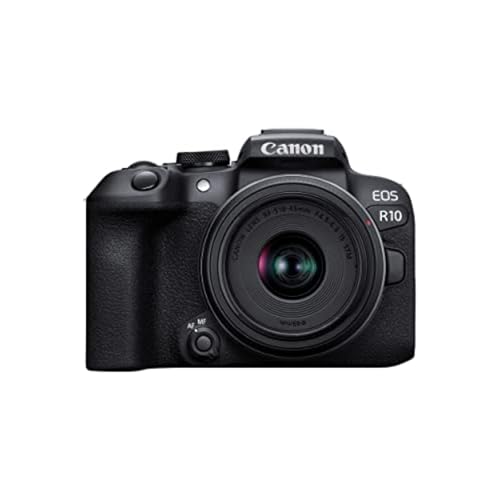
Canon EOS R10 — Best all-round starter
Ask what a first serious camera should feel like after six months, and the Canon EOS R10 is the answer this guide keeps returning to. It is built around a 24-megapixel APS-C sensor and autofocus inherited from Canon’s professional line — the kind that finds a child’s eye across a playground, holds a dog at full sprint, and makes the keeper rate of a family holiday climb in a way beginners feel immediately. That confidence matters more than any other specification at this level, because it teaches the new photographer to blame light and timing, never the tool.
The R10’s second virtue is that it does not condescend. It has a proper electronic viewfinder for bright days, twin control dials that reward learning manual exposure, and a burst rate fast enough for school sports and wildlife dabbling. Paired with its kit zoom it sits comfortably inside the ceiling, and Canon’s RF-S lens line plus the wider RF catalogue give it a growth path that runs from an affordable fast prime to serious telephotos without changing bodies. The honest compromises are a modest battery — budget for the spare — and the absence of in-body stabilisation, which the kit lens’s own stabilisation mostly covers. For the buyer who wants one camera to learn on for years, this is the centre of the shortlist.
- Sensor: 24MP APS-C with fast readout for action
- Autofocus: subject detection for people, animals and vehicles
- Controls: viewfinder, twin dials, fully articulating touchscreen
- Video: oversampled 4K with a microphone input
Strengths
- Autofocus that rescues beginners’ keeper rates from day one
- Controls that grow with you instead of being outgrown
- Canon’s colour and menus remain the friendliest to learn
Trade-offs
- No in-body stabilisation; lean on stabilised lenses
- Battery life is the weakest of the mirrorless picks here
- RF-S native lens range is still filling out
Best for: the ambitious beginner who wants one camera for family, travel and sport. Not suited for: video specialists who need the creator-focused tools of the Sony below.

Nikon Z50 II — Best handling in class
Pick up the Nikon Z50 II after handling its rivals and the difference is immediate: the grip is deeper, the body feels machined rather than moulded, and the buttons fall where fingers expect them. Nikon built this second-generation body for people who found the first one charming but cramped, and the result is the most grown-up-feeling camera in this guide. Its 20-megapixel-class APS-C sensor will start arguments in forums — rivals offer more pixels — but in prints and on screens the files are rich, and Nikon’s colour science, particularly for skin and for green landscapes, has a depth that owners defend fiercely.
Where the Z50 II quietly outclasses the field is its screen and viewfinder brightness, which stay readable on a beach at noon, and an autofocus system that now includes the subject-detection modes modern buyers expect. For the family photographer who also shoots the school play from row twelve, the combination of confident tracking and a bright display is worth more than a spec-sheet duel. Nikon’s Z-mount lens range at the affordable end is smaller than Sony’s but well chosen, and the kit zooms are genuinely sharp. Choose this one if your hands are larger, your light is brighter, or you simply prefer the way Nikon thinks about a camera.
- Sensor: APS-C, tuned for colour depth over pixel count
- Handling: deep grip, bright viewfinder and screen
- Autofocus: modern subject detection across photo and video
- Mount: Nikon Z, with quality affordable zooms
Strengths
- Best grip and control feel in this price class
- Displays that stay usable in hard sunlight
- Nikon colour that flatters people and landscapes alike
Trade-offs
- Fewer megapixels than the Canon and Sony rivals
- Affordable native lens range is narrower than Sony’s
- No in-body stabilisation at this tier
Best for: buyers with larger hands who shoot outdoors in bright light. Not suited for: pixel-counters who crop heavily from every frame.

Sony ZV-E10 II — Best for video creators
The Sony ZV-E10 II was designed by people who watched a generation of creators tape over their cameras’ shortcomings, and decided to fix them in the brief. There is a dedicated product-showcase mode for holding objects up to the lens, a background-defocus switch for instant subject separation, a tally light so you know you are recording, and autofocus with the sticky, confident face and eye tracking that Sony’s years of development bought. Its 26-megapixel APS-C sensor records 4K video that embarrasses cameras costing far more, and stills shooters are not abandoned — the stills quality is thoroughly modern.
The strategic argument for the Sony is the mount. E-mount has the deepest affordable lens catalogue in mirrorless, including a swarm of third-party primes and zooms that keep a growing creator’s costs sane for years. Buy the ZV-E10 II inside this budget and the second lens — the fast prime that transforms indoor video — is a modest, planned purchase rather than a crisis. The compromises are real: no electronic viewfinder, which stills purists will miss on bright days, and a body whose video-first layout takes photographers a week to forgive. But if the camera’s main stage is a desk, a kitchen counter or a travel vlog, nothing else under the ceiling is this purpose-built.
- Sensor: 26MP APS-C, strong stills and 4K video
- Creator tools: product showcase, defocus switch, tally light
- Autofocus: class-leading face and eye tracking
- Mount: Sony E, the deepest affordable lens range
Strengths
- Purpose-built creator features that genuinely save setup time
- Autofocus you can trust while presenting to camera
- The best long-term lens economics in this guide
Trade-offs
- No viewfinder — bright-day stills mean squinting at a screen
- Video-first ergonomics take photographers time to accept
- Rolling shutter asks for smooth, deliberate pans
Best for: YouTubers, streamers and sellers who film themselves and their products. Not suited for: viewfinder traditionalists who shoot stills in hard sun.

Canon EOS R50 — Best first camera
Every family has a person who became the photographer by accident, and the Canon EOS R50 is built for the moment they decide to get serious without getting solemn. It shares much of its DNA with the R10 above — the same sensor family, the same excellent autofocus philosophy, Canon’s welcoming menus and colour — wrapped in a smaller, lighter, simpler body that a teenager or a grandparent can be producing good pictures with inside an afternoon. The guided interfaces explain rather than merely set, which makes the R50 a teacher as much as a tool.
Choosing between the R50 and the R10 is the happiest dilemma in this guide. The R50 gives up some speed, some controls and a little robustness; it keeps the image quality and the autofocus intelligence that matter most, and it leaves the largest possible slice of the ceiling for the lens fund. For a buyer whose subjects are children, holidays and the dog — rather than birds in flight — that trade is usually correct. Its video is clean, its microphone input welcomes a first creator, and its size means it goes in the day bag without negotiation. This is the pick we hand to people who say they are “not really a camera person,” because by the second holiday, they are.
- Sensor: 24MP APS-C, shared lineage with the R10
- Design: the smallest, lightest Canon mirrorless here
- Guidance: beginner-friendly creative assist modes
- Video: clean 4K and a microphone input for creators
Strengths
- The gentlest learning curve of any interchangeable-lens pick
- Leaves the most room in the budget for lenses
- Size that guarantees it gets carried
Trade-offs
- Slower bursts and fewer dials than the R10
- Small body can feel tight with larger telephoto lenses
- Battery is modest; the spare is essential
Best for: first-time buyers, families and travellers who value lightness. Not suited for: fast-action specialists who need the R10’s speed and controls.

Sony RX100 VII — Best pocket camera
The Sony RX100 VII is the answer to a question the other five picks cannot hear: what if I never, ever want to change a lens? Inside a body that genuinely fits a jacket pocket sits a 24–200mm-equivalent zoom — wide enough for interiors, long enough for the stage at a school concert — a pop-up viewfinder, a tilting screen, and autofocus with the same eye-tracking intelligence as Sony’s big cameras. It is a complete photographic instrument that asks nothing of its owner but to be carried, and it is carried, daily, by people whose mirrorless cameras stay home.
Its case within this budget is about honesty of use. A parent at a zoo, a traveller in a city where a big camera draws the wrong attention, a grandparent who wants real quality without a system to manage — the RX100 VII serves all of them better than an interchangeable-lens camera they would leave behind. The one-inch sensor is smaller than the APS-C chips elsewhere here, and in dim light that shows: high-ISO files are good rather than great, and backgrounds blur less willingly. The price also buys no upgrade path — this is the whole camera, forever. For the right owner that is not a limitation but a relief, and the photographs it makes, precisely because it is always present, often beat the ones the bigger cameras missed.
- Sensor: 1-inch stacked, fast readout for bursts
- Lens: built-in 24–200mm-equivalent zoom
- Design: pocketable, pop-up viewfinder, tilting screen
- Autofocus: real-time eye tracking for people and animals
Strengths
- A complete camera that is always with you
- Zoom range the kit lenses here cannot match
- Autofocus intelligence far beyond typical compacts
Trade-offs
- Smaller sensor trails APS-C in low light
- No lens upgrades — the system is closed by design
- Small controls and modest battery suit deliberate shooting
Best for: travellers, parents and minimalists who refuse lens-swapping. Not suited for: anyone who dreams of building a lens collection over time.

Nikon Z30 — Best for vloggers on a budget
The Nikon Z30 makes a virtue of omission. Nikon left off the viewfinder entirely — a decision that scandalised traditionalists and delighted its actual audience, who compose on screens anyway — and spent the savings on the things vloggers touch: a fully articulating display, a tally light, clean 4K video, dependable face-tracking autofocus and a grip sized for holding the camera at arm’s length without drama. It is the smallest body in Nikon’s Z line and the one most likely to be found mounted above a desk or carried through an airport on a mini tripod.
Within this guide’s ceiling the Z30 has a strategic charm: it is typically the least expensive route into a modern mirrorless system, which means the largest remaining fund for the lens that will define your look — and Nikon’s compact Z primes are lovely things. Stills photographers should note the missing viewfinder before falling for the size, and the sensor, while capable, is the oldest design here. But for the creator whose camera lives on a desk and travels in a sling bag, the Z30’s priorities are correctly ordered, and its simplicity means the first hundred videos get made instead of postponed. In content, as in photography, the finished thing beats the perfect thing.
- Sensor: APS-C, proven stills and video quality
- Design: no viewfinder — screen-first, vlog-shaped
- Video: 4K with articulating screen and tally light
- Mount: Nikon Z, shared with the Z50 II above
Strengths
- The most affordable entry into a current mirrorless system here
- Vlogging ergonomics done properly, not as an afterthought
- Leaves maximum budget for a defining prime lens
Trade-offs
- No viewfinder at all — a deal-breaker for some stills shooters
- Sensor design is the oldest in this line-up
- Not the tool for fast action or sports
Best for: vloggers and desk creators who want system quality at minimum entry cost. Not suited for: viewfinder shooters or action photographers.
How Do the Six Compare Side by Side?
| Camera | Type | Strongest suit | Watch out for |
|---|---|---|---|
| Canon EOS R10 | Mirrorless, viewfinder | All-round ability and speed | Battery life |
| Nikon Z50 II | Mirrorless, viewfinder | Handling and bright displays | Pixel count |
| Sony ZV-E10 II | Mirrorless, screen-first | Creator video tools | No viewfinder |
| Canon EOS R50 | Mirrorless, viewfinder | Beginner kindness | Fewer controls |
| Sony RX100 VII | Fixed-lens compact | Pocketability and zoom range | Closed system |
| Nikon Z30 | Mirrorless, screen-first | Vlogging value | No viewfinder |
The pattern in the table is the real lesson of this price class: you are not choosing quality, because all six deliver it. You are choosing a shape of photography — viewfinder or screen, system or sealed unit, stills-first or video-first. Decide that honestly and the correct row usually selects itself.
How Should You Split the Budget Between Body and Lens?
A useful rule for this ceiling is to think in thirds. Roughly the first and largest share buys the body with its kit zoom. The second share is reserved — not necessarily spent on day one — for the fast prime lens that will transform your indoor and evening photography within the first year. The final share covers the unglamorous essentials: the fast card, the spare battery, the bag, and the cleaning kit. Buyers who follow that split own a system that keeps improving; buyers who spend everything on a body own a ceiling they hit within months.
Timing matters too. The kit zoom teaches you your own habits — which focal lengths you live at, whether you shoot more faces or more places — and that evidence should choose the prime. A buyer who discovers they live at the wide end buys a wide prime; a portraitist buys the short telephoto. Six months of honest shooting is a better lens adviser than any review, including this one. And when a promotion knocks a body down a tier, bank the difference into the lens fund rather than upgrading the body on the spot: glass outlives bodies, and the lens you buy this year will still be earning its keep on the body you buy in five years’ time.
What Mistakes Do Buyers at This Budget Keep Making?
The champion mistake is maximising the body and minimising everything else — the flagship-chasing error in miniature. Close behind comes buying for a fantasy: the safari lens for a photographer whose real subject is a toddler, the pro video body for someone who will shoot birthdays. A third error is ignoring the second-hand trap in reverse — refusing a previous-generation bargain is fine, but refusing to check what your chosen mount’s lenses cost, new and used, is how budgets die in year two.
Two quieter mistakes deserve mention. Skipping the spare battery and fast card to save a little money guarantees the camera fails publicly at the school play, which is when households lose faith in it. And buying the camera the loudest forum voice recommends, rather than the one whose grip and menus your own hands liked in the shop, produces the most expensive outcome of all: a good camera, barely used, in a drawer.
How Do You Get Better Pictures in Your First Ninety Days?
Spend the first month in the camera’s most automatic intelligent mode without shame, and study what it chooses. Modern exposure and autofocus systems are excellent teachers: when the camera picks a fast shutter for your running child and a wide aperture for a portrait, it is showing you the craft’s basic grammar. In month two, move to aperture priority and take control of depth of field deliberately — the single creative control that most separates camera photographs from phone photographs. Keep the camera set to record both JPEG and raw, even if you never open the raw files yet; future you, with better editing skills, will be grateful for the archive.
Shoot something every week, and review your own work monthly with a ruthless eye: keep the best ten percent visible and ask what they share. It will usually be light and proximity, not settings. Get closer than feels polite, shoot at the day’s edges rather than its middle, and put the camera — whichever of these six you chose — in the bag you actually carry. Ninety days of that rhythm will improve your photography more than the difference between any two rows in our comparison table, which is precisely why this budget class is such a satisfying place to start.
How Do You Choose Between Canon, Nikon and Sony as a Long-Term System?
Buying into a mirrorless system is closer to choosing a neighbourhood than choosing a gadget: you will live with the lens range, the used market and the maker’s habits for years. Canon’s neighbourhood is the most welcoming at the door. Its menus remain the easiest to learn, its colour the most immediately flattering, and its RF-S starter lenses are sensibly priced — but some of its desirable glass carries premium tags, and third-party autofocus lenses for the mount have historically been limited, which matters to budget builders. Nikon’s neighbourhood is the craftsman’s: superb ergonomics, a reputation for durability, and colour with real depth, balanced against a smaller affordable native lens range that is growing steadily and a used market that rewards patience.
Sony’s neighbourhood is the bazaar: the largest selection of lenses at every price, fierce third-party competition that keeps costs down, and a second-hand market deep enough to furnish a whole kit — balanced against menus and handling that some photographers find clinical, and a model range so wide it can paralyse a chooser. There is no wrong answer among the three, and the cameras in this guide were picked so that each system is represented by a body worth owning. The practical test is tactile: hold the grip, run the menus, and notice which camera your hands understand in five minutes. Photographers keep systems they enjoy touching.
One more consideration belongs in this decision, and it is the household one. If a partner, parent or close friend already shoots one of these systems, sharing lenses and batteries is a genuine economic force — a borrowed telephoto for the school sports day is worth more than a spec-sheet advantage. Ask around before you buy; the best system is sometimes the one already in the family.
What About Buying Used or Choosing a Previous Generation?
The used market is the budget buyer’s silent partner, and at this ceiling it deserves a strategy rather than a shrug. Camera bodies depreciate quickly and are built to outlast their fashion cycle, so a previous-generation body in good condition can free a remarkable share of the budget for lenses — the part of the kit that holds its value and does the creative work. If you go this route, buy from a reputable dealer with a warranty, check the shutter count against the model’s rated life, and inspect the sensor and mount contacts in person or under a returns policy you trust.
Lenses are the safer used purchase of all. A well-kept prime lens has no shutter to wear and few electronics to fail, and the used shelves for all three mounts here are full of them. The discipline is to verify before you fall in love: check for fungus and haze by shining a light through the elements, work the focus and aperture rings, and mount the lens to confirm the camera recognises it. None of the six picks in this guide requires used-market heroics — each fits the ceiling new — but the buyer who combines a new body from this list with one carefully chosen used prime often ends up with the strongest kit of all.
What we would not do at this budget is chase a used professional body with a high shutter count and no warranty merely for the badge. The cameras above offer modern autofocus, current warranties and sensors that owe nothing to yesterday’s flagships for most real photography. Spend the romance on lenses and locations instead.
How Does Video Change the Calculation at This Budget?
Five years ago a stills buyer could ignore a camera’s video column entirely; at this ceiling, that is no longer true, because the same device is now expected to film the recital, the product demo and the holiday. Video changes the buying maths in three specific ways. First, it rewards the articulating screen and microphone input that several picks here include and the traditionalists’ favourites sometimes lack. Second, it punishes weak autofocus far more visibly than stills work — a hunting focus ruins a clip in a way a soft frame never ruins an album. Third, it adds hidden costs: faster cards, more storage, and eventually a microphone, all of which belong in the honest budget.
The good news is that this generation’s video quality at the price is startling. Oversampled 4K from the Canon and Sony picks holds up on a large television, and the creator-specific tools on the ZV-E10 II and Z30 — tally lights, product modes, defocus switches — remove friction that used to require accessories. If video is even a third of your intended use, weight those two picks and the R50 accordingly, and reserve part of the budget for a simple microphone before you reserve it for any lens: audiences forgive soft pictures far sooner than bad sound.
Stills-first buyers lose nothing by this shift. The same autofocus and sensor advances that serve video serve the school play and the family dog, and the hybrid bodies above are all thoroughly competent stills cameras. The only true specialists in this guide are at the edges — the RX100 VII optimised for presence, the Z30 for the desk — and both still take a fine photograph when asked.
How Do You Test a Camera Properly Before the Money Is Spent?
A shop test is worth more than another evening of reviews, provided you test the right things. Ignore the wall of resolution charts and test the interactions you will repeat ten thousand times. Raise the camera to your eye and change the aperture and shutter speed without lowering it; if your fingers cannot find the dials, that friction will tax every photograph you ever take with it. Focus on a face across the shop, then on a dark corner, then on something moving — a ceiling fan will do — and watch whether the camera hunts or simply arrives. Shoot a burst and listen to how the body feels at speed; shoot the shop’s brightest window against its darkest aisle to see how the screen and viewfinder present a hard exposure.
Then test the ownership details nobody films. Open the battery and card doors — you will do it in the cold and the dark — and check whether the card is one your computer can read without a dongle hunt. Run the menus to the three settings you will change most: ISO, white balance and drive mode, and time how lost you get. Hold the camera one-handed with the kit lens mounted, because that is how it will live at family events. Finally, weigh the whole thing in a bag on your shoulder for a full minute. The camera that wins this test, among bodies as capable as these six, is almost always the camera that gets used — and usage, not specification, is what this budget is really buying.
If buying online, replicate what you can: read the manual’s control diagram before ordering, confirm the returns window, and use the first week at home as your shop test, shooting deliberately in the conditions you actually face — your kitchen’s light, your children’s speed, your street at dusk — rather than photographing the box it came in.
Which Accessories Should You Deliberately Not Buy Yet?
Restraint is a photographic skill, and the accessory counter is where it is first tested. Defer the filter drawer: beyond a simple protective filter if you shoot around sand or children, most filters solve problems you have not met yet, and some — cheap polarisers especially — subtract quality while pretending to add it. Defer the giant bag; a bag sized for a future system will swallow the camera you own and discourage carrying it. Defer the tripod unless your subjects stand still in the dark — landscapes, products, interiors — in which case buy a good one once, following the advice in our landscape guide, rather than a wobbly one immediately.
Defer, above all, the second body and the prestige lens. The urge to complete a system arrives about a month after the first good photograph, and it is almost always premature: your kit zoom has not yet told you what you actually shoot, and money parked in the lens fund earns photographic interest while it waits. The exceptions to all this patience are boring and cheap — the spare battery, the fast card, the blower, the strap that does not saw at your neck. Buy the boring things immediately and the exciting things eventually, and a $1,500 ceiling will feel, within a year, like it bought a great deal more than $1,500 worth of photography.
There is a social corollary worth stating plainly. Other photographers will inspect your kit and find it wanting; forums specialise in this. The correct response is to ask to see their photographs from last month. Gear acquired in the right order, matched to real subjects, has a way of answering criticism all by itself.
How Does Your Phone Fit Into This Decision?
Every buyer at this ceiling already owns a capable camera: the phone in their pocket, whose computational tricks produce startling results in good light. A dedicated camera earns its money exactly where the phone’s tricks run out — in dim halls where the phone smears detail into watercolour, at the far end of a sports field where digital zoom dissolves, in the hands of a child learning that a photograph is something you make rather than something that happens to you, and in any situation where a real viewfinder, a real grip and a burst of full-quality frames matter. If your photography lives entirely in daylight and at arm’s length, be honest and keep the money; the six cameras here are for people who have felt the phone’s ceiling and bumped their heads on it.
The healthiest relationship between the two is division of labour. The phone keeps the spontaneous, the shared and the disposable; the camera takes the deliberate — the portraits that will be printed, the trips that deserve an album, the hobby that is becoming a craft. Owners who draw that line clearly use both devices more, and resent neither. And there is a developmental argument households underestimate: a teenager given a real camera with dials and a lens learns photography as a discipline of choices, in a way a phone’s automation never teaches. Several of the picks above — the R50 and Z30 especially — have launched exactly that education.
How Should a Household Share One Camera Without War?
A camera at this price often serves two photographers with different subjects, and a few agreements made early prevent most friction. Set the camera’s custom modes, where offered, as treaties: one dial position configured for one person’s subjects, another for the other’s, so nobody inherits a stranger’s settings at the decisive moment. Agree on the card discipline — nobody formats until the household archive confirms the download — and on the lens fund’s purpose, because the portrait prime and the telephoto cannot both be next.
Sharing also argues for certain picks in this guide. A body with a viewfinder and a screen serves both the traditionalist and the screen-native in one household; a sealed fixed-lens camera like the RX100 VII ends lens arguments by having no lenses. And when the second photographer in the house becomes serious, the shared-system logic from earlier applies in full: the second body should usually join the same mount, turning one kit into a household system whose lenses, batteries and chargers all interchange. Many two-photographer households began exactly here, with one sensible body under one sensible ceiling.
What Does the Second Year of Ownership Actually Look Like?
Year one is honeymoon and learning curve; year two is where a camera purchase proves itself, and it is worth imagining before you buy. By then the kit zoom’s habits are known, the prime lens has usually arrived, and the camera’s settings have been bent to their owner’s reflexes — this is when the difference between a body you can grow with and a body you merely bought becomes visible. The R10 and Z50 II owners are exploring manual exposure and borrowed telephotos. The ZV-E10 II owner’s channel has a look, built on one good prime and a microphone. The RX100 VII owner has simply been everywhere, camera in pocket, and has the album to prove it.
Year two is also when maintenance becomes real. Sensor dust announces itself in blue skies at small apertures, and learning to use a blower — and knowing when a professional clean is worth it — belongs to the owner’s education. Firmware updates arrive and are worth installing; manufacturers genuinely improve autofocus and add features to this class of camera after launch, and the owner who updates owns a slightly better camera than the one reviewed. Batteries age; the spare you bought early becomes the main, and a fresh cell joins the kit. None of this is burdensome, but all of it favours the buyer who chose a living system with an active maker behind it — which is every pick in this guide.
And year two is when the upgrade question first knocks, usually disguised as a lens. That is the healthy form of the itch: a lens bought for a subject you demonstrably shoot, on a mount you demonstrably like. The unhealthy form — a new body because a newer one exists — can be answered with a question: which photograph did the current camera fail to take? If the honest answer is none, the lens fund wins again, and the ceiling you respected in year one keeps paying its quiet dividends.
How Do You Protect the Purchase Once It Is Home?
A camera is one of the most stolen, dropped and rained-on objects a household owns, and a little administration protects it. Register the warranty while the receipt is still findable, and photograph the serial number into the same archive as your pictures. Check whether your home contents insurance covers items away from home, and what its single-item limit is — at this ceiling many policies do, but the time to learn the terms is before the beach trip, not after it. A discreet bag that does not advertise its contents is a security feature as much as a carrying one, particularly in cities.
Physically, the habits are simple. The strap goes around a wrist or neck whenever the camera is out of the bag, no exceptions for “just one shot.” Lens changes happen seated or sheltered when they can, with the body opening facing down. The camera sleeps in a dry place, not a damp car boot, and a sachet of silica gel in the bag earns its tiny keep in humid climates. Owners who build these reflexes in month one rarely feature in the sad genre of the dropped-camera story — and their cameras, like the photographs they were bought to make, tend to have long lives.
Why Do Bundle Listings Deserve a Careful Second Look?
At this ceiling you will meet two kinds of bundle, and they are not the same species. The manufacturer’s kit — body plus the maker’s own starter zoom in one box — is usually the best value in the entire listing, because the lens is discounted as part of the set. The retailer’s mega-bundle, by contrast, pads the box with a flimsy tripod, a slow card, a bag you would not carry and filters you were advised above to defer; its headline saving is arithmetic performed on accessories of little worth. Price the body-and-kit-lens combination first, add the few essentials you genuinely need, and let that honest total — not the padded one — be compared against the ceiling.
Final Recommendation
For most buyers, the Canon EOS R10 is the safest centre of this budget: fast, friendly and built to be grown with. Hands that prefer a deeper grip and brighter screens should take the Nikon Z50 II. Creators should start at the Sony ZV-E10 II and only look elsewhere if a viewfinder is non-negotiable; beginners who want the gentlest possible start should take the Canon EOS R50 and spend the saving on a prime lens. The Sony RX100 VII remains the connoisseur’s shortcut — no system, no fuss, always present — and the Nikon Z30 is the vlogger’s value play. Whichever row you choose, keep the thirds rule, buy the spare battery, and let the lens fund do its slow, compounding work.
Related guides
- Best Cameras With Lenses Under 800: Six Complete Kits Costed as Whole Outfits
- Best Cameras Under 700 Dollars: 6 Picks Costed as Whole Kits, With One Labelled Step-Up
- Best Cameras for Video Marketing: Content That Earns Its Budget Back
Frequently Asked Questions
Should the $1,500 cover the lens as well as the body?
Yes — that is the honest way to use this budget. A body bought alone cannot take a photograph, and every pick here was chosen because its sensible starter configuration, kit lens included, respects the ceiling.
Is a kit lens worth using, or should I buy a prime immediately?
Use the kit lens first. It is better than its reputation, it covers the focal lengths beginners actually need, and the evidence it gathers about your habits should decide which prime you buy next.
Can cameras at this level really shoot professional-looking video?
Yes. The Sony ZV-E10 II and its rivals record clean 4K with autofocus that working creators rely on daily. Lighting and audio will limit your results long before the camera does.
How long will a camera in this class stay relevant?
Five to eight years is a realistic working life, and the lens system you buy into will outlast the body. That longevity is the core argument for choosing a mount with an affordable, growing lens range. It is also worth remembering that relevance is personal: a camera becomes obsolete for you when it stops taking the photographs you ask of it, and for most households that day arrives long after the marketing cycle has moved on.
Is the fixed-lens RX100 VII a waste of money compared with a system camera?
Only if you would actually use the system. For owners who carry it daily, its always-present advantage produces more good photographs than a superior camera left at home — which is the comparison that matters.
What is the first upgrade I should plan after buying?
A fast prime lens matched to the focal length your kit zoom taught you that you love, plus the spare battery you should have bought on day one. Everything else can wait for evidence. When the prime arrives, spend a month shooting with nothing else: the discipline of a fixed focal length will reorganise how you see — you will start noticing frames before you raise the camera, and your kit zoom, when it returns to the bag, will be used with a deliberateness it never had before. That month is the cheapest photography course in existence, and it is included in the price of the lens.
How should I divide this budget between the camera, a lens and the essentials?
Reserve a slice of the total before choosing any body, because a memory card, a spare battery and a bag you will actually carry are part of the purchase, not optional extras. Body-only headline prices hide that arithmetic, and a kit that bundles a starter zoom often leaves more room for those essentials than a bare body paired with a separate lens. Postpone the second lens until your early photographs reveal a genuine gap, such as portraits squeezed by a slow kit zoom or interiors cramped at its widest setting. Cleaning supplies, a comfortable strap and a card reader sound dull beside new glass, yet each one removes a small friction that otherwise discourages daily use. Renting a specialist lens for one wedding, trip or assignment usually beats owning glass that sits untouched for the remaining months. Track spending in a simple note on your phone, since small accessory purchases quietly erode the ceiling this guide treats as the whole budget.
Related Guides
Keep reading with best cameras for intro photographers for the learning path, best cameras for image quality when the upgrade itch arrives, and best affordable cameras for professional photography for the next tier up.


