kajuandouglas.com is reader-supported. When you buy through links on our site, we may earn an affiliate commission.
Where to Buy a Camera for Grandparents, Where the Photograph’s Job Is to Travel Across a Family
The best cameras for grandparents are not the best cameras; they are the best cameras for hands that may be less steady than they were, eyes that prefer big honest controls to clever tiny ones, and a photographic life centred on the people who matter most — grandchildren, gardens, old friends, the holiday table. A camera for a grandparent succeeds when it disappears: when the photograph happens because the moment did, not because a menu permitted it.
Buying for a grandparent — or as a grandparent — means unlearning the specification contest. The questions that matter are domestic ones. Can the buttons be found by feel? Does the screen read clearly in garden sunlight? Will the camera forgive being left on automatic forever, and produce warm, flattering pictures of faces anyway? Can the photographs reach the family without a degree in file management — printed, shared, or simply shown on the back of the camera over tea?
Where to buy: each linked name below leads to that camera’s Amazon listing, and gift buyers should think past the camera itself — the case that makes it grippable, the spare battery that removes a whole category of worry, the memory card already inside so the box opens ready. A camera that arrives needing accessories and setup is a project; a camera that arrives ready is a present.
The six below span the honest range of grandparent photography: two instant cameras that print the photograph into the room where it was taken, a bright compact built for faces and video calls with family, a pocketable travel companion, and two gentle mirrorless bodies for the grandparent who photographed seriously for decades and wants a real camera again — lighter this time, kinder this time, but real.
One principle governs the whole list: no camera here requires a smartphone to be a camera. Apps may add conveniences, and several picks offer them, but every one of these six takes its photographs, shows them, and keeps them with the phone in another room. Independence is the feature grandparents ask for most and specification sheets mention least.
Key Takeaways
The family shortlist, in large print:
- Ease is the specification: big controls, honest automatic modes, screens that read in sunlight.
- The Fujifilm Instax Mini 12 leads for pure joy — the photograph prints in the room and stays on the fridge.
- Every pick works fully without a smartphone; apps are extras, never requirements.
- For grandparents who photographed seriously, a light mirrorless body respects the skill and spares the shoulders.
- Buy the kit complete — case, card, spare battery — so the box opens as a camera, not a project.
In this guide
Quick Picks
Six cameras for grandparents, cast by the kind of photographic life each one serves.
| Camera | Badge | Why it earns its place here |
|---|---|---|
| Fujifilm Instax Mini 12 | Best for Instant Joy | Point, shoot, and hand over a real print before the kettle boils. |
| Canon PowerShot G7 X Mark III | Best All-Round Compact | Warm faces, simple manners, and video for the family’s far-flung members. |
| Sony ZV-1F | Best for Video Calls and Clips | A wide, friendly video camera for messages to grandchildren abroad. |
| Polaroid Go Generation 2 | Best Tiny Keepsake Maker | The smallest instant camera — prints the size of a playing card, made for pockets and handbags. |
| Canon EOS R50 | Best for Returning Photographers | A real camera with training wheels it never patronises — light, clear, and capable. |
| Nikon Z30 | Best for Video-Minded Grandparents | Comfortable grip, clear video manners, and room to grow into a hobby again. |
How Did We Choose the Best Cameras for Grandparents?
We began with the hands and the eyes. Controls were judged by whether they can be found and operated without hunting — real dials and buttons over touchscreen archaeology — and screens by whether they stay legible in the garden, at the school gate, in the bright rooms where family life happens. Any camera whose essential functions hide behind a phone app was cut, whatever its other virtues.
Second, forgiveness. Grandparent cameras live on automatic, get pointed at backlit grandchildren, and are asked for the photograph now, not after a settings review. We weighted face detection that simply works, colour that flatters skin across generations, and stabilisation that quietly compensates for a less steady hand without ever announcing the compensation.
Third, the photograph’s journey home: prints from instant cameras, easy transfer for those who want it, files that behave in ordinary computers and high-street printing kiosks. A beautiful photograph trapped inside a camera is a letter never posted, and this list was built to get the letters delivered.
What Does a Grandparent Actually Photograph, Week to Week?
Faces, mostly — and the list is honest about it. The grandchild’s visit, the birthday table, the old friends at the reunion lunch, the great-grandchild asleep in the exact light the camera must not disturb. Face photography at family distances is a specific craft: quick focus, kind colour, no flash fired like an interrogation lamp. The compacts here were chosen as face specialists first and everything else second.
Then the near world: the garden in its seasons, the dog, the birds at the feeder, the holiday town, the cruise deck, the village show. These subjects ask for a modest zoom and a camera small enough to be present — which is why the list favours pocketable bodies over impressive ones. The best grandparent camera is the one in the coat when the heron lands, not the masterpiece at home in its bag.
And increasingly, messages: short video clips for family far away, the garden tour narrated for a daughter overseas, the new grandchild’s namesake rose filmed for the group chat. Two picks here are video natives, included because for many grandparents the camera’s most-used function is no longer the photograph at all — it is the visit, posted.
Why Do Instant Cameras Deserve Two Places on This List?
Because they solve the grandparent camera’s oldest problem: the photograph that never becomes a thing. An instant print is finished the moment it develops — handed to the grandchild, stuck on the fridge, posted to a sister, kept in the handbag to show at the hairdresser’s. No transfer, no printing queue, no password. For a generation that grew up with photographs as objects, the instant camera is not a novelty; it is a homecoming.
The two here serve different hands. The Instax Mini 12 is the fuller-sized, easier-gripped classic with automatic exposure that simply works and prints of a generous, wallet-friendly size. The Polaroid Go is the miniature — the handbag camera, the one that travels to every lunch — making smaller prints with an old soul’s colour. Both ask only that their owner point, press, and enjoy the small ceremony of the picture arriving.
Their limits are shared and should be stated plainly: film is a continuing cost, the prints are small, and low light flatters nobody. Grandparents who want big prints and albums should look at the digital picks. But for joy per photograph — measured in prints actually handed over — nothing digital on this page competes.
Which Cameras Treat Grandparents Like Photographers? The Six Picks in Detail

Fujifilm Instax Mini 12 — Best for Instant Joy
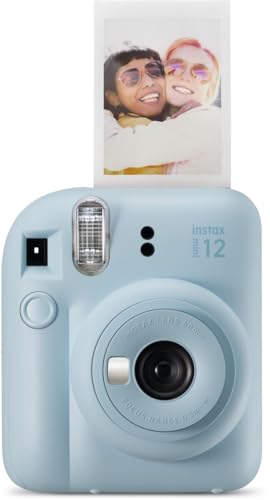
The Instax Mini 12 understands its job completely: be the camera that turns a visit into a keepsake before the visit ends. Its exposure is automatic in the honest sense — the camera measures, the owner composes, the print emerges — and its controls amount to a lens you twist to switch on and a button you press. Grandparents who have been defeated by digital menus describe this camera with relief that borders on affection.
The prints are the point and the pleasure: credit-card-sized photographs with bright, kind colour that develop in the hand while the grandchild watches, which is itself half the entertainment. A pack of prints from one afternoon becomes the fridge’s new exhibition, the thank-you letter’s enclosure, the thing shown to neighbours — photography returned to its social function.
As a gift it is unmatched on this list: it works the moment the box opens, needs no setup visit from a technically deputised relative, and its failures are gentle — a print too bright, a moment slightly missed, nothing that requires a helpline. Birthdays and holidays where the family is gathered are its native habitat, and it is the rare camera that entertains the room it photographs.
The running cost is film, bought in multi-packs and budgeted like the good coffee — a known, modest extravagance rather than a surprise. Dim rooms stretch its flash’s kindness, and its prints will never be enlargements. Judge it as what it is: the most joyful camera on this page, and for many grandparents, the most used.
- Type: instant film camera
- Signature: prints in the hand, in minutes
- Controls: twist on, press, enjoy
- Exposure: fully automatic, forgiving
- Family role: the visit’s keepsake maker
Strengths
- Photographs become objects instantly.
- No menus, no phone, no setup.
- Entertains the room it photographs.
Trade-offs
- Film is a continuing cost.
- Prints are keepsake-sized only.
- Dim rooms test its flash.
Best for: family gatherings, fridge galleries, gift-giving.
Not suited for: albums, enlargements, or low-light subtlety.

Canon PowerShot G7 X Mark III — Best All-Round Compact
The G7 X Mark III is the digital compact for the grandparent who wants one camera that does everything respectably and asks little: birthdays, holidays, the garden, the school play from row nine. Its lens is bright — the quiet superpower of indoor family photography — its face detection simply finds the grandchildren, and its colour renders skin the way family albums want it remembered.
Its screen tilts, which grandparents discover is a kindness at both ends of life: held high over the crowd at the fete, or angled for the photograph of the cake without kneeling. Video is a genuine strength rather than a bullet point — the school concert clip, the birthday song — and the camera’s streaming-friendly manners serve the family video call’s better-dressed cousin, the recorded message.
Day to day, it lives in a coat pocket or handbag, charges without ceremony, and its photographs transfer as painlessly as this generation of cameras manages — or stay on the card for the high-street printer, a workflow many grandparents rightly trust more than the cloud.
Its controls are a compact’s — smaller than a keen photographer’s ideal, and its battery asks for a spare on holiday days. But as the single camera a grandparent actually carries, its balance of size, kindness, and quality is the list’s most persuasive, which is why it is the default recommendation when the family asks which one to buy.
- Type: premium compact, bright lens
- Signature: faces indoors, without fuss
- Screen: tilts for high and low angles
- Video: concerts, messages, occasions
- Family role: the one-camera answer
Strengths
- Bright lens flatters indoor family life.
- Face focus simply works.
- Pocket size means present size.
Trade-offs
- Small controls for arthritic hands.
- Spare battery earns its place.
- No viewfinder for bright glare.
Best for: most grandparents, most occasions, one-camera lives.
Not suited for: serious hobby photography or big-handed grips.

Sony ZV-1F — Best for Video Calls and Clips
The ZV-1F was designed for people who talk to cameras, and a great many grandparents now do: the weekly message to grandchildren overseas, the garden tour for the family chat, the reading of a bedtime story at a distance of three time zones. Its wide lens frames a face and a room generously from arm’s length, its autofocus keeps eyes sharp while the story is told, and its whole manner says that video is not the camera’s second language but its first.
Stills are competent rather than the headline — birthdays and outings are handled kindly — but the purchase logic runs the other way: this is the camera for the grandparent whose photographic life has become correspondence. Set on a small tripod by the good window, it turns a kitchen into a studio with no crew, no lights, and no grandchild on tech support.
Its fixed wide lens is both the simplicity and the boundary: no zooming into the school play, no compressing the garden’s far corner. Within its arm’s-length world it is nearly perfect, and its price of admission in learning is the lowest of the digital picks — the record button is where a lifetime of camcorders taught its owner to expect it.
Buy it for the correspondent grandparent, the storyteller, the one whose visits now travel. Pair it with the small tripod and the good window, and the family’s archive of grandparents — their voices, their kitchens, their laughter mid-sentence — becomes the treasure this camera quietly exists to build.
- Type: video-first compact, wide lens
- Signature: talking to family, beautifully
- Focus: eyes held during stories
- Setup: tripod, window, record
- Family role: the correspondence camera
Strengths
- Video messages look and sound warm.
- Wide frame forgives positioning.
- Learning curve is nearly flat.
Trade-offs
- No zoom for distant stages.
- Stills are the supporting act.
- Fixed lens frames what arms allow.
Best for: far-flung families, storytellers, video diarists.
Not suited for: school plays from row nine or zoom-led outings.

Polaroid Go Generation 2 — Best Tiny Keepsake Maker
The Polaroid Go is the instant idea distilled to handbag size: the smallest camera on this list, making the smallest prints, and somehow generating a disproportionate share of the smiles. It lives where the Instax might be left behind — the coat pocket, the small handbag, the glovebox — and presence, as this guide keeps insisting, is the first photographic virtue at any age.
Its prints are miniatures with an heirloom’s colour character: soft, warm, unmistakably Polaroid. Grandchildren collect them; grandparents keep one in the purse as other generations kept a photograph in a locket. The camera’s double-exposure playfulness and simple manners make it the one younger relatives borrow, which in a family is a form of five-star review.
It asks the same film discipline as its Instax cousin, in smaller packs for smaller prints, and its tiny frame asks for a steady two-handed hold that most owners find charming rather than limiting. Bright days are its element; parties indoors lean on its flash and its forgiving nature.
Choose it for the grandparent whose camera must be carried to be used, or as the second instant camera in a family where the Instax anchors home. It is a keepsake machine with a toy’s size and a tool’s reliability, and its prints will be found in drawers, decades from now, still doing their job.
- Type: miniature instant camera
- Signature: smallest prints, biggest smiles
- Carry: handbag, coat pocket, glovebox
- Colour: warm, unmistakably Polaroid
- Family role: the always-along keepsake maker
Strengths
- Small enough to be present always.
- Prints grandchildren collect.
- Simple manners, playful extras.
Trade-offs
- Prints are true miniatures.
- Film packs are its own format.
- Two hands for a steady frame.
Best for: outings, handbags, keepsake collectors.
Not suited for: anyone wanting prints to frame large.

Canon EOS R50 — Best for Returning Photographers
Some grandparents photographed seriously for forty years — film, darkrooms, the whole liturgy — and retired the heavy kit when the shoulders filed their complaint. The R50 is this list’s respect for that history: a genuine interchangeable-lens camera, light enough to carry all day, whose guided interface teaches its own modern tricks without patronising the person who once loaded film in a changing bag.
Its autofocus is the revelation for returning photographers: faces and eyes found and held with a reliability that feels like the future arriving politely. The kit lens covers the family’s range; a small prime, added when the hobby rekindles, restores the low-light portraiture of the old craft at a fraction of the old weight. The photographs are properly good — album good, enlargement good, camera-club good.
It also serves the family’s technical peace: the files behave everywhere, the video covers the occasions, and the same body can be the grandparent’s serious camera and the one handed, on its guided settings, to anyone at the table.
The honest costs are a system’s: lenses tempt, menus reward a weekend’s learning, and the body asks for a bag rather than a pocket. For the grandparent who wants photography back as a pursuit — the club, the competition, the printed album — those are not costs but the hobby itself, returning at a carryable weight.
- Type: light mirrorless system
- Signature: real craft, modern kindness
- Focus: eyes held like the future
- Growth: lenses as the hobby returns
- Family role: the photographer’s camera, lightened
Strengths
- Honours a lifetime’s skill.
- Light enough for all-day carrying.
- Files worthy of the camera club.
Trade-offs
- Menus reward a learning weekend.
- A bag replaces the pocket.
- Lens temptation is real.
Best for: returning photographers, camera clubs, album makers.
Not suited for: buyers wanting zero learning curve.

Nikon Z30 — Best for Video-Minded Grandparents
The Z30 is the mirrorless answer for the grandparent whose camera life leans toward moving pictures: the travelogue narrated for the family, the recipe filmed for a granddaughter’s first kitchen, the railway society’s outing documented properly. It has no viewfinder — a deliberate lightness — and instead offers a clear, tilting screen, a grip that arthritic hands have praised for simply fitting, and video manners that stay simple at exactly the moments other cameras offer a seminar.
Its stills are a full mirrorless camera’s stills, which is to say far beyond its video-first billing: family occasions, gardens, and holidays all come home in files that print beautifully. The lens system gives it the same growth path as the Canon — start with the kit, add what the renewed hobby asks for — and its build quality feels like an instrument rather than an appliance, a distinction its intended owners notice and value.
Recording stamina and an honest microphone path suit the long-form family archive: the christening filmed whole, the anniversary speeches, the grandfather’s workshop tour that the family will watch for decades. These are the Z30’s native commissions, and it executes them without drama.
Bright midday sun can make any screen-only camera a squint, and the missing viewfinder is a real preference question for photographers raised on one. For the screen-comfortable, video-leaning grandparent, it is the list’s most grown-up small camera — a hobby and a correspondence tool in one grip-friendly body.
- Type: video-leaning mirrorless
- Signature: grip, screen, simple video
- Stills: full mirrorless quality
- Stamina: speeches and ceremonies whole
- Family role: the family archivist’s camera
Strengths
- Grip suits hands that ache.
- Video stays simple under pressure.
- System grows with the hobby.
Trade-offs
- No viewfinder for bright glare.
- Screen-only framing is a taste.
- Kit is a bag, not a pocket.
Best for: family archivists, travelogues, recipe films.
Not suited for: viewfinder loyalists or pocket-only carriers.
How Do the Six Compare at a Glance?
Grandparent cameras divide by the photograph’s destination — the fridge, the album, or the family chat — so the table casts each pick accordingly.
| Camera | Form | Decisive edge | What you give up |
|---|---|---|---|
| Fujifilm Instax Mini 12 | Instant | Prints in the room | Enlargements |
| Canon PowerShot G7 X Mark III | Compact | All-round kindness | Big controls |
| Sony ZV-1F | Video compact | Family correspondence | Zoom |
| Polaroid Go Generation 2 | Mini instant | Always carried | Print size |
| Canon EOS R50 | Mirrorless | Serious craft, light | Pocketability |
| Nikon Z30 | Mirrorless | Video and grip | Viewfinder |
How Do You Set Up a Grandparent’s Camera So It Stays Set Up?
The setup visit is the gift’s second half, and it should be done by whoever in the family is patient, once, properly: date and time set, automatic mode chosen as the home position, face detection on, the screen brightness raised for garden light, and every clever feature that can misfire switched off or buried. Then the camera is closed, charged, and handed over — with the setup written on a card in the case, in handwriting, because systems fail and cards do not.
Simplify the physical kit with the same ruthlessness: one strap, fitted; one case, grippable; the spare battery in the case’s pocket; the card already in the camera and a second in the case. Every additional accessory is a future confusion, and the goal of the visit is a camera that behaves identically every time it is picked up — the definition of trustworthy equipment at any age.
Finally, take the first photographs together: the family, the dog, the garden, printed or transferred on the spot so the whole journey — press, see, share — is rehearsed while help is in the room. A camera whose first roll was a lesson is a camera that gets used; a camera left in its box with a manual is a well-meant paperweight.
What Are the Most Common Mistakes When Buying a Camera for a Grandparent?
The first is buying the buyer’s own taste: the enthusiast relative who gifts a magnificent, menu-deep camera that photographs wonderfully in the relative’s hands and never leaves the grandparent’s drawer. The second is the opposite insult — the toy-grade camera bought on the assumption that ease requires cheapness, whose dreadful indoor photographs quietly end the hobby they were meant to serve.
The third is forgetting the photograph’s destination: a superb camera whose pictures can only escape via an app the grandparent will never open. Ask, before buying, how the prints will happen — instant, high-street kiosk, a relative’s monthly visit with a laptop — and let the answer choose the camera, not the advertisement.
The fourth is neglecting the hands: arthritis, tremor, and eyesight are not edge cases in this purchase but its central specifications. Where possible, let the grandparent hold the candidates. The camera that fits the hand wins over the camera that wins the review, every time, because it is the one that will be at the birthday.
How Do Grandparents’ Photographs Get to the Family, Without a Tech Degree?
Instant prints solve it by teleportation’s older method: the photograph is physically handed over. For digital picks, the honest routes rank by simplicity. The memory card in a high-street printing kiosk remains undefeated for albums — big prints, no passwords, a human at the counter. The family visit transfer — a grandchild with a laptop, monthly, over tea — turns delivery into an occasion and doubles as the backup ritual.
Automatic routes exist for the willing: cameras that send photographs to a family member’s phone or a shared album when the camera comes home to its charger. Set up by the family, tested together, and written on the card in the case, these can be genuinely invisible — but they must be the garnish on a camera that works without them, never the only door out of the camera.
And the screen itself is a destination not to be underrated: half of grandparent photography is shown, not sent — the back of the camera passed around the table, the holiday reviewed over coffee. A bright, generous screen is a sharing feature, and several picks here were chosen partly for the quality of that small ceremony.
How Do You Photograph Grandchildren Well, at Any Age of Grandparent?
Get down to their height or accept the tops of heads as your archive’s theme. Kneeling is not always available, which is why tilting screens appear throughout this list: the camera goes low while the grandparent stays comfortable, and the photograph meets the child’s eyes instead of their hair parting. Face detection does the focusing; the grandparent’s job is the older craft — patience, and being interesting enough to be looked at.
Light kindly: the window’s side light over the flash’s headlamp, the garden’s shade over noon’s squint. Every camera here handles shade beautifully, and children photographed in soft light look like the family’s memory of them. Burst a little at the action — the swing, the candle-blowing — and choose later; grandparents have always been the family’s best editors, because they know which expression was the true one.
Print the results. The grandchild who is handed their own photograph — instant, or printed at the kiosk and posted — learns that they are worth photographing, and the grandparent becomes the family’s memory-keeper in the only currency that compounds. The camera is the tool; the print is the institution.
How Do You Photograph the Garden, the Dog, and the Birds at the Feeder?
The garden is the grandparent camera’s second studio, and it rewards the modest zoom and the patient hour. Flowers want shade or morning light — noon sun bleaches petals into white paper — and they want the camera close, where the compacts’ near focus turns a rose into a portrait. A kneeling cushion and a tilting screen between them have saved more garden photography than any lens ever made.
The dog is a portrait subject with a publicity agent’s energy: photograph at the dog’s eye level, focus on the nearest eye, and let the burst mode catch the expression between the dignified poses. The bird feeder is the opposite craft — a waiting game the Z30 and R50 play well with a longer lens setting, the camera rested, the grandparent in a chair with tea, which is less a compromise than the entire point of the exercise.
Keep a garden diary habit with the camera: the same rose bed on the first of each month, the feeder’s visitors through the seasons. Grandparents’ garden archives become family treasures out of all proportion to their effort, because nobody else was watching that garden, that carefully, for that long.
How Should a Grandparent’s Photographs Be Kept, Backed Up, and Handed Down?
The archive question arrives sooner than families expect: a camera card holds a season, a computer holds a decade, and a shoebox of prints holds a century. The robust system is boring and triple: prints of the best, made while the making is easy; the files copied to two places, one of them in another house; and the instant prints and albums labelled in pencil with names and dates, because a photograph of unidentified relatives is a puzzle bequeathed, not a memory.
Let the family’s technically confident member own the routine, kindly and on a schedule — the monthly visit that transfers, prints, and backs up — rather than leaving the grandparent a system to maintain. The grandparent’s job is the photographs; the family’s job is the plumbing, and confusing the two is how archives quietly stop at the year the camera changed.
Name files and folders by the family’s own geography — year, occasion, place — in words the next generation will search for. The archive’s value compounds with its findability, and the grandparent who kept the garden diary and the birthday sequence, labelled, has built the family’s most-consulted library.
What About Holidays, Cruises, and the Photographs of a Lifetime’s Travel?
Travel asks the grandparent camera to be two things in one bag: light enough for the excursion day and good enough for the places that will not be visited twice. The compact picks carry the first duty natively; the mirrorless pair earn their bag space when the trip is the photographic event — the safari’s edge, the northern lights’ cruise, the ancestral village — where files worthy of the journey justify a carried case.
Practicalities decide more travel photographs than quality does: batteries charged at the hotel’s one free socket, cards enough that deleting in the field is never necessary, and the camera insured and its serial number photographed at home. Ship and coach light is kind to bright lenses and unkind to flashes, which should stay off in museums, churches, and other people’s ceremonies — both for the rules and for the photographs, which are better without it.
And pace is a photographic decision: the grandparent who sits in the piazza with the camera ready, photographing the town as it passes, returns with the journey’s truest album. Travel photography at this tempo is not a lesser version of the young photographer’s sprint; it is the same craft with better chairs.
How Do You Help a Grandparent Learn a New Camera Without Taking Over?
Teach three things, not thirty: how to take the photograph, how to see it, and how to make it reach the family. Everything else — the modes, the menus, the cleverness — can arrive over months, asked for when wanted. A single afternoon that masters those three, with the grandparent’s own hands on the camera throughout, beats a weekend seminar that leaves the teacher fluent and the owner a spectator.
Write the cheat card together: five lines, big handwriting, the case’s pocket. Photograph the grandparent using the camera correctly and put that print in the case too — it sounds whimsical and works like a charm, because the card answers at midnight the question the visit answered at noon.
Then leave, and let the camera be theirs: resist re-setting it on visits, ask to see the photographs instead, and order the prints of the ones they love. Ownership is the curriculum. The grandparents who flourish with a new camera are the ones whose families treated the learning as a handover, not a support contract.
Why Does the Family Album Need a Grandparent Behind a Camera at All?
Because grandparents see the family from its longest vantage: they know which grandchild has their mother’s exact expression, which corner of the garden held a wedding photograph forty years ago, which friend at the lunch table will not be at next year’s. The photographs they take are annotated by that knowledge even before a caption is written, and no younger relative, however skilled, can substitute for the seeing.
They are also, often, the only photographers present at the family’s ordinary occasions — the Tuesday visit, the quiet birthday, the garden in October — where the professional is never hired and the parents are busy being in the picture. The grandparent’s camera is the archive of the unposed family, and the unposed family is the one the future will come looking for.
So the purchase matters beyond its price: it equips the family’s memory-keeper. Buy the camera that will be carried, set it up with love, and print what it makes — the returns arrive for decades, in albums opened by people not yet born.
How Do Video Messages and Calls Change What a Grandparent Needs?
The camera that lives by the good window, on its little tripod, has quietly become a member of many families: it carries the bedtime story to another continent, the birthday song to the grandchild at university, the show-and-tell of the new hearing aid, the garden, the dog. For grandparents whose families are scattered, this correspondence may outrank still photographs entirely within a year of the camera’s arrival, and the purchase should be honest about that possibility from the start.
The craft is domestic stagecraft: the window’s light on the face rather than behind it, the camera at eye height on its pile of books, the chair that does not squeak, the door closed against the television’s commentary. None of it requires talent — it requires one setup afternoon, ideally with the far-away grandchild on the call itself, directing the furniture like a film crew of one beloved person.
Recorded messages deserve the same setup as live calls, plus one mercy: they can be retaken. The grandparent who records the story twice and sends the warmer take has discovered editing’s oldest secret, and the family’s archive gains the version with the laugh in it. The ZV-1F and Z30 exist for this parish, and their owners’ families hold archives that families with only photographs quietly envy.
What Should the Family Do When the Camera Starts Gathering Dust?
Diagnose before replacing: a dusty camera usually indicts one fixable thing — a battery that died and was never replaced, a full card nobody emptied, a setting changed by accident that made every photograph blue. The monthly visit’s checklist catches all three, and most gathering-dust stories end at that visit with the camera back in service and the grandparent mildly annoyed that the fix was so small.
If the diagnosis is honest disinterest in this camera’s kind of photography, change the kind, not the grandparent: the digital owner who never prints may flourish with an instant camera; the instant owner whose grandchildren have grown may be ready for the compact and the album. Cameras pass within families like good coats; the R50 that overwhelms one grandparent is the making of another’s retirement.
And keep the photographs flowing regardless of which device survives: a grandparent who stops photographing because the camera frustrated them is a family’s archive losing its best correspondent. The family’s job — setup, plumbing, prints, patience — is the subscription that keeps the correspondent writing.
How Do You Photograph Old Friends, Reunions, and the Tables That Matter?
The reunion lunch is grandparent photography’s championship event: contemporaries who have known each other longer than most marriages, gathered in restaurant light that flatters nobody, wanting a photograph that does them justice. The craft is kindness with technique inside it — the window seat claimed early, the group arranged with the light on their faces rather than behind them, two frames taken because somebody always blinks, and the camera passed to the waiter for the one with the photographer in it.
Take the individual portraits too, while the table is gathered: friends photograph each other too rarely, and a grandparent with a camera at a reunion is performing a service the whole table will thank them for at the next one, when the prints come out of the handbag. The instant cameras turn this service into theatre — prints distributed before dessert — while the compacts bank the album versions.
Send the prints afterward, posted, in envelopes, like correspondence. The reunion photograph that arrives by post a week later extends the lunch into the month, and the grandparent who sends them becomes the circle’s archivist — a role with duties, certainly, and with the best seat at every table thereafter.
How Do You Keep a Camera Safe, Charged, and Found in a Busy House?
Grandparent cameras die domestic deaths: the drawer with the dead battery, the charger borrowed by a visiting teenager, the strap that was never fitted meeting the kitchen tiles. The counter-system is a home base — one basket or shelf corner where the camera, its charger, its case, and its cheat card live together, plugged in, visible, and boring. Equipment with a home gets used; equipment with a mystery gets replaced by a phone and a sigh.
Charging becomes a rhythm rather than an event when the base is by the kettle or the front door: camera home, battery topped, ready for the unscheduled grandchild. The spare battery lives in the case, and the case lives on the camera whenever it leaves the base — a chain of small habits that between them retire most of the ways a camera misses a moment.
Label everything with the owner’s name, unglamorously: cameras travel to lunches, clubs, and coach trips in identical black cases, and the labelled one comes home. Photograph the serial number, keep the receipt with the household papers, and the camera joins the list of things the house knows how to look after.
What Photographs Will the Family Ask This Camera for, in Ten Years?
Not the masterpieces — the ordinary evidence. The kitchen before the renovation, the dog as a puppy, the grandfather’s hands mending the bicycle, the garden’s lost tree in full leaf, the whole table at the last Christmas in the old house. Grandparents’ cameras accumulate this evidence by simply being present at ordinary life, which is why their archives, reviewed a decade on, routinely outrank the professional’s wedding album in family value.
The practical consequence is a gentle instruction to the present: photograph the ordinary on purpose. The room as it is, the friends as they are, the street before it changes — the camera in a grandparent’s hands is pointed at a world that is quietly leaving, and its owner knows the addresses. Encourage the diary habit, the monthly garden frame, the annual same-table photograph; series are the archive’s gold.
And print as you go, because the decade’s question assumes the photographs survive it. A modest monthly rhythm — the visit, the transfer, the handful of prints ordered while the tea brews — keeps the archive current without ever becoming an expedition, and it gives the grandparent the pleasure of the prints while the occasions are still warm enough to caption from memory alone. The grandparent who prints, labels, and files is not being old-fashioned; they are being the only person in the family whose archive policy has a hundred-year track record behind it.
How Do You Choose Between the Two Instant Cameras, Honestly?
Hold both, if a shop allows, because the decision lives in the hands: the Instax Mini 12 is a handful — grippable, stable, with prints the size of the photographs a wallet used to keep — while the Polaroid Go is a palmful, made for the bag that is already full. Grandparents with arthritic hands usually vote Instax within a minute; grandparents whose camera must vanish into a coat vote Go just as quickly, and both votes are correct.
The prints divide the same way: Instax colour is bright and literal, the family-album look; Polaroid colour is warm and reminiscent, the found-in-a-drawer look. Show the grandparent sample prints of the same faces in both, and let nostalgia arbitrate — it will, instantly, and it will be right, because the prints’ audience and their maker are the same person.
How Do You Make the First Month With a New Camera a Success?
Give the camera small, frequent commissions rather than saving it for occasions: the dog today, the garden on Friday, the friend at coffee on Tuesday. Frequency builds the muscle memory that occasions then spend, and a camera used ten times in its first month becomes furniture of the hand; a camera saved for the christening stays a stranger with a strap. The family can help by asking for photographs — the new rose, the finished jigsaw, the cat’s opinion of the new sofa — requests that flatter the photographer and exercise the camera in the same breath.
Final Recommendation
Take the Fujifilm Instax Mini 12 for instant joy, the Canon PowerShot G7 X Mark III as the all-round compact most grandparents will love, and the Polaroid Go Generation 2 for the handbag. Choose the Sony ZV-1F for the correspondent, the Canon EOS R50 for the returning photographer, and the Nikon Z30 for the family archivist who films.
Whichever camera is wrapped, wrap the whole kit — case, card, spare battery, and a setup visit with tea — and let the first photographs be taken together. A grandparent’s camera is not really an electronic device; it is a seat reserved at every family occasion, and the right one will be occupied for years.
Related guides
- Best Cameras for Video Email: Personal Messages That Get Watched
- Best Cameras for Indoor Photos: 6 Picks for Lamplight, Windows and Family Chaos
Frequently Asked Questions
What is the easiest camera for a grandparent who is not technical?
The Instax Mini 12, by a distance: twist it on, press the button, receive a photograph. Among digital cameras, the G7 X Mark III on its automatic settings asks the least while delivering the most. In both cases the family’s setup visit — date set, card in, battery charged — is what keeps easy easy.
Should I buy a camera with a viewfinder or a screen?
Ask the hands and eyes that will use it. Viewfinders help in bright sunlight and suit grandparents who photographed with them for decades; screens tilt for low angles, share the picture with the person beside you, and suit video. Several grandparents prefer whichever they already know — familiarity is a feature no laboratory measures.
How do prints happen from a digital camera, simply?
The memory card goes into a high-street printing kiosk or a home printer the family maintains; or a relative transfers the files on a visit and orders prints online. Instant cameras skip the question entirely. Choose the route first and the camera second, and the photographs will actually arrive.
Is a smartphone not simpler than any of these?
For some grandparents, genuinely yes — and they should keep it. But many prefer a device that is only a camera: bigger in the hand, innocent of notifications, with a button that takes a photograph and nothing else competing for the press. This list exists for them, and for the print that a phone photograph so rarely becomes.
What about shaky hands — can a camera help?
Yes: stabilisation, present across the digital picks here, quietly compensates for ordinary unsteadiness, and bright lenses allow faster shutter speeds that freeze both subject and shake. A wrist strap and a two-handed hold complete the system. Severe tremor favours the table-resting video picks and the instant cameras’ forgiving flash.
What if my grandparent’s eyesight makes screens difficult?
Favour the viewfinder picks and the largest screens, raise the display brightness and any text-size setting during the family setup visit, and lean on the cameras’ autofocus — modern face detection means the grandparent composes approximately and the camera finishes the job. Instant cameras bypass the question entirely: what you point at is what prints, and the print itself is the review screen, at reading distance, in real light.
Can one camera serve grandparents who travel a lot?
The G7 X Mark III is the travel answer — pocketable, bright-lensed, and equally at home on a cruise deck and a grandchild’s stage — while the Instax travels as the journey’s diary. Serious travelling photographers among grandparents should look at the R50, whose files do justice to the trips of a lifetime.
Related Guides
Family neighbours in this series: best cameras for beginners best cameras for family photos best instant cameras


