kajuandouglas.com is reader-supported. When you buy through links on our site, we may earn an affiliate commission.
Where to Buy a Camera for Indoor Photos, When Every Room Is a Lighting Problem
The best cameras for indoor photos are chosen in the worst-lit room of the house, because that is where indoor photography actually happens. Homes are lit for living, not for cameras: warm bulbs, mixed colours, bright windows in dark rooms, and subjects — children, grandparents, pets — who move at exactly the speed that defeats a phone. A camera that excels indoors is not a studio instrument; it is a forgiving witness to domestic light.
Where to buy: each linked name below leads to that camera’s Amazon listing, and the indoor order should pair the body with one bright prime lens if the budget allows only one accessory. Indoors, that fast lens is worth more than any other upgrade — it is the difference between photographing the evening and photographing a blur of it.
The six picks divide the house by temperament. Canon’s full-frame body runs the family archive; Sony’s answers the impossible window; Panasonic serves the home creator; Fujifilm composes the beautiful rooms; and two friendly APS-C bodies — one Canon, one Sony — serve the beginner and the desk-studio creator respectively. Every room in the house has a champion here.
One practical note before the list: turn off the flash in your mind. Modern indoor photography is available-light photography, and every pick here was chosen for a world where the pop-up flash stays down — sensitivities are usable, stabilisation is real, and autofocus works in the gloom where family life actually glows.
Read the picks by your own house, then: the chaotic family kitchen, the bright-windowed sitting room, the creator’s desk corner, the beautiful quiet room. Each of the six owns one of those territories outright, and the comparison table at the end will confirm what your floor plan already suspects.
Key Takeaways
The lamplight summary, for readers photographing a birthday this weekend:
- Indoor photography is available-light photography: usable high sensitivity and real stabilisation decide everything.
- The Canon EOS R6 Mark II runs the family archive — eye focus and colour built for lamplit rooms.
- The Sony Alpha 7 IV owns the impossible window, holding the garden and the face in one frame.
- One bright prime lens improves indoor photographs more than any other purchase.
- The Canon EOS R50 is the beginner’s answer; the Sony ZV-E10 II is the desk creator’s.
- Silence is an indoor feature — the sleeping baby and the reading grandmother reward a quiet shutter.
- Charge the battery on a rhythm and keep the camera out of its bag — indoor masterpieces do not wait for equipment to be fetched.
In this guide
Quick Picks
Six cameras assigned to the rooms of a house, from the chaotic kitchen to the quiet reading chair.
| Camera | Badge | Why it earns its place here |
|---|---|---|
| Canon EOS R6 Mark II | Best for Family Life Indoors | Eye autofocus and colour that make lamplit living rooms look like the memory of them. |
| Sony Alpha 7 IV | Best for Mixed Indoor Light | Dynamic range that survives the bright window behind the shaded subject. |
| Panasonic LUMIX S5II | Best for Indoor Video and Stills | Stabilisation and autofocus for the home movies and photographs of real rooms. |
| Fujifilm X-T5 | Best for Beautiful Rooms and Slow Evenings | Film colour and a tilting screen for composed indoor photographs with atmosphere. |
| Canon EOS R50 | Best First Camera for Indoor Photos | Friendly, light, and forgiving — the step up from a phone that households actually take. |
| Sony ZV-E10 II | Best for Indoor Creators and Calls | A creator’s camera that photographs the room as well as it films it. |
How Did We Choose the Best Cameras for Indoor Photos?
We judged three domestic tests. First, the dim room: autofocus that finds eyes under ordinary bulbs, files that stay clean at the sensitivities real evenings demand, and colour that keeps skin human under warm light. Second, the mixed room: dynamic range for the bright window behind the shaded subject, and white balance that copes with three kinds of bulb arguing in one frame.
Third, the lived room: size and friendliness, because an indoor camera that lives in a cupboard photographs nothing. Tilting screens for waist-level candids, silent modes for sleeping subjects, and controls a beginner can survive all counted as technical virtues, because indoors they are.
What we discounted: studio flash ecosystems, outdoor weather heroics, and burst rates for sports. The indoor brief is intimacy at bad light, and every pick here was measured against a birthday, a window, and a nap.
A final filter deserves stating: every body here had to earn its place as a stills camera first. Indoor video matters — two picks serve it proudly — but a camera bought for indoor photos must make photographs a phone owner would frame, in the light a phone owner despairs of. That bar, more than any feature list, built this six.
Why Do Indoor Photographs Fail on Phones?
Physics, mostly. A phone’s tiny sensor gathers a fraction of the light these cameras gather, so in a lamplit room it must choose between a slow shutter that blurs the child and a sensitivity that smears the detail — and its computational tricks, impressive as they are, paper over the choice rather than removing it. Add a lens that cannot open wide and autofocus that hunts in gloom, and the phone’s indoor failures are not a settings problem; they are a size problem.
The cameras here solve it with area: sensors many times larger, lenses that open to gather real light, and stabilisation that lets the shutter linger on a still subject. The visible result is not merely sharper photographs but different ones — the actual evening, at its actual speed, in its actual colours. That is the upgrade indoor photographers are buying, and it is larger than any specification suggests.
What Is the One Lens Every Indoor Photographer Should Own?
A fast prime in the classic reportage range — the lens that sees roughly as the eye sees and opens wide enough to drink lamplight. On the full-frame bodies here it is the traditional 35mm or 50mm; on the crop bodies, their shorter equivalents. Such a lens transforms every pick on this page: shutter speeds double and halve in the right directions, backgrounds melt politely, and the camera shrinks to a size that goes anywhere in the house.
Buy it before the second zoom, before the bag, before anything with a logo. Indoor photographers consistently report the same biography — the body got the credit, but the fast prime changed the photographs — and a season of evenings will teach the same lesson to anyone who starts with the kit zoom and wonders why the gloom still wins.
Which Cameras Love a Lamplit Room? The Six Picks in Detail
Each pick is assigned its room and its temperament — match yours to the list.

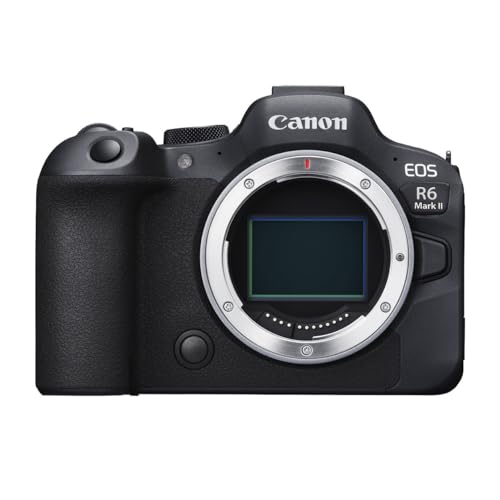
Canon EOS R6 Mark II — Best for Family Life Indoors
Indoor photography is mostly family photography, whether the family admits it or not: birthdays in dining rooms lit like caves, grandparents by windows, toddlers moving at shutter-defying speed under bulbs chosen for warmth rather than brightness. The R6 Mark II leads this list because it was practically designed in those rooms. Its eye autofocus finds a face in gloom and holds it through movement, its colour renders lamplight skin honestly, and its stabilisation forgives the handheld, one-hand-on-a-child shooting that indoor life actually involves.
Confidence grows every time the sensitivity dial gets turned. New indoor photographers fear high ISO like a debt; this camera teaches them it is a tool. Raise it until the shutter speed freezes the toddler, and the files — clean, saturated, printable — repay the courage. Parents who make the jump stop posing children by windows like Victorian sitters and start photographing the actual evening, which is where the photographs worth keeping were hiding.
Its craft detail is the silent shutter paired with a tilting screen: the sleeping baby, the reading grandmother, the dog dreaming on the rug can all be photographed from waist height without a sound or a flash, at angles a viewfinder would require a yoga practice to reach. Indoor life is full of subjects who perform for a raised camera and relax for a lowered one; this body specialises in the relaxed version.
Around the house it doubles as the event camera — the recital, the school play, the holiday table — because its autofocus and colour hold together across the whole miserable spectrum of domestic lighting, from blue television glow to orange tungsten. Files from the same evening sit together in an album without a colour correction marathon.
The honest limits: it is the largest body among the stills-first picks here, and its resolution, while ample for albums and walls, is not the choice for enormous prints of a single perfect portrait. Families print at family sizes, though, and at those sizes this camera’s combination of focus, colour, and calm in bad light is the strongest argument on the page.
Buy it as the household’s serious camera and it will quietly become the author of the family archive — the one whose photographs the grandchildren will assume were taken by a professional, because in every way that matters to a memory, they were.
A small ritual completes the Canon’s indoor case: set its custom mode once for your own living room — the sensitivity ceiling, the silent shutter, the focus behaviour — and the camera becomes a household appliance in the best sense, picked up and trusted without thought. Family archives are built by appliances, not by instruments that demand a ceremony.
Grandparents deserve a mention in its ledger, because this is the camera that photographs them as they are — reading, laughing, mid-story — rather than posed against a wall. The eye focus and the kind colour conspire to produce the portraits families later describe as exactly like her, which is the highest technical praise a camera can earn.
- Type: full-frame mirrorless system
- Signature: eye focus in dim rooms
- Colour: lamplight skin rendered honestly
- Screen: tilts for waist-level candids
- Role: the family archive camera
Strengths
- Finds eyes in genuinely dim light.
- Colour flatters without fakery.
- Silent shooting preserves the moment.
Trade-offs
- Largest of the stills-first picks.
- Resolution is album-class, not gallery.
- Needs a bright prime to peak indoors.
Best for: families, grandparents’ visits, birthdays, and home events of every kind.
Not suited for: gallery-scale single portraits as the main pursuit.

Sony Alpha 7 IV — Best for Mixed Indoor Light
Every house contains the same impossible photograph: someone you love, seated in shade, with a sunlit window directly behind them. Phones turn the person into a silhouette or the window into a white explosion; the Alpha 7 IV’s dynamic range is the technology that finally does the scene justice. Its files hold the garden outside and the expression inside in the same frame, and its shadow recovery in processing is the deepest on this list — the indoor photographer’s insurance policy, paid out weekly.
Meter be damned: this camera teaches you to expose for the moment rather than the meter. Shoot the kitchen scene as it feels, knowing the bright doorway will keep its detail and the dark corner will open up later; shoot the evening party at whatever sensitivity the room demands, knowing the files clean up with a grace that still surprises photographers raised on older full-frame bodies. Indoor photography is uncontrolled by definition, and this sensor is the most forgiving witness to a lack of control.
Its autofocus deserves its sentence in an indoor context: faces and eyes are found through spectacles, in profile, in the half-dark of a hallway, and tracked as children orbit the furniture. The hit rate indoors — where depth of field is thin and subjects are restless — is where the Sony quietly out-earns its specification, because a perfectly exposed blur is still a blur.
Video belongs in its indoor story too: the holiday morning, the first steps, the grandparent telling the story — footage from this body matches its stills in colour and holds focus on moving small people with a reliability that makes it the default family documentarian for households that film as much as they photograph.
Trade-offs are the familiar balanced ones: no single quality category is this camera’s party trick, the body asks for a rain cover outdoors rather than offering indifference, and the menu system rewards an evening of customisation. Set it up for your house — a custom mode for lamplight, one for window light — and it becomes an indoor specialist by configuration.
Choose it if your indoor life spans everything: the new baby and the band rehearsal, the dinner party and the product photographs for a small business run from the spare room. It is the indoor camera with no asterisk for households whose rooms change purpose by the hour.
Apartment dwellers should note the Sony’s particular gift for small rooms: its files forgive the mixed light of a single space that is kitchen, office, and studio by turns, and its compact lens options keep a real camera possible where a big kit would live in a closet. Small homes are where dynamic range earns its rent.
Its custom modes repay an evening’s setup with a season of calm: one for the bright-window room, one for lamplight, one for video of the same. Indoor photographers who configure this body once stop thinking about settings in their own home, and a camera that disappears in its owner’s house is the definition of a house camera.
- Type: full-frame mirrorless system
- Signature: range for window-versus-room scenes
- Recovery: shadows open cleanly in editing
- Focus: eyes through glasses and gloom
- Role: the mixed-light all-rounder
Strengths
- Bright windows stop exploding.
- Shadows rescue without smearing.
- Focus hit rate indoors is superb.
Trade-offs
- No single party-trick quality.
- Menus reward an evening of setup.
- Weather sealing is good, not total.
Best for: mixed family life, home businesses, and indoor events in difficult light.
Not suited for: buyers wanting one headline speciality only.

Panasonic LUMIX S5II — Best for Indoor Video and Stills
The modern indoor photograph is often a frame from a film nobody planned: the birthday song, the kitchen dance, the story at the table. The S5II leads for households that live in both media because its stabilisation and autofocus were built for moving through rooms, not standing outside them. Walk from the hallway into the lamplit kitchen and the footage stays smooth, the focus stays on faces, and the stills — one button away — carry the same full-frame quality as its photographs-first rivals.
Room-by-room sequences soon become a working photographic method. Indoor life happens in sequences — cooking flowing into eating flowing into the couch — and this camera documents sequences without the tripod-and-lights production that kills spontaneity. Its stabilisation is the quiet star: handheld stills at slow speeds stay sharp on the subject while the room’s motion blurs honestly around them, a look that reads as atmosphere rather than error.
For the growing class of home creators — the cook filming recipes, the musician recording sessions, the teacher making lessons at the kitchen table — the S5II’s indoor package is complete in a way stills-first bodies are not: dependable autofocus that does not hunt in warm light, recording that runs through a whole evening class, and colour that makes a spare room look like a set with nothing more than a lamp moved six feet.
Its stills deserve defence against the video billing: the files are full-frame honest, the high-resolution mode serves the product and interior shots a home business needs, and the colour matches its own footage so a project’s photographs and film feel authored by one eye. Households publishing their indoor lives will find no seam to hide.
The costs are carry and choice: with a video zoom it is a deliberate object in a small room, and the L-mount lens shelf asks more deliberation than Canon’s or Sony’s. Indoors, though, one good standard zoom covers nearly everything, and the deliberation ends quickly.
Pick it when the house is also a studio — of family films, of lessons, of a small creative business — and the camera must be the crew. It is the indoor pick for makers, in the generation that makes things at home.
Home teachers and coaches have quietly adopted this body for a reason worth naming: a full lesson, filmed in a spare room, comes out looking produced — stable, focused, warmly coloured — without a producer. The S5II collapses the distance between a household and a studio, and indoors that distance was always mostly lighting and confidence.
Its stills at slow shutter speeds deserve one more line: the stabilisation turns the blue hour inside a home — lamps on, windows deep blue — into a photographable condition rather than a memory. Rooms have a dusk of their own, and this is the camera that can hold it.
- Type: full-frame hybrid mirrorless
- Signature: room-walking stabilisation
- Autofocus: faces held through warm light
- Recording: evening-length stamina
- Role: the home creator’s camera
Strengths
- Footage stays smooth between rooms.
- Stills match the film’s colour.
- Slow handheld stills stay sharp.
Trade-offs
- A deliberate size in small rooms.
- Lens choices need a shortlist.
- Overbuilt for stills-only homes.
Best for: home creators, family filmmakers, and kitchen-table teachers.
Not suited for: photographers who never shoot video.

Fujifilm X-T5 — Best for Beautiful Rooms and Slow Evenings
Not all indoor photography is action. Much of the best of it is atmosphere: the reading chair at dusk, the table set before guests arrive, the houseplant jungle in the good window, the cat arranged like royalty on the stairs. The X-T5 is the indoor camera for photographers who compose rather than chase. Its film simulations render lamplight and window light with a palette that feels remembered rather than recorded, and its high resolution holds the details — fabric, grain, whiskers — that atmosphere is made of.
Everything about it encourages the deliberate indoor frame. The tilting screen invites low and high compositions a viewfinder discourages; the top-plate dials let exposure be set by touch while the eye stays on the room; the aperture rings on Fujifilm’s primes make depth of field a physical decision. Photographers who shoot interiors — their own or others’, for pleasure or for a small rental listing — find this the most enjoyable tool on the page, and enjoyment is an indoor quality, because the subjects are patient and the photographer may be too.
Its colour is the headline for a reason: the simulations are not novelty filters but renderings with film heritage, and indoor scenes — mixed bulbs, warm wood, winter window light — are where their character shows most. Owners develop loyalties: one stock for evenings, another for bright mornings, a black-and-white rendering that turns a hallway into a gallery piece.
The concessions are a chaser’s concessions: autofocus, while capable, is not the Canon or Sony for a toddler at full sprint, and the crop sensor concedes the darkest rooms to full-frame. For the composed majority of indoor photography, those trades buy resolution, character, and a body small enough to live on the sideboard rather than in a cupboard.
Consider it the house camera in the old sense — the instrument that belongs to the home’s life, photographs its seasons, and makes the ordinary rooms look like the place memory insists they were. Few cameras on any list do that trick; this one does it by design.
Interiors photographers for small rental and sale listings will find the X-T5’s combination — resolution for the wide room shot, colour that makes wood and fabric look expensive — quietly commercial. It is the pick here most likely to pay for itself through a side door, while remaining the household’s pleasure camera.
And for the reader who photographs plants, shelves, collections, and the curated corners of a home: this is your body. Its detail renders a collection justice, its colour gives objects their personalities, and its patience matches yours. Atmosphere is a genre; the X-T5 is its house instrument.
- Type: high-resolution APS-C mirrorless
- Signature: film colour for lamplight
- Screen: tilts for composed angles
- Dials: exposure set by touch
- Role: the atmosphere camera
Strengths
- Lamplight gains real character.
- Resolution holds interior detail.
- Lives on the sideboard, ready.
Trade-offs
- Toddler sprints test its focus.
- Darkest rooms favour full-frame.
- Video is a supporting act.
Best for: interiors, slow evenings, cats, and composed home stories.
Not suited for: high-speed family action as the priority.

Canon EOS R50 — Best First Camera for Indoor Photos
Most indoor photography problems are not optical; they are the problems of a phone at the end of its physics — the smeared toddler, the orange grandmother, the birthday that looks like a cave painting. The R50 is the answer sized for real households: a proper sensor and real autofocus in a body light enough to be grabbed one-handed, with automatic modes honest enough that a beginner’s first evening with it produces photographs the phone never managed in years.
Most basic of all, people actually reach for a camera indoors. Because it is small, it lives out — on the counter, by the couch — and because its screen and menus explain themselves, the learning curve that strands bigger cameras in cupboards never forms. Its subject detection finds the family dog’s eye and the baby’s face with the same calm, and its built-in guidance quietly teaches exposure while pretending only to help.
For creators in the household, it moonlights admirably: the bedroom-streaming setup, the craft tutorial channel, the teenager’s film project all run through this body happily, and its video autofocus is generous to beginners who are also their own camera operator. Many households will find it becomes the young creator’s first serious tool while remaining the family’s camera — a double life few bodies sustain.
Its ceilings are a beginner body’s ceilings, stated plainly: the sensor is APS-C, so the darkest rooms ask more of it than of the full-frame picks, and the controls assume willingness to let the camera help. Both are fair at its station in life, and both are outgrown gracefully — its lenses and habits carry upward into the Canon system.
Buy it for the household that wants indoor photographs to improve this month rather than after a course, and for the beginner whose enthusiasm deserves equipment that encourages rather than examines. It is the friendliest serious camera on this page, and indoors, friendliness is a technical specification.
The R50 also answers the grandparent brief from the other side: it is the camera to give. Its guidance modes and forgiving automation mean the photographs coming back from the other end of the family — the recitals attended without you, the garden, the dog — arrive good. A camera that raises the whole family’s photography is a rare gift.
School events make its case in public: the gym’s dreadful light and the stage’s worse one are exactly where its subject detection and a modest fast lens out-perform every phone in the bleachers. Parents comparing galleries after the play will not need the difference explained.
- Type: APS-C mirrorless, beginner-first
- Signature: guidance that teaches quietly
- Detection: faces, pets, and chaos
- Carry: lives on the counter, ready
- Role: the household’s first real camera
Strengths
- First evening beats years of phone.
- Automatic modes are honestly good.
- Doubles as the young creator’s tool.
Trade-offs
- Darkest rooms stretch the sensor.
- Controls assume the camera helps.
- No in-body stabilisation to lean on.
Best for: beginners, young families, and phone graduates.
Not suited for: dark-venue specialists or control purists.

Sony ZV-E10 II — Best for Indoor Creators and Calls
A generation’s indoor photography happens in the rooms where they also create: the desk corner, the bedroom studio, the kitchen counter where the channel is filmed. The ZV-E10 II was designed in exactly those rooms. Its product-showcase focus, its background-defocus switch, and its creator-first controls serve the filmed life, while its APS-C sensor and Sony’s eye autofocus make its stills — the thumbnail, the product shot, the room tour photograph — decisively better than the phone it replaces.
Solo production stops feeling like a compromise here. Everything about the body assumes a crew of one who is also the talent: the screen flips to face the subject, the tally light ends the is-it-recording anxiety, the microphone direction can be set for a voice in front of the lens. Indoors, where a creator’s whole world may be two walls and a window, that design intelligence is worth more than a specification advantage elsewhere.
As a stills camera it is better than its video billing suggests. The sensor is a modern APS-C with honest low-light manners, the autofocus is Sony’s — which indoors means eyes found in lamplight and held through movement — and the compact body with a small prime becomes a discreet house camera for the creator’s own life, the photographs between the productions.
Its limits follow its brief: no viewfinder, which stills purists will miss at bright windows; a control layout that serves video first; and a body that assumes a phone-like relationship with its screen. Creators will call those features. Photographers should know themselves before arguing.
Choose it when the indoor brief is a channel, a shop, a stream, or a portfolio being built from a desk — and when the stills that support that work matter as much as the footage. It is the indoor camera of the creator economy, fluent in both its languages.
Desk creators should note the ZV-E10 II’s stills workflow for a shop: the product photograph, taken on the same body that films the demonstration, shares colour and lens character with the video, so a listing’s gallery and its film feel like one maker. Consistency is a small business’s production value, and this body builds it in.
It is also the easiest body here to lend to a collaborator: the creator-first controls explain themselves to anyone who has run a phone camera, so a partner can film your hands, your face, your process without a training session. One-person productions grow into two-person ones gracefully on this camera.
- Type: APS-C creator mirrorless
- Signature: one-person production design
- Focus: product showcase and eyes
- Screen: flips for self-framing
- Role: the desk-studio camera
Strengths
- Built for a crew of one.
- Stills outclass its video billing.
- Product focus serves small shops.
Trade-offs
- No viewfinder for bright windows.
- Controls serve video first.
- Small body, modest grip.
Best for: creators, streamers, and desk-based small businesses.
Not suited for: viewfinder purists and stills-only shooters.
How Do the Six Compare at a Glance?
Every room in the house has a favourite here; the table shows which camera owns yours and what it asks in return.
| Camera | Character | Watch out for |
|---|---|---|
| Canon EOS R6 Mark II | Full-frame family specialist | Resolution sized for albums, not murals |
| Sony Alpha 7 IV | Full-frame dynamic-range champion | Balance instead of a party trick |
| Panasonic LUMIX S5II | Hybrid indoor documentarian | Size in small rooms |
| Fujifilm X-T5 | Atmospheric APS-C composer | Action focus a step behind |
| Canon EOS R50 | Friendly APS-C starter | Sensor ceiling in dark rooms |
| Sony ZV-E10 II | Creator-first APS-C body | No viewfinder |
How Do You Photograph a Birthday Without Ruining It?
Arrive as a guest, not a crew. One camera, one fast lens, no flash, no tripod colonising the hallway. Photograph the preparations — the cake’s journey, the cook’s concentration — because anticipation photographs better than ceremony, and position yourself where the light from the room’s best window falls across the table rather than behind it. When the candles come, expose for the faces lit by them and let the room go dark and golden; that is the photograph the family will print.
Then put the camera down for the meal. The indoor photographer’s social licence depends on being present more than documenting, and the best frames of the evening — the laughter after the toast, the child’s second wind — come to the photographer who is still welcome at the table when they happen. Shoot the edges of events and the centres of relationships; the archive will thank you for both.
How Should You Set White Balance in a House Full of Different Bulbs?
Start by forgiving the house: mixed light is the indoor condition, not an error to be eliminated. Set the camera to a fixed warm setting rather than auto when one light dominates the scene, so a sequence of frames shares one colour story, and shoot raw when the room is a genuine argument between daylight windows and tungsten lamps — raw lets the argument be settled calmly at a desk instead of desperately in a hallway.
Learn, too, when to keep the warmth. The amber of a lamp-lit evening is not a colour cast to be corrected into daylight; it is the feeling of the room, and photographs that neutralise it look like evidence rather than memory. The colour scientists at Canon and Fujifilm in particular render that warmth kindly, which is one reason their bodies anchor this list.
What Are the Most Common Mistakes in Indoor Photography?
The flash is the first: direct, on-camera, dignity-destroying. It flattens faces, blackens backgrounds, and announces that the photograph mattered more than the evening. The second mistake is the opposite piety — refusing to raise sensitivity, then blaming the camera for blurred children. Grain can be beautiful; motion blur on a face is just a missed photograph wearing an excuse.
The third is background blindness: the glowing television inside the portrait, the doorway bisecting a head, the lamp growing from a grandmother’s ear. Indoors, backgrounds are close and cluttered by default, so the discipline is a half-step sideways and a glance at the frame’s edges before the shutter. The photographers whose indoor work looks professional are mostly the ones who take that half-step every time.
How Do You Photograph Pets Indoors, the Fastest Subjects in the House?
Pets indoors combine every difficulty on this page: speed, low light, fur that defeats lazy autofocus, and a complete refusal to repeat the adorable thing on request. The working method is anticipation — photograph the routine, not the event. The stair descent at dinner time, the window vigil at postman o’clock, the exact sofa corner of the afternoon nap: routines repeat daily, and a camera positioned for the routine will be ready for the variation that makes the photograph.
Technically, favour shutter speed over everything and let sensitivity climb; a sharp, slightly grainy cat is a photograph, while a clean blurred one is a rumour. The eye-detection modes on the Canon and Sony bodies here genuinely find animal eyes in lamplight, and burst mode — used with restraint — covers the half-second when the ears do the thing. Then edit ruthlessly; pet photography’s secret is that the keeper rate is low and nobody minds.
How Can Renters and Small Rooms Photograph Beautifully?
Small rooms punish wide ambitions and reward intimacy. Instead of fighting for the whole-room shot, photograph the room’s life at the scale it is lived: the reading corner’s pool of lamplight, the kitchen counter’s morning arrangement, the window seat’s weather. The tilting screens and fast primes in this list exist for exactly these frames, and a crop sensor’s narrower view — so often listed as a limitation — becomes a natural editor, excluding the clutter the eye had stopped seeing.
Light discipline matters more than square footage. One window, used knowingly across the day, gives a small room a dozen moods; a lamp moved two feet changes a portrait’s whole character. The photographers whose small homes photograph beautifully are not hiding the smallness — they are composing inside it, and any of these six cameras will follow them there.
What Is the Indoor Photographer’s Evening Routine?
The photographs are made in the evening, but the archive is made after it. Download the day’s frames while the kettle boils; rate ruthlessly while the memory of the moment is fresh enough to judge by feeling rather than by thumbnail; back up before the week is out. Indoor photographs are disproportionately the irreplaceable kind — first steps do not reshoot — and the casual custody that suits a landscape folder does not suit the family archive.
Print monthly, even small. A dozen prints on the refrigerator or in an album teach more about your indoor photography than a season of screen admiration: the colour that drifted, the focus that missed, the window that keeps exploding. The next evening’s photographs improve in direct proportion to the honesty of the last month’s prints.
How Do You Photograph Through the Dark Months?
Winter is the indoor photographer’s high season and deserves a plan. The light changes character — earlier lamps, longer evenings, candles and fires entering the cast — and the house offers scenes that summer’s abundance never stages: the window frost at breakfast, the reading pile’s archaeology, the cook in full production under the good light. Photographers who keep a small running list of winter frames find the dark months pass in a productive blur.
Technically, winter is when the fast prime and the high-sensitivity calm of these bodies pay their annual dividend, and when stabilisation earns its keep at the slow speeds of firelight. Embrace the season’s palette rather than correcting it away; the amber and blue of a winter interior is the most honest colour story a home tells all year.
How Do You Use a Window Like a Studio Light?
Every home owns one great light and most owners have never used it deliberately: the largest window, ideally facing away from direct midday sun. Beside it, light falls with a direction and softness that studios pay to imitate — bright enough for honest shutter speeds, gentle enough to model a face rather than flatten it. Place the subject where the light rakes across rather than blasts, turn them slowly, and watch the portrait change character with every few degrees; this is the whole of classical portraiture, available free in a living room.
Curtains are the modifier kit: sheer fabric softens a hard sun patch into a glow, a dark throw behind the subject swallows a cluttered background, and the window at dusk becomes the blue backdrop every phone photograph wishes it had. Indoor photographers who master their one window stop envying studios, because they have learned the secret studios are built on — it was always the window.
What Should Guests and Relatives Know About Your Camera at Gatherings?
Nothing, ideally — the best indoor event photography is socially invisible. But two small negotiations help: a household understanding that the camera appears at edges and rests during meals, and a promise, kept religiously, that unflattering frames die in the camera rather than in the group chat. Trust is the indoor photographer’s real equipment; a family that trusts the camera relaxes in front of it, and relaxed families are the entire aesthetic this guide is chasing.
Share generously in return. The photographer who sends the good frames promptly — the grandparents’ portrait printed, the birthday set shared while the day is still warm — buys a decade of welcome for the camera. Hoarded photographs breed subjects who hide; shared ones breed subjects who, eventually, ask to be photographed, which is the moment an archive becomes a tradition.
How Do You Photograph Food and the Kitchen Table?
The kitchen is the house’s newsroom, and its photography has one rule: shoot it while it is alive. Steam forgives nothing and waits for no one, so the camera settings for the table should be decided during cooking, not after serving. Sit the dish beside the window rather than under the ceiling spot, let the fast prime melt the background clutter, and photograph hands and process as much as plates — the meal’s story is in the making, and the making is where the light and the people are.
For the household’s recipe keepers and small food creators, the Panasonic and Sony creator bodies here add the filmed dimension, but the stills discipline is identical across all six: natural light, honest colour, no flash, and the cook in at least one frame. A family cookbook photographed this way becomes an heirloom instead of a folder.
How Does Indoor Photography Change as Children Grow?
The nursery years are silent shutters and one-handed shooting; the toddler years are shutter speed and burst discipline; the school years migrate to gyms and stages where reach and sensitivity rule; the teenage years negotiate consent and candids in careful balance. A camera bought for the first stage should be judged partly on the later ones — which is why the system bodies here, whose lenses grow with the family, out-argue a fixed-lens convenience over a decade.
The archive’s value compounds in the same direction. The photographs that feel ordinary in the making — breakfast light, homework concentration, the dog asleep on a growing child’s feet — become the family’s history, and their quality, in focus and colour and honesty, is what these six cameras are really selling. Buy for the decade, not the weekend.
How Do You Keep an Indoor Camera Ready Without Making the House a Studio?
Readiness is a placement decision. The camera lives where the life is — a shelf by the kitchen, a hook by the reading chair — with its fast prime mounted, its battery charged on a weekly rhythm, and a card with room on it. A strap it wears permanently; a bag it visits only when leaving the house. The photographers whose archives are rich in ordinary evenings share this unglamorous secret: their cameras were out, charged, and within arm’s reach when the ordinary evening turned.
Agree the house rules once: where the camera may go, which moments are off duty, and where the finished photographs live for everyone to enjoy. Then forget the apparatus entirely. The goal is a home that happens to be photographed, not a set that happens to be lived in, and the difference is visible in every relaxed frame.
What Buying Mistakes Do Indoor Photographers Make?
Buying for the outdoors is the classic: the weather-sealed adventure body with a slow kit zoom, carried home to a lamplit living room it cannot see in. Indoor purchases should be led by the lens’s speed and the sensor’s calm at high sensitivity, in that order, and any budget left over can buy the heroics afterwards.
The second mistake is ignoring the screen. Indoor photography is waist-level photography — sleeping subjects, low tables, pets, children — and a body whose screen cannot tilt or flip turns half the house’s photographs into floor-level gymnastics. Try the angles in the shop; your knees will vote correctly.
One more mistake, small and expensive in aggregate: buying the camera and never the second battery or the second card, so the household’s biggest evenings end with a dead camera at the cake. Indoor events cluster — birthdays, holidays, visits — and a camera’s readiness across a cluster is part of its quality. The spares cost little; the missed grandmother costs more.
Final Recommendation
For most households the answer is the Canon EOS R6 Mark II: it photographs the family as the family remembers itself, in the light the family actually lives in. Households whose rooms argue between bright windows and dark corners should take the Sony Alpha 7 IV and its merciful dynamic range, while home creators will find the Panasonic LUMIX S5II the only body here that is a whole crew.
The Fujifilm X-T5 keeps the beautiful rooms, the Canon EOS R50 welcomes the beginner, and the Sony ZV-E10 II runs the desk studio. Whichever you choose, add the fast prime, silence the shutter, and photograph the next ordinary evening — indoors, the ordinary evening is the masterpiece.
One last encouragement: photograph tonight, with whatever of these six is yours, before the house is tidy and the light is better. Indoor photography’s masterpieces are not waiting for renovations; they are sitting in the lamplight right now, at an age they will never be again.
And when the first roll of evenings comes back — the lamp-lit, window-crossed, gloriously ordinary evenings — print the best frame and put it where the phone photographs never go: the wall. Indoor photography earns its place in a home by becoming part of the home, and every camera on this page is capable of that promotion.
Frequently Asked Questions
What ISO can I really use indoors without ruining photos?
On the full-frame bodies here, the sensitivities that real evenings demand produce files that print beautifully at family sizes; on the APS-C picks, one stop of extra care — a faster lens, a steadier hand — keeps the same promise. The practical answer is to test your own venues once and then stop fearing the dial.
Do I need a flash for indoor photography?
Not with these cameras and a fast lens. Available light preserves the room’s mood, which is usually the subject. A small flash bounced off a ceiling is a legitimate tool for events, but the pop-up in a face is the look this entire guide exists to retire.
Which camera is best for photographing babies indoors?
The Canon EOS R6 Mark II, for its silent shutter, eye focus in dim nurseries, and colour that treats newborn skin kindly. The Canon EOS R50 is the gentler-budget alternative and shares the quiet manners.
Why do my indoor photos look orange, and how do these cameras help?
Tungsten and warm LED bulbs light homes amber, and auto white balance often over- or under-corrects. These bodies offer stable manual settings and colour science tuned for warm light — Fujifilm and Canon especially — so the amber reads as atmosphere rather than error.
Is APS-C good enough for indoor photos?
Yes, with a fast prime. The Fujifilm, Canon R50, and Sony ZV-E10 II here all produce excellent indoor files at real print sizes; full-frame buys its advantage in the darkest rooms and the deepest shadow recovery, not in ordinary evenings.
What lens should I buy first for indoor photography?
A fast prime near the classic reportage focal length for your sensor size. It gathers the light that makes indoor shutter speeds possible, melts cluttered backgrounds, and shrinks the camera to carry-anywhere size — the highest-value purchase in this entire guide after the body itself.
Related Guides
Keep improving the home archive with our companion guides to lenses and low-light technique: best fast prime lenses for family photography how to photograph children indoors without flash white balance in mixed light: a practical guide


