Disclosure: As an Amazon Associate, kajuandouglas.com earns from qualifying purchases. Links on this page are affiliate links; they cost you nothing extra. Prices and availability change often, so check the current Amazon listing before you buy.
This cherry mx brown vs red switch compared guide settles the oldest argument in mechanical keyboards, between the two switches that introduced most of the world to the hobby. Brown is the tactile: a small, polite bump in the middle of the press that tells your finger the keystroke registered, with no click to announce it to the room. Red is the linear: the same press with the bump removed entirely, a smooth, direct descent that asks nothing and interrupts nothing. Both now arrive in CHERRY’s modernised MX2A generation, in official switch kits that let any hot-swap owner audition the argument on their own board, and this guide compares them the way the decision is actually made: by typing feel, by gaming behaviour, by sound, by fatigue over long days, and by the kind of work each switch quietly specialises in. A tester box and the silent red variant complete the verified catalogue below, because some readers will discover, mid-comparison, that their real question is quieter than either headliner.
The short verdict: Brown is the better teacher and the safer all-rounder, the switch this guide hands to typists, programmers and first-time buyers who do not yet know their own preference. Red is the better specialist, the switch for gamers who want an uninterrupted stroke and for typists who have tried tactility and honestly prefer flow. Neither is the correct answer for everyone, and the cheapest way to end the argument permanently, the MX2A Experience Box covered below, costs less pride than a wrong full-board purchase.
Cherry Mx Brown Vs Red Switch Compared: The Quick Verdict
Everything in this comparison descends from one design decision: whether a keystroke should contain an event. Brown’s event is deliberately modest, a nudge rather than a statement, engineered in an era when the tactile’s job was to signal actuation to fingers migrating from membrane keyboards without slowing them down. Red’s absence of event is equally deliberate, a stroke reduced to spring and travel, which is why it became the default gaming switch on a generation of boards and why writers who type by flow rather than by feedback adopt it just as fiercely. Judge the two by which philosophy matches your hands, and every detailed criterion below becomes a footnote to that judgement.
Key Takeaways
- Brown gives a subtle tactile bump with no click; Red gives a smooth, uninterrupted linear stroke.
- Brown suits typists and first-time buyers; Red suits gamers and flow typists.
- Both are available as official CHERRY MX2A kits, so the comparison can be auditioned cheaply.
- The MX2A Experience Box exists precisely to end this argument on your own desk.
- Silent Red serves readers whose real requirement turns out to be quiet.
In this guide
How were Brown and Red compared?
The comparison uses CHERRY’s own MX2A kits for both switches, so the contest is between the manufacturer’s current generation of each design rather than between clones of varying fidelity. Criteria are weighted the way owners report them after the first month rather than the first minute: bump legibility at typing speed, stroke smoothness, accidental press behaviour, sound in a real room, fatigue across long sessions, and performance in the games each switch’s fans actually play. Where the guide generalises about the classic versions of these switches, it says so, because the brown-versus-red argument predates the MX2A by decades and its folklore is part of what buyers bring to the page.

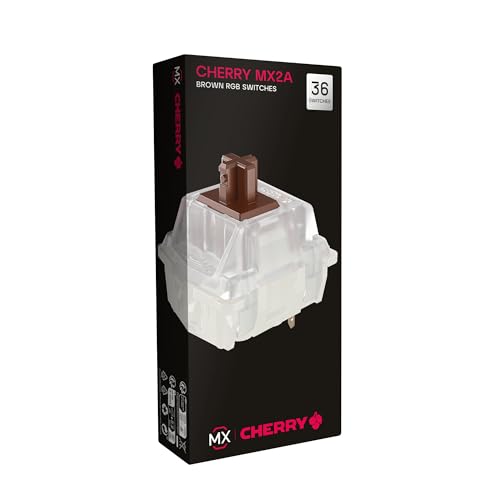
CHERRY MX2A Brown — the tactile all-rounder
Badge: Best for typists, programmers and first mechanical boards.
- Type: tactile, no click, MX2A generation
- Character per the listing: focused and noticeable
- Format: 36-switch kit, RGB variant
- Use: DIY, hot-swap, custom and gaming boards
Brown’s bump is the most argued-about few grams in the hobby: detractors call it a red with dirt in it, defenders call it the perfect amount of information, and both are describing the same modest event from different typing philosophies. At speed, the bump does its historical job, confirming each keystroke just enough for a touch typist’s rhythm to lock in, while never demanding the finger slow down to appreciate it. The MX2A generation polishes the surroundings, smoother travel and modernised internals, so the current kit is the cleanest version of the argument Brown has ever made. For a first mechanical board, that combination, feedback without theatre, forgiveness without mush, remains the safest recommendation in this entire comparison.
Strengths
- Per-keystroke confirmation that supports touch typing rhythm
- Versatile across work, study and gaming on one board
- The modern MX2A execution of a proven design
Trade-offs
- Bump subtlety disappoints buyers expecting a strong tactile event
- Purists of either camp regard it as a compromise
- Kit size means full boards need multiple kits
Best for: typists, programmers, students and first-time buyers. Not suited for: bump maximalists or linear purists.

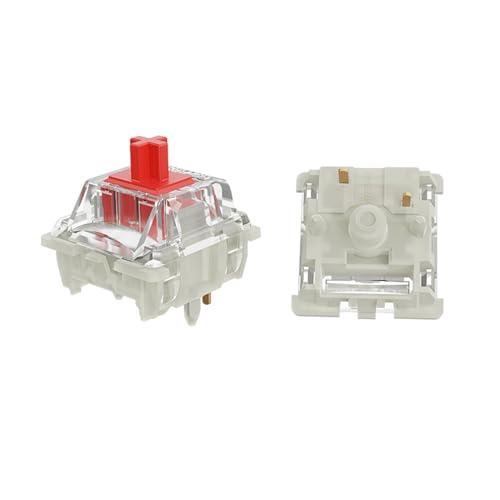
CHERRY MX2A Red — the linear specialist
Badge: Best for gaming and for typists who prefer pure flow.
- Type: linear, no click, MX2A generation
- Character per the listing: smooth and direct
- Format: 36-switch kit, RGB variant
- Use: DIY, hot-swap, custom and gaming boards
Red’s stroke is an argument for subtraction: no bump to negotiate, no event to schedule the finger around, just a smooth descent and a spring’s return, repeated identically ten thousand times a day. In games that uniformity is the product, rapid repeated presses behave exactly alike, strafing and ability keys never catch on a tactile edge, and the finger’s whole budget goes to timing rather than to feel. In typing, the same subtraction divides the room: flow typists write on Reds for decades and call the absence freedom, while feedback typists call it typing on a trampoline and leave within the month. The MX2A kit delivers the current, refined version of that subtraction, and this guide’s only insistence is that you discover which typist you are before a full board depends on the answer.
Strengths
- Uninterrupted stroke ideal for rapid, repeated gaming inputs
- Consistent, predictable feel key after key
- Modern MX2A smoothness in the reference linear design
Trade-offs
- No feedback means typos are discovered by eye, not by finger
- Light, event-free press invites accidental actuations for heavy resting hands
- Kit count requires multiples for large boards
Best for: gamers, flow typists and minimalists. Not suited for: touch typists who read by feel or heavy-handed resters.
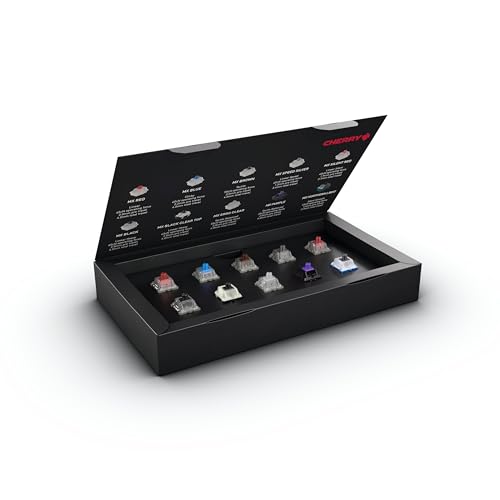
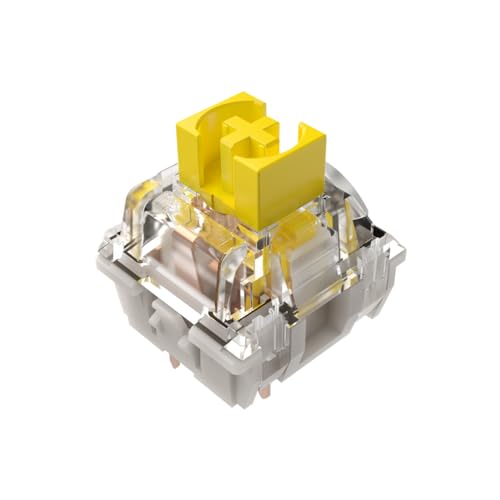
CHERRY MX2A Experience Box — the argument-ender
Badge: Best first purchase for anyone genuinely torn between the two.
- Type: sample tester, ten MX2A switches across the families
- Range: linear, tactile and clicky designs included
- Purpose: hands-on comparison before a full kit purchase
The Experience Box is CHERRY’s own answer to this entire article: ten switches spanning the family’s personalities, sold as a tester so the Brown-Red question can be settled by the only authority either camp accepts, your own fingers on your own desk. Its value is disproportionate to its size. A week with both headliners under your home row teaches more than any comparison, this one included, and the box then retires into a permanent reference, the standard against which every future switch curiosity can be pressed and judged. If you buy one thing from this page before committing to a board, buy this.
Strengths
- Settles the comparison empirically for the price of a tester
- Covers the wider MX2A family beyond the two headliners
- Becomes a permanent reference for future switch shopping
Trade-offs
- Ten switches cannot outfit a board, only an opinion
- Testing on a loose tester differs slightly from a mounted board
- May introduce you to a third switch you then also want
Best for: the undecided, the first-time buyer and the methodical. Not suited for: buyers who already know their camp.

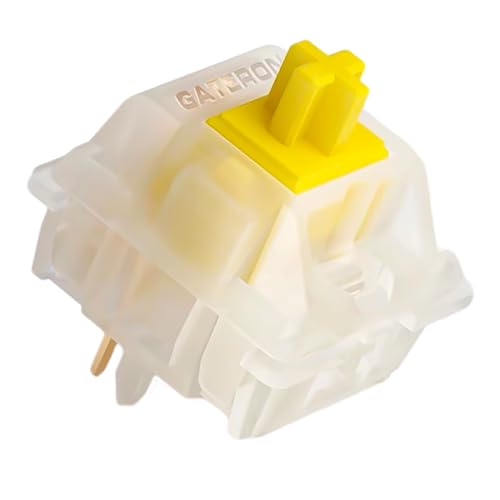
CHERRY MX2A Silent Red — the quiet branch of the Red family
Badge: Best for shared rooms, offices and night desks.
- Type: linear, silent design, MX2A generation
- Character per the listing: smooth and quiet
- Format: 36-switch kit, RGB variant
- Use: DIY, hot-swap, custom and gaming boards
Silent Red enters this comparison as the answer to its most common third question: what if the room votes? It keeps Red’s uninterrupted linear philosophy and muffles both ends of the stroke, so the board’s voice drops to keycap and case. The feel softens slightly at the extremes of travel, the price of the dampening, and in exchange the switch becomes presentable in every environment where Brown and Red’s ordinary voices would be negotiated. Readers who arrived torn between the headliners and leave with the Silent have not dodged the decision; they have discovered their actual priority, which is what comparisons are for.
Strengths
- Red’s flow with a genuinely reduced voice
- Suitable for offices, shared homes and late-night gaming
- Official MX2A kit, like the headliners
Trade-offs
- Dampening softens the stroke’s ends slightly
- Cannot give feedback typists what Brown gives them
- Quiet is wasted on a private, tolerant desk
Best for: shared-space users who want linear flow. Not suited for: sound-led builders or tactile seekers.
Which feels better for typing, hour after hour?
Typing is where the comparison earns its length, because the two switches pace a document differently. Brown’s bump gives the fingers a metronome: each confirmation closes one keystroke and opens the next, and typists who work that way report a rhythm they can feel in their error rate, mistakes caught by touch before the eye sees them. Red removes the metronome and trusts the eyes and the habit; its typists report flow, long unbroken runs where the keyboard disappears, punctuated by errors discovered a word later. Neither report is propaganda; they are two working styles describing themselves. The fatigue ledger differs too: Brown’s event costs a whisper of extra work per press and repays it in certainty, while Red’s lightness spares the fingers and taxes the attention. Across a working year, those small ledgers, not the first minute’s impression, decide which switch was right.
Which is better for gaming, honestly?
Red’s gaming reputation is earned and should be stated plainly: for rapid, repeated, timing-critical inputs, an uninterrupted stroke is a genuine advantage, and the competitive mainstream chose Red and its descendants for reasons that survive scrutiny. Brown’s gaming case is the crossover case: it games perfectly well, and on the mixed desk where the same board writes the essay and plays the match, its feedback serves the larger share of the day. The honest boundary is specialisation: a dedicated gaming board leans Red, a dedicated typing board leans Brown, and the enormous middle of players who do both should choose by which activity’s regrets they would rather live with, the occasional tactile catch in a frantic moment or the occasional unnoticed typo in a long one.
How do they compare on sound?
Neither switch clicks, so the contest is between two quiet-ish voices with different textures. Brown’s keystroke carries the bump’s soft articulation inside it, a faint mechanical punctuation that reads as presence in a quiet room. Red’s is a cleaner glide with the bottom-out as its main event, which makes Red’s loudness more dependent on how hard the typist lands. The Silent Red exists because both voices, however civilised, still exceed what some rooms allow, and its inclusion in this guide is the standing reminder that sound is a room decision before it is a switch decision. In a private room, choose by feel and let the sound follow; in a shared one, let the room shortlist first.
What should you check before choosing?
Three checks, in order. First, your board: the kits suit hot-swap and DIY builds in the MX pattern, and the kit count must be multiplied honestly for your layout’s size. Second, your hands: rest your fingers on your current keyboard and notice whether they press by confidence or by confirmation, because that resting habit predicts your camp better than any quiz. Third, your room: who else hears the board, and at what hours. Run those checks and the Brown-Red question usually answers itself before the tester box even ships, which is the box’s final virtue, confirming a decision your own evidence had already made.
How to audition Brown and Red properly
Use the Experience Box or small quantities of both kits, mounted in a real board, home row and gaming cluster both, for at least three days of genuine work and play. Type the same long document on each, play the same game on each, and keep the notes this site always prescribes: errors noticed by finger versus by eye, accidental presses, hand fatigue at the day’s end, and how often the keyboard entered your thoughts at all. Brown wins auditions on confirmation; Red wins them on disappearance. The notes will show you which victory your own days keep awarding, and that pattern, not any single session’s enthusiasm, is the verdict to buy on.
Common mistakes in the Brown versus Red decision
Choosing Brown as the safe middle and discovering you wanted a real tactile event is the first; Brown’s bump is a signal, not a spectacle, and bump-lovers should look at stronger tactiles rather than blame the switch. Choosing Red for gaming fashion while typing all day is the second. Assuming the colours mean the same thing across every brand is the third; this comparison is between CHERRY’s own designs, and other makers’ browns and reds are dialects of them. Skipping the tester because the kits look cheap enough to gamble on is the fourth, an economy that evaporates across a full board. And judging either switch in the first hour is the fifth, the evergreen error of the whole hobby.
Final recommendation
Typists, programmers and the undecided: Brown, and welcome to the majority the hobby was built on. Gamers and flow typists: Red, with the specialist’s confidence. Shared rooms: let Silent Red into the conversation before either headliner. And everyone, whatever the leaning, let the Experience Box or a small mounted sample ratify the decision, because this argument has lasted forty years precisely because both sides are right, and the only court that can rule for your hands is your desk.
How did Brown and Red come to rule the switch world?
The comparison carries a history that explains its grip. CHERRY’s MX design became the industry’s reference architecture, and within it the colours became a public language: the tactile brown for the typist, the linear red for the player, each name a promise a buyer could make across any brand’s catalogue. Brown arrived as the diplomat of the mechanical renaissance, the switch that could convert a membrane typist without frightening them, and it staffed the first mechanical boards in a generation of offices and studies. Red arrived as the gaming industry’s chosen instrument, when esports and streaming put mechanical boards on camera and the uninterrupted stroke became the visible standard of serious play. The MX2A generation is those two institutions, modernised: the same promises, executed with contemporary refinement. A buyer choosing between them is not merely choosing a feel; they are choosing which of the hobby’s two founding stories their desk will continue.
The bump, dissected: what Brown’s event actually is
Slow a Brown press down in your mind and the design’s modesty becomes precise. The stem travels freely for a breath, meets a gentle rise of resistance as the tactile leaf engages, crests it, and continues to the bottom with the actuation happening in the bump’s neighbourhood. The event is small because it was designed for people who type all day at speed, for whom a large bump is a toll collected ten thousand times. Enthusiast tactiles enlarged the event into the product itself, and Brown’s reputation suffered in their company, but the comparison is a category error this guide declines to make: Brown is not a failed strong tactile, it is a successful signal, and judged as a signal, by whether the finger knows, it remains excellent at its job. Readers who want the event itself should read this site’s tactile roundups with Brown as their baseline of comparison, which is a more honourable role than the forums usually grant it.
The glide, dissected: what Red’s absence actually does
Red’s nothing deserves the same precision. With no leaf event in the stroke, the finger’s entire experience is spring, friction and travel, and the quality of a linear is therefore the quality of those three things with nowhere to hide. That exposure is why the MX2A’s refinement matters more to Red than to almost any other switch in the family: smoothness is not a feature of the design, it is the design. It is also why Red exposes technique, as this site’s linear guide observes: the typist’s accuracy must come from the fingers’ own calibration, because the switch offers no mid-stroke testimony about what happened. Players love that purity because games reward the press that simply happens; writers divide over it because prose rewards, or does not need, the testimony. The dissection ends where the comparison began: an event, or its absence, and two honest philosophies of the keystroke.
Genre by genre: where each switch’s gaming case is strongest
Red’s advantage concentrates where inputs repeat at speed: movement keys in shooters, ability rotations in fast multiplayer games, rhythm and speedrunning contexts where the same press must happen identically under pressure. Brown’s gaming adequacy concentrates everywhere else: strategy and simulation, where the press is a decision rather than a reflex; MMOs, where the board doubles as the chat window and typing feel pays rent all evening; and every mixed session where the game pauses and the document resumes. The practical conclusion most owners reach is that genre loyalty is a weak predictor compared with desk loyalty: the board that serves your whole day should be chosen by the whole day, and the genre you play competitively enough for switch specialisation to matter will usually tell you so itself, in the form of a second, dedicated board asking to exist.
The office and the household: the social life of two switches
Both headliners are socially presentable in a way clicky switches are not, but their social manners differ in texture. Brown’s articulated keystroke reads as industrious in an office, the sound of someone working, and it rarely draws comment. Red’s voice is dominated by the typist’s landing, so a gentle Red typist is nearly silent while a heavy one announces every bottom-out through the desk. Households add the evening variable: a Red board in a living room during a film is a negotiation, a Brown board slightly less so, and the Silent Red is the end of negotiations altogether. None of this should override feel for a private desk, and all of it should inform a shared one, which is why this guide keeps returning the decision to the room as faithfully as to the fingers.
Clones, colours and why this guide insists on the original kits
Every major switch maker sells a brown and a red, because CHERRY’s colours became the market’s shared vocabulary, and a reader is entitled to ask why this comparison confines itself to the original manufacturer’s kits. The answer is calibration. A comparison is only as useful as its reference points are stable, and CHERRY’s own MX2A kits are the definitions the clones are dialects of: this maker’s brown is crisper, that one’s red is lighter, and each dialect can be described honestly only against the standard. Buy the originals to learn the language, and every future dialect you meet, in this site’s budget roundups and beyond, becomes legible as a variation rather than a mystery. Buy a dialect first and you will spend the hobby wondering what the words mean. There is also a plain quality argument: the MX2A generation is a refined, current product from the design’s owner, and its kits are priced for sampling as much as for building, which is exactly the use this guide makes of them.
Modding Brown and Red: what owners actually do
Both switches accept the hobby’s standard attentions, with one governing caution for Brown: its bump is its identity, and lubricant applied generously will round the very event its owner paid to feel, so Brown modding is a light-handed discipline, rails and springs, leaf untouched. Red accepts fuller treatment, since a linear has no event to protect, and a carefully lubricated Red board is a genuinely luxurious object whose glide embarrasses many costlier switches. Films tighten either switch’s housing if a particular unit feels loose, and spring swaps let a Red owner borrow firmness or a Brown owner borrow lightness without changing camps. The standing sequence applies with double force here, because these are the switches beginners most often mod first: type stock for a week, change one variable, and let the reference you bought teach you what the change actually did.
Longevity: how the two age on a real desk
Both designs are veterans of decades-long service in their earlier generations, and their ageing manners are well documented by the community that never stopped using them. Browns keep their signal for years, the bump softening only gradually, and their most common retirement is promotion, replaced by an enthusiast tactile their own service taught the owner to want. Reds age with the linear’s characteristic grace, the glide persisting as long as dust is kept from the housings, and their most common retirement is a move to a lighter or heavier spring as the owner’s taste in flow matures. Either kit, kept clean and given spares from its own box, will outlast several computers, which reframes the purchase honestly: this is not a consumable decision but a small piece of infrastructure, and infrastructure deserves the tester box’s week of diligence before it is poured.
Three readers, three rulings
The first reader is a law student whose days are documents and whose evenings are a single competitive game played seriously with friends. Her desk is one board, her budget is one purchase, and her ruling is Brown: the bump carries her through the reading, the game forgives it entirely, and the tester box confirmed in a week what this guide predicted from her calendar. The second reader is a video editor who scrubs timelines with keyboard shortcuts for a living and games on the same machine at midnight. His ruling is Red, not for fashion but for the shortcut work itself, thousands of identical, uninterrupted presses a day, where any event in the stroke is a tax on a gesture he performs by reflex. The third reader shares a flat, works nights, and arrived convinced the question was Brown or Red; her ruling is Silent Red, because the comparison’s real service was revealing that her binding constraint was never tactility at all. Three desks, three correct answers, one shared method: name the day’s dominant activity, name the room’s rule, and let the fingers ratify.
What if you like both? The mixed board, defended
A heresy deserves its hearing at the end of a head-to-head: the mixed board, Browns on the letters where confirmation pays, Reds on the gaming cluster and modifiers where flow pays, is not indecision but tailoring, and a notable number of experienced owners quietly run exactly that. Hands are not uniform and neither are keys; the letter row testifies ten thousand times a day while the movement cluster simply happens, and there is no commandment that one philosophy must govern both. The kits’ shared standard makes the mixture mechanically trivial, and the tester box makes it cheap to prototype. Purists may keep their uniformity, and this guide keeps its respect for both camps, but the reader whose sample week keeps splitting its verdict by key cluster has not failed the comparison. They have completed it at a finer resolution than the title promised.
The verdict matrix, for the reader who decides in tables
Compressed to its skeleton, the comparison reads as follows. On feedback, Brown wins by existence. On stroke purity, Red wins by the same logic. On typing rhythm for touch typists, Brown; on typing flow for the visually guided, Red. On competitive gaming inputs, Red; on mixed-desk gaming, a draw that Brown’s versatility shades. On accidental presses, Brown’s event forgives heavier resting hands. On sound, a near draw decided by the typist’s landing, with Silent Red waiting offstage for rooms that care. On learning curve for a first board, Brown. On long-session finger fatigue, a draw decided by hand weight and habit. Count your own priorities down that list and the arithmetic resolves, as it has resolved for two generations of buyers, into a colour. The guide’s only addition to the arithmetic is the tester, because a matrix can nominate but only fingers can elect.
And if the election still ties after the tester week, take the guide’s closing counsel: choose Brown, and revisit in a year. It is the switch that teaches the most about your own typing, its verdicts are the easiest to reinterpret with experience, and a year of Brown is the education that makes every later switch, Red included, a deliberate choice rather than a guess. Arguments this old do not end; they mature, one desk at a time.
What the next forty years will probably do to this argument
New switch technologies now crowd the edges of this comparison, magnetic designs that adjust their own actuation, optical designs that promise different physics, and a boutique tactile market that has turned Brown’s modest signal into a symphony of alternatives. It is worth saying plainly why Brown and Red will survive all of it as the comparison every beginner still has to make. They are the reference implementations of the two founding philosophies, manufactured by the design’s owner, priced for sampling, and documented by four decades of owners. Technologies will keep arriving to argue with them, and each arrival will be described, inevitably, as like a Brown but, or like a Red except, which is the surest sign of who owns the language. Learn the two originals and the future of the category will always be legible to you, whatever it invents next.
The argument, then, is hereby returned to its rightful owners: your hands, on your board, in your room. This guide has given them the evidence, the method and the tester that settles it. Press both, keep the notes, and may the colour you choose feel, a year from now, less like a purchase and more like a signature.
A note on keycaps, boards and other confounders
One fairness doctrine governs every audition in this comparison: the switch must be judged in the same company. Keycaps change the lever and the voice, a hollow case brightens both switches past recognition, and a board’s flex lends a softness that belongs to the plate rather than to either contestant. Audition Brown and Red in the same board, under the same caps, on the same desk, ideally on alternate halves or alternate days, and the difference that remains is the switches’ own, which is the only difference this guide has been describing. Skip that discipline and you will crown whichever switch happened to sit in the better case, a result that has launched a thousand confident forum posts and exactly zero reliable conclusions.
The second board effect, Brown and Red edition
Owners of one board become owners of two with a regularity the hobby treats as weather, and this comparison predicts the sequel with unusual accuracy. The Brown owner who builds again usually builds the Red board, out of curiosity about the flow their fingers have been declining for years, and keeps both because the days themselves alternate. The Red owner who builds again usually builds the tactile board, often a stronger tactile than Brown, because the linear years clarified exactly what feedback they had been missing. Neither sequel is a correction of the first purchase; both are its dividends. Buy the first board for the desk you have, in the full knowledge that the comparison you are settling today is also the syllabus for the board you will build when the hobby, as it does, comes back for you.
There is a small ritual that ends the comparison better than any verdict paragraph: lend the losing kit to someone whose desk you respect. Switches this foundational are never wasted, the argument continues productively in another room, and your own choice gains the quiet confidence of a decision you were willing to give away the alternative to. Brown or Red, the hobby grows by exactly such lending, and so, usually, does the lender’s certainty.
What about Black, Blue and the rest of the family?
Readers meeting the family for the first time deserve the map’s edges. Beyond the headliners, CHERRY’s classic range includes a heavier linear sibling for strong hands and a clicky sibling whose audible event defines the opposite pole from Silent Red, and the Experience Box in this guide samples across that wider family precisely so the Brown-Red decision can be made with the alternatives in the room. This comparison confines its verdict to the two switches in its title, but it blesses the curiosity the box creates: many a Brown-Red shopper has discovered, tester in hand, that their true question involved a third colour all along, and discovering that before a full-board purchase is the box earning its keep a second time.
So the guide closes with its hands open: both switches are good, both are current, both are a tester away, and the only wrong answer available is the unexamined one. Examine, elect, and type the next forty years of the argument from the winning side of your own desk.
Ergonomics, briefly and honestly
Switch choice touches the body’s ledger, and this guide will state the modest truth rather than the marketing version. Neither Brown nor Red is a medical intervention, and neither will repair a desk setup whose heights and angles are wrong. Within a sound setup, the differences are real but small: Red’s lighter, event-free press asks less force per keystroke, which some high-volume typists feel as mercy by the week’s end, while Brown’s confirmation can reduce the bottom-out force of typists who otherwise slam through uncertainty, which others feel as the same mercy arriving by a different road. The honest prescription is the sample week with attention to your own hands at the day’s end, because ergonomics at this scale is autobiography, and the switch that your autobiography endorses is the ergonomic one for you.
Keep the tester on the desk after the verdict, by the way. It becomes the fastest answer you own to every future switch question, a pocket court of appeal for the next forty years of the argument, and a reminder that your preference was earned by evidence rather than inherited from a thread.
The one-sentence version, for the friend who asks in an elevator
Brown if your fingers read, Red if your fingers flow, Silent Red if your room decides, and the tester box if you do not yet know which sentence is yours. That is the comparison at elevator length, and the pages above exist so that the sentence can be trusted: every clause of it was earned against the official kits, the criteria owners actually live with, and the rooms and games and documents where the two oldest switches in the world still earn their living, one keystroke at a time.
Now the elevator doors close, the tester is in the post, and the argument, for your desk at least, is in its final week. Type well on whichever colour wins; the other will be waiting, patiently and without resentment, in the drawer where all good switches wait for their second board.
Programming and writing: two professions cross-examine the switches
Programmers interrogate these switches about a specific gesture, the short, repeated, symbol-dense burst, and their testimony splits by editing style. Those who navigate and edit by feel, chord sequences and modal commands executed from muscle memory, tend to file for Brown, because the bump closes each gesture with a receipt. Those whose work is a river of prose-like code, long lines written at narrative speed, tend to file for Red, because the receipt interrupts the river. Writers of actual prose divide by the same river: the drafter who composes in torrents protects the torrent with Red, while the drafter who revises as they go, sentence by sentence, keeps Brown’s testimony at the scene of each word. Neither profession has a switch; both have temperaments, and the tester week remains the only reliable census of which temperament is yours.
What changes if the board is small, wireless or shared?
Context bends the verdict at the edges, and three common contexts deserve explicit treatment. A small board that travels inherits a typist’s priorities wherever it lands, which usually argues Brown for the working traveller and Red only for the travelling player. A wireless board on a living-room machine inherits the room’s priorities, which is where Silent Red stops being a footnote and becomes the headline for a great many real households. A shared family board inherits the least experienced user’s needs, which argues Brown almost every time, because its feedback instructs the beginner while its manners offend nobody. Read your own context into the comparison before the tester even ships and you will usually find the shortlist has quietly become a single name, waiting for the fingers to confirm what the calendar already knew.
The last word belongs to proportion. Brown and Red are inexpensive, reversible and endlessly documented, which makes this the safest big-feeling decision in the entire hobby: large enough to matter every day, small enough to correct in an afternoon. Decide it with the tester, live with the winner without litigating it nightly, and save your perfectionism for the parts of the setup that cannot be swapped with a puller and five minutes.
A closing note on taste, from forty years of evidence
Forty years of this argument have produced one finding robust enough to print without a caveat: taste in this comparison is stable. The typist who elects Brown by evidence tends to still be a tactile citizen a decade later, graduating perhaps to stronger events but never across the aisle; the player who elects Red by evidence tends to refine within the linear world for just as long. That stability is the final reason the tester matters more than the price of either kit, because you are not buying a switch for a season. You are discovering a citizenship, and citizenships, in keyboards as elsewhere, should be taken up deliberately and with both alternatives honestly tried.
Deliberately, then: order the tester or the two small kits, give each colour its three honest days, and record the verdict your notes keep returning. The argument will continue without you, as it has for forty years, but on your desk it will be settled law, and every keystroke afterwards will be the sound of a decision you no longer have to make.
What to tell a friend who is buying their first board this weekend
Compress the whole guide into friendship: buy the board you like the look of, in Brown if it offers the choice, because Brown forgives a beginner everything; borrow or buy the little tester box within the month, not to second-guess the board but to learn your own citizenship while the board is still young; and if the tester argues for Red, swap the switches and keep the board, which is the entire miracle of the hot-swap era in one gesture. Friends advised this way almost never return with regrets, because the advice never asked them to be right in advance, only to become right by evidence, and that is the most durable gift this forty-year argument has to give.
The guide rests. Brown for the readers, Red for the flowers of the flow, silence for the rooms that ask, and evidence for everyone. May your board, whichever colour carries it, disappear under your work exactly as often as you need it to, and testify exactly as clearly as your fingers ask.
Living with each switch: the ninety-day report
Comparisons end at purchase, but ownership keeps filing reports, and the two switches’ ninety-day stories diverge in ways the first hour cannot predict. The Brown owner’s report usually mentions the bump less and less, not because it faded but because the fingers filed it under furniture, and what remains is the sound and the confidence of a press confirmed without looking. The Red owner’s report mentions speed in unexpected places, the game movement that became thoughtless, the double-taps that happen at the speed of intention, and sometimes, honestly, the typos of the first fortnight, retold as the tuition the smoothness charged. Neither report reads like a mistake. They read like two different keyboards that happened to be bought with the same money, which is the truest summary this comparison can offer: the switches do not divide buyers into right and wrong, only into those who type by confirmation and those who type by momentum.
The sound of the decision, room by room
Acoustics arbitrate this comparison in more homes than any specification. In the shared room, the Brown’s bump arrives with a soft mechanical punctuation that housemates learn to read as work happening, present but civilised. The Red’s smooth travel bottoms out with a cleaner, sometimes sharper note, its smoothness in the fingers buying no automatic softness in the air. In the solo room both sounds become private pleasures, chosen the way a pen’s scratch is chosen. And in the room where someone sleeps, both switches defer to their silent sibling from the experience box, because the honest verdict of this whole page is that the loudest variable was never the colour. It was the room, the hour, and the other people in it, and a comparison that ends by respecting the room has told you the most useful thing it knows.
Test both, respect the room, and let your own hands cast the deciding vote. Brown and Red have shared desks for decades without either conceding, and the reason is standing in front of the keyboard: you, and the way you type, which no table can measure.
A final exercise before you order either
One experiment costs nothing and predicts more than any review: borrow or visit both switches and type the same paragraph ten times on each, slowly, attending not to speed but to where your attention lives. On one switch it will live in the confirmation, the small certainty arriving through the fingertip that the letter is committed. On the other it will live in the flow, the letters arriving as a stream the fingers merely escort. Whichever residence feels like home is your switch, and the colour is merely how the shopkeeper labels the door. Do the paragraph test before the purchase and this comparison’s verdict will not be the page’s opinion. It will be your own typing, remembered.
Frequently asked questions
Is Cherry MX Brown good for gaming?
Yes, for the great majority of players. Its bump does not meaningfully slow ordinary play, and it serves mixed desks excellently. Dedicated competitive players who want an uninterrupted stroke for rapid repeated inputs are the ones who gain from Red instead.
Is Cherry MX Red too light for typing?
For some typists, yes: heavy resting fingers can actuate Reds accidentally, and feedback typists miss the bump’s confirmation. Flow typists and lighter hands type on Reds happily for years. The tester box exists to discover which group your hands belong to.
What is the difference between MX and MX2A?
MX2A is CHERRY’s modernised generation of the MX design, with refined internals aimed at smoother travel and consistency, while keeping the same mounting and stem standards. The kits in this guide are the MX2A generation for both headliners.
Are Brown switches loud?
No. Brown has no click mechanism; its voice is the ordinary sound of a keystroke with a tactile event inside it. It is presentable in most offices and homes, and readers needing genuine quiet should look at the Silent Red covered in this guide.
How many switches do I need from a 36-switch kit?
One kit completes a compact board or a generous mounted sample. Tenkeyless and full-size boards need multiple kits, so multiply honestly by your layout’s socket count and keep a few spares from the total.
Should a first-time buyer choose Brown or Red?
Brown, as the safer default: its feedback teaches touch typing and forgives a beginner’s uncertainty, and it games well enough for the mixed use most first boards see. Switch to Red later if your own experience, ideally via the tester, argues for flow over feedback.