Affiliate disclosure: this article contains affiliate links. If you buy through a link on kajuandouglas.com, the site may earn a commission at no extra cost to you.
This lemokey keyboards guide introduces Keychron’s gaming sub-brand — the line that takes the parent company’s engineering (its firmware depth, its manufacturing scale, its wireless competence) and aims it at players: rapid-fire hall-effect boards, high-polling wired battlestations, aggressive pricing against the esports tier, and a design language with the restraint deliberately taken off. Lemokey exists because Keychron’s main line, for all its breadth, speaks in a typist’s accent; Lemokey is the same fluency in a gamer’s. For buyers cross-shopping the esports shelves — Wooting, Razer, SteelSeries and the rest — it is the value disruptor that keeps appearing in the comparison with a specification too complete for its price.
The guide maps the range by its series and their intentions, explains the technologies Lemokey leads with (Hall-effect rapid trigger above all, and where it genuinely matters), and stages the verified representatives against the desk decisions their buyers face: pure competition, dual life, and budget entry into serious gaming hardware. The parent line’s relationship is covered honestly — where Lemokey borrows, where it diverges, and when the Keychron badge is the better buy for the same desk. The closing sections give a buying method, the mistakes made by shoppers who read Lemokey as ‘cheap Keychron’ or as ‘pro gear’ without checking which, and the questions its boards provoke.
Key takeaways
Lemokey = Keychron’s gaming arm: P series for premium rapid-trigger battlestations, L series for the value-performance middle, X series for entry pricing. Its weapons are Hall-effect switches with rapid trigger and high polling at prices under the esports establishment, plus Keychron’s firmware maturity (QMK-derived tooling and web configuration). Buy Lemokey when gaming performance per currency is the brief; buy mainline Keychron when typing, standards breadth or office manners lead.
In this guide
The Range: P, L and X, and What Each Series Is For
Lemokey’s naming resolves into three intentions. The P series is the flagship gaming line — aluminium builds, the brand’s full performance stack (Hall-effect switches, rapid trigger, high polling, low-latency wireless where offered), and prices aimed at the esports establishment’s midriff. The L series is the value-performance middle: the same gaming technologies in less expensive chassis, plastic where P is metal, the specification trimmed at the edges that cost most and matter least. The X series is the entry — straightforward gaming boards at prices that compete with the mainstream’s sale shelf, for the player whose first serious board must not also be a financial event. Across all three, the family resemblance is the point: a Lemokey board is a performance argument at its price, and the series merely decide how much chassis the argument is wrapped in.
The range’s centre of gravity is the Hall-effect board, because that is where the brand’s disruption lives: rapid trigger — the key-reset technology the keyboard latency input lag explained explainer in this cluster quantifies — was pioneered at premium prices by specialists, and Lemokey’s contribution is to ship it, competently, at prices that make the establishment’s premium a question rather than a given. Wired high-polling models serve the pure battlestation; tri-mode HE models serve the dual-life desk. Around that centre, the range covers the conventional gaming basics (fast mechanical boards, high polling rates) for players whose genres do not spend rapid trigger’s advantage — a breadth discipline inherited directly from the parent catalogue’s philosophy, applied within gaming’s borders.
What the range does not do is equally diagnostic: Lemokey does not chase the typist’s refinements (its sound tuning is gaming-adequate rather than connoisseur-grade), does not stock the standards-and-sizes matrix of the parent (ISO and southpaw and low-profile live under the Keychron badge), and does not pretend its design language belongs in a law office. The sub-brand’s focus is its honesty: a buyer whose brief is gaming performance reads a short catalogue where every model is relevant, which is a shopping experience the parent line, for all its virtues, never offers anyone.
The Technology Brief: Rapid Trigger and Its Honest Value
Since Lemokey leads with Hall-effect rapid trigger, the guide owes the technology its calibrated paragraph — the full treatment lives in the latency explainer, and the summary is this: magnetic switches sense key position continuously, so a key can reset the instant it begins to rise and actuate at a software-set depth; in movement-heavy competitive genres (tactical shooters’ counter-strafing, rhythm games, high-APM play) that behaviour is a mechanical advantage players reorganise technique around. Outside those genres — MOBAs, MMOs, strategy, all typing — the advantage thins toward zero, and the honest Lemokey buyer is therefore genre-sorted before they are budget-sorted: the brand’s flagship technology is worth its premium to exactly the players whose games spend it.
High polling is the range’s second technology and obeys the same system law the keyboard polling rate explained explainer states: the rate pays inside a fast, high-refresh system and is decoration outside one, with wireless battery as its tax. Lemokey’s implementation breadth — 8K-class wired and dongle modes on the performance models — is genuinely at the establishment’s level, which is the disruption’s substance: not a new technology, but the existing frontier at a new price. The third technology is quieter and may matter longest: firmware maturity inherited from Keychron, with web-based configuration that has steadily displaced the clunky desktop utilities gaming brands historically shipped. A gaming board’s software is touched weekly for years; the inheritance shows there more than in any benchmark.
The buyer-facing translation of the technology brief is a sorting question the picks below are organised around: is your play in the rapid-trigger genres, at a level where input mechanics are a live constraint? If yes, Lemokey’s P and L HE models are the market’s value frontier and this guide’s recommendation is direct. If no — if your gaming is broad, social or slow-genred — the same money buys more keyboard (typing quality, build, standards) under the parent badge or the mainstream’s, and Lemokey’s X series or a Keychron V-line board will serve the actual brief better than a flagship technology your games cannot spend.
Lemokey Versus Keychron: Choosing Inside the Family
The intra-family comparison is this guide’s most practical section, because the two badges share engineering, factories and firmware ancestry while aiming at different desks. Choose Lemokey when the desk’s headline is gaming performance — rapid trigger, polling, gaming feature priorities — and when its design language’s energy suits the room. Choose Keychron when the headline is anything else: typing quality and sound tuning, the sizes-and-standards matrix (ISO, southpaw per the left handed southpaw keyboards guide, low-profile), office manners, or the open QMK/VIA ecosystem in its fullest mainline form. The dual-life desk is the contested middle, and its resolution is genre-shaped: the HE-equipped Lemokey flagships genuinely serve both lives for the rapid-trigger player, while the typist-gamer is better served by Keychron’s Q HE class or a mainline board plus a gaming second.
Price architecture completes the comparison. Lemokey’s disruption is real but tier-specific: at the HE performance tier it undercuts the esports establishment meaningfully, while at the entry tier its X series meets a market (including its parent’s own value lines and the RK class) where everyone is already cheap. The savvy family shopper therefore compares within the specific tier and genre, not across the badges’ reputations — and reads the exact model’s configurator and polling claims against the maker’s page, because sub-brand ranges iterate fast and last season’s specification is this season’s clearance listing. The verified picks below are current representatives, chosen to stage the family’s decision rather than to exhaust its catalogue.
Lemokey Keyboards Guide: The Shortlist
Verified representatives across the series’ intentions: the P-series flagship for pure competition, the L-series HE value play, an X-series entry, and the Keychron Q1 HE as the family’s dual-life alternative. The range’s representatives below were checked against Amazon catalogue records this site verified directly.
Lemokey P1
The flagship battlestation
- 75 percent aluminium board
- Hall-effect switches, rapid trigger (HE variants)
- High polling support
- Tri-mode on wireless variants
The P1 is Lemokey’s argument at full strength: a machined aluminium 75 percent board carrying the brand’s complete performance stack — magnetic switches with rapid trigger and adjustable actuation, high-rate polling, and wireless that does not apologise — at a price positioned to embarrass the esports establishment’s equivalents. For the genre-sorted player of the technology brief, it delivers the frontier’s mechanics in a chassis that feels like the premium tier it undercuts, and its configurator maturity (the family inheritance) means the performance is actually reachable by its owner rather than locked behind a utility from 2019.
Variant discipline is the purchase’s whole homework: the P1 name spans switch and connectivity configurations, including non-HE versions whose brief is different, and the verified listing in the sources file records the rapid-trigger configuration this article describes. Confirm the HE specification in the listing’s own text before paying — the brand’s value disruption lives in that variant, and the mistake section below is largely about buyers who bought the badge and missed it.
Strengths
- Frontier gaming mechanics at a disruptor price
- Premium aluminium build
- Mature configuration software
Trade-offs
- Variant maze — HE must be verified
- Typing refinement is not the brief
- Design language is unapologetically gaming
Best for: Competitive players in rapid-trigger genres.
Not suited for: Typists, offices, and slow-genre players paying for unusable mechanics.
Lemokey L3
The value-performance middle
- TKL-class gaming layout (series’ mid tier)
- Performance switches and high polling
- Tri-mode wireless on the L3
- Value-tier chassis
The L3 represents the L series’ proposition: the gaming technologies that matter — fast switches, high polling, low-latency wireless — in a tenkeyless-class board priced for the player whose budget has a ceiling and whose standards do not. Its chassis spends less on materials than the P series’ aluminium, and the saving is honestly located: this is the board for the player who wants the input chain’s performance without paying the flagship’s case tax, and its existence is what makes Lemokey a range rather than a single stunt.
As with the flagship, the exact configuration governs: the series spans switch types and the listing verified here is the authority for what this article describes. Judged as the middle’s representative, it makes the guide’s sorting advice concrete — genre first, then the tier whose chassis your budget prefers, because the input performance across the L and P tiers is closer than their prices are.
Strengths
- Performance essentials without the flagship tax
- Wireless done properly at the tier
- TKL footprint suits gaming desks
Trade-offs
- Chassis materials a tier down
- Sound and typing refinement modest
- Configuration must be verified per listing
Best for: Performance-focused players with a budget ceiling.
Not suited for: Buyers wanting the flagship object as well as its mechanics.
Lemokey X5
The entry battlestation
- Full-size gaming layout (X series)
- Mechanical switches, gaming feature set
- Wired performance focus
- Entry-tier price
The X series’ representative makes the guide’s honesty test: an entry gaming board, full-size, wired, with the basics done competently — responsive switches, a gaming feature set, the family design language — at a price that competes with the mainstream’s sale events. It does not carry the HE disruption, and this guide will not pretend otherwise: its value is the ordinary one of a well-made budget board from a house with gaming fluency, for the player whose genres or level make the flagship technologies ornamental. In the sorting framework, it is the correct Lemokey for the majority of players whose brief the P1 overshoots.
Its debits are the entry tier’s everywhere — materials, sound, the absence of the frontier mechanics — and its credit is that none of them is a defect: it is the board the X series promises, at the price it promises it. Buyers who discover, a season in, that their play has become the rapid-trigger kind have lost little; the X5 becomes the household’s second board and the upgrade path is the family’s own ladder, climbed with evidence.
Strengths
- Honest entry price for a gaming-fluent board
- Full-size completeness
- A first rung that wastes nothing
Trade-offs
- No rapid trigger or frontier mechanics
- Entry materials and sound
- Wired focus
Best for: New serious players and slow-genre gamers.
Not suited for: Anyone whose genre spends rapid trigger — go straight to HE.
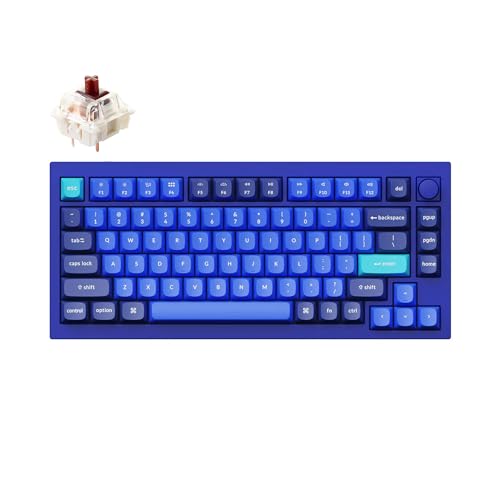
Keychron Q1 HE
The family’s dual-life alternative
- 75 percent aluminium, gasket mount
- Hall-effect rapid trigger
- Tri-mode wireless
- Keychron mainline refinement
The Q1 HE is in this guide as the family’s own counter-argument: the same rapid-trigger technology, carried by the parent badge, in a board whose typing refinement, sound tuning and office manners are mainline-grade. For the dual-life desk — competitive evenings, professional days — it is frequently the correct family purchase, and its presence disciplines the Lemokey recommendation: the sub-brand wins when gaming is the headline and price sensitivity is real; the parent wins when the board must also be a colleague. The technology brief’s sorting question decides between them, and it is a question about the desk’s life, not about the boards’ quality.
Its price sits above the P1’s, buying the refinement difference, and its fastest modes share the wireless caveats of its class. As the comparison’s control, it proves the family’s disruption is a pricing and focus story rather than a technology monopoly — Keychron sells the frontier under both badges, and the buyer is choosing the wrapper their desk’s other hours prefer.
Strengths
- Rapid trigger with mainline refinement
- Dual-life manners and build
- Full Keychron ecosystem behind it
Trade-offs
- Pricier than the Lemokey equivalent
- Fastest modes favour dongle/cable
- Less gaming-fluent design
Best for: Dual-life desks competing seriously.
Not suited for: Pure battlestations watching the budget.
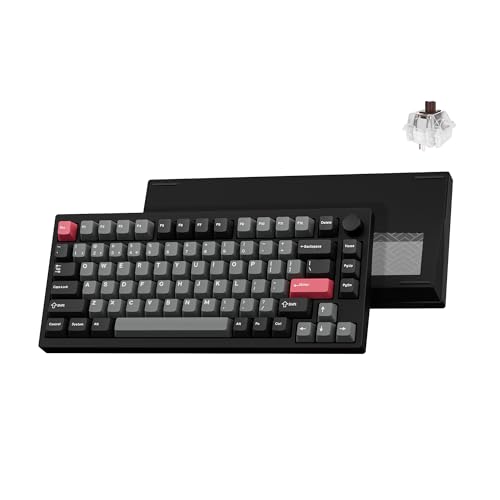
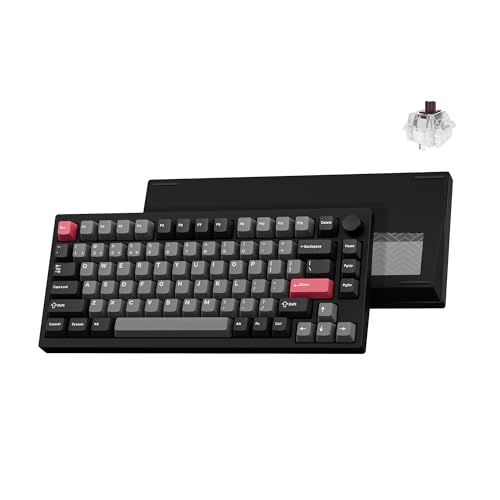
LEMOKEY P1 Pro
The wireless flagship variant
- 75 percent layout, full aluminium case
- 2.4 GHz and Bluetooth wireless
- Hot-swappable switches
- Keychron Super Brown tactile switches, per the listing
- RGB backlighting, Mac and Windows support
Within the P1 family, the Pro is the configuration for the desk that refuses cables: the same machined aluminium 75 percent chassis, carried on 2.4 GHz and Bluetooth links, with hot-swap sockets and the tactile Super Brown switches named in its listing. That switch choice defines its character — this is the P1 tuned for the player who also writes all day, where a tactile bump serves prose as faithfully as it serves inputs, and who would rather have wireless freedom than the magnetic rapid-trigger hardware of the HE variants. Read the range that way and the Pro stops looking like a lesser flagship: it is the flagship aimed at a different desk.
Strengths
- Aluminium build with genuine wireless freedom
- Tactile switches suit mixed work and play
- Hot-swap sockets keep switch choice open
Trade-offs
- Not the rapid-trigger model — check the variant
- Aluminium makes it a desk fixture, not a traveller
- Gaming design language, as with the range
Best for: Mixed-desk players who want the P1 wireless and tactile.
Not suited for: Rapid-trigger competitors, who want the HE variants instead.
Setting Up a Lemokey Board for Competition
The performance these boards sell is configuration-dependent, and the setup discipline decides whether the purchase reaches the desk. Actuation and rapid trigger are per-key or per-profile settings in the configurator: movement keys want the aggressive end (shallow actuation, tight reset), while typing-adjacent keys and chat-bound keys want restraint, because a hair-trigger spacebar in a strategy session is a comedy the owner writes themselves. Polling should be set to the highest rate the system sustains stably, per the polling explainer’s validation method — and on wireless models the battery ledger must be read alongside, since the flagship rates tax it heavily. Profiles per game, exported and backed up like any keymap per the keyboard firmware QMK VIA guide discipline, complete the setup: the board’s intelligence is an asset, and assets get copies.
The physical setup obeys the gaming desk’s usual law: dongle on a clean port with line of sight where possible, the board’s footprint arranged for the mouse’s territory per the keyboard size guide, and the surface — the mat — treated as part of the input chain. None of this is Lemokey-specific, which is the point: the brand sells the board’s half of a system, and the system’s other half is the owner’s homework, graded by the same latency chain the cluster’s explainers itemise. A P1 on a 60 Hz office monitor is a flagship in a museum; the setup is what lets it be a weapon.
Who Should Not Buy Lemokey (and What They Should Buy Instead)
A guide that only sells is an advertisement, so the exclusions deserve their section. Typists first: if the board’s day is prose and its evenings are light gaming in slow genres, Lemokey’s priorities are inverted for you — the parent line’s V and Q boards, or the mainstream’s, will type better for the same money, and this site’s how to choose first mechanical keyboard guide is the correct door. Standards hunters second: ISO layouts, southpaw arrangements, low-profile travel — the catalogue that stocks them wears the Keychron badge, and forcing Lemokey to answer a catalogue question produces only disappointment. Office-presentability third: the design language is a statement, and some rooms should not be stated at.
Fourth, and most specific: the player whose system cannot honour the performance — the 60 Hz display, the ageing laptop — should buy the X-tier honesty or defer the flagship until the chain’s larger links are upgraded, per the latency guides’ order. Lemokey’s disruption makes the flagship tempting at exactly the moment it is least spendable. The brand will still be there, disrupting, when the display is ready; the discipline of buying in chain order is worth more than any single board in this guide, including the ones it recommends.
The Sub-Brand Playbook: Why Companies Split Their Names
Lemokey’s existence follows a playbook worth understanding, because the buyer who understands it can predict where the brand will be strong and where it will be thin. A parent brand with a broad, trusted catalogue faces a trap when it chases a specialist market: the specialist features that would win gamers — aggressive design, rapid-fire switches, marketing in esports’ accent — dilute the parent’s identity for the customers who made it. The sub-brand is the escape: a new name with permission to be loud, priced and designed for one audience, while the parent keeps its register. The playbook’s successes share Lemokey’s traits — real engineering transferred (not just a badge), a clear audience border, and prices that attack the specialist incumbents from the parent’s manufacturing scale. Its failures, which the market also supplies, share the opposite: a badge on generic products, a border nobody can state, and a parent that competes with its own child on the same shelf.
The playbook predicts Lemokey’s shape with uncomfortable accuracy. Its strengths are the transferred ones — firmware maturity, wireless competence, manufacturing quality at price — because those are the parent’s assets, redeployed. Its thin places are the ones a sub-brand must build from zero: an esports pedigree, a sponsored-player roster, the community’s trust in its competitive claims — assets that money accelerates but only seasons complete. The buyer reading a Lemokey flagship should therefore grade its hardware claims with confidence (the engineering is inherited and verifiable) and its scene claims with patience (the pedigree is under construction), and price the board between those two grades. That is a more precise position than either ‘it’s just a Keychron’ or ‘it’s a Wooting killer’, and it happens to be where the boards’ actual value sits.
And the playbook has a second act the buyer should watch: sub-brands that succeed are reabsorbed in influence — their features migrate to the parent’s flagships, their design language softens the parent’s next generation — while sub-brands that fail are quietly folded. Lemokey’s technologies are already migrating (the parent line’s HE models are the proof), which is the success pattern’s signature. Buying a Lemokey today is buying into a living experiment whose early results are published in the parent’s own catalogue; there are worse forms of market evidence, and few better ones.
Rapid Trigger’s Settings, Tuned Like You Mean It
The main guide’s setup section names the settings; this expansion gives the tuning its method, because an HE board’s factory state is a fraction of the product and the fraction’s size is owner-determined. Actuation depth is the first dial: shallower is faster to register and easier to fire by accident, and its correct value is genre-specific — the tactical shooter’s movement keys live at the shallow end, the same board’s ability keys and typing want depth’s forgiveness. Per-key settings exist precisely because one depth cannot serve both, and the owner who sets a global shallow depth has bought a board that types like a hair trigger and blamed the technology for a configuration. Rapid trigger’s reset sensitivity is the second dial, governing how eagerly a rising key re-arms: aggressive settings reward the counter-strafe and punish the held key’s small tremors, and its tuning is empirical — a practice range, a drill, the misfire count as the data — in the same interval method the firmware guide teaches for tap dances.
The third dial is the one nobody advertises: the dead zone and the bottom’s behaviour, where analog boards decide what a fully pressed key means and how the last fraction of travel is read. Owners who tune only the headline dials leave the third at a factory compromise that may fight their technique — the key that must be buried to hold, the key that re-fires at the bottom’s bounce. The configurator’s per-key view, worked through methodically over a week of play, is the product the flagship’s price actually buys; the board at defaults is the demo. This is not a criticism of Lemokey or of any HE maker — it is the technology’s nature, shared with the keyboard firmware QMK VIA guide‘s whole world: configurability is value only to owners who configure, and the setup evening is the flagship’s second price, payable in attention rather than money.
And the tuning has a preservation rule: profiles exported and backed up, per game, with the same discipline as keymaps — because an HE board’s tuned state is a document of the owner’s technique, accumulated over months, and its loss to a reset or a new computer is the loss of that document. The players who treat their settings as equipment — versioned, copied, carried to the replacement board — are the ones whose performance survives their hardware. Lemokey’s configurator makes the export easy; the habit is the owner’s, and it is the difference between a board that is set up and a player who is.
Lemokey’s Range, Priced Against the Establishment
A value disruptor’s range should be read against the incumbents it disrupts, tier by tier, because the disruption’s size varies and the variance is the shopping information. At the flagship HE tier, the comparison is Lemokey’s P line against the specialist reference (Wooting’s) and the legacy giants’ analog flagships (Razer’s and SteelSeries’ gaming lines): the disruptor’s saving at this tier is the largest in its catalogue, bought with the pedigree gap the playbook section prices — the hardware’s parity is close, the ecosystems’ maturity is not, and the buyer is choosing how much the gap is worth to them in currency. At the middle tier, the L line meets the giants’ volume models and the other disruptors (the AULA and Akko gaming lines of this world), and the contest tightens: everyone’s specification converges, and the decision returns to firmware quality, build and the maker’s record — ground where Lemokey’s inheritance pays its steadiest dividend. At the entry tier, the X line meets a market already priced by war, and the brand’s advantage narrows to its design and its parent’s quality control; the entry buyer should shop the tier, not the badge.
The pricing analysis has a temporal term: disruptors’ prices are the market’s most volatile, because the disruption is a strategy and strategies get answered — the incumbents’ sales, their own value lines, their bundle seasons all move the comparison monthly. The buyer’s defence is the comparison’s freshness: run it in the purchase’s week, at the tier’s actual street prices, and distrust any guide’s price verdict older than a season — including, in time, this one’s. What does not move monthly is the structure: the disruptor’s saving is largest at the flagship, contested in the middle, and thin at the entry, because that is where the incumbents’ margins respectively live. Shop the structure; verify the week’s numbers; and the value brand will have been bought at its value, which is the entire game.
And the range’s pricing has a second-order effect worth the buyer’s gratitude whether or not they buy Lemokey: the disruption disciplines the incumbents’ next generations. The rapid-trigger feature set’s migration down the giants’ own catalogues, at prices their previous generation would not have believed, is Lemokey’s school at work on the whole market. The cluster’s gaming guides document the same pattern at Wooting’s tier. A market with disruptors is a market whose flagships must argue; the buyer’s job is merely to attend the argument, census in hand, and let the arguers bid.
The Design Language’s Wager
Lemokey’s styling makes a wager that deserves analysis because it is the brand’s most visible bet: that gaming buyers are underserved by the sobriety the parent catalogue perfected, and that energy — colour, aggression, the object’s visible intent to play — is a feature the esports shelf’s black-on-black orthodoxy has forgotten how to sell. The wager’s evidence is the brand’s traction among exactly the buyers the orthodoxy bores: younger players, streamers whose desks are broadcasts, the RGB-native generation for whom a keyboard is scenery as well as equipment. The how to take better photos of your keyboard among other things guide’s world is this wager’s home turf — the desk as content — and Lemokey’s boards photograph like they were designed by people who knew they would be photographed, because they were.
The wager’s cost is the one the main guide states: the board’s unsuitability for the sober desk, the office’s eye, the professional’s video call. But the cost should be priced precisely — it is a cost in contexts, not in quality, and the buyer whose life contains no sober-desk context pays nothing for the energy and collects its pleasure daily. The error is not buying the loud board; it is buying it for a life that includes the boardroom, on the theory that taste can be argued with later. It cannot; the design language is the board’s permanent accent, and accents are chosen for the rooms they will speak in. Lemokey speaks gamer fluently and corporate not at all, and the brand, to its credit, has never pretended otherwise — the pretence is the parent catalogue’s other badge’s job, and it does it well.
And the wager has a hedge built into the family that the buyer should notice: the same engineering, in the parent’s sobriety, at a known premium. The family structure means the design decision is never a technology decision — the rapid trigger, the polling, the wireless are available in both accents — and that separability is the sub-brand playbook’s consumer dividend. Choose the accent for your rooms; choose the technology for your games; and let no brand force you to buy them as a bundle, because the good ones, increasingly, do not.
Ownership: Firmware, Support and the Sub-Brand’s Future
The ownership questions a sub-brand raises are specific, and this expansion answers them in the form buyers actually ask them. Will the configurator be maintained? The inheritance argues yes — the tooling is the family’s shared asset, maintained for the parent’s catalogue’s sake, and the sub-brand rides on an investment it does not have to justify alone. Will parts and support persist if the sub-brand is folded? The boards’ standard components (switches, caps, cables) are the market’s, and the open firmware formats mean the boards’ intelligence survives any corporate decision — the keychron vs gmmk vs drop best keyboard brand comparison’s ecosystem argument, applied within one family. The sub-brand risk, honestly graded, is therefore lower than the category’s average brand risk, because the parent is the guarantor and the formats are open. What remains genuinely uncertain is the line’s direction — whether Lemokey climbs toward the esports tier’s prices or holds its disruption — and that uncertainty affects only future purchases, not the board on the desk, whose value is already delivered.
Support’s texture deserves a sentence of its own: sub-brands are commonly supported through the parent’s channels with the sub-brand’s documentation thinner than the parent’s — the manual’s depth, the FAQ’s coverage, the community’s size all run a season behind the equivalent Keychron resources. The owner compensates with the family’s shared knowledge (most Lemokey questions are Keychron questions in a gaming accent) and the community’s growth, which the brand’s traction is funding. None of this is a reason to avoid the boards; it is the ownership’s known texture, priced into the disruption’s saving with the rest.
And the future has a signal the watchful buyer can read: the parent’s own HE line’s pricing. If Keychron’s HE flagships hold their premium while Lemokey’s equivalent specification holds its disruption, the sub-brand’s role is secure and its roadmap is funded. If the parent’s prices collapse toward the child’s, the family is consolidating, and the child’s next generation will tell the new story. Either way, the board bought today keeps its specification, its open firmware and its parent’s factory behind it — which is why this guide recommends the brand’s present without anxiety about its future, a sentence that cannot be written about every disruptor, and should be valued accordingly.
The Lemokey Decision, Run Once Cleanly
The guide closes by running its own decision for the reader whose brief is the brand’s centre: a competitive player in a rapid-trigger genre, on a mid budget, whose desk is a gaming desk without apology. The census: the genre spends rapid trigger, the system (a high-refresh display, a computer that sustains it) can honour the polling — the keyboard latency input lag explained chain audited and passed. The tier: the L line’s HE model if the budget’s remainder matters for the display fund, the P line if the object itself is part of the pleasure — the input performance between them being closer than the price, as the main guide states. The verification: the exact variant’s HE specification read in the listing, the configurator’s current state checked in the community’s recent reports. The setup: the tuning evening scheduled, the profiles exported, the battery’s ledger accepted at the chosen polling. Run cleanly, the decision takes an afternoon, and its product is a board that will be graded, a season later, as the market’s easiest recommendation in its class — which is what disruption, competently executed and competently bought, feels like from the owner’s side.
The model’s second lesson is its exclusions: the typist, the office, the standards hunter and the unready system were all turned away by name, to other badges and other guides — and a brand guide that turns readers away is practising the only marketing that compounds, which is accuracy about fit. Lemokey does not need every desk; it needs the desks its brief describes, served well enough to testify. The reader who was turned away has been served by the turning, and the reader who was waved in can buy with the confidence that the wave was earned by their census, not by the brand’s hopes.
And the decision’s last step is the cluster’s universal one: the fortnight’s evidence, the returns window’s protection, the setup iterated against real play. A gaming board’s verdict is filed by the hands in the game, over weeks, and every prior instrument — the census, the comparison, this guide — exists to get the right board into that fortnight. Lemokey’s boards, arriving there, have a strong record of staying. That record, and not the launch’s excitement, is the brand’s real product, and it is why this guide — having corrected, compared and excluded with both hands — recommends them, for their brief, without a single asterisk left standing.
The Community’s Verdict So Far: Reading Owner Reports
A young brand’s most honest specification is its owners’ reports at month three and beyond, and this section teaches the reading of them because Lemokey’s buyers must rely on that evidence more than on the long track records the incumbents offer. The reports’ pattern, read across the community’s channels, has a shape worth describing: the hardware’s verdicts are consistent and warm — build, switches, wireless behaviour — in the register that inherited engineering produces; the software’s reports are the mixed ones, a configurator improving in public, its rough edges filed by updates at a cadence that itself constitutes evidence (a young brand that patches monthly is telling you its trajectory; one that patches never is telling you the opposite). The competitive claims’ reports are the ones to weight by reporter: the ranked players’ settings files and tournament appearances are data, the launch week’s enthusiasm is weather, and the difference between data and weather is the whole skill of reading a young brand’s record.
The reading has a second discipline: separate the model’s reports from the brand’s. A sub-brand’s range spans tiers whose execution varies, and the flagship’s warm reports do not transfer automatically to the entry model’s different compromises — nor do the entry model’s complaints about materials indict the flagship’s aluminium. Every report should be filed under its exact model and variant, because the variant maze this guide warns about in listings operates in reviews as well, and a buyer’s diligence is wasted if it aggregates evidence across products that share only a badge and a name’s first letter.
And the reading’s final discipline is temporal: a young brand’s record is a moving average, and the reports that matter most are the recent ones about the current firmware on the current production. Weight the last season’s evidence over the launch’s, the long owners over the first-week reviewers, and the settings files over the opinions — and the young brand becomes as legible as an old one, which removes the last structural reason to pay the incumbents’ premium for legibility alone. Lemokey, read this way, is not a gamble on a logo. It is a documented engineering organisation with a short history and a long parent, and its owners’ reports — the good, the mixed and the improving — are exactly what that description predicts.
Choosing Within the Lemokey Range in Four Questions
The sorting method the guide’s sections built, compressed for the checkout page.
- Name your genres honestly: if rapid-trigger mechanics are spendable in your main titles (tactical FPS, rhythm, high-APM competitive), the HE models are your shortlist; if not, the X series and the parent’s value lines enter and the flagship leaves.
- Fix the system’s readiness: display refresh and host capability decide whether high polling is a specification or a decoration. Buy the board your chain can honour today, or upgrade the chain’s larger link first.
- Choose the chassis tier by budget’s remainder: P for the aluminium flagship object, L for performance without the case tax, X for the honest entry. The input performance across the tiers is closer than the prices; the objects differ more than the mechanics.
- Verify the exact listing’s variant — HE or not, connectivity, layout — against the maker’s page, because the range’s names span configurations with different briefs. Then keep the returns window’s date, and validate the setup in your main game within it.
Lemokey Shopping Mistakes
Buying the badge and missing the variant.
The flagship name spans HE and non-HE configurations with different briefs and prices; the buyer who orders ‘the P1’ without verifying rapid trigger in the listing has purchased a lottery ticket in a comparison they thought was settled. The variant is the product. Read it in the listing’s own text, as this cluster prescribes for every fast-iterating range.
Paying for rapid trigger your genres cannot spend.
The technology is real, genre-bound and priced; MOBA, MMO and strategy players who buy it have purchased a spectator. The sorting question precedes the tier question, and its honest answer saves more money than any sale in the brand’s calendar.
Running flagship polling on an unready system.
High rates on a 60 Hz display or a struggling host buy battery drain and CPU tax in exchange for rounded-away milliseconds. The chain’s order is not a suggestion: display, game settings, connection, then the board’s rate — validated stable, per the polling explainer’s method.
Reading Lemokey as ‘cheap Keychron’ — or as its opposite.
It is neither a discount bin nor a separate company: it is a focused sub-brand sharing the parent’s engineering. Buyers who expect mainline refinement at Lemokey prices, or boutique exoticism from a value disruptor, have misread the same fact from opposite ends. The range’s promise is specific — gaming performance per currency — and it keeps exactly that promise.
Skipping the configurator after purchase.
An HE board at factory settings is a fraction of the product: actuation points, rapid trigger behaviour and per-game profiles are where the flagship’s value is realised. Owners who never open the configuration tool have bought a race car and left the setup in the crate — the setup section above is the uncrating, and it takes one evening.
Buying Lemokey for a desk that is mostly work.
The brand’s priorities — gaming performance, gaming design, gaming tuning — are inverted for the typing-led desk, and no specification on its boards changes that. The family’s own structure is the signpost: the parent badge exists for the work-led desk, with the same engineering in the other accent. Read the border the family drew, and buy on your desk’s side of it.
Frequently asked questions
Is Lemokey the same as Keychron?
Lemokey is Keychron’s gaming sub-brand: shared engineering ancestry, factories and firmware maturity, aimed at players rather than at the parent line’s general market. The badges differ in focus — Lemokey optimises gaming performance per currency; Keychron optimises breadth, typing and standards coverage. Many households own both, one per desk role, and the family relationship makes their ecosystems feel familiar across the badges.
Are Lemokey keyboards good for typing?
They type competently — the switches and layouts are sound — but typing refinement (sound tuning, keycap quality, the quiet registers) is not their brief, and at equal money the parent line’s boards are the better typing instruments. Dual-life buyers for whom typing leads should read the Q1 HE pick in this guide as the family’s answer; buyers for whom gaming leads will find Lemokey’s typing entirely sufficient for the hours it gets.
What does rapid trigger actually do for me?
It lets a key reset the instant it starts rising and actuate at a set depth, instead of travelling to fixed points — enabling faster repeated inputs and movement techniques in the genres built on them, principally tactical shooters and rhythm games. The latency explainer in this cluster quantifies it honestly: a mechanical advantage inside its genres, and an ornament outside them. Your main titles decide its value to you, completely.
Lemokey or Wooting for competitive play?
Wooting is the specialist reference — the rapid-trigger pioneer with the deepest competitive pedigree and software — at specialist prices. Lemokey is the disruptor: comparable mechanics and polling in complete boards at lower prices, with a broader range beneath the flagship. Players for whom the board is purely an instrument and budget is real increasingly choose the disruptor; players who want the reference implementation and its ecosystem choose the pioneer. Both choices are defensible, which is what disruption means.
Do Lemokey boards work on Mac?
Yes — the family inheritance includes Mac compatibility and mode switching as standard expectations. Gaming features are platform-agnostic, and the configurator’s web form suits Mac owners better than the Windows-only utilities of gaming tradition. The usual caveat applies: verify the exact model’s stated compatibility, because fast-iterating ranges reward the check.
Which Lemokey should a first-time gaming-board buyer get?
Sort by genre first: rapid-trigger genres justify the HE tier (L series for value, P for the flagship object); everything else is served honestly by the X series or by the parent’s value lines, with the savings banked toward the display that the latency chain says matters more. The first board’s job is to teach your preferences at the lowest tuition — a principle this whole site teaches — and Lemokey’s ladder is climbable precisely because its first rung wastes nothing.
Are Lemokey keyboards just rebranded Keychrons?
No — the relationship is a sub-brand’s, not a rebadge’s: shared engineering, factories and firmware ancestry, with Lemokey’s own designs, tuning and product decisions aimed at gaming. Some components and platforms are common across the family, as they are across any manufacturer’s lines, and the boards’ gaming features, design language and pricing are Lemokey’s own. The honest summary is ‘Keychron’s gaming division with its own products’, and the distinction matters because it predicts both the quality (inherited) and the identity (its own).
Does Lemokey make low-profile or office keyboards?
Its heartland is standard-profile gaming boards; the low-profile and office territories belong to the parent line, whose catalogue covers them exhaustively. A buyer wanting Lemokey’s value discipline in a low-profile board will find the family’s answer under the Keychron badge — the sub-brand’s focus is a deliberate border, and shopping across it within the family is the intended path, not a workaround.
How long has Lemokey been around, and will it last?
It is a young brand by the parent company’s long standards, launched as Keychron’s gaming arm, and its durability should be assessed by its guarantor rather than by its own age: the parent’s scale, factories and firmware investment stand behind the line, and the boards’ open firmware formats mean their configurability survives even a corporate change of heart. The realistic risk is not orphaned hardware but a line whose direction shifts — which affects future models, not the board on your desk.
Lemokey is what happens when a serious keyboard company aims its competence at players and prices the result to embarrass an establishment: rapid trigger and high polling, competently implemented, in complete boards, at money that makes the frontier a mainstream decision. Its limits are its focus’s limits — typing refinement, catalogue breadth and office manners live under the parent badge — and a guide that names those limits is not damning the brand but locating it, which is what buyers actually need from guides. Within its brief, Lemokey is among the easiest recommendations in this cluster to make.
Sort by genre, verify the variant, honour the chain’s order, and configure what you bought. The board that results will do the thing its badge promises — gaming performance, honestly priced — and the desk’s other hours can be served by the family’s other badge whenever they ask. That division of labour, between two names from one house, is the modern keyboard market working exactly as it should.