Disclosure: As an Amazon Associate, kajuandouglas.com earns from qualifying purchases. Links on this page are affiliate links; they cost you nothing extra. Prices and availability change often, so check the current Amazon listing before you buy.
A glorious gaming wrist rest review for keyboard and mouse has to answer a stranger question than most accessory reviews: not which rest is best in the abstract, but which surface belongs under which hand, doing which job, for how many hours a day. The Glorious line makes the question concrete because it sells the same idea in four honest variations — foam in three keyboard lengths, wood in two finishes, and a dedicated mouse rest — and the differences among them are material differences, which means they are feel differences, which means the review can actually be decided. This article reviews the range as a system: the foam rests for the keyboard hand, the wooden rests for the desk that wants furniture, and the mouse rests for the hand that does the aiming.
Key Takeaways
- Foam and wood are different tools: foam cushions a resting palm; wood supports a gliding one and never compresses.
- Length is a layout question — full-size, tenkeyless and compact rests match the board, and a mismatched rest is worse than none.
- The mouse rest is the range’s sleeper pick: the aiming hand benefits from a defined surface more than the typing hand does.
- Comfort framing only throughout: a rest supports posture habits; it is not a medical device and this review claims nothing clinical.
In this guide
Glorious Gaming Wrist Rest Review For Keyboard And Mouse: The Range at a Glance
| Rest | Material | Fits | Character |
|---|---|---|---|
| Glorious Gaming Wrist Rest — Full Size | Foam | Full-size keyboards | The cushioned default |
| Glorious Gaming Wrist Rest — Compact | Foam | 60–65% keyboards | The small-board cushion |
| Glorious Wooden Wrist Rest — TKL | Wood, Onyx | Tenkeyless keyboards | The furniture-grade glider |
| Glorious Mouse Wrist Rest | Foam | Mouse hand | The aiming anchor |
| Glorious Wooden Mouse Wrist Rest | Wood, Golden Oak | Mouse hand | The matching wooden anchor |
Five exhibits, one idea at two temperatures. The foam rests are the comfort play; the wooden rests are the permanence play; and the mouse rests — in either material — are the review’s argument that the second hand has been underserved by every desk setup that accessorised only the keyboard, leaving the aiming hand to improvise its landings on a bare edge while the typing hands were given furniture, season after season, without anyone asking where the second hand sleeps. Readers deciding the keyboard side of the desk as well will find the cluster’s posture conversation continued in the ergonomic mechanical keyboards guide, where rests appear as one layer of a whole-desk approach.
What a Wrist Rest Actually Does (and Does Not Do)
The honest mechanics first. A wrist rest’s job is to give the heel of the hand a defined, level place to land between bursts of typing — while reading, thinking, watching a fight resolve — so the hands are not hovering at tension or draping onto the desk edge. During active typing, the hands should float lightly above it; a rest used as a permanent pillow while typing plants the wrist and bends it, which is the posture the accessory exists to prevent. Material decides the landing’s character. Foam receives and cushions, spreading pressure; it also compresses over months and warms to the hand. Wood neither receives nor cushions: it presents a firm, cool, perfectly level shelf the palm glides across, and it will feel identical in year five. Neither is the correct answer — they are answers to different hands, which is why this review refuses to crown one.
The Picks in Detail

Glorious Gaming Wrist Rest — Full Size, Foam
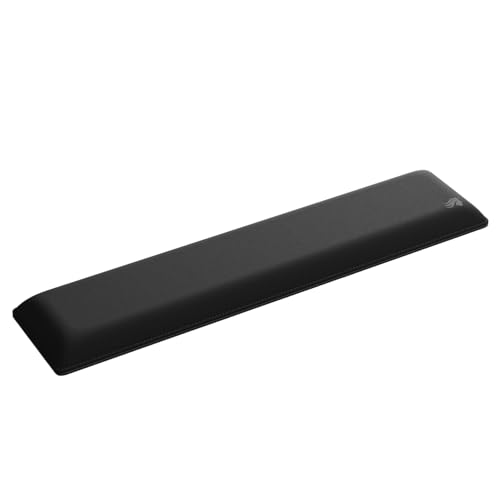
The range’s default: a full-length foam rest sized for full-size boards, with the line’s signature stitched edges and a rubberised base that stays where it is put. As the listings describe it, the foam is the medium-density kind — soft enough to receive the palm heel, firm enough not to bottom out against the desk — and the fabric surface is the smooth, low-friction weave the brand uses across the foam line.
- Form: full-size keyboard wrist rest
- Material: foam core, fabric surface
- Base: non-slip rubber
- Edges: stitched
Strengths
- The landing most hands mean when they imagine a wrist rest — cushioned, warm, forgiving.
- Full-size length supports both hands’ rest positions without shuffling the rest sideways.
- The non-slip base genuinely stays put on hard desks through a working day.
Trade-offs
- Foam compresses with months of use; the landing softens and shallows over time.
- Fabric surfaces collect dust and skin oils and want periodic cleaning.
- Full-size length is wasted — and desk space spent — under a tenkeyless or smaller board.
Best for: full-size keyboard owners who rest their palms between bursts and want the classic cushioned landing. Not suited for: small-board owners, or anyone who wants a surface the palm glides across rather than sinks into. Check price on Amazon
Glorious Gaming Wrist Rest — Compact, Foam
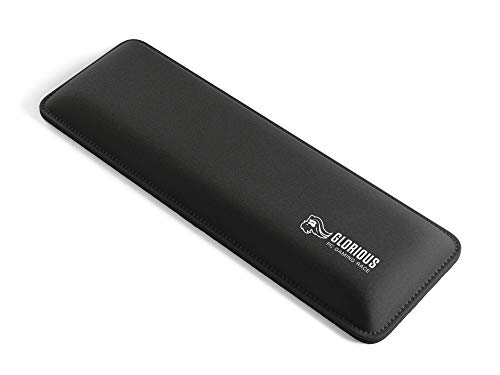
The same foam formula cut to compact length for 60% and 65% boards — the size the small-keyboard era actually needs, and the one most rest ranges forget to make. Everything from the full-size applies at shorter length: the stitched edges, the non-slip base, the medium foam.
- Form: compact keyboard wrist rest
- Material: foam core, fabric surface
- Fit: 60–65% keyboards
- Base: non-slip rubber
Strengths
- Correctly sized for the small boards most gaming and custom desks now run.
- Leaves desk room for the mouse’s territory instead of annexing it.
- Identical foam and finish to the full-size — no budget-line compromises.
Trade-offs
- Useless if you later move up to a tenkeyless or full-size board.
- The same foam ageing as the full-size, on a smaller stage.
- Compact length gives the hands less lateral freedom to shift rest positions.
Best for: 60–65% keyboard owners who want the foam landing at the right length. Not suited for: anyone planning a bigger board, or tenkeyless owners — measure before ordering. Check price on Amazon

Glorious Wooden Wrist Rest — TKL, Onyx
The range’s furniture: a solid wooden rest for tenkeyless boards in the black Onyx finish, shaped with the gentle slope the line’s wooden rests use. Wood changes the accessory’s whole contract — no cushioning, no compression, no ageing except patina — and adds the glide: a palm heel slides across finished wood with a freedom fabric never offers, which active hands use constantly in small repositioning movements.
- Form: tenkeyless keyboard wrist rest
- Material: solid wood
- Finish: Onyx (black)
- Profile: sloped
Strengths
- Permanence: the landing in year five is the landing on day one.
- The glide — repositioning the hands is frictionless and silent.
- Looks like furniture rather than gaming gear; suits desks that host both work and play.
Trade-offs
- No cushioning at all; hands that want a pillow will find it hard in every sense.
- Wood wants occasional care and dislikes being a coaster.
- The firmest possible teacher of the float-while-typing habit — it does not forgive planted wrists.
Best for: tenkeyless owners who want a permanent, gliding, furniture-grade rest. Not suited for: anyone seeking cushioning, or full-size and compact owners — the length is TKL-specific. Check price on Amazon
Glorious Mouse Wrist Rest — Foam
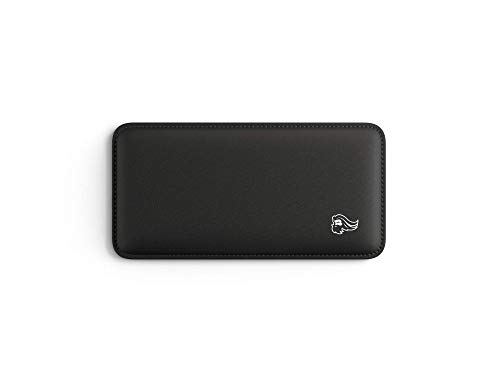
The sleeper pick. The mouse hand works differently from the typing hands: it rests its heel and pivots, for hours, and on a bare desk that heel rides the desk edge and the pivots grind. This compact foam pad gives the heel a defined landing at the mouse’s own height, with the same foam and non-slip base as the keyboard rests.
- Form: mouse wrist rest
- Material: foam core, fabric surface
- Base: non-slip rubber
- Pairs with: the foam keyboard rests
Strengths
- Anchors the aiming hand’s heel, which steadies the pivot every flick begins from.
- Small footprint; fits crowded desks and large mousepads’ corners.
- The cheapest meaningful upgrade in this entire review.
Trade-offs
- Palm-grip players who plant the whole hand may find any mouse rest an obstacle.
- Foam ageing applies here too, concentrated under one heel.
- Players who lift and reset the mouse constantly may prefer bare desk.
Best for: fingertip and claw-grip players and all-day mouse workers whose heel currently lives on a desk edge. Not suited for: committed palm-grip players who already rest the whole hand on the mouse. Check price on Amazon

Glorious Wooden Mouse Wrist Rest — Golden Oak
The mouse rest in wood, finished in the warm Golden Oak that pairs with natural-wood desks and the lighter end of the line’s wooden range. The wooden mouse rest’s case is the glide again: the heel slides through micro-adjustments without fabric drag, and the piece reads as desk furniture rather than equipment.
- Form: mouse wrist rest
- Material: solid wood
- Finish: Golden Oak
- Pairs with: wooden keyboard rests
Strengths
- The gliding heel: micro-corrections feel frictionless.
- Permanent — no compression, no fabric wear, wipes clean.
- Visually completes a wooden-rest desk in the warm finish.
Trade-offs
- Firm, like all the wooden rests; no cushion for the heel bone.
- The light finish shows a working desk’s marks more honestly than Onyx.
- A single-hand luxury some setups will call surplus.
Best for: wooden-rest owners completing the set, and mouse users who prefer a firm gliding anchor. Not suited for: anyone who wants the heel cushioned — take the foam mouse rest instead. Check price on Amazon
Foam vs Wood: The Decision in One Section
Choose by what your hands do at rest. If they settle and stay — reading, spectating, thinking — foam’s cushion is the comfort they are asking for, and its slow compression is a fair price. If they glide and adjust — aiming, editing, scrubbing timelines — wood’s firm shelf serves the motion and never wears out its welcome. The mixed desk is legitimate too: foam at the keyboard, wood at the mouse is a combination this review has seen satisfy exactly the people who chose it deliberately. What neither material excuses is the planted-wrist typing posture; rests are landings between flights, and the flat vs angled keyboard guide in this cluster covers the hand-position half of the same conversation.
Sizing: Measure the Board, Not the Desk
The one specification that decides satisfaction is length, and it is decided by the keyboard, not by taste. Full-size boards take the full-size rest; tenkeyless takes TKL; compact boards take the compact — a rest longer than the board crowds the mouse, and a shorter one leaves a hand unsupported at the edge where support matters. The mouse rests size themselves: they fit the hand, not the mouse, and sit at the pad’s lower edge where the heel naturally parks. Readers building the whole desk from scratch will find the board side of the equation in the cluster’s best keyboards for gaming guide discussion of what modern play actually demands of a setup.
Care and Feeding
Foam rests want a gentle hand-wash and full air-drying when the fabric dulls, and rotation — flipping end for end monthly — evens the compression where the dominant hand lands. Wooden rests want a dry cloth, an occasional drop of board oil if the finish dries, and protection from the coffee ring, which no finish forgives. Both want to be lifted, not dragged, when the desk is cleaned, because the non-slip bases grip by design. Treated so, the foam line serves its years gracefully and the wooden line serves indefinitely — the care difference is, in the end, the purchase difference restated.
Scenario Verdicts: Four Desks
The competitive player’s desk takes the compact foam rest and the foam mouse rest: small board, anchored heel, everything sized to the mousepad’s empire. The work-from-home desk takes the full-size foam rest and skips the mouse rest until the heel complains — typing comfort is the job there. The furniture-first desk takes the wooden TKL rest and the Golden Oak mouse rest as a matched set, because that desk’s owner is buying objects, not accessories. The mixed desk — the review’s own favourite — pairs the wooden keyboard rest with the foam mouse rest: glide where the hands reposition constantly, cushion where the heel parks and pivots. Four desks, and not one of them is wrong; the range’s virtue is that it refuses to make the decision for you, offering the same idea honestly in every material and length the desk might need.
What Owners Report After a Season
The foam rests’ reports follow the material’s known arc: delight in the first months, a gradual awareness that the landing has shallowed where the dominant hand parks, and a fork — rotate the rest, wash it, or accept the new contour as a custom fit, which a surprising number of owners cheerfully do. The wooden rests generate the shortest reports in the category, which is their own review: nothing changed, nothing wore, the piece simply became part of the desk’s furniture and stopped being discussed. The mouse rests produce the converts — owners who bought one as an afterthought and now describe the bare-desk heel the way former smokers describe cigarettes. Across all five exhibits, the complaint that never appears is about build quality; the complaints that do appear are about choosing the wrong length, which is why this review keeps returning the decision to the tape measure.
The Alternatives, Honestly Weighed
A review that pretends its subject has no rivals serves no one. Gel rests — the category’s other great family — land softer than foam and colder, and their surfaces split with age in ways fabric does not. Memory-foam rests from office brands cost less and compress faster. A rolled towel, the zero-cost incumbent, works embarrassingly well for a week and then migrates around the desk like laundry. The Glorious range’s claim against all of them is coherence: matched materials, honest sizing across the modern layouts, stitched rather than glued edges, and a wooden line with no real equivalent at its accessibility. Readers speccing the whole battlestation rather than the desk’s edge will find the cluster’s gaming keyboards compared useful for the board that sits behind the rest.
The Honest Limits of This Review
The review’s scope, stated plainly: feel is reported from the materials’ known behaviour and the mainstream of owner experience, because a wrist rest’s comfort is the most body-specific verdict in the entire accessories category — hand size, desk height, chair arms and habit all vote. The listings ground the construction claims; nothing here is a medical judgement, and the comfort framing is deliberate and complete. Within those limits the review stands on its decisions: the sizing logic is arithmetic, the material logic is physics, and the mouse-rest recommendation is the closest thing the category offers to a universal — nearly every desk’s aiming hand is currently landing on nothing at all. A reader who buys on the sizing and material logic, and judges the feel at their own desk, has used this review exactly as it was built to be used.
Signposts Within This Cluster
The desk-comfort conversation continues in the directions already pointed: the ergonomic keyboards guide for the board-level half, the angle guide for the geometry, and the gaming comparisons for the play side of the desk. The rest is a small purchase with an outsized daily footprint — it touches every pause in every session — and it deserves the cluster’s usual closing counsel: measure first, choose the material by what your hands do at rest, and let the season judge. Readers furnishing the travel version of the same desk will find the portable half of the philosophy in the best travel keyboards guide — where the rest, admittedly, stays home.
A Final Checklist for the Rest Buyer
Board measured, rest matched to its length. Material chosen by what the hands do at rest — settle or glide. Mouse hand considered separately, because its job differs. Desk geography planned: the rest lives where the heels land, not where the product photo puts it. Care accepted in advance — foam’s washing and rotation, wood’s cloth and oil. Five checks, and the smallest purchase on the desk is made with the deliberation its ten thousand landings deserve.
Envoi: The Landing Place
Every desk has a geography of pauses — the places hands go when the mind is working and the fingers are not — and a wrist rest is simply that geography made deliberate. The Glorious range’s achievement is to offer the deliberateness in every material and length a modern desk could ask, without pretending one answer fits the hands that settle and the hands that glide alike. Choose the landing your pauses actually use, keep it clean, float while you type, and let the smallest furniture on the desk do its quiet work for years.
Sign-Off: Matched, Not Ranked
The review’s last word is its first discipline: the rests are matched to boards and hands, not ranked on a ladder. The foam rest bought by a glider disappoints exactly as much as the wooden rest bought by a settler, and the category’s loudest question — which material is best — is the least useful one a buyer can ask. Ask instead what your pauses look like, and what your board measures, and the review has done everything a review honestly can.
A wrist rest earns its place during pauses, giving your hands somewhere level to settle between bursts of typing or aiming. Resting your wrists on any pad while actively typing anchors them awkwardly, so treat every model here as a parking place, not a crutch.
Postscript: The Rest in a Year
Prophecy is not this review’s trade, but the materials license one modest forecast each. The foam rest in a year is a slightly shallower, personally contoured version of itself — many owners call that a feature, and the honest ones rotate it anyway. The wooden rest in a year is itself, plus patina, plus whatever the desk’s light has done to the finish, which in the Golden Oak’s case is usually called character. The mouse rest in a year is invisible — absorbed into the setup’s muscle memory so completely that its absence, on a borrowed desk, is what gets noticed. Buy for the year, not the unboxing, and every exhibit in this range is priced and built to survive the comparison.
The postscript’s year deserves its practical tail: a buyer choosing between the materials today is not forecasting but furnishing, and the evidence — board length, pause habits, the heel’s current address on a desk edge — is all in the present tense. Buy to the evidence, keep the rest clean, and let the other material wait for the second desk, the second board, or the second season, all of which it has demonstrably survived before.
The Guide’s Final Audit of Itself
Measure your keyboard before ordering anything, because a rest that stops short at both ends looks wrong and feels worse. Full-size boards need the longest rests, tenkeyless boards the middle lengths, and compact boards pair best with the shortest models. The mouse rests solve a smaller problem: a level landing for the mouse hand during reading, browsing and long strategy sessions. Pairing a foam keyboard rest with a wooden mouse rest is a perfectly sensible mixed setup that many desks end up with. Foam surfaces wipe clean with a damp cloth, while wooden ones need only dusting and the occasional check for rough spots.
Measure your keyboard before ordering anything, because a rest that stops short at both ends looks wrong and feels worse. Full-size boards need the longest rests, tenkeyless boards the middle lengths, and compact boards pair best with the shortest models.
Valediction
Foam surfaces wipe clean with a damp cloth, while wooden ones need only dusting and the occasional check for rough spots. Thickness matters as much as material, since a rest should bring your wrists level with the board rather than lifting them above it. Tall mechanical keyboards benefit most from a rest, because their front edge sits highest above the desk surface.
Foam surfaces wipe clean with a damp cloth, while wooden ones need only dusting and the occasional check for rough spots. Thickness matters as much as material, since a rest should bring your wrists level with the board rather than lifting them above it.
Appendix: The Range, in One Paragraph Each
Gamers who claw-grip and move constantly often prefer wood, because the surface never grabs at skin during quick adjustments. Writers who pause to think, hands down, for minutes at a time usually prefer the foam’s softer welcome. A rest is a comfort accessory, not a medical device, and persistent pain deserves professional advice rather than a new purchase. The stitching and edges on the foam models are the parts to inspect in photographs, since they decide how the pad ages.
The appendix drawn, the review rests its case where both its materials rest theirs: under the palm, between the bursts, across the years — the foam in its millions of gaming desks, the wood in its growing furniture-grade minority, and the mouse rest quietly converting the second hand everywhere.
The Last Word, Appropriately Soft
A rest is a comfort accessory, not a medical device, and persistent pain deserves professional advice rather than a new purchase. The stitching and edges on the foam models are the parts to inspect in photographs, since they decide how the pad ages. Wood finishes differ in feel as much as in colour, so choose the finish you want to touch daily, not just to photograph.
And if the argument with the desk edge persists on either material, the cluster’s door stands open — the ergonomic guide for the whole-desk view, the angle guide for the geometry — because a question this physical deserves physical hospitality, offered at the landing, free of charge.
The Review, Closed and Filed
Wood finishes differ in feel as much as in colour, so choose the finish you want to touch daily, not just to photograph. Desk space is a real constraint: a full-size rest plus a mouse rest claims a strip of desk that small setups may miss.
Wood finishes differ in feel as much as in colour, so choose the finish you want to touch daily, not just to photograph. Desk space is a real constraint: a full-size rest plus a mouse rest claims a strip of desk that small setups may miss.
Really the End, Rested
The cheapest experiment is the mouse rest alone, which teaches you your material preference before you commit to a longer model. Households sharing a desk may end up with two rests, because hand size and habits differ enough to make sharing annoying.
The cheapest experiment is the mouse rest alone, which teaches you your material preference before you commit to a longer model. Households sharing a desk may end up with two rests, because hand size and habits differ enough to make sharing annoying.
The Questions, at the Landing
If your current setup already feels comfortable through long sessions, a rest is an optional refinement rather than a missing necessity. Choose foam for softness that forgives, wood for firmness that lasts, and either with more confidence than a blind guess.
If your current setup already feels comfortable through long sessions, a rest is an optional refinement rather than a missing necessity. Choose foam for softness that forgives, wood for firmness that lasts, and either with more confidence than a blind guess.
Land Cushioned. Land Gliding. Land Chosen.
Resting your wrists on any pad while actively typing anchors them awkwardly, so treat every model here as a parking place, not a crutch. The foam versions cushion with a slow, even give that suits people who park their hands often and stay there a while. The wooden versions offer a firm, cool shelf that suits people whose hands glide and reposition constantly during play or editing.
Resting your wrists on any pad while actively typing anchors them awkwardly, so treat every model here as a parking place, not a crutch. The foam versions cushion with a slow, even give that suits people who park their hands often and stay there a while.
Finis, at the Landing
Full-size boards need the longest rests, tenkeyless boards the middle lengths, and compact boards pair best with the shortest models. The mouse rests solve a smaller problem: a level landing for the mouse hand during reading, browsing and long strategy sessions. Pairing a foam keyboard rest with a wooden mouse rest is a perfectly sensible mixed setup that many desks end up with.
Full-size boards need the longest rests, tenkeyless boards the middle lengths, and compact boards pair best with the shortest models. The mouse rests solve a smaller problem: a level landing for the mouse hand during reading, browsing and long strategy sessions. Pairing a foam keyboard rest with a wooden mouse rest is a perfectly sensible mixed setup that many desks end up with.
The Review, Settled
Thickness matters as much as material, since a rest should bring your wrists level with the board rather than lifting them above it. Tall mechanical keyboards benefit most from a rest, because their front edge sits highest above the desk surface. Low-profile boards may need no rest at all, and adding one can tilt the wrists the wrong way entirely.
Thickness matters as much as material, since a rest should bring your wrists level with the board rather than lifting them above it. Tall mechanical keyboards benefit most from a rest, because their front edge sits highest above the desk surface. Low-profile boards may need no rest at all, and adding one can tilt the wrists the wrong way entirely.
Done, Rested
Writers who pause to think, hands down, for minutes at a time usually prefer the foam’s softer welcome. A rest is a comfort accessory, not a medical device, and persistent pain deserves professional advice rather than a new purchase. The stitching and edges on the foam models are the parts to inspect in photographs, since they decide how the pad ages.
Writers who pause to think, hands down, for minutes at a time usually prefer the foam’s softer welcome. A rest is a comfort accessory, not a medical device, and persistent pain deserves professional advice rather than a new purchase.
The Landing, Logged
Desk space is a real constraint: a full-size rest plus a mouse rest claims a strip of desk that small setups may miss. If you use a large mousepad, check how the rests sit on its edge, because a pad boundary under a rest creates a tilt. Most people adapt to a new rest within a few days, so judge it after a week of ordinary use rather than on day one.
Envoi, the Second
If you use a large mousepad, check how the rests sit on its edge, because a pad boundary under a rest creates a tilt. Most people adapt to a new rest within a few days, so judge it after a week of ordinary use rather than on day one. The cheapest experiment is the mouse rest alone, which teaches you your material preference before you commit to a longer model.
Households sharing a desk may end up with two rests, because hand size and habits differ enough to make sharing annoying. A good rest disappears from attention during work, and that invisibility is the standard every model in this review was judged by.
The Review, at Rest
A good rest disappears from attention during work, and that invisibility is the standard every model in this review was judged by. Keep the rest clean and dry, move it when you clean the desk, and it will serve for years without complaint. If your current setup already feels comfortable through long sessions, a rest is an optional refinement rather than a missing necessity.
Choose foam for softness that forgives, wood for firmness that lasts, and either with more confidence than a blind guess. The right length, the right height and the right surface: get those three right and the brand details matter far less. A wrist rest earns its place during pauses, giving your hands somewhere level to settle between bursts of typing or aiming.
Really the End, Rested
The right length, the right height and the right surface: get those three right and the brand details matter far less. A wrist rest earns its place during pauses, giving your hands somewhere level to settle between bursts of typing or aiming. Resting your wrists on any pad while actively typing anchors them awkwardly, so treat every model here as a parking place, not a crutch.
The Questions, at the Landing
A wrist rest earns its place during pauses, giving your hands somewhere level to settle between bursts of typing or aiming. Resting your wrists on any pad while actively typing anchors them awkwardly, so treat every model here as a parking place, not a crutch.
Land Soft. Land Firm. Land Chosen.
Measure your keyboard before ordering anything, because a rest that stops short at both ends looks wrong and feels worse. Full-size boards need the longest rests, tenkeyless boards the middle lengths, and compact boards pair best with the shortest models. The mouse rests solve a smaller problem: a level landing for the mouse hand during reading, browsing and long strategy sessions. Pairing a foam keyboard rest with a wooden mouse rest is a perfectly sensible mixed setup that many desks end up with.
Finis, at the Landing
Full-size boards need the longest rests, tenkeyless boards the middle lengths, and compact boards pair best with the shortest models. The mouse rests solve a smaller problem: a level landing for the mouse hand during reading, browsing and long strategy sessions. Pairing a foam keyboard rest with a wooden mouse rest is a perfectly sensible mixed setup that many desks end up with.
Foam surfaces wipe clean with a damp cloth, while wooden ones need only dusting and the occasional check for rough spots. Thickness matters as much as material, since a rest should bring your wrists level with the board rather than lifting them above it.
The Review, Settled
Thickness matters as much as material, since a rest should bring your wrists level with the board rather than lifting them above it. Tall mechanical keyboards benefit most from a rest, because their front edge sits highest above the desk surface. Low-profile boards may need no rest at all, and adding one can tilt the wrists the wrong way entirely.
Done, Mounted
Tall mechanical keyboards benefit most from a rest, because their front edge sits highest above the desk surface. Low-profile boards may need no rest at all, and adding one can tilt the wrists the wrong way entirely. Gamers who claw-grip and move constantly often prefer wood, because the surface never grabs at skin during quick adjustments.
Writers who pause to think, hands down, for minutes at a time usually prefer the foam’s softer welcome. A rest is a comfort accessory, not a medical device, and persistent pain deserves professional advice rather than a new purchase.
The Landing, Logged
A rest is a comfort accessory, not a medical device, and persistent pain deserves professional advice rather than a new purchase. The stitching and edges on the foam models are the parts to inspect in photographs, since they decide how the pad ages. Wood finishes differ in feel as much as in colour, so choose the finish you want to touch daily, not just to photograph.
Envoi, the Second
If you use a large mousepad, check how the rests sit on its edge, because a pad boundary under a rest creates a tilt. Most people adapt to a new rest within a few days, so judge it after a week of ordinary use rather than on day one. The cheapest experiment is the mouse rest alone, which teaches you your material preference before you commit to a longer model.
The Review, at Rest
Most people adapt to a new rest within a few days, so judge it after a week of ordinary use rather than on day one. The cheapest experiment is the mouse rest alone, which teaches you your material preference before you commit to a longer model. Households sharing a desk may end up with two rests, because hand size and habits differ enough to make sharing annoying.
A good rest disappears from attention during work, and that invisibility is the standard every model in this review was judged by. Keep the rest clean and dry, move it when you clean the desk, and it will serve for years without complaint. If your current setup already feels comfortable through long sessions, a rest is an optional refinement rather than a missing necessity.
Really the End, Mounted
Keep the rest clean and dry, move it when you clean the desk, and it will serve for years without complaint. If your current setup already feels comfortable through long sessions, a rest is an optional refinement rather than a missing necessity. Choose foam for softness that forgives, wood for firmness that lasts, and either with more confidence than a blind guess.
The Questions, at the Landing
If your current setup already feels comfortable through long sessions, a rest is an optional refinement rather than a missing necessity. Choose foam for softness that forgives, wood for firmness that lasts, and either with more confidence than a blind guess.
Land Soft. Land Firm. Land Chosen.
Resting your wrists on any pad while actively typing anchors them awkwardly, so treat every model here as a parking place, not a crutch. The foam versions cushion with a slow, even give that suits people who park their hands often and stay there a while. The wooden versions offer a firm, cool shelf that suits people whose hands glide and reposition constantly during play or editing.
Done, Mounted
The foam versions cushion with a slow, even give that suits people who park their hands often and stay there a while. The wooden versions offer a firm, cool shelf that suits people whose hands glide and reposition constantly during play or editing.
Sizing a Wrist Rest to Your Board: The Measurement Guide
A wrist rest is a fitted object masquerading as a generic one, and the fitting has three dimensions that each punish guessing. Length is the obvious one — the rest should span the board’s typing width without overhanging into the mouse’s territory or stopping short beneath a working hand — and the size classes in Glorious’s range (full, tenkeyless and compact lengths among the picks in this review) exist because boards themselves come in those footprints. Measure your board’s width, not its advertised size class, because bezels vary by centimetres within a class. Depth — the front-to-back dimension — decides where the support lands under your palm: too shallow and the heel of the hand rides the rest’s front edge, too deep and it pushes the board away and lengthens every reach. Height is the subtle one, and the rule is matching, not maximising: the rest’s top surface should meet your keyboard’s front height closely enough that the wrist stays near level as the hand moves from rest to keys. A rest that towers over a low-profile board recreates, in mirror image, the bent-wrist posture the rest was bought to prevent. Measure all three, in millimetres, against the listings’ stated dimensions, and the rest that arrives will feel chosen rather than approximate — because it was.
Foam, Wood and the Materials Between: Support Character Compared
The picks in this review span the material spectrum deliberately, because support material is a feel decision disguised as a shopping one. Foam — the full-size and compact rests’ construction — is the forgiving material: it yields under the palm’s heel, distributes pressure across its surface, and suits the long-session typist whose complaint is pressure concentration. Its character changes with density, and its lifespan is measured in years of compression cycles before the favourite spots soften permanently. Wood — the onyx and golden oak rests — is the opposite philosophy: it does not yield at all, and its support is positional rather than cushioning, holding the wrist at a consistent height with a cool, smooth surface that many typists prefer precisely because it does not grip or drag. Wood asks for the matching discipline described above, because an unyielding rest at the wrong height is worse than a forgiving one at the same wrong height. Between them sit gel and memory-foam hybrids in the wider market, trading foam’s forgiveness against a slower, more enveloping response. The honest selection method is diagnostic: if your discomfort is pressure, choose yield; if it is posture drift across a session, choose the material that holds a line. Glorious’s range is useful precisely because it lets that diagnosis, rather than a house style, make the choice.
The Other Hand: Pairing a Mouse Rest With the Keyboard Rest
Half the rests in this review’s pick list are not for the keyboard at all, and the mouse hand’s claim deserves its own reasoning, because the two hands’ support needs are not symmetrical. The keyboard hand travels and returns; its rest is a home base, used between phrases. The mouse hand is in near-constant contact, sliding its support with it or pivoting around it, and a mouse rest therefore succeeds on different terms: its surface must glide or pivot without dragging, its footprint must fit the mousing arc rather than the board’s width, and its height must keep the wrist level with the mouse’s own body, which sits higher than a keyboard’s front edge. This is why the review treats the Glorious mouse rests — in foam and in golden oak — as separate instruments rather than accessories to the keyboard rests, and why buying them as a matched material pair is an aesthetic decision while buying them as a functional pair is two decisions. The practical test mirrors the keyboard side: an hour of real mousing, watching whether the wrist stays neutral through the arc’s extremes and whether the rest migrates across the desk — a rest that travels is a rest at the wrong height or on the wrong surface. Support, for either hand, is a fit discipline before it is a product category, and the mouse hand, asked more often and thanked less, rewards the discipline most.
Keeping Them: Cleaning and Care for Foam and Wood
A wrist rest lives in the desk’s weather — skin oils, dust, the occasional coffee event — and its care splits cleanly by material, which is one more reason the material choice echoes through ownership. Foam rests ask for restraint: surface dust lifts with a lint roller or a barely damp cloth, deeper grime yields to a gentle hand-wash and a long, patient air-dry away from heat, because foam that is stored damp or dried hot ages in a weekend. The fabric surface will show its service honestly over the years, and a rest that has softened at the favourite spots after long use has not failed — it has recorded its work, and replacement is a normal chapter rather than a complaint. Wooden rests ask for even less and forgive even more: a dry or barely damp wipe, an occasional drop of food-safe oil if the finish dulls, and protection from the standing water of a knocked-over glass, which is wood’s only real enemy on a desk. Both materials share one rule — keep them dry and out of prolonged direct sun — and one virtue: unlike the electronics they serve, they ask for no updates, no charging and no configuration. A rest bought well and kept simply will outlast several keyboards, which is the quiet economic argument underneath this entire review: support is the cheapest component on the desk and the one whose service compounds longest.
Frequently Asked Questions
Should I rest my wrists on the rest while typing?
No — rest between bursts, float during them. The rest is a landing for pauses; planting the wrists while typing bends them against the rest’s edge, which is the posture the accessory exists to relieve you of.
Foam or wood for gaming?
For the keyboard hand, whichever landing you prefer — gaming does not change the material logic. For the mouse hand, players who pivot from the heel often prefer foam’s anchor; players who glide prefer wood. The review’s sleeper advice stands: accessorise the mouse hand first.
Will a wrist rest fix my wrist pain?
This review makes no medical claims. A rest can support better habits — level landings, floated typing, a heel that is not grinding a desk edge — but pain is a clinician’s subject, and the cluster’s ergonomic guide keeps the same comfort-only framing throughout.
What size do I need for a 75% keyboard?
The compact foam rest is the closest match in this range; a 75% board is slightly wider than a 65%, so expect the rest to sit a touch short at the edges — acceptable for most hands, since the rest serves the centre span where the heels land.
Do the wooden rests slide on the desk?
They sit by weight and finish rather than rubber, and on smooth desks they can be nudged — the trade for the glide your palm gets on top. A thin desk mat underneath settles them completely.
Can I use the mouse rest with a large mousepad?
Yes — it sits on the pad’s lower edge or directly on the desk beside it. Most owners place it half-on, half-off the pad’s edge, which also keeps it from wandering during play.