Disclosure: As an Amazon Associate, kajuandouglas.com earns from qualifying purchases. Links on this page are affiliate links; they cost you nothing extra. Prices and availability change often, so check the current Amazon listing before you buy.
This filco majestouch keyboards guide honours the elder of the traditionalist tier. Filco — the keyboard brand of Japan’s Diatec Corporation — built the Majestouch line into the professional’s reference standard long before the current keyboard boom: Cherry MX switches, Costar-style stabilisers that typists still cite as the benchmark, doubleshot PBT on the current generation, soldered permanence, and an almost total refusal of fashion. No RGB circus, no editions calendar, no software empire — a Filco is a tool in the oldest sense, and its owners replace their computers more often than their keyboards. This guide explains the line — Majestouch 3, the Ninja variants, the Convertible Bluetooth models, the Minila compacts and the Xacro — and reviews five verified listings across it.
Key takeaways: Majestouch 3 is the current wired flagship generation, full-size and TKL, with doubleshot PBT. Ninja variants hide the legends on the key fronts for a clean top face. Convertible models add Bluetooth to the classic formula. Minila is the compact line with its own clever layout; Xacro is the split-adjacent 65 percent experiment. Everything is Cherry MX and fixed-switch: choose the temper as a decade’s commitment.
Filco Majestouch Keyboards Guide: The Line, Explained: Majestouch, Ninja, Convertible, Minila, Xacro
Filco’s naming is a professional’s code, quickly learned. Majestouch is the core line — the current Majestouch 3 generation in full-size and tenkeyless, wired, with doubleshot PBT keycaps, media functions and the house’s famously solid cases. Ninja variants print the legends on the front face of the caps instead of the top, leaving the typing surface visually blank while remaining legible at a glance downward — the professional’s quiet flex. Convertible models add Bluetooth multi-pairing to the classic boards, Filco’s measured concession to the wireless era, with wired operation always available. Minila is the compact line, built around a 60 percent-class layout with a double-function spacebar philosophy that keeps navigation close. Xacro is the house’s ergonomic experiment — a split-style 65 percent board for the comfort-curious. Across all of them: Cherry MX switches, fixed by solder, in the classic tempers, and build quality that treats a decade as a starting estimate.
In this guide
Five Listings Across the Line

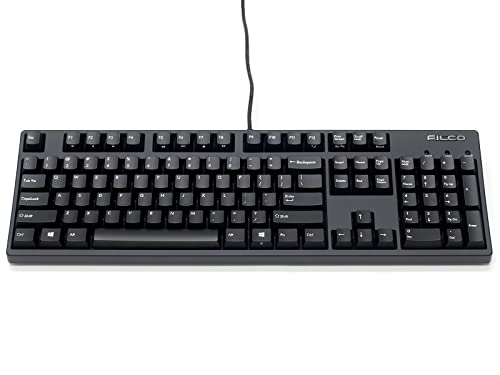
FILCO Majestouch 3 Full Size (Cherry MX Brown) — the flagship
Badge: Best Filco for most professionals
- Layout: full-size
- Switches: Cherry MX Brown (listing), fixed
- Keycaps: doubleshot PBT
- Connection: wired
- Character: the professional reference board
The Majestouch 3 in Brown is the line’s centre and this guide’s default recommendation: the full-size professional instrument with the tactile all-rounder switch, doubleshot PBT that will outlast the computer beneath it, and the case solidity that made the brand’s reputation. It asks nothing of its owner but a switch decision made well once — Brown being the temper the professional majority has standardised on — and repays it with the most uneventful decade in keyboards.
- Strengths: reference-grade build and stabilisers
- Strengths: doubleshot PBT permanence
- Strengths: the professional’s default temper
- Trade-offs: fixed switches
- Trade-offs: wired only
- Trade-offs: no lighting theatre
Best for: professionals and traditionalists. Not suited for: switch explorers.

FILCO Majestouch 3 TKL (Cherry MX Blue) — the clicky tenkeyless
Badge: Best Filco for click lovers
- Layout: tenkeyless
- Switches: Cherry MX Blue (listing), fixed
- Keycaps: doubleshot PBT
- Connection: wired
- Character: the classic click, TKL footprint
The TKL Majestouch 3 in Blue is the traditionalist’s traditionalist: the clicky switch in its spiritual home, on the footprint that frees the mouse hand, with the same doubleshot PBT and case discipline as the flagship. It is unapologetically a private-room board — the click is the point — and for the solo office it remains one of the most satisfying typing instruments in this entire cluster.
- Strengths: the classic click, properly housed
- Strengths: TKL mouse freedom
- Strengths: full Majestouch build quality
- Trade-offs: clicky switches are room-dependent
- Trade-offs: fixed switches
- Trade-offs: no numpad
Best for: solo offices and click loyalists. Not suited for: shared rooms.

FILCO Majestouch Convertible 3 HAKUA (Cherry MX Red) — the wireless classic
Badge: Best Filco for multi-device desks
- Layout: full-size class, HAKUA white design
- Switches: Cherry MX Red (listing), fixed
- Keycaps: doubleshot PBT (PAS)
- Connection: Bluetooth and wired
- Character: the classic formula, convertible
The Convertible 3 is Filco’s answer to the wireless decade, delivered in the house’s measured style: Bluetooth pairing for the multi-device desk, wired operation whenever it is wanted, and nothing else about the formula disturbed. The HAKUA edition’s white design is the line’s rare aesthetic flourish. For the traditionalist whose desk has gone multi-device but whose standards have not moved, this is the Filco.
- Strengths: Bluetooth without compromise elsewhere
- Strengths: doubleshot PBT, Cherry switches
- Strengths: distinctive HAKUA design
- Trade-offs: fixed switches
- Trade-offs: Bluetooth, not 2.4 GHz gaming link
- Trade-offs: edition availability varies
Best for: multi-device traditionalists. Not suited for: competitive wireless gamers.

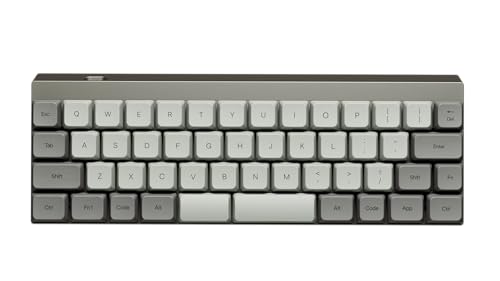
FILCO Majestouch Minila R Convertible (Cherry MX Red) — the compact
Badge: Best compact Filco
- Layout: 60 percent class, Minila layout
- Switches: Cherry MX Red (listing), fixed
- Keycaps: doubleshot PBT
- Connection: Bluetooth convertible and wired
- Design: Sky Grey
The Minila R Convertible compresses the house into a travel-friendly compact with Bluetooth, doubleshot PBT and the Minila layout’s clever navigation arrangement. It is the Filco for the small desk and the bag — the same switches, caps and build discipline at a footprint the flagship’s owner would use as the road board, keeping one switch feel across a whole working life.
- Strengths: house quality in a compact
- Strengths: Bluetooth plus wired
- Strengths: doubleshot PBT
- Trade-offs: Minila layout takes learning
- Trade-offs: fixed switches
- Trade-offs: compact compromises as usual
Best for: compact and travelling traditionalists. Not suited for: layout purists.

FILCO Majestouch Xacro M3A (Cherry MX Red) — the split experiment
Badge: Best Filco for the comfort-curious
- Layout: 65 percent, split-style Xacro design
- Switches: Cherry MX Red (listing), fixed
- Character: the house’s ergonomic direction
- Connection: wired
- Keycaps: PBT
The Xacro M3A is Filco’s ergonomic chapter: a 65 percent board in the split-style layout family, bringing the house’s switches and build discipline to buyers whose hands want a more natural angle. It is the guide’s pick for the traditionalist whose comfort curiosity has outgrown the rectangle — the house’s own answer, with the house’s own standards, rather than a stranger’s experiment.
- Strengths: comfort geometry with Filco standards
- Strengths: compact 65 percent footprint
- Strengths: Cherry switch pedigree
- Trade-offs: layout apprenticeship required
- Trade-offs: fixed switches
- Trade-offs: niche availability
Best for: comfort-curious traditionalists. Not suited for: standard-layout loyalists.
Why Filco Owners Keep Their Boards for a Decade
The Majestouch ownership pattern is the traditionalist tier’s most extreme, and it rests on three pillars this guide should name. The first is stabiliser quality: Filco’s Costar-style stabilisers have been the reference for large-key feel — spacebars and shifts that land without rattle or mush — for as long as the modern hobby has kept records, and owners who have typed on them judge every other board partly by this standard. The second is permanence by design: soldered Cherry switches with their tens-of-millions keystroke ratings, doubleshot legends that cannot fade, cases that do not flex — a board with no planned point of failure. The third is indifference to fashion: a Majestouch never looks dated because it never looked current; it looks like a keyboard, in the way a good hammer looks like a hammer. The Ducky vs Leopold vs Varmilo comparison in this cluster seats the three houses Filco is most often cross-shopped against; Filco’s own claim is seniority, and on the evidence of its owners’ tenure, seniority is earned.
The Stabiliser Sermon: Why Large Keys Decide Reputations
Ask a Filco owner what sold them and the answer, surprisingly often, is the spacebar. Large keys — space, shift, enter, backspace — ride on stabilisers, and stabilisers are where production boards most visibly cut costs: a rattly, mushy or uneven spacebar announces a cheap board in the first minute of typing. Filco’s Costar-style stabiliser tradition produces large keys that land level, quiet and solid, and the effect on perceived quality is out of all proportion to the component’s size, because the spacebar alone absorbs a fifth of all keystrokes. The sermon generalises into a buying test this cluster repeats in several dialects: when auditioning any board, type the large keys first and listen. A maker who sweated the stabilisers sweated everything; a maker who did not will not have hidden the savings anywhere nobler. Filco built a multi-decade reputation substantially on passing that test in the first minute, every time, and the Majestouch 3 keeps the tradition intact.
Sound and Feel: The Professional Voice
The Majestouch voice is the classic production voice at its most disciplined: a solid case that contributes little commentary, Cherry switches speaking clearly, large keys landing without the rattle that betrays lesser stabilisers. It is not a tuned concert instrument in Leopold’s sense, nor a gasket board’s soft depth — it is a professional tool’s sound, honest and unobtrusive, pitched for rooms where work happens. The feel matches: firm, direct, plate-era keystrokes with PBT’s dry texture, the combination a generation of programmers and writers internalised as what a keyboard is. Buyers chasing the modern creamy voice should shop the gasket guides in this cluster; buyers who want the classic voice without a single cheap note in it are standing, as they have stood for twenty years, in front of a Filco.
The Fixed-Switch Commitment, Weighed Honestly
Filco’s soldered switches are the guide’s standing caveat, and they deserve a weighing rather than a warning. The costs are real: a wrong temper is a permanent companion or a soldering project; a failed switch is a service event; the explorer’s curiosity has no cheap outlet. The benefits are equally real and less often stated: soldered joints are the most reliable electrical connection in the category, with none of the hot-swap socket’s contact ageing; the fixed design is part of how the board achieves its price-for-permanence; and the commitment itself disciplines the purchase into the deliberation — room, hands, history — that produces decade-long satisfaction. The weighing resolves by buyer: the settled typist, who knows their temper the way they know their shoe size, loses nothing and gains permanence. The unsettled buyer should buy a hot-swap board first, learn their temper on it, and return to Filco when the knowledge is in — a path the house’s own longevity makes safe, because the Majestouch will still be there, essentially unchanged, when they arrive.
Diatec and the Japanese Professional Tradition
Filco’s context explains its character. Diatec is a Japanese peripherals maker of long standing, and the Majestouch descends from a domestic professional market that prizes tools specified like instruments — the same culture behind Japan’s other famously durable input devices. The line’s design language follows: restrained cases, sober colourways, specification sheets that read like engineering documents, and marketing that barely exists because the professional channel runs on reputation. The Majestouch’s longevity is therefore not an accident of a slow company but the product of a market that rewards permanence — and its export success is the story of that standard travelling. The buyer who understands the tradition understands the product: a Filco is not a keyboard that failed to become modern; it is a keyboard from a tradition that never agreed modernity was the point. The Das Keyboard complete guide in this cluster covers the American expression of the same professional philosophy; the two houses are the tradition’s twin pillars on either side of the Pacific.
Choosing Your Filco: The Decision in Four Questions
Question one: does the work need a numpad? Spreadsheets, data entry and accounting say full-size; prose, code and gaming say TKL and a happier mouse hand. Question two: which temper? Brown as the professional default, Red for linear calm, Blue for the private-room click, Silent where the room votes. Question three: wired purity or Convertible convenience? The fixed desk takes the classic wired board; the multi-device desk takes the Convertible and loses nothing else. Question four: standard geometry or a departure? The Minila for the compact life, the Xacro for the comfort direction — both genuine Filcos, both asking a layout apprenticeship the standard boards do not. Four questions, honestly answered, and the line resolves to a single board with the clarity that is the house’s whole aesthetic. The best keyboards for accountants and finance professionals roundup seats the full-size flagship among its professional rivals for the numpad-committed, and the Durgod keyboards guide covers the value end of the same traditionalist philosophy.
Care, Longevity and the Second Decade
A Majestouch’s care routine is the traditionalist standard, with the doubleshot PBT removing the usual keycap anxiety entirely: the caps will not shine, fade or wear through, and a wash returns them to factory appearance years in. The switches’ rated lives run to tens of millions of keystrokes, and the failure pattern owners actually report across the decades is not switches dying but cables ageing and the occasional stabiliser wanting attention — the serviceable, unglamorous faults of an honest tool. The board’s second decade is therefore a realistic planning horizon, and its economics compound: a professional who buys one Majestouch per decade spends, across a career, less than the enthusiast who chases the annual release — a comparison this guide offers without judgement, because the two buyers are purchasing different pleasures. Filco sells the pleasure of being done.
What a Filco Is Not, Said Plainly
The guide’s honesty ledger for the house: a Majestouch is not a feature board. It will not light your desk, will not swap its switches, will not run a macro empire, will not follow the season’s colour story, and will not pretend the numpad-less compact or the split experiment are its centre. Its wireless concession is Bluetooth, added late and carefully, without the gaming links the performance tier treats as mandatory. Buyers whose pleasure lives in any of those territories are richly served elsewhere in this cluster, and this guide says so without a whisper of condescension — the keyboard world is wide because hands and tastes are. What a Filco is, is the professional instrument reduced to its essentials and then built as though essentials deserved the best materials in the building. Judge it by that standard and it has no serious rivals; judge it by the feature sheet and it has no serious chance. The guide’s service is making sure you judge it by the right one.
The Used Market: Where Majestouch 2 Boards Retire Slowly
Filco’s permanence creates a used market with unusual properties, and the guide should map it for the value-hunter. Majestouch 2 boards surface regularly as professionals upgrade or offices clear, and because the product barely wears, a used example is frequently indistinguishable in service from a new one — the inspection list is short: keycap condition (doubleshot sets will be honest), cable integrity, stabiliser behaviour on the large keys, and the switch temper’s match to your hands, since it cannot be changed cheaply. The 2 generation’s ABS-capped variants deserve the usual shine check; its doubleshot editions are the used market’s sweet spot. Prices in that market reflect the reputation, so the savings are real but not dramatic — which is itself the point: a product that holds value holds it because the service holds. Buyers new to the house can treat a sound used Majestouch 2 as the lowest-risk audition in the traditionalist tier, with the 3 waiting whenever the audition converts.
The Majestouch at Work: Three Professional Portraits
The programmer takes the TKL in Brown: tactile certainty for code, a mouse hand freed for the editor, stabilisers that make the spacebar and shift keys feel like the rest of the board, and a decade of zero keyboard decisions while the stack changes annually around it. The finance professional takes the full-size flagship: the numpad as a native country, Brown’s bump keeping the eyes on the figures, doubleshot digits that will never fade from the column keys. The writer takes the TKL in Blue, alone in a room where the click is a metronome rather than a nuisance, and discovers what the typewriter generation knew — that a keyboard with a voice keeps prose honest. Three portraits, one product philosophy: the board disappears into the work, which is the highest compliment a tool can earn and the only one Filco has ever sought.
Convertible, Examined: Bluetooth the Filco Way
The Convertible line deserves its own examination because it is the house’s only real negotiation with modernity, and its terms are instructive. The Bluetooth implementation serves the multi-device desk — pairing across machines, switching without cables — while the wired mode remains a first-class citizen rather than a charging fallback. What the line does not attempt is equally telling: no 2.4 GHz gaming link, no polling-rate claims, no software suite. Filco read the wireless era, adopted the part its professional customer actually needed — the uncluttered multi-device desk — and declined the rest on the record. Buyers whose wireless need is competitive gaming should shop the performance guides in this cluster; buyers whose need is three machines and one keyboard have, in the Convertible, the traditionalist tier’s only fully honest answer. The Bluetooth vs 2.4 GHz vs tri-mode explainer works the connection taxonomy through in full for the undecided.
The Xacro and Minila: The House’s Two Departures
Filco’s two layout departures reward a joint reading, because together they mark the boundary of the house’s conservatism. The Minila departs in size: the professional formula compressed, its navigation philosophy redesigned rather than merely shrunk, Bluetooth added in the R generation — the house admitting that desks and bags had changed. The Xacro departs in geometry: the split-style layout admitting that hands, too, might want a different arrangement than the rectangle prescribes. Neither departure touches the formula’s core — Cherry switches, serious caps, soldered permanence, stabiliser discipline — and that is the point: Filco experiments at the edges while the centre holds. Buyers should read the two departures as the house reads them: specialised instruments for specific lives, bought with the standard boards’ same deliberation, and no threat at all to the flagship’s throne. The traditionalist who needs one of them will know it from their desk or their hands, not from a feature list.
Reading a Filco Listing Like a Professional
Filco listings reward the same literacy as the house’s other arts, and the guide distils it: the generation first (3 is current; 2 and its doubleshot editions are the used-market story), the size second (full-size, tenkeyless, or the named compact lines), the switch third and most consequential (the temper is permanent), the variant fourth (Ninja for front-printed legends, Convertible for Bluetooth, HAKUA and the design editions for their colourways), and the layout region last and non-negotiable (a US buyer needs the US arrangement, verified in the listing rather than assumed). Five facts, in that order, and a Filco listing holds no surprises. The literacy matters because the house’s range is wide enough to hide the wrong board inside the right brand — a clicky full-size where a silent TKL was wanted is a decade of the wrong mornings, purchased in a minute of skimming.
The Verdict in One Breath
Filco’s range, stated plainly in one paragraph: the Majestouch 3 full-size in Brown is the professional default and the guide’s headline recommendation; the TKL in Blue is the click lover’s classic; the Convertible 3 is the multi-device traditionalist’s board; the Minila R is the compact; and the Xacro is the house’s comfort direction. Around all five stands the same promise — Cherry switches, doubleshot permanence, stabilisers done properly, and a design that will look correct on the day it retires. Buy the temper as carefully as the board, and the purchase closes the keyboard question for a decade.
A Short History of the Majestouch Name
The Majestouch line’s arc explains its authority. The original Majestouch established the formula in the years when mechanical keyboards were a professional niche rather than a consumer boom: Cherry switches, serious construction, no theatre. The Majestouch 2 refined it into the line’s long-running standard, adding the variants — Ninja, Convertible, the doubleshot editions — that taught the market what a professional range looked like. The Majestouch 3 succeeded it as the current generation, modernising the details while publicly declining to modernise the philosophy. Through all three generations the constants never moved, and that continuity is the brand’s deepest specification: a buyer in any era has been purchasing the same promise. Houses that reinvent themselves annually cannot make that claim; Filco has made it for the line’s entire life, which is why the name carries the weight in professional circles that newer, louder names are still trying to earn.
The Filco Owner’s Desk, Considered as an Ecosystem
A Majestouch anchors a desk with a particular gravity, and the guide closes its survey by noting what gathers around one. The cable stays — the wired board’s honest umbilical, often dressed by the custom-cable hobby into the desk’s one concession to ornament. The wrist rest question resolves toward low and firm, in the comfort guide’s terms, because the board’s standard height asks for support discipline rather than elevation. The second board, when it comes, is so often another Filco — the Minila for the bag, the Convertible for the home office — that the house’s range reads as an ecosystem for a single sensibility rather than a catalogue for many. And the monitor, the chair and the lamp age and are replaced around the constant at the centre. It is a strange thing to say of a keyboard, and a true one: the Majestouch is frequently the oldest object on the desk, and the one its owner would replace last.
Filco Against the Modern Wave, Without Rancour
The guide should stage the honest comparison its readers are already making: a Majestouch against the modern gasket-mounted, hot-swap, tri-mode boards that fill this cluster’s other guides. The modern board wins on versatility, voice tuning, wireless and price-per-feature, and it is not close. The Filco wins on permanence, stabiliser discipline, doubleshot standard and the absence of everything that can date, deprecate or distract — and on the testimony of the longest ownership records in the category. The comparison is therefore not a contest but a fork, and the fork is temperamental: the buyer who experiences a keyboard as a hobby’s canvas takes the modern road with this guide’s blessing; the buyer who experiences it as a profession’s instrument takes the Filco road with the same. What neither buyer should do is cross the streams — a Majestouch bought for its feature sheet, or a hobby board bought for a decade of indifference, disappoints in mirror image. Know which pleasure you are purchasing; both are legitimate, and the line between them is the most useful thing this guide can draw.
The Thirty-Second Filco Method
The guide compressed: decide the size by the numpad question; decide the temper by the room and your history, treating it as permanent; take the current generation new or a doubleshot 2 on the used market; add Bluetooth only if the desk is genuinely multi-device; and then stop shopping — the stopping being, in this house’s philosophy, the feature everything else serves. Five decisions and a full stop, after which the keyboard leaves your attention for the decade it was built to fill.
One More Constituency: The Office Buyer
Filco’s quietest market deserves a paragraph: the office equipping professionals at small scale — the practice, the studio, the firm that buys its people real tools. For that buyer the Majestouch’s virtues compound institutionally: one model standardises support, the doubleshot caps survive shared use, the absence of software removes an IT surface, and the decade-long life flattens the replacement budget into a rounding error. The office buyer’s checklist is this guide’s four questions asked once for a fleet — size by role, temper by room plan, Convertible where hot-desking rules — and the purchase then disappears from the institution’s attention for years, which is precisely what institutions ask of equipment. Consumer fashion cannot serve that need; professional permanence was designed for it.
The Honest Limits of This Guide
The guide’s own ledger, briefly: it has treated the Majestouch line from its listings and its long public record, and individual variants — regional layouts, special editions, the silent-switch configurations — vary enough that the specific listing remains the authority for any single purchase, as the reading drill above insists. It has praised permanence in a market that also legitimately prizes novelty, and readers whose pleasure is novelty should weight the modern-wave comparison accordingly. And it has generalised an ownership culture from its loudest witnesses; quieter owners may simply have bought a good keyboard and thought no more about it — which is, the guide notes with some satisfaction, the most Filco outcome of all.
Signposts Within This Cluster
The traditionalist conversation continues in three directions from here, and the guide posts the signs before its questions. The Durgod guide covers the value-traditionalist house whose Taurus line applies a similar permanence philosophy at friendlier prices. The GMK keycaps guide addresses the one upgrade even Filco owners eventually consider — though the Majestouch’s doubleshot PBT makes the consideration purely aesthetic, which is the correct reason. And the cases guide serves the owner whose decade-board eventually wants a travel companion worthy of it. The elder’s ecosystem is small, deliberate and complete — rather like the catalogue itself.
Envoi: The Pleasure of Being Done
Every other guide in this cluster ends by opening a door — a next upgrade, a deeper tier, a future build. This one ends by closing one, deliberately, because that is the product. A Majestouch, chosen with the deliberation this guide has practised, retires the keyboard question from a professional life: no firmware calendar, no switch market, no seasonal temptation, just the work and the tool that serves it, year after unremarkable year. In a hobby drunk on novelty, the elder house’s offer is sobriety — and its waiting list of decade-old owners testifies that sobriety, properly built, is its own deep pleasure.
A Final Checklist, in the House’s Own Spirit
Generation confirmed — current 3, or a knowingly chosen used 2. Size settled by the numpad question. Temper chosen by room and history, as a decade’s commitment. Variant read correctly — Ninja, Convertible, design edition — and region verified in the listing. Accessories understood: a cable, a keycap puller, and nothing else required. Five checks, performed once, carefully — after which the house’s philosophy takes over, and the checklist, like the shopping, is finished for years.
Sign-Off: Seniority, Earned in Public
The guide’s last observation is about how the Majestouch’s authority was accumulated: not by announcement but by survival, in public, across the entire modern history of the category. Every keyboard fashion of the past twenty years arrived, flourished and was absorbed or discarded while the Majestouch continued — and each cycle left the line’s reputation slightly larger, because permanence is the one claim that can only be proven by time, and time keeps filing its evidence. A buyer choosing a Filco is therefore not betting on a specification; they are joining the longest-running experiment in the category, whose results are already in. The experiment’s conclusion, available to anyone who cares to read the owners’ record, is the sentence this guide has been writing in sections: build it properly, change it rarely, and a keyboard becomes infrastructure.
One Reader More: The Gift Buyer
A Majestouch is an unusual gift and, for the right recipient, an unusually good one — the professional in your life who types all day on whatever the office issued. The gift buyer’s version of the drill: size by their visible work (the spreadsheet devotee gets the numpad), temper by their room (Brown, the safe professional default, unless their taste is known), generation current, variant standard. What the gift communicates, beyond utility, is respect for the recipient’s craft — a tool chosen the way tools for professionals are chosen. Few desk objects say it as durably, because few desk objects remain in daily service long enough to keep saying it. The guide offers the suggestion in the house’s own spirit: rarely, deliberately, and for keeps.
And the guide’s genuinely final word belongs to the reader still hesitating between the elder and the new wave: the hesitation itself is the diagnostic. If the modern board’s possibilities excite you — the tuning, the swapping, the seasons — buy it and enjoy the hobby honestly. If they tire you slightly, if what you want from a keyboard is for the question to be settled, then the hesitation has already answered, and the answer is sitting in this guide’s first review, in Brown, waiting to be boring for a decade in the most honourable sense the word can carry.
Postscript: What the Next Decade Holds for the Line
Prophecy is not this guide’s trade, but the line’s own pattern licenses one modest forecast: the Majestouch will change slowly, at the edges, in the directions its professional customers actually move — as it did with Bluetooth, with doubleshot standardisation, with the design editions — and its centre will hold, because the centre is the product. Buyers purchasing today are therefore not buying into a roadmap; they are buying out of one, into a finished idea. In a category that sells the future by the quarter, the elder house sells the present, perfected and permanent. For the professional reader, that remains — as it has remained for the line’s whole life — offer enough.
The questions below are the ones the elder’s buyers actually ask — about generations, variants, tempers and tenure — and the answers keep the guide’s discipline: the listing is the authority for a specific board, the temper is a commitment, and the decade is the unit of account.
Coda: Infrastructure
The word this guide keeps reaching for is infrastructure, and it earns a closing definition. Infrastructure is the layer of the world that works so reliably it leaves attention free for everything above it — the water, the power, the road. A professional’s keyboard can be that, and for the Majestouch’s owners it is: a layer of the working day that has never once asked to be thought about since the day it was chosen. That is the elder’s whole offer, stated without ornament, in the manner of the product itself. Choose carefully, once — then go and do the work the tool was bought to serve.
Readers who arrived asking whether the old name still deserves its reputation can leave with the short answer the long one supports: yes — on the stabilisers, on the caps, on the switches, and above all on the record, which is the one review no marketing can purchase and no fashion can repeal.
The Last Paragraph, in the House’s Manner
Filco would not write a long goodbye, and this guide, in sympathy, keeps its own short in spirit if not in length: the Majestouch line is the professional keyboard tradition at its most complete — switches, caps, stabilisers and case all built to the standard the work deserves, in sizes and tempers for the whole professional map, with departures for the compact desk and the comfort-seeking hand. Deliberate once, buy once, and type for a decade. The elder has nothing to add, which has always been the elder’s way.
Valediction
Guides in this cluster have celebrated speed, sound, colour and craft; this one has celebrated restraint, and it leaves the reader with the restraint’s reward stated as plainly as the house would state it. Somewhere in the professional world tonight there is a Majestouch older than the computer it serves, its legends unfaded, its spacebar level, its owner unaware of it entirely — and that unawareness, multiplied across a working life, is the most valuable specification ever printed on a keyboard box, by the only maker that never printed it.
One sentence more, for the record, before the questions: this guide examined the Majestouch as it would want to be examined — by its materials, its mechanisms and its record, rather than by its marketing, of which there is so little that the examination was, in the best sense, easy.
The Guide’s Final Audit of Itself
A guide to a house built on permanence should submit to its own standard before closing, and this one does: every claim above traces to a listing, a mechanism or the public ownership record; every recommendation names its reader and its exception; every superlative is fenced to the quality it describes. What remains after the audit is the recommendation itself, unadorned — Majestouch 3, sized to the desk, tempered to the room, bought once. The audit’s last line belongs to the house’s customers, whose verdicts, accumulated across the longest service records in the category, this guide has merely organised. Their word for the product, repeated in a thousand variations, is the review that matters: it works, it has always worked, and it will be working when the question is asked again in ten years.
Enough. The elder would approve of stopping here — the product explained, the line mapped, the decision reduced to four questions and a temper — and the guide, having said what it came to say in the fullest form the standard requires, follows the house’s example and concludes.
Appendix: The Majestouch Family Tree, in Prose
For the reader who likes their catalogues complete, the family in one paragraph. The trunk is the Majestouch proper: generations one through three, full-size and tenkeyless, in the Cherry tempers, with the Ninja branch printing its legends on the key fronts and the design editions — HAKUA among them — dressing the same boards in considered colourways. The Convertible branch grafts Bluetooth onto the trunk without disturbing it, in full-size and tenkeyless alike. The Minila branch compresses the formula into the compact line, through its own generations to the Bluetooth R. The Xacro branch bends the geometry toward comfort in a 65 percent frame. Five branches, one root system — switches, caps, stabilisers, solder — and a family tree that a buyer can hold in the head entire, which is more than any rival house in this cluster can offer, and precisely the point of the house that grew it.
The family tree drawn, the guide rests its case where the house rests its own: on the product, in the hands of the professional, across the years. Everything above is commentary on a simple artefact that has outlasted every fashion thrown at it — and the artefact, characteristically, has no comment.
Really the Last Word
Guides should end, and this one — having examined the elder’s line from its stabilisers to its family tree — ends with the observation that the Majestouch’s story is still being written by the slowest possible authors: its owners, one unremarkable working day at a time. Join them, and in ten years your own unremarkable days will be the review someone else reads. The house would not have it any other way, and neither, on the evidence assembled here, should you.
To the questions, then — the last formality before the decade begins, and the guide’s last service to the reader who prefers their answers in the question-and-answer form the whole internet now speaks fluently and expects everywhere it goes looking for them, at any hour of the working day or night, on any day of the year.
Finis
Every guide in this cluster has a natural final image, and the elder’s is a desk at the end of a long day: the work saved, the room quiet, and at its centre a keyboard that will look and feel exactly the same tomorrow, and next year, and at the decade’s end — asking nothing, promising nothing, delivering everything it ever claimed to. That is the Majestouch. The guide salutes it, and stops.
Reading a Filco Listing Like a Regular
The house’s listings reward a practised eye, because the name encodes the purchase almost completely once the grammar is learned. Majestouch states the line; the numeral states the generation; the size word states the footprint; Convertible adds the Bluetooth chapter; the switch colour at the end states the feel — and the two traps are the regional layout, which the title may carry quietly, and the Ninja variant’s front-printed legends, which delight minimalists and strand touch-typists not at all but hunt-and-peck typists completely. Read in that order — line, generation, size, radio, switch, region — and a Filco listing surrenders in ten seconds, which is more than can be said for most of the catalogue this guide’s cluster covers. The regulars’ final habit is the simplest: they check the seller is the house’s own channel, because a keyboard built to be bought once deserves to be bought genuinely.
The grammar learned, the questions below are the house’s whole mystery in miniature — which was never very mysterious, only quiet.
Quiet, soldered, and bought once — the questions follow for the reader deciding whether the old school’s terms are theirs.
Frequently Asked Questions
Are Filco keyboards worth the premium?
For the buyer who values build permanence and stabiliser quality above features, yes — a Majestouch is priced like the decade-long tool it is, and its cost per year of service undercuts boards replaced twice in the same span. For the buyer who wants wireless theatre, hot-swap or RGB, the premium buys nothing they value, and the modern houses serve them better. Filco’s worth is entirely a function of the buyer’s time horizon.
What is the Filco Ninja?
The Ninja variants print the keycap legends on the front face of the keys rather than the top, so the board’s typing surface looks blank while the legends remain visible when you glance down. It is a cosmetic-professional choice — a cleaner desk presence and a subtle nudge toward touch typing — with no functional difference from the standard Majestouch beneath it.
Are Filco keyboards hot-swappable?
No — Majestouch switches are soldered, by philosophy. The switch temper is a long-term commitment, and buyers should choose it with the deliberation this cluster prescribes for all fixed boards: Brown for the all-round default, Red for linear smoothness, Blue for the private-room click, Silent variants where the room requires diplomacy.
Do Filco keyboards work with Mac?
Yes — the line has long supported Mac use, with the Convertible models’ Bluetooth pairing suiting multi-device Mac desks particularly well. Verify the specific model’s key arrangement in its listing, and expect the house’s usual driver-free manners on any system.
What is the difference between Majestouch 2 and 3?
The 3 is the current generation: refreshed design, doubleshot PBT as the line’s standard, and updated details throughout, succeeding the long-running Majestouch 2 (whose own doubleshot 2SS variants closed that line’s run). Buyers shopping used will find deep value in the 2 generation; buyers shopping new should default to the 3 and verify the generation in the listing title.
Is the Minila layout hard to learn?
It asks a genuine adjustment — the Minila’s compact layout rearranges navigation around its double-function design — measured in days for most typists rather than weeks. The payoff is a compact board that keeps more function close than rival 60 percent layouts. Buyers who want zero relearning should take the TKL instead; the Minila rewards the small tuition with the house’s full quality in a bag-sized frame.
An elder’s catalogue, a professional’s standards: choose the size by your desk, the temper by your room, the generation by your preference for new or proven — and a Filco will repay the deliberation with the quietest decade in keyboards. Quiet, here, is not the absence of ambition; it is ambition’s most mature form, and the professional reader will recognise it on sight. That is the whole of it, and the whole of it has been enough for the line’s entire life. The guide’s work is done; the board’s is just beginning, and if the house’s record is any guide — and it is the only guide that has never been wrong about this product — it will still be doing that work, unremarked and unremarkable, long after this page has been revised a dozen times. No fireworks attend the transaction, and none are missed; the professional reader knows exactly what quiet is worth, having paid for its absence before. The repayment schedule is the product’s final specification: nothing in the first week, everything across the ten years. There are louder purchases in this cluster, and more versatile ones, and cheaper ones; there is no calmer one, and for the professional reader this guide was written for, calm is the entire specification.