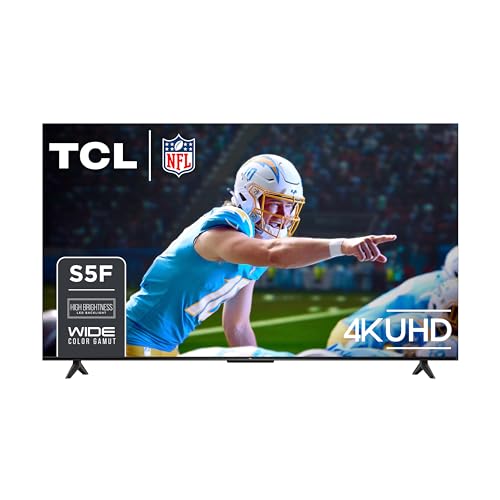
Asking how big of a tv do you need is really asking how much of your field of view the screen should fill from your seat. The direct answer is a simple relationship: for mixed viewing of films, sport and series in 4K, most people are happiest when the screen fills roughly thirty to forty degrees of their view, which you can work out from your seating distance in seconds with the method below.
Go smaller than that range and films feel distant and subtitles shrink; go larger and everyday broadcasts can feel overwhelming, with low quality channels showing their flaws. This guide gives you the distance method, a size by size breakdown, the adjustments for gaming, sport and small rooms, and the practical checks, stand width, wall space and viewing angles, that turn a number into the right television for your home.
Disclosure: As an Amazon Associate, kajuandouglas.com earns from qualifying purchases. Links to Amazon on this page are affiliate links; they cost you nothing extra. Listing details such as price and availability change often, so check the current Amazon listing before you buy.
Quick answer: In short: measure your seating distance in inches and divide by roughly one and a half for a cinematic feel, or by two for a more relaxed everyday feel; your ideal diagonal sits between those two results. Then confirm the stand or wall space fits, and step down a size if most of your viewing is low quality broadcast channels.
How Big of a TV Do You Need: The Field of View Method, Step by Step
Sit in your main seat and measure the distance to where the screen will be, in inches or centimetres. For a cinema leaning experience with films and prestige series, divide the distance by about one and a half to get a suggested diagonal. For a relaxed, everyday feel suited to mixed broadcasts and news, divide by about two. Your personal sweet spot sits between those results, and most households should choose a size inside that window rather than the largest panel the wall can hold.
A worked example makes it concrete. At a seating distance of eight feet, the method suggests a screen roughly between forty eight and sixty four inches on the diagonal, with the middle of that range suiting most mixed viewing. At ten feet, the window moves up a class. Notice how the method scales with the room rather than with marketing: the same television can be perfect in one home and undersized or oversized in another, which is why distance, not room size alone, is the right starting measurement.
In this guide
How Content Changes the Ideal Size
Films reward immersion, so film lovers should aim for the upper part of their size window, where the screen fills more of their view and 4K detail justifies itself. Sport sits in the middle: you want the whole pitch visible without head movement, plus scores and graphics that stay legible. News, chat shows and older broadcast channels reward restraint, because their lower resolution and static graphics look rougher as size grows, and an oversized screen makes compression flaws impossible to ignore.
Gaming pulls in two directions. Story games feel cinematic at larger sizes, while competitive players often prefer a slightly smaller screen, or sitting closer to a mid size one, so the whole scene and interface stay in view without eye travel. If the set serves several masters, weight the calculation by the viewing you do most evenings, and remember that a mid window choice is rarely regretted, while extremes in either direction are the sizes people write about returning.
Resolution, Distance and Why 4K Changed the Answer
Older advice kept viewers further from screens because standard and high definition pictures broke down into visible pixels and artefacts up close. A 4K picture holds together at much closer distances, which is what allows the immersive end of the size window to work at all. Sitting at the cinematic distance from a 4K set, most viewers see a clean, detailed image rather than a pixel grid, provided the source is a decent 4K or well upscaled stream.
The exception is low quality sources. Standard definition channels, old recordings and heavily compressed streams still soften and artefact when enlarged, whatever the panel resolution. If a large share of your viewing is that material, choose towards the relaxed end of your window. If nearly everything you watch is modern streaming, disc or console content, the cinematic end is safe, and stepping up a size is the upgrade owners most consistently say they wish they had made sooner.
The Practical Checks: Stands, Walls, Angles and Light
A diagonal measurement says nothing about furniture. Modern televisions often place their feet near the ends of the panel, so measure the foot span against your stand width, and if you wall mount, confirm the wall width, the mount position and that the screen centre can sit near seated eye level. Also measure doorways and stair turns for delivery if you are stepping up several size classes, because the largest panels are awkward objects in tight hallways.
Finally, consider angles and light at the chosen size. A bigger screen spreads viewing angles wider for side seats, so panel angle performance matters more, and a larger glossy surface catches more window reflection. Sit in every regular seat and check the intended screen position in daylight before you commit. Size is the most visible decision in the whole purchase, and ten minutes with a tape measure, plus a tape outline on the wall, prevents the most common and most expensive mistake in television buying.
Key Terms Glossary
- Diagonal: The advertised screen size, measured corner to corner across the visible panel, not the whole television body.
- Field of view: The portion of your vision the screen fills from your seat, expressed in degrees; roughly thirty to forty suits most mixed viewing.
- Viewing distance: The measurement from your eyes in the main seat to the screen surface, the number every size calculation starts from.
- Foot span: The distance between the television stand feet, which on many modern sets sits near the full width of the panel.
Common Misconceptions
- The biggest TV that fits the wall is the right TV: Oversizing forces eye movement during sport, exaggerates low quality sources and can dominate a room. Size to your seating distance window instead.
- Room size alone decides TV size: Two rooms of the same size can place seats at very different distances. The seat to screen measurement, not the room dimensions, drives the calculation.
- You will get used to any size: Viewers adapt partially, but an undersized set never becomes immersive and an oversized one never stops showing broadcast flaws. The window exists because both errors persist.
Size by Size: What Each Class Feels Like at Home
Compact sets in the smallest classes are personal televisions: kitchens, bedrooms, caravans and desks, viewed close, where their modest size fills the view because the distance is short. Mid size sets are the versatile centre of the market, suiting most living rooms at typical sofa distances and most bedrooms at bed distances. Large sets reward dedicated seating arrangements and high quality sources, and the largest classes are cinema statements that demand the room, the distance and the content all be worthy of them.
Notice that every class description is really a distance description. The classes exist because rooms exist in standard sizes and furniture sits in standard arrangements. When a salesperson steers you by room type alone, translate it back to your tape measure: your seat, your screen position, your number. Two households in identical rooms choose differently because one watches films and the other watches news, and both are right, which no size chart on a wall can capture but your calculation window can.
When to Break the Rules Deliberately
Rules have honest exceptions. A viewer with low vision may benefit from a screen above the window, bringing faces and text closer in effect. A room used for group viewing and presentations may prioritise the back row over the front. A dedicated gaming seat can be moved to the screen rather than sizing the screen to a fixed sofa, which is often the cheaper and better solution. In each case the method still governs: you are choosing a field of view for a defined viewer, just with a different weight given to one seat or one need.
The other deliberate exception is buying one size up when you are exactly between classes and your content is high quality. Panels are kept for many years, seating rarely moves further away, and the consistent regret in owner surveys runs in one direction. That is a nudge at the margin, not a licence to oversize: it applies inside your window, at its top edge, with your sources verified. Outside those conditions, the window is the window, and it has earned its authority by preventing the two mistakes that fill returns departments.
Real-World Scenarios and Examples
Abstract advice lands differently in real rooms. These scenarios apply the guidance above to the situations readers describe most often.
- The eight foot sofa: The classic living room distance. The window centres on the market most popular large mid size class; films at the top of the window, mixed viewing in the middle.
- The bed to dresser bedroom: Distance is shorter than it feels. Measure pillow to dresser honestly and expect a compact to mid size answer, with viewing angles checked for propped positions.
- The open plan everything room: Seats at several distances and angles. Size for the main sofa, choose a panel with strong angles, and accept that the dining seats get a smaller effective picture.
- The dedicated film room: Two seats, controlled light, discs and streaming. The cinematic end of the window, one class up from your instinct, is the size owners of such rooms praise.
- The kitchen diner set: Viewed standing, sitting and across a table, mostly broadcasts. The relaxed end of the window keeps channels clean and text legible without dominating the room.
Gear for This Guide
These verified examples anchor the size discussion: a typical living room class set, a compact set for close seating, and a premium panel in a popular size.

TCL 55-Inch Class S5 UHD 4K LED Smart TV with Fire TV (55S551F, 2024 Model), Dolby Vision, HDR PRO+, Dolby Atmos, Alexa Built-in with Voice Remote, Apple AirPlay 2 Compatibility, Streaming Television — A large mainstream 4K set in the size class the distance method suggests for many living rooms, useful for checking foot span and wall fit against your measurements. Check price on Amazon.

INSIGNIA 32-inch Class F20 Series Smart HD 720p Fire TV (NS-32F201NA22, 2021 Model) — A compact thirty two inch class set that illustrates the small end of the range, suited to close seating in bedrooms, kitchens and small rooms. Check price on Amazon.

Hisense 55″ Class U6 Series Mini-LED 4K UHD Smart Fire TV (55U65QF, 2025 Model) – QLED, Native 144Hz, HDR10+, Dolby Vision IQ, Dolby Atmos, Game Mode Pro, ALLM, Alexa Built in, Black — A mid large Mini LED option in the same class as the mainstream example, showing how panel quality choices sit within one size step. Check price on Amazon.
Beyond the Formula: Eyes, Content and Room Together
Every size guide offers a formula, and every formula quietly assumes a standard viewer, standard content and a standard room — three things your household may not contain. Screen size is really a negotiation between immersion and comfort, between the largest image your wall accepts and the smallest text your eyes forgive, between today’s seating and the furniture you might buy next year. Getting it right feels unremarkable, which is the point: the correct size disappears into the experience, while the wrong one nags daily, either as a screen you lean towards or a wall of light you lean away from. This section works through the negotiation properly, with the variables the simple charts leave out.
First Principles Worth Keeping in View
Viewing geometry decides more of what you perceive than the spec sheet does, because the eye resolves detail by angle rather than by pixel count alone. Field of view is the honest measure of size, because a screen that fills about thirty degrees of your vision feels balanced while forty degrees feels cinematic. Work from your eyes to the wall rather than from the wall’s maximum width, since the largest screen that fits is rarely the size your seating distance rewards.
For picking a screen size that fits the room, seating geometry is where theory meets the furniture. Whether the room allows the sofa to move at all: it explains most sizing regrets after the fact, and recheck it after any furniture change. The height of the screen centre relative to eye level — it rewards five unhurried minutes of attention, before falling for the largest panel the wall can hold. A subtitle line against a dark scene — it is worth measuring with a tape rather than estimating, because a few inches of distance can equal a size class of screen. Take the viewing angle from the kitchen doorway: it changes which resolution and panel type make sense.
Where the Details Start to Matter
Colour volume matters alongside brightness, because a highlight only looks real when it stays saturated — a red brake light should glow red, not wash towards pink or white. A 65 inch screen at three metres occupies roughly the same visual field as a 55 inch screen at two and a half metres, which is why distance can substitute for diagonal. Doubling the diagonal quadruples the screen area, so each size step up is a bigger change in presence than the inch figure suggests.
For mixed viewing, the everyday test is news and sport, because faces and tickers that feel comfortable for hours matter more than one spectacular film. Sit too close to a large screen and you start scanning rather than watching, moving your eyes across the frame and tiring faster during long sessions. Sit too far from a small one and subtitles shrink into effort, which is why text legibility sets a firmer minimum size than drama does.
The Decision Checklist Before You Choose a Size
A calmer look at picking a screen size that fits the room starts with the order of checks and what it changes after setup day. A decade-old broadcast upscaled by a modern processor — it tends to matter more in month three than in the first unboxing hour.
- Measure to the eyes: Take the distance from the wall or stand position to where your head actually rests, in the seat used most, and let that number anchor every calculation.
- Content mix honesty: Weigh cinematic content against everyday viewing; a size that thrills for films can overwhelm for news, and the daily majority deserves the louder voice.
- Resolution pairing: Match size to resolution and source quality together, because a bigger screen magnifies compression and softness exactly as much as it magnifies detail.
- The worst seat test: Check the angle and distance from your room’s least fortunate regular seat, not only the throne in the middle.
- Furniture and mounting reality: Confirm the stand width, wall strength, viewing height and cable runs for the size you fancy before the size is chosen, not after delivery.
- Household eyesight: Factor in glasses, eyesight differences and subtitle reliance; text legibility at distance is a hard constraint that no amount of immersion excuses breaking.
A television is a five-to-ten-year appliance for most households, so software support, port standards and physical practicalities matter more than launch-day excitement suggests. Measure to the main seat’s eye position with the sofa in its real place, not pushed back for measuring day, because thirty centimetres changes the answer. A corner sofa creates two different size questions at once, and the seat used nightly should win over the seat used when guests visit.
Four Households, Four Right Answers
Applied to picking a screen size that fits the room, real households repays a closer look. A household that watches mostly streamed series after dinner: it separates honest engineering from brochure engineering, and notice how seldom the winner wins on every front at once.
Picture the most common version of this in a real home: a couple in a compact flat whose sofa sits close to the screen, torn between the size that feels cinematic and the one that feels comfortable for the news. The deciding factor here is rarely the headline specification. Wall mounting pulls the screen a little further from the eyes than a stand does, and that small shift can justify stepping up one size class. The centre of the screen should sit near eye level when seated, and an oversized panel tempts owners to mount it too high, trading neck ache for diagonal.
There is a practical side to picking a screen size that fits the room — motion handling — that spec sheets never mention. Take response time when a pixel must swing from dark to bright: it can be improved by settings but never fully hidden, because clean motion ages better than dazzling stills. Overdrive artefacts that fringe fast-moving edges — it tells you more than a specification table ever will.
Consider how this plays out in practice: a family room where children sit on the floor far closer than the sofa, and the right size must forgive two very different distances. There is also a time dimension to this scenario. Room width limits viewing angle before it limits size, since end seats on a wide sofa see a big screen at a slant that shrinks its effective width. A larger screen exposes source quality mercilessly, so households watching plenty of broadcast or older content should weigh that honesty before upsizing.
Colour volume matters alongside brightness, because a highlight only looks real when it stays saturated — a red brake light should glow red, not wash towards pink or white. Gaming rewards size differently, because a big field of view aids immersion in open worlds but can hide interface corners in fast competitive titles. Split screen gaming halves the useful size for each player, which is a legitimate reason a gaming household chooses one class larger than film maths suggests.
Consider how this plays out in practice: a long, narrow room where the television sits at one end and viewing distances vary by several metres depending on the chair. There is also a time dimension to this scenario. Daylight viewing favours a slightly smaller, brighter screen over a larger, dimmer one, because washed out size impresses nobody at noon. Tape the outline on the wall and live with it through a full day, since morning glare and evening lamps reveal size and placement problems a quick look misses.
Most televisions ship with showroom settings designed to win attention under bright shop lights, which is almost the opposite of what a living room needs. Most owners adapt to a larger screen within a week and rarely wish they had gone smaller, which is why the common regret runs in one direction. The exception is the genuinely close room, where an oversized panel forces head movement and makes sport, with its wide framing, oddly hard to follow. Consider the stand or wall bracket early, because wide screens need wide furniture and a mismatch there looks wrong long after the novelty fades.
Consider how this plays out in practice: a dedicated film room where immersion is the entire point and the usual cautions about going large can be safely relaxed. Doorways, stairs and lift access decide the largest panel that can physically arrive, a mundane check that has ended more than one ambitious purchase. A bigger screen raises the stakes on uniformity, since cloudy patches and banding spread over more area and catch the eye during sport. Budget spent on one size step usually delights more than the same money spent on a feature tier, because size is the one specification you perceive in every second.
In the context of picking a screen size that fits the room, motion handling does more work than most buyers expect. The panel at the brightness you actually use — it rewards five unhurried minutes of attention, so bring a clip you know well and watch its hardest moment. Response time when a pixel must swing from dark to bright — it separates honest engineering from brochure engineering, and check gaming separately, since latency hides here too. Overdrive artefacts that fringe fast-moving edges — it is where specifications stop and judgement begins.
Living With the Size You Chose
Judged over months rather than minutes, picking a screen size that fits the room turns on the settling-in period. How the picture survives a Sunday afternoon of sport: it separates honest engineering from brochure engineering, before deciding that a flaw is permanent rather than unfamiliar.
Brightness Considerations in the Long Run
Anti-glare handling is an underrated part of the brightness story, because a screen that mirrors your windows cannot show its contrast no matter how strong the panel is. Children and floor level viewing argue for restraint, as a screen sized for the sofa can loom uncomfortably large from a rug a metre away. If two sizes remain tied after the maths, choose by content: film heavy homes go larger, news and casual homes stay comfortable in the middle. The viewing angle to the far edge matters for panel types that shift colour off axis, and a wider screen pushes more of its area into those weaker angles.
A calmer look at picking a screen size that fits the room starts with raw brightness and what it changes after setup day. How the picture survives a Sunday afternoon of sport — it makes peak output in tiny areas matter more than a whole-screen figure, so the same scene deserves a second look after dark before you decide. Take how the picture survives a Sunday afternoon of sport: it shows itself only when you stop looking for it.
Motion Considerations in the Long Run
A projector style field of view at home demands dark room discipline, so chasing cinema angles with a television in a bright lounge often disappoints. A slow pan across a skyline is the classic judder test, while a football broadcast tests how well a set keeps the ball and the pitch markings clean at speed. Seating that reclines effectively lengthens your viewing distance, and that hidden extra half metre belongs in the calculation. No processing fully fixes a low frame rate source, so a choppy stream will stay choppy no matter how capable the television is.
For picking a screen size that fits the room, the refresh trio is where theory meets the furniture. Take what happens to motion when the source is a games console: it explains why headline figures mislead so reliably, before paying a premium for a number working alone. Processing that smears what the panel could have shown cleanly — it decides whether sport looks crisp or merely busy. How the picture survives a Sunday afternoon of sport — it rewards brands that publish the unglamorous details. Pixel response trailing behind a fast refresh claim: it is a fairer judge than any showroom loop.
Gamingtv Considerations in the Long Run
Audio routing becomes part of the gaming setup once a soundbar or headset joins, and the TV’s passthrough behaviour decides whether everything stays in sync. For bedrooms, viewing from pillows shortens distance and lowers eye height, which is why bedroom screens usually want to be a class smaller than lounge maths suggests. Open plan rooms create several distances at once, and sizing for the furthest regular seat leaves closer viewers overwhelmed during big matches. The diagonal is measured corner to corner, so two screens with the same figure can differ in height, and height is what your eyes judge most.
Strip away the marketing and picking a screen size that fits the room still hinges on static game interfaces more than on headlines. A subtitle line against a dark scene — it stresses uniformity in a way films never do, which console players feel sooner than film fans do. A health bar parked in the same corner for a whole evening — it is a fair test of brightness discipline over hours, because a panel treated kindly ages evenly.
Calibration Considerations in the Long Run
Small setup decisions compound: picture mode, colour temperature, sharpness and motion settings interact, so changing one in isolation rarely gives the result you expect. Widescreen films leave black bars that shrink the active image, meaning a film on a given diagonal uses less of it than full screen sport does. A size that feels daring in the shop usually feels normal at home within days, because shops surround you with even larger screens that reset your sense of scale.
Look closely at picking a screen size that fits the room and honest calibration keeps deciding the outcome. Motion processing left on its gentlest setting or disabled entirely: it usually gets a household most of the way in a single sitting, then live with it for a few days before judging the result. A colour temperature that sits close to the warm standard: it can be undone in seconds, so there is no risk in trying it first, so treat it as the baseline every other tweak must beat. The viewing angle from the kitchen doorway — it tells you more than a specification table ever will, while the vivid modes keep flattering demos and betraying films.
Going Further: Television Details That Reward a Second Look
Judged over months rather than minutes, picking a screen size that fits the room turns on the secondary details. Take a decade-old broadcast upscaled by a modern processor: it rarely decides a purchase and often decides satisfaction, so give each one a moment before the decision hardens.
Look closely at picking a screen size that fits the room and the refresh trio keeps deciding the outcome. Take what happens to motion when the source is a games console: it decides whether sport looks crisp or merely busy, before paying a premium for a number working alone. The panel’s true refresh ceiling beneath the marketing figure — it rewards brands that publish the unglamorous details. Take the interplay between refresh, response and the source frame rate: it shows itself only when you stop looking for it. Take the difference one menu setting makes to a familiar film: it rewards brands that publish the unglamorous details.
Viewing distance guidelines from cinema standards assume dark rooms and film content, so treat them as the immersive end of a range rather than a rule for family viewing. Glasses wearers with a narrow corrected field sometimes prefer sitting slightly further from a given size, a personal factor no chart can settle. When the room doubles as a workspace or play space, a moderate screen that leaves the room usable beats a wall of glass that dominates every other activity. Soundbars need width beneath the screen, and stepping up a size can solve a soundbar fit problem as neatly as it changes the picture.
Applied to picking a screen size that fits the room, motion handling repays a closer look. The panel at the brightness you actually use: it differs between the centre of the screen and its edges on some panels, because clean motion ages better than dazzling stills. Take the difference one menu setting makes to a familiar film: it can be improved by settings but never fully hidden, and check gaming separately, since latency hides here too.
The honest way into picking a screen size that fits the room runs through the refresh trio, a detail many buyers skip. The interplay between refresh, response and the source frame rate: it only works as a trio, never as a single number. The panel at the brightness you actually use — it only works as a trio, never as a single number. The difference one menu setting makes to a familiar film: it only works as a trio, never as a single number. Take a modest panel with honest motion beating a boastful rival: it tells you more than a specification table ever will.
Plan cable runs and socket positions for the chosen size before delivery, because a larger panel relocates every connection you had planned. A screen one size too small nags quietly for years, while one size too large mostly nags during delivery and the first evening’s rearrangement. For sport, the whole pitch must sit comfortably in view, which is why very close seating and very large screens fight each other during matches. No processing fully fixes a low frame rate source, so a choppy stream will stay choppy no matter how capable the television is.
Judged over months rather than minutes, picking a screen size that fits the room turns on different kinds of motion. Take the viewing angle from the kitchen doorway: it is worth checking before the return window closes, so test with the content you actually watch most. Take what happens to motion when the source is a games console: it is a fairer test than any synthetic motion demo, which is why gamers and film fans often choose differently.
Seasoned owners discussing picking a screen size that fits the room tend to raise accurate settings early. Take the slightly softer image that turns out to be the honest one: it stays relevant long after launch reviews are forgotten, because first impressions here are genuinely misleading. The evening your eyes finally stop asking for the vivid mode — it tends to arrive around the third viewing, not the first, before assuming brighter and sharper must mean better. Take the evening your eyes finally stop asking for the vivid mode: it rewards anyone patient enough to live with it briefly.
For picking a screen size that fits the room, accurate settings is where theory meets the furniture. The slightly softer image that turns out to be the honest one: it separates accuracy from the showroom punch we are trained to want, before assuming brighter and sharper must mean better. Take the evening your eyes finally stop asking for the vivid mode: it separates accuracy from the showroom punch we are trained to want, and judge by skin tones, which forgive nothing.
Applied to picking a screen size that fits the room, honest calibration repays a closer look. Take the difference one menu setting makes to a familiar film: it stays relevant long after launch reviews are forgotten, then live with it for a few days before judging the result. How the picture survives a Sunday afternoon of sport: it can be undone in seconds, so there is no risk in trying it first, so treat it as the baseline every other tweak must beat. A subtitle line against a dark scene — it looks flat for one evening and then simply correct, before reaching for test patterns or paid help. Noise reduction switched off for clean sources: it tells you more than a specification table ever will.
In the context of picking a screen size that fits the room, field of view does more work than most buyers expect. The angle the screen occupies from your main seat: it is worth checking before the return window closes, before assuming a larger diagonal is automatically an upgrade. Take how the picture survives a Sunday afternoon of sport: it is easy to test with a tape measure and a cardboard outline, so measure from your eyes, not from the wall. Take subtitle size once the image grows: it is worth checking before the return window closes.
The practical ceiling is set by the worst regular seat, not the best one, because a household watches together and the unhappy seat complains loudest. Renters should weigh mounting restrictions and moving effort, since the largest screens are the hardest to transport safely between homes. A television’s bezel and stand add centimetres beyond the panel figure, and tight alcoves have rejected screens that the diagonal alone said would fit. If you upgrade size, expect to revisit seating distance too, because moving the sofa even slightly can restore the balance the old screen enjoyed.
Documentary and nature footage rewards immersion more than dialogue driven drama, so a nature heavy household can justify the immersive end of the range. The size question is really a distance question wearing a price tag, and answering the distance half honestly makes the purchase half easy. Keep the packaging until the size has survived a week of real evenings, because exchanges are painless with the box and miserable without it. A modest screen in a small dark room can feel grander than a huge screen in a bright hall, since perceived size follows contrast and field of view together.
There is a practical side to picking a screen size that fits the room — raw brightness — that spec sheets never mention. The difference one menu setting makes to a familiar film — it separates sets that merely glow from sets that genuinely sparkle, so judge it with the curtains in their usual position, not in a darkened showroom. Take a lamp reflected in the panel: it is worth checking before the return window closes, so the same scene deserves a second look after dark before you decide.
Anti-glare handling is an underrated part of the brightness story, because a screen that mirrors your windows cannot show its contrast no matter how strong the panel is. When in doubt between two sizes for a film loving household, the larger one ages better, because content keeps getting more cinematic while rooms stay the same. The tape test, the tape measure and one honest evening of imagining your programmes at that scale will settle this decision better than any chart. Finally, remember that size is the specification you cannot upgrade with a setting, so it deserves the largest share of your decision time.
Strip away the marketing and picking a screen size that fits the room still hinges on raw brightness more than on headlines. How the picture survives a Sunday afternoon of sport — it makes peak output in tiny areas matter more than a whole-screen figure, which is why a modest panel in a controlled room can beat a brighter one fighting glare. How the picture survives a Sunday afternoon of sport — it shows itself only when you stop looking for it.
Related Guides
- best tvs under 1000
- best tvs under 500
- best tvs for ps5
- best 4k tvs for gaming
- best tvs for bright rooms
- 4k vs 8k tv
- qled vs uled tv
Frequently Asked Questions
How far should I sit from a 55 inch TV?
Using the field of view method, a fifty five inch class screen suits seating roughly between five and a half and nine feet away, with the middle of that range ideal for mixed films, sport and series in 4K. Sit closer for a more cinematic feel with high quality sources, and further back if much of your viewing is standard broadcasts. Measure your actual seat to screen distance rather than guessing from room size, because furniture layout changes the number more than people expect.
Is a bigger TV always better?
No. Bigger is better only inside your distance window. Beyond it, you gain eye movement during fast sport, more visible flaws in low quality channels and a screen that dominates the room and catches more reflections. Below the window, films lose immersion and fine detail and subtitles shrink. The happiest owners are usually those who chose the largest size inside their calculated window, not the largest size available, and who confirmed stand width and viewing angles before ordering.
What size TV is best for a small bedroom?
Bedroom seating is usually a bed positioned closer to the screen than a living room sofa, so measure from pillow to screen position first. Many bedrooms land in the compact to mid size classes, which keep the field of view comfortable and leave the set easy to place on a dresser or wall. Prioritise good viewing angles if you watch propped at an angle, and consider how much light the screen throws into a dark room late at night when choosing panel brightness.
Does 4K mean I can buy a bigger TV than before?
Yes, within reason. A 4K picture stays clean at closer distances than older high definition pictures did, so the immersive end of the size window is now practical for streaming, disc and console content. The caution is source quality: standard definition channels and heavily compressed streams still look soft when enlarged. If most of your viewing is modern 4K or well upscaled content, stepping up a size is safe and commonly praised. If broadcasts dominate, stay towards the relaxed end of your window.
How do I check a TV size before buying?
Measure your seating distance, calculate your size window, then mark the screen outline on the wall or stand with painter tape at the exact width and height of the model you are considering, including its stand foot span. Live with the outline for an evening of normal viewing. Check legibility of programme guides from your seat, viewing angles from side seats and reflections in daylight. This simple test catches almost every size mistake before any money is spent.
What if two people sit at different distances?
Calculate for the seat used most, or for the main pair of seats if viewing is shared equally. If distances differ a lot, favour the closer seat slightly, because an oversized picture is more fatiguing than a modest one is disappointing, and the further viewer can still follow everything on a mid window size. Wide seating spreads also argue for a panel with strong viewing angles, so side and distant seats keep contrast and colour. When in doubt, the middle of the window is the peacemaker choice.
Is it better to err slightly too big or too small?
Slightly too big, for most people. Viewers adapt to a larger screen within days and rarely wish they had gone smaller, while a too-small screen nags at every film night. The exception is a very close desk-style setup, where oversize genuinely strains the neck and eyes.
Does a bigger TV make poor-quality channels look worse?
It reveals them more honestly. A larger screen stretches the same limited information over more of your vision, so compression and softness become easier to see. Good upscaling softens the effect, but if most of your viewing is low-quality broadcast, that belongs in the size decision.