The 4k vs 8k tv question sounds simple, because 8K has four times as many pixels as 4K, yet the answer depends on content, screen size and seating distance far more than on pixel counts. Almost everything you can watch today, from streaming services to consoles to broadcast television, is made in 4K or below, and the human eye can only resolve extra detail when the screen is very large or you sit unusually close.
This comparison works through resolution in practice, upscaling quality, content availability, gaming and tier sense, so you can decide whether 8K earns its premium in your room or whether a better 4K set is the smarter purchase. For most households the verdict is clear, but there are genuine exceptions, and they are covered honestly below.
Disclosure: As an Amazon Associate, kajuandouglas.com earns from qualifying purchases. Links to Amazon on this page are affiliate links; they cost you nothing extra. Listing details such as price and availability change often, so check the current Amazon listing before you buy.
Quick answer: Quick verdict: choose a high quality 4K set for almost every home, because content, consoles and value all favour it. Consider 8K only for very large screens viewed closely, or for flagship buyers who want the top model regardless. Money saved by choosing 4K is usually better spent on panel quality, size or sound.
4K vs 8K TV: Side-by-Side Comparison
The table below summarises the contest before the detailed sections argue each criterion in full.
| Criterion | 4K TV | 8K TV |
|---|---|---|
| Native content available | Extensive: streaming, consoles, Blu-ray and broadcasts all target 4K | Very limited: demos and some online clips; almost no films, series or broadcasts |
| What you watch most of the time | Native or lightly upscaled content at its best | Upscaled 4K or lower content, dependent on processing quality |
| Visible difference | Sharp at normal sizes and distances | Noticeable mainly on very large screens at close distances |
| Gaming | Consoles target 4K with high refresh modes | No mainstream console advantage; extra pixels do not add gaming features |
| Panel quality per tier | Strong choice at every tier, including premium panels | Concentrated at flagship tiers with limited model choice |
| Best use case | Every typical living room, bedroom and cinema setup | Very large cinema style screens and flagship showcases |
In this guide
Resolution, Distance and What Your Eyes Can Actually See
Resolution only matters when your eyes can resolve it. Visual acuity sets a limit: beyond a certain combination of screen size and seating distance, extra pixels merge into the same perceived sharpness. For a typical living room screen viewed from a sofa, 4K already sits at or beyond that limit for most viewers, which is why a good 4K set looks perfectly sharp with films and sport. 8K detail becomes visible when the screen grows very large or the seat moves much closer than a normal sofa position.
There is also a subtle downside to consider. Because almost all content is 4K or lower, an 8K set spends its life upscaling, inventing the extra pixels through processing. Good upscaling looks clean, but it cannot create real detail that was never captured, and poor upscaling can soften or add artefacts. A high quality 4K panel showing native 4K content is, frame for frame, showing you the content exactly as it was mastered.
Content, Gaming and the Upscaling Question
Content ecosystems decide formats, and the ecosystem has chosen 4K. Streaming services build their premium tiers around 4K with HDR, disc releases are 4K, and current consoles render games at up to 4K with high refresh modes. There is no meaningful library of 8K films, no 8K broadcast standard in normal use and no console that targets 8K gameplay. Buying 8K today is buying a display resolution in search of content that may arrive slowly, if at all, during the life of the set.
Gaming underlines the point. What improves games is high refresh support, variable refresh, low input lag and good HDR, all of which are available on excellent 4K sets, often with more model choice than the small 8K range. If gaming matters to you, spend on those features and on panel quality. The resolution badge contributes the least to how a game looks and feels on either technology.
Tiers, Panel Quality and Where the Money Works Harder
8K models sit at flagship tiers, which means the comparison is rarely just resolution: you are also paying for the brand top panel, processing and design. The fair question is whether the best 4K set in the same tier beats the 8K set overall. Frequently it does on the things you see every day, such as contrast, brightness, viewing angles and motion, because the 4K range includes superb OLED and Mini LED models competing hard for your money.
The honest exceptions are real. A very large screen, well beyond typical living room sizes, viewed from a close cinema style distance, can use 8K pixels, and upscaling on flagship processors is genuinely impressive. Some buyers also simply want the flagship model and value its design and processing as much as its resolution. If that is you, buy it with open eyes: you are paying for the flagship package, with 8K as part of it, not for a library of 8K content.
Who Each Option Suits
- Choose 4K if: You watch streaming, sport, films and games at normal sizes and distances, which covers almost every household, and you want the widest model choice at every tier.
- Choose 8K if: You are building a very large screen cinema setup viewed closely, or you deliberately want a flagship model and accept that nearly all content will be upscaled.
- Either serves you well if: You are buying at the flagship tier anyway; then judge the specific sets on contrast, brightness and motion with your own content, and treat resolution as the last tie breaker.
Final Recommendation
Final recommendation: buy the best 4K television your tier allows, in the right size for your room, and put any remaining budget into sound. Revisit 8K only if your screen is exceptionally large, your seating is close, or a genuine 8K content ecosystem has arrived by the time you next upgrade.
Upscaling Quality: Where Flagship Processing Earns Its Keep
Because an 8K set upscales everything, its processor is its picture. The best processors analyse each frame for edges, textures and noise, and reconstruct a clean, stable image that can look remarkably natural at large sizes. Lesser processors smear detail or introduce shimmering on fine patterns such as crowds and fabrics. If you are genuinely considering 8K for a very large screen, the audition is specific: watch a 4K film scene with faces, a sports broadcast with a crowd, and a dark scene, all upscaled, and judge the processing, not the pixel count.
Apply the same test in reverse to a flagship 4K set and the comparison becomes honest. The 4K set shows the same content natively, with nothing invented. Most viewers at most distances cannot separate them, which is the finding that should govern a purchase of this size. Where the 8K set pulls ahead in demonstrations, it is usually its flagship panel and processing doing the work, qualities that also exist, in 4K form, in the same showroom at a lower tier.
The Ownership View: Support, Energy and Resale Reality
Flagship 8K models receive the same software support as their 4K siblings, and their smart platforms age at the same speed, which is to say the streaming box you add in year four will not care about the panel resolution. Large high brightness panels of any resolution are the hungriest devices in the room, and an 8K flagship driven hard is no exception; check the energy label if running costs matter to you, because the difference between models is real over years of daily use.
Resale and longevity follow the content, not the badge. A television remains desirable while it displays what people watch beautifully, and that is 4K HDR with good contrast and current ports. Nothing about an 8K panel protects it from the ordinary reasons televisions are replaced: size envy, a failed board, a new room. Buy the set that serves the content that exists, in the room you have, and the future proofing argument resolves itself into what it always was: a reason to buy a good television, not a resolution.
Real-World Scenarios and Examples
Abstract advice lands differently in real rooms. These scenarios apply the guidance above to the situations readers describe most often.
- The dedicated cinema build: A screen well beyond living room sizes, seats close, reference sources. The one honest 8K case; audition the upscaling with your own discs before committing.
- The flagship shopper: Wants the top model in the range regardless. Buy it for its panel and processing, with eyes open that 8K content is not part of the value today.
- The family upgrade: Replacing a ten year old set for streaming and sport. The best 4K set in tier, correctly sized, plus a soundbar, transforms the room for the same spend.
- The gamer: Consoles target 4K with high refresh modes. A 4K gaming specified set beats any 8K model at its own game, at every tier.
- The future proofer: Worried about buying twice. A quality 4K panel with current HDR formats and eARC is the durable purchase; the content ecosystem decides lifespans, and it speaks 4K.
Gear for This Guide
These verified 4K examples and a soundbar show the allocation this guide recommends: panel quality and audio first, resolution badge last.

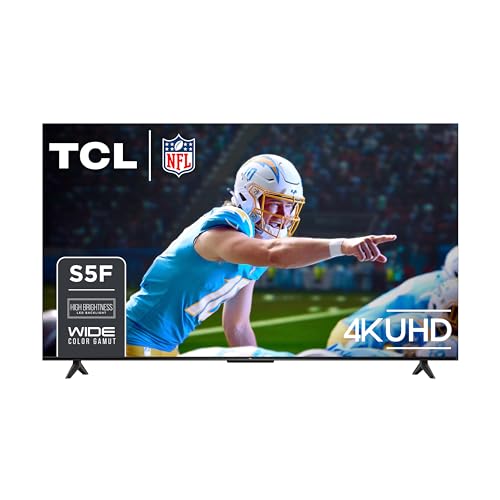
TCL 55-Inch Class S5 UHD 4K LED Smart TV with Fire TV (55S551F, 2024 Model), Dolby Vision, HDR PRO+, Dolby Atmos, Alexa Built-in with Voice Remote, Apple AirPlay 2 Compatibility, Streaming Television — A large 4K LED set with Dolby Vision that represents the sensible centre of the market this comparison recommends for most rooms. Check price on Amazon.

Hisense 55″ Class U6 Series Mini-LED 4K UHD Smart Fire TV (55U65QF, 2025 Model) – QLED, Native 144Hz, HDR10+, Dolby Vision IQ, Dolby Atmos, Game Mode Pro, ALLM, Alexa Built in, Black — A premium 4K Mini LED option showing where money works harder than resolution: brightness, dimming quality and a high refresh panel. Check price on Amazon.

Samsung HW-Q600C 3.1.2ch Soundbar w/Dolby Audio, Q-Symphony, Adaptive Sound, HDMI eARC, Game Mode Pro, Bluetooth, Acoustic Beam, Tap Sound — A Dolby Atmos capable soundbar that upgrades film nights more noticeably than extra pixels on any screen size most homes use. Check price on Amazon.
Pixel Density in Practice: Reading the Numbers Like a Viewer
Beyond the headline comparison, the 4K versus 8K question rewards a slower look at how resolution interacts with everything else in the chain — the size of the panel, the quality of the source, the processing that scales one to the other, and the simple geometry of your sofa. Many buyers fixate on the pixel count because it is the easiest number to compare, yet it is the factor your eyes are least able to judge in isolation once real content is playing. This section widens the lens: how pixel density behaves at normal distances, why two televisions with identical resolution can look strikingly different, and how to weigh the resolution decision against panel quality, brightness and gaming features that compete for the same budget.
First Principles Worth Keeping in View
One footnote matters for the 4K versus 8K decision more than most claims: raw brightness. How the picture survives a Sunday afternoon of sport: it tells you more than a specification table ever will, so test it in the room and at the hour that matter. Daylight spilling across the screen — it shows whether the backlight can surge for a second without flattening everything else, and note the result before tweaking anything else. Take the panel at the brightness you actually use: it stays relevant long after launch reviews are forgotten.
On an 8K panel those extra pixels only earn their keep when a 4K master is scaled cleanly, because every single source pixel has to be stretched across four display pixels without softening edges. Count the pixels per degree at your sofa rather than the pixels on the box, since the 8K advantage disappears once each pixel falls below what your retina can separate. A 65 inch 4K screen already packs roughly sixty eight pixels into every inch, which is why stepping to 8K at that size changes the arithmetic far more than the picture. Native 8K footage remains a rarity outside demo reels and a handful of nature productions, so an 8K purchase is really a bet on upscaling quality for years to come.
Where the Details Start to Matter
Upscaling a 1080p broadcast to 8K asks the processor to invent fifteen pixels for every one it receives, and weak processing shows that strain as waxy faces and ringing around text. The honest dividing line sits near eighty five inches for most rooms, because only at that scale and a close seat does 8K detail survive the journey to your eyes. Sit twice the picture height away from a 4K set and the pixel grid already vanishes for most viewers, leaving nothing extra for an 8K grid to reveal.
Where 8K sets quietly justify themselves is flagship processing, since the panels that carry the badge also tend to carry each brand’s best scaling and motion silicon. A well mastered 4K disc on a midrange 4K panel will beat a compressed stream on an 8K flagship, because source bitrate outweighs destination resolution almost every time. Gaming settles the argument fastest of all, as current consoles render internally at or below 4K and then upscale, so an 8K badge adds no frames and no detail. If you mostly watch sport from three metres, the money an 8K model commands buys a larger 4K screen instead, and the larger image is the upgrade you will actually perceive.
The Decision Checklist Before You Commit
In the context of the 4K versus 8K decision, the order of checks does more work than most buyers expect. Take a subtitle line against a dark scene: it quietly decides whether the purchase feels easy or argumentative, so test it in the room and at the hour that matter.
- Screen size first: Decide the diagonal before the resolution, because pixel density is a product of both; the same resolution reads very differently spread over a compact panel than stretched across a wall-filling one.
- Your true seating distance: Measure from screen to eyes in your main seat, not to the sofa’s front edge, and use the seat that is occupied every night rather than the occasional best seat.
- Source quality audit: List what you actually watch — broadcast, streaming tiers, discs, games — and be honest about how much of it is native high resolution versus older or compressed material.
- Processing pedigree: Upscaling quality separates flagship sets from the rest more visibly than resolution does, so weigh the brand’s processing reputation as heavily as the panel specification.
- Gaming requirements: If a console or PC is central, confirm port bandwidth, variable refresh support and game-mode picture control before resolution enters the conversation.
- Upgrade horizon: Ask whether you keep televisions for five years or ten, because the longer the horizon, the more standards support and software updates matter relative to today’s pixel count.
Text rendered by a PC desktop is the one everyday case where 8K density can show, because crisp glyph edges at close range expose any softness in the scaling chain. Panel uniformity matters more than the step from 4K to 8K, since cloudy backlighting or dirty screen effect will distract you in every scene while extra pixels distract you in none. An 8K television still has to tone map the same HDR masters as a 4K one, so highlight roll off and shadow detail depend on processing rather than on the pixel count. Viewing distance charts assume perfect vision and perfect content, and real households fall short on both, which pushes the practical 8K threshold even further away.
Four Living Rooms, Four Different Answers
Judged over months rather than minutes, the 4K versus 8K decision turns on real households. The test clip you know by heart — it shows itself only when you stop looking for it, and that pattern repeats often enough to plan around.
Take a concrete household case: a family room where a large screen is watched from a sofa pushed back against the far wall, mostly for evening films and weekend sport. The deciding factor here is rarely the headline specification. The resale reality is blunt: buyers pay for size, panel type and brand long before they pay for 8K, so the premium rarely survives into a second hand listing. Energy draw climbs with an 8K panel because driving thirty three million pixels and a brighter backlight costs power that a comparable 4K set simply never spends.
One footnote matters for the 4K versus 8K decision more than most claims: honest calibration. What happens to motion when the source is a games console — it is worth checking before the return window closes, which is precisely what ownership feels like day to day. A colour temperature that sits close to the warm standard — it protects skin tones, which are the first casualty of aggressive processing, and note the result before tweaking anything else. Take motion processing left on its gentlest setting or disabled entirely: it shows itself only when you stop looking for it, and that evidence ages better than any first impression. A decade-old broadcast upscaled by a modern processor: it protects skin tones, which are the first casualty of aggressive processing.
Take a concrete household case: a dedicated media room with a very large screen and seating deliberately placed close, built around discs and high-quality streaming. There is also a time dimension to this scenario. For photography slideshows the calculus shifts slightly, since high resolution stills are one of the few home sources that can feed an 8K screen something close to native. Broadcast television in most countries still tops out well below 4K, which means an 8K set spends its life upscaling rather than displaying anything at its native rate.
A smaller 4K screen viewed up close for desk use can look sharper in practice than a huge 8K screen across a lounge, because angular density is what the eye actually samples. When two sets share the same processor family, the 4K version often tracks motion and colour identically to its 8K sibling, leaving resolution as the only real difference on the invoice. The strongest reason to choose 8K today is wanting the flagship tier itself, with its better build, brighter panel and fuller feature list, while treating the resolution as a bonus. Compression artefacts grow more visible as screens enlarge, so at the sizes where 8K could help, the limiting factor is usually the stream rather than the display.
Consider how this plays out in practice: a bright open-plan space where the television competes with kitchen light and serves news, sport and casual viewing all day. If your room seats viewers at several distances, the closest seat decides the resolution question, because that viewer is the only one positioned to resolve the extra detail. An 8K logo guarantees a pixel count and nothing else, while contrast, colour volume and viewing angles still vary as widely as they do across the 4K range. Upscalers differ in how they treat film grain, and a good 8K processor preserves grain as texture while a poor one smears it into moving noise.
Native refresh rate, response time and processing work together: a fast panel with clumsy processing can still smear, while a modest panel with clean processing can look surprisingly tidy. At normal lounge distances a 4K image is already retina limited for most eyes, a term borrowed from phone displays that describes detail finer than vision can use. The price gap between a flagship 4K set and its 8K equivalent often equals a quality soundbar, and the soundbar transforms film nights in a way extra pixels cannot. Future proofing arguments for 8K assume broadcasters and streamers will adopt the format, yet the industry’s investment is flowing towards better HDR and higher frame rates instead.
Consider how this plays out in practice: a gaming-first setup where a console and a PC share the screen and menu text, frame rates and latency matter daily. In this situation the sensible priorities reorder themselves. A 4K panel showing native 4K content needs no invention at all, displaying each mastered pixel exactly once, which is a quiet advantage no upscaler can quite replicate. Diagonal size and resolution multiply together, so doubling the diagonal at 4K can reveal more new detail in your content than quadrupling pixels at the same size.
Game interfaces stress a panel differently from video: static health bars, maps and score bugs sit in one place for hours, which raises the stakes on uniformity and image retention habits. Demo loops in stores run native 8K clips at close range precisely because that is the only scenario where the difference shouts, and your sofa is not that scenario. For mixed family viewing the 4K sweet spot covers sport, streaming and games without compromise, leaving 8K as a specialist choice for very large dedicated rooms.
Living With the Choice: Years Two to Seven
The honest way into the 4K versus 8K decision runs through the settling-in period, a detail many buyers skip. The viewing angle from the kitchen doorway: it rewards patience more than instant judgement, and keep notes, because memory edits these things generously.
Distance Considerations in the Long Run
Judged over months rather than minutes, the 4K versus 8K decision turns on field of view. How the picture survives a Sunday afternoon of sport — it is easy to test with a tape measure and a cardboard outline, before the headline numbers resume their persuasion. Take the test clip you know by heart: it explains why a bigger screen can paradoxically look softer, and remember that guests at the edge get a narrower view than you do. Subtitle size once the image grows — it shows itself only when you stop looking for it.
Processing latency can rise when a set scales lower resolutions all the way to 8K, so gamers should check game mode figures rather than assuming the flagship is fastest. The pixel structure of an 8K panel can actually help at extreme sizes by keeping game interfaces and subtitles smooth edged even when you sit close enough to see individual elements. Buying the larger 4K model instead of the smaller 8K one is the swap experienced installers recommend most, because immersion scales with size long after resolution saturates. Colour accuracy out of the box varies more between individual models than between the 4K and 8K tiers, so calibration potential deserves a line in any comparison.
Motion Considerations in the Long Run
One footnote matters for the 4K versus 8K decision more than most claims: different kinds of motion. A fast break in basketball with the camera whipping sideways — it tells you more than a specification table ever will, so the decision rests on evidence from your own sofa. Take the viewing angle from the kitchen doorway: it stays relevant long after launch reviews are forgotten, which is why patient buyers rarely regret this step.
An 8K screen cannot rescue a low bitrate stream, and at large sizes it may expose compression blocking more clearly than the 4K screen it replaces. If you keep a television for a decade, panel longevity, software support and port standards will shape your satisfaction far more than whether the grid holds eight or thirty three million points. The step from standard definition to HD felt dramatic and the step to 4K felt clear, but the step to 8K is the first that most viewers cannot detect without a test pattern.
Hdr Considerations in the Long Run
A calmer look at the 4K versus 8K decision starts with colour at full brightness and what it changes after setup day. Take a sunset that must hold orange without bleaching to yellow: it shows itself only when you stop looking for it, and that evidence ages better than any first impression. Take what happens to motion when the source is a games console: it makes a fireworks scene look either electric or anaemic, which no single brightness figure on a box can tell you.
Seasoned owners discussing the 4K versus 8K decision tend to raise format support early. Take whether your disc player and console speak the same standards as the screen: it stays relevant long after launch reviews are forgotten, because a fallback conversion is rarely the equal of native support. Take the difference one menu setting makes to a familiar film: it explains why the same film can look different through different apps, because everyday conditions are the real specification. The panel at the brightness you actually use: it shows itself only when you stop looking for it, so test it in the room and at the hour that matter.
Gamingtv Considerations in the Long Run
For gaming, a television is an input device as much as a display, and latency, responsiveness and interface readability join the usual picture questions. Room acoustics and seating comfort decide how long you happily watch, and neither improves when the budget moves from a bigger 4K set into a smaller 8K one. A flagship 4K set from last year frequently outperforms a current entry level 8K model on contrast and motion, because tier matters more than the resolution badge.
When a household splits viewing between a bright kitchen adjacent space and evening films, a bright 4K panel serves both better than an 8K panel chosen for its pixel count. Subtitles and programme guides are rendered by the source at modest resolutions, so their crispness on an 8K set reflects the scaler rather than the panel’s native grid. The mathematics of visual acuity are unforgiving: beyond a certain ratio of size to distance, additional pixels carry information your visual system discards before it reaches awareness. Choosing 4K frees budget for bias lighting, a better mount or a streaming device with broader format support, each of which improves nightly viewing in measurable ways.
Calibration Considerations in the Long Run
A calmer look at the 4K versus 8K decision starts with honest calibration and what it changes after setup day. A subtitle line against a dark scene — it rewards five unhurried minutes of attention, so test it in the room and at the hour that matter. What happens to motion when the source is a games console — it matters more than any single slider buried three menus deep, then live with it for a few days before judging the result. The test clip you know by heart — it matters more than any single slider buried three menus deep.
An 8K purchase makes most sense as part of a planned cinema room with a very large screen and controlled seating, not as a like for like replacement in an ordinary lounge. Manufacturers reserve their best anti reflection coatings and widest colour gamuts for flagship tiers, which is why 8K showroom sets look superb for reasons unrelated to resolution. If two otherwise identical sets differ only in resolution, the 4K one is the rational buy at any size your room is likely to hold this decade.
Going Further: Television Details That Reward a Second Look
Strip away the marketing and the 4K versus 8K decision still hinges on the secondary details more than on headlines. The difference one menu setting makes to a familiar film — it costs nothing to check and plenty to fix afterwards, which is why patient buyers rarely regret this step.
Seasoned owners discussing the 4K versus 8K decision tend to raise built-in sound early. The thin speakers firing downwards or at the wall — it is the compromise nearly every buyer ends up renegotiating, so budget a thought for audio before the screen swallows everything. Take a decade-old broadcast upscaled by a modern processor: it should be auditioned with speech, not with an action trailer, so the decision rests on evidence from your own sofa. Take how the room’s soft furnishings soak up what little sound there is: it is a fairer judge than any showroom loop.
There is a practical side to the 4K versus 8K decision — built-in sound — that spec sheets never mention. Take the thin speakers firing downwards or at the wall: it should be auditioned with speech, not with an action trailer, which is precisely what ownership feels like day to day. What happens to motion when the source is a games console: it often decides whether subtitles stay on permanently, before assuming the picture is the whole experience. What a soundbar or a pair of external speakers changes — it rewards even a modest external speaker more than expected, and note the result before tweaking anything else.
Judged over months rather than minutes, the 4K versus 8K decision turns on long-term ownership. The panel at the brightness you actually use: it changes the verdict more often than owners expect, so favour the option you can imagine living with in five years. The availability of replacement remotes, pads and stands — it matters more with every year the device stays in service, which is why patient buyers rarely regret this step. How the picture survives a Sunday afternoon of sport: it deserves weight precisely because replacement is disruptive.
Look closely at the 4K versus 8K decision and running costs keeps deciding the outcome. Take the difference one menu setting makes to a familiar film: it can differ more between picture modes than between rival models, so the decision rests on evidence from your own sofa. How the picture survives a Sunday afternoon of sport — it is worth checking before the return window closes, because a hot cabinet shortens the life of everything inside it.
A calmer look at the 4K versus 8K decision starts with long-term ownership and what it changes after setup day. A subtitle line against a dark scene: it is hard to assess in a shop and easy to research beforehand, so favour the option you can imagine living with in five years. Whether the ports match the standards your next console will expect — it separates honest engineering from brochure engineering, before the headline numbers resume their persuasion.
Streaming services allocate bandwidth by resolution tier, and none currently deliver a mainstream 8K tier, so the panel’s native rate goes unused by the sources people watch most. A close look at a paused 4K frame on a large 4K screen shows how much detail already survives; the question is whether your seating lets you see even that much. Heat and processing headroom matter on 8K sets because the scaler works harder on every frame, and cramped cabinets punish that extra workload sooner.
For the 4K versus 8K decision, field of view is where theory meets the furniture. Take the trade between immersion and visible compression artefacts: it makes broadcast television feel very different from cinema, and that evidence ages better than any first impression. A decade-old broadcast upscaled by a modern processor — it changes the verdict more often than owners expect, and remember that guests at the edge get a narrower view than you do. A subtitle line against a dark scene: it shows itself only when you stop looking for it.
The most useful in store test is your own 4K clip played on both screens from your real seating distance, where the 8K advantage typically shrinks to invisibility. For households upgrading from 1080p, the leap to 4K already quadruples detail, and banking the savings towards size or sound delivers a second upgrade the 8K route cannot match. Panel technology cycles faster than resolution standards now, so a buyer chasing longevity should prioritise the display type and processor generation over the 8K label. Wide seating arrangements punish narrow viewing angles on some flagship panels, a flaw that matters nightly while the 8K benefit matters almost never.
For the 4K versus 8K decision, field of view is where theory meets the furniture, in the second month, not the second hour. What happens to motion when the source is a games console: it explains why a bigger screen can paradoxically look softer, and remember that guests at the edge get a narrower view than you do. The angle the screen occupies from your main seat — it makes broadcast television feel very different from cinema, before the headline numbers resume their persuasion. How much of your peripheral vision a large panel fills — it changes how sharp the same resolution appears.
Applied to the 4K versus 8K decision, frame interpolation repays a closer look. A subtitle line against a dark scene: it asks the viewer to choose between smoothness and authenticity, which is precisely what ownership feels like day to day. How the picture survives a Sunday afternoon of sport: it can steady motion while quietly rewriting the director’s intent, before the headline numbers resume their persuasion. The difference one menu setting makes to a familiar film: it tells you more than a specification table ever will, because everyday conditions are the real specification. A decade-old broadcast upscaled by a modern processor — it is a fairer judge than any showroom loop.
Seasoned owners discussing the 4K versus 8K decision tend to raise motion handling early. How the picture survives a Sunday afternoon of sport: it stays relevant long after launch reviews are forgotten, so bring a clip you know well and watch its hardest moment. The difference one menu setting makes to a familiar film — it is worth checking before the return window closes, because everyday conditions are the real specification.
For the 4K versus 8K decision, frame interpolation is where theory meets the furniture. What happens to motion when the source is a games console — it tells you more than a specification table ever will, because the setting that flatters football can ruin a western. Take frame interpolation smoothing a slow film pan: it should be tried at its lowest strength before being dismissed, which is why many sets let each input remember its own choice. The panel at the brightness you actually use — it is best judged on faces in motion rather than on landscapes.
In the context of the 4K versus 8K decision, format support does more work than most buyers expect. The difference between a logo on the box and support on every port — it stays relevant long after launch reviews are forgotten, before blaming the panel for a limitation in the chain feeding it. How the set behaves when a format it lacks arrives anyway — it changes the verdict more often than owners expect, and future purchases should be checked against the same list. How the picture survives a Sunday afternoon of sport: it rewards five unhurried minutes of attention, before the headline numbers resume their persuasion.
For the 4K versus 8K decision, HDR allocation is where theory meets the furniture. The tone curve deciding what the panel sacrifices first — it rewards restraint, since not everything should blaze at once, which is why format support and panel quality must be weighed together. How the picture survives a Sunday afternoon of sport — it separates honest engineering from brochure engineering, before the headline numbers resume their persuasion.
There is a practical side to the 4K versus 8K decision — colour at full brightness — that spec sheets never mention. What happens to motion when the source is a games console: it separates panels that can do bright from panels that can do bright and rich, so watch for colours washing towards white at their peak. Take a sunset that must hold orange without bleaching to yellow: it only convinces when the colour stays saturated at full brightness. Take a subtitle line against a dark scene: it is where cheaper backlights quietly surrender.
Related Guides
- best gaming tvs under 1000
- best 55 inch tvs under 1000
- best tvs for xbox series x
- best antennas for tvs
- best soundbars for tvs
- qled vs uled tv
- tv refresh rate explained
Frequently Asked Questions
Can you actually see the difference between 4K and 8K?
Only under specific conditions: a very large screen, a close viewing distance, and content that is either native 8K or exceptionally well upscaled. At typical sofa distances on typical screen sizes, human visual acuity means 4K already looks fully sharp to most viewers, and side by side differences fade. The surest test is your own room: if your screen size and seating are conventional, spend on panel quality, because that difference is visible in every scene, unlike extra pixels.
Is there any 8K content to watch?
Very little. A small amount of demonstration material and online clips exist, and some phones can record 8K video, but films, series, sports broadcasts and streaming catalogues are produced in 4K or below, and consoles target 4K. An 8K television therefore spends almost all its time upscaling lower resolution content. Upscaling on flagship sets is good, but it cannot invent detail that was never captured, so the practical picture advantage over a quality 4K set is minimal for real viewing.
Will 8K TVs upscale 4K content to look better?
They upscale it to fill the screen, and flagship processors do this cleanly, sometimes with slightly smoother gradients and edges. However, upscaling cannot add genuine detail, and a native 4K panel displaying the same 4K source is showing the content exactly as mastered, with no invention required. Viewers rarely prefer the upscaled result in blind comparisons at normal distances. Judge any 8K set on its overall panel quality and processing with your own favourite content, not on the promise of upscaling alone.
Is an 8K TV better for gaming?
No. Current consoles target 4K output with high refresh and variable refresh modes, and no mainstream console renders games natively at 8K. Gaming quality comes from refresh support, low input lag, HDR and panel response, all widely available on 4K sets with far more model choice. An 8K badge adds nothing to gameplay. If gaming is a priority, choose a 4K set with the full gaming feature set and put the difference towards a soundbar or a larger size.
Should I future proof by buying 8K now?
Future proofing only works if the future arrives during the life of the product and uses the standard you bought. There is currently no confirmed path to a mainstream 8K content ecosystem, and televisions are typically replaced for panel, size or feature reasons long before a decade passes. The safer future proofing is a quality 4K panel with current HDR formats, modern ports including eARC, and good gaming features, which matches everything you can actually watch now and for the foreseeable future.
When does 8K actually make sense?
Two situations justify it. The first is a genuinely large cinema style screen viewed from a relatively close distance, where the extra pixels can be resolved and flagship upscaling keeps 4K content looking clean at that scale. The second is a buyer who wants the flagship model for its panel, processing and design, and treats 8K as part of that package rather than a content promise. Outside those cases, a top tier 4K set is the better purchase for the same money.
Does 8K make standard television channels look worse?
Not inherently. A good 8K set upscales broadcast material competently, and the result is usually comparable to a 4K set of similar quality. The risk sits with budget processing rather than resolution itself: weak upscaling softens any source, whatever the panel’s pixel count.
Is 8K worth it for a smaller screen in a bedroom?
Almost never on resolution grounds alone, because at bedroom sizes and distances the eye cannot separate the extra density. Spend the difference on panel quality, sound or simply a size step up, all of which you will notice every single night.
