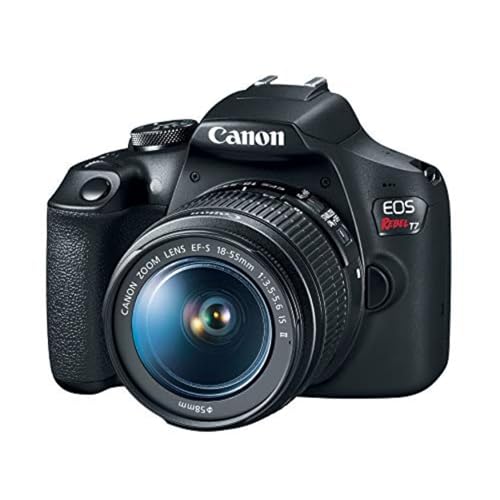
The mirrorless vs dslr camera debate is the defining camera question of the last decade, and it now has a clear direction of travel: manufacturers have stopped developing new DSLRs and their lenses, and every major new model is mirrorless. Yet DSLRs remain on shelves, dominate the used market, and still take superb photographs. So the honest question is not which technology wins in theory, but which serves your budget, your subjects and your shooting style today.
This comparison walks the criteria that actually differ — autofocus, viewfinders, size, battery life, lens ecosystems and value — without pretending the loser takes bad pictures. Generations of iconic images were made on DSLRs, and a good DSLR in skilled hands will out-shoot a mirrorless camera in careless ones. But the technologies are not equal in 2026, and where they differ, the differences matter for specific kinds of photography. Here is how to weigh them for yours.
Disclosure: As an Amazon Associate, kajuandouglas.com earns from qualifying purchases. Links to Amazon on this page are affiliate links; they cost you nothing extra. Listing details such as price and availability change often, so check the current Amazon listing before you buy.
Mirrorless vs DSLR Camera: The Quick Verdict
Choose mirrorless if you are starting fresh, shoot video, photograph moving subjects, or want the camera that will still be supported with new lenses in five years. Choose a DSLR if you find a great used bargain, strongly prefer an optical viewfinder, need all-day battery life, or already own DSLR lenses. For most new buyers in 2026, mirrorless is the sensible default; for bargain hunters, DSLRs are the best value in photography.
In this guide
Mirrorless vs DSLR at a Glance
| Criterion | Mirrorless | DSLR |
|---|---|---|
| Viewfinder | Electronic: previews exposure, white balance and depth of field in real time | Optical: shows the scene through the lens with zero lag and no power draw |
| Autofocus | On-sensor; eye, animal and vehicle detection; focus points cover nearly the whole frame | Dedicated AF module; fewer points clustered centrally; live view uses the sensor |
| Size and weight | Smaller, lighter bodies; lenses vary | Larger, heavier bodies due to mirror box and prism |
| Battery life | Typically a few hundred shots per charge; spare battery advisable | Often 1,000+ shots per charge; days of light use |
| Video | A design priority: 4K and beyond, strong video AF, flip screens | Historically an afterthought; live-view AF slower on most models |
| Lens future | All current development; growing catalogues in every mount | No new development; enormous used market at falling prices |
| Shutter | Silent electronic shutter options; very high burst rates | Mechanical only on most; audible mirror slap |
| Price pattern | Current models at current prices; used prices firming | New old-stock and used prices heavily discounted |
Autofocus: The Biggest Practical Gap
Autofocus is where mirrorless has pulled decisively ahead. Because a mirrorless camera focuses with its imaging sensor, its focus points span nearly the whole frame and its software can recognise eyes, faces, animals, birds and vehicles, then track them as they move. For portraits, wildlife, sports and children, this changes photography from a skill of placing a focus point to the simpler art of composing while the camera holds focus. Eye autofocus in particular produces portraits that would have required luck or expertise on older systems.
A DSLR focuses through a separate sensor in the mirror box, with points clustered toward the centre. Good DSLR systems are fast and proven — sports photographers trusted them at Olympics for decades — but they cannot offer subject recognition, and their coverage forces more focus-and-recompose technique. In live view a DSLR uses its sensor like a mirrorless camera, usually with slower, older implementations. If your subjects move and you want the highest keeper rate, this criterion alone may settle the debate; our best cameras for sports photography picks are all mirrorless for this reason.
Viewfinders: Preview vs Reality
The electronic viewfinder (EVF) of a mirrorless camera shows the photograph you are about to get: exposure, white balance and depth of field simulated live, with overlays like histograms and focus peaking. Beginners learn faster because mistakes are visible before the shot, and reviewing images in bright sunlight is easy. The costs are battery drain, a slight electronic feel that purists dislike, and historically some lag — largely solved in current models.
The DSLR’s optical viewfinder shows the scene itself, through glass, with no power draw and no lag, and many photographers simply love that clarity and connection. What it cannot do is warn you that your exposure is two stops off until after the shot. Neither is objectively better; they are different pleasures. Try both in a shop if you can — viewfinder preference is personal and surprisingly strong, and it is the one DSLR advantage no spec sheet can argue away.
Size, Battery and the Shooting Day
Mirrorless bodies are smaller because they delete the mirror box and prism, and for travel and street photography that size saving is real — a mirrorless kit fits bags a DSLR kit overflows. The saving shrinks with fast full-frame lenses, which are similar sizes in both systems, so judge by the kit you will actually carry. Battery life is the DSLR’s clear win: an optical viewfinder and a sleeping sensor sip power, and a DSLR can shoot a wedding on one or two batteries where a mirrorless camera wants three or four. Spares are cheap and light, so treat this as a packing note rather than a deal-breaker.
Video flips the verdict. Mirrorless cameras are designed around live sensor output, so they offer better video autofocus, higher resolutions and frame rates, flip screens and silent shooting. Most DSLRs shoot competent basic video but with clumsy autofocus and restrictions. If video is even a third of your work, mirrorless is the only serious answer in 2026 — compare models in our best cameras for videography roundup.
Lenses and the Long Game
Every mount tells a story about the future. Canon RF, Nikon Z and Sony E receive new lenses constantly, including designs impossible on DSLR mounts. DSLR mounts — Canon EF, Nikon F, Pentax K — are frozen, but they contain decades of superb lenses now selling used at fractions of their original prices. A bargain-hunting stills photographer can assemble a DSLR lens collection of professional quality for enthusiast money, an opportunity that will not repeat.
Adapters blur the boundary: Canon and Nikon both make adapters that mount their DSLR lenses on their mirrorless bodies with full autofocus, so DSLR lens owners can migrate gradually. Third-party support differs by mount and generation, so check your specific lenses before assuming. The long game favours mirrorless; the value game, for now, favours the patient DSLR buyer. Our how to choose a camera guide shows how to weigh a lens catalogue against your subjects.
Ready to Buy? Start Here
A classic entry DSLR kit and two mirrorless counterparts show the choice in concrete form — compare their size, screens and lens mounts in person if you can:

Canon EOS Rebel T7 DSLR Camera with EF-S 18-55mm Lens Kit — Check price on Amazon. A solid, widely available option that fits this guide; confirm the exact kit contents and lens mount on the listing before ordering.

Canon EOS R50 Mirrorless Camera with RF-S 18-45mm Lens Kit — Check price on Amazon. A solid, widely available option that fits this guide; confirm the exact kit contents and lens mount on the listing before ordering.
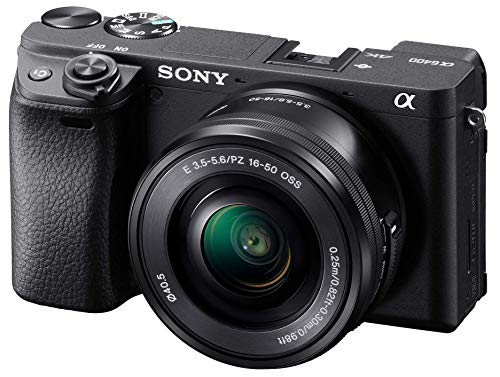
Sony Alpha a6400 Mirrorless Camera — Check price on Amazon. A solid, widely available option that fits this guide; confirm the exact kit contents and lens mount on the listing before ordering.
Who Each Option Suits
Choose a DSLR if: you found a used body and lenses at a price mirrorless cannot match; you shoot landscapes, studio or still life where autofocus sophistication matters little; you love an optical viewfinder; or you need maximum battery endurance far from power. Students and bargain hunters building a first serious kit are the DSLR’s natural audience in 2026, and they will take excellent photographs.
Choose mirrorless if: you are buying new, shoot any video, photograph people, pets, wildlife or sports, travel light, or expect to grow a lens collection over the next decade. You pay more for current models, and you get the platform every manufacturer is building on. For most readers of this guide, that is the deciding sentence.
Final Recommendation
For a fresh purchase at retail prices, buy mirrorless — it wins autofocus, video, size and future support, and its battery weakness is solved by a spare. For a used purchase where budget rules, a DSLR kit remains the most photographic value per pound or dollar available anywhere, and it will keep taking fine pictures for years. The wrong choice is agonising until the moment passes: both systems reward the photographer who learns light and composition far more than the one who owns the newer box.
The Used-Market Equation in Detail
Because manufacturers have exited DSLRs, the used market now holds professional DSLR bodies and lenses at prices that would have been implausible five years ago — flagship autofocus, pro build and superb sensors for enthusiast money. For stills-only photographers, this is a genuine golden age of value, with two honest caveats: shutter actuations matter, so check counts on high-mileage bodies, and repair support will slowly thin as parts age, making the newest DSLR generations safer buys than the oldest bargains. Lenses are the safer half of the equation — glass does not expire, and DSLR lenses adapt forward onto mirrorless bodies if you later migrate.
Mirrorless used prices, by contrast, hold firmer because the platform is current. The value play there is one-generation-old bodies, whose autofocus and sensors remain excellent while launch buyers absorb depreciation. Whichever side you buy, the arithmetic of this comparison increasingly runs through the second-hand market — and through the adapter, which lets a photographer own DSLR lenses and a mirrorless body simultaneously and postpone the either/or verdict for years.
What Professionals Actually Did
The industry’s migration tells the story empirically: news, wedding, sports and wildlife professionals switched to mirrorless almost completely between roughly 2019 and 2024, driven by eye autofocus, silent shutters for ceremonies and press conferences, and video capability their clients began demanding. The holdouts cluster where mirrorless advantages matter least — some studio, landscape and architectural shooters kept DSLRs for years because their subjects do not move and their viewfinders please them. Both behaviours are rational, and they map exactly onto the criteria in this guide.
The lesson for an individual buyer is to copy the reasoning, not the roster. Professionals asked: does the new system raise my keeper rate, unlock paid work, or reduce my load? Where the answer was yes, they paid switching costs without sentimentality; where no, they kept tools that worked. Your version of the question — about your subjects, your budget and your hands — is the whole of this comparison, and no forum consensus can answer it for you.
Cost of Ownership Over Five Years, Not Just the Price of the Body
Comparisons usually stop at the body price, but the two systems age differently in your wallet. A DSLR bought today, especially a previous-generation or used body, often represents remarkable value per photograph, because the technology is mature and the used market is deep. Lenses for the major DSLR mounts are plentiful second-hand, flashes and accessories are everywhere, and servicing is widely available. The honest counterweight is that development has essentially ended: few new DSLR lenses will appear, resale values will continue to soften, and if you later migrate, you will be selling into a falling market. For a photographer who knows their subjects and expects to shoot the same kit for a decade, that arithmetic can be entirely favourable. You are buying capability at its cheapest, not investing in a growing platform.
Mirrorless ownership runs the other way. Bodies cost more for equivalent build, native lenses are newer and therefore pricier, and you will likely want more batteries. Against that, the platform is where every maker’s development now goes, adapters let many photographers carry their DSLR lenses across, and the used market for mirrorless grows richer every year, steadily improving the entry point. The five-year question is therefore not which system is cheaper, but which spending pattern matches you: a closed, inexpensive, fully sufficient kit bought once, or an open platform you will probably extend. Neither answer is the frugal one in the abstract; each is frugal for a different photographer.
The hidden costs nobody puts in the comparison table
- Memory cards: high-resolution mirrorless bodies shooting fast bursts reward faster, costlier cards, while many DSLRs are content with modest cards you may already own.
- Batteries and charging: plan on at least one spare for mirrorless from day one; many DSLR owners never buy a second battery in the camera’s life.
- Adaptation: an adapter is a one-off cost that can save a whole lens collection, but factor it in honestly if you are pricing a switch.
- Repairs and calibration: DSLR autofocus sometimes needs lens calibration for critical work, a service cost mirrorless largely designs away, while mirrorless sensors, being exposed at every lens change, may need professional cleaning more often in dusty use.
Video, Flash and the Edges of the Comparison
For video the verdict in the main comparison holds, mirrorless is the modern tool, but the reasons are worth spelling out for anyone filming seriously. A DSLR filming through its rear screen with contrast-based autofocus belongs to an earlier era: focus hunts, the mirror is locked up so the optical finder is useless, and many models crop or limit recording in ways that complicate real work. Mirrorless bodies are designed around live view, with phase-detect autofocus across the frame, eye tracking during recording, stabilisation in the body on many models, and recording features that treat video as a first-class citizen. If video is even a third of your intended use, this section alone settles the comparison for most buyers.
Flash photography is closer than folklore suggests. Both systems drive modern speedlights and studio triggers perfectly well, and the optical viewfinder of a DSLR has one genuine advantage in bright sun, where a rear screen washes out and an electronic finder consumes battery to compete. Conversely, mirrorless exposure preview helps flash work more than beginners expect, because you can see ambient exposure balance before adding flash, and silent electronic shutters, used within their limits, open up discreet event work. Studio photographers working with modelling lights and manual flash will find both systems entirely at home; the differences that dominate headlines mostly evaporate under controlled light.
Weather, work rate and professional realities
Working photographers who stayed with DSLRs longest often cite unglamorous virtues: a body that runs all day on one battery in freezing weather, an optical finder that works with the camera effectively off, and a rental and repair network built over decades. Those who switched earliest often cite an equally unglamorous one: fewer missed frames of moving subjects, and clients who never see the near-misses. Both are describing reliability, just measured at different points in the workflow. If your photography is paid, the correct comparison is not body against body but system against your failure modes: whichever camera loses you fewer unrepeatable moments is the better professional tool, whatever its mirror arrangement.
Learning Photography on Each System
For a learner, the two systems teach differently, and the difference is real even though both can produce an excellent education. The DSLR’s optical finder shows the scene but not the exposure, so beginners learn by reviewing, correcting and building an internal sense of light; many teachers value that discipline. The mirrorless preview shows exposure, white balance and depth-of-field effects as you will record them, shortening the feedback loop to almost nothing, so beginners learn by experiment at remarkable speed. There is also a middle path worth knowing: every mirrorless camera can have its preview effects reduced or its finder set to behave more neutrally, and every DSLR has live view on its rear screen. The systems are less ideologically opposed than the debate suggests, and a motivated learner will thrive on either, provided the camera is actually carried and used.
One learning advantage is unique to the present moment, though. Because photographers are migrating, excellent DSLR kits change hands at prices that let a student own a bright prime, a standard zoom and a telephoto for what a single new mirrorless lens might cost. A learner with three lenses learns focal length, depth of field and perspective by doing. A learner with one superb body and no lens budget learns menus. If you are buying an education, weight that heavily.
Myths that survive every comparison
- Mirrorless files are inherently sharper. Sharpness comes from lenses, focus accuracy and technique; mirrorless wins focus consistency, not optical magic.
- DSLRs are tougher. Build quality follows the tier of the body, not the presence of a mirror; professional mirrorless bodies are sealed and tested to the same working standards.
- You cannot do serious work without the latest system. News, sport and weddings were covered superbly for decades on DSLRs, and those photographs have not expired.
- Adapters ruin lens performance. On the major systems, native-mount adapters preserve autofocus and optical quality for most lenses; the compromises are specific, not general, and worth checking lens by lens.
A Decision Framework for the Three Buyers Who Actually Exist
Strip away the general debate and three buyers remain. The first owns no camera and is starting now, with no lenses to protect. For them, mirrorless is the straightforward recommendation, bought at the tier their subjects require, because every part of the industry’s future, lenses, accessories, tutorials, resale, points that way. The second owns a working DSLR kit and photographs happily. For them, the correct purchase is usually no purchase: add the lens or light their work actually lacks, and revisit the question when the body fails or a specific capability, eye autofocus for portraits, silent shooting for ceremonies, becomes a genuine repeated need. The third is returning to photography after years away, with an old DSLR kit in a cupboard. For them, the elegant path is often a mirrorless body plus the adapter for their mount, letting old lenses live a second life while new native lenses arrive one at a time. Three buyers, three right answers, and not one of them decided by a specification table.
Autofocus Scenarios, Head to Head in the Real World
The main comparison awards autofocus to mirrorless in general terms, so here is where that plays out subject by subject, because the size of the gap depends entirely on what you photograph. For a single portrait subject in good light, both systems focus essentially perfectly, and any difference is invisible in the results. Add movement and low light and the gap opens. A child running toward the camera at an indoor party is close to a worst case: changing distance, dim conditions, a face that turns. A modern mirrorless body with eye detection will hold focus through most of that sequence, while a DSLR, focusing through its separate sensor with a limited spread of points, will produce a mixture of sharp frames and near misses, and the photographer will compensate by shooting more and expecting less. For birds in flight against a cluttered background, the story repeats with telephoto lenses: mirrorless subject detection recognises the bird, while DSLR tracking depends heavily on the photographer’s ability to keep a focus point on the subject manually.
Then there are the scenarios where the gap closes again or reverses in practice. In a studio, with a still subject and controlled light, both are flawless and the DSLR’s optical finder is arguably the more pleasant tool. For landscapes on a tripod, focus is manual or single-point on both, and identical. For long telephoto work from a hide, battery endurance enters the autofocus conversation, because the best tracking system in the world is no advantage on a depleted battery at hour six. The mature conclusion is that mirrorless autofocus superiority is real, large for moving subjects in poor light, and irrelevant for a substantial share of careful photography, which is why so many DSLR owners who try mirrorless feel impressed and unhurried at the same time.
Viewfinders in difficult light, honestly compared
Electronic finders struggle in two situations worth naming. In very bright conditions they are excellent, but their brightness and the rear screen’s compete with glare and consume power. In very dark conditions, a night sky or a dim venue, the electronic image brightens the scene wonderfully but can look noisy and lag slightly, while an optical finder simply shows the dark scene as your eyes see it, which some photographers prefer for composition even though it reveals less. Conversely, the optical finder cannot show you the photograph you are about to get, and at night that means checking the rear screen after every frame. Neither finder is the honest one; they are different instruments, and photographers who work at night seriously often own strong opinions earned in both directions.
Sound, Stills From Video and Hybrid Workflows
One workflow has quietly become common and favours mirrorless design in a way specification tables miss: pulling still photographs from video, or shooting stills and video interchangeably within the same assignment. A wedding photographer delivering a short film alongside stills, a property photographer shooting both, or a parent who wants one device for the school play in both formats benefits from a camera whose stills and video modes share lenses, colour and handling seamlessly. DSLRs can do both jobs across a day, but the transition between their stills finder and their live-view video mode is a genuine gear change, in posture, focusing method and expectation. Mirrorless treats the two as one continuous activity, and for hybrid shooters that continuity, more than any resolution figure, is the lived difference.
Sound is part of hybrid work too. The mirror slap and shutter of a DSLR are audible events that limit where the camera can be used during quiet passages of a ceremony, a performance or a wildlife encounter. Mirrorless silent shooting removes the sound entirely within the electronic shutter’s limits. Productions and venues increasingly specify silent cameras, which is a professional consideration that has nothing to do with image quality and everything to do with being allowed to work at all.
The Second-Hand Market, System by System
Because the industry is mid-migration, the used market tells the comparison more honestly than any launch event. DSLR bodies and lenses are abundant and inexpensive, including professional models that were flagship tools not long ago, and they will keep working for years. That abundance is a genuine opportunity for photographers whose subjects suit the technology: a landscape, studio or family photographer can assemble a superb DSLR kit today for a fraction of its original cost, and the photographs will be indistinguishable from those the kit made when it was new and expensive. The mirrorless used market is younger but maturing quickly, as early adopters upgrade; first and second generation mirrorless bodies with excellent sensors now appear regularly, narrowing the price argument that once belonged entirely to DSLRs.
Buying used in either system follows the same discipline. For bodies, check the shutter count where it can be read, test every dial and button, examine the sensor with a narrow-aperture shot against a plain surface, and confirm the battery is healthy or priced as if it is not. For lenses, inspect the glass from both ends with a torch for fungus and haze, work the rings through their full travel, and test autofocus and aperture operation on a body. Buy from dealers with warranties for anything expensive, and treat a price far below the going rate as information rather than luck. The system you choose matters less than the care with which you buy into it.
Rental as the honest tiebreaker
If the comparison remains unresolved after all this reading, rent. A weekend with a mirrorless body and adapter alongside your DSLR, shooting your real subjects in your real light, produces evidence no review can. Rental houses and some retailers offer exactly this, and the cost is small against a system decision measured in years. Photographers who rent tend to buy once and buy calmly, because they are choosing from experience of their own photographs rather than from other people’s charts. Photographers who switch systems twice in frustration almost always skipped the rental step.
What the Next Few Years Plausibly Hold
No comparison should pretend the landscape is static. DSLR development has effectively concluded, which sounds like a verdict and is better understood as stability: the system you buy is finished, fully understood, and will not be made obsolete by next year’s model, because there is no next year’s model. Support, parts and servicing will continue for a long time given the enormous installed base, though they will gradually thin, and that trajectory is worth factoring into a purchase you expect to keep for a decade. Mirrorless will continue to gain computational features, faster readout, better subject recognition and improved battery life, and each gain will be real and incremental rather than revolutionary for most photographers. The photographs, notably, will remain recognisably the product of lenses, light and photographers.
That is the fitting place to leave the comparison. The mirror was a brilliant solution to a twentieth-century problem, and the cameras built around it made most of the photographs we treasure. Its removal enables a different set of strengths that suit how photography is now practised, especially moving subjects, hybrid stills and video, and silent work. Choose the system whose strengths match your subjects and whose compromises fall where you will never notice them, and then spend your attention where it has always mattered most: on the light, the moment and the picture.
A short glossary for the comparison
- Phase-detect autofocus: a focusing method that measures not just whether a subject is sharp but which way and how far to move the lens, enabling fast, confident tracking.
- Contrast-detect autofocus: a method that hunts for maximum sharpness by trial, accurate for still subjects but slower for movement, historically the live-view method on DSLRs.
- Rolling shutter: the distortion that can appear when an electronic shutter reads a sensor line by line during fast movement or panning.
- Focus peaking and magnification: electronic finder aids that highlight sharp edges or enlarge the view, making manual focus practical in a way optical finders rarely matched.
- Adapter: a mount converter that lets lenses designed for one system fit another, often preserving electronic communication and autofocus.
Handling, Controls and the Feel of a Day’s Shooting
Comparisons rarely linger on control layout, yet photographers touch controls thousands of times more often than they change systems. DSLRs matured into a remarkably consistent handling language: a pronounced grip, a top dial or two, an optical finder you can use with the camera effectively asleep, and buttons placed for use by feel with the camera at your eye. Many photographers can operate a DSLR in the dark, with gloves, without a glance, and that fluency is a real capability that switching temporarily destroys. Mirrorless bodies began smaller, sometimes at the expense of grip depth and control space, and the best modern designs have converged toward DSLR-like handling with deeper grips and generous dials, while the smallest still trade handling for portability in a way that suits travel and street work and frustrates big lenses and big hands.
The honest test is the one from the buying guidance elsewhere: hold each candidate with the largest lens you will realistically use, for minutes not seconds, and work the controls you use most. Reach the exposure compensation, the ISO control and the focus-area change with the camera at your eye. If one system consistently puts those under your fingers and the other makes you hunt, that is data, and for many photographers it settles the question more decisively than autofocus charts do, because you will feel handling in every frame and autofocus differences only in some.
Battery life in context, not just in numbers
The battery gap deserves its context rather than its headline. A DSLR’s advantage is largest for photographers who shoot in bursts across a long day with the finder constantly in use, and smallest for those who shoot a few dozen considered frames, for whom a mirrorless battery lasts days. Video, reviewing images, wireless transfer and very cold weather all tax mirrorless batteries harder, and the working answer, two spares in the bag and a USB charging option in the car or hotel, has become so routine for mirrorless owners that most report battery life as a solved logistics topic rather than a limitation. It remains a genuine DSLR strength; it is simply a strength whose importance scales with how you shoot, like everything else in this comparison.
Colour, Files and Living With the Output
Owners live with files far longer than with bodies, so the output deserves a place in the decision. Both systems produce excellent RAW files, and differences between current sensors are small beside differences in lenses and light. Where the systems diverge in daily file life is in the aids around capture: mirrorless focus magnification and peaking make manual and adapted lenses produce consistently precise files, while the DSLR’s mature JPEG colour, particularly skin tones from the long-established makers, still has loyal defenders who shoot JPEG deliberately. Wireless transfer, in-camera charging and the general connectedness of newer mirrorless bodies also shape file life, because photographs that move easily to a phone or a backup get shared, printed and preserved, while photographs stranded on a card tend to wait. Judge a system partly by the journey its files take in your house, not only by the moment of capture.
Environmental and Practical Footnotes Worth Knowing
Two practical topics rarely make the comparison articles but matter to owners. The first is sensor cleaning. A DSLR sensor hides behind a mirror and a shutter for most of its life and is exposed only during the exposure itself and during cleaning, so it gathers dust slowly. A mirrorless sensor is exposed at every lens change, and on many models sits open whenever the camera is off and uncapped, so mirrorless owners typically clean more often, or at least inspect more often. The counterweight is that mirrorless sensors are easier to inspect and reach, and several makers fit effective sensor shake systems and, on some models, a shutter that closes over the sensor when the camera powers down. Neither system is a problem; they simply distribute the same chore differently.
The second is power in the field beyond batteries: charging. Newer mirrorless bodies commonly charge and even run over USB, which means a power bank, a car socket or a laptop can rescue a day’s shooting in a way most DSLRs never offered. For travel photographers who already carry power banks for phones, that quietly erases much of the battery-life gap in practice, because topping up during lunch is easier than rationing frames. DSLR owners counter, fairly, that a camera needing no rescue is better than one with a convenient rescue. Both are right, for different itineraries, which by now will surprise nobody who has read this far into the comparison.
Choosing When You Photograph One Thing Above All Else
Specialists can shortcut the whole comparison by letting their single dominant subject decide. Bird and wildlife photographers weighing long lenses should price the exact telephoto they need in both systems, including used examples, because that one lens will dominate cost and weight for years and the body choice follows it. Wedding and event photographers should weight silent shooting, eye autofocus and dual card slots so heavily that the answer is almost always a current mirrorless body. Landscape photographers working slowly from tripods can choose almost entirely on lens quality, sensor detail and price, which is why so many superb landscape kits remain DSLR-based and will for years. Macro specialists should try focus stacking and magnification aids in the finder, where mirrorless generally makes the work easier. Let the subject lead and the system follows, which is the closest this long comparison gets to a universal rule.
Related Guides
- best dslr cameras for beginners
- best dslr cameras under 500
- best cameras for photography
- best cameras for beginners
- best cameras for travel
Frequently Asked Questions
Are DSLRs obsolete in 2026?
As a developing platform, yes: Canon and Nikon have ended DSLR development and Sony left the category years ago, so no significant new DSLR bodies or lenses are coming. As tools, no: existing DSLRs take the same excellent photos they always did, service and used lenses remain plentiful, and prices make them bargains. Obsolete describes the roadmap, not the photographs.
Can I use DSLR lenses on a mirrorless camera?
Usually yes, with the manufacturer’s adapter: Canon EF lenses work on RF bodies and Nikon F lenses on Z bodies with autofocus and stabilisation largely intact, and Sony offers similar adapters for its older A-mount. Performance is often as good as native. The reverse — mirrorless lenses on DSLR bodies — is impossible because mirrorless lenses sit closer to the sensor than a mirror box allows.
Which is better for learning photography?
Mirrorless, for most learners, because the electronic viewfinder previews exposure in real time: you see the effect of every setting before pressing the shutter, which shortens the feedback loop enormously. DSLRs teach the same fundamentals and their low used prices lower the cost of starting. Either beats staying on a phone; the best teacher is the camera you shoot with daily.
Why do mirrorless cameras have worse battery life?
A mirrorless camera powers its sensor and an electronic viewfinder or screen continuously to show you the scene, while a DSLR’s optical viewfinder uses no power and its sensor wakes only for the shot. Newer mirrorless batteries and more efficient processors have narrowed the gap, and real-world shooting with breaks between bursts does better than test figures — but carrying a spare battery remains standard mirrorless practice.
Which takes better photos, mirrorless or DSLR?
Given the same sensor generation and lens quality, essentially identical photos. Image quality is set by the sensor and lens, not by the presence of a mirror. Mirrorless pulls ahead in how many photos come out focused and correctly exposed — autofocus and exposure preview raise your keeper rate — which is a different, and for most people more important, kind of better.
Should I sell my DSLR kit and switch?
Only if it limits work you actually do: video, fast action with subject tracking, or travel where size matters. If your DSLR still serves your subjects, switching costs money for capability you may not use, and adapters let you migrate gradually later. Photographers who shoot weddings and events have largely switched for the autofocus; landscape and studio shooters often have not, and both groups are right.
Which system holds its value better if I sell in a few years?
Mirrorless bodies and native lenses currently hold value better, because demand is growing and the platform is current. DSLR values have already fallen a long way, which cuts both ways: you lose less in absolute terms buying used now, because most of the fall has happened, but you should not expect a DSLR kit bought today to fund a future switch. Buy either system for the photographs it will make you, at a price you are comfortable treating as spent, and any resale becomes a pleasant surprise rather than a plan.
Can I mix both systems instead of choosing one?
Many photographers do, deliberately. A common pattern keeps a DSLR with a favourite telephoto for wildlife or sport where its battery life shines, alongside a compact mirrorless body for travel and family life. The cost is carrying two sets of batteries, chargers and habits, and the benefit is using each tool where it is strongest. Mixing makes most sense when you already own one system and a specific job justifies the other. Starting from zero with both systems at once usually dilutes the lens budget that decides image quality, so build one system properly first.
Do professionals still buy DSLRs at all?
Some do, particularly as second bodies, for specific long-lens work, and in markets where a proven used professional DSLR costs a fraction of its mirrorless equivalent. Working fleets also change slowly, because replacing a dozen bodies and their support at once is a major decision. The professional centre of gravity has clearly moved to mirrorless for new purchases, but the continued professional use of DSLRs is not nostalgia; it is arithmetic. A tool that still earns its keep does not stop earning because a newer tool exists.


