Learning how to choose a projector is different from choosing a television, because the projector is only half of the picture: the room, the screen or wall, and the light in that room complete the system. A modest projector in a dark room with a proper screen will outperform an expensive one fighting daylight onto a coloured wall. This guide works through the decisions in order, so the specification sheet starts to make sense against your actual space.
Decide your room and screen size first, then the brightness you need for that room, the resolution your content deserves, and the throw distance your layout allows. Only then do lamp versus laser, gaming lag and smart features deserve your attention. Buyers who follow that order rarely return projectors; buyers who start from a headline lumens number or a bargain tier often do.
Disclosure: As an Amazon Associate, kajuandouglas.com earns from qualifying purchases. Links to Amazon on this page are affiliate links; they cost you nothing extra. Listing details such as price and availability change often, so check the current Amazon listing before you buy.
Quick answer: In short: fix your room light level and target image size, choose brightness in true ANSI lumens for that room, pick native resolution honestly, confirm the throw ratio fits your seating layout, then compare lamp versus laser running costs and gaming lag if you play.
What You Need
- Your room measurements: The distance from the likely projector position to the screen wall, plus the maximum image width the wall or screen allows.
- An honest light assessment: Whether the room can be made properly dark, has curtains, or must work in daylight, because brightness needs follow from this alone.
- Your content list: Films, sport, games, presentations or a mix, since resolution, lag and colour priorities change with the mix.
- A screen plan: A dedicated screen, a plain white wall, or an ambient light rejecting screen for brighter rooms; the surface is part of the purchase.
In this guide
How to Choose a Projector: Step by Step
Step 1: Fix the image size and room first
Decide how big the image should be from your seats, using the same field of view logic as a television: immersive for films without forcing head movement. Measure the wall or screen that must contain that image, and note the distance from that surface to every possible projector position, shelf, coffee table or ceiling point. These two measurements, image size and throw distance, will eliminate half the market immediately and correctly, before you read a single review.
Step 2: Choose brightness for your real room light
Brightness is quoted in lumens, and the honest figure is ANSI lumens measured to a standard. A dark, dedicated room needs far less brightness than a living room with curtains drawn at midday, which needs less than a room that can never be darkened. Beware headline figures on inexpensive models that are not ANSI measurements, because they can overstate real brightness several times over. When in doubt, prioritise a trustworthy ANSI figure from a known maker over a spectacular unverified number.
Step 3: Pick native resolution, and read the wording carefully
Native resolution is what the imaging chip actually produces. For films and sport, a native high definition or 4K shifting or native 4K projector gives a clean, detailed image at cinema sizes. Some inexpensive models advertise supported input resolution while their native panel is far lower, which produces a soft picture no setting can sharpen. Find the native figure in the full specification, and match it to your content: films and games deserve the real thing, casual outdoor movie nights are more forgiving.
Step 4: Confirm throw ratio fits your layout
Throw ratio links distance to image width, and it decides whether the projector can live where you want it. Long throw models suit ceiling mounts at the back of a room, short throw models sit close to the screen on a unit, and ultra short throw models sit almost against the wall. Use the maker throw calculator with your exact measurements before buying, and remember that zoom range gives you placement flexibility, while relying on digital keystone correction to fix a bad position costs picture quality.
Step 5: Decide lamp versus laser with running costs in mind
Lamp projectors cost less to buy and their lamps are replaceable, but lamps dim with age and need replacement after a few thousand hours. Laser and LED models cost more, hold brightness far longer, switch on quickly and need almost no maintenance, which suits ceiling mounts and heavy use. Neither is wrong: occasional film night users may never wear out a lamp, while daily viewers and awkward ceiling installs benefit most from laser. The dedicated comparison guide on this site works through this choice in full.
Step 6: Check gaming lag, ports and sound plans
Gamers should look for a stated low input lag figure and a game mode, because many home cinema projectors add processing that delays the image noticeably. Count HDMI ports against your sources, and decide how sound will work: built in projector speakers are the weakest link in most setups, so plan for a soundbar or speaker system and confirm an audio output or HDMI ARC path exists. A projector bought with its sound plan settled is a home cinema; one without is a silent film with commentary from a tinny box.
How to Choose a Projector: DLP, LCD and the Qualities That Matter
Most home projectors use one of two imaging technologies. DLP uses a chip of microscopic mirrors, giving compact designs, strong motion handling and excellent ANSI contrast in dark scenes on good models. Three chip LCD designs use separate panels for each colour, offering strong colour brightness and no rainbow artefacts, a sensitivity a small number of viewers notice on DLP models during high contrast scenes. Neither technology is universally better; model quality, brightness honesty and lens quality separate good projectors from poor ones far more than the badge of the imaging system.
Lens quality is the quiet specification nobody markets. A good lens keeps the image sharp into the corners, focuses evenly and offers useful zoom and lens shift, which lets you position the image precisely without digital correction. A poor lens on a high resolution chip wastes the chip. If you can view a demonstration, look at text in the corners of the image and at focus uniformity across the screen; those two checks reveal lens quality faster than any film clip the seller chooses.
Screens, Walls and the Other Half of the Picture
A white painted wall works, and for a first projector it is a sensible start, but a proper screen improves brightness uniformity, colour accuracy and perceived contrast, because its surface is designed to reflect light evenly towards the seats. In brighter rooms, an ambient light rejecting screen, which reflects the projector light while absorbing room light from other angles, can transform daytime usability, though it pairs best with short and ultra short throw positions depending on its design.
Budget the system, not just the box. Projector, screen, mount or furniture position, cables long enough to reach, and sound together make the true purchase. Many disappointed buyers spent everything on the projector and nothing on the surface and sound that complete it. The guides on setting up, mounting and aligning a projector on this site assume this system view, and following them after a balanced purchase is how a good room becomes a great one.
Common Mistakes
- Trusting non ANSI lumen claims: Unstandardised brightness figures on budget models can be several times the real output. Compare ANSI lumens from full specifications only.
- Ignoring throw until delivery day: A projector that cannot fill your screen from any position you own is unusable. Run the maker throw calculator with your measurements first.
- Confusing supported with native resolution: A model that accepts a 4K input may display far fewer native pixels. Check the native resolution line in the specification.
- Spending everything on the projector: No screen, no mount plan and built in speakers undermine any projector. Budget the whole system including sound.
Pro Tips
If possible, buy from a seller with a fair returns policy and test the projector in your room on your wall during the first evenings.
Project a familiar film scene and a sports broadcast during testing; the two expose brightness, colour and motion weaknesses fastest.
Keep the lamp or light source hour counter in mind from day one, and note the reading monthly if you use the projector heavily.
Three Buyer Profiles and Their Shortlists
The dedicated room film lover needs darkness friendly performance above all: strong contrast, accurate colour, a lens with shift for a ceiling install, and brightness that is merely sufficient, because the room does the rest. Their shortlist is short and expensive per unit of brightness, and correctly so. The family room buyer needs the opposite weighting: high honest brightness, colour brightness to match, simple setup, and sound integration, because the projector competes with real life in a lit room and must win easily or it will not be used.
The portable and garden buyer plays a third game entirely: setup speed, built in sound that is adequate outdoors, battery or simple power, and forgiving focus and keystone for temporary positions. Resolution and contrast take their proper place at the back of that queue. Naming your profile before shopping is the whole trick of this guide, because the market will happily sell the film lover a presentation projector and the garden buyer a cinema unit, and both will be disappointed by a machine that is excellent at someone else job.
Reading Projector Specifications Without Being Mislead
Four lines in a specification deserve trust and verification: native resolution, ANSI lumens, throw ratio range, and input lag if you game. Each is a defined, checkable claim. Everything around them, dynamic contrast ratios with astronomical figures, unlabelled brightness, supported resolution headlines, should be treated as decoration until a review or your own eyes verify it. Makers of quality projectors publish the honest lines prominently, because their customers compare them; treat their absence as information in itself.
Lens shift range, zoom ratio and noise level in the quiet mode complete the honest specification. Noise deserves special attention for projectors, because the machine sits in the room with you, often overhead. A figure quoted for the eco or quiet mode is the one you will live with during films, so find that number rather than the full brightness figure. With those seven lines understood, you can read any projector listing in the market and know within a minute whether it belongs on your shortlist.
Real-World Scenarios and Examples
Abstract advice lands differently in real rooms. These scenarios apply the guidance above to the situations readers describe most often.
- The converted spare room: Blackout possible, films only. Contrast and lens shift lead; a dedicated room model with modest brightness outperforms a bright living room unit here.
- The family room projector: Sport and films with curtains drawn. Honest high ANSI brightness with equal colour brightness, plus a soundbar plan, is the whole brief.
- The garden cinema host: Summer evenings outdoors. Portability, setup speed and adequate built in sound beat every cinema specification; brightness for dusk, not darkness.
- The gamer projector: Consoles on the big screen. Stated low input lag and a game mode headline the shortlist, with throw checked against the playing position.
- The presentation hybrid: Work slides by day, films by night. Colour brightness and text sharpness carry the day job; the film night inherits a very capable machine.
Gear for This Guide
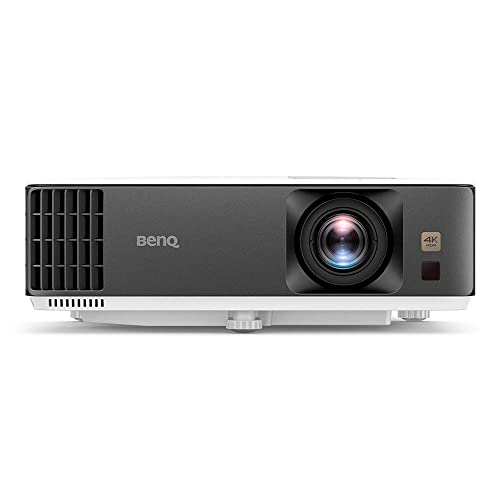
These verified examples span the main first purchase shapes: a bright living room 3LCD, a dedicated room step up, and a short throw gaming friendly DLP.

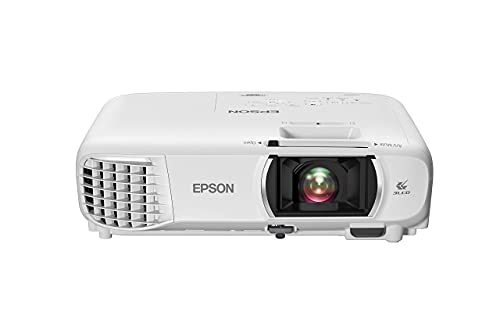
Epson Home Cinema 1080 3-Chip 3LCD 1080p Home Theater Projector — A bright 3LCD home projector example with strong colour brightness, representing the living room class many first time buyers should compare. Check price on Amazon.
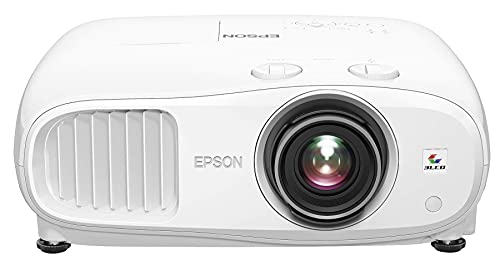
Epson Home Cinema 3800 4K PRO-UHD 3-Chip 3LCD Projector with HDR Technology — A 4K PRO-UHD 3LCD model showing the step up for dedicated rooms, with HDR support and lens features worth checking on any short list. Check price on Amazon.

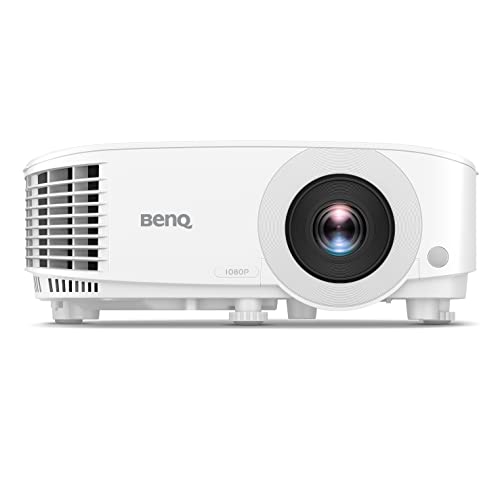
BenQ HT2150ST 1080P Short Throw Projector — A short throw DLP example with low input lag positioning for gaming, illustrating how throw and lag specifications appear on a real model. Check price on Amazon.
Start With the Room, Not the Projector
Projectors are the only display technology where the room is half the product. Before comparing a single model, measure yours: the distance from where a projector can sit to the wall or screen, the size of image that wall can hold, how much light enters during the hours you will actually watch, and whether ceiling mounting is possible or the projector must live on a table or shelf. These four facts eliminate most of the market immediately and correctly. A projector that is perfect in a dark, long room can be washed out and impractical in a bright, short one, and no specification rescues a mismatch between machine and space.
Light: the honest first question
Ambient light is the projector buyer’s defining constraint. In a room you can darken properly — curtains, evening viewing, a dedicated space — a wide range of projectors produce a rich, satisfying image. In a living room with daytime viewing, uncovered windows, and family life happening under lights, you need substantially more brightness and should consider whether a large television honestly serves that room better. There is no shame in that conclusion; choosing a projector for a room that fights it produces years of squinting at a grey rectangle. Judge your room at your real viewing hours, not at its darkest possible moment.
Brightness, Resolution, and the Numbers That Mislead
Brightness figures require scepticism, because measurement standards vary and some marketing numbers describe conditions no living room reproduces. Look for brightness stated in a recognised standard measurement and treat unlabelled claims as advertising. More brightness helps in ambient light and on larger screens, and is wasted — even detrimental to contrast — in a small dark room. Resolution follows a similar logic: true detail matters most as screens grow, and many projectors accept a high-resolution signal while displaying less, through pixel-shifting techniques that can look genuinely good. The buyer’s question is not which number is biggest but whether viewers at your seating distance, on your screen size, will see the difference — often they will not, and the money is better spent on contrast, colour, or the screen itself.
Contrast and colour: where the image quality actually lives
In a dark room, contrast — the depth of blacks beside bright highlights — shapes perceived quality more than resolution does, because films live in shadow detail. Different projector technologies have characteristic contrast personalities, and lamp, laser, and LED light sources differ in colour behaviour, lifespan, and how they hold brightness over years. A light source rated for very long life removes bulb-replacement maths from ownership, which matters if the projector will serve daily. For sports and bright-room viewing, colour brightness in vivid scenes matters more than inky blacks. Match the strength to your content: cinema in the dark rewards contrast; daytime sport rewards brightness and colour punch.
Throw Distance, Lens Shift, and Placement Reality
Throw ratio decides whether a projector can make your image size from your available position, and it is a hard physical constraint, not a preference. Short-throw and ultra-short-throw models exist precisely for rooms where distance is scarce, sitting close to the wall and producing large images — at the cost of demanding a very flat surface and careful alignment. Lens shift, which moves the image without tilting the projector, is a genuinely valuable feature for real rooms, because tilting and correcting digitally with keystone correction costs resolution and sharpness. Zoom range adds placement forgiveness. A buyer with an awkward room should shop placement features first and image specifications second, because a perfectly specified projector aimed at a slant is a bad projector.
Sound, streaming, and the system around the image
Built-in projector speakers serve casual viewing and little else; plan on external sound for anything cinematic, even if that plan is a modest soundbar, because film sound through a small projector speaker undermines the scale the image creates. Built-in streaming platforms vary in app support and longevity; many owners sensibly add a separate streaming stick, which is cheap, replaceable, and keeps the projector’s job purely visual. Count the inputs you truly need — a games console, a player, a laptop — and check gaming input lag if you play, because a projector wonderful for film can feel unresponsive for fast games. The projector is the centre of a small system, and choosing it as a system prevents the accessory surprises that follow image-only decisions.
Portability, Noise, and Living With the Machine
Decide whether this is a fixed installation or a portable pleasure. Portable models trade brightness and refinement for the joy of a garden screening or a holiday film night, and judged as portables they are excellent; judged as living-room centrepieces they disappoint. Fixed installations reward the opposite priorities. Fan noise belongs in every decision: projectors cool themselves audibly, quieter models cost more, and in a small room with quiet films the fan is part of the soundtrack. Eco modes usually trade a little brightness for a lot of quiet and longer light-source life — a trade many home users should take gladly. Finally, consider the household reality: a ceiling-mounted projector with a proper screen is a commitment a family shares, while a portable unit asks nothing of anyone.
A buying sequence that works
- Measure the room: throw distance, image size, light at viewing hours, mounting options.
- Set the brightness class your light conditions demand, and be honest about daytime use.
- Choose the light source and contrast character that suit your main content.
- Confirm placement features — throw ratio, zoom, lens shift — fit your exact geometry.
- Plan sound and sources as part of the same budget, including the screen.
- Check fan noise impressions and gaming lag if either matters to your household.
Followed in that order, the room chooses most of the projector for you, and what remains is a short list of machines that will genuinely thrive in your space rather than merely function in it.
Projector Technologies, Compared Without the Brochure
Three imaging technologies dominate, and each has a temperament. LCD-based designs route light through panels and are known for strong colour brightness and no rainbow artefacts, suiting mixed content and brighter rooms. DLP designs use a microscopic mirror array, produce sharp, compact machines with excellent motion handling, and can show rainbow fringes to a minority of sensitive viewers during high-contrast scenes — a trait worth testing in person if you can, because if you see them you will always see them, and if you do not, the technology’s advantages are yours without cost. Laser-phosphor and LED light sources layer onto either imaging technology, trading the lamp’s replacement cycle for long, stable life and instant on-off behaviour that makes a projector feel like a television in daily use.
Testing for rainbow sensitivity and other personal factors
Some buying factors are physiological and cannot be researched, only experienced: rainbow sensitivity on single-chip DLP, tolerance for fan noise at your seating distance, and sensitivity to the slight screen-door or silk-screen textures particular technologies and screens produce. A shop demonstration with your own content — a dark film scene, a bright sports clip — at roughly your home viewing distance is worth more than a month of reviews for exactly these factors. Bring the content on a stick or a phone, ask for the lights down, and sit still for ten minutes. The projector that disappears for you personally is the right technology, whatever the internet’s consensus says.
The Screen Decision: Half the Image, Rarely Half the Budget Talk
A projector throws light; the screen decides what that light becomes. A good screen adds gain where you want it, rejects ambient light from the wrong angles if designed to, keeps the image flat and colour-neutral, and frames it with borders that perceptibly deepen contrast. A wall can serve, especially a smooth, pale, matte one, but walls have texture, colour casts, switches, and radiators in the wrong places. Budget honestly: a mid-range projector on a proper screen routinely outperforms a premium projector on a bad wall, because the screen is not an accessory but the second half of the optical system. Fixed screens suit dedicated rooms; retractable screens serve living rooms that must remain living rooms by day; painted screen coatings are the middle path for the committed.
Screen size and seating: the geometry of immersion
Choose size from seating distance and content, not from wall availability. Cinema immersion asks for a wide viewing angle; television comfort asks for less, especially for news and sport watched for hours; mixed households split the difference and sit slightly closer or further by content. Too large punishes low-quality sources and makes subtitles a head movement; too small wastes the projector’s entire reason for existing. Measure with tape on the wall and live with the outline for a few evenings of ordinary viewing before committing — the cheapest and most accurate simulation in this entire hobby.
Ownership Costs and the Five-Year View
The purchase price is the first instalment. Lamp-based models will want replacement lamps across a heavy-use life, each a real cost and a small ritual; laser and LED models largely retire that line item. Electricity differences are minor. The mount, screen, cables, sound, and possibly a room-darkening curtain are the honest remainder of the budget, and a buyer who funds them by trimming the projector one tier usually ends with the better system. Resale and longevity follow the light source: long-life light sources hold their appeal in the used market, and a projector bought for a decade should be judged on whether its inputs and streaming strategy — ideally an external, replaceable streamer — can survive that decade’s changes.
Gaming, sport, and film: prioritising by household
Households should name their primary content and let it chair the committee. Film-first households buy contrast and quiet. Sport-first households buy brightness, motion handling, and a screen that copes with lights on and friends over. Gaming households buy low input lag and a size their room can focus sharply, and should test their actual console on the actual candidate if a shop allows. Mixed households should buy for the content watched most hours, not the content watched most ceremonially — the weekly matches outvote the monthly film night, however beloved. This prioritisation, written down before shopping, is the difference between a projector that thrills weekly and one that impresses annually.
The Shortlist Method: Ending the Research Spiral
- Fix the room facts and the total system budget, including screen and sound.
- Choose the light source and technology temperament that suit your content and your eyes.
- Shortlist three models that satisfy the throw and placement geometry exactly.
- See at least one in person, in the dark, with your content.
- Buy the one whose weaknesses fall in your lowest-priority area, and stop reading reviews.
The research spiral is the projector hobby’s tax on the conscientious. The shortlist method caps it: geometry and budget do the eliminating, your eyes do the choosing, and the projector goes on the wall where it belongs — being watched, not compared.
Reading Projector Reviews Like a Projectionist
Projector reviews reward a particular literacy. Trust measurements over impressions: brightness measured in a standard mode, contrast measured rather than quoted from the box, input lag measured in milliseconds for the gaming verdict, and fan noise measured at a stated distance. Be suspicious of any review whose photographs of the projected image carry the argument, because cameras lie about projectors in both directions. Weight reviews that test in rooms like yours — a dedicated black-walled theatre’s conclusions about contrast do not transfer to a cream living room, and a bright-room reviewer’s brightness demands would be wasted on your curtains. And read the follow-up comments months later, where owners report the truths that launch reviews cannot: how the fan aged, how the light source held, how the maker handled a fault. A projector is a five-to-ten-year appliance; buy it with five-to-ten-year evidence.
The demonstration etiquette that gets you real answers
In a shop, ask for three things and you will learn more in fifteen minutes than in a month of reading: the lights down to something resembling your room, the projector in its accurate picture mode rather than its showroom mode, and your own content from your own device. Watch a dark scene for contrast and fan noise, a bright scene for colour and punch, and a fast sequence for motion. Move to your actual seating distance. If the shop cannot or will not do this, that is also information — about the shop. Buy from places that let you see the product honestly, because a projector bought unseen is a wager, and the stakes are a decade of film nights.
Choosing for the Long Decade: Inputs, Standards, and Change
Projectors outlive the standards around them, so choose for adaptability. Prefer a projector whose streaming intelligence lives in a replaceable external device rather than being baked in, because the internal smart platform of a ten-year-old projector will be a museum piece while its lens is still superb. Confirm the inputs cover your current sources with one spare for the source you have not bought yet. Consider whether the light source’s rated life, at your household’s honest weekly hours, reaches comfortably past your intended ownership — for most households a long-life laser or LED does, which retires the lamp question entirely. And think about the room’s future: a projector bought for a flat may serve a house, so a model with some zoom and lens-shift flexibility carries its value across moves better than one tuned to a single exact geometry. Adaptability is the quiet specification, and over a decade it outearns brightness.
The final sanity check before paying
Before the purchase, recite the room back to the specification one last time: the throw distance measured twice, the screen size chosen from seating rather than ambition, the brightness class matched to honest light, the mount or furniture plan physically possible, the sound planned and budgeted, the total — projector, screen, mount, cables, sound — inside the number you set before shopping began. If every line answers cleanly, buy with confidence and stop researching. The projector hobby contains endless further refinement, and all of it is optional; a well-matched projector, in a prepared room, with planned sound, is already ninety percent of the experience that the finest systems deliver. The last ten percent is for enthusiasts to enjoy chasing. Your films are waiting at ninety.
The Buyer’s Final Reflection: Projectors Reward the Decisive
Every projector purchase ends, sooner or later, in a darkened room and a first film, and everything in this guide exists to make that evening a good one. Looking back over the decision, notice how little of it was about the projector in isolation: the room’s light and geometry chose the class, the household’s content chose the character, the budget chose the system — screen, sound, mount, and machine together — and your own eyes and ears, given fifteen honest minutes in a shop, chose among the survivors. That is as it should be. A projector is not a gadget but a small cinema, and cinemas are built, not bought. Build yours on the room’s facts and the household’s habits, and the machine at its centre will seem, for a decade of evenings, less like a purchase and more like a place your family goes. There is no higher praise for a buying decision than that, and no projector, at any price, earns it by accident.
The Enthusiast’s Objections, Answered for the Rest of Us
Projector enthusiasm has a vocabulary that can intimidate a first-time buyer out of a good decision, so let a few of its favourite objections be answered in plain terms. Yes, a dedicated black-painted room extracts more from any projector — and a well-chosen projector in an ordinary living room with decent curtains delivers most of the joy at a fraction of the domestic upheaval. Yes, separate components outperform all-in-one convenience — and a simple, well-matched system that the whole household uses nightly outperforms a complex one that one person operates ceremonially. Yes, next year’s models will improve on this year’s — and a projector bought now shows a thousand films before next year’s model ships. The enthusiast’s standards are real, but they are calibrated to the last few percent of performance, purchased with money, complexity, and rooms. The rest of us are buying the first ninety percent, which is where the films live.
A word on buying used projectors
The used market rewards the literate buyer in this category particularly, because projectors are often sold by upgraders in honest condition, and their value hinges on questions a novice would not ask. Ask the light source’s hours, and prefer long-life laser or LED units whose remaining life is generous and verifiable in the menu. Ask to see the image on a plain white screen and look for the blobs and discolouration that betray dust or panel ageing. Ask why it is being sold, and weight the answer like any seller’s story — as colour, not as fact. Price in a new lamp for lamp-based units unless its hours are documented as low. A used projector bought with those four questions answered is often the finest value in home cinema; bought without them, it is a lottery ticket with a lens.
The Choice, Completed
You now hold the whole method: the room measured, the light judged honestly, the brightness and technology matched to the household’s real content, the geometry proven against the actual wall, the screen and sound budgeted as equals, the total priced as a system, and your own eyes given the final vote in a darkened shop. What remains is only to execute it without letting the research reopen — to buy the projector the method chose, install it with the patience its companion guides describe, and dim the lights. The first film will tell you whether the method worked. It will. Methods built on rooms, habits, and honest numbers usually do, and the projector, chosen this way, stops being a product you purchased and becomes what it was always meant to be: the place your household’s evenings go.
One More Room Consideration: The Ceiling, the Walls, and the Neighbours
The final choosing factors are the ones brochures cannot photograph. The ceiling decides mounting; its height and structure belong in the earliest measurements, not the installation-day surprises. The walls decide more than colour: a wall shared with a neighbour’s bedroom argues for sound discipline and against the largest subwoofer ambitions, and a projector chosen for a semi-detached living room should be chosen with its audio plan’s diplomacy in mind. The neighbours themselves, in flats especially, are stakeholders in your cinema, and a system whose late-night volume is governed by a limiter setting rather than by nightly judgement is a system that keeps both the peace and the friendship. None of this diminishes the purchase; it locates it, honestly, in the building and the street where it will actually live. A projector chosen for its real room, real walls, and real neighbours will be used more, loved longer, and regretted never — which is, after all the measurements, the only specification that matters.
Related Guides
- best projectors for home theater
- best projectors for bright rooms
- best projectors for living room
- best projectors for bedroom
- best projectors for small rooms
- how to set up a projector
- how to clean the lens of a projector
Frequently Asked Questions
How many lumens do I need for a home projector?
It depends entirely on your room. A properly dark dedicated room can look excellent with a moderate ANSI lumen rating, because there is no competing light. A living room used with curtains drawn needs substantially more, and a room that cannot be darkened needs the most, ideally paired with an ambient light rejecting screen. Always compare ANSI lumens, the standardised measurement, and distrust headline figures with no standard named, which can overstate real brightness several times over on inexpensive models.
Is 1080p or 4K better for a projector?
At cinema image sizes, resolution differences are more visible than on a television, because the same pixels cover a much larger area. Native high definition looks good for sport and casual films, while 4K, whether native or high quality pixel shifting, adds fine detail that film lovers notice on large screens in dark rooms. What matters most is honesty: a true native figure beats a supported input claim every time. Match resolution to your screen size and content, and never let it outrank brightness for your room.
Should I buy a lamp or laser projector?
Lamp models cost less upfront and have replaceable lamps, but dim gradually and need a new lamp after a few thousand hours. Laser models cost more, hold brightness for far longer, start quickly and suit ceiling mounts and heavy daily use because there is almost nothing to maintain. Occasional film night viewers may never exhaust a lamp, making the lamp model the sensible value. Daily viewers and difficult ceiling installs usually recoup the laser premium in convenience and lamp savings.
Can I just project onto a white wall?
Yes, and it is a reasonable way to start. A smooth, matte white wall gives a watchable image, though texture, slight colour tints and uneven paint reduce brightness and accuracy compared with a screen. A dedicated screen reflects light more evenly, improves perceived contrast with its border, and in bright rooms an ambient light rejecting design can transform daytime viewing. Many owners start on a wall, confirm their image size by living with it, then buy the screen in exactly the right size.
What throw distance do I need?
Throw distance follows from your image size and the projector throw ratio, which is listed in its specification. Divide your available distance by the image width to find the ratio your room demands, then check models against it, using the maker throw calculator for precision. Long throw models suit rear ceiling positions, short throw models sit a few feet from the screen, and ultra short throw models sit against the wall. Zoom range adds flexibility; digital keystone should be a last resort, not the plan.
Do I need separate speakers with a projector?
For anything beyond casual viewing, yes. Built in projector speakers are small, point the wrong way and sit far from the screen, so dialogue sounds detached and films lose their weight. A soundbar placed under the screen or a speaker system transforms the experience more than a projector upgrade would. When choosing the projector, confirm it has the audio output you need, such as HDMI ARC or an optical or analogue output, and plan cable lengths from its position to the screen end of the room.
How bright does my projector really need to be?
As bright as your room’s light at your real viewing hours demands — and no brighter, because excess brightness in a dark room costs contrast and money. In a room you can properly darken, a wide range of projectors produce a rich image and the decision can be led by contrast, colour, and quiet. In a bright living room used at midday, brightness becomes the headline requirement, and the honest comparison may even favour a large television. Judge the room at the hours you will actually watch, prefer brightness figures stated in a recognised standard measurement, and remember that screen size dilutes brightness: the same projector lighting a larger image spreads its light thinner, so size and brightness must be chosen together, never separately.
Is a projector or a big television better for my living room?
The television wins on convenience, brightness in daylight, and instant readiness; the projector wins on scale, immersion, and the ability to disappear when the screen retracts. The deciding questions are your room’s light, your seating distance, and your viewing habits. A bright, multi-purpose family room used all day usually serves its owners better with a television. A room that becomes a cinema in the evening — curtains drawn, film the main event — is where a projector stops being a compromise and becomes the superior instrument by an embarrassing margin. Many households honestly need the television’s answer; the mistake is buying the projector for the room you wish you had rather than the one your evenings actually happen in.
Do I really need a screen, or is a wall enough?
A smooth, pale, matte wall can serve respectably, especially for a first installation, and plenty of happy owners never go further. A proper screen earns its money through flatness, colour neutrality, borders that deepen perceived contrast, and — in ambient-light-rejecting designs — the ability to refuse light arriving from the wrong angles. The practical test is your wall’s honesty in daylight: texture, colour cast, switches, and radiators in the wrong places all argue for a screen. Budget the screen as part of the system from the start, because a mid-range projector on a good screen routinely outperforms a premium projector on a bad wall — the screen is not an accessory but the second half of the optics.